• Features
  • Reviews
  • Teaching
  • Watch & Listen
  • About

The past is never dead. It's not even past

Not Even Past

A Shogun’s Tale: How William Adams Became the West’s Favorite Samurai

Banner for A shogun's tale by Josefine Lin

Lit by fiery amber torchlight, rows of samurai stand shoulder to shoulder as their lord, Yoshii Toranaga, strides toward his stage. The English-born foreigner John Blackthorne, blue-eyed and bewildered, listens through a translator as Toranaga announces that, in return for saving his life, Blackthorne will be granted land, servants, kimonos, and two swords. He is now a samurai, his translator says, and there is a sense that this moment has changed the course of his life.

This scene in the 1980 television miniseries Shōgun captivated millions of American viewers, who accounted for one-third of all households when it aired.[1] Based on James Clavell’s 1975 novel of the same name, the miniseries sparked renewed interest in the novel and nurtured a growing Orientalist fascination in the West, to the point that many articles on the cultural phenomenon credit it with popularizing sushi for Americans. Its protagonist, Blackthorne, was inspired by a real English sailor named William Adams, whose life in seventeenth-century Japan became the seed for one of history’s most persistent cross-cultural narratives. Yet the William Adams of record—a navigator, merchant, and retainer of Shogun Tokugawa—has been largely eclipsed by the samurai Adams of mythmaking. It then begs the question: who was the real man behind the myth?

Born in Gillingham, England, Adams began as an apprentice shipwright and later joined the Royal Navy during the Anglo-Spanish War. Employed by a Dutch trading fleet as pilot-major, Adams set sail from Rotterdam in 1598, bound for Asia in hopes of buying spices and other foreign goods. The journey was disastrous. Only one of the five ships survived the grueling two-year voyage, reaching Japan in 1600 with only a handful of starving sailors still able to walk.
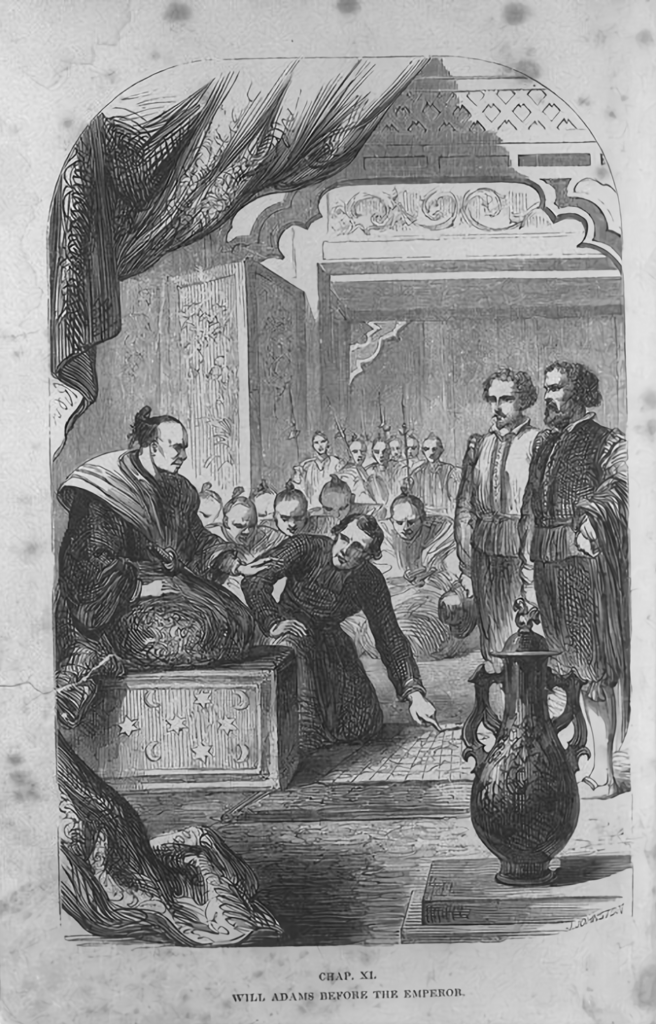
William Adams before Shogun Tokugawa Ieyasu. Foreigners frequently confused the Shogun with the Emperor.

William Adams before Shogun Tokugawa Ieyasu. Source: Wikimedia Commons

Adams’s arrival in Japan could easily have ended in execution. The Portuguese Jesuits had already been active in Japan for fifty years, having established a Catholic Christian and European trade monopoly on the island chain.[2] The Portuguese had exclusive trading rights between Japan and the rest of Asia, giving them significant power and influence. But Tokugawa Ieyasu, then a powerful warlord on the cusp of becoming shogun, summoned Adams for questioning. Through an interpreter, Adams explained European affairs and maritime trade, information that likely broadened Ieyasu’s understanding of Western politics and offered him greater insight into the Jesuit influence as well as European rivalries.

After Ieyasu’s victory at the Battle of Sekigahara later that year, he summoned Adams again and asked him to build a Western-style ship. The Englishman succeeded, and Ieyasu rewarded him with land, servants, and an annual stipend, which made Adams a hatamoto, a direct retainer of the shogun. “The emperor had given me a living,” Adams wrote in his letters, “as in England a lordship.”[3] In keeping with his status, Adams may have owned several katana and wakizashi, which are mentioned in his will. He married a Japanese woman, fathered two children, and remained in Japan until he died in 1620.[4]

While Adams accomplished much more than just shipbuilding during his time in Japan, these are little discussed in retellings. Instead, he would take on an entirely new life. William Dalton’s Will Adams, The First Englishman in Japan, published in 1861, is regarded as the first fictionalized biography of the sailor. Written from the perspective of one of Adams’s shipmates, the story transforms him into an archetype of British virtue: a noble, Christian gentleman who wins Japan’s admiration through personal honor and trade. Dalton’s version of Adams embodied the ideals of Victorian mercantilism and national pride more than historical fact.

In 1872, journalist James Walters claimed to have discovered Adams’s tomb in Japan, which sparked renewed interest in his story. Though the grave was known to the local Japanese, Walters’s publication sent waves through Great Britain, bringing awareness to their lost countryman whose homeland had largely forgotten him. As historian Derek Massarella notes, after Walters’s article in The Far East Journal was published, the myth of William Adams truly “took wing.” At a time when Britain sought to frame its imperial history as one of exploration and enlightenment, Adams became a convenient symbol: the brave, lone Englishman forging peaceful relations with an exotic ally.
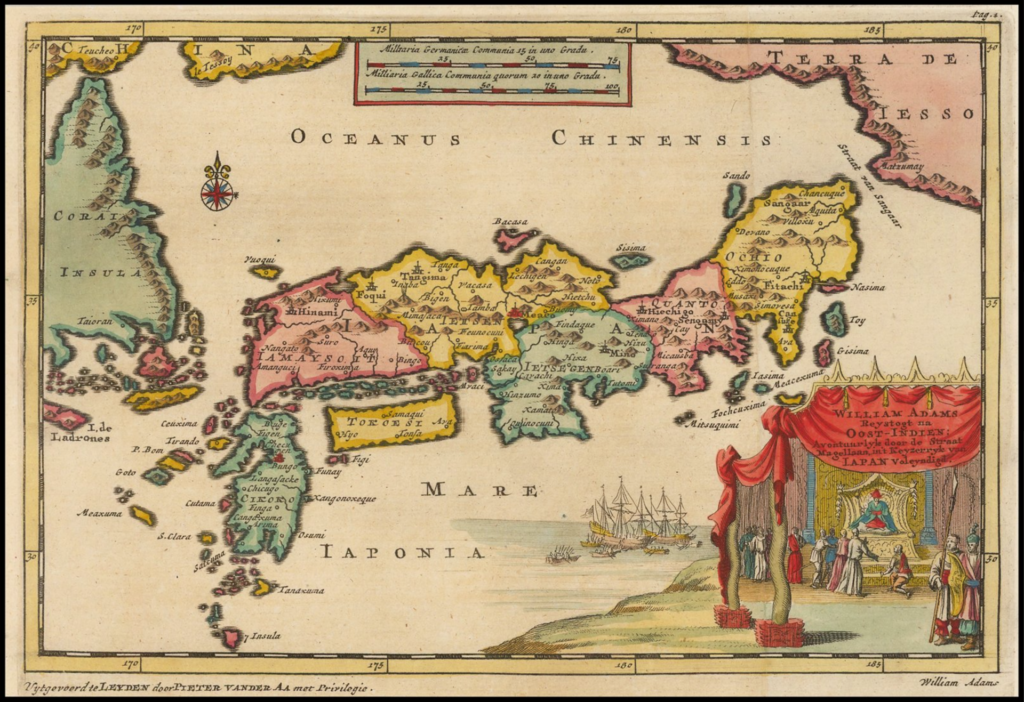
Map of Japan with William Adams who visits the Shogun in 1707. In the top right is Hokkaido (Terra de Iesso) In the top left side is a part of the Korean peninsula. The bottom right is a cartouche representing the audience of William Adams with the Shogun (Tokugawa Ieyasu). The bottom right text says: "William Adams Reystogt na Oost-Indien; Avontuurlyle door de Straat Magellaan in't Keyzerryk van Iapan Voleyndigd." Translation = "William Adams travels to East India; adventurous through the straight of Magellan in the Empire of Japan completed."

Map of Japan with William Adams who visits the Shogun in 1707. Source: Wikimedia Commons

Arthur Diósy’s 1904 essay “In Memory of Will Adams: The First Englishman in Japan” continued to build on this concept. Writing amid the newly formed Anti-Russian Anglo-Japanese Alliance, Diósy cast Adams as a bridge between two island nations bound by “mutual respect, sympathy, and interest.” He claimed that Adams adopted Japanese dress and “wore two swords,” a detail not mentioned before, but one that would profoundly shape later retellings. With Diósy, the image of Adams as a samurai began to solidify as a reflection of British admiration for Japan’s rise as a modern imperial power, especially considering the two countries’ alliance during the outbreak of the Russo-Japanese War that same year.

The myth reached new heights in 1975, when novelist James Clavell published Shōgun. Clavell, a British Royal Artillery veteran, was captured by Japanese forces during the Second World War and was held captive in Changi, Singapore. His experience as a prisoner of war in a place where only 1 in 15 prisoners survived greatly influenced the rest of Clavell’s life and career.[5] Those incredibly challenging years did not harden into resentment for Clavell but instead became the inspiration and fascination that drove much of his writing. Clavell’s epic novel, based loosely on Adams’s story, recast Adams as John Blackthorne, a rough-edged, adventurous, and spiritually reborn figure in Japan. This version diverged significantly from earlier portrayals: John Blackthorne is gritty and tough, but also charming and adaptive, not afraid to get his hands dirty. His loyalty to the shogun, his romance with his translator, and his adoption of Japanese customs all dramatized the allure of cultural transformation. This version of Adams proved to be one of the most enduring. In an article for the New York Times, writer Webster Schott described Clavell’s novel as “so enveloping that you forget who and where you are.”[6]

The spectacle of a Western man mastering samurai ways captivated audiences with the 1980 television adaptation and cemented Adams’s new identity in the public consciousness. In the decades since, Adams’s myth has grown in digital form. The Encyclopedia Britannica wrote its first digital entry on Adams in 1998, and Wikipedia first mentions him in 2003, titling his life “From seaman to samurai.” YouTube videos and historical explainers perpetuate this image, often referencing Clavell’s novel more than Adams’s own letters. The story’s latest revival came with FX’s 2024 Shōgun series, which reached nine million streams in a month and introduced Blackthorne to a new generation.[7] Even with a more nuanced portrayal, the myth remains: William Adams, the Englishman who became a samurai.
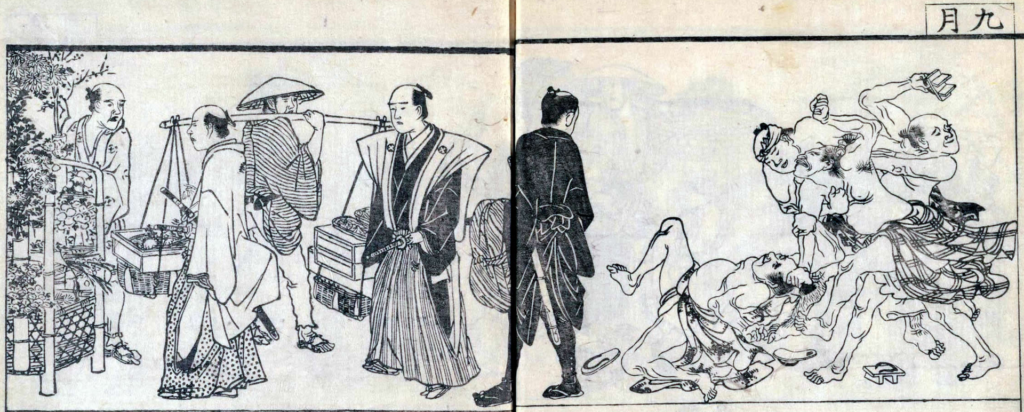
Samurai in the Edo period walking through town. The second and fourth from the left are samurai. Samurai could kill a commoner for the slightest insult and were widely feared by the Japanese population. An illustration in Santo Kyoden's book of manners and customs "Shiji-no-yukikai" (published in 1798).

Samurai in the Edo period walking through town. Source: Wikimedia Commons

The irony, of course, is that Adams was a samurai in title only. By 1600, samurai were increasingly bureaucrats rather than sword-wielding knights. In his article “Death, Honor, and Loyalty: The Bushidō Ideal,” Cameron Hurst credits this image to the efforts of Nitobe Inazō, who created the concept of Bushidō, the samurai “code of conduct,” through his novel of the same name. The irony? Nitobe was isolated spatially, culturally, religiously, and linguistically from Meiji Japan, with a limited and highly selective understanding of Japanese history and literature. If one tries to trace the historical origins of bushido before Nitobe’s 1899 classic, anything that remotely resembled Nitobe’s “version” was often out of touch with the broader spectrum of Confucianist thought, which most of the samurai class had adhered to for centuries.[8] Given the reality of the two hundred years of peace following shogun Tokugawa’s reign, it would have been far less likely to be in a situation where seppuku would be necessary or even appropriate, despite Nitobe’s claims. In the words of Hurst, “What is the role of the warrior in an age of peace?”[9] William Adams, while definitively a samurai in title, was nothing like the samurai with which popular consciousness is familiar, making his historiographical journey particularly ironic. The days of serving a powerful warlord through prowess on the battlefield had long passed by the time Adams arrived in Japan.[10] In a time when samurai were beginning to turn toward bureaucratic government service, the idea of Adams being a sword-toting, battle-hardened samurai becomes even more fantastical.

The persistence of Adams’s myth reveals more about the cultures that retold his story than about the man himself. In the nineteenth century, he represented British trade and empire. By the early twentieth century, he had become a symbol of friendship between East and West. In the postwar world, he became a vessel for Western fascination with Japanese discipline and mystique. Each reinvention reflected changing desires for connection, heroism, and cultural adaptation.

For a man who spent his life navigating between worlds, perhaps it’s fitting that William Adams remains suspended between fact and fiction. Adams stands independently of even his own writings. The myth has eclipsed the Adams of the original letters. Now, Adams, the samurai, is the most prevalent mythologized version of the real historical figure and is likely to remain so.


Josefine Lin is a recent graduate of the University of Texas at Austin, having written her capstone on the study of public memory and popular history. As a history major and Philosophy of Law minor, she participated in the Normandy Scholar Program in May of 2024. Her research interests include material culture, anthropology, and the Second World War.


[1] Cobb, “Despite ‘Shōgun’ Success, TV Is Falling Out of Love with the Miniseries,” TheWrap. https://www.thewrap.com/shogun-history-and-future-of-miniseries/

[2] Frederik Cryns, “In the Service of the Shogun,” 37

[3] Cryns, 125

[4] Cryns, 214

[5] Grimes, “James Clavell, Best-Selling Storyteller of Far Eastern Epics, Is Dead at 69,” The New York Times.

[6] Webster Schott, “Shōgun: From James Clavell with tea and blood,” The New York Times, June 22, 1975. https://nyti.ms/4lT2ZIU  

[7] Otterson, “’Shogun’ Hits 9 Million Views and Beats ‘the Bear’ Season 2 as FX’s Biggest Hulu Premiere,” Variety.

[8] Hurst, “Death, Honor, and Loyalty: The Bushidō Ideal,” 512

[9] Hurst, 521

[10] Michael Wert, Samurai: A Concise History, 78


The views and opinions expressed in this article or video are those of the individual author(s) or presenter(s) and do not necessarily reflect the policy or views of the editors at Not Even Past, the UT Department of History, the University of Texas at Austin, or the UT System Board of Regents. Not Even Past is an online public history magazine rather than a peer-reviewed academic journal. While we make efforts to ensure that factual information in articles was obtained from reliable sources, Not Even Past is not responsible for any errors or omissions.
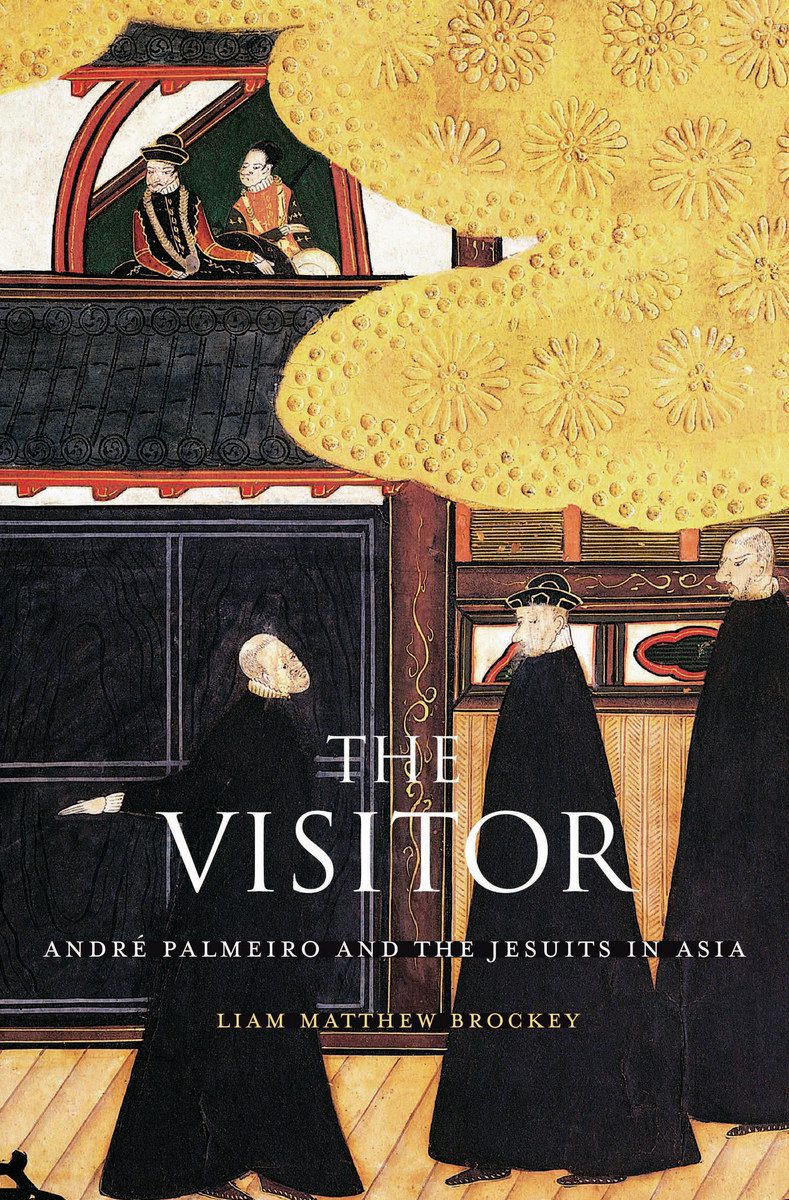
The Visitor: André Palmeiro and the Jesuits in Asia by Liam Matthew Brockey (2014)

By Abisai Pérez

This book addresses the life of Jesuit father André Palmeiro (1569 [Lisbon] – 1635 [Macau]), who was the first inspector, or Visitor, of the Jesuit Company in India and East Asia with the mission of consolidating and expanding religious conversion in the remote regions of the Portuguese empire. Through the analysis of the Visitor’s experiences, Brockey describes the Jesuit order as an association of men from different countries who shared a feeling of fraternal union but also had contrasting views on how to carry out the preaching of the Gospel. In this book, the author dismantles the stories of solitary heroism in missionary work by evaluating the success and limits of the Jesuits’ strategies of adopting local customs, performing their mission in native languages, and debating with local intellectual elites about religious matters. Brockey argues that pragmatism and cultural adaptation, coupled with Portuguese colonialism, allowed the Jesuits to preach in the most remote regions but also confronted them with the orthodox branch of the Catholic Church.

Through the study of Palmeiro’s diary and correspondence with his superiors –most of the documents located in the Jesuit archive in Rome– Brockey vividly describes the challenges of the Visitor in India and China. He begins by describing Palmeiro’s  formation as a scholar in Portuguese universities, where he stood out for mastering Catholic theology, and his efforts to learn how to run a religious order in a vast multicultural region during his journeys along the Malabar coast and in Sri Lanka. Then he turns to Palmeiro’s last years  in Macau and inland China and analyzes the endeavors of the Visitor in reforming the conduct of his brethren according to Rome’s directions and providing support to his fellows in Japan, where the Jesuits faced extremely violent persecution.

Through this voluminous book, the author addresses three major issues that explain the success and limitations of the Jesuits in spreading Catholicism in Asia. First, while most historians have emphasized the stoic endurance and outstanding preparation of the Jesuits in matters of classical arts and theology, Brockey shows through the Visitor’s eyes that many of the missionaries were earthly men with human weaknesses and personal concerns. Far from being harmonious and focused on cultivating holiness, Brockey depicts the Jesuit missions as sites of conflict and instability. The book contributes to understanding that the dissensions within the order were not necessarily over religious matters based on personal ambitions, conflicts over jurisdiction with ecclesiastical hierarchies, and the unrealistic expectations of a young generation who hoped to convert thousands of souls by the mere act of preaching. Although Palmeiro was neither adventurous nor did he perform miracles like some of his predecessors, his pragmatic vision allowed him to successfully establish friendly ties with the royal courts of Ethiopia and the Mughal empire. Through diplomacy, the Visitor strengthened the proselytizing activities of the Jesuits in places where they only possessed rhetorical skills to survive.

Second, Brockey contrasts pragmatism with the Jesuit method of “cultural accommodation,” that is the adaptation of Catholic doctrine to local cultural conditions. The author challenges the vision that praises as “modern” the Jesuit method of conversion through the preaching in native languages and the embracing of local customs. Palmeiro’s involvement in two controversies over the method of cultural accommodation serves Brockey to explain the limits of that practice. First, when the Visitor arrived at Goa, he played an important role in the prosecution against father Roberto Nobili, who has adopted the lifestyle of Hindu Brahmans by wearing their robes, studying religious texts with them, and sharing meals with them that than his Catholic brethren. Portraying himself as a “Christian Brahman,” Nobili claimed the strategy would allow the conversion of members of the highest Hindu caste and consequently the rest of the population, but the ecclesiastical authorities accused him of heresy. Despite being a well-trained theologian, Palmeiro adopted a pragmatic attitude when he discredited that strategy. The Visitor resolved that its success was not only limited, but it was promoting a schismatic community given that converted Brahmans did not want to be subject to the authority of the Portuguese Church. Palmeiro adopted the same realistic approach when he later arrived in China. Facing the defiant attitude of his brethren who insisted on studying Confucian texts, using Chinese concepts to explain Catholic doctrine, and wearing silk robes like the local elite, Palmeiro prohibited those practices on the grounds that they were not gaining new souls for the Catholic cause. Despite their cultural accommodation, the Jesuits had become recognizable to the Chinese elite as learned men, but not as spiritual leaders. The cases of India and China, Brockey says, demonstrate that over time the Jesuits abandoned the method of cultural accommodation not because of the intolerance of ecclesiastical authorities but because of their practical ineffectiveness in expanding Catholicism.

The final issue that Brockey emphasizes is the close relationship between missionary work and Portuguese colonialism. The Jesuit presence in Asia would have been impossible without the commercial networks and the military presence of the Portuguese empire. The chaotic collapse of the Jesuit missions in Japan serves Brockey to demonstrate that the missionary success of the Jesuits depended heavily on colonial interests. The Visitor’s efforts to provide reinforcements to his fellows immersed in violent persecution in Japan were thwarted by the refusal of Portuguese civil authorities to confront the Japanese shoguns. Commercial interests proved to be more important than God’s desire and the Portuguese authorities did not want to lose the profits obtained from the commercial connection with Japan.

In the end, Mathew Brockey remembers that, contrary to the stories of heroism and miraculous conversion, the Jesuits in Asia always relied on the military support of the Portuguese empire. Not only the Chinese and Japanese experiences but also the parallel collapse of the Jesuit and the Portuguese empire in Asia reflected how the sword facilitated the preaching of the Gospel.

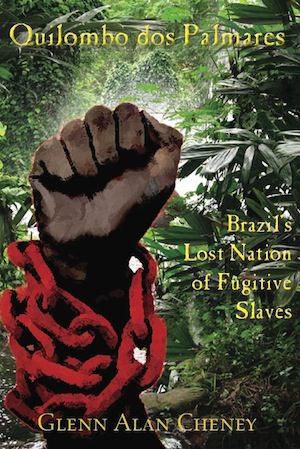
Quilombo dos Palmares: Brazil’s Lost Nation of Fugitive Slaves, by Glenn Cheney (2014)

By Edward Shore

In November 1695, townspeople in Recife, Brazil, observed Portuguese soldiers attaching a severed head to a stake in the central plaza. The skull belonged to Zumbi, the last warrior-king of Palmares, a “quilombo,” or fugitive slave community, hidden in the rugged backcountry of the Brazilian Northeast. Palmares was home to twenty thousand runaway slaves, free blacks, Indians, and settlers of mixed ancestry who repelled the repeated assaults of European slavers for almost a century. Although the Portuguese managed to defeat Zumbi’s guerrillas, memories of Palmares evolved into myths that powerfully shaped Brazilian politics and popular culture. They fanned the flames of slave resistance and inspired future generations of black activists and intellectuals who challenged racism, capitalism, and military rule in modern times.

QdP Front CoverGlenn Cheney’s new book, Quilombo dos Palmares: Brazil’s Lost Nation of Fugitive Slaves, retraces the maroon community’s origins and casts new light upon the lived experiences of its diverse inhabitants. Drawing upon a range of colonial documents and secondary sources, Cheney advances a number of compelling claims about the nature of Palmares and its century-long struggle for survival. First, he argues that the quilombo represented a viable alternative to plantation slavery and Portuguese colonialism. Fugitive slaves established a collective economy based upon subsistence agriculture, trade, and communal land ownership. They raided plantations and sugar mills in search of new supplies and recruits. Palmarians rejected Portugal’s rigid caste system and mixed freely with Africans, crioulas (Brazilian born blacks), mulattos, Indians, and even poor whites. The author also suggests that women were socially, economically, and militarily empowered and that marriage and sexual morality were established by “necessity and efficiency” rather than by religious edict. Religion in the quilombo was syncretic, an amalgamation of beliefs and practices pulled together from Bantu (Central African), indigenous, and Catholic traditions.

Second, Cheney contends that Palmares functioned like a sovereign state. He observes that the quilombo was not, at least initially, a single political entity, but rather a collection of mocambos (“hideouts”) that stretched across a territory that was two hundred miles long and fifty miles inland from the coast of what is today the Brazilian state of Alagoas. Ultimately, these communities recognized a common enemy, the Portuguese, and integrated the various mocambos into a unified military brotherhood. Inhabitants elected village leaders to a council and the council selected a head of state. There is also evidence to suggest the Portuguese monarchy had recognized the quilombo’s autonomy and even attempted to broker a truce between planters and maroons in the 1670s.

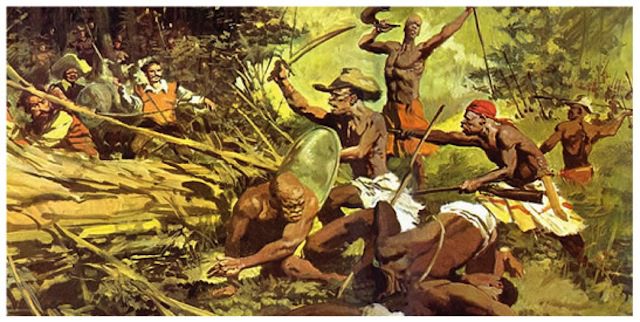
Painting of a battle at Palmares. Image via Black Women of Brazil.

Painting of a battle at Palmares. Image via Black Women of Brazil.

Cheney concludes that Palmares grew strong enough not only to frustrate, but also to seriously challenge Portuguese control of Brazil. Following the decline of sugar production and the Dutch invasion of Pernambuco, Zumbi and his army of fugitive slaves threatened to deliver a crushing blow to Portugal’s fragile colonial ambitions. Cheney alleges that Palmares signaled the beginning of a long-term movement toward independence from colonial rule and foreshadowed the rise of Toussaint L’Overture and the “Black Jacobins” in Haiti. The Portuguese, though weakened, resolved to destroy the quilombo. Armed with an influx of capital, weaponry, and manpower from Lisbon and São Paulo, colonizers assembled an army of mercenaries, Indians, and slaves that sacked Palmares in 1693 and captured and executed Zumbi two years later.

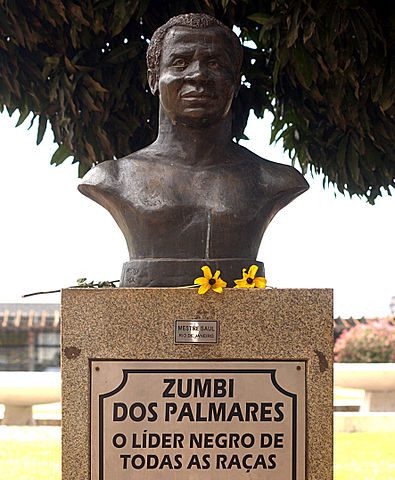
Bust of Zumbi of Palmares in Brasilia. Via Wikimedia Commons.

Bust of Zumbi of Palmares in Brasilia. Via Wikimedia Commons.

However, the destruction of Palmares failed to stem the emergence of hundreds, perhaps thousands of smaller quilombos throughout Brazil. Nor did it prevent countless other acts of resistance that undermined planter domination even after the abolition of slavery in 1888. Cheney describes how the legend of the Quilombo dos Palmares inspired a 1988 constitutional amendment that extended land rights to the descendants of fugitive slaves. Thousands of “modern quilombos” have petitioned for government recognition while organizing mass movement in the countryside that has won concessions from local landowners and pressured elected officials to implement affirmative action policies in other areas. In 2015, the specter of Palmares looms large over Brazil.

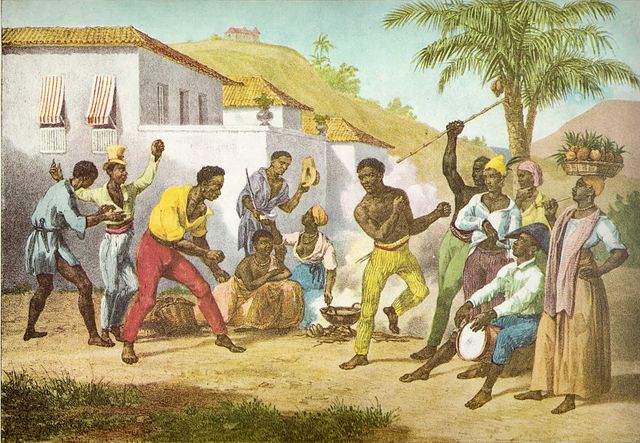
Capoeira or the Dance of War by Johann Moritz Rugendas (1825). The Brazilian dance of Capoeria is often associated with the Palmares quilombo. Via Wikimedia Commons.

Capoeira or the Dance of War by Johann Moritz Rugendas (1825). The Brazilian dance of Capoeria is often associated with the Palmares quilombo. Via Wikimedia Commons.

Cheney’s new book claims many strengths but its effort to separate “myth” from “fact” represents its greatest achievement. Portuguese colonizers sought not only to destroy Palmares but also to expunge its existence from the historical record for fear that it would incite future slave rebellions. As a result, no artifactual evidence of the quilombo exists while surviving documentation reports precious little about Palmares, its people, and their points of view. Cheney nevertheless manages to shed light on Palmarians’ lived experiences by extrapolating meaning from among the colonizers’ exaggerations, inconsistencies, and omissions. By combining gripping narrative with first-rate scholarship, Cheney provides the most accessible and comprehensive study in English about “the most important historical event ever ignored by the world outside of Brazil.”

Glenn Alan Cheney, Quilombo dos Palmares: Brazil’s Lost Nation of Fugitive Slaves (New London Librarium, 2014)

You may also like:

Eyal Weinberg on a new English translation of Joaquim Maria Machado de Assis’ short stories

Seth Garfield on his book In search of the Amazon: Brazil, the United States and the nature of a Region

Elizabeth O’Brien on labor history in the sugar industry in Brazil

Eyal Weinberg on labor history in Sao Paulo

Darcy Rendón on the social history of the lottery in Brazil

Facing North from Inca Country: Entanglement, Hybridity, and Rewriting Atlantic History

This November, UT Austin will host a workshop on the Entangled Histories of the Early Modern British and Iberian Empire and their Successor Republics, bringing together graduate students and faculty from across the United States. The emphasis of this event is to explore the ways in which ideas, commodities, and peoples circulated across the formal boundaries of empires and nations. In the lead up to the workshop Not Even Past will be publishing reviews of key works of scholarship in the area of entangled history during the following month. These reviews are written by UT graduate students, many of whom will be submitting papers to the workshop, and will lay the foundation for the lively conversations this November. To kick-off, UT graduate student Bradley Dixon introduces the key questions that will be addressed at the workshop, and proposes a new model for studying entanglement.

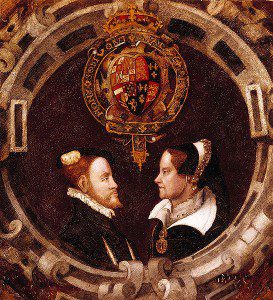
PhilipMaryBerger-273x300

By Bradley Dixon

When William Strachey imagined Virginia’s future, he pictured Peru.

In 1612, the colony’s former secretary compared the Powhatan Indians of Virginia with the “Cassiques or Comaunders of Indian Townes in Peru” whose people mined the silver that was filling Spain’s coffers. The caciques, Strachey wrote, were “rich in their furniture horses and Cattell.” Their wealth, however, was not only in material goods but in political capital—namely, the protection they received as vassals to the king of Spain. In the same way, Strachey pictured Virginia’s Indians becoming vassals to England’s “king James, who will give them Justice and defend them against their enemyes.”

This passage poses a number of interesting questions. How could a Protestant Englishman like Strachey look to Catholic Spain as a model for ruling indigenous peoples? Where did he obtain his information about the nature of the Spanish Empire? And, perhaps most importantly, how does the fact that Strachey imagined Virginia as a Protestant Peru affect our understanding of the colonial venture that started in Jamestown?

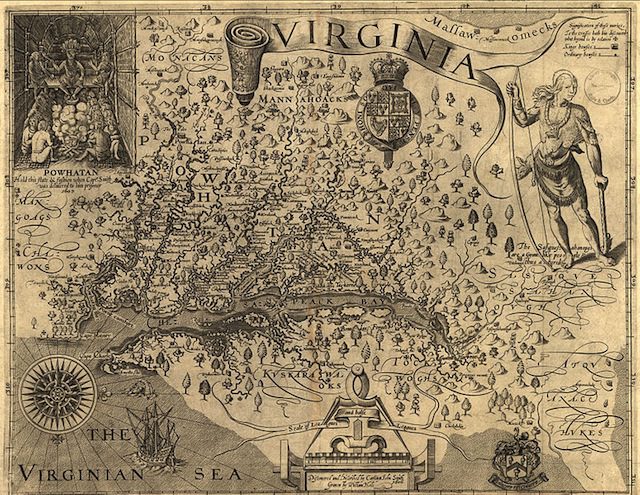
Map of Virginia, discovered and as described by Captain John Smith, 1606; engraved by William Hole.
Map of Virginia, discovered and as described by Captain John Smith, 1606; engraved by William Hole (Via Wikimedia commons)

This November, a conference of UT history graduate students and faculty drawn from near and far will consider these and other questions as they ponder the “entanglement” of the Spanish and British empires in the Atlantic world. Three scholars among the presenters—Eliga Gould, Jorge Cañizares-Esguerra, and Benjamin Breen—have already published work that complicates, opens, or even erases, the historiographical barrier that often stands between the British and Iberian Atlantics. Instead, they have emphasized the peoples, goods, and influences that crossed imperial boundaries. The Spanish empire, which throughout the colonial era was the older, larger, and richer of the two, exuded a powerful influence and served as a potent example for subsequent colonization enterprises by other European nations, notably Britain.

For Gould, the most important unit of analysis remains “empire.” Gould might explain William Strachey’s vision as a logical in a period in which Spain’s empire was not just preeminent but dominant. When Strachey wrote, Jamestown was a tiny, hardscrabble outpost within what Gould has called “a Spanish periphery that included much of the Western Hemisphere.” Seen from this perspective, one might picture the two empires as partners in a dance, each watching the other, anticipating the other’s moves. Gould argues that the mutual influences of the two empires reached to their very cores. The encounters between the partner-empires happened in locales far and wide, not just on their outer borders.

 Description des Indes Occidentales [Description of the West Indies]. Antonio de Herrera y Tordesillas. Amsterdam: M. Colin, 1622. (Courtesy of the Library of Congress)
Map from the Description des Indes Occidentales [Description of the West Indies]. Antonio de Herrera y Tordesillas. Amsterdam: M. Colin, 1622. (Courtesy of the Library of Congress)

Cañizares-Esguerra and Breen proposed, as an alternative model, a “hybrid Atlantic” that de-centers both the nation-state and the empire as the major units of analysis. More important to the development of the hybrid Atlantic are the “local contingencies, cultural exchanges, extra-national groups, indigenous perspectives, and the roles of nonhuman actors like objects, environments, and ecologies.” The political map of this hybrid Atlantic would have little in common with traditional maps of European imperial influence. The hybrid Atlantic model recognizes the many places that “were only nominally controlled by any European state in the colonial era.”

If Gould’s model of entanglement is the dance of empires, then Cañizares-Esguerra’s and Breen’s seems more like an elaborate pinball game that Jorge Luis Borges might have imagined. The machine encompasses the entire Atlantic world with, not multiple, but millions of balls in play, careening into each other and transforming the bumpers and flippers themselves as they collide with them.

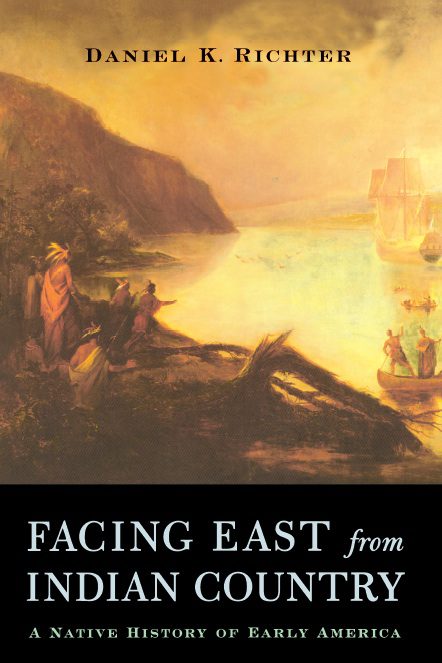
More than a decade ago, Daniel K. Richter turned the perspective of early North America around in another way, recounting the history of colonization from the American Indian’s point of view. “Facing East from Indian Country,” the title of his now-classic book, has become a shorthand for placing the views of Native Americans at the heart of North American history.

Daniel K. Richter, Facing Eaast from Indian Country (2003)
Daniel K. Richter, Facing East from Indian Country (2003)

So, what if, as a thought experiment, we faced northwards from the Andes? Seen from Peru, both Virginia and New England look very different from the image that most people in the United States learned in school, in which these tiny settlements are the original acorns from which mighty oaks would one day grow.

Viewed from the Andes, Virginia was but a small outpost—and a trespass—in La Florida, a region where Spanish missions were already fifty years old and where Native American polities were independent and sovereign. Likewise, when seen in this way, familiar figures appear in a different guise. John Smith becomes a would-be conquistador, striving to subdue the peoples of the Chesapeake. Captain Christopher Newport, like a latter day Cortes or Pizarro, sought to crown—and thus make a vassal of—a Native emperor, Powhatan. The colonial world that emerged in the Chesapeake would be different but its differences must have seemed like matters of scale at the beginning.

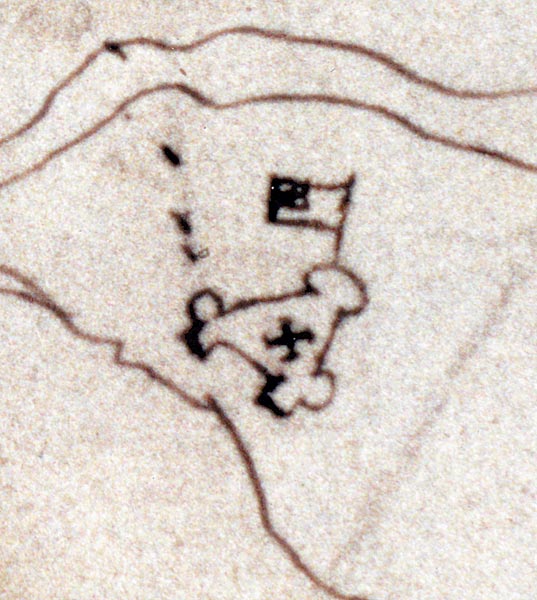
Sketch of the Jamestown fort sent to King Philip III of Spain by his ambassador Zuniga. The sketch was found on the back of a map made by John Smith in 1608. The cross is thought to represent the church and the flag like drawing may be a garden. It may also be a representation of the early 17th century English blue ensign. (via Wikimedia Commons)

From the Andes, the settlements of the British Empire probably always seemed smaller. That is, until it wasn’t small anymore and was barking at the gates of the Spanish empire. But even then, both empires watched each other carefully for weaknesses and for ideas.

This southern perspective offers only one way that we might begin to perceive and conceive of the “entanglements” between the British and Spanish Americas. As the conference gathers in November, we look forward to exploring others.

bugburnt

You may also like:

Jorge Esguerra-Cañizares discusses his book Puritan Conquistadors: Iberianizing the Atlantic, 1550-170 (Stanford University Press, 2006) on Not Even Past.

Renata Keller discusses Empires of the Atlantic World: Britain and Spain in the Americas, 1492-1830 (Yale University Press, 2007) by J.H. Elliott

Christina Marie Villarreal recommends Visible Empire: Botanical Expeditions and Visual Culture in the Hispanic Enlightenment (University of Chicago Press, 2012) by Daniela Bleichmar


bugburnt


Sources:

Jorge Cañizares-Esguerra and Benjamin Breen, “Hybrid Atlantics: Future Directions for the History of the Atlantic World,” History Compass 11/8 (2013)

Eliga H. Gould, “Entangled Histories, Entangled Worlds: The English-Speaking Atlantic as a Spanish Periphery,” American Historical Review 112, no. 3 (Jun., 2007).

Daniel K. Richter, Facing East from Indian Country: a Native History of Early America (Cambridge, MA: Harvard University Press, 2003)

William Strachey, “The Historie of Travell into Virginia Britania,” in Captain John Smith: Writings and Other Narratives of Roanoke, Jamestown, and the First English Settlement of America, ed. James Horn (New York: Literary Classics of the United States, Inc., 2007).


bugburnt


Recent Posts

  • AVAnnotate:  A Research and Teaching Tool for Creating Digital Exhibits and Editions with Audiovisual Recordings
  • A Shogun’s Tale: How William Adams Became the West’s Favorite Samurai
  • Review of Puerto Rican Chicago: Schooling the City 1940-1977 (2022).
  • Álvar Núñez Cabeza de Vaca: Survivor and First Spanish Chronicler of Texas
  • Pauliceia 2.0: A Collaborative and Open-Source Historical Mapping Platform
NOT EVEN PAST is produced by

The Department of History

The University of Texas at Austin

We are supported by the College of Liberal Arts
And our Readers

Donate
Contact

All content © 2010-present NOT EVEN PAST and the authors, unless otherwise noted

Sign up to receive our MONTHLY NEWSLETTER

  • Features
  • Reviews
  • Teaching
  • Watch & Listen
  • About