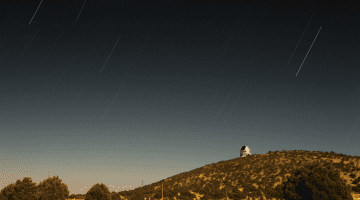
Four hundred and fifty miles west of the University of Texas at Austin, thirty-seven miles (as the car drives) north of the town of Marfa, Texas, and almost 6,800 feet above sea level sit the white and silver domes of the McDonald Observatory.
The past is never dead. It's not even past
Four hundred and fifty miles west of the University of Texas at Austin, thirty-seven miles (as the car drives) north of the town of Marfa, Texas, and almost 6,800 feet above sea level sit the white and silver domes of the McDonald Observatory.
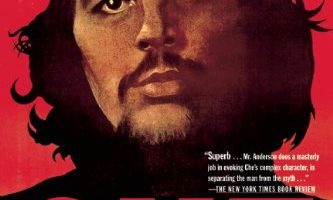
In July 1997, a Cuban-Argentine forensic team unearthed the skeletal remains of Comandante Ernesto “Che” Guevara in Vallegrande, Bolivia. Thirty years earlier, on October 9, 1967, CIA-trained Bolivian Special Forces agents had captured and executed the thirty-nine-year-old revolutionary before dumping his body in a shallow pit near a dirt runway.
The first issue of a new student-oriented online journal, History in the Making, was launched this month in Sydney, Australia.
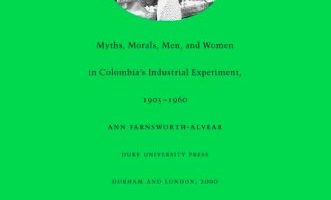
Dulcinea in the Factory presents a gendered historical analysis of the boom in the textiles industry in Medellín that goes beyond the typical economic analysis of industry-based modernity. It places gender in the context of the roles of the church and the paternalistic factory owners as well as the memories of the workers, to tell this history of forgotten myths and morals in the workplace.
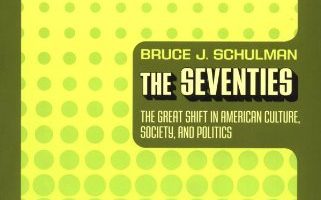
Bruce J. Schulman in his 2001 work The Seventies: The Great Shift in American Culture, Society, and Politics surveys the history of an overlooked decade. Defining the “long 1970s” as the period between Richard Nixon’s entrance in the White House in 1969 and Ronald Reagan’s landslide reelection in 1984, Schulman counters popular conceptions that the decade was seemingly forgettable and unimportant.
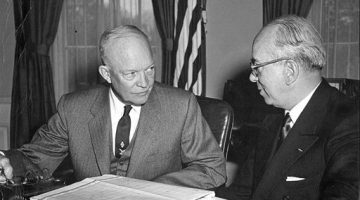
As the international community scrambles to stop a nuclear-armed Iran from adding more fuel to the powder keg of Middle Eastern geopolitics, it is vital that contrasting understandings of the international nuclear nonproliferation regime among nations, particularly the purpose of the Nuclear Non-Proliferation Treaty administered by the IAEA, be acknowledged and resolved.
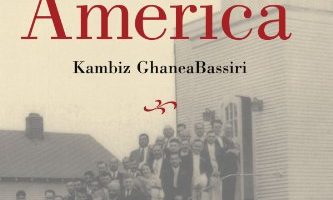
In the last decade, the history of Muslims in America has come into its own and A History of Islam in America provides one of the most comprehensive and even-handed treatments of the subject. Many previous studies breezily pit “Islam” against the “West.”
The winners of our Student Essay Contest have been announced and posted!
They are:

Academy Award-winning director Clint Eastwood presents a biopic of one of the most powerful and controversial figures of twentieth-century America in the film J. Edgar.
On November 11, 1938, Pearl Buck awoke to learn that she had won the Nobel Prize for Literature. Her first reaction—in Chinese—was “Wo bu xiangxin (我不相信)” or “I don’t believe it.” She added in English: “That’s ridiculous.