• Features
  • Reviews
  • Teaching
  • Watch & Listen
  • About

The past is never dead. It's not even past

Not Even Past

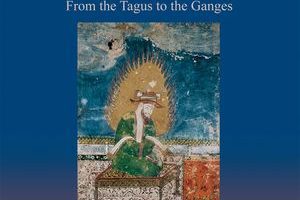
Explorations in Connected History: From the Tagus to the Ganges, by Sanjay Subrahmanyam (2004)

November 12, 2014

By Ben Breen  Sanjay Subrahmanyam is a historian of remarkable erudition and imagination. His personal itineraries over the years—from the New Delhi School of Economics to the École des Hautes Études in Paris, and from Oxford to UCLA, where he currently holds an endowed chair in history—mirror those of the early modern travellers who frequently […]
The Global United States

November 1, 2014

Charting the rise of the United States from a peripheral, comparatively weak power in the late nineteenth century to the pinnacle of its military, diplomatic, and cultural influence in the early twenty-first. How and why did this momentous transformation occur? Who resisted and why? What were the attitudes of foreign nations as the United States became a great power of the first order and then surpassed them all?

Slavery in America: Back in the Headlines

October 22, 2014

People think they know everything about slavery in the United States, but they don’t.

A Texas Ranger and the Letter of the Law

October 22, 2014

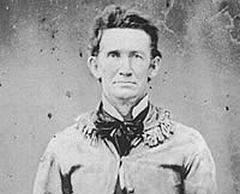
John Salmon Ford, photographed while serving as a Colonel in the Confederate 2nd Texas Cavalry during the War Between the States. Original photograph circa 1860 to 1865. (Via Wikimedia commons

John Salmon “Rip” Ford had a long military career as a soldier of the Texas Republic (1836-46). He was a volunteer in the Mexican War, a Texas Ranger on Texas’s borders, and commander of a Confederate Cavalry Regiment in the Civil War. Ford’s archive at UT-Austin’s Center for American History, contains records of his activities as a physician and newspaper editor, as well, revealing an uncommon breadth of occupational skills.

The Revolution will televise football

September 24, 2014

As football returns to living rooms across the United States, it’s worth remembering that the sport has an international appeal for many who have spent time in this country. Fifty years ago, one such foreign fan led a revolution from Tanzania.

The Countess’s Cats

September 4, 2014

Cats and dogs in art are rarely mere props. More than decoration, their presence serves a meaningful purpose. They may represent human endeavors, moralities, values, and behaviors. Alternately, their image may signify the lives and conditions of individual animals themselves, or entire categories of such animals, existing in domestic relationships with humans, as suppliers of labor, or even as a sources of food. Animals in art offer novel and useful ways to understand historical trends and events.

Student Showcase – From the Ashes: MacArthur’s Responsibility for Rebuilding Japan

August 4, 2014

Jake Manlove Rockport-Fulton Middle School Junior Division Individual Performance Read Jake’s Process Paper General Douglas MacArthur was a giant of the 20th-century world. After successfully leading Allied troops to victory in the Pacific, he oversaw the post-war occupation of Japan, a time of astonishing political, economic and social change across the country. But what kind […]

David’s Mighty Stone: How One Slave Laborer Restored Survivors’ Rights

June 16, 2014

Kacey Manlove Rockport Fulton High School Senior Division Historical Paper Read Kacey’s Paper Here Nazi Germany was not only responsible for death and violence across Europe. The Third Reich also enslaved millions in their factories. In particular, the German industrial giant I.G. Farben, which produced the Zyklon B that murdered so many during the holocaust, […]

Ten Things to Remember During Your Research Year

June 5, 2014

by Julia Gossard Congratulations, you passed your comps! Now the reality sets in that in order to write your brilliant dissertation, you have to do some serious research. Here are a few things to remember in order to survive and even thrive during your research year. 1. Plan your stay around the archives’ hours and […]

Germans into Nazis, by Peter Fritzsche (1998)

May 26, 2014

by Kevin Baker In Germans into Nazis, Peter Fritzsche examines four moments in German history between 1914 and 1933 that exemplify how the Nazi movement became possible. He looks at the mass crowds of July-August 1914 when Germany mobilized at the beginning of the Great War, the crowds in 1918 following military defeat, the crowds […]

« Previous Page
Next Page »

Recent Posts

  • Historia, ¿para quién? desde la radio pública en México
  • History—For Whom? From The Public Radio in Mexico
  • Beyond the Waters: Oral History and the Save Our Springs Movement of Late-Twentieth-Century Austin
  • Review of Brown Skins, White Coats: Race Science in India, 1920-66 (2022)
  • Las cosas tienen vida:  Un podcast sobre el rol de los objetos coloniales en nuestras vidas actuales 
NOT EVEN PAST is produced by

The Department of History

The University of Texas at Austin

We are supported by the College of Liberal Arts
And our Readers

Donate
Contact

All content © 2010-present NOT EVEN PAST and the authors, unless otherwise noted

Sign up to receive our MONTHLY NEWSLETTER

  • Features
  • Reviews
  • Teaching
  • Watch & Listen
  • About