• Features
  • Reviews
  • Teaching
  • Watch & Listen
  • About

The past is never dead. It's not even past

Not Even Past

History—For Whom? From The Public Radio in Mexico

This article is part of the series: History Beyond Academia

Este artículo tiene una versión en español

History, for whom? (Historia ¿para quién?) is the result of a conversation sustained over several years between young historians and a communicator interested in bringing historical reflection into everyday life. From the outset, the main question was how to translate complex topics—both historical and contemporary—into clear, accessible, and understandable content for very diverse audiences within Mexico’s public media. 

After the coronavirus pandemic, opportunities emerged to bring the ideas born of those conversations down to earth. Thanks to the generosity and complicity of many colleagues, we were able to experiment with different formats and across various public media outlets, whose doors were opened to us by the National Institute of Historical Studies of the Mexican Revolutions (INEHRM). 

In this sense, we consider Historia ¿para quién? to be the product of collaborative work among women dedicated to the social sciences and communication, including María Minero, Fernanda Nares, Guadalupe Muro, Ana Salinas, and Jehiely Hernández, from whom we have learned and with whom we have had the privilege of working. 

It is also a project that emerges from the federal public administration, as it depends on funding from the Ministry of Culture through INEHRM, as well as on the production, technical support, and broadcasting of Radio Educación. This means that it responds to the right of access to culture and therefore its contents require institutional validation. It is worth noting that this has not limited the expression of ideas or the selection of topics; on the contrary, institutional backing has allowed us to connect with multiple specialists, converse with people responsible for little-known collections, and give visibility to independent projects that are doing a great deal to preserve and disseminate historical memory. 
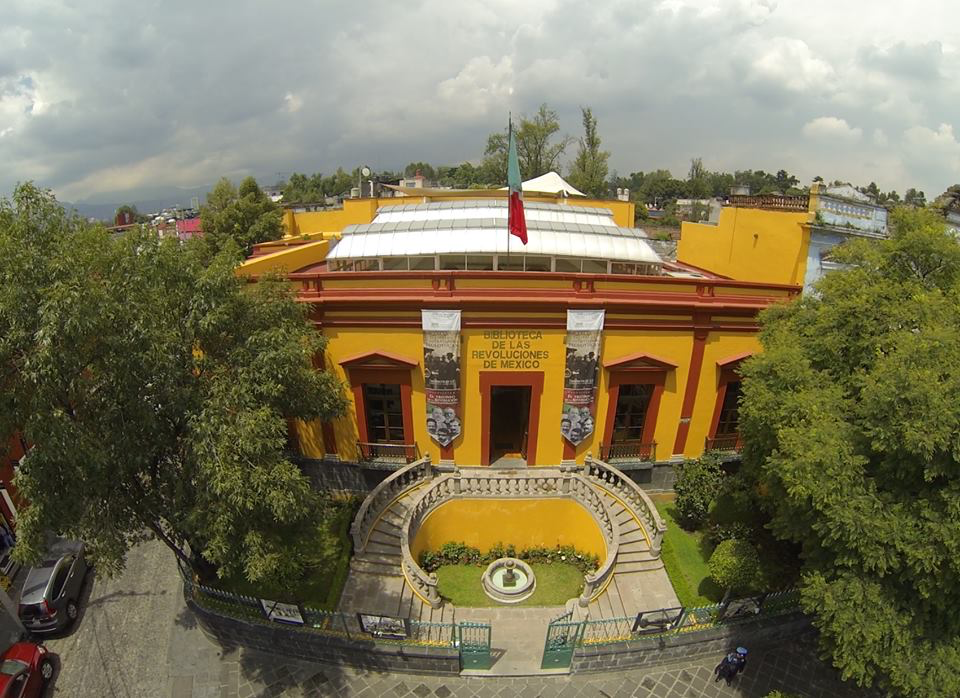
Late 19th century building in Mexico

Instituto Nacional de Estudios Históricos de las Revoluciones de México. Source: Wikimedia Commons

The people responsible for bringing this project to life were the authors of this text: Natalia Luna and Tamara Aranda. Dr. Felipe Ávila, director of INEHRM, and M.A. Jimena Salgado, the institute’s director of outreach, placed their trust in us for this enormous and very important task. Holding fast to our initial premise, we decided to name the program Historia ¿para quién?, because the title encapsulates what matters most to us both: placing audiences—their interests and rights—at the center of the conversation. This was about democratizing historical knowledge to its fullest extent. 

Then came the planning of the format. To meet our objectives, we opted for the specialized interview, though with a warm and approachable tone, and included a segment providing historical context and another based on audience polling, giving listeners a voice to express themselves on each topic. We also added a song inspired by the conversation and a round of rapid-fire questions to energize the interview and push specialists to “get to the point.” 

The program is hosted by Tamara Aranda, a historian and researcher at INEHRM, and Natalia Luna, a communicator with more than a decade of experience in public media. In this project we found many points of convergence, ranging from personal interests—which are also political—to the need to explain and debate them through historical perspectives. Thanks to the collaboration and co-production between INEHRM and Radio Educación—a century-old broadcaster on the radio dial—a 55-minute space opened up for us to develop the program. 

We asked ourselves what the current proposals were for communicating history and why there were so few spaces dedicated to historical dissemination using a more colloquial language, with a gender perspective, inclusive, and willing to step outside the margins of “History with a capital H” to let popular culture enter narratives about the past. 

We were also interested in inviting young (and not-so-young) specialists whose projects, research, and knowledge transcend the walls of academia. We believe that the media—and public radio in particular—have an obligation to open spaces to disseminate knowledge and offer tools to audiences with very concrete rights: to understand, question, and better discern the reality around us. In the end, all of us are audiences. 

The day-to-day work of Historia ¿para quién?  is sustained by curiosity, wonder, and openness. Often we react to our own lives: to the people we meet, the topics we discover, the colloquia and conferences we attend. From there come the ideas that later become programs. 

Promotional banner for the radio show

Promotional banner.

We have a list of topics to address and a series of sound resources to “dress” the program: short segments, street polls to hear what people know or think, songs that dialogue with the historical moment, and audience messages—essential for generating resonance and feedback. It is essential here to thank Juan Ramírez, responsible for sound design and reporting that enriches the program. 

Any team member can propose a topic; we review possible specialist guests and, from there, collectively support the work. Tamara provides historical advising for each episode and conducts the research that then becomes a short segment. Natalia translates that work into a script designed for audiences, with trigger questions and resources specific to radio language. Both of us record the segment voices and host the program. 

The team is completed by Alma Lilia Martínez as production assistant and Mario Ledesma as general producer, who oversee the final product and coordinate timing, recording studios, and articulation with the station’s social media. 

For the dissemination of each program, we follow a basic rule: we cannot take anything for granted. Academic knowledge—and, in our case, historical knowledge—is not a common starting point for everyone. There will always be someone who does not share the same references, and it is precisely in the effort to break down topics to their apparent simplicity that the complexity of communicating to very diverse publics lies. Radio, the sound archive, and the digital platforms where the program is hosted are the tools with which we try to accompany that process. 

Our initial audience is Radio Educación’s listeners on 96.5 FM. Although we do not have precise metrics, our fifteen years of experience collaborating there tell us that a good portion of our listeners have grown up alongside the station. It is a predominantly older audience that participates critically through calls and messages: they congratulate us, question us, tell us how the topics resonate, and what else they would like to hear. 

At the same time, we have the mission of reaching younger audiences through the program’s repository on Spotify, where Historia ¿para quién?  can be listened to on demand and circulate through other circuits, especially among students and people linked to historical research and the humanities. 

Another core audience is INEHRM’s public, which spans a wide range of ages, genders, and geographic locations. As a national institute with more than 70 years of history, it has partnerships with institutions throughout the country, which makes it possible to decentralize history and take it beyond Mexico City and its metropolitan area. This also helps expand the thematic range and address histories that resonate in every corner of Mexico, connecting with local specialists and reaching audiences who call or write from across the Republic and even from other countries. 

After more than half a year on the air, we believe our work has helped rethink some traditional notions of how history is viewed, beginning with dismantling the idea that history is only the past and, as such, distant and sacred. On Historia ¿para quién?  we have critically reflected on events that seem far removed in time, but whose effects are observable today. Colonialism or Mexican Independence are examples of topics we have revisited with the help of experts who have shared their knowledge clearly with us and the audience. 

We have also addressed painful topics in national and world history, from the Dirty War and Spanish exile to the Bosnian and Palestinian genocides. Through these programs we have touched sensitivities that appeal to the humanity of listeners, giving History with a capital H a human character that makes it close and open to questioning. 

We analyze current problems through a historical lens to rethink our present and invite the listening community to imagine solutions. If feminists of the past were able to set aside their differences to fight together for citizenship rights, women struggling today can also generate more effective measures for access to justice; likewise, something must be done urgently, as citizens, if investigation files of people disappeared in the 1970s are piling up in prosecutors’ offices alongside those of the twenty-first century. Ignorance of history not only carries the risk of repetition, but also of non-repair and, worse still, the accumulation of grievances. In this sense, ignoring history condemns us to impunity and to perpetuating suffering. 

After 30 programs, we can state with satisfaction that our objectives have been met, both communicatively and institutionally, as the project has become a platform for colleagues inside and outside academia, as well as within the institute itself, whose areas of expertise enrich our understanding of the present and deserve not only to be heard, but to be recognized. 

For those of us who sign this text, the greatest challenges in carrying out the project were related to adapting language and communication strategies for a broad public. This is always difficult for those of us who come from academic spaces, because the habit of writing and speaking for peers weighs heavily. Fortunately, we managed to distance ourselves from tradition and think beyond the booth and the cubicle. We believe this is due to Natalia’s experience and sensitivity in public media and cultural and historical outreach projects, as well as Tamara’s lack of routine in academic exercises after having moved through such diverse worlds as public administration and human rights activism. 

Vendors selling produce and meat at a market

Public market in Mexico. Source: Wikimedia Commons

Forming a team composed of a historical researcher and a communicator forces us to maintain a dialogue outside strictly academic frameworks. This cross-pollination of knowledge has allowed us to rethink questions and ways of approaching knowledge, always keeping the social usefulness of history at the center. We often begin with the present moment as a trigger for constructing a historical understanding of our reality. 

We also believe that the program’s positive results are due to the great team behind it, especially INEHRM and Radio Educación, where Juan Ramírez’s mastery has brought to air programs far more beautiful than we imagined. Juan, the magician who always makes us sound smarter and who, through his interviews, becomes the bridge between our ideas and what truly matters in the streets. 

Together with our audiences, we explore how every element of our lives contains the possibility of being historicized and, in that sense, gains relevance in the passage from the individual to the collective. For the project, it has been fundamental to position ourselves there: in the street and its many voices, in the everyday as a space where history is woven daily and therefore deserves to be told. 

In this sense, Historia ¿para quién?  seeks to stop overlooking topics, characters, and events; to open space for doubt; and to engage in horizontal dialogue in order to critically reclaim what has always been ours. 

In this process, history ceases to be merely knowledge about the past and becomes a public practice: a tool to name experiences, recognize inequalities, dispute common sense, and expand the repertoire of what is imaginable. When historical conversation circulates outside specialized spaces—without renouncing rigor, but assuming a commitment to intelligibility and listening—public life is strengthened: it becomes more capable of deliberating, remembering, and demanding. 

Ultimately, the public value of this work appears in small scenes: a question that lingers after the radio is turned off, a family anecdote that suddenly connects with a collective process, a street that ceases to be a simple route and becomes a living archive. There, in that instant when the present becomes legible in the light of other eras—and the past reveals itself as something that still looks back at us—history recovers its power: not as a monument, but as a conversation. 

Finally, if we celebrate this beloved project as a success, it is because of the messages left by our audiences. Through our contact channels, we know that our narrative has impacted the way listeners understand and relate to history. We therefore close this text with the last message we received on Radio Educación’s WhatsApp: 

“…I think the great lesson I take away today, from the program of December 22, 2025, is that we human beings are a narration… and since the program is called Historia ¿para quién?, I think it would be important to ask who is building the [narration of] history, and I include myself—not because I am a historian, but because I am a citizen who wants to participate in building this country, which I truly hope will soon be a new country. In short, I think that today it is up to all of us to build the narration of our history.” 


Tamara Aranda studied history at Uiversidad Nacional Autónoma de México (Facultad de Estudios Superiores Acatlán). She is currently a researcher at the Instituto Nacional de Estudios Históricos de las Revoluciones de México (INEHRM) and co-host of Historia, ¿para quién? on Radio Educación.

Natalia Luna is a communicator and radio host with over a decade of experience in public media. She co-hosts Historia, ¿para quién? on Radio Educación, where she works to translate historical research into accessible content for diverse audiences.


The views and opinions expressed in this article or video are those of the individual author(s) or presenter(s) and do not necessarily reflect the policy or views of the editors at Not Even Past, the UT Department of History, the University of Texas at Austin, or the UT System Board of Regents. Not Even Past is an online public history magazine rather than a peer-reviewed academic journal. While we make efforts to ensure that factual information in articles was obtained from reliable sources, Not Even Past is not responsible for any errors or omissions.
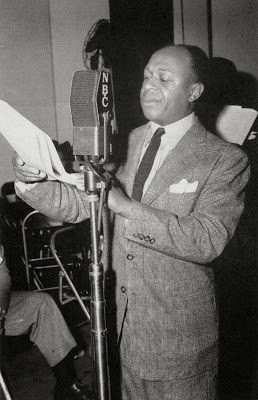
Eddie Anderson, the Black Film Star Created by Radio

By Kathryn Fuller-Seeley

In December 1939 Academy Award nominated, African American actress Hattie McDaniel was barred from attending the premiere of Gone with the Wind in Atlanta, Georgia because of her race Just four months later, a quite different scenario played out in New York City. In April 1940, the first elaborate premiere of a Hollywood studio-produced film was held in Harlem, the cultural capital of black America. Paramount Studios sponsored two simultaneous world premieres of Buck Benny Rides Again, a movie which, in every way but actual billing, co-starred American network radio’s premiere comedy star, Jack Benny, and his radio valet and butler, Eddie “Rochester” Anderson. One gala was held at the studio’s flagship theater, the Paramount, in midtown Manhattan. The other was held at the Loew’s Victoria Theater on 125th Street, in the heart of Harlem. In a most unusual move in an industry that limited roles for African-American performers to tiny, often uncredited parts as servants, Paramount also aggressively promoted the film’s surprise, break-out co-star, African American actor Anderson.

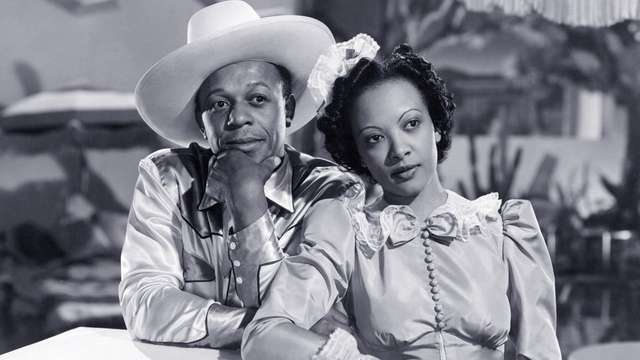
Eddie Anderson and Theresa Harris in Buck Benny Rides Again

Paramount’s publicity department released a barrage of publicity in New York and in major African American newspapers across the nation, touting “Hollywood goes to Harlem!” for the separate premiere of Buck Benny Rides Again on the night before, April 23, 1940. The Victoria Theater was a 2,400 seat picture palace adjacent to the Apollo Theater. Eddie “Rochester” Anderson, Jack Benny’s film co-star, was given the “hail the conquering hero” treatment in Harlem—an estimated 150,000 people lined the streets as Anderson and major political, social, and entertainment dignitaries of black America paraded to the theater. Jack Benny, his radio cast members, film director Mark Sandrich and Benny’s radio comic nemesis Fred Allen, all appeared on stage at the Victoria to praise Anderson. After the show, Anderson was honored with receptions at the Savoy Ballroom and the Theresa Hotel. The event was extensively covered in breathless detail by the nation’s black press, and blow-by-blow coverage of the premiere was carried on a local black-oriented radio station.

Anderson’s role in the Buck Benny film as Jack’s valet “Rochester” carried over from radio, in a witty and “hip” display of intermedia storytelling and crossover fame. Anderson’s performance stole the movie, as it gave “Rochester” far more screen time than black actors had found in any Hollywood film that had not been a black cast feature. Buck Benny featured Rochester’s witty retorts to Jack’s (whom Rochester cheekily calls “Boss”) egotistical vanities, croaked out in his distinctive, raspy voice. The film and the role positioned Anderson as one of the most prominent African American performers of the era, despite—and because of—mainstream white racial attitudes of the day. It took star status in a rival medium (as co-star with a white comedian) for a black actor to achieve prominence in American film.

Buck Benny was among the highest grossing movies of the year at the American box office in 1940. Throughout the nation, movie theaters billed the film on marquees as co-starring Benny and “Rochester.” In many theaters, especially African American theaters in the South, but also in white and black neighborhood movie houses elsewhere across the nation, the marquee billing put “Rochester’s” name first above the title. The film’s box office success led to recognition of Anderson and Benny as spokesmen for civil rights and integration. The two were named to the Schomburg Center Honor Roll for Race Relations for their public efforts to foster interracial understanding. This moment before World War II further raised the consciousness of a young generation of African Americans to fight for civil rights, in an interlude before racist white backlash coalesced to further limit black entertainers in American popular media. Anderson’s success caused him to be hailed in black newspapers as being a harbinger of a “new day” in interracial amity and new possibilities for black artistic, social, and economic achievement.

Eddie Anderson’s radio-fueled movie stardom complicates the shameful Hollywood story of racism, racial attitudes, and restrictive limits on representations of African Americans in film and popular entertainment media in the late 1930s and World War II era. A middle-aged dancer, singer, and comic who’d forged a regional career in West Coast vaudeville and mostly un-credited servant roles in Hollywood films, Anderson rocketed to stardom due to his role on Jack Benny’s Jell-O program, one of the top-rated comedy-variety programs on radio in the 1930s. Anderson’s “Rochester” role in his first years on Jack Benny’s radio program (1937-1938) had contained heavy doses of minstrel stereotypes—stealing, dice-playing, superstitions—but from the beginning the denigratory characteristics were counterbalanced by the valet’s quick wit and irreverence for Benny’s authority, accentuated by his inimitable voice and the wonderful timing of his pert retorts and disgruntled, disbelieving “Come now!” This spark of intelligence and individual personality that Benny and his writers gave Anderson to work with, which he so embellished with his performance, made him an immediate sensation on Benny’s show.

Rochester critiqued Benny’s every order and decision, with an informality of interracial interaction unusual in radio or film depictions of the day. His lively bumptiousness raised his character above other, more stereotypical black servants in American popular media. Rochester could appeal to a wide variety of listeners, as historian Melvin Ely notes of “Amos n Andy.” He always remained a loyal servant and had to follow Benny’s orders, so he was palatable to those listeners most resistant to social change. Yet, in a small way, Rochester spoke truth to power, and he was portrayed by an actual African-American actor, so he gained sympathy and affection among many black listeners.

The enormous box office success of Eddie Anderson’s three co-starred films with Jack Benny in 1940-1941 fueled optimistic hopes in the black press that prejudiced racial attitudes could be softening in the white South. Rochester was hopefully opening a wedge to destroy the old myths that racist Southern whites refused to watch black performers, the myths to which racist white film and radio producers so stubbornly clung. The Pittsburgh Courier lauded Anderson as a “goodwill ambassador” bringing a message of respectability and equality to whites in Hollywood and across the nation. The hurtful representations of blacks in the mass media of the past could finally be put aside, The Los Angeles based African American newspaper, The California Eagle, optimistically argued in an editorial that Anderson’s example pointed to new hopes for interracial tolerance and black cultural and social achievement:

Two years ago Americans became conscious of a new thought in Negro comedy. It was really a revolution, for Jack Benny’s impudent butler-valet-chauffeur, “Rochester Van Jones” said all the things which a fifty year tradition of the stage proclaimed that American audiences will not accept from a black man. Time and again, “Rochester” outwitted his employer, and the nation’s radio audiences rocked with mirth. Finally, “Rochester” appeared with “Mistah Benny” in a motion picture – a picture in which he consumed just as much footage as the star. The nation’s movie audiences rocked with mirth. So, it may well be that “Rochester” has given colored entertainers a new day and a new dignity on screen and radio.

Eddie Anderson’s cross-media and cross-racial stardom was very real in the U.S. popular media between 1940 and 1943. Unfortunately, a series of unforeseen events, and the growing racial strife in the nation during the war curtailed Anderson’s film career. MGM attempted to build Anderson into a greater star, featuring him in its all-star black cast dramatic musical production of “Cabin in the Sky” with Lena Horne. But “Cabin in the Sky” was released in summer 1943, just as race riots erupted in Detroit and other manufacturing and military base cities over labor strife. Timid film exhibitors did not play up Anderson’s film or stardom for fear of violence playing out in their theaters. Racist white backlash against blacks gaining footholds of integration and prominence in American public life began spreading across the south. Anderson’s subsequent appearance in “Brewster’s Millions” (Paramount, 1945) caused the film to be banned in Memphis for its portrayal of pleasant interracial interactions. Although he remained the most prominent (and highest paid) black performer on radio and television through the late 1950s, his stardom faded to being only a core component of the Jack Benny ensemble.

From Kathryn Fuller-Seeley, Jack Benny and the Golden Age of Radio Comedy(2017).

More about radio, film, and race in the US

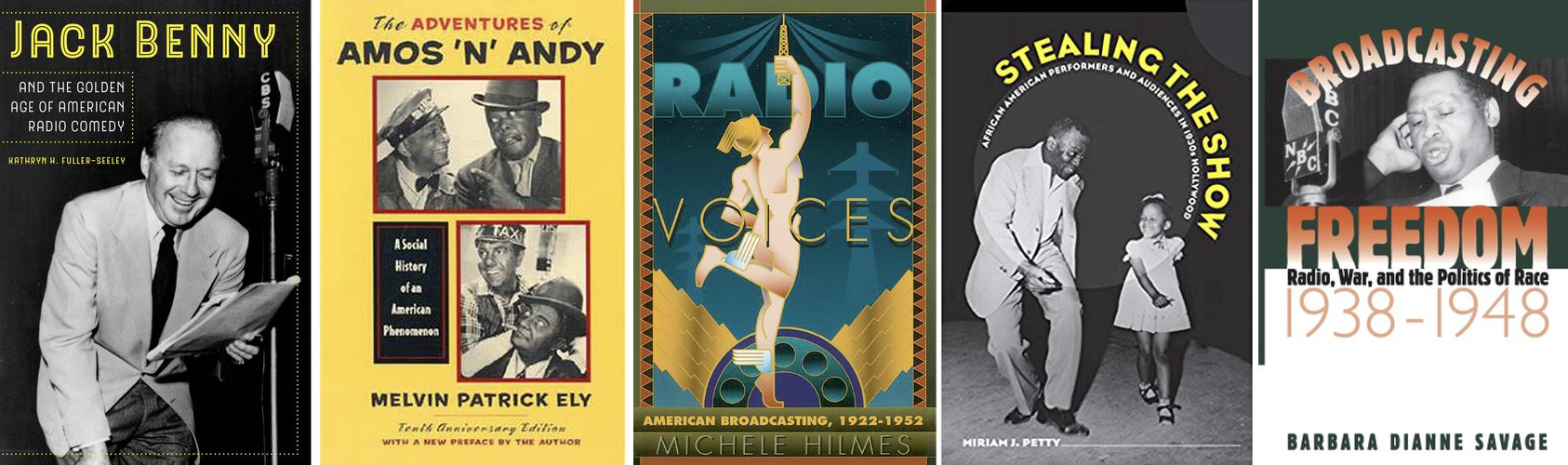
Melvin Ely, The Adventures of Amos n Andy: A Social History of an American Phenomenon. (1991). Ely examines the complexities of how two white entertainers created two comic black radio characters that divided American audiences, who either loved or loathed the most popular show on radio from 1928 until 1950.

Michele Hilmes. Radio Voices: American Broadcasting 1922-1952 (1997). This marvelous cultural history of the rise, flourishing, and demise of radio in American culture broke new ground in discussing the importance of gender and race for radio producers, narratives, and listeners.

Miriam J. Petty, Stealing the Show: African American Performers and Audiences in 1930s Hollywood ( 2016). Petty uncovers the many subtle ways that black film performers layered meaning, dignity, and outstanding talent into the minor roles they were given in American films.

Barbara Savage, Broadcasting Freedom: Radio, War and the Politics of Race (North Carolina, 1999). Savage explores the opportunities that wartime needs for African-American participation and support provided for more equitable representation and address in the nation’s most widespread media form.

  Quotations:

“Rochester: A New Day” California Eagle 24 April 1941: 8.

“Harlem’s Reception for Rochester at Film Premiere Tue, will top all previous ones,” New Amsterdam News 20 April 1940: 20.

“New Yorkers all set for Rochester’s Film Premiere,” Chicago Defender 20 April 1940: 20.

Media and Politics From the Prague Spring Archive

By Ian Goodale

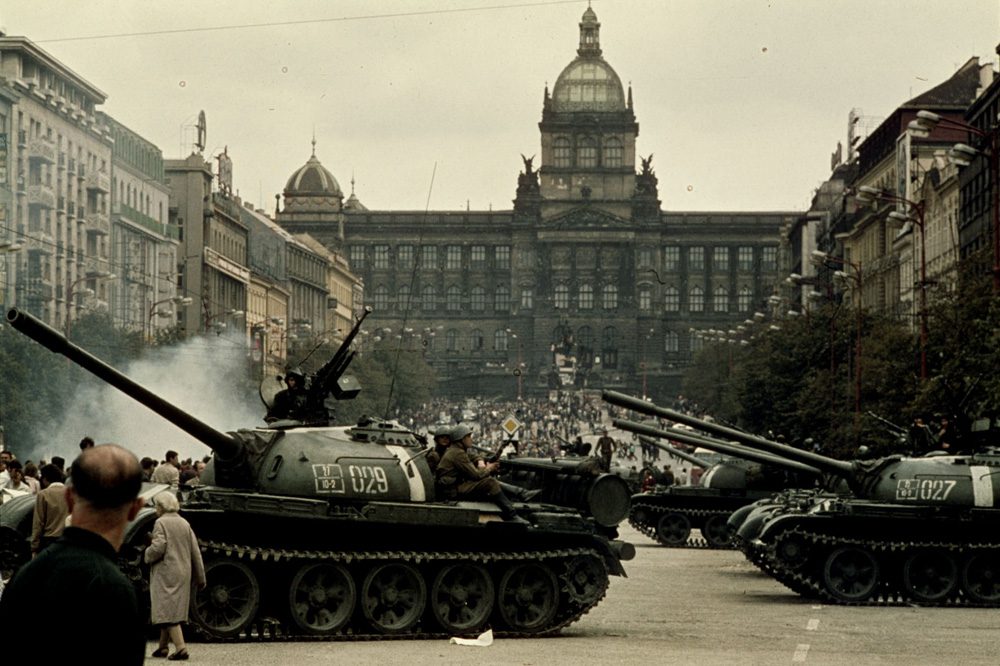
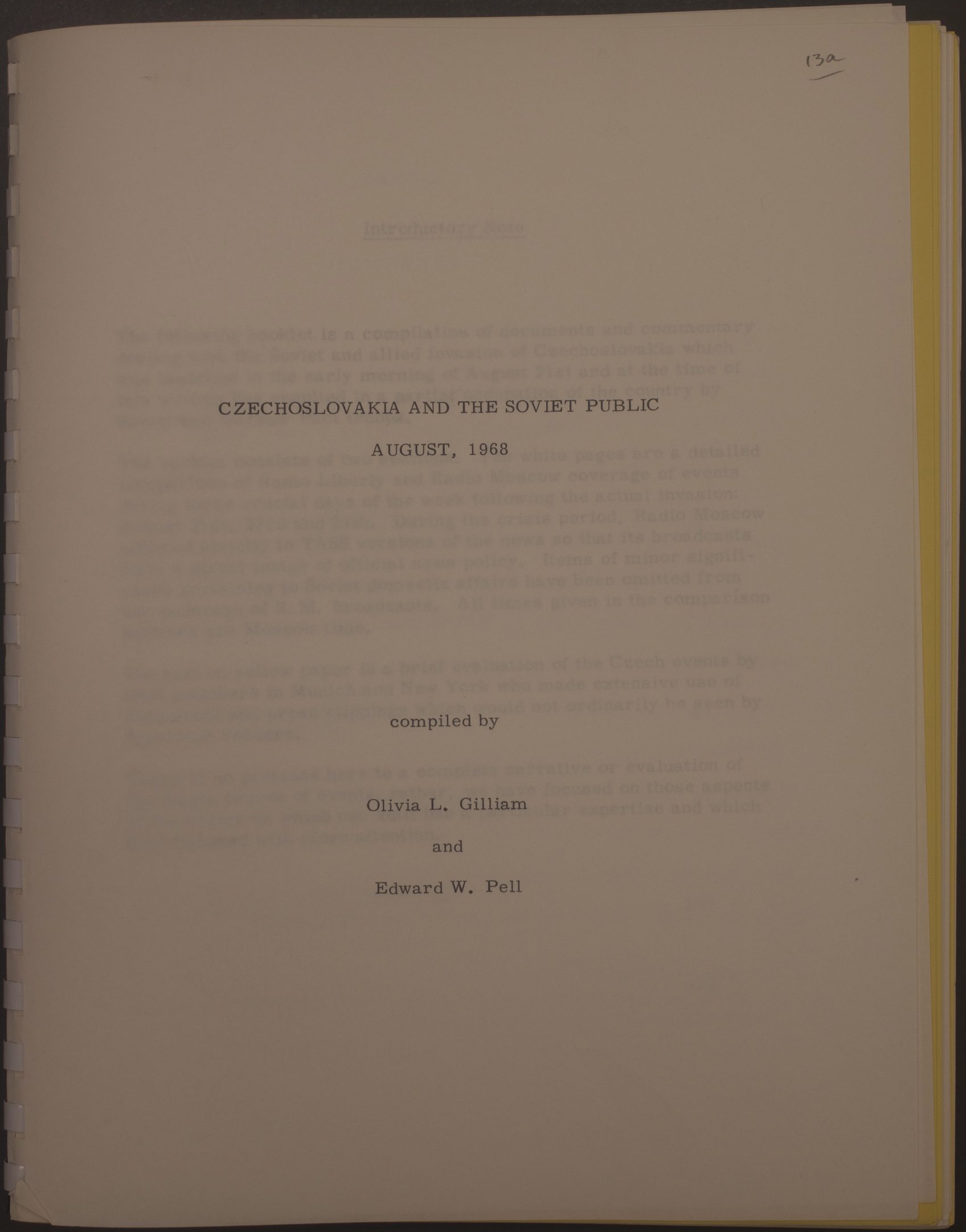
In an unpublished letter to the Soviet daily newspaper Izvestiia, Liudmila Chukovskaya wrote that “muteness has always been the support of despotism.” This quote is cited in the booklet, Czechoslovakia and Soviet Public, compiled by the Radio Liberty Committee in New York in August 1968 to analyze the coverage of the Soviet invasion of Prague. During the Cold War, the media—and radio broadcasts in particular—were used as weapons by the U.S. and the Soviet Union in their battle to define a geopolitical narrative in line with their respective national interests. By examining the ways that both U.S.-backed and Soviet-supported media sources attempted to portray the events of the invasion of Czechoslovakia, this booklet serves as an important resource not just for understanding this specific event, but for how media was used by the two superpowers in their struggle for power and influence.

Soviet invasion of Prague, 1968 (via Mitteleuropa).

The two media sources analyzed by the booklet, Radio Liberty and Radio Moscow, were key propaganda arms of the United States and the USSR, respectively. In addition to the comparison of the coverage of these events by Radio Liberty and Radio Moscow, the booklet contains evaluations of the Czech events by staff members of the Radio Liberty Committee in Munich and New York, utilizing various documents and press clippings unavailable to the general American public. As such, the document provides a comprehensive overview of the events surrounding the Prague Spring as they were depicted by the popular and state-run media. This is not a complete narrative of the invasion, but a direct account of the ways it was portrayed by opposing sides of the conflict.

The front page of the Radio Liberty booklet (via author).

Radio Liberty, a radio station funded by the U.S. government to counter the Soviet-funded Radio Moscow, was a key piece of the U.S.’s propaganda strategy in its fight against the spread of communism in Europe.  Founded in 1951 as an anti-communist news service directly targeting the Soviet Union, it began broadcasting in 1953, four days before the death of Stalin. It eventually expanded from its initial broadcasting base in Germany to include transmitters in Portugal, Spain, and Taiwan, the latter of which was used to direct broadcasts to Russia’s eastern provinces. By December of 1954, Radio Liberty was broadcasting in 17 different languages.

Radio Moscow, a state-run station in the Soviet Union, served a similar propagandistic role, broadcasting in German, English, and French in an attempt to reach western European audiences. The U.S. began to be targeted by the broadcasts in the 1950s, during the Cold War, with transmitters situated first in the Moscow region and, later, in Vladivostok and Magdalan. In the early 1960s the station began broadcasting in African languages, further broadening its audience.

Radio Free Europe/Radio Liberty still has an office in Prague and broadcasts in Eastern Europe, Central Asia, and the Middle East (via Wikimedia Commons).

The booklet notes the differing strategies of the two countries in their handling of the invasion. Soviet media, for example, simply refused to acknowledge a host of inconvenient truths regarding Czechoslovakia, remaining, as the booklet notes, “blind and mute” to student demonstrations, the broader democratization of Czech society, and even the replacement of party leader Antonín Novotný with Alexander Dubček. While Radio Liberty broadcast favorable news widely to promote its agenda–such as the fact that Czech citizens missed “no occasion…to let the Soviet troops know they were not welcome…students walked brazenly with flags under the long guns of the tanks”–Radio Moscow remained silent on unfavorable events.

But this silence could not last. The Soviet strategy soon transitioned from this calculated muteness to one of scathing criticism of liberalization in Czechoslovakia. As Izvestiia proclaimed on September 7th, Radio Liberty and other Western media outlets–described as “press and radio working in the service of the monopolies”–were creating “vile anti-communist inventions” to undermine the Soviet Union. “Every day,” the paper proclaimed, “brings new proof of the provocatory role of imperialist propaganda.”

Alexander Dubček attempted to reform socialism in Czechoslovakia, which antagonized hardliners in Moscow and staunch Czech and Slovak anti-socialists (via Wikimedia Commons).

By comparing the reports from Radio Liberty and Radio Moscow side-by-side, these differing strategies become all the clearer. Situated within the broader Prague Spring archive, the document is a source that helps to understand how both the U.S. and Soviet governments strategized their media communications in a cultural and political battle, spinning events to serve their respective narratives. In an era of conflict and confusion over the geopolitical future, portrayal of the present became a battleground of ideologies, the media a weapon to promote each side’s agenda.


Olivia L. Gilliam and Edward P. Pell, August, 1968. Czechoslovakia and the Soviet Public. The University of Texas, Austin, TX. Accessed January 21, 2017. https://repositories.lib.utexas.edu/handle/2152/38273
doi:10.15781/T2PN8XF39


More by Ian Goodale on Not Even Past:
The Prague Spring Archive Project.

You may also like:
Restless Youth: The CIA, Socialist Humanism, and Yugoslavia’s 1968 Student Protests.
Historians on Occupy Wall Street: Protest, Dissent, and the Search for Order.

Great Books on Early Twentieth-Century Popular Music

by Karl Hagstrom Miller

Recent years have seen a real flowering of scholarship about the popular music of the early twentieth century.  Here are a few of my favorites—and a little something extra.

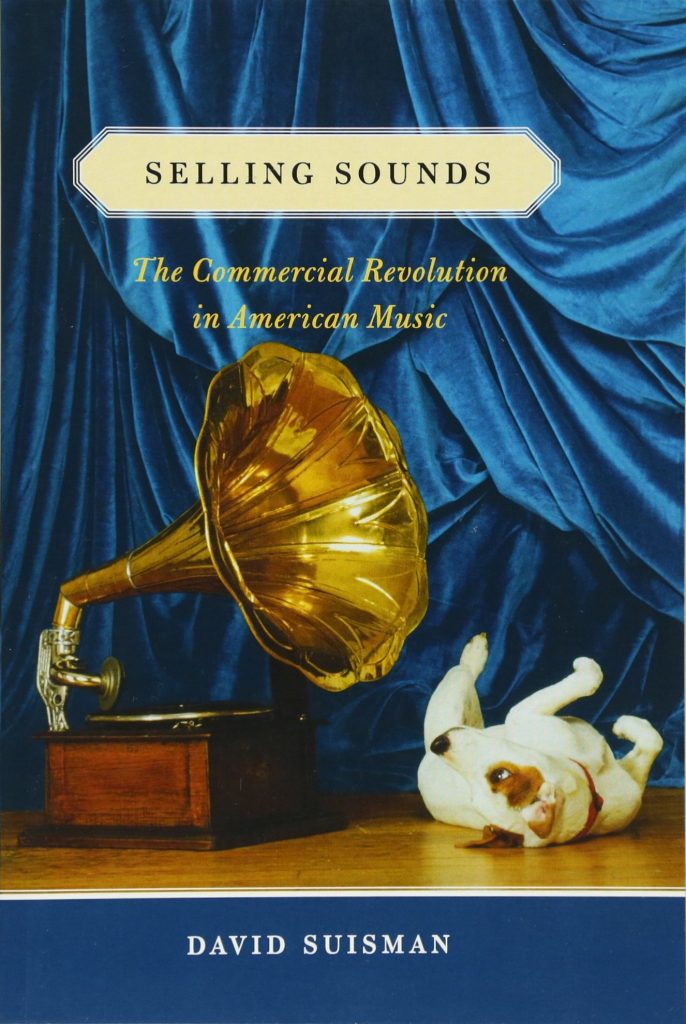
David Suisman, Selling Sounds: The Commercial Revolution in American Music (2009).

An essential book for anyone interested in the history of popular music in the United States, Selling Sounds charts the emergence of a cohesive—and ubiquitous—music industry in the late nineteenth and early twentieth century.  The fascinating characters that populate Suisman’s story are no lovers of music.  They are savvy business men who learned how to transform disembodied sound (whether on sheet music or phonograph records) into hard cash.  They also set the template for how music would be marketed for the next 100 years.  No book tells the story better.

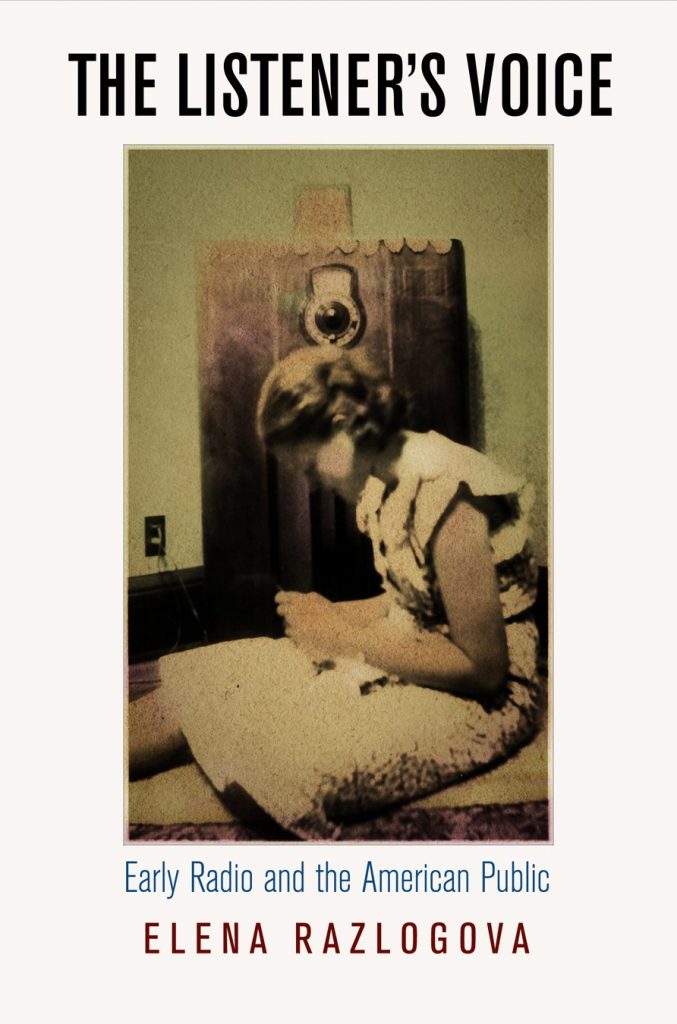
Elena Razlogova, The Listener’s Voice: Early Radio and the American Public (2011).

Radios became common in American homes during the 1920s.  They brought the  world  into the family room in unprecedented ways.  While much of scholarship on radio focuses on the establishment of major national broadcasting networks, The Listener’s Voice reveals the rollicking world of US radio before the majors seized control.  Early radio often depended on its listeners to provide content.  Through phone calls and letters, listeners created thriving participatory communities over the air.  It was more akin to the vibrant world of early internet forums than to the homogenizing, on-way transmissions of later radio and television networks.

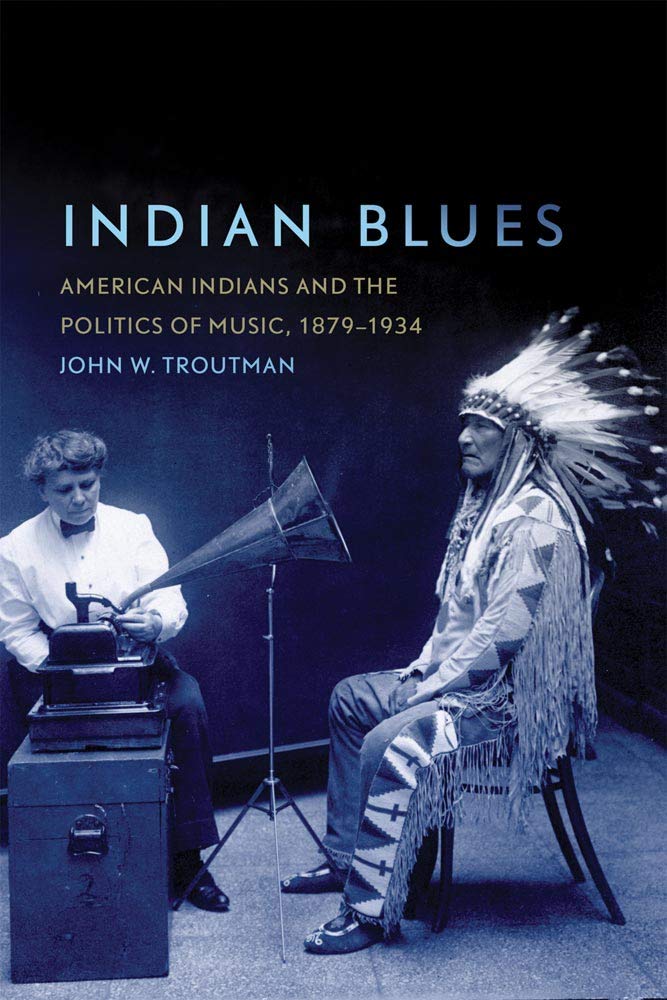
John W. Troutman, Indian Blues: American Indians and the Politics of Music, 1879-1934 (2009).

This wonderful book addresses some of the themes I explore in Segregating Sound—music, race, folklore, and money—from a different angle.  Indian Blues tells the fascinating story of the struggle over music and musical meaning between government officials, teachers, and Native Americans in the early twentieth century.  While government sponsored programs on reservations and in Indian boarding schools used music as a means to suppress Native resistance and collective memory, many Native Americans used music—be it traditional, new commercial pop styles, or combinations of both—to assert Native autonomy, escape the confines of government proscriptions, and get paid.  Fresh, innovative, and well told, Indian Blues offers a story you won’t find anywhere else.

Carl Wilson, Celine Dion’s Let’s Talk About Love: A Journey to the End of Taste (2007).

This is a slim book about pop diva Celine Dion’s top-selling album featuring “My Heart Will Go On,” better known as the theme from the movie Titanic.  It is also one of the best pieces of music writing I have read in years.  Wilson, the pop music critic for the Toronto Globe and Mail, admits he is not a Dion fan.  He then systematically explores her global appeal to discover what he might be missing.  The result is brilliant meditation on aesthetics, taste, cultural politics, and pop music history.  At times touching and often hilarious, this beautifully written book changed the way I hear music.

Recent Posts

  • Historia, ¿para quién? desde la radio pública en México
  • History—For Whom? From The Public Radio in Mexico
  • Beyond the Waters: Oral History and the Save Our Springs Movement of Late-Twentieth-Century Austin
  • Review of Brown Skins, White Coats: Race Science in India, 1920-66 (2022)
  • Las cosas tienen vida:  Un podcast sobre el rol de los objetos coloniales en nuestras vidas actuales 
NOT EVEN PAST is produced by

The Department of History

The University of Texas at Austin

We are supported by the College of Liberal Arts
And our Readers

Donate
Contact

All content © 2010-present NOT EVEN PAST and the authors, unless otherwise noted

Sign up to receive our MONTHLY NEWSLETTER

  • Features
  • Reviews
  • Teaching
  • Watch & Listen
  • About