An “Act of Justice”?
Quentin Tarantino’s Django Unchained (2012)

We all know that films on historical subjects distort events for the sake of entertainment. The goal of this review is to examine this latest rendition of slavery in popular culture from a historian's point of view to see how those distortions are used and what affect they may have on popular ideas about slavery.
Work Left Undone: Emancipation was not Abolition
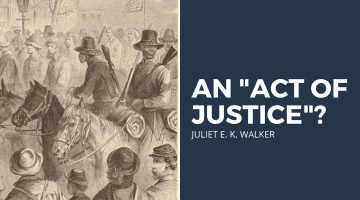
The Emancipation Proclamation reaches Savannah

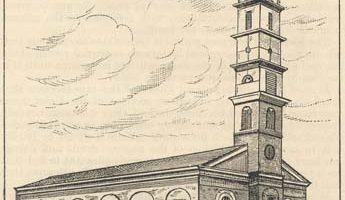
December 31, 1862 fell on a Wednesda, and that night members of Savannah’s First African Baptist Church held their traditional New Year’s Eve “watch meeting.” Each year members of the congregation gathered on this night to welcome the new year and to ask for God’s blessing on the city’s African-American community. Such "watch meetings" or "watch night" services were held all over the country, linking African Americans in Savannah with communities in Richmond, New York, Boston and elsewhere. After a year and a half of a bloody civil war, the community in Savannah consisted of about 10,000 enslaved men and women, 1,000 free people of color, and several hundred enslaved workers brought from all over the state of Georgia to dig trenches and otherwise toil at the direction of Confederate military authorities.
A Historian Views Spielberg’s Lincoln (2012)

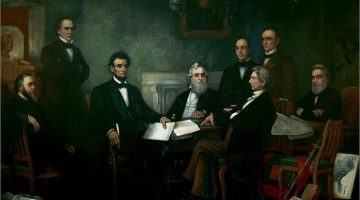
Steven Spielberg’s latest historical drama chronicles the 16th President’s final months and the struggle for passage of the 13th Amendment by the House of Representatives. Despite the excellent performances turned in by the star-studded cast, "Lincoln" has a number of shortcomings from the historian’s point of view.
Election Fraud! Read All About It!

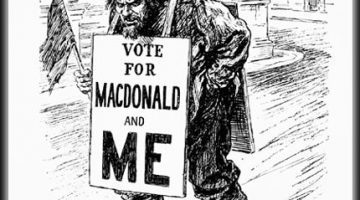
On October 25, 1924, four days before the British general election, the conservative mass-circulation newspaper, the Daily Mail, published a letter that caused a political sensation. The front-page headline read: “Civil War Plot by Socialists’ Masters: Moscow’s Orders to Our Reds: Great Plot Disclosed Yesterday.”