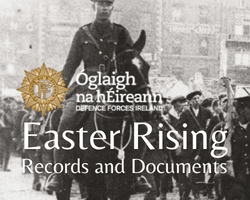
Not Even Past is beginning a new weekly series on digital history: The New Archive. Every other week, our Undergraduate Editorial Intern, Charley Binkow, will introduce our readers to the world's most interesting digital archives.
The past is never dead. It's not even past
Not Even Past is beginning a new weekly series on digital history: The New Archive. Every other week, our Undergraduate Editorial Intern, Charley Binkow, will introduce our readers to the world's most interesting digital archives.


Does history offer lessons for the present? Skeptics about the possibility of drawing meaningful, specific, and persuasive lessons from history may be strengthened in their views by the two documents below.
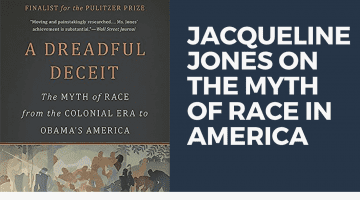
Like countless other cultures and countries throughout the world, the United States has its own creation myth—its own unique, dramatic story intended to explain where we came from and who we are today. In the case of the United States, this story holds that the nation was conceived in “racial” differences, and that over the last four centuries these self-evident differences have suffused our national character and shaped our national destiny. Yet America’s creation myth is just that—a myth, one that itself rests entirely on a spurious concept: For “race” itself is a fiction, one that has no basis in biology or any longstanding, consistent usage in human culture.
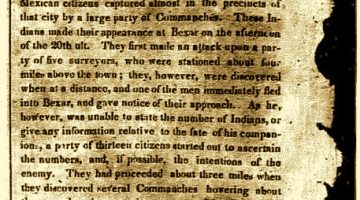
The Telegraph and Texas Register was the most influential newspaper in the region between colonial settlement and the Civil War. Based in Houston and intended for popular consumption, the nationalistic editorials in this publication offer a window into how the newly formed Lone Star Republic viewed the challenges of rapid territorial expansion into contested territories along the lower Great Plains.
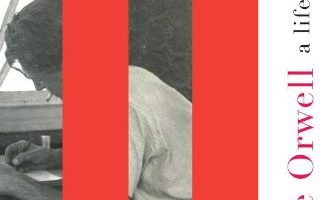
Peter Davison’s careful selection and annotation of George Orwell’s personal correspondence in provides an engrossing autobiography of a man whose work continues to resonate globally in significant ways.

The period from 1914-1945 has sometimes been called a "European Civil War," but that concept has rarely been put to a systematic examination. Fortunately, Italian historian Enzo Traverso's recent work A Ferro e Fuoco, which can be loosely translated as Put to the Sword, offers some intriguing proposals for understanding the period as a continental civil war.
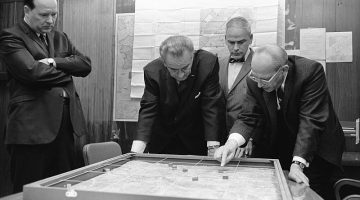
In the months following his resounding electoral triumph over Barry Goldwater in November 1964, President Lyndon Baines Johnson made momentous decisions to escalate U.S. military involvement in Vietnam. Most consequentially, he ordered the bombing of North Vietnam: first retaliatory strikes following a National Liberation Front attack on the U.S.
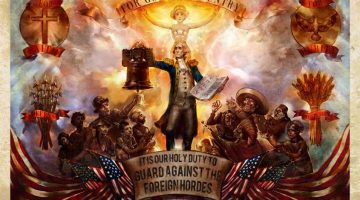
American History, in many ways, represents the nation’s résumé. It is a catalog of achievements and events – some good, some regrettable – that are used to encourage citizens and outsiders to buy into the nation.