• New
  • Features
  • Reviews
  • Texas
  • Teaching
  • Digital
  • Watch & Listen
  • Authors
  • About

The past is never dead. It's not even past

Not Even Past

CIA Study: “Consequences to the US of Communist Domination of Mainland Southeast Asia,” October 13, 1950

April 17, 2013

Before 1948, the Cold War was largely confined to Europe and the Middle East, areas that both U.S. and Soviet leaders considered vital to their nations’ core foreign policy objectives after the Second World War.  By 1950, however, the Cold War had spread to Asia.

Por Ahora: The Legacy of Hugo Chávez Frías

April 2, 2013

Chávez was an outsized, divisive, and complicated figure who aroused passions on both left and right throughout his fourteen years in power. To his supporters, Chávez was a symbol of Latin American independence and revolution.To his detractors, he was a “strongman” and a “dictator,” an enemy of free enterprise and democracy who consolidated political power in his Bolivarian Revolution and repressed his opposition.

Digital History: A Primer (Part 1)

March 31, 2013

Internet technology is starting to have a profound influence on the ways we do history. Historians have found new places to write history, new ways to make sources available, and some historians have mastered the digital technology to create new kinds of data and new kinds of sources for asking new kinds of questions about the past.

The Many Histories of South Austin: The Old Sneed Mansion

March 31, 2013

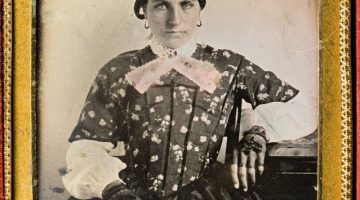
Daguerreotype of Marinda Atkins (1809-1878), wife of Sebron Sneed, ca. 1849-1850 in an ornate gold frame

You wouldn’t think much of the limestone walls hanging on for dear life as you walked along Bluff Springs to get to the grocery store or the bus stop. Not least because they are set back about thirty feet from the road and concealed by trees. I first heard something about the walls and the Sneed mansion they once supported while walking along the Onion Creek greenbelt in South Austin.

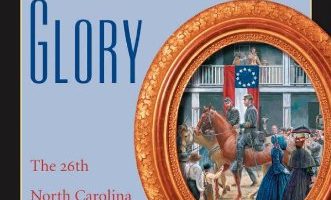
Honorable Mention of 2013 Essay Contest: Covered with Glory: The 26th North Carolina Infantry at Gettysburg by Rod Gragg (2000)

February 25, 2013

Harry Burgwyn was twenty-one years old when he led more than eight hundred soldiers of the 26th North Carolina Infantry into battle at Gettysburg on July 1, 1863. Two and a half days later, after two bloody assaults, fewer than one hundred remained fit for duty.

From the Editor: On the Report by The National Association of Scholars about US History at UT

January 13, 2013

This week the National Association of Scholars released a report critical of the ways US History is taught at the University of Texas at Austin and at Texas A & M.

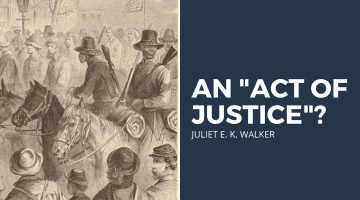
An “Act of Justice”?

January 5, 2013

We knowed freedom was on us, but we didn’t know what was to come with it. We thought we was going to get rich like the white folks.  We thought we was going to be richer than the white folks, ‘cause

Quentin Tarantino’s Django Unchained (2012)

January 1, 2013

We all know that films on historical subjects distort events for the sake of entertainment. The goal of this review is to examine this latest rendition of slavery in popular culture from a historian's point of view to see how those distortions are used and what affect they may have on popular ideas about slavery.

Work Left Undone: Emancipation was not Abolition

January 1, 2013

There are two great legal milestones in the destruction of slavery in the United States—the Emancipation Proclamation, issued by President Lincoln on January 1, 1863, and the Thirteenth Amendment to the Constitution, passed by Congress and ratified by the states in 1865.

The Emancipation Proclamation reaches Savannah

January 1, 2013

December 31, 1862 fell on a Wednesda, and that night members of Savannah’s First African Baptist Church held their traditional New Year’s Eve “watch meeting.” Each year members of the congregation gathered on this night to welcome the new year and to ask for God’s blessing on the city’s African-American community. Such "watch meetings" or "watch night" services were held all over the country, linking African Americans in Savannah with communities in Richmond, New York, Boston and elsewhere. After a year and a half of a bloody civil war, the community in Savannah consisted of about 10,000 enslaved men and women, 1,000 free people of color, and several hundred enslaved workers brought from all over the state of Georgia to dig trenches and otherwise toil at the direction of Confederate military authorities.

« Previous Page
Next Page »

Recent Posts

  • Curating History: Dr Pepper, Preservation, and Public Trust
  • The Brands of Garrison Hall at its Centennial
  • The Battles of the Alamo and the Myth of Southern Exceptionalism
  • Primary Source: Magic, Metal, and Medicine in Leonhard Thurneysser’s Paracelsus
  • Faculty Spotlight: Dr. Kate Imy
NOT EVEN PAST is produced by

The Department of History

The University of Texas at Austin

We are supported by the College of Liberal Arts
And our Readers

Donate
Contact

All content © 2010-present NOT EVEN PAST and the authors, unless otherwise noted

Sign up to receive our MONTHLY NEWSLETTER

  • New
  • Features
  • Reviews
  • Texas
  • Teaching
  • Digital
  • Watch & Listen
  • Authors
  • About