The Strangest Dream – Reykjavik 1986

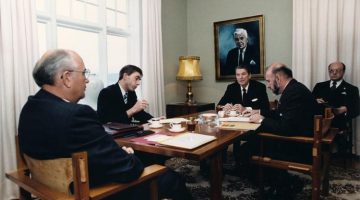
College freshmen have no personal knowledge of the Cold War. Born after the Berlin Wall’s fall and the Soviet Union’s collapse, the threat of nuclear Armageddon seems far removed from their experiences, a relic of a bygone age. Yet, today, more countries than ever hold weapons whose scale of destruction can dwarf that of every bomb used in World War II.
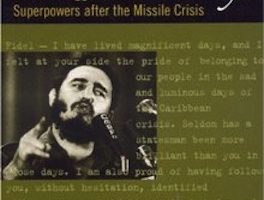
Sad and Luminous Days: Cuba’s Struggle with the Superpowers after the Missile Crisis by James G. Blight & Philip Brenner (2002)
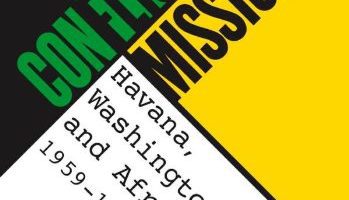
Conflicting Missions: Havana, Washington, and Africa, 1959-1976 by Piero Gleijeses (2002)

Conflicting Missions: Havana, Washington, and Africa, 1959-1976, takes readers beyond the familiar categories of the Soviet-American Cold War. In the wake of decolonization, as charismatic national leaders emerged across Africa – from Algeria to Zaire – statesmen in Washington and Moscow waited anxiously to see if the new governments would align with democracy or communism.
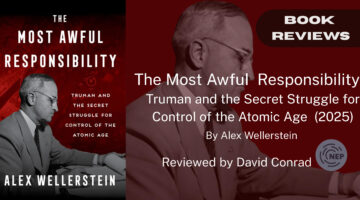
Review of The Most Awful Responsibility: Truman and the Secret Struggle for Control of the Atomic Age (2025)

President Harry S. Truman is a wild card in historians’ dueling storylines about the atomic bombings of Japan at the end of World War II. For “orthodox” historians, Truman and his advisors let casualty projections, Japanese governmental paralysis, and American public opinion lead them to a coldly rational decision to drop the terrifying new weapons […]
The Politics of Catastrophe: A Brief History of FEMA

As the nation celebrated the 2025 Fourth of July, flash flooding swallowed the Texas Hill Country. An entire summer’s worth of rain fell in the area, causing the Guadalupe River to rise dramatically in mere minutes. This disastrous deluge tragically claimed the lives of over 100 people. President Donald Trump declared the flood a major […]
This is Democracy – Broadcasting Democracy

Jeremi and Zachary have a conversation with Dr. Mark Pomar on the historical impact of Voice of America, Radio Free Europe, and Radio Liberty’s critical role of radio communications during the Cold War, and the challenges they face today including the recent threats to their operation. Zachary sets the scene with his poem, “Radio Liberty”. […]
Review of Thanks to Life: A Biography of Violeta Parra, by Ericka Verba (2025)

Ericka Verba’s book Thanks to Life: A Biography of Violeta Parra is the riveting culmination of a lifetime of dedicated and passionate research about the world-renowned Chilean artist Violeta Parra. Verba immerses readers into the rowdy Chilean peñas, elite Communist gatherings, smoke-filled Parisian nightclubs, and desolate circus tents to narrate decades of Chilean musical history […]
The Weak and the Powerful: Omar Torrijos, Panama, and the Non-Aligned Movement in the World (IHS Book Talk)

Dr. Jonathan Brown, emeritus professor of history at the University of Texas at Austin, followed an unconventional path to academia. Following a master’s degree in history at the University of Arizona, he received a commission in the Army R.O.T.C. program. Brown served as a lieutenant in the Panama Canal Zone from 1968 to 1970. Later […]
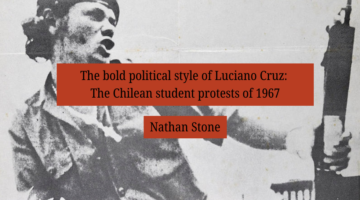
The bold political style of Luciano Cruz: The Chilean student protests of 1967

The following narrative is adapted from my recent dissertation on revolutions in Latin America. When I shared it with upper division history students for a class discussion, the story surprised them. Most of them had only ever experienced student government as something to put on your resumé for grad school applications. They had never imagined […]