An Independence Within an Empire
When the thirteen British colonies declared their independence in 1776, the world witnessed not only the birth of a new nation but also a decisive shift in the balance of global power. As historians such as Jeremy Adelman, J. H. Elliott, and Anthony Pagden have noted, the American Revolution unfolded within a wider imperial struggle stretching from Canada to the Caribbean.
Within that contested Atlantic world, Spain played an important—but often underappreciated—strategic role. Its intervention did not single-handedly determine the American victory, but it helped reshape the wider war against Britain by opening new fronts, redirecting British resources, and strengthening the Franco-American effort. What was celebrated as liberty in Philadelphia was, in Madrid, recognized as an opportunity: a calculated move by the Bourbon monarchy to check British expansion after the Seven Years’ War. Scholars such as Thomas E. Chávez and Gabriel Paquette have emphasized that weakening Great Britain was essential to safeguarding Spain’s Atlantic dominion.
It was in this environment that the Gálvez family of Macharaviaya in Málaga—José, Matías, and Bernardo—rose to prominence. Alongside figures such as Luis de Unzaga y Amézaga, Admiral Luis de Córdova y Córdova, and the financier-administrator Francisco de Saavedra, they formed a transatlantic network of reform, diplomacy, logistics, and military coordination that altered strategic realities on both sides of the ocean.
However, Spain did not aid the rebellion out of sympathy for revolutionary ideals, but to preserve its position within a competitive imperial system. Yet the outcome was paradoxical: by helping secure the independence of others, Spain accelerated the erosion of its own imperial logic. The story unfolds in four movements—José de Gálvez’s reforms, Unzaga’s clandestine diplomacy, Bernardo de Gálvez’s Gulf campaigns, and Córdova’s naval pressure—culminating in Yorktown and the Treaty of Paris.
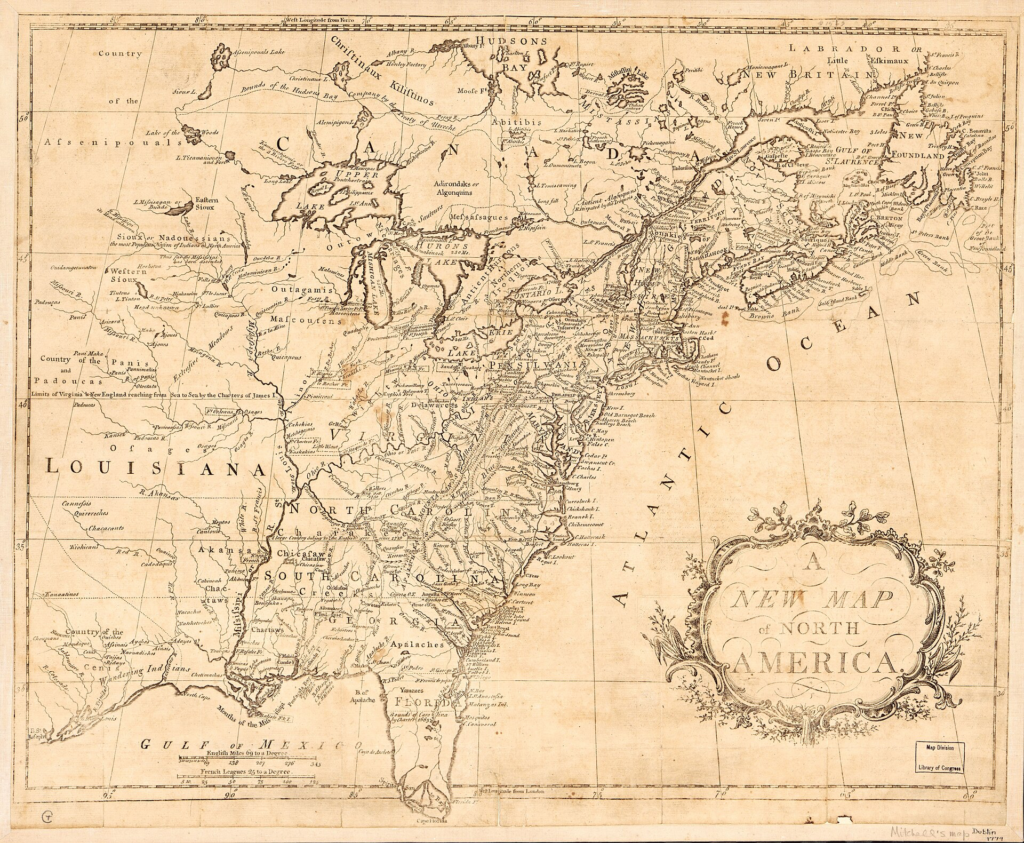
A map of North America (1779) during the American Revolutionary era, illustrating the extent of Spanish possessions and the multiple theaters of war. Source: Wikimedia Commons
José de Gálvez: Architect of a New Imperial Order
Before Bernardo de Gálvez became known for his Gulf campaigns, José de Gálvez had articulated a new vision of imperial governance. Trained in law and seasoned within the Bourbon administration, he arrived in New Spain in 1765 as visitador general, charged with cutting through entrenched privileges and bureaucratic inertia. As Allan J. Kuethe and Gabriel Paquette note, the visitador embodied the most ambitious edge of Bourbon reform.
His mandate was to implement the centralizing reform agenda of Charles III: enhanced administrative efficiency, tighter fiscal controls, and strengthened military defenses. Gálvez reorganized the Treasury, bolstered provincial militias, and promoted the system of intendencias—administrative districts designed to tighten royal oversight from Madrid. These reforms marked a broader shift from negotiated colonial authority to a more centralized model.
He also played a central role in one of the most controversial decisions of the era: the expulsion of the Jesuits in 1767. Intended as a demonstration of royal authority, the expulsion dismantled the most cohesive educational and intellectual network in Spanish America. Jesuit colleges had shaped generations of criollo elites; their removal widened the cultural and emotional distance between Crown and colony. David Brading and Jorge Cañizares-Esguerra have shown how this rupture reshaped the relationship between faith, knowledge, and civic identity in the late colonial world.
By 1776, as Minister of the Indies, Gálvez envisioned an Atlantic strategy grounded in centralization, preventive diplomacy, and trusted family networks. He placed his brother Matías as Captain General of Guatemala and his nephew Bernardo as acting governor of Louisiana, creating a chain of command aligned with Bourbon priorities. The Gálvez family came to embody an imperial project confident it could still contest British influence.
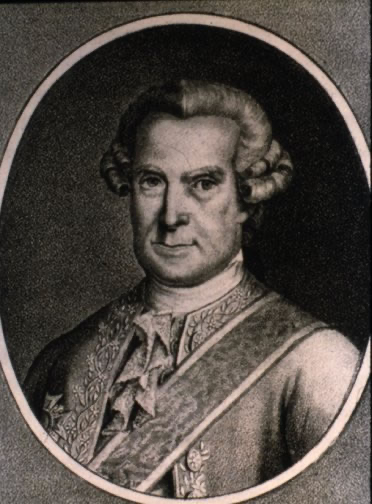
Portrait of José de Gálvez. Source: Wikimedia Commons
Luis de Unzaga: Secret Diplomacy Before the War
If José de Gálvez was the architect, Luis de Unzaga y Amézaga was the first to put the strategy into practice. Born in Málaga to a Basque family, Unzaga represented a generation of officials who blended bureaucratic discipline with political pragmatism. As Thomas E. Chávez and Daniel C. Richter suggest, Unzaga recognized early that British vulnerability offered Spain an opening.
As governor of Louisiana from 1769 to 1777, he established covert channels of support for the North American rebels. While Madrid deliberated cautiously, concerned about revolutionary contagion, Unzaga built a clandestine network of intelligence, correspondence, and supply routes from then-Spanish-controlled New Orleans up the Mississippi River and onward to the insurgent colonies. Shipments of gunpowder, lead, muskets, and provisions, often disguised as commercial cargo, ultimately reached George Washington’s army. As Gabriel Paquette and Manuel Covo note, this assistance reflected strategic calculation more than ideological sympathy.
Unzaga’s diplomacy extended beyond logistics. In late 1776, General Charles Lee informed Washington that he had received a letter from “Don Luis Venzaga (sic), Governor of New Orleans,” addressing Washington as “General of the United States of America.” Preserved in Founders Online, this reference does not amount to formal diplomatic recognition—Spain would not recognize the United States until 1783—but it suggests an early informal acknowledgment of the rebel leadership and a purposeful signal from Spanish Louisiana. Although Unzaga’s original letter has not survived, Lee’s reference shows how informal contacts were already testing the boundaries of imperial diplomacy.
By the time Spain prepared to enter the war formally, Unzaga had already laid critical groundwork. When Bernardo de Gálvez replaced him in 1777, he inherited a stabilized province and a mature intelligence-and-supply network. The discreet official from Málaga had provided the foundation for Spain’s military escalation.
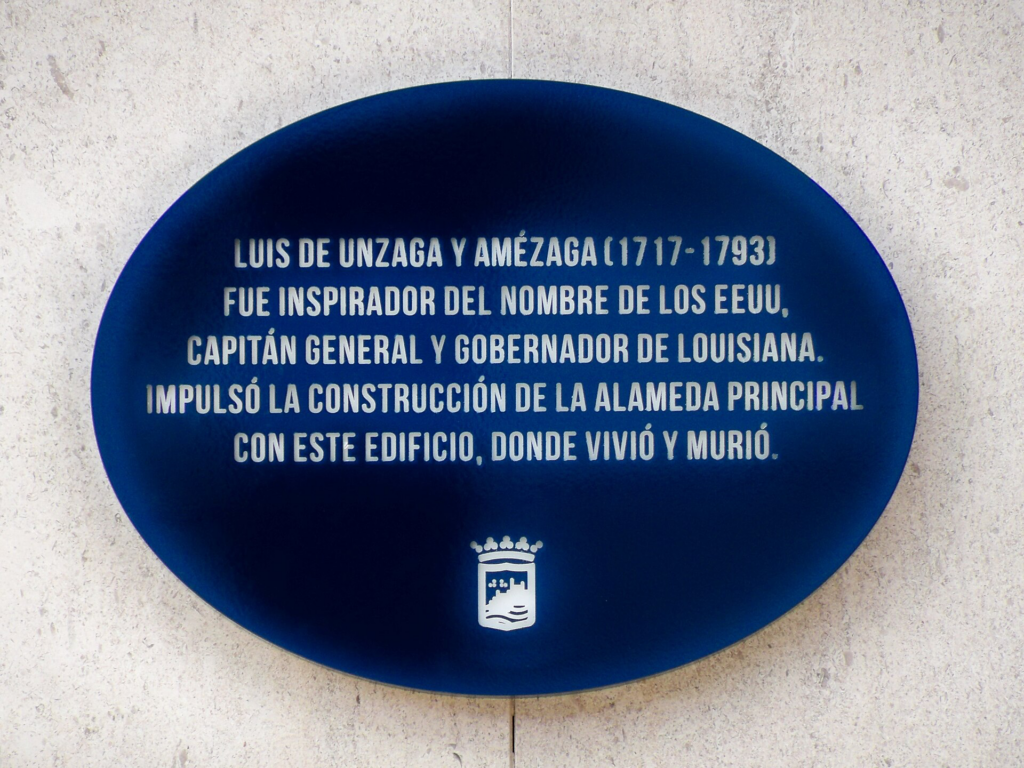
Commemorative plaque dedicated to Luis de Unzaga y Amézaga on the Alameda Principal in Málaga, Spain. The plaque reads: Luis de Unzaga y Amézaga (1717–1793) was an inspiration behind the name of the United States, Captain General and Governor of Louisiana. He promoted the construction of the Alameda Principal, including this building, where he lived and died. Credit: Daniel Capilla
Bernardo de Gálvez: The Atlantic War
Bernardo de Gálvez arrived in Louisiana in 1777 as the conflict reached a turning point. Following the victory at Saratoga, the rebellion had gained momentum, France was moving toward open intervention, and Spain—guided by José de Gálvez and the Count of Floridablanca—was preparing to enter the war. As Chávez and de Covo note, the Bourbon court increasingly viewed the Gulf of Mexico as a decisive front.
At just thirty-one, Bernardo combined ambition with political acuity. His objective was clear: to prevent Britain from consolidating control of the lower Mississippi and secure the southern flank of the rebelling colonies. After Spain entered the war in 1779, Bernardo launched a coordinated campaign that would become one of the most effective—and most overlooked—of the American Revolution.
Leading a diverse force of regulars, criollos, free Black soldiers, Indigenous allies, French volunteers, and American frontiersmen, Gálvez captured Baton Rouge, then Mobile, and ultimately Pensacola—Britain’s most fortified position in the Gulf. Storms, disease, and supply shortages complicated the campaign, yet its success reshaped the geopolitical map: Spain secured the Mississippi, and Washington’s vulnerable southern flank was stabilized.
While Washington fought in the north, Gálvez’s victories disrupted British supply lines and undermined their southern operations. Jonathan Dull and David Head emphasize how combined pressures—Spanish in the south, Franco-American in the north—strained Britain’s capacity to sustain multi-theater operations.
Gálvez excelled not only as a commander but as a mediator, organizer, and governor. His inclusive policy—arming and promoting criollos, mestizos, and free Black soldiers—reflected pragmatic, Atlantic-minded governance. His victory at Pensacola in May 1781 was a strategic turning point in the Gulf theater: it removed Britain’s principal stronghold on the Gulf Coast, protected the lower Mississippi, and helped prevent British forces from concentrating fully against the Franco-American campaign that culminated at Yorktown. Charles III rewarded him with the title of Count of Gálvez and the motto Yo solo (I alone).
Strategically, Pensacola demonstrated that Spanish power remained effective across the Atlantic. Without Gálvez’s successes—and without the silver shipped from Havana that helped finance crucial phases of the Yorktown campaign—American independence would have faced far greater obstacles. Washington commanded the army; Gálvez commanded the Gulf.
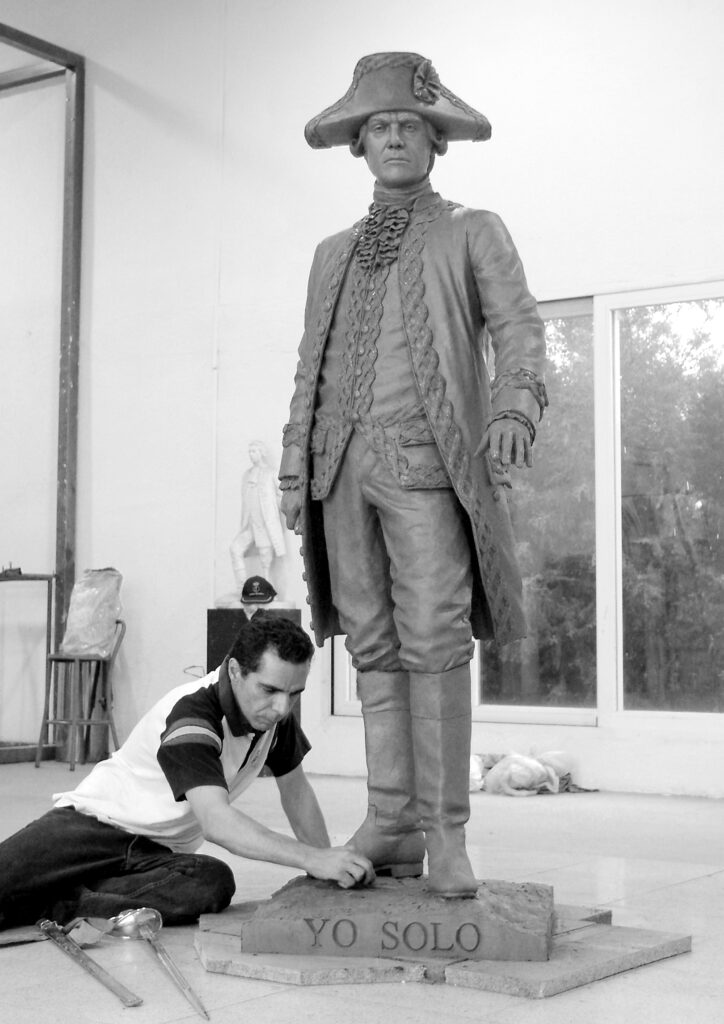
Spanish sculptor Salvador Amaya works on a statue of Bernardo de Gálvez. Amaya is known for his sculptures of historical figures, including several busts of King Felipe VI of Spain. Photograph reproduced with permission of Salvador Amaya.
Luis de Córdova: A Decisive Blow
While Gálvez secured the Gulf, Admiral Luis de Córdova y Córdova struck at Britain’s global lifelines. A veteran naval commander from Seville in his seventies, he led the combined Franco-Spanish fleet during a critical phase of the conflict. Historians such as Chávez and Dull have reexamined his role, highlighting its strategic weight.
In August 1780, Córdova captured a British convoy of more than fifty ships loaded with troops, military stores, commercial cargo, and specie bound for Britain’s imperial war effort. The loss was a significant financial and logistical setback. Contemporary accounts described a deep shock in London’s mercantile circles when news of the capture arrived; the convoy’s loss deprived Britain of supplies and reinforcements intended for several theaters and exposed the vulnerability of its Atlantic supply lines. Though often minimized in British accounts, the episode demonstrated how Franco-Spanish naval pressure could complicate Britain’s ability to sustain a global war.
Córdova aimed not at spectacle but at suffocating enemy commerce. His actions—from supporting operations around Gibraltar to controlling access to the English Channel—forced Britain to disperse its forces across the Atlantic, Caribbean, and Indian Ocean. Henry Kamen and Stein & Stein note that these operations reflected the maturity of Bourbon naval reform. In the Caribbean, Francisco de Saavedra ensured the financing and rapid dispatch of funds that sustained key phases of the Yorktown campaign. Without this support, the broader Allied strategy would have lacked its material foundation.
By the Treaty of Paris in 1783, the Atlantic map had been redrawn. Spain regained territory and prestige, but the conflict also strengthened a rising power: the United States.
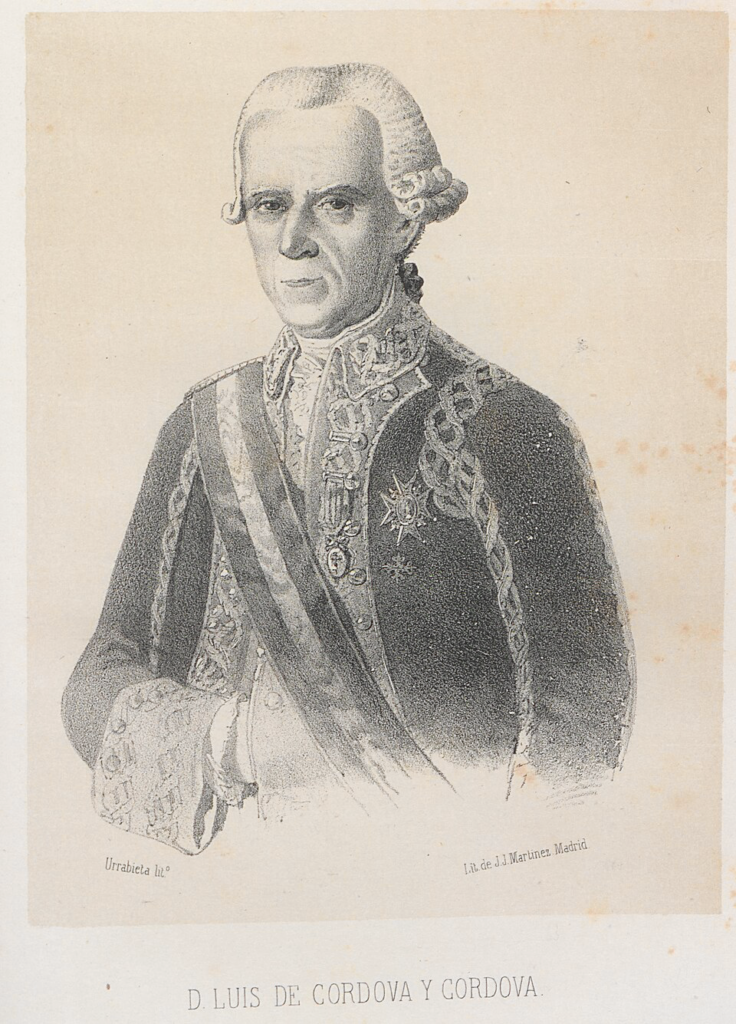
Portrait of Luis de Córdova y Córdova. Source: Wikimedia Commons
Conclusion: Spain at the Threshold of a New Atlantic Order
The American War of Independence was both the beginning of a nation and a turning point for the Spanish Empire. As Elliott and Paquette argue, the Revolution must be understood within an Atlantic contest in which Spain sought to redefine its position after the Seven Years’ War.
Guided by José de Gálvez and executed through figures such as Bernardo de Gálvez, Luis de Unzaga, Luis de Córdova, and Francisco de Saavedra, Spain helped dismantle key elements of British Atlantic supremacy through a calculated mix of diplomacy, logistics, finance, and naval action. The achievement was considerable—and paradoxical. By supporting the rebels, Spain weakened the rival that threatened its flank while contributing to a political vocabulary of self-government that, as scholars from Elliott to Janet Polasky note, would echo across the Americas within decades.
The Atlantic system that Gálvez and Córdova served became a space where former viceroyal territories absorbed principles that the Bourbon reformers had tried to regulate. The Gálvez family embodies that contradictory moment: an enlightened elite able to conceive the empire as a system, yet unable to foresee its unraveling. José designed the framework, Unzaga set it in motion, Bernardo defended it, and Córdova consolidated it with a strategic victory. Together, these historical figures showed that Spain remained capable of shaping the Atlantic conflict in meaningful ways, especially as Britain was forced to fight on several fronts. Yet that achievement came at a cost. The war expanded borrowing and debt, placed new pressure on the fiscal resources of the Spanish Monarchy, and exposed the limits of the imperial system Spain sought to defend. Spain’s success was therefore real, though not unlimited: it weakened Britain, secured important territorial gains, and helped sustain Allied pressure, while also revealing the financial and political strains placed on Bourbon power as it sought to preserve Spain’s position in the Americas. Spain’s role in the American War of Independence was therefore not a footnote to someone else’s revolution. It was one of the last great demonstrations of Bourbon imperial capacity in the Atlantic world. Yet that success carried its own irony: Spain helped weaken Britain and sustain the birth of a new republic, even as those efforts exposed the limits of the imperial order it sought to defend. Its victory was real, but it belonged to a world already beginning to change—one in which the United States, born as a republic in 1776, would become a central force in the Atlantic order Spain had helped to reshape, at the threshold of Spain’s long nineteenth-century imperial decline.
José A. Adrián is a Professor of Psychology at the University of Málaga (Spain), specializing in language as a cognitive phenomenon and in its oral and written disorders. In addition to his academic work, he maintains a strong interest in history and the role of Spain in the Americas.
The views and opinions expressed in this article or video are those of the individual author(s) or presenter(s) and do not necessarily reflect the policy or views of the editors at Not Even Past, the UT Department of History, the University of Texas at Austin, or the UT System Board of Regents. Not Even Past is an online public history magazine rather than a peer-reviewed academic journal. While we make efforts to ensure that factual information in articles was obtained from reliable sources, Not Even Past is not responsible for any errors or omissions.