This essay is part of The Radical Spanish Empire Roundtable, a series of review essays examining the book from different disciplinary perspectives. Read the introduction and explore the other contributions in the series below.
- “The Radical Spanish Empire Roundtable – Introduction“
- “All Eyes on the Petition: Reflections on The Radical Spanish Empire“ by Daniel Carpenter
- “Forgery, Invention, and the History of Skepticism in The Radical Spanish Empire“ by Katrina Olds
- “Lawfare and the Legal Construction of Race in The Radical Spanish Empire“ by Michelle McKinley
In The Radical Spanish Empire, Jorge Cañizares-Esguerra and Adrian Masters offer an intriguing interpretation of the formation of the Spanish Empire across the Americas. They contend that from 1492 to the 1570s, the violence of conquest and the fall of pre-Hispanic rulers created openings for widespread questioning of social order and hierarchies. In this disordered period, various forms of political action emerged, which Cañizares-Esguerra and Masters describe as “radical.” This radicalism stemmed from wide-ranging and forceful critiques of the social order, the push for increased political participation across diverse social groups, and the rise of a “culture of doubt” unmatched in Europe at the time.
This was a period marked by intense political experimentation, in which multiple possibilities coexisted and the final outcome remained uncertain for a long time. As the Crown struggled to assert authority over the newly conquered lands, various forms of lordship emerged, the most notable led by conquistadors. Simultaneously, religious orders pursued their own project. Committed to “protecting” Indigenous peoples who had been Christianized, missionaries gained significant influence, while also becoming agents of far-reaching cultural change and of the destruction of Indigenous practices, beliefs, and institutions.
Within this context, numerous Indigenous, Ladino, and Spanish voices made themselves heard, each advancing its own vision of the society emerging from the violence and devastation of conquest. Critiques of established authorities, social hierarchies, new elites, and prevailing orthodoxies likewise proliferated. Many of these accusations employed the language of “tyranny,” a longstanding political idiom in Western Europe for criticizing abuses of power and illegitimate rule. Conquistadors and missionaries increasingly faced harsh criticism, as did native lords who had risen to prominence through their alliances with the Spanish.
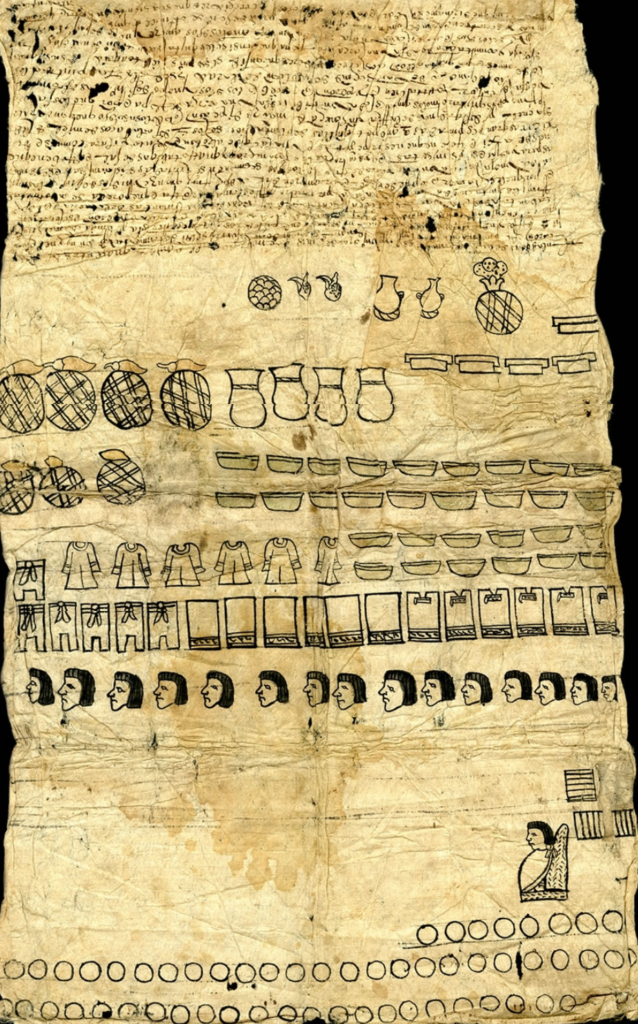
Those opposing “tyranny” turned to the legal structures established by the Spanish and used officially recognized tools of opposition and resistance. This involved what the authors call “paperwork”: a range of practices for producing and circulating documents, which served both to expose injustices to the Crown and to seek reward for services. This bottom-up communication system enabled people from extremely diverse social and ethnic backgrounds to participate in political debates, thus contributing to the emergence of complex political factions.
Jorge Cañizares-Esguerra and Adrian Masters’s book thus makes a bold contribution to discussions of the formation of colonial Latin America. A key aspect of the study is its shift of focus toward the political participation driven by what they describe as “paperwork” and “lawfare” politics. The impact of accusations of tyranny, a central element of Cañizares-Esguerra and Masters’s argument, takes on greater significance when understood in the wider legal and political context of the time. “Lawfare” was highly effective because of the pervasive importance of justice, a concept that occupied a central place in both lettered discourse and wider understandings of political order. Although its meaning could vary across contexts, justice and its associated language were omnipresent, as were ideals of governance directed toward the so-called “common good.” Conversely, tyranny was widely conceived as the antithesis of just rule.
In the context of the Spanish Empire, local populations adopted and adapted this language, thereby becoming coproducers of a society as legalistic as its European counterpart. Their primary aim, as Cañizares-Esguerra and Masters make clear, was to employ the language of justice as a strategic tool in conflicts. Furthermore, they used it to develop new conceptions of governance, ranging from complete independence to arrangements for coexistence under Spanish rule.
The authors of The Radical Spanish Empire appropriately use the term “vassals” to refer to the population that engaged in “lawfare.” In early modern Spanish legal thought and practice, the term “vassal” broadly described individuals, mostly men—not women—from diverse backgrounds, who were generally Christians, recognized the authority of the Spanish king, and were subject to his law. As in any lord–vassal relationship, this status entailed both obligations and rights. Among the latter, a key entitlement was the right to petition the Crown. It is precisely this dimension that Cañizares-Esguerra and Masters’s book explores extensively.
Giving center stage to manuscript ‘paperwork’ and building on the work of Fernando Bouza Álvarez, Cañizares-Esguerra and Masters offer a new interpretation of the political significance of communication. In their view, the most “radical” features of the Spanish Empire were articulated and circulated chiefly through manuscript records rather than printed texts. In their relationship with the Crown, the “vassals” used the language of justice in manuscript communication to seek privileges, defend their autonomy, or involve royal officials in factional conflicts. Simultaneously, they sought to limit the Crown’s interference in local matters, preserving significant self-government in matters of justice, economic affairs, and defense.
The Radical Spanish Empire also shows that the destruction wrought by conquest opened opportunities for political participation distinct from those in Europe. Compared with Europe, where communities enjoyed long-standing autonomies, the post-conquest Americas saw the establishment of many new political institutions. The concrete experience of establishing new communities produced fresh perspectives on politics. A distinctly local worldview emerged, challenging the assumption that social and political structures naturally reflected divine creation. This is closely linked to the authors’ broader emphasis on the rise of a culture marked by skepticism, administrative uncertainty, and the persistent questioning of authority. The experience of colonization demonstrated that institutions and systems of governance were fundamentally human creations and therefore subject to change. People from diverse social backgrounds came to understand, in concrete ways, that collective life could be transformed through human action. Among the results were the foundation of many local self-governing bodies and episodes of intense republican experimentation.
This perspective is particularly important for reconsidering the role of ordinary actors in the production of knowledge about politics. As the authors acknowledge, archival sources largely preserve the viewpoints of authorities and elites. They often portray popular political action as disorderly and depict non-elite groups as incapable of developing coherent political ideas, let alone of executing rational, orderly political movements. Yet the cases studied by Cañizares-Esguerra and Masters show that larger segments of society reflected on the political order they inhabited, challenged it, acted strategically within it, and transformed it.
The book also stresses that participatory politics should not be equated with a political order based on equality. Its eventual outcome was a corporate and hierarchical society of orders that remained fundamentally elitist. Collective life continued to be shaped by a long-standing conception of the political community in which social order rested on inequality. Political power remained largely concentrated in the hands of local elites, while women, enslaved people, and other groups were effectively excluded from meaningful political participation. What emerged, therefore, was a form of participation aimed at preserving the influence of local elites and reinforcing their authority. Not surprisingly, the Crown sanctioned it.
This book also offers novel perspectives on the ongoing debate about how royal authority was strengthened. Traditionally, the strengthening of royal power in America has been attributed to several factors: the absence of intermediary powers comparable to those of Europe; the presence of populations even more disenfranchised than the popular classes in Europe; the prevalence of slavery and other forms of unfreedom among Indigenous peoples, Africans, and their descendants, which encouraged a more authoritarian form of rule that permitted more frequent recourse to brute violence; and a greater reliance, compared with Europe, on extraordinary forms of governance grounded in the delegation of authority to military officials. The Radical Spanish Empire offers a more nuanced explanation for why royal authority became more “absolute” in the “New World” earlier than in Europe. The authors suggests that the move toward an “absolute” form of power was the Crown’s reaction to the capacity of local populations in the Americas to produce their own knowledge about social order. The argument would gain still greater force if Cañizares-Esguerra and Masters were to weave their insights into ongoing debates about the reality of the “absolutist” project – an ideology that many early modern observers associated with the perils of unchecked rule, characteristic of tyrants. That association extended to the use of “absolute” itself as a pejorative label for rulers.
Comparing the picture presented in this book with that of colonial Brazil helps us evaluate how broadly this interpretative framework applies to other American contexts. Devastation, violent dispossession, and seigneurialization – mainly, but not only, in the form of donatary captaincies – were also early features of Portuguese conquest and colonization. However, the donatary captaincies were not merely a temporary stage soon superseded by royal authority. In many places, conquest was followed by prolonged seigneurial arrangements, with the Crown only gradually assuming a limited degree of control over the lands and their inhabitants. In some parts of Brazil, the seigneurial framework endured into the later colonial period, as illustrated by the Garcia d’Ávila family, whose extensive landed domain made them one of the principal regional powers in the Bahian hinterland well into the eighteenth century. Also noteworthy is the establishment of new captaincies throughout the seventeenth and eighteenth centuries in newly conquered territories in the deep backlands of South America.
Naturally, the diversity and characteristics of Indigenous societies and cultures were crucial in shaping the distinctive historical trajectory of Portuguese America compared to that of the Spanish Empire. Factionalism within Indigenous groups was present in colonial Brazil from the very beginning. The first Portuguese settlements on the Piratininga plateau are a case in point: a complex political landscape, based on “alliances” with local Indigenous peoples, took shape there, and the settlement of São Paulo exemplifies such “alliances.” As John Manuel Monteiro, José Carlos Vilardaga and many others have shown, São Paulo sustained one of the most protracted experiences of autonomous self-government and resistance to missionary (Jesuit) and royal authority of the colonial period. Crucially, both Indigenous populations and mamelucos were not merely subject to this volatile environment but active participants in articulating distinct ideas of social order.
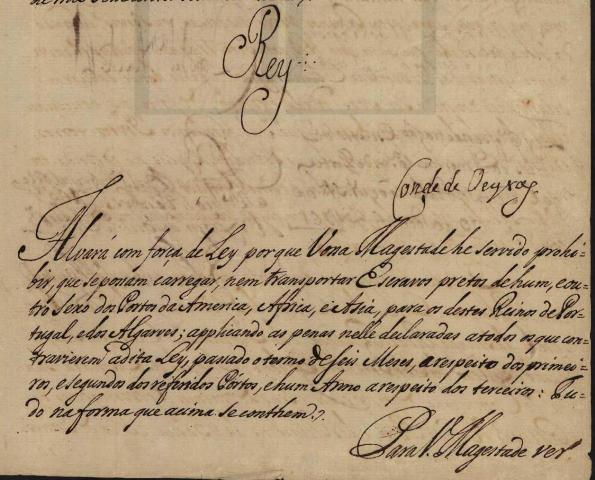
Additional patterns emerged in different parts of Atlantic South America. The Temiminó and Tupiniquim peoples, who allied with the Portuguese to expel the French and their Indigenous allies from Guanabara Bay in the mid-sixteenth century, rapidly adopted the Portuguese language of graça e mercê. As Regina Celestino de Almeida has noted, some Temiminó and Tupiniquim leaders even labeled themselves “conquistadors” in petitions to the Portuguese king seeking recognition and privileges. In doing so, the Temiminó and Tupiniquim were among the first Indigenous groups to enter a broader culture of “paperwork” akin to that highlighted by Cañizares-Esguerra and Masters. João Fragoso and Nuno Monteiro have likewise shown that the Portuguese Atlantic world became the setting for intense “paperwork,” involving petitions, confirmations of privileges, and efforts to draw the Crown into local disputes. However, both in Brazil and in Maranhão-Pará, Indigenous involvement in “lawfare” was much more limited and occurred later than across the Spanish Empire, mostly from the late seventeenth century onward. As for the creation of Indigenous municipalities in Portuguese America, this occurred only in the latter half of the eighteenth century, in the context of the “Indian Directorate” policy, which rested on a rationale entirely different from that of the cabildos de indios. Nonetheless, several of the so-called vilas de índios established at the time assembled some of the most comprehensive collections of legislation in Portuguese America. As Vânia Losada Moreira has shown, their goal was to use this legal material in “lawfare” to secure their lands against settler encroachment.
Cañizares-Esguerra and Masters’s remarks regarding the instrumental role of history writing also apply to Brazil. From the early seventeenth century onwards, and especially after the end of the Dutch Wars in 1654, Brazilian elites sponsored chronicles that emphasized their loyalty to the Crown while simultaneously asserting their privileges and autonomy. Similar dynamics emerged in the aftermath of local rebellions against missionaries or royal officials in São Paulo, Rio de Janeiro, São Luís do Maranhão, Recife, Belém, and other colonial centers. In the eighteenth century, as Iris Kantor has shown, Brazilian history writing tended to soften the violence of the early conquest, commemorate the leading conquering families in each region, downplay the rebellions that had occurred in the meantime, and exoticize Indigenous peoples and their role in colonization.
Eighteenth-century Brazil, particularly Minas Gerais, was also the scene of many riots and intense debates over political rights, mostly due to the Crown’s aggressive fiscal and surveillance policies. Luciano Figueiredo and Kirsten Schultz, among others, have shown that Minas witnessed demands for more participatory forms of governance, broader consent in fiscal matters, and the articulation of political ideas that bear comparison with the “radicalism” identified by Cañizares-Esguerra and Masters.
Additional issues worth considering include the massive presence of Africans and their descendants (whether enslaved, freed, or free) in colonial Brazil. This raises significant questions about how political languages circulated and were adopted in a society where their presence was so widespread, especially from the late sixteenth century onward. What ideas of tyranny, justice, and political order arose from maroon experiences – the best-known example in colonial Brazil being the Quilombo dos Palmares, studied by Silvia Hunold Lara and others? How should we understand Jesuit concerns, examined by Ronaldo Vainfas or Carlos Zeron, regarding the political ideas and institutional arrangements developed within maroon communities? What forms of political thought took shape within Black brotherhoods and other Afro-Brazilian organizations through the manuscript communication studied by Luiz Geraldo Silva? Although the archival records sometimes make these questions difficult to answer, surviving traces in archives point to diverse and sophisticated vernacular political traditions.
As noted above, Cañizares-Esguerra and Masters’s book highlights the diffusion of languages of contestation and cultures of doubt, thus converging with themes explored by Stuart Schwartz in All Can Be Saved. Importantly, Schwartz provides numerous examples of skepticism and questioning of contemporary order not only across the Americas but also in the Iberian Peninsula itself. His work is thus an important inspiration for reexamining the many riots of early modern Castile, Aragon, and Portugal, moving beyond the traditional view of these episodes as merely “anti-fiscal” protests. Historians should instead follow Cañizares-Esguerra and Masters’s approach and examine the broader political claims and ideas that both fueled and emerged from these collective actions. Such an approach necessarily requires a critical reading of the archive, which has consistently portrayed these uprisings as chaotic, irrational, and devoid of political order.
One thing is certain: by emphasizing the creative aspect of “lawfare” and its broad social engagement, The Radical Spanish Empire illuminates forms of republicanism cultivated across the Americas, often missing from narratives that portray republican thought as mainly European. Cañizares-Esguerra and Masters correctly argue that the local knowledge produced in the context of “paperwork” should be incorporated into the history of republican thought. This would help undermine the diffusionist views that see the evolution of political ideas as originating in Northern European lettered milieus and spreading outward. Such a move would also call into question the traditional contrast between Spanish and British colonization in the Americas, and would align the book with recent research that critically questions the image of early English America as the stage for the development of a representative political system built from below by allegedly virtuous settlers through a straightforward bottom-up process.
Equally certain is that we still have limited knowledge about the political languages produced by the majority of the population. This applies both to the colonial Americas and the Spanish Monarchy’s European territories. Very little is known, for instance, about the political thought produced in craft guilds across the Iberian Peninsula. James Amelang’s work, among others, has shown that these labor organizations developed their own discourses challenging social inequality, unequal taxation, and aristocratic privileges. They also advocated expanding political participation and fiercely criticized prevailing practices of consent and representation that excluded them. Some went further, contesting the ideas of consensus populi, arguing that they were a means of effectively disenfranchising the majority of the population.
Another productive line of inquiry would be to revisit moments of acute political crisis, during which archives, despite their many filters and limitations, often preserve a broader range of voices than in periods of relative stability. Records produced during episodes of upheaval, including in the Iberian Peninsula, contain not only numerous denunciations of tyranny or appeals to the right of resistance against unjust rulers but also recurrent traces of political thought, including republican ideas. In Portugal during the crises of 1580 and 1640, in Aragon in 1591, and in Catalonia both in 1640 and again during the War of the Spanish Succession, many took advantage of political turmoil to articulate – and in some cases attempt to implement – republican-leaning ideas, including proposals for regime change. It is highly significant that royal authorities, together with members of the high nobility and the clergy, invariably became deeply alarmed whenever they detected signs that republican ideas were gaining traction among broad sectors of the population. Overall, The Radical Spanish Empire’s key achievement is to highlight that Spanish imperial expansion, despite its violent methods of imposing power, also promoted a particular style of politics, negotiation, and conflict. By giving center stage to Indigenous and Ladino actors and focusing on the use of “lawfare,” accusations of tyranny, and a culture of doubt, Cañizares-Esguerra and Masters offer a compelling and innovative view of how colonial American societies took shape.
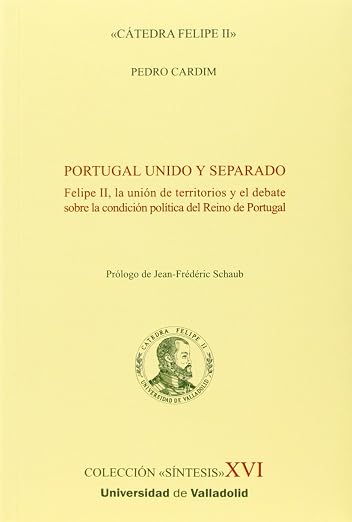
Pedro Cardim is Professor of History at NOVA University Lisbon. He is the author of Portugal unido y separado: Felipe II, la unión de territorios y la condición política del reino de Portugal (Valladolid: Universidad de Valladolid, 2014), and co-editor, with Nuno Gonçalo Monteiro, of Political Thought in Portugal and its Empire, c.1500–1800 (Cambridge: Cambridge University Press, 2021). His research focuses on early modern Iberian political thought, imperial governance, and colonial Brazil.
Bibliography
Albareda Salvadó, Joaquim. 2023. Vençuda Pero No Submisa: La Catalunya Del Segle XVIII (Barcelona: Edicions 62).
Almeida, Regina Celestino de. 2001. Metamorfoses Indígenas. Identidade e cultura nas aldeias coloniais do Rio de Janeiro (Rio de Janeiro: Arquivo Nacional).
Bandeira, Luiz Alberto Moniz. 2000. O feudo. A Casa da Torre de Garcia d’Ávila: da conquista dos sertões à independência do Brasil (Rio de Janeiro: Civilização Brasileira),
Bouza Álvarez, Fernando. 2001. Corre manuscrito: Una historia cultural del Siglo de Oro. (Madrid: Marcial Pons).
Figueiredo, Luciano. 2003. “Narrativas das rebeliões – linguagem política e ideias radicais na América portuguesa moderna»,” Revista da Universidade de São Paulo, 111 (mar/maio 2003): 6-27.
Fragoso, João & Nuno Monteiro, (eds.). 2017. Um reino e suas repúblicas no Atlântico. Comunicações políticas entre Portugal, Brasil e Angola nos séculos XVII e XVIII (Rio de Janeiro: Record).
Gil Pujol, Xavier. 1998. “El discurs reialista a la Catalunya dels Àustries fins al 1652, en el seu context europeu,” Pedralbes, 18 (1998), vol. II: 475-487.
Gil Pujol, Xavier. 2002. “Republican Politics in Early Modern Spain: the Castilian and Catalano-Aragonese Traditions,” in Martin Van Gelderen & Quentin Skinner (eds.), Republicanism. A Shared European Heritage, vol. I – Republicanism and Constitutionalism in Early Modern Europe. (Cambridge: Cambridge University Press): 263-384.
Kantor, Iris. 2004. Esquecidos e Renascidos. Historiografia Acadêmica Luso-Americana, 1724-1759. São Paulo-Salvador: Hucitec).
Lara, Silvia Hunold. 2007. « Marronnage et pouvoir colonial. Palmares, Cucaú et les frontières de la liberté au Pernambouc à la fin du XVIIe siècle, » Annales. Histoire, Sciences Sociales, vol. 67, n. 3, 2007: 639-662.
Monteiro, John Manuel. 2018. Blacks of the Land: Indian Slavery, Settler Society, and the Portuguese Colonial Enterprise in South America (Cambridge: Cambridge University Press).
Moreira, Vânia Losada. 2014. “Cartografia de um conflito: reformas pombalinas e sobreposição de direitos em sesmarias de índios” in R. Chambouleyron & K.H. Arenz (eds.), Anais do IV Encontro Internacional de História Colonial. Terra e império: os direitos de propriedade na América portuguesa em perspectiva comparada (Belém: Açaí): vol. 2, 228-234.
Schultz, Kirsten. 2023. From Conquest to Colony. Empire, Wealth & Difference in 18th century Brazil. (New Haven-London: Yale University Press).
Schwartz, Stuart B. 2010. All Can Be Saved: Religious Tolerance and Salvation in the Iberian Atlantic World (New Haven: Yale University Press).
Silva, Luiz Geraldo. 2001. “Esperança de liberdade: Interpretações populares da abolição ilustrada (1773-1774),” Revista de História, São Paulo, (144-2002): 107-149.
Vainfas, Ronaldo. 2011. Antônio Vieira, Jesuíta do rei (São Paulo: Companhia das Letras).
Vilardaga, José Carlos. 2014. São Paulo no império dos Felipes. Conexões na América Meridional (1580-1640). São Paulo: FAPESP- Intermeios.
Zeron, Carlos. 2011. “O governo dos escravos nas constituições primeiras do arcebispado da Bahia e na legislação portuguesa: separação e complementaridade entre pecado e delito,” in E. S. Souza & Bruno Feitler (eds.), A Igreja no Brasil. (São Paulo: Editora Unifesp): 323-354.
The views and opinions expressed in this article or video are those of the individual author(s) or presenter(s) and do not necessarily reflect the policy or views of the editors at Not Even Past, the UT Department of History, the University of Texas at Austin, or the UT System Board of Regents. Not Even Past is an online public history magazine rather than a peer-reviewed academic journal. While we make efforts to ensure that factual information in articles was obtained from reliable sources, Not Even Past is not responsible for any errors or omissions.