This essay is part of The Radical Spanish Empire Roundtable, a series of review essays examining the book from different disciplinary perspectives. Read the introduction and explore the other contributions in the series below.
- “The Radical Spanish Empire Roundtable – Introduction“
- “Iberian Subaltern Political Philosophies and The Radical Spanish Empire” by Pedro Cardim
- “Forgery, Invention, and the History of Skepticism in The Radical Spanish Empire“ by Katrina Olds
- “Lawfare and the Legal Construction of Race in The Radical Spanish Empire“ by Michelle McKinley
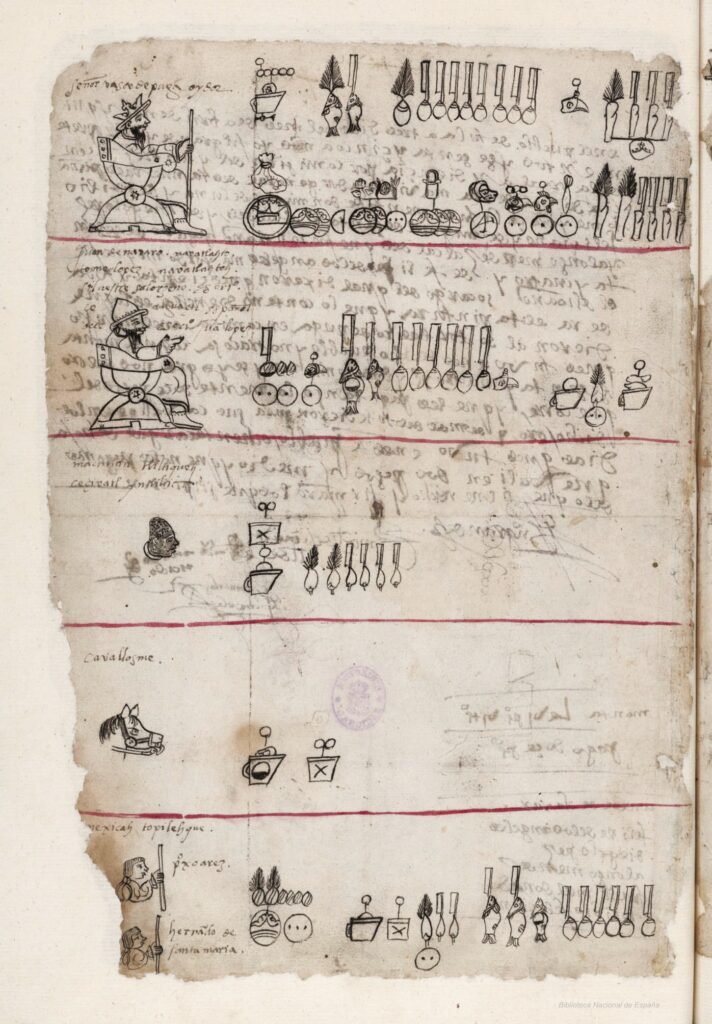
The action seems frenzied, turbulent, anxious, and, at the same time, thorough and calculated. At the beginning of Chapter Three of Cañizares-Esguerra and Masters’ remarkable new book The Radical Spanish Empire, we, the readers, meet three suppliant men: Gualpa, an Indigenous man who had accidentally discovered a new vein of silver; the Spaniard don Bartolome Inca y Orozco, whose father had created new mining technologies; and don Francisco de la Cueva, a Spaniard whose family of conquistadors and warriors had “pacified” New Spain, in part by slaying hundreds, if not thousands, of Natives. Gualpa’s son approached the Viceroy don Francisco de Toledo asking for royal rewards. Inca y Orozco wanted a royal pension. De la Cueva asked for Indigenous tribute, the downstream spoils of conquest. These men, from remarkably different social stations, all qualify as vassals, as those who inhabit a lower order of humanity in the caste system of the vast, complicated Spanish Empire of the sixteenth century. Emphasizing their deservingness, here represented as service to the Crown, they sought benefits, rents, and privileges. They ultimately received them.
Petitioning in the longue durée of Eurasian and Atlantic history has usually been an ineluctably relational process. It can be studied neither entirely from the bottom up nor entirely from the top down. Along with Masters’ remarkable We the King, Cañizares-Esguerra and Masters’ Radical Spanish Empire demonstrates both widespread, decentralized petitioning and the workings of a vast administrative system of courts and offices. Empires and states built courts, offices, and perhaps even forms of bureaucracy that both managed and, beyond that, encouraged supplication from those lower in the social order, sometimes at or near the bottom of it. From a comparative, longue-durée vantage point, Cañizares-Esguerra and Masters’ notion of radicalizing paperwork extends an earlier literature showing that aspects of ancient Roman, medieval European and other imperial systems also had some inclusive and leveling aspects. Yet the authors’ paperwork radicalism is not reducible to earlier imperial models, nor did it (yet) amount to the much more democratized and democratizing petitioning of the modern era, when petitions were used to recruit members to new organizations, expand legislative and administrative agendas, and foster new cultures of equality. Among many literatures in which the book is properly nestled as a generative interlocutor and gadfly, however, The Radical Spanish Empire should be read in this current of world-historical studies of petitioning.[1]
Cañizares-Esguerra and Masters narrate the stories of Gualpa, Inca y Orozco, and de la Cueva as a story of radicalism, of an upwelling of claims that shattered hierarchies both formal and informal and led to a non-trivial degree of empowerment for vassals. Gracia’s paperwork “prompted a bottom-up deluge of knowledge creation” (160) and “drove politics and action at once incredibly violent and creative, participatory and elitist” (162). Cañizares-Esguerra and Masters are right to emphasize this upwelling of political activity, but I want to draw attention to what might be regarded as “the other side of the coin.” A system like this carried considerable benefit to the Crown. The benefits included information about highly scattered populations as well as the recognition of the Crown and its agents as sovereign when vassals sought the kinds of things that only the Crown could grant licenses (172-73), patents (171-72), pensions (159), tribute (159), and, in general, rights and rents accorded by the Crown. As social scientists have begun to recognize, many of the most inclusive and participatory institutions of our time developed as imperial and monarchical institutions of rule. A far-flung, exhaustive, and literally exhausting system of paperwork. Paperwork produced information for the empire, and, beyond that, its actors participated in a system in which the sovereignty of the Crown was reinforced as well as occasionally undermined.[2]
The extreme scale and scope of the Spanish Empire’s paperwork regime endow Cañizares-Esguerra and Masters’ book with vital comparative and world-historical lessons. Early modern petitioning was more common in colonial Spanish America than in most other contemporary settings. Indeed, as the authors show, petitioning did not wither but swelled after the great comunero revolt against Charles V. Spanish law governed these petition-and-response systems, and the set of categories studied under the concept of “paperwork” included justicia (court cases), gracia (privileges) and gobierno (administrative legislation). Justicia and gracia represented casuistic jurisprudence and bestowals of privileges. With gobierno petitions, imperial officials could issue edicts with the force of law; there were tens (perhaps hundreds) of thousands of such petition-induced rulings in the radical Spanish empire. Gobierno petitions were sent to the Council of the Indies or to viceregal officials and high courts in Mexico. Indigenous people and mestizos used paperwork regularly and with some success; even as their rights and land claims changed dramatically, and even as dispossession continued apace, petitioning led to Spanish creation of new indigenous entitlements, a system of rights that created pathways and agendas for further empowerment by petitioning. In the larger view, scholars should revisit, if not jettison entirely, claims of a much more “inclusive” and “participatory” English North American empire as compared with the Spanish.[3]
As this paperwork empire was built, however, two other things were constructed: a ritually recognized sovereignty in imperial venues and legible information about the Crown’s subjects. The first is that the very act of supplication acknowledged a certain status of the Crown and its officials. What Gracia paperwork asked for was usually the kind of thing that could be found elsewhere only with great difficulty, or not at all: licenses for mining, guaranteed revenue streams through pensions or tribute from dependent populations, legal privileges. Recognition of the centrality of the Crown as a source of Gracia was all the more important because, as Cañizares-Esguerra and Masters emphasize, the Spanish Empire wrestled with a “world where disease and violence had fragmented society into countless unstable factions” (167). Military domination was not guaranteed, and paperwork also made this society more visible, more legible to the Crown. This was the second legacy of petitioning, which came from the very rules that generated so much paperwork. “For a conquistador to receive any kind of reward, especially Indigenous labor but even entry into the ranks of the Spanish grandees, he would need to certify his exploits” (168), and at that, certify them according to the rules of the Crown and its officers. Beyond the generation of facts and narratives, the Gracia paperwork embedded “open-ended emphasis on royal service” (171), which created new incentives to conquer, develop, settle, Christianize, and subjugate, and to do so in a way that was recognizable, justiciable to the Crown.[4]
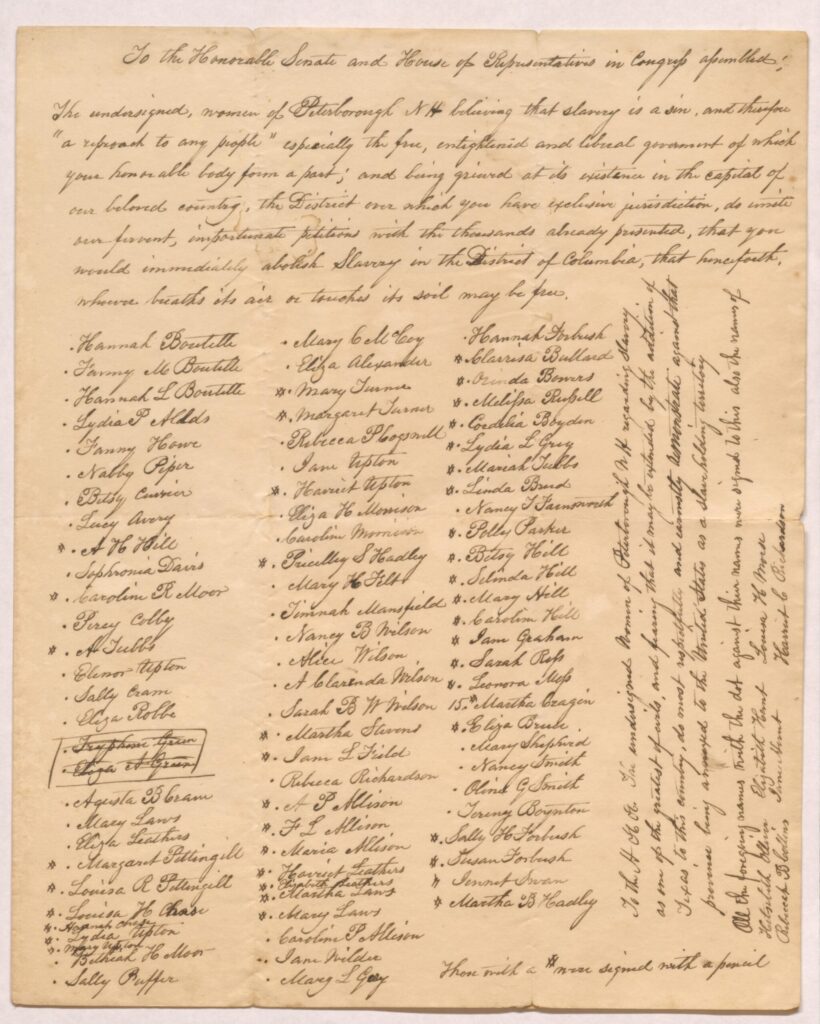
Cañizares-Esguerra and Masters show the duality of petition-and-response systems. Long held to be a near-meaningless process of abject subjection, the imperial petition becomes, in their creative and exhaustively researched account, a tool for creating new knowledge that no single actor truly controls. Paperwork becomes a ladder by which vassals can upend and destabilize hierarchies both imperial and Indigenous. At the same time, paper generates powerful new bureaucracies, fashions new imperial lenses through which the Crown can glimpse and read its subjects, and institutionalizes an everyday, everywhere recognition of who, at least theoretically, has authority to grant what the supplicant asks. As all eyes drift toward the petition, all eyes drift toward the petitioned who, even in ways ineluctably contested and liminal, establishes the visibility of his rule.
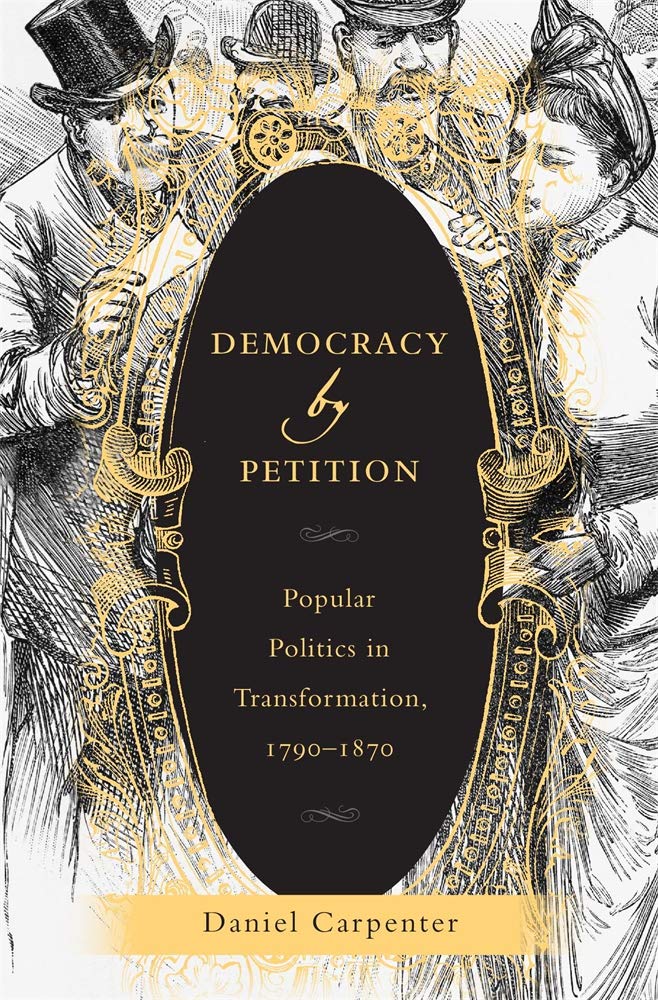
Daniel Carpenter is Allie S. Freed Professor of Government and Chair, Department of Government, in the Faculty of Arts and Sciences at Harvard University. His book Democracy by Petition: Popular Politics in Transformation, 1790–1870 (Cambridge, MA: Harvard University Press, 2021) was awarded the J. David Greenstone Prize of the American Political Science Association, the Seymour Martin Lipset Prize of the American Political Science Association, and the James P. Hanlan Book Award of the New England Historical Association.
[1] Consult Zaret (2025) for the most comprehensive Eurasian overview. On republican and post-republican Rome, see Eberle (2024), Deniaux (1993) and Millar (1977); on medieval Europe, Koziol (1992), Millet (2003) and Boucoyannis (2021); on modern democratized petitioning, Carpenter (2016), Carpenter (2021), Blackhawk et al (2021), Miller (2023), Carpenter (2023) and Carpenter (2025).
[2] By rent here I mean the traditional sense of a source of supply controlled uniquely by its owner, whether a vein of bauxite in a mount she owns or a legal privilege (e.g., a monopoly) granted by a ruler. For arguments about how more inclusive systems could serve imperial interests, consult Gailmard (2017), Gailmard (2024) and Carpenter and Gailmard (2024).
[3] See Anabitarte (2009), Owensby (2011), Masters (2017) and Masters (2023). As Herzog (2013: 213) writes, “By the end of this [claim-and-response] process, natives had come to be, rather than bearers of ancestral rights, holders of new and radically different kinds of entitlements.”
[4] Scott (1998) and Lee and Zhang (2017).
References
Anabitarte, Alfredo Gallego. 2009. Poder y derecho: Del antiguo régimen al estado constitucional en España: Siglos XVIII a XIX (Madrid, 2009)
Blackhawk, Maggie, Daniel Carpenter, Tobias Resch, and Benjamin Schneer. 2021. “Congressional Representation by Petition: Assessing the Voices of the Voteless in a Comprehensive New Database, 1789–1949,” Legislative Studies Quarterly 46, (3): 817-849.
Blackhawk, Ned. 2023. The Rediscovery of America: Native Peoples and the Unmaking of U.S. History (New Haven: Yale University Press).
Boucoyannis, Deborah. 2021. Kings as Judges: Power, Justice and the Origins of Parliaments (Cambridge: Cambridge University Press).
Carpenter, Daniel. 2016. “Recruitment by Petition: American Antislavery, French Protestantism, English Suppression,” Perspectives on Politics 14 (3): 700-723.
Carpenter, Daniel. 2021. Democracy by Petition: Popular Politics in Transformation, 1790-1870 (Cambridge, Massachusetts: Harvard University Press).
Carpenter, Daniel. 2023. “Agenda Democracy,” Annual Review of Political Science 26 (1): 193-212.
Carpenter, Daniel. 2025. “Petitioning as Governance: The Scattered and Multinational World of the Early United States,” Journal of the Early Republic 45 (3): 417-428.
Carpenter, Daniel, and Sean Gailmard. 2024. “Bootstrapping Sovereignty: Petitions and Power in Nascent States,” manuscript, University of California-Berkeley.
Deniaux, Élizabeth. 1993. Clientèles et pouvoir à l’époque de Cicéron (Rome: Publications de l’École française de Rome).
Eberle, Lisa Pilar. 2024. “The Edicts of the Praetors: Law, Time, and Revolution in Ancient Rome,” Law and History Review 42, no. 2 (2024): 237-261.
Gailmard, Sean P. 2017. “Building a New Imperial State: The Strategic Foundations of Separation of Powers in America,” American Political Science Review 111, no. 4 (2017): 668-685.
Gailmard, Sean. 2024. Agents of Empire: English Imperial Governance and the Making of American Political Institutions (New York: Cambridge University Press).
Herzog, Tamar. 2013. “Colonial Law and ‘Native Customs’: Indigenous Land Rights in Colonial Spanish America,” The Americas 69 (3) (January 2013), 318)
Koziol, Geoffrey. 1992. Begging Pardon and Favor: Ritual and Political Order in Early Medieval France. Cornell University Press, 1992.
Lee, Melissa M., and Nan Zhang.2017. “Legibility and the Informational Foundations of State Capacity,” The Journal of Politics 79, no. 1 (2017): 118-132.
Masters, Adrian. 2018. “A Thousand Invisible Architects: Vassals, the Petition and Response System, and the Creation of Spanish Imperial Caste Legislation,” Hispanic American Historical Review 98 (3): 377-406.
Masters, Adrian. 2023. We, the King: Creating Royal Legislation in the Sixteenth-Century Spanish New World (Cambridge: Cambridge University Press).
Miller, Henry J. 2023. A Nation of Petitioners: Petitions and Petitioning in the United Kingdom, 1780–1918 (Cambridge: Cambridge University Press).
Millet, Helene. 2003. Suppliques et requêtes: le gouvernement par la grâce en Occident (XIIe-XVe siècle) (Rome : École française de Rome.)
Moore, Michael Edward. 2011. A Sacred Kingdom: Bishops and the Rise of Frankish Kingship, 300-850 (Washington, D.C.: Catholic University of America).
Owensby, Brian P. 2011. “Pacto entre rey lejano y súbditos indígenas: Justicia, legalidad y política en Nueva España, siglo XVII,” Historia Mexicana 61 (1) (2011) 59-106.
Scott, James C. 1998. Seeing Like a State: How Certain Schemes to Improve the Human Condition Have Failed. (New Haven: Yale University Press).
Zaret, David. 2025. Petitioning and Power Relations in Pre-Modern Eurasia (Oxford: Oxford University Press).
The views and opinions expressed in this article or video are those of the individual author(s) or presenter(s) and do not necessarily reflect the policy or views of the editors at Not Even Past, the UT Department of History, the University of Texas at Austin, or the UT System Board of Regents. Not Even Past is an online public history magazine rather than a peer-reviewed academic journal. While we make efforts to ensure that factual information in articles was obtained from reliable sources, Not Even Past is not responsible for any errors or omissions.