This essay is part of The Radical Spanish Empire Roundtable, a series of review essays examining the book from different disciplinary perspectives. Read the introduction and explore the other contributions in the series below.
- “The Radical Spanish Empire Roundtable – Introduction“
- “All Eyes on the Petition: Reflections on The Radical Spanish Empire“ by Daniel Carpenter
- “Iberian Subaltern Political Philosophies and The Radical Spanish Empire” by Pedro Cardim
- “Forgery, Invention, and the History of Skepticism in The Radical Spanish Empire“ by Katrina Olds
Reading The Radical Spanish Empire made me reflect on the experience of two historical subjects. The first subject is Domingo, a natural of Goa in the Portuguese Indies who sued for his freedom in Lima’s royal court in 1561. The second is Manuel Quintín Lame, an indigenous, self-taught lawyer from southern Colombia who rose to fame in the early 20th century. Though separated by three centuries and across different lands, both men deployed the strategies of lawfare to demand freedom (in Domingo’s case), and communal land rights (in Lame’s case) through recourse to creative interpretations of property law and equity. In 1562, Domingo claimed that he had been wrongfully enslaved by the regent of Trujillo. Domingo put forth multiple and overlapping identitarian arguments: free soil, free womb, and the absence of bodily marks that would have designated his enslaved status.[1] Centuries later, Manuel Quintín Lame (1880-1967) penned numerous petitions to Colombian authorities demanding communal land rights. Lame based his demands on an idiosyncratic corpus of ideas about justice, statutory law, neo-scholastic jurisprudence and his visions and hallucinations.[2] His photo (reproduced in the Radical Spanish Empire, p.359), and his elaborate signature evoking the florid royal seal of Yo el rey paperwork, have become symbols of the contemporary indigenous movement and popular icons of resistance to unjust rule.
Domingo is less well known in the historical record. Yet his case is important for the insights about the foundational role of paperwork and race-making that the authors articulate in The Radical Spanish Empire. Domingo, a natural, subject of Goa, distanced himself from the enslaveability or personal service that accompanied African or indigenous (American) birth. In asserting a hybrid, oblique, free-soil-free womb claim, Domingo in fact created and demarcated a racialized legal space of wrongful enslavement and inter-imperial harm. His inter-imperial, Christian claim of wrongful enslavement would have made more sense in Oran than it did in 16th century Lima, and one wonders whether his notary had rescate (ransom) on his mind when he wrote Domingo’s petition. Ultimately, plaintiffs protesting their enslavement throughout the Spanish empire marshalled whatever arguments they hoped would resonate within the casuistic jurisprudential canon in order to prevail in their cases.[3] While Domingo’s case serendipitously fits into the five-decade timeline set out by the authors in the Radical Spanish Empire, it unfolded three years before the Spanish crown officially launched its transpacific enterprise in 1565. What was Domingo doing in Lima three years before the Manila Galleon sailed across the Pacific in 1565? What racialized and juridical category would have authorized his presence in the City of Kings besides enslavement?
Race, as we think about it today, was infrequently deployed in the sixteenth century. Historians and scholars of colonial racial formations have settled on casta and calidad, despairing of finding equivalent terms for racialization in the early modern world and the colonial Americas. Calidad, religious virtue, status, and gender also intersected powerfully with racialized identities. These intersections afforded individuals a measure of autonomy to choose among permissible racial identities—between the ascribed and the self-imposed. Caste, more than race, determined one’s legal subjecthood and influenced an individual’s life options. Caste could predict where one lived, the sodality to which one belonged, the trade or profession one engaged in, and played an outsized role in social mobility. But did paperwork create race or caste?
In responding to the Radical Spanish Empire, I have been tasked with discussing whether the historiography of racial categories and caste mirrors a kind of ontological Spanish racism. Extensive scholarly debates about Iberian notions of difference have largely pivoted around race before racialization. Scholars, particularly in literary and cultural studies acknowledge that the fields of Black Studies and Early Modern Studies are long overdue for an Afrocentric accounting of early modern studies of race. Other scholars of early modern Iberia insist that race is a modern construct that arose in tandem with the Atlantic slave trade. In my view, this latter temporal argument is insufficient. Afro-descendant people were active cultural agents driving a host of artistic, literary, and religious innovations in the Renaissance, and these innovations were foundational to race and difference in the early modern world. While the authors of the Radical Spanish Empire wisely refrain from wading into the minefield of racialization, presentism, whiteness and early modern studies, the questions they raise regarding ethnogenesis and documentary racial production highlight the limits of conventional accounts of race in the Iberian Americas.
The authors articulate two metanarratives: the cultural-civilizationist and the Hispanist, that have produced important, groundbreaking scholarship on racial formations in the Americas. The top-down culturalist view is that mestizaje affirmed racial mixing, but maintained white superiority through taxonomies of racial fractions, and encouraged social mobility through whitening (which was achieved through assimilation, religious conversion, and inter-marriage. What bothers me about this rendition is that whitening is assumed without darkening. A worms-eye-view in the dross of paperwork shows how ordinary men and women negotiated these classifications, how they dealt with each other, how they procreated, loved, hated, and fought both up and down the socio-racial scale. The mundane cases of ordinary men and women reveal how their understandings of their status reinforced and challenged elite notions of ordered hierarchies given the ambiguities of lived experience. As such, neither the cultural-civilizationist nor the Hispanist metanarratives account for Domingo as a racialized subject. So how could he emerge as a legal subject? Both authors would agree that both cultural and Hispanist metanarratives are insufficient. According to the culturalist model, Domingo would be a hybrid subject born out of a civilizational clash between Europeans and indigenous or African peoples. Yet, as a legal subject, Domingo was not arguing for his hybrid identity. Rather, he adamantly articulated a legal identity as a subject from another place and another empire who was illegitimately enslaved. Domingo used an idea of birthplace (naturaleza) that was favored by many litigants in the 16th and 17th century Philippines who argued that all indios were loyal vassals and that therefore they should be considered free.[4] However, Philippine litigants did not extend their privileged identity to include people from Goa. Thus, had Domingo tried that argument in situ it probably would have backfired. But the legal bricolage he demonstrated could only have emerged through the lawfare paperwork on display in the Radical Spanish Empire.
This does not mean that Domingo had no place within the heady hybridity of mestizaje and ethnogenesis. A famous 1613 census commissioned by viceroy Montesclaros to track down tax and tribute evading indigenous people did in fact equate indios from Goa with indigenous Andeans.[5] However, Domingo would not have identified himself as a hybrid mestized subject, especially since claiming that identity would have imperiled his case for freedom. Domingo’s claim to racial distinctiveness may sit more comfortably with contemporary Hispanists. Loosely organized under the theoretical umbrella of comparative studies of race, ethnicity, and citizenship, scholars examine a Spanish empire that “embraced racial mixing, allow[ed] manumission of slaved through self-purchase, and gave political rights to both Indigenous and free Black subjects” (p. 18). While I would locate my own scholarship in this stream, the authors take issue with its top-down emphasis on “civilizing harmonization…. and the inspiring story of integration and collaboration” (18). The authors are careful to acknowledge the breadth of nuanced scholarship that accounts for colonial violence that emerged in tandem with Indigenous and non-elite agency. However, they are concerned with the omission of politics from these two particular metanarratives. I don’t find myself persuaded by the currency of the other two metanarratives as I think the scholarly conversation has long moved on from the Black Legend or the liberal top-down frameworks. Scholars and students of the 16th century will be more interested in the book’s claims about paperwork and the making of race.
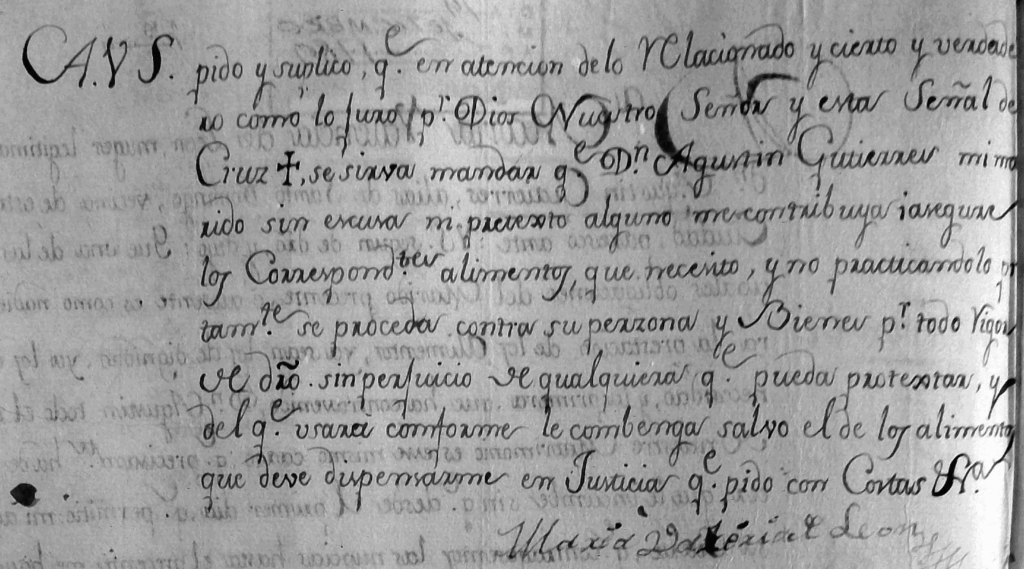
The Radical Spanish Empire exhaustively traces the bottom-up usage of four types of paperwork: gracia, justicia, gobierno, and their respective offshoots that literally and figuratively joined the Americas with the peninsula. Each of these administrative processes generated reams of associated paperwork. One genre relied on (or mutually constituted) the other— criminal and civil lawsuits were integral to subsequent audits, gobierno petitions spawned administrative or ecclesiastical visits to extirpate undesired (tyrannical, heretical, fraudulent) behavior. As the authors point out, “Spanish imperial justice was deeply socially unequal by design, but it was also extraordinarily participatory” (p.8 my emphasis). Gracia petitioning was so “participatory and intuitive that virtually anyone could attempt a reinvention” (p.227). This emphasis on participatory, bottom-up petitioning “transformed paperwork into a raucous, radical affair” (p.9). To show how paperwork was both legal and lethal, the authors invoke the polysemic term “lawfare” that has been deployed in other martial and settler colonial contexts to link sovereign violence with legal forms of dispossession.[6] More often than not, the Radical Spanish Empire falls along the insubordinate side of lawfare rather than on the side of sovereign violence. As a reader, I prefer the lawfare framing over (yet) another empirical narrative of indigenous resistance or accommodation. Yet sometimes I wondered what paperwork was doing in the book—it was everything and everywhere all at once. The requerimiento was paperwork. It was also the harbinger of incredible violence.[7] The procedural omission of reading the Requerimiento was far more available as a remedy to religious dissidents than it was to Indigenous peoples. Native disputants did catch on that procedural omissions were arguments they could muster in their complaints, but they used different arguments about corporal punishment and overwork. Enslaved Africans also complained when their owners and overseers forced them to work on Sundays, framing their grievances in the register of faithful Catholics denied the sacraments by sacrilegious warlords. The requerimiento seemed far from their minds.
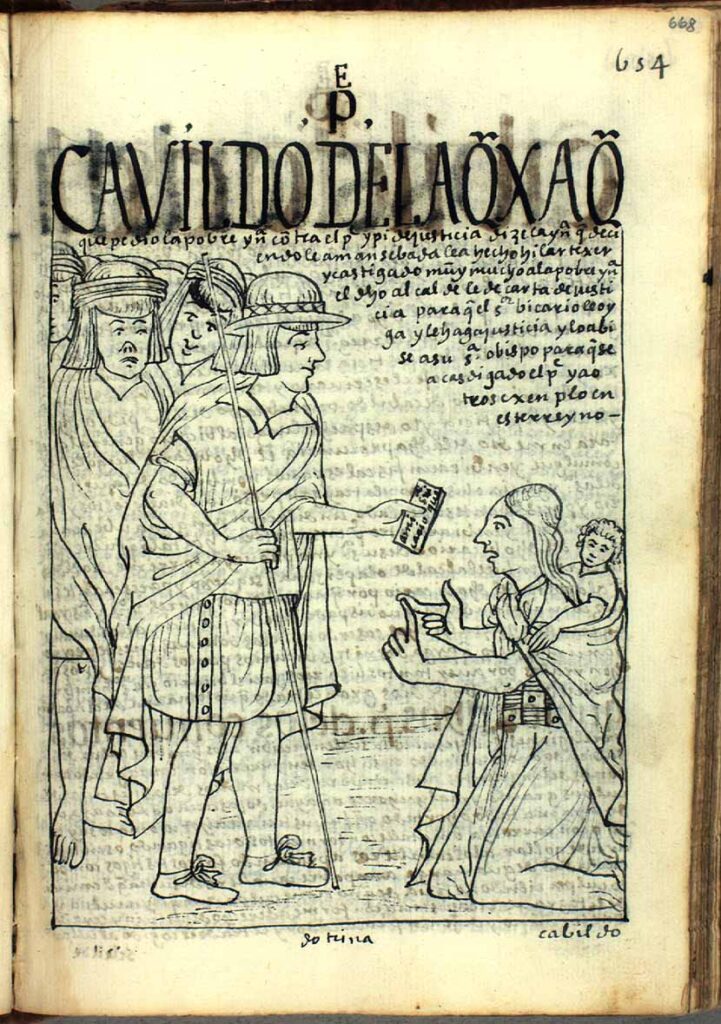
The fact that a complainant filed paperwork did not make their problems go away and could aggravate them. Often when people filed complaints it was for far more modest purposes than the authors suggest. True, most of the book focuses on much grander actors with genealogical and financial claims that interested the Crown. However, the authors query whether actions can be simultaneously “radical” and “traditional (p.166).” Can supplicants be radical? A case in point was the petition filed by a group of mulatos in 1570 in Mexico to establish a hospital where they could seek treatment.[8] Led by the tailor Juan Bautista, their petition called the King’s attention to the fact that Mexico City’s population of more than 6,000 mulatos did not have a hospital where they could receive treatment. In contrast, Spaniards and naturales (Indigenous) subjects had their own designated (segregated) hospitals and clinics. They used a merit-based argument as loyal vassals to legitimate their claim for a hospital on consecrated ground and strategically framed their petition to appeal to King Philip’s sense of spatio-racial order. The petitioner’s plea for a hospital makes sense in a world of disease and violence. But I do not think Juan Bautista’s petition “sustained the radical dismemberment of conquistador power” (p.73). Juan Bautista’s petition conformed to the medieval register of pleading, favors, and grace, but the petitioners’ potentially subversive status as mulatos needed to be overcome by establishing loyal vassalage. In the vein of invented traditions, radicalism could be traditional in that petitioners “mobilized tradition to their own ends” (p.166).
The authors acknowledge the problematic designation of the term “Indian” in the documents. Like the frustrated census taker in 1613 Lima, the distant Crown depended on paperwork to define who was Indio, what dispensation came with the term, and what privileges accrued to those designated as naturales after 1542. According to the authors, “Much hinged on how petitioners and litigants framed this legal construct; life or death issues like tribute, labor, slavery, and self-government were contingent on officials’ understanding of Indio-ness” (p.264). Once again, we should ask whether paperwork made race or created racial loopholes? In numerous divorce petitions that I have reviewed for 16th and 17th century Lima, ecclesiastical authorities decried Indigenous complainants as masquerading “mestizas en hábito de india.” Other Spanish defendants seeking to discredit their opponents in the nasty tactics of tacha lawfare claimed that enslaved or Indigenous status prevented deponents from understanding the solemnity of oath-taking. At times, peninsular-born Afro-descent petitioners were denounced as too “ladino” by Jesuits and other would-be confessors who sought to prevent African-born (bozal) parishioners from developing intra-ethnic solidarities.
Given how frequently racial anxieties surface in the judicial and legislative record, the authors claim that “In Mexico, Peru, and beyond, the result of archivalization was the rise of self-described communities of mestizos, mulatos, negros, and the Nacion indiana. … These terms …. did not come from prefigured and inevitable Hispanic racial traditions rooted in medieval and Reconquista privileges or from the logic of capitalism as it transplanted itself into the Indies’ tropical soil. Rather they emerged from factional petitioning” (p.285-288). This account of racial archivalization is a unique contribution of the Radical Spanish Empire. In many 16th century accounts, Domingo and Juan Bautista would occupy indeterminate Indigenous and Black identities. As many contemporary scholars of racial formations in Latin America point out, Black sovereign identity has only succeeded when it is tied to land. Indeed, don Francisco de Arobe could claim the privileges of territorial sovereignty in the same way that Afro-Ecuadorians and Afro-Colombians in contemporary Chocó can invoke land title in an indigenous register. This brings us back to our auto-didact jurisprude, Manuel Quintín Lame who used the law to reclaim communal land. Lame, like many of the historical subjects in the Radical Spanish Empire destabilized hegemonic legal thinking with subaltern interpretations of law and justice, grounded in the experience of suffering, and a claim to reparation. Jorge Cañizares-Esguerra and Adrian Masters have provided a sweeping account of the administrative history of the 16th century Spanish empire that shifts our thinking to the important role of legal and political thought from below. The Radical Spanish Empire highlights the power of the pen as it worked in tandem with the sword.
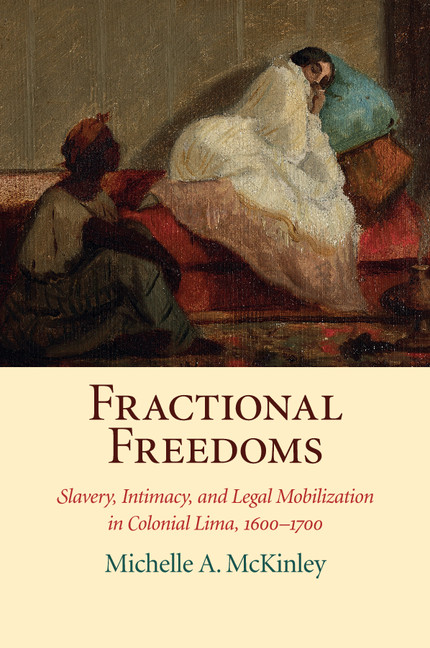
Michelle McKinley is the Bernard B. Kliks Professor of Law at the University of Oregon Law School. McKinley has extensively published work on public international law, Latin American legal history, and the law of slavery, including her monograph, Fractional Freedoms: Slavery, Intimacy and Legal Mobilization in Colonial Lima, 1600-1700 (Cambridge University Press, 2016)
[1] Archivo General de la Nación Real Audiencia-CI 1 Leg.6 Doc. 34, año 1561: Autos seguidos por Domingo, natural de la ciudad de Goa, en la India Portuguesa contra Francisco Pérez Lazcano, regidor y vecino de la ciudad de Trujillo porque siendo hijo de padres libres como lo son todos los naturales de aquella ciudad, Pérez Lazcano lo había privado de su libertad y se servía de él como esclavo; y lo había enviado al secretario de la real audiencia en la ciudad de los reyes Francisco de Carvajal para que lo vendiese como tal. El testigo Pedro Díaz, natural de los Algarves en Portugal decía que Domingo era libre, porque de otro modo estaría marcado con una cruz en el carrillo, como lo estaban todos los esclavos en Goa.
[2] The source of Lame’s knowledge of law remains a mystery. See, Fabio Gómez Cardona, “Manuel Lame en la confluencia del mito y la historia,” Historia y espacio 38 (Jan-June 2012), Joanne Rappaport, “Manuel Lame hoy.” In Los pensamientos del indio que se educó dentro de las selvas colombianas. Universidad del Cauca 2004: 51-109. Hallucinations are now de rigeur as sources of jurisprudence. See, Christopher Tomlins, In the Matter of Nat Turner: A Speculative History, Princeton University Press, 2020.
[3] See. e.g. Karen Graubart, “Pesa más la libertad, Legal claims and the history of Afro-Latin American ideas,” William & Mary Quarterly 78:3 (2021): 427-58; Casey Schmitt, The Predatory Sea: Human Trafficking and Captivity in the Seventeenth Century Caribbean, University of Pennsylvania Press, 2025, Chloe Ireton, “Black Africans Freedom Suits to Define Just War and Just Slavery in the Early Spanish Empire,” Renaissance Quarterly 73:4 (2020), 1179-1234.
[4] See, Stuart McManus and Rômulo Ehalt, “Regimes of Bondage: The Encounter between Early Modern European and Asian Slaveries,” Itinerario 47:3 (2023), 289-296.
[5] See, Michelle McKinley “The Unbearable Lightness of Being (Black): Racial Constructions of Culture and Cultural Constructions of Race in Latin America.” In Racial Formations in the 21st Century, Daniel Martinez-Hosang, Oneka LaBennett, & Laura Pulido, eds., University of California Press, 2012), 116-42. See also, Diego Javier Luis, The First Asians in the Americas: A Transpacific History, Harvard University Press, 2024, Tatiana Seijas, Asian Slaves in Colonial Mexico: From Chinos to Indians, Cambridge University Press, 2014.
[6] See eg. Jean and John Comaroff, “Law and Disorder in the Postcolony,” Social Anthropology 15:2 (2007), 133-152. The term “lawfare” is particularly popular among scholars and practitioners of the law of armed conflict. A well-established blog “Lawfare” provides commentary for “hard national security choices.” The term is also commonly used in alternative, Global-south histories of international Law and empire. See, e.g. Anthony Anghie, “Rethinking International Law: A TWAIL Perspective,” European Journal of International Law 34:1 (2023) 7-112.
[7] See Yanay Israeli, “The Requerimiento in the Old World: Making Demands and Keeping Records in the Legal Culture of Late Medieval Castile.” Law & History Review 40:1 (2022) 37-62.
[8] Si saben q[ue] en esta çiudad y fuera della ay mas de seys myll mulatos y muchos dellos estan pobres y necesitados q[ue] q[uand]o adoleçen y les çubçeden algunas enfermedades no tienen donde yrse a curar por no los querer recoxer los hospitales que en esta d[ic]ha çiudad ay porque tienen solamente de recoger en ellos españoles e yndios digan. AGI, Juan de la Peña, Petición de mulatos, 1568. See, Miguel Valerio, “The Spanish Petition System, Hospital/ity and the Formation of A Mulato Community in 16th-Century Mexico,” The Americas 78:3 (2021): 415-37.
The views and opinions expressed in this article or video are those of the individual author(s) or presenter(s) and do not necessarily reflect the policy or views of the editors at Not Even Past, the UT Department of History, the University of Texas at Austin, or the UT System Board of Regents. Not Even Past is an online public history magazine rather than a peer-reviewed academic journal. While we make efforts to ensure that factual information in articles was obtained from reliable sources, Not Even Past is not responsible for any errors or omissions.