
• New
  • Features
  • Reviews
  • Texas
  • Teaching
  • Digital
  • Watch & Listen
  • Authors
  • About

The past is never dead. It's not even past

Not Even Past

Parenting in Hard Times: Child Abandonment in Early Modern Europe

January 27, 2014

The practice of child abandonment and efforts to manage it have a long history and I recently encountered a series of surviving artifacts from about 250 years ago that provide us with a rare window into the abandoned and the abandoners. In France, as in other European countries, the frequency of abandonment led to the development of institutional responses to protect the children with the establishment of foundling hospitals in towns and cities across Europe.
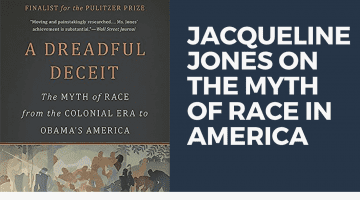

Jacqueline Jones on the Myth of Race in America

January 2, 2014

Like countless other cultures and countries throughout the world, the United States has its own creation myth—its own unique, dramatic story intended to explain where we came from and who we are today. In the case of the United States, this story holds that the nation was conceived in “racial” differences, and that over the last four centuries these self-evident differences have suffused our national character and shaped our national destiny. Yet America’s creation myth is just that—a myth, one that itself rests entirely on a spurious concept: For “race” itself is a fiction, one that has no basis in biology or any longstanding, consistent usage in human culture.

“12 Years a Slave” and the Difficulty of Dramatizing the “Peculiar Institution”

November 10, 2013

The challenge of informing an inquisitive American public about the nation’s own two-hundred year old tragedy—slavery—has not fallen squarely on the shoulders of historians and other scholars. Artists, and particularly filmmakers, have played a central role in helping the larger public grapple with the horrors and indeed, aftershocks of human bondage.

For Social Peace in Brazil: Industrialists and the Remaking of the Working Class in São Paulo, 1920-1964 by Barbara Weinstein (1996)

October 23, 2013

In this rightfully celebrated book, Barbara Weinstein explores the efforts of São Paulo’s industrial elite to shape and control the Brazilian workforce from the 1920s to 1964 through two government-established yet privately-controlled public agencies—the National Service for Industrial Training (SENAI) and the Industrial Social Se

“For a Gunner”: A World War II Love Story

September 22, 2013

They met on the boardwalk of Rehoboth Beach, Delaware, on Labor Day of 1941, introduced by mutual friends.  She was a self-described ambitious career girl; an English-major graduate of the University of Delaware, she would spend the war years working first in the advertising department of the DuPont Company, and then as the editor of RCA Victor’s company newsletter. He was a mail clerk for DuPont when he enlisted in the Army Air Forces in December of 1941 and began a three-month stint of basic training.

UT Gender Symposium: Women’s Bodies and Political Agendas

September 16, 2013

by Julia Gossard and Shaherzad Ahmadi

Passing for Portuguese: One Family’s Struggle with Race and Identity in America

September 8, 2013

My father’s family came from Cape Verde, a tiny archipelago off the west coast of Africa near Senegal. Cape Verde was part of the Portuguese empire until a bloody fight for freedom initially led by my personal hero, Amilcar Cabral, brought independence to nation in July 1975.

Austin’s Municipal Abattoir

September 4, 2013

Black and white image of Austin's Municipal Abattoir as it appeared in 1939

In late October 1939 a photographer from the Bureau of Identification spent the day among both warm and chilled beef carcasses, shrouded sides of pork, and racks of washed and dried offal, documenting the daily activities of the Austin Municipal Abattoir.

Handbook of African American Texas

September 4, 2013

Do you love Texas history? The Texas State Historical Association, which makes Texas history readily accessible through its Digital Gateway to Texas History, now offers a huge, new, terrific series of readings in the Handbook of African American Texas.

Laws of Chance: Brazil’s Clandestine Lottery and the Making of Urban Public Life by Amy Chazkel (2011)

September 2, 2013

Amy Chazkel’s Laws of Chance explores the rise of a cultural phenomenon that has engrossed the Brazilian imaginary since the turn of the twentieth century: the lottery game jogo do bicho. Its multifaceted analysis ties the “animal game” to the rise of urbanization, consumer capitalism, positivist criminology, and the cash economy in the First Republic (1889-1930).

« Previous Page
Next Page »

Recent Posts

  • Curating History: Dr Pepper, Preservation, and Public Trust
  • The Brands of Garrison Hall at its Centennial
  • The Battles of the Alamo and the Myth of Southern Exceptionalism
  • Primary Source: Magic, Metal, and Medicine in Leonhard Thurneysser’s Paracelsus
  • Faculty Spotlight: Dr. Kate Imy
NOT EVEN PAST is produced by

The Department of History

The University of Texas at Austin

We are supported by the College of Liberal Arts
And our Readers

Donate
Contact

All content © 2010-present NOT EVEN PAST and the authors, unless otherwise noted

Sign up to receive our MONTHLY NEWSLETTER

  • New
  • Features
  • Reviews
  • Texas
  • Teaching
  • Digital
  • Watch & Listen
  • Authors
  • About