• Features
  • Reviews
  • Teaching
  • Watch & Listen
  • About

The past is never dead. It's not even past

Not Even Past

The Latest from Longhorn PhDs

February 12, 2014

Photograph of the front facade of Garrison Hall on the campus of the University of Texas at Austin

In November we wrote to everyone who received a PhD in History at UT Austin since 2000 to find out what they were doing.  We are curious about our former students’ careers and adventures and we want to celebrate their achievements in whatever line of work they pursued. And we still do! We hope everyone […]
History Made Magic: The Scrapbooks of Harry Houdini Come Alive

February 6, 2014

In a new age of digital powered skepticism, where anything “extraordinary” can be explained within seconds on a smartphone, there isn’t much room for magic. But the Harry Ransom Center at UT Austin has brought us back to a time when the mystical unknown captured the hearts and minds of people everywhere.

Episode 41: The Myth of Race in America

February 4, 2014

Guest Jacqueline Jones, one of the foremost experts on the history of racial history in the United States, helps us understand race and race relations by exposing some of its astonishing paradoxes from the earliest day to Obama's America.

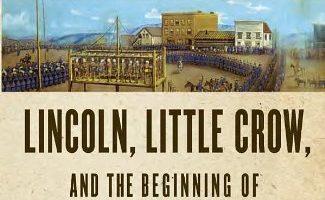
38 Nooses: Lincoln, Little Crow, and the Beginning of the Frontier’s End by Scott W. Berg (2012)

January 31, 2014

As we celebrate the sesquicentennial of the Civil War, it’s easy to imagine the 1860s as a historical stage dominated by northerners and southerners, fighting to make their voices heard as the debates about slavery and the great drama of emancipation unfolded in a series of costly battles and sweeping presidential proclamations. While that narrative certainly serves as a key to our nation’s history, Scott Berg urges us to broaden our geographic perspective to include the Western US to fully understand a decade that saw the nation splinter, reunify, and begin to grapple with new definitions of “freedom.”

Jacqueline Jones on the Myth of Race in America

January 2, 2014

Like countless other cultures and countries throughout the world, the United States has its own creation myth—its own unique, dramatic story intended to explain where we came from and who we are today. In the case of the United States, this story holds that the nation was conceived in “racial” differences, and that over the last four centuries these self-evident differences have suffused our national character and shaped our national destiny. Yet America’s creation myth is just that—a myth, one that itself rests entirely on a spurious concept: For “race” itself is a fiction, one that has no basis in biology or any longstanding, consistent usage in human culture.

The Deepest Wounds: A Labor and Environmental History of Sugar in Northeast Brazil by Thomas D. Rogers (2010)

November 12, 2013

There is a vast historiography on worker strikes and resistance to economic exploitation in Latin America and Brazil, yet most scholars disregard the environmental backdrop to struggles over land, labor, and resources.

“12 Years a Slave” and the Difficulty of Dramatizing the “Peculiar Institution”

November 10, 2013

The challenge of informing an inquisitive American public about the nation’s own two-hundred year old tragedy—slavery—has not fallen squarely on the shoulders of historians and other scholars. Artists, and particularly filmmakers, have played a central role in helping the larger public grapple with the horrors and indeed, aftershocks of human bondage.

UT Gender Symposium: Women’s Bodies and Political Agendas

September 16, 2013

by Julia Gossard and Shaherzad Ahmadi

Handbook of African American Texas

September 4, 2013

Do you love Texas history? The Texas State Historical Association, which makes Texas history readily accessible through its Digital Gateway to Texas History, now offers a huge, new, terrific series of readings in the Handbook of African American Texas.

Episode 22: Causes of the U.S. Civil War (Part 2)

May 7, 2013

In the century and a half since the war’s end, historians, politicians, and laypeople have debated the causes of the U.S. Civil War: what truly led the Union to break up and turn on itself?

« Previous Page
Next Page »

Recent Posts

  • Beyond the Waters: Oral History and the Save Our Springs Movement of Late-Twentieth-Century Austin
  • Review of Brown Skins, White Coats: Race Science in India, 1920-66 (2022)
  • Las cosas tienen vida:  Un podcast sobre el rol de los objetos coloniales en nuestras vidas actuales 
  • Las cosas tienen vida: A Podcast About the Role of Colonial Objects in Our Present Lives 
  • Review of Disenfranchised: The Rise and Fall of Industrial Citizenship in China (2019).
NOT EVEN PAST is produced by

The Department of History

The University of Texas at Austin

We are supported by the College of Liberal Arts
And our Readers

Donate
Contact

All content © 2010-present NOT EVEN PAST and the authors, unless otherwise noted

Sign up to receive our MONTHLY NEWSLETTER

  • Features
  • Reviews
  • Teaching
  • Watch & Listen
  • About