• Features
  • Reviews
  • Teaching
  • Watch & Listen
  • About

The past is never dead. It's not even past

Not Even Past

Primary Source: How Did Cary Coke Get Her Copy of Queen Catharine?

This and other articles in Primary Source: History from the Ransom Center Stacks represent an ongoing partnership between Not Even Past and the Harry Ransom Center, a world-renowned humanities research library and museum at The University of Texas at Austin. Visit the Center’s website to learn more about its collections and get involved.

Mary Pix’s Queen Catharine; or, the Ruines of Love (1698) was not a smash hit. Very few of her plays were. While a handful enjoyed revivals on the stage throughout the 1690s and 1700s, none of her playbooks received a second run in print. That said, after Aphra Behn and Susanna Centlivre, Mary Pix was the most prolific woman playwright of the English Restoration.1 No fewer than twelve of her plays were produced between 1696 and 1706.2 And like many playwrights, regardless of gender, Pix used print to court aristocratic interest and, ideally, patronage. The copy of Queen Catharine at the Ransom Center may be the very one that Pix presented to the book’s dedicatee, Cary Coke. 
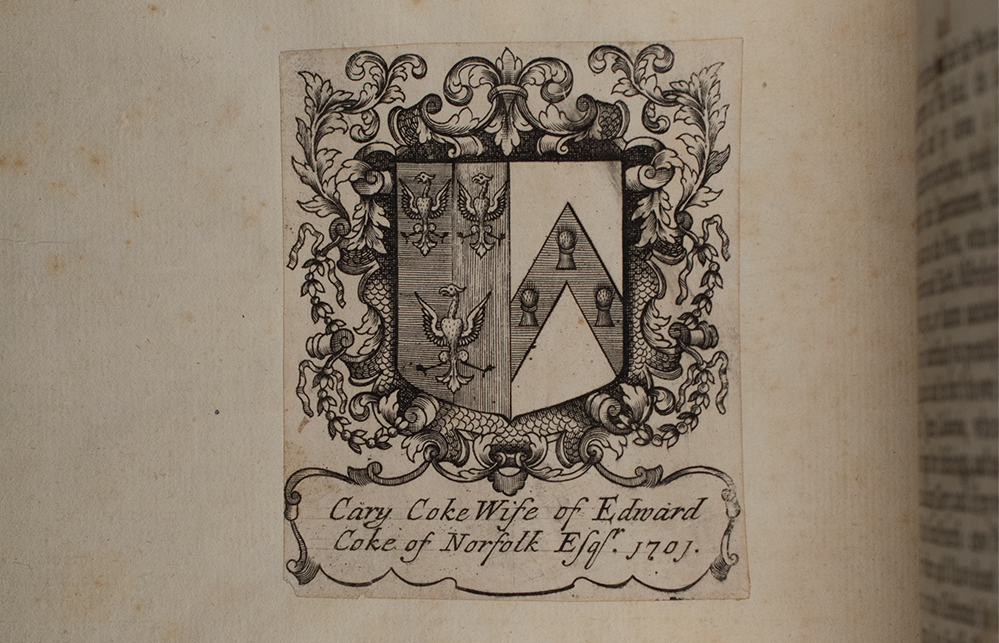
Bookplate of Cary Coke from Mary Pix, Queen Catharine; or, the Ruines of Love
Bookplate of Cary Coke from Mary Pix, Queen Catharine; or, the Ruines of Love (London: William Turner and Richard Basset, 1698). Harry Ransom Center, Ak P689 698q.

Part of the George A. Aitken Collection, which came to the Ransom Center in 1921, this copy of Queen Catharine is, from the outside, typical of the playbooks that went through the hands of nineteenth- and early-twentieth-century book collectors. It has been rebound in red leather and features marbled endpapers. Oddly, though, the volume’s only bookplate before arriving at the University of Texas appears not at the very front but on a leaf inserted after the playbook’s title-page. On the back—the verso—of that leaf, the plate reads, “Cary Coke Wife of Edward Coke, Esq. 1701.” The fact that it comes after the endpapers is not in and of itself unusual: book collectors in the early eighteenth century understood, perhaps better than modern ones, the impermanence of book bindings, and often glued their plates to the blank versos of title-pages. A bookplate following a title-page, however, is odd.  A little more than 300 of the Cokes’ playbooks are now at Oxford University’s Bodleian Library, and none include a plate in this position. Of the 30 total volumes in which they have been bound together, 24 include either Edward or Cary’s plate. In 22 of them, it appears on the verso the first play’s title-page.3 So, the question becomes: why is Cary Coke’s bookplate on an extra leaf in this copy of Queen Catharine? And what can this tell us about the history of this playbook before it arrived at the University of Texas?
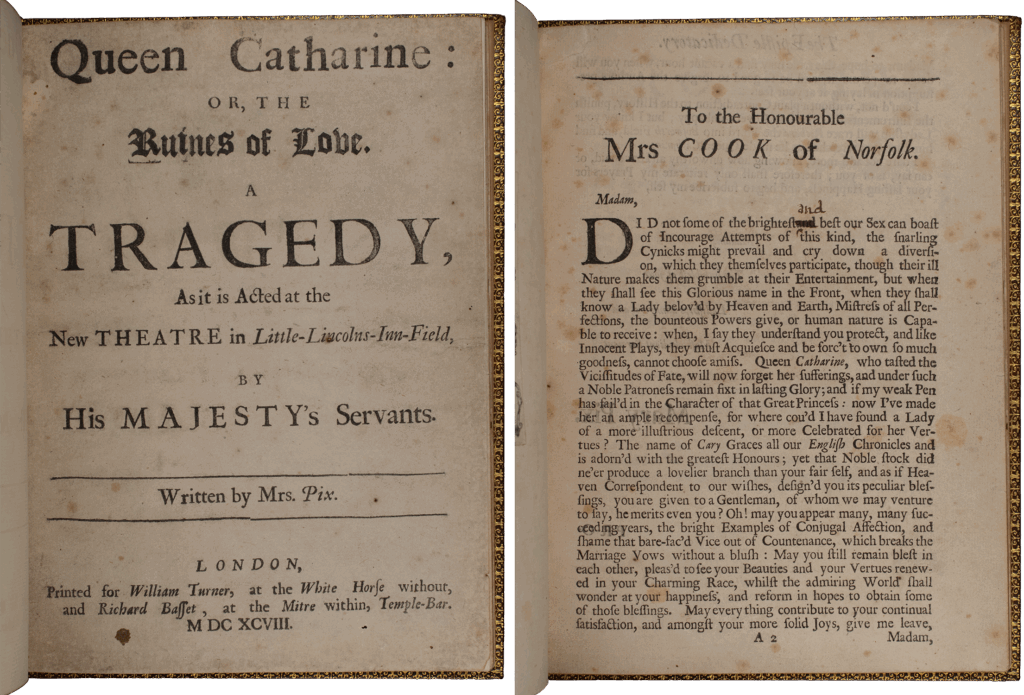
Title-page and sig. A2r with handwritten correction from Mary Pix, Queen Catharine; or, the Ruines of Love
Title-page and sig. A2r with handwritten correction from Mary Pix, Queen Catharine; or, the Ruines of Love (London: William Turner and Richard Basset, 1698). Harry Ransom Center, Ak P689 698q.

One clue may lie in a single handwritten correction. On the first page of the dedication to Coke, there is a typesetting error. What should be “brightest and”—“Did not some of the brightest and best of our Sex can boast of incourage attempts of this kind…”—lacks a space between the two words, appearing as “brightestand.”4 In the Center’s copy of Queen Catharine, someone has attended to this error, crossing out “and” and rewriting the word above in an early hand that roughly mimics the font. Given the bookplate, the emendation may have been made by Pix herself before she presented the book to Cary Coke. Or maybe it was made by Coke upon receiving the playbook from Pix. If a presentation copy, the playbook may have been kept separate from the bound playbooks, which include another copy of the Queen Catharine edition. (The volume including that copy bears Edward Coke’s bookplate, not Cary’s.) It isn’t hard to imagine that Cary Coke would want a special, personal copy of a play dedicated to her to remain apart from the larger, household collection of plays. It also isn’t difficult to imagine Pix taking a moment to correct a typesetting error in her dedication before sending or presenting the copy to the dedicatee. Of course, though, we can probably never know for sure.

There is also the matter of Aitken himself. That a Pix play found a home in Aitken’s collection at all is appropriate, given his wide-ranging interest in English books and a scholarly interest in the literature of Queen Anne’s reign in particular.5 However, few records indicating when and from where Aitken purchased his books survive. Aitken’s association with notorious book-forger and thief Thomas J. Wise (a few examples of their personal correspondence do survive in the Aitken collection) complicates matters further. Wise’s determination to create fine copies of early playbooks for his own collection (in)famously drove him to steal leaves out of copies at the British Museum (now the British Library).6 He also went so far as to forge entire editions of nineteenth-century books that did not exist, relying on his otherwise sterling reputation as a bibliophile to pass said forgeries off as legitimate.7 Since a working connection is known to exist between Aitken and Wise, and given Aitken’s relative lack of auction records or other bills of sale, it may be necessary to approach the Aitken collection with some degree of caution. But should Aitken and, by extension, the Ransom Center’s Queen Catharine be found “guilty by association” with Wise? 

Arguably no. Although the bookplate placement is curious, the playbook leaves themselves show no signs of having been manipulated by Wise or his binder. And Wise, fortunately, is not known to have forged provenance in this way. Aitken, too, clearly had many sources for his books apart from Wise. How the Cary Coke’s copy of Queen Catharine left the rest of the playbook collection at her home, Holkham Hall, is unclear, but it appears that it did in fact end up here in Austin, Texas, offering a window—even if a clouded one—into the relationship between two influential literary women.

Rachel Spencer is a PhD candidate in the Department of English at UT Austin. Her research focuses on 16th- and 17th-century drama, book history, performance studies and theater history, and feminist theory.

1 The “Restoration” is the period after 1660 when Charles returned to England as King Charles II. Having been closed since 1642, London’s theaters also reopened that year.

2 There are still some questions as to whether Pix may have produced thirteen plays, but the scholarly consensus tends to consider Zelmane no longer part of her canon. See: Annette Kramer, “Mary Pix’s Nebulous Relationship to Zelmane,” Notes and Queries 41, no. 2 (1994): 186-87.

3 Due to the condition of two volumes, Holk. d.4 and Holk. d.15, I did not personally confirm the location of the bookplates, but SOLO, the Bodleian’s library database, claims both volumes bear Edward Coke’s bookplate.

4 Harry Ransom Center, Ak P689 698q

5 “Aitken, George Atherton, 1860-1917,” The Online Books Page

6 David Foxon, Thomas Wise and the Pre-Restoration Drama: A Study in Theft and Sophistication (London, The Bibliographical Society, 1959).

7 The forgeries were first revealed in John Carter and Graham Pollard, An Enquiry into the Nature of Certain Nineteenth-Century Pamphlets (London: Constable and Company, 1934).

Primary Source: The Chopped-Up Second Life of a Coverdale Bible

Kōan Brink, "The Chopped-Up Second Life of a Coverdale Bible," part of Primary Source: History from the Ransom Center Stacks

This and other articles in Primary Source: History from the Ransom Center Stacks represent an ongoing partnership between Not Even Past and the Harry Ransom Center, a world-renowned humanities research library and museum at The University of Texas at Austin. Visit the Center’s website to learn more about its collections and get involved.

Today, when a book is outdated or simply no longer wanted, it heads to a secondhand bookstore, a friend, or sometimes, a dumpster. In the early modern period, however, the leaves of unwanted books frequently became ripe candidates for recycling. (A leaf is what you turn in a codex-form book; each has two sides—two pages.) These leaves, determined to be “waste,” were used in the construction of new bookbindings.1 Such waste frequently turns up in the Harry Ransom Center’s collection. A third edition of Robert Burton’s The Anatomy of Melancholy (1628), for example, is bound with printed waste from the Apocrypha in unidentified small-format edition of the King James Bible translation. In another instance, a Book of Common Prayer (1549) utilizes parts of a thirteenth-century manuscript as pastedowns, glued to the inside of the book’s front and back covers.2 In some cases, waste is the only material evidence of a text that survives today, and thus serves as a mechanism of preservation. As Adam Smyth writes, “Often, an institution’s response to printed waste—to remove or maintain? to catalog or ignore?—is a useful indicator of the waste text’s cultural standing at that moment.”3

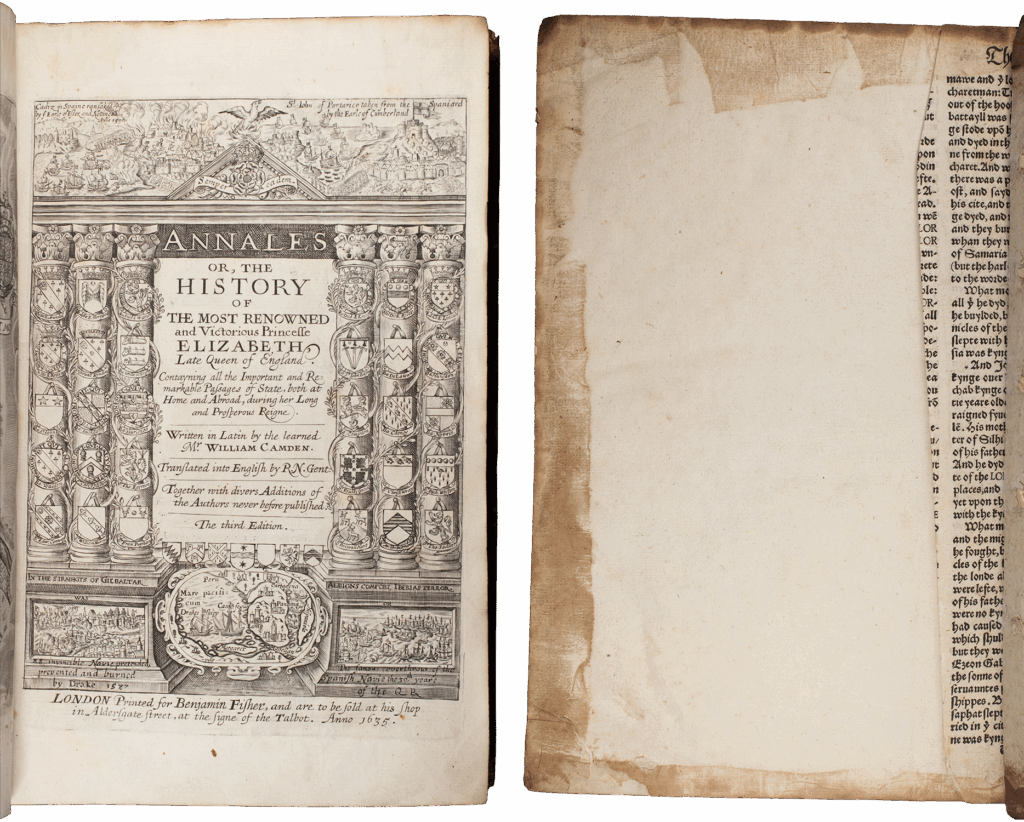
Title-page and rear endleaf, showing Coverdale waste, from William Camden, Annals, or, The history of the most renovvned and victorious princesse Elizabeth, late Queen of England (London: Benjamin Fisher, 1635). Harry Ransom Center, uncataloged acquisition.

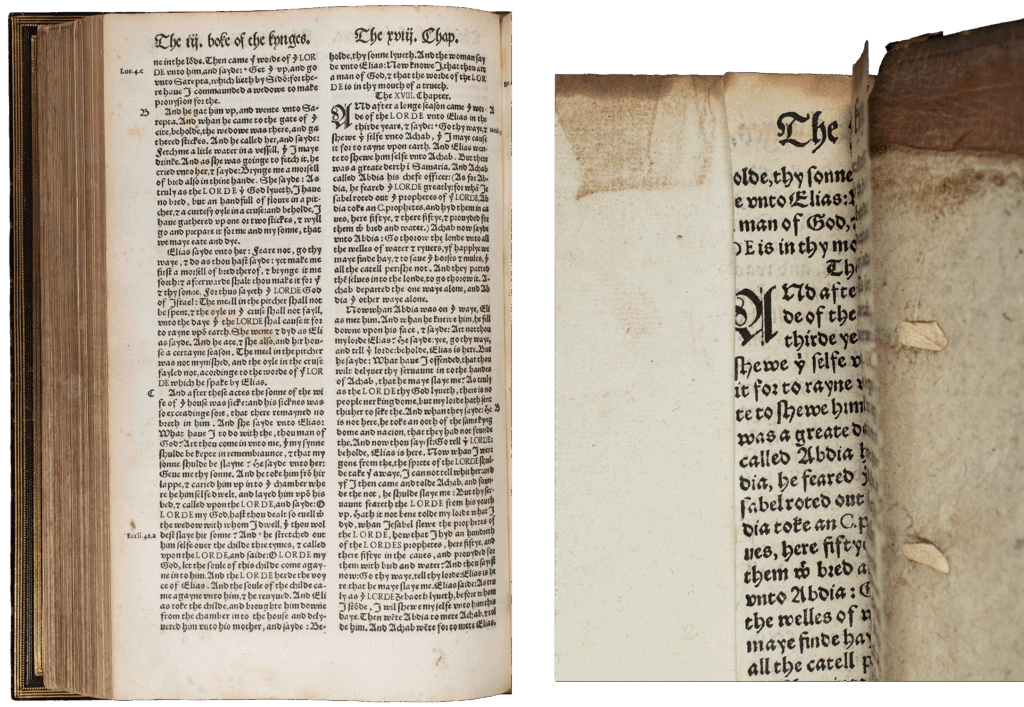
The Ransom Center recently acquired an early history of Queen Elizabeth I, a third printing of the Annales by William Camden (1635). The Center did not have a copy of this exact edition, so the volume helpfully filled a gap, but it was primarily attractive because it uses scraps from a Coverdale Bible (1535)—the first full bible printed in the English language—as binding waste, parts of leaves from III Kings (I Kings in most Protestant bibles). While the Center has long held copies of the landmark book, one receives a particular history of the early modern English bible from the fragments; preserved in the Camden, they become a kind of sedimentary record from a century earlier. Around 1635, an old Coverdale could apparently just be seen as waste. Today, though, any part of a copy would be attractive to collectors. In 1973, a Coverdale Bible missing 24 leaves sold for $50,000; today this translates to roughly $353,000 (there are no known complete copies).4 At the time of writing, AbeBooks lists another copy for a cool $1.5 million, describing the book as “the finest known copy in private hands.”5 There’s also a healthy market for individual leaves. In 2022, one Coverdale leaf sold for $780. To compare, a complete 1635 Camden usually sells for around $1,000.6

Biblia The Bible (Cologne?: E. Cervicornus and J. Soter?, 1535), sig. ll2v, and detail of rear endleaf, showing Coverdale waste, from William Camden, Annals, or, The history of the most renovvned and victorious princesse Elizabeth, late Queen of England (London: Benjamin Fisher, 1635). Harry Ransom Center, uncataloged acquisition.

Given the religiosity of early modern England, it might seem sacrilegious that someone would slice up a sacred text like the bible. The re-use of religious texts in new books, though, has a long history.7 And when it comes to bibles in particular, it is important to remember that the sixteenth and seventeenth centuries were an era of consistent and very public changes in what the “correct” bible should be. One that was popular and expensive in 1535 did not necessarily retain its value in 1635. Even in its own century, the Coverdale quickly gave way to the new-and-improved Matthew, Taverner, Great, Geneva, and Bishops’ Bible translations.8 In 1611, the King James became the official version in parishes and quickly found its way into households across England. This was the case in 1635, when the third edition of Annales was published. Despite Queen Elizabeth I’s famous statement that, “There is only one Christ, Jesus, one faith. All else is a dispute over trifles,”9 bible translations could be hotly contested, depending on which monarch was on the throne and which factions had influence. Religious and bibliographic turmoil often go hand in hand.10 The fact that a Coverdale was used as part of a binding speaks, perhaps more than anything else, to the ubiquity of outmoded bibles by 1635. The fragments in the Camden almost certainly came from a copy of the book that had circulated—and probably sustained significant damage—and not from unbound sheets that had been languishing in a warehouse for 100 years. This damaged-yet-durable quality of early modern bible leaves made them ideal for strengthening new books. 

The third edition of Annales was published only seven years before the English Civil War began in 1642, during a period when tensions within English Protestantism were growing. Given the morphing religious and political climate, it is tempting to read the relationship between biblical waste and its host text in a poetic or reciprocal manner, to say that the two texts—by their mere physical proximity—must be in conversation with one another, whether synergistically or antagonistically. As Smyth writes, “Waste thus complicates or thickens the historicism of the text, since to read waste is to be aware of multiple temporalities.”11 III Kings is about Davidic succession. At one point, David’s attendants try and find a virgin to look after him; Queen Elizabeth was commonly known as the “Virgin Queen.” III Kings is also a history and depicts Solomon building up a navy; Queen Elizabeth crucially expanded Britain’s naval and thus colonial power. Stories such as these appear frequently in the Bible, however, and there is zero reason to think that the binder intended a meaningful juxtaposition, especially given that the Coverdale components are scraps with incomplete sentences. Nonetheless, the two texts’ proximity can serve as a snapshot of English culture at the moment they came together. Camden’s retrospective history of Elizabeth offered nostalgia in a period of increasing turmoil under Charles I, and the Coverdale Bible was not in popular use. Both were facts around 1635.

So, when did a first-edition Coverdale make the transition from plausible binding support to collector’s item? “Protestant revivalism from the 1780s, followed by Catholic renewal from the 1830s, combined to give a new religious aesthetic to Christian practice in Britain,” one where objects such as bibles become renewed sites of devotional sentimentality.12 The British and Foreign Bible Society had been founded in 1804 to ensure that every household was able to procure a bible.13 On the one hand, this meant that bibles became more commonplace. On the other, more attention to English bibles in general made some editions special, helping turn them into monuments of the English Reformation. Even collectors more focused on literature, such as the American banker Carl H. Pforzheimer (1879-1957), came to see bibles as essential to a high-quality collection. The Ransom Center acquired its second 1535 Coverdale when Pforzheimer’s pre-1701 English books and manuscripts arrived in 1986. With the Camden, part of a third has joined the collection.

Kōan Brink is the Graduate Research Assistant for Early Book and Manuscripts at the Harry Ransom Center and a doctoral student in the Department of English at UT Austin. Their research focuses on early modern England— particularly poetry—religious texts, bibliography, and the history of the book. 


1 Adam Smyth, “Printed Waste: ‘Tatters Allegoricall’,” in Material Texts in Early Modern England (Cambridge: Cambridge University Press, 2018), 137. 

2 Harry Ransom Center, PR 2223 A1 1628 and -q- BX 5145 A2 1549c.

3 Smyth, 152.

4 Measuring Worth, accessed September 28, 2025, https://measuringworth.com.

5 “Fine Hardcover (1535) 1st Edition | Crawford Sterling Rare Books and Manuscripts,” AbeBooks, accessed September 28, 2025.

6 “Rare Book Transaction History Search Results,” Rare Book Hub, accessed October 10, 2025. (Access requires subscription.)

7 Anna Reynolds, “‘Such Dispersive Scattredness’: Early Modern Encounters with Binding Waste,” Journal of the Northern Renaissance 8 (2017).

8 John N. King and Aaron T. Pratt, “The Materiality of English Printed Bibles from the Tyndale New Testament to the King James Bible,” in The King James Bible after 400 Years (Cambridge: Cambridge University Press, 2013), 74.

9 “Elizabeth I,” Newberry Library, accessed September 24, 2025.

10 Reynolds. 

11 Smyth, 153.

12 Mary Heimann, “Victorian Piety and the Revival of Material Religion in Britain,” Orca: Online Research at Cardiff, accessed October 11, 2025.

13 Ibid.

“What is African Literature?”: Uncovering One Woman’s Answers

By Mackenzie Finley

In 1963, Dennis Duerden of the Transcription Centre in London and Henry Doré of the National Educational Television Centre in New York collaborated with prominent South African writer Lewis Nkosi to develop a television series featuring leading African artists and writers of late-colonial and early-independent Africa. As part of the project, Duerden corresponded with Kenyan writer, Grace Ogot—the only woman writer whose life and work the series intended to explore. The documents exchanged between Duerden and Ogot (currently housed at the Harry Ransom Center at the University of Texas at Austin) offer glimpses into the intent of the television project, the relationship between Anglo-American and African personalities in the early 1960s, and the intellectual lives of Duerden and Ogot during the period of their exchange.

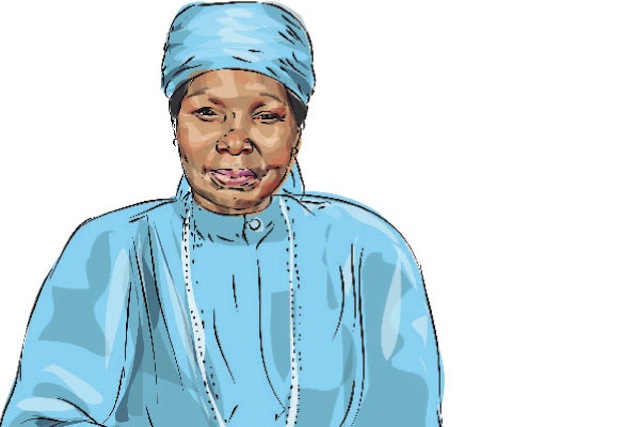
Painting of Grace Ogot, by Joseph Nyagah. Courtesy of the Daily Nation, Kenya.

Painting of Grace Ogot, by Joseph Nyagah. Courtesy of the Daily Nation, Kenya.

On June 22, 1963, Duerden initiated a series of letters with Ogot regarding the proposed television series. Duerden’s first letter was accompanied by a questionnaire, which Ogot was requested to complete. The questionnaire, developed by Nkosi and Duerden, was intended to gather biographical information about the writer before Duerden and his team began production on the film series. Ogot returned the questionnaire with reticent answers.

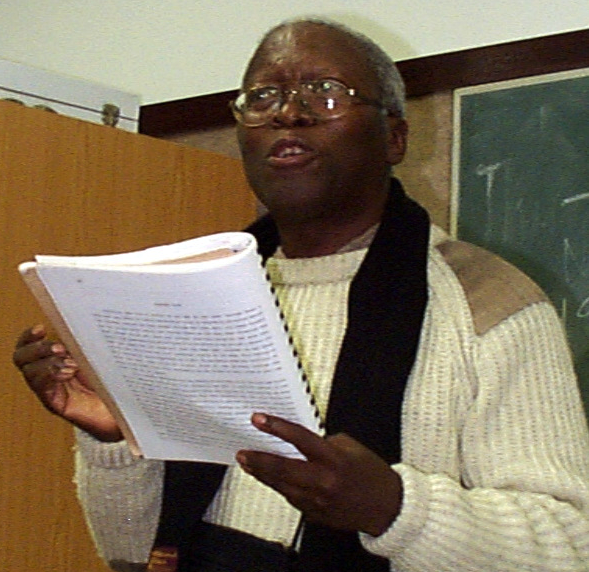
Lewis Nkosi at the Centre for the Study of Southern African Literature and Languages (CSSALL) at the University of Durban-Westville (UDW), 2001. Via Wikipedia

Lewis Nkosi at the Centre for the Study of Southern African Literature and Languages (CSSALL) at the University of Durban-Westville (UDW), 2001. Via Wikipedia

Consequently, Duerden wrote a follow-up letter to Ogot, requesting that she include greater biographical detail in her answers. In his letter, Duerden endorsed the value of the television project, hoping its worth would inspire Ogot to be more forthcoming. Whether or not Ogot was convinced of the project’s value, she filled out the questionnaire the second time with significantly more revealing information.

In Ogot’s second set of answers, we encounter glimpses of her values, interests, and intellectual life. For example, we learn that her primary literary influences included the short story “How Much Land Does a Man Require” by Leo Tolstoy, The Dark Child by Camara Laye, Mary Slessor of Calabar by William Pringle Livingstone, and Things Fall Apart by Chinua Achebe. Ogot elaborated on the significance of these works in her life. Tolstoy’s short story, for instance, prompted her to write: “If the whole world read this story, perhaps there would be no war.” Regarding the biography of Mary Slessor by Livingstone, Ogot explained, “If anything at all, this book had a lot to do with the shaping of my life and the choice of my career.” Seeking to emulate the positive impact that Slessor had on African society, Ogot “became a nurse … I regarded this as an expression of that feeling of gratitude in me towards Mary Slessor of Scotland who did so much for my Africa.”

The television project as a whole intended to help a burgeoning African literary scene develop parameters for what might be called “African literature.” To this end, the fifth question on the questionnaire is perhaps the most illuminating. “WHAT DO YOU CONSIDER TO BE SPECIFICALLY AFRICAN INFLUENCES IN YOUR LIFE …?” The question presumes the existence of a tangible “Africanness” which is also reflected in the discourse of late-colonial and early-independent Africa, where African identities and trajectories of peoples, nations, and the continent were all being negotiated. Duerden’s second letter to Ogot unpacks the intention of this question further: “What we want to do is to establish how far the background of your people’s traditions have affected the texture of your life.” The question arises: What does it mean to the author of the questionnaire to be “African” in texture and influence?

Initially, Ogot offered very little in terms of a response to the fifth question. In fact, she chose to write, “NIL.” Yet when Duerden begged for more elaborate answers, Ogot disclosed what she considered to be the “African influences” coloring her life:

“Looking back now, I think that there were some African influences that affected my marriage. An English friend of mine asked me once, “After all these years of Education, you still want to be married according to African customs?” My answer was simple. “There is something terribly African in me that school education has not touched.” The negotiations about my marriage were done according to Luo tradition, and full dowry was paid.”

Ogot went on to summarize her wedding day and highlight some of the specific Luo rituals to which she adhered. Interestingly, Ogot had begun to write that the negotiations regarding her marriage were done according to “African” tradition; however, at “Afri” she stopped and scribbled out the word, replacing it with “Luo”, as quoted above. In the struggle against colonialism, which necessitated a certain unity among African peoples, Ogot’s response displays her active negotiation and mediation of her identity, imagined somewhere in between “Luo” and “African.” Her initial dismissal of the question might also suggest that “Africanness” to her was something embodied rather than something that could be divorced from context, defined, and analyzed. Indeed, in her response, she defines “African influences” as “something terribly African in [her].”

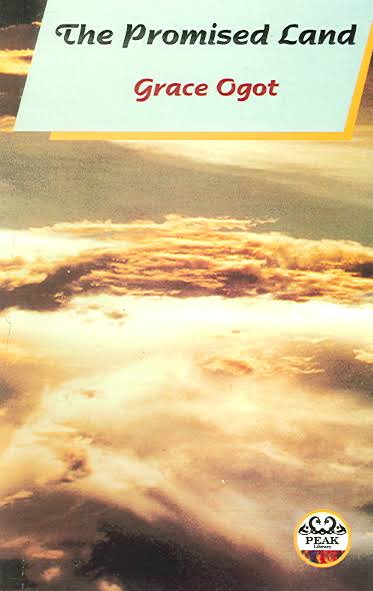
Following her participation in the television series, Ogot went on to publish short stories and novels, including The Promised Land (1966) and a collection of short stories entitled Land Without Thunder (1968). Luo history and tradition saturated her fiction. Yet, Ogot is also remembered for her prominent role in Kenyan national politics. Thus her life’s work reflects the plurality of identities—local, national, and continental—that confronted African literary elite in the wake of African independence. Rather than conclusively answering the question, “What is African Literature?,” the television series on prominent African writers served to expose the tensions underlying such plurality.

bugburnt

Sources:

Box 17, Folder 21, The Transcription Centre Records, Harry Ransom Center, The University of Texas, Austin.

“It is a Wide Road that Leads to War”

By Joan Neuberger

On January 1, 1900, an editorial in the New York World  predicted that the twentieth century would “meet and overcome all perils and prove to be the best that this steadily improving planet has ever seen.” The war that broke out just a few years later in 1914 showed that the twentieth century would become something entirely different.

By 1900, most European countries had constitutions, elected representative governments, and limits on monarchical power. Increasing control over nature with industrial machines and modern capitalism offered many Europeans and Americans an unprecedented degree of material comfort and prosperity. With that came a growing sense of their individual achievement, as well as the technology and prosperity to assert their national power in new ways over other people at home and in colonies abroad. But the Europeans’ use of modern power to dominate, educate, classify, and economically exploit others created new conflicts over culture, identity, sovereignty, security, even over different ideas about the basic components of human nature. These conflicts, beginning with colonial liberation struggles and especially the First World War would call into question the very foundations of European power and Europeans’ faith in progress and in the genuine achievements of the entire previous century.

There was considerable enthusiasm for a war in the summer of 1914. Serious disagreements beset every country in Europe: conflicts over political rights, human rights, economic developments, and colonial and other policies. Many people believed that a short war would somehow “wipe the slate clean,” and allow material progress and prosperity to continue. And everywhere people believed that the deep cultural and economic connections among European nations would prevent war from continuing for more than a few months. Nineteenth-century wars in Europe had been of limited scope and duration due to visionary international agreements made in Vienna in 1814-15 after the defeat of Napoleon. Europeans thought they had become too “civilized” to fight a drawn-out, destructive conflict.

The_Outbreak_of_the_First_World_War,_1914_Q81832
Crowds outside Buckingham Palace cheer King George, Queen Mary and the Prince of Wales (who can just be seen on the balcony) following the Declaration of War in August 1914. (Wikimedia Commons)

The declaration of the war brought crowds of people to the streets of every capital city in Europe to celebrate. Friedrich Meinecke, later a major German historian, described the outbreak of the war as “one of the great moments of my life, which suddenly filled my soul with the deepest confidence in our people and the profoundest joy.”  In many countries, even workers, who had been locked in battle with their governments, hastened to join the middle-and upper-classes in the support of the war.

There were, however, other voices. Peasants, who would make up the bulk of the war’s cannon fodder, were indifferent to the political conflicts that divided European nations and resented the draft. And a few prescient diplomats recognized the folly their leaders were embarking upon. Maurice Paléologue, the French ambassador to Russia, wrote in his diary: “So the die is cast . . . The part played by reason in the government of peoples is so small that it has taken merely a week to let loose universal madness.”

westwardho
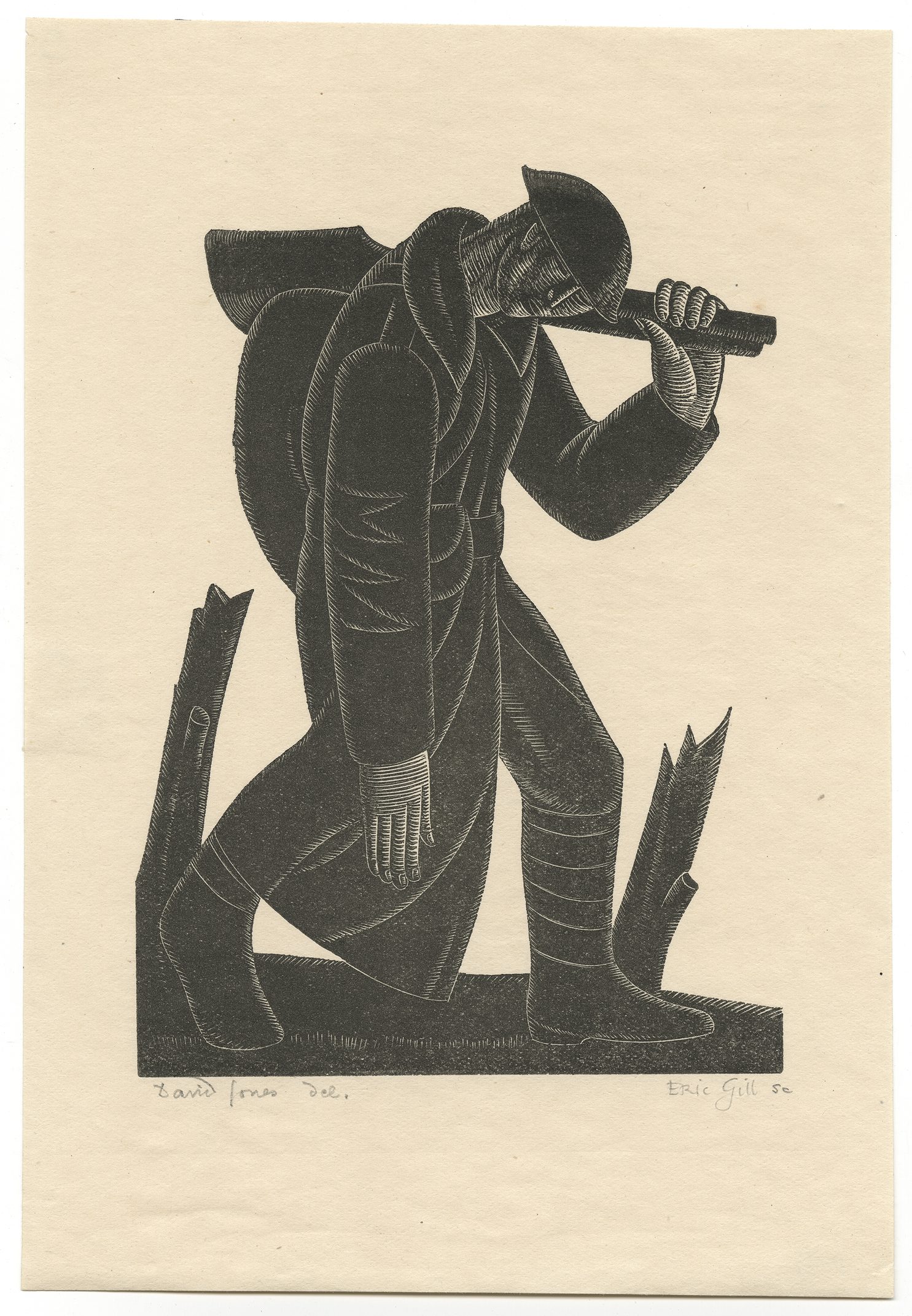
“Westward Ho,” a satirical poster by Eric Gill

It would take only a few weeks for the truth of the Russian peasant saying to be apparent to all: “It is a wide road that leads to war and only a narrow path that leads home again.”

uniform

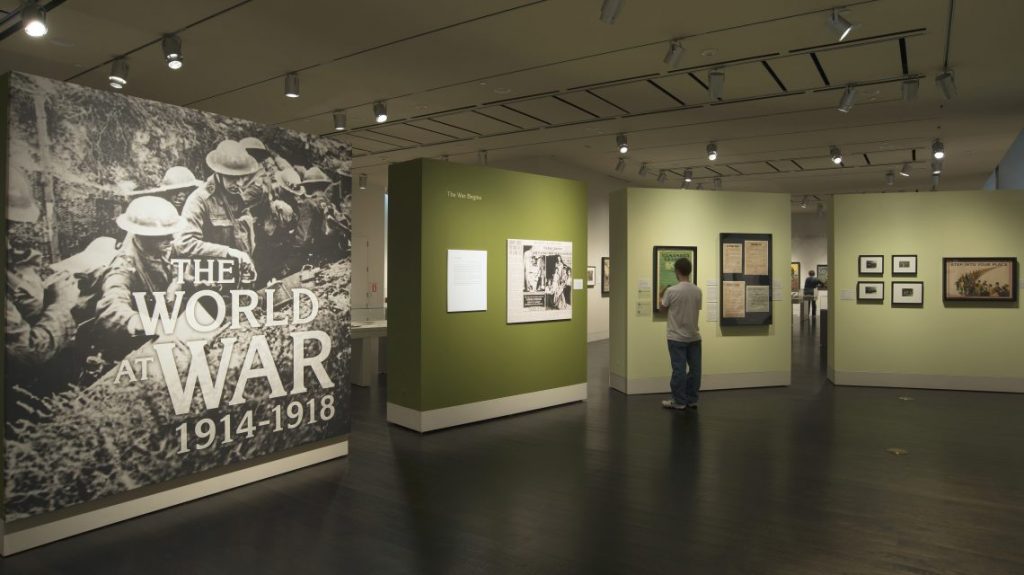
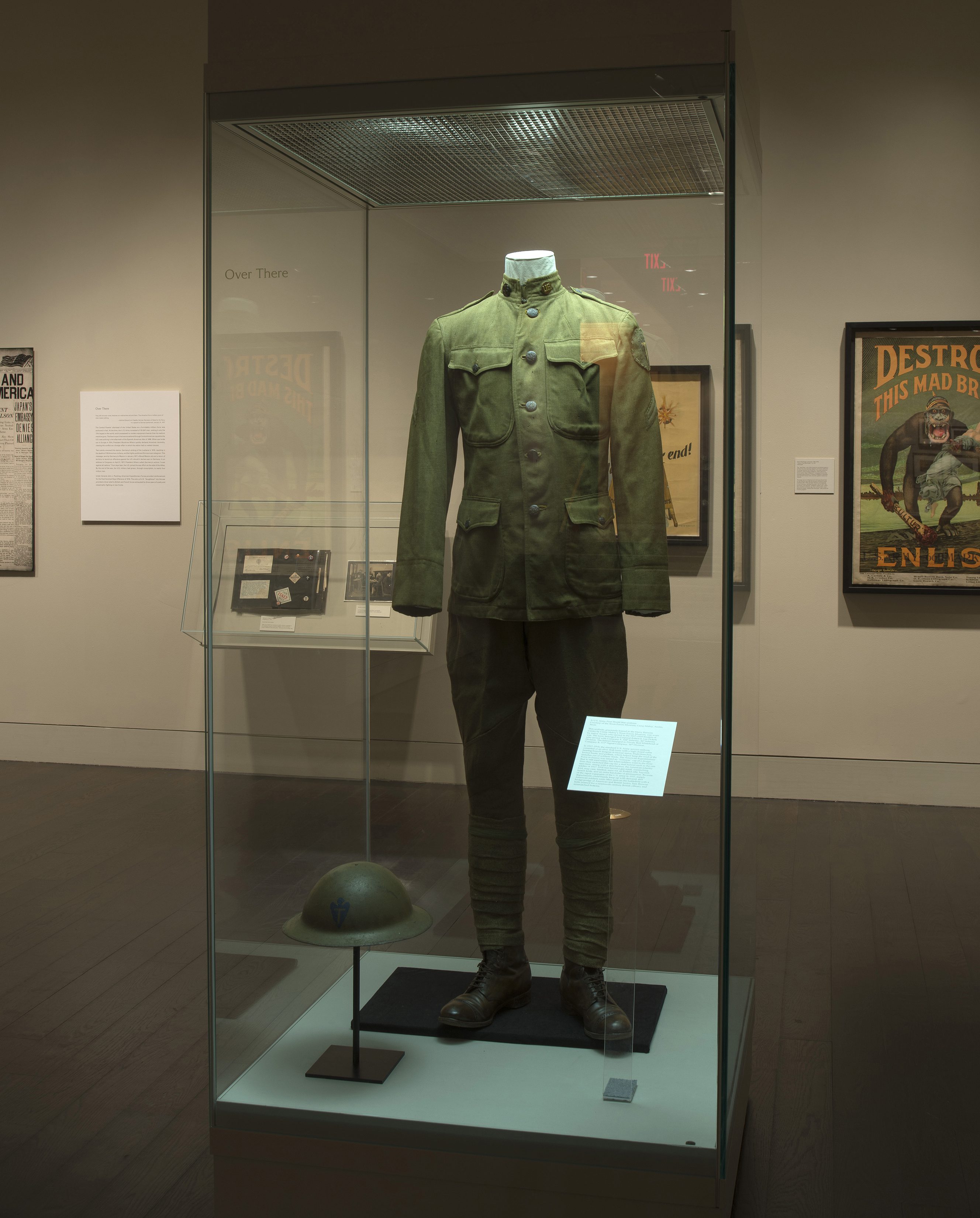
The documents, posters, letters, and photographs currently on display at the Harry Ransom Center illustrate the way ordinary people on the home front and the battlefront experienced the narrowing of that road.

More events, sponsored by the Harry Ransom Center

Please join us for a symposium on World War 1 sponsored by the Institute for Historical Studies at UT Austin:
Remembering World War 1 on its Centennial,” April 16, 2014. 3:30-5:30. GAR 4.100. Free & open to the public.

You may also enjoy:

World War 1: Teaching at the Museum (on propaganda posters)


All images courtesy of Harry Ransom Center unless otherwise indicated.

Sources:

W. Bruce Lincoln, Passage Through Armageddon (1986)

Robin Winks and Joan Neuberger, Europe and the Making of Modernity (2005)

World War I: Teaching at the Museum

From the Editor: At universities, not all teaching takes place in the classroom. The University of Texas at Austin has a number of archives, libraries, and museums with public exhibition spaces for teaching students and the general public about topics covered by their collections. This month Not Even Past features a discussion with the curators of The World at War, 1914-1918, the show currently on display at UT’s renowned Harry Ransom Center. Elizabeth Garver and Jean Cannon spent months culling through the HRC’s rich collections of posters, letters, photograph albums and other materials to find just the right balance of objects to convey the experience of the war that was supposed to “end all wars” as it was lived in numerous countries in Europe.

This April we will be rolling out the story of the teaching exhibit differently than in the past. Today we present some of the propaganda materials from the exhibit as well as some that are available through the HRC’s online digital collections. Next week we will post comments from the curators about constructing the exhibit and then we will post a video interview, in which they discuss the selection of materials to teach viewers about World War I as well as some of their favorite, most moving documents.

Propaganda Posters

Propaganda was invented during World War I. Although the declaration of war was greeted enthusiastically all over Europe, support quickly waned. Governments of Britain, France, the US, Germany, Italy and Russia all printed posters to lift morale and encourage support for the war effort. These posters come from the HRC’s digitalized collection (more of the collection can be found here).

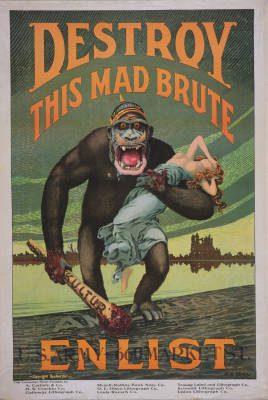
Many posters demonized the enemy, often by showing the enemy threatening women and children.

destroy brute

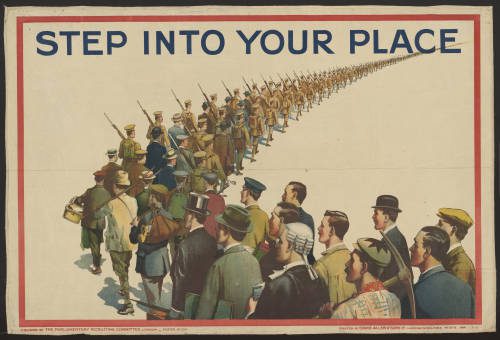
Others simply encouraged men to enlist…

stepintoyrplace

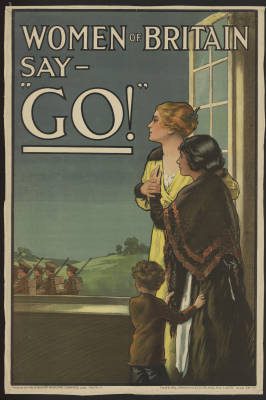
…sometimes recruiting women and children to encourage them.

womenGO

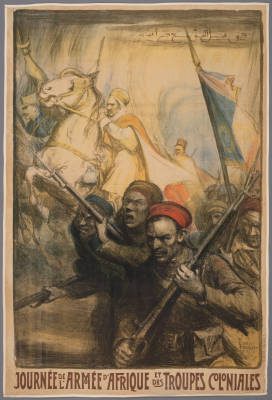
This French poster celebrates the soldiers recruited from their colonies in Africa.

colonial troops

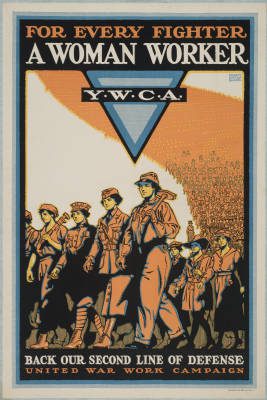
Women, meanwhile, were and taking up active roles, entering the workforce to replace men sent into battle, for example.

women workers

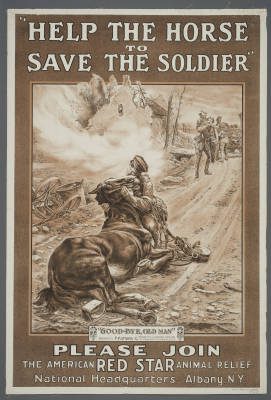
Even in the era of technologically enhanced, mechanized killing machines, horses played a large role in the war effort of all the combatants. And they needed to be supported too.

horse

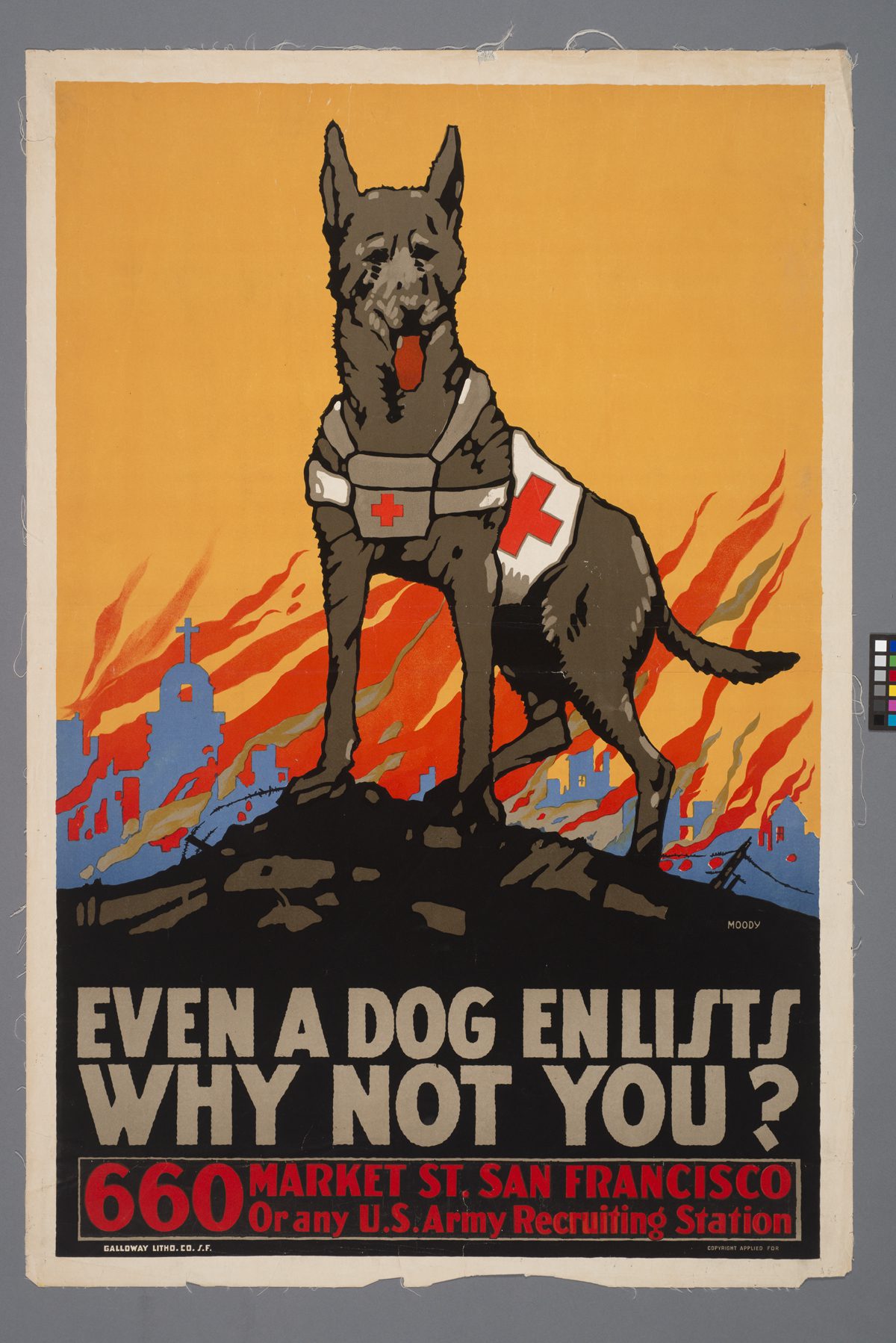
Dogs too were trained for specific roles. The HRC blog tells us that they could enter No Man’s Land and identify wounded men.

Even.a.dog_.low_.res_

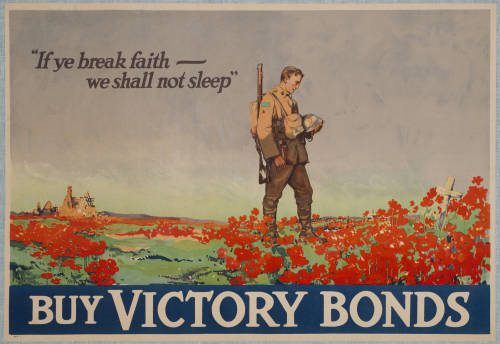
World War I went on much longer than expected and it was expensive. Governments sold bonds to raise money to continue to fight and the circulated posters calling for public financial support.

buybondsww1

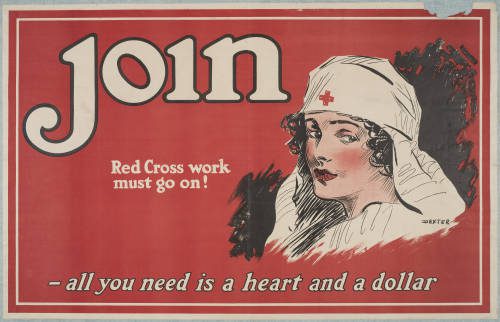
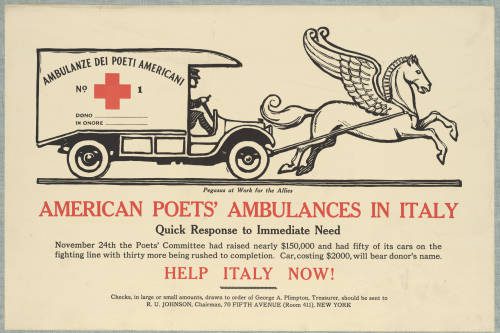
Individual groups used posters to raise money for specific support projects like ambulances and other kinds of medical care.

redcrossww1

poetsww1

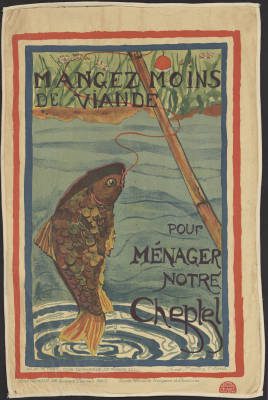
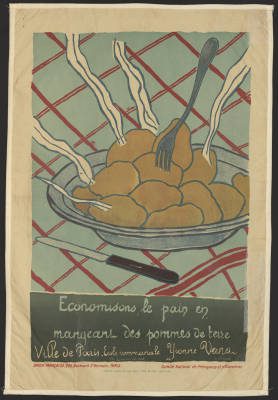
Food was in short supply everywhere. These French posters encourage people to save bread by eating potatoes and eat fish to save meat.

                                        eat less meatsavebread

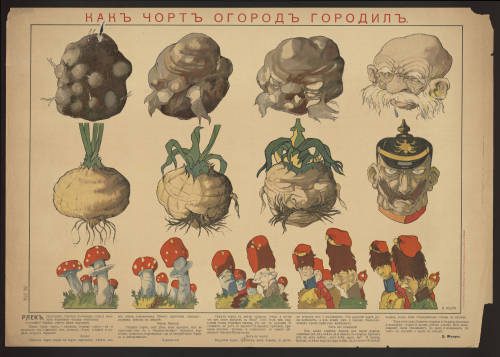
Another post on the HRC blog shows the ways Russian posters made food seem unpalatable. This one shows how the Devil gardens–transforming vegetables in German enemies.

the devil's garden

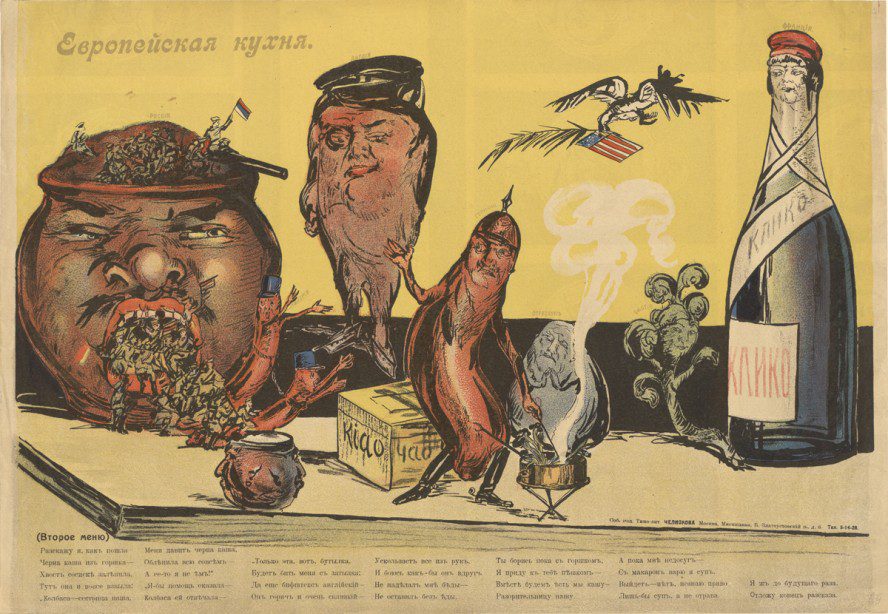
And this one, which represents each of the combatants as food types, makes them all look pretty yucky.

yuckyfood

More on food-related posters here.

The rest of the Harry Ransom Center’s World War 1 poster collection can be found here.

History Made Magic: The Scrapbooks of Harry Houdini Come Alive

By Charley S. Binkow

THE NEW ARCHIVE (No.3) Computer and online technologies are enabling historians to do history in a variety of new ways. Archives and libraries all over the world are digitizing their collections, making their documents available to anyone with a computer. Mapping and other kinds of visualization are allowing historians to create new kinds of documents and ask new questions about history. Each week, our Assistant Editors, UT History PhD student Henry Wiencek and Undergraduate Editorial Intern Charley Binkow, will introduce our readers to the world’s most interesting new digital documents and projects in THE NEW ARCHIVE.

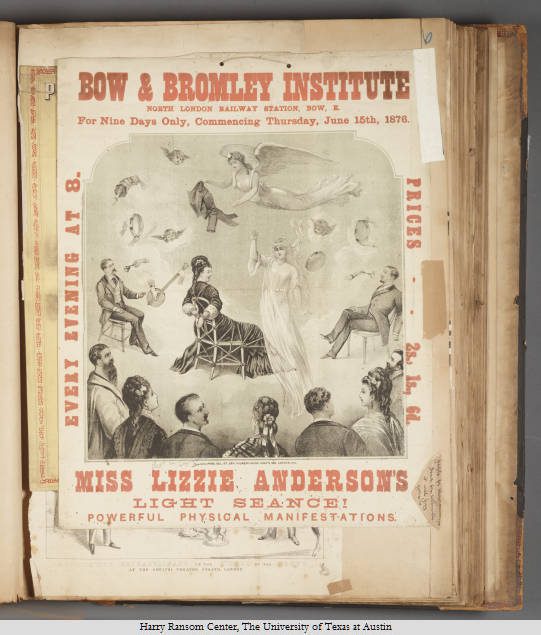
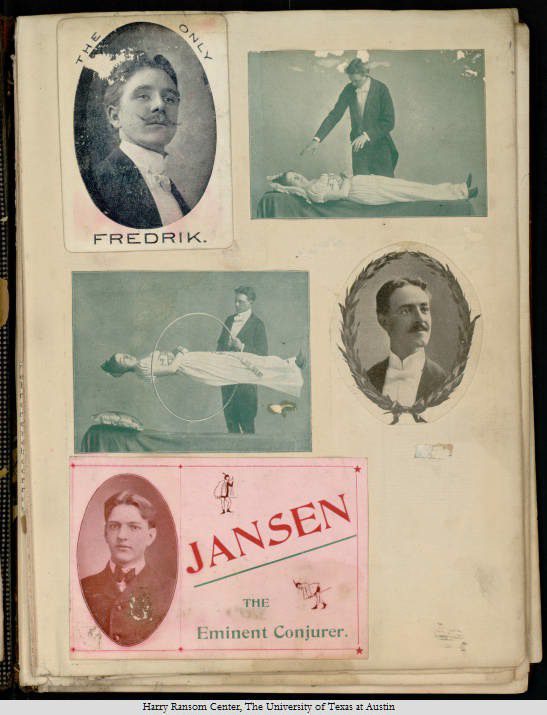
title_w_border_houdini_magicians_scrapbook_062b_2In a new age of digital powered skepticism, where anything “extraordinary” can be explained within seconds on a smartphone, there isn’t much room for magic.  But the Harry Ransom Center at UT Austin has brought us back to a time when the mystical unknown captured the hearts and minds of people everywhere.  The HRC acquired the scrapbooks of legendary magician Harry Houdini (1891-1926) in 1958 and has recently digitized its collection for the public.  The collection contains ten scrapbooks filled with advertisements, newspaper clippings, pamphlets, reports, how-to articles, and almost everything else regarding magic from roughly the 1830s through the 1920s.  Houdini owned all the books at the time of his death, but he did not compile all of the clippings.  Four books were owned by his contemporaries, including Harry Helms, Herr Jansen, S.S. Baldwin, and Professeur Em. De Verli (sic) and their books have clippings that span Europe and North America throughout the 19th century.  Some scraps detail the “Revival of the Dread Devil-Worship,” while others document articles, such as “Houdini Tells How the Mediums Know So Much.”

4thOne of the best features of the collection, besides its size, is its display.  If you click on “Page Flip View,” the scrapbook will appear on screen and let you flip through the collection, page by page.  You feel as if you’re flipping through the scrapbooks themselves.  My personal favorite piece (located on page 35 of the “Disbound/Divided” scrapbook) is an article from Science and Invention magazine from July 1923.  The article is titled “Magic For Everybody,” and includes such classic tricks as “The Vanishing Handkerchief” and “The Vanishing Horse.” This collection gives us a comprehensive understanding of what these magicians thought valuable; everything they saw as important or nostalgic or innovative they preserved in these books.  We can track their love of magic across a century and see the dynamic ways in which the field changed, in many instances by the collectors themselves. Almost every page of this collection bleeds an infectious love for the world of the supernatural and is well worth exploring.

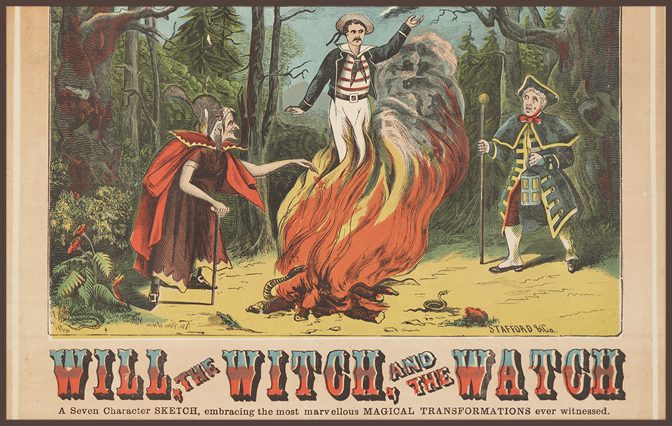
3rd_picIf you like the Houdini archive, you should also check out the HRC’s other digital collection of “Magic Posters and Playbills,” which contains a visual history of magic spanning from 1750 to 1920.

More finds in THE NEW ARCHIVE: 

Henry Wiencek finds a digital history project that literally maps where and when slavery ended in America. 

And Charley Binknow scrolls through some incredible photographs, letters and government documents from the Easter Rising of 1916. 

Photo Credits:

Poster for “Will, The Witch, and the Watch” (Harry Houdini Papers and Magic Collection, Harry Ransom Center)

Magic show advertisement from “Magician’s Scrapbook,” Houdini’s collection of newspaper clippings, playbills, and other assorted material (Harry Houdini Papers and Magic Collection, Harry Ransom Center)

Page from “Magician’s Doings,” a scrapbook created by magician Harry August Jansen then acquired by Houdini. (Harry Houdini Papers and Magic Collection, Harry Ransom Center)

Recent Posts

  • Cold War Chronicles
  • Primary Source: How Did Cary Coke Get Her Copy of Queen Catharine?
  • Tapancos and Tradition: Remembering the Dead in Northwestern Mexico
  • “How Did We Get Here” Panel 
  • Hidden Children and the Complexities of Jewish Identity  
NOT EVEN PAST is produced by

The Department of History

The University of Texas at Austin

We are supported by the College of Liberal Arts
And our Readers

Donate
Contact

All content © 2010-present NOT EVEN PAST and the authors, unless otherwise noted

Sign up to receive our MONTHLY NEWSLETTER

  • Features
  • Reviews
  • Teaching
  • Watch & Listen
  • About