• New
  • Features
  • Reviews
  • Texas
  • Teaching
  • Digital
  • Watch & Listen
  • Authors
  • About

The past is never dead. It's not even past

Not Even Past

Review of Piracy and the Making of the Spanish Pacific World, by Kristie Flannery (2024)

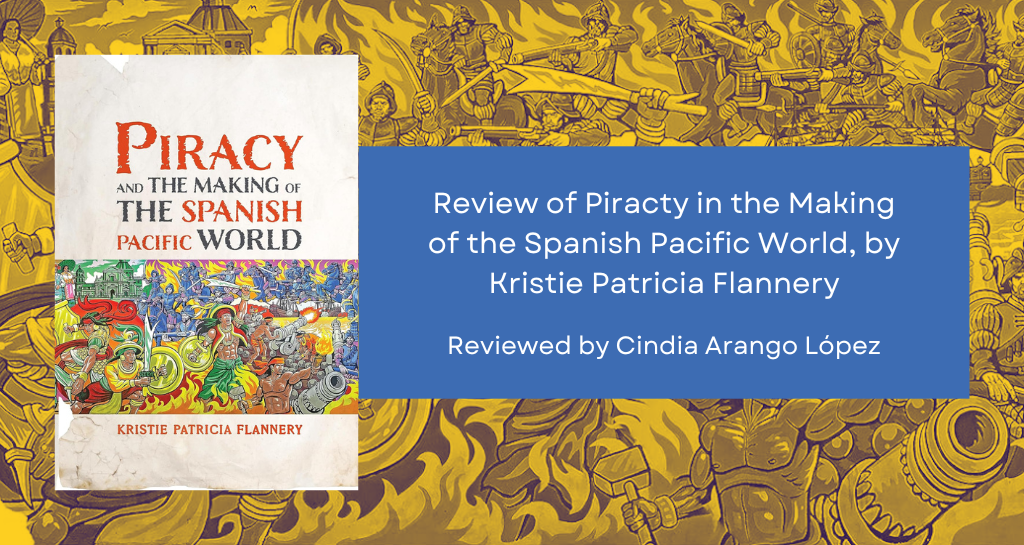
Banner for review of Piracy and the Making of the Spanish Pacific World

Kristie Flannery’s groundbreaking first book, Piracy and the Making of the Spanish Pacific World is not only about how Spanish colonial rule worked in the Philippine Islands. Rather, Piracy and the Making of the Spanish Pacific World analyzes how colonialism, forms of capitalism, and religion forged political, economic, and religious alliances across Asia, the Americas, and Europe. This research reveals that colonialism in the Philippines was a process that went beyond the boundaries of the islands. The book shows that globalization and European imperial expansion influenced how ideas and actions traveled through the Spanish Empire in specific places or vast spaces such as the Pacific Ocean.

Flannery invites readers to explore the ways in which societies are structured. The book recovers forgotten stories of Indigenous soldiers and migrants who struggled to restore their identities when they were arbitrarily and constantly changed. Piracy serves as the central theme in the book and functions as the axis from which the real or imaginary fears that threatened the loyalties established between the inhabitants of the Philippines and the Spanish empire in Asia revolve. Piracy works as a driver of alliances between social groups and as an excuse to impose a regime of violence and genocide on an unwanted migrant population. This book examines how violence, piracy, imperial loyalties, and concepts of identity shifted and remained ambivalent, shaped by the actions of people and the fears—both real and imagined—that arose in a globalized imperial world.

Map of Philippines created in 1734
Carta Hydrographica y Chorographica de la Yslas Filipinas MANILA, 1734. Source: Wikimedia Commons

Much of the conceptual support of this book revolves around key notions such as loyalty, identity, and violence. These categories of analysis are fundamental to understanding how subjects were classified in the colonial system using terms that were incorporated so deeply that they survived even the disappearance of the Spanish empire. In other words, this conceptual framework sheds light on why it is relevant to understand the motivations that compelled people to exercise acts of discrimination and violence against Muslim and Filipino subjects. Some policies of discrimination witnessed and exercised during the seventeenth and eighteenth centuries could be interpreted as political strategies to exploit and segregate people from China, creating a system of social control that was both tangible and intangible– or in the words of the author, both real and imaginary.

The methodological challenge of this book is contained in the possibility of archival research also of a global order. Kristie Flannery draws from Asian, Latin American, and Spanish archives in cities such as Manila, Seville, Mexico, and London among others, and integrates an extensive multilingual corpus of documents. By intersecting sources and exploring seemingly disconnected materials, the methodology expands into a spatial and scalar approach. This approach enables an ambitious exploration of riverine, maritime, and land connections, as well as the barriers between them. Each chapter begins with the departure or arrival of a ship that also represents a way of venturing into history in a fluid way to read a historical moment where real and imaginary piracy contributed to the Spanish colonial order in the Philippines.

Depiction of the Manila Gallon arriving to the Ladrones Island. 7 smaller ships around it.
Reception of the Manila Galleon by the Chamorro in the Ladrones Islands, ca. 1590.
Source: Wikimedia Commons

The book is composed of five chapters, an introduction, and an epilogue. Chapter 1, set in the eighteenth century, explores how the ideas of Muslims and Islam from the Mediterranean shaped Spanish strategies in the Americas and the Philippines, influencing defense strategies against Moorish piracy and later creating alliances between various actors according to their notions of religion and loyalty. This is a fascinating chapter in which identity and loyalty are central to understanding that the Spanish empire did not always reach all corners in the same ways.

Chapter 2 explores how the fluctuating threats of Mora piracy impacted the transient Chinese population, who settled far beyond the shores of Manila. The threats of pirate fleets reveal how the massacres of the Chinese population in 1603, 1639, and 1662 in the Philippines created an environment where religion was the engine of waves of violence and that ended up pushing alliances of the Sangleyes (referring to the Chinese migrants in the Philippines) in Manila as faithful vassals.

Chapters 3 and 4 delve into the invasions of Manila during the eighteenth century, showing how indigenous Filipinos challenged loyalties to face the arrival of the British by showing strong local opposition. And then Flannery analyzes how Spanish rule was restored by confronting the British invasions and also the local insurgents. Finally, Chapter 5 shows how migrants born in China after the war were collectively expelled from Manila and the forms of resistance these migrants used to confront an expulsion.
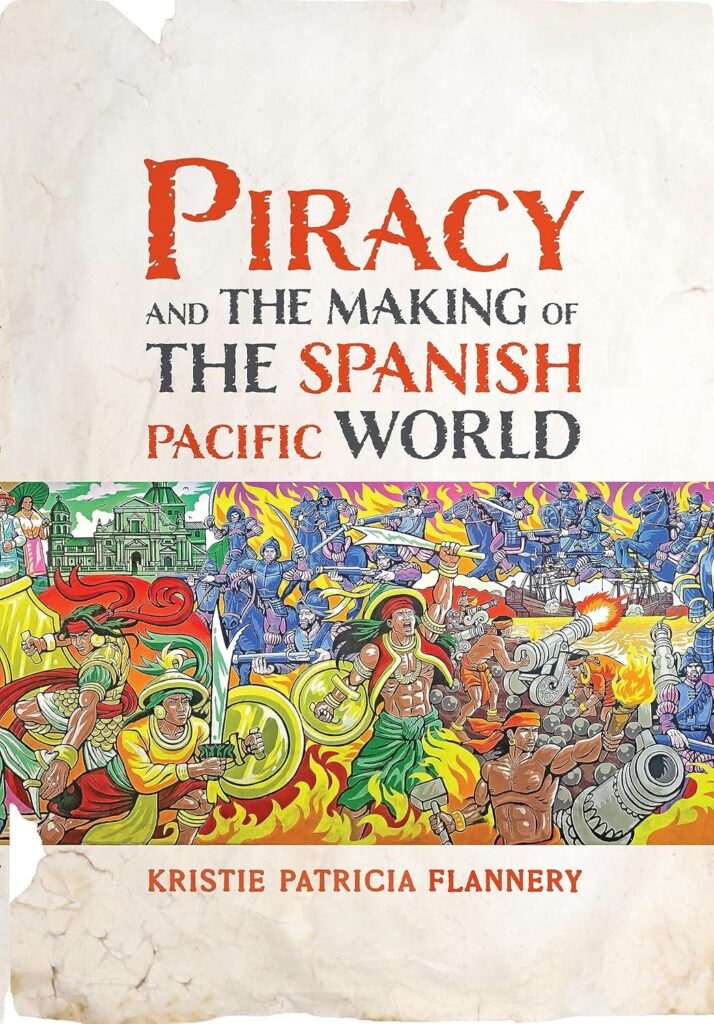
Book cover

In general terms, I identify several substantial contributions of this research to the study of imperial colonial historiography and the Spanish Pacific. First, the analysis of the history of piracy in the Spanish Pacific offers an understanding of how Spanish forms of government and colonial authority were adaptable to different contexts. In other words, there is not a single, uniform way of understanding the Spanish empire in the Americas and in the Philippines. Instead, there are intermediate positions, in this case, mediated by alliances, which must also be considered in the historiography. These individuals played active roles in shaping history and provide new perspectives for reinterpreting traditional historical narratives.

Second, forms of violence during this period continue to be fundamental elements in understanding how notions of identity and understanding of the “other” as alien to one’s own materialized. In addition, they were motivated by religious and political discourses that were also transoceanic. That is, ideas and actions also traveled with people. Third, this research carefully highlights how the Spanish empire classified colonial subjects based on race, social status, and religion and created policies of exclusion that were used to subvert an order according to real or imagined motivations that people had. This research shows that forms of social differentiation also can be inherited. Perhaps, this is why it is so important for Flannery to show how colonial and early modern ideas and practices persist and influence the ways we see each other and our world today. This is a carefully structured book with a geographical richness to enjoy. A book that becomes part of the field of colonial studies with a fascinating vision of a space sometimes forgotten by historiography: the Pacific.

Cindia Arango López. Historian, Universidad Nacional de Colombia, Medellín. Mg. in Geography, Universidad de los Andes, Bogotá. Specialist in Environment and Geoinformatics: SIG, Universidad de Antioquia. Currently, PhD student in Latin American Studies at the University of Texas at Austin, TX-USA. She has been a professor of the undergraduate program in Territorial Development at Universidad de Antioquia, Oriente campus, Colombia. Currently, she is developing her candidacy for her doctoral research on the navigators bogas of the Magdalena River in the 18th century in Colombia.

The views and opinions expressed in this article or video are those of the individual author(s) or presenter(s) and do not necessarily reflect the policy or views of the editors at Not Even Past, the UT Department of History, the University of Texas at Austin, or the UT System Board of Regents. Not Even Past is an online public history magazine rather than a peer-reviewed academic journal. While we make efforts to ensure that factual information in articles was obtained from reliable sources, Not Even Past is not responsible for any errors or omissions.
NEP’s Archive Chronicles: Procesados e interrogados. Encontrando las voces de los Yaqui en los archivos judiciales de Sonora

Banner for Encontrando las voces de los Yaqui

NEP’S Archive Chronicles explora el papel que desempeñan los archivos en la investigación histórica, ofreciendo una visión del proceso de realización del trabajo archivístico y de investigación. Cada entrega ofrecerá una perspectiva única de los tesoros y retos que los investigadores encuentran en los archivos de todo el mundo. NEP’s Archive Chronicles pretende ser tanto una guía práctica como un espacio de reflexión, en el que se expongan las experiencias de los colaboradores con la investigación archivística. En esta pieza, Raquel Torúa Padilla escribe de su experiencia encontrando las voces de los Yaqui a través de los archivos judiciales de Sonora.

Note: Click here to access English version
Nota: Haz click aquí para acceder a la versión en inglés

En mi búsqueda por entender la historia de los pueblos indígenas de Sonora, me he enfrentado a constantes desafíos para acceder a fuentes que reflejen auténticamente sus experiencias y perspectivas. Los registros históricos escritos por las poblaciones indígenas en el noroeste de México son escasos y difíciles de encontrar, particularmente aquellos anteriores al siglo XX. Para ese periodo, la mayoría de los individuos indígenas eran analfabetas, no hablaban el idioma de los colonizadores y carecían de recursos y medios para documentar sus pensamientos y sentimientos. Como resultado, nuestra comprensión de la historia indígena depende en gran medida de relatos escritos por personajes no indígenas, como misioneros, exploradores, figuras políticas o militares. Aunque en ocasiones podemos tropezar con valiosos documentos escritos por los propios nativos, como cartas de personas letradas, estos hallazgos tienden a ser excepcionalmente raros. 

Me he interesado particularmente en la historia del pueblo Yoeme, mayormente conocido como Yaqui. Los yaquis conforman uno de los grupos indígenas más numerosos de lo que ahora se conoce como el estado de Sonora, en el noroeste de México. A lo largo de los siglos, han tenido que enfrentarse a diferentes autoridades y gobiernos que han buscado despojarlos de sus tierras, autonomía e identidad. A pesar de los esfuerzos por exterminarlos durante el Porfiriato (1876 – 1911), los yaquis persisten y resisten hasta el día de hoy.

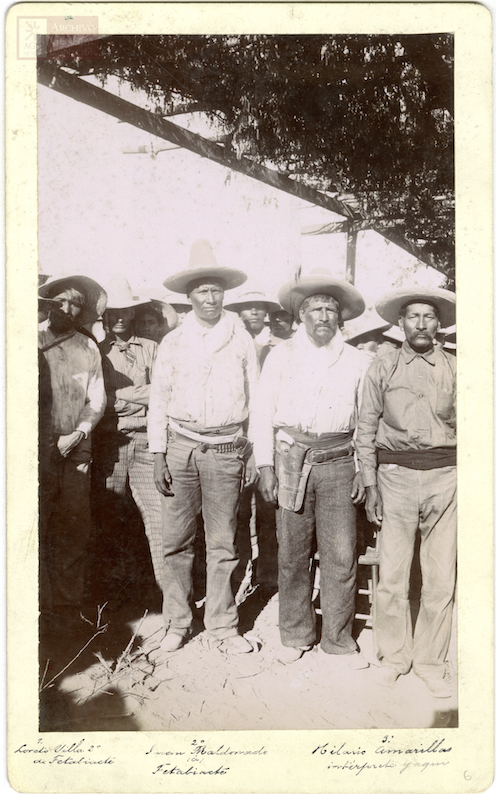
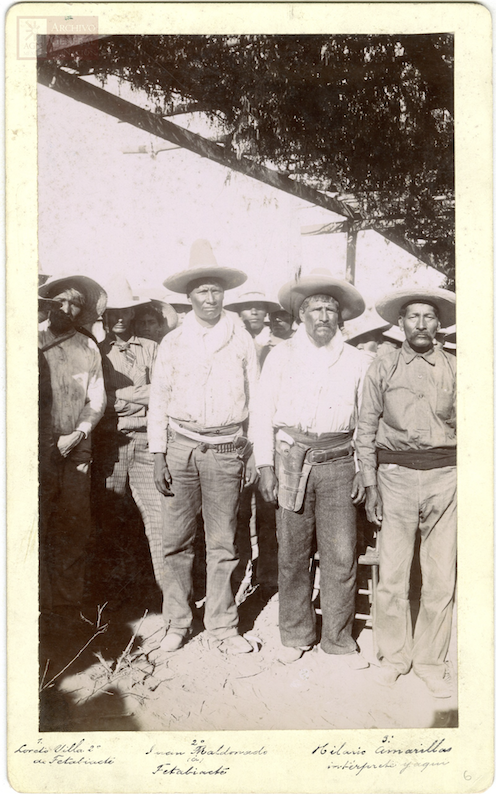
Loreto Villa, Juan Maldonado, Hilario Amarillas, interprete yaqui. Ortiz, Sonora. Fuente: Memórica

Como una solución al problema sobre las fuentes históricas, recientemente he recurrido a los archivos judiciales como una valiosa fuente alternativa para acceder a los testimonios indígenas. Hermosillo, la capital del estado de Sonora en el noroeste de México, alberga dos archivos públicos que contienen documentos jurídicos: el Archivo General del Poder Judicial del Estado de Sonora y el Archivo de la Casa de la Cultura Jurídica de la Suprema Corte de Justicia. Ambos archivos dividen sus colecciones en dos categorías: el archivo histórico, que contiene documentos creados antes de 1950, y el archivo de concentración, que incluye documentos producidos después de 1950.[1] Ambos fueron creados en el siglo XIX y se mantienen y financian hoy en día a través de fondos asignados por el gobierno estatal y el gobierno federal, respectivamente. 

En los últimos años, me he dedicado a buscar en archivos históricos las voces del pueblo yaqui, especialmente del período conocido como la Guerra secular del Yaqui. Esta violenta etapa inició en 1824 bajo el liderazgo de Juan Banderas, un líder yaqui que se alzó contra el gobierno mexicano para defender su autonomía. El conflicto se agravó tras los proyectos liberales que buscaban privatizar las tierras comunales indígenas y, sobre todo, durante el Porfiriato, cuando se convirtió en una guerra de exterminio. Aunque apenas sobrevivieron a esos años, los yaquis continuaron su rebelión contra el gobierno hasta la década de 1930, cuando finalmente se rindieron tras ser ferozmente debilitados por las autoridades revolucionarias.

Aunque el contenido de ambos repositorios comparte similitudes, también hay diferencias notables emanadas de sus diferentes funciones y objetivos. Estas variaciones se manifiestan no solo en su contenido, sino también en la preservación, catalogación y facilidad de acceso a los documentos históricos. En este artículo, presento brevemente la historia de estos archivos y comparto mi experiencia de hacer investigación en ellos, y los resultados que podemos obtener.

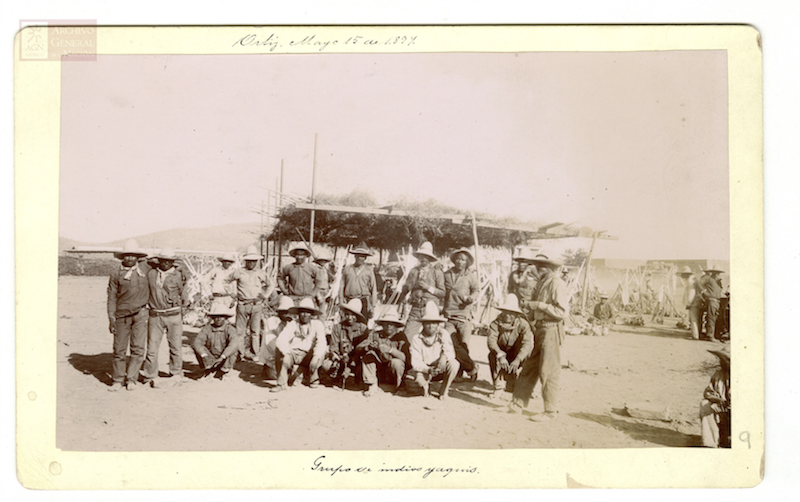
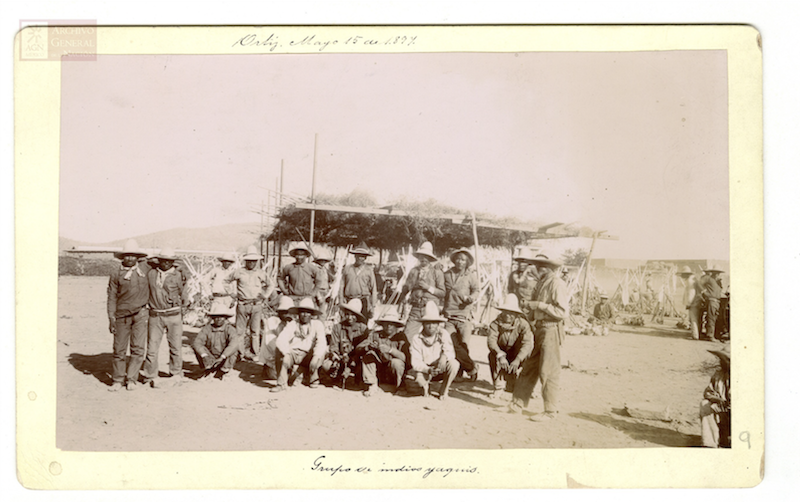
Grupo de indios yaqui. Ortiz, Sonora. Fuente: Memórica

Pero antes de entrar a los archivos, es necesario que explique cómo funciona el sistema judicial en México y cómo el expediente de un caso particular puede terminar en un archivo u otro. Desde la Constitución de 1824 y la creación de los Códigos Penales, los delitos en México se han clasificado como de fuero común o de fuero federal. Los casos de derecho común se procesan en los tribunales locales o estatales, mientras que los delitos de derecho federal van a los juzgados de distrito. Si una persona acusada (por cualquier tipo de delito) siente que ha sido sentenciada de manera injusta, tiene dos opciones a su disposición. Primero, pueden presentar una apelación para una revisión de la sentencia en una segunda instancia. Si esto no tiene éxito, pueden buscar ampararse ante la ley, lo cual se lleva a cabo en tribunales colegiados o, si es necesario, en la Suprema Corte de Justicia de la Nación.[2] Los delitos de fuero común son aquellos que afectan directamente a las personas, como el abigeato, el estupro, el robo, o infligir lesiones. Los expedientes de esos delitos (y de sus apelaciones, si se promovieron) se pueden encontrar en el Archivo General del Poder Judicial del Estado de Sonora (AGPJ). Los delitos de fuero federal, por otro lado, se definen como aquellos “que afectan el bienestar, la economía, el patrimonio y la seguridad de la nación”, como la sedición, el contrabando o delitos de inmigración.[3] La documentación relacionada con los delitos federales, así como cualquier proceso de amparo, se puede encontrar en el Archivo de la Casa de la Cultura Jurídica de la Suprema Corte de Justicia (ACCJ). 

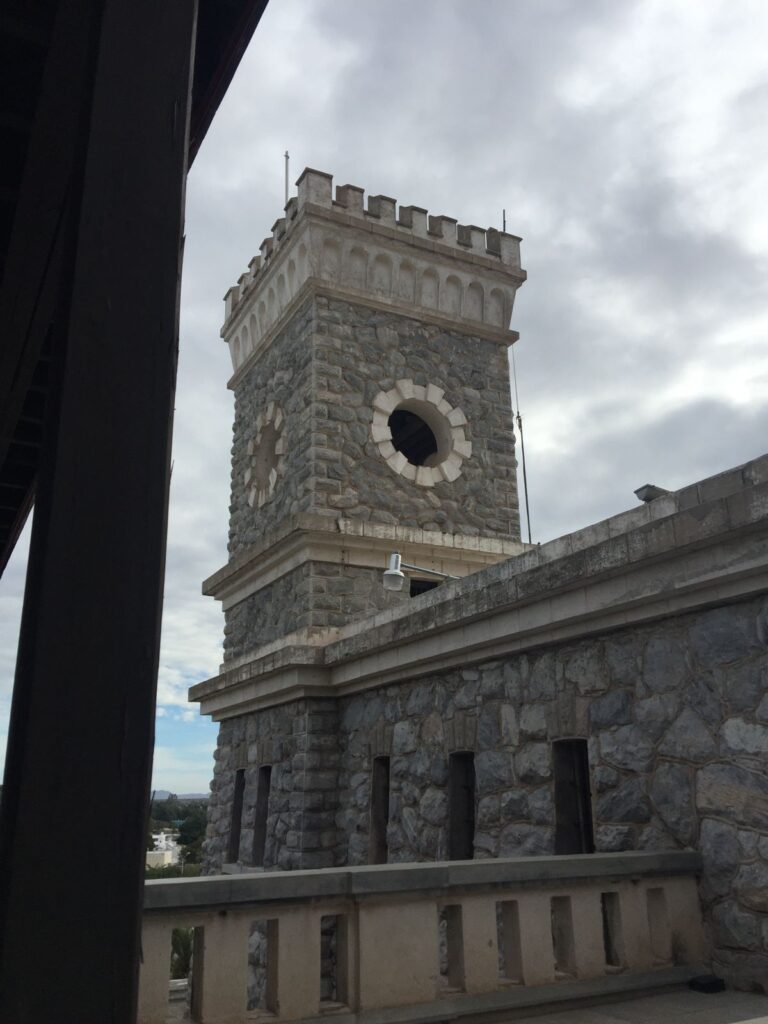
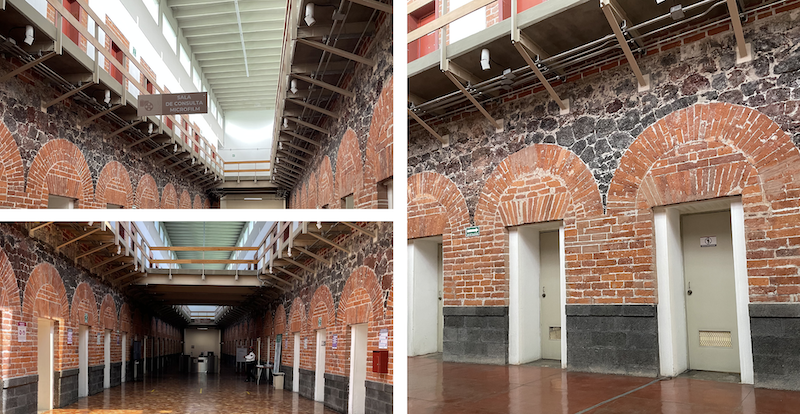
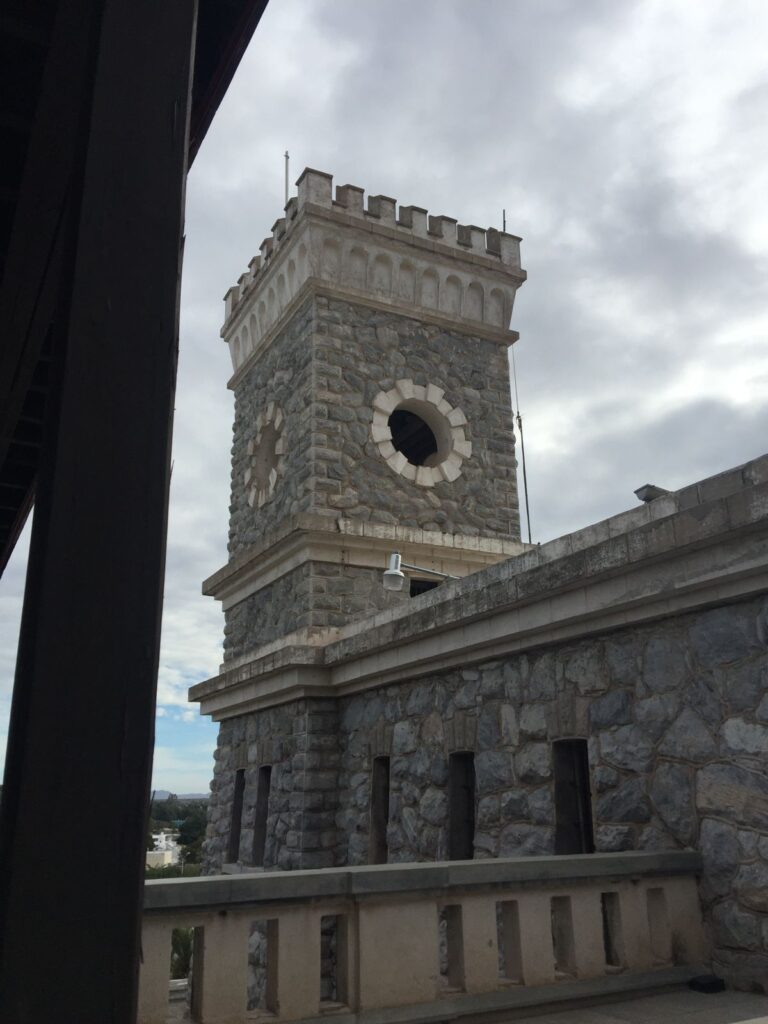
Columna de la antigua penitenciaría estatal.
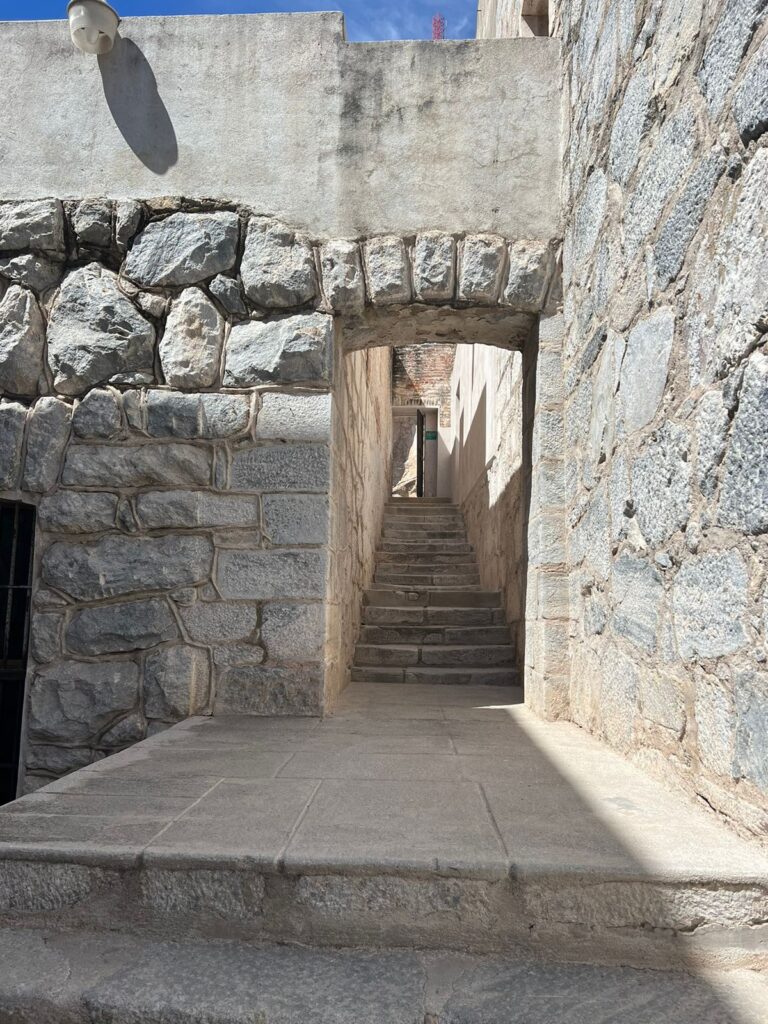
Antigua penitenciaría estatal. Edificio construido en su mayor parte por yaquis, que también serían encarcelados allí. Fotos tomadas por la autora.
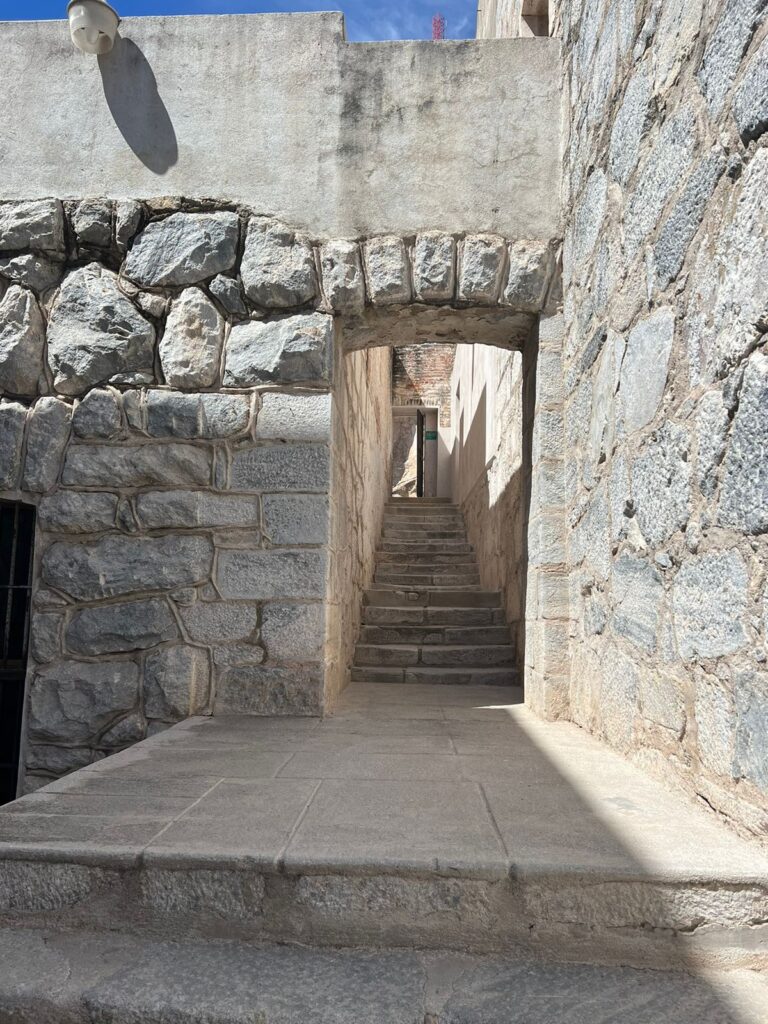
Armazón y escalera de la antigua penitenciaría estatal.
Detalle de la Penitenciaría Estatal.
Fotos tomadas por la autora


El archivo del Poder Judicial


El AGPJ, como todos los archivos, tiene su propia historia. Desde 1833, cuando el Estado de Occidente se dividió en Sonora y Sinaloa y se estableció la primera Constitución local en el estado, el decreto número 13 garantizó la permanencia de los Poderes Supremos, incluido el Supremo Tribunal de Justicia, en Hermosillo, junto con sus respectivos archivos. Más de un siglo después, en 1957, un nuevo decreto estableció un archivo especializado bajo la jurisdicción del Tribunal Supremo de Justicia para organizar y salvaguardar la documentación exclusiva del Poder Judicial del estado. La ley más reciente, de 1996, designó al AGPJ como un órgano auxiliar del Supremo Tribunal de Justicia, con el objetivo de profesionalizar y agilizar las operaciones del poder judicial.[4] Sin embargo los esfuerzos para identificar, catalogar y organizar la documentación no se han completado por cuestiones administrativas y de recursos.

Durante muchos años, la documentación de este archivo se mantuvo resguardada en el Archivo General del Estado de Sonora (AGHES), en la calle Garmendia, en el Centro Histórico de Hermosillo. Desde el año 2000, el archivo se trasladó a un nuevo edificio justo al lado de la Prisión de Hermosillo, en el Blvd. de los Ganaderos. El interior del archivo es todo lo que podrías esperar de un edificio burocrático, y aún peor, de uno judicial. La falta de ventanas, el espacio reducido y la decoración minimalista y utilitaria de la sala de consulta te invitan a ponerte en el lugar de las personas encarceladas cuyos expedientes encuentras frente a ti. Afortunadamente, puedes encontrar brillo y calidez en los archivistas, historiadores, y empleados del AGPJ.

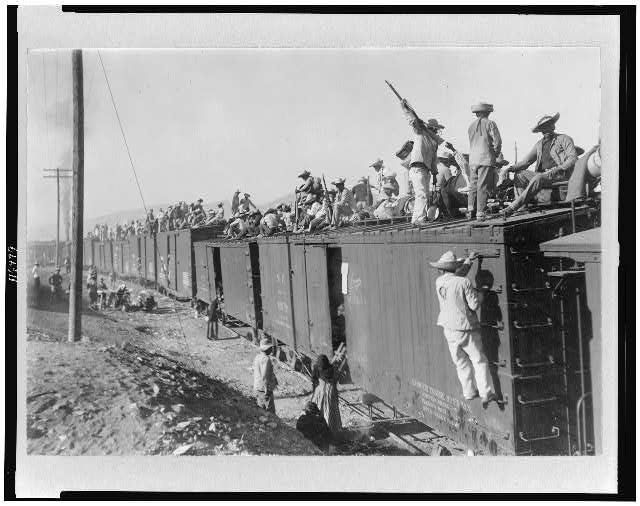
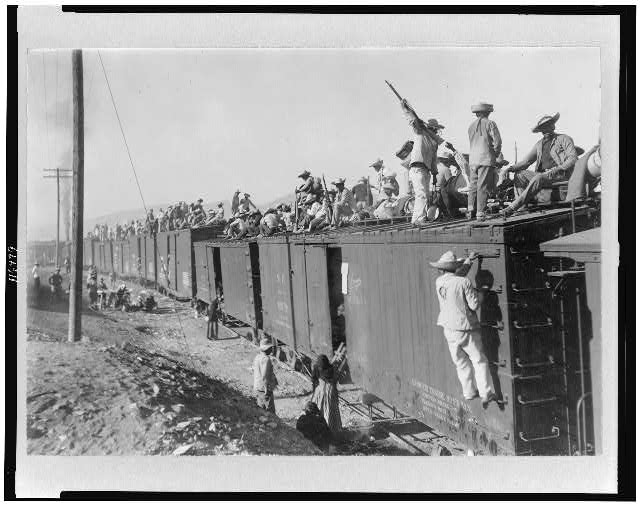
Indios yaquis, alistados en el ejército mexicano, transportados en vagones de carga
México – Sonora, indios yaquis, alistados en el ejército mexicano, transportados en vagones de carga. Fuente: Library of Congress

Para tener éxito en la consulta de este archivo, es esencial establecer buenas relaciones con los archivistas, pues la consulta de la documentación presenta un desafío importante: no hay un catálogo ni una guía de referencia. Así que, o llegas al archivo ya con las referencias anotadas que viste citadas en el trabajo de alguien más (y a veces, incluso en ese caso, han sido modificadas), o es tu día de suerte y lo que buscas ya ha sido identificado por los archivistas. Dicho esto, debo reconocer los esfuerzos recientes del Poder Judicial del estado de Sonora por contratar historiadores y archivistas para trabajar en la preservación y catalogación de los 3036 legajos.

Yo llegué con una lista de referencias de los documentos que quería consultar, porque un amigo mío había estado ya consultando ahí y me guió hacía un expediente interesante. Después de llenar un formulario especificando la referencia, me solicitaron una identificación con foto y a continuación fueron a buscar los documentos. Me pidieron que usara guantes de látex, una mascarilla y que manejara los documentos con cuidado. Desafortunadamente, después de horas de pasar una página tras otra, no pude encontrar el caso que estaba buscando. Pero como siempre ocurre con el trabajo de archivo, encontré muchos otros documentos interesantes y relevantes para mi tema de investigación.

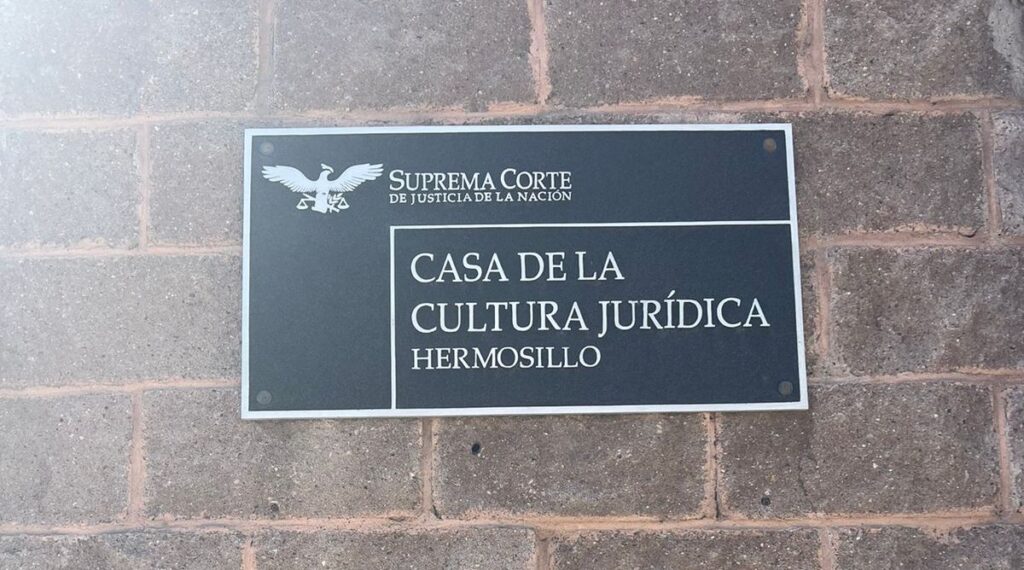
Archivo judicial federal de Sonora

Título de Casa de la Cultura Jurídica del Tribunal Supremo de Justicia
Casa de la Cultura Jurídica del Tribunal Supremo de Justicia. Fotografía de la autora.

Visitar la Casa de la Cultura Jurídica es una experiencia diferente. El edificio del archivo, antes una vivienda, fue construido en 1945 y está ubicado en la colonia Casa Blanca en Hermosillo, frente al icónico Parque Madero. En 1998, la Suprema Corte de Justicia adquirió la propiedad para utilizarla como la Casa de la Cultura Jurídica en Hermosillo, que es mucho más que solo un archivo. Nombrada en honor al “Ministro José María Ortiz Tirado,” esta Casa es una de las 36 en todo el país que sirve como un espacio público para “promover la cultura jurídica, favorecer el acceso a la justicia y el fortalecimiento del Estado de Derecho.”[5]

Se requiere que los visitantes firmen una carta comprometiéndose al uso responsable de los materiales documentales y a compartir cualquier publicación con el Archivo. Para solicitar archivos específicos, los visitantes deben proporcionar detalles como el fondo (“Amparo” o “Penal”), el año, la referencia numérica, y los nombres de las personas procesadas. Curiosamente, a pesar de ser necesario presentar esta información para la consulta, el archivo no tiene un catálogo propio. 

Para la colección Amparo, tuve que visitar primero la biblioteca de la División de Ciencias Sociales de la Universidad de Sonora para revisar dos catálogos. Estos fueron producidos por Hans Ildefonso Leyva Meneses (que cubrió los años de 1900-1917) y Mayel Barboza Enciso Ulloa (de 1918-1928) como parte de los requisitos para obtener su título de licenciatura.[6] Afortunadamente, un catálogo digital completo de la colección Penal, aunque escrito de forma anónima, ha estado circulando entre los historiadores locales durante años (¡un agradecimiento al autor!). 

La sala de consulta es completamente distinta a la del archvio estatal. Está bien equipada, es espaciosa y cómoda, y ofrece a los investigadores una vista a un jardín con árboles y cactus, así como a una hermosa familia de felina (entendible, pueso que las instituciones federales suelen tener más recursos). En este archivo también se requiere usar guantes de látex y una mascarilla. Desafortunadamente, debido a las medidas de protección de identidad pues los fallecidos también tienen derecho a la privacidad, no se permite fotografiar los documentos. Como resultado, una consulta exhaustiva puede llevar tiempo y esfuerzo, pero vale la pena.

Gatos en el archivo rodeados de plantas.
Fotos tomadas por la autora
Gatos en el archivo rodeados de plantas.
Fotos tomadas por la autora

Los documentos y las voces que podemos encontrar


Respecto a los documentos, existen parecidos en cuanto a formato, secuencia, propósito y contenido. La extensión de cada expediente dependerá de la gravedad del delito, el número de personas involucradas, la complejidad de la investigación y el volumen de pruebas. El vocabulario y la estructura de los documentos de finales del siglo diecinueve son rígidos y formales, y muestran la ideología positivista de la época. La estructura del documento típicamente consiste en tres partes principales: descripción del crimen y de los involucrados, testimonios y pruebas, y la sentencia o veredicto. Aunque analizar todo el caso puede arrojar luz sobre las sutilezas del sistema judicial, generalmente suelo concentrarme en analizar las declaraciones y relatos, porque es aquí donde comienzas a encontrar las voces de los indígenas. Afortunadamente, debido a la burocracia del sistema judicial, los documentos incluyen la información biográfica de los involucrados, como nombre, edad, estado civil, ocupación y lugar de nacimiento y residencia, seguida de descripciones físicas de los acusados. Además de lo anterior, los documentos también suelen indicar si alguno de los involucrados era una persona indígena. Sin embargo, las autoridades no solían ser explícitos en cuanto al grupo étnico. Es decir, solo sabemos que la persona era indígena.

Para determinar si el individuo en cuestión pertenecia a la etnia yaqui, los indicadores más importante suelen ser el nombre y apellido—como Bacasegua, Buitimea o Matus, apellidos comunes dentro de la etnia. Además de esto, la ubicación de los eventos puede ser un indicador importante, particularmente si se mencionan locaciones dentro o cerca al territorio yaqui, como Guaymas, Vicam o Potam. Si bien este método es efectivo, es importante señalar algunos posibles problemas. En primer lugar, es fácil confundir erróneamente a los yaquis y a los mayos (otro grupo indígena de Sonora) debido a sus similitudes culturales y lingüísticas. Asimismo, a lo largo del tiempo, los yaquis han mostrado una movilidad significativa por todo el estado e incluso más allá de las fronteras políticas, por lo que no era raro encontrarlos desde Álamos hasta Cananea.

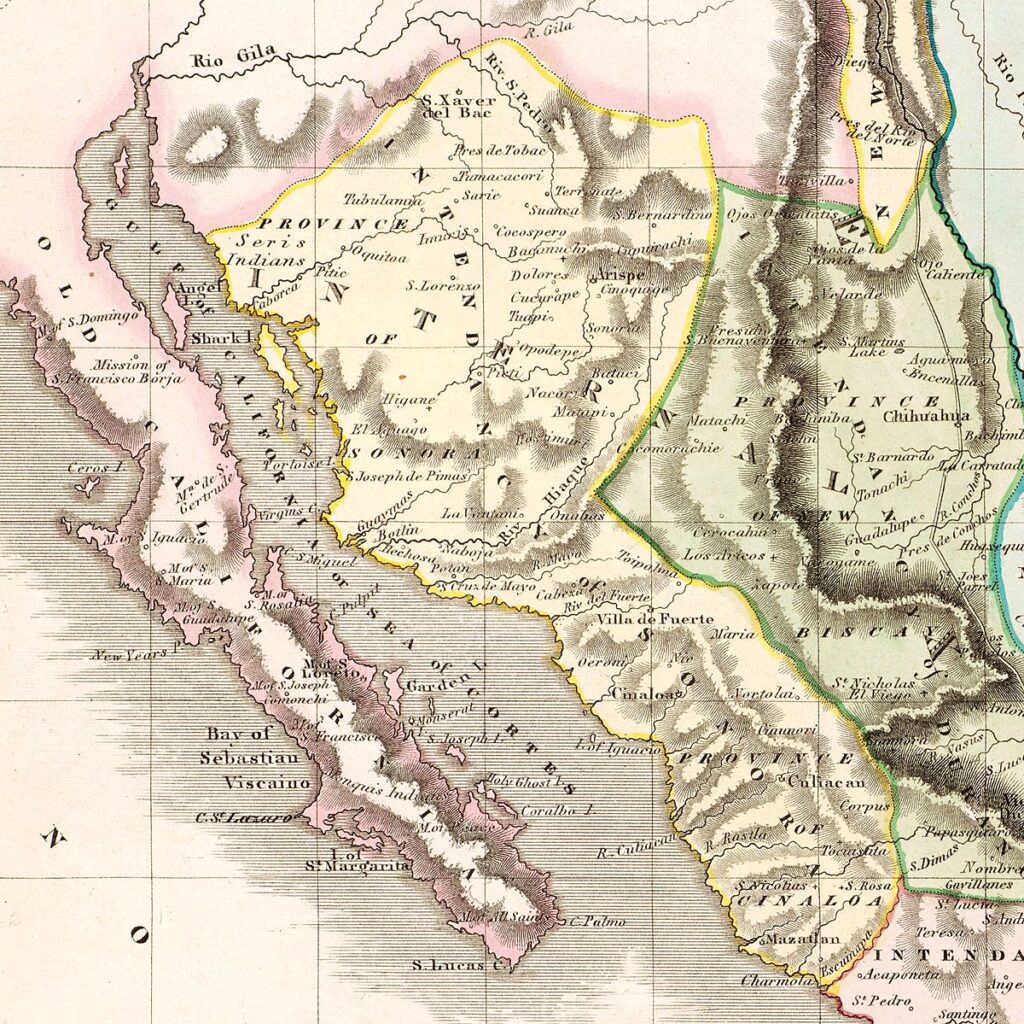
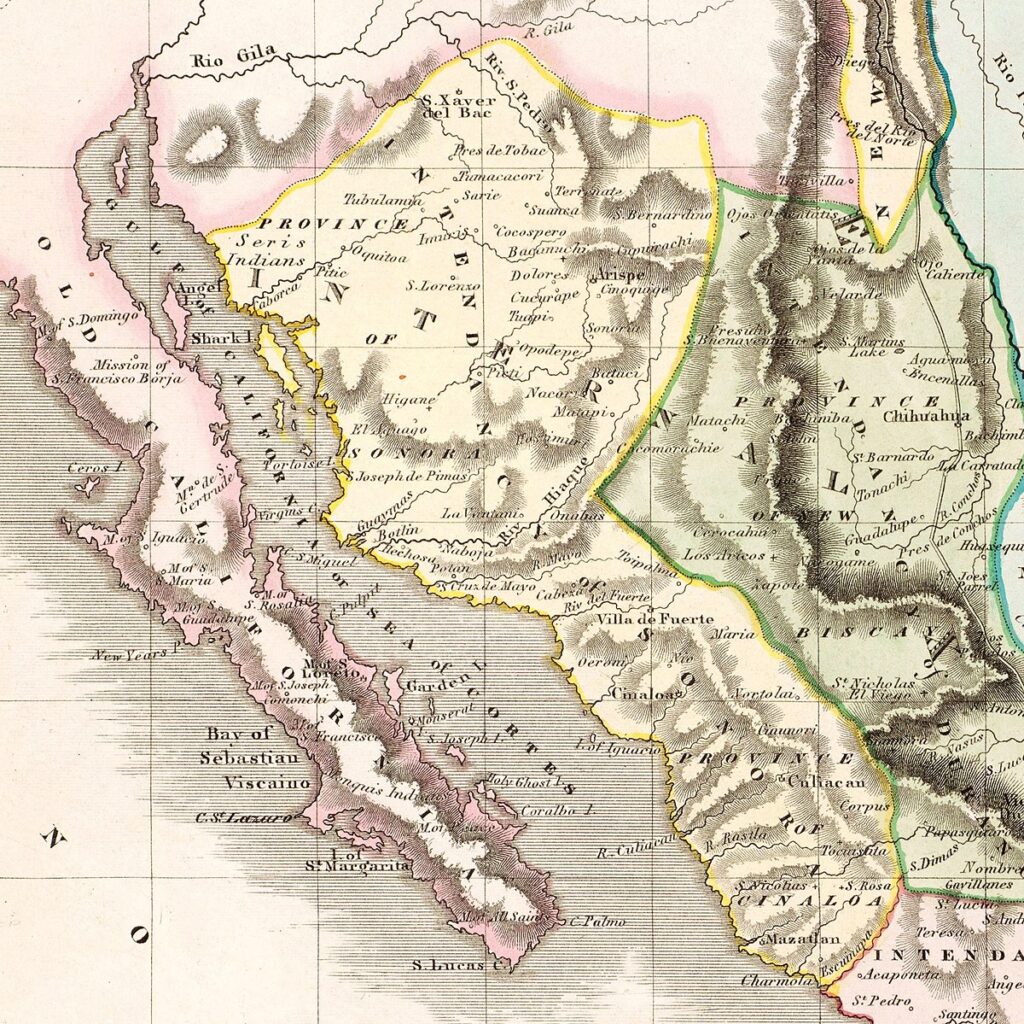
Mapa de Sonora - Sinaloa.
Lizars Mexico & Guatimala 1831 UTA (Detail Sonora Sinaloa). Fuente: Wikimedia Commons

Aunque los expedientes judiciales son una importante fuente histórica para el estudio de los pueblos indígenas, es importante aclarar que sus prespectivas y cosmovisiones no están intactas en el archivo. Para esto, es crucial entender cómo se recogieron sus testimonios durante el proceso. Por lo general, en los procedimientos regulares, respondían a preguntas específicas hechas por las autoridades, en lugar de poder testificar de manera espontánea y libre. Por otro lado, si el individuo o individuos buscaban promover un amparo, se presentaba su testimonio por escrito ante la Suprema Corte. También es importante enfatizar que las declaraciones en los documentos de procedimiento civil o penal no son transcripciones literales. En cambio, fueron transcritas por los escribanos en un formato abreviado y pulido a través de una narración indirecta.

En este sentido, podríamos pensar que los expedientes de amparo serían un testimonio menos manipulado, ya que eran los mismos afectados quienes presentaban el testimonio. Sin embargo, considerando el contexto histórico y los casos de amparo que he consultado, los yaquis que promovían el amparo rara vez estaban alfabetizados. En muchas ocasiones, otras partes interesadas asistieron en el caso, a menudo con intereses personales en juego. Por lo tanto, además de los testimonios judiciales orales y escritos, se pueden encontrar esporádicamente otros tipos de evidencia, como cartas, recibos, contratos e incluso evidencia material. Pero si lo que tenemos a nuestra disposición es un testimonio de los indígenas filtrado y manipulado por terceros ¿cómo podemos encontrar sus voces y cosmovisiones? Tener una comprensión profunda del contexto histórico y de cómo se llevó a cabo el proceso judicial sugiere el mejor punto de partida.

Analizar cuidadosamente las declaraciones, contrastarlas y compararlas con otras fuentes (tanto primarias como secundarias) nos permite identificar posibles sesgos, malentendidos, distorsiones o supresiones. Interpretar las fuentes a partir de enfoque indígena también puede ayudarnos a obtener información sobre el significado, el vocabulario, las sutilezas, las implicaciones e incluso los silencios de los testimonios. Con un análisis exhaustivo, los documentos judiciales pueden ofrecernos un vistazo, y a veces incluso más, de las perspectivas, valores y cosmovisiones de los yaquis. Estos archivos son una ventana para observar cómo los yaquis navegaron e interactuaron con el sistema legal mexicano en un momento en que el gobierno los perseguía y buscaba exterminarlos, y cómo fueron representados o mal representados en los procesos judiciales.

Los documentos judiciales muestran cómo los yaquis fueron blanco no solo de las depredaciones del gobierno, sino también de la población sonorense, y cómo también fueron perpetradores de crímenes de fuero común y federal durante el periodo de guerra. Estos expedientes proporcionan detalles y testimonios sobre revueltas, “actividades sediciosas” y la desobediencia en general al gobierno, mientras nos ofrecen también un vistazo a sus vidas cotidianas y las distintas maneras de resistir a la guerra.

Las colecciones del Archivo del Poder Judicial del estado de Sonora y del Archivo de la Casa de la Cultura Jurídica ofrecen valiosas perspectivas sobre la historia del pueblo yaqui en el siglo XIX y principios del siglo XX. Espero que mi experiencia, enfoque y metodología puedan ser un modelo para aquellos interesados en profundizar en documentos legales en otras partes de México, ya que cada entidad federal tiene sus propias sucursales de estos archivos. A pesar de los desafíos que cada uno de ellos presenta, estos arcervos son una fuente rica y a menudo infrautilizada de información para los historiadores que investigan no solo sobre asuntos legales, sino también sobre la historia más amplia de Sonora y sus poblaciones indígena y no indígena.  

Quiero expresar un agradecimiento especial a todos los archivistas del Archivo del Poder Judicial del Estado de Sonora, en particular a Bennya Román Flores, cuya generosidad y dedicación han sido fundamentales para la realización de este trabajo. También agradezco a los colaboradores de la Casa de la Cultura Jurídica en Hermosillo, en especial a Adrián Pérez, por su paciencia y constante apoyo mientras consultaba múltiples cajas de documentos.

Raquel Torua Padilla es doctoranda en el Departamento de Historia de la Universidad de Texas en Austin. Es licenciada en Historia por la Universidad de Sonora y actualmente es becaria de CONTEX. Su investigación se centra en la historia de los pueblos indígenas en el noroeste de México y el suroeste de EE.UU., con especial énfasis en el pueblo yaqui. Sus proyectos actuales examinan las milicias yaquis y su diáspora durante los siglos XIX y XX.

Los puntos de vista y opiniones expresados en este artículo o vídeo son los de su(s) autor(es) o presentador(es) y no reflejan necesariamente la política o los puntos de vista de los editores de Not Even Past, el Departamento de Historia de la Universidad de Texas, la Universidad de Texas en Austin o la Junta de Regentes del Sistema de la Universidad de Texas. Not Even Past es una revista de historia pública en línea y no una revista académica revisada por pares. Aunque nos esforzamos por garantizar que la información de los artículos procede de fuentes fidedignas, Not Even Past no se hace responsable de errores u omisiones.


[1] Los procedimientos para consultar el archivo de concentración son distintos. En el presente, sólo me dedicaré a explicar lo referente al archivo histórico.

[2] García Ramírez, Sergio. 1998. Panorama del derecho penal mexicano. Derecho penal. México: UNAM, McGraw-Hill.

[3] Pérez Moreno Colmenero, Silvia. 2001. Valores para la democracia. Delitos e infracciones administrativas. México: Instituto Nacional para la Educación de los Adultos. 09/13/2024 http://www.oas.org/udse/cd_educacion/cd/Materiales_conevyt/VPLD/delitos.PDF

[4] “Archivo General del Poder Judicial del Estado”. 09/13/2024: https://www.stjsonora.gob.mx/ArchivoPJE/#:~:text=Dentro%20de%20nuestros%20archivos%20se,Estado%20de%20Sonora%20y%20Sinaloa.

[5] “Casa de la Cultura Jurídica en Hermosillo. Ministro José María Ortiz Tirado”. 09/13/2024: https://www.sitios.scjn.gob.mx/casascultura/casas-cultura-juridica/hermosillo-sonora

[6] Leyva Meneses, Hans Ildefonso. 2004. Catálogo para las fuentes documentales de la Casa de la Cultura Jurídica en el estado de Sonora, serie juicios de amparo, 1900-1917. Tesis de licenciatura. Hermosillo: Universidad de Sonora. And Barboza Enciso Ulloa, Mayel. 2004.  Catálogo del archivo de la Casa de la Cultura Jurídica en el Estado de Sonora del Poder Judicial de la Federación, sección juzgado quinto de distrito del quinto circuito, serie juicios de amparo, 1918-1928. Tesis de licenciatura. Hermosillo: Universidad de Sonora

NEP’s Archive Chronicles: Prosecuted and interrogated. Finding the voices of the Yaqui in the judicial archives of Sonora

Banner for Prosecuted and interrogated. Finding the voices of the Yaqui in the judicial archives of Sonora

NEP’S Archive Chronicles explores the role archives play in historical research, offering insight into the process of conducting archival work and research. Each installment will offer a unique perspective on the treasures and challenges researchers encounter in archives around the world. NEP’s Archive Chronicles is intended to be both a practical guide and a space for reflection, showcasing contributors’ experiences with archival research. This installment explores the complexities of finding the voices of the Yaqui people in the archives of Sonora.

Nota: Haz click aquí para acceder a la versión en español.
Note: Click here to access Spanish version.

In my scholarly quest to understand the history of Indigenous peoples, I have confronted persistent challenges in accessing sources that authentically reflect their experiences and perspectives. These sources are often rare, obscure, and challenging to interpret. The historical records written and left by the Indigenous populations in northwestern Mexico are scant, particularly those predating the twentieth-century. Most Indigenous individuals were not literate, lacked knowledge of the colonizers’ language, and had limited means to document their thoughts and feelings. As a result, our understanding of Indigenous history relies heavily on accounts written by outsiders such as missionaries, explorers, political figures, and military personnel. While we may occasionally stumble upon valuable firsthand documents, such as letters from literate individuals, these discoveries are exceptionally rare.

I have been particularly interested in the history of the Yoemem or Yaquis. They are one of the largest Indigenous groups in what is now known as the state of Sonora, in northwest Mexico. Over the past centuries, they have had to confront different governments that have tried to dispossess them of their lands, autonomy, and identity. Despite constant efforts to subdue them and even exterminate them, they persist and resist to this day.  

Yaqui men: Loreto Villa, Juan Maldonado, Hilario Amarillas, interprete yaqui.
Loreto Villa, Juan Maldonado, Hilario Amarillas, interprete yaqui. Ortiz, Sonora. Fuente: Memórica

To address the challenge of finding their voices in the primary documents, recently I have turned to judicial archives as a valuable alternative source for accessing Indigenous testimonies. Hermosillo, the capital city of Sonora in northwest Mexico, is home to two public archives that house juridical documents: the General Archive of the Judicial Branch of the State of Sonora (Archivo General del Poder Judicial del Estado de Sonora) and the Archive of the House of Legal Culture of the Supreme Court of Justice (Archivo de la Casa de la Cultura Jurídica). Both archives divide their collections into two categories: the historical, which contains documents created prior to 1950, and the concentration collection, which includes documents produced after 1950.[1] The archives were created in the nineteenth-century and are maintained and funded today through funds allocated by the state government, and the federal government, respectively.

Over the past few years, I have extensively researched both historical archives in pursuit of the voices of the Yaqui people, especially from the Yaqui War period. This violent era started in 1824 under the leadership of Juan Banderas, a Yaqui chief who upraised against the Mexican government to defend their autonomy. The conflict only worsened after the Liberal projects that sought to privatize indigenous communal lands and, especially, during the Porfiriato period, when it turned into an extermination war. Although they barely survived those years, the Yaquis continued revolting against the government until the 1930s when they finally surrendered after being ferociously attacked by the revolutionary authorities.

While the content of both repositories shares similarities, there are also notable differences arising from different duties and objectives, both historical and current day. These variances manifest not only in their content but also in the preservation, cataloging, and accessibility of the historical documents. In this article, I introduce the history of these archives, the experience of researching there, and what we can discover.

Group of Yaqui men
Grupo de indios yaqui. Ortiz, Sonora. Fuente: Memórica

Before I do that, let me briefly explain how the judicial system works in Mexico and how a case’s file might end up in one archive or the other, Since the 1824 Constitution and the creation of Penal Codes,[2] crimes in Mexico have been classified as common law (fuero común) or federal law (fuero federal). Common law cases are processed in state courts, while federal law crimes go to district courts (juzgados de distrito). If an accused individual (of either common or federal law crimes) feels they were unfairly sentenced, they have two options at their disposal. First, they can file an appeal for a second instance review. If this is unsuccessful, they can seek recourse through the “amparo” or legal protection process, which is carried out in collegiate courts or, if necessary, in the Supreme Court of Justice of the Nation (Suprema Corte de Justicia de la Nación).[3]

Common law crimes are those that directly affect individuals, such as cattle rustling, rape, robbery, or inflicting injuries. The files of those crimes (and of their appeals, if promoted) can be found at the General Archive of the Judicial Branch of the State of Sonora (AGPJ). Federal law crimes, on the other hand, defined as those “that affect the well-being, economy, heritage, and security of the nation”, such as sedition, smuggling, or immigration violations.[4] Documentation related to federal law crimes, as well as any amparo processes, canbe found at the Archive of the House of Legal Culture of the Supreme Court of Justice (ACCJ).

Column of former state penitentiary.
Former state penitentiary. Building built mostly by Yaquis, who would also be imprisoned there. Pictures taken by author.
Frame and staircase of former state penitentiary.
Detail of State Penitentiary.
Pictures taken by author.

The state’s judicial archive

The AGPJ, like all archives, has its own history. Since 1833, when the Mexican State of Occidente (Estado de Occidente) split into Sonora and Sinaloa and the first local Constitution was established in the state, decree number 13 ensured the permanence of the Supreme Powers, including the Supreme Tribunal of Justice, in Hermosillo, along with their respective archives. Over a century later, in 1957, a new decree established a dedicated archive under the jurisdiction of the Supreme Tribunal of Justice to organize and safeguard documentation exclusive to the Judicial Branch of the state. The most recent law affecting this archive, dated 1996, designated the AGPJ as an auxiliary body of the Supreme Tribunal of Justice, aiming to professionalize and streamline the judicial branch’s operations.[5] However, because of its new nature and likely limited resources, efforts to identify, catalog, and organize the documentation have not been completed.

For many years, the documentation of this archive was kept in the General Archive of the State of Sonora (AGHES), on Garmendia Street in the Historic Center of Hermosillo. However, since 2000, the archive relocated to a new building right next to the Hermosillo Prison, on Blvd. de los Ganaderos. The interior of the archive is everything you would expect from a bureaucratic building, and even worse, a judicial one. The lack of windows, the small space, and the minimalist and utilitarian decoration of the consultation room invite you to put yourself in the shoes of the imprisoned individuals whose files you find in front of you. Fortunately, you can find brightness and warmth in the archivists and employees of the AGPJ.

Yaqui Indians, enlisted in the Mexican Army, being transported by box cars.
Mexico – Sonora, Yaqui Indians, enlisted in the Mexican Army, being transported by box cars. Source: Library of Congress

To consult this archive, it is essential to establish good relations with the archivists since consulting the documentation presents a unique challenge as there is no catalog or reference guide. So, you either already know the references to the files you want to consult because you saw them cited in someone else’s work (and sometimes even then, they have been changed), or it is your lucky day and what you are looking for has already been identified by the archivists. This said, I must recognize recent efforts by Sonora’s Judiciary Branch to hire historians and archivists to work on the preservation and cataloging of the 3036 files (legajos).

I actually knew (or thought I knew) the references to the files I wanted to consult because a friend of mine had been to the archive before and directed me to a very interesting case. After filling out a form specifying the reference, the archivists asked me for a photo ID and went to get the files for me. They asked me to wear latex gloves, a face mask, and to handle the documents carefully. Unfortunately, after hours of turning one page after another, I was not able to locate case I was looking for. But as is always the case with archival work, I found many other interesting and pertaining documents.

Sonora’s federal judicial archive

House of Legal Culture of the Supreme Court of Justice banner
House of Legal Culture of the Supreme Court of Justice. Picture by author.

Visiting the House of Legal Culture of the Supreme Court of Justice is a different experience. The archive is housed in a building constructed in 1945 (it was a literal house before), located in the Razo neighborhood in Hermosillo, across from the iconic Madero Park. In 1998, the Supreme Court acquired the property to establish the House of Legal Culture in Hermosillo which is much more than just an archive. Named after “Minister José María Ortiz Tirado,” this House is one of 36 across the country that serves as a public venue “to promote legal culture, facilitate access to justice, and reinforce the Rule of Law (Estado de Derecho).”[6]

Visitors are required to sign a letter pledging responsible use of the documentary materials and a commitment to share any publications with the Archive. To request specific files, visitors must provide details such as the collection (“Amparo” or “Penal”), the year, file number, and the names of the processed individuals. But –strikingly—they ask for all of these reference details when they do not have a catalog of their own.

For the Amparo collection, I had to visit the library at the University of Sonora to check out their catalogs for the archive. They were produced by Hans Ildefonso Leyva Meneses (covering 1900-1917) and Mayel Barboza Enciso Ulloa (1918-1928) as part of their bachelor’s degree requirements.[7] Fortunately, a complete digital catalog for the Penal collection, although authored anonymously, has been in circulation among local historians for years now (shout out to the unknown author!).

The consultation room is nothing like the aforementioned archive. It is well-equipped, spacious, and comfortable, and offers the researchers a view of the garden trees and cacti, as well as a beautiful feline family (federal institutions tend to have bigger budgets). Here, too, you are required to wear latex gloves and a face mask. And, unfortunately, due to identity protection measures (the dead have a right to privacy too), photographing the documents is not allowed in this archive. As a result, thorough consultation can be time-consuming, but worth it.

Cats in the archive surrounded by plants.

The documents and the “voices” we can find.

Due to the similar nature of the documents found in these two archives, they exhibit clear similarities in format, sequence, purpose, and content. The length of the file will depend on the severity of the crime, the number of individuals involved, the complexity of the investigation, and the volume of evidence. The vocabulary and structure of the documents are rigid, and formal, and showcase the positivist ideology of the time.

The structure of the document typically consists of three main parts: a description of the crime and those involved; testimonies and evidence; and the sentence or verdict.[1] Although analyzing the whole case can shed light on the nuances of the judicial system, I am usually drawn to the depositions and accounts, because it is here where you begin to find the voices of the indigenous peoples. Moreover, the bureaucracy of judicial cases presents us with the biographical information of those involved such as name, age, marital status, occupation, and place of birth and residence, followed by physical descriptions of the accused. The document also indicates if any of the persons involved were indigenous (indígena). However, specifics about their ethnic group are rare

To determine if the individual in question was Yaqui, key indicators include their name and surname—such as Bacasegua, Buitimea, or Matus, which are traditionally Yaqui. Additionally, the location of events, particularly in or near Yaqui territories like Vicam, Torim, or Guaymas, can provide further confirmation. While this method is effective, it is important to note some potential pitfalls. Firstly, it’s easy to mistakenly confuse Yaquis and Mayos (also native to Sonora and Sinaloa) due to their cultural and linguistic similarities. Additionally, throughout time, Yaquis have exhibited significant mobility throughout the whole state and even beyond political borders, so it was not rare to find them in Álamos or in Cananea.

Map of Sonora - Sinaloa.
Lizars Mexico & Guatimala 1831 UTA (Detail Sonora Sinaloa). Source: Wikimedia Commons

Although these sources are revealing, the voices and worldviews of the Yaquis are not intact in the archive. And it is crucial to understand how their testimonies were collected in any given case. Usually, in regular proceedings, they responded to specific questions rather than were allowed to speak spontaneously and freely. If, on the other hand, the individual or individuals were looking to get legal protection (amparo), they presented their testimony in written form before the Supreme Court.

It is also important to emphasize that statements in civil or criminal procedure documents are not verbatim transcriptions. Instead, they are presented by the scribes in an abridged and polished (again, very positivist) format through indirect narration. In this sense, we might think that the legal protection cases present a less manipulated testimony since they could write them themselves. However, considering the historical context and supported by the amparo cases that I have consulted, the Yaquis who sought legal protection were rarely literate. In many instances, other interested parties assisted in the case, often with personal interests at stake. In addition to oral and written testimonies, one can sporadically find other types of evidence, such as letters, receipts, contracts, and even material records.

So, if we are presented with a filtered and mediated testimony of the indigenous peoples, how can we find their voices and worldviews? Having a deep understanding of the historical context and the way the judicial process took place provides the best starting point. Carefully analyzing the declarations and contrasting and comparing them with other sources (both primary and secondary) allows us to identify potential biases, misunderstandings, distortions, or erasures. Interpreting the sources with an Indigenous framework can also help us gain insights into the meaning, vocabulary, nuances, implications, and even silences of the testimonies. With a thorough analysis, judicial documents can give us a glimpse, and sometimes even more, to Yaquis’ perspectives, values, and worldviews.

These archives are a window to observe how the Yaquis navigated and interacted with the Mexican legal system at a time when the government persecuted and aimed to exterminate them, and how they were represented or misrepresented in judicial processes. Judicial documents showcase how the Yaquis were being targeted not only by the government, but the Sonoran population as well, and how the Yaquis were also the perpetrators of common and federal law cases during the time of war. They provide details and testimonies on revolts, “seditious activities”, and overall disobedience to the government, and they also give us a glimpse into their quotidian lives and how they resisted the war.

The collections of the Archive of the Judicial Branch of the state of Sonora, and the Archive of the House of Legal Culture offer valuable insights into the history of the Yaqui people in the 19th and early 20th centuries. I hope my approach and methodology can be a model for those interested in delving into legal documents in other parts of Mexico, as each federal entity has its own branches of these archives. Despite the challenges each of them presents, these archives are a rich and often underutilized source of information for historians researching not only legal matters but also the broader history of Sonora and its Indigenous and non-indigenous populations.

I would like to express special thanks to all the archivists at the Archives of the Judicial Branch of the State of Sonora, in particular to Bennya Román Flores, whose generosity and dedication have been fundamental for the completion of this work. I also thank the collaborators of the Casa de la Cultura Jurídica in Hermosillo, especially Adrián Pérez, for his patience and constant support while consulting multiple boxes of documents.

Raquel Torua Padilla is a doctoral candidate in the Department of History at the University of Texas at Austin. She holds a B.A. in History from the Universidad de Sonora and is currently a CONTEX Fellow. Her research focuses on the history of Indigenous peoples in the Northwest of Mexico and the U.S. Southwest, with a particular emphasis on the Yaqui people. Her current projects examine Yaqui militias and their diaspora during the 19th and 20th centuries.

The views and opinions expressed in this article or video are those of the individual author(s) or presenter(s) and do not necessarily reflect the policy or views of the editors at Not Even Past, the UT Department of History, the University of Texas at Austin, or the UT System Board of Regents. Not Even Past is an online public history magazine rather than a peer-reviewed academic journal. While we make efforts to ensure that factual information in articles was obtained from reliable sources, Not Even Past is not responsible for any errors or omissions.

[1] The procedures for consulting the Concentration archives are different from those of the historical part of the archive. In this piece, I will only discuss the historical collections of both archives.

[2] Throughout the 19th and 20th centuries, penal codes for each state continued to be created and adapted.

[3] García Ramírez, Sergio. 1998. Panorama del derecho penal mexicano. Derecho penal. Mexico: UNAM, McGraw-Hill.

[4] Pérez Moreno Colmenero, Silvia. 2001. Valores para la democracia. Delitos e infracciones administrativas. México: Instituto Nacional para la Educación de los Adultos. 09/13/2024 http://www.oas.org/udse/cd_educacion/cd/Materiales_conevyt/VPLD/delitos.PDF

[5] “Archivo General del Poder Judicial del Estado”. 09/13/2024: https://www.stjsonora.gob.mx/ArchivoPJE/#:~:text=Dentro%20de%20nuestros%20archivos%20se,Estado%20de%20Sonora%20y%20Sinaloa.

[6] “Casa de la Cultura Jurídica en Hermosillo. Ministro José María Ortiz Tirado”. 09/13/2024: https://www.sitios.scjn.gob.mx/casascultura/casas-cultura-juridica/hermosillo-sonora

[7] Leyva Meneses, Hans Ildefonso. 2004. Catálogo para las fuentes documentales de la Casa de la Cultura Jurídica en el estado de Sonora, serie juicios de amparo, 1900-1917. Tesis de licenciatura. Hermosillo: Universidad de Sonora. And Barboza Enciso, Ulloa. 2004.  Catálogo del archive de la Casa de la Cultura Jurídica en el Estado de Sonora del Poder Judicial de la Federación, sección juzgado quinto de distrito del quinto circuito, serie juicios de amparo, 1918-1928. Tesis de licenciatura. Hermosillo: Universidad de Sonora

[8] Presented either by writing, in legal seeking cases, or by interrogation, in civil and criminal proceedings.

[9] In this case, information on whether the informant speaks Spanish or not, and whether an interpreter was used, is also available.

The bold political style of Luciano Cruz: The Chilean student protests of 1967

Banner for The bold political style of Luciano Cruz: The Chilean student protests of 1967

The following narrative is adapted from my recent dissertation on revolutions in Latin America. When I shared it with upper division history students for a class discussion, the story surprised them. Most of them had only ever experienced student government as something to put on your resumé for grad school applications. They had never imagined that student activism could be so decisive for crucial issues of public policy. The Chilean experience seemed to awaken their interest in a rich local legacy of passionate student activism and of unconditional commitment to causes that transcend personal gain. Here I share the story of the bold political style of Luciano Cruz.

As Chile’s first Christian Democratic government attempted to bring social justice through reform during the mid-1960s, medical students in the nation’s second city proposed a more radical change. In a political system designed to concede real power only to the already powerful, they argued, a mere change of government leadership would never suffice. Along with a few disaffected union organizers, the students at the University of Concepción, located in Chile’s second city, formed the Movement of the Revolutionary Left, (MIR), proposing a new constitutional order that, they hoped, would uplift Chile’s perennially poor and underprivileged.

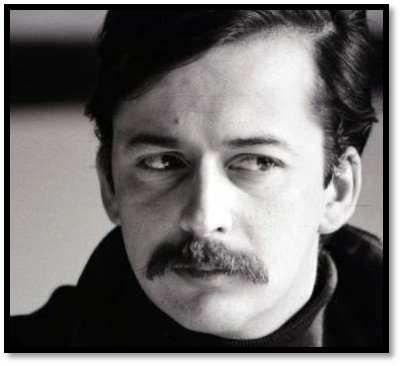
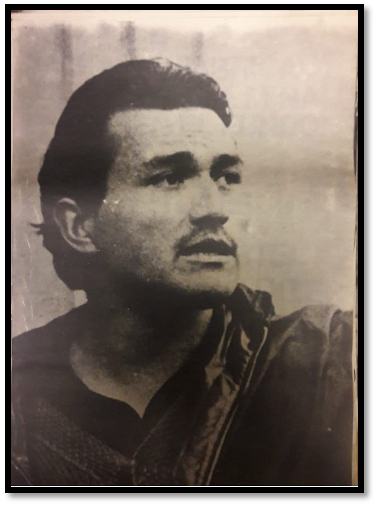
The undisputed leader among the students was the fiery and brilliant Miguel Enríquez, who in 1961, had written on his medical school application essay, “everything has been given to me…, the time has come to give back.” Like Che Guevara before him, the call to heal the sick blended seamlessly with the call to make revolution for the poor. His classmate and best friend, Luciano Cruz, brought a uniquely impulsive energy and irresistible charm to that struggle. The political style of Luciano Cruz allowed him to knew how to rouse, entertain, and impassion any crowd at a moment’s notice.

Picture of Miguel Enríquez
Miguel Enríquez. Source: Resumen
Picture of Luciano Cruz
Luciano Cruz. Source: Resumen

Whereas Enríquez made measured, brilliant speeches—many of which have survived as written documents—his energetic deputy could improvise behind a microphone, holding the multitude spellbound for hours. Historian Marian Schlotterbeck points to Cruz’s debut as a student leader during a 1965 protest of the recent fare increase in public transportation. Chile’s largest labor federation, CUT, (Central Única de Trabajadores), had called for the protest, and they had invited Cruz as one who “embodied the contentious, combative style of the Concepción student movement.” Schlotterbeck points out that there was more at stake than just bus money. “Amidst wild applause,” she writes, “Cruz proclaimed that the demonstrations were no longer about fare hikes but ‘a demonstration by Chile’s poor against the rich.’”[1]

By 1967, Luciano Cruz had set his sights on the presidency of the student federation. The university had reached a crossroads. The Christian Democratic government of Eduardo Frei was promoting university reform on a national scale. Frei’s men had lifted up the University of Concepción as a model. They wanted to restructure higher learning as a driving force for modernization. But members of the newly configured MIR, known as Miristas, understood the plan as an attempt to co-opt and “Americanize” their university. Cruz would become MIR’s candidate to spearhead the resistance.

While technically private, the University of Concepción depended on funding from UNESCO and the Ford Foundation, making it vulnerable to foreign interference in crucial policy decisions.[2] With MIR’s support, the student federation (FEC) demanded the democratization of the power structure so that students and junior professors could have a voice in the decision-making process. But MIR had to win the presidency of the student federation to legitimize its proposal. Focusing his campaign on ideology, class interests, and the social role of the university, Miguel Enríquez had failed in his bid for that office two years earlier. This time, Miguel recognized his classmate’s dynamic advantage. Luciano’s landslide victory in Concepción marked MIR’s arrival as a national political force.

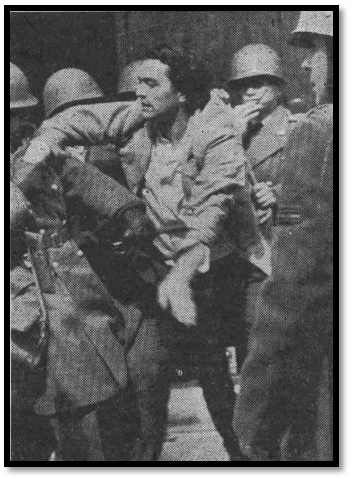
Schlotterbeck highlights a “new brand of audacious student activism” that would predominate in the student federation, transforming university students into political actors on a national scale.[3] Undergrads—and some even younger protestors—made headlines with strikes, street protests, and the occupation of campus buildings. Riot police confronted them with tear gas, truncheons, and water cannons. Jailed students went on hunger strikes, and their objectives began to escalate. Miguel Enríquez called for more than just a university reform. The time had come for a true university revolution. His statement to that effect appeared in the preeminent national magazine of the non-aligned intellectual left, Punto Final, with a photo of Luciano Cruz in a scuffle with five police officers that would become iconic.

Luciano Cruz in close contact with policemen.
Luciano Cruz defies Carabineros, Punto Final, 38, (septiembre 1967), 30
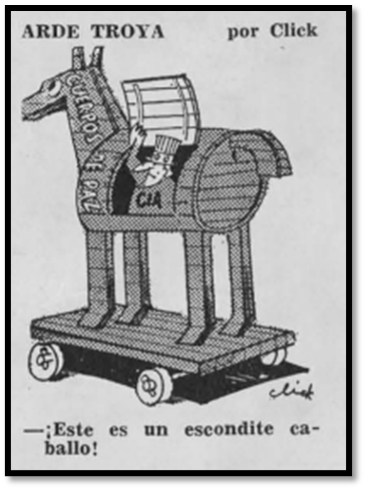
Trojan horse depiction, CIA inside the wooden structure. Drawing
CIA agents use the Peace Corps as their Trojan Horse. Punto Final, 47, (enero 1968), 47

Miguel directed MIR’s leadership to confront the “legal dictatorship” of the current system with relentless combat. They should denounce every detail, he said, so that the forces of repression were compelled not only to cease and desist, but to give ground.[4] On that note, MIR demanded the immediate expulsion of four Peace Corps volunteers from the University of Concepción. Perceived as the youth branch of the dubiously regarded Alliance for Progress, the Peace Corps presence symbolized the imperialist assumptions behind Frei’s model of reform.[5] Students argued that Peace Corps volunteers took up much needed space at the university residence. They also voiced their suspicions (likely credible) that Peace Corps volunteers had provided a stream of inside information to U.S. intelligence services.[6]

While Enríquez focused on the national politics of the reform, Cruz emerged as MIR’s chief tactician and spokesperson. Under his command, at one of their daily demonstrations, students in Concepción abducted a police officer. After holding him hostage in the university for several days, they offered his release in exchange for the same for all the students who had been arrested during recent protests.[7] The symbolic value of that gesture weighed heavily. With it, students reconfigured their recent detentions by Carabineros as similarly random and arbitrary abductions.

Carabineros fought back. They arrested Cruz, and the movement seemed to fall apart until Cruz dramatically escaped from jail and waltzed back into the meeting where student leaders discussed their next move.[8] Although the details of Cruz’ escape remain unclear, his stealth and proficiency in the martial arts seem to have played a part. His return to the front line provided a huge boost for morale, dramatically enhancing his personal mystique and his reputation for dauntless courage and invincibility. It also established MIR’s place in the leadership of the student federation at the Universidad de Concepción (FEC) for the foreseeable future.

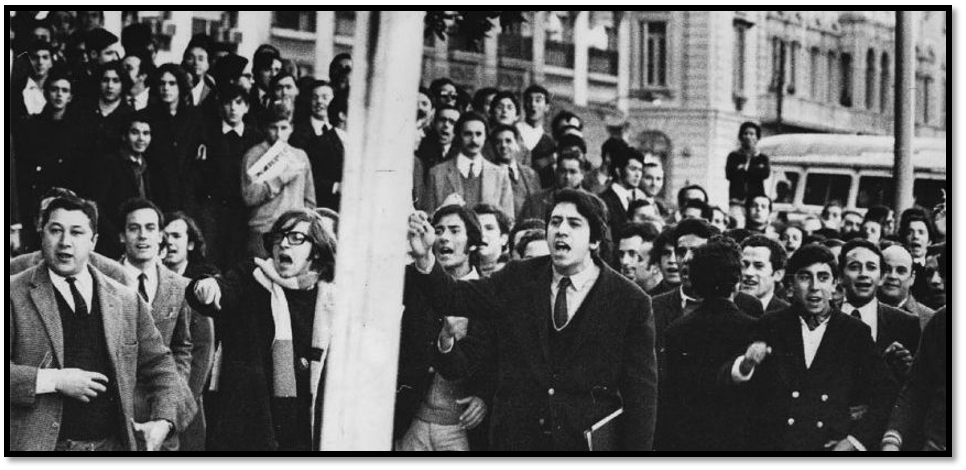
Picture of student protest in Concepción
Student protest in Concepción. Source: https://www.diarioconcepcion.cl/politica/2019/05/22/reforma-en-la-udec-buscando-mas-participacion.html

But MIR’s ambitions did not stop with the student federation in Concepción. Members of the movement’s inner circle did not want Chileans to think of them as merely the radical fringe of the nation’s restless youth. Aligning themselves with the youthful and dynamic Cuban revolution, Miristas defied the perennial lethargy of Chile’s traditional left to project a hugely inflated image of the new movement’s political significance. Their claim had no real basis in the number of militants, access to material resources, or concrete influence in social organizations, but Mirista leadership bet on the oppressed masses’ perception of their growing visibility as a foreshadowing of an imminent and viable armed revolt. In his incisive analysis of the MIR phenomenon, literary scholar Hernán Vidal observes that MIR’s Comité Central manipulated the obvious contrast between an appearance of mythical power and a reality of tactical impotence, calling it a strategy of “establishing presence.”[9] They didn’t have to really be everywhere; they only had to seem to be everywhere. Luciano Cruz figured as the master of MIR’s expanding illusion of ubiquity.

Until 1969, MIR had mostly operated out in the open. Their practical jokes and disruptions only remained covert until they had succeeded. Then, they generated positive PR. But a pivotal student prank in Concepción would initiate a period of tension between the gregarious publicity that had shaped MIR’s style and method, and a new strategy of strict secrecy. As fate would have it, Luciano Cruz’ impulsive abduction of a local journalist in June of that year provoked the ire of the Frei government, driving the entire movement underground for the first time. Miristas had to learn to hide their militant activities and to use code names. The demands of clandestine living made MIR a more dangerous commitment for new recruits, but it also provided an undeniable aura of romance.

Kidnappings, though frequent, lucrative, and lethal among revolutionary movements in Brazil, Uruguay, and Argentina, did not figure in MIR’s habitual playbook. Leaders observed that, in terms of promoting public sympathy for the cause, they usually backfired. But acting independently, Luciano’s regional task force in Concepción crossed the line with a targeted prank in the austral winter of 1969. The Christian Democratic journalist, Hernán Osses Santa María, had lost his job at the University of Concepción because of the reform. He got his revenge by disparaging young Miristas in his editorials. He never criticized their politics. He derided their personal lives, and he made fun of their girlfriends. That seemed to violate an unspoken code of honor. The clever Luciano Cruz decided to teach him a lesson in respect.

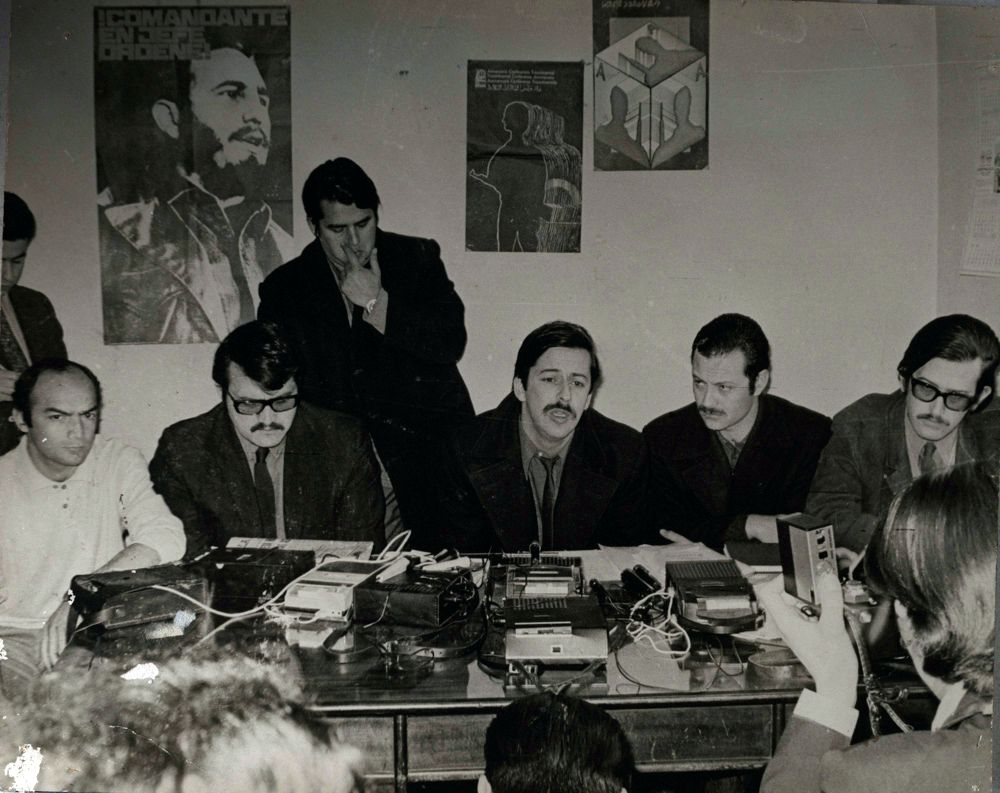
Photograph of members of the Central Committee of the Revolutionary Left Movement (MIR) during a press conference. From left to right are Roberto Moreno, Luciano Cruz, Nelson Gutiérrez, Miguel Enríquez, Bautista Van Schouwen and Andrés Pascal.
Fotografía Conferencia de prensa MIR. Source: Archivo Digital Londres 38

Luciano’s team of tricksters abducted Osses Santa María with the archaic idea of tarring and feathering him. Finding no tar, they released him naked in the courtyard of the university during an annual event. There was no real harm done, except to Christian Democratic pride. The Frei government took advantage of the public outcry to invoke a national security statute declaring MIR illegal, and to order the arrest of the Secretary General, along with his wily second in command.[10] That meant that most of MIR’s operatives had to go underground, something Miguel Enríquez had in mind anyway. Cruz had not cleared his plan with the more prudent Enríquez, but his audacity triggered MIR’s rather sudden transition from the gentler politics of campus protests and community organizing to a more decisive program of direct action; most of it, illicit; and some of it, armed. Cleverly-staged bank robberies, framed as Robin Hood style gestures of taking from the rich to benefit the poor, became the order of the day. Ever sensitive to the importance of good publicity, however, the students took precautions to make sure that no one ever got hurt.

After the election of Chile’s first Socialist President, Dr. Salvador Allende, in September of 1970, MIR continued to agitate for faster and more radical reform, but without the emphasis on spectacular disruptions of daily routines. Luciano Cruz took a flat in Santiago, where he conducted a covert program of surveillance, keeping watch over potential coup-plotting generals and their supporters. To this end, he recruited a sizeable contingent of young militants who learned to quietly follow and watch. In that role, Cruz’ team pieced together all the elements of the right-wing attempt to prevent Salvador Allende’s inauguration to the presidency, one that culminated in the assassination of General René Schneider, a trusted army commander.[11] Chilean police investigators, more attuned to internal bureaucracy and protocol than really solving crimes, had failed to break the case, but Cruz’ investigation uncovered embarrassing complicity that reached to the highest levels. Though published in Punto Final, the justice system failed to follow up on his findings.

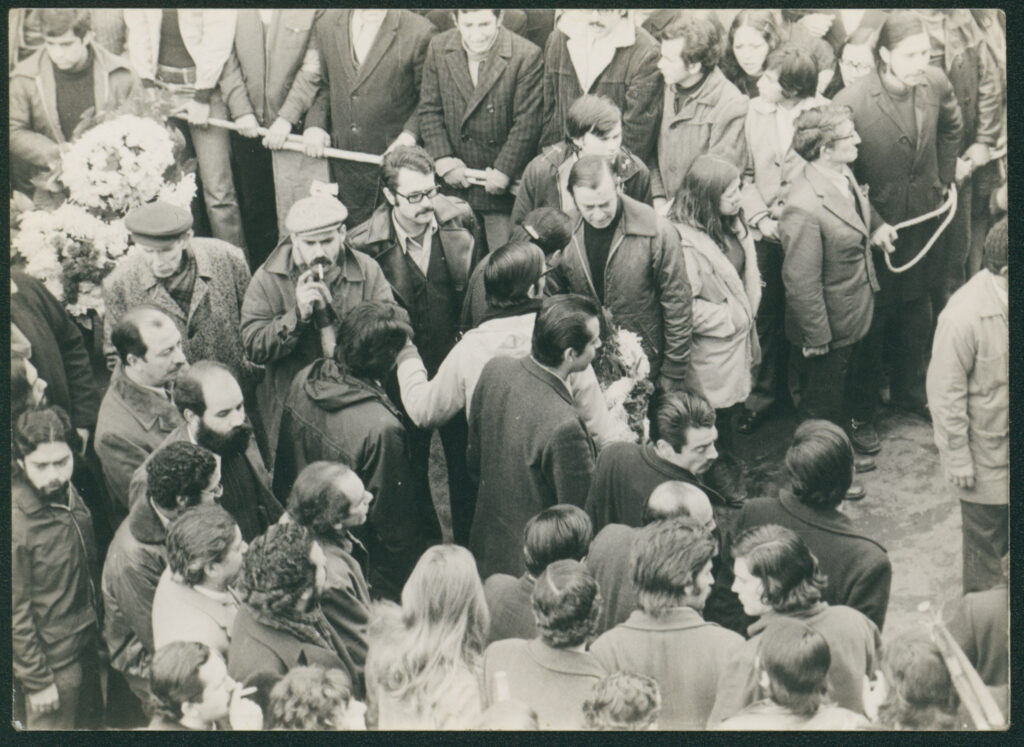
Picture of funeral procession of Luciano Cruz
Funeral de Luciano Cruz. Source: Archivo Digital Londres 38

Luciano Cruz died of accidental gas inhalation in his one-room basement flat in downtown Santiago on August 14, 1971. After he missed an arranged meeting, Miguel Enríquez discovered his friend’s lifeless body. He frantically attempted to revive him, but it was too late. A CIA report surmised that Enríquez might have had Cruz murdered to resolve an internal power struggle.[12] But gas heaters in those days had no safety valves, and Luciano had been complaining of morning headaches for a week. All the witnesses mentioned the smell of gas in the flat. So it was likely careless rather than malicious.

Tens of thousands followed the funeral procession in support of the charismatic Luciano Cruz and the incisive student protest movement he represented.[13] MIR would never be the same without him. But, to this day, Chilean students put their whole heart and soul into their protests.

Nathan Stone, Professor of Instruction at the University of Texas and a recent Ph.D. recipient from the Department of History (2023) of the same institution. His specialization is Modern Latin American revolutionary movements. Previously, he lived and taught in Chile for thirty years, Uruguay for two, and IN Brazil for five. H is fluent in Spanish and Portuguese, and he has published his writing, both academic and non-fiction, in both languages.

The views and opinions expressed in this article or video are those of the individual author(s) or presenter(s) and do not necessarily reflect the policy or views of the editors at Not Even Past, the UT Department of History, the University of Texas at Austin, or the UT System Board of Regents. Not Even Past is an online public history magazine rather than a peer-reviewed academic journal. While we make efforts to ensure that factual information in articles was obtained from reliable sources, Not Even Past is not responsible for any errors or omissions.

Banner image source: http://archivodigital.londres38.cl/index.php/afiche-del-comite-de-solidaridad-luciano-cruz

[1] Marian E. Schlotterbeck, Beyond the Vanguard: Everyday Revolutionaries in Allende’s Chile (Oakland, University of California Press, 2018), 23.

[2] Schlotterbeck, Beyond the Vanguard, (2018), 26; Punto Final, 12, (septiembre 1966), 16-18.

[3] Schlotterbeck, Beyond the Vanguard, (2018), 26.

[4] Punto Final, 40, (oct 1967), 37.

[5] Punto Final, 12, (sept 1966), 18; Punto Final, 37, (sept 1967), 39, and Punto Final, 40, (oct 1967), 36.

[6] Odd Arne Westad, The Global Cold War: Third World Interventions and the Making of Our Times. (UK: Cambridge University Press, 2007), 35; and Punto Final, 32, (julio 1967), suplemento, 1-10.

[7] Schlotterbeck, Beyond the Vanguard, (2018), 26.

[8] “La rebelión de la juventud,” in Punto Final, 38, septiembre 1967, 28-30.

[9] Hernán Vidal, Presencia del MIR: 14 Claves Existenciales (Chile, Mosquito Comunicaciones, 1999), 28.

[10] Punto Final, 138, 31 agosto 1971, suplemento, 5.

[11] “El MIR denuncia a los verdaderos culpables del asesinato del General Schneider,” in Punto Final, 117, 10 noviembre 1970, suplemento, 1-10.

[12] CIA, Directorate of  Intelligence, 1141-1.37, Confidential, 1 October 1971, declassified September (1999),  https://www.cia.gov/readingroom/docs/DOC_0000365918.pdf.   

[13] Jorge Müller Silva, “Funerales de Luciano Cruz Aguayo, 16 de agosto de 1971.” First released 1972; remastered by Chilefilms, Santiago, (2014).

Review of The Science of Useful Nature in Central America: Landscapes, Networks, and Practical Enlightenment, 1784–1838, by Sophie Brockmann (2020).

Banner for Review of The Science of Useful Nature in Central America

What is the ‘Enlightenment’? This is a question that has occupied scholars ever since Kant. But historians no longer focus on great white heroes to provide answers. Yet sociologies of knowledge on the ‘Enlightenment’ continue to render the experiences of the north Atlantic normative. These sociologies tell us that the Enlightenment was not about secular radicals using reason to topple the religious and feudal hierarchies of the ancien régime. It was rather about new forms of sociability triggered by revolutions in print and communication that made a republic of letters and a public sphere of coffee shops and periodicals possible. These new bottom-up institutions, as this narrative has it, allowed for new mercantile middle classes to challenge top-down hierarchies of knowledge and politics.

As common as it is, this model, however, does not fit most global experiences of the ‘Enlightenment’. In a 2020 study, Brockmann investigates the case of turn-of-nineteenth-century Central America to challenge the norm.

Brockmann brings to life a coterie of religious and lay Spanish American bureaucracies that for some forty years were obsessed with ‘bringing light’ onto everyone, from Chiapas to Costa Rica. Engineers, military officers, architects, bishops, field justices, priests, high court judges, doctors, lawyers, landowners, among many others, organized themselves in patriotic societies to produce a newspaper to network and to circulate only ‘useful’ knowledge aimed at transforming local landscapes. One could argue that this community was a ‘public sphere’ created by print culture. Yet Brockmann demonstrates that these were colonial bureaucracies who were prompted by top-down crown initiatives to create patriotic societies and newspapers to communicate and innovate. Moreover, in the kingdom of Guatemala, landscapes were constantly threatened by earthquakes, volcanic eruptions, locust, anthrax, typhus, smallpox, and falling prices of indigo, the main staple.

An Indian gathers cochineal with a deer tail. Painting.
An Indian gathers cochineal with a deer tail José Antonio de Alzate y Ramírez 1777. Source: Wikimedia Commons

How to produce indigo, flax, silk? How to avoid tropical miasmas caused by rotten, humid tropical trees?  How to reorganize settlement patterns and prompt populations to settle in both Pacific and Atlantic new ports? How to reengineer mercantile circuits opening new roads? These bureaucracies had long drafted reports on local demography, production, roads, landscapes. Bishops, field justices, court magistrates, and municipal authorities of the various administrative units of the kingdom of Guatemala, a territory that covered dozens of cities and towns from southern Mexico to northern Panama, had long crisscrossed the lands and produced paperwork to mete out justice and enact reform.

They embodied the Enlightenment as much as the late eighteenth-century engineers and judges Brockmann has chosen to study. All lay and religious colonial bureaucracies, Habsburg and Bourbon, used archives to develop a sense of the changing nature of territories bewildered by contingency, disaster, and environmental change. Guatemala’s capital, alone, was twice obliterated, relocated, and rebuilt after eruptions and earthquakes. Theirs was an enlightenment of ever-changing landscapes and bureaucratic archives.

Brockmann demonstrates that these bureaucratic networks held together by new patriotic societies and print embraced new languages of utility and political economy but not necessarily new practices of paperwork and administering knowledge and land reform. Transfixed by the idea of Enlightenment progress and innovation, Brockmann artificially separates these late eighteenth-century bureaucracies from their robust predecessors, neglecting some two hundred years of bureaucratic audits, reports, and endless horizontal and vertical communication with peers, and local and peninsular authorities. 

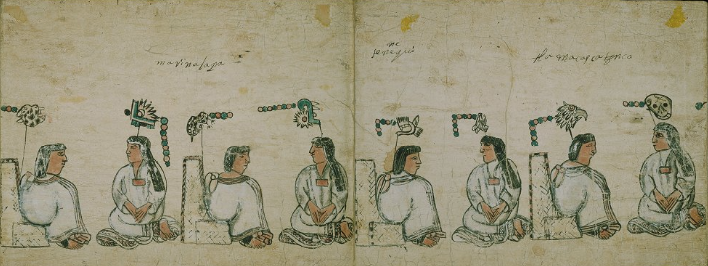
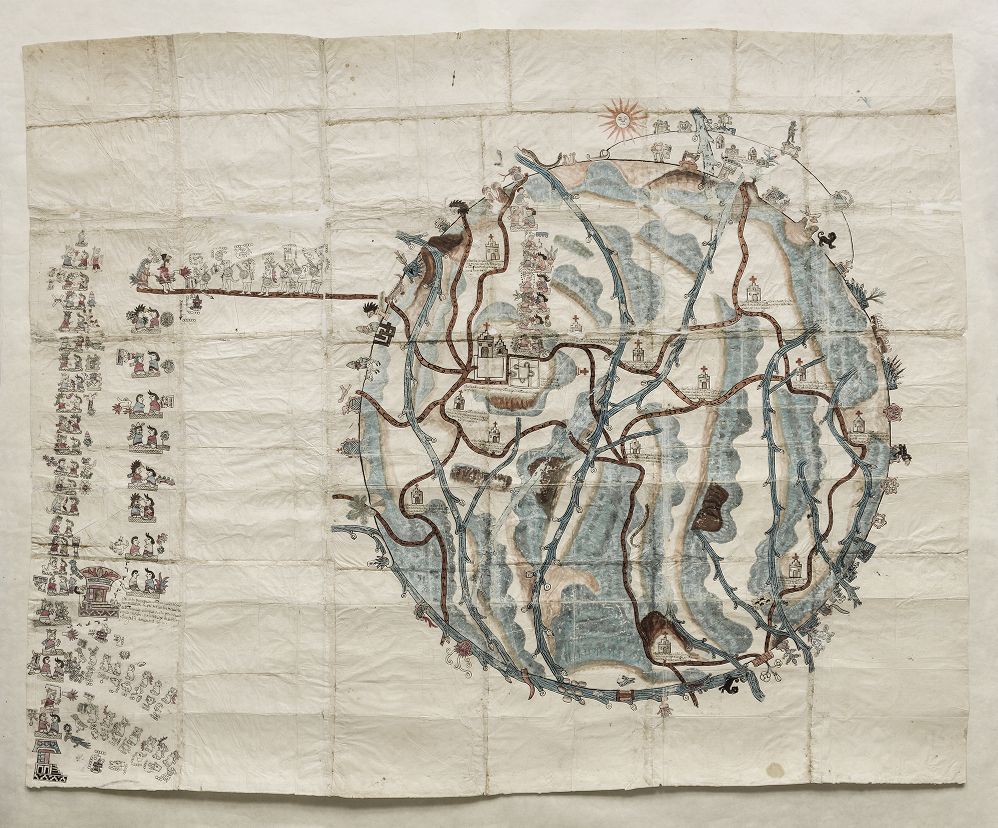
Códice Dehesa. Source: Instituto Nacional de Antropología e Historia (INAH)

The assumption to see bureaucracies of engineers, architects, bishops, and priests as the product of Bourbon reforms, leads Brockmann to eliminate all bottom-up communication. These bureaucracies communicated constantly with ‘Indians” and Blacks through myriad mechanisms of tribunals and audits. Indigenous communities had their own paperwork bureaucracies. It is therefore strange that Indian and Black voices are almost absent in Brockmann’s study. Either these populations did not get to participate in the new networks of print and sociability (patriotic societies and merchant tribunals) or Brockmann assumes that in the Spanish Empire these populations rarely talked, particularly after the Enlightenment reforms. That their voices dimmed with the Bourbon reforms might well be true, but this is something that requires detailed research rather than vague assumptions.

Brockmann interpretation of Enlightenment is unquestionably important. It shows that something peculiar happened in the Spanish empire as the language of light, patriotism, and utility replaced religious discourses of service among both lay and religious bureaucracies. Utility meant a rejection of abstraction. The Gazeta of Guatemala, the newspaper of the reformers, privileged articles that had demonstrable utility at the very local level, privileging empirical local knowledge over theory. Linnaeus was rejected, indigenous plant taxonomies were embraced. 

In this world, the pursuit of utility was a language of commitment for both empire and local community.  Brockmann avoids any discussion of “creole” identities leading to friction with peninsular outsiders, the alleged culture of resentment that prefigures the conflict of the wars of independence. The Science of Useful Nature in Central America takes issue with my own work on “science” and creole patriotism (albeit mine is rather on patriotic epistemologies, not science) because the members of these patriotic networks saw themselves as neither ‘Spaniards” nor ‘Creoles’. Since the author focuses on networks of local lay and religious bureaucrats one could argue that patriotism was simply a manifestation of love of service to king, empire, and community to be compensated by grace privileges.

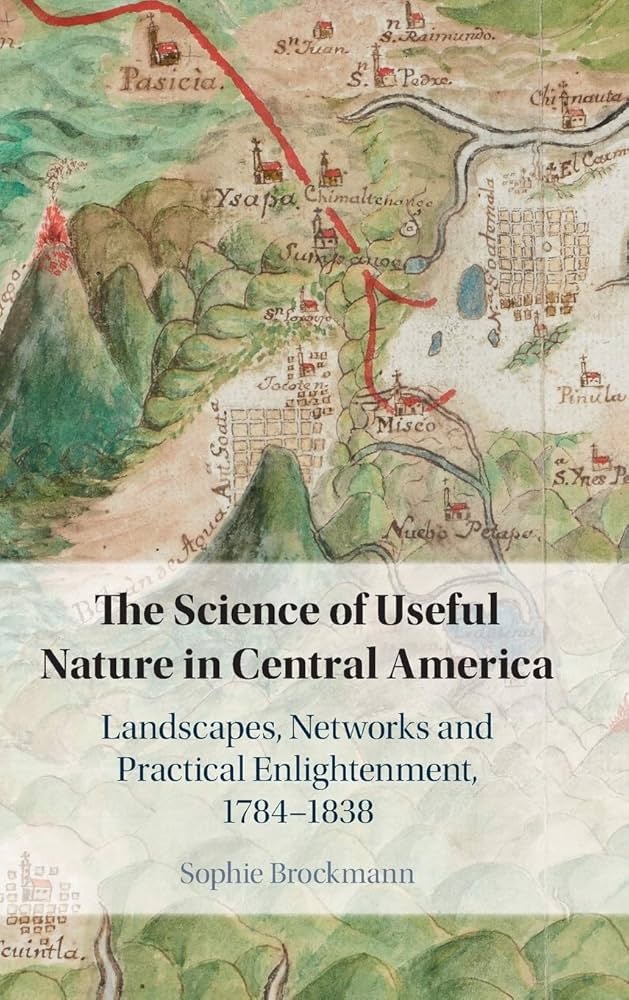
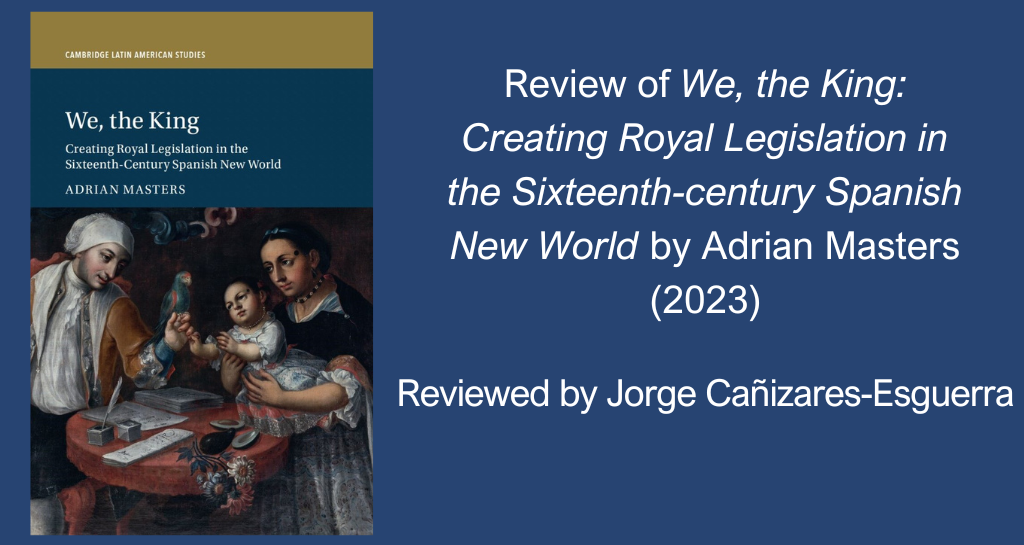
Cover of The Science of Useful Nature in Central America

Brockmann shows that with Independence, these bureaucracies continued serving a Federal Republic, no longer a global monarchy. Yet their concerns and modus operandi remained the same. These bureaucracies started to develop networks of all kinds with the British empire, political, economic, and particularly scientific. Brockmann demonstrates that many of the new republican bureaucracies began to transfer colonial archives of maps and reports to the British state as they sought to secure loans, support, or simply old-fashion patronage. Enlightenment came to mean plunder.

Jorge Cañizares-Esguerra is the Alice Drysdale Sheffield Professor of History at the University of Texas at Austin.


The views and opinions expressed in this article or video are those of the individual author(s) or presenter(s) and do not necessarily reflect the policy or views of the editors at Not Even Past, the UT Department of History, the University of Texas at Austin, or the UT System Board of Regents. Not Even Past is an online public history magazine rather than a peer-reviewed academic journal. While we make efforts to ensure that factual information in articles was obtained from reliable sources, Not Even Past is not responsible for any errors or omissions.
5 Books I recommend from Comps: The History of Psychedelics

Banner - 5 books I recommend from comps. By Timmy Vilgiate.

The therapeutic potentials of substances commonly known as “psychedelics”—drugs like psilocybin, lysergic acid diethylamide (LSD), and mescaline—have received increasingly favorable coverage in newspapers and TV programs around the world in recent years. Although it was by a relatively small margin, the state of Colorado decriminalized several psychedelic molecules as “natural medicines” through a 2022 ballot initiative; the 2023 conference of the Multidisciplinary Association for Psychedelic Studies in Denver featured appearances by NFL quarterback Aaron Rodgers and former Texas governor Rick Perry. In his 2018 New York Times best-seller How to Change your Mind, Author Michael Pollan describes the revival of interest in these substances as a “psychedelic renaissance”.

Those who embrace this optimistic interpretation of recent trends argue that the mainstream acceptance of psychedelics through patented, carefully regulated treatment models (“containers” in the words of Pollan) has beneficial implications for humanity as a whole. The benefits of the so-called “psychedelic renaissance”, have not been equally distributed, however. Indigenous activists at the aforementioned 2023 MAPS conference interrupted the proceedings to criticize the ways in which the processes of patenting and commodifying psychedelic medicines reinforce pre-existing power structures. Patent claims to therapies involving psilocybin, mescaline, dimethyltrypatmine, or ibogaine often build on the work of generations of Indigenous medical practitioners. In the case of lab-born substances like LSD or ketamine, companies borrow techniques and insights developed outside of institutional settings by underground therapists in the years following the global crackdown on psychedelics in the 1970s.

History plays an important role in the debates surrounding reciprocity, justice, and equity in the emerging psychedelics industry. As indicated by the success of Pollan’s book and its Netflix adaptation, a popular demand for information on the topic has grown in recent years. Unfortunately, much of the literature available on the history of psychedelics relies on a more-or-less standardized list of anecdotes and episodes, usually focused on white, US American or European men: Albert Hofmann, R. Gordon Wasson, or Timothy Leary. Stories of these figures have been told so many times that authors will often assume the reader has already heard them if they have read other books on psychedelics, and may hesitate to deviate from a standard retelling, however. A wide range of other historical actors ends up left out, providing a shallow understanding of these substances. The academic historiography of drugs also often accepts these anecdotes at face value do to their ability to provide globally oriented surveys with coverage of “halluciogens”, substances that otherwise fits uncomfortably into theoretical models used to understand stimulants and depressants. The books that I highlight in this essay expand the chronology and scope of the history of psychedelics to examine actors, episodes, and substances that have otherwise received little attention.

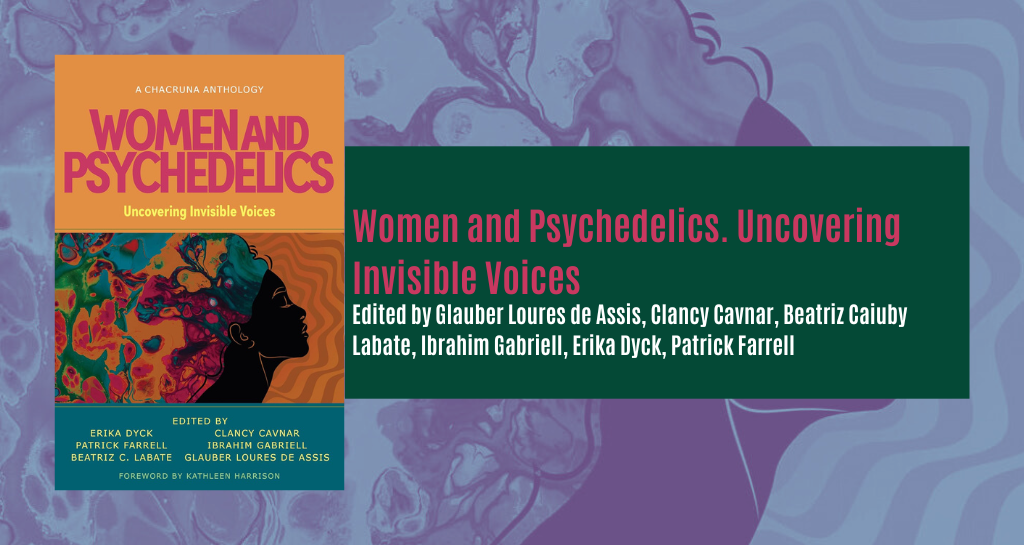
Glauber Loures de Assis, Clancy Cavnar, Beatriz Caiuby Labate, Ibrahim Gabriell, Erika Dyck, Patrick Farrell, eds. Women in Psychedelics: Uncovering Invisible Voices (Santa Fe: Synergetic Press, 2024).

Banner of Women in Psychedelics: : Uncovering Invisible Voices (Santa Fe: Synergetic Press, 2024) for 5 Books I recommend from Comps

The edited volume Women in Psychedelics, published last year, features 44 short chapters by academics and independent researchers highlighting “some of the diverse and impressive contributions women have made to our understanding of psychedelics.” Selections range from pieces focusing on the wives of well-known researchers—Rosemary Leary, Valentina Pavolvna Wasson, and Jane Osmond—to chapters examining women’s work as lab assistants, patients, and therapists. While some of the more biographical chapters take on a kind of memorializing tone, the section “The Limits of Feminism” explores some more challenging themes, such as the problem of sexual abuse within ayahuasca communities. One chapter in this section that stood out to me, written by PhD candidate Taylor Dysart from the University of Pennsylvania, argues that historians, “must go beyond merely recovery to reconstructing these histories in all their messiness and intricacy.” Dysart connects the work of anthropologist Marlene Dobkin de Rios among Indigenous and mestizo communities in Peru to discourses within the history of science surrounding the relationship between science and coloniality.

Benjamin Breen. Tripping on Utopia: Margaret Mead, the Cold War, and the Troubled Birth of Psychedelic Science (New York: Grand Central Publishing, 2024).

Banner of: Tripping on Utopia: Margaret Mead, the Cold War, and the Troubled Birth of Psychedelic Science (New York: Grand Central Publishing, 2024) for 5 Books I recommend from Comps

The 2024 book Tripping on Utopia by UT alumni Benjamin Breen also draws the historiography of psychedelics into greater conversation with themes of both gender and sexuality, by studying the work of bisexual anthropologist Margaret Mead and her third husband Gregory Bateson. Mead’s long-standing relationship with her colleague Ruth Benedict and her unpublished criticisms of hegemonic gender binaries are not reduced to background information but are shown to have played an important role in shaping her interests in altered states of consciousness and eventually psychedelics. Besides aligning with the goals of Women in Psychedelics, the book’s also makes an important intervention in the historiography by expanding the standard chronology of psychedelics beyond the 1950s and 1960s. Breen underscores the often overlooked role of interest among anthropologists in the years following World War I in trance states and shamanism among Indigenous peoples around the world, linking their interests to a wider sociopolitical context. He draws attention, for instance, to links in “the midcentury scientific imagination” between the discovery of sex hormones like estrogen and psychedelics, “due to the perception that these two categories of drugs, uniquely, had the ability to reshape one’s core identity.”  This intervention into the historiography allows for a better understanding of how these substances can fit into standard models of drug history, which tend to focus on the overarching power structures and interest groups involved in drug prohibition and, alternatively, commodification.

Erika Dyck and Chris Elcock, eds. Expanding Mindscapes: A Global History of Psychedelics (Boston: MIT University Press, 2023).

Banner of: Expanding Mindscapes: A Global History of Psychedelics (Boston: MIT University Press, 2023)

The prominence of the “great men of science”-centered narratives as reference points for the history of psychedelics as a whole not only tends to exclude the roles of women and LGBTQ+ people, but also can reinforce an entrenched Americentrism within the literature. Erika Dyck of the University of Saskatchewan, one of the editors for Women in Psychedelics, along with independent researcher Chris Elcock, attempt to address this problem through the edited volume Expanding Mindscapes, which was published in 2023 by MIT University Press. Contributions highlight the history of ergot cultivation in Switzerland (used to produce LSD), the use of iboga by followers of the Bwiti religion in west Central Africa, and the popularization of ayahuasca in China. By understanding the history of psychedelic science on a more transnational scale, the book contributes a better understanding of the global power structures and inequalities involved in the present-day mainstreaming and commodification of psychedelic substances. The topics and themes explored by the various contributors have received little attention elsewhere, providing multiple promising jumping-off points for future researchers.

Joseph Patteson. Drugs, Violence, and Latin America: Global Psychotropy and Culture (New York: Springer, 2022).

Banner of: Drugs, Violence, and Latin America: Global Psychotropy and Culture (New York: Springer, 2022)

Joseph Patteson’s book Drugs, Violence and Latin America: Global Psychotropy and Culture similarly approaches psychedelics within the context of global power structures. Providing a theoretical synthesis of significant value to the historiography of drugs as a whole, he understands altered states of consciousness in terms of a dialectical relationship between two modalities. He links a “xenotropic” modality of intoxication (implying the “opening of the self to the other”) to psychedelics, on the opposite end of a spectrum from drugs like cocaine, connecting such substances to what he refers to as “narcocissism”, (intensifying the perception of the self through the “radical exclusion of the other”). By building on the concepts of psychotropy, he links the cultural discourses and forms involved in the use of drugs to the politics of consciousness more broadly, highlighting in particular the xenotropic and narcocisstic potentialities of literature. The book places the depictions of drugs in Latin America—whether the peyote-inspired writings of French poet Antonin Artaud or contemporary descriptions of the War on Drugs in Latin America—into the context of transnational power structures. While the theoretical orientation of the book may be intimidating to a non-academic audience, it provides valuable insight into not only the discourses around psychedelics, but into broader issues regarding drugs and US relationships with Latin America.

Citlali Rodriguez Venegas. Mazatecos, Niños Santos y Güeros en Huautla de Jiménez (México: UNAM, 2017).

Banner of: Mazatecos, Niños Santos y Güeros en Huautla de Jiménez (México: UNAM, 2017)

Finally, the book Mazatecos, niños santos, y güeros en Huautla de Jiménez by Citlali Rodríguez Venegas examines the history of a city in the Sierra de Flores Magón (Sierra Mazateca) in Northern Oaxaca, the place where US American amateur ethnomycologist R. Gordon Wasson was photographed participating in a “magic mushroom” velada led by the Mazatec curandera (chjóon chijne) María Sabina for Life magazine in 1955. A long list of inaccuracies have long gone unchallenged in retellings of this episode—though discussing the flood of hippies into the Sierra prompted by Wasson’s article often serves as one of the few steps outside a narrative otherwise focused on the United States. In general, a monolithic and overly simplistic understanding of the historical context of Huautla de Jiménez has often prevailed. Building off of a combination of ethnohistorical and archival research, Rodríguez Venegas destabilizes dominant understandings of Huautla as an “isolated village”, while also drawing attention to the diversity of Indigenous responses and adaptations to the arrival of outsiders in the pueblo. Notably, the book also avoids casting the “hippies” who arrived in the 1960s as a homogenous bloc of outsiders, shining light on their diverse motivations and relationships with Indigenous people. Often authors lean into a black-and-white analysis of this history, denying Indigenous agency by casting them monolithically as victims, without considering the wider historical context of Huautla de Jiménez itself. Overall, Rodríguez offers a valuable and nuanced account of a story that many of the most popular books on psychedelics largely take for granted.

Timmy Vilgiate (they/them) earned their MA at the University of Colorado Colorado Springs, and is currently in the 5th year of the PhD program in History at UT Austin. Their research looks at the relationship between assimilationist development projects and the study of psychedelic flora in the Sierra Mazateca from the late 19th Century to the mid-20th Century. Outside of history, they also enjoy playing music, sewing, and spending time with their cat Pedro.

The views and opinions expressed in this article or video are those of the individual author(s) or presenter(s) and do not necessarily reflect the policy or views of the editors at Not Even Past, the UT Department of History, the University of Texas at Austin, or the UT System Board of Regents. Not Even Past is an online public history magazine rather than a peer-reviewed academic journal. While we make efforts to ensure that factual information in articles was obtained from reliable sources, Not Even Past is not responsible for any errors or omissions.
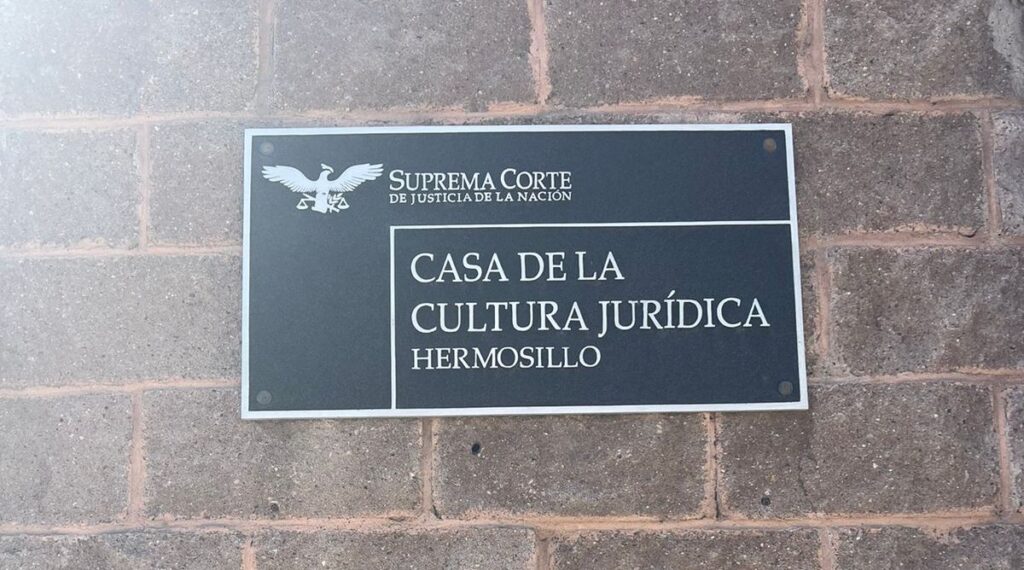

This is Democracy – Venezuela Elections

Dr. Kurt Weyland is the Mike Hogg Professor in Liberal Arts at the University of Texas at Austin.  He has conducted original research in Argentina, Bolivia, Brazil, Chile, Costa Rica, Peru, and Venezuela. Prof. Weyland is the author of seven books, including: The Politics of Market Reform in Fragile Democracies (Princeton, 2002); Making Waves: Democratic Contention in Europe and Latin America(Cambridge, 2014); Assault on Democracy: Communism, Fascism, and Authoritarianism during the Interwar Years (Cambridge, 2021); and Democracy’s Resilience to Populism’s Threat (Cambridge, 2024).

Mike Hogg is a Professor in Liberal Arts at the University of Texas at Austin.

Review of We the King: Creating Royal Legislation in the Sixteenth-century Spanish New World by Adrian Masters (Cambridge University Press, 2023)

Banner for We the King book review

In late 1546, auditor-president Pedro de la Gasca landed in the New World charged with retaking the entire continent for the crown, from Nicaragua to Chile. After having beheaded the viceroy, Gonzalo Pizarro had declared himself ruler of larger Peru with a fleet controlling the South Sea, from Callao to Panama. Curiously, La Gasca came with no armies, just a pile of blank decrees signed by Charles V. In one year, however, La Gasca quickly took over Pizarro’s fleet and routed Gonzalo into the Peruvian heartland. He was able to accomplish this because of the power of royal decrees and edicts granting rewards to any potential turncoat. La Gasca quickly dispatched the Pizarros, reorganized Peru, and promptly went back to become bishop of Palencia in 1550.

This largely bloodless, swift conquest of conquistadors by paperwork seems not to have caught the attention of historians of the sixteenth-century Spanish Indies, who were accustomed to narrating gory blood baths in Tenochtitlan. How did a faraway monarch manage to control a sprawling empire teeming with violent and ruthless factions, including, not only raiding conquistador-pirates but also thousands of theocratic friars and rebellious indigenous lords, all willing and able to seize control. This is the subject of Adrian Master’s extraordinary We, the King which was published by Cambridge University Press in 2023.

Anyone superficially familiar with the history of conquest and colonialism in the Americas knows two things: First, Spain imposed a ruthless autocratic regime via top-down religious bureaucracies that enforced religious compliance and cultural uniformity. Second, Anglo America was a decentralized society of settlers with loose crown oversight until the eighteenth century, when overreach triggered revolution. This is not a cartoon version of history but rather our current historiographical canon. It is the argument at the heart of John Elliott’s monumental Empires of the Atlantic (2006). The Anglo-American bottom-up and Spanish American top-down dichotomy also structures the writings of the entire Cambridge School, from J.G.A Pocock to Quentin Skinner to David Armitage. Clerical Dominican and Jesuit theology allegedly organized top-down state formation in the south whereas bottom-up markets and indirect providence did it in the north.

Drawing of Guaman Poma
GKS 2232 4º: Guaman Poma, “Nueva corónica y buen gobierno” (1615), Det Kongelige Bibliotek, Copenhagen

In a bold, deeply researched book drawing on no less than twenty-six archives, Masters shatters this paradigm. The liberal and decolonial obsession with top-down Spanish autocracy has overlooked that the discourse of tyranny, underlying all neo scholastic theories of regicide, implied vast bottom-up forms of communication between vassals and monarchs. To claim legitimacy, that is not to be a tyrant, the crown encouraged all sorts of bottom-up paperwork communication via petitioning, audits, and denunciation (which was the point of the Inquisition). In the Spanish Indies, the state was created from the bottom up every bit as much as it was in Anglo America.

Masters’ subject is the hundreds of thousands of royal decrees created in the sixteenth century, but he does not discuss the millions of viceroyal edicts, mandamientos. Scholars have argued that the crown regulated everything from the length of trousers of Purepecha commoners to the number of horses of Nahua lords. We have been told that the crown rounded up natives into towns and issued top-down decrees on how to sleep on mattresses. The topic of race is especially dear to this scholarship. The crown decreed out of thin air prefigured categories of human difference. From the top-down, it engineered republics of Indians, Spaniards, Mestizos, and some forty Casta out of the Reconquista experience with purity of blood statutes.

Masters has no patience with any of this. Most decrees, he shows with brilliant empirical skill, came from bottom-up petitioning from millions of vassals, including both enslaved people and women. Even the very language of the decrees was often taken verbatim from bottom-up petitioning. The function of the Council of Indies was primarily to handle bottom-up paperwork on unsolicited reform and legislation. To be sure, this was no democracy where commoners had unmediated access to the Council and paperwork, but neither, it should be said, is ours. Be that as it may, Masters shows that systems of legislating petitioning were largely responsible for the creation of most racial categories in the Indies. Indigenous factionalism prompted petitions to draw casta (caste) and mestizo distinctions. Every bit as much as friars, bishops, and viceroys, native commoners participated in the creation of colonial categories of human difference.

Map of Teozacoalco
Mapa de Teozacoalco (1580) was part of a set of documents made in response to inquiries from the Spanish King Philip II. Source: Relación de Teozacoalco y Amoltepec, Relaciones Geográficas of Mexico and Guatemala Collection, Benson Latin American Collection at the University of Texas, Austin.

This is not a minor contribution. The scholarship on colonial Latin America is plagued by teleological narratives. As with any bad script, we all know how the movie ends. Categories, institutions, allegedly all came down prefigured from Spain. Masters shows throughout that the labor of making of the law not only took up a lot of actants (scribes, paper, ink, tlacuilos, ships, rowers, servants, porters, muleteers, magistrates, rivers, oceans, candles, seals, chasquis) but also rendered the system unpredictable. It took individual and communal agency to succeed. It also involved, stubbornness, networking, resilience, corruption, lying, luck.

Book cover for We the King

Along with the top-down authoritarian shibboleths, the literature on the Spanish Empire is packed full of picaros, the much-needed Macondo picaresque in our much-loved liberal and decolonial narratives. Masters is aware that the Indies was not Spain and that petitioning in the Indies changed over time. Corruption and deception were the twin bête-noir of legislation (decrees, edicts, ordinances).

Masters shows that over the entire century the crown struggled to stem corruption and misinformation from undermining its own legitimacy before vassals. In fact, this was the main function of Council magistrates. In a series of riveting chapters, Masters shows how various council audits transformed Indies systems of communication, relegating elite women from legislative decisions, for the wives and daughters of magistrates were the main conduits used by petitioners to communicate and sway the will of magistrates. Masters also shows that the battle to control misinformation led to the creation of a far less passive crown toward the end of the century, capable through its own archives of finally assessing the credibility of Indies testimonies accurately. For every picaro there was an archive.

This book is a tour de force that ought to transform our understanding of Latin American colonial state formation. We, the King: Creating Royal Legislation in the Sixteenth-Century Spanish New World is a brilliant study that I recommend to all. 

Jorge Cañizares-Esguerra is the Alice Drysdale Sheffield Professor of History at the University of Texas.

The views and opinions expressed in this article or video are those of the individual author(s) or presenter(s) and do not necessarily reflect the policy or views of the editors at Not Even Past, the UT Department of History, the University of Texas at Austin, or the UT System Board of Regents. Not Even Past is an online public history magazine rather than a peer-reviewed academic journal. While we make efforts to ensure that factual information in articles was obtained from reliable sources, Not Even Past is not responsible for any errors or omissions.

NEP’S Archive Chronicles: El Archivo General de la Nación (AGN, Ciudad de México): Procesos afectivos, paisajes urbanos y la escritura de la historia

Cartel de El Archivo General de la Nación (AGN, Ciudad de México): Procesos afectivos, paisajes urbanos y la escritura de la historia

NEP’S Archive Chronicles explora el papel que desempeñan los archivos en la investigación histórica, ofreciendo una visión del proceso de realización del trabajo archivístico y de investigación. Cada entrega ofrecerá una perspectiva única de los tesoros y retos que los investigadores encuentran en los archivos de todo el mundo. NEP’s Archive Chronicles pretende ser tanto una guía práctica como un espacio de reflexión, en el que se expongan las experiencias de los colaboradores con la investigación archivística.

Note: Click here to access English version
Nota: Haz click aquí para acceder a la versión en inglés

Es un lugar común empezar por decir que estaba leyendo La atracción de archivo de Arlette Farge el primer día que fui a hacer investigación al Archivo General de la Nación (AGN) en la Ciudad de México, pero es verdad. No lo hice a propósito, llevaba tiempo queriendo leer el texto y acababa de comprar un ejemplar usado cuando empecé a investigar sobre la historia del Archivo General de México a lo largo del siglo XIX.

Esto ocurrió hace tres años, pero lo recuerdo claramente. Tiendo a olvidar las cosas, pero allí donde falla mi memoria social, mi memoria bibliográfica es casi impecable. Puedo recordar todos los libros que he leído. Sé cómo es la portada, qué tamaño tiene el libro, y dónde y cuándo lo leí. Recuerdo cómo se siente un libro dentro de mí, y puedo reconstruir lo que dice o por qué es importante. Sobre el clásico de Farge, recuerdo que el libro es romántico, que ella narra cómo recorría los pasillos de los Archivos Judiciales de París buscando mujeres en las fuentes, reflexionando sobre la afectividad del espacio, y recuerdo que lo estaba leyendo ese día. 

Era pleno verano, un día sombrío y lluvioso en la ciudad. También estábamos en plena pandemia de COVID. Por lo tanto, el AGN estaba abierto, pero su horario de atención al público era restringido, así como el material que podían consultar los investigadores. Había agendado una cita una semana antes para asistir y ver si realmente podía encontrar algo. Nunca había oído hablar de la colección que buscaba, pero estaba segura de que existía. Un archivo debe tener una colección sobre sus operaciones institucionales internas, ¿no?

Salí temprano de casa, me subí en el metro y eventualmente llegué a San Lázaro, en el centro-este de la ciudad. La estación de metro debe su nombre a la antigua terminal ferroviaria del mismo nombre, que solía ser parte importante del sistema ferroviario interoceánico en la ruta México-Puebla-Veracruz. San Lázaro siempre es caótico. No sólo hay dos líneas distintas de metro tienen parada ahí, pero el espacio también se comparte con la Terminal de Autobuses de Pasajeros de Oriente, la TAPO, haciéndola una de las estaciones más concurridas de la ciudad, con más de 44.000 usuarios que la cruzan al día. Me costó trabajo encontrar dónde abordar la línea 5 del Metrobus, pero eventualmente lo logré. Una parada después, llegué a la estación Archivo General de la Nación.1

Imágenes de la estación de metrobús de Ciudad de México para NEP's Archive Chronicles
Fotografías tomadas por la autora.

El AGN se encuentra actualmente ubicado en el Palacio de Lecumberri. Inaugurado originalmente en 1900 por el presidente Porfirio Díaz, este edificio fue diseñado como una moderna penitenciaría panóptica, propósito con el cual cumplió hasta 1972, cuando fue clausurado debido a una serie de irregularidades, corrupción y falta de espacio para sostener el creciente número de reclusos. Una vez cerrado y abandonado, estalló un debate en la prensa mexicana sobre su destino. Su demolición privaría a los antiguos reclusos como a las familias de las víctimas de un importante lugar de memoria. Además, quienes se oponían a su demolición subrayaron la importancia de conservar el edificio como un lugar crucial para estudiar y comprender la historia de la arquitectura disciplinaria durante en México en el siglo XX. Pero ¿qué hacer con él?

En los medios de comunicación estalló un debate sobre los posibles usos del edificio. La polémica de «los historiadores», representados por Edmundo O’Gorman, Eduardo Blanquel, Jorge Alberto Manrique y el arquitecto Flavio Salamanca, fue decisiva para que Lecumberri pasara de ser una cárcel a un archivo. El argumento principal de los historiadores se centró sobre todo en la cuestión del espacio, conscientes de que una de las características fundamentales de los archivos es que nunca dejan de crecer. En ese momento, el AGN, originalmente alojado en el Palacio Nacional desde su inauguración en 1823, hacía tiempo que se había quedado sin espacio y sus fondos se encontraban dispersos por diversos lugares de la ciudad, como el Palacio Nacional, el Templo de Guadalupe en Tacubaya o la Casa Amarilla, la Ciudadela y el antiguo Palacio de Comunicaciones, hoy Museo Nacional de Arte (MUNAL).2 La descentralización perjudicaba las funciones de la institución y ponía en riesgo el acceso de los usuarios.

Tres imágenes del palacio de Lecumberri: estructura exterior, cúpula interior, edificio exterior para NEP's Archive Chronicles
Fotografías tomadas por la autora.

Consciente de sus necesidades presentes y futuras, el personal de la institución había estado buscando soluciones para este problema. José Ignacio Rubio Mañé, que fue director de la institución entre 1960 y 1977, incluso llegó a viajar por el mundo a través de un programa financiado por el gobierno en busca de inspiración en otros archivos para mejorar el que él supervisaba. Pero el proyecto de remodelación quedó truncado antes de concluirse.

Y ahora, la solución estaba ahí: Lecumberri. El edificio ya era propiedad del gobierno, estaba abandonado y salvarlo garantizaría su funcionamiento como lugar rememoración y estudio. Como elemento adicional y fortuito, este palacio se había construido para garantizar las prácticas de vigilancia, un componente muy necesario para los archivos. Estos otorgan una gran prioridad a la vigilancia porque almacenan documentos sensibles y únicos que sirven de fuentes primarias para los relatos históricos de una comunidad determinada en el tiempo. Su robo o deterioro puede tener repercusiones sociales, materiales e incluso emocionales.

En 1977 se aprobó la transformación de Lecumberri en la nueva sede del AGN, que se trasladó en 1982 bajo la dirección de Alejandra Moreno Toscano. Las antiguas celdas de la prisión se convirtieron en bóvedas para el almacenamiento de documentos, y las largas galerías de cada uno de los 5 brazos de la prisión se transformaron en salas de lectura y oficinas. Aunque poética, la falta de control técnico sobre el clima y las plagas que los archivistas podían tener sobre los documentos dentro de las bóvedas impulsó la construcción del Anexo Técnico. Inaugurado en 2018, el Anexo es una instalación de almacenamiento de documentos moderna y tecnológica que aumentó masivamente el espacio de almacenamiento y modernizó los sistemas. Las celdas sirven ahora de oficinas para el personal, y algunos de los largos pasillos se han acondicionado para un proyecto de digitalización masiva. En el exterior, el gran edificio blanco y cuadrado contrasta con el palacio decimonónico situado a su lado. Dos estrategias e innovaciones tecnológicas diferentes para un mismo fin.

Tres imágenes de bloques de celdas y espacio de almacenamiento de documentos. Actualmente son oficinas para NEP's Archive Chronicles
Fotografías tomadas por la autora.

A mi llegada, me recibieron dos agentes de policía. Como en muchos archivos de todo el mundo, tuve que dejar mi mochila, papel, plumas, agua y cualquier alimento en los casilleros y registrarme con un documento de identidad oficial y registrar el número de serie de mi equipo de trabajo (computadora y tablet). Una vez registrada, tomé mi computadora, teléfono, guantes y mascarilla, y me dirigí a la Centro de Referencias, una parada obligatoria antes de entrar en las salas de consulta. No sabía dónde encontrar el archivo institucional, así que hablé con los archivistas. Mi primera conversación con la mujer de recepción -llamémosla M.- fue más o menos así:

“Buenos días”.

            “Buenos días”.

            “¿En qué puedo ayudarle?”

            “Estoy buscando… Estoy buscando el archivo del Archivo”.

            “¿Disculpa?”

            “Sí. Busco el archivo del Archivo”.

No puedo evitar reírme al recordar la cara de M. ante mi extravagante solicitud. Le expliqué que yo era historiadora, que estaba investigando la historia del Archivo General y que buscaba el archivo interno de operaciones del AGN.

            “Tiene que haber uno, ¿no?”.

            “Ay, no sé la verdad, no he oído hablar de él. Pero ¿por qué no pruebas en el buscador general a ver qué encuentras?”.

Me senté frente a una computadora y escribí lo primero que se me ocurrió: «archivo». Pero al teclear una palabra que forma parte del nombre de toda la institución, el sistema transcribió toda la base de datos en la sección de resultados del programa, y lo colapsó. Pasé las siguientes semanas en Centro de Referencias analizando ArchiDoc, el gigantesco sistema de búsqueda del AGN, intentando averiguar cómo encontrar esta colección de la que nadie en el había oído hablar. Hasta que un día, a primera hora de la mañana, se acercó M. para decirme que había visto una colección en el perfil de administrador de ArchiDoc. Se llamaba Archivo Histórico Institucional (AHI) y figuraba en la sección del siglo XIX.

¡Eureka! Resulta que no había visto esta colección en ningún lado porque los documentos estaban todavía siendo catalogados y procesados, y no estaba disponible aún para su consulta3. Se me puso la piel chinita de la emoción. Lo recuerdo claramente. Estos documentos constituyen la historia del Archivo a través del papeleo burocrático de la administración de la misma institución. De hecho, esto era exactamente lo que yo buscaba: el archivo del archivo. Y significaba que mi investigación doctoral era posible.

El Archivo Histórico Institucional tiene dos tipos de formatos documentales: volúmenes y cajas que contienen expedientes guardados en carpetas amarillas sin ácido. Los volúmenes están encuadernados en piel y tienen unas dimensiones aproximadas de 40 cm x 25 cm, con un número de páginas que oscila entre 250 y 450 por volumen. Consta de 295 volúmenes que van de 1825 a 1944, abarcando 119 años de historia administrativa archivística. La colección muestra un aumento significativo de volúmenes a lo largo del tiempo con un patrón de crecimiento sostenido a lo largo del tiempo. Su contenido es ecléctico y abarca informes, remisiones, recibos, notas, instrucciones y solicitudes de información, entre otros. En estos documentos podemos encontrar los mundos sociales, económicos, políticos, materiales e incluso afectivos que han sido parte esencial de la mecánica interna de la institución y de los materiales que ella resguarda.

Imagen del volumen encuadernado en cuero
Fotografía tomadas por la autora.
Imagen de papel con membrete de AGN
Fotografía tomadas por la autora.

No pude examinar los documentos físicos ese año y tuve que esperar hasta el verano siguiente para hacerlo, tras conseguir autorización previa de la administración del Archivo. Poco después, la historiadora y archivista Linda Arnold tuvo la amabilidad de compartir con nosotros la hoja Excel de toda la colección, lo que me permitió procesar y comprender más profundamente la colección antes acceder a los documentos.

En cuanto pude, regresé a la Ciudad de México y me dirigí directamente al AGN para analizar la colección física. Para ese momento ya sabía de qué elementos se componía el AHI, y por fin había llegado el momento de leerlo. Desde entonces he pasado cientos de horas en la Sala de Lectura «A» del AGN leyendo los documentos y tomándoles fotos para mi investigación.

En estos años, he paseado los extraños caminos de Lecumberri y he llevado a mis seres queridos a las visitas guiadas que ofrece la propia institución. También me he hecho amiga de algunos de los archivistas que trabajan ahí y he conocido a historiadores que admiro haciendo investigación. Mi investigación también me ha llevado a otros archivos de México y del mundo, donde he estado buscando evidencia que lo represente como parte de una red global de emergentes tecnologías de la información en el siglo XIX.

Tres imágenes de los exteriores de Lecumberri: edificio, cúpula desde el exterior, torre para NEP's Archive Chronicles
Fotografías tomadas por la autora.

Ya empecé a escribir la tesis y espero que esté lista en los próximos años. Pero escribir esta historia no ha sido del todo fácil. Los archivos son entidades por naturaleza fragmentadas y están constituidos por silencios y ausencias más que por lo que han logrado custodiar.4 Como objeto de tasación, botín de guerra o resultado de la volátil e imprevisible fragmentación de los fondos, la información documental que sobrevive en la actualidad no es más que un minúsculo fragmento de lo que se ha producido alguna vez. Esto plantea algunas preguntas fundamentales: ¿Por qué no se ha analizado en detalle la historia de los archivos? ¿Qué nos dice esto hoy? ¿Qué tipo de historias podemos recuperar analizando en detalle los archivos institucionales de las instituciones archviísticas?

Es precisamente la naturaleza fragmentada del AGN lo que me ha impulsado a explorar formas más experimentales de escribir sobre sus historias, llevándome a abordar sus complejidades a través de la escritura creativa, especialmente a través del ensayo. Porque al reflexionar sobre las condiciones en las que se archivó la historia, nos hacemos una idea de cómo se vivió y experimentó ésta, generando oportunidades para reinterpretar la formación de la identidad nacional y el pasado de formas nuevas y previamente inexploradas.

Camila Ordorica es candidata doctoral en Historia Latinoamericana por la Universidad de Texas en Austin, donde estudia la historia del Archivo General de México durante el largo siglo XIX (1790-1910). Su investigación dialoga con la archivística y la historia cultural, social y material, y explora cómo los archivos se escriben en la historia y su papel dentro de ella. La pasión de Camila por los estudios archivísticos tiene sus raíces en su formación como archivista. Camila ha trabajado en los Acervos Históricos de la Universidad Iberoamericana y en los archivos de Sine-Comunarr. Además, ha colaborado con la ENES-Morelia de la UNAM, el Instituto de Estudios Críticos ’17 y la Federación Internacional de Historia Pública en estudios y prácticas archivísticas y humanidades digitales.

Los puntos de vista y opiniones expresados en este artículo o vídeo son los de su(s) autor(es) o presentador(es) y no reflejan necesariamente la política o los puntos de vista de los editores de Not Even Past, el Departamento de Historia de la Universidad de Texas, la Universidad de Texas en Austin o la Junta de Regentes del Sistema de la Universidad de Texas. Not Even Past es una revista de historia pública en línea y no una revista académica revisada por pares. Aunque nos esforzamos por garantizar que la información de los artículos procede de fuentes fidedignas, Not Even Past no se hace responsable de errores u omisiones.


  1. Desde entonces he descubierto que la mejor ruta en transporte público es ir a la estación del metro Bellas Artes y tomar el Metrobús 4 directo al AGN. Suele haber más tráfico, pero el trayecto es más bonito. Con el aire fresco de la mañana, se puede contemplar todo el centro histórico, con sus edificios torcidos y su bulliciosa actividad. ↩︎
  2. Pereyra, Carlos, et al. Historia, ¿para qué? 1st ed. (México: Siglo Veintiuno, 1980) ↩︎
  3. El IHA aún no se ha abierto oficialmente a consulta, pero tengo entendido que se presentará oficialmente al público antes de finales de año. ↩︎
  4. Ver: Jacques Derrida, Archive Fever. A Freudian Impression, (The University of Chicago Press, 1996); Michelle Caswell, Archiving the Unspeakable: Silence, Memory, and the Photographic Record in Cambodia, (University of Wisconsin Press, 2014); Verne Harris, Ghosts of Archive: Deconstructive Intersectionality and Praxis, (Routledge, 2021); Michel-Rolph Trouillot, Silencing the Past. Power and the Production of History, (Bacon Press, 1995) ↩︎

NEP Author Spotlight – Camila Ordorica

The success of Not Even Past is made possible by a remarkable group of faculty and graduate student writers. Not Even Past Author Spotlights are designed to celebrate our most prolific authors by bringing together all of their published content across the site together on a single page. The focus is especially on work published by UT graduate students. In this article, we highlight the many contributions made to the magazine made by Camila Ordorica, our incoming Associate Editor and Communications Director for academic year 2024-2025.

Camila Ordorica is a Ph.D. candidate in Latin American History at the University of Texas at Austin, where she studies the history of Mexico’s General Archive during the long nineteenth century (1790–1910). Her research bridges archival science with cultural, social, and material history, exploring how archives are written into history and their role within it. Camila’s passion for archival studies is rooted in her training as an archivist. She has previously worked at the Universidad Iberoamericana’s Acervos Históricos and the archives of Sine-Comunarr. Additionally, she has collaborated with UNAM ENES-Morelia, ‘17, Institute of Critical Studies’, and the International Federation of Public History on archival studies, practice, and digital scholarship training.

Camila earned her B.A. in History from Universidad Iberoamericana in Mexico City and later pursued an M.A. in Gender Studies from the Central European University (CEU) in Budapest, Hungary. At the University of Texas at Austin, she has served as co-coordinator for the Lozano Long Centennial Conference, ‘Archiving Objects of Knowledge with Latin American Perspectives’ (2020 – 2021), and the ‘History Department’s Symposium on Gender, History, and Sexuality’ (2022–2023). Camila’s research has been supported by Conahcyt/Contex, the École nationale des Chartes, the Newberry Library, the W.M. Keck Foundation, and the Conference on Latin American History. Her writing is featured in Revista nexos, Letras Libres, el Boletín del Archivo General de la Nación, Revista América, Historia Mexicana, Contributions to the History of Concepts, and Not Even Past.

Note: This bilingual article appears first in Spanish and then in English.

Por segunda vez en los 73 años desde su creación, UT Austin fue sede del XVI Encuentro de Historiadores Internacionales de México (octubre de 2022). Bajo la coordinación de un comité conjunto presidido por la Dra. Susie Porter de la Universidad de Utah, el Dr. Pablo Yankelevich de El Colegio de México y el Dr. Matthew Butler como organizador local de UT Austin, la conferencia se planificó como un diálogo sobre la relación binacional entre México y Estados Unidos—y más específicamente Texas—y sobre los archivos. ¿Cómo ha cambiado la escritura de la historia de México y de la frontera desde la última vez que se llevó a cabo este encuentro aquí, en 1958? Este artículo presenta una breve historia de los Encuentros de Historiadores Internacionales desde 1949 y ofrece algunas notas sobre cómo ha cambiado la escritura histórica sobre México y sus fronteras desde entonces

For the second time in the 73 years since its inception, UT Austin was the host the XVI Meeting of International Historians of Mexico (October 2022). Under the coordination of a joint committee chaired by Dr. Susie Porter of the University of Utah, Dr. Pablo Yankelevich of El Colegio de México, and Dr. Matthew Butler as UT-Austin’s local organizer, the conference was planned as a dialogue concerning the binational relationship between Mexico and the United States—and more specifically Texas—and about archives. How has the writing of Mexican and borderland history changed in the last time the meeting took place here, in 1958? This article presents a brief history of International Historians Meetings beginning in 1949 and gives some notes on how historical writing about Mexico and its borders has changed since then.

In honor of the centennial of the Nettie Lee Benson Latin American Collection, the 2022 Lozano Long Conference focuses on archives with Latin American perspectives in order to better visualize the ethical and political implications of archival practices globally. The conference was held in February 2022 and the videos of all the presentation will be available soon. Thinking archivally in a time of COVID-19 has also given us an unexpected opportunity to re-imagine the international academic conference. This Not Even Past publication joins those by other graduate students at the University of Texas at Austin.  The series as a whole is designed to engage with the work of individual speakers as well as to present valuable resources that will supplement the conference’s recorded presentations. This new conference model, which will make online resources freely and permanently available, seeks to reach audiences beyond conference attendees in the hopes of decolonizing and democratizing access to the production of knowledge. The conference recordings and connected articles can be found here.

Between 1793 and 1794, the Jacobin Club, a leftist political organization led by Maximilien Robespierre held political power in France. Via this medium, the Jacobins, as they came to be known, enforced a radical understanding of the revolutionary values of the French Revolution through mass violence. This episode is known simply as “the Terror”. In 1794 the Jacobins were forced out office in an episode called the “Thermidorian Reaction”, after which everything seemed to show what the Terror was a thing of the past. In The Afterlives of Terror. Facing the Legacies of Mass Violence in Postrevolutionary France, Ronen Steinberg challenges this assumption and argues that this episode stretched beyond the years of its occurrence in the form of debates and practices aimed towards overcoming this modern form of national trauma.

In From Angel to Office Worker: Middle-Class Identity and Female Consciousness in Mexico, 1890-1950, Susie S. Porter explores the material conditions of working women in Mexico City from 1890 to 1950 and the formation of middle-class female identity. She examines how societal practices and debates shaped this identity, analyzing the Mexican women’s movement in the early twentieth century and its connection to global feminist movements. Porter’s work highlights how women negotiated their roles during and after the Revolution and organized to improve their working and living conditions.

Between 1793 and 1794, the Jacobin Club, a leftist political organization led by Maximilien Robespierre held political power in France. Via this medium, the Jacobins, as they came to be known, enforced a radical understanding of the revolutionary values of the French Revolution through mass violence. This episode is known simply as “the Terror”. In 1794 the Jacobins were forced out office in an episode called the “Thermidorian Reaction”, after which everything seemed to show what the Terror was a thing of the past. In The Afterlives of Terror. Facing the Legacies of Mass Violence in Postrevolutionary France, Ronen Steinberg challenges this assumption and argues that this episode stretched beyond the years of its occurrence in the form of debates and practices aimed towards overcoming this modern form of national trauma.

The views and opinions expressed in this article or video are those of the individual author(s) or presenter(s) and do not necessarily reflect the policy or views of the editors at Not Even Past, the UT Department of History, the University of Texas at Austin, or the UT System Board of Regents. Not Even Past is an online public history magazine rather than a peer-reviewed academic journal. While we make efforts to ensure that factual information in articles was obtained from reliable sources, Not Even Past is not responsible for any errors or omissions.

« Previous Page
Next Page »

Recent Posts

  • The Battles of the Alamo and the Myth of Southern Exceptionalism
  • Primary Source: Magic, Metal, and Medicine in Leonhard Thurneysser’s Paracelsus
  • Faculty Spotlight: Dr. Kate Imy
  • La Historia del Tiempo Presente en México: un campo en construcción
  • The History of the Present Time in Mexico: A Field in Formation
NOT EVEN PAST is produced by

The Department of History

The University of Texas at Austin

We are supported by the College of Liberal Arts
And our Readers

Donate
Contact

All content © 2010-present NOT EVEN PAST and the authors, unless otherwise noted

Sign up to receive our MONTHLY NEWSLETTER

  • New
  • Features
  • Reviews
  • Texas
  • Teaching
  • Digital
  • Watch & Listen
  • Authors
  • About