• New
  • Features
  • Reviews
  • Texas
  • Teaching
  • Digital
  • Watch & Listen
  • Authors
  • About

The past is never dead. It's not even past

Not Even Past

Restless Youth: The CIA, Socialist Humanism, and Yugoslavia’s 1968 Student Protests

By Aleksej Demjanski

The 1960s saw an explosion of student activism across the globe. This increase in youth movements for social change was so influential that U.S. President Lyndon B. Johnson had the Central Intelligence Agency illegally monitor student movements both at home and abroad. After some investigation, the CIA produced an over two-hundred-page report, titled “Restless Youth,” which discusses their findings on the activities of students and student groups in the United States as well as nineteen other countries across Asia, Africa, Latin America, Western and Eastern Europe.
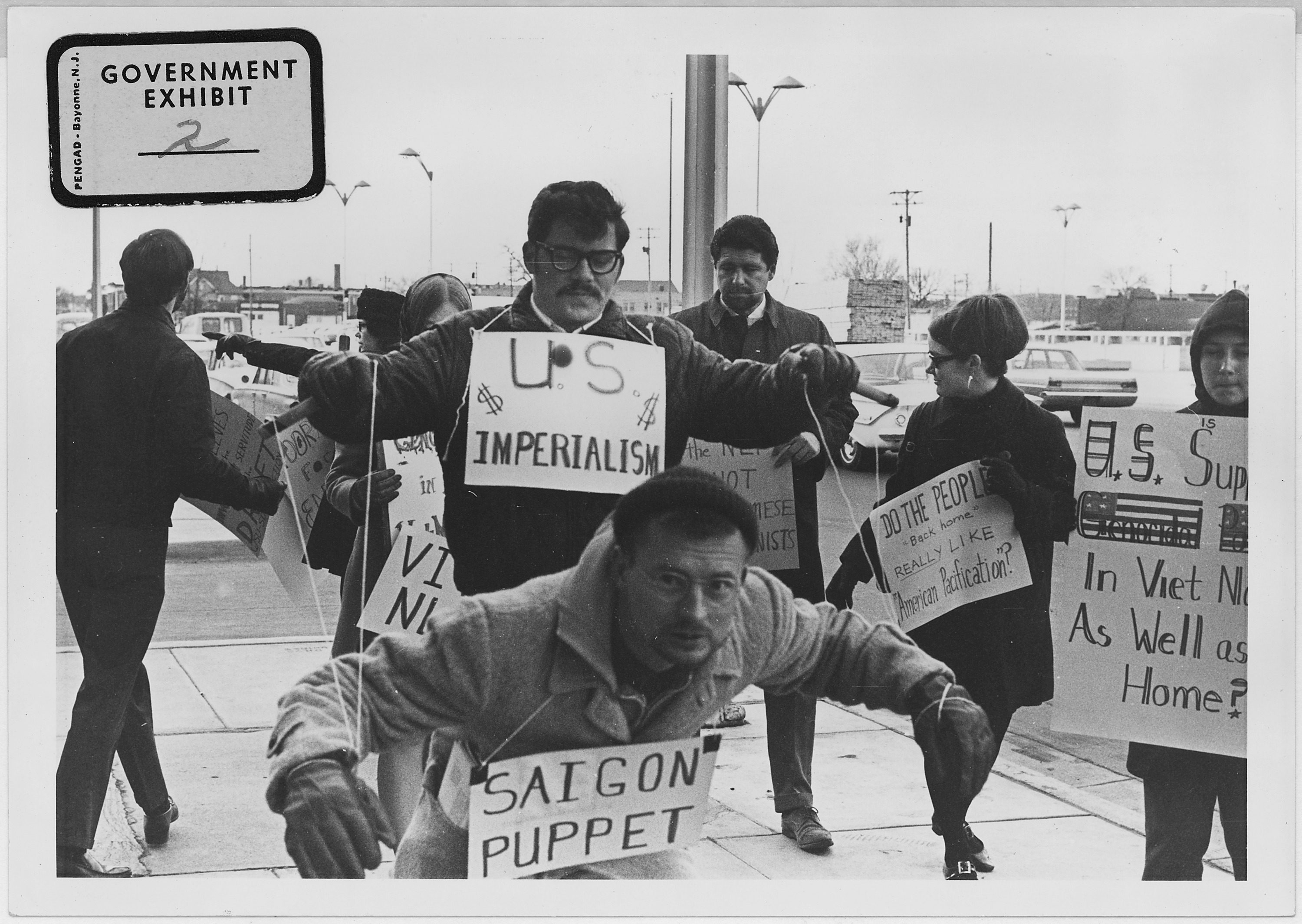
vietnam_war_protesters-_1967-_wichita_kans_-_nara_-_283625

Students in Kansas protest in 1967 against the Vietnam War (via Wikimedia Commons).

The report broadly details the general trends of how the “restless youth,” particularly university students, engaged in a range of anti-establishment activism such as university occupations, street marches, and sit-ins. The CIA report analyzes what issues caught the attention of students, whether they organized ad hoc or within existing organizations, how many students were attending universities, how they connected with other social groups, how they transnationally exchanged ideas, and what ideas inspired them to action. Overall, the report argues that many of the students turned to activism because of their frustration with the socioeconomic and political status quo and that they demanded more from their universities, communities, and governments.

The CIA report also notes that many students, mostly American and European, were inspired to protest by “Marxist social criticism” and the writings of C. Wright Mills, Frantz Fanon, and especially the American critical theorist and sociologist Herbert Marcuse. This Marxist social criticism, also known as Marxist or socialist humanism, stresses the importance of Karl Marx’s early writings and the need for a critical praxis directed against capitalism as well as against traditional Soviet or statist Marxism. Herbert Marcuse was a proponent of socialist humanism and significantly collaborated with the most well-known Marxist humanist philosophical movement of the time – Yugoslavia’s Praxis School.
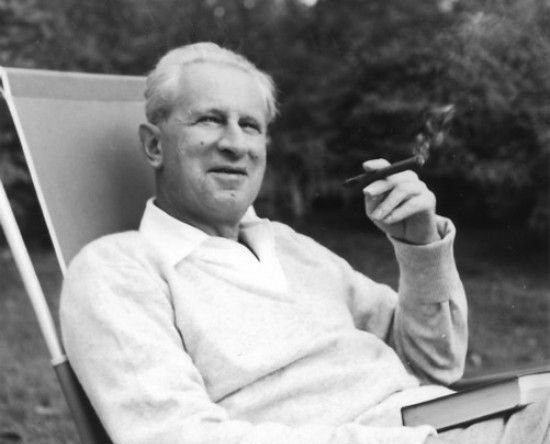
herbert_marcuse_in_newton_massachusetts_1955

Herbert Marcuse in 1955 (via Wikimedia Commons).

The members of Yugoslavia’s Praxis School were prominent professors in the Faculties of Philosophy at both the Zagreb and Belgrade universities who supported Yugoslavia’s protesting university students in 1968. The CIA report has an entire chapter dedicated to the student movement in Yugoslavia, yet, this eleven-page section oddly makes no mention of the Praxis School and the support its members gave to Yugoslavia’s protesting university students. The report clearly makes the connection between Herbert Marcuse, Marxist humanism, and student protests, but it fails to make the broader connection to the socialist humanist Praxis School of Yugoslavia and its affiliates who joined university students in protest in the summer of 1968.

How could the CIA have missed this? Although the authors considered student activism to be a growing threat and a “worldwide phenomenon” fueled in part by this particular philosophical discourse of socialist humanism, they didn’t seem to be interested in the leading socialist humanist movement of the time, despite its influence on students in Yugoslavia and beyond. The Yugoslav government, on the other hand, didn’t miss this connection and became extremely interested in the Praxis School. Although the movement wasn’t pro-capitalist or anti-socialist, the Yugoslav leadership still viewed it as a threat due to its criticism of the ruling party – the League of Communists of Yugoslavia – for not fulfilling its promises to create a more just socialist society. Similar views toward student protests were taken by the authorities in nearby countries: in Czechoslovakia during the Prague Spring and in Poland. The Czechoslovak government also monitored its growing student movement and produced its own report which noted the students’ criticism of Czechoslovak socialism.
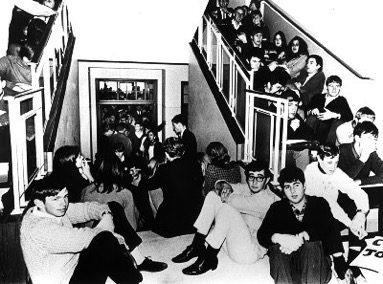
picture1

The student occupation of the University of Belgrade (via The Modern Historian).

Following the student occupation at Belgrade University in June 1968, the Yugoslav authorities quietly cracked down on dissenting students and professors. The main target was the leading cohort of the Praxis School, professors in the Faculty of Philosophy at Belgrade University. Slowly, but surely, eight professors from Belgrade – Mihailo Markovic, Ljubomir Tadic, Miladin Zivotic, Zagorka Golubovic, Dragoljub Micunovic, Nebojsa Popov, Triva Indjic, and Svetozar Stojanovic – were removed from their professorships at the university. The Yugoslav authorities claimed that the professors were the “ideological inspiration” and “practical organizers” of the student demonstrations and university occupation and as such needed to be stopped at all costs. They had become too influential and were improperly educating students with ideas that the Yugoslav socialist system of “self-management” was flawed. Aside from being sacked from their university positions the professors also lost financial support for their research and funding for their publication, the Praxis journal, was essentially cut. Although the Belgrade professors didn’t organize the protests, their Marxist humanism consciously or unconsciously provided the intellectual platform for students to criticize the Yugoslav system. The CIA was never able to put these pieces of the puzzle together and failed to capture this source of student discontent both at home and abroad.

bugburnt

CIA Report, “Restless Youth,” Intelligence File, National Security File, Box 3, LBJ Library.
Additional Sources:
Mihailo Marković and R. S. Cohen, Yugoslavia: The Rise and Fall of Socialist Humanism: A History of the Praxis Group. (2005)Paulina Bren, “1968 East and West: Visions of Political Change and Student Protest from across the Iron Curtain,” in Transnational moments of change: Europe 1945, 1968, 1989, P. Kenney and G. Horn, eds. (2004)

bugburnt
You may also like:

Andrew Weiss reviews a book about student protests in 1968 Mexico: Plaza of Sacrifices: Gender, Power, and Terror in 1968 Mexico by Elaine Carey (2005) .
Nancy Bui discusses the 50th Anniversary of the Vietnam War from a Vietnamese American Perspective.
Mark Lawrence looks at an earlier CIA Study: “Consequences to the US of Communist Domination of Mainland Southeast Asia,” from October 13, 1950.
bugburnt

Pussy Riot

by Joan Neuberger

Pussy Riot, the Russian punk band whose members have been sent to prison for performing a protest song in Moscow’s central cathedral, has been wildly successful at focusing international attention on political corruption and repression under President Vladimir Putin. Not only have they inspired global protests on their behalf, but the European Parliament nominated them for its Sakharov Prize for Freedom of Thought and they won the LennonOno Grant for Peace supported by Yoko Ono and Amnesty International.

Pussy Riot

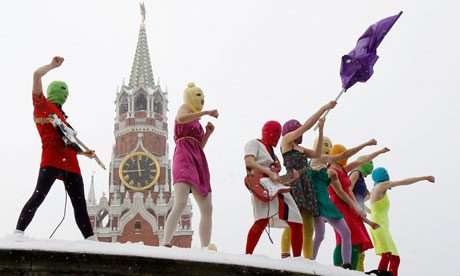
Pussy Riot performing in Red Square in January 2012

In Russia, people are far less enthusiastic about the band’s radical performances, but Pussy Riot has won the attention of the highest members of government, with both Putin and Prime Minister Dmitrii Medvedev continuing to comment on their character and their judicial fate, weeks after the trial concluded. Many bloggers, journalists, and pundits both inside Russia and out, have tried to convince us that Pussy Riot’s importance has been exaggerated and their message misunderstood by foreigners just following the latest fad. The band’s clever indie-pop, visual appeal, their wit-leavened crudeness, and their clear political speech targeting Putin directly all understandably disturb people who prefer more moderate and less offensive forms of politics, but the trial of Pussy Riot marked a shift in Russian political discourse that should not be ignored. The extent of their popularity in Russia and abroad are less important than the fact that they got Putin’s attention and, even after the government made it clear how dangerous that would be for them, the women of Pussy Riot refused to back down or be silenced. As of this writing, they still have Putin’s attention, but tomorrow, October 1*, the court will decide whether to grant an appeal to release them or confirm the two year sentence they received on August 17.

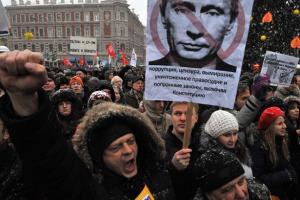
Pussy Riot burst onto the scene in January 2012.  The previous month, hundreds of thousands of people in Russia took to the streets in repeated mass demonstrations to protest the flagrant, well-documented election fraud of the Parliamentary elections held December 4. image Just as the demonstrations were winding down, this group of young women, dressed in boldly colored dresses and tights, and masking their faces with equally bright balaclavas, or ski masks, climbed up onto a structure in Red Square known as the Place of Execution and performed a song that is usually translated into English as “Putin got Scared” but more accurately means “Putin Peed his Pants.”  The lyrics called for people to come out on the streets and overthrow the oppressive government. Federal Security officers arrested the eight women who performed in Red Square that day; they were briefly detained, fined and then released. The performance was, of course, videotaped and posted on Youtube that night, with the song dubbed in. The video went viral and their photo was widely reposted on social media outlets across Europe and the U.S.
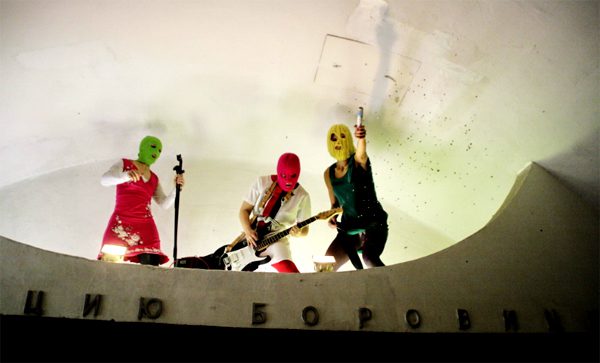
Some of the women of Pussy Riot had been involved in previous activist, performance-art events (some of which were far more radical, criminal, and offensive), but in August 2011 they decided to form a punk-rock band because they thought they could get their message across more effectively in that more popular form. They have repeatedly said that they have no interest in commercial, “capitalist,” music venues, preferring surprise, guerilla appearances in public places. They performed in metro stations and on top of trolley buses and outside the prison where leaders of the political demonstrations were being held; there they performed a song called “Death to Prison, Freedom to Protest.”

image

Pussy Riot performing in Borovitskaia Metro Station in central Moscow

In late 2011 in Russia, political discontent was escalating, especially after Vladimir Putin had announced in September that he would run for President again. Having been forced out of office by term limits after eight years (2000-2008), he became Prime Minister when his hand-picked candidate, Dmitrii Medvedev, won the Presidency and spent the next four years doing Putin’s bidding.  Putin’s announcement, followed by the election fraud scandal in December, enraged people in cities all over Russia, though Putin allegedly remains a popular figure in provincial towns and villages. New demonstrations were planned for the weeks leading up to the March Presidential elections, but before they could take place, Pussy Riot staged the performance that would divide Russian opinion and become an international sensation.

On February 21, five members of Pussy Riot entered Christ the Savior Cathedral and for about 50 seconds performed a song with the catchy chorus, “Mother of God – drive Putin out,” and “holy shit, holy shit, holy shit,” before being ejected from the building. Within 24 hours they had edited the video, added a recorded version of the song and posted it to Youtube (the original, unedited tape is also available).

At that point, reportedly, Patriarch Kirill saw the video and phoned Putin and the head of the Moscow police to demand that they take legal action. Two of the women were arrested March 3, on the eve of the presidential elections, and the third was arrested soon after. Nadezhda Tolokonnikova, Maria Alyokhina, and Yekaterina Samutsevich were charged with “hooliganism, motivated by religious hatred.” Tolokonnikova’s husband, Petr Verzilov was also arrested but was released without being charged.  The women were detained without bail; they spent the next 5 months in prison, in pre-trial detention. Paradoxically, the performance that won them the most attention, also cost them the most popular support in Russia, as many people could not condone their invasion of sacred space, no matter what the cause or how corrupt the institution had become.

image

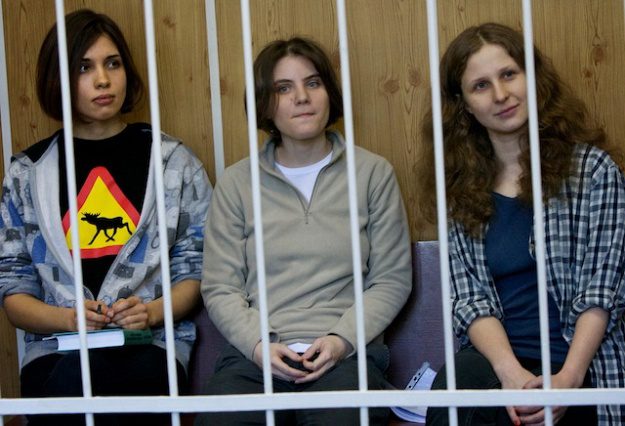
Nadezhda Tolokonnikova, Yekaterina Samutsevich, Maria Alyokhina

In the meantime, Putin was re-elected, despite new demonstrations and accusations of election improprieties. Another round of demonstrations occurred on May 6, the eve of Putin’s inauguration, but by now he had begun to take serious – and illegal – action against his political opponents. The apartments of opposition leaders were ransacked by police. The wife of an opposition leader received a harsh sentence for possession of heroin, which she insisted was planted.  On May 6, riot police clashed with demonstrators, arresting over 250 people in Moscow alone. Aleksei Navalny has since been accused of embezzlement. Gennady Gudkov, one of the few members of government who has voiced opposition to Putin, has been expelled from Parliament for breaking financial conflict of interest rules that are routinely broken by a large number of other representatives.

image

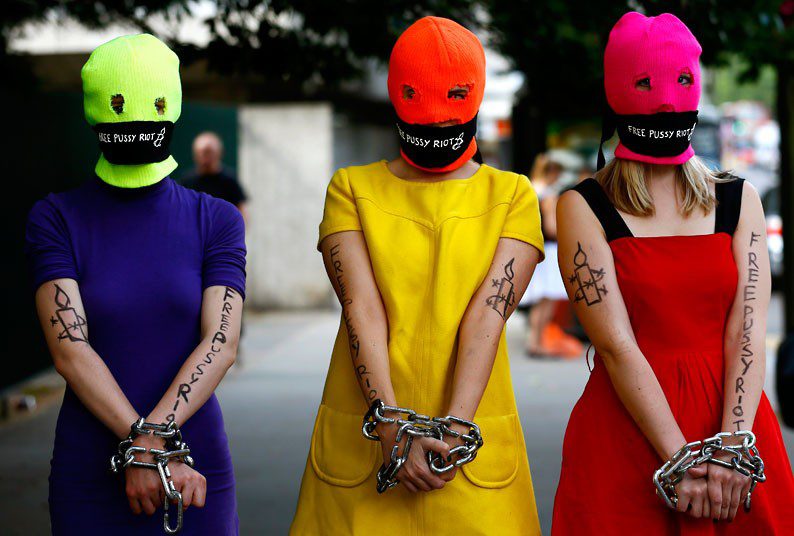
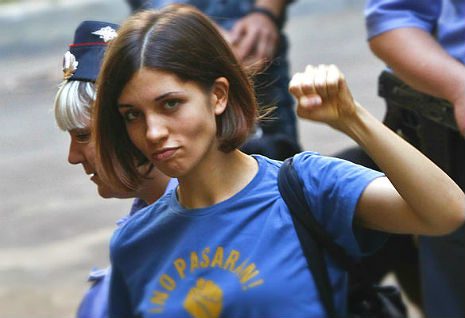
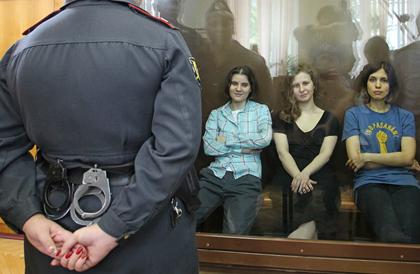
If the rest of the world was paying attention to increasing repression under Putin, or to the pre-trial demonstrations of support for Pussy Riot in Russia, few beside Amnesty International raised their voices. But then, in August, the trial against the three women of Pussy Riot created an international sensation. They won support from Paul McCartney, Madonna, Green Day, the mayor of Reykjavik, Martina Navratilova, Yoko Ono, and other celebrities. In cities all over Europe and the US, men and women donned bright balaclavas and demonstrated support for the three women who seemed to be speaking out as no one in Russia had yet done. Extremely photogenic in their glass cage in the court room or stepping out of heavily guarded police vans, Tolokonnikova, Alyokhina, and Samutsevich appeared calm and resolved. Displaying no sign of fear or demoralization, Tolokonnikova in particular, smiling with raised fist in her “No Pasaran!” t-shirt, struck a cheerful, defiant, and determined pose.   Defense lawyers claim that their clients’ rights were trampled during the trial and on August 17 they were each sentenced to two years in a penal colony. 

image

The most remarkable thing about the trial was the way the three Pussy Riot women on trial rose to the occasion. They never wavered in the clarity of their anti-Putin, anti-authoritarian stance and they never backed down in their defense of freedom of speech above all else. And masks off, they revealed themselves to be anything but simple or superficial pop sloganeers.  Their statements and interviews from prison were thoughtful and well-informed by political experience, history, and feminist and critical theory. Given the fact that they fully expected to be sentenced to long prison terms, they were stunningly brave. Their closing statements were moving and articulate, and showed their awareness of the history of dissent in Russia, the spiritual basis for some of that dissent, and the history and deformities of “vertical” political power. Tolokonnikova was especially moving: indicting the court for abusing their legal rights to defend themselves, accusing the government of having learned nothing from the Stalinist terror, for persecuting people who asked only for the right to speak, and exposing the court’s utter failure to prove their animosity towards Christianity.  Pussy Riot could easily have maintained their popularity with nothing more than a cheerful smile, a raised fist, and a few rousing choruses of “Holy shit! Drive Putin out!” But instead they gave us sincerity, intelligence, commitment, and remarkable courage.

image

In the weeks since the trial, writers in both Russia and the US have attacked Pussy Riot supporters for distorting and exaggerating the group’s importance.  Many have pointed to polls that show Russian support for the sentencing. But in Russia, the government controlled media has broadcast continual criticism of the women, representing their performance as an assault on religion and insult to all believers instead of a critique of church support for Putin’s assault on free speech.  Their insistent feminism has put off many people in a society with relatively rigid gender roles, even among those who support Pussy Riot’s politics. And opposition political leaders, themselves under renewed government pressure, have worried that Pussy Riot’s provocative punk style would distract attention from serious political problems. In the west, bloggers and pundits have attacked Pussy Riot supporters for their ignorance of the Russian political context and for simply jumping on this latest bandwagon. Some writers have criticized the international focus on civil rights issues that are foreign to Russians, but no one can read the closing statements written by the Pussy Riot women on trial, without recognizing that freedom of speech is at the heart of their beliefs and actions.  Even yesterday in the New York Times, the Moscow correspondent claimed that Putin had successfully used the Russian disdain for Pussy Riot to drive a wedge between the urban opposition and provincial supporters, but the article in fact showed the opposite: that Putin felt compelled to create a new political party representing provincial workers to shore up support that, while statistically strong, showed signs of weakening everywhere.

In the month since the sentence was decided, Putin has also felt the need to repeatedly disparage Pussy Riot.  In an interview on September 6, he tried to minimze their importance by shifting attention from their political message to a 2008 sexually explicit stunt. If Pussy Riot were insignificant and their message truly unpopular in Russia, he would not need to bother. Putin’s increasingly repressive policies towards all acts of opposition were in place before Pussy Riot came to trial, but if he hoped to keep the suppression of civil rights out of the spotlight, Pussy Riot made that impossible. There have been other high profile trials, but because the Pussy Riot trial took place during the rise of a political opposition movement specifically targeting Putin, it focused international attention on Putin’s policies like nothing else had before. Now everyone, not just a handful of journalists, diplomats, and political scientists, is watching Putin do something besides go fishing with his shirt off.  It remains to be seen how Russians will react to increasing repression when it doesn’t involve religion or radical feminists and when the oil-based properity falters. It is highly unlikely that the majority of Russians will ever fully embrace the principles of liberal individualism, but I will be watching to see if recent events help curb the move to dictatorship.
On, September 6, the same day as the Putin interview, Pussy Riot released a new video, that clearly seemed to be addressed to international viewers. With the same kind of defiant and direct criticism of the Putin government that Pussy Riot had become known for, members of the group still at large made it clear that they were not intimidated by the harsh treatment of the women under arrest.

History rarely gives us events that mark a clear shift in the political landscape. And in this case, many of the issues Pussy Riot brought to our attention were in the works already. But the trial and the Putin government’s response to the trial are no small matter and no purely local event. We can’t predict what will happen next, but the trial certainly brought about a significant shift in the political discourse in Russia and its the international context. Whatever Putin does next, his human and civil rights policies will be forever joined with Pussy Riot’s defiant demands.

Nadezhda Tolokonnikova began her closing statement by saying, “the three members of Pussy Riot are not the ones on trial here. If we were, this event would hardly be so significant. This is a trial of the entire political system of the Russian Federation, which, to its great misfortune, enjoys quoting its own cruelty toward the individual, its indifference toward human honor and dignity, repeating all of the worst moments of Russian history.”

I think she’s right, but this event would also never have achieved its significance if not for Pussy Riot’s originality, its visual and political appeal, and the clear, brave voice with which they insisted on their right to speak.

*This morning, [on October 1- ed] the court postponed its hearing of Pussy Riot’s appeal until Oct 10. One of the defendants, Yekaterina Samutsevich requested a new lawyer, citing conflicts over strategy.

bugburnt

« Previous Page

Recent Posts

  • Lesson Plans: The Vietnam War and American Society
  • Lesson Plans: Protest and Social Unrest
  • Lesson Plans: Radio and Communications Technology
  • The Long-Lasting and Perpetuating Effects of Lynching Postcards and Photography
  • Lesson Plans: The Cold War
NOT EVEN PAST is produced by

The Department of History

The University of Texas at Austin

We are supported by the College of Liberal Arts
And our Readers

Donate
Contact

All content © 2010-present NOT EVEN PAST and the authors, unless otherwise noted

Sign up to receive our MONTHLY NEWSLETTER

  • New
  • Features
  • Reviews
  • Texas
  • Teaching
  • Digital
  • Watch & Listen
  • Authors
  • About