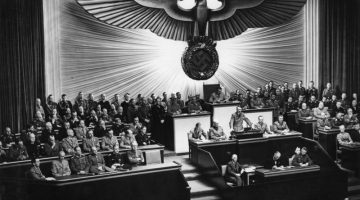
Looking at World War II on Wikimedia Commons
The past is never dead. It's not even past
Looking at World War II on Wikimedia Commons
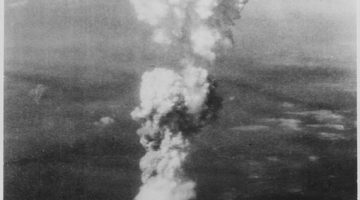
In what amounted to the last act of World War II, US forces dropped an atomic bomb on the Japanese city of Hiroshima on August 6, 1945, and another on Nagasaki three days later. Ever since, controversy has swirled around the decision to drop those bombs and annihilate those two cities. But exactly who made that decision, and how did it come about?

The city upon the hill that Winthrop sought to create in New England is a different world from that of his alleged ideological heirs. For Winthrop, the stakes of getting the city right were high (and they continue to be). To build a lasting “city upon the hill” the Puritans needed to create a society held together by charity, mercy, and love.

Just before dawn on July 16, 1942 the French Police began Opération Vent Printanier, or “Operation Spring Breeze.” That morning over 13,000 Jews were forcibly removed from their homes and trudged through the streets of Paris to the Vélodrome d’Hiver, the Winter Bicycle Racetrack, on the rue Nélaton in the city’s fifteenth arrondisement.

Order 227 called for dramatically expanding the number of penal battalions. Penal battalions were sent to the most dangerous sections of the front to perform semi-suicidal missions such as frontal assaults on the enemy or walking across minefields.

Within the span of thirty years, Lev Davidovich Bronshtein (Trotsky) went from living as a revolutionary in exile to being one of the world’s most successful revolutionary leaders, only to spend the waning years of his life back in exile and on the run from the regime whose creation defined his life’s work.

“Summer vacation” is a misnomer for what we academics do from mid-May to late-August. Most of us are not on vacation, but many of us are definitely a little unreachable.
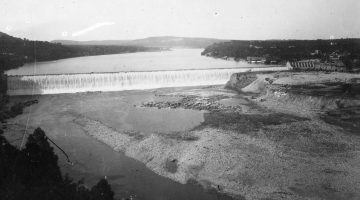
If you cross the Colorado River at Redbud Trail and look upstream toward Tom Miller Dam, there amid the tumbled rocks you can still see the wreck of Austin’s dream. In 1890, the citizens of Austin voted overwhelmingly to put themselves deeply in debt to build a dam, in hopes that the prospect of cheap waterpower would lure industrialists who would line the riverbanks with cotton mills.
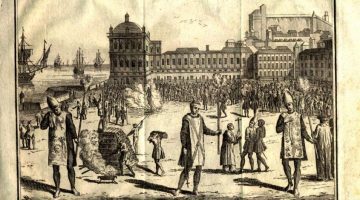
Today, people who live in democratic societies take religious freedom for granted. In the sixteenth and seventeenth centuries, most Europeans found the idea of “freedom of conscience” deeply threatening. How could the fabric of society withstand competing religious ideas? What would convince people to live moral lives in the absence of a single, state-supported church?

On May 19, Governor Rick Perry signed into law legislation further restricting abortion rights in Texas. H.B. 15, which passed by 2-1 majorities in both the Texas House and Senate, requires a physician to perform a sonogram on a woman seeking an abortion at least 24 hours prior to the abortion procedure.