• New
  • Features
  • Reviews
  • Texas
  • Teaching
  • Digital
  • Watch & Listen
  • Authors
  • About

The past is never dead. It's not even past

Not Even Past

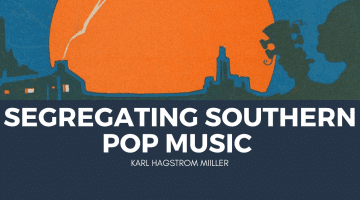
Karl Hagstrom Miller on Segregating Southern Pop Music

January 13, 2012

Southern musicians performed a staggering variety of music in the early twentieth century. Black and white artists played blues, ballads, ragtime and string band music, as well as the plethora of styles popular throughout the nation: sentimental ballads, minstrel songs, Tin Pan Alley tunes, and Broadway hits. They embraced pop music. Many performed any music they could, regardless of their racial or regional identities. Such variety could appear in the same set as a performer eased from one song to the next. Observers agreed that rural southerners loved all sorts of music. Yet they fought about whether that was a good thing.
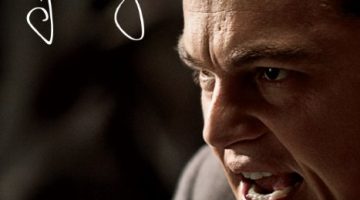
J. Edgar (2011)

December 2, 2011

Movie poster of the movie J. Edgar

Academy Award-winning director Clint Eastwood presents a biopic of one of the most powerful and controversial figures of twentieth-century America in the film J. Edgar.

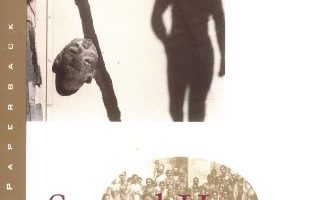
Sacred Hunger by Barry Unsworth (1993)

November 16, 2011

Sacred Hunger, a novel by Barry Unsworth (which was awarded the 1992 Booker Prize) is the story of a single ship and a single voyage. The novel begins in 1752, in Liverpool, England. The Royal African Company, a chartered corporation created in the mid-17th-century with a monopoly on trade with the African coast, has just lost the last of its privileges, making the slave trade, for the first time, a “free trade” (all irony intended).

A Bend in the River by V.S. Naipaul (1979)

November 14, 2011

Much like its eponymous waterway, V.S. Naipaul’s A Bend in the River meanders steadily through the dark reality of postcolonial Africa, alternately depicting minimalist beauty and frightening tension. Like Joseph Conrad’s Heart of Darkness, subtle prose reveals the timelessness of the continent’s remote corners alongside human corruptibility.

Casta Paintings

November 9, 2011

In 1746 Dr. Andrés Arce y Miranda, a creole attorney from Puebla, Mexico, criticized a series of paintings known as the cuadros de castas or casta paintings. Offended by their depictions of racial mixtures of the inhabitants of Spain’s American colonies, Arce y Miranda feared the paintings would send back to Spain the damaging message that creoles, the Mexican-born children of Spanish parents, were of mixed blood.

Film Review – Amigo (2011)

November 4, 2011

Movie poster of the movie Amigo

As an historian of American empire at the turn of the last century, I am constantly surprised by the number of people who have never heard that the United States annexed the Philippines at the end of the Spanish-American War in 1899.  When I tell people about my research, they often have no idea this nation was in fact a formal empire from 1899 until 1946, when the Philippines achieved independence.

Great Books on Enslaved Life and Labor in the US

October 31, 2011

Classic studies, the newest works, and a few novels on labor and gender and the institutions of slavery in the United States.

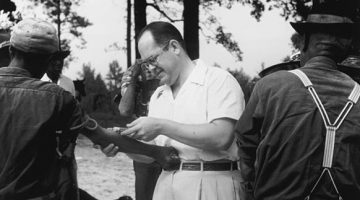
Bad Blood: Newly Discovered Documents on US Funded Syphilis Experiments

October 9, 2011

On September 13, 2011, the Presidential Commission for the Study of Bioethical Issues released its report on the syphilis experiments conducted by the US government in Guatemala in the 1940s. Over 1300 prisoners, prostitutes, psychiatric patients, and soldiers in Guatemala were infected with sexually transmissible diseases (through supervised sexual relations among other methods), in an attempt to better understand treatments for diseases such as syphilis.

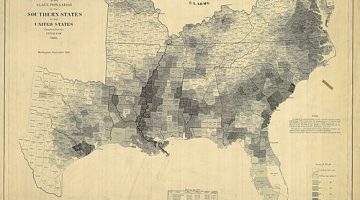
Debating the Causes of the Civil War

September 19, 2011

As we remember the tenth anniversary of the 9-11 attacks, we should also not forget that this year marks the 150th anniversary of the beginning of another tragic episode: this country’s Civil War that left more than 600,000 dead in its wake.

 A torrent of controversy has in fact arisen alongside the Civil War’s sesquicentennial, the most prevalent being debates over the war’s causation.

Great Books on Worlds War II

September 1, 2011

Additional Reading on WWII Drawn in part from NSP Courses

« Previous Page
Next Page »

Recent Posts

  • Curating History: Dr Pepper, Preservation, and Public Trust
  • The Brands of Garrison Hall at its Centennial
  • The Battles of the Alamo and the Myth of Southern Exceptionalism
  • Primary Source: Magic, Metal, and Medicine in Leonhard Thurneysser’s Paracelsus
  • Faculty Spotlight: Dr. Kate Imy
NOT EVEN PAST is produced by

The Department of History

The University of Texas at Austin

We are supported by the College of Liberal Arts
And our Readers

Donate
Contact

All content © 2010-present NOT EVEN PAST and the authors, unless otherwise noted

Sign up to receive our MONTHLY NEWSLETTER

  • New
  • Features
  • Reviews
  • Texas
  • Teaching
  • Digital
  • Watch & Listen
  • Authors
  • About