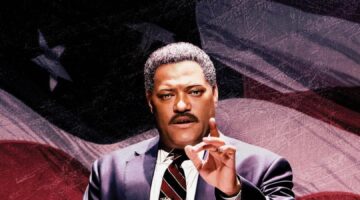
The new HBO Films production of George Stevens Jr’s one-man play, Thurgood, is a portrait of a man who knows and respects the power of the law as a force in American society.
The past is never dead. It's not even past
The new HBO Films production of George Stevens Jr’s one-man play, Thurgood, is a portrait of a man who knows and respects the power of the law as a force in American society.
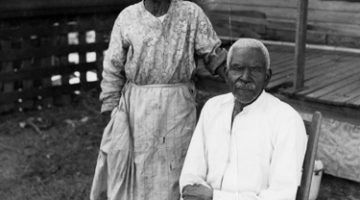
For nearly 30 years, historians have debated about the use of former slave narratives as a “valid” historical source. Scholars question the authenticity of interviews collected in the 1930s, often by white Works Progress Administration (WPA) field workers.
It is Moscow in the early 1960s. In this transitional period, when Stalin’s death opened up new possibilities for private life in Soviet society, we meet three young men and a young woman who can almost bring themselves to believe that they are entitled to a life that will be individually meaningful.
More Reading on the rise of American Capitalism
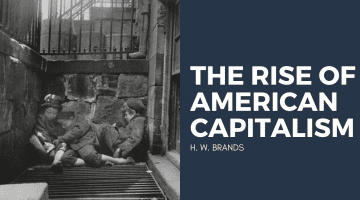
During the quarter millennium since American independence, two institutions and sets of values have come to characterize American society: democracy and capitalism.
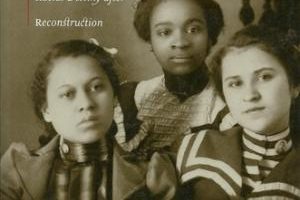
Michele Mitchell’s Righteous Propagation is a fascinating study of the tactics African Americans used to bolster racial uplift after Reconstruction. Mitchell presents the book as a social history, revealing moments when African Americans shared ideas on ways to advance the race during the Progressive Era at the end of the 19th and beginning of the 20th centuries.
Conflicting Missions: Havana, Washington, and Africa, 1959-1976, takes readers beyond the familiar categories of the Soviet-American Cold War. In the wake of decolonization, as charismatic national leaders emerged across Africa – from Algeria to Zaire – statesmen in Washington and Moscow waited anxiously to see if the new governments would align with democracy or communism.
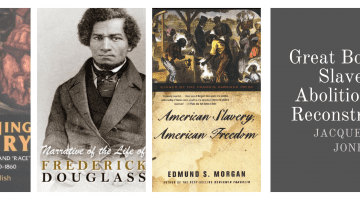
Three classics on slavery and its legacy in US History.

On March 21, 1861, Alexander Stephens, the vice president of the Confederate States of America, delivered an extemporaneous speech to an enthusiastic crowd in Savannah, Georgia. Stephens declared that new nation had been created in order to refute the idea enshrined in the Declaration of Independence that “All men are created equal.” According to Stephens, “Our new government is founded upon exactly the opposite idea; its foundations are laid, its corner-stone rests, upon the great truth that the negro is not equal to the white man; that slavery subordination to the superior race is his natural and moral condition.”