The Great Betrayal: Jean-Paul Sartre and the Arabs

From the late 1940s to the late 1960s, Jean-Paul Sartre’s philosophy, and his political recipes for self-emancipation, guided the project of Arab liberation. From the very beginning, Middle Eastern intellectuals considered Sartre’s ideas rich, meaningful and appropriate for their needs. Their goal was ambitious: the invention of a new type of Arab man and woman: sovereign, authentic, self-confident, self-sufficient, proud, willing to sacrifice and therefore, existentially free.
Did Race and Racism Exist in the Middle Ages?
For generations, race studies scholars—historians and literary critics alike—believed that race and its pernicious spawn racism were modern-day phenomena only.
Searching for Armenian Children in Turkey: Work Series on Migration, Exile, and Displacement
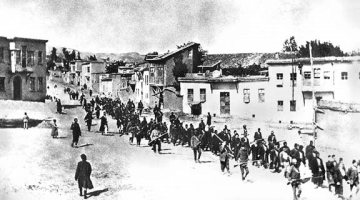
By Christopher Rose Editor’s Note: To accompany this year’s Institute for Historical Studies theme and the theme of our film series Faces of Migration, Not Even Past will be showcasing a series of posts featuring graduate students working on topics related to migration, exile or displacement. Nearly every historian can attest to the fact that working in the […]
Age of Anger: A History of the Present, by Pankaj Mishra (2017)

By Ben Weiss In Age of Anger: A History of the Present, acclaimed author and journalist Pankaj Mishra explores what he describes as the tremors of global change. For the past several decades, liberal cosmopolitanism provided a false sense of security after the fall of the Soviet Union. Now, Mishra claims, world schisms have begun […]
Industrial Sexuality: Gender in a Small Town in Egypt
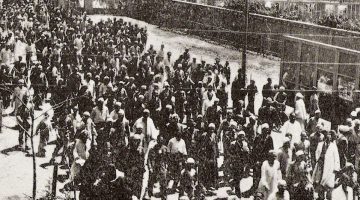
Our featured author this month, Hanan Hammad, received her PhD in History at UT Austin in 2009. She is now Assistant Professor of History at Texas Christian University and we are proud to introduce you to her excellent new book. By Hanan Hammad Millions of Egyptian men, women, and children first experienced industrial work, urban […]
The Last Hindu Emperor
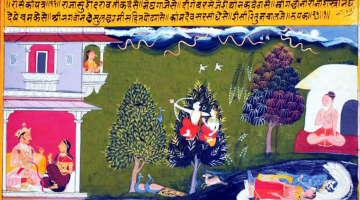
Why are some medieval kings still widely remembered today, when so many others have been forgotten?
Veiled Empire: Gender and Power in Soviet Central Asia, By Douglas Northrup (2003)
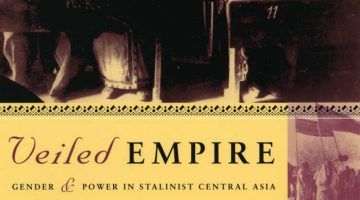
By Natalie Cincotta When the Soviets launched their campaign, known as the hujum, against the veil in Uzbekistan in 1927, their goal was not just to liberate women. Without a class framework or a working class to build socialism in Uzbekistan, Soviet activists instead attempted to transform society through the liberation of women. Northrop argues that a woman’s behavior […]
An Apology for Propaganda

By David Rahimi Writing in the middle of World War II, Freya Stark, a well-known British explorer and Arabist working for the Ministry of Information in the Middle East, penned an unpublished – and ultimately unfinished – twenty-five page essay, which she entitled Apology for Propaganda. When we think of government propaganda, we typically think […]
Mapping Newcomers in Buenos Aires, 1928
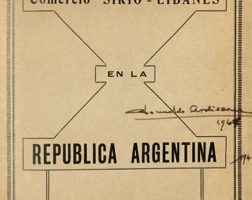
by Joseph Leidy Published in 1928, the Guía Assalam del Comercio Sirio-libanés en la República Argentina, or, the “Assalam Guide to Syro-Lebanese Commerce in the Republic of Argentina,” contains tens of thousands of names and addresses for shops, services, and professionals from among or affiliated with the Syrian and Lebanese communities of Argentina. “Syro-Lebanese” here […]