• New
  • Features
  • Reviews
  • Texas
  • Teaching
  • Digital
  • Watch & Listen
  • Authors
  • About

The past is never dead. It's not even past

Not Even Past

Failed Enlightenment: Urban Design and French Modernity in Beirut

by Kate Maddox

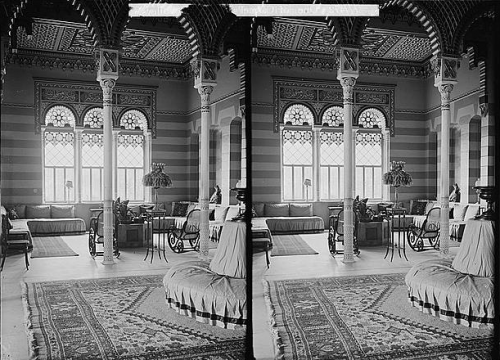
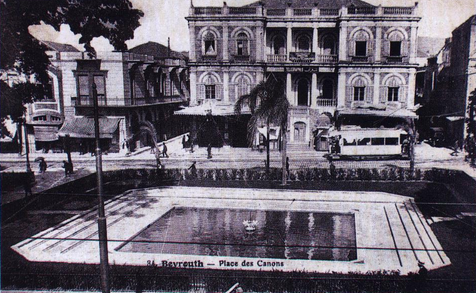
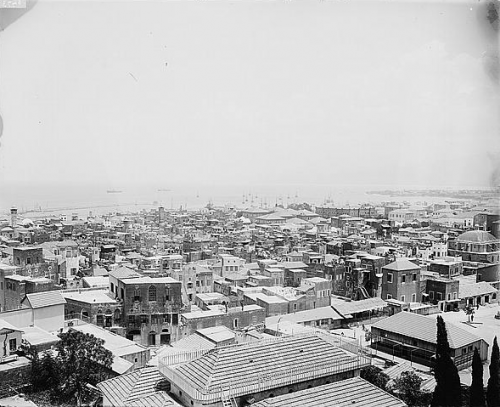
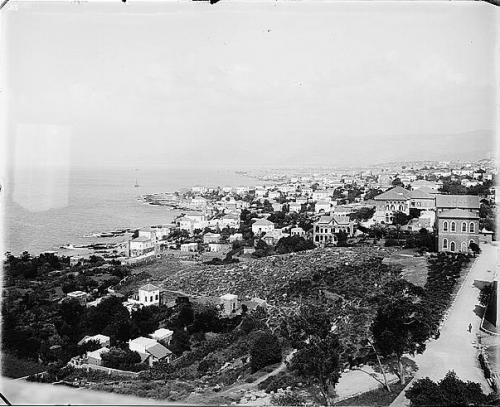
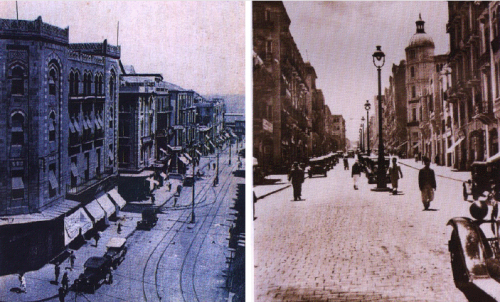
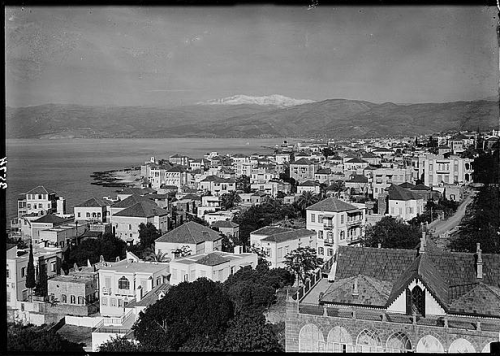
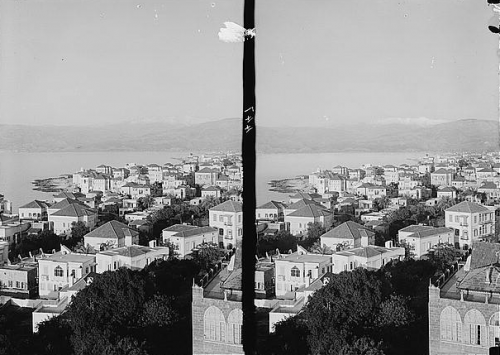
This year’s John Ferguson Prize for Best Undergraduate Thesis went to Kate Maddox, a history major at the University of Texas at Austin. Her thesis explored the European political, social, and ideological influence in the making of the Lebanese city of Beirut. Read her abstract and take a look at some old photographs of early twentieth century Beirut below.

Abstract:

The processes that led to the remaking of Beirut reveal European powers’ economic penetration of the city, which resulted in to an ideological penetration of the city. This ideology, informed by the Enlightenment and French conceptions of modernity, manifested itself in several dominant themes, both in the period of informal European influence under the Ottomans and continuing during the period of direct French rule under the Mandate system.
image

In their production of the city center, and in the Ottoman urban planning projects that preceded the Mandate, French efforts drew directly and indirectly on concepts of the Enlightenment and modernity as well as other trends in imperial city building. The theory behind the making of a space deserving of the nickname “the Paris of the Middle East” can be divided into three motives, each addressed in turn in this thesis. The first, accessibility between the port and the city, owes more to economics than the social paternalism that marks imperial efforts of Westernization. The second principle manifests those efforts, the improvement of permeability of the downtown area and its buildings. Finally, the threat posed by disease and illness for the local population and, more importantly, European agents unaccustomed to the environment, combined with the concept of individual needs resulted in a focus on public health and hygiene. These ideas, however, are not mutually exclusive and developments often addressed all three. But together they drove the planning schemes in the central district that created the urban landscape that still exists, for better or worse.
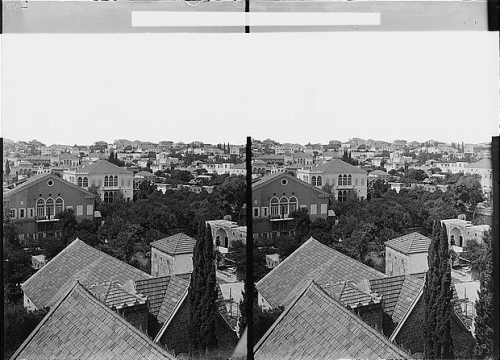
imageimageimageimage

image

image

image

About Katherine Maddox:

Katherine Maddox was born and raised in Houston, Texas. In 2008 she graduated from the High School for Performing and Visual Arts where she specialized in clarinet and bass clarinet. In the summer of 2011 she traveled to Beirut, Lebanon to study Arabic at the American University in Beirut and conduct research for her thesis. After completing her bachelor’s degree in history at the University of Texas she is travelling to Tanzania to climb Mount Kilimanjaro. Following that she will be returning to Beirut where she will continue her Arabic studies and work for an NGO.

Fordlandia by Greg Grandin (2010)

by Cristina Metz

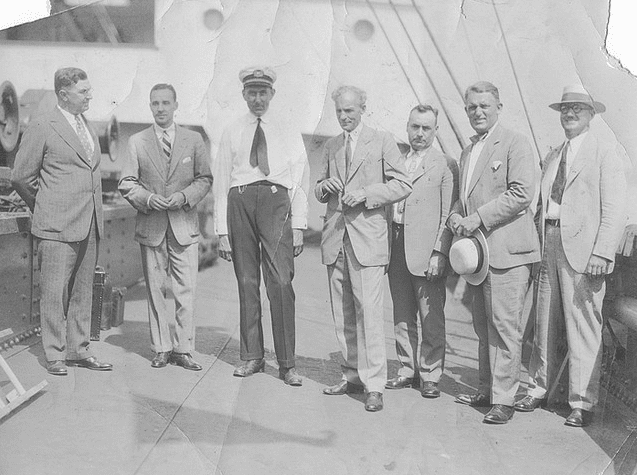
Greg Grandin has written a page-turner that tells the story of Henry Ford’s foray into the Brazilian Amazon and much more. In 1925, Ford met with Harvey Firestone to discuss England’s challenge to the US rubber supply. Much as the Belgians had done in Africa in the late nineteenth-century, England had extracted this resource by proxy—through companies such as the Peruvian Amazon Rubber Company in the Amazon and its Asian colonies. Ford’s response was to embark upon his own South American venture into the world of rubber.

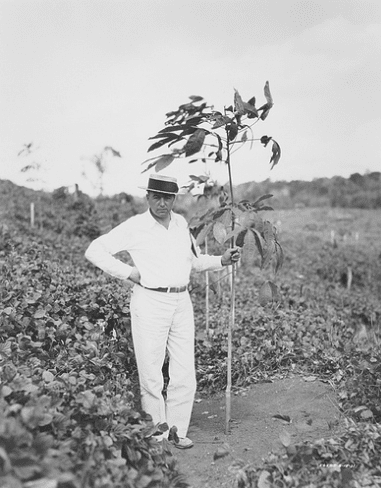
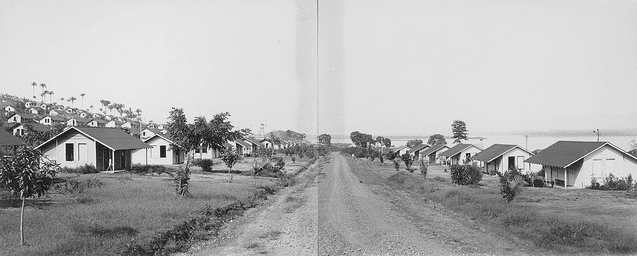
metz fordlandiaThat same year, the governor of Pará sent Custódio Alves de Lima, a Brazilian diplomat, traveled to the U.S. with the aim of enticing Ford into establishing a rubber plantation in the region. The governor was prepared to grant Ford a number of perquisites, including land and tax concessions. Henry Ford took the bait. Within two years, he received a concession of close to 2.5 million acres, half private property at a cost of $125,000 and half public property granted to him free of charge. This tract of land that would soon be called “Fordlandia” became more than just a potential rubber plantation. Ford saw it as an opportunity to begin a new socio-industrial experiment that sought to impose his brand of Americanism on a people and environment.

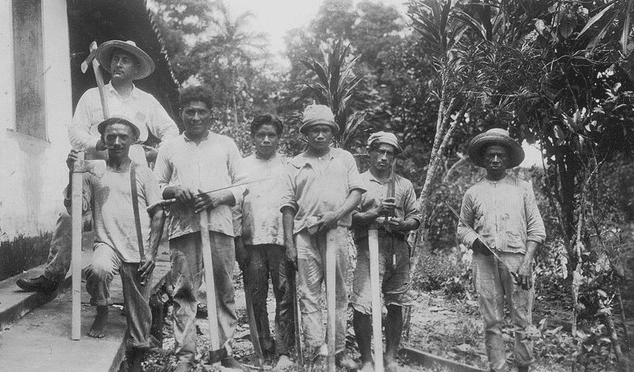
Screen_shot_2012-07-04_at_11.05.40_AMOver the next few decades, Ford’s determination to build a place that would “safeguard rural virtues and remedy urban ills” would meet its match in the Amazon. Ford’s emissaries began a Sisyphean attempt to clear land during the rainy season, they siphoned money to line their own pockets, and they began exploiting workers who were already leery of working on Ford’s jungle experiment. Workers were expected to work in extremely high heat and humidity. Adverse work conditions, coupled with an ignorance of Amazonian epidemiology, led to many deaths. Such a high rate of mortality at Ford’s Amazon project was a common feature of other U.S. and European forays into Central and South America in the late-nineteenth and early-twentieth centuries. In The Path Between the Seas, for instance, David McCullough tells the story of how the building of the Panama Canal, which at various points in its history was in the hands of a Frenchman and an American who each refused to give up in the face of nature’s challenges, also resulted in the deaths of tens of thousands of workers from disease and various threats of the Panamanian jungle.

Screen_shot_2012-07-04_at_10.47.02_AMFord also tried to impose a lifestyle that did not jibe well with Fordlandia workers. His attempt at cultural imperialism met violent resistance, such as a multi-day riot that started in the worker’s dining hall. Up until the riot, the men had often taken their meals at local brothels and saloons. Ford, who was a teetotaler, implemented a new policy to coerce the men into eating their meals at the mess hall instead. Money for meals was automatically deducted from their paychecks and the workers resented this. To make matters worse, Ford managers chose a bland menu: oatmeal, canned peaches, and unpolished rice. The mess hall riot signaled the beginning of the end of Ford’s project aimed at restoring a bygone era. By 1945, Fordlandia had failed.

Screen_shot_2012-07-04_at_11.04.56_AMGrandin is ambivalent about explaining this failure as rooted in Ford’s hubris, opting instead for the negative effects of deindustrialization. Much of the evidence, however, points to Ford’s excessive self-confidence as a primary factor for the failure of his Amazonian project. To begin with, he purposely did not hire experts—botanists, agronomists, interpreters—who could have helped Fordlandia succeed. The Amazon was not the only place where Ford’s personal hang-ups, like his suspicion of experts and his cantankerousness, caused problems. Grandin transports readers back and forth between Brazil and the U.S. to show that at the same time that Ford was trying to build a perfect world in the middle of the jungle, his empire at home was beginning to show the strain of scandals and shop-floor abuses of despotic foremen in his factory.

Screen_shot_2012-07-04_at_11.05.24_AMIn typical Grandin style, the book ends in the contemporary period. Today the Amazon forest suffers from rapid deforestation caused in part by projects like Ford’s. His doggedness in growing rubber trees his own way led Ford to clear acres upon acres of forest. Soy farming, another of Ford’s projects, required the use of toxic chemicals that have allowed this non-native crop to thrive by killing off native species. The environmental degradation that modern industry and agriculture cause is not often something that consumers consider when they purchase a car that has Brazilian soy-based plastic parts or purchase a piece of furniture containing particle board made from young trees that could have reforested the Amazon if they had been left to mature. This disjuncture between the environmental and human degradation associated with mass production and consumption is characteristic of far too-many commodity chains.

Screen_shot_2012-07-04_at_11.04.43_AMIf Fordlandia is a story about one man’s attempt to impose his will over nature, it is also a story about modernity and globalization. While Grandin mentions only superficially the presence of women, Chinese, U.S. Confederates, and West Indian workers in the Amazon, readers can be sure that their presence was an effect of the shortening of time and space brought on by modernity that facilitated increased movement of people, goods, and ideas. In contrast to works that exalt the benefits of the modern world—in the realm of ideas and technological advancements, for instance—Grandin implies a weighty question. Has global industrial capitalism, of which Fordlandia is a microcosmic case-in-point, actually advanced humanity or are we now in an age of what scholars have called “the coloniality of power” where all of the old imperial modes are as entrenched as they were in the none too distant past, but now sporting the sheen of the twenty-first century?

Photo credits:

All images courtesy of thehenryford/Flickr Creative Commons.

Mapping the Earth, Mapping the Air

by Felipe Cruz

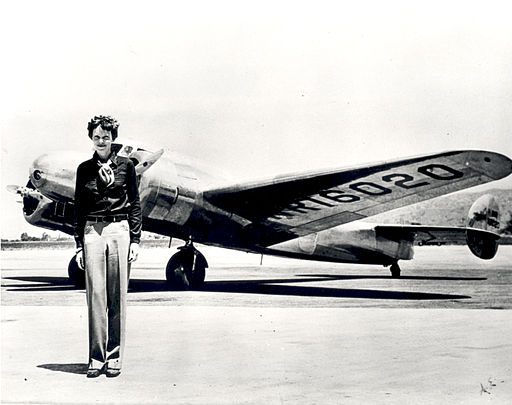
The history of aviation is filled with heroes and their machines.  Exhibits in the many air & space museums spread around the United States are filled with pictures of young pilots, proudly posing by the side of their aircraft before attempting some feat to enter into a long list of “firsts.” While we often focus on these brave characters and their daring flights, aviation became what it is today through more mundane activities than risking lives, performing stunts, or breaking records. The pilots who aided cartographers and engineers in the production of special aviation maps represented a much bigger contribution to the expansion, reliability, and increasing safety of air transportation.

512px-Amelia_Earhart_-_GPN-2002-000211

Knowing one’s exact location was among the greatest challenges of the human push into the air, as it is in the exploration of any new frontier, before there were such things as aeronautical charts, that is, maps for aerial navigation. It is easy for a generation with pocket sized access to Google Maps to underestimate how different our world looks from above if you have only seen it from ground level. Pilots in the 1910s and 1920s scrambled to adapt any maps in existence to use in their cramped, loud and open cockpits.

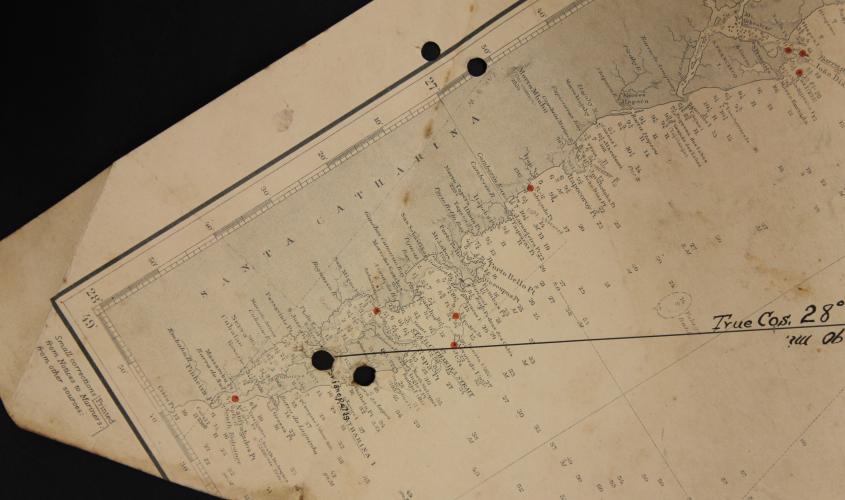
Railroad, highway, land survey and other maps were often cut up into smaller strips depicting the exact routes pilots had to navigate. These “strip maps,” chopped and annotated from various sources are a common archival find among the possessions of pilots from the first half of the twentieth century.

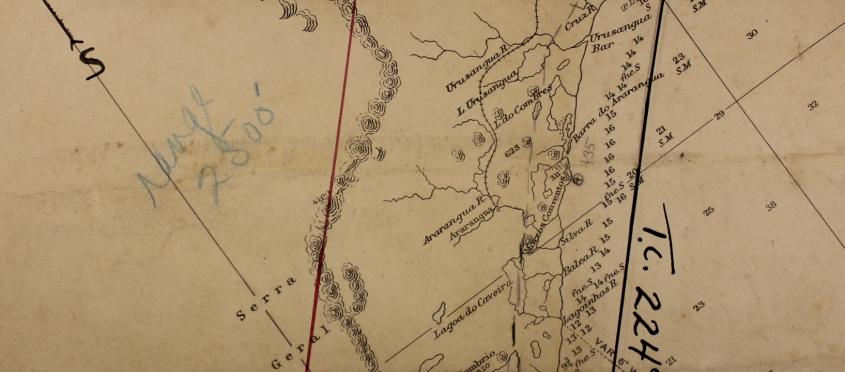
CruzFigure1This strip map shown here is a nautical chart that was cut to only show the area needed by the pilot, then folded and punch holed to be stored in a binder for easy manipulation.  

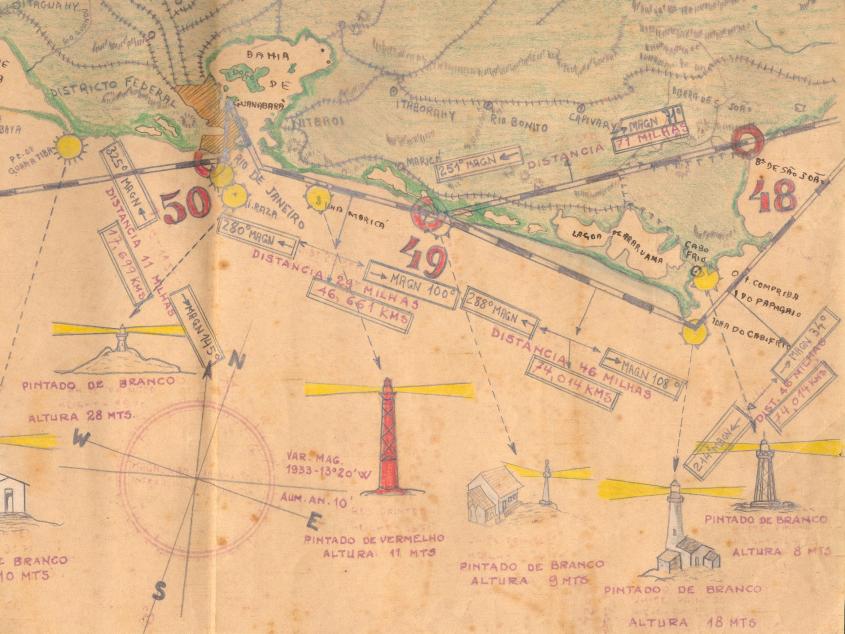
 Because strip maps were cut out from maps made for other forms of transportation, pilots were often forced to follow routes that already existed.  American Air Mail pilots, for example, followed railroads, known then among pilots as the “iron compass.” Even with a track marking the path on the ground, pilots still required some help along the way. That could be farmers painting navigational aids on the roof of a barn, or making bonfires and installing beacons to help pilots through the night. Seaplanes flying along the coast, like the ones Pan Am operated on the New York – Buenos Aires route during the 1930s, could count on the same infrastructure sailors had used for hundreds of years. They used nautical charts, which not only showed them the coastline, but also any lighthouses along it. This early aeronautical chart was intended to be used by pilots navigating the coast around Rio de Janeiro. It was obviously made from a nautical chart, but inland features useful for aerial navigation were also added.image

These adaptations made from railroad or nautical maps worked fine – so long as one only intended to fly up and down the coast or along railroads, a serious limitation on the promise of untethered transportation implied in aviation.  It only took a sudden fog to throw a pilot off his railroad track with no means to find his way back. For seaplane pilots that same fog could cover coastal mountains, and since nautical charts showed the depth of the ocean but not the height of mountains, that meant serious trouble – especially as weather forecasts were often lacking in both frequency and precision. Even more mundane problems plagued pilots, especially in the days of open cockpits, when a map could fly right out of a pilot’s hand into the open air.

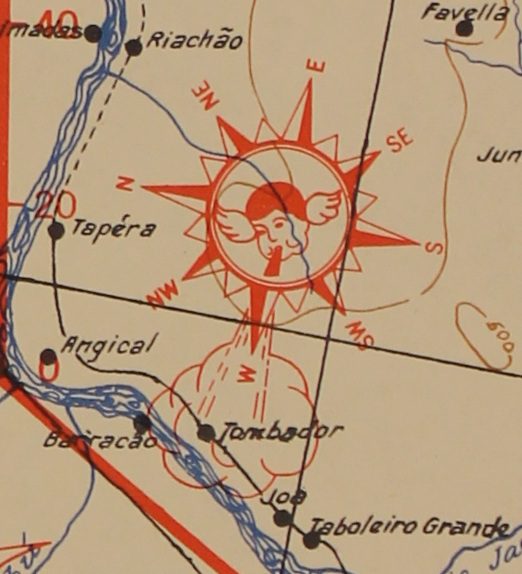
CruzFigure3This aeronautical chart from the late 1930s tries to include useful meteorological information, by adding a little angel blowing the wind in the statistically prevailing direction.

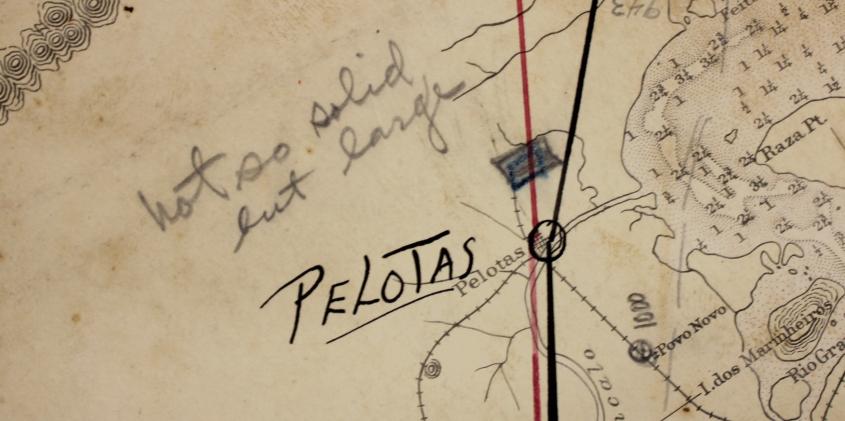
Before real aeronautical charts became available, pilots often worked around these limitations by adding their own bit of navigational knowledge to maps for their own reference or to share with other pilots. Archival copies of adapted strip maps used by pilots before the 1930s often had a variety of small annotations, pointing out where one could find fuel, farms with fields large enough for landing, the height of dangerous peaks, and even descriptions of geographic features useful for navigation. This kind of information, first informally added to maps by pilots, was eventually formalized in aeronautical charts.

CruzFigure4CruzFigure5The notes on the two maps above were added by a pilot prospecting an area for an airline, noting the heights of the mountains and the conditions of landing fields – two pieces of information unavailable on the nautical chart which he used.

By World War II, many places with developed aviation industries already had maps that could be used for aerial navigation, charts that helped pilots interpret the ground below to understand what they were flying over. But as airplanes flew higher and higher, aeronautical charts would come to represent airspace three-dimensionally, showing different areas of airspace, restricted or reserved for different purposes at different altitudes. Finally, with the expansion of radio-navigation towers, even invisible radio highways were depicted on these maps, so that pilots could use special instruments to follow radio signals, decreasing the need for visual references on the ground altogether.  Here you can see a modern aeronautical chart showing many  invisible features, such as airways created by radio signals and divisions of airspace at different altitudes.

image

The modern aeronautical chart, rather than being only a visual representation of the ground, has become a truly three-dimensional representation of space.

Figure sources:

Amelia Earhart: Wikimedia Commons

Figure 1 – Humphrey Toomey Collection, Courtesy of Special Collections, University of Miami Libraries, Coral Gables, Florida

Figure 2 – T. Courtesy of Centro de Pesquisa e Documentação de História Contemporânea do Brasil

Figure 3 – Courtesy of  Geography & Map Division, Library of Congress

Figures 4 & 5 – Courtesy of Special Collections, University of Miami Libraries, Coral Gables, Florida

Figure 6 – Wikimedia Commons

For more on aeronautical history:

Akerman, James. Cartographies of Travel and Navigation. Chicago: University of Chicago Press, 2006.

Corn, Joseph. The Winged Gospel: America’s Romance with Aviation, 1900-1950. New York: Oxford University Press, 1983.

Fritzsche, Peter. A Nation of Fliers: German Aviation and the Popular Imagination. Cambridge, MA: Harvard University Press, 1992.

The National Air and Space Museum has an online and physical exhibit on the history of early Air Mail pilots and navigation.

Debating Bolshevism

by Andrew Straw

Communism acquired many different faces during the twentieth century. In the Soviet Union, it became known as Bolshevism.  Named after the political party, led by Vladimir I. Lenin, that defeated the rival Menshevik Party in the October Revolution in 1917, Bolshevism would become the official political dogma of the Soviet Union for decades to come. The domestic response to Lenin’s revolutionary doctrine has inspired nearly a century’s worth of historical literature. Yet one question remains: how did other countries worldwide understand and react to what seemed like a particularly Soviet brand of communism?

image

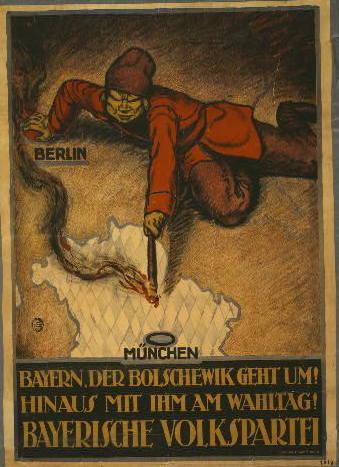
Poster shows a Bolshevik leaning on a map of Europe and setting fire to Bavaria. The text below says: “The Bolshevik is coming! Throw him out on Election Day! Bavarian People’s Party.” (Courtesy of The Library of Congress)

Andrew Straw, a doctoral student at the University of Texas at Austin, created “Debating Bolshevism” to answer this very question. While even Stalin questioned the relevance of the term in as late as 1952, one glance at primary and secondary literature from across the globe during the twentieth century demonstrate that while the term may seem obsolete now, understanding what Bolshevism meant, how it was used, and why people had such strong reactions to it is crucial to understanding twentieth century history.  The fact that the Soviet Union was the only official Bolshevik state in no way confined the idea of Bolshevism to the USSR.  After all, Bolshevism’s own origins came from a transnational dissident group in European exile, one in which Lenin himself claimed membership. After the Bolshevik Revolution, Bolshevism entered into an ideological debate taking place on a world stage. Supporters presented it as an alternative to Western goals and principles of the West. Debating Bolshevism demonstrates that the international community from all points of the political spectrum took it seriously: its detractors maligned its violent excesses, and its supporters exalted its unhinging of imperial powers and rapid change.

image

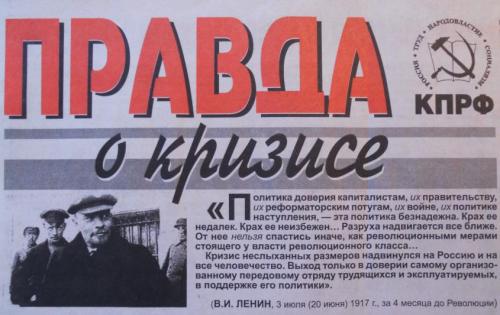
Lenin leads the October Revolution wearing a proletarian workers’ cap on the front page of a 22 January 2009 issue of Pravda. The front-page article is etitled “On the Crisis,” referring to the recent spread of “Occupy Wall Street” protests in cities around the world.  The accompanying text states that unemployed workers in Putin’s Russian (unemployment had reach nearly 20% in some areas) are ripe for communist revolution and calls on all concerned to attend a communist rally that was held on January 31 in Moscow.

image

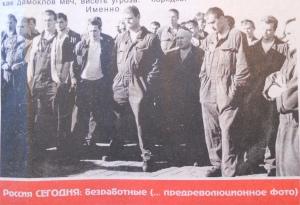
Further down the page, a picture of pre-revolutionary Russian workers stands side by side with an image of currently unemployed Muscovites to underline the point.  In addition, the newspaper includes a flyer for the demonstration that prominently displays the clenched fists of workers.

image

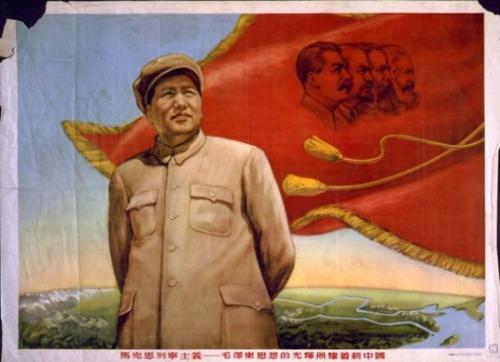
Mao Zedong was one of the prominent leaders of the 20th century, and the road leading to his successful consolidation of power in the People’s Republic of China was heavily informed by the Bolshevik idea of a radically revolutionary break and guerilla warfare tactics.  Mao was a firm believer that a potential revolutionary situation exists in any country where the government consistently fails in its obligation to ensure at least a minimally decent standard of living. While guerilla warfare certainly existed before Bolshevism, Mao was inspired by Bolshevik anti-imperialism, revolutionary self-determination of colonized populations, and civilian participation.  Mao’s literature on military strategy drew heavily from Lenin’s On Guerilla Warfare, citing both Lenin’s political ideas and military tactics and sharing the belief that a “people’s” revolution was inevitable.  Furthermore, even Western military men viewed Lenin as key to the Marxist revolutionary trends because they thought, “only when Lenin came on the scene did guerilla warfare receive the potent political injection that was to alter its character radically.

But despite the influence, Mao did not adhere to Moscow demands calling for a proletarian revolution, but instead he believed China’s revolutionary potential was housed entirely in the peasantry.  Mao “knew and trusted the peasants, and had correctly gauged their revolutionary potential.” At least at this seemed to by the case to Samuel B. Griffith wrote the 1961 introduction to his translation of Mao’s on Guerilla warfare. While Mao’s Cultural Revolution and collectivization would later bring cause take a huge toll on the countryside, his initial use of peasants contrasted with the distrust and disdain Lenin and especially Stalin had for the Russian peasantry.  Mao’s view was a such source of dissension between him and the Kremlin that Moscow even sanctioned the attempt by Zhou Enlai and a group known as the “28 Bolsheviks” who tried to replace Mao in 1934.  These tensions would remain and only grow into the Sino-Soviet split during the Cold War.

Visit Andrew Straw’s graduate student homepage.

University of Texas at Austin – History Department

(Professor: Jeremi Suri)

Photo credits:

Zhou Zhenbiao, “Marx’s – The Glory of Mao’s Ideologies Brightens Up the New China,” Peking, 1952

People Fine Arts via The Library of Congress

Narco-Modernities

by Edward F. Shore

Drug trafficking – especially as it pertains to Mexico – has been a main fixture in today’s news for some time now. But UT graduate student Edward F. Shore argues that the violence, disorder, and political, social, and economic instability associated with the drug trade has a long history, and one that has had international repercussions. Shore’s website “Narco-Modernities” shows that while drug-related episodes may take place in specific countries or regions, the people, governments, economies, and societies they have affected and continue to affect span the globe. Through book reviews, primary sources, maps, secondary historical literature and the author’s own original commentary, “Narco-Modernities” discusses current events while also engaging historical debates surrounding globalization, immigration, crime, gangs, prisons, the “War on Drugs,” the Cold War, and present-day U.S.-Latin American relations.

image

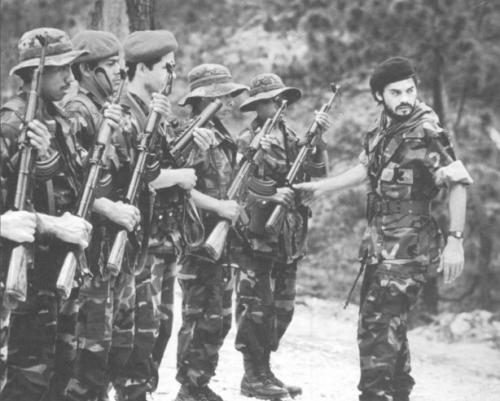
Nicaraguan Contras

image

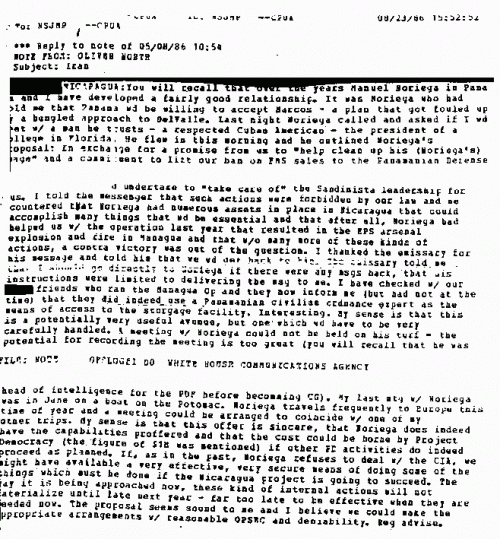
An August 23, 1986 e-mail message from Oliver North to Ronald Reagan and National Security Advisor John Poindexter. In it, North describes his meeting with Panamanian Leader Manuel Noriega’s representative. “You will recall that over the years Manuel Noriega in Panama and I have developed a fairly good relationship,” North writes before explaining Noriega’s proposal. He notes that if U.S. officials can “help clean up his image” and lift the ban on arms sales to the Panamanian Defense Force, Noriega will “‘take care of’ the Sandinista leadership for us.”

image

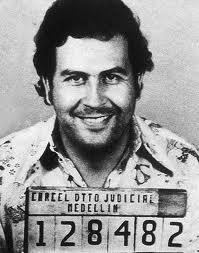
“Godfather of Cocaine” Pablo Escobar’s mug shot

image

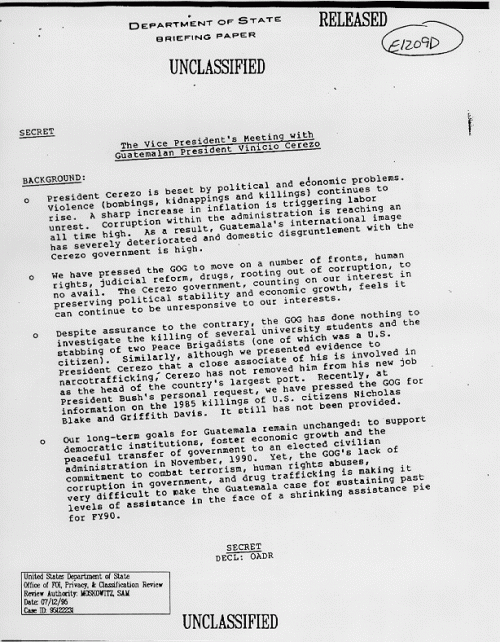
A recently declassified Department of State briefing paper from Inter-American Affairs. It showcases Washington’s frustration with the Guatemalan government’s failure to investigate the a surge of violence, assassinations, and an attack on an American citizen in that country. The United States was particularly concerned about the Guatemalan government upholding human rights, implementing judicial reform, and monitoring drug trafficking but felt that “it can continue to be unresponsive to [its] interests.”

University of Texas at Austin – Department of History

(Professor: Jeremi Suri)

Title IX: Empowerment Through Education

by Priya Ramamoorthy, Maanasa Nathan, Kavya Ramamoorthy, and Smrithi Mahadevan

In 1972, the U.S. Congress passed Title IX to end discrimination against women in education. This website , which won First Place for Group Website (Junior Division) at National History Day 2012, provides a history of Title IX in three main parts: the changes Title IX brought about, the reactions to Title IX, and its impact on women’s education, especially in athletics.

Button: Equal Education Title IX is law now
image

The authors also provide historical context that brought about Title IX, interviews with major figures who contributed to is passage and implementation, and a discussion of the ways Title IX is still being used to protect women’s rights in education, even Helen Reddy singing “I am Woman” in 1975.

They use interviews, songs, magazine articles, statistics, and much more to give a rich history of Title IX and its impact.

[Note: video seems to work better in Firefox than in Chrome or IE]

Group Interpretive Website
Junior Division
Noel Grisham Middle School
(Teacher: Sheryl Rank)

Photo credits:

All photos courtesy of “Title IX: Empowerment Through Education”

“‘Perl’s of Wisdom’: ‘Rabbi’ Sam Perl, New Models of Acculturation, and the ‘In- Between’ Jew”

by By Allison E. Schottenstein

This year’s Perry Prize for Best Master’s Thesis went to Allison E. Schottenstein, a third year doctoral student in Jewish History. Her thesis, titled “‘Perl’s of Wisdom’: ‘Rabbi’ Sam Perl, New Models of Acculturation, and the ‘In- Between’ Jew,” tells the story of Rabbi Sam Perl’s efforts to unite the Mexican and Anglo communities within the Texas town of Brownsville, as well as integrate the border town with its sister city of Matamoros. Read the abstract of Schottenstein’s thesis, as well as her biography, below.

Abstract

“‘Perl’s of Wisdom’: ‘Rabbi’ Sam Perl, New Models of Acculturation, and the ‘In- Between’ Jew” examines archival materials from the Dolph Briscoe Center for American History, The Brownsville Herald and El Heraldo de Brownsville to demonstrate how Sam Perl — an Eastern European Jewish immigrant who changed the face of Brownsville, Texas — redefines historical approaches to Jewish acculturation. In this bordertown, Perl not only revitalized the Jewish community when he became the temple’s lay-rabbi, but he also actively united Mexican and Anglo communities both in Brownsville and across the border in its sister city of Matamoros. In Perl’s efforts to simultaneously revitalize his own religious community and the greater social landscape of the border area, Perl proved that he did not need to conform to the expectations of Anglo-Christian identity to succeed. Challenging theories of whiteness studies scholars, Perl never sacrificed his Jewish identity, had a boulevard named after him, and came to be known as “Mr. Brownsville.” Indeed, Perl’s profound impact on the Brownsville-Matamoros community was the result of his ability to occupy an “in-between,” interstitial position that did not require him to blend in with majority cultures; that is, Perl remained distinctly Jewish while simultaneously involving himself in both Anglo and Mexican arenas. Immersing himself in every aspect of bordertown life, Perl occupied multiple roles of community authority, serving as a businessman, rabbi, a Charro Days founder, cultural diplomat, court chaplain and radio host. A close examination of Perl’s life and considerable legacy demonstrates how new acculturation models are needed to better understand the manner in which Jews like Perl have adapted and contributed to dominant cultures.

image

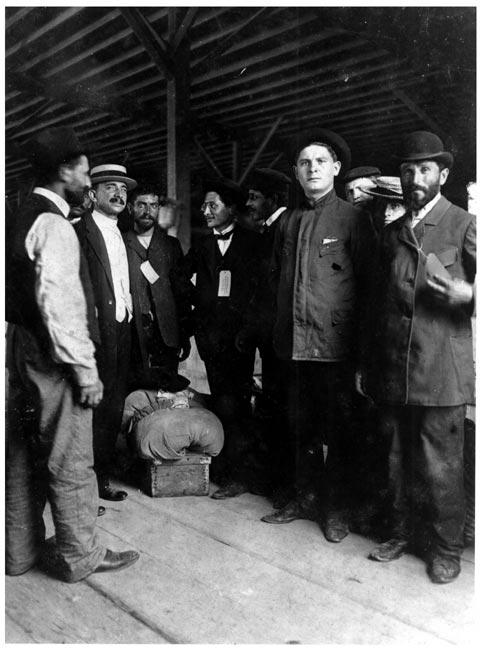
Jewish immigrants arrive in Galveston, Texas in 1907.

 image

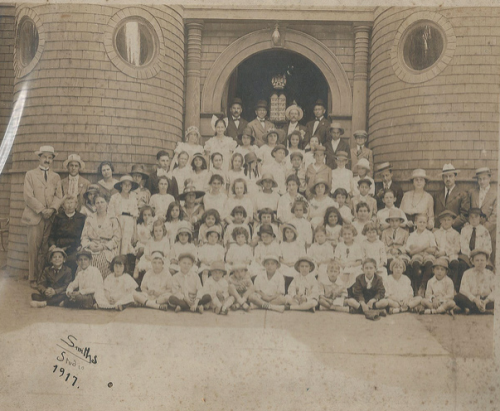
A 1917 photograph of students sitting in front of a San Antonio Texas Jewish Synagogue.

image
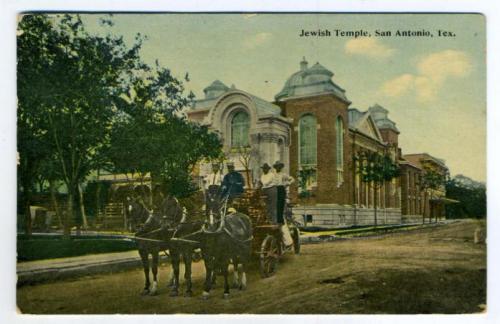
An H. Budow postcard from 1918 features the Jewish Temple in San Antonio, Texas.
image
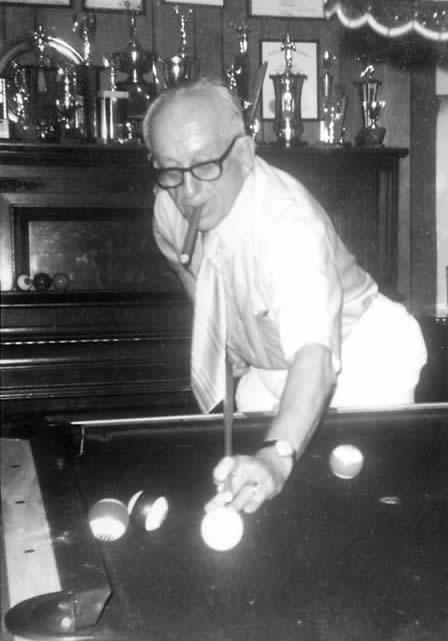
Sam Perl smoking a cigar while playing pool.

About Allison Schottenstein:

Allison E. Schottenstein was born in Columbus, Ohio on March 18, 1986 to Gary and Gail Schottenstein.  In 2004, Allison attended Brandeis University in Waltham, Massachusetts. She received a combined degree in Near Eastern and Judaic Studies as well as Women and Gender Studies. Allison graduated Summa Cum Laude and Phi Beta Kappa in 2008. From 2008-2009, Allison served as an intern at the American Jewish Archives at Hebrew Union College in Cincinnati, Ohio. She entered the University of Texas at Austin’s doctoral program in History in 2009.

Visit Allison Schottenstein’s homepage.

Photo credits:

Photographer unknown, “Jewish immigrants arriving in Galveston, Texas,” 1907.

Courtesy of the UT Institute of Texan Cultures at San Antonio

Phootgrapher unknown, “U.S. San Antonio Texas Jewish Synagogue,” 1917.

Courtesy of stephaniecomfort/Flickr Creative Commons

Artist unknown, Untitled, 1918. Courtesy of Addoway.com Frances Perl Goodman, “Sam Perl,” Undated.

Courtesy of Frances Perl Goodman via the Goldring/Woldenberg Institute of Southern Jewish Life

 
You may also like: 

Professor Robert Abzug’s DISCOVER piece, in which he shares photographs and memories of trips throughout historically Jewish communities in South Texas.

Professor Miriam Bodian’s DISCOVER piece – titled “A Dangerous Idea” – about a young Jew who went on trial before the Portuguese Inquisition in Lisbon in 1495 after being captured in Brazil.

The Pity of War by Niall Ferguson (2000)

by Yana Skorobogatov

In The Pity of War, Niall Ferguson dedicates fourteen essays to addressing the major historical issues associated with the First World War.The essays fall into three broad categories: war origins, execution, and aftermath. Overt militarism, Germany’s ascent to power, alliance-based foreign policies, arms racing, and British intervention are issues covered in the first part of the book, while wartime enthusiasm, propaganda, economy, and military strategy are discussed in the second. The final chapter, on the Versailles Treaty, advances the controversial argument (one that rests on a long-winded condemnation of John Maynard Keynes) that the peace terms were not unprecedented in their harshness and that German hyperinflation was due to irresponsible fiscal policies adopted by the Germans themselves. The question that informs Ferguson’s analysis is: who is to blame for the war? Ferguson is unambiguous in his belief that British statesmen overestimated their alliance obligations and the extent of the German threat, which led them to mistakenly intervene in and transform a regional conflict into a global war. This assessment colors each of the book’s chapters and leads the author to put forth many bold, unorthodox, yet startlingly fresh arguments about a topic that many of today’s historians have written off as overdone.

51di57Zae0LAfter finishing the book, the reader will realize that its subtitle, “Explaining World War I,” is far more clever than it appears at first glance. The Pity of War offers not quite a history of the First World War, but rather a history of Great Britain and the First World War; for Ferguson, the two are inseparable. In his eyes, a proper explanation of World War I must dedicate a significant portion of its narrative to Great Britain. This would have been construed as an outdated approach – most recent scholars of empire have stopped writing books centered in the City of London – if not for the innovative mix of social and cultural history added to Ferguson’s standard economic and military analyses. Fascinating chapters on the media purveyors of wartime propaganda, enthusiasm on the home front, and soldier motivation humanize other chapters that depict army recruits as little more than another item on the British government’s grocery list for war material.

Fire

TTFerguson deserves praise for a book that is unique in scholarly insight, rigorous in its treatment of the secondary literature, and accessible to a non-academic reader. His excellent use of popular literature – the wartime poems, books, and songs he read and heard while growing up in England – testify to his personal connection to his subject. The book’s most convincing arguments are those that rely on evidence of Cabinet, Parliamentary, and popular political attitudes that contradict previous scholars’ explanations for British intervention in the conflict. For example, Ferguson argues that a militant culture, embodied by Army Leagues and immensely popular spy books, cannot even partially explain British politicians’ decision to declare war against Germany because such a culture lacked an electoral following. To the contrary, many of the most influential politicians at the time worked to uphold a liberal tradition defined by an aversion to excessive military spending and a historic dislike of a large army. Theorists like J.A. Hobson, whose widely-read books outlined the malign relationship between a nation’s financial interests, imperialism, and war, helped anti-militarist socialist parties gain a strong electoral following on the eve of war. Ferguson makes an interesting distinction between pacifism and anti-militarism, of which social and cultural historians should take note. Other anecdotes are less worthy of emulation. His strong belief that Germany would have guaranteed France and Belgium’s territorial integrity in exchange for British neutrality comes across as extremely optimistic, if not baseless. Ferguson seems naive to assume that a “Middle European Empire of the German Nation” could be maintained without German infringement on a rival nations’ sovereignty. Nazi Germany’s continental ambitions, though qualitatively different from Mitteleuropa, offer a hint to what France and Belgium’s fates would have been like had plans for a German-dominated and exploited Central European union been realized.

Photo credits:

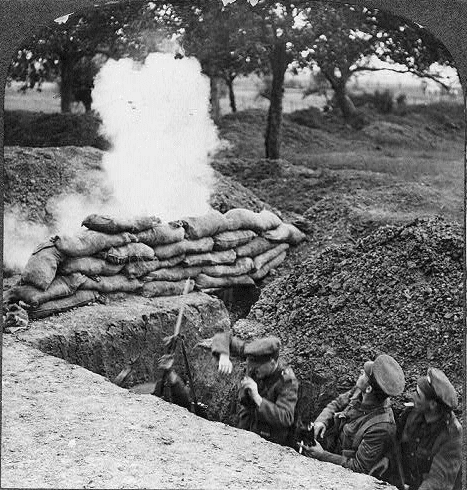
Realistic Travels, “Three British soldiers in trench under fire during World War I,” 15 August 1916 (Image courtesy of The Library of Congress)

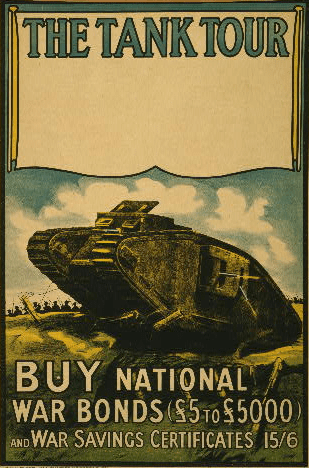
McLagan & Cumming, “The tank tour. Buy national war bonds (£5 to £5000) and war savings certificates,” 1918, Scottish War Savings Committee (Image courtesy of The Library of Congress)

You may also like:

Lior Sternfeld’s review of Erez Manela’s The Wilsonian Moment.

Joseph Parrott’s review of Churchill: A Biography.

Was Einstein Really Religious?

banner image for was Einstein really religious?

When he was a boy, yes. He lovingly studied the Bible, sensed no contradiction between Catholicism and Judaism, stopped eating pork, wrote little songs to God, and sang them as he walked home from school. But at the age of twelve, by reading science books, he abruptly abandoned all of his religious beliefs. He kept a “holy curiosity” for the mysteries and wonders of nature.

It is well-known that decades later, he made witty statements about God: that He does not play dice and that God is crafty but not malicious. Einstein famously wrote: “Science without religion is lame, religion without science is blind.” And the year he died, in 1955, a student quoted him as having once said “I want to know how God created this world. I’m not interested in this or that phenomenon, in the spectrum of this or that element. I want to know his thoughts, the rest are details.”

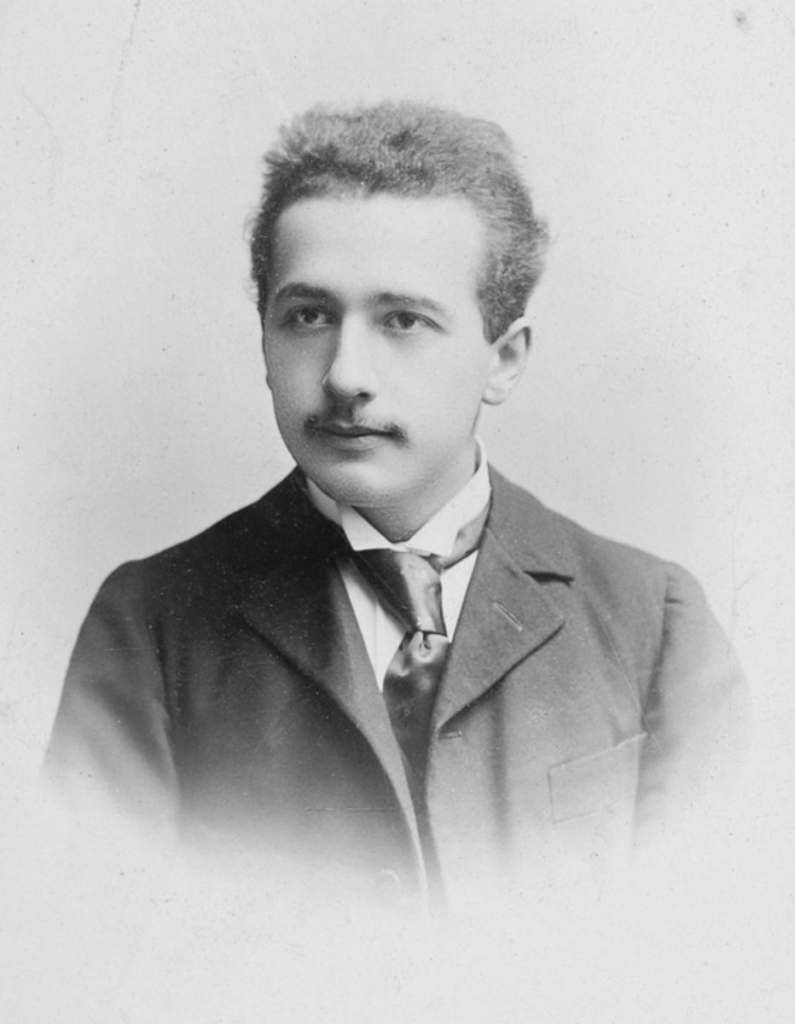
Young Albert Einstein circa 1890. Source: Wikimedia Commons.

Yet Einstein’s statements on God were notoriously ambiguous. Therefore, many Jews, Christians, atheists, and others have embraced Einstein as one of their own—by picking his most appealing quotations. Atheists such as Richard Dawkins are glad that sometimes Einstein clarified that by “God” he actually meant to say “nature.” Yet sometimes he remarked “I am not an atheist.” Other times Einstein said that he believed in the God of Spinoza. In the 1670s, the Dutch philosopher expressed great reverence for the lawful harmony of nature, arguing that God has no personality, consciousness, emotions, or will. In 1929 Einstein praised Spinoza’s outlook as a “deep feeling in a superior mind that reveals itself in the world of experience.” Yet at the same time he expressed doubts as to whether he could fairly describe himself as a pantheist like Spinoza.

In his #1 New York Times bestselling biography of Einstein, Walter Isaacson argues that Einstein did not use the word God as just another name for nature. Isaacson insists that Einstein was not secretly an atheist but instead, that Einstein believed in an impersonal Creator who does not meddle in our daily lives. Likewise, many other writers also think that since Einstein did not believe in a personal God, a fatherly Creator who cares about us, and not being an atheist, that therefore he believed in an impersonal God.

In 1936, Einstein wrote a letter to a little girl, in which he explained: “Everyone seriously engaged in science becomes convinced that the laws of nature manifest a spirit which is vastly superior to man, and before which we, with our modest strength, must humbly bow.” This certainly sounds religious, but what did he mean by “a spirit”? Einstein’s replies to inquisitive strangers, children, reporters, or close friends sometimes were markedly different. In some cases, he used colloquial expressions that he preferred to rephrase in more exacting contexts. He voiced regrets that many of his casual expressions later became subject to public dissection.

In contrast to the famous quotations that portray the old Einstein as a religious man, it is less well known that he privately described himself as agnostic. In 1869, “Darwin’s bulldog,” Thomas Henry Huxley coined the word “Agnostic” as an attitude of temporary reasoned ignorance, to not pretend to know conclusions that have yet to be demonstrated scientifically. Twenty years later, Huxley commented: “I invented the word ‘Agnostic’ to denote people who, like myself, confess themselves to be hopelessly ignorant concerning a variety of maters, about which metaphysicians and theologians, both orthodox and heterodox, dogmatise with the utmost confidence…” Popularly, agnosticism became known simply as the position of admitting that one does not know whether God exists.

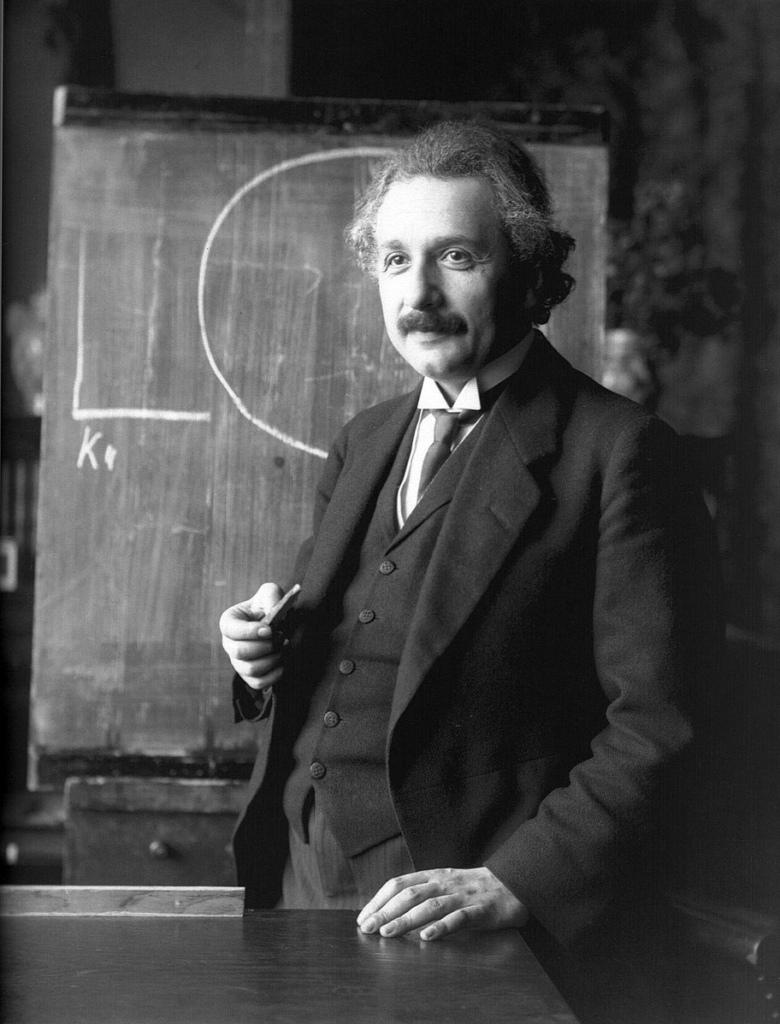
Albert Einstein 1921 by F Schmutzer.
Source: Wikimedia Commons.

In 1949 Einstein wrote a letter to a curious sailor in the US Navy, explaining that “You may call me agnostic.” In 1950 he replied to another correspondent: “My position concerning God is that of an agnostic. I am convinced that vivid consciousness of the primary importance of moral principles for the betterment and ennoblement of life does not need the idea of a law-giver, especially a law-giver who works on the basis of reward and punishment.” Then in 1952, in a letter to a philosopher, Einstein frankly expressed his unsweetened opinions: “The word God is for me nothing more than the expression and product of human weaknesses, the Bible a collection of honorable but still primitive legends aplenty. No interpretation, no matter how subtle, can change this (for me).” Einstein added that the Jewish people were no better that any other groups of people: “I can ascertain nothing Chosen about them.” He said that all religions are “primitive superstitions.”

He wrote such stark comments in private letters, in contradistinction to his published pronouncements about God and religion. So, was Einstein really religious? Or was he politically correct in public? In 1930, at the age of fifty-one, an article was published in which he described himself as “deeply religious.” But by then he was a world-wide celebrity. He knew that every word he said might be analyzed and interpreted. Over the years, he explained that he was religious only inasmuch as he felt a deep sense of wonder and reverence for the laws and mysteries of nature.

But what do we usually mean when we say that someone is religious? Most of the beliefs and practices that we distinctively associate with religious people were absent in Einstein. He denied the existence of a God that cares for humans, he argued that there is nothing divine about morality, he did not believe in any holy Scriptures, he had no faith in religious teachings, he rejected the authority of all churches and temples, he belonged to no congregation, he denied the existence of souls, life after death, divine rewards or punishments. He denied the existence of miracles that suspend the laws of nature.  He rejected all mysticism, he did not believe in free will, he did not believe in any prophets or saviors. He denied that there is any goal in life or in the order of the universe, he practiced no religious rituals, and he did not pray.

Having rejected most aspects of religion, the young Einstein had some options: either say that he was not a religious person, or instead, find an alternative way to define religiosity. He chose the latter path. In science, Einstein had great success by redefining traditional concepts: he redefined concepts of time, energy, mass, gravity, and more. So he tried to do the same thing with religion. In 1950, he explained to his close friend from youth, Maurice Solovine: “I have found no better expression than ‘religious’ for confidence in the rational nature of reality as it is accessible to human reason.”

Instead of accepting Scriptures, rituals, or traditions, Einstein focused on the wonders of nature. By redefining religion to include at its core the emotions and attitudes that Einstein did cultivate, then and only then could Einstein describe himself as a deeply religious man. For example, he called himself deeply religious, but he did not pray. Therefore, in his new definitions, not praying became an act of a deeply religious man, one who fully trusts the laws of nature. He once wrote to Leo Szilard: “as long as you pray to God and ask him for some benefit, you are not a religious man.”

Summing up, good old Einstein was agnostic, I don’t think that he was very religious. Forgive me for making an unscientific analogy. Suppose someone tells us that he really loves pizza, but then he says that he prefers no sauce, dislikes dough, is allergic to cheese, and believes that anyone who asks for toppings does not really like pizza. Then we ask: but how can you say that you really love pizza? He answers: “because I have a deep appreciation for its essence.”

The Letter

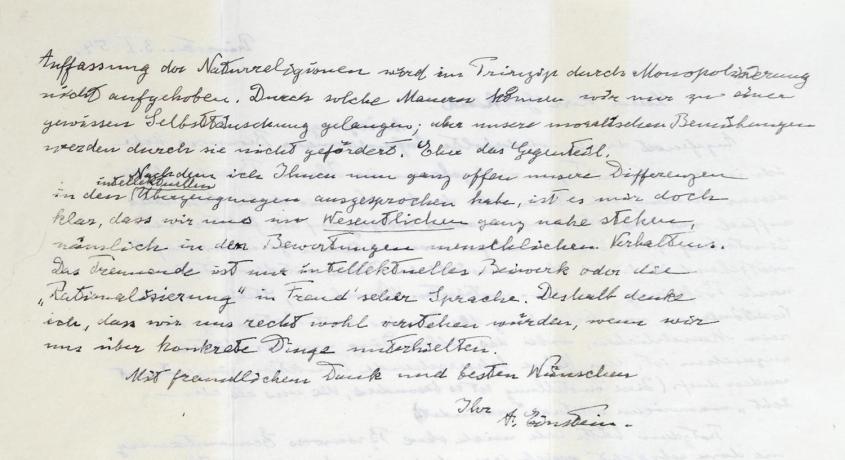
In 2008, the letter from Einstein on the subject of religion stunned the public and was sold at auction for a staggering £207,000 ($404,000) instead of the £6000-8000 estimated by Bloomsbury Auctions.

Einstein-Gutkind_1954_p2
Einstein’s letter.
Source: Albert Einstein to philosopher Eric B. Gutkind, 3.1.1954, Einstein Archives, item 33-33.

Alberto Martínez translates part of the letter here:

The word God is for me nothing more than the expression and product of human weaknesses, the Bible a collection of honorable but still primitive legends aplenty. No interpretation, no matter how subtle, can change this (for me). Such refined interpretations are naturally highly varied and have almost nothing to do with the original text. For me the unmodified Jewish religion, like all other religions, is an incarnation of primitive superstitions. And the Jewish people to whom I gladly belong and with whose mindset I have a deep affinity, have no different quality for me than other people. As far as my experience goes, they are also no better at anything than other human groups, though at least a lack of power keeps them from the worst excesses. Thus I can ascertain nothing “Chosen” about them.

Overall, I find it painful that you claim a privileged position and seek to defend it with two walls of pride: an outer one as a man, and an inner one as a Jew. As a man you claim a certain exemption from otherwise valid causality; as a Jew, a privilege for monotheism. But a limited causality is no longer causality, as our wonderful Spinoza had first said in the strongest terms. And the animistic interpretations of natural religions are also through monopolization not invalid. With such walls we fall essentially into self-deception, but they do not help us in our search for a higher morality. On the contrary.

Now, though I have in all honesty expressed our different beliefs, I still have the certainty that we largely agree on important matters, e.g. in our assessment of human conduct. What separates us, in Freud’s terms, are intellectual “supports” and “rationalizations.” I therefore believe that we would understand each other well if we were to talk about concrete things.

With friendly thanks and best wishes,

your

A. Einstein.

Women and Social Movements in the United States, 1600 – 2000

by Laurie Green

Fifteen years ago, Alexander Street Press, in conjunction with the Center for the Historical Study of Women and Gender at the State University of New York, Binghamton, launched Women and Social Movements in the United States, 1600 – 2000, an online database edited by historians Kathryn Kish Sklar and Thomas Dublin. What began as a classroom project designed by Sklar to give undergraduate students the opportunity to collect, edit, analyze – and get excited about – historical documents, went live in December 1997 after being developed into a full-blown documentary database by Sklar and Dublin.

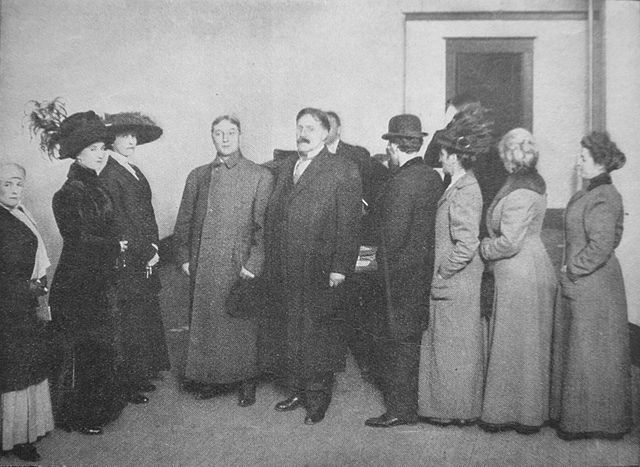
640px-Seattle2C_cNewly enfranchised women registering to vote, Seattle c.1910 (Wikimedia commons)

 The “Documentary Projects,” in particular, will interest Not Even Past readers. Scholars pose a historical question, write an introduction with background information, and offer up a set of documents. In How Did African American Women Shape the Civil Rights Movement and What Challenges Did They Face?, created by Gail S. Murray, a December 1963 letter from Septima Clark to Dr. Martin Luther King Jr. conveys Clark’s critique of members of the Southern Christian Leadership Council, King’s organization, for being more interested in the “glamor” of direct action movements (involving civil disobedience and news headlines), than the day-to-day work of voter education that she believes will bring lasting change to the region. And in Judith N. McArthur’s How Did Texas Women Win Partial Suffrage in a One-Party Southern State in 1918?, correspondence offers evidence of how a group of savvy Texas suffragists negotiated the specific historical context of World War I, Prohibition, and the election of Governor Hobby to procure the vote in advance of the federal 19th Amendment, at least for American-born white women.

image

I love this database. It allows me to introduce students to primary sources, and allows them to get their feet wet in historical research and encourage them to come up with their own interpretations of documents. In the “Scholar’s Edition” (available through university libraries by subscription), the primary sources are organized by movement, so one can explore controversies related to such topics as the birth control movement, women’s suffrage, anti-lynching campaigns, and union organizing by immigrant women. The “Scholar’s Editon” site also includes a full run of issues of The Ladder: A Lesbian Review (1956-1972) and papers of the civil liberties exponent Elizabeth Glendower Evans, who championed the cause of Sacco and Vanzetti.

Anti-lynchingWASM has grown exponentially since 1997, adding thousands of new documents a year and growing such features as a book review section, outlines for classroom projects based on the documents, and a monthly online journal that combines standard fare of academic journals with new documentary projects and full-text documents. As has been true with most projects documenting women’s history, Sklar and Dublin’s venture has resembled a social movement in itself; they sought out scholars, wrote emails and hosted conference luncheons not only to publicize the site but to convince scholars of women and social movements to place on line a set of documents they have used in their research. They now have new horizons. Alexander Street Press has just launched Women and Social Movements – International.

Photo credits:

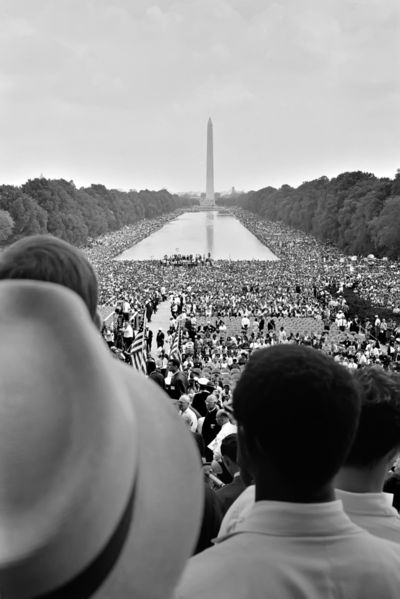
Warren K. Leffler, “Crowds surrounding the Reflecting Pool, during the 1963 March on Washington,” 28 August, 1963

U.S. News and World Report via The Library of Congress

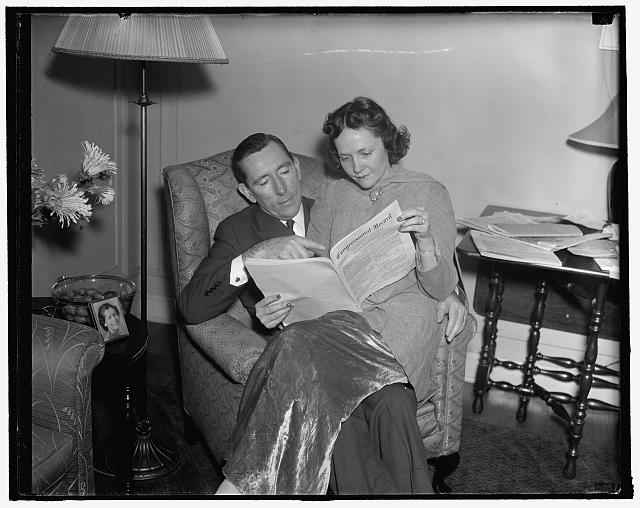
Harris & Ewing, “No rest for a weary filibuster. Washington, D.C., Jan. 27. Senator Claude A. Pepper, Democrat of Florida who spoke for 11 hours during the current filibuster against the Anti-lynching bill, points out to pretty Mrs. Pepper the interesting sections of his long winded talk as he printed in the Congressional Record,” Washington, DC, 27 January 1938

Harris & Ewing via The Library of Congress

Tips on How to Navigate the Women and Social Movements Website

« Previous Page
Next Page »

Recent Posts

  • The Radical Spanish Empire Roundtable – Introduction
  • All Eyes on the Petition: Reflections on The Radical Spanish Empire
  • Forgery, Invention, and the History of Skepticism in The Radical Spanish Empire
  • Iberian Subaltern Political Philosophies and The Radical Spanish Empire
  • Lawfare and the Legal Construction of Race in The Radical Spanish Empire
NOT EVEN PAST is produced by

The Department of History

The University of Texas at Austin

We are supported by the College of Liberal Arts
And our Readers

Donate
Contact

All content © 2010-present NOT EVEN PAST and the authors, unless otherwise noted

Sign up to receive our MONTHLY NEWSLETTER

  • New
  • Features
  • Reviews
  • Texas
  • Teaching
  • Digital
  • Watch & Listen
  • Authors
  • About