• New
  • Features
  • Reviews
  • Texas
  • Teaching
  • Digital
  • Watch & Listen
  • Authors
  • About

The past is never dead. It's not even past

Not Even Past

Making History: Takkara Brunson

Interviewed by Zach Doleshal

http://media.laits.utexas.edu:8080/notevenpast/podcast/NEP-Takkara.mp3


In the sixth installation of our new series, “Making History,” Zach Doleshal speaks with Takkara Brunson about her research on Afro-Cuban women in pre-revolutionary Cuba. Brunson’s research experiences in Cuba, and stories of the fascinating women who form the core of her research offer a taste not only of life and work in a place few Americans get to visit, but also a window into the making of a social and cultural historian.

Brunson’s dissertation, “Constructing Afro-Cuban Womanhood: Race, Gender, and Citizenship in Pre-Revolutionary Cuba, 1902-1958,” is the first full-length treatment of the formation of a modern Cuban identity that examines race and gender as complementary and conflicting forces in the lives of women rather than as distinct categories of analysis.

This dissertation explores continuities and transformations in the construction of Afro-Cuban womanhood in Cuba between 1902 and 1958. A dynamic and evolving process, the construction of Afro-Cuban womanhood encompassed the formal and informal practices that multiple individuals—from lawmakers and professionals to intellectuals and activists to workers and their families—established and challenged through public debates and personal interactions in order to negotiate evolving systems of power. The dissertation argues that Afro-Cuban women were integral to the formation of a modern Cuban identity. Studies of pre-revolutionary Cuba dichotomize race and gender in their analyses of citizenship and national identity formation. As such, they devote insufficient attention to the role of Afro-Cuban women in engendering social transformations. The dissertation’s chapters—on  patriarchal  discourses of racial progress, photographic representations, la mujer negra (the black woman), and feminist, communist, and labor movements—probe how patriarchy and assumptions of black racial inferiority simultaneously informed discourses of citizenship within a society that sought to project itself as a white masculine nation.  Additionally, the dissertation examines how Afro-Cuban women’s writings and social activism shaped legal reforms, perceptions of cubanidad (Cuban identity), and Afro-Cuban community formation.  The study utilizes a variety of sources: organizational records, letters from women to politicians, photographic representations, periodicals, literature, and labor and education statistics.  Engaging the fields of Latin American history, African diaspora studies, gender studies, and visual culture studies, the dissertation maintains that an intersectional analysis of race, gender, and nation is integral to developing a nuanced understanding of the prerevolutionary era.

Takkara Brunson received her PhD in the history department from the University of Texas in 2011. She specializes in modern Latin American history with a particular focus on race and gender, citizenship, and national identity. She currently holds a prestigious postdoctoral fellowship at the Frederick Douglass Institute for African and Africa-American Studies at the University of Rochester.

Photo credits:

“Advertisement for Pomada ‘Mora,'” 15 December, 1914

Minerva via “Constructing Afro-Cuban Womanhood: Race, Gender, and Citizenship in Pre-Revolutionary Cuba, 1902-1958.”

You may also like:

Our book recommendations for readings on Afro-Cubans and Afro-Americans.

Hear UT Professor of History – and Takkara Brunson’s dissertation supervisor – Frank Guridy talk about his new, award-winning book “Forging the Transnational Diaspora” in our recent monthly feature interview.

And read Professor Guridy’s review of two recent movies about the figures behind the Cuban Revolution.
Making History: Christina Salinas

Interview by Aragorn Storm Miller

http://media.laits.utexas.edu:8080/notevenpast/podcast/NEP-Salinas.mp3


In the third installation of our series, “Making History,” Aragorn Storm Miller speaks with Christina Salinas about her experience as a graduate student in history at the University of Texas at Austin. In the interview, Christina tells us about her childhood spent living near the Texas-Mexico border, the long history of the Texas Border Patrol, and how her research interests have evolved over the course of her undergraduate and graduate career at the University of Texas.

Christina Salinas is a PhD candidate in the history department at UT Austin. Her dissertation explores social relations forged on the ground between agricultural growers, workers, and officials from the U.S. and Mexico, and their impact on shifting national approaches to border enforcement and Mexican migration during the 1940s. She argues that, although border control policies have rested within the bounds of federal authority, it was the interconnection between federal power and local geographies of culture and history that inhabited these policies and gave them meaning.

You may also like:

The inaugural episode of “Making History,” which features an interview with UT history graduate student – and author! – Christopher Heaney.

The second episode of “Making History,” featuring an interview with seventeenth-century Caribbean scholar Jessica Wolcott Luther.

Making History: Christopher Heaney

Interview by Jen Eckel

http://media.laits.utexas.edu:8080/notevenpast/podcast/NEP-Chris.mp3


We begin our series with an interview with Christopher Heaney.

Christopher Heaney is a Harrington Doctoral Fellow in the History Graduate program at the University of Texas at Austin. After graduating from Yale University with a B.A. in Latin American Studies, he worked in journalism for several years, including a life-changing stint at the oral history project StoryCorps.

In the fall of 2005, a Fulbright Fellowship took him to Peru to continue his undergraduate research on the explorer Hiram Bingham and the excavation of Machu Picchu. The year of research in Cuzco and Lima produced articles for The New Republic and Legal Affairs Magazine, and an Op-Ed for the New York Times, and, ultimately, Cradle of Gold: The Story of Hiram Bingham, a Real-Life Indiana Jones, and the Search for Machu Picchu (Palgrave Macmillan, 2010), his first book.

At UT, Heaney studies the history of archaeology and indigenous peoples in the Americas, particularly Peru, knowledge production in the Atlantic World, museum-building, race and nation-building, and grave-robbing, the world’s second-oldest profession.

In the interview, Christopher tells us about how he stumbled upon Hiram Bingham, the subject of his undergraduate thesis and first book, and how he combined his love of archaelogy and history to become a historian of Latin American history.

Learn more about Christopher Heaney and his work by visiting his website.

You may also like:

This recent National Public Radio story about the recent legal battle between Yale University and the Peru government, featuring comments from Christopher Heaney.

Voices of India’s Partition, Part V

by Amber Abbas

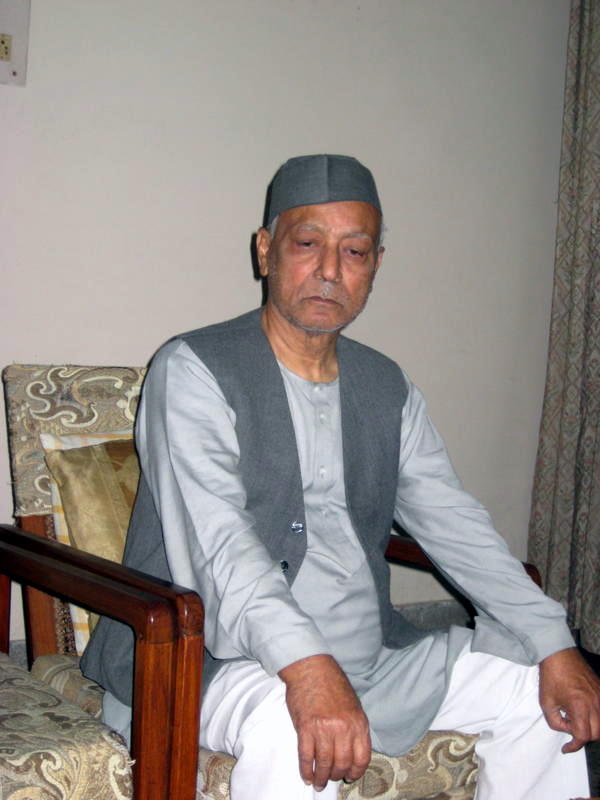
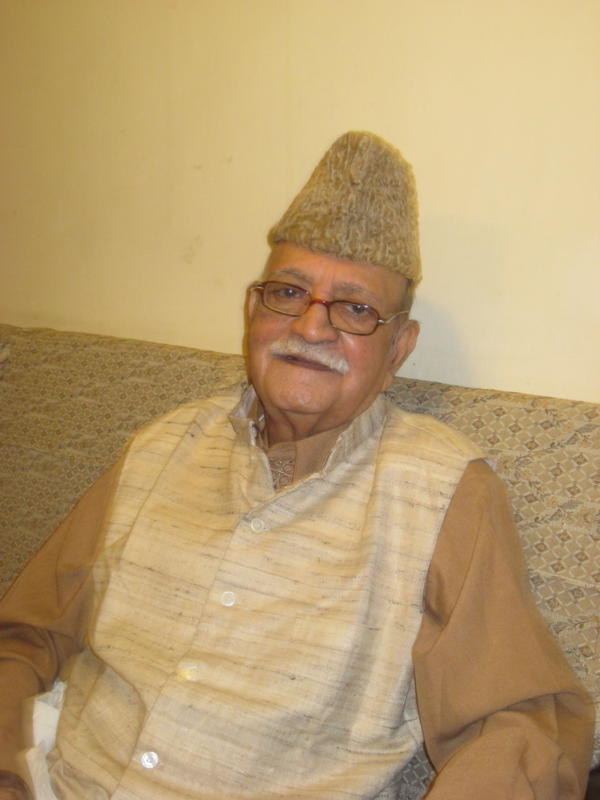
Professor Mohammad Amin is a distinguished professor of History who spent his entire career in St. Stephen’s College, one of the founding colleges of Delhi University.

image

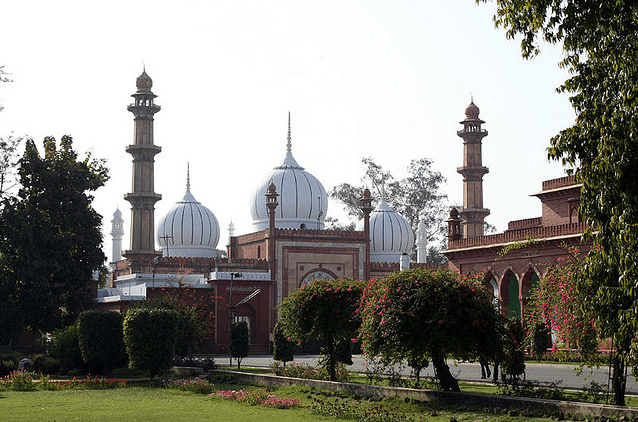
During his years at Aligarh, he was trained by Professor Mohammad Habib (Father of Professor Emeritus Irfan Habib). He remarked that Aligarh was known for its liberal History Department, which “later turned completely red.” His own priorities were in writing narrative histories of the medieval period. He described his own position as a skeptic, “History is not neat and tidy.  If you find that you have an answer, I am very skeptical about it. How can there be a rational explanation for the irrational acts of irrational people?”

In this interview, Professor Amin reflects on his experiences at Aligarh during late 1940s, when the Muslim League was dominant and “Aligarh really was bristling with the movement for Pakistan.” Students were being dispatched into the hinterlands to spread League propaganda in 1945 and 1946 as India prepared for elections. Aligarh was considered so important as a center of Muslim opinion-making that, he tells me, if a meeting was taking place in the Union (the seat of student government), stores would close in towns and villages nearby as the community awaited news of Aligarh’s pronouncements on the important issues of the day. This centricity to Muslim opinion was key in placing Aligarh at the heart of the Pakistan movement. Amin, like narrator Masood ul Hasan, describes an atmosphere of youthful enthusiasm in which students were caught up in the political excitement of the time.

During the partition, however, as Amin’s story reveals, Aligarh became a site of suspicion; Muslims were targeted as potential traitors to the state, and Aligarh was especially vulnerable because many students had been active in calling for independent Muslim statehood.  Amin mentions that as he returned to Aligarh in late summer 1947, he had been advised to carry a book with the name of a Hindu inscribed inside, so as to distract attention from his own Muslim identity. Trains, as he reminds me, were sites of massacre during the communal unrest that accompanied partition and on both sides of the border trains pulled into stations full of dead bodies.  His return to Aligarh in 1947 was tense, but uneventful.

image

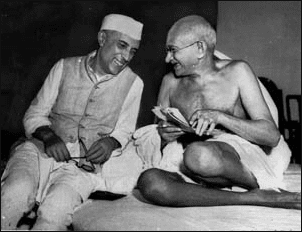
In remembering this, Amin moves directly to the assassination of Mahatma Gandhi. He connects Gandhi’s assassination to the atmosphere at Aligarh by describing it as particularly “telling.” On the day of the assassination, Amin was headed into the city—the predominantly Hindu city of Aligarh separated from the precincts of the Aligarh University by a railway line and a bridge.  By the time they reached the city, now a few kilometers distant from their university and its protective walls, people shouted at them to “Go back!” Though they simultaneously heard that Gandhi’s assassin had been a Hindu, the students felt the threat of violence in the city, and those around them sternly directed them to return to the right side of the tracks.

image

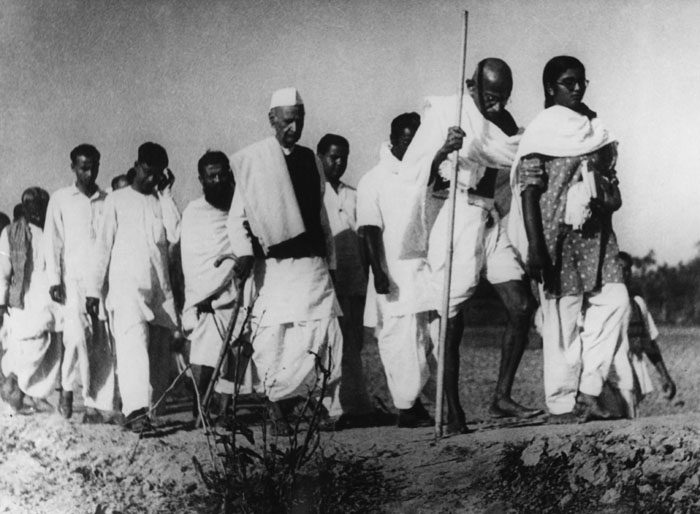
Amin remembers how important Gandhi had been in preserving a tenuous peace in Eastern India during the chaos of 1947. Having gone on a fast to the death, he refused to break it until leaders of the three major faiths of the region: Muslims, Hindus and Sikhs came together to make a joint pledge to stop the fighting. In the moments after Gandhi’s death, Amin and  his friends reaped the benefit of his magnanimity- they returned safely to their school- but they knew, as did those around them, that the situation remained tense enough to go either way.

LISTEN TO THE ORAL HISTORY INTERVIEW HERE

READ THE ORAL HISTORY TRANSCRIPT HERE

Photo credits:

Amber Abbas, untitled portrait of Professor Mohammad Amin 

Author’s own via Not Even Past

Jama Masjid, “AMU-Aligarh,” Decemer 23, 2009

Author’s own via Flickr Creative Commons

Unknown author, Untitled Portrait of Mohandas Gandhi and Jawharlal Nehru, July 6, 1946

AP Photo/Max Desfor via Flickr Creative Commons


You may also like:

Voices of India’s Partition, Part IV: Interview with Professor Masood ul Hasan

Voices of India’s Partition, Part III: Interview with Professor Irfan Habib

Voices of India’s Partition, Part II: Interview with Mr. S.M. Mehdi

Voices of India’s Partition, Part I: Interview with Mrs. Zahra Haider

Voices of India’s Partition, Part V: Professor Mohammad Amin

Interviewed by Amber Abbas

D-25, Oxford Apartment, Patpar Ganj, New Delhi (November 5, 2009)

Transcript: 

Context Notes:  During our interview Professor Amin was suffering from allergies and his nose was running constantly. He also had several attacks of sneezing.  But he was patient and generous enough to continue speaking with me despite it all.

Professor Mohammad Amin: Going back to what we were talking about Aligarh. At that time, there was a euphoria that Aligarh was so powerful, that it will decide the destiny of the country and the partition of the country and whatnot. And people were carried away. It is a fact that if the meeting was called in the Union, and the bell rang here, shops in Hattras used to get closed. Aligarh mein ho raha hain, Aligarh mein ho raha hain. (Something is happening in Aligarh, something is happening in Aligarh) Pir, ooske bad, kya hogaya?Ooske bad, yeh ho gaya ke (Then what happened? What happened then was–) everywhere people were afraid for their life because it was rumored that people were going to attack Aligarh.

AA: Before partition or after?

MA: (0:05:31.5) After partition. After partition.

MA: (0:05:53.8) We were instructed to carry a book or something like that. And in the book, write the name Mahavir Prasad or Raghav Lal or something or the other. (laughs)

AA: Were you frightened?

MA: Anybody would be frightened! Because there were cases where people were being thrown out of the train. And killing them. Because, after all, there was that, kya nam hain (what do you call it?) spell of madness all over the country. And when people were coming from the other side, compartments full of dead bodies of Sikhs and Hindus. And here, this was going on on mass scale. I mean, I think one thing that tells you most is the assassination of Mahatma Gandhi. I was present at Aligarh at that time. We were going to kya nam hain, the shaher (city). [When we reached there] Tho, is vakt jo hein, log bata rahein the “Vapis jao! Vapis jao!” Vahan se ho gaya tab thak avaz har jagey hein, “Mahatma Gandhi ko katal kar diya gaya, mar diya gaya, Godse ne, Hindu ne mara, Hindu ne mara, Hindu ne mara! Ek Hindu, pagal, oos ne, kya nam, mara!”  (By this time, people were telling us, “Go back! Go back!” from there. By that time the sound was coming from everywhere, “Mahatma Gandhi has been murdered, has been killed by Godse. A Hindu killed him, a Hindu killed him, a Hindu killed him! A Hindu, a madman, he killed him!”)

Radio also kept on, every five minutes, repeating it. So that was a time. And then before that, leading to that, when the riots were in Delhi, you had Mahatma Gandhi had gone on a fast to the death. And he refused to take anything “Aisa nehin, aap kijiye, you, all the people, Sikhs, Hindus and Muslims, they should come hand-in-hand to me and pledge that they will stop this.”

Voices of India’s Partition, Part IV

by Amber Abbas

Professor Masood ul Hasan was born in Moradabad in 1928. He completed high school from Hewat Muslim High School.  His father was an employee of the Municipal Board. He completed his F.A. (Intermediate) from Government Inter-College, Moradabad. He studied in the Aligarh Muslim University from 1943 to 1947 where he completed his B.A. and M.A. in English Literature.  He completed his Ph.D. in Liverpool while he was appointed as a Reader in the Department of English at AMU.  He retired from AMU in 1988 after serving as Professor of English, Chair of Department of English and Dean of the Faculty of Arts.  He also served as the Proctor of the University.  He continues to live in Aligarh, in Sir Syed Nagar.

Professor_Masood_ul_Hasan_Photo_by_Amber_Abbas_1I met Professor Masood ul Hasan first in July 2008, and I interviewed him a total of three times in 2008 and 2009 while I was living in Aligarh to conduct my dissertation research on the role and experience of Aligarh students in the freedom movement and the movement for Pakistan. He was extremely supportive of my project, and frequently introduced me to other senior and retired professors who had been his friends and colleagues for generations. I always looked forward to a visit and a cup of tea at his home during my stay in Aligarh!

Professor Hasan was also one of only a few students of the 1940s who was willing to speak about his involvement with the Muslim League in the 1945-46 elections. He frequently made sure that I understood that he regretted his involvement with the League and chalked it up to youthful enthusiasm, a desire for adventure, and naivete.  He chose not to leave for Pakistan despite his involvement with the League and remained his entire career at Aligarh University as a professor of English.

In this interview he describes his experience on the day of Gandhi’s assassination, a mere five months after the partition of the country. On that day, Masood ul Hasan was traveling from Aligarh to his home in Bhopal. He took a train from Aligarh to Agra and was to buy his onward ticket in the Agra Cantonment Station.  When he sat in the train, he made a deliberate choice to avoid the “minority compartment,” a concession made by the railways to protect Muslims and other minorities in the wake of the partition violence when trains became sites of massacre.  It was his “little assertion of self-confidence” to ride in the general compartment, clad in a sherwani – a typically Muslim coat that was a gesture of pride in his heritage but marked him as a minority. These choices would have been only slightly risky on any other day. On this day, however, as he stepped onto the train platform at Agra and found it deserted, Masood ul Hasan felt afraid. The news of Gandhi’s assassination created a difficult position for him. If a Muslim had killed Gandhi, all Muslims would be held responsible, and the violence of partition could be reignited. As he stood on the platform, terribly alone, in the city made famous by Shah Jahan’s majestic Taj Mahal, a monument to India’s Muslim heritage, he feared what might happen if he were unable to leave.

image

Luckily, the ticket collector took pity on him, arranged for a ticket and Hasan was able to depart for the safer environment of his home in Bhopal. He did not become a victim of violence on that day, but the fear he experienced speaks to the uncertainty that Muslims in India felt, especially when traveling through unfamiliar environments, in the early years after India’s independence. Whereas they were supposed to have the same rights and privileges as other Indian citizens, the trauma of 1947 was still fresh, and, especially when traveling, Muslims often feared for their safety.

image

Hasan’s narrative picks up on some familiar themes from other stories Muslims tell about this day. It is singular, it stands out in the memory; he, like others, is able to tap into his emotions and experience with remarkable clarity.  Muslims almost without exception feared a Muslim assassin. After everything they had been through in 1947 and Gandhi’s selfless efforts to protect Muslims in places they were threatened, a Muslim assassin would unseat in one shot the tenuous but safe position of Muslims in early 1948. Everyone knew this, not just Muslims.  And when it was revealed that the assassin was a fundamentalist Hindu, Muslims heaved a collective sigh of relief. No conservative Hindus were targeted or held responsible for the actions of Nathuram Godse. Muslims were spared, but one of their staunch allies was lost.

LISTEN TO THE ORAL HISTORY INTERVIEW HERE

READ THE ORAL HISTORY TRANSCRIPT HERE

Photo credits:

Amber Abbas, untitled portrait of Professor Masood ul Hasan

Author’s own via Not Even Past

Yann, Gandhi in Noakhali, 1946

Author’s own via Wikimedia Commons

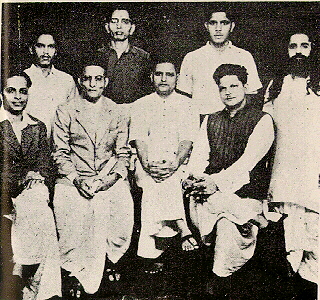
Unknown author, “Group photo of Hindu Mahasabha, the group accused of successfully staging Gandhi’s assassination. Standing: Shankar Kistaiya, Gopal Godse, Madanlal Pahwa, Digambar Badge (Approver), Guruji M.S. Golwalkar. Seated: Narayan Apte, Vinayak D. Savarkar, Nathuram Godse, Vishnu Karkare.” via Wikimedia Commons

You may also like:

Voices of India’s Partition, Part III: Interview with Professor Irfan Habib

Voices of India’s Partition, Part II: Interview with Mr. S.M. Mehdi

Voices of India’s Partition, Part I: Interview with Mrs. Zahra Haider

Iran’s Nuclear Program and the History of the IAEA

by Jonathan Hunt

The recent assassination of Mostafa Ahmadi Roshan, an Iranian nuclear scientist and the deputy director of the enrichment site at Natanz, has underscored that a covert war against Iran’s nuclear program is underway. At the end of January 2012, Iranian officials will meet with representatives of the International Atomic Energy Agency (IAEA). As the international community scrambles to stop a nuclear-armed Iran from adding more fuel to the powder keg of Middle Eastern geopolitics, it is vital that contrasting understandings of the international nuclear nonproliferation regime among nations, particularly the purpose of the Nuclear Non-Proliferation Treaty administered by the IAEA, be acknowledged and resolved.

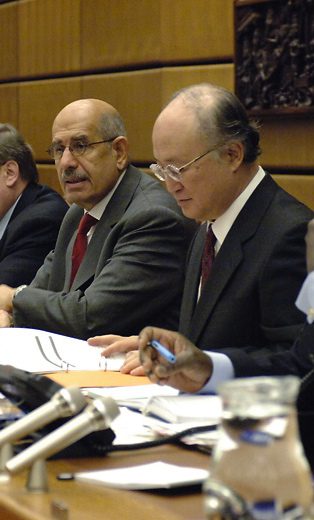
020206_IAEA_Director_General_ElBaradei_Olli_Heinonen_Japan_Ambassador_Yukiya_Amano_Photo_Credit_D._Calma_-_IAEAMohamed El-Baradei, former director and Yukiya Amano, current director of the IAEA

“God Bless the IAEA,” read an editorial in Le Monde on November 9, 2011, the day after the IAEA issued a report expressing serious concerns that “Iran has carried out … activities that are relevant to the development of a nuclear explosive device.” The response from Moscow had a different tone, with the Russian foreign ministry (echoing Russian Prime Minister and once-and-future president, Vladimir Putin) declaring the report “biased” and “purposely twisted,” by pressure from the U.S. and the EU. President Mahmoud Ahmaninejad of Iran was blunter, demanding to know why Yukiya Amano, the IAEA director general, had allowed U.S. “bullying” to shape the agency’s conclusions.

In the United States, international organizations are something of a four-letter word. The case of the United Nations is exemplary. It is frequently denigrated in U.S. media and politics as a haven for despots, a forum for anti-Americanism, and a graveyard for U.S. initiatives. The criticisms leveled at the IAEA were similar in 2003 when the U.S. argued that an Iraqi attempt to obtain weapons of mass destruction and medium-range missiles was a casus belli, and tried to assemble an international coalition to depose Saddam Hussein. When Secretary of Defense Colin Powell brandished U.S. intelligence before the UN General Assembly he described as the smoking gun of Iraqi nuclear ambitions, the IAEA warned that, in actuality, there was little to no evidence of an Iraqi nuclear program with a military object. In hindsight, their verdict was as accurate as it was disregarded by an American society at the height of its power and hubris.

Today, U.S. and European officials present the IAEA as an irrefutable source. In part, this is because Yukiya Amano is widely seen as a more dependable ally of the West than Mohamed El Baradei, the Egyptian statesman who served as the agency’s director general from 1997 to 2009. The international community saw El Baradei as an honest broker. But recent revelations have indicated that Amano is more responsive to U.S. interests. A U.S. Department of State cable disclosed by WikiLeaks shows U.S. officials describing Amano as “director general of all states, but in agreement with us.” Republicans have cited the IAEA report as proof of the Islamic Republic of Iran’s nefarious intentions. The GOP’s presidential frontrunner, Mitt Romney, has gone so far as to state that progress made by Iran’s nuclear program is President Obama’s “greatest failing … [in] foreign policy,” and, that if Obama were reelected, Iran would become the world’s ninth nuclear power.

In reality, however, the November 8, 2011 report overstepped the IAEA’s constitutional mandate and relies on stale evidence that fails to substantiate the agency’s concerns. As the leading U.S. authority on the legal history of the IAEA and the Nuclear Non-Proliferation Treaty (NPT), Daniel Joyner, has pointed out in the legal blog Jurist:

“The IAEA is given no authority to inquire into or to examine activities within Iran that are not directly related to fissile materials, even if they may possibly relate to the development of a nuclear explosive device. Again, the IAEA has a limited legal mandate that does not include being a general nuclear weapons watchdog.”

Seymour Hersh, the Pulitzer-prize winning investigative journalist who has followed the story for The New Yorker magazine, asked Robert Kelley, a former IAEA director and a nuclear engineer with decades of experience, about the report’s evidentiary basis. He observed that the information used by the IAEA to support its extra-legal “concerns” was chiefly taken from a single laptop of questionable origins. He also picked holes in the revelatory nature of the findings. The substance of the report, in his words, was “old news,” and he wondered “why this same stuff is now considered ‘new information’ by the same reporters.”

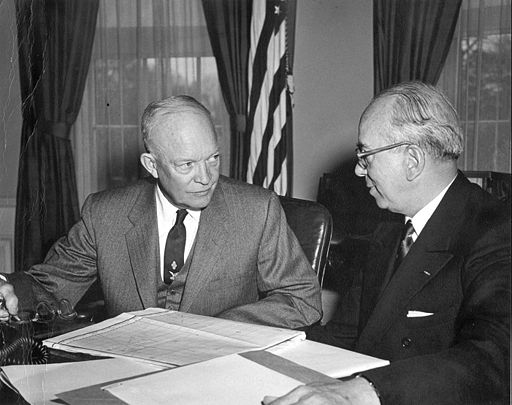
512px-Eisenhower_and_StraussThis institutional overreach is damaging the agency’s reputation as an independent and impartial regulator. The IAEA was the brainchild of U.S. President Dwight D. Eisenhower, who announced in 1953 the creation of an agency that would ensure that “fissionable material would be allocated to serve the peaceful pursuits of mankind.” Amid the push-button fear of the early Cold War, U.S. policymakers wanted Atoms for Peace (as the proposal was famously dubbed) to showcase the socioeconomic benefits of applying nuclear science and technology to energy production, agriculture, and medicine. The hidden agenda, however, was to justify the country’s mounting investment in its nuclear-weapon complex. In the Kennedy and Johnson years, the IAEA safeguard regime designed to keep fissile nuclear materials (uranium and plutonium) from being put to military use was folded into the international nuclear nonproliferation regime with the NPT and the IAEA at its heart.

This focus on fissile nuclear materials has meant that research and technical activities to develop the practical knowledge and equipment necessary to construct a nuclear warhead lie beyond the agency’s ambit. The history of the NPT and IAEA demonstrate that the agency was not designed to be a nuclear “watchdog” supervising any and all research work relevant to nuclear weapons, but instead a “regulator” certifying that the fissile byproducts of peaceful nuclear energy were not used in a military program.

The public debate about Iran and the IAEA is marked by the divergent readings of the history and purpose of the nonproliferation regime. The United States regards the IAEA as a linchpin of a peaceful and progressive world under U.S. guardianship; China and Russia as a way to reinforce their special status as nuclear powers; Britain and France as a bulwark of international law and Western influence; and the developing countries of the G-77 as a discriminatory system that perpetuates a hierarchy of nuclear “haves” and “have-nots.” The controversial report has brought these clashing views into starker relief. As the U.S. and the EU rachet up economic sanctions and Iranian scientists continue to find themselves the targets of what appear to be covert assassinations, the IAEA will find it more and more difficult to act as a intermediary. The implications for peace in the Middle East, and the future of nuclear nonproliferation, could be grim.

Photos via Wikimedia Commons

Voices of India’s Partition, Part III: Professor Irfan Habib

Interviewed by Amber Abbas

Center for Advanced Study, Department of History, Aligarh (June 28, 2009)

Transcript:

Context Notes: Professor Irfan Habib is probably the best-known professor of History in Aligarh.  He was a young student, in the Intermediate classes during the 1940s.  His father, Mohammad Habib was the leader of the progressive factions at Aligarh. Irfan Habib is an Emeritus Professor of the Dept of History but he still appears daily in the department where he sits in the office of Professor Shireen Moosvi and interacts with all of the students, other professors, Communist party activists and others who move in and out of the office throughout the day.  Irfan Habib always provides hospitality to these guest, endless cups of tea and biscuits.  On many occasions I had the opportunity to sit in the office and transcribe stories he would share in English or in Urdu with the people who came and went.  It was some time before I could convince him to sit down with me for a formal interview because he was very skeptical of the methodology of my research, being as he is, a historian of medieval India and deeply invested in the investigation of documentary sources. When I finally did meet him he asked me to meet him in his own office, down the hall, a small cupboard of a room, which he referred to as his “Hole Office.”

Amber Abbas: What changed at AMU around partition?  Obviously a lot of people left, but what did that look like?

Professor Irfan Habib: Well, first of all, one of the strengths of institution we didn’t notice, that admissions were on time, classes were held, a teacher disappears was replaced immediately by another teacher. Classes were held.

Secondly, Gandhi’s fast and martyrdom had much to do with the recovery. When Gandhi died I would expect 20% of the people in the university were from Pakistan. They had remained here to complete their second year, that is Intermediate Final, their fourth year B.A. Final and their M.A. Final. Because they had already done one year and they wanted to complete it. They didn’t know that riots will close us, they came in July when it opened the riots broke out in August. So they were here. So they were here. They were very concerned, you can understand, all of us were concerned, about the slaughter, and so Gandhi became the one man between slaughter and protection.  We were coming from Lucknow and we heard at Hattras station that Gandhiji had been assassinated. So the next day my father with four or five people, you know, nationalists were very few at that time, Muslim Nationalists. But we were about ten or twelve, then some others joined us. So we went; I was a first year student. We went and stood in the SS Hall Gate, from this side, Bab-ul-ilm (Gate of Knowledge) or something like that. And soon students began collecting. HUGE crowd! At that time there must have been around 2500 students [in the whole university], then the number declined. HUGE crowd! We were asked to wait for V.M. Hall people. We went to City. Actually, that was my first impression of a demonstration. There were communists also demanding execution of RSS leaders. Hindu Sabha, nehin, RSS or Hindu Sabha, Phansi Do! Phansi Do! I forget the title, the slogans.

AA: So you left for City after you knew who the assassin was?

IH: No, that was announced on the radio immediately! Totally. I mean, his name was announced repeatedly on the radio. That it’s Godse and he’s a Hindu Mahasabhite. Oh, it was announced.  Only Hindustan Times in an edition said it was suspected to be a Muslim, but they apologized later on, Devdas Gandhi apologized and Nehru was very annoyed. So that was a remarkable demonstration. And all these Pakistanis were there.  And then the refugees started coming at almost the same time. They were admitted. I still remember Punjabis from Pakistan mixing with Sikhs, you know, shanyartis. Collecting things for them. Even in this demonstration there were Sikh students and Punjabis from Pakistan. And Hindus, of course, Hindus are not marked out. So that was a second feature, was how sharnyartis fitted in. No—not a single incident took place in the university between Muslim students and sharnyartis.

Voices of India’s Partition, Part III

by Amber Abbas

Professor Irfan Habib is probably the best-known professor in Aligarh. Born in 1931, he was a young student in the Intermediate classes during the 1940s.  His father, Mohammad Habib, a staunch nationalist was the leader of the progressive factions at Aligarh. Irfan Habib is an Emeritus Professor of the Department of History but he still appears daily in the department where he sits in the office of Professor Shireen Moosvi and interacts with all of the students, other professors, Communist party activists and others who move in and out of the office throughout the day.  Irfan Habib always provides hospitality to these guests: endless cups of tea and biscuits.  On many occasions I had the opportunity to sit in the office and transcribe stories he would share in English or in Urdu with the people who came and went.  It was some time before I could convince him to sit down with me for a formal interview about his experiences during the 1930s and 1940s in Aligarh. He was very skeptical of the methodology of my research, being as he is, a historian of medieval India and deeply invested in the investigation of documentary sources. Interviews, he reminded me, would only catch a person’s “bias,” and not “The Truth.”

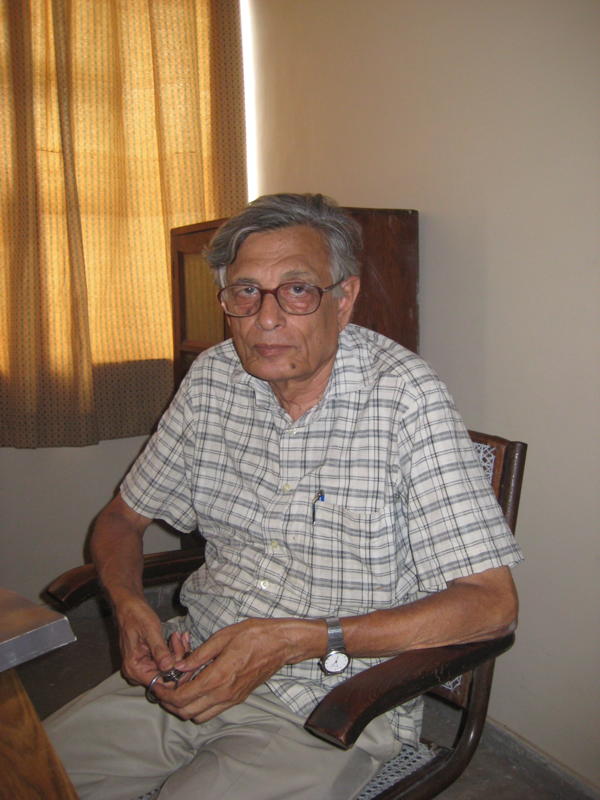
Professor_Emeritus_Irfan_Habib_Photo_by_Amber_AbbasIn this interview, he describes the atmosphere in AMU in the years following partition and his experiences around Mahatma Gandhi’s assassination. He first emphasizes the fact that though partition caused terrible disruption at the university, with thousands of students and many faculty departing for Pakistan, the university worked to minimize its effect on students’ lives. He repeatedly told me that no class was ever cancelled, even if a professor left, another instructor stepped in to cover his responsibilities. Continuity is important as a way to show that there were Muslims at the university who worked to support independent India—contrary to the narrative that has plagued the university since the 1947 partition by suggesting that its students and professors were, without exception, traitors and fifth columnists. Habib wears his nationalism on his sleeve, even if, as a Leftist, he has not really represented its mainstream.

image

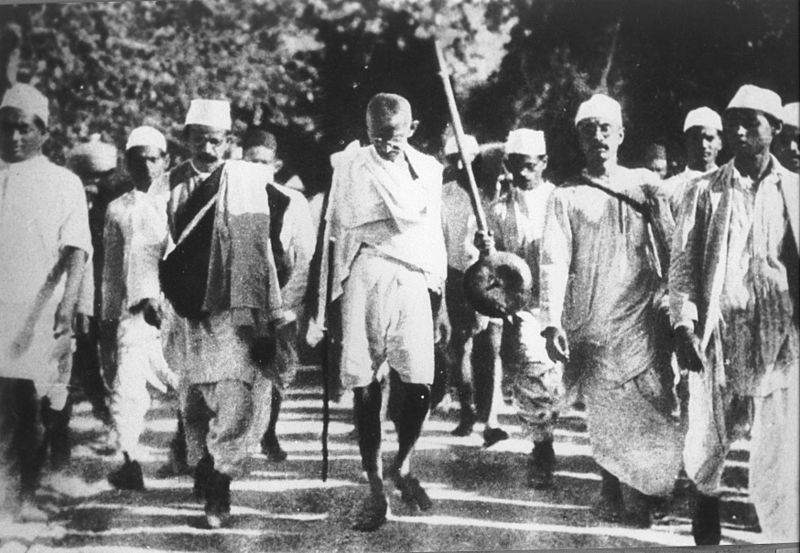
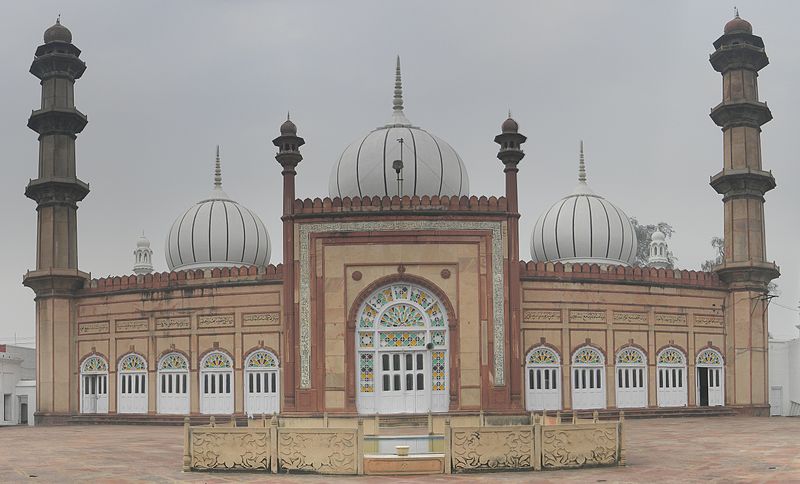
Habib’s family had a long history of nationalist allegiance and his mother’s family had been close to Gandhi since the early years of his leadership. Habib earlier told me that Gandhi “was an idol… in our home. My mother called him ‘Bapu’ because of the family relationship, but I never heard my father referring to Gandhi  as anything except ‘Mahatmaji.’ He wouldn’t even say ‘Gandhiji.’” In describing the events of Gandhi’s death, Professor Habib, however, does not emphasize his family’s grief, but the efforts of students publicly to show their solidarity with the nation. Because of the immediate suspicions that a Muslim may have committed the murder, and the anxiety that threatened the Muslims more broadly in the wake of partition, AMU stood out as a particularly sensitive site. Professor Mohammad Habib led the students from the University to the city of Aligarh, which involved crossing the railway line, the traditional boundary between the University and the majority Hindu city adjoining it. Crossing this boundary is a symbolic act of solidarity, and the Muslim students demonstrated their Indian-ness by publicly engaging in the response to Gandhi’s death. Habib also points out that many “Pakistanis”—by which he means those students whose family homes were in territories that became Pakistan in 1947: Punjab, Northwest Frontier Province, Sindh, Balochistan and Bengal—also participated in the march.  Thus, even though Gandhi had been a controversial figure at the University, all students: Hindus, Muslims, Sikhs, and even Pakistanis came together to mourn for the man who had risked his life in 1947 to stop the murder of Muslims in Bengal.

image

In conclusion he notes that the refugees—sharnyartis—who arrived at the university in 1947 and 1948 were welcomed with open arms, students gathered clothes for them, and “no incident” ever took place between Muslim students and refugees.  This is important at Aligarh in particular because of its much-vaunted history of religious tolerance. Aligarh University had always considered itself aloof from “communal” concerns, but partition was a test of this culture. During the 1940s, even as the Muslim League mobilized students to support a Muslim homeland, no communal violence took place there.  Political and national groups with differing perspectives put them aside to join in solidarity to support the university and the state in 1947 and 1948—and this is a very different kind of story from that we hear in Punjab, in Delhi, in places where violence and not peace characterized this time.

LISTEN TO THE ORAL HISTORY INTERVIEW HERE

READ THE ORAL HISTORY TRANSCRIPT HERE

Photo Credits:

Amber Abbas, untitled portrait of Professor Irfan Habib

Author’s own via Not Even Past

Yann, Gandhi During the Salt March, March 1930

Author’s own via Wikimedia Commons

Syed Gibran, Aligarh Muslim University

Author’s own via Wikimedia Commons

You may also like:

Voices of India’s Partition, Part II: Interview with Mr. S.M. Mehdi

Voices of India’s Partition, Part I: Interview with Mrs. Zahra Haider

Borderlands Business: Conflict and Cooperation on the US-Mexico Border

by Anne M. Martínez

The economic ties between the United States and Mexico are well over a century old, but the coverage of the border rarely contextualizes it in these terms. In order to understand the violence we see today, we must consider the violence that erupted there in the early 1990s. The film Señorita Etraviada/Missing Young Woman (2001) chronicles the mysterious deaths of hundreds of women in Ciudad Juárez starting two decades ago. Filmmaker Lourdes Portillo challenges us to look beyond our assumptions about Mexican culture and biases about working-class women to recognize an epidemic of violence costing Mexico a generation. Portillo finds the maquiladoras, the factories on the border that manufacture products largely for American consumption and largely profiting American corporations, at the middle of the chaos that allowed the murders of these women.

Alejandro Lugo’s book, Fragmented Lives, Assembled Parts: Culture, Capitalism and Conquest at the U.S. Mexico Border, considers the historical legacy of the twin cities of Ciudad Juárez and El Paso, Texas. Lugo suggests that the placement of Juárez, at the intersection of the Iberian Century and the American Century, brings together global capitalism and imperial conquest in a way that reduces the human element – the maquiladora workers – to a cog in a global machine. To explore the historical legacy of the borderlands even futher, consider Intepreting Spanish Colonialism: Empires, Nations and Legends, edited by Christopher Schmidt-Nowara and John M. Nieto-Phillips. This collection of essays examines nation-building and historiographies in the nineteenth and twentieth centuries, centering on the narratives of Spain and its colonies as backward in comparison to the narratives of progress associated with Great Britain and its colonies. These historical legacies have stuck, in great measure, and they intersect in the U.S.-Mexico borderlands.

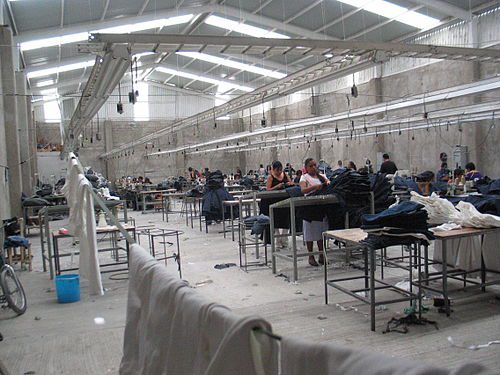
500px-MaquiladoraVicky Funari and Sergio de la Torre present a different view of the maquiladoras in their documentary, Maquilapolis (2007). In a colonia on the edge of Tijuana, women maquiladora workers organize to fight for severance pay, safe working conditions, and to clean up of the toxic waste polluting their community. American business interests and Mexican government officials insist their workers have good lives, but we see otherwise in the tours the women give us of their communities. (Watch the trailer here.)

There are examples of productive cross-border alliances as well. The photographer David Bacon documents many of the efforts to build solidarity across the border, including the deep roots of many non-governmental organizations. There are also corporate projects that change the relationship between U.S. and Mexican partners. For example, PepsiCo has undertaken a new initiative that saves the corporation money, but also benefits small corn and sunflower farmers in Mexico. The elimination of middlemen and strategic use of regional production facilities, helps both the corporation and the farmers. Such projects, while still profit-oriented, can enhance communities in Mexico and reduce migration to the United States.

For more reading and viewing, take a look at Anne Martínez’s “Rethinking Borders” in DISCOVER.

Photo Credit:
Guldhammer, A Maquiladora factory in Mexico, via Wikimedia Commons

« Previous Page
Next Page »

Recent Posts

  • The Radical Spanish Empire Roundtable – Introduction
  • All Eyes on the Petition: Reflections on The Radical Spanish Empire
  • Forgery, Invention, and the History of Skepticism in The Radical Spanish Empire
  • Iberian Subaltern Political Philosophies and The Radical Spanish Empire
  • Lawfare and the Legal Construction of Race in The Radical Spanish Empire
NOT EVEN PAST is produced by

The Department of History

The University of Texas at Austin

We are supported by the College of Liberal Arts
And our Readers

Donate
Contact

All content © 2010-present NOT EVEN PAST and the authors, unless otherwise noted

Sign up to receive our MONTHLY NEWSLETTER

  • New
  • Features
  • Reviews
  • Texas
  • Teaching
  • Digital
  • Watch & Listen
  • Authors
  • About