• Features
  • Reviews
  • Teaching
  • Watch & Listen
  • About

The past is never dead. It's not even past

Not Even Past

Review of Brown Skins, White Coats: Race Science in India, 1920-66 (2022)

Projit Bihari Mukharji’s Brown Skins, White Coats: Race Science in India, 1920-66 adds an innovative account of India’s twentieth century to the historiography of race science. As the head of the Department of History at Ashoka University in Haryana, India, Mukharji engages with subaltern studies and decolonial writings of South Asian history. The title echoes psychiatrist and philosopher Frantz Fanon’s Black Skin, White Masks (1952), and Mukharji applies Fanon’s analysis to the Indian subcontinent in discussing science’s role in racial alienation, the process by which colonial medicine and science practitioners divorced themselves from the social and political realities of the people they studied and treated. Brown Skins, White Coats examines the twentieth-century field of seroanthropology–the study of blood testing to explain social phenomena–and shows how these scientific practices, publications, and discussions shaped the racial politics of India’s nationalist movement. Mukharji argues that the history of Indian nationalism is inseparable from the development of race science in the subcontinent, and that historians of race science elsewhere must account for the Indian case. 

The book introduces a fascinating and effective method of storytelling beyond archival documents. Drawing from historian of slavery Saidiya Hartman’s method of Critical Fabulation, Mukharji constructs a fictional narrative based on the writings of twentieth-century Bengali novelist Hemendrakumar Ray. The narrative, consisting of eight letters exchanged between the novelist and another writer, includes the thoughts and conversations that non-scientists may have had about racial hierarchy in 1930s India. Through historical “overhearing” (p. 36), a linguistic practice that Mukharji identifies as distinctly Bengali, Brown Skins, White Coats combines classical Western historical methods with epistemologies local to the subject matter. The fabulations strengthen the book not only by articulating the presence of race science in social discourse, but also by demonstrating an analytical technique that reveals understandings of the archival material beyond purely literal interpretations. 
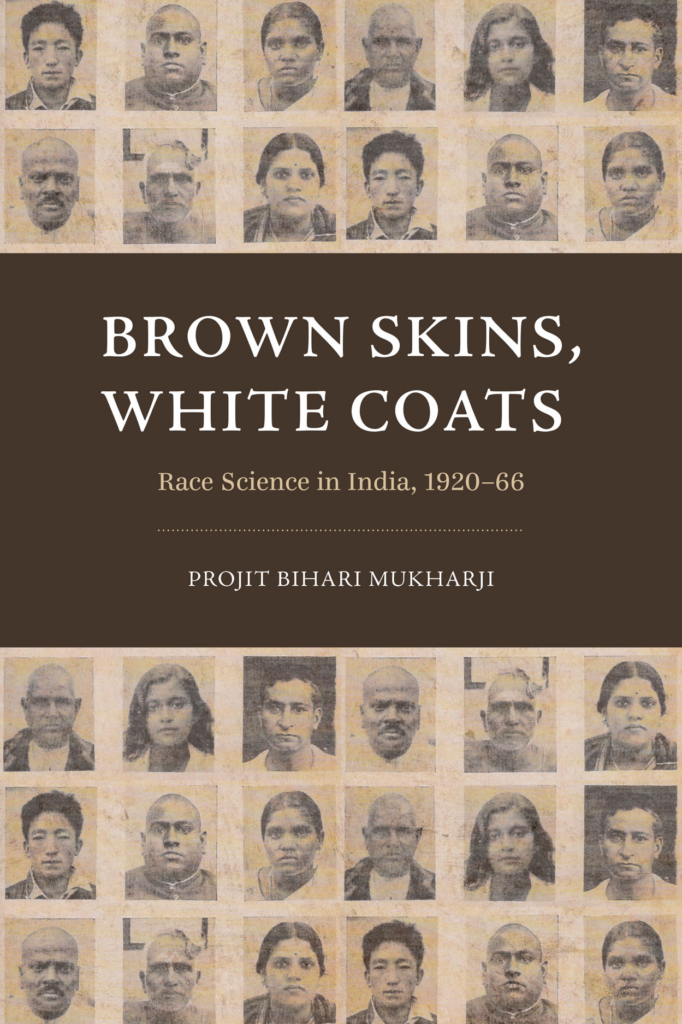
Brown Skins, White coats book cover

Mukharji begins in 1919 with the world’s first seroanthropology publication, which claimed to establish a link between blood types and ethnicity. Primarily relying on scientific publications and commentaries from scientific peers, he then demonstrates the ubiquity of racial classifications among biologists and anthropologists across the subcontinent. Concurrently, the “rapid Indianization of the scientific services in South Asia” (p. 50) separated academic science, including seroanthropology, from its previous association with Europeanness. Seroanthropologists in British India later incorporated the principles of blood-based racial hierarchy into local ethnic, religious, and caste systems. Race science and hierarchy models fit well into the nationalist independence movements of the mid-century which identified scientific infrastructure as essential to nation building. 

Mukharji next identifies multiple instances in which race science persisted after the Indian independence movement and discusses the concept of exogeneity, a framework that placed certain ethnic or religious populations as forever outsiders, in contrast to indigeneity. Many seroanthropological studies sought out culturally and genetically isolated communities as research subjects, including Jewish communities of South Asia. The studies of Jewish people fed into the nationalists’ assertion that Hindu people exclusively held the right to occupy and govern India, and Mukharji effectively shows how seroanthropologists contributed to the “emptying of the once-famed Jew Town of Cochin” (p.102). Mukharji then points to another example of racialized ideas of disease risk to the population of the subcontinent: sickle cell anemia. The historian notes that the social context of biochemistry in India in the 1950s differed significantly from the United States: “whereas the American molecularization of sickle cell disease had possessed a broad race-imploding aspect that disaggregated the presence of the gene from racial identities, in India molecularization seemed to reinforce racializing trends” (p.147). Molecularization–distilling the disease into differences in people’s molecular makeup–only exacerbated the racialization of sickle-cell disease in India. Skillfully tying in the racialization of caste and class in India, Mukharji shows how Indian scientists argued that certain populations posed a risk to the young nation based on the prevalence of genetic differences. 

Having explained the theoretical work of seroanthropology, Mukharji next turns to material. Seroanthropology relied on blood, and researchers often used their own blood as control samples, a process called “self-calibration” (p. 172). In using their own bodies as references, Mukharji argues, researchers placed themselves as the material “reserve” (p. 173) of scientific knowledge in India. Additionally, through interrogating the selection of research subjects, Mukharji reveals the wide variance of study design, then the author identifies swaths of blood samples that were lost due to inadequate refrigeration, which further affected results. The analysis of blood and research materials grounds the book’s discussion in the daily reality of seroanthropology and convincingly illustrates the influence of physical circumstances on the scientists’ universal claims. 
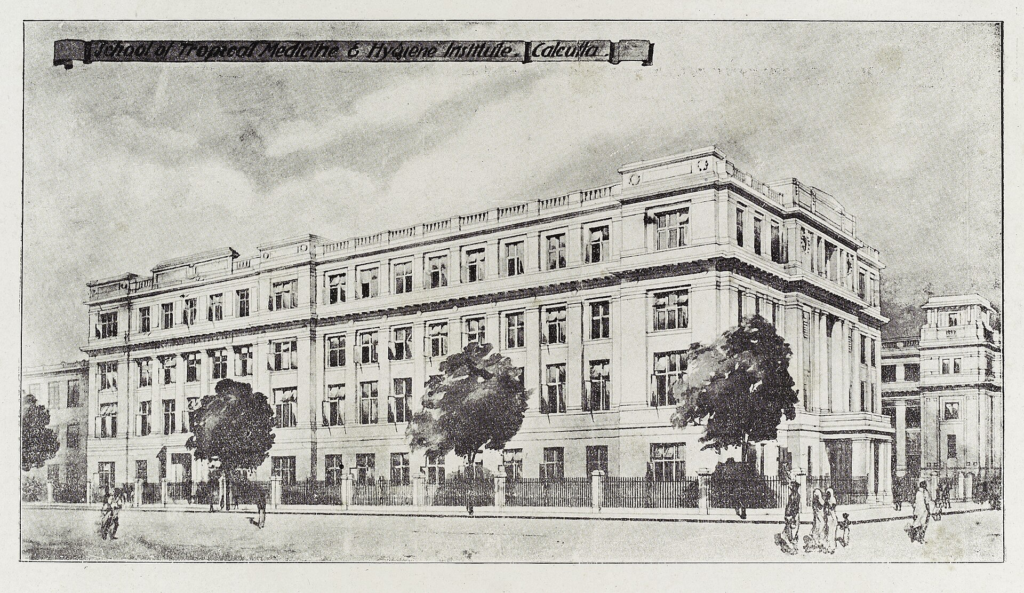
School of Tropical Medicine and Hygiene Institute.

School of Tropical Medicine and Hygiene Institute, Calcutta. Source: Wikimedia Commons

Mukharji rounds out his exemplary work of subaltern history of science with an account of refusals. In congruence with recent calls to decolonize the history academy, Mukharji classifies refusal not as mere resistance to science, but rather as distinct actions that Indian communities performed based on their own understandings of blood. By casting refusals as different practices in parallel to seroanthropology, this analysis rebukes claims that resistance was anti-scientific and offers an excellent framework for scholars to explore varying degrees of engagement in the history of science. The book concludes with four texts from mid-century Indian scholars articulating views for the future of their country, each incorporating eugenics and other race science into their vision of India’s past and future. This final chapter and conclusion exemplify the prevalence of race science in India after WWII, but it is difficult to discern the degree to which the lectures and scientific publications influenced public thought about race and science. Mukharji concedes the possible disconnect between his scientific subjects and the greater Indian public in the conclusion, stating “Whether their seroanthropological stories actually translated into government policies or not is doubtful, but they certainly received the funds and the benediction of the state to tell their snapshotted biohistories” (p. 216). Nevertheless, the archival information Mukharji presents effectively proves that race science was widespread on the subcontinent and aligned with the nationalist project of twentieth-century India, from the colonial period through the first decades of independence. 

Brown Skins, White Coats is a triumph of decolonial history. Projit Bihari Mukharji shows how historians of science can draw on the epistemologies and techniques local to their historical subjects to bolster their argumentation. Any historian, especially one searching for an example of decolonial academic writing, would benefit greatly from reading this book, regardless of their interest in seroanthropology.  


Ben Schneider is an MD/PhD student currently completing a PhD in the Department of History at UCLA. He studies the history of public and private hospital expansion in twentieth-century Los Angeles and is interested in the relationships between health policy, urban policy, and health activism.


The views and opinions expressed in this article or video are those of the individual author(s) or presenter(s) and do not necessarily reflect the policy or views of the editors at Not Even Past, the UT Department of History, the University of Texas at Austin, or the UT System Board of Regents. Not Even Past is an online public history magazine rather than a peer-reviewed academic journal. While we make efforts to ensure that factual information in articles was obtained from reliable sources, Not Even Past is not responsible for any errors or omissions.
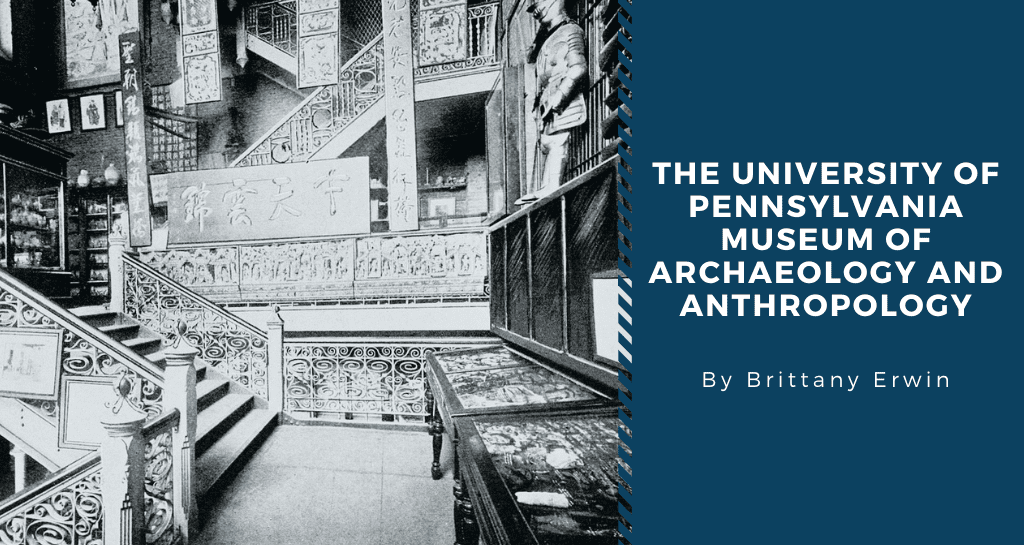
Digital Archive Review: The University of Pennsylvania Museum of Archaeology and Anthropology

Digital Archive Review: The University of Pennsylvania Museum of Archaeology and Anthropology

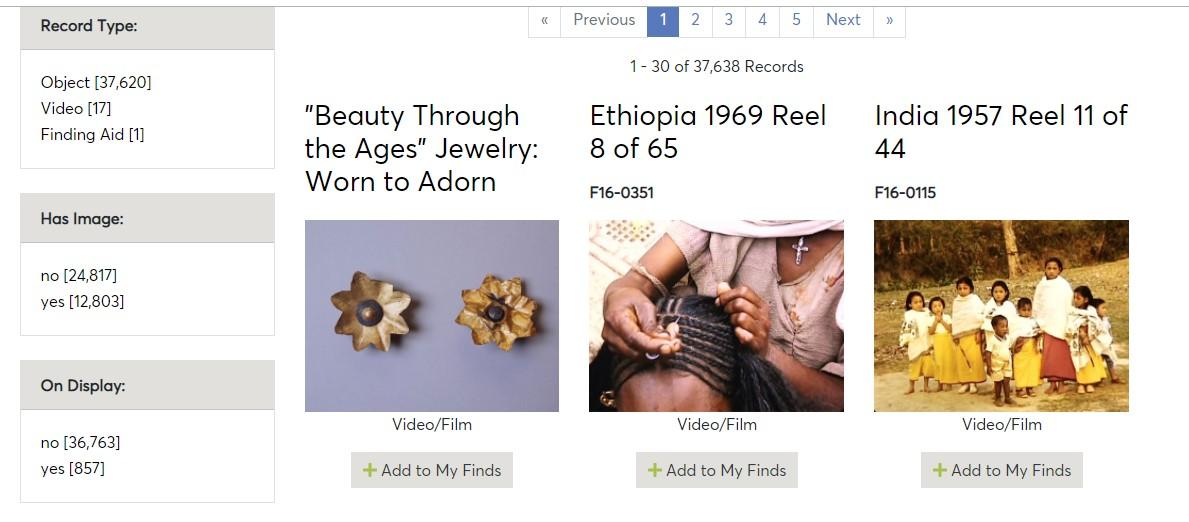
The University of Pennsylvania Museum of Archaeology and Anthropology—often called the Penn Museum—contains an extensive collection of objects originating from “ancient Egypt, Greece and Italy, Mesopotamia, Asia, Africa, and the Americas and more.” Many of those pieces are available for viewing online. The Penn Museum website offers in-depth descriptions of each item, along with high-resolution images, short entries on historical context, and related videos.

The Granite Sphinx of Ramses II

The homepage offers users several options for exploring the museum’s contents. As a starting point, it displays featured items, such as The Granite Sphinx of Ramses II. The site also utilizes a a keyword search and allows visitors to narrow their results by a range of categories, including: record type, if it has an associated image or video, whether it is currently on display, geographic section, whether it has a 3D model, historical period, inscription language, material, and technique.

A keyword search for “Jewelry” yields over 37,000 results

One standout piece helps illustrate the quality of the pieces housed at the Penn Museum. The Dowager Princess Crystal Sphere, a glass ball that sits atop a metal stand in the shape of a roaring wave. Dating from Qing Dynasty China (nineteenth century), the mysteries of its origins have enchanted museum goers for decades. The website provides images of this item from many angles, along with a description and a short historical context.

A 1954 image captures the smiling reaction of some children examining the Crystal Sphere
A 1954 image captures the reaction of some children examining the Crystal Sphere

An interesting feature that the site offers is an interactive map illustrating the origins of the museum’s collections. It includes approximately 92% of the items that the Penn Museum contains, which come from more than 1000 locations around the world. 

The Object Location Map appears on the homepage

Through all of these options, the website allows visitors to build their own virtual, self-guided tour based on their particular interests. For those seeking a more in-depth discussion, the museum posts videos of its monthly lecture series. In 2012, the lecture theme was “Great Riddles in Archaeology.” More introductory activities are also available on the site, including the “Write like a Bablyonian” text translator. 

This text translator helps users write their name in Cuneiform

The digital collections of the Penn Museum are extensive and easily accessible through their online portal. Its written, visual, and audio sources invite many groups to explore world history by browsing its pieces.

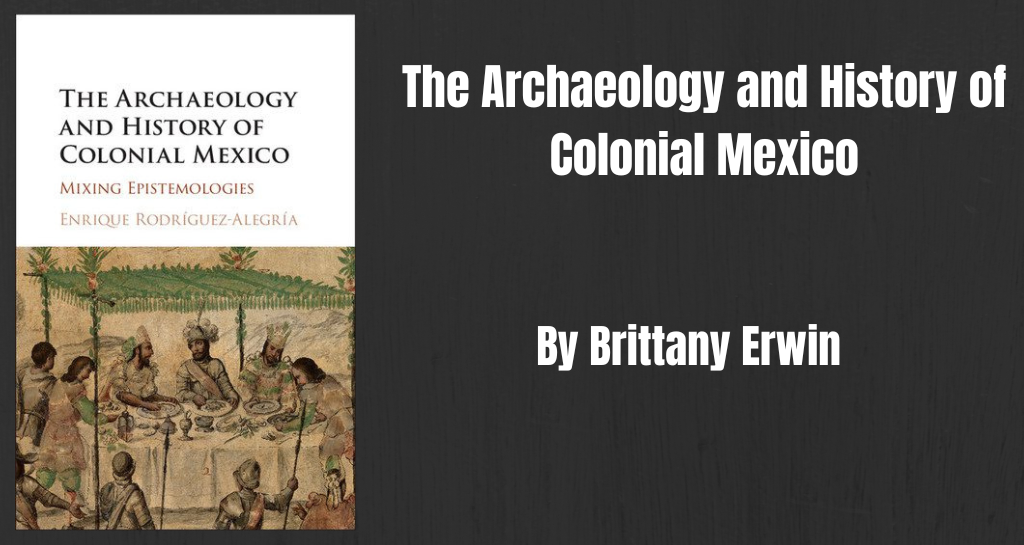
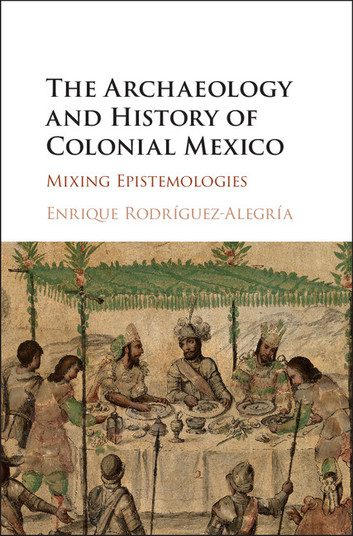
The Archaeology and History of Colonial Mexico by Enrique Rodríguez Alegría (2016)

In this study of the social significance of material culture in Mexico City and Xaltocan in the early colonial period, Rodriguez Alegría uses a variety of sources, including archaeological evidence relating to food consumption, catalogues of ceramic sherds from several dig sites in these cities, and wills, stock lists, and auction records. His use of archaeological data and historical records together reveals the benefits of incorporating disparate kinds of evidence: the archaeological data on food and material consumption filled in the blanks of historical records, which often leave out explicit descriptions of such daily practices.

The works of historians and anthropologists frequently overlap in theme and subject, however, the two disciplines gather and use evidence differently. Rodríguez Alegría argues that such differences should not stand in the way of interdisciplinary investigations. His main contribution is a discussion of the ways scholars conceptualize their methodologies. He asserts that in an interdisciplinary study, there should not be a contest over which kind of evidence is more worthwhile. Rather, researchers should pay careful attention to the implications of the interpretative strategies they use.

Part of what makes his methodology innovative is his acceptance of the inherent incommensurability of archaeological and historical evidence. He outlines common interpretative strategies used in each of these disciplines, openly acknowledging the differences between them. For archaeologists, analogical reasoning is common because it allows them to utilize “known behaviors in the present” in order to shed light on “unknown behaviors [of] the past.” Historians, on the other hand, tend to conceptualize evidence from their documents as synecdoches, “where qualities or practices found in a document or a few documents are replicated to stand for wider processes or patterns in a society.”

In his openness to the contradictions that result from simultaneously using these distinct methods, Rodríguez Alegría creates a provocative rejection of the established practice of seeking an uncontested line of reasoning. He asserts that the incorporation of more evidence fundamentally creates a more nuanced understanding, even if all the pieces do not come together to neatly form a single image. As a result, both the synecdoche favored by historians and the analogy used in anthropology have their place in a single work.

Rodríguez Alegría provides numerous examples of the benefits of interdisciplinarity, including his illustration of how quantitative and qualitative analysis of pottery fragments combine with historical data on markets and production methods to reveal new understanding of of the role of pottery in these cultures. In that sense, the writing and presentation style achieves the important goal of encouraging cross-disciplinary understanding.

The most compelling aspect of this work is the author’s insistence that scholars redirect their attention towards a more critical analysis of how they interpret their evidence. Forcing this awareness about discipline-determined approaches to data analysis promises new insights, but it also presents potential problems. At some point, scholars have to assert a coherent narrative, or at least a conceptual image, of the phenomenon under investigation. That process inherently requires a selection of relevant information. If scholars choose to incorporate apparently contradictory data collected outside of their discipline, they could face criticism for knowingly promoting an argument that goes against some of the data. It is possible that the scholarly community as a whole would resist this approach because of the widely ingrained attachment to uncontested narratives that Rodríguez Alegría criticizes.

This work prompts an important reexamination of disciplinary divisions and approaches to the interpretation of evidence. It fundamentally brings the question of what makes a document representative of a larger phenomenon to the forefront of historical analysis. Furthermore, it encourages scholars to think about how their investigation engages with contextual information from unwritten sources. Overall, Rodríguez Alegría’s book opens up an important discussion on the value of questioning the validity of even the most standardized interpretive strategies. As he points out, establishing a narrative is fundamental for historians because of its apparent utility in illustrating change over time. It is also, however, a method that reflects our aesthetic preference for presenting information this way. Both historians and anthropologists must, therefore, aim to break down barriers that would prevent the fruitful sharing of methodologies between disciplines.

Also by Brittany Erwin on Not Even Past:

The Museo Regional de Oriente in San Miguel, El Salvador
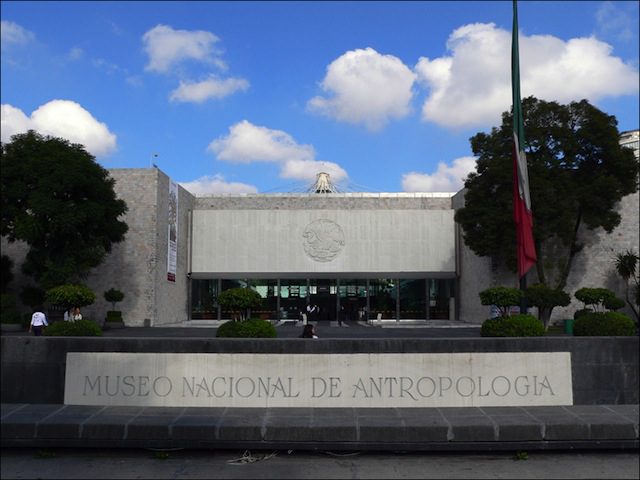
The National Museum of Anthropology in in San Salvador

You may also like:

Haley Schroer reviews Infrastructures of Race: Concentration and Biopolitics in Colonial Mexico by Daniel Nemser (2017)
Explore Diana Heredia’s virtual exhibition “Of Merchants and Nature: Colonial Latin America through Objects”
Ann Twinam reviews No Mere Shadows: Faces of Widowhood in Early Colonial Mexico by Shirley Cushing Flint (2013)

The National Museum of Anthropology in San Salvador

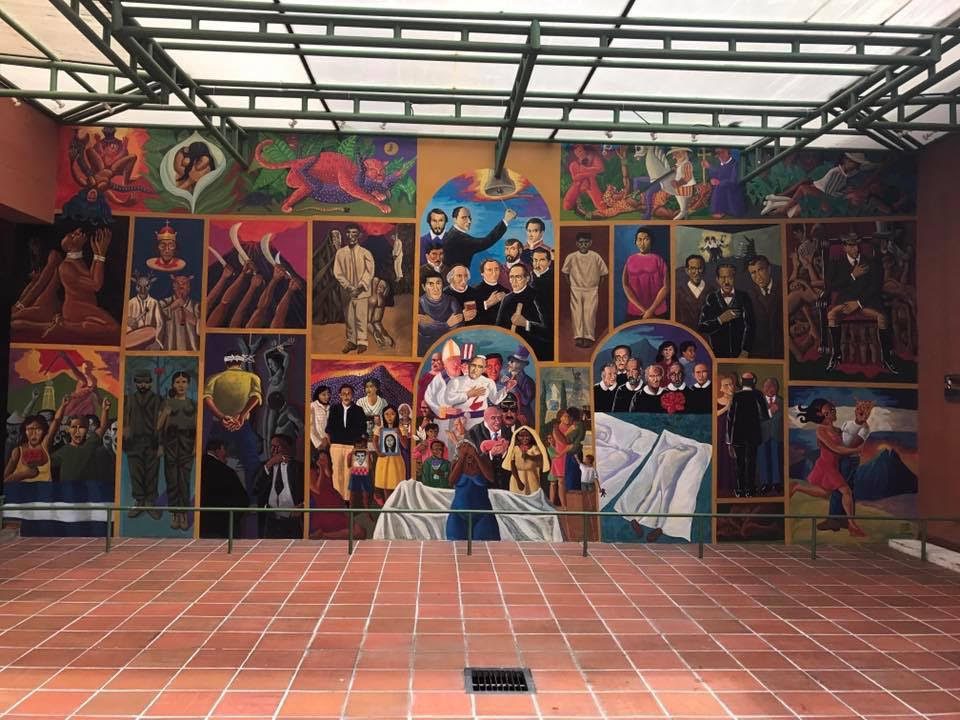
Picture of a mural at the Museo Nacional de Antropología (National Museum of Anthropology), San Salvador
Museo Nacional de Antropología (National Museum of Anthropology), San Salvador (via Brittany Erwin)

By Brittany Erwin

With its multiple universities, extensive commercial sector, and fast-growing population, the city of San Salvador has become an important axis of cultural production for the Salvadoran nation. As the country’s capital city, it houses many notable institutions, including the National Archive, The Museum of Art, and the National Theater, in addition to several historic churches. Included in these important institutions is MUNA, the Museo Nacional de Antropología.

Founded in 1883, MUNA was a product of cooperation between Salvadoran president Rafael Zaldívar and David J. Guzmán, a politician and scholar. Today the full name of the museum is the David J. Guzman National Museum of Anthropology in honor of his contributions to natural and archaeological knowledge in the country.

Located in the heart of downtown San Salvador, this museum offers the nation’s most comprehensive exhibition of Salvadoran history. With five exhibit halls, space for temporary displays and artists’ showcases, MUNA serves as a pillar of El Salvador’s effort towards cultural preservation.

The current temporary exhibit explores the legacy of the last significant eruption of the San Salvador Volcano a hundred years ago, in 1917. Seismic activity and its effects on all aspects of daily life is an important reoccurring theme in the historical narrative that this museum presents.

As visitors enter, they encounter a large, striking mural on the interior courtyard wall. Its vibrant colors and graphic scenery illustrate the significant historical impression that this small country has made. Painted by Antonio Barilla and completed in 2011, the work illustrates the story of the nation. Over centuries, struggles for power among different social, cultural, and ethnic groups have manifested in cycles of conquest, internal conflict, and war. In this sense, Barilla’s mural represents the history of this country as a story about people who have turned a legacy of suffering into one of perseverance and triumph. In that same sense, the mural also provides a thematic map to enhance the museum visitor’s examination of the artifacts that make up that history.

The quantity of exhibits in this museum is impressive, ranging from early-Mayan ceramics to modern-day markers of Catholic culture. Three of its more prominent specialties are the agricultural foundations of El Salvador’s early civilizations, the ongoing role of ritual worship in community life, and the consequences of living in a highly volcanic region.

For the student, this institution offers a wide range of historical, biological, and anthropological information about the interesting dynamics between the past, present, and future in this Central American country. In addition to the artifact displays, MUNA is home to a specialized library. Its collections comprise a variety of primary and secondary works pertaining to the political, economic, social, and cultural history of the nation. These resources are available to local and international researchers.

For the tourist, the historian, or the curious visitor, MUNA allows for a Salvadoran excursion to the past, starting from the earliest days of inhabitance and ending in the contemporary reality of twenty-first century life.

For more information about this museum and its collections, visit: http://www.cultura.gob.sv/museo-nacional-de-antropologia-dr-david-j-guzman/

Also by Brittany Erwin on Not Even Past:

The Museo Regional de Oriente in San Miguel, El Salvador

You may also like:

Too much Inclusion? Museo Casa de la Memoria, Medellín, Colombia, by Jimena Perry
History Museums: Museo Nacionál de Antropología, Mexico, by Robert Wilks
History Museums: the Good, the Bad, and the Beautiful by Joan Neuberger


The views and opinions expressed in this article or video are those of the individual author(s) or presenter(s) and do not necessarily reflect the policy or views of the editors at Not Even Past, the UT Department of History, the University of Texas at Austin, or the UT System Board of Regents. Not Even Past is an online public history magazine rather than a peer-reviewed academic journal. While we make efforts to ensure that factual information in articles was obtained from reliable sources, Not Even Past is not responsible for any errors or omissions.
History Museums: Museo Nacionál de Antropología, Mexico

By Robert Wilks

Museo Nacionál de Antropología, Mexico. Via Wikipedia.

Museo Nacionál de Antropología, Mexico. Via Wikipedia.

My favorite history museum, and one of my favorite museums of any type, is the Museo Nacionál de Antropología in Mexico City. It is housed in an enormous structure filled with the pre-Columbian culture of Mexico. It covers every civilization, period and style in its artifacts. They are beautifully displayed, perfectly lit and present a dazzling array of forms and colors. There is so much to see, multiple visits are required. I was totally amazed at the richness and variety of cultures. I highly recommend it.

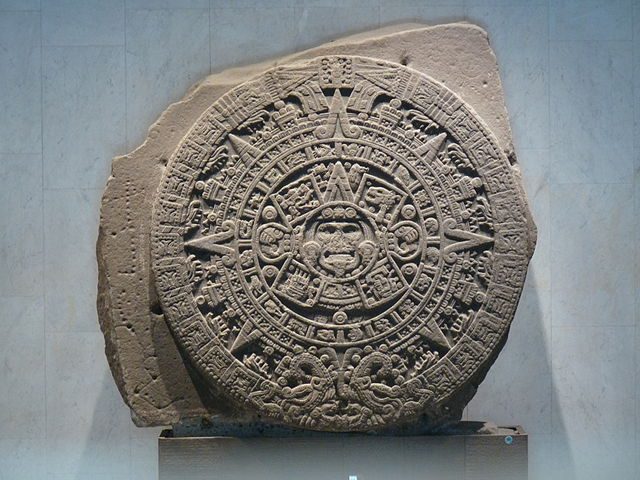
Monolith of the Stone of the Sun, also named Aztec calendar stone.

Monolith of the Stone of the Sun, also named Aztec calendar stone.

bugburnt

Recent Posts

  • Review of Brown Skins, White Coats: Race Science in India, 1920-66 (2022)
  • Las cosas tienen vida:  Un podcast sobre el rol de los objetos coloniales en nuestras vidas actuales 
  • Las cosas tienen vida: A Podcast About the Role of Colonial Objects in Our Present Lives 
  • Review of Disenfranchised: The Rise and Fall of Industrial Citizenship in China (2019).
  • Review of The Years of Theory: Postwar French Thought to the Present (2024).
NOT EVEN PAST is produced by

The Department of History

The University of Texas at Austin

We are supported by the College of Liberal Arts
And our Readers

Donate
Contact

All content © 2010-present NOT EVEN PAST and the authors, unless otherwise noted

Sign up to receive our MONTHLY NEWSLETTER

  • Features
  • Reviews
  • Teaching
  • Watch & Listen
  • About