• New
  • Features
  • Reviews
  • Texas
  • Teaching
  • Digital
  • Watch & Listen
  • Authors
  • About

The past is never dead. It's not even past

Not Even Past

The 1980 Moscow Olympics and my Family

by Andrew Straw

My mother, Rae Straw, and her friend Pam had an odd assignment in 1979 for two travel agents from Houston: selling the Soviet Union to American tourists.  For travel agents, such familiarization or “FAM” trips were a regular occurrence, but going to the Soviet Union during the preparations for the 1980 Moscow Olympics was a unique experience.  While Red Square, the red stars on Stalinist buildings, the Moscow Metro, and the Hermitage dazzled my mother, her biggest impression was the shear excitement of Soviet citizens at hosting the world.  In fact, despite Cold War tensions, since Khrushchev’s “Thaw” Soviets had enjoyed hosting foreigners at a number of international festivals.  American citizens and culture were literally transported to Moscow during the World Youth Festival in 1957, and the 1959 “American Exhibition” in Moscow attracted several million Soviet citizens who came to gaze at American consumerism.

Similar to the ongoing Sochi Winter Olympics, impressive preparations for the 1980 Moscow games were surrounded by domestic repressions, corruption, and strained international relations with the West.  Despite these similarities, there are obvious differences, particularly the Soviet invasion of Afghanistan and the subsequent American-led boycott of the Olympics.  However, most reporting (aside from The Daily Show’s Jason Jones) has missed another big difference between the atmosphere surrounding both events: the fact that American consumer goods no longer have the potential to transform the way Russians view their state in comparison to the rest of the world.
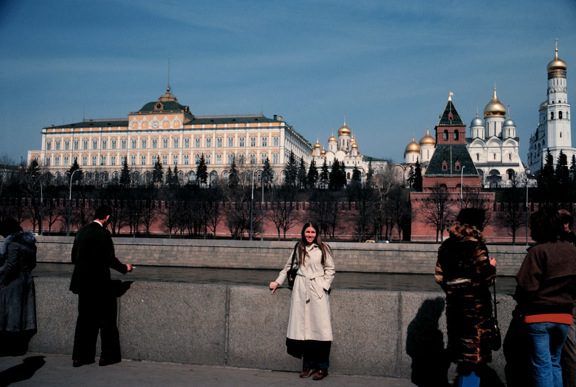
rae_kremlinThe irony of the 1980 boycott was that it nixed an influx of American products, people, and ideas into Moscow just at the time a younger and more liberal generation of Soviet politicians and “Baby Boomers” were rising through the ranks of the Soviet system and the growing middle class desired an increase in opportunities, freedoms, leisure activities, and consumer goods.  Even if most did not actively challenge the Soviet system, many wanted to experience Western culture and comforts. In this Cold War context, promoting American consumerism, music, high wages and a “life without queues” was the most attractive part of U.S. modernity. While there is no consensus on how crucial “soft power” was in deciding the outcome of the Cold War, many Americans understood the Soviet affinity for U.S. consumerism and pop-culture. Both U.S. government and businesses sponsored the post-Stalin “American invasion” that included Jazz radio programming, political propaganda, tours of musicians, student exchanges, and exhibits of American goods.
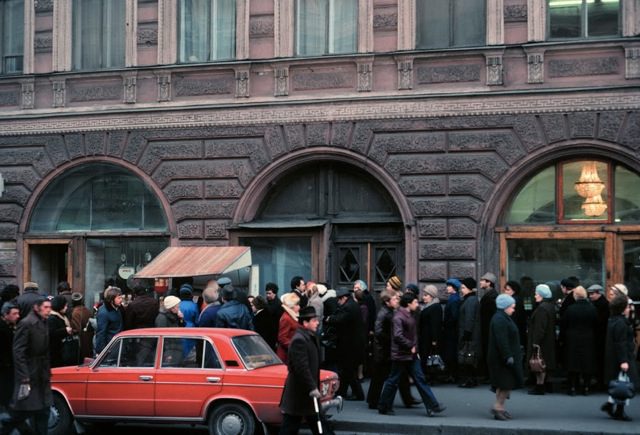
st_petersburg_streetEven though travelers such as my mother had little intention of converting communists to capitalists, they loaded suitcases with cigarettes, chewing gum, pens, and blue jeans.  Once in Moscow, my mother and her companions sold and bartered their Western-made goods a few blocks from the Rossiya Hotel in central Moscow.  But after my mother returned to the U.S., the boycott was announced and her work of selling the Olympic host to Americans and the chance for going back to the USSR ended.
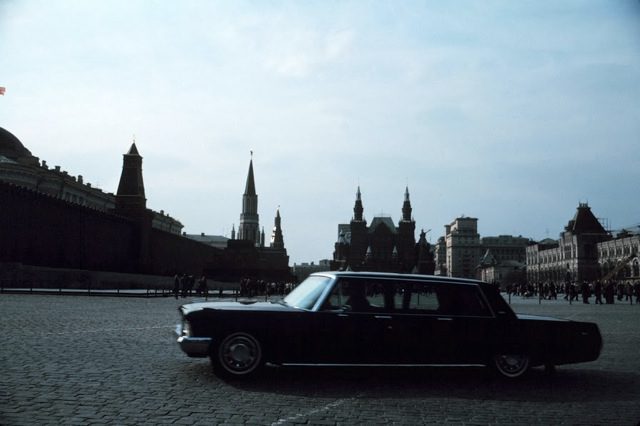
kremlin_limoMeanwhile, my future father-in-law, Nail Aminevich Izmaylov, was a driver with the Academy of Sciences Institute in Moscow, and through connections he got a job as a stand-by driver for foreign tourists at the Olympics.  While the American-led boycott was a huge disappointment for sports fans, he described the most depressing part as knowing that “business opportunities” for buying Western goods and then profiting on the black market would be limited.  Still, the games went on, and drivers prepared by keeping a “driver’s komplekt” of terrible Soviet cigarettes, damp matches, and a broken pen.  The idea was, once the chauffeured visitors tried one of these Soviet items, they would immediately offer their own or treat the driver to a shopping spree of Western goods in one of the stores where only foreigners were allowed to shop.
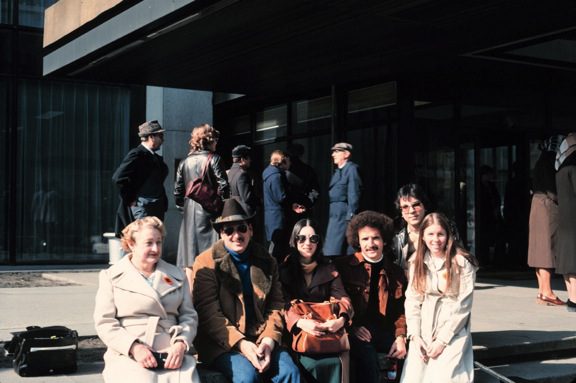
group_moscowThis dynamic of the event as an influx of superior consumer goods is absent in Sochi.  Instead, Bosco, the Russian designer brand with ties to the Kremlin, designed the high-quality team uniforms, which are available in shopping centers throughout the country.  In general, U.S. fashion and music have largely lost the subversive appeal as Putin’s “Sushi Years” have led to a continued consumerist bonanza that the majority of Russians have enjoyed to varying degrees.  In short, Putin has replaced the one-party communist state with a one-party consumerist state.

As my mother and father-in-law watched the Sochi opening ceremony, they reflected on the boycott and 1980 Moscow Olympics with both nostalgia and disappointment.  On the one hand, it was a period when adventurous visitors provided a profitable opportunity to savvy Soviets by transporting everyday Western goods into the Soviet Union.  On the other hand, the boycott and disappointment of not being able to show Americans around Moscow remains for both my mother and father-in-law.   While not shying away from acknowledging the current issues from Ukrainian protests to corruption to anti-LGBT laws, both were pleased that athletes and fans from across the world were participating in the games.

More reading on the Cold War and the Soviet Union:


Donald J. Raleigh, Soviet Baby Boomers: An Oral History of Russia’s Cold War Generation


Walter Hixon, Parting the Curtain: Propaganda, Culture, and the Cold War 1945-1961


Stephen Kotkin, Armageddon Averted: The Soviet Collapse, 1970-2000


Photo Credits:


Rae Straw standing alongside the Moscow River


A queue of Russians in St. Petersburg


A limo parked in Moscow’s Red Square


Rae Straw (far right) pictured with her tour group in Moscow


All images courtesy of Andrew Straw
 

iTunes Remembers Black History: The New Archive (No. 5)

By Charley S. Binkow

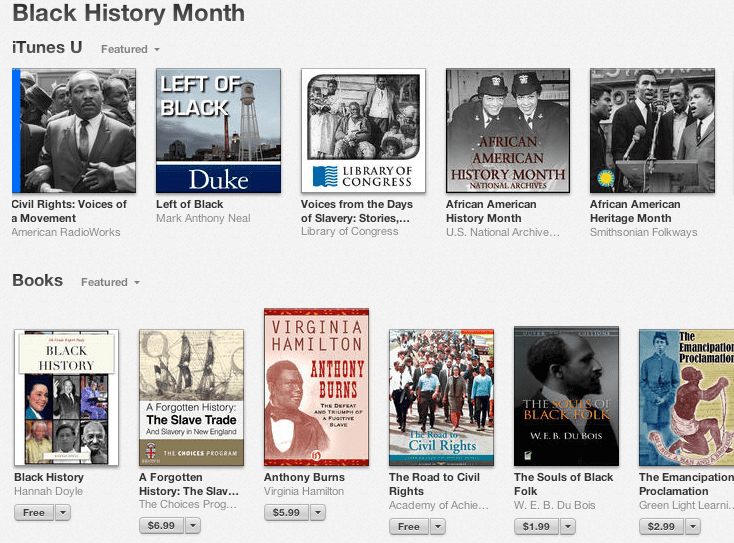
February is Black History month.  It is a time for remembrance and reflection for all Americans, but for Historians it is also a rich period for study and research. iTunes U, the academic branch of Apple’s iTunes store, is featuring a vast collection of first-hand oral histories, interviews, and lectures on the extensive history of African Americans.

screen_shot_2014-02-19_at_4.33.32_pmThere are over two dozen podcasts and each one offers a unique perspective on black history: “The Louis Armstrong Jazz Oral History Project” explores the world of African American Jazz, The Gilder Lehrman Institute offers a diverse lecture series on the post Civil War age, and Stanford’s “Modern Freedom Struggle” collects videos on political thought during the Civil Rights movement.  The most powerful, collection is Duke University’s “Behind the Veil,” which compiles 100 interviews with African Americans who experienced firsthand the world of segregation in places like Birmingham, New Orleans, Memphis, Albany (GA), and Muhlenberg County.  These interviews are as personal and interesting as they are diverse.  All the podcasts are free on iTunes and are well worth perusing.

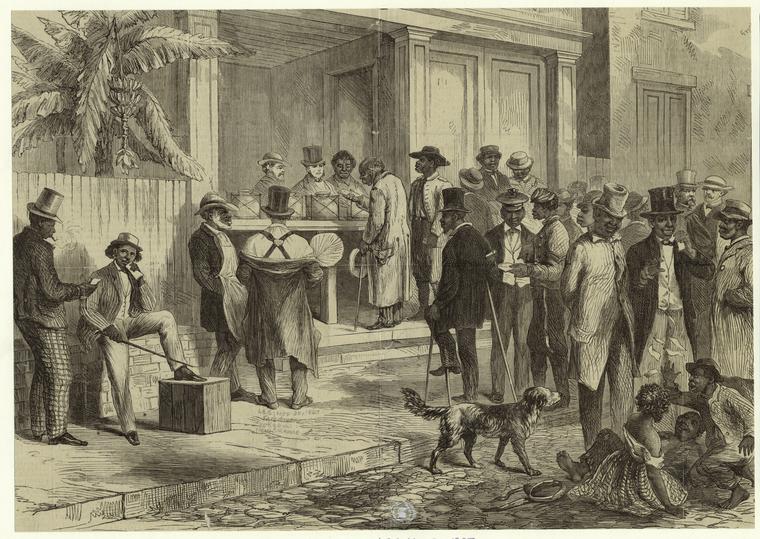
freedmenvotinginneworleans1867The collection is of value for everyone, from professional historians to amateur history buffs.  On top of the primary sources, subscribers can hear engaging and thought provoking lectures from renowned scholars like Eric Foner and James O. Horton.  iTunes, is also offering customers a wide selection of outside reading options relating to the topic of Black History, with titles such as The Color Purple, Beloved, Fredrick Douglass’s My Escape from Slavery and Howard Zinn’s On Race.

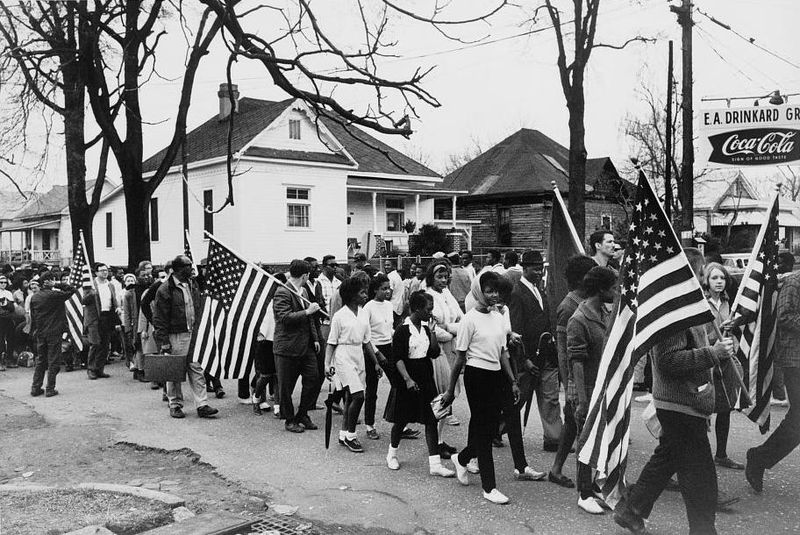
800px-selma_to_montgomery_marchesOverall, the collection does a great job of honoring, remembering, and respecting the struggle of African Americans.  The podcasts will keep listeners engaged for days and the interviews give historians hours of first-hand accounts.

If you enjoy these iTunes U collections, be sure to check out our own podcast, 15 Minute History

And explore the latest finds in the NEW ARCHIVE:

Maps and primary documents that change before your very eyes

Harry Houdini’s weird and wild scrapbook collection

Photo Credits:

Screenshot of the iTunes U podcasts and books being featured for Black History History Month

1867 engraving of African American freedmen in New Orleans voting for the first time (Image courtesy of New York Public Library Digital Collection)

Participants in the 1965 civil rights march from Selma to Montgomery, Alabama (Image courtesy of the Library of Congress)

Presidents on NEP for Presidents’ Day

Popular articles from our archive about Presidents and some of the people around them:

LBJ and Vietnam: A Conversation

and

The Prisoner of Events in Vietnam

by Mark Lawrence


A Rare Phone Call from One President to Another

by Jonathan Brown


The Atomic Bombs and the End of World War II: Tracking an Elusive Decision

by Bruce Hunt


A Historian Views Spielberg’s Lincoln

by Nicholas Roland


Liz Carpenter, Texan

and

Lady Bird Johnson in Her Own Words

by Michael Gilette


History in Motion: The New Archive (No. 4)

By Henry Wiencek

Traditional maps can portray people and places at certain moments, but they do not capture the dynamism of movement and change over time. And historical texts can describe change over time but lack the visual element that makes it possible to see the multiple dimensions of change at once. However, “The Spatial History Project” is harnessing the power of digital technology to visually animate historical change. A collaboration between historians and computer engineers at Stanford University, this remarkable site hosts maps that actually move, grow and change before your very eyes. You can watch as infectious diseases spread, as railroads expand, as people migrate, and as Nazi concentration camps are built and, as a result, you can gain a better insight on how, and why, it all happened.

screen_shot_2014-02-12_at_8.48.46_pm

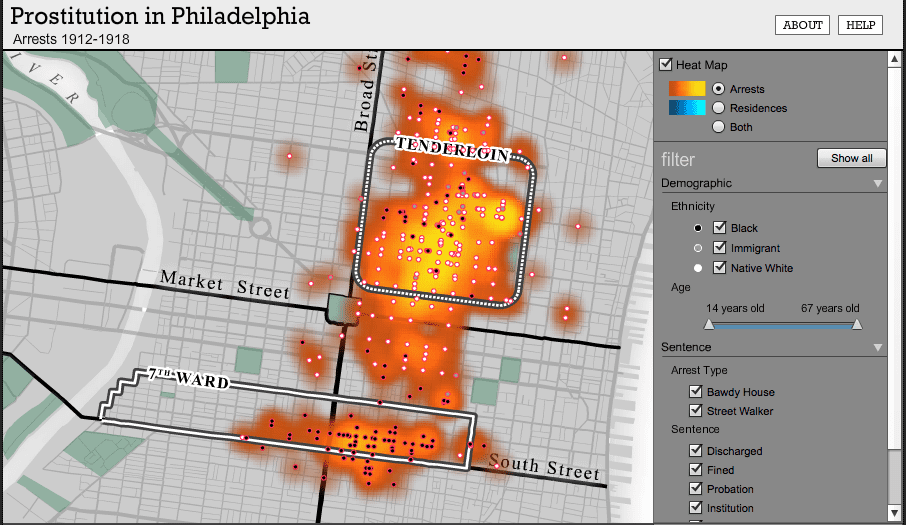
One of the site’s most compelling projects visualizes prostitution arrests in Philadelphia between 1912 and 1918. By splicing a variety of data surrounding these arrests—where the arrest took place, the individual’s racial identity, place of residence, age, among others—we get a deep historical snapshot of who was being arrested for prostitution and where. What emerges is a stark racial divide between the tenderloin district, where “white” arrests largely took place, and the 7th ward, where “black” arrests occurred in greater concentration. Add place of residence data to the map and another fascinating dynamic appears: while “white” offenders largely travel into the tenderloin, most of the “black” and “immigrant” individuals live virtually next door to the brothels. So not only do we see who was arrested for prostitution; we get to see how they got there.

screen_shot_2014-02-12_at_9.01.47_pmMany of the visualizations specifically challenge traditional narratives of world and US history. “Transcontinental Railroad Development, 1879-1893” allows readers to watch as rail lines creep across the western United States over this 14 year period, connecting major depots such as Chicago and St. Louis with remote frontier lands. But this is not your classic story of westward expansion and economic development. The map integrates population density to demonstrate how sparsely peopled new rail depots were. While rural populations initially grew along new railroad lines, the 1890s depression depleted them back to previous levels, suggesting that railroad companies made critical miscalculations in their rail lines’ organization. By introducing some movement into the mapping of America’s railroads, the story changes.

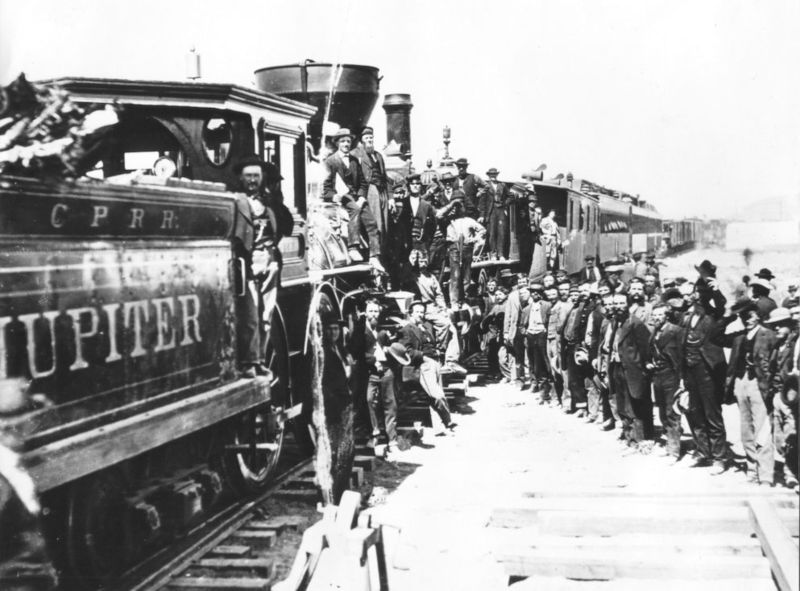
800px-69workmen“The Spatial History Project” uses digital technology to convey the depth and complexity of history. Its maps depict numerous factors—economics, race, the environment and many others—bisecting and interacting to forge change. And not always the change we assume. This is history as movement, not as a moment.

More finds in THE NEW ARCHIVE:

Charley Binkow combs through Houdini’s scrapbooks

And Henry Wiencek examines a visual history of emancipation

Photo Credits:

Screenshots of the visualizations “Prostitution in Philadelphia: Arrests 1912-1918” and “Transcontinental Railroad Development, 1879-1893,” both taken from “The Spatial History Project”

Workmen celebrate the completion of America’s first Transcontinental Railroad, Promontory Summit, Utah, May 10, 1869 (Image courtesy of National Park Service)

Domesticating Ethnic Foods and Becoming American

by Madeline Hsu

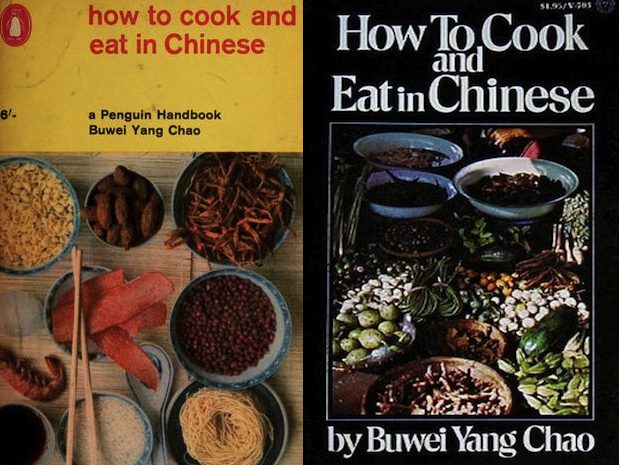
How to Cook and Eat in Chinese was the earliest popular, English-language guide to Chinese cooking. First published in 1945 and reprinted several times, it remains in wide use today.  The author, Dr. Buwei Yang Chao, wrote the cookbook at the urging of fellow faculty wives in New Haven, in particular Agnes Hocking, wife if the idealist philosopher William Hocking.  Trained as a physician, Dr. Chao reassured American housewives that she could teach them the complex and exotic art of Chinese cooking because she had learned as an adult herself while a student in Japan.

In addition to providing straightforward and simple directions together with suggestions for obtaining ingredients and alternatives, How to Cook and Eat in Chinese presents its guidance with wit and whimsy provided by Dr. Chao’s husband and translator, the famous linguist Dr. Yuen Ren Chao, who created terms now in common usage such as “stir fry” and “potsticker.”  Footnotes add humorous asides that explain family disputes over translations and descriptions for Chinese cultural practices. For example, in the introduction, the language specialist Yuen Ren Chao cannot resist adding a footnote to the otherwise commonplace, “Really, you should not have put yourself to so much trouble!” to explain that this translation is inaccurate because Chinese lacks the “subjunctive perfect.”

cookbooksplice_0Dr. Buwei Yang Chao’s cookbook was so successful that the well-known author, Pearl Buck, who wrote one of its prefaces from the point of view of an American housewife, urged Chao to pen the story of her life.  Autobiography of a Chinese Woman appeared in 1947.  With great charm, Chao made a persuasive case for the educated, cosmopolitan Chinese family to be accepted as American.  The success of Dr. Buwei Chao’s publications bridging Chinese and American peoples underscores the intrinsic relationship between popularizing ethnic food and the assimilation of ethnic and racial minority groups.  As Donna Gabaccia wrote in We Are What We Eat: Ethnic Food and the Making of Americans, after World War II, ethnic foods such as Chinese and Italian, would win broader appreciation as part of a more general expansion of the boundaries of mainstream American culture and society.

User-friendly ethnic cookbooks such as How to Cook and Eat in Chinese brought once alien cultures and foodways directly into the kitchens and homes of Euro Americans.  According to Fashionable Food: Seven Decades of Food Fads by Sylvia Lovegren, family meal preparation was not only a commonplace form of domestic labor, but one that provides keen insights into broader historical trends.  During the Cold War and the Civil Rights era, these shifts emerged in part through the growing popularity of ethnic foods and cookbooks.  Dr. Buwei Chao was an early forerunner of the trends that by the late 1960s and early 1970s mobilized leading figures in the food publishing business, such as Judith Jones, Julia Childs’ editor at Knopfand Craig Claiborne, the New York Times food critic, to recruit cooks with ethnic food expertise, personality, and writing ability to introduce general audiences to their cultures.

800px-chinatown_02_-_new_york_cityJones’ discoveries, sometimes promoted in conjunction with Claiborne, included southern chef, Edna Lewis of Café Nicholson who authored The Edna Lewis Cookbook (1972) and The Taste of Country Cooking (1976); scholar Claudia Roden and A Book of Middle Eastern Food (1968); the late Marcella Hazan and The Classic Italian Cookbook (1973); and restaurant owner Irene Kuo with The Key to Chinese Cooking (1977).  Claiborne’s entry into the Chinese cookbook field was The Chinese Cookbook (1972) which he co-authored with Virginia Lee.  Both Hazan and Lee attracted Jones and Claiborne’s attention when they began offering cooking lessons out of their homes.

America’s immigrant population and the broad acceptance of ethnic cultures and communities have boomed along with the popularity of ethnic restaurants, cookbooks, cooking shows, and personalities.  For an understanding of the early roots of this business and cultural phenomenon, revisit Buwei Yang Chao’s How to Cook and Eat in Chinese.

You may also like:

Judith Jones, The Tenth Muse: My Life in Food (2007)

Craig Claiborne, A Feast Made for Laughter (1982)


Photo Credits:


Book jackets of How to Cook and Eat in Chinese (Image courtesy of Asian American Writers’ Workshop)


Food market in New York City’s Chinatown (Image courtesy of Wikimedia Commons/User Momos)


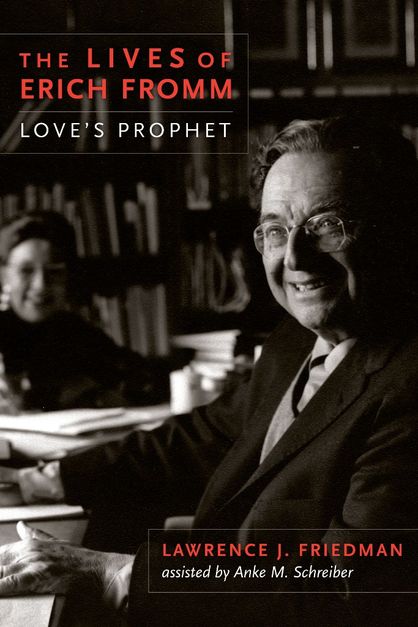
The Lives of Erich Fromm: Love’s Prophet by Lawrence J. Friedman (2013)

by Christopher Duncan

Perhaps one day some whimsical people with money will get together and honor books for their subtitles. Lawrence Friedman’s new biography of Erich Fromm, subtitled “Love’s Prophet,” wins for getting the total picture; for, in just two words, capturing a whole life. But it couldn’t have been a difficult choice.

Erich Fromm was a German-American psychotherapist and ethicist, most noted within the academy for his groundbreaking synthesis of Marxism and Freudianism. After emigrating from Germany in 1934, Fromm became a robust public intellectual, a voice for love and freedom who spoke in words a schoolchild could read. Fromm’s message was brief: love — and don’t wait — or perish. Mike Wallace’s interview with Fromm perfectly captures his otherworldly charm, his preference for the elegance of plain truth over reasoned facts, his will to enjoy, his deep concern for humanity, his long view of history. This footage makes me nostalgic for the time when playful intellectuals visiting us from some mystical other world would come on TV.

TheLives_ErichFrommFromm’s ecstatic prophetic pose alienated many academics.and few young scholars today are familiar with or even interested in Fromm’s arguments about freedom, fascism, capitalism or love. And yet, there was something about Fromm’s style that seemed to catch; few thinkers achieved Fromm’s global popularity.

In Friedman’s telling, Fromm wasted no time becoming Fromm. The biography opens with an adolescent Fromm’s coming-to-terms with his neurotic, overbearing father.. Rather than moving far from his home in Frankfurt to become a rabbi, as he wished, Fromm remained close to his family by attending the nearby University of Heidelberg. There he studied economics under Alfred Weber, Max Weber’s brother. Fromm’s dissertation explored “the function of Jewish law in maintaining social cohesion and continuity in the three Diaspora communities – the Karaites, the Reform Jews, and the Hasidim.” Much of his ethics would follow from these roots in humanistic Judaism. Although Weber believed Fromm’s work qualified him for a promising career as a scholar, Fromm’s father wasn’t so sure. He showed up in Heidelberg on the day of his son’s defense to tell the faculty committee that, because Erich was not prepared and would fail, he was going to kill himself.

Fromm’s affair with Frieda Reichmann, a much older  Frankfurt psychoanalyst who introduced him to the new discipline and thereafter become his first of three wives, offered the emotional exit he needed from his oppressive family. Fromm spent his twenties invigorated by psychoanalytic training, and even then, he showed signs of departing from Freudian orthodoxy. Around 1929, Max Horkheimer of the Frankfurt School for Social Research hired Fromm to bring in the new psychology that had been blossoming in Vienna and Berlin. For whatever reason, Fromm’s estrangement from the Frankfurt School casts a large shadow over the magnitude of his involvement, first in grounding the Institute’s particular “Freudo-Marxism,” and secondly in ensuring its  future. Many scholars and activists today, historians included, have become so accustomed to thinking about culture in fluid social psychological terms similar to those Fromm pioneered that they forget the great chasm that once existed between Orthodox Marxism and Freudian analysis. Fromm worked to forge a dialectical link between “social structure” and “instinctual need,” where structures (e.g. forms of work organization, distributions of wealth, broad cultural practices) modified libidinous impulses that in turn cement or challenge (“explode”) those structures. Fromm proved that psychoanalysis could provide Marxism with a better understanding of subjectivity and he “postulated that the entire interaction between changing instincts and changing social forms took place most conspicuously within the family, the primary mediating agency between the individual psyche and broad social structures.” At Frankfurt, Fromm accomplished what was then a radical philosophical feat.

image

When Hitler came to power, Fromm was offered a position on Columbia’s sociology faculty.  Fromm successfully lobbied Columbia for the Frankfort Institute’s use of University facilities in Morningside Heights, ensuring the future of an intellectual tradition he would not long remain part of. Fromm’s intellectual conflict with some of the Frankfurt School crew (notably Adorno and Marcuse), at least on the surface, revolved around his departure from the notion, popularized by Freud, that sexual libido, in its repression by the reality principle, was the material basis of the unconscious and of mental illness. In America, Fromm cultivated friendships with analysts who shared his rejection of Freud’s libido theory of mind. Through his friendships with Karen Horney, Harry Stack Sullivan, and Margaret Mead, who all emphasized culture and intersubjectivity over the economic and the psychosexual, Fromm’s thought flourished. Rather than seeking to occupy a position of authority or submission vis-a-vis his contemporaries, Fromm wove his own ideas out of the “interpenetrative,” fraternal exchanges with his rather intelligent and pioneering friends. In other words, the generative mode of his life’s work corresponded gracefully to its content.

Fromm’s psychotherapeutic career occupies in my opinion too small a portion of Friedman’s book, though we can forgive the biographer this fault since access to that deeply private history is no doubt heavily restricted. What we do know is that Fromm was a lay analyst, which created problems for him in an increasingly institutionalized, medical and behavioralist psychological field. Fromm innovated his technique away from what believed were Freud’s alienating and paternalist approaches; hence his rejection of the couch. The way Friedman describes it, Fromm viewed therapy as a “dance” between friends, and his sessions recall a piece by the performance artist Marina Abramovic, “The Artist is Present,” in which two interlocutors stare at each other, taking the other in, silently and fully, affirming their shared experience and desires.

image

On the question of politics, Friedman argues that Fromm must be remembered as an enthusiastic Marxist. Fromm called himself a socialist humanist, but if his commitment to Freudianism was often contested, so were his Marxist credentials. The fuss was understandable: Fromm confounded ideologues, especially with such seemingly innocuous ideals – love, self-discovery, freedom. When Herbert Marcuse published Eros and Civilization, in 1955, with its rabid critique of Neo-Freudianism, Fromm’s split with Frankfurt returned to haunt him. Marcuse’s apparent victory in what became a highly publicized feud in the American magazine Dissent seemed to seal Fromm’s rejection by Marxist scholars and the New Left: by Marcuse’s rhetorical tricks, Fromm’s post-Freudianism came, oddly, to signify his post-Marxism. What Marcuse saw in Fromm’s good tidings – his evangelical message of love (formalized a year after Eros in The Art of Loving – in my opinion Fromm’s most beautiful book) – was the happy acceptance of bourgeois alienation, a “sunny-side up” accommodation to capitalism akin to the opium of religion and capitalist morality. Yet, despite his deep spiritualism,or because of it, Fromm vigorously criticized American religious life, which he believed combined the worst of authoritarian and consumerist moral delinquency. America’s God appeared to Fromm as, in his words, the “remote General Director of the Universe, Inc.” If wit is cunning simplicity, Fromm’s flew over Marcuse’s head. Friedman’s verdict of what Fromm actually believed should be definitive: “Society had to be changed, to be sure, but the reader [of Fromm] should not await the demise of capitalist structures and values before seeking to master the art of loving.” Fromm’s revolution was impatient, so impatient that it transformed into what we call ethics — an under-acknowledged aspect of Fromm’s Marxism, a bedfellow, perhaps, to Walter Benjamin’s cry that “the state of exception is now.”

image

In 1961, Fromm’s cousin Heinz Brandt, a radical social democrat who survived the Death March, was kidnapped in West Berlin by Stasi operatives. Just as Fromm had worked tirelessly to assist a large network of Jewish friends, relatives, and colleagues escape Germany before and after Kristallnacht, Fromm now entered into a game of international arm wrestling that involved Bertrand Russell and Khrushchev. His cousin was released by the GDR, no doubt in part due to Fromm’s skillful manipulation. On these occasions, Fromm personally displayed the courage in the face of state brutality he so cherished in his writings.

Friedman’s biography leaves little wanting. I highly recommend it, especially as a readable primer in Critical Theory. Excepting his mild tendency to repeat himself, Friedman has produced what will surely remain the best intellectual biography of Fromm . Sadly, however, if we happily accept Fromm’s ordainment as prophet, this designation must remain strictly a stylistic observation. One sociologist recently penned an article on Fromm called “How to Become a Forgotten Intellectual.” Although Fromm’s books sold extremely well throughout the postwar years and over the globe, he failed to develop a mass following appropriate for a prophet. Here’s to hoping Friedman’s book reignites at least some interest in a man who failed at every turn to be uninteresting.

Photo Credits:

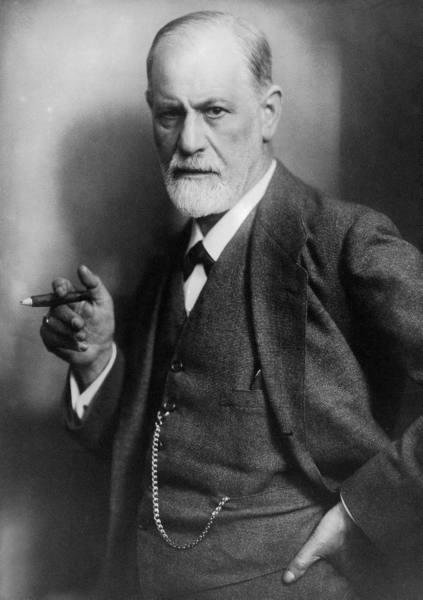
Sigmund Freud, 1922 (Image courtesy of LIFE Photo Archive)

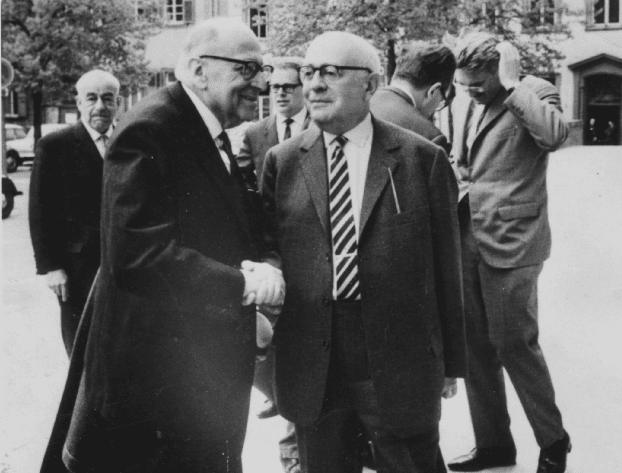
The central figures of the “Frankfurt” school: Max Horkheimer (front left), Theodor Adorno (front right), and Jürgen Habermas (in the background, right), 1964, Heidelberg (Image courtesy of Wikimedia Commons)

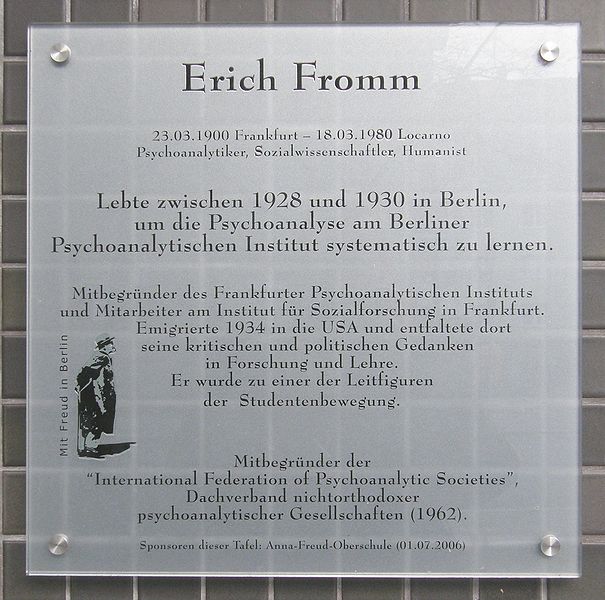
A plaque memorializing Fromm, Bayerischer Platz, Berlin (Image courtesy of Axel Mauruszat/Wikimedia Commons)

Images used under Fair Use Guidelines

New Books in Women’s History

We are celebrating Women’s History Month this year with recommendations of new books in Women’s History from some of our faculty and graduate students. From third-century North Africa to sixteenth-century Mexico to the twentieth-century in Russia and the US, and more…

Judy Coffin:

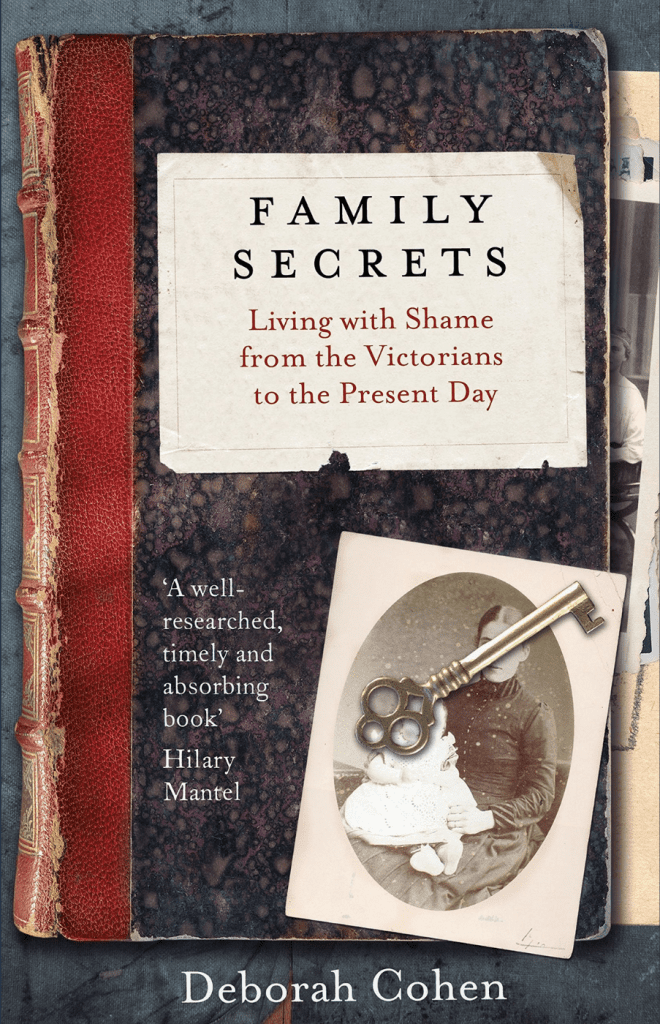
Deborah Cohen, Family Secrets: Living with Shame from the Victorians to the Present Day, (2013).
A history of shame and changing social norms, of privacy and how a “right” to privacy was established, and of changes in what families will and will not confess — to themselves and to others. It’s bold, refreshing, and readable. (In fact it comes with Hilary Mantel’s endorsement.) Published in Great Britain in January, the book due out here at the beginning of April. You can read the introduction on the Amazon website, and pre-order. This is a book that everyone interested in gender, sexuality, and families will want to read.

Linda Greenhouse & Reva Seigel, Before Roe v. Wade: Voices that Shaped the Abortion Debate Before the Supreme Court’s Ruling, (2010).
Here’s another readable and important book. It reconstructs the everyday politics of contraception and abortion before Roe v. Wade, making it clear that the now landmark decision was one case among many, the justices’ reasoning was rather narrowly cast. This is not an all-roads-led-to-Roe story; it is much more interesting, unpredictable, and historical than that. Siegel is a professor at Yale Law School and Greenhouse covers the Supreme Court for the New York Times.

Lizeth Elizondo:

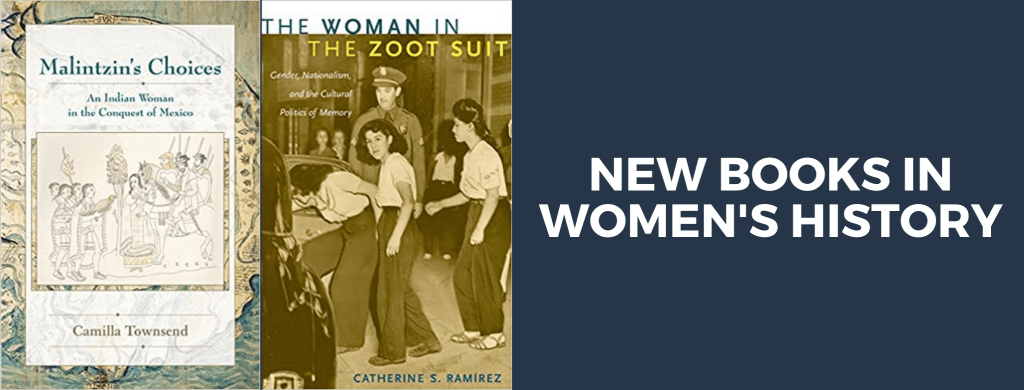
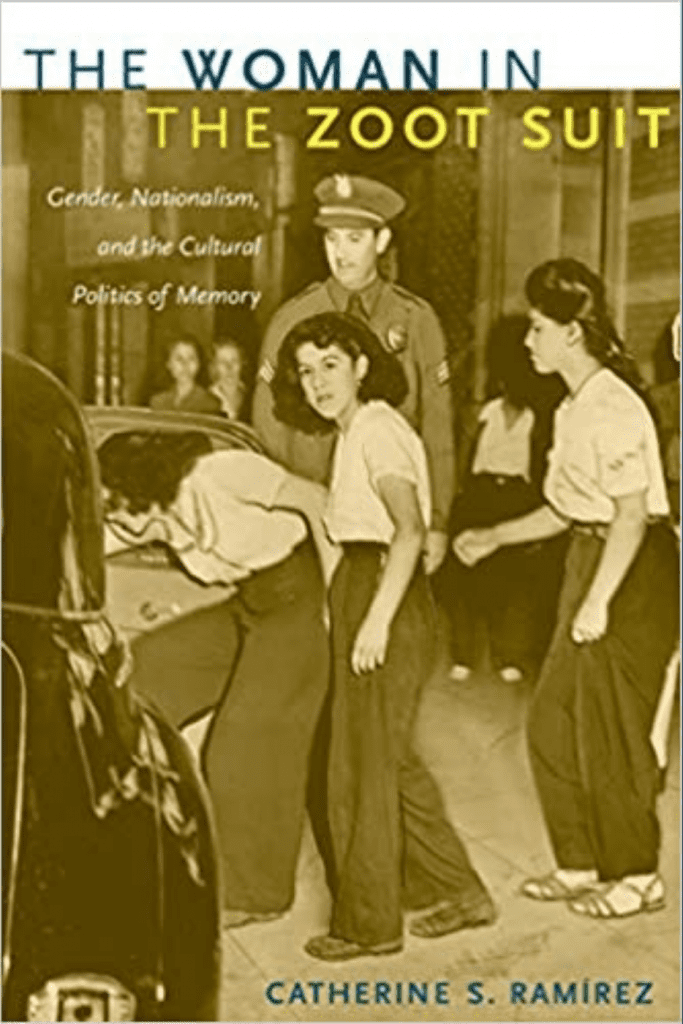
Catherine Ramirez, The Woman in the Zoot Suit: Gender, Nationalism, and the Cultural Politics of Memory, (2009).
Catherine Ramirez illuminates the ways in which Mexican-American women rebelled and chose to express their individuality by joining the popular zoot suit movement of the 1940s. By focusing on the women behind the suit, Ramirez offers a revisionist interpretation of the involvement of women in the infamous Los Angeles Zoot Suit riots and the Sleepy Lagoon case of 1943.

Alison Frazier:

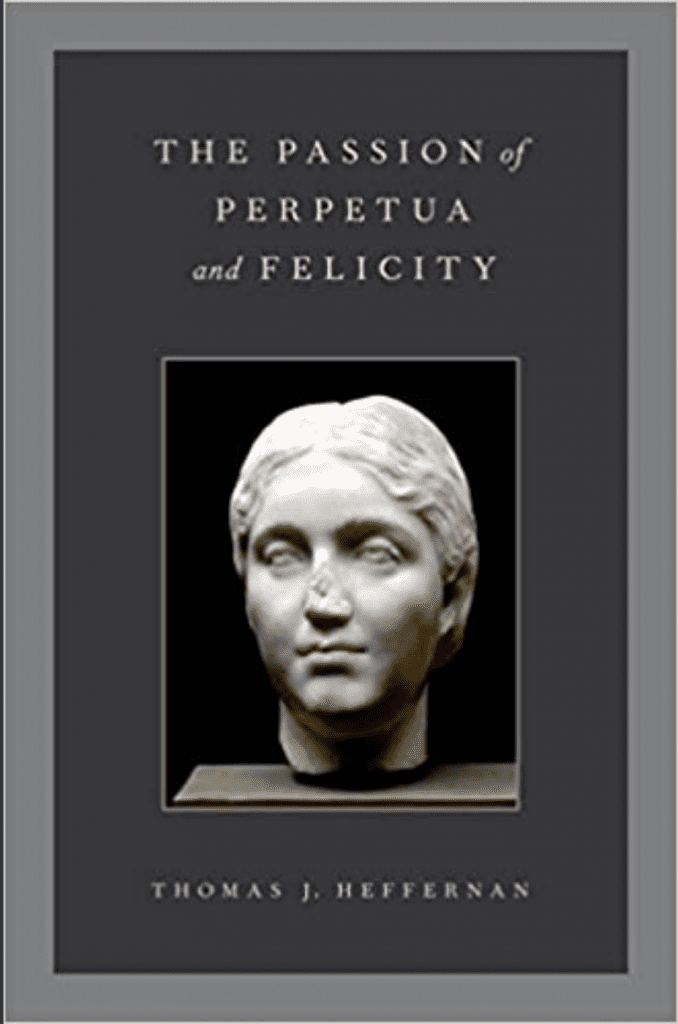
Thomas J. Heffernan, The Passion of Perpetua and Felicity, (2012).
In one volume, Heffernan presents the essential text and tools for readers to begin thinking through the unique and precious “prison diary” of Vibia Perpetua, the visionary young mother who led a mixed-gender group of Christians to martyrdom in early third-century North Africa.

Laurie Green:

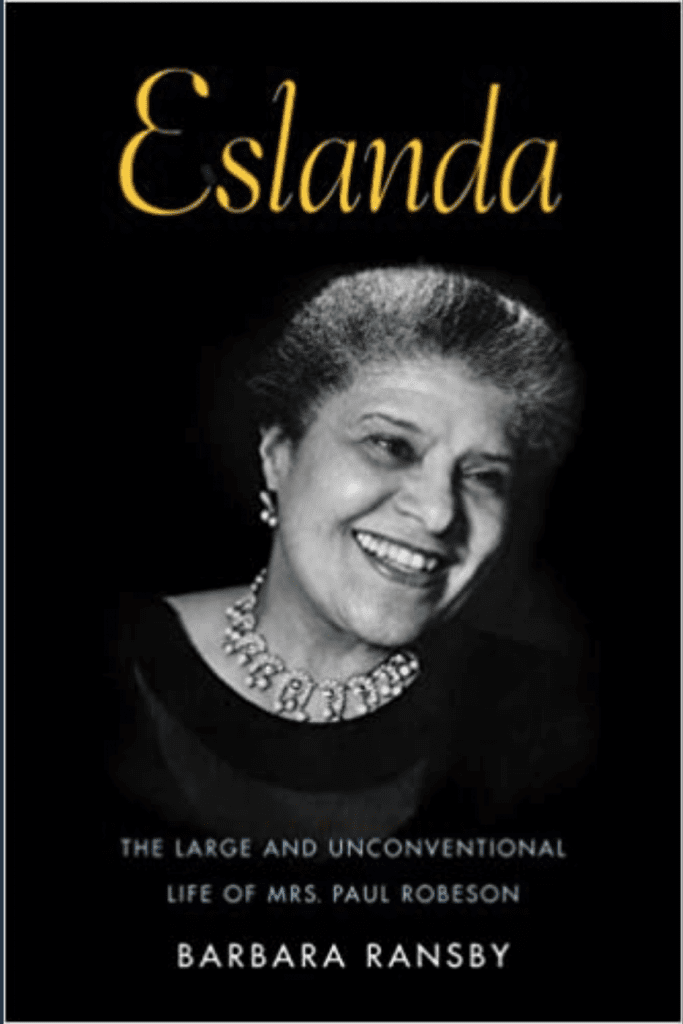
Barbara Ransby, Eslanda: The Large and Unconventional Life of Mrs. Paul Robeson, (2012).
In contrast to the enormous attention paid to the acclaimed African American singer, actor, radical and civil rights activist Paul Robeson, his extraordinary wife, Eslanda “Essie” Robeson has remained in the historical shadows. For the first time, in Ransby’s biography, we can grasp her amazing lifework, including her intellectual career as an anthropologist and journalist, and her passionate involvement in women’s rights, racial justice and anti-colonialist movements on an international scale.

Janine Jones:

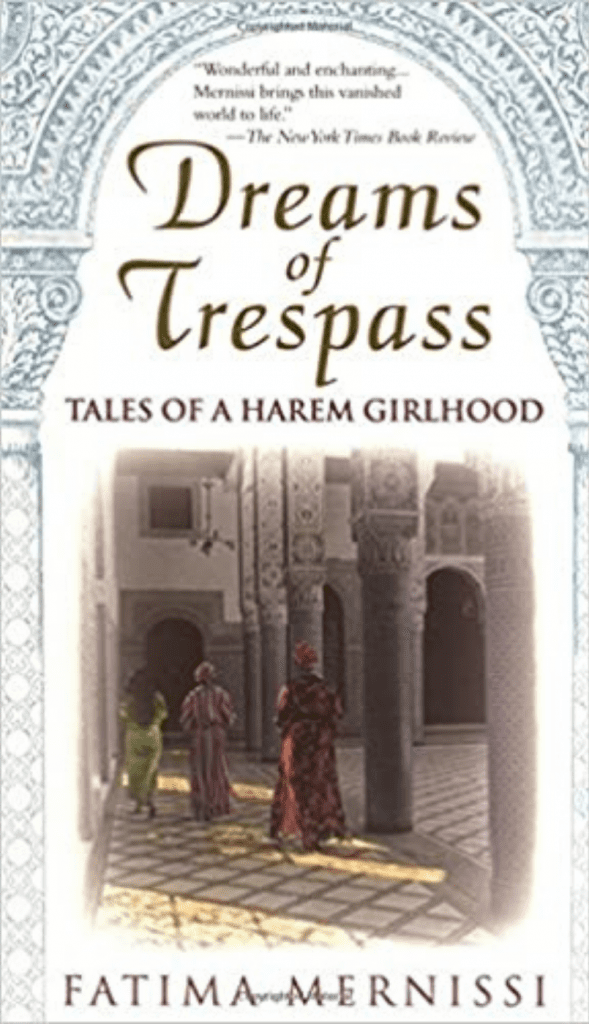
Fatima Mernissi, Dreams Of Trespass: Tales Of a Harem Girlhood, (1995).
Scholar and activist Fatima Mernissi’s captivating memoir of her childhood in a Moroccan harem during the end of the French Protectorate is not to be missed.

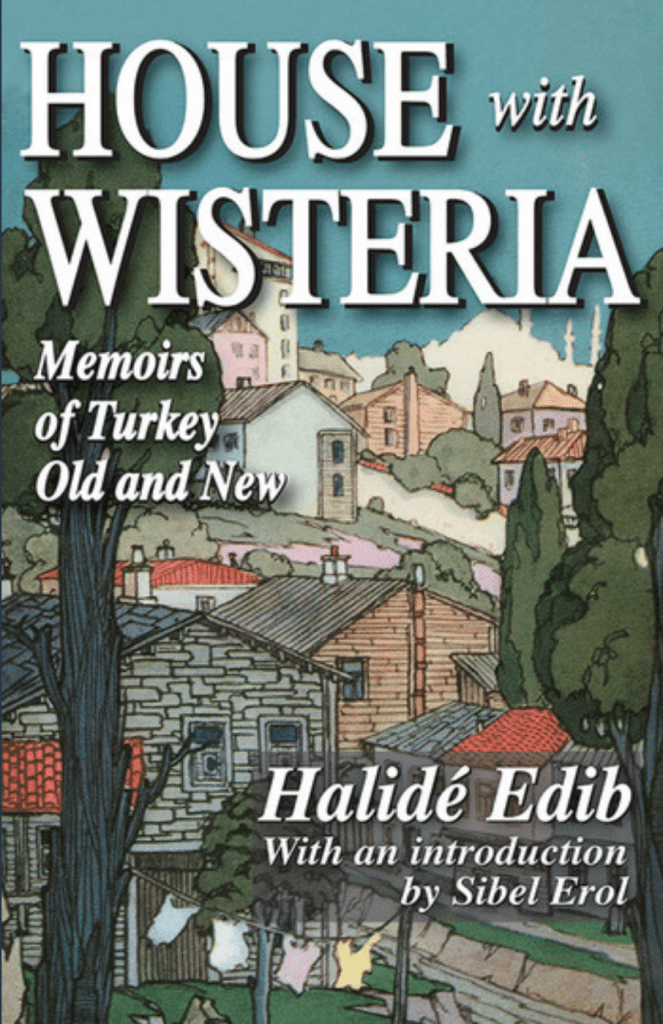
Halidé Edib, House with Wisteria: Memoirs of Turkey Old and New, 2nd ed., (2009).
Turkish journalist, novelist, and early feminist activist Halide Edib’s lyrical memoir of growing to adulthood during the chaotic collapse of the Ottoman Empire is filled with stories of tragedy, love, and strength.

Anne Martinez:

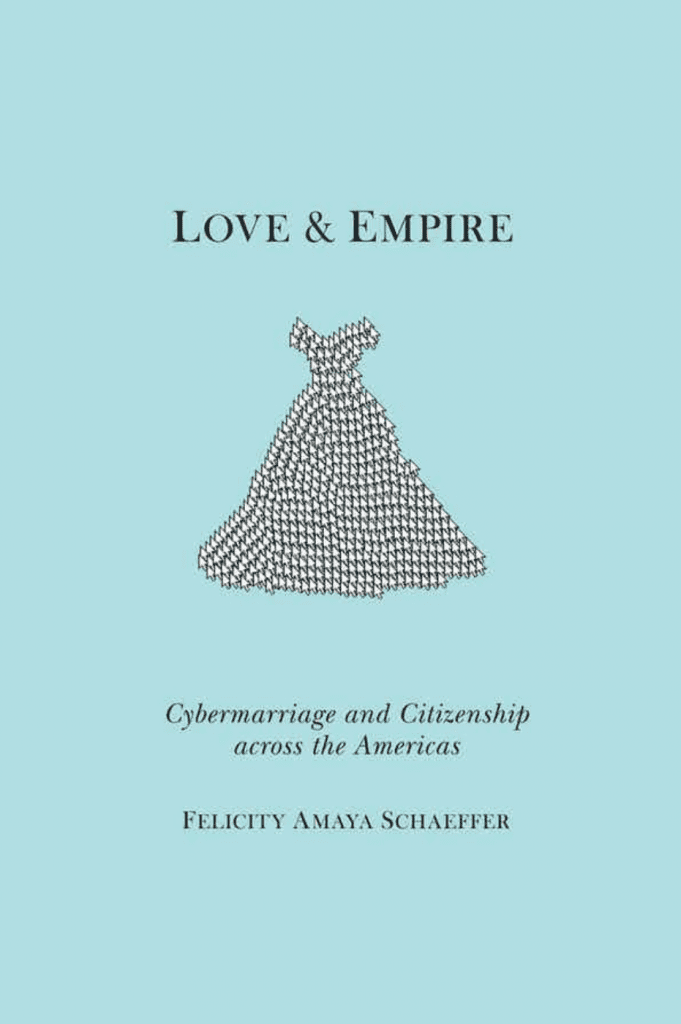
Felicity Amaya Schaeffer, Love and Empire: Cybermarriage and Citizenship Across the Americas, (2012).
Schaeffer puts desire in the context of the global economy, class, and cultural citizenship in this book about transnational cyber-relationships since the 1990s. 

Joan Neuberger:

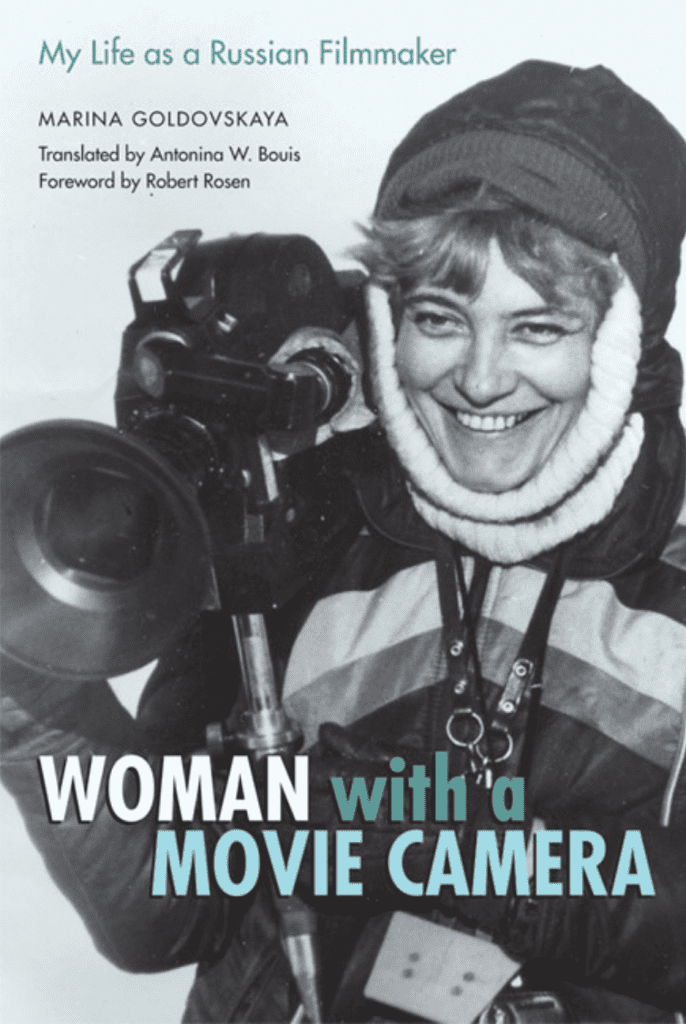
Marina Goldovskaya, Woman with a Movie Camera: My Life as a Russian Filmmaker, (2006).
“I started school in 1948. In my class of more than forty children, I was the only one who had a father.” This memoir traces Marina Goldovskaya’s career in Soviet television and her emergence as Russia’s best known documentary film maker. Along the way, we get an inside look at the everyday politics of survival and success in two of late-twentieth-century Russia’s most interesting industries.

Megan Seaholm:

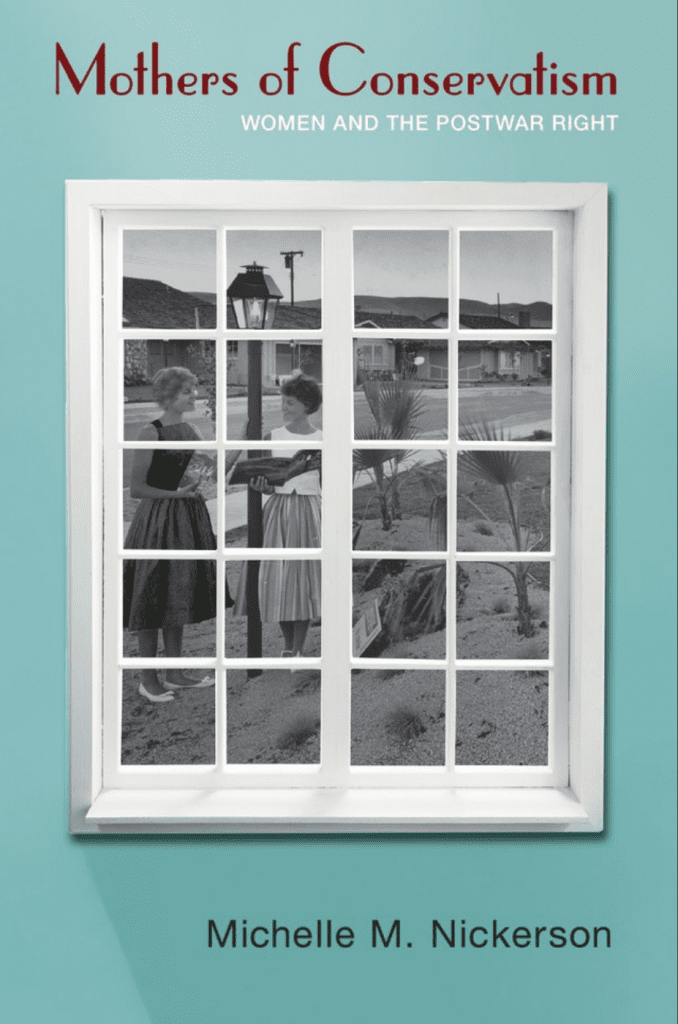
Michelle M. Nickerson, Mothers of Conservatism:  Women and the Postwar Right, (2012).
The significant role that women played in the rise of conservatism from the 1950s through the 1964 presidential campaign.  This careful study of conservative women in southern California explains how “populist housewives” became impassioned activists who influenced the conservative agenda for decades.

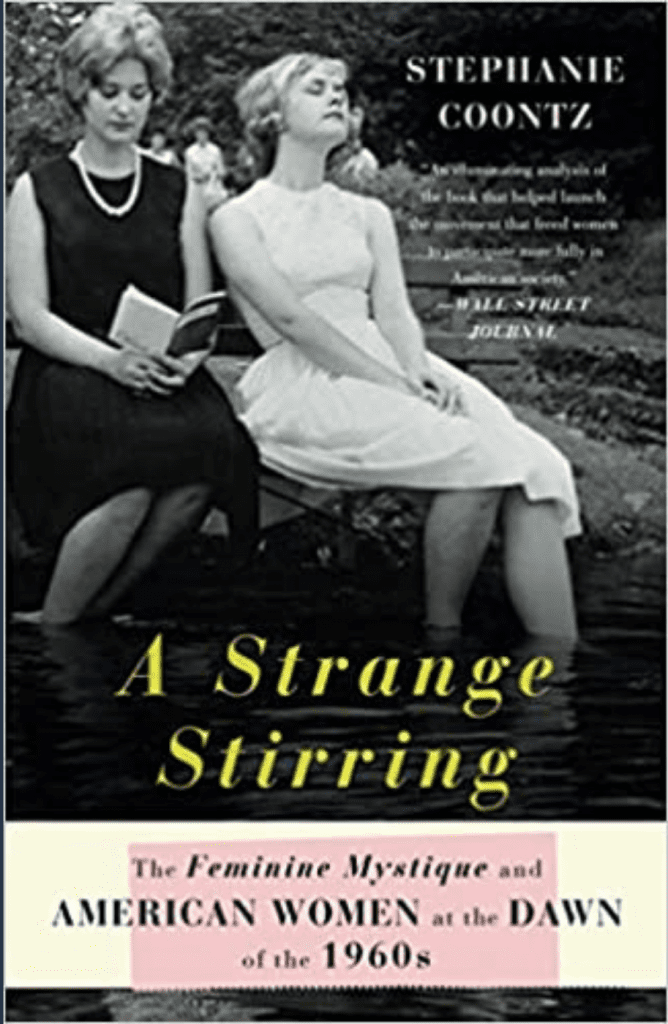
Stephanie Coontz, A Strange Stirring:  The Feminine Mystique and American Women at the Dawn of the 1960s, (2011).
Fifty years after Betty Friedan published The Feminine Mystique, often credited with igniting the feminism of the 1960s and 1970s, Professor Coontz examines this book and the impact it had on readers.

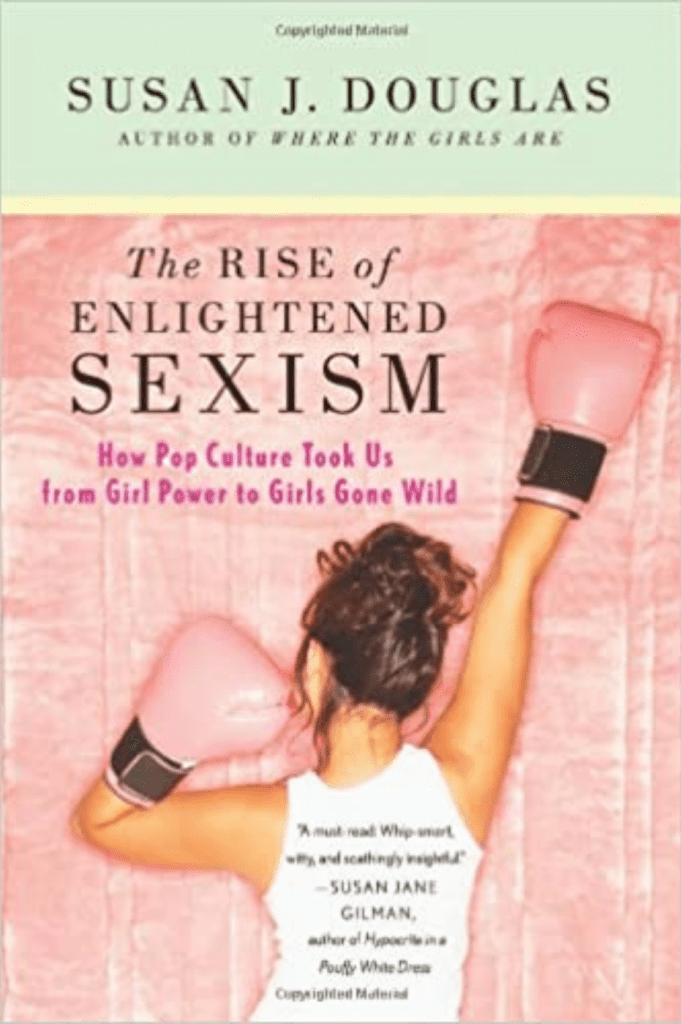
Susan J. Douglas, The Rise of Enlightened Sexism:  How Pop Culture Took Us From Girl Power to Girls Gone Wild, (2010).
Cultural historian Susan Douglas has written a perceptive and often humorous book about the way that icons of popular culture encouraged a generation of women (the “millennials”) to believe that feminism had accomplished its goals.

Ann Twinam and Susan Deans-Smith both recommend:

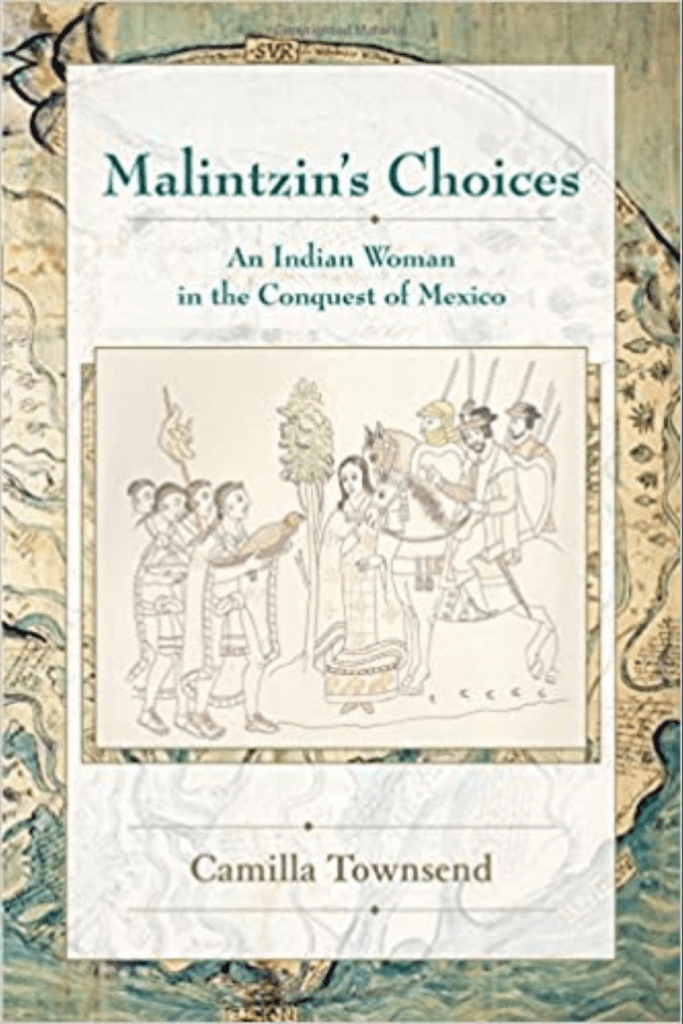
Camilla Townsend, Malintzin’s Choices, An Indian Woman in the Conquest of Mexico, (2006).
The wonderfully readable and compelling book tells the story of Malintzin, the young Nahua woman who became Hernando Cortés’ translator and mistress during the conquest of Mexico. Townsend takes on the difficult task of giving voice to someone who, while typically vilified as a traitor and sexual siren, left no words of her own. The resulting portrait allows us to see Malintzin’s understanding of her situation and the difficult choices she made in a rapidly changing political landscape.

The Republic of Nature by Mark Fiege (2012)

by Hannah Ballard

Flip through the pages of almost any American history textbook. Within the first few sections, you will find paragraphs dedicated to the American Revolution and the ideological groundwork that supported it; the pull-yourself-up-by-your-bootstraps mythology that surrounds Abraham Lincoln; the rise of a cotton-based economy in the South and the enslaved manpower that sustained it; the westward expansion of the American population and the lines of communication andimagetransportation that they created in the wake of their migration. Fast forward to the twentieth century and that same textbook will likely devote space to the Manhattan Project, the Civil Rights Movement, and, perhaps less commonly, the country’s increasing reliance on foreign oil. In The Republic of Nature, Mark Fiege ambitiously attempts to reconceptualize this well-traversed historical terrain, first and foremost, as “a story of people struggling with the earthy, organic substances that are integral to the human predicament.”   In each chapter, Fiege uses his riveting storytelling abilities to show that the nation’s history “in every way imaginable – from mountains to monuments – is the story of a nation and its nature.”
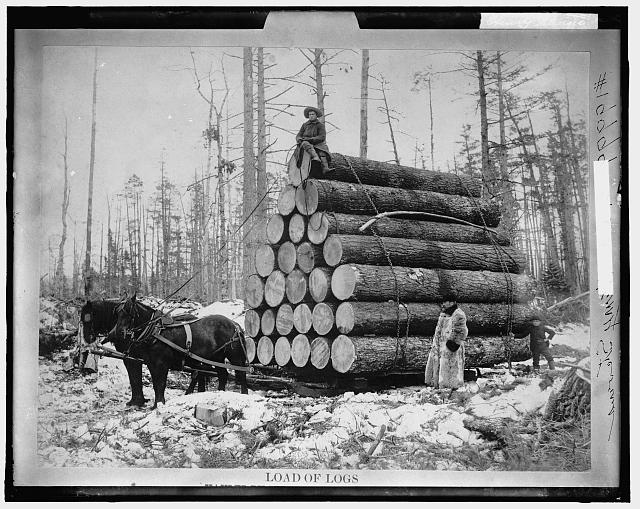
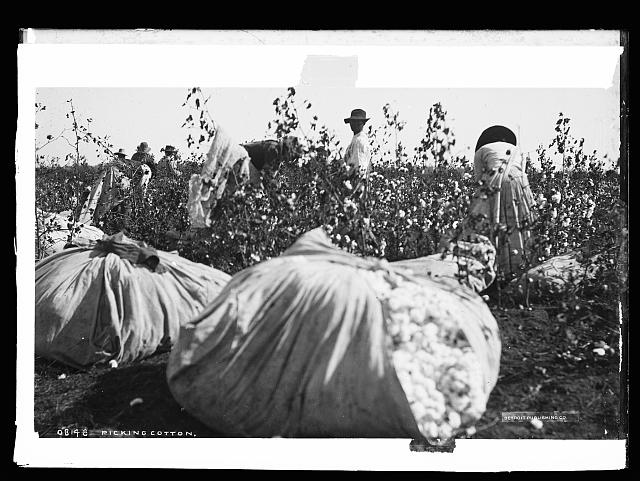
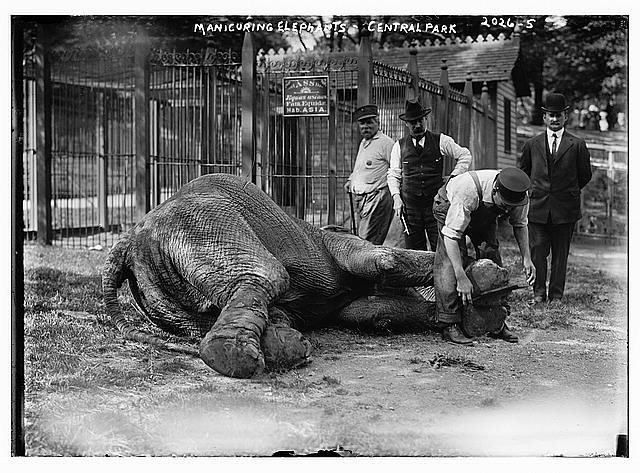
The Republic of Nature challenges the historiography that relegates environmental history to the margins of key episodes in the nation’s history. By locating “nature” in some of the more familiar narratives of the American past, he forces his reader to ask what role nature plays in history and how the answer to that question shifts our understanding of human actions, interactions, and reactions between groups and with their environment. For instance, Fiege’s argument about the nature of slavery – namely that the driving force behind the institution was the marriage of plants and people – forced this particular reader (who considers herself at least somewhat familiar with American slavery) to rethink my understanding of the peculiar institution. Instead of a capitalist society in which commodification of the enslaved human body constituted the prime motivations of the master, Fiege recasts this familiar story as a power struggle between human (master) and plant (cotton) in which masters often failed to control the plant and thus transferred that loss of power to their slaves by more tightly controlling their lives and the productive abilities of their bodies.

image

American loggers, 1908 (Image courtesy of the Library of Congress)

image

Cotton farmers in the American south sometime between 1880 and 1897 (Image courtesy of the Library of Congress)

image

Workers at the Central Park Zoo in New York City manicure an elephant, date unknown (Image courtesy of the Library of Congress)

As title clearly indicates, Fiege’s work is limited to the history of the United States. It is interesting to consider how his work could be expanded beyond national borders to include the transnational perspective that is beginning to permeate the historical discipline. Fiege’s decision to write from a national perspective, however, produced a book that locates “nature” in varied contexts in order to unmake the familiar and remake it with an environmental focus.  Occasionally, in the sweeping scope of his scholarship, the notion of “nature” becomes fuzzy as he attempts to thread it through such disparate events over a substantial expanse of time. With those minor criticisms in mind, this reader will still take distinguished environmental historian William Cronon’s word for it: “No book before it has so compellingly demonstrated the value of applying environmental perspectives to historical events that at first glance may seem to have little to do with ‘nature’ or ‘the environment.’ No one who cares about American history can ignore what Fiege has to say.”

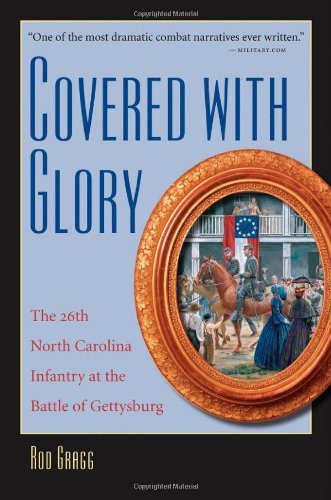
Honorable Mention of 2013 Essay Contest: Covered with Glory: The 26th North Carolina Infantry at Gettysburg by Rod Gragg (2000)

imageby Adrienne Morea

Harry Burgwyn was twenty-one years old when he led more than eight hundred soldiers of the 26th North Carolina Infantry into battle at Gettysburg on July 1, 1863. Two and a half days later, after two bloody assaults, fewer than one hundred remained fit for duty. According to some calculations, the 26th North Carolina “incurred the greatest casualties of any regiment at Gettysburg” (Gragg 210). Despite these losses, the 26th rebuilt itself and continued fighting for an additional twenty-one months.

This fascinating regiment is the subject of Rod Gragg’s Covered with Glory: The 26th North Carolina Infantry at Gettysburg. As the subtitle indicates, the majority of the book covers the Gettysburg campaign, but it is also an admirable history of the 26th North Carolina and its role in the American Civil War, from the regiment’s establishment in the summer of 1861 to its surrender at Appomattox and the postwar lives of its survivors.

This book is the story of the men and their regiment. By and large, it is not about politics, nor is it an argument about the causes or broad issues of the war. It is a narrative of the experiences of men and boys, in camp, on the march, and on the battlefield. Such a detailed, personal view can enhance anyone’s understanding of the monumental history involved.

Readers make the acquaintance of many Tar Heels, from privates to generals, who fought in or were closely associated with the 26th North Carolina. This regiment was remarkable for the youthfulness of its commanders, several of whom were college students before the war. Colonel Henry King Burgwyn Jr. had graduated from two

image

institutions of higher education before he was twenty. Major John Thomas Jones, twenty-two, had been a schoolmate of Burgwyn. Lieutenant Colonel John Randolph Lane turned twenty-eight the day after the fighting at Gettysburg ended. At thirty-four, Brigadier General James Johnston Pettigrew, who commanded the brigade that included the 26th, was already an accomplished scholar in several disciplines. The officers are important and engaging characters, but they are not the entire story. Readers also meet lowlier fellows such as Private Jimmie Moore, a farmer’s son who was fifteen when he enlisted and seventeen when he was wounded at Gettysburg, and Julius Lineback, a slight, observant musician of twenty-eight.

Gragg tells the tale with eloquence, with great affection for the men of the 26th, and with respect for their opponents in blue. Covered with Glory is a work of nonfiction, but it is also a fine piece of storytelling. Sixteen pages of images help to put faces on the people in the text.

We are now in the sesquicentennial year of the Gettysburg campaign. This is a fitting time to study the events and people of the Civil War. As Lane said in a postwar speech, the story of the men of the 26th does not belong only to North Carolina or to the South, but rather it is “the common heritage of the American nation” and represents “the high-water mark of what Americans have done and can do” (Gragg 245). If you are interested in the American Civil War, in nineteenth-century life, or in military history, you should read this book. If you are or ever have been a college student in your twenties, you should read this book.

Photo credits:

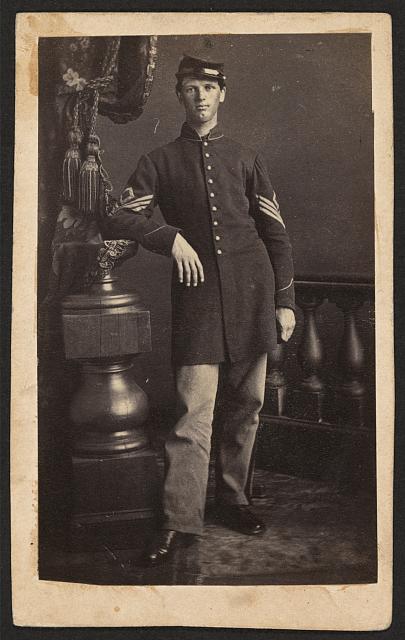
Unidentified Union soldier, 1860-1870 (Image courtesy of Wikimedia Commons)

And be sure to check out Kristopher Yingling’s winning submission to Not Even Past’s Spring Essay Contest.

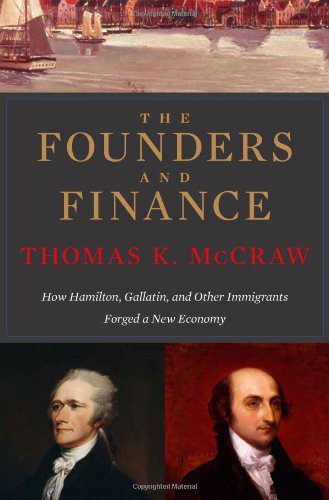
The Founders and Finance by Thomas K. McGraw (2012)

imageby Mark Eaker

Thomas McGraw argues that there was something in the background of immigrants to the United States that distinguished them from native born Americans and contributed to their suitability to become Secretaries of the Treasury. Including those born in Africa, less than 8% of the population was not native born and yet four of the first 6 Treasury Secretaries were immigrants. They served in that capacity for 78 percent of the period from 1789 through 1816. McGraw makes his case based almost entirely on the two most important of the Treasury Secretaries, Alexander Hamilton and Albert Gallatin.

Most of the Founders, like  Washington, Jefferson and Madison under whom  Hamilton and Gallatin served, were raised as wealthy members of the planter class. Their experiences and lifestyles revolved around agriculture and large landholdings. In contrast Hamilton and Gallatin both had early exposure to merchant activities in which they developed knowledge of markets and finance. Hamilton had little interest in land and agriculture and although Gallatin had a romantic notion of land and the West, he was not successful as a landowner.

Although plausible, the argument is not very convincing. First, McGraw provides no evidence to connect immigrants in general with a merchant background. He does not even make that connection with the two other Treasury Secretaries who were immigrants. Second, Gallatin shared the Republican view that land and agriculture were of paramount importance to the future of the country even though he came from an urban background.

image

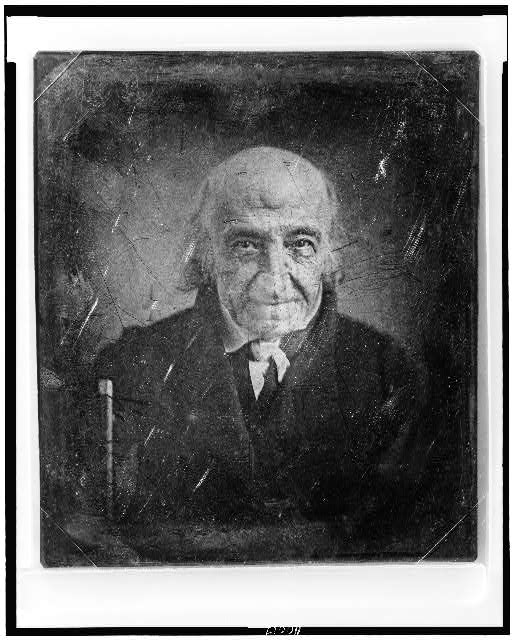
A daguerreotype of Albert Gallatin, taken sometime between 1844 and 1860 (Image courtesy of the Library of Congress)

Fortunately, the linkage between Hamilton and Gallatin’s service to the country and their immigration status is not very important in assessing the contributions that the two men made. McGraw makes the case that they were the most dominant  cabinet members in the administration in which they served. The two of them along with another immigrant, Robert Morris, who served as Superintendent of Finance under the Articles of Confederation were largely responsible for establishing the foundation of the country’s economic policy.  They made the new nation credit worthy by implementing a national tax system that reduced the revolutionary war debt of the states and by establishing the Bank of the United States that provided  a stable supply of currency.

image

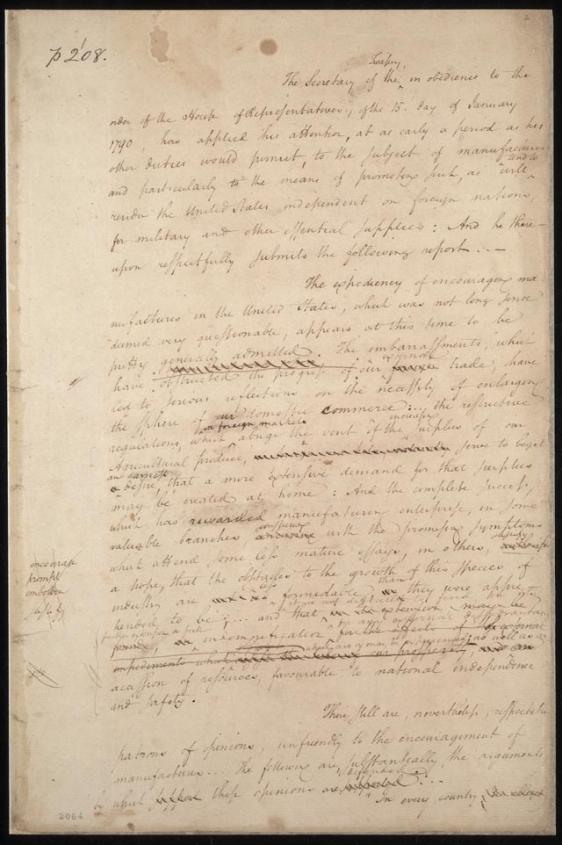
A 1791 draft of Alexander Hamilton’s “Report on Manufactures,” a treatise on American manufacturing (Image courtesy of Library of Congress)

Historians often emphasize the policy differences between Hamilton and Gallatin, but the similarities are much more important. Both men understood markets and the importance of national credit worthiness. Hamilton was instrumental in the first battle to establish the Bank of the United States and Gallatin convinced Jefferson of the need to renew the charter. The policies that each supported were less a function of their views than the views of the principals for whom they worked. Washington was a committed nationalist who believed that the Federal government should take the lead in fiscal matters. Jefferson and Madison believed in a minimal role for the Federal government and more authority for the states. Hamilton and Gallatin provided policy recommendations consistent with the beliefs of their Presidents  and the functioning of the market.  Both men were pragmatists who placed an emphasis on what would work rather than on ideology.

image

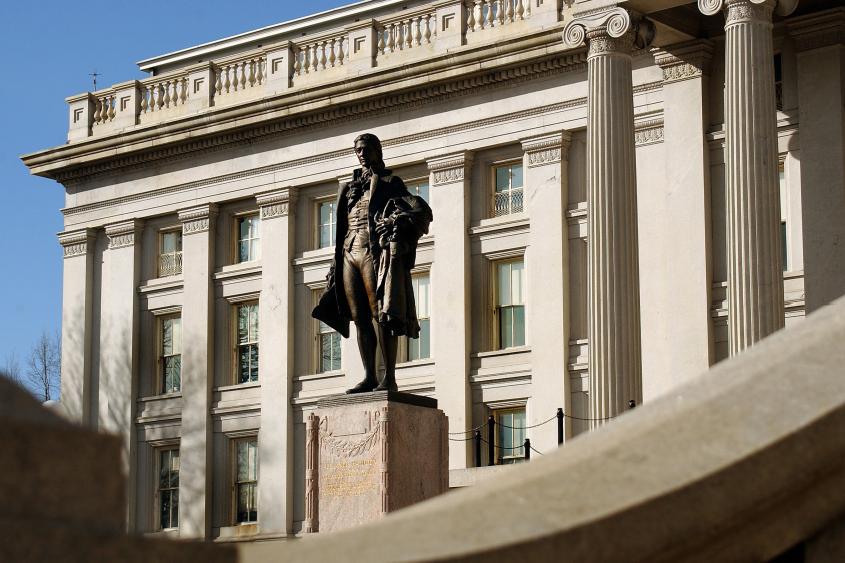
Statue of Alexander Hamilton in front of the United States Treasury Building, Washington, DC. (Image courtesy of Wikimedia Commons)

It is one of the great ironies of the era that had Jefferson and Madison prevented the establishment of the Bank of the United States, the Louisiana Purchase would likely not have been possible and the United States would have had difficulty fighting the War of 1812.

The Founders and Finance provides a valuable historical perspective on our current fiscal problems. The nation has confronted from its earliest days questions about our fiscal policies and the potential answers to them.  McGraw died within three weeks of the publication of the book but not before he wrote an op-ed piece for The Wall Street Journal.  In that essay he applied the lessons of his book to our current fiscal crisis. McGraw did not offer a specific plan, but he argued the need for the type of leadership that Hamilton and Gallatin provided the nation in its first three decades.

You may also like: 

Mark Eaker’s review of Lords of Finance, a history of the most influential central bankers of the 1920s

« Previous Page
Next Page »

Recent Posts

  • NEP Author Spotlight – Aidan Dresang
  • Lesson Plans: The Vietnam War and American Society
  • Lesson Plans: Protest and Social Unrest
  • Lesson Plans: Radio and Communications Technology
  • The Long-Lasting and Perpetuating Effects of Lynching Postcards and Photography
NOT EVEN PAST is produced by

The Department of History

The University of Texas at Austin

We are supported by the College of Liberal Arts
And our Readers

Donate
Contact

All content © 2010-present NOT EVEN PAST and the authors, unless otherwise noted

Sign up to receive our MONTHLY NEWSLETTER

  • New
  • Features
  • Reviews
  • Texas
  • Teaching
  • Digital
  • Watch & Listen
  • Authors
  • About