• New
  • Features
  • Reviews
  • Texas
  • Teaching
  • Digital
  • Watch & Listen
  • Authors
  • About

The past is never dead. It's not even past

Not Even Past

Student Showcase – Faubourg Treme: Fighting for Civil Rights in 19th Century New Orleans

Ahnia Leary
Pin Oak Middle School
Junior Division
Individual Performance

Read Ahnia’s Process Paper

Treme is one of the most iconic neighborhoods in New Orleans. Its dynamic history, culture and music even inspired a critically acclaimed HBO drama. Ahnia Leary wanted to present the story of this vibrant section of the Big Easy for Texas History Day, particularly its long history of racial tension and black activism. Her performance uses jazz music to capture the diverse people, places and stories that make up Treme.
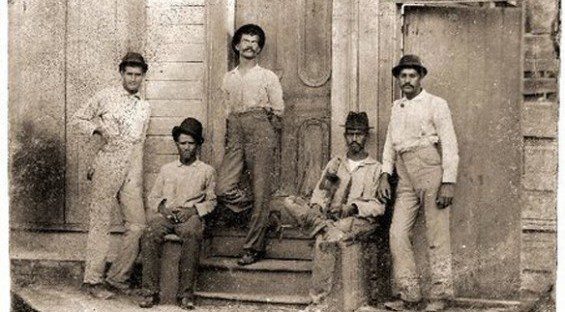
Residents of the Treme section of New Orleans (New Orleans Film Society)

After viewing the documentary, Fauberg Treme: The Untold Story of Black New Orleans, I was both excited and intrigued by the fact that there were Free People of Color in New Orleans who in the 1800s, owned about 80% of the land in the Treme community. Under French and Spanish rule, slaves (primarily from Senegal and Senegambia) could also work to buy their freedom. This unique suburb also included Europeans from many Countries as well as free people from St. Dominigue (Haiti) . My curiosity peaked and I was inspired to find out more about Homer Plessy and the Comite des Citoyens (Citizens Committee) which included writers, business owners, newspaper editors and activists who fought to ensure their right to be free of Jim Crow laws. My interest in the topic increased as I wondered why this history is unknown, the reason for racial hatred and what can be done to get rid of it and heal the past.
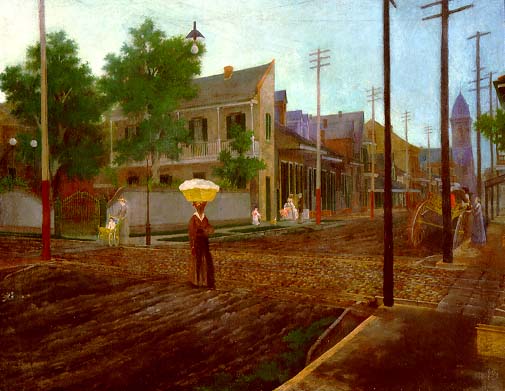
Paul Poincy's "St. Claude and Dumaine Streets, Faubourg Tremé," 1895 (Louisiana State Museum)
Paul Poincy’s “St. Claude and Dumaine Streets, Faubourg Tremé,” 1895 (Louisiana State Museum)

The Performance category was chosen because it offers a creative way to present my research. My script was developed using primary source material (translations) and information from historians and interviews. I also prepared a short piano piece with the help of my piano teacher, Olga Marek, providing an example of Spanish influence to early jazz music inspiring Jelly Roll Morton, who lived in Treme.

Finally, the National History Day Theme is: Rights and Responsibilities in History. Free People of Color like Captain Arnold Bertonneau, Paul Trevigne, Homer Plessy and others exhibited extreme courage and personal responsibility in their fight for the rights of people of African descent, to participate fully in America as citizens, living its dream and demanding Color blind justice.

bugburnt


Student Showcase – “America’s Dirty Little Secret”: The Tuskegee Syphilis Experiment

Harshika Avula, Lekhya Kintada, Daniel Noorily, Bharath Ram, Kevin Zhang
Health Careers High School
Senior Division
Group Website

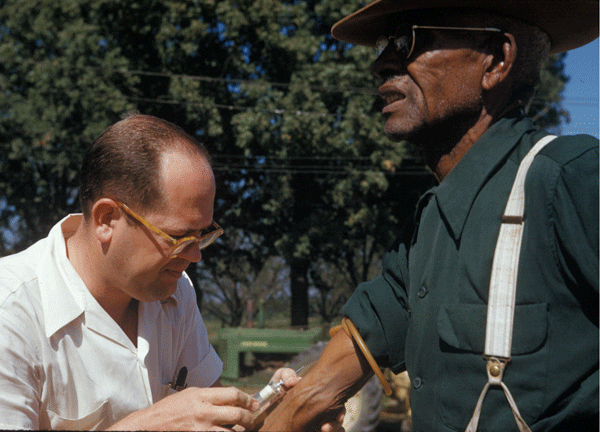
Between 1932 and 1972, doctors from the United States Public Health Service undertook a project in rural Alabama to allegedly treat “bad blood” and other illnesses among local African-Americans. But these doctors’ real agenda was to observe the impact of untreated syphilis. Over four decades, 600 African-Americans, believing they were receiving genuine medical attention, were given placebos and prevented from treating their syphilis. To this day, the Tuskegee Syphilis Experiment remains one of the most controversial moments in the history of American medicine.

Harshika Avula, Lekhya Kintada, Daniel Noorily, Bharath Ram and Kevin Zhang created “‘America’s Dirty Little Secret’: The Tuskegee Syphilis Experiment,”a website for Texas History delving into this dark chapter of medical history. Their site explores the study’s origins, how it operated and the individuals it used.

Tuskegee syphilis study doctor injects subject with placebo (Wikipedia)

Tuskegee syphilis study doctor injects subject with placebo (Wikipedia)

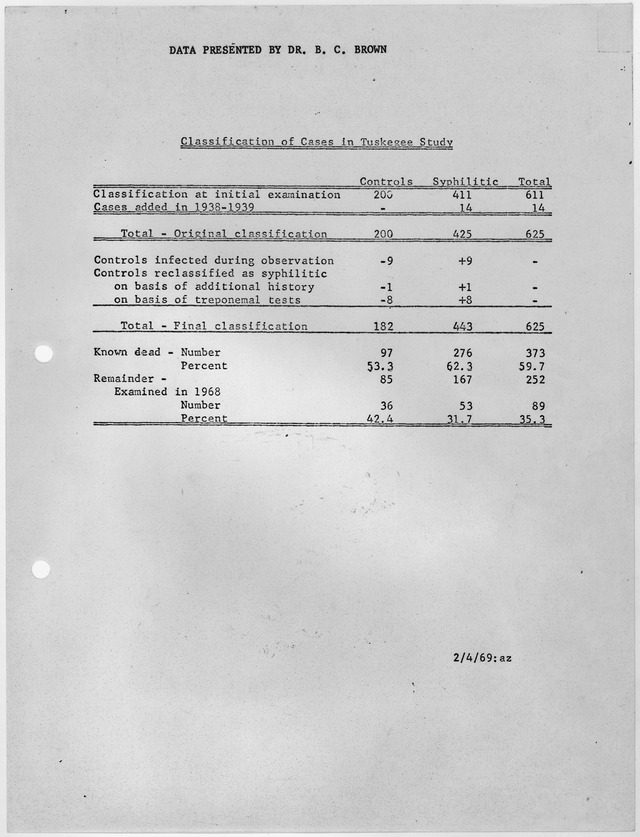
Officially titled “The Tuskegee Study of Untreated Syphilis in the Male Negro,” the experiment, originally designed to study the progression of untreated syphilis in African American men for six months, ran from 1932 to 1972. The study had 600 participants: 399 with syphilis and 201 in the control group. The doctors lured the participants with false incentives, and although penicillin, a cure for syphilis, was available in 1947, physicians did not treat the participants.

Government document depicting number of patients with syphilis and number of controlled non-syphlitic patients, 1969 (Wikipedia)

Government document depicting number of patients with syphilis and number of controlled non-syphlitic patients, 1969 (Wikipedia)

The 600 sharecroppers involved in the Tuskegee Syphilis Study sought compensation for the damages incurred during the experiment. The progress of the Civil Rights Movement and the rights previously promised to human research subjects in the Nuremberg Code only served to encourage public support of the trial. After being subjected to prejudice and inequality, the participants and their families felt the court’s award was inadequate. The final settlement awarded $10 million divided among the living patients and their relatives.

bugburnt


The latest terrific work from Texas high school students:

A documentary on one man’s attempt to fight injustice in World War II America

A research paper on the balance between public health and personal liberty


Student Showcase – Colossus of the North

Eduardo Castañeda
Nimitz High School
Senior Division
Individual Exhibit

Read Eduardo’s Process Paper

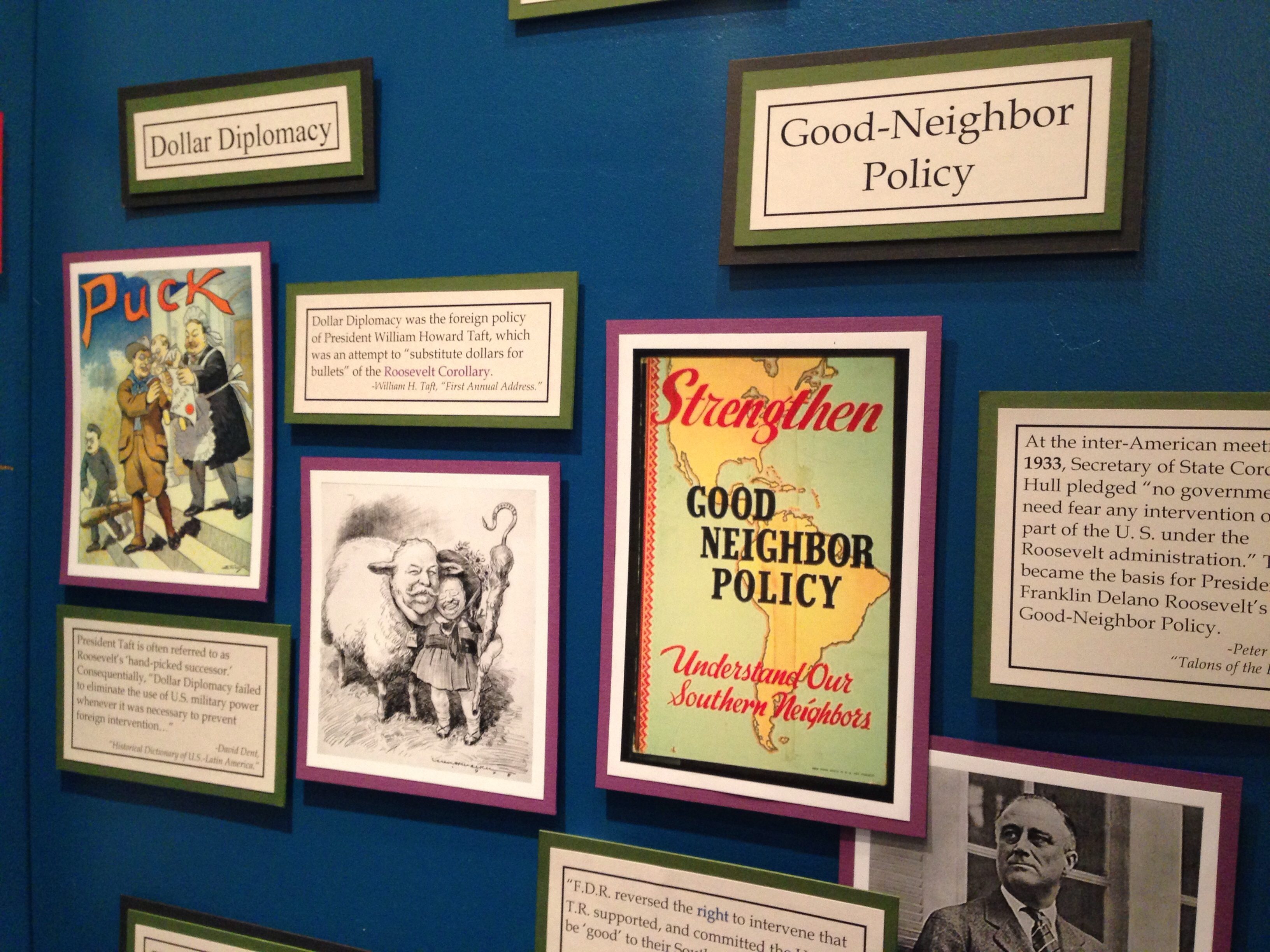
In 1904, President Theodore Roosevelt announced a new “Corollary” to the Monroe Doctrine of 1823: that the United States would no longer simply protect Latin America from foreign powers, but actively intervene in their domestic affairs. Over the coming decades, the American government became highly involved in Latin American politics, commerce and military matters. The Roosevelt Corollary has since been a deeply polarizing moment in world history. To some, it inaugurated an era of muscular and confident American foreign policy. To others, especially in Latin America, Roosevelt’s policy represented an act of imperialism designed to protect American military and commercial interests.

Eduardo Castañeda of Nimitz High School considered the heated debate surrounding the Roosevelt Corollary with an exhibit at Texas History Day, “Colossus of the North.” He talked about the experience of researching this controversial topic in his process paper:

A selection of Eduardo's exhibit, "Colossus of the North"

A selection of Eduardo’s exhibit, “Colossus of the North”

Having been born in a Latin American country, I am interested in the foreign relations between the United States and Latin American countries. After researching several U.S.-Latin American topics, I discovered the “Roosevelt Corollary” to the Monroe Doctrine, which explained the interactions between the U.S., and Latín American countries. The “Roosevelt Corollary” justified the right for U.S. intervention in Latin American countries, and the responsibility to become a police force for the entire Western Hemisphere.

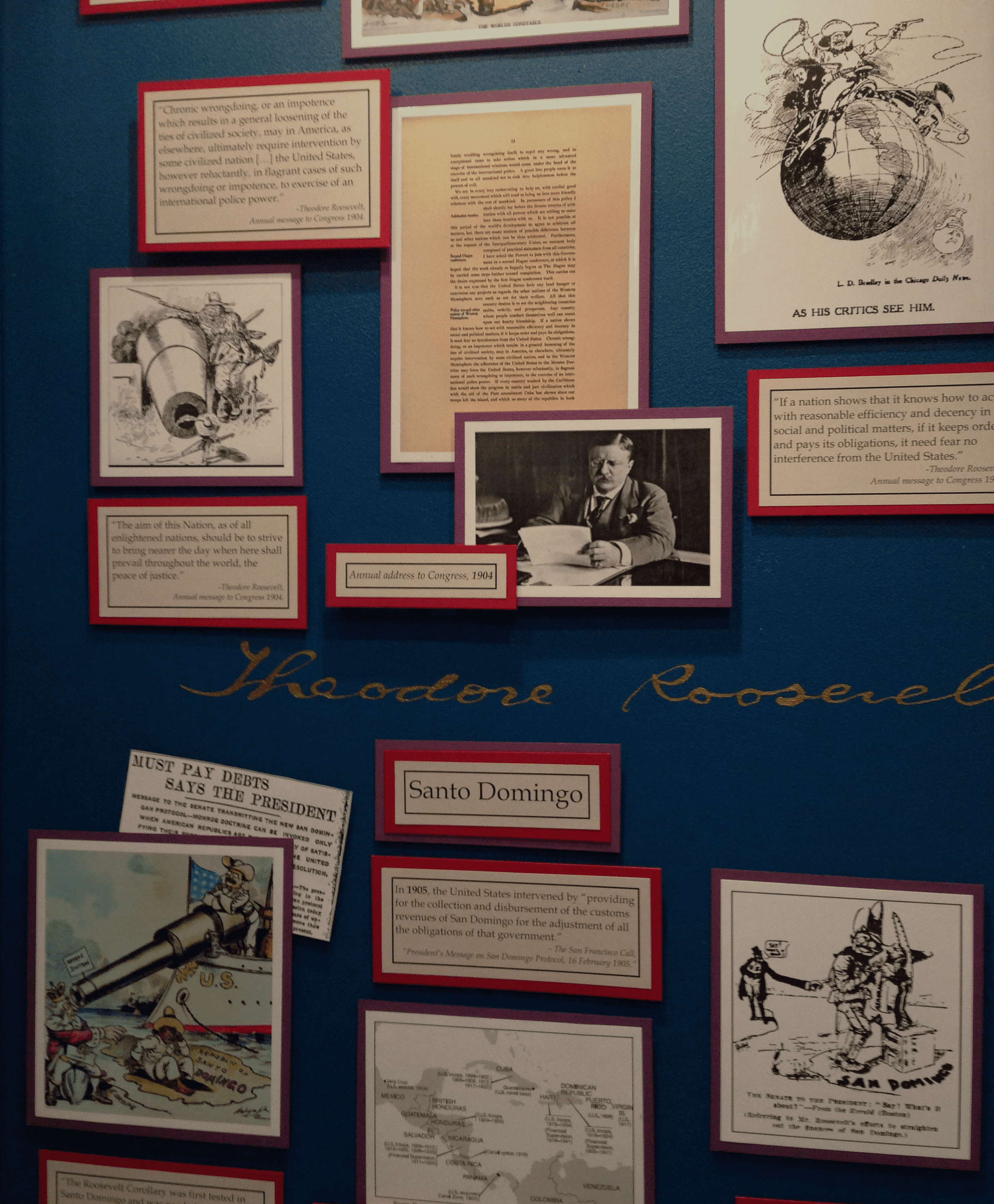
Another section of Eduardo’s exhibit

Another section of Eduardo’s exhibit

The “Roosevelt Corollary” to the Monroe Doctrine fits this year’s theme, “Rights and Responsibilities in History.” For decades, the “Corollary” impacted the political, economic and social structure of the Western Hemisphere. This interpretation transformed the US. foreign policy from a preventative one, according to the Monroe Doctrine, to one that justified and encouraged U.S. intervention in Latin America. The “Corollary” promoted Stabilization of economies, military intervention and protection of US. Commercial interests. ln 1905, the U.S. took control of Dominican customs houses, and managed the tax Collections. ln many cases, military forces were sent to various locations in Latin America to subdue rebellions, assist revolutions that favored the US. and protect projects that the U.S. had an economic stake in. Professor Noel Maurer explained, “The Panama Canal would not have been built Without a U.S. sponsored revolution against Colombia, or payment for the construction and future use of the Canal.” The “Roosevelt Corollary” influenced other countries at the time, but it was the face of American foreign policy and transformed it throughout the 20th century. Roosevelt’s extension of the previously passive Monroe Doctrine changed how the United States interacted with the rest of the world. The U.S. had inherited the right to monitor the activities inside the Western Hemisphere, and undertaken the responsibility to enforce its Will upon those countries.

bugburnt


Last week’s Texas History Day projects:

The World War II internment you may not have learned about in AP US history

The painful story behind the Indian Removal Act

And one community’s famous response to segregation


Student Showcase – Better Safe Than Sorry? Internment of Rights in World War II

Helen Hartman
Rockport Fulton Middle School
Junior Division
Historical Paper

Read Helen’s Paper Here

The internment of Japanese-Americans in the United States during World War II is a familiar story. But did you know that Japanese, German, and Italian families from around Latin America were also deported to the U.S. and held in INS camps? Like the internment of Japanese-Americans, these deportations were intended to secure the Western Hemisphere from potential enemy sympathizers and create leverage for prisoner swaps. Many of these camps were right here in Texas.

Helen Hartman of Rockport Fulton Middle School wrote a research paper for Texas History Day outlining this often forgotten history of extralegal deportment and detention. You can read the full paper by clicking the link above and see an excerpt below:

Rohwer, Arkansas Relocation Camp for Japanese-American detainees

Rohwer, Arkansas Relocation Camp for Japanese-American detainees

America’s founding fathers defined the rights guaranteed to American citizens in the Bill of Rights, and for over 200 years America has symbolized the “land of the free” both at home and abroad. However, during World War II, the U.S. government established internment camps that usurped the rights of both American citizens and non-citizens of Japanese, German, and Italian descent in the name of national security. Historians have largely documented the loss of Japanese Americans’ rights in War Relocation Authority Camps, which held people of Japanese ancestry who were removed from the West Coast.  However, lesser-known camps run by the Immigration and Naturalization Service (INS), like those in Texas, violated the rights of citizens from both America and Latin America. Groups like the Japanese, with resources and political support, have been able to hold the American government responsible for their loss of rights and have received apologies and compensation.  German American and German/Italian Latin American internees, however, have not yet received a formal acknowledgement of their internment or redress from the governments that rescinded their individual rights for the sake of national security.

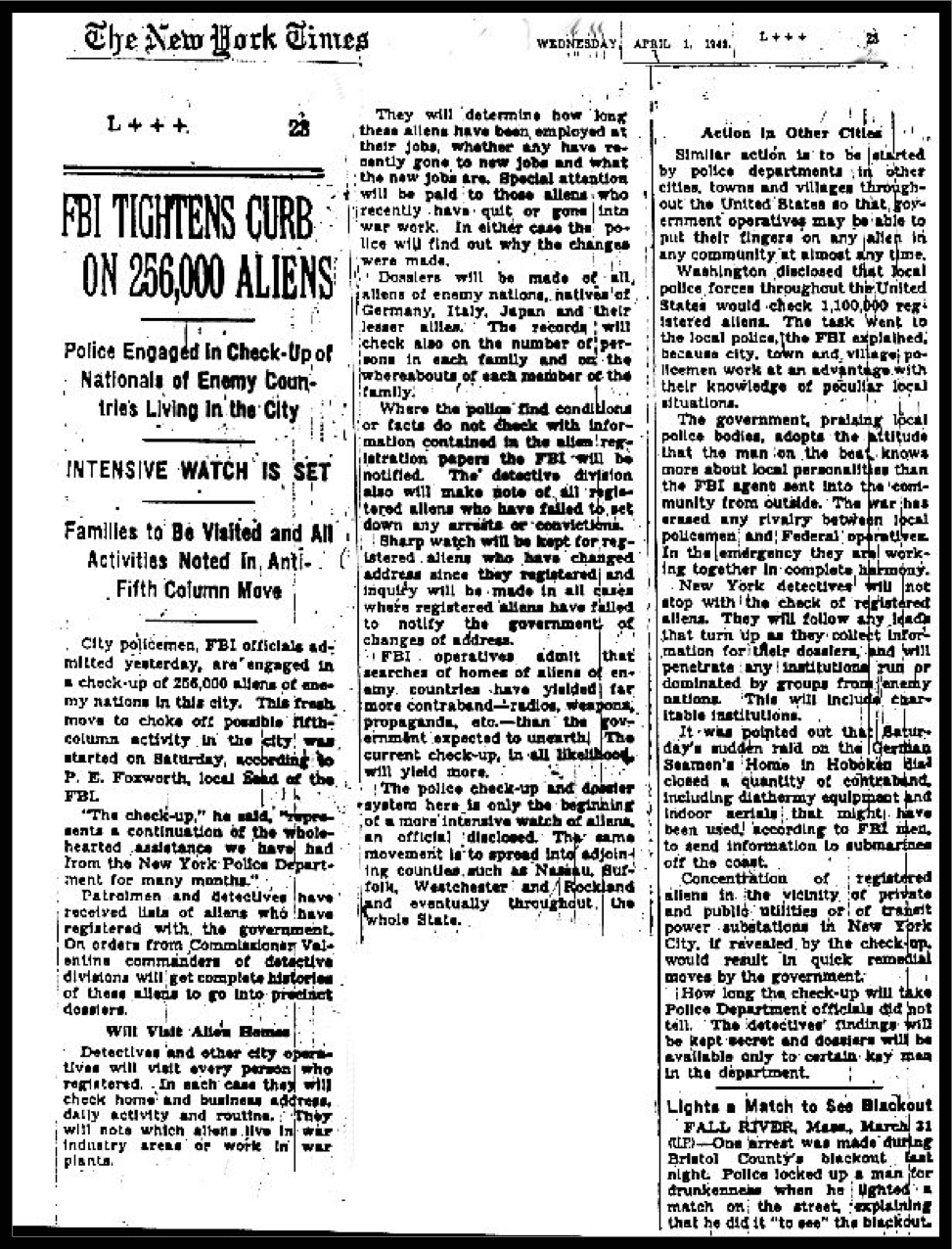
April 1, 1942 New York Times article describing the American government's search for enemy alien spies and sympathizers

April 1, 1942 New York Times article describing the American government’s search for enemy alien spies and sympathizers

Japan’s attack on Pearl Harbor plunged America into World War II and united Americans against their Axis enemies, both at home and abroad.  Amid the crisis, the United States government implemented a better safe than sorry policy, interning Japanese, Italian, and German Americans and Latin Americans in the name of wartime responsibility.  The American press and most American citizens condoned the process, preferring to intern anyone considered a potential threat to America to omit any possibility that they might assist the enemy.  However, this government policy not only violated the Constitutional rights guaranteed to American citizens but also violated international human rights by bringing Latin American citizens into America to barter them in prisoner exchanges.

bugburnt


More great Texas History Day projects:

The story behind a seminal moment in America’s Civil Rights movement

And a look back on one of the most turbulent periods in U.S. history


Student Showcase – The Montgomery Bus Boycott

William Louis
Burkburnett Middle School
Junior Division
Individual Website

In 1955, a collection of citizens in Montgomery, Alabama decided to stand up against the injustice of Jim Crow. Edgar D. Nixon, Martin Luther King and many other activists boycotted the city’s bus system to protest the arrest of Rosa Parks for refusing to give up her seat to a white passenger. After 381 days, the bus lines nearly went bankrupt. Ultimately, the city of Montgomery relented and reversed its policy of segregation on its city buses, galvanizing the Civil Rights movement across America.

William Louis, a student at Burkburnett Middle School, contributed to this year’s Texas History Day with a website on this seminal movement, “The Montgomery Bus Boycott.” But this was not just American history for William–it was also family history:

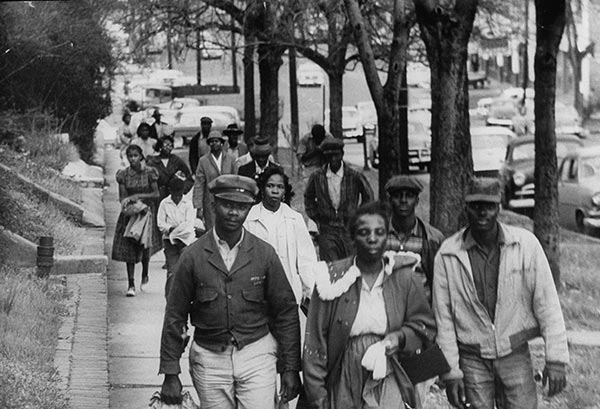
Commuters walking to work instead of riding the buses during the Montgomery bus boycott, 1956 (Don Cravens/Time Life/Getty Images)

Commuters walking to work instead of riding the buses during the Montgomery bus boycott, 1956 (Don Cravens/Time Life/Getty Images)

As I journeyed through my family history, I discovered that a lot of good things have happened to us.  However, we suffered a lot of injustices also. We suffered slavery and discrimination but, also experienced victory and defied the odds of racial barriers.  At age six I did a presentation on slavery and how slaves came to America.  This was the first time my mom went into detail about slavery, discrimination, and segregation.  The more I learned about my family the more I learned about inequality.  Since then, I have looked deeper into my family history, researched, read and studied pictures of slave ships as well as the welts on the backs of slaves. Now, at 11, I am just beginning to realize what others went through so I could be where I am right now.

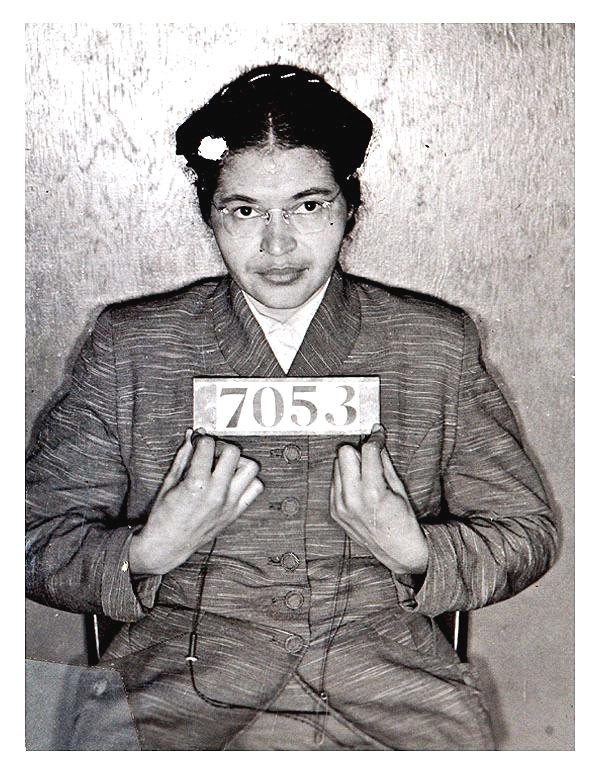
Rosa Parks' mug shot after being arrested on December 1, 1955 for refusing to give up her seat on a Montgomery bus (Wikipedia)

Rosa Parks’ mug shot after being arrested on December 1, 1955 for refusing to give up her seat on a Montgomery bus (Wikipedia)

One of the people who helped me understand what African Americans went through was my Grandpa.  He told me about having to sit in the back of the bus in Fayetteville, NC, when he was six years old. He told me how he sat at the front of the bus before his cousin snatched him up and took him to the back of the bus, where “the coloreds” belonged.

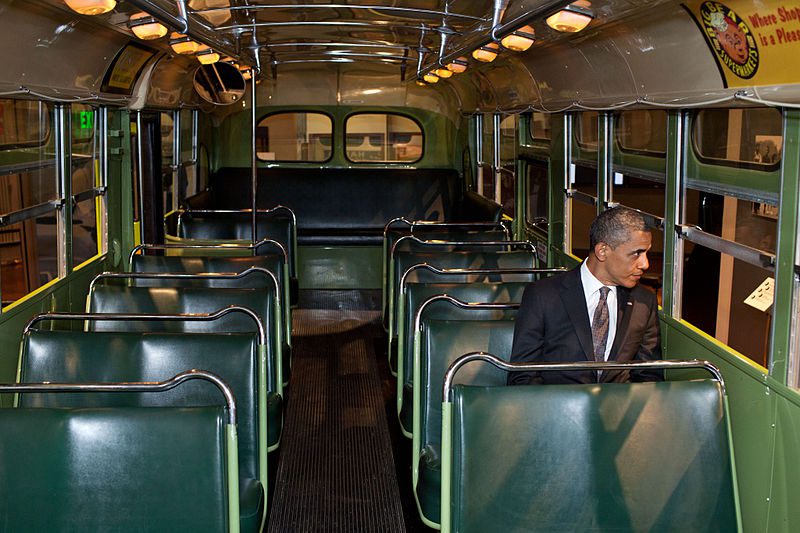
President Barack Obama sitting in the Montgomery bus where Rosa Parks was arrested. Parks was sitting in the same aisle but on the opposite side. (The White House)

President Barack Obama sitting in the Montgomery bus where Rosa Parks was arrested. Parks was sitting in the same aisle but on the opposite side. (The White House)

This year’s National History Day is focused the theme Rights and Responsibilities.   In America these rights include inalienable rights which are the right to life, liberty, and the pursuit of happiness. However, blacks were denied these rights.  As a result, many courageous people like Rosa Parks, E.D. Nixon, Claudette Clovin, and Martin Luther King took responsibility for the rights of blacks and others who were discriminated against.

bugburnt


More remarkable work from Texas middle and high school students:

A digital history of the trauma of Vietnam

And an account of America’s closest brush with destruction


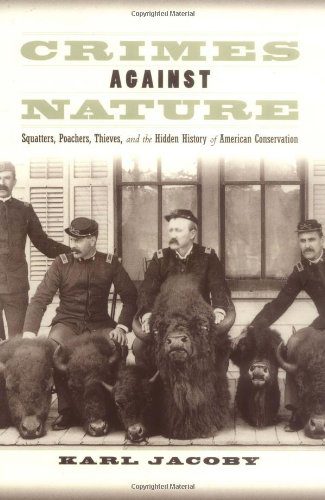
Crimes against Nature: Squatters, Poachers, Thieves, and the Hidden History of American Conservation, by Karl Jacoby (2003)

by Henry Wiencek

51-7Ixuoe7LWho actually lived in The Adirondacks, Yosemite, and The Grand Canyon before they became national parks? This is the simple, but compelling, question Karl Jacoby asks in Crimes against Nature: Squatters, Poachers, Thieves, and the Hidden History of American Conservation. When we think about preserving nature, Jacoby argues, Americans tend to assume an easy dichotomy between The Evil Poacher vs. The Righteous Park Ranger. But Crimes against Nature tells a deeper history of the rural communities who relied on these lands before their “preservation” and introduces some moral complexity into the story of America’s national parks.

Jacoby’s narrative starts with the legal, cultural and environmental changes taking place during the Progressive Era. As America became increasingly urbanized, many social reformers and politicians feared a dystopian future in which crowded, industrial cities replaced nature entirely. Teddy Roosevelt often spoke about the dangers of “over-civilization” as fewer and fewer Americans encountered the great outdoors. Starting in the late 19th-century, The federal government responded to these anxieties with the establishment of national parks that would protect “wilderness” from human development. These preserved park lands, officials reasoned, would encourage people to “get back to nature” and escape the pollution, disease, and social disorder of urban slums.

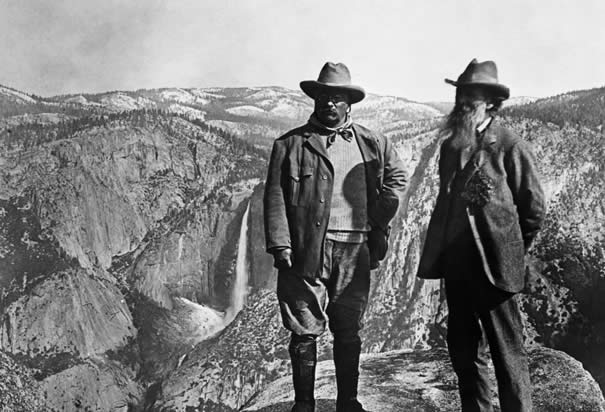
Teddy Roosevelt and naturalist John Muir pose at Yosemite National Park, 1906 (Library of Congress)

Teddy Roosevelt and naturalist John Muir pose at Yosemite National Park, 1906 (Library of Congress)

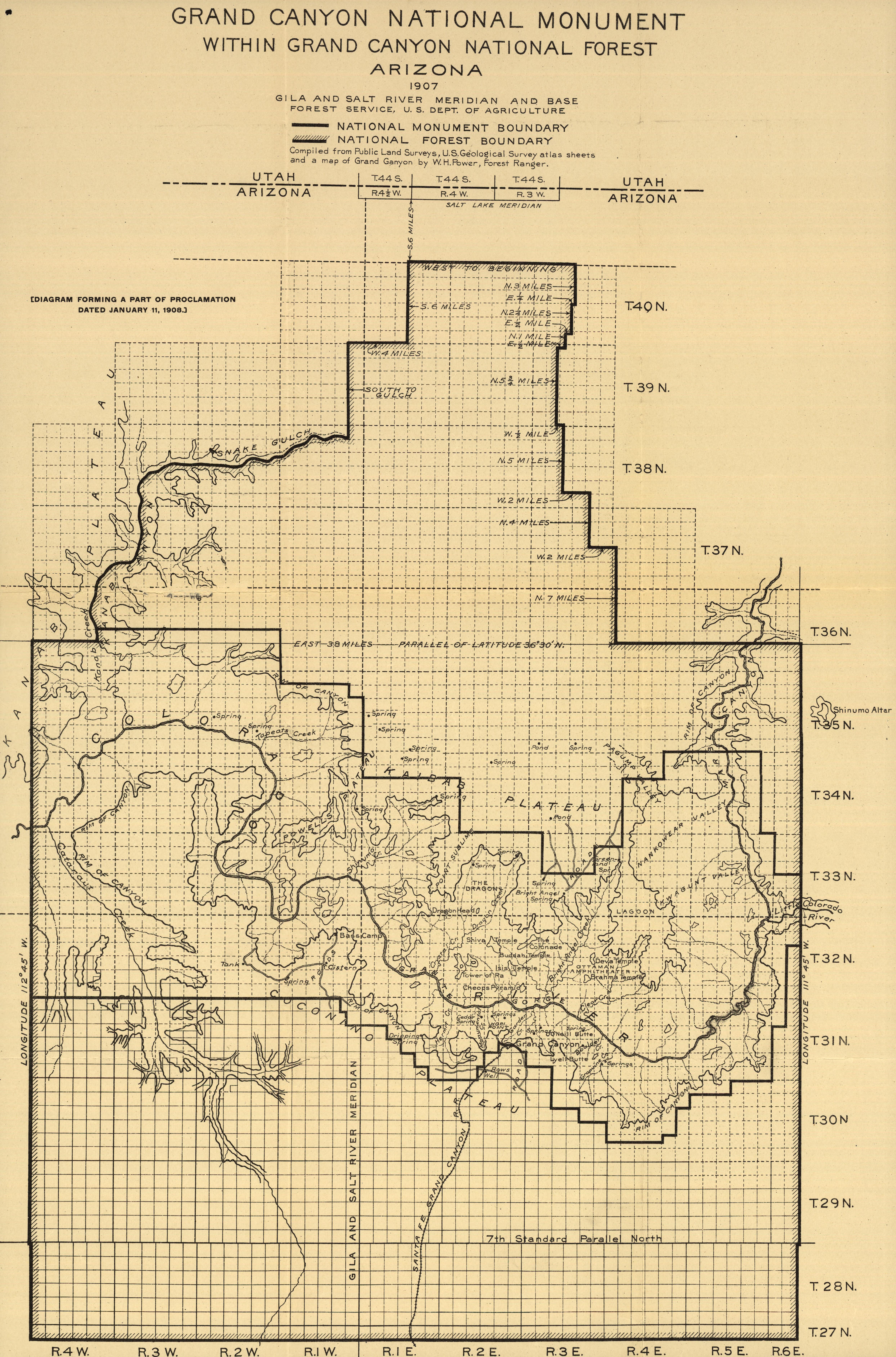
But the conservationist impulse to protect “wilderness” from the encroachment of human society, Jacoby points out, wholly disregarded the rural communities that had been living there for generations. Overnight, settlers and residents became outlaws and “squatters” residing on government owned land. The hunting and fishing which had sustained those communities was suddenly “poaching,” a crime that could result in fines or banishment. At the time of the Adirondacks’ preservation, 16,000 settlers lived within what became “preserved” and “uninhabited” land. Even the Grand Canyon at one time provided trails and access to natural resources for local Native American populations.

Map of Grand Canyon National Monument prepared by the National Forest Service, 1907 (Library of Congress)

Map of Grand Canyon National Monument prepared by the National Forest Service, 1907 (Library of Congress)

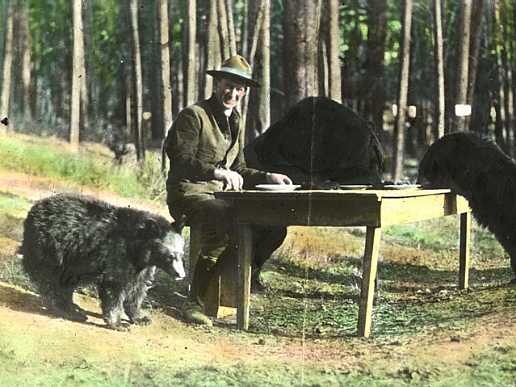
In order to enforce these new sets of rules, federal and state governments mobilized a bureaucracy of Forest Police to prevent squatting and poaching. Officials set new legal boundaries around “conserved” areas and organized forestland into grids of property ownership. Jacoby argues these efforts to define and protect “preserved” zones oversimplified complex ecological systems and produced unintended consequences. When officials at Yellowstone began hunting predators such as coyotes and mountain lions to maintain animal populations, the number of elk soared, throwing off the park’s delicate ecological balance. Despite the conservationist impulse to preserve nature as it is, park managers were really creating “nature” as it ought to be.

Horace M. Albright, Superintendent of Yellowstone National Park, with bears from the park, 1922 (National Park Service)

Horace M. Albright, Superintendent of Yellowstone National Park, with bears from the park, 1922 (National Park Service)

Crimes against Nature also details a variety of confrontations that ensued between park officials and the local communities who refused to leave. Setting fires, hunting or even making violent threats all represented forms of resistance against the incursions of the state on rural lands. Although many conservationists regarded these rural populations as fascinating vestiges of a pre-modern world, that nostalgia co-existed with a fierce contempt for their “primitive” modes of subsistence. Conservationists and Forest Police railed against the “irrationality” and wastefulness of rural hunting habits and worried that such behavior would undermine the rule of law.

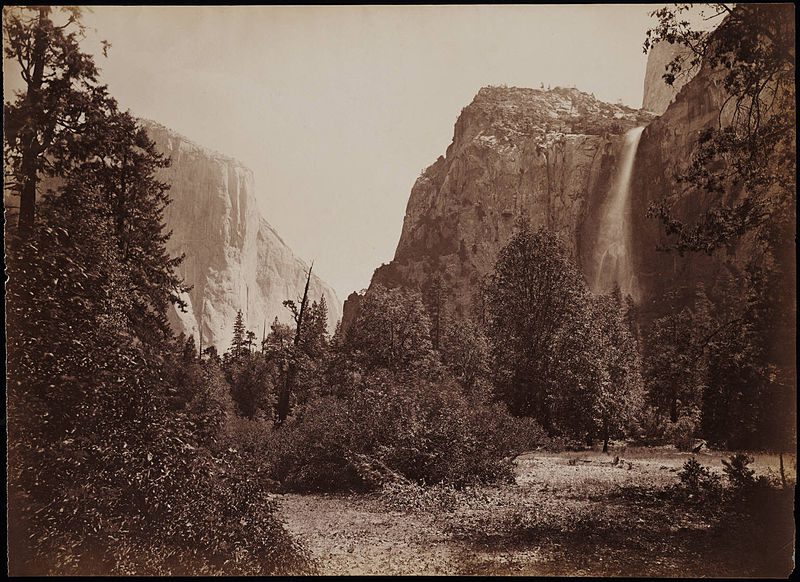
"View of Tutocanula Pass, Yosemite, California," by photographer Carleton E. Watkins, 1878-1881 (Beinecke Rare Book & Manuscript Library, Yale University)

“View of Tutocanula Pass, Yosemite, California,” by photographer Carleton E. Watkins, 1878-1881 (Beinecke Rare Book & Manuscript Library, Yale University)

Jacoby concludes that both sides actually embodied distinct, but complementary, American ideals. While conservationists sought to prevent illicit behavior and maintain the rule of law, settlers regarded themselves as rugged individualists pursuing self-sufficiency. In contrast to the simplified narrative of conservation vs. poaching, Jacoby sees a morally complex story unfolding in the wilderness.

bugburnt


Read more on the history of national parks and preservation:

Neel Baumgartner on Big Bend’s “scenic beauty”

Erika Bsumek on Lady Bird Johnson’s beautification project

And watch Blake Scott and Andres Lombana-Bermudez’s short documentary on the history of tourism in the Panamanian jungle


Hearing the Roaring Twenties: The New Archive (No. 12)

by Henry Wiencek

Ultimately, the task of any historian is to piece together the experience of another time—to understand what it was like being on the streets of Paris in 1789. Photographs, primary documents and personal recollections offer important glimpses, but one digital history site specifically wants to understand how it sounded. “The Roaring Twenties”—a collaboration between Emily Thompson of Princeton University and Scott Mahoy of the University of Southern California—compiles audio files and written noise complaints from 1920s New York City to capture the utter cacophony its residents experienced. Arranged by sound type, geography and timeline, this database is a new type of documentary and experiential history—recreating what the Roaring Twenties sounded like.

A screenshot of the "Sounds" section (The Roaring Twenties)

A screenshot of the “Sounds” section (The Roaring Twenties)

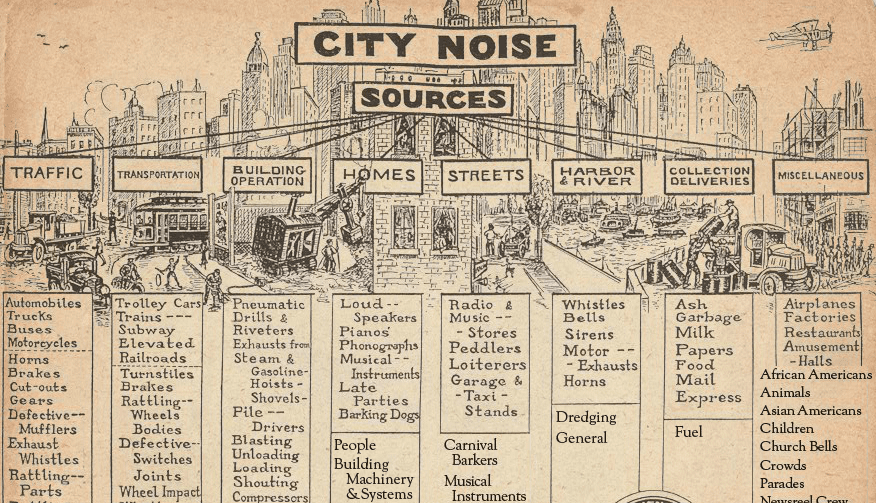
The variety of noises that 1920s New Yorkers endured is astonishing. Click on any of the listings in the “Sound” section and you’ll get the brief history of a particular sound: its source, its location, its formal noise complaint (if such documentation existed) and, in many entries, a contemporary piece of footage capturing the actual noise. It is remarkable to visit the utterly different sonic world these videos capture. While many of the auditory sensations caught on film would be familiar to present day residents—sirens, construction and honking cars—actually hearing (and seeing) them feels like entering a parallel universe. For the individuals seen on camera, all that rattling, whistling and yelling would have been the ordinary context for daily life; yet to us, it is exotic and bizarre.

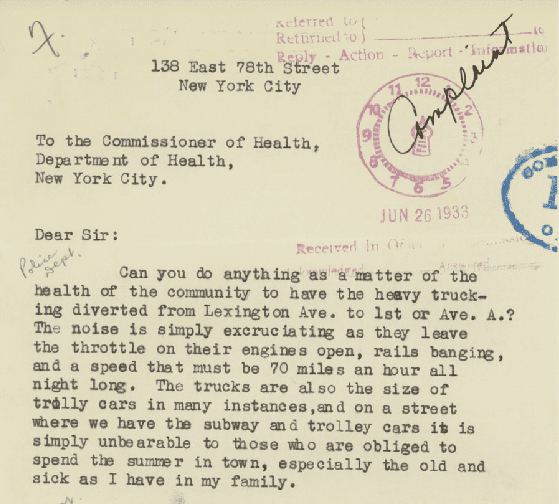
A formal complaint Louise P. Jenkins of Manhattan filed with the New York Commissioner of Health in 1933 regarding the sounds of fire engines (The Roaring Twenties/NYC Dept. of Records/Municipal Archives)

Screenshot of the formal complaint Louise P. Jenkins filed with the New York Commissioner of Health in 1933 regarding the sounds of trucks in her Manhattan neighborhood (The Roaring Twenties/NYC Dept. of Records, Municipal Archives)

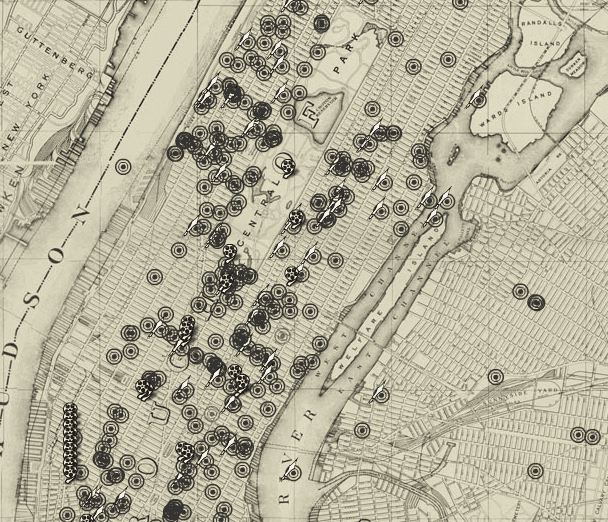
In order to provide a spatial context for this historical soundscape, the “Space” section arranges each sound entry onto a map of the city. Manhattan has the highest concentration, but you can find yelling newspaper vendors, saxophone playing neighbors and noisy radios in every borough. Many of these sounds reflect the unique cultural and ethnic character of New York’s neighborhoods: there is a Kung Fu demonstration on Chinatown’s Mott Street; an “Ol’ Clo'” Jewish peddler looking for clothing to buy on the Lower East Side; and ferry boat whistles along the Battery promenade. They also reveal an industrial city at work. Gotham echoed with dynamite blasting, steel factory operations, riveting, and boring machines.

Screenshot of the "Space" section, which arranges different sounds onto a map of New York City (The Roaring Twenties)

Screenshot of the “Space” section, which arranges different sounds onto a map of New York City (The Roaring Twenties)

But look closer and you’ll discover many sounds that will complicate our assumptions about what a “modern” industrial city sounded like. In 1930, Mr. W.C. Mansfield filed a noise complaint about an Upper West Side horse stable. That same year saw multiple complaints for rooster crowing in upper Manhattan as well as several sites in the Bronx. And in 1932, Mr. Arthur Campe of Brooklyn informed the city about one Mr. Johnson’s “noisy chickens.” New York did not just contain a diversity of sounds, but also a diversity of economies and lifestyles—both industrial and pre-industrial. Even as the jackhammering of factories and construction projects rang through the air, the neighing of horses and crowing of roosters were present as well.

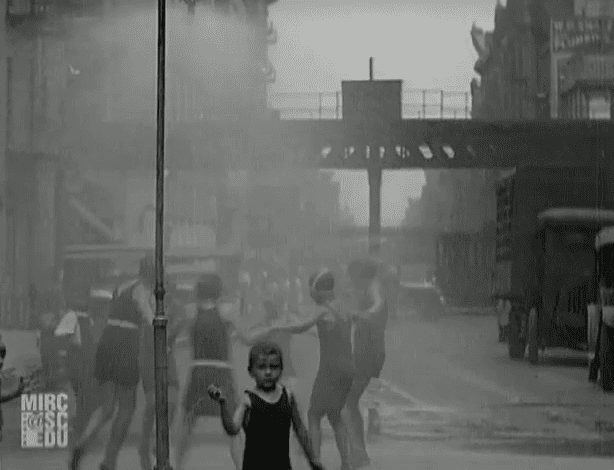
Screenshot from the video "Fire Engines, and Children at Play" (The Roaring Twenties/NYC Dept. of Records, Municipal Archives)

Screenshot from the video “Fire Engines, and Children at Play,” circa 1928-30 (The Roaring Twenties/NYC Dept. of Records, Municipal Archives)

Books can elegantly describe trends like industrial growth and urbanization, but “The Roaring Twenties” goes deeper by uncovering the sonic minutiae that accompanied them: a noisy bakery on Ogden Avenue in the Bronx; dairy wagons bothering J. J. Cohen each day in upper Manhattan; or the early morning racket created by live poultry aboard the NY Central Railroad cars along Riverside Drive. And these sounds are not just pieces of trivia. They exhibit people, machines and animals projecting their unique way of life into the sonic atmosphere. This compelling and very addictive site captures New York City at its noisiest, most contested and loudest.

bugburnt

Catch up with the latest New Archives:

The Civil War, as seen by the artists of Harper’s Weekly

And an economic, demographic and oceanic history of the trans-Atlantic slave trade

Harper’s Weekly’s Portrayal of the Civil War: The New Archive (No. 11)

By Charley S. Binkow

Images of war surround us today.  We see high-definition photographs and videos of violence on our televisions, smartphones, and laptops almost constantly.  But what was living through war like when people didn’t have instant videos or photographs? George Mason University’s Virginia Civil War Archive gives us a glimpse into the American media’s portrayal of the war at a time when ink-prints dominated the newspapers.

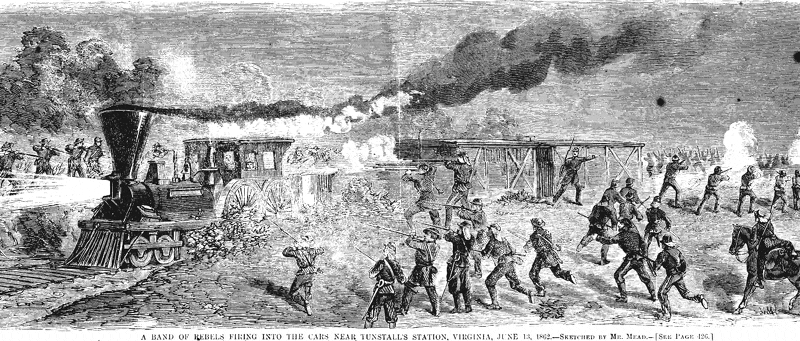
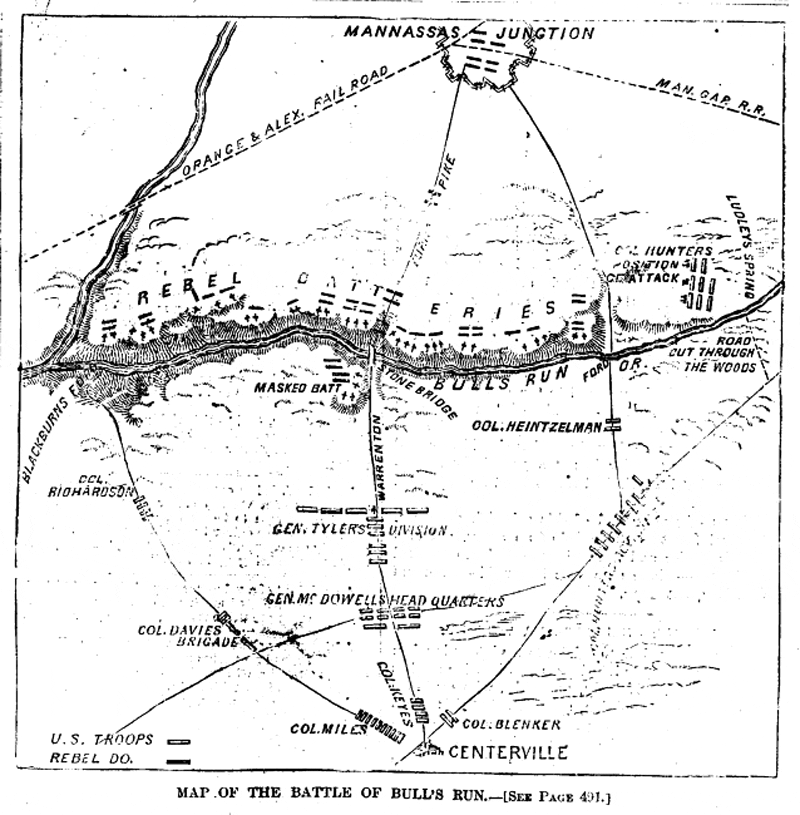
During the Civil War, Harper’s Weekly was one of the authoritative voices in news, both in the North and the South.  What set them apart from their competition? Their prints brought the war to the people and illuminated a world far removed from our own.  You can see Fredricksburg, Virginia before it saw battle, a map of the Battle of Bull’s Run, and a portrayal of rebels firing into a train near Tunstall’s Station.

 A Band of Rebels Firing Into the Cars Near Tunstall's Station, Virginia, June 13, 1862 (George Mason University Libraries)

A Band of Rebels Firing Into the Cars Near Tunstall’s Station, Virginia, June 13, 1862 (George Mason University Libraries)

The collection is quite well organized.  You can browse by titles, subjects, people, and more.  A Civil War historian trying to find primary visual documents concerning Richmond during wartime can do so with a click of a button.  An art historian can explore the different landscapes and figures expertly drawn by Harper’s staff—some of America’s best illustrators of the time worked for Harper’s. Almost anyone can find something interesting in this collection.

Harpers Weekly's map of the Battle of Bull's Run (George Mason University Libraries)

Harpers Weekly’s map of the Battle of Bull’s Run (George Mason University Libraries)

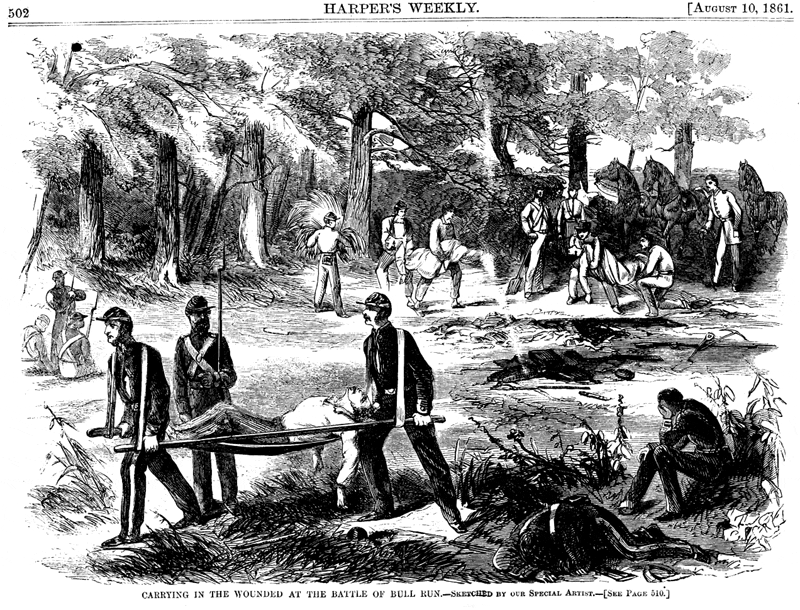
My personal favorite pieces are those that depict war scenes and their aftermath, like this dynamic, busy drawing of Colonel Hunter’s attack at the Battle of Bull Run or this poignant one of soldiers carrying away the wounded after battle.  A lot of people relied on Harper’s Weekly and other newspapers to give them information about the Civil War.  Seeing what these artists chose to portray, what they chose to omit, and how they created their scenes is fascinating.

Carrying the wounded at the Battle of Bull Run (George Mason University Libraries)

Carrying the wounded at the Battle of Bull Run (George Mason University Libraries)

This collection is one of many quality archives in the George Mason database.  Eager history enthusiasts should take advantage of these primary documents.  They’re informative, detailed, and just downright interesting.

bugburnt

More discoveries in the New Archive:

A website that charts the demographic, geographic and environmental history of the slave trade

And newly declassified government documents that tell the story of Radio Free Europe

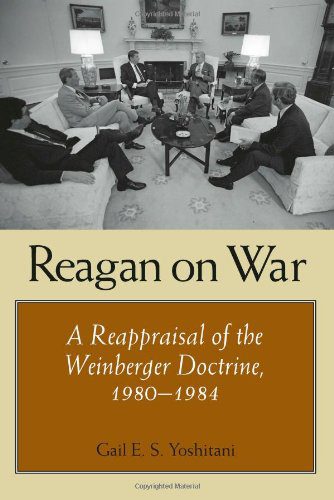
Reagan on War: A Reappraisal of the Weinberger Doctrine, 1980-1984, by Gail E. S. Yoshitani (2012)

by Simon Miles

Few presidents have left as complicated and politically charged a legacy as Ronald Reagan. Hailed as a pioneer of conservatism by some and reviled as an enemy of the middle class and a supporter of dictators by others, Reagan’s legacy has largely been shaped by debate between partisan pundits. Gradually, however, a limited body of more moderate of “Reagan revisionism” has begun to emerge. Historians and political scientists, writing with the benefit of temporal distance from events and increased access to sources have begun to produce more nuanced accounts of the 51uDzi5S1DLReagan administration – especially in the realm of foreign policy – that acknowledge the administration’s shortcomings and its successes.

Gail Yoshitani’s Reagan on War is one such book. Yoshitani, a professor of history at the US Military Academy at West Point, offers an in-depth look at the Reagan administration’s development of a strategic doctrine for the use of force based on extensive archival research. She demonstrates how a doctrine for the use of force emerged, but also how the Reagan administration, and the president in particular, chose to either adhere to or eschew these doctrines depending on Reagan’s goals Throughout Reagan on War, Yoshitani asks two important questions. First, what role did Reagan personally play in shaping his administration’s foreign policy? Second, to what extent did Reagan’s advisors, neoconservative and otherwise, influence the administration’s foreign policy?

Yoshitani’s account of US foreign policy during the early 1980s places Reagan at the center of events. As president, Yoshitani argues, Reagan set the course for US Cold War strategy. His perception of American resources as infinite and his determination to rebuild not only US military and economic strength, but also the country’s morale, guided policy during the 1980s. Reagan firmly believed that the solution to America’s “Vietnam syndrome” was strong presidential leadership (which he felt had been particularly lacking during the preceding Carter administration) and “peace through strength.” Yoshitani is clear, however, that Reagan’s advisors were responsible for developing policies to achieve these goals.

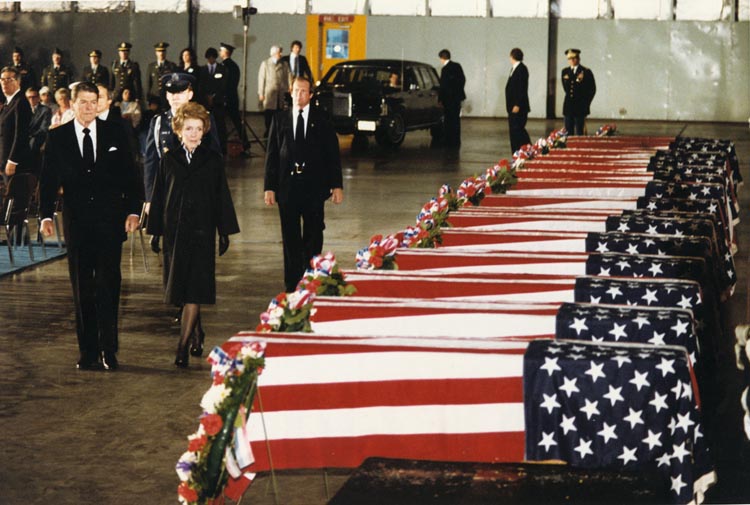
President Ronald Reagan and First Lady Nancy Reagan view the caskets of the 17 US victims of the 1983 attack against the US Embassy in Beirut (The Reagan Library)

President Ronald Reagan and First Lady Nancy Reagan view the caskets of the 17 US victims of the 1983 attack against the US Embassy in Beirut (The Reagan Library)

The key question faced by the Reagan administration in Yoshitani’s analysis was not only how to deal with the Soviet Union, but also when the United States should use military force overseas in the aftermath of Vietnam. Reagan’s advisors had differing policy prescriptions for this dilemma and Yoshitani examines the various doctrines proposed by Director of Central Intelligence William Casey, the Pentagon (in particular Chairman of the Joint Chiefs of Staff General John Vessey), Secretary of State George Shultz, and finally Secretary of Defense Caspar Weinberger. Casey’s approach to the use of force centered on proxy forces, usually the militaries of right-wing governments in Latin America, to repel communism. Proxy forces would bear the brunt of combat and create a permissive context for any future American military involvement, if desired, by cultivating a local perceived ally that the United States could support. Vessey and his Pentagon colleagues favored direct and decisive US engagement with limited, realistic goals, such as the removal of Palestinian Liberation Organization fighters from Lebanon. Shultz saw the military as a tool to be deployed in support of diplomacy. Deploying troops was a clear sign of resolve, he argued, but should be done sparingly to ensure that the Soviet Union would not feel compelled to become involved to counterbalance American involvement around the world. Weinberger, synthesizing these approaches, outlined six litmus tests for US policy-makers to govern the use of force: necessity to US or allied national interest; wholehearted commitment; defined political and military objectives; correlation between objectives and forces committed; public support; and the absence of a non-military alternative. Though Reagan did not always adhere to the Weinberger Doctrine, Yoshitani argues, it formed the heuristic framework in which the administration considered the use of force.

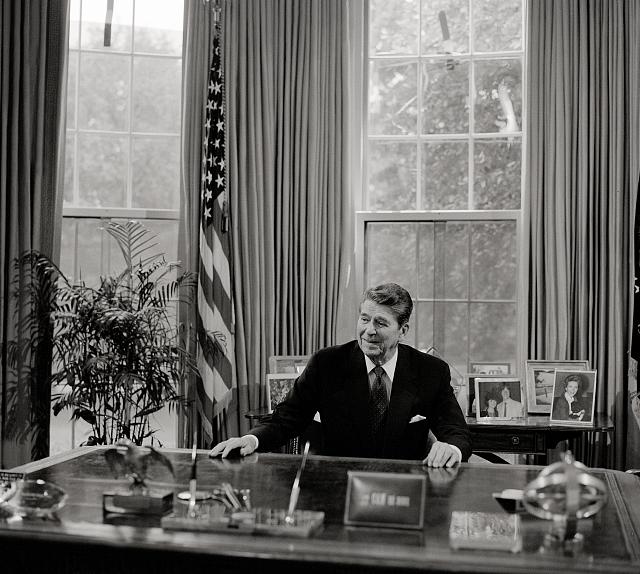
President Ronald Reagan at his desk in the Oval Office (Library of Congress)

President Ronald Reagan at his desk in the Oval Office (Library of Congress)

Yoshitani makes a valuable contribution to the historiography of Reagan’s foreign policy by exploring Reagan as an individual, his advisors, and their approach to policy-making and the Cold War. The 1980s are already fertile ground for historians, with ample material accessible at the Ronald Reagan Presidential Library, the National Archives and Records Administration, and in smaller repositories such as the Hoover Institution Archives. This valuable and insightful book will be of considerable interest to students of the Cold War.

More on the presidency of Ronald Reagan:

Joseph Parrott’s review of The Rebellion of Ronald Reagan: A History of the End of the Cold War

Dolph Briscoe’s review of The Age of Reagan: A History

Jonathan Hunt looks back on the 1986 Reykjavík Summit between Reagan and Mikhail Gorbachev


Sound Maps: The New Archive (No. 6)

By Henry Wiencek

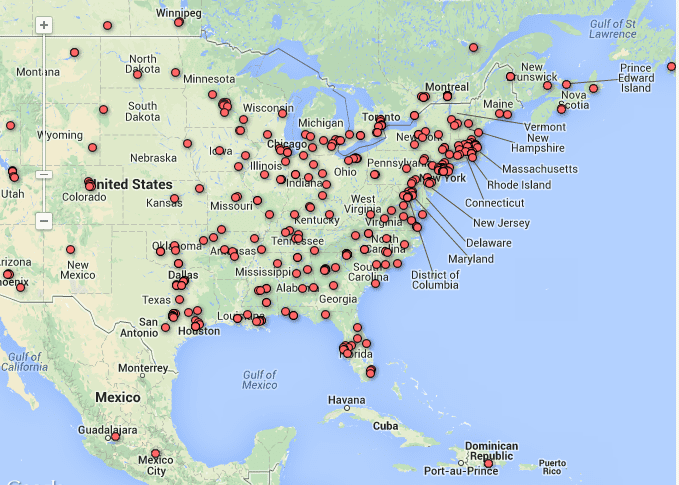
In the study of history, it’s easy to fall back on national identities: “Irish music,” an “English accent,” “American Exceptionalism” are just a few examples. But a closer examination of the local cultures—music, dialects, history—that exist within nations demonstrates how misleading those generalizations can be. Just look through one of the British Library’s “Sound Maps” and you’ll be convinced. This remarkable site takes many of the library’s 50,000 recordings of music, regional accents, and oral histories and arranges them geographically on Google Maps. The project is at once global and local—each sound map is an aural window into a unique part of the world. You can hear birds chirping in Algarve, Portugal, a folksinger perform in Carlistrane, Ireland, or the local dialect in Morton, Mississippi.

US_AccentsOne of the most fascinating—and addictive—features on the site is “Your Accents,” a global map of the world’s seemingly endless variety of dialects. The map features recordings of people from across the globe reading the same English phrases, allowing listeners to discern how each locality articulates “scone,” “garage” and “schedule” among other richly pronounceable words. The most immediate differences are apparent along national lines, as English, Indian, American, and various other accents contour the words in unique ways. But the map goes even deeper—revealing the astonishing regional differences that exist within those nations. Although people from Brighton and Leeds ostensibly share an “English” accent, the sonic differences between them are vast.

Holocaust

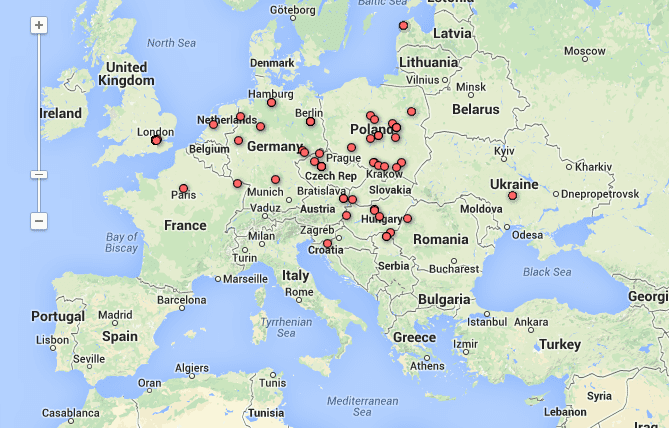
Other sound maps use the same technology to tell far more sobering stories. “Jewish Survivors of the Holocaust” archives oral histories of that traumatic epoch. Again using Google Maps, the page arranges survival stories based on geographic origins: individuals from France, England, Germany, Poland and even Azerbaijan are all represented. These unique and deeply affecting histories underscore the striking heterogeneity of the Holocaust’s victims and survivors. They were rich and poor; came from big cities and small towns; and identified as religiously devout and irreligious. By mapping their oral histories, the British Library visually captures that geographic and experiential diversity.  And by letting them speak, reinforces the kinds of variations that get flattened out or even erased when reading text on a page.

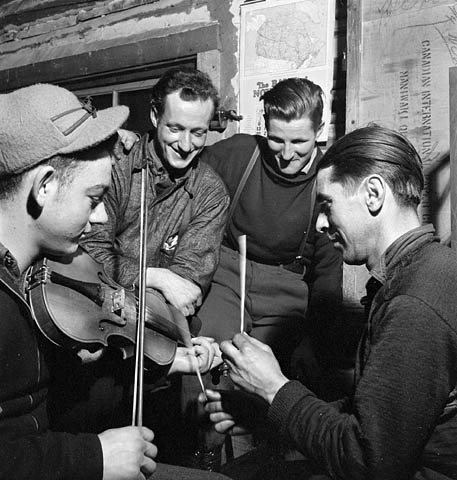
lumbermen_violin_and_sticks_1943The British Library’s “Sound Maps” is an invaluable tool for anyone interested in hearing what the world sounds like. Cultural historians and preservationists will take particular interest in the collections of music and dialects—time capsules of old folkways quietly vanishing in a globalizing world. Readers may note the site’s emphasis on English speaking regions, especially the UK, but the geographic breadth of its collection remains deeply impressive. These maps do not just capture the sounds of the world, they capture its most compelling minutiae: the small town pubs, the remote jungles, and the fascinating people.

Explore the latest finds in the NEW ARCHIVE:

Charley Binkow on iTunes’s salute to Black History Month

And Henry Wiencek finds a new way of looking at Emancipation

Photo Credits:

Screenshot from “Your Accents” sound map (Image courtesy of the British Library)

Screenshot from “Jewish Survivors Of The Holocaust” sound map (Image courtesy of the British Library)

Quebecois lumbermen making music with a violin and sticks, 1943 (Image courtesy of National Film Board of Canada)

« Previous Page
Next Page »

Recent Posts

  • NEP Author Spotlight – Aidan Dresang
  • Lesson Plans: The Vietnam War and American Society
  • Lesson Plans: Protest and Social Unrest
  • Lesson Plans: Radio and Communications Technology
  • The Long-Lasting and Perpetuating Effects of Lynching Postcards and Photography
NOT EVEN PAST is produced by

The Department of History

The University of Texas at Austin

We are supported by the College of Liberal Arts
And our Readers

Donate
Contact

All content © 2010-present NOT EVEN PAST and the authors, unless otherwise noted

Sign up to receive our MONTHLY NEWSLETTER

  • New
  • Features
  • Reviews
  • Texas
  • Teaching
  • Digital
  • Watch & Listen
  • Authors
  • About