• New
  • Features
  • Reviews
  • Texas
  • Teaching
  • Digital
  • Watch & Listen
  • Authors
  • About

The past is never dead. It's not even past

Not Even Past

Textbooks, Texas, and Discontent: The Fight against Inadequate Educational Resources

Banner image for the post entitled Textbooks, Texas, and Discontent: The Fight Against Inadequate Educational Resources

By Alejandra Garza and Maria Esther Hammack

Controversies surrounding textbooks are nothing new, especially in Texas. For years, textbook selection in Texas has grabbed headlines and generated great discontent and debate. Textbooks adopted by the Texas State Board of Education (SBOE) are unusually important because they are also adopted for use in classrooms across the country. Whatever Texas adopts, students across the United States get. In 2014, a coalition of unpaid Texas citizens who called themselves “Truth In Texas Textbooks,” presented the SBOE with a report containing 469 pages of factual errors, “imbalanced presentation of materials, omission of information, and opinions disguised as facts,” found in three world history and geography textbooks that were being considered for adoption that November. And who can forget the 2015 textbook fiasco, when the Texas Board of Education refused to allow professors to review and fact-check textbooks that were to be implemented in Texas curricula that year. Historians and other academics protested because non-experts were writing and reviewing history textbooks.
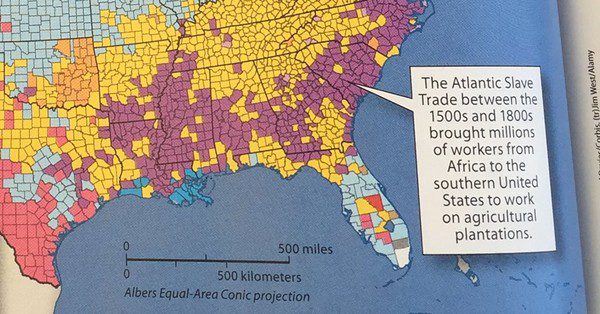
Photograph of a 2015 Texas textbook caption that grossly mischaracterized the nature of slavery
A 2015 Texas textbook caption grossly mischaracterized the nature of slavery (Coby Burren via the San Antonio Current).

But that was not the only contentious issue surrounding textbooks in Texas last year. Mrs. Roni Dean-Burren split open a Pandora’s box of controversies when she posted a picture on Facebook of her teenage son’s textbook which explicitly portrayed slaves as immigrant workers. The Texas State Board of Education had adopted the textbook, published by McGraw Hill, a few years ago and sold about 140,000 in Texas and other states. McGraw Hill was quick to respond and quench the controversy. They immediately acknowledged that they had made “a mistake” and rapidly agreed to do their “utmost to fix it.”

This year’s controversy has had a different outcome. Unlike McGraw Hill, Jaime Riddle and Valarie Angle, the authors of the Mexican American Heritage textbook and its publisher, Momentum Instruction, LLC, have yet to apologize for a widely criticized textbook. Beyond an unwillingness to acknowledge the large number of problems in their textbook, they have failed to respond to questions and comments from historians and experts challenging their work. The Mexican American Heritage textbook has more than 800 factual errors, errors of omission, and misleading representations of Mexican American history and culture.
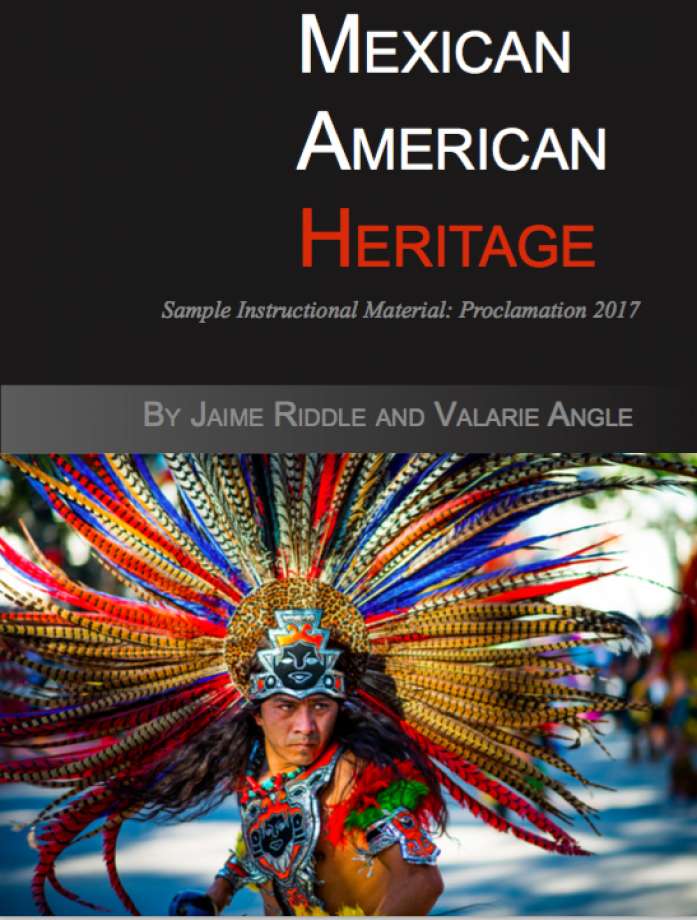
Book cover of The Mexican American Heritage textbook by Jaime Riddle and Valarie Angle
The Mexican American Heritage textbook (via authors).

In addition to factual errors, the book is riddled with what several historians have deemed “ethnic hostility” — clearly racist remarks, blatantly condescending portrayals of Mexican Americans and their historical roles, and a large number of specific instances where the authors’ opinions straightforwardly belittle Mexican-American history, heritage, and people of Mexican descent and their accomplishments and contributions. The authors and the publisher have refused to work with experts to fix the errors and have yet to demonstrate any intent to withdraw the book from consideration for adoption by the State Board of Education in hearings scheduled for November 15 and 18, 2016. The final decision pertaining to the adoption or rejection of the textbook is set to be made on November 18, 2016.

A textbook with an extensive number of errors, with clearly racist and condescending content does not belong in any classroom. Textbooks are meant to educate and empower our future generations through an emphasis on factual history and on understanding the heritage and identity of all the peoples of the country, but the Mexican American Heritage textbook is set to do just the opposite. Its content erases Mexican American history and culture and it presents historical information in manner that misinforms, rather than educates.

Black and white image of Moses Austin
Moses Austin, 1761-1821 (via Wikimedia Commons).

For instance, a passage in the book claims that “in 1822, Moses Austin obtained the first charter to start an American colony in Texas.” As most historians know, what Austin received was not a charter, but an offer for a land grant where up to 300 colonists could move and settle in Texas, then Mexican territory, with the stipulation that they swear allegiance to Mexico and become Mexican citizens. Also, expert historians made sure to note that Moses Austin died in 1821, so by 1822, the date provided in the textbook, Austin was in fact no longer alive and could not have obtained what the authors claimed was the first charter to colonize Texas.

Last month The Guardian reported that the passages in the textbook portray Mexican Americans as “anti-education and anti-English” and depict “true Mexican identity” as being inherently in rebellion against the establishment. They write that “High School and college youth may refuse to attend class, speak English or learn certain subjects because they perceive injustice in the school system,” and claiming Mexican American prosperity is hindered by their own identity. In addition to reports in the media, the Ad Hoc Committee, consisting of a group of scholars who took the initiative to read and review the textbook last spring, have highlighted some of the most disturbing errors. In chapter 3, for example, the authors wrote that “most Mexicans weren’t literate, they could not own land, and had been given the message that they should be subdued rather than lifted up. How would they invent a system from nothing that depended on participating in political and economic life?”[1] They portray Mexican Americans as having an all-encompassing cultural attitude of laziness that makes them put off important things for “mañana,” because, according to the textbook, they “have not been reared to put in a full day’s work so vigorously.”

Contrary to those portrayals, Mexican Americans and Mexican American scholars, historians and other professionals have begun the rigorous undertaking of meticulously reviewing the textbook by tabulating historical inaccuracies, listing factual errors, and conducting extensive and in depth analysis of the historical content of the textbook. The Mexican American scholars and the community were quick to organize in Austin and across Texas, and have managed to coordinate with other scholars, and historians across the country to write a strong case against the Mexican American Heritage textbook, so that it is not adopted by the Texas State Board of Education in the November hearings. The Ad Hoc Committee presented its report this past summer to the Texas State Board of Education’s Representative, Ruben Cortez, Jr., to explain why the proposed textbook was inadequate, how it failed to meet basic standards and guiding principles in the history profession. They provided an extensive list of suggested revisions to the publisher, suggestions that today, at one week until the hearing, have gone vastly unheeded.

Close-up photograph of the six flags over Texas emblems under state capitol dome
The Texas State Capitol (via Wikimedia Commons).

Here at UT Austin, the University of Texas Textbook Review Committee has six members working under the guidance of Dr. Emilio Zamora, of the UT Austin History Department, to produce a complete annotated list of factual errors, omissions, and misrepresentations, and also a list of suggested revisions. The committee’s goal is to serve historians and experts such as Dr. Zamora to prepare a written response based on their findings and historical evidence, to present to the Texas State Board of Education on November 15, and for that response to help prevent the Mexican American Heritage textbook from being adopted.

Despite the documented factual errors and wide criticism of the textbook, the hearing is not going to be an easy one. Conservative politicians have been supporting adoption of the textbook. For example, David Bradley, the Republican state representative for Southeast Texas on the Texas Board of Education, said that he had originally voted against the call for textbooks because he considers Mexican-American studies to be discriminatory against Americans of other ethnic backgrounds. He now plans to vote to adopt the book, because he is “going to give them what they asked for.” Bradley added “they wanted a course, and they wanted special treatment, and we had publisher step up.” He is intent on casting his vote for the adoption of this textbook.

The Main Building at the University of Texas - Austin (via Wikimedia Commons).
The Main Building at the University of Texas – Austin (via Wikimedia Commons).

Criticism of the textbook has come from historians across the nation, professional organizations, and activists’ platforms, including American Historical Association. In September, the AHA wrote a letter of concern to the Texas State Board of Education regarding the textbook because, they wrote, “the textbook does not adequately reflect the scholarship of historians who have worked in the field of Mexican American history, or measure up to the broad standards of history as a discipline.” The American Historical Association urged the Texas Board of Education “reject the use of this textbook as an option for institutions within the purview of the board’s adoption policies.”

We hope that more allies come to our support, and that many scholars, historians, educators, and students show up at the William B. Travis Building at the State Capitol for the hearings on November 15. It is imperative that textbooks such as The Mexican American Heritage do not get adopted. A textbook on Mexican Americans or Mexican American history or any other history that is filled with errors and racist allegations should not be used to educate our children, not now, not ever.

[1]District 2 Ad Hoc Committee Report on Proposed Social Studies Special Topic Textbook: Mexican American Heritage, presented to Ruben Cortez, Jr., State Board of Education Representative, September 6, 2016.


Board of Education agendas and information for the November 15th-18th meetings can be found here.
A map indicating the building location can be found here.
You can find out who your SBOE representative is here, and can contact members of the SBOE here.


You may also like:
Chris Babits offers Another Perspective on the Texas Textbook Controversy.
Christopher Rose recounts his experience testifying before the SBOE in this blog post.
NEP contributors relate what happens When a Government Tells Historians How to Write and How to Teach.


The views and opinions expressed in this article or video are those of the individual author(s) or presenter(s) and do not necessarily reflect the policy or views of the editors at Not Even Past, the UT Department of History, the University of Texas at Austin, or the UT System Board of Regents. Not Even Past is an online public history magazine rather than a peer-reviewed academic journal. While we make efforts to ensure that factual information in articles was obtained from reliable sources, Not Even Past is not responsible for any errors or omissions.
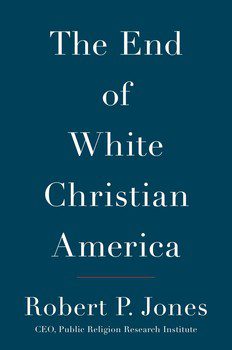

The End of White Christian America, by Robert P. Jones (2016)

By Diana Bolsinger

the-end-of-white-christian-america-9781501122293_lgRobert Jones interprets many of today’s most contentious political and cultural battles as the product of shifts in America’s demographic make-up. He convincingly shows that ongoing demographic shifts in America’s ethnic mix are accompanied by unprecedented changes in religious affiliation. White Christian (by which he means Protestant) Americans dominated American politics and social life for most of our nation’s history. Jones dates the shift away from this dominance to the election of John F. Kennedy – a Catholic– in 1960, with the change accelerating through the 1960s and 1970s. In subsequent decades, the number of religiously unaffiliated Americans surged, along with increases in the numbers of Catholic, Jewish, Muslim and others. The last year that Protestants represented a majority was 2008. Jones uses survey data to identify a generational shift within Protestant mainline and evangelical movements, finding younger believers to be far more accepting of gay and interracial marriage.

Jones argues that it is this demographic shift that has driven the furor over several key issues in recent years, including same-sex marriage, abortion, and a number of initiatives to infuse politics with “Biblical values.” Jones cites polling data indicating evangelical white Protestants are the least likely group to have black friends to explain their alienation from movements such as Black Lives Matter. He likens the passion driving the religious white conservative reaction to the “anger and denial” stage of grief, predicting believers will eventually refocus their energies on strengthening their own community of believers.

721502355_2454b53e9e_b

(via Jeff Kubina)

Jones’s interpretation of today’s culture wars is shaped by his own liberal outlook, but his account should also be interesting to conservative readers. Regardless of one’s political views, the demographic changes he outlines are real and are changing America’s politics and culture. The data Jones provides derives from solid sources. Most of the explanations for the rise of the “angry voter” behind the Trump campaign have focused on economic issues. While Jones does not address the 2016 presidential campaigns, his work provides a useful background on how demographics also factor into the rise of Trump’s popularity. The results of the campaign should also prove an interesting test of Jones’s argument that “White Christian America” has lost the political clout to dominate national politics.

Robert P. Jones, The End of White Christian America (New York: Simon & Schuster, 2016)

bugburnt
You may also like:

Chris Babits offers Another Perspective on the Texas Textbook Controversy.
Prof. Jacqueline Jones explains The Myth of Race in America.
Prof. Howard Miller looks at the history behind the question “What Would Jesus Do?”
bugburnt

Playing Indian, by Philip Deloria (1999)

By Mark Sheaves

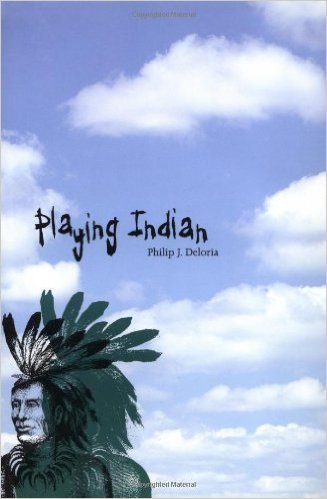
41tbt1ekbbl-_sx325_bo1204203200_Images of American Indians are ubiquitous in contemporary US culture. Step into a convenience store and you can’t help but notice that two of the most popular tobacco brands, Redman Chewing Tobacco and Natural American Spirits, are adorned with the face of a feathered-headdress wearing chief. Approximately 2,000 high schools across the country use Native American imagery or symbolism in their name, mascots, and iconography. Sign into Netflix and you will quickly find a film with Native American characters: Disney’s Pocahontas was recently added to their library, while Adam Sandler’s The Ridiculous Six, depicting bandits and Indians in the American Wild West, was the big 2015 winter release. Shopping for fashion? The geometric patterns commonly associated with the Navajos of the Southwest have covered garments on the catwalk and in fashionable stores such as Prada and Barney’s over the past year. If you follow the NFL, you will know that Washington DC’s team wear an Indian chief on their helmets and their controversial name splashed across burgundy jerseys. And with Halloween just around the corner, people dressed in Indian costumes will party with ghosts, monsters and witches at gatherings across the country. Why is the image of the American Indian so popular in American culture? What is the history behind these images? And why does the history matter?

800_9637

Natural American Spirit logo (via OpenCage).

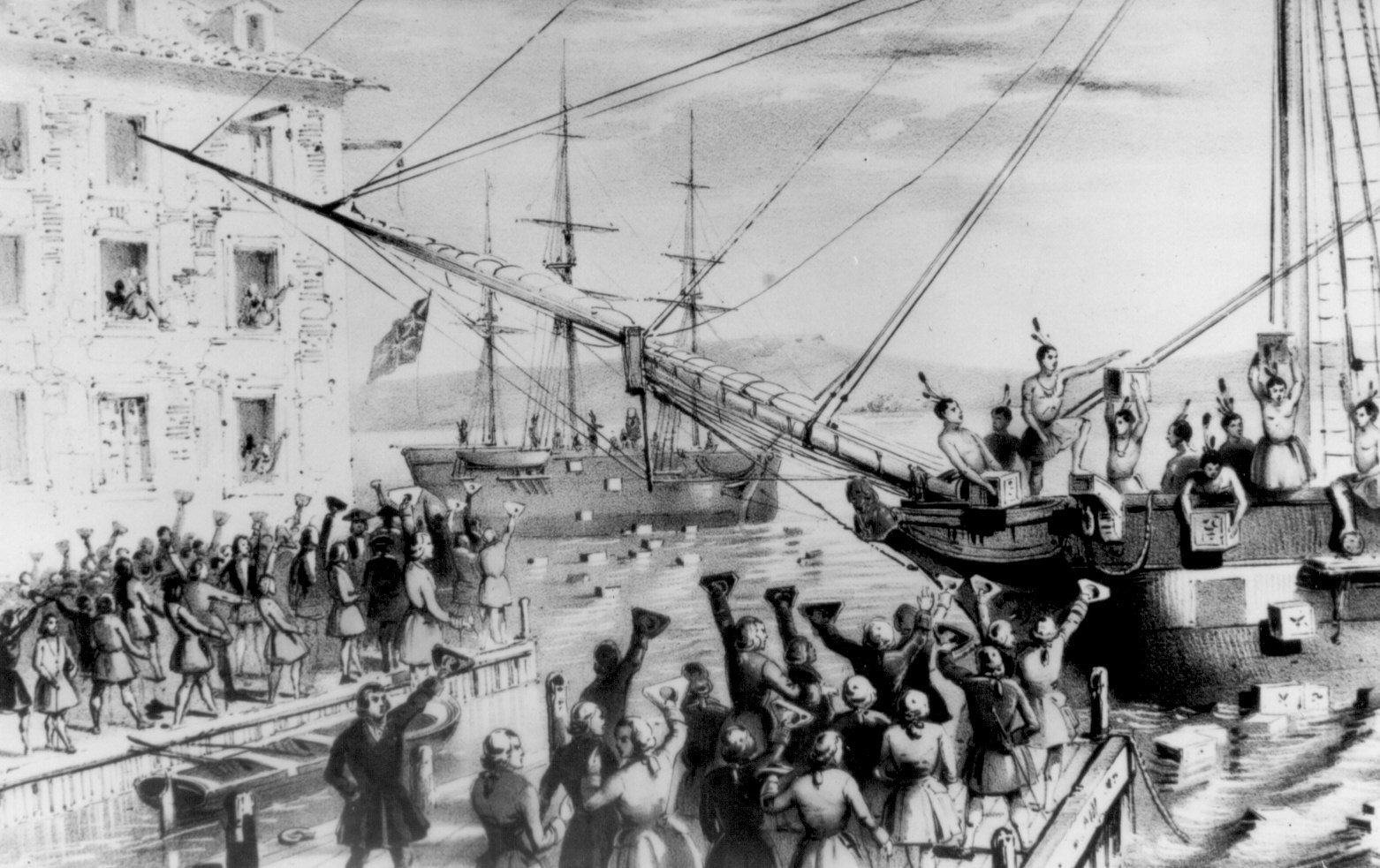
One way to answer these questions is to think about how and why white Americans have dressed or acted like Indians during the course of American history. In his classic work Playing Indian, Philip Deloria demonstrates that the act of playing Indian is as old as the USA itself. On the December 16, 1773, a group led by the Sons of Liberty boarded the Dartmouth and two other ships in Boston harbor and dumped tea into the cold water in protest over import tax. The protestors wore feathers, headdresses, and war paint and supposedly shouted Indian words in an event that would come to be known as the Boston Tea Party. The Mohawk disguises have been explained as an attempt to maintain secrecy or as a strategy to cast blame on a third party, but for Deloria they represented a political statement aimed at the English. Playing and dressing as an Indian was an act that declared a distinct American identity.

boston_tea_party

The Boston Tea Party (via Wikimedia Commons)

In Playing Indian, Deloria explores how and why Indians have been so important to those seeking to define what it is to be an authentic American. Largely focused on the activities and ideas of white men, Deloria argues that the practice of performing like an Indian has persisted in American culture from the eighteenth century through the 1990s when the book was published. He considers the specific meaning and significance of key events and organizations where people played Indian, including the Boston Tea Party, the New York Tammany Society, the development of anthropology as an academic discipline, the birth of the boy scouts, and during the counterculture movements of the 1960s. While the many examples Deloria offers demonstrate the importance of the Indian image in American culture for over two centuries, he argues that the “practice of playing Indian has clustered around two paradigmatic moments – the Revolution, which rested on the creation of a national identity, and modernity, which has used Indian play to encounter the authentic amidst the anxiety of urban industrial and postindustrial life.” Given the importance of these two moments in US History, Indian play has been hugely significant in the creation of American culture and identity.

Deloria organizes his thesis around two connected dimensions, an “axis of value” and an “axis of distance.” The “axis of value” highlights the positive and negative stereotypes of Indians in American culture. Deloria’s “axis of distance” captures the ways Indians have at times been included as part of American culture and at other moments been used as an external mirror to reflect what Americans should and should not be. For example, Indians have been presented as violent, pagan, drunken savages and thus the anti-thesis of a model American. This is an image that has largely served to justify appropriation of Indian lands and programs to eradicate Indian culture. Yet, ideas about Indians have also represented quintessential American values like freedom, individualism and a connection to nature and the land. In the revolutionary era, this positive idea of an Indian served those seeking to define themselves as distant from European culture. In the late nineteenth and early twentieth century, Native Americans were cast as exemplars of a simple life, critiquing the decadence some Americans perceived during a period of rapid industrialization and growth.

8624093444_22fb89cec5_b

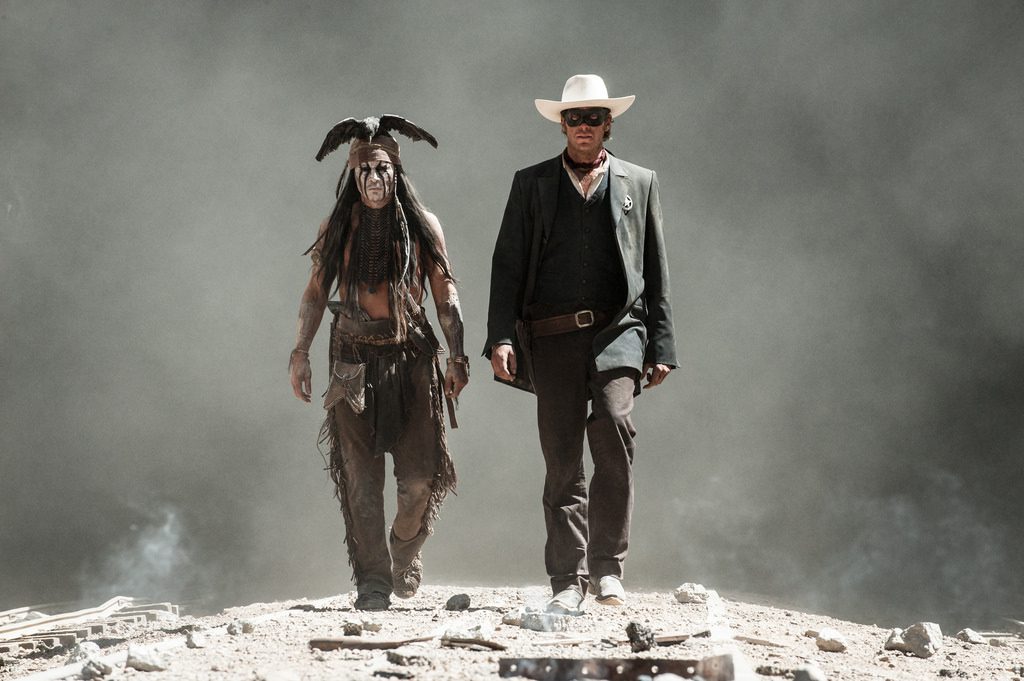
The 2013 Lone Ranger movie drew criticism for its representation of Native American culture (via Jorge Figueroa).

Deloria’s wide-ranging study demonstrates that American ideas about Indians have oscillated between positive portrayals of Indian nobility and negative associations of backwardness depending on the context and motivations of the subjects. Tensions between “desire and repulsion” and “nobility and savagery,” Deloria argues, lie at the heart of American identities, so when Americans performed as Indians, they were trying to balance the positive and negative in what they thought of as American identity. But these stereotypes of Native Americans that developed from the practice of playing Indian continue to inform dealings with Native people, that keep them in subordinate social, political, legal, and economic positions. The act of playing Indian, then, matters to contemporary Native Americans.
So as Halloween rolls around, the long and complicated history of playing Indian that Deloria describes should make us all think about reaching for the faux turquoise bead jewelry, braiding our hair, or picking up a plastic bow and arrow. The costumes we wear carry political messages from a history that people may not know, but that continues to shape the experiences of Native Americans living today.

Philip J. Deloria, Playing Indian (New Haven: Yale University Press, 1999)
bugburnt
Read more by Mark Sheaves on Not Even Past:

Francisco de Miranda: A Transatlantic Life in the Age of Revolution 1750-1816, by Karen Racine (2002)
The Web of Empire, By Alison Games (2008)
Philip of Spain, King of England, by Harry Kelsey (2012)

You may also like:

Nakia Parker reviews Black Slaves, Indian Masters: Slavery, Emancipation, and Citizenship in the Native American South, by Barbara Krauthamer (2013).
bugburnt

A History of the World in Sixteen Shipwrecks, by Stewart Gordon (2015)

By Cynthia Talbot

The world’s attention was captured in 2012 by the disaster that befell the Costa Concordia, a cruise ship that ran aground off the coast of Italy leading to 32 deaths.

shipwrecks-cover

This shipwreck is the most recent one covered in A History of the World in Sixteen Shipwrecks, whose expansive gaze covers much of the world from 6000 BCE to the present.  Like several other books containing the words “A History of the World in ..” in their title, Stewart Gordon’s work attempts to encapsulate world history through the close study of a set number of things.  Other examples of this approach include A History of the World in 100 Weapons, A History of the World in 12 Maps, A History of the World in 6 Glasses, and the very successful A History of the World in 100 Objects, a collaborative project between BBC Radio and the British Museum.  Focusing on a few cases as a way to illustrate global trends is both entertaining and effective – the reader can acquire interesting details about specific things and learn about the broader context at the same time.  

800px-a_costa_concordia_kiemelese
Recovery operations on the Costa Concordia (via Wikimedia Commons).

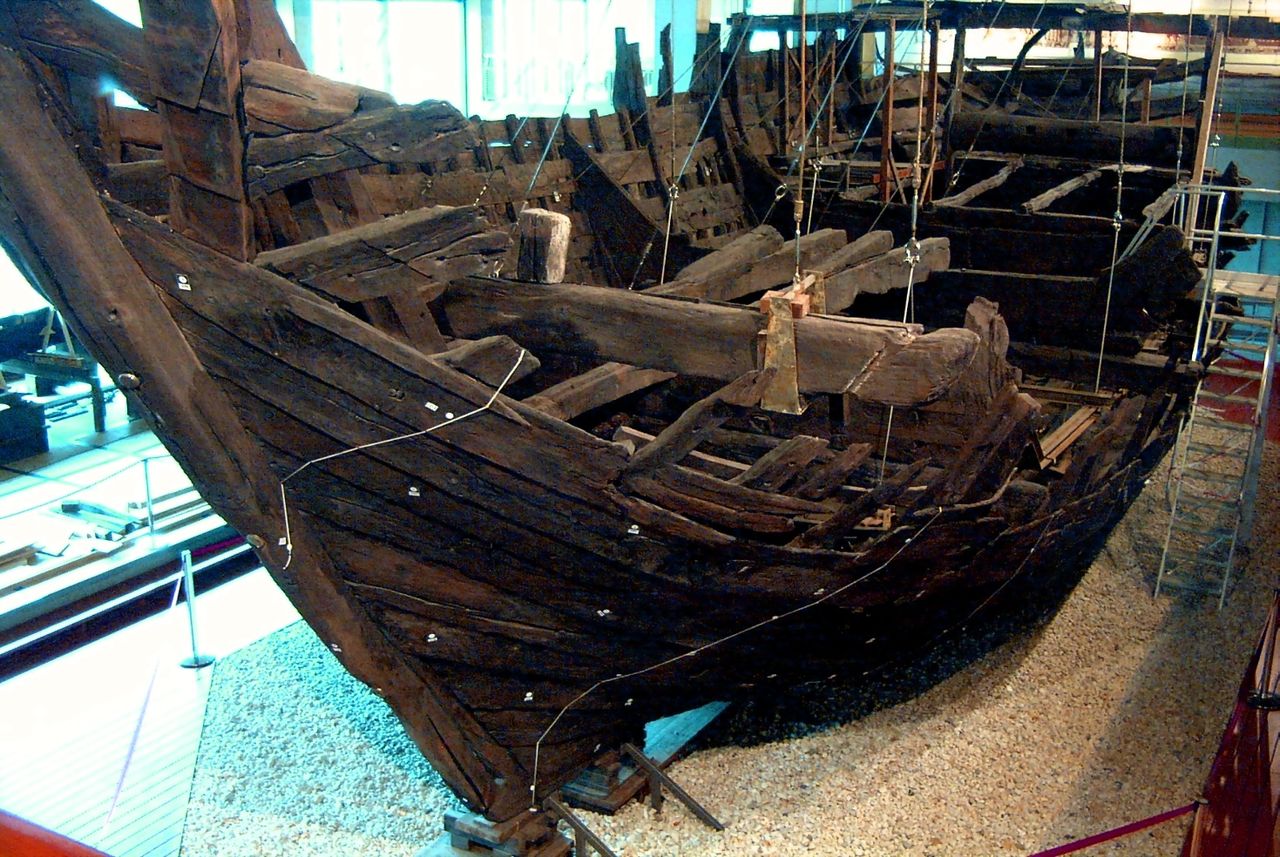
Shipwrecks are dramatic occurrences that are often tragic for those involved, but they can also lead to the preservation of artifacts that can be studied and analyzed, sometimes centuries or millennia after the events themselves.  The Bremen cog from German, considered the best surviving specimen of this type of vessel, sank in 1380 but was not discovered until 1962.

Remains of the Bremen Cog (via Wikimedia Commons).

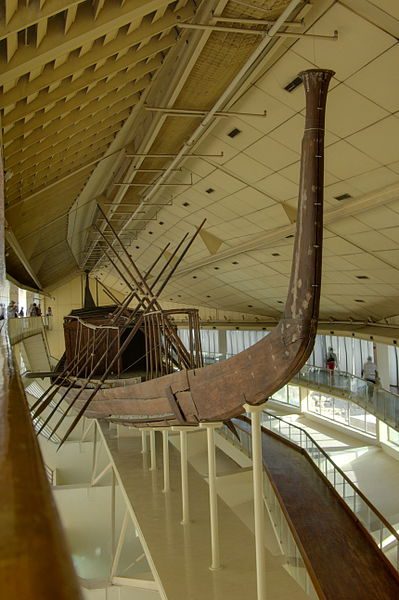
The cog was the dominant ship in northern Europe between about 1200 to 1450 CE. It was a bulk carrier of beer and wool and also served as a warship.  Another ancient type of ship is the Khufu barge, featured in the second chapter of A History of the World in Sixteen Shipwrecks.  This boat was buried in the Great Pyramid of Giza around 2600 BCE and was not discovered until 1954.  The Khufu barge, like several of the ships featured in the book, was not destroyed at sea but Gordon uses a broad definition of shipwreck because his chief goal is to examine the varieties of ships that have existed in human history and the maritime worlds they helped shape.

399px-gizeh_sonnenbarke_bw_2
Khufu barge after discovery (via Wikimedia Commons).

The shipwreck is therefore just an entry point for Gordon into the far larger topic of maritime history.  Each shipwreck allows the author to understand the various ways ships influenced the human societies that utilized them. He explains how each type of vessel was built, the purposes to which it was put, its strengths and weaknesses as a ship, and the maritime network it created.  He begins the book with the dugout canoe, a variety of boat found in several parts of the ancient world.  The chapters then follow a chronological sequence from the dugout to the modern cruise ship with a variety of stops along the way, including the famous seventh-century Sutton Hoo burial, the Intan shipwreck from Indonesian waters, a Spanish galleon, an American clipper ship, and the Exxon Valdez.  

takezaki_suenaga_ekotoba3-2

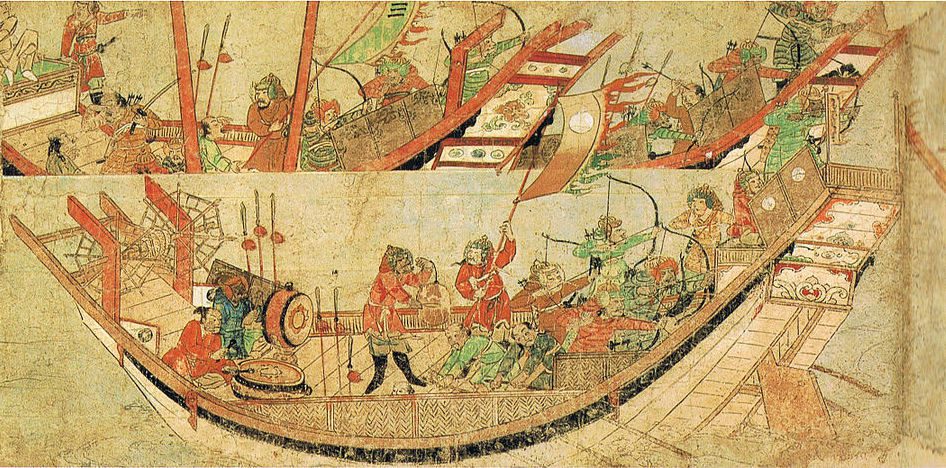
At times, Gordon uses literary evidence to launch his discussion, instead of an actual physical relic.  His chapter on the Arab dhow that plied the waters of the western Indian Ocean, for instance, relies on twelfth-century letters preserved at a synagogue in Cairo.  We learn about the Barbary war galley from the sixteenth-century memoir of an Englishman who described the ordeals of slavery that he faced after his ship was attacked and boarded in the Mediterranean.  Another chapter covers the attempted invasion of Japan by the Mongol leader Khubilai Khan in the thirteenth century, known to us from many sources of information, including Japanese picture scrolls painted soon afterward.  Above, we see Mongol warriors shooting arrows from a ship on the left hand side, while Japanese samurai board a Mongol ship on the right.  

takezaki_suenaga_ekotoba3
Japanese samurai boarding Yuan ships in 1281 (via Wikimedia Commons).

Although Gordon makes a concerted effort to examine ships from many areas of the world, the coverage shifts more and more to vessels from Europe and the United States as we get closer to the present.  The case of the HMS Victory, sunk in a storm after breaking a blockade in the Mediterranean in 1744, sheds light on the rise of British naval power.  The radical reduction of transport time resulting from use of the steam engine is illustrated by means of the Lucy Walker, a sidewheel steamboat that plied the waters of the Mississippi River.  Its engines overheated and blew the boat apart one day in 1844, with at least 43 casualties resulting.  

lucy_walker_explosion
Lucy Walker explosion, as depicted in an 1856 woodcut (via Wikimedia Commons).

The horrible scene of this explosion, a common problem for steamboats, was depicted by an artist in 1856. The transporting of large numbers of people, rather than cargo, became the rationale for large passenger ships such as the Lusitania.  Almost 1200 people died when it was struck by a torpedo from a German submarine in 1915, while en route from New York to Liverpool – a depiction of which adorns the cover of A History of the World in Sixteen Shipwrecks.  

Going well beyond the topic of shipwrecks, this enjoyable and educational book exposes the reader to diverse seascapes, social terrains, and political developments, as well as considerable information about trading patterns. In its geographic breadth and temporal length, it provides an admirable example of history writing on a world historical scale. Overall, A History of the World in Sixteen Shipwrecks is an engaging introduction to maritime history that explores the impact of specific types of ships in their regional economies and the gradual emergence of a globally connected maritime world by the twentieth century.  

Stewart Gordon, A History of the World in Sixteen Shipwrecks (Lebanon, NH: University Press of New England, 2015)

More by Cynthia Talbot on Not Even Past:
A History of the World in 100 Objects by Neil MacGregor (2011)
Great Books on Women’s History: Asia

You may also like:
Andres Lombana-Bermudez and Blake Scott discuss Colón 2000: Tour Guides, Cruiseships, and Tourists in Panama

Mapping Indigenous Los Angeles: A Public History Project

By Caroline Murray

Los Angeles is a city famous for its Hollywood celebrities and traffic, but a new project reveals an often overlooked part of the city’s past and present: its indigenous population, cited as one of the largest among American cities. Mapping Indigenous LA (MILA) brings to life the histories and current dilemmas of LA’s indigenous people in the twenty-first century, instead of leaving them behind in the past.

MILA combats the perception that these communities have disappeared over decades of assimilation and urban growth and exist only in a colonial context. The project disrupts the traditional, chronological narrative of history with its growing number of story maps, each featuring a place or issue of significance for LA’s indigenous groups. The maps contain videos, documents, book recommendations, and other archives that record native histories to give new meaning to locations in LA.

mapofindianresources

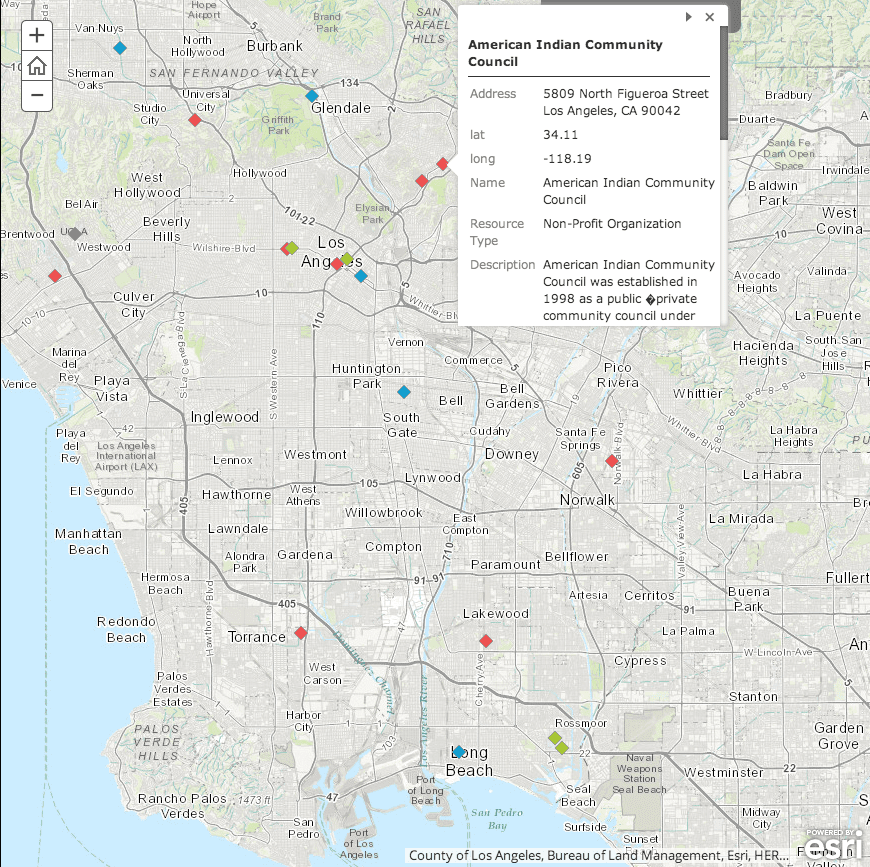
Map of Indian Resources (via MILA).

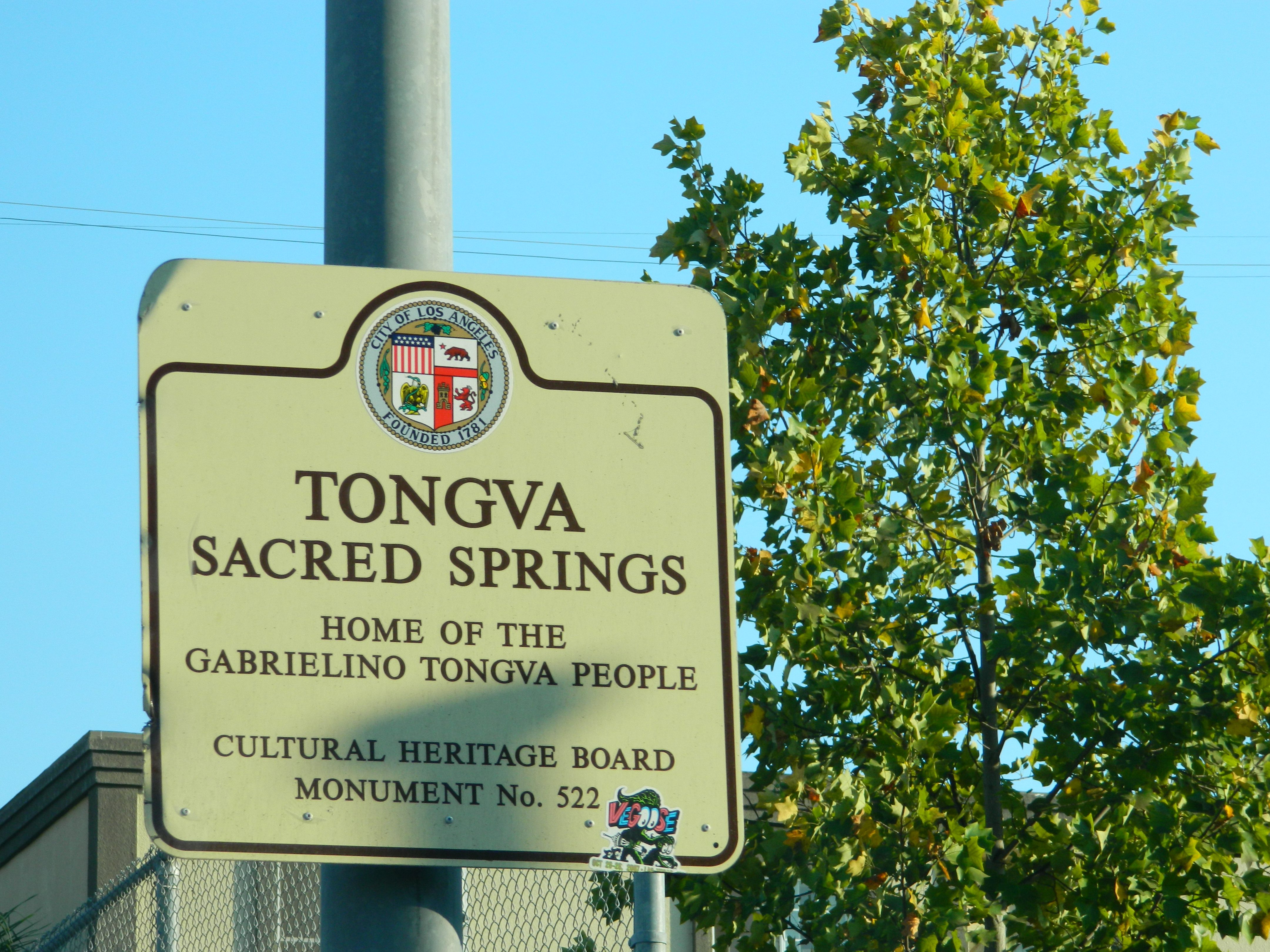
As MILA digs deeper, beyond the traditional idea of a map, it also works to expand the meaning of indigeneity by including stories not only from the native Tongva, but also other American Indians, Pacific Islanders, and citizens of Latin American indigenous diasporas who migrated to LA. You can explore the native village and springs of Kuruvungna, read about Latin American indigenous festivals, and listen to Tongva Elders reflect on their people’s displacement. You can view modern locations of Indian healthcare and education resources in LA, which many indigenous people struggle to find. MILA doesn’t allow its maps to provide only one definition or narrative; instead, they offer intricate, multifaceted histories that reflect the diversity of LA’s indigenous communities.

tongva_sacred_springs_-_serra_springs_-_kuruvungna_springs

Historic landmark sign marking the location of Serra Springs, called Kuruvungna by the native Gabrieleno Tongva people. The springs were a natural fresh water source for the Tongva people (via Wikimedia Commons).

The American Indian Education story map perhaps best demonstrates all of MILA’s goals. Multiple perspectives color the stories and share different sides of indigenous communities’ complex relationship with American education systems. The pain inflicted by Indian schools, the worry over the loss of native languages, and the hope new cultural programs are bringing to LA can all be felt while exploring the map.

Tongva House (via author).

The maps not only create awareness among non-indigenous people; they almost more importantly provide a digital network for indigenous groups to learn from and relate to each other in ways they might not have before. MILA wishes to add more maps and encourages people to create their own to foster connection between different communities. While the subjects and perspectives in the maps vary, they all communicate a common message from indigenous groups in LA: We are here, and we will be heard.
bugburnt
You may also like:
Cameron McCoy recommends L.A. City Limits: African American Los Angeles from the Great Depression to the Present by Josh Sides (2003).
Erika Bsumek explores several titles related to Navajo Arts and the History of the U.S. West.
Nakia Paker reviews Black Slaves, Indian Masters: Slavery, Emancipation, and Citizenship in the Native American South, by Barbara Krauthamer (2013).
bugburnt

History TAs on Learning to Teach

Even the most gifted teachers had to learn how to teach history and most of us needed a lot of help getting started. This month Not Even Past asked graduate students to reflect on their first teaching experiences as Teaching Assistants in History classes. They responded with insight, humor, and even a little hard won wisdom. Reflections here by Chloe Ireton, Cacee Hoyer, Jack Loveridge, Cameron McCoy, and Elizabeth O’Brien.

Chloe Ireton

As a graduate student in the History Department at the University of Texas at Austin, I have had valuable opportunities to learn how to teach history. Over the last three semesters I have worked as a Teaching Assistant in a lecture course on United States History since 1865. The 300+ students in the course listen to two hours of lecture a week and then participate in discussion sections of thirty-five students for one hour a week, taught by one of four TAs or Dr. Megan Seaholm who directs the course. The sections aim to create small learning environments for students to engage in sustained discussion and focus on important academic skills such as critical thinking, reading, writing, and discussion skills. Each seminar leader also creates a closed online social media group where students complete tasks, engage in graded online discussions about specific topics, and communicate with other students and the Teaching Assistant about the course.

3107187

This US History course is the first large lecture courses in the History Department to carry an “Ethics and Leadership Flag.” All UT undergraduates are required to take at least one Ethics Flag course, which is intended to “expose students to ethical issues and to the process of applying ethical reasoning in real-life situations.” The Ethics Flag component of the course taught students to explore the ethical reasoning of historical actors and to interrogate contrasting moral values in different historical time periods. We focused on four key ethical themes: poverty in the late nineteenth century, eugenics and state-sanctioned forced sterilizations in the early twentieth century, the Targeting of Civilians during the Second World War and specifically the use of atomic bombing, and lastly Civil Disobedience in the second half of the twentieth century. In the seminars, students reflected on the ethical reasoning of historical actors through primary source analysis. What did each person see as the key ethical issue at stake? Who did they see as the key moral actor(s) responsible for solving this issue? Did they see any alternatives? Did they see a certain action as ethically required or permissible and why?

At the end of the course, feedback from many students referred to these discussions as hugely important in the development of their critical thinking skills and their understanding of others and of history in general. The majority of the students found it enlightening to engage in discussions with peers who approached the topics differently from themselves. As the discussion leader, I found that the ethical framework of these seminars encouraged a high level of student engagement and provided a space for students to learn important skills in primary source reading, critical thinking, argumentation, and discussion, but most importantly in developing a sense of historical differences. I was fortunate to collaborate in the process of planning and integrating of the Ethics and Leadership Flag into the course. The TAs, Dr. Megan Seaholm (History), Dr. Eric Busch (Sanger Learning Center), and Dr. Jess Miner (Center for the Core Curriculum) met every fortnight during three academic semesters to plan seminars and debate the most appropriate forms of assessment. In our fortnightly meetings, we took turns presenting seminar lesson plans, each of which we critiqued until deciding on the most appropriate format. This experience provided a crucial venue for professional development in discussing best teaching practices with experienced teachers.

In organizing discussion seminars for this course, I adhered to a pedagogical philosophy called “task-based learning.” It is broadly defined as student centered and often student led learning through students’ active engagement in relevant tasks, commonly in collaboration with their peers. Adherents of this pedagogy believe that when learners are actively engaged in a task they become invested in the outcome of their own learning and the skills that they acquire along the way. In task-based learning approaches, the educator acts as a guiding toolbox to aide students’ learning rather than as a vessel that carries knowledge and imparts it in a teacher centered learning environment. For one weekly seminar, I planned a task-based lesson on National Security and free speech in the United States during World War I, which aimed to elaborate on the theme of the lecture that week, develop students’ primary source reading and critical thinking skills, and abilities to analyze historical sources and themes. Students read The Espionage Act of 1917 and President Woodrow Wilson’s 1917 speech about the need to enter WWI in order to make a world “safe for democracy.” I provided guiding questions and divided students into small discussion groups, which identified a wide array of perspectives on what these sources signified and whether they could and should be read together. In these discussions, students engaged actively in the type of historical thinking skills that we wanted them to acquire. For example, since the class represented a variety of opinions about the significance of the readings when read together, students became aware of the importance of historiographical debate and the role of historians’ perceptions in their own interpretations. In the second half of the class, students read two court cases where individuals who publically spoke out against the draft during WWI were found guilty of charges under the Espionage Act. For example, students read excerpts from Schenck v. United States, 249 U.S. 47 (1919), a United States Supreme Court decision, in which Justice Oliver Wendell Holmes, Jr., concluded that those distributing leaflets that urged resistance to the draft could be convicted of an attempt to obstruct the draft (a criminal offense) because they posed a “clear and present danger.” This activity helped to contextualize the meaning and effect of the Espionage Act and prompted students to revisit the original question of whether we should read President Woodrow Wilson’s speech on the need to spread democracy across the world alongside the Espionage Act. For the post-seminar online discussion task, students reflected on the questions and documents that they found most interesting. They also read a news article about the Obama Administration’s use of the Espionage Act in order to engage in a discussion on the differences between the use and purpose of the Espionage Act in the early twentieth and early twenty-first centuries.
This semester I am embarking on a new challenge as I am working as a Supplemental Instructor for a large US History Survey course. This means that I am offering two hourly discussion sections every week for students in this course. These seminars are designed to help students with course material and also to develop the skills that they need to become successful and autonomous learners. We will be covering diverse topics such as reading and note-taking skills, writing skills, preparation for specific assignments, discussion seminars, debating skills, historical thinking skills, and reading and analyzing primary sources, to name just a few. All of these sessions aim to support students’ progress in the class. The challenging aspect of these seminars is that they are voluntary. As the discussion leader, I have to be prepared for attendance to vary between a handful of students and hundreds. The Supplemental Instruction program (directed by the Sanger Learning Center) also provides continuing professional and pedagogical support through biweekly meetings with a supervisor and Supplemental Instructors from other departments within the College of Liberal Arts. These meetings aim to provide a forum to discuss teaching methods and our classroom experiences over the course of the semester.

Completing my PhD at the History Department at the University of Texas at Austin has provided an unrivalled venue for developing as a historian. Excellent support of my intellectual trajectory and research project (which I have not discussed in this post), combined with the opportunity to teach on exciting and innovative History courses make this a wonderful department in which to train as a historian.

***

Cameron D. McCoy

I would like to start this reflection with a quote from a friend. When asked to describe his undergraduate experience at the United States Naval Academy, he replied, “It was everything I thought it would be and a thousands things I never imagined.” As a UT History Teaching Assistant for the course in the Black Power Movement, my friend’s words found a suitable place to rest.

I am sure TAs do not even cross the mental radar of students until after the first exam. We morph into something a little more than a disembodied e-mail solicitor by the midterm, and then two weeks before the final the TA becomes the end-all-be-all. Prior to this—according to most students—the teaching assistant is the class scribe, sends pestering e-mails, listens and deals with complaints, and is supposed to know the syllabus verbatim at a moment’s notice. Of course this all falls under “… and a thousand things I never imagined.” Anything unfavorable is the Teaching Assistant’s fault and anything favorable is the professor’s doing. I can always count on the behavior of the students to hit the same currents throughout each semester, which brings the comfort of knowing it is “everything I thought it would be” and the familiar chaos of “a thousand things I never imagined.”

Surprisingly, I discovered that I never had to sell history to the students. Neither was I under fire in attempting to defend the discipline and virtues of history. The professor designed the course in such a way that the material was palatable and fairly easy to consume.

I did find when grading exams that the students’ interpretation of the material varied. Each student personalized the material, from ultra-conservative to highly polemic, from rigid to liberal, and from nonchalant to finely precise. I found this fascinating and the variety assisted me in better understanding how students communicated. I also enjoyed reading essays that expressed the student’s growth from learning the course material. Several students’ views drastically changed throughout the semester, specifically concerning how the black power movement connected directly to how universities function and how many social issues of 2014 are direct descendants of the 1960s.

***

Jack Loveridge

Teaching History at a major public university in the United States means stretching outside of your intellectual comfort zone on a regular basis. Teaching Assistants (TAs) are often assigned to courses somewhat beyond their principal fields of study. Many unwitting Latin Americanists, for instance, might find themselves cast before a crowd of inquisitive undergraduates, struggling to cough up the basics of the Missouri Compromise. A historian of Russia might be cornered in a hallway and asked where everyone was running during the Runaway Scrape or what was so abominable about the Tariff of Abominations. These are our occupational hazards.
2975111

As a student of British imperial rule in South Asia in the twentieth century, I felt a nervous pang when I found myself TA-ing for Dr. James Vaughn’s course, entitled History of Britain: The Restoration to 1783. Though a bit closer to home for me than the assignments drawn by many of my colleagues, the long, gouty march of Stuarts and Hanoverians, punctuated by a decade of Cromwellian fun, is hardly my strong suit. Not only did the scope of the course predate my period of expertise, part of it also predated Britain itself. (England and Scotland did not tie the knot until the Act of Union in 1707. Incidentally, whether their marriage will endure the test of time shall be seen with a Scottish independence referendum this September.) Beyond that bit of Jeopardy trivia, what on earth did I know about the seventeenth and eighteenth centuries?

My initial hesitation notwithstanding, I plunged forth into my first teaching assignment. I read the requisite materials and then some, devoured half a dozen BBC documentaries, and memorized the English monarchs since William the Conqueror for an added parlor trick. As it turned out, this period of English history helped to explain a great deal about the evolving British Empire and, more surprisingly, the contemporary global economy. Most of all, engaging with an unfamiliar period of history proved humbling, but it also gave me an opportunity to approach the readings and lectures as a student and not a teacher. This, in turn, ultimately helped me to address students’ questions with a bit more empathy.

On occasion, one of my many bright students would ask a question for which I simply had no good answer. At first, these instances embarrassed me. How could I, the respected TA, wearer of fishbone-patterned blazers, and sipper of tiny coffees, ever fail to answer a student’s question? Gradually, though, I realized that even when I didn’t have the knowledge my students sought, I typically knew how to find it. Moreover, I could teach students how to find and interpret that knowledge themselves.

The point for teachers of History of all stripes, I think, is to find comfort in the discomfort of branching out into the unknown. All of us are learning right along with our students and that’s how it should be. After all, the objective of any school or university is to build an open society that asks questions, fosters lifelong learning, and enables the sharing of knowledge. That’s what we do here and doing it well is as much about not knowing everything as it is about knowing anything at all. To be effective teachers, we must feel free to honestly say, “I don’t know,” and follow it up with a spirited, “But let’s find out.”

***

Elizabeth O’Brien

This semester I am TAing for a course designed to introduce students to the history of U.S. relations with Latin America. About half of the students are freshmen and most have very little knowledge of Latin American history. During discussion, some students requested information regarding the colonial “caste” system, which was mentioned in the readings but not explained. After class I decided to look online for some further reading for them.

3138525

It was very difficult to identify an accurate and academically rigorous article that was accessible for lower-division undergraduates. First, I looked at several websites, but I could not use them due to blatant historical inaccuracies. Then I skimmed a few full-length scholarly articles, but they were far too dense and lengthy for the students.

I realized that Not Even Past was a perfect source for the concise and accessible explanation that I needed. I found an article by Dr. Susan Deans-Smith, “Casta Paintings,” which clearly explained how seventeenth and eighteenth-century authorities sought to define, label, and categorize the offspring of Spaniards, Indigenous natives, and Africans. They developed an intricate “caste system,” which was represented in paintings that depicted mixed racial groups. Deans-Smith’s article was complete with images. For example, one painting showed a Spanish man, his Mestiza (Spanish and Indigenous) wife, and their “Castiza” daughter. Several students reported that they read the piece and emerged with a much better understanding of racial and social categories in the history of Latin America.

***

Cacee Hoyer

Top Five Experiences as a TA

#5: A student wanted to meet to discuss her exam. During the almost half-hour long discussion, the student contradicted every comment I had made on her paper. I coolly tried to explain why she had lost points for this or that and she consistently insisted I was wrong. Eventually, she gave up her debate tactics and just blurted out “well are you going to give me any points back or not!” I just stared at her and explained how I generally didn’t do that unless there was a blatant mistake. At which she responded, “then why are we even supposed to meet with you!” As she stomped away, I was saddened as I realized she was an honor student because she could play the game and work the system, however, she failed to learn how to love learning.

#4 A student emailed me to explain he was not able to turn in his assignment on time because he had spent the night in jail. After I explained this wasn’t a University sanctioned excuse, he eventually turned in the assignment. A few weeks later he approached me in class, introducing himself as the guy who had emailed about spending the night in jail. I thought I should point out to him that perhaps using that tagline earns him points with his friends, but that it doesn’t quite work that way with his TA.

#3 I was leading a discussion in class, which quickly ran out of control when one student who persistently claimed he liked to be “provocative,” made racially inappropriate references that set off another girl quite vocally. At one point I was afraid we were going to have an all out brawl! My head was spinning, and so was the class…right out of control. That was definitely a learning experience for me!

#2 On final exams, several students still refer to Africa as a country.

#1 A student practically tackles me when she gets her exam back. She had struggled on the first exam and had been working very hard, coming to office hours and emailing me constantly. She was so excited she almost knocked me down! But in a good way.

More to read on innovations in teaching history

Banner Credits:

Les Grande Chroniques de France (via Wikimedia Commons)

Gene Youngblood lecturing at Rochester Institute of Technology, 1982 (via Wikimedia Commons)


Five Books on the End of Empire, by Wm. Roger Louis

By Wm. Roger Louis

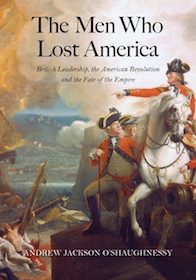
The Men Who Lost America, by Andrew O’Shaughnessy (Yale University Press, 2013)

The Men Who Lost America book cover

It is a pleasure to read a full account of the British side of the American Revolution. In Andrew O’Shaughnessy’s “The Men Who Lost America,” we see the beginning of the story through the eyes of George III, who was still physically strong and mentally robust. He proclaimed, in words that Churchill might later have uttered, “We are contending for our whole consequence whether we are to rank among the Great Powers of Europe or be reduced to one of the least considerable.” Two dates were crucial: In October 1777 at Saratoga, N.Y., Gen. Burgoyne surrendered more than 6,500 men; four years later almost to the day, Lord Cornwallis was forced to surrender at Yorktown, Va., effectively ceding victory to the new United States. Britain’s fundamental mistake was the assumption that most American royalists would remain loyal. Many were ambivalent about rebellion but not suicidal. What also swung the balance was that, after Burgoyne’s capitulation, France and Spain began to support the American patriots. In this myth-shattering book, Mr. O’Shaughnessy drives home the point that, despite losing America, the British saved Canada, the West Indies, Gibraltar and India, securing the foundations of a global empire.

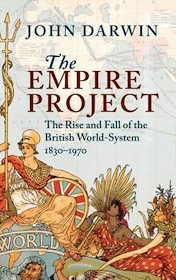
The Empire Project, by John Darwin (Cambridge University Press, 2009)

The Empire Project book cover

“The Empire Project” relates in engaging style the rise, decline and fall of the British Empire, which at its height extended over a fourth of the earth’s surface. The downfall was not a linear descent. The empire revived in spirit and purpose before finally collapsing in the 1970s. John Darwin’s chronicle is an exhilarating read, above all because of the pen portraits of the proconsuls, including Lord Curzon in India, Lord Cromer in Egypt and Sir Alfred Milner in South Africa, as well as Cecil Rhodes, who “offered a winning combination of imperial patriotism and colonial expansion.” In the empire’s last phase, Lord Mountbatten, the last viceroy, presided over the “ruthless” partition of India and the creation of Pakistan. In Mr. Darwin’s judgment, at least one million people died in the “mass madness” of communal violence. But “Mountbatten was lucky”: British forces emerged from the upheaval virtually unscathed.

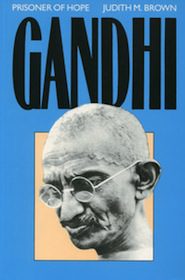
Gandhi: Prisoner of Hope, by Judith M. Brown (Yale University Press, 1989)

Gandhi Book Cover

A book written a quarter of a century ago, “Gandhi: Prisoner of Hope” has stood the test of time. Judith Brown is by no means uncritical of Gandhi, pointing out, for example, his egregious mistake in advising the Jews in Nazi Germany to adopt methods of nonviolent protest. He could be quirky, unpredictable and contradictory. At first he believed that India’s independence could be achieved by keeping faith with the British, but he changed tactics in the interwar years to nonviolent resistance. Ms. Brown argues that civil disobedience never made British rule impossible. Its aim, for India’s nationalist movement, was a “quest for legitimacy.” As for Gandhi’s legendary fasts, they provided an opportunity for “theatre and symbolism.” Gandhi envisioned an anarchic utopia that would be self-regulating, with a non-industrialized economy based on agriculture. India today is a far cry from his vision. Yet as a figure of moral principle, Gandhi expressed to many, then as now, “eternal truths in a changing world.”

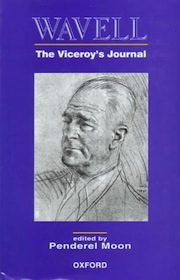
The Viceroy’s Journal, by Archibald Wavell (Oxford University Press, 1973)

Wavell

Field Marshal Archibald Wavell’s diary is stunning in its honesty and clarity and in its incisive criticism of British rule in the Subcontinent. In 1941, Churchill sacked Wavell for failing to defeat Rommel in North Africa, then appointed him Viceroy of India in 1943 as a stopgap, hoping that he would hold the line politically. Churchill first realized his mistake when he discovered that Wavell was at heart a poet (and in 1944 published a famous anthology, “Other Men’s Flowers”). In his diary Wavell recorded, shortly after his appointment, that Churchill “has always disliked me and mistrusted me, and probably now regrets having appointed me.” Wavell wrote that Britain’s wartime cabinet, when it came to Indian affairs, was characterized by “spinelessness, lack of interest, opportunism.” He was sympathetic to Indian nationalism and got on well with most of the Indian leaders—except Gandhi, whose “one idea for 40 years has been to overthrow British rule and influence and to establish a Hindu Raj; and he is as unscrupulous as he is persistent.” Wavell proved to be one of the few who could stand up to Churchill, and he did so time and again, though their last meeting ended on a whimsical note. After his defeat in the 1945 election, Churchill asked Wavell to “keep a little bit of India.”

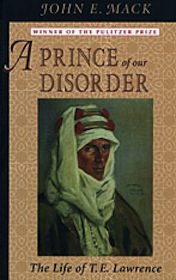
A Prince of Our Disorder, by John Mack (Harvard University Press, 1976)

A Prince Disorder

In this probing and compassionate biography of T.E. Lawrence, John Mack, a psychiatrist, merges history and psychology. The picture here is of Lawrence as one of the leaders of the Arab revolt that took place during World War I—a role in which he operated as a British intelligence officer, advising Feisal (later to become king of Iraq), rather than as the mastermind of the insurrection against the Ottoman Empire. One point that has baffled biographers is the capture and rape of Lawrence by the Turks. Mack believes that Lawrence underwent “psychic trauma” of such “depravity and horror” that it helps explain his later compulsion to be flagellated. Mack offers vivid insights into the reason that Lawrence renounced his own “legend” and enlisted after the war in the ranks of the RAF. Despite all, he concludes, Lawrence remained, in his future roles, a creative force, “an enabler.”

This article was originally published in the Wall Street Journal on June 19 2015.

You may also like:

Dharitri Bhattacharjee’s review of Judith M. Brown’s Gandhi: Prisoner of Hope

Jack Loveridge recommends The Viceroy’s Journal by Archibald Percival Wavell, ed. Penderel Moon

Colón 2000: Tour Guides, Cruiseships, and Tourists in Panama

By Andres Lombana-Bermudez and Blake Scott

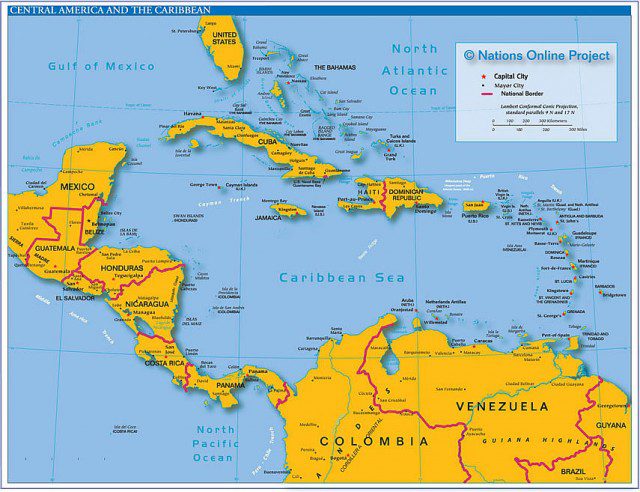
As Not Even Past consistently shows us, there are so many ways to talk about local history. In that spirit, “Colón 2000” is a short video about the experiences of tour guides, taxi drivers, and other service workers who make their living in the historic city of Colón, Panama. Through interviews and ethnographic filmmaking the video addresses the complicated relationship between the cruise ship industry, international tourism, and local workers. The challenging inequalities and marginalization of the Caribbean city of Colón and its Afro-Antillean population are revealed through the voices and everyday practices of tour guides struggling to find work.

Video Link: 

To learn more the project, check out our new website. Soy turismo is a transmedia documentary project that tells the story of Caribbean tourism from a side of paradise not usually visited by tourists. That is, from the perspective of local workers – tour guides, maids, street vendors, musicians, and many other people – who produce tourist experiences for an ever growing number of visitors. As a transmedia project, soy turismo uses diverse media formats, including short videos, essays, maps, audio podcasts, and photographs. During this initial phase of the project, we have focused on a series of short videos that follow the route of a cruise ship from Florida to Panama. The videos introduce viewers to some of the key themes that we will continue to develop over the coming years. Specifically, we look at the paradoxical relationships between the formal and informal tourist economy, the disparate agency of local workers and foreign travelers, and the multiple social, economic and cultural dimensions of the Caribbean vacation. Viewers and readers are introduced to the racial, class, and gendered inequalities that seem to define the boundaries of have and have-not in this increasingly interconnected world. Our hope is to foster an interdisciplinary conversation on the meaning of tourism in the Caribbean today and to raise awareness about the possibilities of developing more sustainable and fair tourism practices.

central_america_map_855

bugburnt

You may also like:

The NEP blog post about the first video of the documentary film series, I am Tourism/Yo Soy Turismo by Andres Lombana-Bermudez and Blake Scott

To learn about the Panama Canal and its role in Panamanian History:

The Canal Builders: Making America’s Empire at the Panama Canal by Julie Greene
The Panama Canal: The Crisis in Historical Perspective by Walter LaFeber

More documentaries about Panama, the Canal, and Tourism:

Panama Deception, by Barbara Trent
Paraiso for Sale, by Anayansi Prado

You may also like Jonathan Brown’s piece about LBJ’s fascinating conversation with the Panamanian President: A Rare Phone Call from One President to Another

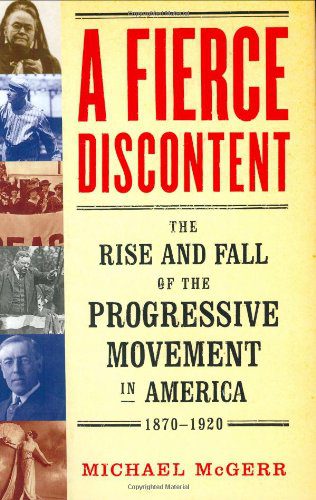
A Fierce Discontent: The Rise and Fall of the Progressive Movement in America, 1870-1920, by Michael McGerr (2003)

By J. Taylor Vurpillat

Fierce Discontent coverThe upsurge in public awareness of economic inequality since the 2008 financial crisis has refocused attention on the Gilded Age and Progressive Era in American history, a period defined by wealth disparities that parallel our own. The problem with our search for historical analogies is that we often examine the past within the context of our individual assumptions, finding what we want to find—a process cognitive psychologists call confirmation bias. Given the need for well-observed general history to guide our inquiry, it is gratifying that we have Michael McGerr’s A Fierce Discontent: The Rise and Fall of the Progressive Movement in America, 1870-1920.

Until recently, historians of the era had nearly given up on synthesizing the fractal array of differing impulses behind progressive reform efforts. A large group of progressive reformers wanted to harness the unbridled energy and influence of industry in American life. Other reformers, such as Jane Addams and Jacob Riis, were more interested in ameliorating the day-to-day problems of America’s expanding immigrant working class. Another faction wanted good government, female suffrage, prohibition, and a world safe for democracy. The frustration of making sense of the period has been expressed by John D. Buenker and Peter G. Filene who argued in various essays that, beyond sharing a general dissatisfaction with Industrial America, reformers were too disparate to share common motives for reform.

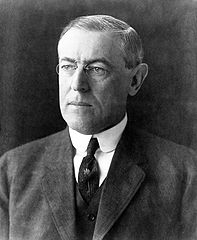
President of the United States Thomas Woodrow Wilson, 1912 (Via Wikimedia Commons)

President of the United States Thomas Woodrow Wilson, 1912

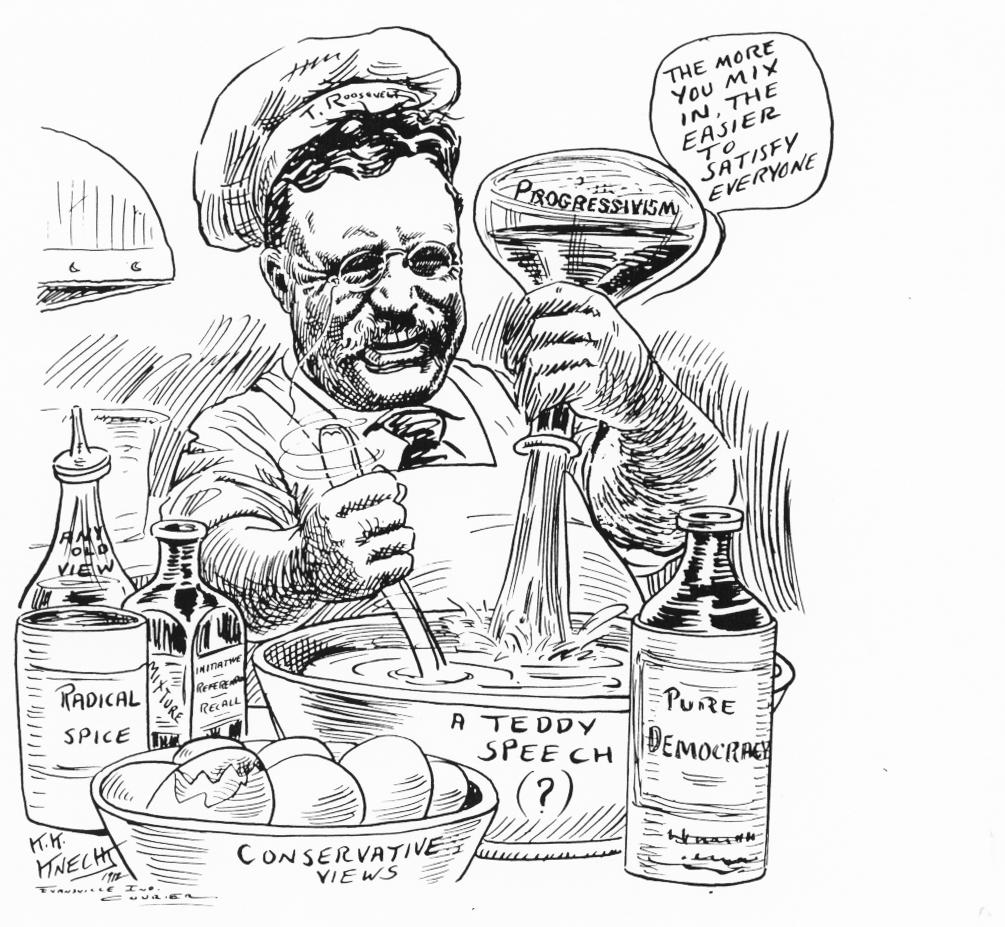
In a sustained and elegant effort, Michael McGerr’s A Fierce Discontent has swept away much of the frustration of the previous generation. The argument at the center of the book makes a clear case that the array of progressive reform impulses were, in fact, quite unified when viewed through the lens of class. It was the horror with which many middle-class Americans viewed the personal excesses of the industrial upper class and the tumultuous and inharmonious society the “upper ten” had imposed on other Americans that inspired progressive reformers and ultimately the presidencies of Theodore Roosevelt and Woodrow Wilson.

Given his argument based on class, McGerr takes a few cues from Karl Marx—and many more from Sigmund Freud by way of Richard Hofstadter, the notable mid-century American historian. In the 1950s, it was Hofstadter who made the argument that the progressive impulse of the early twentieth century was driven by a status anxiety among middle-class Americans unsure of their place in the new industrial order.

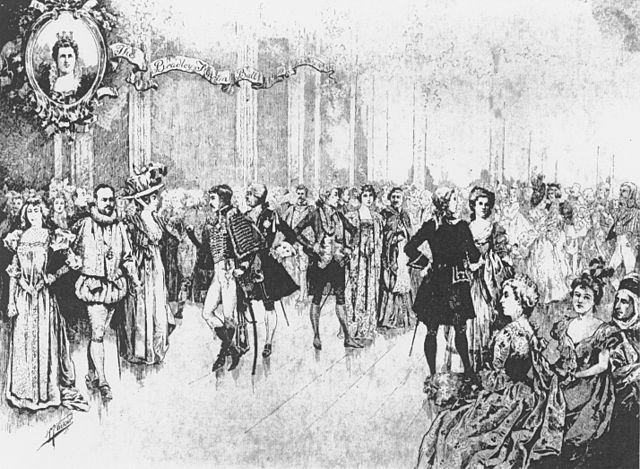
McGerr has updated this brilliant but dashed-off argument, developing a deeper, more subtle analysis grounded in the primary sources of the era. For example, he takes time to portray the ethos of maximalist individualism that defined the industrial upper class at the turn of the century. He delves into the amusing details of an extravagant 1897 costume ball held for New York’s high society amid the worse economic depression before the 1930s. This set piece, which included reports of the backlash to the ball in America’s leading newspapers, perfectly illustrated the growing rift between a sober, civic-minded middle class and the excess and individualism of the upper class. As McGerr makes clear, it was the culture of the upper class—half perversion and half repudiation of Victorian virtues — that repelled “the middle class enough to transform them from respectable Victorians into radicals.”

Bradley-Martin Ball of 1897 (Via Wikimedia Commons)

Bradley-Martin Ball of 1897 (Via Wikimedia Commons)

In developing this argument, McGerr challenges the views of both the New Left in the 1960s, that progressives were nothing more than petty bourgeois defenders of the new industrial elite—and from more recent arguments of the New Right that progressives of the era were socialists in all but name.

There are many strong points in McGerr’s telling. Foremost among these is the way he brings progressive support for segregation into his larger argument. Many progressives supported legal segregation. Indeed, in the first decades of the twentieth century segregation intensified—and not only in the South. These efforts, McGerr argues, showed the limits of social transformation imagined by progressive reformers. More importantly, it demonstrated the ways in which progressive desires for order took primacy over ideas of racial equality and integration. Segregation was a way to “halt dangerous social conflict that could not otherwise be stopped,” according to McGerr.

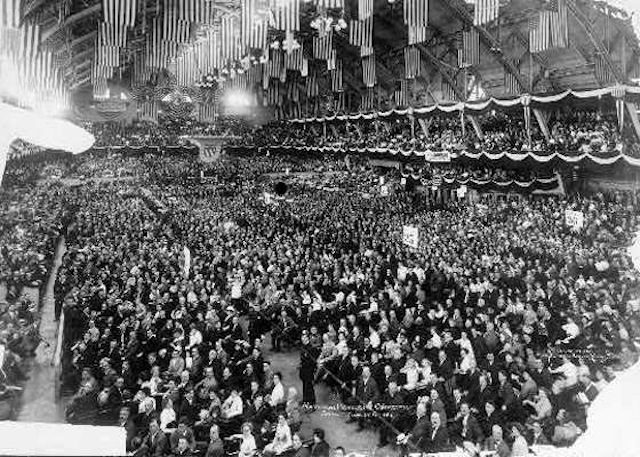
National Progressive Convention at the Chicago Coliseum, 1912

National Progressive Convention at the Chicago Coliseum, 1912

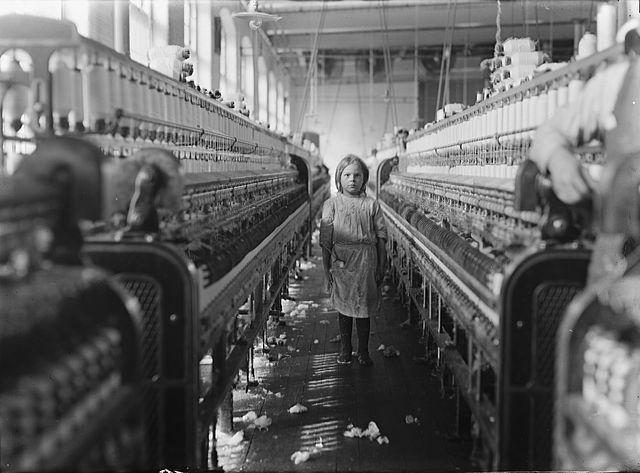
The second strength of the book is the extensive use of sources embedded in a tightly organized narrative that covers both the major accomplishments and small victories of the progressive movement. As readers, we witness both the trust-busting heroics of Theodore Roosevelt and the long struggle of Lillian Wald and others to limit child labor. Most importantly, we are given a vantage of changing industrial society from the viewpoint of those whose everyday lives were most dramatically altered. Rahel Golub, the young daughter of German-Jewish immigrants, spent six days each week sewing and serving her family until settlement workers exposed her to a foreign world known as “uptown”—a world so different from the working-class neighborhoods of lower Manhattan that it seemed to her a foreign country.

Child Laborer in the Mollohan Mills, Newberry, South Carolina, 1908.

Child Laborer in the Mollohan Mills, Newberry, South Carolina, 1908.

A third strength is the discussion of the obstacles that challenged and ultimately defeated this army of crusading middle-class reformers. Progressivism, McGerr contends, offered middle-class Americans the utopian promise of a perfected society. Because such a transformational vision demanded so much of Americans, it proved to be an unrealistic vision that led to inevitable letdowns. Reform did not create a harmonious middle-class paradise. Nevertheless, the progressive movement captured the mainstream of American politics and public spirit and its downfall required more than half-met expectations. Despite progressive legislative triumphs against corporate power, the maximalist individualism of the upper class proved more difficult to contain. The leisure class, some of whom had decamped for Europe at the turn of the century, returned in force in the 1920s as American involvement in the First World War discredited the reform-minded collective action of Woodrow Wilson and others.

Editorial cartoon by Karl K. Knecht in Evansville Courier, Oct 1912.

Editorial cartoon by Karl K. Knecht in Evansville Courier, Oct 1912.

Middle-class reformers also faced growing resistance from a second, new form of individualism emerging from the working-class neighborhoods of America’s industrial cities. Higher real wages and increased leisure time—a progressive triumph—gave rise to a series of new popular entertainments that drew young workers into jazz-filled dance halls, amusement parks, and cathedrals constructed for the era’s most magnificent amusement—moving pictures. The disillusionment with progressive efforts to remake society and the world—along with the resurgence of individualist sentiment on two fronts ultimately doomed progressive reform to the margins of American public life after 1920.

If there are faults in this sweeping history of the Progressive Era, they are few. One might quibble with McGerr’s repeated use of the term “the middle class” to refer to progressive reformers. It is useful but progressive reformers represented only a portion of the middle class and some development of the other sentiments across the middle-class political spectrum would have been helpful. It is hard to explain the popular election of anti-reform Republicans in the 1920s without a more explicit definition of the middle class.

A Fierce Discontent, shows historian Michael McGerr as master of both subject and craft. The book demonstrates his command of the intimate details that illuminate the past and of the analytical perspective that gives these details meaning. As far as historical insights that may help us understand our own times, McGerr’s argument highlights the fact that out of disparate material circumstances disparate sentiments, values, and cultures emerged. The problem for progressives then was that these cultures in conflict were all parts of a single nation, society, and political system.

Michael McGerr, A Fierce Discontent: The Rise and Fall of the Progressive Movement in America, 1870-1920 (Free Press, 2003)

bugburnt


All images via Wikimedia Commons


Student Showcase – The Impact of the Great Depression Towards Rights and Responsibilities of Migrant Workers

Korbin San Miguel
St. Matthew Catholic School
Junior Division
Individual Documentary

Read Korbin’s Process Paper

The Great Depression was a period of high unemployment and extreme poverty. But even those who managed to find work often found themselves underpaid and exploited. Korbin San Miguel created a Texas History Day documentary on migratory farm laborers during the Great Depression and the oppressive work conditions they often faced. In his process paper, Korbin discussed the inspirations behind this project, including a classic piece of fiction:

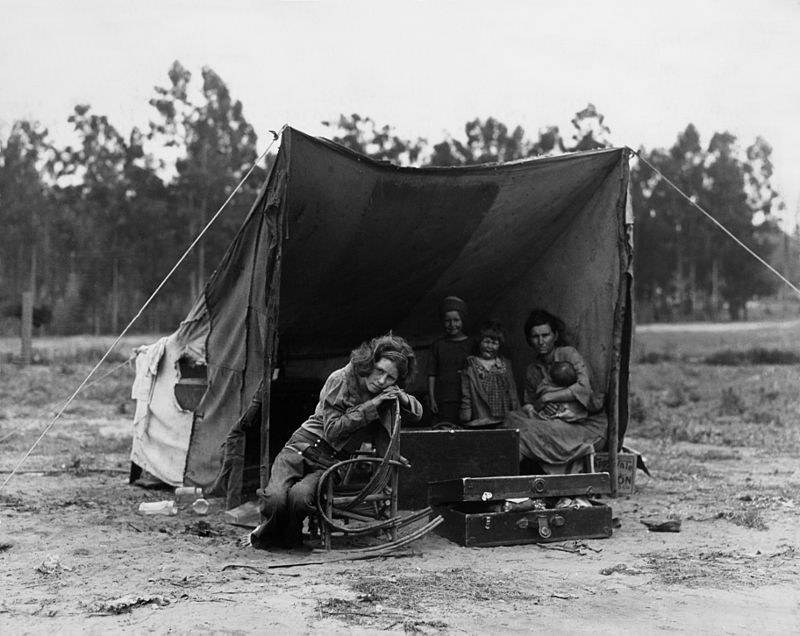
One of Dorothea Lange's iconic photographs of Florence Owens Thompson, a migrant worker, and her family during the Great Depression (Library of Congress)
One of Dorothea Lange’s iconic photographs of Florence Owens Thompson, a migrant worker, and her family during the Great Depression (Library of Congress)

In trying to determine a suitable topic for my research, I consider looking though my grandfather’s oil history books to get ideas. While looking through a stack of books, I found The Grapes of Wrath, a novel of historical fiction that takes place during the Great Depression. After reading the book’s depiction of migrant farmworkers and the harsh exploitation they faced, I knew that I could tie in “rights and responsibilities” with this profound yet compelling subject. I was sure that this was an interesting topic to pursue for my History Fair project.

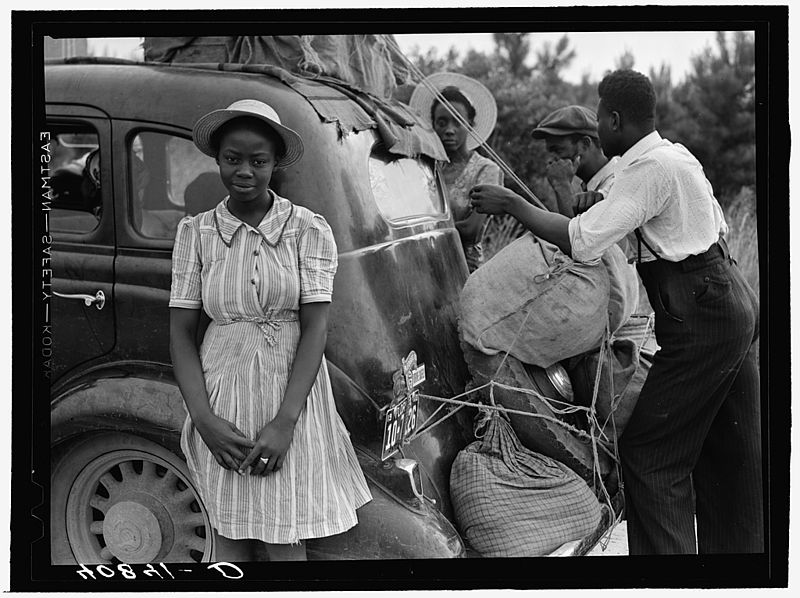
Group of Florida migrants near Shawboro, North Carolina on their way to Cranbury, New Jersey, to pick potatoes (Library of Congress)

My documentary connects to the theme because it significantly portrays the history of the plight of migrant workers. It expresses the history of the persistent exploitation of migrant farmer workers and their families. With no rights or laws to protect them from mistreatment, they were forced to accept demanding labor which brought hardship and agony. They were entitled to basic human rights but farm owners exploited the migrant workers and took no responsibility for their basic rights and humanity.


More Texas History projects on NEP:

The story behind one of New Orleans’s most iconic neighborhoods

The life of Douglas MacArthur, right down to his corn cob pipe

A project that captures the Orwellian reign of Joseph Stalin

« Previous Page
Next Page »

Recent Posts

  • NEP Author Spotlight – Aidan Dresang
  • Lesson Plans: The Vietnam War and American Society
  • Lesson Plans: Protest and Social Unrest
  • Lesson Plans: Radio and Communications Technology
  • The Long-Lasting and Perpetuating Effects of Lynching Postcards and Photography
NOT EVEN PAST is produced by

The Department of History

The University of Texas at Austin

We are supported by the College of Liberal Arts
And our Readers

Donate
Contact

All content © 2010-present NOT EVEN PAST and the authors, unless otherwise noted

Sign up to receive our MONTHLY NEWSLETTER

  • New
  • Features
  • Reviews
  • Texas
  • Teaching
  • Digital
  • Watch & Listen
  • Authors
  • About