• New
  • Features
  • Reviews
  • Texas
  • Teaching
  • Digital
  • Watch & Listen
  • Authors
  • About

The past is never dead. It's not even past

Not Even Past

The Radical Spanish Empire Roundtable – Introduction


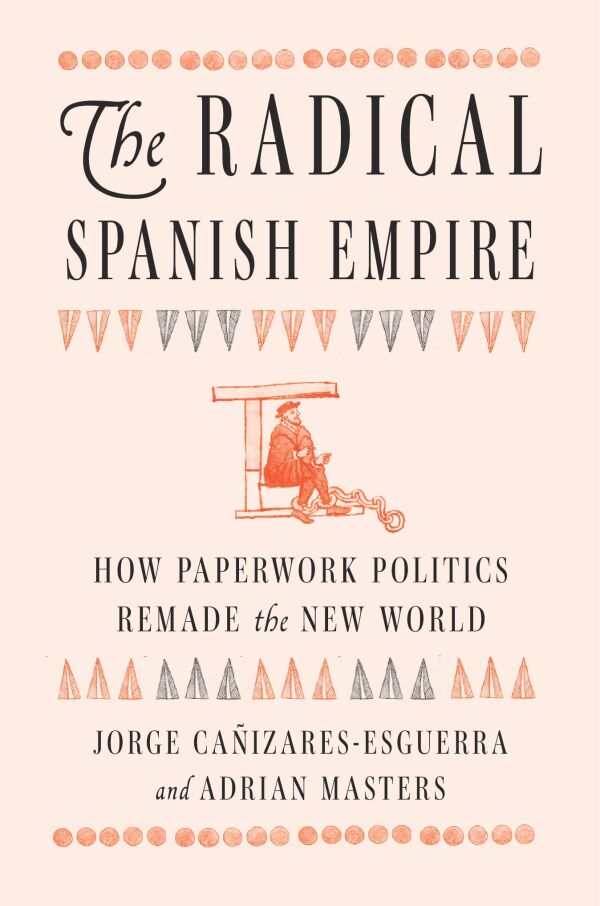
This special roundtable brings together four distinguished scholars to examine the arguments advanced in Jorge Cañizares-Esguerra and Adrian Masters’ recent publication The Radical Spanish Empire: How Paperwork Politics Remade the New World (Harvard University Press, 2026). Drawing on research conducted across 26 archives and tens of thousands of documents, the book offers a new interpretation of the Spanish conquest and the formation of the early colonial state in the Americas.

Rather than offering conventional book reviews, the essays that follow engage with the book from the perspective of each contributor’s own research and expertise, and are intended to be read in conversation with one another. Together, they explore the book’s implications for the histories of empire, law, political thought, race, and archival practice.


As Spanish conquistadors swept through the New World, the Spanish Crown envisioned a rigidly hierarchical aristocratic order that would flourish in their wake. At first, that vision appeared within reach: the leading conquistadors ruled as noblemen over millions. Yet the Spanish empire in the New World quickly became a hotbed of efforts to overturn the emerging order. As the conquistadors retreated, new centres of power emerged around influential friars and Indigenous lords, only to give way in turn to new political arrangements.

The Radical Spanish Empire (RSE) shows that these social orders broke down thanks to the challenges mounted by countless individuals across the Spanish Americas–including non-elite Spanish and Indigenous people, women, and the enslaved. To achieve their goals, they turned not only to outright violence but also to massive amounts of paperwork: petitions, complaints, lawsuits, and secret testimonies. Through this grassroots “lawfare,” vassals undercut the emerging seigneurial dynasties of the conquistadors, stripped the friars of theocratic authority, and curtailed the might of native lords. Collectively, they spearheaded movements against tyranny and slavery, proposed and challenged laws, produced new types of knowledge, created archives and historical accounts, and questioned the nature of truth itself. In the process, however, these actors also gradually co-created a lasting new society of orders–one that would solidify in the 1570s with viceroys, bishops, and inquisitors at its apex.
The roundtable discussion begins with Harvard historian Daniel Carpenter, who examines RSE’s analysis of petitioning as the preferred form of radical political participation in the sixteenth-century Spanish Empire. As a specialist on colonial and republican petitioning in the Anglo-American world, Carpenter situates RSE in the much larger context of other early modern empires and grassroots politics. 

The New University of Lisbon historian Pedro Cardim, specialist on both Spanish and Portuguese imperial politics,  uses RSE to evaluate comparatively vernacular political philosophies and the politics of subaltern petitioning in colonial Brazil. 

The University of San Francisco Professor Katrina Olds, historian of early modern Iberian local religious traditions via the circulation of forged documents and artifacts, engages with RSE’s arguments on counterfeited documents as a central political strategy of factional sixteenth-century indigenous politics.

Finally, University of Oregon’s Professor Michelle McKinley, historian of the law and of Afro American women petitioners in seventeenth-century Peruvian religious tribunals, evaluates RSE’s claims on the use of bottom-up paperwork as causal factors in the generation of both colonial radical politics and new racial hierarchical social orders.


The views and opinions expressed in this article or video are those of the individual author(s) or presenter(s) and do not necessarily reflect the policy or views of the editors at Not Even Past, the UT Department of History, the University of Texas at Austin, or the UT System Board of Regents. Not Even Past is an online public history magazine rather than a peer-reviewed academic journal. While we make efforts to ensure that factual information in articles was obtained from reliable sources, Not Even Past is not responsible for any errors or omissions.
All Eyes on the Petition: Reflections on The Radical Spanish Empire


This essay is part of The Radical Spanish Empire Roundtable, a series of review essays examining the book from different disciplinary perspectives. Read the introduction and explore the other contributions in the series below.

  • “The Radical Spanish Empire Roundtable – Introduction“
  • “Iberian Subaltern Political Philosophies and The Radical Spanish Empire” by Pedro Cardim
  • “Forgery, Invention, and the History of Skepticism in The Radical Spanish Empire“ by Katrina Olds
  • “Lawfare and the Legal Construction of Race in The Radical Spanish Empire“ by Michelle McKinley

The action seems frenzied, turbulent, anxious, and, at the same time, thorough and calculated.  At the beginning of Chapter Three of Cañizares-Esguerra and Masters’ remarkable new book The Radical Spanish Empire, we, the readers, meet three suppliant men: Gualpa, an Indigenous man who had accidentally discovered a new vein of silver; the Spaniard don Bartolome Inca y Orozco, whose father had created new mining technologies; and don Francisco de la Cueva, a Spaniard whose family of conquistadors and warriors had “pacified” New Spain, in part by slaying hundreds, if not thousands, of Natives.  Gualpa’s son approached the Viceroy don Francisco de Toledo asking for royal rewards.  Inca y Orozco wanted a royal pension.  De la Cueva asked for Indigenous tribute, the downstream spoils of conquest.  These men, from remarkably different social stations, all qualify as vassals, as those who inhabit a lower order of humanity in the caste system of the vast, complicated Spanish Empire of the sixteenth century.  Emphasizing their deservingness, here represented as service to the Crown, they sought benefits, rents, and privileges.  They ultimately received them.

Petitioning in the longue durée of Eurasian and Atlantic history has usually been an ineluctably relational process.  It can be studied neither entirely from the bottom up nor entirely from the top down.  Along with Masters’ remarkable We the King, Cañizares-Esguerra and Masters’ Radical Spanish Empire demonstrates both widespread, decentralized petitioning and the workings of a vast administrative system of courts and offices.  Empires and states built courts, offices, and perhaps even forms of bureaucracy that both managed and, beyond that, encouraged supplication from those lower in the social order, sometimes at or near the bottom of it. From a comparative, longue-durée vantage point, Cañizares-Esguerra and Masters’ notion of radicalizing paperwork extends an earlier literature showing that aspects of ancient Roman, medieval European and other imperial systems also had some inclusive and leveling aspects.  Yet the authors’ paperwork radicalism is not reducible to earlier imperial models, nor did it (yet) amount to the much more democratized and democratizing petitioning of the modern era, when petitions were used to recruit members to new organizations, expand legislative and administrative agendas, and foster new cultures of equality.  Among many literatures in which the book is properly nestled as a generative interlocutor and gadfly, however, The Radical Spanish Empire should be read in this current of world-historical studies of petitioning.[1]

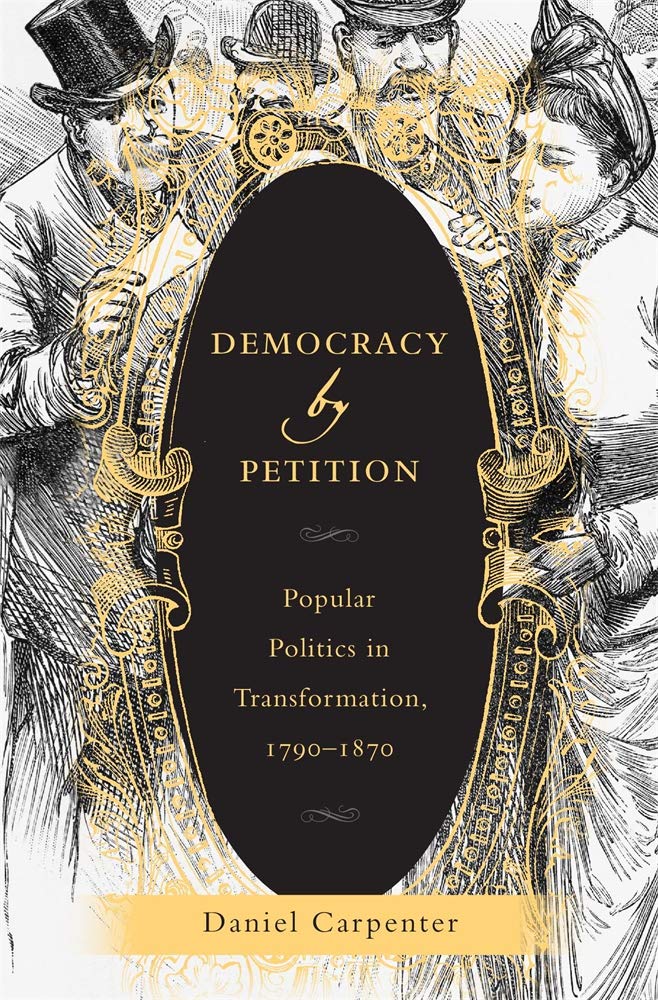
Democracy by Petition: Popular Politics in Transformation, 1790–1870 by Daniel Carpenter (Cambridge, MA: Harvard University Press, 2021)

Cañizares-Esguerra and Masters narrate the stories of Gualpa, Inca y Orozco, and de la Cueva as a story of radicalism, of an upwelling of claims that shattered hierarchies both formal and informal and led to a non-trivial degree of empowerment for vassals.  Gracia’s paperwork “prompted a bottom-up deluge of knowledge creation” (160) and “drove politics and action at once incredibly violent and creative, participatory and elitist” (162). Cañizares-Esguerra and Masters are right to emphasize this upwelling of political activity, but I want to draw attention to what might be regarded as “the other side of the coin.”  A system like this carried considerable benefit to the Crown.  The benefits included information about highly scattered populations as well as the recognition of the Crown and its agents as sovereign when vassals sought the kinds of things that only the Crown could grant licenses (172-73), patents (171-72), pensions (159), tribute (159), and, in general, rights and rents accorded by the Crown.  As social scientists have begun to recognize, many of the most inclusive and participatory institutions of our time developed as imperial and monarchical institutions of rule.  A far-flung, exhaustive, and literally exhausting system of paperwork.  Paperwork produced information for the empire, and, beyond that, its actors participated in a system in which the sovereignty of the Crown was reinforced as well as occasionally undermined.[2]

The extreme scale and scope of the Spanish Empire’s paperwork regime endow Cañizares-Esguerra and Masters’ book with vital comparative and world-historical lessons.  Early modern petitioning was more common in colonial Spanish America than in most other contemporary settings.  Indeed, as the authors show, petitioning did not wither but swelled after the great comunero revolt against Charles V. Spanish law governed these petition-and-response systems, and the set of categories studied under the concept of “paperwork” included justicia (court cases), gracia (privileges) and gobierno (administrative legislation). Justicia and gracia represented casuistic jurisprudence and bestowals of privileges. With gobierno petitions, imperial officials could issue edicts with the force of law; there were tens (perhaps hundreds) of thousands of such petition-induced rulings in the radical Spanish empire.  Gobierno petitions were sent to the Council of the Indies or to viceregal officials and high courts in Mexico.  Indigenous people and mestizos used paperwork regularly and with some success; even as their rights and land claims changed dramatically, and even as dispossession continued apace, petitioning led to Spanish creation of new indigenous entitlements, a system of rights that created pathways and agendas for further empowerment by petitioning.  In the larger view, scholars should revisit, if not jettison entirely, claims of a much more “inclusive” and “participatory” English North American empire as compared with the Spanish.[3]

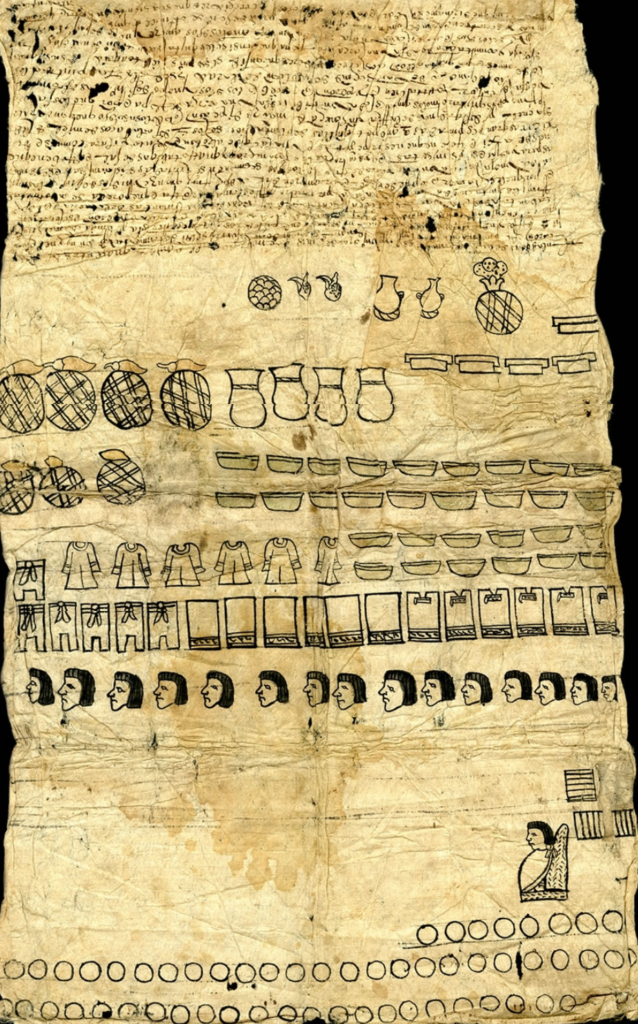
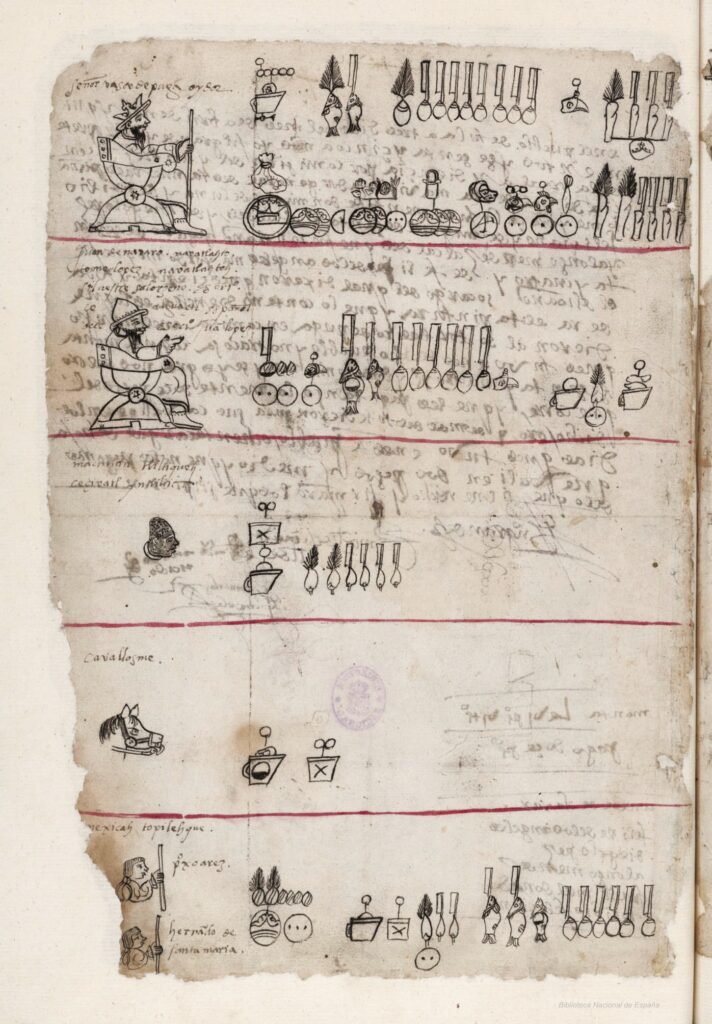
Page from the Codex Osuna documenting the provisions and services supplied by an Indigenous community to a visiting Spanish auditing party. Biblioteca Nacional de España, MS VITR/26/8, fol. 492v–30v.

As this paperwork empire was built, however, two other things were constructed: a ritually recognized sovereignty in imperial venues and legible information about the Crown’s subjects.  The first is that the very act of supplication acknowledged a certain status of the Crown and its officials.  What Gracia paperwork asked for was usually the kind of thing that could be found elsewhere only with great difficulty, or not at all: licenses for mining, guaranteed revenue streams through pensions or tribute from dependent populations, legal privileges.  Recognition of the centrality of the Crown as a source of Gracia was all the more important because, as Cañizares-Esguerra and Masters emphasize, the Spanish Empire wrestled with a “world where disease and violence had fragmented society into countless unstable factions” (167).  Military domination was not guaranteed, and paperwork also made this society more visible, more legible to the Crown.  This was the second legacy of petitioning, which came from the very rules that generated so much paperwork.  “For a conquistador to receive any kind of reward, especially Indigenous labor but even entry into the ranks of the Spanish grandees, he would need to certify his exploits” (168), and at that, certify them according to the rules of the Crown and its officers.  Beyond the generation of facts and narratives, the Gracia paperwork embedded “open-ended emphasis on royal service” (171), which created new incentives to conquer, develop, settle, Christianize, and subjugate, and to do so in a way that was recognizable, justiciable to the Crown.[4]

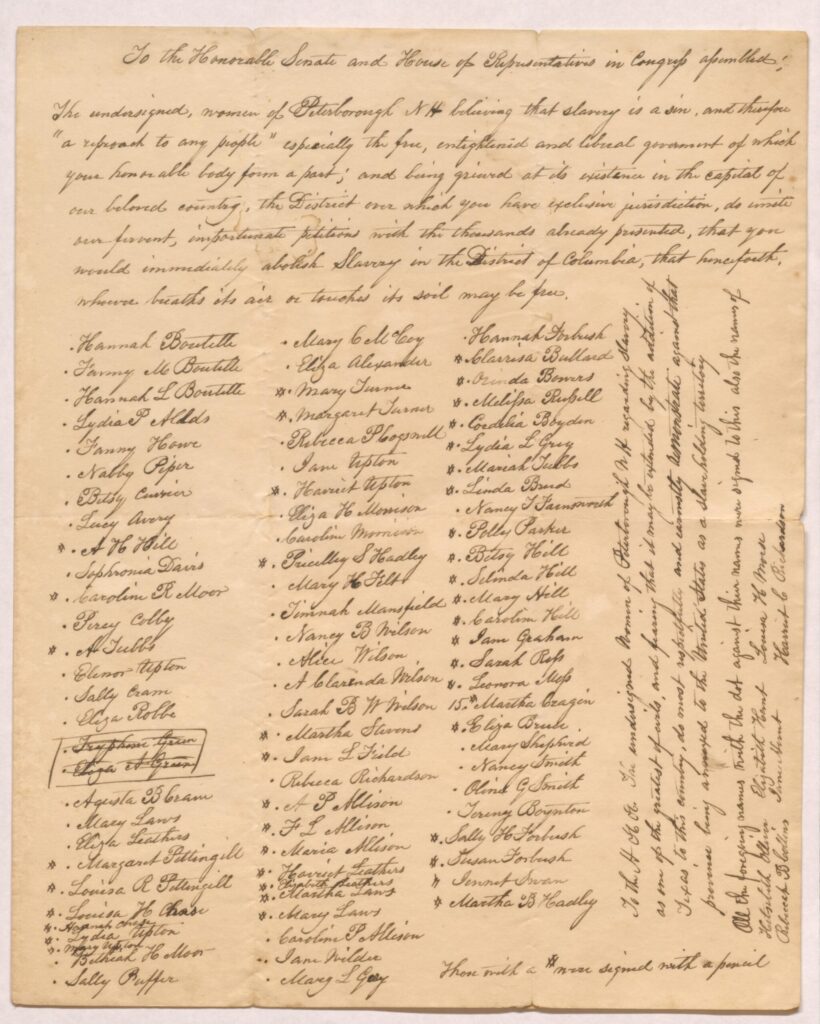
Women’s antislavery petition, 1837. Library of Congress.

Cañizares-Esguerra and Masters show the duality of petition-and-response systems.  Long held to be a near-meaningless process of abject subjection, the imperial petition becomes, in their creative and exhaustively researched account, a tool for creating new knowledge that no single actor truly controls.  Paperwork becomes a ladder by which vassals can upend and destabilize hierarchies both imperial and Indigenous.  At the same time, paper generates powerful new bureaucracies, fashions new imperial lenses through which the Crown can glimpse and read its subjects, and institutionalizes an everyday, everywhere recognition of who, at least theoretically, has authority to grant what the supplicant asks.  As all eyes drift toward the petition, all eyes drift toward the petitioned who, even in ways ineluctably contested and liminal, establishes the visibility of his rule.


Daniel Carpenter is Allie S. Freed Professor of Government and Chair, Department of Government, in the Faculty of Arts and Sciences at Harvard University. His book Democracy by Petition: Popular Politics in Transformation, 1790–1870 (Cambridge, MA: Harvard University Press, 2021) was awarded the J. David Greenstone Prize of the American Political Science Association, the Seymour Martin Lipset Prize of the American Political Science Association, and the James P. Hanlan Book Award of the New England Historical Association.


[1] Consult Zaret (2025) for the most comprehensive Eurasian overview.  On republican and post-republican Rome, see Eberle (2024), Deniaux (1993) and Millar (1977); on medieval Europe, Koziol (1992), Millet (2003) and Boucoyannis (2021); on modern democratized petitioning, Carpenter (2016), Carpenter (2021), Blackhawk et al (2021), Miller (2023), Carpenter (2023) and Carpenter (2025). 

[2] By rent here I mean the traditional sense of a source of supply controlled uniquely by its owner, whether a vein of bauxite in a mount she owns or a legal privilege (e.g., a monopoly) granted by a ruler.  For arguments about how more inclusive systems could serve imperial interests, consult Gailmard (2017), Gailmard (2024) and Carpenter and Gailmard (2024).

[3] See Anabitarte (2009), Owensby (2011), Masters (2017) and Masters (2023). As Herzog (2013: 213) writes, “By the end of this [claim-and-response] process, natives had come to be, rather than bearers of ancestral rights, holders of new and radically different kinds of entitlements.”

[4] Scott (1998) and Lee and Zhang (2017).


References

Anabitarte, Alfredo Gallego. 2009. Poder y derecho: Del antiguo régimen al estado constitucional en España: Siglos XVIII a XIX (Madrid, 2009)

Blackhawk, Maggie, Daniel Carpenter, Tobias Resch, and Benjamin Schneer. 2021. “Congressional Representation by Petition: Assessing the Voices of the Voteless in a Comprehensive New Database, 1789–1949,” Legislative Studies Quarterly 46, (3): 817-849.

Blackhawk, Ned. 2023.  The Rediscovery of America: Native Peoples and the Unmaking of U.S. History (New Haven: Yale University Press).

Boucoyannis, Deborah. 2021. Kings as Judges: Power, Justice and the Origins of Parliaments (Cambridge: Cambridge University Press).

Carpenter, Daniel. 2016. “Recruitment by Petition: American Antislavery, French Protestantism, English Suppression,” Perspectives on Politics 14 (3): 700-723.

Carpenter, Daniel. 2021. Democracy by Petition: Popular Politics in Transformation, 1790-1870 (Cambridge, Massachusetts: Harvard University Press).

Carpenter, Daniel. 2023. “Agenda Democracy,” Annual Review of Political Science 26 (1): 193-212.

Carpenter, Daniel. 2025. “Petitioning as Governance: The Scattered and Multinational World of the Early United States,” Journal of the Early Republic 45 (3): 417-428.

Carpenter, Daniel, and Sean Gailmard. 2024. “Bootstrapping Sovereignty: Petitions and Power in Nascent States,” manuscript, University of California-Berkeley.

Deniaux, Élizabeth. 1993. Clientèles et pouvoir à l’époque de Cicéron (Rome: Publications de l’École française de Rome).

Eberle, Lisa Pilar. 2024. “The Edicts of the Praetors: Law, Time, and Revolution in Ancient Rome,” Law and History Review 42, no. 2 (2024): 237-261.

Gailmard, Sean P. 2017. “Building a New Imperial State: The Strategic Foundations of Separation of Powers in America,” American Political Science Review 111, no. 4 (2017): 668-685.

Gailmard, Sean. 2024.  Agents of Empire: English Imperial Governance and the Making of American Political Institutions (New York: Cambridge University Press).

Herzog, Tamar. 2013. “Colonial Law and ‘Native Customs’: Indigenous Land Rights in Colonial Spanish America,” The Americas 69 (3) (January 2013), 318)

Koziol, Geoffrey. 1992.  Begging Pardon and Favor: Ritual and Political Order in Early Medieval France. Cornell University Press, 1992.

Lee, Melissa M., and Nan Zhang.2017.  “Legibility and the Informational Foundations of State Capacity,” The Journal of Politics 79, no. 1 (2017): 118-132.

Masters, Adrian. 2018. “A Thousand Invisible Architects: Vassals, the Petition and Response System, and the Creation of Spanish Imperial Caste Legislation,” Hispanic American Historical Review 98 (3): 377-406.

Masters, Adrian. 2023. We, the King: Creating Royal Legislation in the Sixteenth-Century Spanish New World (Cambridge: Cambridge University Press).

Miller, Henry J. 2023. A Nation of Petitioners: Petitions and Petitioning in the United Kingdom, 1780–1918 (Cambridge: Cambridge University Press).

Millet, Helene. 2003. Suppliques et requêtes: le gouvernement par la grâce en Occident (XIIe-XVe siècle) (Rome : École française de Rome.)

Moore, Michael Edward. 2011. A Sacred Kingdom: Bishops and the Rise of Frankish Kingship, 300-850 (Washington, D.C.: Catholic University of America).

Owensby, Brian P. 2011. “Pacto entre rey lejano y súbditos indígenas: Justicia, legalidad y política en Nueva España, siglo XVII,” Historia Mexicana 61 (1) (2011) 59-106.

Scott, James C. 1998. Seeing Like a State: How Certain Schemes to Improve the Human Condition Have Failed. (New Haven: Yale University Press).

Zaret, David. 2025. Petitioning and Power Relations in Pre-Modern Eurasia (Oxford: Oxford University Press).


The views and opinions expressed in this article or video are those of the individual author(s) or presenter(s) and do not necessarily reflect the policy or views of the editors at Not Even Past, the UT Department of History, the University of Texas at Austin, or the UT System Board of Regents. Not Even Past is an online public history magazine rather than a peer-reviewed academic journal. While we make efforts to ensure that factual information in articles was obtained from reliable sources, Not Even Past is not responsible for any errors or omissions.

Forgery, Invention, and the History of Skepticism in The Radical Spanish Empire


This essay is part of The Radical Spanish Empire Roundtable, a series of review essays examining the book from different disciplinary perspectives. Read the introduction and explore the other contributions in the series below.

  • “The Radical Spanish Empire Roundtable – Introduction“
  • “All Eyes on the Petition: Reflections on The Radical Spanish Empire“ by Daniel Carpenter
  • “Iberian Subaltern Political Philosophies and The Radical Spanish Empire” by Pedro Cardim
  • “Lawfare and the Legal Construction of Race in The Radical Spanish Empire“ by Michelle McKinley

As befits a work of such uncommon scope and ambition, The Radical Spanish Empire has already been the focus of a flurry of book reviews and colloquia evaluating the authors’ success in substantiating their main arguments, contributions, and provocations, with which the authors clearly hope to explode many scholarly and popular certainties about the history of colonial Latin America, as well as the region’s broader importance in world history.  This review will focus more narrowly on an aspect that has not yet received much notice, namely, the ways in which The Radical Spanish Empire illuminates the workings of fabrication, reinvention, and forgery in the early modern period, and how the authors tie these to broader claims about the history of doubt and skepticism.

Cañizares-Esguerra and Masters posit that the demographic, political, and social chaos created by the Spanish conquest, along with preexisting paperwork practices, by which supplicants would exact privileges from the Crown by petitioning, litigating, or lobbying, helped give rise in the Indies to an explosive, vigorous, and widespread culture of “lawfare.”  Paperwork – in the form of petitions, proposals for reform, litigation, inspections, and audits – provided the means through which distant Spanish, Indigenous, and other types of vassals could effect change.  As familiarity with the logic and practice of petitioning the monarch for privileges (gracia) spread, so, too, did its practice, and thus, “[e]very vassal, it seemed, now claimed to be a great conquistador or an Indigenous lord.  In an era of radical social upheaval, every commoner claimed to be a king, and whole communities were tearing themselves apart, alleging their ancient independence.  The past had grown wild” (184), as “[v]assals saw it as the moment to confirm, tweak, or perhaps outright invent their privileges,” which led to a veritable “flood of petitions, lawsuits, genealogies, treatises and extended investigations” (185). 

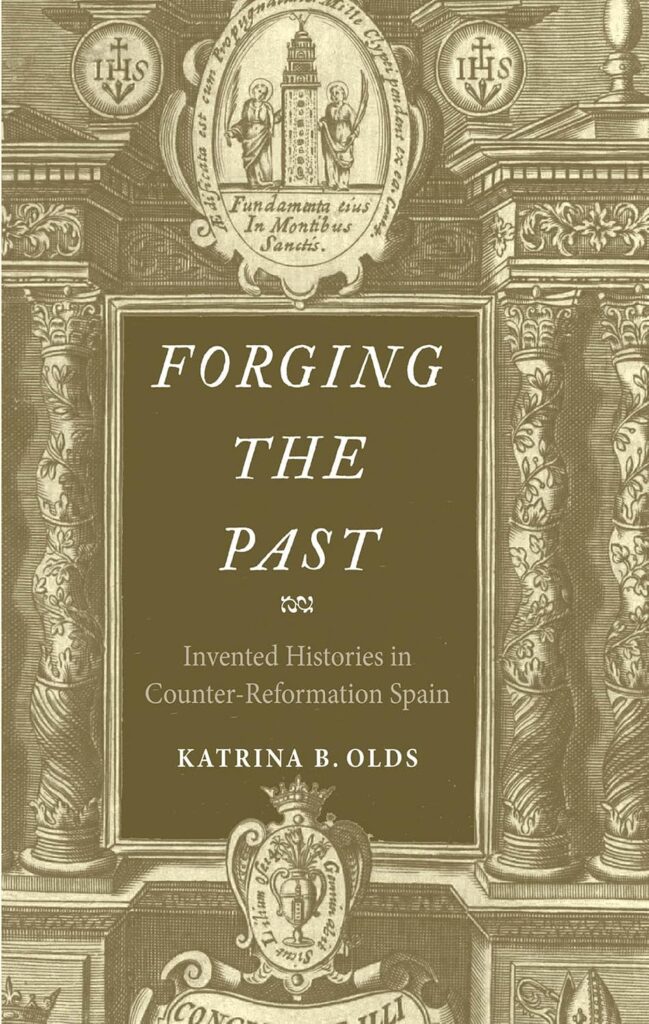
Forging the Past: Invented Histories in Counter-Reformation Spain (Yale, 2015) by Katrina B. Olds

Indeed, as paperwork proliferated, so too did inventions and fabrications, from outright forgery to mild manipulations of truth.  This was especially true in the first decades of the sixteenth century (c. 1500-c.1570), which the authors call (perhaps hyperbolically) “one of the longest profoundly radical periods in recorded history anywhere,” when “lesser elites and commoners challenged old aristocracies, often producing proof of their own bloodlines – sometimes entirely out of thin air.”  In order to substantiate their claims, “explorers, conquistadors,” “indigenous and part-indigenous families and communities,” “friars, officials, indigenous commoners,” all participated in generating “a vast manuscript canon describing everything from marriage practices to cosmovisions to the politics of Native sovereigns,” through scores of “maps, histories, and genealogies” (165).  In these ways, petitioners sought to “dominate the archive,” that is, to invent truth more persuasively or successfully than one’s foes, and convince the Crown to grant or confirm one’s privileges. 

Yet the resulting body of work did not form a coherent canon; since such documents were produced out of “fierce factional struggles,” their truths were “mutually contradictory and agonistic” (165).  And as time passed, the earlier, radical period would be forgotten or effaced, as the resulting documents would in fact become canonical, forming the basis of royal, municipal, family, ecclesiastical archives, and would be mobilized in later generations to assert or claim privilege, or to vindicate tarnished reputations (11).  In the meantime, the difficulty of confirming the authenticity of any of these claims – based on the cultural and physical distance of the petitioners from Madrid, but also the shifting nature of truth in wake of so much upheaval – gave rise both to a fundamental, pervasive skepticism about the very possibility of arriving at truth at all, particularly on the part of the Crown and the royal ministers charged with adjudicating the resulting petitions and litigation. 

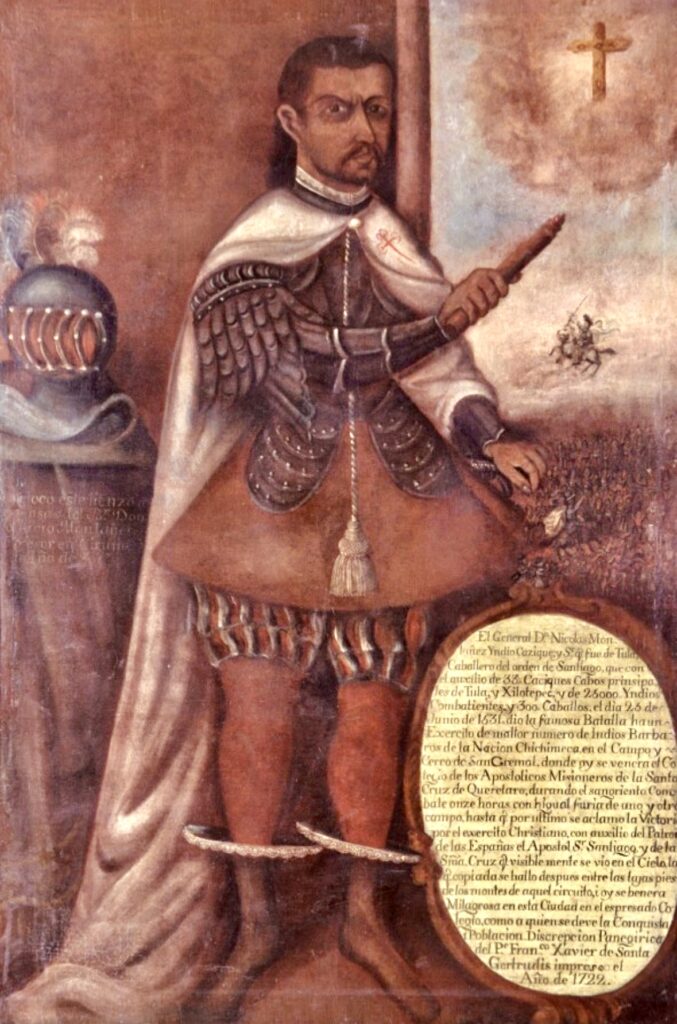
The authors have assembled a truly remarkable assortment of examples from their own exhaustive and punctilious archival research and existing scholarship, which range from the centers of former Mesoamerican and Andean empires, where petitioners fought to establish their purported descent from the Aztec and Incan nobility, respectively, to peripheral regions, such as the mining zones of northwest Mexico and high Andean site of Potosí, where “deracinated commoners” such as one sixteenth-century Otomi man named Nicolás de San Luis, were transformed by their descendants into model Christian conquistadors and upright administrators through forged documents.  These forgeries were then used to write new, idealized histories that buttressed local claimants’ privileges and power, based of course on counterfeit sources which continue to circulate and “fool scholars to this day” (154).  In these efforts, petitioners were attentive to the strategic and evidentiary value of non-European scripts and cultural sources, which, they hoped, would be seen as inherently ancient and authentic.  Native lords, including descendants of Moctezuma and the various contenders to the title of Inca, drew on oral traditions and the testimony of quipus, respectively, to buttress their claims.  Mesoamerican cacique-claimants registered purportedly ancient traditions in pictographic codices in truly remarkable and complex documents, which were indeed “among the most creative of the era” – if not quite among the most creative in all “of human history” – in which their authors “strategically use[d] as many non-Spanish conventions as possible to persuade officials that claims faithfully reflect[ed] customs derived from the ancient past” (188). 

Don Nicolás de San Luis. Museo Regional de Queretaro. INAH

In the seventeenth century, the accumulation of documents qua documents – which the authors conceptualize as “the archive” – became more important than oral testimony and other, older sources of historical or ancestral memory.  In this context, “forgery flourished,” and a wave of would-be Inca descendants descended on the Andes in the seventeenth century.  These included several who, based on their spurious claims of royal or aristocratic descent, which they supported with forged privileges and genealogies, convinced Spanish authorities to empower them to convert and/or conquer indigenous populations in the untamed peripheries of Southern Cone.  It is in this context that the authors reevaluate the efforts of Felipe Guaman Poma, the Andean author of the massive illustrated chronicle known as El primer nueva corónica y buen gobierno, which they describe as the work of a rather incompetent forger and failed self-fashioner, a text produced in part to vindicate Guaman Poma’s own fraudulent claims of noble ancestry.  Through this extended history-cum-petition, the author fabricated an image of himself as the lone surviving legitimate heir to the Inca (338) and the ideal royal servant: a master auditor and memorialista, the sole reliable source of the truth about the Andes.  “Like so many petitioners before him,” the authors note, “he also stressed his distinguished pedigree and his parents’ service against the tyrant Pizarros.”  As such, “[t]his canonical work is incomprehensible outside the wider context of struggles over privilege” (203).  “Guaman Poma presented the new social order as a bottom-up regime in which every group continued to manipulate the truth…wreaking havoc” (339), and giving rise to the manifold abuses, disorder, and injustices he denounces in the Andes.  The irony, of course, is that Guaman Poma was one of those upstarts, and, if Cañizares-Esguerra and Masters are correct, a forger to boot, and not even a particularly good one (340). 

Of particular interest and import is the authors’ claim that the culture of invention and forgery tacitly encouraged by the culture of invention, petitioning, and uncertainty generated “vernacular-administrative skepticism” – that is, a widespread conviction that Indies petitioners were not telling the whole truth, and that perhaps the very distance of the Indies, as well as its alterity, made the nature of the place and its people inherently incomprehensible.  This is a skepticism that did not remain in the colonies, but extended to the metropole, where “contradictions and incomplete truths fostered a rich culture of skepticism at the royal court” (267).  Since forgery and fabrication were inherent to the logic of the lawfare system – when there was a perceived vacuum, paperwork appeared to fill it – this inevitably led to doubts about the possibility of arriving at truth.  This was true both among petitioners, who often despaired about the king’s ability to apprehend it, as well as of the king and his councilors, who agreed with one assessment that the act of reading petitions and memoriales was like reading chivalric novels (257-8), the fanciful and wildly popular texts that had driven Don Quijote to lose his grip with reality.  Cañizares-Esguerra and Masters are keen to demonstrate that this pervasive sense that truth was elusive, and maybe impossible to grasp, decidedly altered imperial governance: “Doubt was therefore a fundamental force in shaping the empire,” as the earlier more freewheeling period gave rise to a more hierarchical and fixed regimen in the late sixteenth and seventeenth centuries, in which “kings, viceroys, bishops, and inquisitors” took “increasingly assertive roles in ascertaining and determining the truth” (278), even if readers may not be convinced by the claim that these effects represented veritable “intellectual earthquakes,” as the authors claim in a bit of characteristic overstatement (273). 

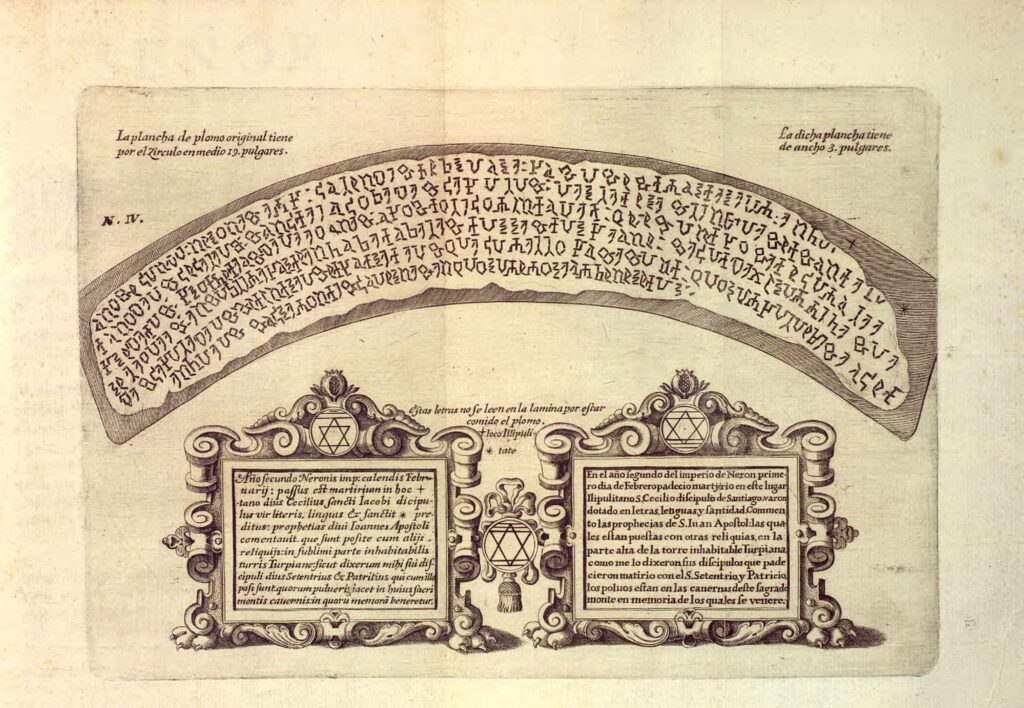
The Radical Spanish Empire provides a convincing case for continuing to tease out the distinctive ways that doubt and skepticism worked in early modern Iberian worlds, and often raises more questions than it can answer.  It would be worth asking, for example, whether the fact that “vassals … reflected on the truth constantly, regarding it as another weapon in the great bureaucratic battlefield” (278) actually reflected pervasive skepticism, or if such uncertainty might be more accurately described as pragmatic and self-interested cynicism.  Either way, it is worth remembering that forgeries and inventions in the Indies had important parallels in Spain, most infamously in a spate of historical forgeries that also generated skepticism about the integrity of archives as repositories of truth.  These were historical forgeries, produced and promoted by antiquaries and learned clerics all over Spain, in which they codified oral traditions, unearthed or forged material artifacts, and knit together new narratives that portrayed their specific locality as the home of the most ancient, most pious, and most continuously Christian populace.  In the process, of course, these local partisans of the sacred were forced to efface, convert, or otherwise reshape inconvenient truths about the existence of pagan, Jewish, and Muslim periods.  In several instances, this led these authors to fabricate their own archives of purportedly ancient texts, as in the infamous case of the ‘lead books’ of Granada, outright forgeries promoted by Archbishop Pedro de Castro (who appears in The Radical Spanish Empire as friend and mentor to Inca Garcilaso de la Vega, another self-fashioner, p. 321).  In another, a Jesuit priest named Jerónimo Román de la Higuera confected an entire canon of historical texts, which, he hoped, would effectively retrofit and solidify a pious narrative of Spanish sacred history from the time of Christ through the Christian “Reconquest” of Islamic Spain, and which generated both skepticism and enthusiasm.  The latter attitude persevered in spite of the former, as evidenced by the more than 164 works of ecclesiastical and local history which drew on Higuera’s canon between c.1600-c.1800.[i]

One of the Sacromonte Lead Books (Libros Plúmbeos), forged texts claiming Morisco-Arabic origins for Spanish Catholicism. Engraving by Francisco Heylan (1624), reproduced in Diego Nicolás Heredia Barnuevo, Mystico ramillete historico (Granada: Imprenta Real, 1741).

In short, The Radical Spanish Empire’s provocative contributions suggest that there is still more to the rich and complex histories of invention and fabrication on both sides of the Atlantic than scholars have yet managed to grasp.  As Cañizares-Esguerra and Masters note, scholars have traced a history of Iberian doubt and skepticism to centuries of Iberian religious plurality which gave rise to a conviction, one that seems to have risen to the level of a commonplace, that all faiths were basically the same – that “all could be saved,” whether Muslim, Christian, or Jew.[ii]  These sentiments reflected a rough and ready tolerance that, notwithstanding its persecution by ecclesiastical officials, remained a strong and vigorous current in late medieval and early modern Iberia and its territories, and which often extended to general skepticism about the validity of several Christian moral dictates, such as the popular conviction that simple fornication was not a sin.[iii]  Rather than necessarily attempting to yoke these developments to historiography on the development of the public sphere and philosophical skepticism in the Anglo-American ambit, as Cañizares-Esguerra and Masters are keen to do, it might be more productive – and true to the sources – to further pick out the connections, both explicit and tacit, between the wave of forgeries and fabrications in Spain and those produced in the Indies, and among the various cultural registers in which Iberians at home and the Americas litigated and imagined ‘truth’.  For example, historians of the book and of reading might deepen our understanding of how literary texts like chivalric novels and Don Quijote were used as metaphors for doubt, skepticism, and illusion, not just among elite readers like the king, but also by everyday intellectuals.[iv]  In order to further elucidate shifting definitions of ‘truth,’ we would also be well served by further examination of how knowledge of the genre and conventions of petitions for privileges was communicated to “radical commoners” in the Indies in the first place, as well as how these norms may have evolved or varied across the empire and over time.[v]  Ultimately, while The Radical Spanish Empire’s more expansive and provocative claims would sometimes benefit from greater nuance and context, they do prove timely and productive, particularly in helping to imagine how we might rewrite the social and intellectual history of early modern truth, doubt, and skepticism.


Katrina Olds is Professor of History at the University of San Francisco.  Her book, Forging the Past: Invented Histories in Counter-Reformation Spain (Yale, 2015) was recognized by the American Catholic Historical Association with its John Gilmary Shea Prize.  Her articles on neo-Latin forgeries; the unruly process of authenticating saints’ relics in the Counter Reformation; the eclectic methods of Spanish antiquaries; and relics, saints, and memory in Spain and the Americas have appeared in Renaissance Quarterly, Catholic Historical Review, and various edited volumes.  Most recently, she is the co-editor, with Emily Michelson and Jan Machielsen, of The Cambridge Companion to Counter-Reformation Sanctity (Cambridge University Press), 2026. 


[i] Katrina B. Olds, Forging the Past: Invented Histories in Counter-Reformation Spain (New Haven: Yale University Press, 2015)., 259.  For a recent analysis of Higuera’s lesser-known manuscripts, Miguel Betti, La otra cara del falsario: Jerónimo Román de la Higuera y la ilusión del origen, Biblioteca Áurea Hispánica (Iberoamericana Vervuert, 2026).

[ii] Stuart B. Schwartz, All Can Be Saved: Religious Tolerance and Salvation in the Iberian Atlantic World (New Haven: Yale University Press, 2008).

[iii] Barbara Fuchs and Mercedes García-Arenal, eds., The Quest for Certainty in Early Modern Europe: From Inquisition to Inquiry, 1550-1700 (Toronto: University of Toronto, 2020); Mercedes García-Arenal, ed. After Conversion: Iberia and the Emergence of Modernity (Leiden: Brill, 2016); Stefania Pastore, “Doubt and Unbelief in the Early Modern Era: Diego Hurtado de Mendoza and the Spanish Tradition,” in Formations of Belief: Historical Approaches to Religion and the Secular, ed. Philip G. Nord (Princeton: Princeton University Press, 2019).

[iv] I analyze one such example in a forthcoming journal article.  

[v] The not insignificant role of notaries in the paperwork and lawfare culture is relegated to a footnote (fn 146, p. 413).


Works Cited:

Betti, Miguel. La otra cara del falsario: Jerónimo Román de la Higuera y la ilusión del origen. Biblioteca Áurea Hispánica. Iberoamericana Vervuert, 2026.

Fuchs, Barbara, and Mercedes García-Arenal, eds. The Quest for Certainty in Early Modern Europe: From Inquisition to Inquiry, 1550-1700. Toronto: University of Toronto, 2020.

García-Arenal, Mercedes, ed. After Conversion: Iberia and the Emergence of Modernity. Leiden: Brill, 2016.

Olds, Katrina B. Forging the Past: Invented Histories in Counter-Reformation Spain.  New Haven: Yale University Press, 2015.

Pastore, Stefania. “Doubt and Unbelief in the Early Modern Era: Diego Hurtado de Mendoza and the Spanish Tradition.” In Formations of Belief: Historical Approaches to Religion and the Secular, edited by Philip G. Nord, 67–84. Princeton: Princeton University Press, 2019.

Schwartz, Stuart B. All Can Be Saved: Religious Tolerance and Salvation in the Iberian Atlantic World.  New Haven: Yale University Press, 2008.


The views and opinions expressed in this article or video are those of the individual author(s) or presenter(s) and do not necessarily reflect the policy or views of the editors at Not Even Past, the UT Department of History, the University of Texas at Austin, or the UT System Board of Regents. Not Even Past is an online public history magazine rather than a peer-reviewed academic journal. While we make efforts to ensure that factual information in articles was obtained from reliable sources, Not Even Past is not responsible for any errors or omissions.

Iberian Subaltern Political Philosophies and The Radical Spanish Empire


This essay is part of The Radical Spanish Empire Roundtable, a series of review essays examining the book from different disciplinary perspectives. Read the introduction and explore the other contributions in the series below.

  • “The Radical Spanish Empire Roundtable – Introduction“
  • “All Eyes on the Petition: Reflections on The Radical Spanish Empire“ by Daniel Carpenter
  • “Forgery, Invention, and the History of Skepticism in The Radical Spanish Empire“ by Katrina Olds
  • “Lawfare and the Legal Construction of Race in The Radical Spanish Empire“ by Michelle McKinley

In The Radical Spanish Empire, Jorge Cañizares-Esguerra and Adrian Masters offer an intriguing interpretation of the formation of the Spanish Empire across the Americas. They contend that from 1492 to the 1570s, the violence of conquest and the fall of pre-Hispanic rulers created openings for widespread questioning of social order and hierarchies. In this disordered period, various forms of political action emerged, which Cañizares-Esguerra and Masters describe as “radical.” This radicalism stemmed from wide-ranging and forceful critiques of the social order, the push for increased political participation across diverse social groups, and the rise of a “culture of doubt” unmatched in Europe at the time.

This was a period marked by intense political experimentation, in which multiple possibilities coexisted and the final outcome remained uncertain for a long time. As the Crown struggled to assert authority over the newly conquered lands, various forms of lordship emerged, the most notable led by conquistadors. Simultaneously, religious orders pursued their own project. Committed to “protecting” Indigenous peoples who had been Christianized, missionaries gained significant influence, while also becoming agents of far-reaching cultural change and of the destruction of Indigenous practices, beliefs, and institutions.

Within this context, numerous Indigenous, Ladino, and Spanish voices made themselves heard, each advancing its own vision of the society emerging from the violence and devastation of conquest. Critiques of established authorities, social hierarchies, new elites, and prevailing orthodoxies likewise proliferated. Many of these accusations employed the language of “tyranny,” a longstanding political idiom in Western Europe for criticizing abuses of power and illegitimate rule. Conquistadors and missionaries increasingly faced harsh criticism, as did native lords who had risen to prominence through their alliances with the Spanish.

Those opposing “tyranny” turned to the legal structures established by the Spanish and used officially recognized tools of opposition and resistance. This involved what the authors call “paperwork”: a range of practices for producing and circulating documents, which served both to expose injustices to the Crown and to seek reward for services. This bottom-up communication system enabled people from extremely diverse social and ethnic backgrounds to participate in political debates, thus contributing to the emergence of complex political factions.

Jorge Cañizares-Esguerra and Adrian Masters’s book thus makes a bold contribution to discussions of the formation of colonial Latin America. A key aspect of the study is its shift of focus toward the political participation driven by what they describe as “paperwork” and “lawfare” politics. The impact of accusations of tyranny, a central element of Cañizares-Esguerra and Masters’s argument, takes on greater significance when understood in the wider legal and political context of the time. “Lawfare” was highly effective because of the pervasive importance of justice, a concept that occupied a central place in both lettered discourse and wider understandings of political order. Although its meaning could vary across contexts, justice and its associated language were omnipresent, as were ideals of governance directed toward the so-called “common good.” Conversely, tyranny was widely conceived as the antithesis of just rule.

In the context of the Spanish Empire, local populations adopted and adapted this language, thereby becoming coproducers of a society as legalistic as its European counterpart. Their primary aim, as Cañizares-Esguerra and Masters make clear, was to employ the language of justice as a strategic tool in conflicts. Furthermore, they used it to develop new conceptions of governance, ranging from complete independence to arrangements for coexistence under Spanish rule.

The authors of The Radical Spanish Empire appropriately use the term “vassals” to refer to the population that engaged in “lawfare.” In early modern Spanish legal thought and practice, the term “vassal” broadly described individuals, mostly men—not women—from diverse backgrounds, who were generally Christians, recognized the authority of the Spanish king, and were subject to his law. As in any lord–vassal relationship, this status entailed both obligations and rights. Among the latter, a key entitlement was the right to petition the Crown. It is precisely this dimension that Cañizares-Esguerra and Masters’s book explores extensively.

Giving center stage to manuscript ‘paperwork’ and building on the work of Fernando Bouza Álvarez, Cañizares-Esguerra and Masters offer a new interpretation of the political significance of communication. In their view, the most “radical” features of the Spanish Empire were articulated and circulated chiefly through manuscript records rather than printed texts. In their relationship with the Crown, the “vassals” used the language of justice in manuscript communication to seek privileges, defend their autonomy, or involve royal officials in factional conflicts. Simultaneously, they sought to limit the Crown’s interference in local matters, preserving significant self-government in matters of justice, economic affairs, and defense.

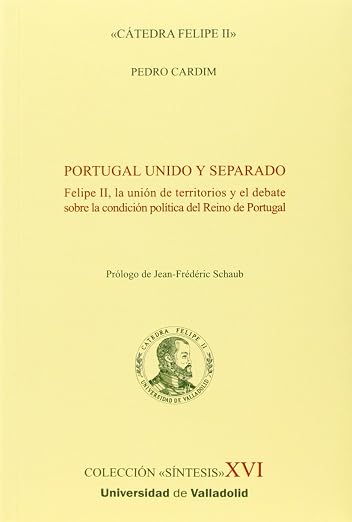
Portugal unido y separado: Felipe II, la unión de territorios y la condición política del reino de Portugal by Pedro Cardim (Valladolid: Universidad de Valladolid, 2014).

The Radical Spanish Empire also shows that the destruction wrought by conquest opened opportunities for political participation distinct from those in Europe. Compared with Europe, where communities enjoyed long-standing autonomies, the post-conquest Americas saw the establishment of many new political institutions. The concrete experience of establishing new communities produced fresh perspectives on politics. A distinctly local worldview emerged, challenging the assumption that social and political structures naturally reflected divine creation. This is closely linked to the authors’ broader emphasis on the rise of a culture marked by skepticism, administrative uncertainty, and the persistent questioning of authority. The experience of colonization demonstrated that institutions and systems of governance were fundamentally human creations and therefore subject to change. People from diverse social backgrounds came to understand, in concrete ways, that collective life could be transformed through human action. Among the results were the foundation of many local self-governing bodies and episodes of intense republican experimentation.

This perspective is particularly important for reconsidering the role of ordinary actors in the production of knowledge about politics. As the authors acknowledge, archival sources largely preserve the viewpoints of authorities and elites. They often portray popular political action as disorderly and depict non-elite groups as incapable of developing coherent political ideas, let alone of executing rational, orderly political movements. Yet the cases studied by Cañizares-Esguerra and Masters show that larger segments of society reflected on the political order they inhabited, challenged it, acted strategically within it, and transformed it.

The book also stresses that participatory politics should not be equated with a political order based on equality. Its eventual outcome was a corporate and hierarchical society of orders that remained fundamentally elitist. Collective life continued to be shaped by a long-standing conception of the political community in which social order rested on inequality. Political power remained largely concentrated in the hands of local elites, while women, enslaved people, and other groups were effectively excluded from meaningful political participation. What emerged, therefore, was a form of participation aimed at preserving the influence of local elites and reinforcing their authority. Not surprisingly, the Crown sanctioned it.

This book also offers novel perspectives on the ongoing debate about how royal authority was strengthened. Traditionally, the strengthening of royal power in America has been attributed to several factors: the absence of intermediary powers comparable to those of Europe; the presence of populations even more disenfranchised than the popular classes in Europe; the prevalence of slavery and other forms of unfreedom among Indigenous peoples, Africans, and their descendants, which encouraged a more authoritarian form of rule that permitted more frequent recourse to brute violence; and a greater reliance, compared with Europe, on extraordinary forms of governance grounded in the delegation of authority to military officials. The Radical Spanish Empire offers a more nuanced explanation for why royal authority became more “absolute” in the “New World” earlier than in Europe. The authors suggests that the move toward an “absolute” form of power was the Crown’s reaction to the capacity of local populations in the Americas to produce their own knowledge about social order. The argument would gain still greater force if Cañizares-Esguerra and Masters were to weave their insights into ongoing debates about the reality of the “absolutist” project – an ideology that many early modern observers associated with the perils of unchecked rule, characteristic of tyrants. That association extended to the use of “absolute” itself as a pejorative label for rulers.  

Otomí neighborhood contracts from Cutzio, recording negotiated tribute obligations to both a seigneurial lord and the Spanish Crown. Códice Huetamo, Biblioteca Francisco Xavier Clavijero, Universidad Iberoamericana, Mexico. Public domain.

Comparing the picture presented in this book with that of colonial Brazil helps us evaluate how broadly this interpretative framework applies to other American contexts. Devastation, violent dispossession, and seigneurialization – mainly, but not only, in the form of donatary captaincies – were also early features of Portuguese conquest and colonization. However, the donatary captaincies were not merely a temporary stage soon superseded by royal authority. In many places, conquest was followed by prolonged seigneurial arrangements, with the Crown only gradually assuming a limited degree of control over the lands and their inhabitants. In some parts of Brazil, the seigneurial framework endured into the later colonial period, as illustrated by the Garcia d’Ávila family, whose extensive landed domain made them one of the principal regional powers in the Bahian hinterland well into the eighteenth century. Also noteworthy is the establishment of new captaincies throughout the seventeenth and eighteenth centuries in newly conquered territories in the deep backlands of South America.  

Naturally, the diversity and characteristics of Indigenous societies and cultures were crucial in shaping the distinctive historical trajectory of Portuguese America compared to that of the Spanish Empire. Factionalism within Indigenous groups was present in colonial Brazil from the very beginning. The first Portuguese settlements on the Piratininga plateau are a case in point: a complex political landscape, based on “alliances” with local Indigenous peoples, took shape there, and the settlement of São Paulo exemplifies such “alliances.” As John Manuel Monteiro, José Carlos Vilardaga and many others have shown, São Paulo sustained one of the most protracted experiences of autonomous self-government and resistance to missionary (Jesuit) and royal authority of the colonial period. Crucially, both Indigenous populations and mamelucos were not merely subject to this volatile environment but active participants in articulating distinct ideas of social order.

Additional patterns emerged in different parts of Atlantic South America. The Temiminó and Tupiniquim peoples, who allied with the Portuguese to expel the French and their Indigenous allies from Guanabara Bay in the mid-sixteenth century, rapidly adopted the Portuguese language of graça e mercê. As Regina Celestino de Almeida has noted, some Temiminó and Tupiniquim leaders even labeled themselves “conquistadors” in petitions to the Portuguese king seeking recognition and privileges. In doing so, the Temiminó and Tupiniquim were among the first Indigenous groups to enter a broader culture of “paperwork” akin to that highlighted by Cañizares-Esguerra and Masters. João Fragoso and Nuno Monteiro have likewise shown that the Portuguese Atlantic world became the setting for intense “paperwork,” involving petitions, confirmations of privileges, and efforts to draw the Crown into local disputes. However, both in Brazil and in Maranhão-Pará, Indigenous involvement in “lawfare” was much more limited and occurred later than across the Spanish Empire, mostly from the late seventeenth century onward. As for the creation of Indigenous municipalities in Portuguese America, this occurred only in the latter half of the eighteenth century, in the context of the “Indian Directorate” policy, which rested on a rationale entirely different from that of the cabildos de indios. Nonetheless, several of the so-called vilas de índios established at the time assembled some of the most comprehensive collections of legislation in Portuguese America. As Vânia Losada Moreira has shown, their goal was to use this legal material in “lawfare” to secure their lands against settler encroachment.

Cañizares-Esguerra and Masters’s remarks regarding the instrumental role of history writing also apply to Brazil. From the early seventeenth century onwards, and especially after the end of the Dutch Wars in 1654, Brazilian elites sponsored chronicles that emphasized their loyalty to the Crown while simultaneously asserting their privileges and autonomy. Similar dynamics emerged in the aftermath of local rebellions against missionaries or royal officials in São Paulo, Rio de Janeiro, São Luís do Maranhão, Recife, Belém, and other colonial centers. In the eighteenth century, as Iris Kantor has shown, Brazilian history writing tended to soften the violence of the early conquest, commemorate the leading conquering families in each region, downplay the rebellions that had occurred in the meantime, and exoticize Indigenous peoples and their role in colonization.

Eighteenth-century Brazil, particularly Minas Gerais, was also the scene of many riots and intense debates over political rights, mostly due to the Crown’s aggressive fiscal and surveillance policies. Luciano Figueiredo and Kirsten Schultz, among others, have shown that Minas witnessed demands for more participatory forms of governance, broader consent in fiscal matters, and the articulation of political ideas that bear comparison with the “radicalism” identified by Cañizares-Esguerra and Masters.

Additional issues worth considering include the massive presence of Africans and their descendants (whether enslaved, freed, or free) in colonial Brazil. This raises significant questions about how political languages circulated and were adopted in a society where their presence was so widespread, especially from the late sixteenth century onward. What ideas of tyranny, justice, and political order arose from maroon experiences – the best-known example in colonial Brazil being the Quilombo dos Palmares, studied by Silvia Hunold Lara and others? How should we understand Jesuit concerns, examined by Ronaldo Vainfas or Carlos Zeron, regarding the political ideas and institutional arrangements developed within maroon communities? What forms of political thought took shape within Black brotherhoods and other Afro-Brazilian organizations through the manuscript communication studied by Luiz Geraldo Silva? Although the archival records sometimes make these questions difficult to answer, surviving traces in archives point to diverse and sophisticated vernacular political traditions.

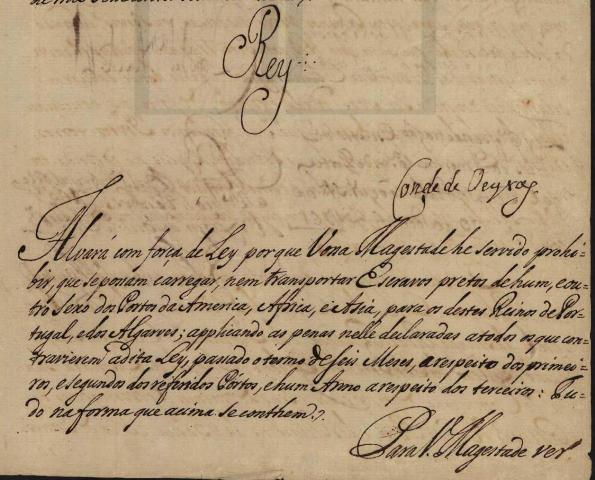
A 1769 royal decree declaring all slaves from America, Africa, & Asia free once they reach Portuguese ports

As noted above, Cañizares-Esguerra and Masters’s book highlights the diffusion of languages of contestation and cultures of doubt, thus converging with themes explored by Stuart Schwartz in All Can Be Saved. Importantly, Schwartz provides numerous examples of skepticism and questioning of contemporary order not only across the Americas but also in the Iberian Peninsula itself. His work is thus an important inspiration for reexamining the many riots of early modern Castile, Aragon, and Portugal, moving beyond the traditional view of these episodes as merely “anti-fiscal” protests. Historians should instead follow Cañizares-Esguerra and Masters’s approach and examine the broader political claims and ideas that both fueled and emerged from these collective actions. Such an approach necessarily requires a critical reading of the archive, which has consistently portrayed these uprisings as chaotic, irrational, and devoid of political order.  

One thing is certain: by emphasizing the creative aspect of “lawfare” and its broad social engagement, The Radical Spanish Empire illuminates forms of republicanism cultivated across the Americas, often missing from narratives that portray republican thought as mainly European. Cañizares-Esguerra and Masters correctly argue that the local knowledge produced in the context of “paperwork” should be incorporated into the history of republican thought. This would help undermine the diffusionist views that see the evolution of political ideas as originating in Northern European lettered milieus and spreading outward. Such a move would also call into question the traditional contrast between Spanish and British colonization in the Americas, and would align the book with recent research that critically questions the image of early English America as the stage for the development of a representative political system built from below by allegedly virtuous settlers through a straightforward bottom-up process.

Equally certain is that we still have limited knowledge about the political languages produced by the majority of the population. This applies both to the colonial Americas and the Spanish Monarchy’s European territories. Very little is known, for instance, about the political thought produced in craft guilds across the Iberian Peninsula. James Amelang’s work, among others, has shown that these labor organizations developed their own discourses challenging social inequality, unequal taxation, and aristocratic privileges. They also advocated expanding political participation and fiercely criticized prevailing practices of consent and representation that excluded them. Some went further, contesting the ideas of consensus populi, arguing that they were a means of effectively disenfranchising the majority of the population.

Another productive line of inquiry would be to revisit moments of acute political crisis, during which archives, despite their many filters and limitations, often preserve a broader range of voices than in periods of relative stability. Records produced during episodes of upheaval, including in the Iberian Peninsula, contain not only numerous denunciations of tyranny or appeals to the right of resistance against unjust rulers but also recurrent traces of political thought, including republican ideas. In Portugal during the crises of 1580 and 1640, in Aragon in 1591, and in Catalonia both in 1640 and again during the War of the Spanish Succession, many took advantage of political turmoil to articulate – and in some cases attempt to implement – republican-leaning ideas, including proposals for regime change. It is highly significant that royal authorities, together with members of the high nobility and the clergy, invariably became deeply alarmed whenever they detected signs that republican ideas were gaining traction among broad sectors of the population. Overall, The Radical Spanish Empire’s key achievement is to highlight that Spanish imperial expansion, despite its violent methods of imposing power, also promoted a particular style of politics, negotiation, and conflict. By giving center stage to Indigenous and Ladino actors and focusing on the use of “lawfare,” accusations of tyranny, and a culture of doubt, Cañizares-Esguerra and Masters offer a compelling and innovative view of how colonial American societies took shape.


Pedro Cardim is Professor of History at NOVA University Lisbon. He is the author of Portugal unido y separado: Felipe II, la unión de territorios y la condición política del reino de Portugal (Valladolid: Universidad de Valladolid, 2014), and co-editor, with Nuno Gonçalo Monteiro, of Political Thought in Portugal and its Empire, c.1500–1800 (Cambridge: Cambridge University Press, 2021). His research focuses on early modern Iberian political thought, imperial governance, and colonial Brazil.


Bibliography

Albareda Salvadó, Joaquim. 2023. Vençuda Pero No Submisa: La Catalunya Del Segle XVIII (Barcelona: Edicions 62).

Almeida, Regina Celestino de. 2001. Metamorfoses Indígenas. Identidade e cultura nas aldeias coloniais do Rio de Janeiro (Rio de Janeiro: Arquivo Nacional).

Bandeira, Luiz Alberto Moniz. 2000. O feudo. A Casa da Torre de Garcia d’Ávila: da conquista dos sertões à independência do Brasil (Rio de Janeiro: Civilização Brasileira),

Bouza Álvarez, Fernando. 2001. Corre manuscrito: Una historia cultural del Siglo de Oro. (Madrid: Marcial Pons).

Figueiredo, Luciano. 2003. “Narrativas das rebeliões – linguagem política e ideias radicais na América portuguesa moderna»,” Revista da Universidade de São Paulo, 111 (mar/maio 2003): 6-27.

Fragoso, João & Nuno Monteiro, (eds.). 2017. Um reino e suas repúblicas no Atlântico. Comunicações políticas entre Portugal, Brasil e Angola nos séculos XVII e XVIII (Rio de Janeiro: Record).

Gil Pujol, Xavier. 1998. “El discurs reialista a la Catalunya dels Àustries fins al 1652, en el seu context europeu,” Pedralbes, 18 (1998), vol. II: 475-487.

Gil Pujol, Xavier. 2002. “Republican Politics in Early Modern Spain: the Castilian and Catalano-Aragonese Traditions,” in Martin Van Gelderen & Quentin Skinner (eds.), Republicanism. A Shared European Heritage, vol. I – Republicanism and Constitutionalism in Early Modern Europe. (Cambridge: Cambridge University Press): 263-384.

Kantor, Iris. 2004. Esquecidos e Renascidos. Historiografia Acadêmica Luso-Americana, 1724-1759. São Paulo-Salvador: Hucitec).

Lara, Silvia Hunold. 2007. « Marronnage et pouvoir colonial. Palmares, Cucaú et les frontières de la liberté au Pernambouc à la fin du XVIIe siècle, » Annales. Histoire, Sciences Sociales, vol. 67, n. 3, 2007: 639-662.

Monteiro, John Manuel. 2018. Blacks of the Land: Indian Slavery, Settler Society, and the Portuguese Colonial Enterprise in South America (Cambridge: Cambridge University Press).

Moreira, Vânia Losada. 2014. “Cartografia de um conflito: reformas pombalinas e sobreposição de direitos em sesmarias de índios” in R. Chambouleyron & K.H. Arenz (eds.), Anais do IV Encontro Internacional de História Colonial. Terra e império: os direitos de propriedade na América portuguesa em perspectiva comparada (Belém: Açaí): vol. 2, 228-234.

Schultz, Kirsten. 2023. From Conquest to Colony. Empire, Wealth & Difference in 18th century Brazil. (New Haven-London: Yale University Press).

Schwartz, Stuart B. 2010. All Can Be Saved: Religious Tolerance and Salvation in the Iberian Atlantic World (New Haven: Yale University Press).

Silva, Luiz Geraldo. 2001. “Esperança de liberdade: Interpretações populares da abolição ilustrada (1773-1774),” Revista de História, São Paulo, (144-2002): 107-149.

Vainfas, Ronaldo. 2011. Antônio Vieira, Jesuíta do rei (São Paulo: Companhia das Letras). 

Vilardaga, José Carlos. 2014. São Paulo no império dos Felipes. Conexões na América Meridional (1580-1640). São Paulo: FAPESP- Intermeios.

Zeron, Carlos. 2011. “O governo dos escravos nas constituições primeiras do arcebispado da Bahia e na legislação portuguesa: separação e complementaridade entre pecado e delito,” in E. S. Souza & Bruno Feitler (eds.), A Igreja no Brasil. (São Paulo: Editora Unifesp): 323-354.


The views and opinions expressed in this article or video are those of the individual author(s) or presenter(s) and do not necessarily reflect the policy or views of the editors at Not Even Past, the UT Department of History, the University of Texas at Austin, or the UT System Board of Regents. Not Even Past is an online public history magazine rather than a peer-reviewed academic journal. While we make efforts to ensure that factual information in articles was obtained from reliable sources, Not Even Past is not responsible for any errors or omissions.

Crafting a Republic for the World in 19th-Century Colombia

By Lina del Castillo

The powerful myth of ‘American exceptionalism’ would have us think that the United States alone offered the world universal ideals of democracy, self-determination, and shared prosperity. However, if we open our eyes beyond canonical nineteenth-century writers such as Alexis de Tocqueville, an alternate story emerges. The long-ignored yet staggering number of works by publicists, historians, geographers, novelists, economists, and jurists from Caracas, Bogotá, Santiago de Chile, Buenos Aires, Mexico, Quito, and Lima begin to reveal the remarkable dimensions of modern republican experiments in Spanish America.Early republican experiments in Spanish America occurred at a time when there were no models to follow. While republicans in Europe battled monarchists and the clerical old regime, while they increasingly imagined their republics as colonial empires of racial inferiors, and while republicans like Thomas Jefferson and James Madison in the United States built their republic on white supremacy and industrialized slavery in cotton plantations, a generation of Spanish American sociologists, economists, anthropologists, and political philosophers became the world’s republican vanguard.

One of their most resilient inventions was rhetorical. Spanish Americans consistently portrayed the period of Spanish rule as obscurantist, tyrannical, and corrupt. This discourse of Latin America’s “colonial legacies” is pervasive today. During the early nineteenth century, Spanish Americans invented distinct “colonial legacies” to legitimize their intellectual and political work in rejecting Spanish rule. They believed science could diagnose, treat, and excise those pernicious colonial legacies. Their radical new form of political modernity required they take a systematic approach to understanding and changing their society, their economic structures, and their political processes. As perceived obstructions changed over time, so did proposed solutions, which in turn contributed to the invention of new philosophies, anthropologies, sociologies, geographies, and sciences.

José María Samper (Cultura Banco de la República).

The case of a little-known Colombian jurist and writer, José María Samper, illustrates this creative process. Samper posed hard questions to both Europeans and U.S. Americans as he wrote about the history of Colombia while traveling through Europe from 1858 to 1862 with his newly wedded wife, Soledad Acosta de Samper. With so many innovative studies by Spanish Americans available, Samper wondered why Europe remained deaf to the socio-political complexity and innovation of Spanish America. He knew the unfortunate answer: the confounding noise produced by the political storms that crashed through Spanish America during the first half of the nineteenth century. Narratives about chaos, violence, and caudillos drowned out any discussion about how these republics were experimenting with democracy, sovereignty, universal male suffrage, republican equity, and self-determination.

Map of Nueva Granada, 1832-1855 (Carta XII del Atlas geográfico e histórico de la República de Colombia, 1890. Wikipedia)

Samper represented a generation who creatively re-imagined republicanism for New Granada (a polity that encompassed roughly today’s Colombia and Panama). He, along with hundreds of other men in the emerging republic, formed the Caldas Institute (Instituto Caldas) in the late 1840s. This scientific society crossed the political spectrum and championed a circulatory ideal for New Granada. The circulation of people, goods, and ideas would undo the supposed Spanish colonial legacy of fragmentation and exploitation of territories that led to stagnation and poverty locally. Rather than foment export-led growth on the backs of enslaved people, a range of government officials from an array of provinces instead focused on identifying and strengthening the internal circulation of goods and services. Provincial chapters quickly formed and worked to identify what industries needed improving, how to ensure proper morality, and where infrastructure needed to be built. Circulation of people, goods, ideas, and credit was further supported by steamship navigation along the Magdalena River flowing through the newly created Puerto Colombia in Barranquilla, a port intended not just for export but also internal circulation among New Granada provinces.

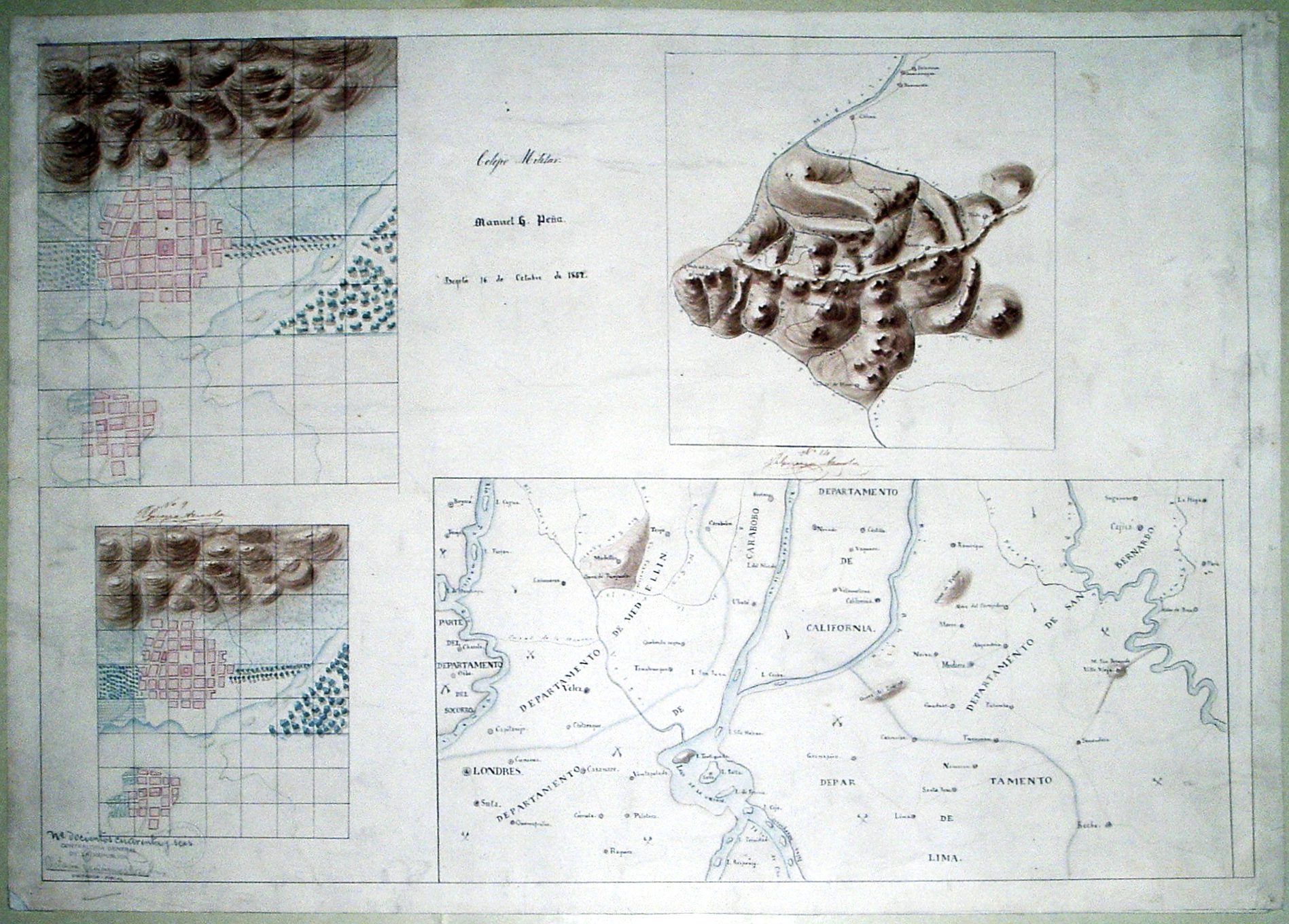
Manuel Peña’s maps.

Caldas Institute members also helped identify the brightest minds from the provinces. Those young men won scholarships to attend New Granada’s military school in Bogotá. Cadets learned new mapping techniques from foreign experts through apprenticeship. As revealed by the fanciful imaginary landscape drawn by sixteen-year-old Manuel Peña, cadets learned to express the implications of local and global circulation for the Republic. Consider how Peña’s map drew together California, London, Lima, and Carabobo, along with existing New Granada cities and towns such as Medellin, Socorro, Vélez, Oiba, and Cajicá. All these places, according to Peña’s cartographic imaginary, also participated in a war for liberation as signaled by crossed swords strewn throughout the territory.

The ideal of free circulation to combat a colonial legacy of fragmentation, exploitation, and economic stagnation helps us better understand why early republicans in New Granada not only moved towards the abolition of slavery by 1851, but also worked tirelessly towards identifying the best routes for canals and roads. The circulation of free people, ideas, and trade required infrastructure that could traverse the Andean mountainous terrain, after all. The Chorographic Commission, first conceptualized by members of the Caldas Institute, was to bring to fruition New Granada’s long-term development projects. The work this scientific expedition carried out from the 1850s through the 1860s was deeply entwined with the development of a republican political ideology based on the abolition of slavery and experimentation with universal male suffrage.

Agustín Codazzi of the Chorographic Commission camping with his collaborators in Yarumito, Soto Province (1850, Biblioteca Nacional de Colombia, Colección Comisión Corográfica. Wikipedia).

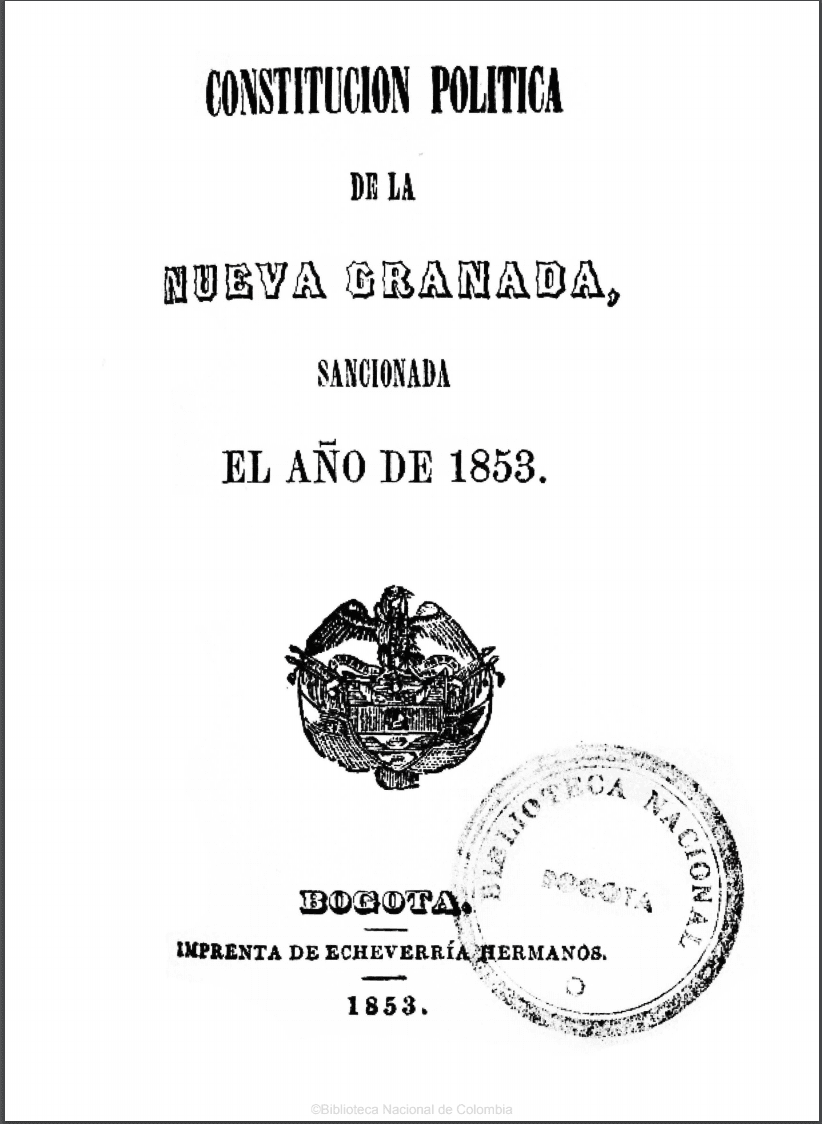
While some Caldas Institute members engaged in such remarkable experiments with republican circulation, others experimented with what José María Samper termed the science of constitutionalism. Their work culminated in the constitution of 1853, which was radically democratic even by today’s standards. No electoral college would get in the way of the will of the people. In the wake of slavery’s abolition, presidents were directly elected through universal male suffrage, as were all representatives of Congress, members of the Supreme Court, and provincial governors. The 1853 constitution also permitted the provinces of New Granada to develop their own charters, and a flurry of constitution writing ensued. The most remarkable of these was that of Vélez, which granted universal suffrage to women as well as men. The 1853 constitution proved such a radical re-working of the democratic system that Civil War broke out. The devastation was overwhelming. An alternate constitutional plan emerged, also led by José María Samper, that vested sovereignty in the states rather than individuals. These were the kinds of constitutional experiments Samper and his cohort shared with the world.

Cover page of the Constitution of 1853.

Spanish Americans have too often been simplified as either detached racist elites with little knowledge of local realities looking only to profit from export led growth at any cost, or violent anti-democratic caudillos. De-exoticizing Spanish American thinkers allows us to take their early republican projects – and their discontents– seriously.

Highlighting the nineteenth-century invention of colonial legacies also allows us to begin to question why thinkers, writers, scholars, and educators in the United States, in the wake of independence, did not create the category of colonial legacies for themselves. Why did they not identify legacies of British rule that needed to be rooted out in order to produce a republic of equal citizens, no matter their race? Why, indeed, can we see colonial legacies so easily for Spanish America, but we have such a hard time identifying the persistent colonial legacies that continue to make universal democracy and shared prosperity in the United States so difficult to achieve?

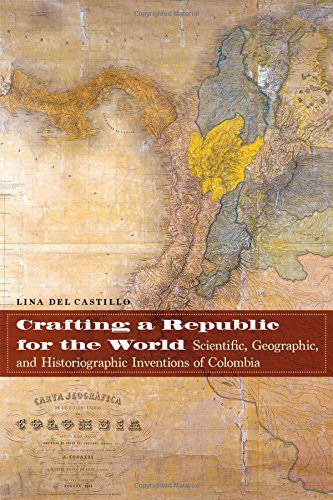
Lina del Castillo, Crafting a Republic for the World: Scientific, Geographic, and Historiographic Inventions of Colombia (2018)

Further Reading:

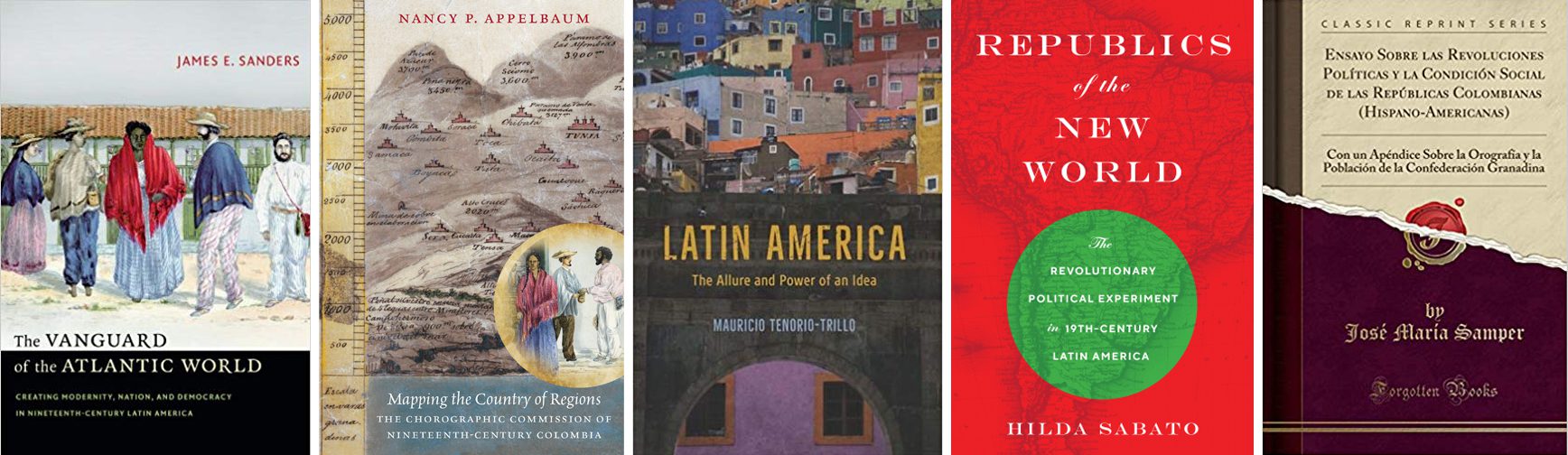
James Sanders, The Vanguard of the Atlantic World: Creating Modernity, Nation, and Democracy in Nineteenth-Century Latin America (2014).
Sanders underscores how republicans in Colombia and Mexico, but also other republics such as Chile, Uruguay, and Venezuela, saw themselves as shaping political modernity in the world.

Nancy Appelbaum, Mapping the Country of Regions: The Chorographic Commission of Nineteenth-Century Colombia (2016). This focused study on the Chorographic Commission in Colombia reveals the richness and complexity of that state-sponsored scientific expedition.

Mauricio Tenorio-Trillo, Latin America: The Allure and Power of an Idea (2017).
Tenorio-Trillo offers a short essay on why the idea of Latin America has proved remarkably resilient since the mid-nineteenth century.

Hilda Sabato, Republics of the New World: The Revolutionary Political Experiment in Nineteenth-Century Latin America ( 2018).
Sabato’s book effectively describes the fundamental innovation of Latin American politics in the nineteenth century as the revolutionary decision to adopt popular sovereignty as the founding principle of the polity and as the only source of legitimate power.

José M. Samper, Ensayo sobre las revoluciones políticas y la condición social de las repúblicas Colombianas (Hispano-Americanas); con un apéndice sobre la orografía y la población de la Confederación Granadina  (1861/2018).

Top image: Watercolors by Manuel María Paz, a member of the Chorographic Commission: A Bridge on the Ingara River (L), The Village of Tebada (M), The Square of Quibdo (R), Chocó Province (World Digital Library).

The Disappearing Mestizo, by Joanne Rappaport (2014)

By Adrian Masters

Disapearing Mestizo coverFrom Mexico to Chile, Latin American intellectuals, artists, and activists proudly proclaim that they, their nations, and their cultures were born from a mix of Spanish and Indian heritage. The adjective for this mix is “mestizo;” individuals of Spanish-Indian descent are “mestizos.” These terms, along with the general word for mixing (mestizaje), have become increasingly prominent in North American scholarship in recent years, especially since the 1960s Civil Rights Movement, when many U.S American activists with Latin American heritage sought to explore and embrace their Indian roots.

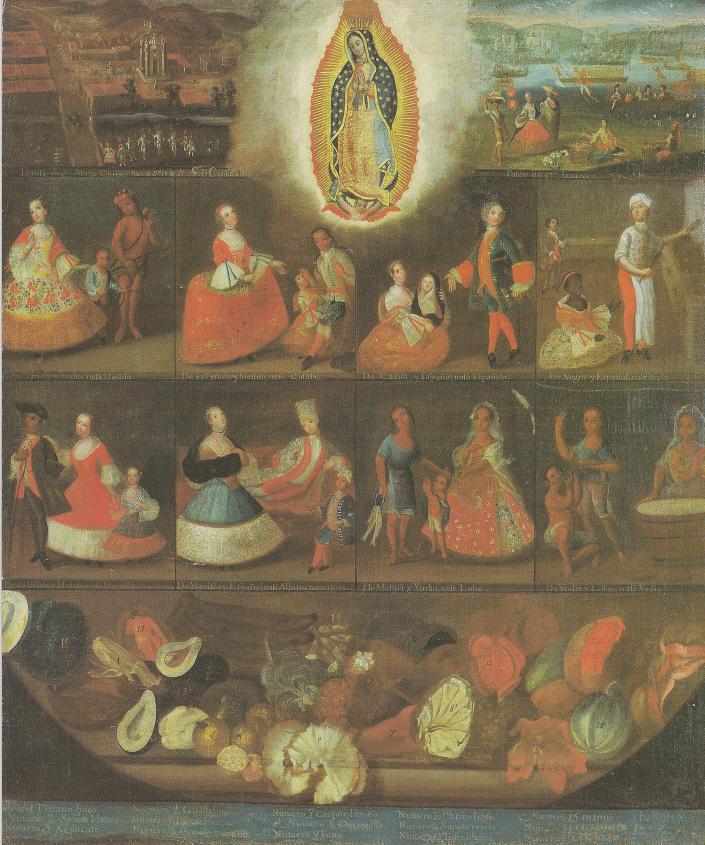
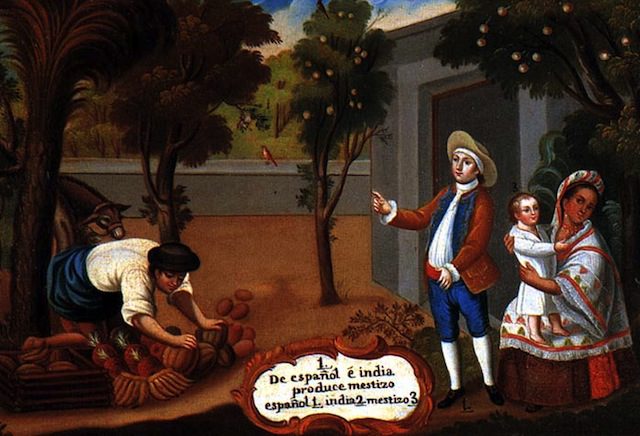
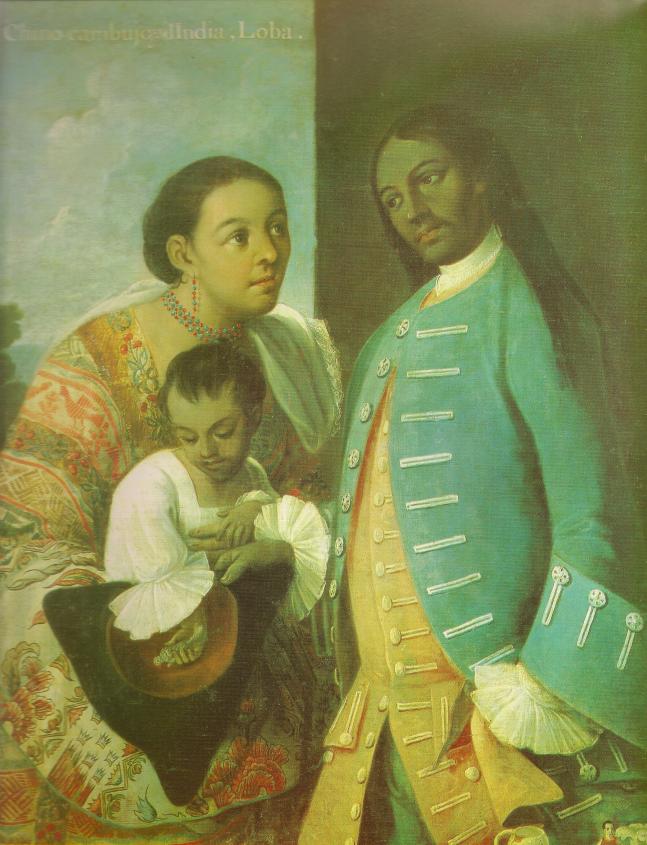
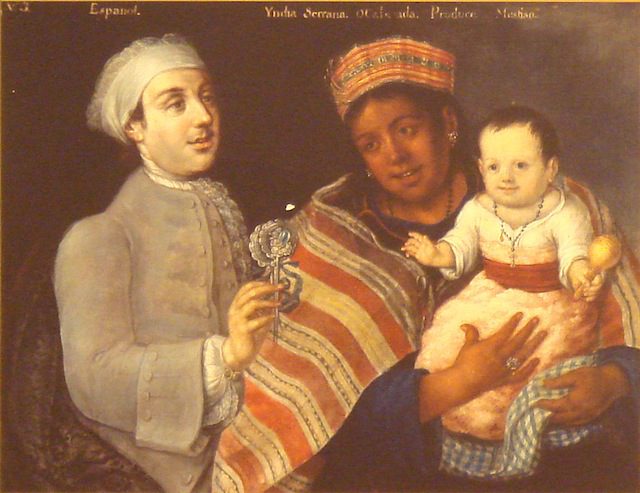
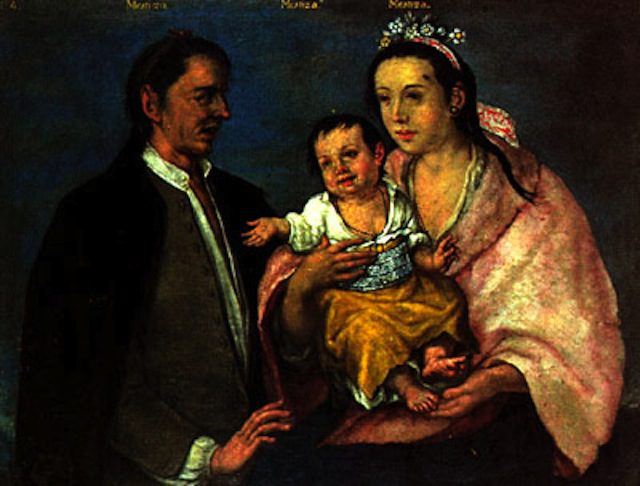
The category of mestizo first arose in the 16th century Spanish Empire. In The Disappearing Mestizo, Joanne Rappaport takes readers to 16th, 17th, and 18th-century Colombia, where she questions whether mestizos constituted a real social group. Many scholars have treated colonial mestizos as a sort of ethnicity or collective, a concept frequently influenced by the era’s spectacular paintings of genealogical mixes between Africans, Indians, and Spaniards. These colonial Mexican paintings create the appearance of a hierarchical society, a “caste system,” where a colonist would fall into one of dozens of categories and would live his or her life according to the privileges and limitations of that group. The idea of the caste system has recently come under the scrutiny of contemporary scholars, who argue that the rigid idealized world of caste paintings never materialized in day-to-day life.

Casta painting

Casta painting by Luis de Mena

Rappaport’s book builds on this growing suspicion towards the caste system and colonial-era terms like the mestizo. Whereas Africans, Indians, and Spaniards often had languages, histories, and legal statuses that brought them together, Rappaport argues that mestizos were adrift between colonial ethnicities. This meant that they appeared and disappeared from colonial documents with ease, “becoming” Indians or Spaniards at times and becoming mestizos at other times. If there were no mestizo sociological or ethnic group, Rappaport reasons, we must set out to determine not “Who is a mestizo?” or “What is a mestizo?” but “When and how is someone a mestizo?”

Casta Painting from the end of the 18th century or beginning of 19th century. Author unknown. The caption reads "From a Spanish man and an Amerindian woman, a Mestizo is produced"

Casta Painting from the end of the 18th century or beginning of 19th century. Author unknown. The caption reads “From a Spanish man and an Amerindian woman, a Mestizo is produced”

This book seeks to answer why colonists called others mestizos, through a handful of fine-grained “ethnographic” vignettes that appear in the archives of Spain and Colombia. The author begins by exploring the importance of markers of difference that go beyond 19th and 20th century markers of “race:” religion, appearance, dress, blood, honor, reputation, occupation, and even ideas regarding breast-milk (ideas that colonists summarized as calidad, or “quality”). Readers meet a moreno (dark-skinned man) who seduces a high-born Spanish woman with love letters but shames and threatens the reputation of her family when he reveals his physical appearance to her. A half-Spanish, half-Indian girl brings dishonor upon her father by dressing as an Indian. A distinguished conquistador’s enemies accuse him of being a Moorish slave from Oran, throwing his Christian genealogy and virtue into question. These cases force us to think beyond “race” as a simple category of genetic difference and to focus instead on the cultural reasons why colonists did or did not use so-called caste categories when describing themselves and others.

Casta painting by Miguel Cabrera

Casta painting by Miguel Cabrera

Rappaport then turns her attention directly toward mestizos (and occasionally mulattos), presenting various stories in which Crown officials struggled with caste terms. There is Juan de Medina, the self-proclaimed Indian whose enemy, an Indian, insults him as a mestizo after a bloody brawl involving a severed nose. When a tax collector confused Juana Galván for a tribute-paying indigenous woman, she complained that she had a Spanish father and was in reality a mestiza (colonial Iberians and their mestizo children did not normally pay taxes). Rappaport also notes the cases of mulattos Lázaro, who lived and paid taxes as an Indian, and Manuel Rodríguez, who lived among Spaniards and Indians, even as he terrorized them with robberies and rape. There was Ana de Mendoza, an elite mestiza who became “hispanized” by her marriage, and Juan Birvez, a man who witnesses outed as a mestizo as he lay in bed with the daughter of a powerful landowner. Birvez, in turn, revealed that the daughter was a mestiza herself. Rappaport concludes from these episodes that the matter of who was and was not a mestizo was highly contingent on the time, the place, and who was doing the naming. She argues that mestizos and mulatos did not live in a caste system; they moved in and out of their categories with ease.

A painting of a Spanish man and a Peruvian indigenous woman with Mestizo child, 1770

A painting of a Spanish man and a Peruvian indigenous woman with Mestizo child, 1770

Some mestizos, however, experienced very tangible discrimination at the hands of Crown officials and clergymen. One was the famous Gonzalo García Zorro, who became a cathedral canon in spite of stiff resistance from members of the Church. His brother Diego was less fortunate. He had close ties to Indians and found that townspeople disdained him and his pretensions to public offices due to his mixed lineage. A similar case, well known among historians of colonial Colombia, was the struggle of two mestizo “caciques” – Indian chiefs – to win the recognition of the Crown for their position. Both Alonso de Silva and Diego de Torres were sons of conquistadors and Indian women, and both lost their rights to act as caciques when their enemies raised questions about their eligibility. Mestizos in colonial Colombia were often either too Spanish or not Spanish enough, depending on the position they sought to achieve.

Casta Painting from Peru, 1770.

Casta Painting from Peru, 1770.

Rappaport’s book does admirable work at dismantling the myth of the caste system, showing that colonists hardly ordered themselves into clean-cut categories. This observation brings up a mystery that the author does not answer, however. Why did Crown officials and clergymen frequently describe individuals as mestizos to begin with?

Rappaport all but ignores the problem of mestizo laws – the Crown decrees that insisted that mestizos not enter the priesthood, not live in Indian towns, not act as caciques, and so forth. This is a critical weakness in a work that pivots around the reasons colonists categorized one another.

Mestizo laws are difficult to understand at first glance. My research into the sixteenth-century creation of the term reveals more chaos than clarity. For every law forbidding mestizos’ entry into the priesthood, for example, there are two allowing it. The same follows for many similar decrees regarding mestizos’ rights to carry arms, inherit land, and so forth.

also known as the New Laws of the Indies for the Good Treatment and Preservation of the Indians, were issued on November 20, 1542, by King Charles I of Spain and regard the Spanish colonization of the Americas.

Front cover of the New Laws of the Indies for the Good Treatment and Preservation of the Indians. The New Laws were issued on November 20, 1542, by King Charles I of Spain and regard the Spanish colonization of the Americas.

The solution to this mystery lies in the nature of Spanish imperial law, and has important consequences for the practices of naming mestizos. The King desired close contact with his colonists – from the humblest Indian to the richest Spaniard. He also desired to resolve conflicts and avoid bloodshed. The Monarch and his Council thus oversaw all sorts of legal disputes, simultaneously providing colonists with mediation and collecting hordes of information on the New World all at once. It was in this flurry of colonial petitions to the Crown that the meaning of the term mestizo arose. Countless petitioners thus created different meanings for the term mestizo from below, in the process sowing legal chaos on a grand scale.

Emblem of the Council of the Indies from the frontispiece of the 'Recopilacion de leyes de los Reynos de Las Indias', Madrid, 1681.

Emblem of the Council of the Indies from the frontispiece of the ‘Recopilacion de leyes de los Reynos de Las Indias’, Madrid, 1681.

The archives reveal that the true question baffling colonists and officials alike was how to deal with the petitioner-driven, ever-evolving world of mestizo law. The true “disappearing” or ‘”floating” aspect of mestizos was their shifting and contradictory legal status. Thus to understand why mestizos seem to disappear, we must open a new inquiry into the nature of Spanish imperial law. We need a case-by-case account into each specific petition and counter-petition that shaped this category.

The Disappearing Mestizo suffers from this inattention to legislation on mestizos. For one, it often sinks into an “ethnographic present” – the illusion among many anthropological writings that cultures remain stable over time – because it does not recognize how decrees on mestizos could abruptly reshape ideas about mixture. A second problem is Rappaport’s overstatement of Crown officials’ difficulty in properly identifying mestizos. In reality, most Crown functionaries could determine a person’s part-Indian, part-Spanish genealogy simply by requesting an individual provide it. Mestizo laws had little to say about more extreme cases, where a colonist was an orphan, illiterate, or too marginal in Spanish society to merit official interest. This is not a reflection of difficulty so much as indifference on the part of bureaucrats and secretaries.

Many of the concepts about race that emerged during European colonialism remain with us (in different ways) in the 21st century. Virtually all Latin American countries point to the contributions of both Spanish and indigenous peoples in shaping what they call their “mestizo nations.” Some scholars today go so far as to argue that immigration and intermarriage are returning North America to colonial times, back to the era of the mestizo. Rappaport’s book will therefore be valuable not only to historians of colonial Colombia and scholars of race, but also to a reading public from Chile to Canada that is increasingly interested in the “mixing” of peoples who created their countries. As more and more authors assert that the future itself is mestizo, the next step for scholars – a step already taken by Rappaport – will be to think deeply about that category, its history, and its hidden baggage and complexities.

Joanne Rappaport, The Disappearing Mestizo: Configuring Difference in the Colonial New Kingdom of Granada (Duke University Press, 2014)

bugburnt

You may also like:

Ann Twinam discusses her work on Purchasing Whiteness in Colonial Latin America

Naming and Picturing New World Nature, by Maria Jose Afanador LLach

Kristie Flannery’s review of Imperial Subjects: Race and Identity in Colonial Latin America, edited by Andrew B. Fisher and Matthew D. O’Hara (2009)

Susan Deans-Smith on the Casta Paintings


For more on casta paintings:

Magali M. Carrera, Imagining identity in New Spain: Race, Lineage, and the Colonial Body in Portraiture and Casta Paintings (2003)

María Concepción García Saiz, Las castas mexicanas: un género pictórico americano (1989)

Ilona Katzew, Casta Painting: Images of Race in Eighteenth-Century Mexico (2004)


bugburnt


All images via Wikimedia Commons.


Recent Posts

  • The Radical Spanish Empire Roundtable – Introduction
  • All Eyes on the Petition: Reflections on The Radical Spanish Empire
  • Forgery, Invention, and the History of Skepticism in The Radical Spanish Empire
  • Iberian Subaltern Political Philosophies and The Radical Spanish Empire
  • Lawfare and the Legal Construction of Race in The Radical Spanish Empire
NOT EVEN PAST is produced by

The Department of History

The University of Texas at Austin

We are supported by the College of Liberal Arts
And our Readers

Donate
Contact

All content © 2010-present NOT EVEN PAST and the authors, unless otherwise noted

Sign up to receive our MONTHLY NEWSLETTER

  • New
  • Features
  • Reviews
  • Texas
  • Teaching
  • Digital
  • Watch & Listen
  • Authors
  • About