This article has a Spanish version
The History of the Present Time (HPT) in Mexico is emerging as a historiographical field in formation—open, evolving, and still being defined. It constitutes an essential space of reflection for understanding the fractures, continuities, and forms of violence that shape contemporary national reality. Unlike traditional historiography, which focuses on a closed past and privileges official documentation as its primary source, the HPT is concerned with the unfinished: social processes whose historicity remains open because their actors, victims, and witnesses are still alive. From this perspective, linear divisions of historical time (past–present–future) are questioned in favor of contemporaneity, generational experience, and the simultaneous coexistence of multiple temporalities.
The relevance of the HPT in Mexico extends beyond national borders, establishing itself as a necessary framework for both local and international scholars. The Mexican case demonstrates that the HPT is far more than a chronicle of the recent past; it is an analytical tool that provides historical depth to some of today’s most pressing challenges. Structural problems such as narcotrafficking, feminicide, forced disappearances, and state violence are often analyzed primarily through the immediacy of journalism or the synchronic lens of sociology. While these disciplines are valuable, their epistemological orientations tend to privilege the “here and now,” often obscuring deeper roots, long-term continuities, and historical processes that have shaped these conflicts.
As Carmen Collado notes, interpretations offered by journalism and the social sciences are important, but “what is missing in this panorama is a perspective that contains the density provided by both diachronic and synchronic knowledge that history can offer.”[1] By incorporating a historiographical approach, it becomes possible to move beyond the immediate conjuncture and understand these phenomena not as isolated events but as outcomes of complex processes that require historical explanation.
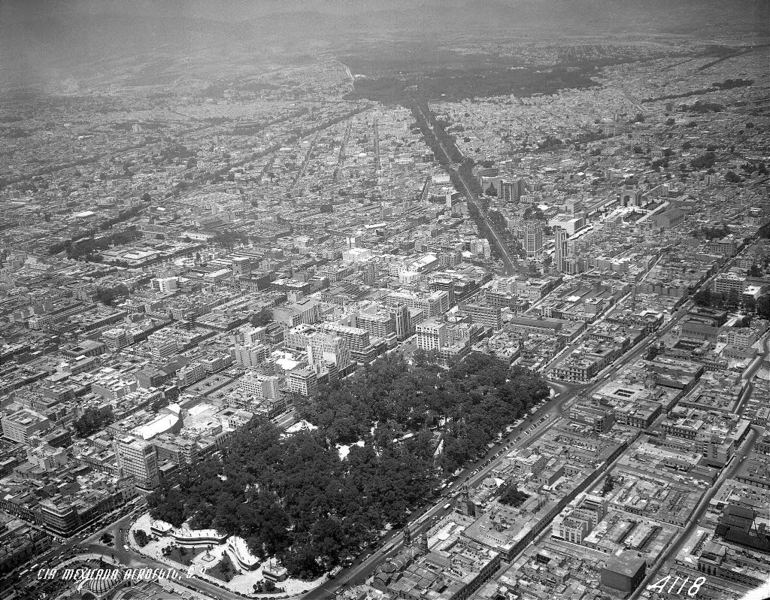
Alameda Central 20th century. Mexico City. Source: Wikimedia Commons
To fully grasp the Mexican case, however, it is essential to situate it in relation to broader regional and global developments. In Europe, the HPT was institutionalized beginning in the 1970s, marked by milestones such as the creation of the Institut d’Histoire du Temps Présent in France (1978), driven by the need to process the traumas of World War II, the Holocaust, and the Vichy regime. In this context, the HPT emerged in connection with the experience of the “last catastrophe”—a defining event that shattered the previous historical order and reshaped collective consciousness.
In the Southern Cone—particularly Argentina, Chile, and Uruguay—the field, often referred to as “Recent History,” arose from the political and moral urgency to denounce, document, and understand the crimes of civil-military dictatorships. This historiography is born of pain,[2] closely tied to activism, struggles for truth and justice, and the effort to make visible systematic forms of state violence such as forced disappearance, torture, and state terrorism.
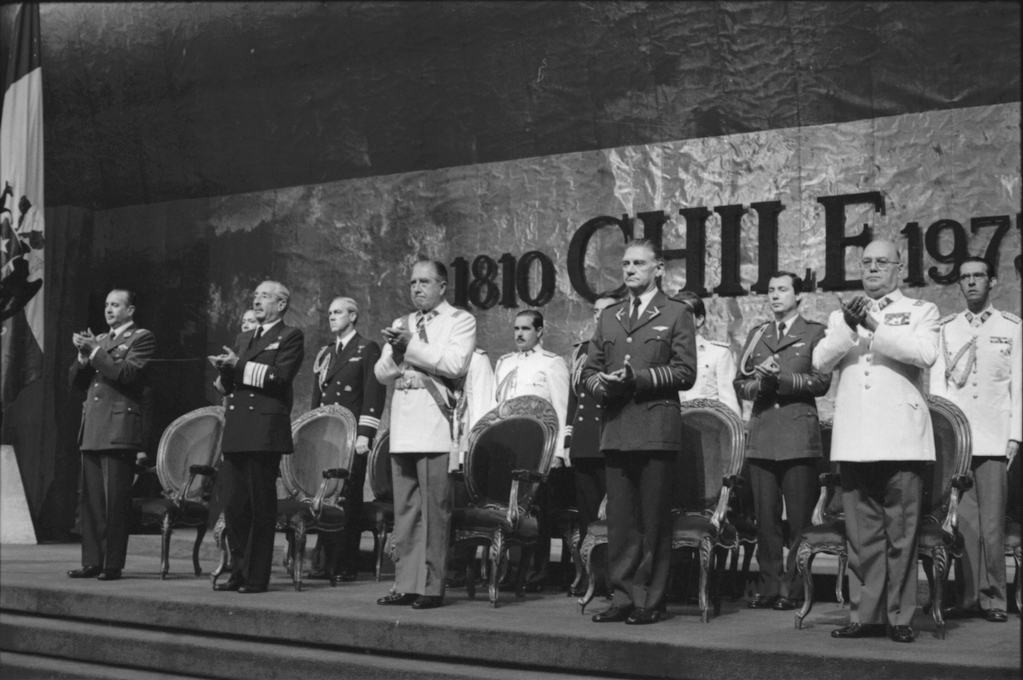
Pinochet’s Military Junta. Source: Wikimedia Commons
The development of the HPT in Mexico, however, displays distinctive features. Unlike the European and South American cases, it is not structured around a single abrupt rupture but rather around persistent violence embedded in a long-standing authoritarian system. Scholars generally identify at least two key moments in its formation:
- The student movement of 1968. Widely considered a pivotal turning point, 1968 not only exposed the exhaustion of the official narrative of the Mexican Revolution but also generated its own historians. The Tlatelolco massacre revealed the repressive capacity of the state and opened an irreversible fracture in the regime’s legitimacy, prompting new questions about power, memory, and violence.
- The political transition of 2000. The electoral defeat of the PRI after more than seventy years in power compelled the Mexican state to confront, at least partially, its repressive past. The creation of the Special Prosecutor’s Office for Social and Political Movements of the Past (FEMOSPP) and the limited opening of the so-called “archives of repression” in 2002 legitimized the present as a field of historiographical intervention.
In Mexico, however, violence is not perceived as an anomaly confined to a closed period, but as a constant linking the Dirty War (periodized between 1965 and 1990) with contemporary tragedies such as Ayotzinapa, feminicide, and narcotrafficking-related violence. The present thus appears as a “suspended time,” in the words of Camilo Vicente Ovalle, or as an unfinished temporality in which the persistence of radical evil and impunity prevents the symbolic closure of the past.[3]
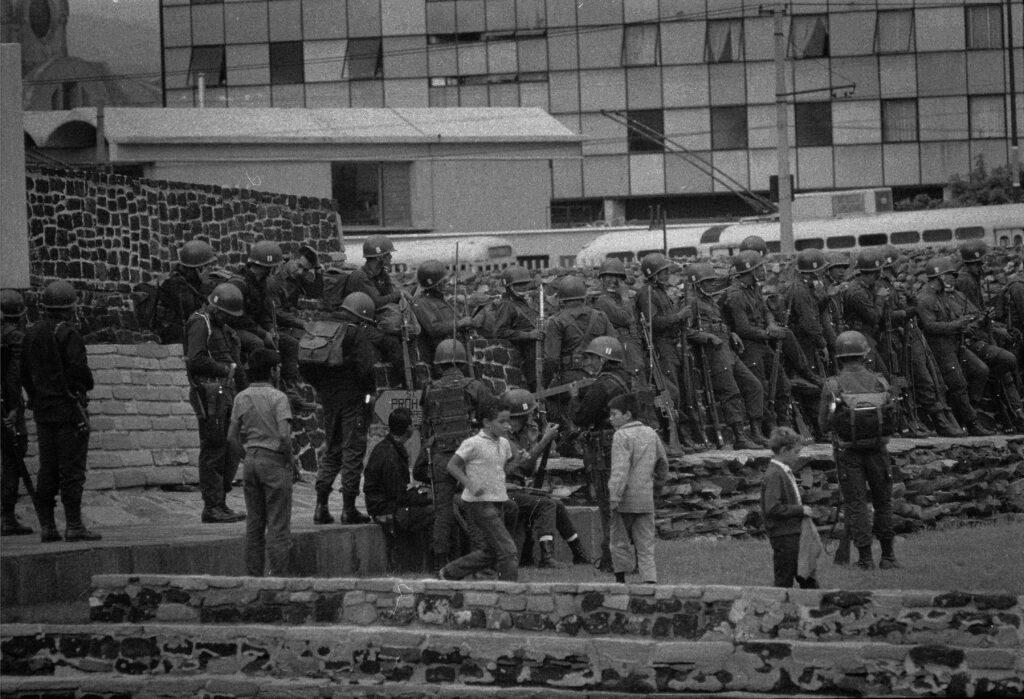
The ’68 Student Movement. Source: Wikimedia Commons
One of the principal obstacles facing HPT in Mexico is institutional opacity. Although in 2002 records from the Dirección Federal de Seguridad (DFS) were transferred to the Archivo General de la Nación (AGN), a substantial portion of documentation remains under the discretionary control of state intelligence agencies. This is compounded by a significant legal setback: the 2012 Federal Archives Law introduced the category of “historical-confidential document,” which allows access to information related to human rights violations to be restricted under the pretext of protecting personal privacy—even in cases involving perpetrators. For many researchers, this legal category functions as a mechanism for the archival management of impunity, concealing state secrets under the formal language of transparency and data protection.
At the same time, this historiographical perspective opens alternative avenues. Faced with restrictions in official archives, historians of the present encounter an overabundance of alternative sources: press, television, digital platforms, and social media. The proliferation of devices such as smartphones and tablets, along with the expansion of the internet, has radically transformed regimes of information production, enabling citizens themselves to become producers of sources by documenting police abuses, acts of violence, and everyday life. Yet this documentary richness poses technical challenges of verification, preservation, and analysis, exacerbated by the volatility of digital media and the absence of robust audiovisual preservation policies.
Within this landscape, oral history occupies a central role as a tool for recovering subaltern memories and giving voice to those historically silenced. However, working with contemporaries raises profound ethical dilemmas—from interviewing perpetrators, with the risk of trivializing or normalizing violence, to the responsibility of critically interrogating testimony through rigorous historical methods. In Mexico, historians of the present often assume the role of expert witnesses, intervening in public uses of history and contributing to the construction of critical consciousness in a society that, as Javier Sicilia has warned, has been hollowed out by extreme violence.[4]
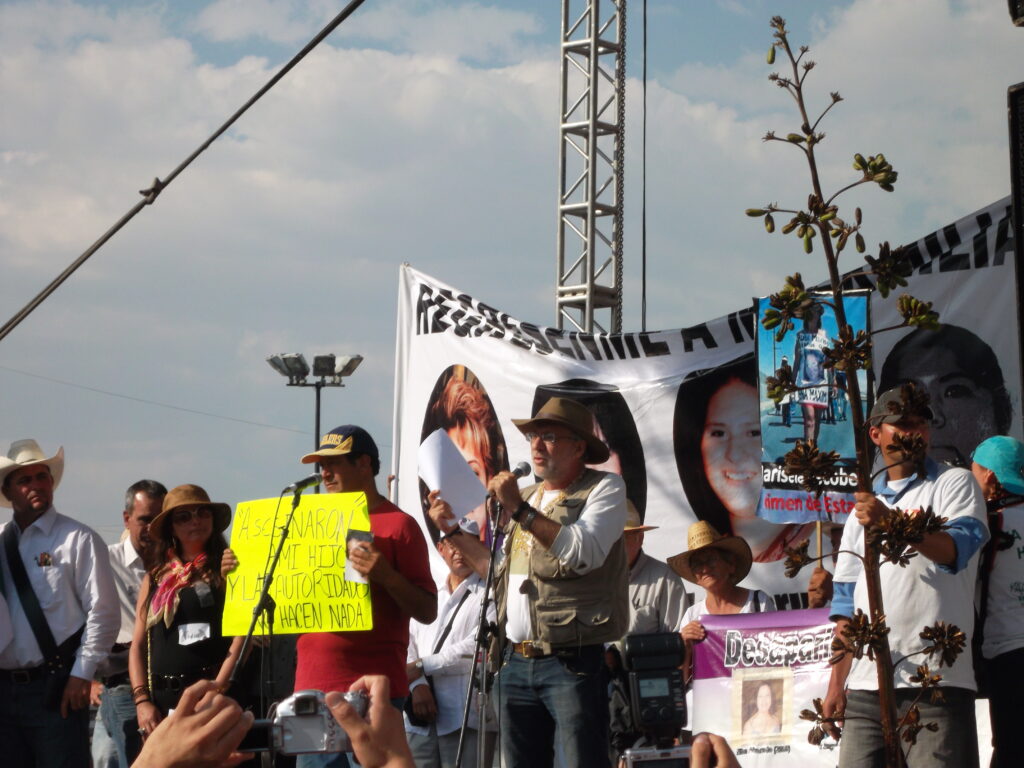
Javier Sicilia. Source: Wikimedia Commons
Researching the present in Mexico is therefore not merely an academic exercise but an ethical and political commitment. The HPT responds to a social demand to render historically intelligible painful phenomena that official history has often silenced, fragmented, or depoliticized. Institutions such as Instituto Mora and the Universidad Nacional Autónoma de México (UNAM) have fostered seminars and projects aimed at thinking through these “histories of the living,” recognizing the present as a laboratory for new forms of historical writing—more attuned to complexity, uncertainty, and the density of human experience.[5]
As a field in formation, the HPT in Mexico holds enormous potential to deepen understanding of the country’s most urgent problems. Despite the legal, archival, and emotional challenges posed by studying ongoing violence, this approach opens the possibility of exploring “virgin archives” and narrating history as it unfolds. Ultimately, as many specialists agree, it is a living history that seeks to prevent the mechanisms of forgetting from overtaking the experiences of contemporary generations.
In this context, historiographical practice cannot be limited to distant observation or mere chronological updating. To study the present is to actively contest the meanings of the past in a country where violence, impunity, and institutional silence are not residues of a bygone era but ongoing structures. In the face of a state that administers forgetting through archival control, memory fragmentation, and the normalization of violence, HPT emerges as a form of intellectual resistance.
Recent episodes—such as outbreaks of violence in Culiacán or Guadalajara following the capture of key figures from the Sinaloa Cartel or the Jalisco New Generation Cartel—should not be read as isolated events but as symptoms of a deeper security crisis. This is compounded by the alarming escalation of gender-based violence, evident in cases such as that of Kimberly Ramos, a student at the Universidad Autónoma del Estado de Morelos, or the recent feminicide of Edith Guadalupe in Mexico City. These realities, alongside the sustained rise in disappearances, reveal a troubling pattern of state negligence, in which authorities often prioritize the management of public image—even in globally visible contexts such as the upcoming World Cup—over the protection of life and justice. The study of these conditions lays the groundwork for further lines of inquiry within the HPT in Mexico.
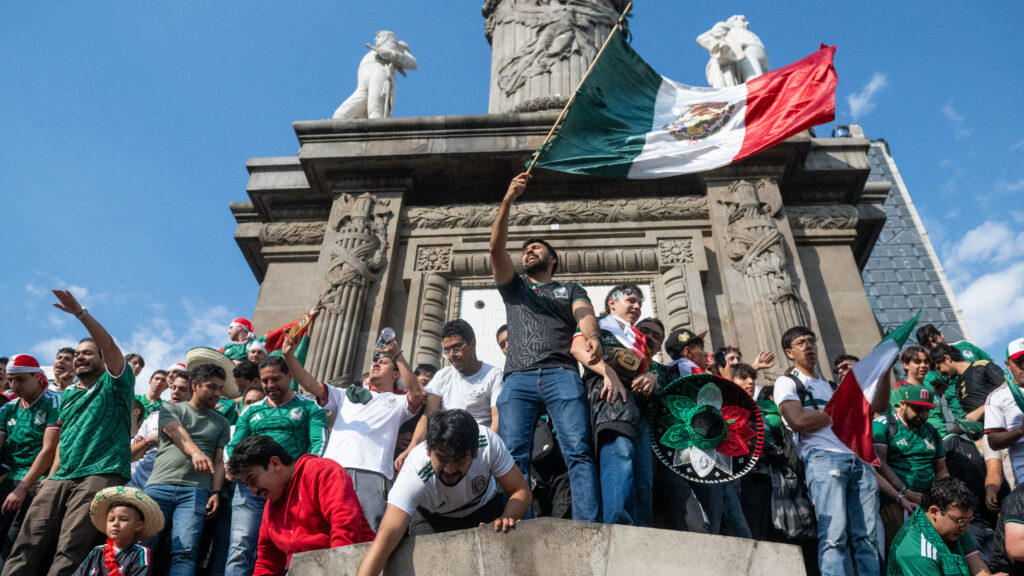
World Cup 2026- Celebration at the Angel of Independence: Wikimedia Commons
In light of this panorama, it is imperative to move beyond immediate chronicle. Unlike disciplines such as sociology, anthropology, or journalism, the HPT insists on revisiting the recent past to uncover the structures, logics, and mechanisms of power that have enabled these problems to persist and intensify. Far from being a retrospective exercise, the HPT is an indispensable analytical tool for understanding the continuities, ruptures, and transformations that shape the present conjuncture. Only through this critical historiographical practice—one that exposes how complicities have been forged and how institutions have operated in recent decades—can we make sense of our current reality and, ultimately, lay the groundwork for transforming Mexico’s political and social horizon.
To treat the present as a historical object is to reject the comfort of narrative closure and confront the persistence of a past that refuses to pass. The historian of the present does not produce knowledge from a position of neutrality; rather, they intervene in the struggle over lives that resist disappearance, over violences that power seeks to erase, and over historical responsibilities that the present must claim. In a country marked by the repetition and normalization of violence, writing history becomes an act of insubordination against impunity—an effort to prevent terror from becoming naturalized and to ensure that the experiences of generations are not absorbed into the logic of forgetting.
[1] Collado Herrera, María del Carmen, “Historia del tiempo presente: algunas reflexiones metodológicas” en Presente y Pasado. Revista de Historia, Universidad de Los Andes, Mérida, 2021, p. 18.
[2] According to Eugenia Allier, this is an observation made by researchers Marina Franco and Florencia Levín regarding this historiographical field in Argentina. Allier Montaño, Eugenia, “El tiempo presente en la historia: generaciones, memoria y controversia,” in Allier Montaño, Eugenia, César Iván Vilchis Ortega, and Camilo Vicente Ovalle (eds.), En la cresta de la ola: Debates y definiciones en torno a la historia del tiempo presente, Mexico, Instituto de Investigaciones Sociales, UNAM, Bonilla Artigas, 2020, p. 59.
[3] Vicente Ovalle C. [Tiempo Suspendido] Una historia de la desaparición forzada en México, 1940-1980. México: Bonilla Artigas Editores, 2019.
[4] Gamiño Muñoz, Rodolfo, “La historia vivida y el estudio de la violencia en México: conflictos historiográficos y dilemas metodológicos” en Allier Montaño, Eugenia, César Iván Vilchis Ortega y Camilo Vicente Ovalle (coords.), En la cresta de la ola. Debates y definiciones en torno a la historia del tiempo presente, México, Instituto de Investigaciones Sociales, UNAM, Bonilla Artigas, 2020, p. 418.
[5] For further information, see “Introduction” in Collado H., María del Carmen (ed.), Nueve ensayos sobre historia del tiempo presente, Mexico, Instituto Mora, 2021, pp. 7–26.
Josué Portillo Motte holds a bachelor’s degree in history from the Faculty of Philosophy and Letters at UNAM, a master’s degree in history from the Autonomous Metropolitan University, and is currently a doctoral student in modern and contemporary history at the Dr. José María Luis Mora Research Institute. His research focuses on student movements, political police forces, and Mexican intelligence services during the second half of the 20th century.
Author of banner picture: Santarrana Wikimedia Commons
The views and opinions expressed in this article or video are those of the individual author(s) or presenter(s) and do not necessarily reflect the policy or views of the editors at Not Even Past, the UT Department of History, the University of Texas at Austin, or the UT System Board of Regents. Not Even Past is an online public history magazine rather than a peer-reviewed academic journal. While we make efforts to ensure that factual information in articles was obtained from reliable sources, Not Even Past is not responsible for any errors or omissions.



.jpg)
