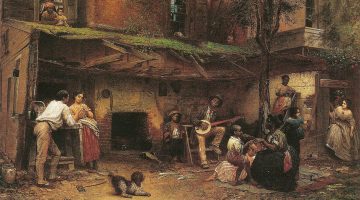
Episode 114: Slavery in Indian Territory

The past is never dead. It's not even past


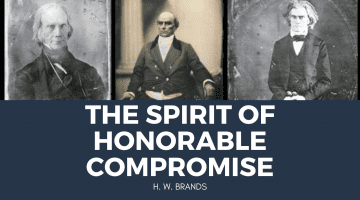
By H. W. Brands When Benjamin Franklin left the Constitutional Convention in September 1787, he was approached by a woman of Philadelphia, who asked what the deliberations of Franklin and his colleagues had given the young nation. “A republic,” he said, “if you can keep it. Henry Clay was ten years old that summer. He […]

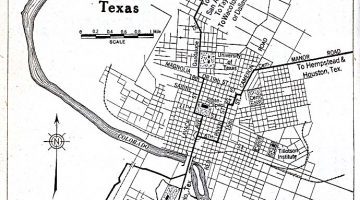
(Preview of our first page: “Austin Development During World War I”) By Jesse Ritner In recent years, discussions of Confederate monuments have dominated narratives of public memory in the United States. As important as this discussion is, however, Civil War monuments make up a relatively small percentage of historic markers in American cities. Although less […]

Films about historical events have enormous power to affect us, both to enlighten and to mislead. Historical films are perennially popular, often because they tell history through individual lives, because they invent characters and add personal, emotional drama to events that we want to learn about. Those same fictionalizing qualities make them great tools for […]

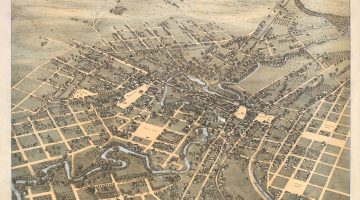
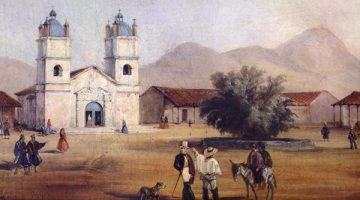
“Can any good come out of San Antonio?” This was the question at the heart of an 1846 letter penned by the Rev. John McCullough. He was writing to his Presbyterian superiors on the East Coast, who had assigned him the task of conducting missionary work on the new American frontier in Texas. McCullough’s letter, […]

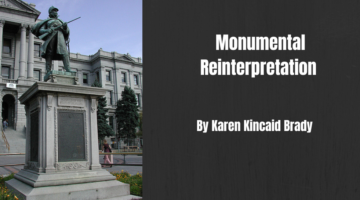
On the west side of the Denver Capital building stands a soldier atop a stone monument. The soldier is easily recognizable as a Civil War soldier with his rifle ready, sword at his side, his distinctive hat, and the gaze of a vigilant soldier, saddened to be fighting his brother and countrymen. Ari Kelman dedicates portions […]

Archives, especially state archives, have political agendas. Whether private or public, holdings of individual, institutional, and government documents can serve to invade and control the lives of citizens and societies. Their organizations shape historical knowledge and national narratives about the past. Kirsten Weld addresses these political issues of government intrusion, historical memory, and archival knowledge […]

On February 26-27 2018, The History Department at the University of Texas at Austin was pleased to welcome Dr. Manisha Sinha, Professor and James L. and Shirley A. Draper Chair in American History at the University of Connecticut, as the featured speaker for the Littlefield Lecture Series. Watch Professor Sinha’s first lecture on Not Even Past, titled “Abolition and the […]

All content © 2010-present NOT EVEN PAST and the authors, unless otherwise noted
Sign up to receive our MONTHLY NEWSLETTER