• New
  • Features
  • Reviews
  • Texas
  • Teaching
  • Digital
  • Watch & Listen
  • Authors
  • About

The past is never dead. It's not even past

Not Even Past

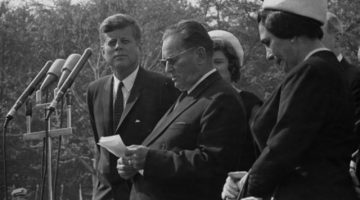
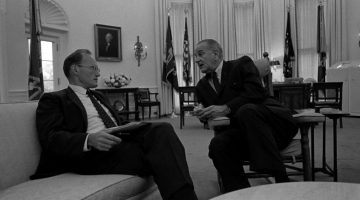
Vietnam between the United States and Yugoslavia

November 11, 2015

A specter is haunting Europe (also the United States and, really, much of the globe)—the specter of a new Cold War. In recent years columnists have been invoking the memory of the global ideological conflict that governed much of the violence and geopolitics of the twentieth-century.

History Museums: The Center for Memory, Peace, and Reconciliation, Bogotá, Colombia

October 21, 2015

September 23, 2015, marked a historic day in Colombian history. President Juan Manuel Santos and Timoléon Jiménez, leader of the Revolutionary Armed Forces of Colombia-People´s Army (FARC-EP), agreed to sign a peace treaty.

Presidents Past

August 6, 2015

Thinking about the future POTUS, with the first debate of the 2016 campaign on TV tonight? Read up on Presidents of the past in articles we have posted here on Not Even Past. Let’s begin with Jack Loveridge’s review of Hunter S. Thompson’s Fear and Loathing on the Campaign Trail ’72:  “Thompson, author of Hell’s Angels and Fear […]

Jim Crow: A Reading List

July 14, 2015

In the late nineteenth century, white Southerners imposed a system of constraints on African Americans, denying blacks their Constitutional rights, and, indeed, their human rights. This system—often violently enforced—was called “Jim Crow,” named after a minstrel song that stereotyped blacks. It included the disfranchisement of black men, the forcible segregation of blacks from whites in public spaces, and forms of state-sanctioned terrorism such as lynching, which included hanging, mutilating, and burning victims alive.

Charleston Shooting Exposes America’s Pro-Apartheid Cold War Past

July 8, 2015

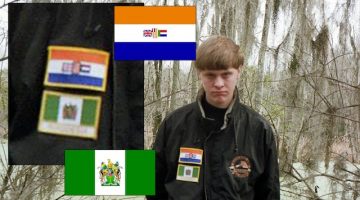
In the wake of the shooting at the Emanuel African Methodist Episcopal Church in Charleston, the United States has undergone a deep soul searching. Images of the confessed shooter posing with the Confederate Battle Flag have launched a long-overdue national debate about the meaning of Confederate imagery. But they have quickly overshadowed the shooter’s use of two other symbols: the defunct standards of Rhodesia (Zimbabwe) and apartheid South Africa.

On Flags, Monuments, and Historical Myths

July 6, 2015

Over the next few weeks, Not Even Past will offer readers historical sources, readings, and commentary on these events. Last week, Mark Sheaves collected past articles devoted to the history of slavery and its legacy in the US and provided us with an annotated list. Today we offer the historical analysis and commentary from journalists and historians primarily writing online. Follow us on Facebook and Twitter for more reading and news from the Task Force.

Slavery and its legacy in the USA

June 29, 2015

Not Even Past has published many feature articles, book and film reviews, and podcasts on slavery in the American South, brought together on this page. Approaching this topic from different angles, this body of work provides an overview of key issues important for anyone wanting to understand slavery and its lasting legacy.

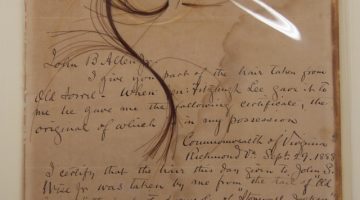
The Curious Life of General Jackson’s Horse’s Hair

May 6, 2015

Old Sorrel hair

By Josh Urich The artifact below and the document that accompanies it are out of the ordinary: hair taken from General Thomas Jonathan “Stonewall” Jackson’s horse, Old Sorrel. The hair itself was plucked by General Fitzhugh Lee and given to John S. Wise, the son of former Virginia governor Henry S. Wise. John S. Wise […]

Conflict in the Confederacy: William Williston Heartsill’s diary

April 29, 2015

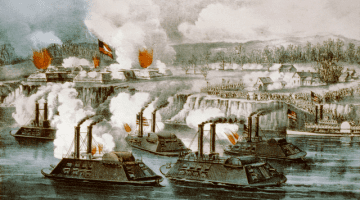
Print of the bombardment and capture of Fort Hindman, Arkansas Post, January 11th 1863. Via Wikipedia.

William Williston Heartsill volunteered to fight for the South before the Civil War even began. For the first two years of his service, he and his comrades from Harrison County, Texas served as a cavalryman on Texas’s western frontier.

The Professor and the Madman, by Simon Winchester (2005)

April 6, 2015

The nineteenth century in Britain was a time of grand figures, grand projects, and Imperial expansion. Imperialism was spreading the English language across the globe, yet there was still not a definitive guide to the language.

« Previous Page
Next Page »

Recent Posts

  • Curating History: Dr Pepper, Preservation, and Public Trust
  • The Brands of Garrison Hall at its Centennial
  • The Battles of the Alamo and the Myth of Southern Exceptionalism
  • Primary Source: Magic, Metal, and Medicine in Leonhard Thurneysser’s Paracelsus
  • Faculty Spotlight: Dr. Kate Imy
NOT EVEN PAST is produced by

The Department of History

The University of Texas at Austin

We are supported by the College of Liberal Arts
And our Readers

Donate
Contact

All content © 2010-present NOT EVEN PAST and the authors, unless otherwise noted

Sign up to receive our MONTHLY NEWSLETTER

  • New
  • Features
  • Reviews
  • Texas
  • Teaching
  • Digital
  • Watch & Listen
  • Authors
  • About