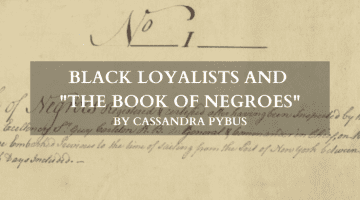
The Book of Negroes is an extraordinary historical resource, a meticulous list drawn up by the British authorities between May and November 1783, in which they recorded the personal details of some 3,000 African Americans evacuated from New York.
The past is never dead. It's not even past
The Book of Negroes is an extraordinary historical resource, a meticulous list drawn up by the British authorities between May and November 1783, in which they recorded the personal details of some 3,000 African Americans evacuated from New York.

Any work of history that attributes the start of the Cold War to a single factor will surely invite criticism, but Campbell Craig and Sergey Radchenko’s The Atomic Bomb and the Origins of the Cold War makes a compelling case for running that risk.

From 1949 to 1991, poor school districts had largely driven the debate over reform of the Texas school finance system. They had provided the initial impulse for Gilmer-Aiken, unsuccessfully sued the state in federal court, and ultimately triumphed at the Texas Supreme Court. Successive legislatures had responded to litigation and public campaigns by increasing total funding to public education and distributing that funding in a more equitable manner. Since 1991, however, the worm has turned.

On September 26, 1983, satellites notified a Soviet watch station south of Moscow of inbound U.S. missiles. Stanislav Petrov, the officer on duty, had ten minutes to determine whether to launch a counterattack.
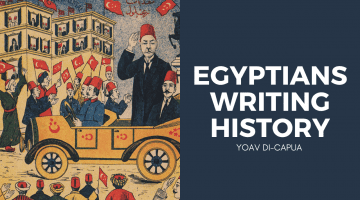
“History,” at least as Egyptians read, write, think, and know it today, is actually of surprisingly recent origins. As both an idea and a method, it was put to work only at the very end of the nineteenth century, and in a few short decades, it had managed to completely replace a rich and venerable nine hundred year-old scholarly tradition of Islamic historiography.
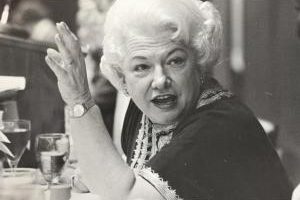
Liz’s family moved to Austin when she was seven years old, so that she and her older siblings could ultimately attend the University of Texas. This was a transition that prepared her for the wider world. By the time she graduated from UT with a degree in journalism, she sensed that her prose and her spirit would enable her to make her mark. “Give me wide open spaces, a Model T, and a typewriter,” she wrote to her mother, “and I’ll see you in the hall of fame.”
Islam has a long tradition in Africa dating back to the seventh century. Today, Islam plays a crucial role in the political, socio-cultural, religious, and economic lives of the population.
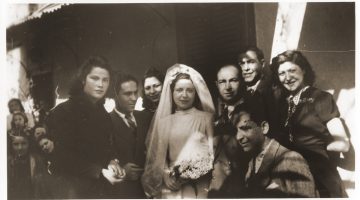
Private family photographs document events, such as births, marriages, and reunions, that are important in the history of individual families, but they can also teach us about the events we think of as real history.
We learn to listen before we learn to read and we speak long before we learn to write. Most archives, however, are built to store printed pages, maps, personal letters, diaries, logbooks, notebooks, and manuscripts.

Setting aside large tracts of land for preservation and public use was a unique idea in the late nineteenth-century United States as the country focused on westward expansion and development. 