• Features
  • Reviews
  • Teaching
  • Watch & Listen
  • About

The past is never dead. It's not even past

Not Even Past

Beyond the Waters: Oral History and the Save Our Springs Movement of Late-Twentieth-Century Austin

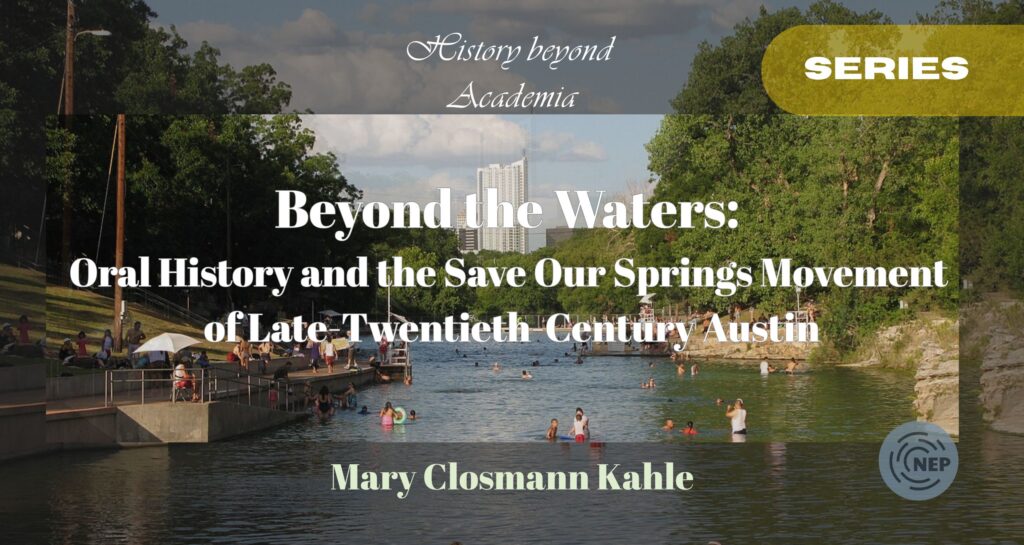
Beyond the Waters banner with Barton Springs as a background

This article is part of the series: History Beyond Academia

On June 7, 1990, hundreds of Austin citizens spoke before the Austin City Council in opposition to a proposed 4,000-acre real estate development upstream of Barton Springs, an iconic spring-fed swimming pool in the heart of Austin. The development, spearheaded by flamboyant businessman Jim Bob Moffett, was to be on land over the Edwards Aquifer, a groundwater reservoir that is highly sensitive to pollution. Opponents of the project were deeply concerned about the potential impact of the development on water quality in the pool and the pool’s long-term health. The hearing ran into the following morning, and in a unanimous vote, the City Council rejected the development. The buildup to the hearing, the dramatic and unpredictable hearing itself, and the later adoption by the city of a stronger watershed ordinance (the SOS Ordinance) reflected the coalescence of local environmental groups and citizens into a movement known as Save Our Springs (SOS). The SOS Movement is now seen as a high point of activism in Austin’s history, a story that inspires both myth–it’s a classic David-and-Goliath story–and controversy. 

To understand the importance of this moment, it’s critical to understand the place Barton Springs holds within Austin’s history. Barton Springs lies within Zilker Metropolitan Park, a 350-acre recreation hub that anchors the confluence of Lady Bird Lake and Barton Creek, two of the many creeks and waterways that add to the remarkable beauty of Central Texas. Just minutes from downtown Austin, Barton Springs traces its history from its role as a source of sustenance to Indigenous peoples, to its value as a site of commerce in the mid-1800s into the early 1900s, and to its final role as a recreation mecca. Like many recreation sites in the mid-1900s, Barton Springs was segregated until 1961, when activists and everyday people conducted “swim-ins” that led to its integration. Today, Barton Springs reflects both Austin’s diversity and its evolving identity as a countercultural bastion, a place where people of all backgrounds and ages can relax and enjoy its cooling waters throughout the year. 
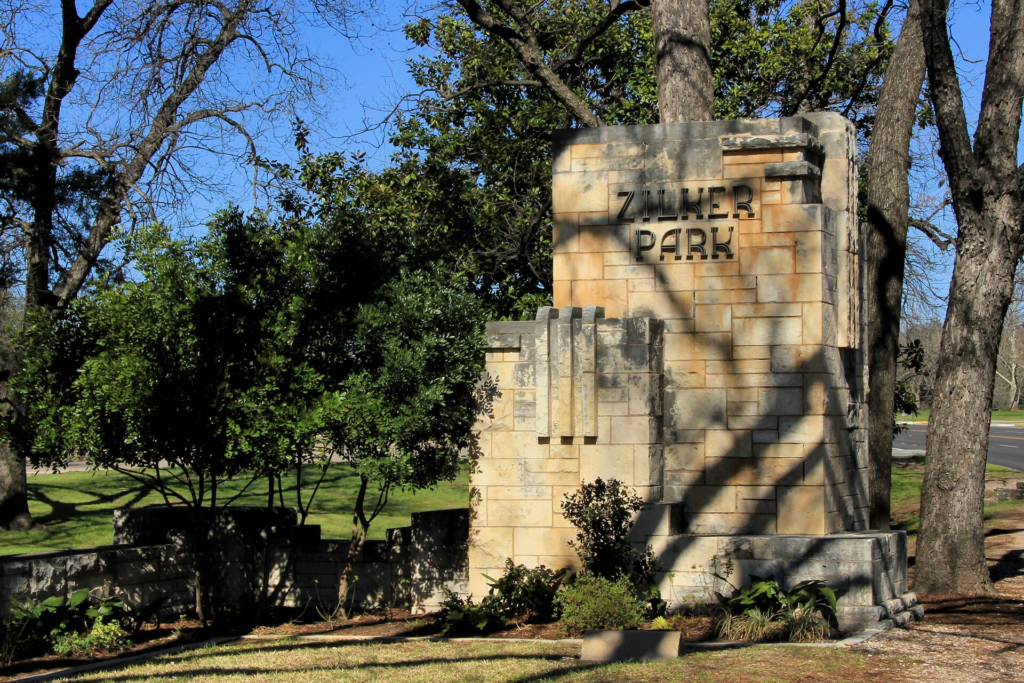
Zilker park entrance

Zilker Park Entrance Portal, Austin. Source: Wikimedia Commons

Inspired by the SOS story, since 2019, I have been conducting oral history interviews with its participants, focusing on the period up to and including the 1990 hearing, the 1992 SOS Ordinance, and the years immediately afterwards. To date, I have completed audio interviews with forty people, recording the voices of everyone from environmentalists and their opponents to journalists and entertainers. My interest in Barton Springs began when I moved to Austin from Houston in 1986. A longtime recreational swimmer, I was used to chlorinated, lane-lined pools, and the cool, emerald waters of this legendary natural resource were a revelation.

The project began when I was earning my master’s in public history at Texas State University and took a fieldwork-focused oral history class in the fall of 2018. Two things happened: I discovered that I enjoyed interviewing, and I ran into a friend and key player in SOS, Brigid Shea, at a holiday party. I began talking with her about SOS and how I’d followed it when I was a young professional, and I asked whether anyone had ever captured the voices of the participants. She responded with her trademark enthusiasm, saying, “You should do it!” 

This memory is important because it tells other stories about doing public history. Shea and I became friends through volunteering with the PTA at the high school our children attended. Tropes about PTA moms abound, but in this case, my relationship with Shea was key to my public history work because she was able to put me in touch with numerous SOS participants. As an oral history instructor at Texas State, I tell this story to my students to emphasize the importance of relationships in fostering historical inquiry. 

A second aspect of this story is also important. I didn’t know then that Karen Kocher, a documentarian and now-retired instructor in the Radio-Television-Film department at the University of Texas at Austin, had been doing important work for some time on this same topic through her online Living Springs series. Her work includes interviews with several of the same people I was interviewing, which I didn’t discover until I was a year into my project. A central question for me became how I could differentiate my work from hers in ways that would contribute to the scholarship on Barton Springs. Eventually, Karen and I met to discuss our projects, and we have since forged a professional relationship in which we’ve shared interview material and supported each other’s work. I’ve come to see that my work differs from hers through our intended audiences, our interview style, and the points at which our lists of interviewees do differ.

I conducted my first interview in August 2019 with activist Shudde Fath, who was 103 at the time. In the course of the interview, several names arose that coincided with names I’d encountered in my research, and I began developing an interview list and working my way through it as I was earning my master’s. Although I didn’t earn class credit for my research, my affiliation with Texas State was key in their agreeing to archive my interview material and allowing me to use their interview consent form, both of which gave my project the imprimatur I needed to establish trust with my interviewees.

Aerial view of Barton Springs

Aerial image of Barton Springs. Source: Wikimedia Commons

I examined the SOS Movement’s complexities through my master’s thesis, in which I focused on six interviews to discuss how SOS affected communities in Austin in varying ways. One of the most interesting discoveries involved the different ways that my interviewees defined “the environment.” Susana Almanza, who is Mexican American, stressed the importance of people, not just natural spaces and wildlife, within the environment.[1] Jeff Travillion, who is African American, touched on the role of the sustainable food community within discussions about the environment, further expanding the parameters of environmentalism.[2]

A controversial topic that my interviews uncovered was whether the SOS Ordinance spurred gentrification in East Austin, which historically has been home to Austin’s Mexican American and African American communities. The reasoning is that, because the ordinance restricted development over the watershed southwest of Austin, it has contributed to the supercharged development that has taken place in East Austin post-SOS. East Austin activist Daniel Llanes discussed this topic at length, the answer to which has yet to be fully resolved.[3]

My interviewees shared their strategies and motivations for supporting SOS. Shea spoke for many in her description of the all-night hearing as an inspiring “popular uprising.”[4] Llanes described connecting members of the activist group PODER (People Organized in Defense of Earth and Her Resources) with SOS leadership such that PODER supported SOS in exchange for assistance lobbying to rid East Austin of hazardous “tank farms” where several major oil companies stored fuel.[5] Shea’s husband, John Umphress, recalled the simple act of circulating pickle jars at live music venues to raise money for the cause.[6]

Kid jumping into the water at Barton Springs

Kids enjoying Barton Springs. Source: Wikimedia Commons

Building upon my findings, I have showcased my research at conferences put on by the American Society for Environmental History and the Texas Oral History Association, and I plan to continue writing about it, incorporating the voices of all of my interviewees to flesh out the SOS story fully. The project is not yet live on the Internet, but at some point, I’d like to create a website to provide public access to the interviews. In the meantime, scholars wishing to access the materials can contact Texas State University Archives or me.

A typical workday on my SOS project involves going through my project planning documents and following up on interviews. I prioritize interviewees based on role in SOS, age, recommendations from others, or the simple fact that I’ve finally stumbled across their contact information after years of having them in my sights. Then I do outreach and finalize the interview, with a typical interview lasting about an hour and a half. The most labor-intensive part of my work is transcription, both the initial pass and the process of having my interviewees review their transcriptions. 

Doing this work outside of an academic setting has posed several challenges and opportunities. The first challenge is that I do all of the work on my own time; given the substantial commitment required to conduct and transcribe the interviews, the pace can be slow, evidenced by the fact that I don’t have a dedicated website for the material. This bothers me because I feel an obligation to my interviewees to make their interviews widely accessible. In addition, I bear all the costs of my research, including the software subscription, transcription services I used for my early interviews, my audio recorder, and logistical expenses such as gas and parking. These factors place the option of doing audio-visual interviews that much more out of reach. That said, I have complete independence in choosing my interviewees, managing my schedule, and drafting interview questions, and this freedom has contributed to my confidence and creativity as an oral historian.

Kids holding sign that reads: It's our future! Save the world!

Environmental protest. Source: Wikimedia Commons

The pandemic also posed unique challenges and opportunities. I discovered that people had newfound flexibility in their schedules, and I was able to schedule interviews that had eluded me prior to the pandemic. I learned that online interviews can yield meaningful material despite the fact that they lack some of the personal rapport of in-person interviews. Platforms like Zoom also create recordings of meetings, so I had natural backup files to the recordings on my audio recorder, which I operated next to my laptop during interviews. Unfortunately, I didn’t appreciate the fact that my laptop speakers were blown during several online interviews, and those recordings, while yielding decent transcripts, suffer from poor audio quality. In addition, I had to learn to manage my dogs, ensuring that they were fed prior to interviews so that they wouldn’t interrupt me. I also held several interviews outdoors to allow for good airflow. One of these took place at a Starbucks along I-35; the sounds of interstate traffic, the umbrella over our table flapping in the wind, and a monster truck that parked next to us with an idling engine while the driver picked up his order are audible on the recording. 

The surprising insights that my narrators have shared with me more than compensate for these challenges, such as the revelation that environmentalists and the development community held “peace talks” in the post-SOS heyday in which they hired a shaman to mediate.[7] It has also been fascinating to capture the point of view of members of the development community, whose portrayal of developer Jim Bob Moffett reflects a more complex take on his personality than what I obtained in interviews with environmentalists.[8]

My project on SOS has been fulfilling in more ways than I ever imagined when I embarked upon it. My experience conducting this project contributed to my being tapped to teach oral history at Texas State, a role I’ve thoroughly enjoyed. I get to share my successes and mistakes with my students, so they gain confidence in their ability to do oral history. I’ve also become a better historian. By interviewing a range of people both inside and outside of the activist circles that drove the SOS campaign’s historic victories, I’ve come to appreciate both the value of Austin’s identity as a “green, keep-it-weird” city and the need to interrogate that identity in new ways. Finally, I’ve made countless friends, including interviewees, fellow scholars, and the professional transcriber who assisted with my early interviews. Little did I imagine during that first dip in Barton Springs in 1986 that one day I’d have the opportunity to explore its history in this way. What a gift it has been.


Mary Closmann Kahle holds a degree in history from Stanford University and an M.B.A. from the University of Texas at Austin. She earned a master’s in public history from Texas State University, where she focused on oral history and historic preservation and completed an internship with Preservation Austin. She is a history steward with the Texas Historical Association, and served on the board of Preservation Austin and as the chair of the Austin History Center Association’s oral history committee (2022-2024). 


[1] Susana Almanza, interview by author, Austin, TX, October 16, 2020, (Zoom).

[2] Jeff Travillion, interview by author, August 19, 2020, Austin, TX, (Zoom).

[3]  Daniel Llanes, interview by author, Austin, TX, October 12, 2022.

[4] Brigid Shea, interview by author, Austin, TX, August 23, 2019. 

[5] Llanes, interview by author. 

[6] John Umphress, interview by author, Austin, TX, August 23, 2019. 

[7] George Cofer, interview by author, Austin, TX, October 2, 2020, (Zoom)

[8] Beau Armstrong, interview by author, Austin, TX, December 10, 2019. 


The views and opinions expressed in this article or video are those of the individual author(s) or presenter(s) and do not necessarily reflect the policy or views of the editors at Not Even Past, the UT Department of History, the University of Texas at Austin, or the UT System Board of Regents. Not Even Past is an online public history magazine rather than a peer-reviewed academic journal. While we make efforts to ensure that factual information in articles was obtained from reliable sources, Not Even Past is not responsible for any errors or omissions.
15 Minute History – Climate and Environmental History in Context

Guests: Megan Raby, Associate Professor of History at the University of Texas at Austin & Erika Bsumek, Associate Professor of History at the University of Texas at Austin

Host: Alina Scott, PhD Student in the Department of History at the University of Texas at Austin

How do historians teach Environmental History in an age where stories of climate change and catastrophe fill the headlines? Megan Raby and Erika Bsumek, both History Professors and Environmental Historians discuss what drew them to the field, how they talk about environmental history with their students, and the 2021 Institute for Historical Studies Conference, “Climate in Context: Historical Precedents and the Unprecedented” (April 22-23). “Among many other questions, the conference will ask: Can history offer an alternative to visions of the future that appear to be determined by prevailing climate models, and help provide us with new ways of understanding human agency?”

Episode 131: Climate and Environmental History in Context
Continue Listening

Mentioned in today’s episode:

  • Institute for Historical Studies (https://liberalarts.utexas.edu/historicalstudies/)
  • “Annual Conference examines climate crisis through lens of historical scholarship, culminates year-long discussion on “Climate in Context” theme” (https://liberalarts.utexas.edu/historicalstudies/news/annual-conference-examines-climate-crisis-through-lens-of-historical-scholarship-culminates-year-long-discussion-on-climate-in-context-theme)
  • Radical Hope Syllabus (http://radicalhopesyllabus.com/)

IHS Talk: Debt: A Natural History

Debt is a human constant. The social implications of systems of credit and debt, however, are not; they can vary significantly over time and space. Traveling freely across the human past, this paper explores the paradoxical nature of the borrowing and lending and provides signposts for writing the natural history of debt.

Daniel Lord Smail is Frank B. Baird, Jr. Professor of History at Harvard University, where he works on the history and anthropology of Mediterranean societies between 1100 and 1600 and on deep human history. In medieval European history, his work has explored the social and cultural history of the cities of Mediterranean Europe, with a focus on Marseille in the later Middle Ages. He has covered subjects ranging from women and Jews to legal history and spatial imagination, which was the subject of his first book, Imaginary Cartographies: Possession and Identity in Late Medieval Marseille (Cornell University Press, 1999). His recently published book, Legal Plunder: Households and Debt Collection in Late Medieval Europe (Harvard University Press, 2016), approaches transformations in the material culture of the later Middle Ages using household inventories and inventories of debt recovery from Lucca and Marseille. Smail’s work in deep history and neurohistory has addressed some of the methodological and theoretical underpinnings of these approaches to the human past. His most recent article in this vein asks whether there is a history of the practice of compulsive hoarding. His books include The Consumption of Justice: Emotions, Publicity, and Legal Culture in Marseille, 1264-1423 (Cornell University Press, 2003); On Deep History and the Brain (University of California Press, 2008), and, with Andrew Shryock and others, Deep History: The Architecture of Past and Present (University of California Press, 2011).

Smail has received awards and fellowships from the National Endowment for the Humanities, the American Council of Learned Societies, the Guggenheim Foundation, the Radcliffe Institute for Advanced Study, and the Institute for Advanced Studies in Princeton, and his publications have received several prizes. In 2007, he received the Joseph R. Levenson Memorial Teaching Prize from the undergraduates of Harvard University, and, in 2014, the Everett Mendelsohn Excellence in Mentoring Award from the Graduate School of Arts and Sciences.

“Reclaiming the Pre-Modern Past” is an IHS lecture series that examines how new technologies and approaches are enriching our understanding of pre-modern eras and cultures

Other IHS Talks:

Climate and Soil: The Environmental History of the Maya
The Influenza Pandemic of 1918-1919


The views and opinions expressed in this article or video are those of the individual author(s) or presenter(s) and do not necessarily reflect the policy or views of the editors at Not Even Past, the UT Department of History, the University of Texas at Austin, or the UT System Board of Regents. Not Even Past is an online public history magazine rather than a peer-reviewed academic journal. While we make efforts to ensure that factual information in articles was obtained from reliable sources, Not Even Past is not responsible for any errors or omissions.
IHS Panel: The Influenza Pandemic of 1918-1919: 100 Years Later

The influenza pandemic of 1918-1919 was one of the deadliest natural disasters in history, causing the death of 50 to 100 million people worldwide. This panel will be a wide-ranging discussion of the 1918-1919 outbreak and subsequent episodes from a historical, sociological, and medical perspective.

Featuring:

“Improved Approaches to Combat a Future Pandemic”
Robert Krug
Professor Emeritus, Molecular Biosciences
University of Texas at Austin

“The Flu in Texas”
Abena Osseo-Asare
Associate Professor of History
University of Texas at Austin

“One Hundred Years Later: Unknowns of the 1918 Flu Epidemic”
Sahotra Sarkar
Professor of Philosophy, and Integrative Biology
University of Texas at Austin

Miriam Bodian, moderator
Professor of History, and
Director, Institute for Historical Studies
University of Texas at Austin

Climate and Soil: The Environmental History of the Maya
Revolutionizing the Way We Fight Disease 


The views and opinions expressed in this article or video are those of the individual author(s) or presenter(s) and do not necessarily reflect the policy or views of the editors at Not Even Past, the UT Department of History, the University of Texas at Austin, or the UT System Board of Regents. Not Even Past is an online public history magazine rather than a peer-reviewed academic journal. While we make efforts to ensure that factual information in articles was obtained from reliable sources, Not Even Past is not responsible for any errors or omissions.
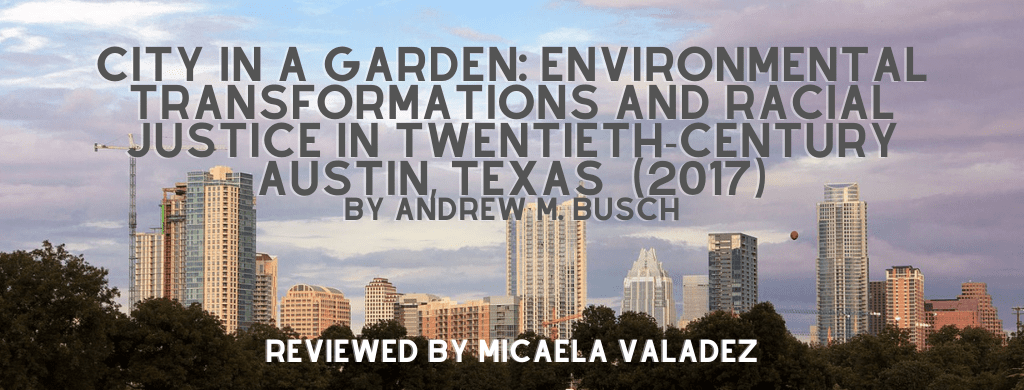
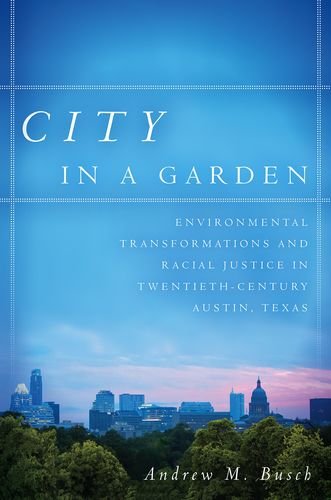
City in a Garden: Environmental Transformations and Racial Justice in Twentieth-Century Austin, Texas by Andrew M. Busch (2017)

Austin is a global city, home to some of the most technologically advanced and successful corporations in the world as well as a renowned university system that provides highly trained and educated employees to those same top companies. All the while, Austin’s constant obsession with building a sustainable and environmentally friendly city contributes to the growth of a largely white upper-middle class demographic who can afford living in proximity to Austin’s finest and natural recreational spaces. A look at Austin’s past reveals a pattern of racial discrimination as the city constantly places the needs of white residents, boosters, developers, and investors above those of Black and Latino residents.

the book's front cover

Andrew M. Busch’s new book, City in a Garden traces one hundred years of Austin’s urban, environmental, political, and social history. Busch explains that Austin’s investment in big business and innovative environmental development projects was and still is an investment in the social construction of whiteness that has paid off beautifully for upper-middle class white people. Busch argues that no matter how sustainable Austin is, or remains, there is a troubling “shadow” constantly growing behind the “garden” that combines the urban and the natural. The shadow is a century of racial discrimination in the form of federal, state, and local urban development policies that built an environmentally sustainable and desirable playground for white upper-middle class people.  Simultaneously these policies and city planning projects kept Black and Latinx people out of any real decision making processes, leaving them with the least desirable spaces in the city, spaces that remain underfunded and subject their residents to constant threat of removal and displacement.

Busch’s main purpose is to expose the complexities that arise when space is racialized through the process of urbanization. He foregrounds Austin as an exceptional case that further complicates the relationships between city leaders and developers, environmentalists, and the Black and Latinx communities as they all make claims for their ideas of how Austin’s space should be utilized. Furthermore, Busch suggests that the “history of human-environment interaction in Austin has revolved around managing water as well as enhancing access to and preserving unique environmental characteristics that have high use and exchange value” (14). This is apparent from the beginning of Austin’s city planning history.

From the late 1890s to the 1930s, city leaders focused on subduing the water system in and around Austin and successfully dammed the Colorado River. The project signified the capability of harnessing nature to provide residents, farmers, and especially companies with cheap power and flood control. In the 1930s, as the population grew, and new land became available to build on and to accommodate new types of labor, suburbanization and the Federal Housing Association (FHA) continued to place white communities’ needs above all others. While the FHA demarcated Black and Latinx spaces as “dilapidated” and ripe for redevelopment, the Home Owners Loan Corporation made sure that white neighborhoods remained white through restrictive covenants and other illegal methods that kept most people of color in south and east Austin. By the 1950s, rampant deindustrialization in Austin made working-class industrial jobs harder to get in the city. The process of ridding Austin’s inner city of heavy industry incentivized middle and upper-class labor and the companies that would employ them with new recreational spaces, the convenience of suburban life, and tax breaks for oil and high-tech companies. For Black and Latinx communities, the removal and redevelopment projects that resulted from mid-century urban renewal  only served to exacerbate racial segregation as new housing was built on the east side of Austin.

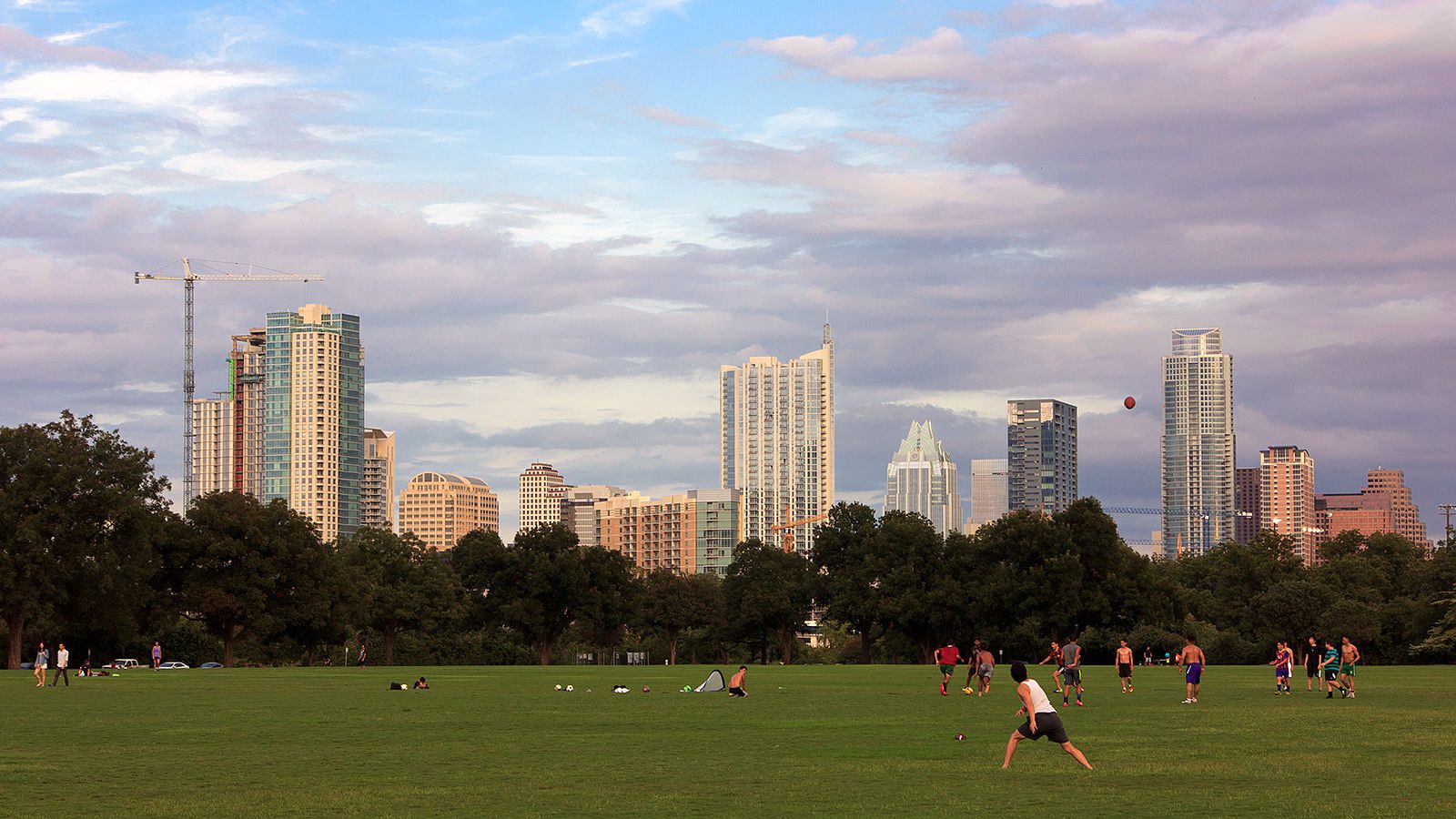
Downtown from Austin's Famous Zilker Park
Downtown from Austin’s Famous Zilker Park. Source: Wikimedia.

As the book enters the 1960s, Busch strengthens his argument. Austin’s environmentalists started to challenge urban and environmental projects that posed a threat to the natural environment and recreational spaces. The best example here is their fight to ban motorized vehicles from the west side of Town Lake while the east side had to contend with massive motorboat races that drew thousands of people throughout the year and posed a threat to Latinx communities. Destroying the east Town Lake community’s park to build a stadium for the races sparked the organization of people in the community as well as organizations active in the Chicano and Civil Rights Movements. After six years of protest, the city finally moved the boat races without the aid of white environmentalists who never considered the negative effects that their efforts had on Latinx communities. Overall, the 60s and 70s proved that liberalism fell short for marginalized communities and white environmentalists only considered natural spaces as an environment in need of protection from city development projects.

In the 1980s, Austin leaders began to aggressively diversify the local economy as defense, oil, and high-tech industries effectively sparked the process of globalization. The University of Texas was integral in this economic transformation and supplied these new industries with skilled labor and state-of-the-art research capabilities funded mostly by federal defense contracts. This massive shift caused the city’s white population to expand residential areas in the north and the west. While these residential areas began to threaten physical spaces that environmentalists considered pristine and worthy of protecting, Black and Latinx residents living to the east and south saw production facilities move in to their neighborhoods making life more hazardous.

In examining the 1990s, Busch focuses on the bifurcation of the environmental movement in the fight against aggressive private and federally funded urban expansion. Traditional white environmentalists took on the encroachment of private development in pristine and untouched natural space. For this group, unchecked development threatened the Edwards Aquifer, an essential source of water and important part of Austin’s ecosystem. East Austin environmentalists agreed that the aquifer needed protection but added that their communities needed just as much protection from both old and new environmental hazards facing Black and Latinx people.  For eastsiders, environmental injustice was a civil rights issue. They constructed “the environment as a hybrid landscape, one where natural and built reinforced one another and combined to undermine minorities health and access to jobs, education, and recreation…” (226). But, as Busch argues in the epilogue, eastside environmentalists lost to their white counterparts as the 2000s saw an increased development in east Austin because building east would not disturb any protected environments, eased the increasingly expensive housing crisis, and proved to be extremely profitable. Using the epilogue as a kind of policy proposal, Busch argues for a more equitable city planning and economic structure by way of creating jobs that do not just serve a certain sector of Austin’s growing population. He asserts that historical exclusion should be met with contemporary inclusion in every aspect and that gentrification poses an immediate threat to impoverished communities who are already being pressured to leave because of a lack of economic opportunity. Busch suggests that rent control, direct subsidies, and other mechanisms should be employed to create “a holistically livable environment” for all Austinites.

Busch’s book is important for students in a variety of disciplines, residents interested in city development and planning, city planners, housing and economic justice activists, as well as environmental activists. City in a Garden also leaves the history of Austin ripe for further research. In what ways did Black and Latinx residents challenge, participate, and/or survive the growing spatial disparities of their white counterparts? A research project on the historically Black Wheatsville community could provide some answers. What was life like in pre-WWII Austin for residents living in areas affected by environmental changes and hazards? An inquiry in to Mexican agricultural workers living in colonias around Austin might shed light on how changes in Austin’s economy – transitions from agricultural, to industrial, and in to oil and technology – affected where Latinos’ in Austin lived and worked over time. Readers interested in education might also be intrigued by the brief mentions of educational segregation and its lasting problems in Austin. With a hundred-year historical sweep the questions this book fosters seem endless, which is an excellent problem to have.

Overall, City in a Garden reveals a complicated past littered with good and bad decisions in hopes that people in the present and future might reckon with and correct the inequality literally built in to Austin’s city limits.

_________________________________________________________________________________________

The views and opinions expressed in this article or video are those of the individual author(s) or presenter(s) and do not necessarily reflect the policy or views of the editors at Not Even Past, the UT Department of History, the University of Texas at Austin, or the UT System Board of Regents. Not Even Past is an online public history magazine rather than a peer-reviewed academic journal. While we make efforts to ensure that factual information in articles was obtained from reliable sources, Not Even Past is not responsible for any errors or omissions.

You might also like:

Changes in the Land: Indians, Colonists, and Ecology of New England
The Environment on History and the History of Environment

Also by Micaela Valadez:

Dreaming with the Ancestors: Black Seminole Women in Texas and Mexico

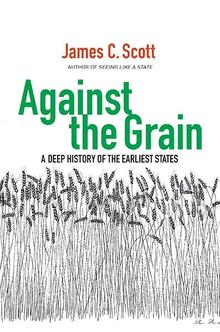
Against the Grain: A Deep History of the Earliest States by James C. Scott (2017)

By Steven Richter

Beginning with the title and continuing through the final pages, James C. Scott’s Against the Grain seeks to subvert the historical narrative of  inevitable progress toward civilization that has been dominant for millennia. Instead of framing agriculture as a driver of enlightened civilization, he conceives of it as a social and ecological building block that spawned early states that were more coercive than civil. Scott may not have launched the first attack of this kind, but his clear prose synthesizes evidence from a broad range of disciplines to craft a well-reasoned barrage of arguments, causing irreparable damage to a foundational element of western thought – that, since the first agricultural civilizations, the organized state has brought about enlightened and morally superior society.

Beginning from the perspective of a “thin” Anthropocene, a historical approach that emphasizes the ways in which human action has shaped the environment and landscapes, Scott emphasizes the richness of social-ecological relations before organized states appeared. The more traditional “thick” Anthropocene claims the environmental impact of modern industry has so thoroughly transformed the planet that it constitutes a new geological epoch. The “thin” perspective points out that that human activity, especially ecosystem niche creations through fire, so pervaded the landscape that it is difficult to think of ancient nature as separate from human influence.

Early settled communities built around the diverse and abundant sustenance activities along rivers and wetlands slowly domesticated plants and animals millennia before states first emerged. These novel arrangements, which Scott terms the “late Neolithic multi-species resettlement camps,” constituted the core of a long, slow transition. Contrasting with the more abrupt “Neolithic Revolution,” such a transition yielded not only plants with bigger seeds and more docile animals, but also dangerous new organisms that thrived in larger communities – diseases. Only through the combination of elevated birthrates and inherited immunity in settled communities could states eventually coagulate. But in many ways, these states represented, to borrow a phrase from Chief Seattle’s 1854 speech, “the end of living and the beginning of survival.”

Scott primarily defines states through the presence of tax collection, officials, and walls, with grain serving as the keystone to the political-economic system. Predictable, transportable, and calorie-dense, grain represented a surplus that could be monitored, collected, and, crucially, controlled. Put another way, grain was the perfect resource for taxation, allowing for the emergence of a ruling class. Despite the advantages yielded by such a surplus – a large, non-agricultural workforce – grain-derived civilization remained fragile. A single bad harvest could throw an early state into disarray, and even without catastrophic floods or drought, extractive agricultural and forestry practices often led to a slower demise. When combined with this ecological instability, the laborious nature of agrarian life made it so unappealing that early states likely built walls for restriction as much as for protection.

An Ancient Egyptian Statue of Grinding Grain (via Wikimedia)

Early states had to overcome tremendous social and ecological friction, so much that they typically were short lived. Only through the control and acquisition of its primary resource – people – could early states persist. The incorporation of human assets, whether by conquest of small neighboring communities or through slave trade, invigorated early states. Such a capricious system lacks robustness, and state failure could come from without or within. Such narratives of “collapse,” as it has often been framed, should be viewed critically. Scott argues what may appear to an archeologist as the catastrophic downfall of a monumental capitol may be more accurately, though not exclusively, thought of as disassembly into decentralized, independent communities. It is crucial to keep in mind that, perhaps as late as 1600, non-state peoples constituted the vast majority of global human population. States were “small alluvial archipelagos,” surrounded by hordes of ungoverned people who provided valuable trading and military allies, at least when they weren’t raiding and pillaging.

By incorporating innovative forms of evidence, Scott illuminates a critical perspective on the origins of modern states. He should have pointed out the difficulties of life outside states to create a more balanced narrative, but this omission takes little away from the central argument. Crucially, Scott compels the reader to be cognizant of the invisible or illegible, both historically and in our present lives. To make his argument, Scott relies on historical sources, such as dental analysis of ancient teeth, that prove just as informative as formal edicts or other, more visible historical sources. In a time with so much information, Against the Grain reminds us to be critical of whose story is told and why. For this reason, Scott’s work should have a place in courses focused on both the present and the future, not just the past. It suggests that students ask about the role coercion and bondage play in the twenty first century, or if our economy is built around appropriation or ecological wisdom. The reader, while learning about the distant past, cannot help but ponder what about our daily lives we take for granted and which narratives or stories should be elevated, and which should be relegated to the past.

bugburnt

Steven Richter is currently a PhD Student in the Community and Regional Planning program in the University of Texas School of Architecture whose focus is on sustainability, regional land use, and natural capital.

bugburnt

You May Also Like:

A Primer for Teaching Environmental History
Crimes Against Nature: Squatters, Poachers, Thieves, and the Hidden History of American Conservation
Banana Cultures: Agriculture, Consumption & Environmental Change in Honduras and the United States

bugburnt

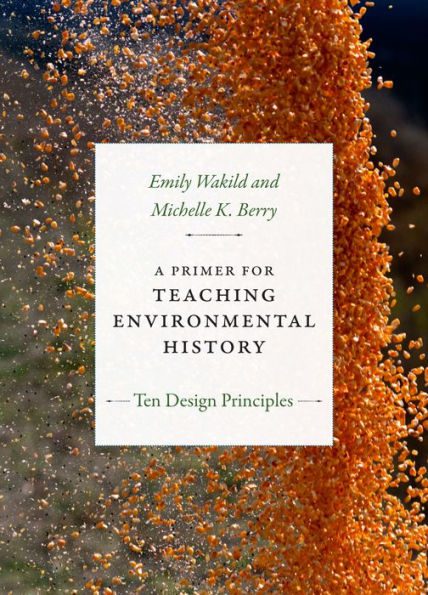
A Primer for Teaching Environmental History: Ten Design Principles. By Emily Wakild and Michelle K. Berry (2018)

by Bryan Sitzes

Environmental history is an approach that broadens our historical scope by acknowledging how the human and non-human worlds have interacted and shaped each other’s fates over time. Emily Wakild and Michelle K. Berry have produced a guide that teachers with diverse historical interests can apply in high school, undergraduate, or graduate classrooms. The authors envision teachers using A Primer for Teaching Environmental History in two ways: creating an entirely new course on environmental history or integrating environmental history into a more general history course. Despite their environmental focus, the disciplinary skills and pedagogical techniques they share are applicable in any history classroom. Whether you are looking to update your high school US history survey or conduct a graduate seminar on colonial histories of water, Wakild and Berry offer relevant advice on identifying course objectives, course structure preparation, communicating and engaging with students, developing disciplinary skills through activities and projects, assessment, and a great deal more. They pair these general concepts with examples from their own classrooms and suggest how other teachers might tweak the techniques to fit their own class.

A particular strength of Teaching Environmental History is that the authors repeatedly show teachers how to structure activities, units, and an entire course so that earlier lessons provide foundations for later, more complex ideas. The first tip in the book suggests asking students to think about their lunch – a tangible and personal object – and consider what processes were necessary for this sandwich or energy bar to arrive in their possession (farmers growing grains, rainfall watering agricultural fields, extracted oil powering global trade networks, etc.). Once students familiarize themselves with the various processes and relationships that make their lunch possible, Wakild and Berry show how teachers can historicize this concept by having students consider the history of bananas. Students listen to a 1922 song about a banana shortage in NYC and wonder, why was there a banana shortage? Students learn about globalization and teachers might choose to explore US foreign policy in Latin America, integrate economics by considering consumerism or labor, discuss the meanings of nature and natural, or begin interdisciplinary approaches by sharing papers on genetic engineering. A multitude of possibilities allow teachers to tailor the banana to the needs of their own classroom. Along the way, students learn to find sources, connect discrete information, and communicate what they found through writing assignments with topics they had a hand in choosing.

A Selection of Environmental History Books (see our article on teaching Environmental History)

The initial section on connecting students to environmental history also relates to a concept Wakild and Berry introduce at the end of their book: environmental justice and marginalized communities. Although teachers may want to avoid such a complex idea at the outset of the semester, the extremely visible effects of nature on contemporary society can also help students connect with course material. Wild fires in California, undrinkable water in Michigan, and hurricanes on the coasts are all issues students may already be familiar with. Teachers could use Elizabeth Rush’s Rising: Dispatches from the American Shore (2018) since she considers the effects of sea level rise and transmits the voices of affected coastal communities in California, Louisiana, Florida, and New York.

The second part of Teaching Environmental History shows how teachers can connect the various units in their course together through field excursions, human connections to space, and centering a semester around energy. Wakild and Berry consider the unique benefits and challenges of field trips, whether taking students to Latin America for a month, walking along a river that cuts through your local community, or creating assignments for distance-education students to go explore the outdoors in their areas. Students of today connect to spaces far beyond their local community through technology, and so helping students develop a sense of place can utilize the skills they already have. Teachers can pair Instagram or YouTube with diaries of travelers of the Oregon Trail or Indian Ocean to help students develop deeper feelings for places than if they only read a text.

Wakild and Berry end their primer by considering issues relevant to nearly every classroom: integrating technology and conducting assessments. Accordingly, approaches to incorporating environmental history take a backseat to discussions of general teaching philosophy in these chapters. Both technology and assessment actually appear throughout the book but receive extra attention in conclusion. The relative absence of environmental history discussions in the final chapters is a clue to the relevance of technology and assessment in all classrooms. They acknowledge the challenges these issues present while focusing on the immense benefits for students. Technology and assessments do not necessarily form pedagogical speed bumps or road blocks. With creativity, we can integrate institutional demands while continuing to imbue students with the skills necessary to critically reflect on the past and become well-informed global citizens. That is the primary objective Wakild and Berry want to help other teachers achieve.

In their epilogue, Wakild and Berry anticipate criticisms that their examples might skew too heavily toward modern histories and that too many “extra-disciplinary” approaches like environmental justice or natural science research risks diluting the requirements of a history course. I do not find either of these potential criticisms very problematic. Examples from the 19th, 20th, and 21st centuries help demonstrate the relevance of environment history to students unfamiliar with the discipline, and the techniques the authors share can be translated to use with earlier histories if some teachers desire. As for diluting the historical discipline of the class, environment history thrives best when traditional skills of historians are combined with other approaches. Interdisciplinarity also allows teachers to engage more of their students, since some will surely be more interested in literature or the natural sciences. Any environmental historian who intends to teach should read A Primer for Teaching Environmental History, and teachers of all kinds will probably find it useful in preparing for their next semester.

Underground Santiago: Sweet Waters Grown Salty

Underground Santiago: Sweet Waters Grown Salty

Preso en su lecho mi rio pasa, pero se acerca su libertad.
Sus aguas dulces ya son saladas; ya no eres rio, eres el mar.

A prisoner within its banks, my river rolls on, soon to find freedom.
Your sweet waters now have grown salty; you’re no river, now, you are the sea.

                                                       Charo Cofré

Colegio Andacollo was a K-through-12 parish school in old town Santiago.  The Holy Cross Fathers took it as their new mission when the military government kicked them out of Saint George’s, their traditional academy for the elite.  Andacollo was another world.

The original Andacollo was a mountain town in the north where Our Lady of Deep Rocky Mines granted solace and safety to her devoted followers.  Our Andacollo was on the corner of Mapocho and Cautín, in a barrio of old multifamily dwellings, cheap bordellos, and the local seafood market.  The place had a history of union struggle, fiery passion, and a profound commitment to the miracle-working Virgin of Andacollo.  It also had a secret tale of tragedy.

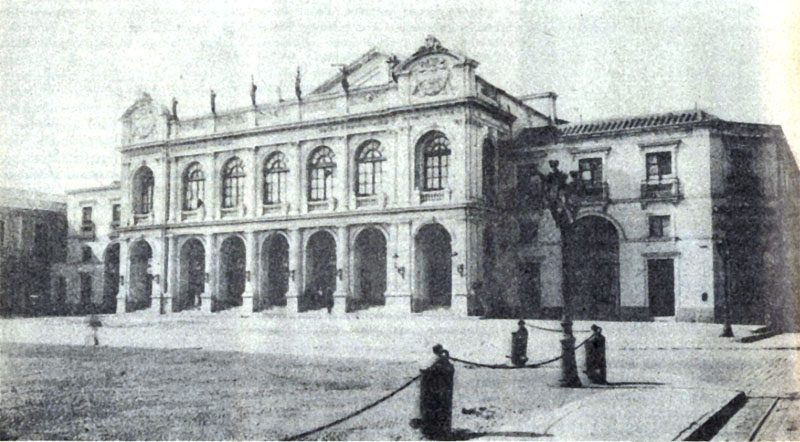
Teatro Municipal in Santiago, Chile
Teatro Municipal in Santiago, Chile (via wikimedia)

Old town Santiago sat atop an ancient network of canals.  Some were small but others were regular aqueducts, lined with stone and brick.  Built for irrigation, they carried quantities of water from Canal San Carlos to the Mapocho River. Before there was pavement.  When Matucana and Avenida Matta were still just vegetable gardens and chicken coops.  Back when every home had tomatoes, basil, and cilantro growing out back.

The central region of Chile is still crisscrossed with canals that were built by a dozen Jesuit missionaries and several thousand local Indians. The intention was to strengthen the native communities against European invasion. Taking advantage of the melting snowpack in the mountains, they transformed a semi-arid wasteland into the now-famous fertile green valleys.

The effect on the indigenous population was the opposite of what had been intended.  In 1550, the conquistadors said that Nueva Extramadura was too poor and not worth the trouble.  By 1750, they had changed their conquering minds. Irrigated and green, the Spanish liked it.  So, they threw out the Indians and the Jesuits, and they set up their haciendas.

One hundred and fifty-three “nice families” colonized with all the rapacious vigor of their prestigious lineages.  They were Spaniards, Basques, and some French.  They brought their cattle and their vineyards.  They brought their illusions of noble breeding and Chile criollo was born.

Their descendants became the barrio alto, the GCU, as they say, Gente Como Uno, (People Like Us), a code that only legitimate members of their tightly-closed circle were supposed to recognize.  It wasn’t about money, comrade, though the GCU did tend to be rich.  It wasn’t about land, either, though they controlled most of it.  The GCU sustained an Old World fantasy of hereditary aristocracy.  They really believed it, and they insisted on marrying their children to each other.  A rich man without a pedigree was called, roto con plata, more or less, a bum with lots of cash.  If he had not descended from the legendary hundred families (who were, in reality, one hundred and fifty-three), he was and always would be an outsider.

The canals in the central valleys are still functional.  They are the reason why there is Chilean wine and fruit at Whole Foods.  Building a canal is no joke.  It has to always go downhill so that the water flows forward and never backs up.  In 1600, that was an engineering masterpiece.

As the population grew in old town Santiago, the canals lost their reason for being.  Family gardens became parking lots and chicken coops became bus stops. They are mostly dry today, an underground labyrinth for which there is no known map.  Only the rats know their way around.

But, until the late ‘60’s and early ‘70’s, the water continued to flow, and there was access at strategic places.  Neighbors would draw a bucket or two to water a shade tree, or to dampen the streets and vacant lots in the summer.  That kept the dust down as boys upheld an important tradition, the continuous game of pick-up soccer, la pichanga.  No shirts, no shoes, no score, house rules.  Everyone played until it was too dark to see your hand in front of your face.  As the brown water flowed constantly down into the rocky Mapocho.

Flowing water was an urban temptation.  Children learned early in life to toss all their trash into the open mouths of Santiago’s filthy underside.  The subterranean monster swallowed everything, without complaining.  What’s more, most homes still had no indoor plumbing.  The canal was where people dumped their chamber pots.  Anyone who drew a bucketful had to watch out for floaters from upstream.  That was emblematic of the ongoing relationship between the barrio alto and los de abajo, the people down below.   It just seemed natural that those in high places would dump their refuse on those who were geographically and socially below them.  That was also the reason why typhoid and hepatitis were so common, down there.

La Iglesia de Andacollo (the church of Andacollo)
La Iglesia de Andacollo (the church of Andacollo) (via wikipedia)

There was an opening in the schoolyard at Andacollo.  It was about two feet wide and three feet long, rimmed with discarded railroad ties.  The canal water rushed by about a foot below the ground level.  Like everywhere else, at Andacollo, the canal water was used to keep the dust down and get rid of the trash.  There was a big willow tree in the middle of the schoolyard that provided shade on hot afternoons.  The groundskeeper would make a trench around it with his trowel, and fill it with water from the canal, using his big iron bucket.

The school was all boys back then, and la pichanga never stopped.  One day, the ball bounced close to the opening.  As tradition demanded, the boy closest ran backwards with reckless abandon, to make the save.  It’s a passion, comrade.  When the ball was in play, nothing else mattered.  He fell into the canal and disappeared.

The foul waters dragged him through their labyrinth.  No rescue was possible; nothing anyone could do.  They found him the next day in the Mapocho River.  His clothes had been ripped off.  His body was twisted and broken, but he was recognizable.  He had been dragged through hell in an unexpected, surprising, and unavoidable way.  I don’t know his name.

Back then, it never occurred to anyone to cover a hole in a schoolyard because someone might fall in.  They told the boys to be careful.  That was part of their education.  They had to learn that any one of them could drop into the abyss at any moment.

That awful day, the dead boy’s classmates learned that destiny could betray you; that there were tragic, violent accidents; that the lives of poor boys didn’t really matter; that in five seconds, it could all be over and done with; that they, too, could disappear and be forgotten.  That day, the boys learned that you have to be clever to survive in a cruel world.

Nowadays, we cover holes like that.  We deceive our children with the illusion that the world is safe and trustworthy.  That has never been true, but if you are under thirty, you were probably brought up to believe it and expect it.

The fickle nature of fate is the elephant in our proverbial living room.  Everyone pretends it isn’t there.  And the willow tree, silent witness to everything, grows tall.

The national anthem says that Chile is the copia feliz del Edén.  That means a happy copy of paradise.  But it’s just a copy, not the real thing.  And Eden was a tricky place, comrade. You do remember what happened there?


You May Also Enjoy:

Partners in Conflict: The Politics of Gender, Sexuality, and Labor in the Chilean Agrarian Reform, 1950-1973, by Heidi Tinsman

Civil War and Early Life: Snapshots of Early War in Guatemala by Vasken Markarian

The Public Archive: María Luisa Puga and the 1985 Mexico City Earthquake

Millions of tweets and millions of state documents. Intimate oral histories and international radio addresses. Ancient pottery and yesterday’s memes. Historians have access to this immense store of online material for doing research, but what else can we do with it? In Spring 2018, graduate students in the Public and Digital History Seminar at UT Austin experimented with ways to make interesting archival materials available and useful to the public; to anyone with access to a computer. Over the Summer, Not Even Past will feature each of these individual projects.

On September 19, 1985, a devastating 8.0 magnitude earthquake struck Mexico City. María Luisa Puga (1944-2004), a talented Mexican novelist from the Post-Boom movement, documented the events and the aftermath in her journal. On After the Silence: María Luisa Puga and the 1985 Mexico City Earthquake, Ashley Garcia has brought Puga’s compelling first-hand account to life, including addenda that Puga later made to the text, as well as newspaper clippings and drawings found among its pages.

More on Garcia’s project and The Public Archive here.

You may also like:

History Museums: Museo Nacionál de Antropología, Mexico by Robert Wilks
Andrew Weiss reviews Plaza of Sacrifices: Gender, Power, and Terror in 1968 Mexico by Elaine Carey (2005)
Notes from the Field: Northeast Japan after the Tsunami by David Conrad

Death, Danger, and Identity at 12,000 Feet

by Jesse Ritner

On February 1, 1894, Frank Cook stumbled down from the Elk Mountain range, passed through the frozen town of Ashcroft, and trudging through the deep Colorado snow arrived in Aspen, Colorado.  His mining partner, Mr. Spake, was dead.

Mining accidents were common in late nineteenth-century Colorado.  Mr. Cook, likely weary and cold from his arduous trip, reported that he “entered the tunnel and found his partner with his head blown off and his body terribly mangled.  A steel priming rod had passed clear through the body.”[1] Memory of his partner’s death may have intensified as Cook descended from the frigid elevations.  Or the reporter of the Aspen Daily Times might have allowed his imagination to run wild.  Unfortunately, the truth of the incident was not forthcoming.  February in the Roaring Fork Valley is snowy.  The citizens of Aspen waited anxiously for further information to arrive.

I, on the other hand, benefited from immediate access to Colorado Historical Newspapers. Spake was not killed by dynamite.

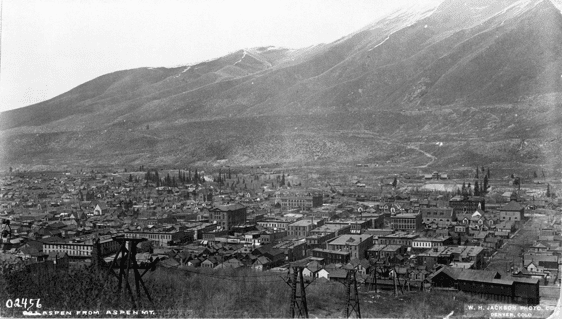
The town of Aspen from Aspen Mountain, taken between 1890 and 1893

Frank Cook likely arrived in the back range of the Rocky Mountains by 1889. However, due to his exceedingly common name (as the archivist in Aspen commented he may as well be named John Smith), he is difficult to trace.  Nevertheless, he periodically reappears in the Aspen papers. Notably, despite his Anglophone name, Frank Cook was known as a Frenchman.[2]  (Or at least as French Canadian.) As such, he was a notable presence in the bustling and growing town populated by approximately 8,000 people.

The Times reported on February 21 that Cook was still lingering about in Aspen.  The authorities, having sent word to Gunnison that a coroner was needed, waited almost three weeks for Mr. Spark to arrive.  (Even today, a February trip from Gunnison to Aspen is often treacherous.)  On February 18, shortly after the coroner’s arrival, Cook, Sparks and a few others “formed a team to go over the range to the Big Four properties, having in view an official investigation of [Spake’s] death.”  The team never made it.

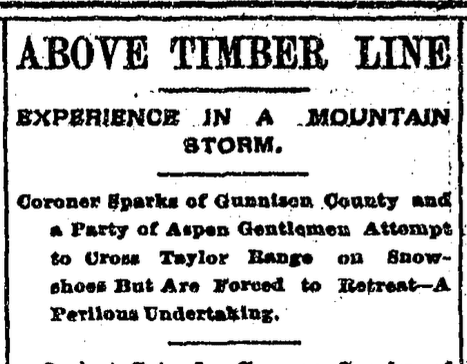
The Aspen Daily Times article is gripping.  The accent to the Elk Range was “extremely arduous.”  The roads had “drifted full” forcing the party to “shovel snow a great part of the distance.”  At Ashcroft the spirited men decided to “brave the dangers of the Taylor range on Norwegian snowshoes.”  Despite the grind of their trip to Ashcroft, disaster did not strike until they reached the top of the range.  There, at 12,000 feet, they encountered a dangerous storm. The papers reported that “the wind whistled and shrieked about the ragged peaks; it howled and groaned as it piled up snow… in the solitude and loneliness of these bleak and cheerless crags, the situation was enough to strike terror to the bravest of hearts.”  The party, facing almost certain “destruction” if they continued turned around and skied back to Ashcroft.[3]  A team from Gunnison, frustrated by the failures of Aspen, took up the search. It was only then that The Times reported, “Cook’s story of the death of Spake [was] not borne out by the surroundings in the tunnel.”  A warrant was released for his arrest.  But, Mr. Cook had already fled town.

Headline from The Aspen Daily Times (via Colorado Historical Newspapers)

The papers were mystified that Cook made “no attempt to conceal himself.”  He had “deported himself generally as one entirely unconscious that suspicion of complicity in the affair could rest upon him.”[4]  He not only took part in early attempts to recover the body, but he even let Mr. Bowman, owner and amateur curator of the Bowman Saloon and Musee, take his picture before he left town.  In the end, he was found on the streets of Denver, where two sheriffs arrested him, and shipped him by train to Gunnison to stand trial.[5]

The story above is a perfect western.  A dark man of dubious identity, out in the wilderness, far removed from civilization commits the ultimate crime.  White men in cowboy hats ride horses, mountaineer, and ski to solve the case.  They test their strength.  Conquer nature.  And in the end – after death, danger, and a dramatized standoff in the streets of Denver – the criminal is captured and faces justice.   The dramatized story of manifest destiny is pushed to its limit, testing the resilience of American character against the chaos and violence of the still nebulous West, and in the end the violence redeems itself through the court system.  I won’t lie.  The thrill of the western drew me in.  And there is perhaps no genre as titillating as frontier newspapers recounting in detail the crimes of their days.  However, this story also reveals the limits of cinematic depictions of the American west.

Cook was born in upstate New York, on the St. Regis Indian Reservation.  His mother was an Irish immigrant to Canada.  His father was a “near full-blood St. Regis Indian.”  Back home he was known as Frank Boots – his father adopted the last name due to the “fine boots with red tops” that he often wore, and which stood in opposition to the moccasins most Mohawks preferred.[6]

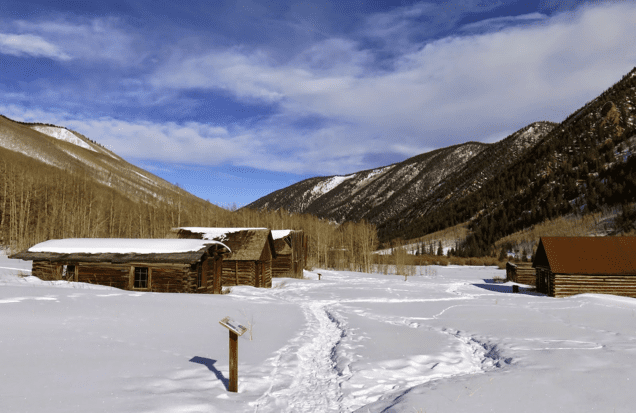
The remains of the once bustling mining town of Ashcroft

Historians, artists, and politicians have long discussed the tragedy of the “vanishing Indian.”  Convinced that Indians continued to exist exclusively on reservations, if at all, Indigenous people have been written out of both the historical and cultural memory of our country.  Only recently have historians – Phillip Deloria (Standing Rock Sioux) and Jean O’Brein (White Earth Anishinaabe) are but two examples – begun challenging this myth. Cook is further proof of the ways Indians have been written out of history. Not only is he from New York, a state whose Indian history supposedly finished before the Civil War, but he counteracts narratives that whitewash western expansion.  The Indian Wars were over by this time, but the simple reality of Cook’s presence demonstrates that Natives still inhabited the mine filled mountainous landscapes of the Rocky Mountains.

His story demonstrates the finicky nature of identity.  His father was “near full-blood,” his mother was Irish, and Frank, as a result, would have been “half-blooded.”  This qualitative measuring of Indianness by local newspapers suggests the importance of biological and hereditary constructions of race during the time period.  Yet, Cook’s own narrative, presenting himself as a Frenchman, shows how even in legally racialized societies, mobility could loosen the holds of identity on individuals, but Cook’s decision to pass as French does not take away his Indigenous heritage.

For many, Frank Cook’s story may not be an obvious Indian story.  He lived off a reservation.  He spoke English and French.  And by the language of the day he was “half-blooded.”  But too often we fall victim to nineteenth-century theories that argue when such people fail to fit within our pigeonholes, they were inauthentic.  It is precisely this thought process that erases Indigenous people from our histories.  Cook’s story shows that Indians continued to be part of the history of the Rocky Mountains.

[1] 2/1/1894
[2] 4/7/1894
[3] 2/21/1894
[4] 3/3/1894
[5] 3/9/1894
[6] 4/7/1894

Also by Jesse Ritner on Not Even Past:

The Curious History of Lincoln’s Birth Cabin
Paying for Peace: Reflections on “Lasting Peace” Monument
What Makes a Good History Blog?

You may also like:

US Survey Course: The American West, Native Americans, and Environmental History
The Tiger by Nathan Stone
Dorothy Parker loved the Funnies by David Ochsner

Next Page »

Recent Posts

  • Historia, ¿para quién? desde la radio pública en México
  • History—For Whom? From The Public Radio in Mexico
  • Beyond the Waters: Oral History and the Save Our Springs Movement of Late-Twentieth-Century Austin
  • Review of Brown Skins, White Coats: Race Science in India, 1920-66 (2022)
  • Las cosas tienen vida:  Un podcast sobre el rol de los objetos coloniales en nuestras vidas actuales 
NOT EVEN PAST is produced by

The Department of History

The University of Texas at Austin

We are supported by the College of Liberal Arts
And our Readers

Donate
Contact

All content © 2010-present NOT EVEN PAST and the authors, unless otherwise noted

Sign up to receive our MONTHLY NEWSLETTER

  • Features
  • Reviews
  • Teaching
  • Watch & Listen
  • About