• New
  • Features
  • Reviews
  • Texas
  • Teaching
  • Digital
  • Watch & Listen
  • Authors
  • About

The past is never dead. It's not even past

Not Even Past

Boxing Shadows, by W.K. Stratton with Anissa “The Assassin” Zamarron (2009)

By Anne M. Martínez

In November 2005, Anissa “The Assassin” Zamarron entered the ring for one of her most important bouts: a chance to win the Women’s International Boxing Association junior flyweight title. At 35, fighting in her opponent’s hometown and having lost her last four fights, Anissa was considered the underdog. San Antonio’s Maribel Zurita, a decade Zamarron’s junior, had earned the title three months earlier and was overwhelmingly favored to retain it. After ten full rounds, as the fighters awaited the scoring result from the judges, Anissa took comfort in the belief that she had fought the best match of her career. In the eight months since her last fight, she had eaten better and trained harder than ever before, and her preparation paid off: her trainer, Richard Lord agreed. “You did a great job,” he repeated, as the ring announcer came to the microphone. Anissa didn’t know it at the time, but it was her last fight, and she won: WIBA junior flyweight world champion!
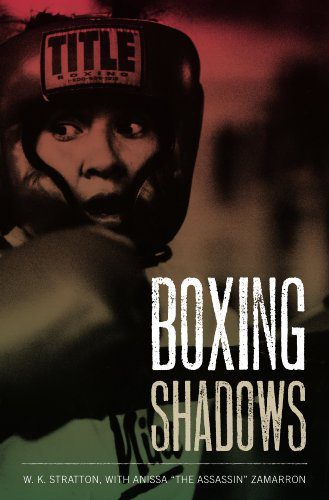
Movie poster of the movie Boxing Shadows

Boxing Shadows tells the story of Anissa Zamarron’s life in Central Texas, including her rise to two-time world champion boxer. To those unfamiliar with the sport, Boxing Shadows offers a primer on the training, traveling, and match-ups of the early years of professional women’s boxing. Zamarron fought in the first sanctioned women’s bout in New York State along with a number of international bouts before women’s boxing was much of a blip on the radar of most American sports fans.
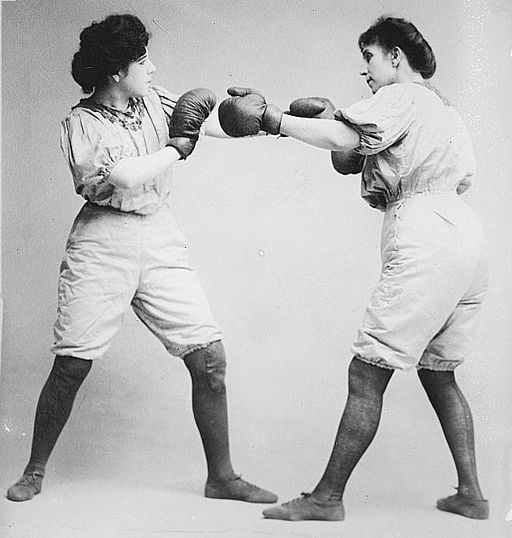
Black and white image of the Bennett sisters boxings, c. 1910

The Bennett sisters boxing, circa 1910.

But the book, co-written by Zamarron and sports writer Kip Stratton, is about much more. Boxing was not just a meal ticket for Zamarron, it was a life-saver. She was born in San Angelo, Texas, and her family moved to the Austin area when Anissa was seven. Shortly after, her parents separated and her family was divided. Her brothers — her heroes — lived with their father and Anissa went with their mother who, having married in her teens, relished a freedom she had never experienced before, to work full time, go to happy hour every night, and date. The loss of the structure of family life, the longing for the company of her brothers, and the rough and tumble apartment complex where she spent these formative years pushed Anissa further and further into darkness.

Image of Anissa "The Assassin" Zamarron in the midst of a boxing fight

Anissa “The Assassin” Zamarron (The Women’s Boxing Archive Network)

Anissa felt a strong self-loathing as early as second grade, began cutting herself in middle school, and was committed to a mental hospital for the first time in her early teens. She discovered boxing in 1993 at age 23. After years of therapy, self-mutilation, and struggle, boxing was an outlet for the demons that drove Zamarron to hurt herself. Boxing did not end her battles with herself, but gave Anissa ways to work through challenges in the gym, rather than in her mind. Zamarron is open about her struggles with learning disabilities, mental illness, and drug addiction. Her success in the ring offers inspiration for others struggling to overcome similar challenges to reach their goals.

Master-at-Arms Seaman Rhonda McGee, left, spars with Patricia Cuevas during an exhibition match in the preliminary rounds of the 2011 Armed Forces Boxing Championship

Master-at-Arms Seaman Rhonda McGee, left, spars with Patricia Cuevas during an exhibition match in the preliminary rounds of the 2011 Armed Forces Boxing Championship.

Boxing Shadows is devastating in its frankness, uplifting for its courage, and all the more impressive when one meets Anissa. In May of 2012, I visited Anissa at Richard Lord’s Boxing Gym in Austin, Texas to talk about Boxing Shadows. [You can see the video interview at the bottom of this page or on our Youtube channel here.] Zamarron is marked, more than scarred, by her past. She is surprisingly forgiving of those who disappointed her or otherwise contributed to the internal battles she fought as a child. After the interview, Anissa prepared to spar, and even then, nearly seven years after her last bout, in the ninety seconds it took Richard Lord to wrap her hands, the Anissa I had just interviewed was completely transformed. She forgot about the camera, disconnected from everybody in the gym, and began moving like a boxer — even standing still. Focused in a way I had not seen in the half dozen years I had known her, at that moment — “The Assassin” was back.

Video Credits:
Producer: Amanda E. Gray
Co-Producers: Therese T. Tran and Anne M. Martinez
Cinematographer: Therese T. Tran
Editor: Amanda E. Gray
Colorist/Online: Therese T. Tran
Transcriber: Lizeth Elizondo

Photo Credits:
All photos courtesy of Wikimedia Commons
Except the photo of Zamarron in the ring, which comes from the Women’s Boxing Archive Network

You may also enjoy:
More by Anne Martínez,
“Rethinking Borders”
More on women’s athletics: “Title IX: Empowerment Through Education”


The views and opinions expressed in this article or video are those of the individual author(s) or presenter(s) and do not necessarily reflect the policy or views of the editors at Not Even Past, the UT Department of History, the University of Texas at Austin, or the UT System Board of Regents. Not Even Past is an online public history magazine rather than a peer-reviewed academic journal. While we make efforts to ensure that factual information in articles was obtained from reliable sources, Not Even Past is not responsible for any errors or omissions.
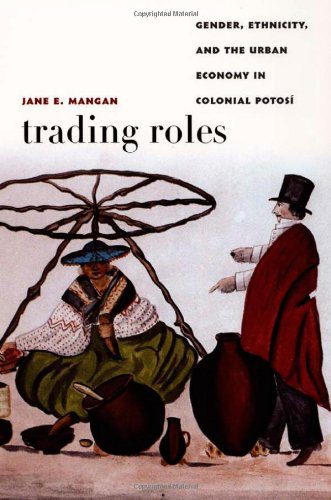
Trading Roles: Gender, Ethnicity, and the Urban Economy in Colonial Potosí by Jane Mangan (2005)

by Zachary Carmichael

In only a few decades during the seventeenth century, the Spanish American colonial city of Potosí, in modern-day Bolivia, grew from a small settlement to a metropolis of almost 200,000.image With twice the total population of all of Britain’s North American colonies, Potosí became one of the largest cities in the Americas despite being at an elevation of over 13,000 feet. This expansion centered on the massive silver mines at the nearby Andean mountain of Potosí that fueled Spain’s imperial ambitions. How did the city’s infrastructure keep pace with this startling urban growth?
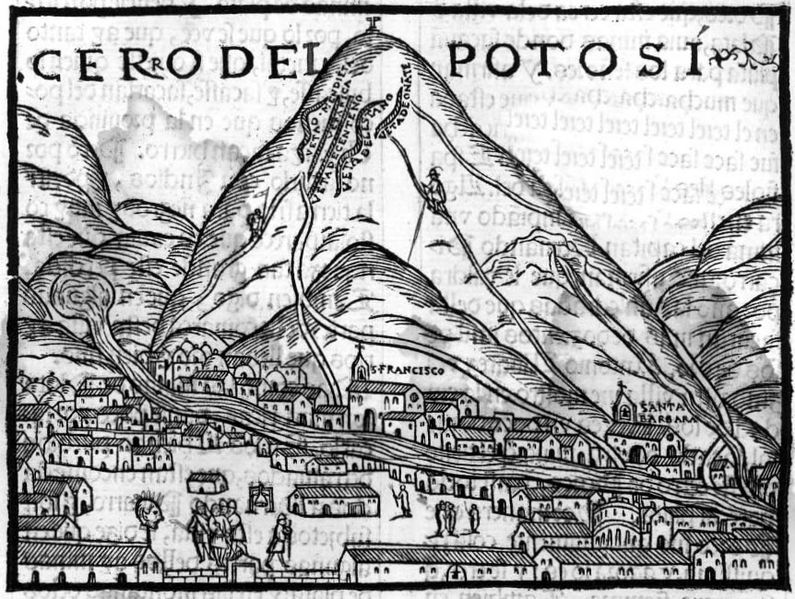
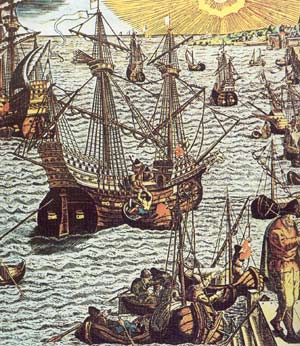
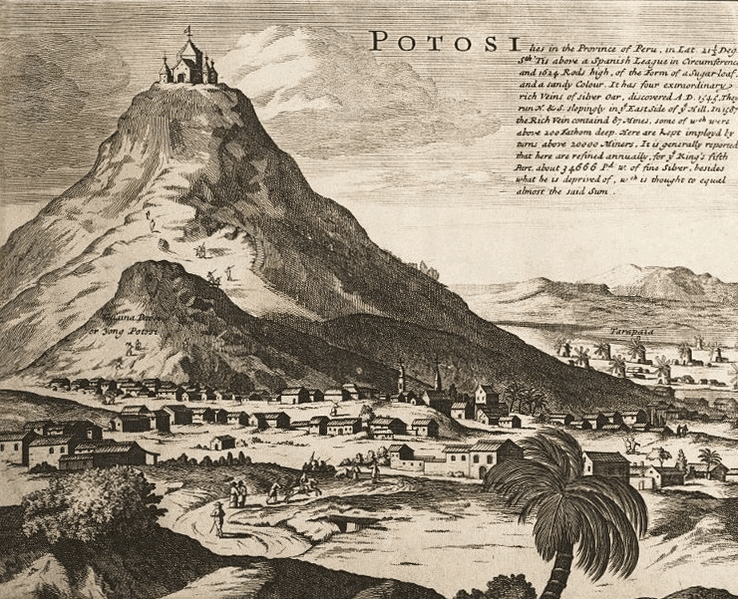
Jane Mangan’s Trading Roles focuses not on the Indian, African, or Spanish silver miners, but on the local urban economy, run by poor, mostly indigenous men and women, that kept the city functioning. She argues that Potosí, with its extremely active market, fostered a degree of social mobility that was unknown in the rest of the Americas and Europe. It was the indigenous population (whom Mangan intentionally calls Indians), particularly women who shaped the city’s economy. In their struggle against Spanish competition and the colonial bureaucracy, natives used urban entrepreneurship to power Potosí’s growth.

Trading Roles traces Potosí’s development from the middle of the sixteenth century, discussing the growth of an indigenous business market among natives who had left their communities for the silver capital. Leaders tried to regulate commercial space in the city to curb perceived excessive drinking among mine workers and to maintain social order. The commercial system created by unmarried Indian women was at the heart of the Potosí economy. Mangan uses several striking examples of their social mobility and entrepreneurship. Indian women were able to make a comfortable life for themselves by running bakeries and breweries and loaning money to customers. By the end of the seventeenth century, however, external economic forces caused Potosí to enter a period of irreversible decline. The end of the silver boom devastated the economy and cut the population in half, marking the end of this extraordinary social mobility.

image

The book is extremely well-researched, ably drawing upon the surprisingly large number of sources available about the city. Mangan draws upon notarial records from the old colonial mint in Potosí, minutes of city council meetings housed in Sucre, Bolivia, and imperial archives in Seville. Although records of business transactions between indigenous women and their customers are rare, Mangan compensates by finding contextual evidence of this economic activity. Her research demonstrates the crucial role of court and notarial records in recreating the lives of early modern non-elites.

                                                  image
The unique urban character of Potosí was exceptional in the seventeenth century, so it is difficult to apply Mangan’s arguments about social mobility to the rest of Spanish America and the wider early modern world. The discussion of the growth and decline of Potosí lacks the incisive analysis of the sections on Indian women entrepreneurs. Despite this, Trading Roles is an important contribution to the study of urban history and social mobility in colonial Spanish America. Mangan’s conclusions offer a counterpoint to prevailing theories about the economic role of the indigenous populations in the Americas and challenge conventional views about European control of colonial urban economies.

image

Photo credits:

All images courtesy of Wikimedia Commons

You may also like:

Zach Carmichael’s other reviews on Spain’s colonial posessions in Latin America:

Patrons, Partisans, and Palace Intrigues and Barbaros: Spaniards and their Savages in the Age of Enlightenment.

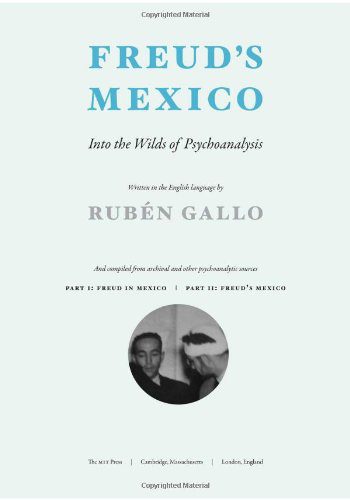
Freud’s Mexico: Into the Wilds of Psychoanalysis by Rubén Gallo (2010)

by Adrian Masters

In a posh neighborhood of Mexico City in August of 1940, former Soviet leader and Marxist intellectual Leon Trotsky was murdered with an ice-axe.image The perpetrator, a Spaniard named Ramón Mercader, confessed to the murder, but initially refused to discuss his motives (he was only later confirmed to be a Stalinist agent). To dissect the tight-lipped Mercader’s mindframe, criminologist Raúl Carrancá y Trujillo drew out his own ice-axe: Sigmund Freud‘s essays on psychology and criminal behavior. Mercader agreed to speak to Carrancá’s psychoanalysts and was bombarded with questions about his family, religion, politics, and his innermost self. Doctors traced Mercader’s murderous impulse to “a very active Oedipal complex” — the killer’s hatred for his father had been projected onto Trotsky. Mercader was given twenty years in a Mexican prison, and criminological psychoanalysis became a full-fledged practice in Mexico.
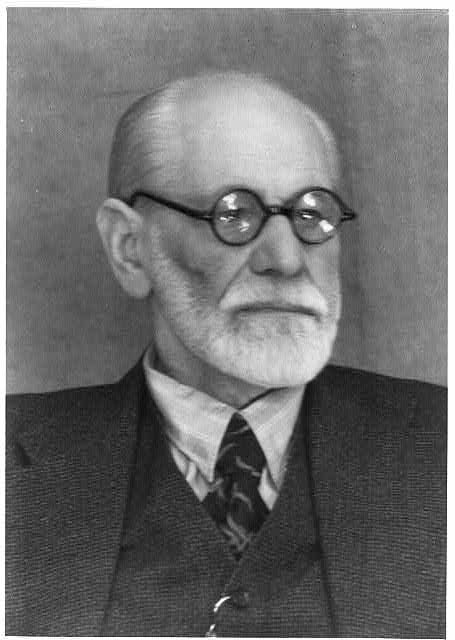
After authoring a number of books on Mexican culture and society, Rubén Gallo brings us the electric (and refreshingly jargon-free) Freud’s Mexico: Into the Wilds of Psychoanalysis. Dividing his work into two relatively independent segments, Gallo explores both Freud in Mexico and Freud’s Mexico. The first segment of Gallo’s work focuses on Mexican artists’ and intellectuals’ interpretations of Freud, and gallops through some truly unexpected expanses of Mexican cultural history. We are introduced to Sebastián Nova, a campy libertine poet and acolyte of Freud writing in the 1920s, whose very public fantasies included pornographic dreamlands populated with virile Mexico City cab drivers. While a character so ebullient as Nova would seem hard to top, Gallo’s research turns up an even more intriguing case:  a Benedictine monk in 1960s Cuernavaca named Gregorio Lemercier whose alleged affair with drugs, sex, and psychoanalysis scandalized both the Vatican and the Mexican popular press. We learn of Freud’s impact on Mexican nationalism in the writings of Samuel Ramos and the renowned poet Octavio Paz, and explore the inner worlds of surrealist painters Frida Kahlo and Remedios Varo. Gallo shows us how Freud’s writings were attractive to the particular inclinations of each of these figures, be they driven by sexual preference, the question of Mexican nationhood, cynicism towards ‘consumer society,’ a quest for God, or even by murderous international politics. In Freud in Mexico, Gallo’s writing is almost breathless, and unafraid to be funny, a true rarity in history writing!

image

Sigmund Freud (Image courtesy of the Library of Congress)

If the first segment of the book twists with the eclecticism of a dream sequence, the second segment feels somewhat like a therapist’s session. This is not to say that Freud’s Mexico is uninteresting; after all, what therapy session with Sigmund Freud could be boring? Yet the tone is slower, the verve dampened, the humor relatively muted. This is perhaps no fault of Gallo’s at all, for he is exploring a rather esoteric set of subjects: Freud’s relationship with the Spanish language, his scanty literature on Mexico, and the even more limited treatment Mexico receives in Freud’s works. Still, Freud’s Mexico digs up fresh insight on the European (and Viennese) idea of Mexico past and present and on the Austrian psychoanalyst’s strange relationship with a country he never set foot in. In the midst of these insights we follow, among others, the tragic invasion of Mexico by Austrian Emperor Maximilian, Freud’s rather odd childhood loves and friendships, and a mischievous ‘little Aztec god’ who haunts Europe named ‘Vitzlipuztli.’

                                               image

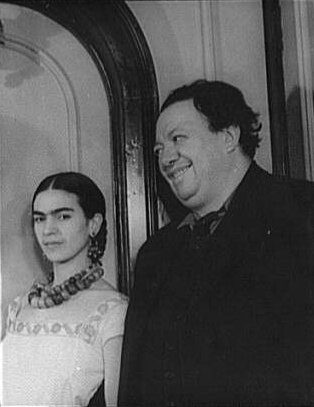
Frida Kahlo and Diego Rivera (Image courtesy of Wikimedia Commons)

Because records of Freud’s ideas of Mexico are so limited, it is often Gallo who places Freud on the therapist’s couch, teasing out the Austrian’s unspoken inner thoughts. Gallo is incisive and transparent about his own inferences, but his playful psychoanalysis of Freud left me wishing for a more in-depth disclosure of the author’s own views on his famous subject. Still, Gallo has offered a book that balances craft, humor, and insight into the under-explored field of Mexican psychoanalytical history. Funny, light-footed, and brisk, Gallo gives us a cultural history aimed at the reader’s pleasure principle. Only those stricken with an acute narcissistic cathexis of the ego could possibly turn Freud’s Mexico down.

You may also like:

Our review of Trotsky: Downfall of a Revolutionary, on Leon Trotsky’s final years in Mexico.

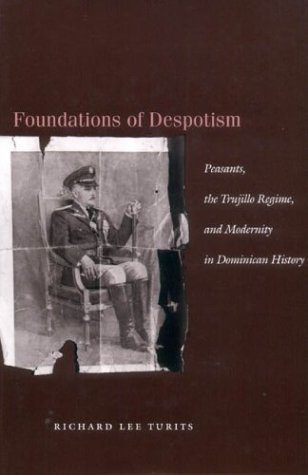
Foundations of Despotism: Peasants, the Trujillo Regime, and Modernity in Dominican History by Richard Lee Turits (2004)

by Brian Stauffer

For decades scholars of nineteenth- and twentieth-century Latin America had paid close attention to individual states and their relationship to national peasantries. This abiding interest stemmed from long-term academic investment in agrarian conflict and popular revolution in places like Mexico, Cuba, and Nicaragua.  If social science and history could convincingly describe the social forces that produced revolutions in those places, however, they lacked broader explanatory power, since much of Latin America had toiled under similar conditions of state oppression and capitalist exploitation without exploding into peasant revolution.  The years between the 1970s and the 1990s witnessed a gradual shift to comparative studies of the people who rebelled and those who did not.  Richard Lee Turits’ fine new monograph, Foundations of Despotism, which examines state-peasant relations in the Dominican Republic under Trujillo, belongs to this latter trend.

FOD_0In this extensively researched and cogently written work, Turits argues that the notoriously brutal Trujillo regime created lasting links with peasant communities in the rural hinterlands, which helped to solidify his thirty-year rule. Drawing on recent approaches to state-formation in Latin America that emphasize both political culture and contingency, Turits makes a compelling argument against the prevalent portrayals of the Trujillo regime as totalizing and “sultanistic.” Rather, Turits sees the Domincan state as improvisational, often internally incoherent, and legitimized largely through its symbolic and material investment in peasant land holding and independent farming.  The author demonstrates that Dominican peasants received tangible benefits from their loyalty to the Trujillo regime (most importantly access to land, but also infrastructure, health care, education, etc.), and that they also used the state’s paternalist discourse in order to press their claims. Viewed this way, the over-the-top personalism of the regime and the relative “quiescence” of the rural majority make more sense. Turits explains the gradual crumbling of the Trujillo government between 1950 and 1961 as a result of the dictator’s sudden turn away from paternalist peasantism toward state sugar capitalism, along with a loss of support from both the Catholic Church and the U.S. government.

Turits shows that the Trujillo regime established its legitimacy among peasants through broadly cultural means.  To do so, he lays out the longue durée history of the nation’s rural people, mainly descendants of enslaved Africans who carved out an independent, pastoral existence in the Dominican hinterlands after the colonial sugar economy went bust in the late-sixteenth century. The unique structural and environmental conditions in the Dominican Republic—which suffered from little agrarian pressure and was spared the horrors of large-scale plantation agriculture after the initial bust—worked to produce a mobile, independent, and pastoral peasant population which consistently thwarted Dominican elites’ attempts to form a modern nation-state.  Unlike his predecessors, though, Trujillo successfully integrated this troublesome element through a strategic mix of land distribution, authoritarian rule and state terror, and cultural politics. Carefully deployed carrots and sticks, then, turned pastoral nomads into sedentary, modernized peasant communities, which produced agricultural surpluses for sale on the world market. It should be noted, too, that Truijllo’s peasant-centered modernity required negotiations with both peasants and private landowners—foreign and domestic.  Turits’ explorations of these negotiations reveal a regime that pursued an ad-hoc, equivocating policy of support of the peasantry and often failed the latter when it was up against powerful U.S. sugar interests.

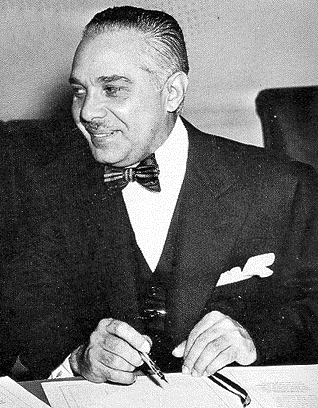
RTA young Raphael Trujillo (Image courtest of Wikimedia Commons)

Nevertheless, Turits’ shows that the Trujillo state created lasting, though ambivalent, bonds with rural people that served to preserve an especially undemocratic regime for three decades.  In many ways, this paradoxical support for a widely reviled and unquestionably ruthless dictator, which has lingered into contemporary memories of the trujillato, provided the impetus for the work in the first place.  Indeed, Turits utilizes oral histories of elderly peasants in order to build a more nuanced cultural component to his otherwise materially oriented explanation.  Here, he argues that Trujillo’s policies resonated with peasant traditions of “respeto,” or patriarchal order, and independence. While compelling in this light, these combined material and cultural factors seem less suitable to explain the role of the 1937 “Parsley Massacre”, in which the Trujillo regime turned suddenly and violently against Haitian immigrants on the frontier.  In a work as carefully structured and logically argued as Foundations of Despotism, the section on the massacre seems to find Turits in a stretch to make the reckless incoherence of the massacre fit into a coherent framework.  The same criticism may apply, as well, to the book’s final chapter, which attempts to explain the rapid and seemingly self-defeating fragmentation of the regime in terms of the broader argument about state formation and paternalist populism.  That is, it seems that the “insanity” of the Trujillo state’s twilight years continues to defy systematic explanation.

Nevertheless, Turits has offered us a compelling and nuanced understanding of why Domincan peasants not only did not rebel, but actively endorsed the “sultanistic” rule of Rafael Trujillo throughout the bulk of his reign.  His attention to material conditions, state terror, and cultural politics, while not entirely novel, could certainly translate to other settings and help us understand how “despotic” regimes more broadly have historically reproduced their power and negotiated popular acceptance.

You may also like:

Lauren Hammond’s reviewon Trujillo’s Dominican Republic: “Tropical Zion.”

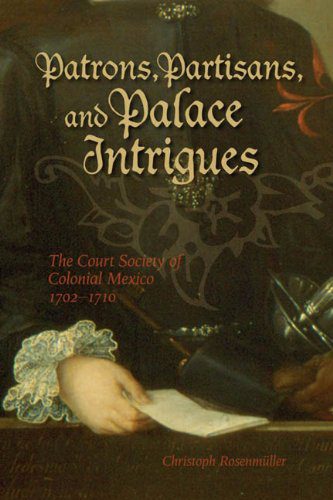
Patrons, Partisans, and Palace Intrigues: The Court Society of Colonial Mexico 1702-1710 by Christoph Rosenmüller (2008)

by Susan Zakaib

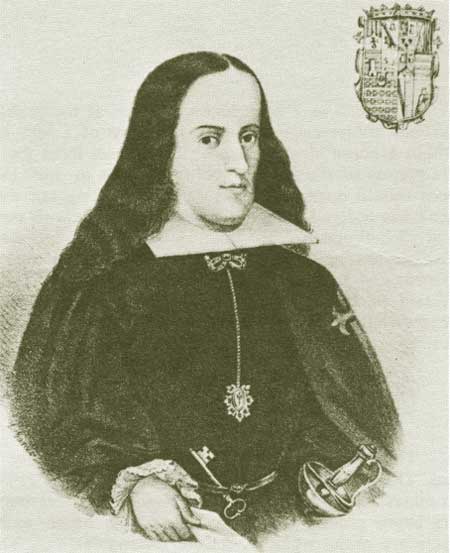
Christopher Rosenmüller is one of a number of recent scholars to revisit history’s “great men,” who were the focus of most studies on colonial Spanish America until social history’s rise to popularity in the 1960s.image These historians are reassessing the roles of individual rulers and colonial institutions, using  methodologies borrowed from social and cultural history more often used to examine the ruled rather than rulers. Rosenmüller brings to life the “palace intrigues” of the Duke of Albuquerque, who served as viceroy of New Spain (now Mexico) from 1702 until 1710. His approach, though centering on a single figure, echoes that of many social historians: he examines the viceroy not as an intrepid leader or a cog in an imperial machine, but as a participant in a complex social network. While scholars have already begun to examine the relationship between social networks and state power in early modern Europe, Rosenmüller is the first to apply this methodology to new world viceroys, who are surprisingly understudied. The result is at once a compelling biography and an insightful contribution to scholarship on colonial Mexico.

Patrons, Partisans, and Palace Intrigues explores Albuquerque’s political career in vivid detail, focusing especially on his relationships with New Spain’s elites. Although royal law required viceroys to remain detached from local society, in practice the rule was rarely observed. From the late seventeenth century onward, especially, these representatives of the King often constructed a power base by fostering close ties with local traders, entrepreneurs, and friars, waiving royal laws that harmed these elites’ businesses in return for their loyalty. Viceroys also bolstered their local authority by appointing their clients and allies to offices in the colony. Albuquerque was no exception to these trends.

In the early eighteenth century, King Philip V began a campaign to curtail these practices, in hopes of ensuring that the viceregal court would serve royal prerogatives rather than local ones. Instead of extending royal authority as the King had ordered, however, Albuquerque, continued the tradition of power-by-patronage. In doing so, he not only filled his own coffers and reduced local opposition to his rule, but also helped New Spain’s elites to deflect the royal reforms that threatened their interests. Yet, as Rosenmüller demonstrates, Albuquerque’s disobedience ultimately worked to the Crown’s advantage. The Bourbon dynasty only recently had wrenched the Spanish throne from the long-reigning Hapsburgs, which made the maintenance of the viceroy’s local power networks more critical than ever. By pandering to local interests, Rosenmüller argues, Albuquerque played a crucial role in maintaining New Spain’s loyalty to the Bourbons during a period of instability.

image

Francisco Fernández de la Cueva, the 10th Duke of Alburquerque

Although Patrons, Partisans, and Palace Intrigues neglects to address the roles of non-elites in viceregal political culture, it is nevertheless an excellent study. Rosenmüller’s consideration of local actions and interests alongside broader political developments tells the fascinating story of Albuquerque himself, but also reveals the workings of Spain’s imperial power more broadly. It shows that viceroys were not mere mouthpieces of royal authority, but active mediators between colony and metropolis, charged with balancing their often-competing interests. Consequently, the maintenance of the Crown’s authority and legitimacy in early eighteenth-century New Spain was as much a product of local interests and political intrigues as of royal policy. Taken together with Alejandro Cañeque’s The King’s Living Image (2004), Patrons, Partisans, and Palace Intrigues provides valuable insight into the role of viceroys in upholding and legitimating colonial rule, which is critical  to understanding political culture in colonial Mexico.

You may also like:

Zach Carmichael’s review of a book about the relationship between Bourbon Spain, its New World possessions, and the native peoples living on the borderlands of the Spanish empire.

UT Professor Susan Deans-Smith’s DISCOVER piece on Casta Paintings, which depict the inhabitants of Spain’s American colonies.

Fordlandia by Greg Grandin (2010)

by Cristina Metz

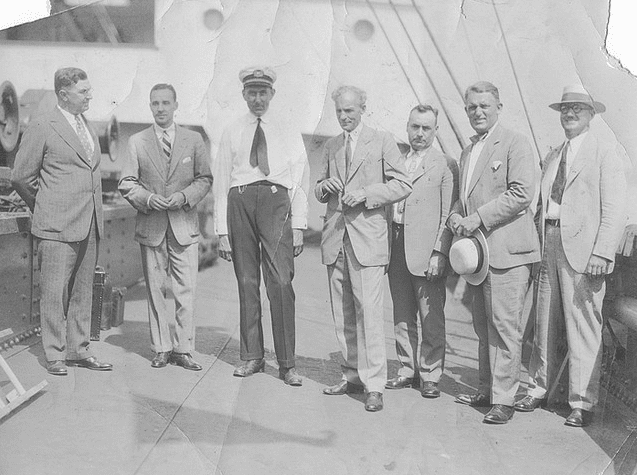
Greg Grandin has written a page-turner that tells the story of Henry Ford’s foray into the Brazilian Amazon and much more. In 1925, Ford met with Harvey Firestone to discuss England’s challenge to the US rubber supply. Much as the Belgians had done in Africa in the late nineteenth-century, England had extracted this resource by proxy—through companies such as the Peruvian Amazon Rubber Company in the Amazon and its Asian colonies. Ford’s response was to embark upon his own South American venture into the world of rubber.

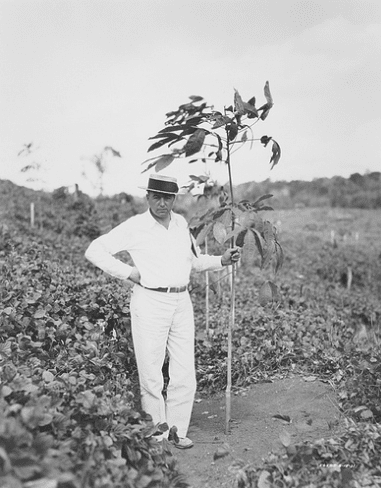
metz fordlandiaThat same year, the governor of Pará sent Custódio Alves de Lima, a Brazilian diplomat, traveled to the U.S. with the aim of enticing Ford into establishing a rubber plantation in the region. The governor was prepared to grant Ford a number of perquisites, including land and tax concessions. Henry Ford took the bait. Within two years, he received a concession of close to 2.5 million acres, half private property at a cost of $125,000 and half public property granted to him free of charge. This tract of land that would soon be called “Fordlandia” became more than just a potential rubber plantation. Ford saw it as an opportunity to begin a new socio-industrial experiment that sought to impose his brand of Americanism on a people and environment.

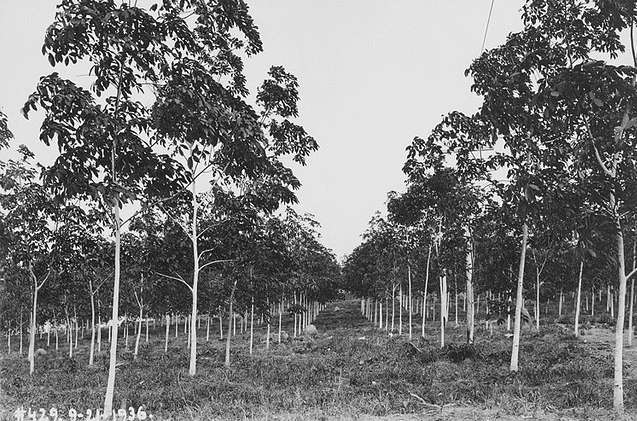
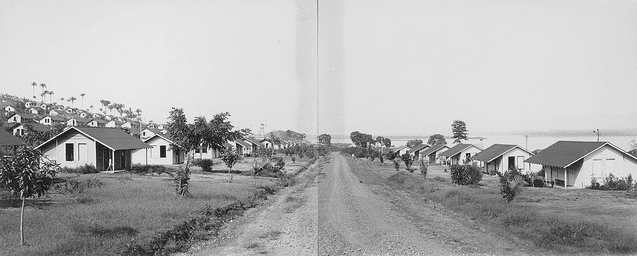
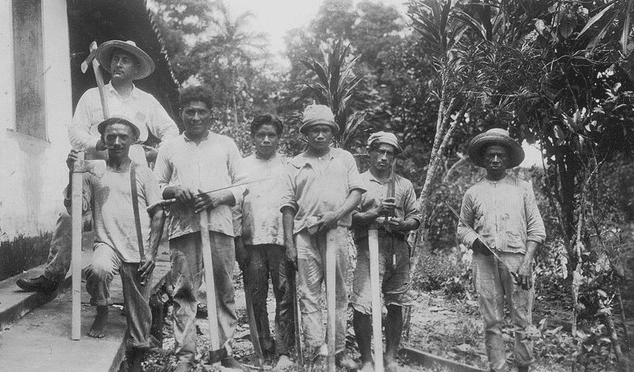
Screen_shot_2012-07-04_at_11.05.40_AMOver the next few decades, Ford’s determination to build a place that would “safeguard rural virtues and remedy urban ills” would meet its match in the Amazon. Ford’s emissaries began a Sisyphean attempt to clear land during the rainy season, they siphoned money to line their own pockets, and they began exploiting workers who were already leery of working on Ford’s jungle experiment. Workers were expected to work in extremely high heat and humidity. Adverse work conditions, coupled with an ignorance of Amazonian epidemiology, led to many deaths. Such a high rate of mortality at Ford’s Amazon project was a common feature of other U.S. and European forays into Central and South America in the late-nineteenth and early-twentieth centuries. In The Path Between the Seas, for instance, David McCullough tells the story of how the building of the Panama Canal, which at various points in its history was in the hands of a Frenchman and an American who each refused to give up in the face of nature’s challenges, also resulted in the deaths of tens of thousands of workers from disease and various threats of the Panamanian jungle.

Screen_shot_2012-07-04_at_10.47.02_AMFord also tried to impose a lifestyle that did not jibe well with Fordlandia workers. His attempt at cultural imperialism met violent resistance, such as a multi-day riot that started in the worker’s dining hall. Up until the riot, the men had often taken their meals at local brothels and saloons. Ford, who was a teetotaler, implemented a new policy to coerce the men into eating their meals at the mess hall instead. Money for meals was automatically deducted from their paychecks and the workers resented this. To make matters worse, Ford managers chose a bland menu: oatmeal, canned peaches, and unpolished rice. The mess hall riot signaled the beginning of the end of Ford’s project aimed at restoring a bygone era. By 1945, Fordlandia had failed.

Screen_shot_2012-07-04_at_11.04.56_AMGrandin is ambivalent about explaining this failure as rooted in Ford’s hubris, opting instead for the negative effects of deindustrialization. Much of the evidence, however, points to Ford’s excessive self-confidence as a primary factor for the failure of his Amazonian project. To begin with, he purposely did not hire experts—botanists, agronomists, interpreters—who could have helped Fordlandia succeed. The Amazon was not the only place where Ford’s personal hang-ups, like his suspicion of experts and his cantankerousness, caused problems. Grandin transports readers back and forth between Brazil and the U.S. to show that at the same time that Ford was trying to build a perfect world in the middle of the jungle, his empire at home was beginning to show the strain of scandals and shop-floor abuses of despotic foremen in his factory.

Screen_shot_2012-07-04_at_11.05.24_AMIn typical Grandin style, the book ends in the contemporary period. Today the Amazon forest suffers from rapid deforestation caused in part by projects like Ford’s. His doggedness in growing rubber trees his own way led Ford to clear acres upon acres of forest. Soy farming, another of Ford’s projects, required the use of toxic chemicals that have allowed this non-native crop to thrive by killing off native species. The environmental degradation that modern industry and agriculture cause is not often something that consumers consider when they purchase a car that has Brazilian soy-based plastic parts or purchase a piece of furniture containing particle board made from young trees that could have reforested the Amazon if they had been left to mature. This disjuncture between the environmental and human degradation associated with mass production and consumption is characteristic of far too-many commodity chains.

Screen_shot_2012-07-04_at_11.04.43_AMIf Fordlandia is a story about one man’s attempt to impose his will over nature, it is also a story about modernity and globalization. While Grandin mentions only superficially the presence of women, Chinese, U.S. Confederates, and West Indian workers in the Amazon, readers can be sure that their presence was an effect of the shortening of time and space brought on by modernity that facilitated increased movement of people, goods, and ideas. In contrast to works that exalt the benefits of the modern world—in the realm of ideas and technological advancements, for instance—Grandin implies a weighty question. Has global industrial capitalism, of which Fordlandia is a microcosmic case-in-point, actually advanced humanity or are we now in an age of what scholars have called “the coloniality of power” where all of the old imperial modes are as entrenched as they were in the none too distant past, but now sporting the sheen of the twenty-first century?

Photo credits:

All images courtesy of thehenryford/Flickr Creative Commons.

Narco-Modernities

by Edward F. Shore

Drug trafficking – especially as it pertains to Mexico – has been a main fixture in today’s news for some time now. But UT graduate student Edward F. Shore argues that the violence, disorder, and political, social, and economic instability associated with the drug trade has a long history, and one that has had international repercussions. Shore’s website “Narco-Modernities” shows that while drug-related episodes may take place in specific countries or regions, the people, governments, economies, and societies they have affected and continue to affect span the globe. Through book reviews, primary sources, maps, secondary historical literature and the author’s own original commentary, “Narco-Modernities” discusses current events while also engaging historical debates surrounding globalization, immigration, crime, gangs, prisons, the “War on Drugs,” the Cold War, and present-day U.S.-Latin American relations.

image

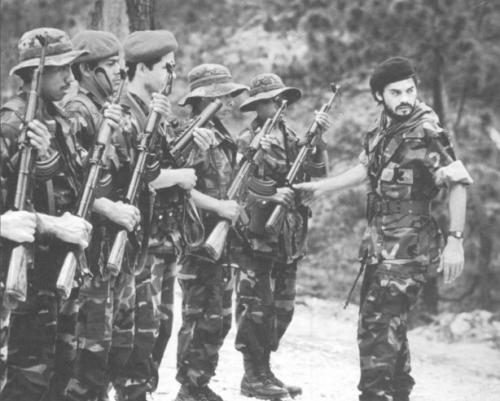
Nicaraguan Contras

image

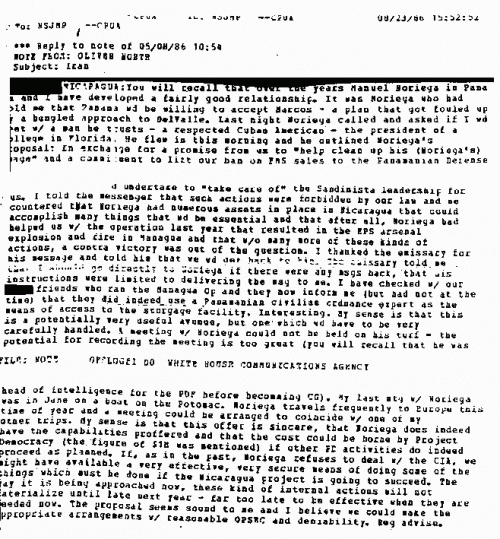
An August 23, 1986 e-mail message from Oliver North to Ronald Reagan and National Security Advisor John Poindexter. In it, North describes his meeting with Panamanian Leader Manuel Noriega’s representative. “You will recall that over the years Manuel Noriega in Panama and I have developed a fairly good relationship,” North writes before explaining Noriega’s proposal. He notes that if U.S. officials can “help clean up his image” and lift the ban on arms sales to the Panamanian Defense Force, Noriega will “‘take care of’ the Sandinista leadership for us.”

image

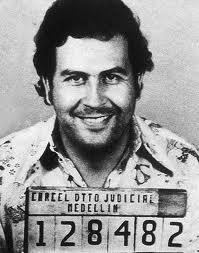
“Godfather of Cocaine” Pablo Escobar’s mug shot

image

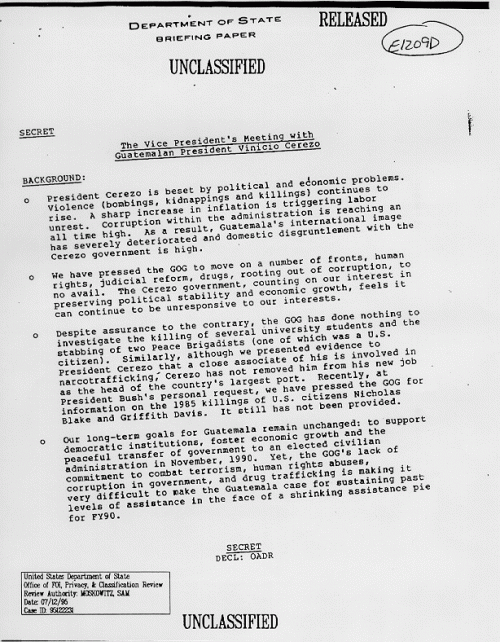
A recently declassified Department of State briefing paper from Inter-American Affairs. It showcases Washington’s frustration with the Guatemalan government’s failure to investigate the a surge of violence, assassinations, and an attack on an American citizen in that country. The United States was particularly concerned about the Guatemalan government upholding human rights, implementing judicial reform, and monitoring drug trafficking but felt that “it can continue to be unresponsive to [its] interests.”

University of Texas at Austin – Department of History

(Professor: Jeremi Suri)

Che: A Revolutionary Life by Jon Lee Anderson (2010)

by Edward Shore

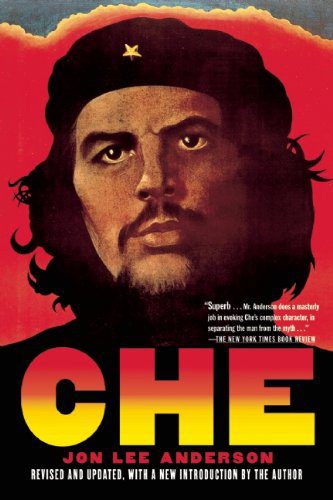
In July 1997, a Cuban-Argentine forensic team unearthed the skeletal remains of Comandante Ernesto “Che” Guevara in Vallegrande, Bolivia.imageThirty years earlier, on October 9, 1967, CIA-trained Bolivian Special Forces agents had captured and executed the thirty-nine-year-old revolutionary before dumping his body in a shallow pit near a dirt runway.  While writing Che Guevara: A Revolutionary Life, Jon Lee Anderson had gathered new intelligence that led directly to the location of Guevara’s body. The forensic experts immediately distinguished Guevara’s remains from the others. After his death, Che’s executioners had amputated his hands, placed them in a jar of formaldehyde, and sent them to Fidel Castro. Following exhumation, the fallen guerrillas’ remains were placed in coffins and flown to Cuba. That summer, Che Guevara had finally returned to his adoptive homeland.
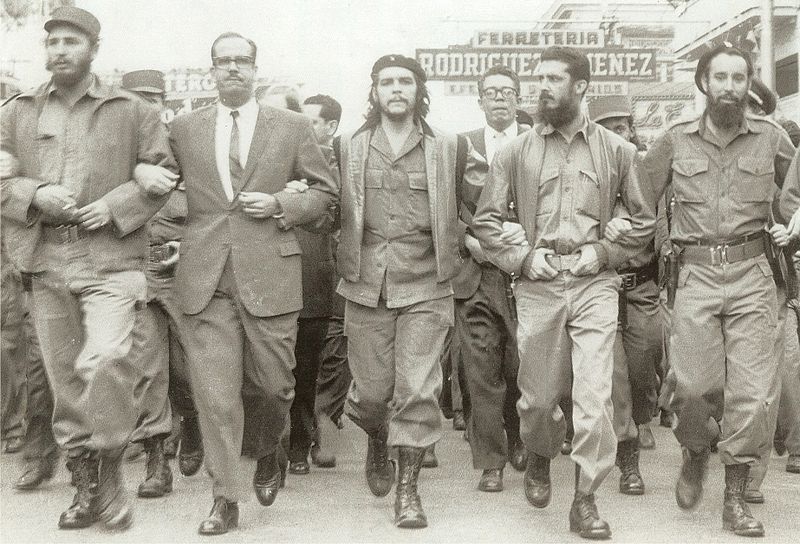
Fifteen years after its publication, A Revolutionary Life remains the definitive work on Che Guevara, the dashing Argentine rebel whose “epic dream was to end poverty and injustice in Latin America and the developing world through armed revolution.” Jon Lee Anderson traces Che’s extraordinary life, from his comfortable upbringing in Argentina to the battlefields of the Cuban Revolution; from the halls of power in Castro’s government to his failed campaign in the Congo, and assassination in the Bolivian jungle.  Unlike past biographers of Che, Anderson gained unprecedented access to personal archives maintained by Che’s widow, as well as Cuban government documents long kept secret during the Cold War. He conducts extensive interviews with Che’s comrades and enemies, including Felíx Rodriguez, the mercurial Cuban-American CIA operative and Bay of Pigs veteran who ordered Che’s execution.

Anderson paints the portrait of an idealistic, ambitious, and complex man whose unshakable committment was made even more powerful by his unusual combination of romantic passion and coldly analytic thought. He recalls Ernesto Guevara’s epic motorcycle journey through South America as a medical student while underscoring how U.S. intervention in Latin America crystallized Ernesto’s revolutionary consciousness. In June 1954, Ernesto sojourned as a physician in Guatemala, providing free medical care to the poor in the countryside. When a CIA coup overthrew the democratically elected government of Jacobo Arbenz, he sought refuge in the Argentinean Embassy. That summer, Guevara became convinced that only armed revolution could secure the future of oppressed and marginalized Latin Americans everywhere.

image

Anderson revisits Guevara’s diaries to recapture his first meeting with Fidel Castro in Mexico City. Seeking to recruit new volunteers for a revolutionary war against the Fulgencio Batista dictatorship in Cuba, Castro took an immediate liking to the zealous doctor from Argentina who longed to prove his revolutionary credentials. In November 1956, Guevara, Fidel Castro, his younger brother Raul, and eighty volunteers set sail for Cuba, launching a guerrilla war in the Sierra Maestra mountains that would oust Batista on New Years Day 1959.

In January 1959, Che personally oversaw the revolution’s consolidation. He implemented the Agrarian Reform Law of 1959, presided over the trials and executions of ex-Batista functionaries, represented Cuba at the United Nations, and commanded revolutionary forces during the Bay of Pigs invasion. By 1965, Che grew tired of his desk job at the Economy Ministry. Anderson argues that the thrill of battle gave Che meaning. He dreamed of exporting the Cuban Revolution to the rest of Latin America and he chose Bolivia to open a new front. However, unlike Cuba, the Bolivian campaign was a disaster from the start. It was also Che’s last. The local Bolivian Communist Party refused to support the Cuban revolutionary effort on their soil. Che’s team also failed to recruit Quechua Indians. In autumn 1967, the guerrillas ran out of weapons, ammunition, and supplies. CIA-trained Bolivian Special Forces ambushed Guevara’s troops in Vallegrande. On October 10, 1967, the world woke up to the news that Che Guevara had been killed in the Bolivian jungle.

A Revolutionary Life is a must-read for Latin Americanists, Cold War buffs, and aspiring revolutionaries and counterrevolutionaries everywhere. Anderson sheds light upon little known details of Che’s life, including his harsh criticism of the Soviet Union and his ardent support for the emergent “nonaligned” movement in the Third World. Most important, he emphasizes Che’s unyielding commitment to his beliefs. While other Marxist-Leninists exploited their privilege, Che remained a full-time revolutionary. When he wasn’t studying political economy, Che could be found teaching literacy and arithmetic to his young bodyguards or working eighteen-hour days cutting sugar cane as part of his voluntary labor program. He believed firmly in the possibility of a pan-Latin American revolution, a cause for which he readily gave his life.

image

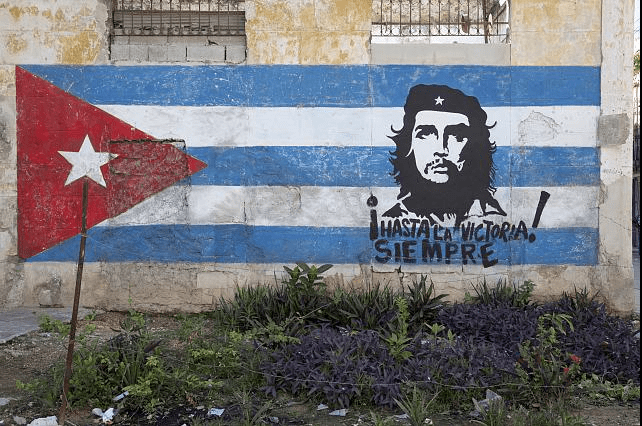
Finally, Anderson’s is a biography that calls into question the dismissal of revolutionary socialism and alternative paths to development in Latin America. Today, leftists in Nicaragua, El Salvador, Venezuela, Ecuador, Bolivia, Peru, Brazil, Uruguay, and Argentina breathe life into Che’s pan-Latin American vision, rejecting orthodox neoliberalism in favor of state-sponsored development and regional integration. They threaten to boycott the upcoming Organization of American States (OAS) summit in Cartagena, Colombia, if the United States continues to prevent Cuba from participating. Meanwhile, Bolivian President Evo Morales recently ordered the armed forces to adopt Che’s famous salutation, “hasta la victoria siempre” or “forever onward toward victory,” as its official slogan. Ironically, the very institution that killed Che Guevara forty-five years ago now immortalizes his legacy. In 2012, Che still lives.

Photo credits: 

“Memorial service march for victims of the La Coubre explosion,” 5 March 1960

Museo Che Guevara via Wikimedia Commons

Carol M. Highsmith, “Hand painted mural showing the Cuban flag and Che Guevara, neighborhood in Old Havana, Cuba,” 11 January 2010

Photographer’s own via The Library of Congress

You may also like:

Takkara Brunson’s “Making History” podcast, where she talks to us about her research in Cuba and her dissertation on gender and social identity in pre-revolutionary Cuba.

Aragon Storm Miller’s review of “Sad and Luminous Days: Cuba’s Struggle with the Superpowers after the Missile Crisis.”

Yana Skorobogatov’s review of “Conflicting Missions: Havana, Washington, and Africa, 1959-1976”

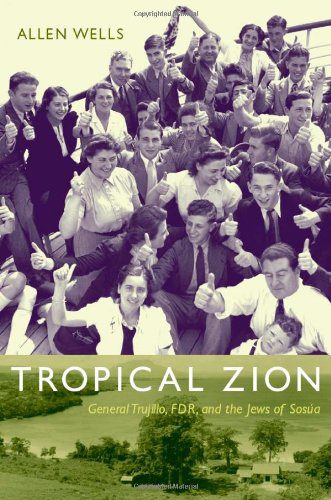
Tropical Zion: General Trujillo, FDR, and the Jews of Sosúa by Allen Wells (2009)

by Lauren Hammond

In October 1937, Dominican dictator Rafael Trujillo ordered his troops to slaughter Haitians living in the Dominican frontier and the Cibao.imageThe horrific violence left as many as 15,000 dead. Trujillo apologists managed to justify the action nationally, but the massacre created an international public relations nightmare for the regime. Newspapers cited Trujillo’s ruthlessness and compared him to Hitler and Mussolini. Trujillo quickly moved to restore his credentials as an anti-fascist ally of the United States by offering refuge to 100,000 European Jews fleeing Nazi Germany.  In Tropical Zion, Allen Wells tells the story of the establishment and decline of the small Jewish agricultural colony at Sosúa in the Dominican Republic and illustrates the significance of the colony in the international sphere. While only a handful of Jews migrated to the Dominican Republic during the Holocaust, Wells argues that ultimately, Sosúa saved lives and that its history uncovers the complex intersection of Zionism, U.S.-Dominican relations, American and Europe anti-Semitism, and the racism of the Trujillo regime.
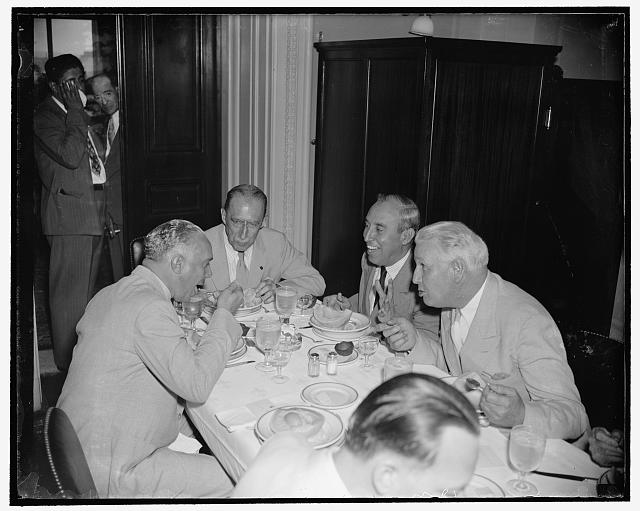
In 1938, following the violent attacks on Jews throughout Germany and parts of Austria that came to be known as Kristallnacht, President Franklin Delano Roosevelt organized a conference at Évian-les-Bains, France in hopes of developing a strategy to handle the massive Jewish flight from Germany and Austria.   However, American and European anti-Semitism prevented the United States, England, France, and many other countries from offering Jews a place of refuge.  Moreover, they refused to consider Palestine as a resettlement site.  At Évian, Trujillo’s brother Virgilio, stepped into the gap and offered Jewish refugees a safe haven in the Dominican Republic.  Wells emphasizes that although Trujillo sought to use the offer to repair his image after the massacre and as a means of whitening the Dominican population, he remained the only one to volunteer his country for Jewish resettlement. Conference participants considered and rejected a variety of locations, including Angola and British Guiana, but in the end the Dominican Republic emerged as the only settlement site.  Wells details the immigrant selection process, the immigrants’ movement from countries of transit to the Dominican Republic, and the complicated process of community formation after their arrival.  While the settlement faced several difficulties from the outset, the biggest source of contention remained the nature of the colony – would it be a temporary place to await the end of the war or a true farming community?  Although Jewish-American philanthropists, the Dominican Republic Settlement Association (DORSA), and Trujillo imagined the colony as an agricultural settlement, DORSA approved the migration of settlers and non-settlers alike.  Non-settlers expressed little interest in farming, preferring a town existence dependent on DORSA stipends that diverted the colony’s funds from its growing dairy industry.  This became a major source of tension between settlers and non-settlers.  As the war came to an end, non-settlers, derisively referred to as “America-Leavers,” quickly moved to secure U.S. visas and leave the Dominican Republic.  This initiated the colony’s decline, which worsened as dairy farmers also left the island for the United States in order to provide a better future for their children.

image

Wells demonstrates that Trujillo used the practice of gift-giving and highly ritualized public ceremonies to create circuits of exchange between himself, the Roosevelt administration, DORSA, and the colony at Sosúa.  First, Trujillo’s Évian offer presented a solution for President Roosevelt who faced critiques from powerful Jewish-Americans regarding the U.S.’s strict immigration policies and the rising tide of U.S. anti-Semitism.  Second, Trujillo, who owned the prospective Sosúa settlement site, generously donated the property to the colony in a symbolic act of friendship that would cement patron-client ties between himself, DORSA, and the Jewish settlers.  The regime then hosted a large public ceremony to celebrate the signing of a contract between the Dominican government and DORSA that guaranteed settlers religious freedom and civil and legal rights.  Wells argues that as clients of Trujillo, DORSA and Jewish settlers were expected to support the regime by lobbying the Roosevelt administration on Trujillo’s behalf, participating in state rituals, and refraining from criticism.  These actions helped confer legitimacy on the dictatorship and minimize Trujillo’s reputation for brutality.  Moreover, he suggests that Trujillo’s offer and the lobbying of DORSA officials helped create an environment conducive to the renegotiation of the U.S. receivership of Dominican customs and allowed Trujillo to re-establish Dominican financial independence.  The successful re-institution of Dominican control over its customs receipts remains one of the hallmarks of the Trujillo regime.

image

image


The son of Sosúa settler Heinrich Wasservogel, Wells has intimate knowledge of life in the small tropical sanctuary.  His masterful narrative is a must read for those interested in the Jewish Diaspora, dictatorship in Latin America and the Caribbean, and U.S.-Dominican relations during the Trujillo era.

Photo credits:

Harris & Ewing, “Gen. Trujillo given luncheon at Capitol. Visiting Washington on a goodwill tour is former Dominican Republic President Gen. Rafael Trujillo. The general was accorded a luncheon today at the Capitol by Sen. Theodore Green Rhode Island. Avidly talking to the General, who speaks no English, are Senators Green and Guy Gillette while Minister Andres[?] Pastoriza rapidly interprets. Left to right: Trujillo, Sen. Green, Pastoriza, Sen. Gillette,” Washington, DC, 7 July 1939.

Harris & Ewing via The Library of Congress

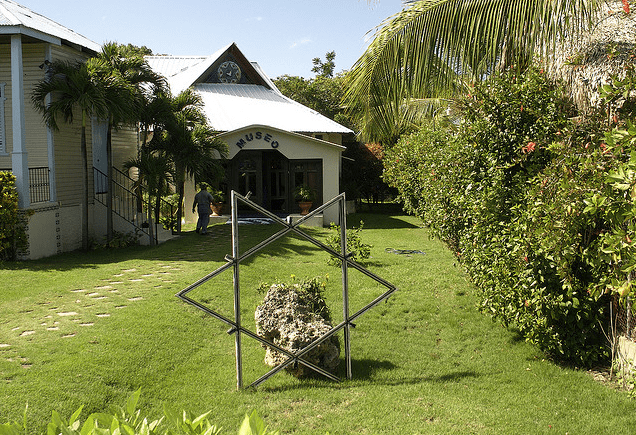
Colin Rose, “Jewish Museum in Sosua,” 24 December 2006

Author’s own via Flickr Creative Commons

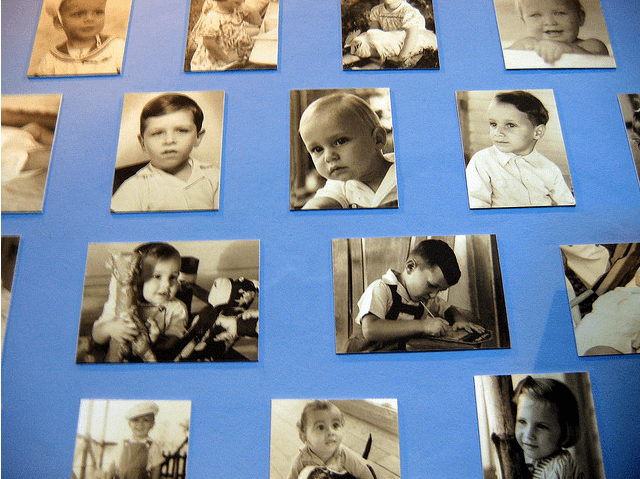
Flickr user muckster, “Sosua Jewish Museum: Children of Immigrants,” 9 February 2007

Author’s own via Flickr Creative Commons

You may also like:

This interview, conducted in May 2011, with General Imbert, one of the men who assassinated Rafael Trujillo in 1961. (BBC News)

Adrian Masters’ review of The Doubtful Strait, Ernesto Cardenal’s poem chronicling the history of Nicaragua from colonial discovery to the Somoza dictatorship.


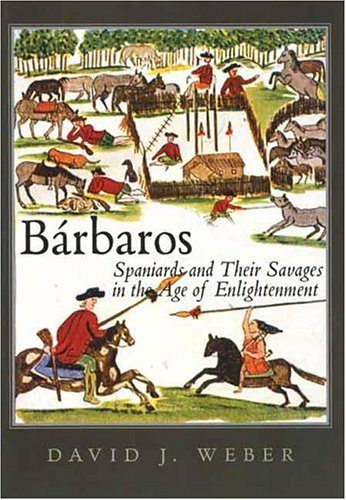
Bárbaros: Spaniards and Their Savages in the Age of Enlightenment by David J. Weber (2005)

by Zachary Carmichael

This book is a wide-ranging study of the relationship between Bourbon Spain, its New World possessions, and the native peoples living on the borderlands of the Spanish empire who had not been brought under imperial political domination.image Subjugating and Christianizing these unincorporated indigenous peoples, called bárbaros (translated as “savages”) were major objectives of late eighteenth-century Bourbon reforms. David Weber concludes that “pragmatism and power usually prevailed over ideas,” with Bourbon policy usually favoring a realistic approach to dealing with these native groups, alternatively using armed conflict or negotiation when each seemed most useful. The Spanish crown was only one of several interest groups—including Bourbon officials, the military, and the colonial bureaucracy—competing for the loyalty of indigenous peoples. Indians from geographically disparate Spanish borderland regions had more in common socially and culturally with each other than with the inhabitants of nearby colonial centers, like Mexico City or Lima. Weber justifies the range of his study by contending that others have looked at Spanish and native relations only from a local perspective, failing to account for the diverse challenges these groups posed for Bourbon rulers.
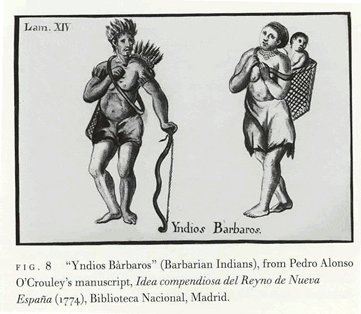
Weber argues that Spanish imperial policy concerning unassimilated native populations changed for two reasons—Enlightenment thinking about the responsibilities that colonizers had toward indigenous subjects and Bourbon political restructuring. This fusion of Enlightenment philosophy and imperial directive is evident in the state-sponsored voyage of scientist Alejandro Malaspina along the west coast of Spanish America in 1789. Malaspina encountered numerous native groups and created a method to scientifically identify which groups were “savages.” As the Spanish explored and settled these borderland regions in the late eighteenth century, theworld of native groups changed permanently, and many resisted. imageWeber analyzes these Indian societies based on how they defended their independence, rather than grouping them by geography. Yet, on the imperial periphery, cooperation and integration often came before conflict. Weber contends that the incompatibility between Spaniard and native was not as pronounced as other scholars have claimed. One successful tactic the Bourbons used to integrate native populations without open conflict was by taking over the independent missionaries, especially Jesuits, that operated in many peripheral areas. The book concludes by tracing the story of the indios bárbaros into the national period, a time in which the leaders of the new republics abandoned old Bourbon policies of negotiation. They came to regard independent natives as inferior peoples, and, in Argentina, the most radical case, actively exterminated the indigenous population.

Weber succeeds in portraying the various strategies employed to deal with these semi-autonomous native groups, integrating diverse perspectives and geographic areas. The lengthy and detailed notes include annotations, translations, and a wealth of material that supplements the main text. Excellent maps included in the body of the book give the reader a geographic foundation to follow the many indigenous groups and frontier areas discussed. Weber could have integrated more local or native perspectives, but, in a book about government policy, this might prove distracting. Bárbaros is a groundbreaking study of Spanish and native relations. It has a well-defined scope, excellent research, and successfully defends the argument for Bourbon rulers’ pragmatic approach to dealing with unincorporated indigenous populations.

Photo credits:

Pedro Alonso O’Crouley, “Yndios Barbaros,” 1774

Biblioteca Nacional via the University of Illinois Department of Spanish, Italian, and Portuguese


« Previous Page
Next Page »

Recent Posts

  • The Battles of the Alamo and the Myth of Southern Exceptionalism
  • Primary Source: Magic, Metal, and Medicine in Leonhard Thurneysser’s Paracelsus
  • Faculty Spotlight: Dr. Kate Imy
  • La Historia del Tiempo Presente en México: un campo en construcción
  • The History of the Present Time in Mexico: A Field in Formation
NOT EVEN PAST is produced by

The Department of History

The University of Texas at Austin

We are supported by the College of Liberal Arts
And our Readers

Donate
Contact

All content © 2010-present NOT EVEN PAST and the authors, unless otherwise noted

Sign up to receive our MONTHLY NEWSLETTER

  • New
  • Features
  • Reviews
  • Texas
  • Teaching
  • Digital
  • Watch & Listen
  • Authors
  • About