• New
  • Features
  • Reviews
  • Texas
  • Teaching
  • Digital
  • Watch & Listen
  • Authors
  • About

The past is never dead. It's not even past

Not Even Past

The Fish that Ate the Whale: The Life and Times of America’s Banana King, by Rich Cohen (2012)

by Kody Jackson

The best stories teach us without our knowing.  The best way to illustrate this, of course, is with a story.  When I was in elementary school, I had to memorize the prefixes of the metric system: kilo-, hecto-, deca-, base, deci-, centi-, milli-.  And I could never get it right!  It always went something like this: Kilo…Hecto…something else…pass…deci…I forget…umm.  All I ever wanted was to go back to feet and inches.  And so it went, until our fifth grade teacher introduced us to the magical phrase, King Henry died by drinking chocolate milk.  My teacher’s little jingle changed everything: King Henry made that infernal metric system memorable.  It was a wonderful lesson on the power of a story, one that has stuck with me to this day.

I would like to think Rich Cohen had a similar experience in his fifth grade classroom, one where he too learned how to defeat the evil metric system, but I cannot be sure.  All I know is that he holds story in the same esteem in his The Fish that Ate the Whale: The Life and Times of America’s Banana King. In the first couple pages, Cohen introduces his readers to his compelling protagonist, Samuel Zemurray, a poor Jewish immigrant to the United States who later came to embody the American Dream.
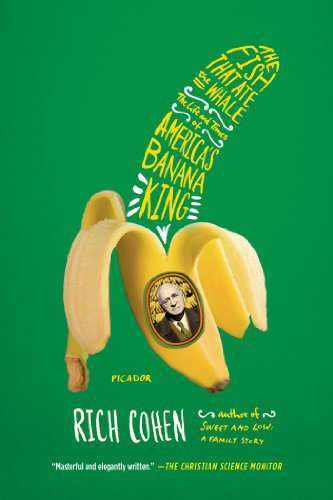
41lHqhh606L

The book’s first glimpse of Zemurray shows him working hard in his uncle’s Alabama grocery store, sweeping and cleaning, stacking and shelving, and always looking for an opportunity to succeed.  His real break comes when a banana peddler arrives in town.  Fascinated by the sight, Zemurray sets out to involve himself in the trade.  He begins selling freckled bananas, the ones thought too ripe for long-distance transport.  He finds a partner; they invest in a company.  They purchase banana ships.  Zemurray takes sole control, buys banana land in Honduras, and profits enormously.  The story reaches its climax when Zemurray ascends to the presidency of the United Fruit Company, one of the United States’ most dominant and successful monopolies of the late nineteenth century.  Even from this perch, Zemurray still embodies the underdog, fighting to maintain his banana empire, championing the noble cause of Zionism, and struggling to be accepted by mainstream America.  The story ends as a triumph that, while acknowledging certain mistakes, largely celebrating the life of Zemurray.  He was a self-made man, a shrewd banana tycoon, and, most importantly to Cohen, a Jew who succeeded in a hostile and prejudiced world.

Cohen’s story, on the whole, proves successful.  As a reader, one becomes so engrossed by Zemurray and his work ethic that one almost does not notice the technical descriptions of banana planting, the history lesson on U.S. trust-busting, or the explanations of Central American politics.  These chapters pass like clouds on a windy day, quickly and without much notice.  Thus, in terms of story, Cohen presents his readers with a tour de force.
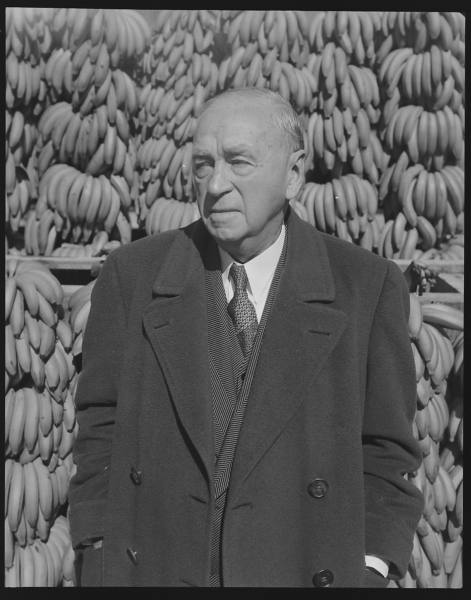
Samuel Zemurray, a Russian who rose to become a fruit magnate (Image courtesy of Peter Ubel)

Samuel Zemurray, the Russian immigrant who rose to become a giant in the American fruit industry (Image courtesy of Peter Ubel)

Stories, however, are never without their faults.  To accommodate his narrative structure, Cohen simplifies and whitewashes the actions of Zemurray and his fellow banana titans.  Rarely do abuse and corruption come up; even when they do, they are largely minimized.  In sum, Cohen tells a story of business decisions and individual effort, not exploitation and collective sacrifice.  Cohen falls most grievously into this trap when writing about Zemurray’s involvement in a Honduran coup.  With colorful mercenaries and crafty strategy, it starts to look more like a Wild West adventure than a violation of sovereignty.  Cohen gets so caught up in the romance that he forgets the other side of the story.  To neglect the Central American experience is like telling the Illiad without mentioning Priam’s grief or recounting the Crusades without mentioning the experiences of Muslims (or Byzantines, for that matter).  A more circumspect tale might have noted that triumphs for U.S. business, at least in this age, often played out as tragedies for a foreign people.

While The Fish that Ate the Whale oversimplifies the complex and glorifies the morally questionable, readers should evaluate it for what it truly is, a wonderful story.  Its quick pace and well-crafted characters make it exciting to read.  More than that, Cohen makes the history memorable, which is no small feat.  As such, it provides a great introduction to Central American history and a jumping off point for future research into the area.

You may also like:

Felipe Cruz’s review of Banana Cultures: Agriculture, Consumption & Environmental Change in Honduras and the United States


Sixteen Months in a Leaky Boat

by Kristie Flannery

A few weeks ago José Salvador Alvarenga drifted onto a small island in the South Pacific Ocean in a worn-out, 24-foot long, fiberglass boat, wearing nothing but a tattered pair of underpants. With the aid of a Spanish interpreter, Alvarenga explained to surprised locals that he had been lost at sea for at least sixteen months after his fishing boat was pushed out to sea off the coast of Mexico. He said that he stayed alive by catching and eating raw fish, turtles, and birds.

Media outlets around the world have rushed to tell Alvarenga’s amazing story of survival, but from the beginning they have doubted the veracity of the fishermen’s version of events. Underlying the media’s skepticism is the belief that it is simply not possible for a human to survive for so long at sea without food and fresh water.

Jose-Salvador-Alvarenga

Jose Salvador Alvarenga, who spent 13 months on a remote Pacific island, after being rescued. (Image courtesy of Mashable)

One Fox News article asked, “Was it all a mirage?” The Sydney Morning Herald described Alvarenga’s story as “a tale of ocean survival that smells a bit fishy.” Searching for holes in Alvarenga’s story, a number of reports pointed out that Alvarenga was rather plump for someone who had been through such an ordeal (Doctors later confirmed that his paradoxically bloated appearance is consistent with a state of long term starvation).

One Fox News article asked, “Was it all a mirage?” The Sydney Morning Herald described Alvarenga’s story as “a tale of ocean survival that smells a bit fishy.” Searching for holes in Alvarenga’s story, a number of reports pointed out that Alvarenga was rather plump for someone who had been through such an ordeal (Doctors later confirmed that his paradoxically bloated appearance is consistent with a state of long term starvation).

Could Alvarenga really have drifted for 8000 miles from Mexico to the Ebon atoll in the Marshall Islands? If we look into the history of the great Pacific Ocean, we find several stories of survival that suggest Alvarenga is telling the truth.

In his famous history of The Manila Galleon, William Lytle Schurz talked about the survivors of one of these large Spanish treasure ships that was lost crossing the Pacific from Mexico in 1693. Two men made it all the way to the Philippines in conditions similar to what Alvarenga endured (thanks to Steph Mawson for this reference). The Galleon‘s

fate was eventually learned from two men picked up long after near the town of Binangonan de Lampon. In the boat in which they had managed to reach the Philippines was the corpse of a dead companion. One of the two survivors had gone stark mad from his sufferings. Before the burning galleon had foundered six men put off from her side in an open boat and headed westward. After three weeks their food gave out and two of the starving men slid over the gunwales into the sea. Those who were left then ate their jackboots and their belts to stave of starvation. At last it was decided to draw lots as to which of the four should be eaten by the rest. One of the three preferred to starve rather than to turn cannibal. It was only the last two who survived these horrible experiences, one without his reason, the other broken by his sufferings and long under the shadow of the Church for having partaken of human flesh.

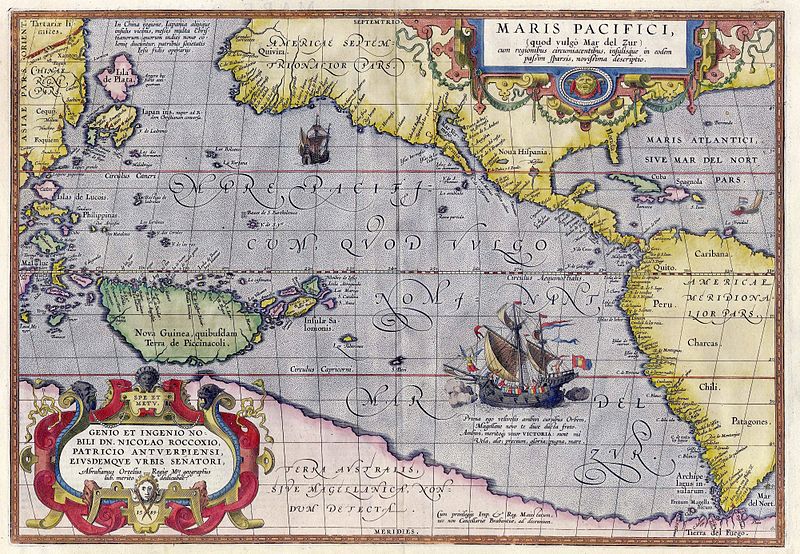
800px-Ortelius_-_Maris_Pacifici_1589

Maris Pacifici by Abraham Ortelius (1589), the first printed map of the Pacific and the Americas. (Image courtesy of Helmink Antique Maps)

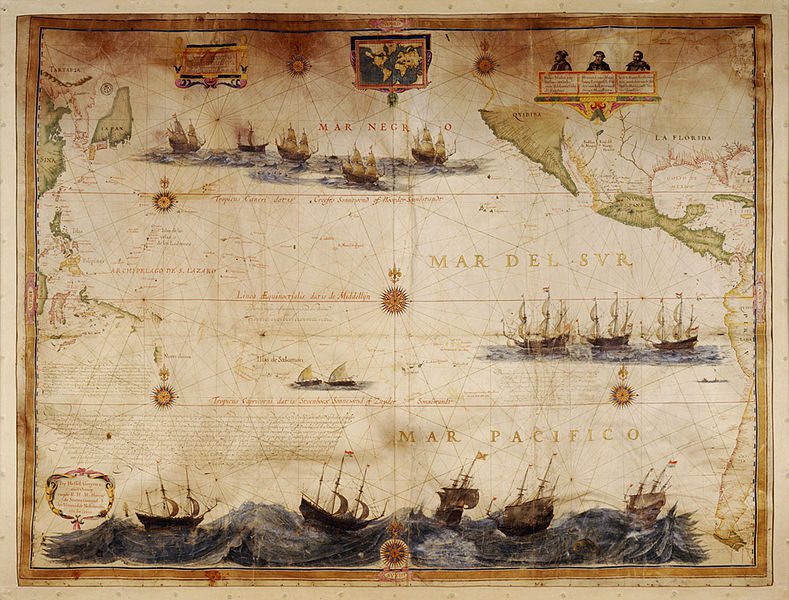
789px-Hessel_Gerritsz_-_Mar_del_Sur

Early 17th century map of the Pacific. (Image courtesy of Bibliothèque Nationale de France)

Perhaps the most famous Pacific castaway is the British Naval Captain William Bligh. In 1789, Bligh and eighteen of his men were forced to disembark from Bligh’s ship The Bounty and climb into a 25-foot long launch boat; a tiny vessel intended for carrying people and supplies from ship to shore. The mutineers surely believed that their deposed Captain and his supporters faced a certain death. Yet over the next forty-seven days, Bligh used a quadrant and a pocket watch to navigate the very crowded launch from near Tonga to the Dutch settlement at West Timor, a 4350 mile journey.

Amazingly, only one man died on this voyage. Greg Denning’s history of the mutiny Mr Bligh’s Bad Language: Passion, Power and Theatre on the Bounty wrote that:

“From [Bligh’s] careful record of every item consumed … the total food each man had in forty-eight days was this: seven pounds bread, one pound salt pork, one pint rum, five ounces wine, two and one-quarter coconuts, one banana, one pint coconut milk, one and one-quarter raw seabirds, four ounces fish … A sailor’s ordinary food allowance has been calculated at about 4,450 calories a day. On the figures I have given here a nutritionist estimates that the launch people were reduced to 345 calories a day. This would mean a possible daily energy deficit of 4,105 calories and a total weight loss of 56 pounds.

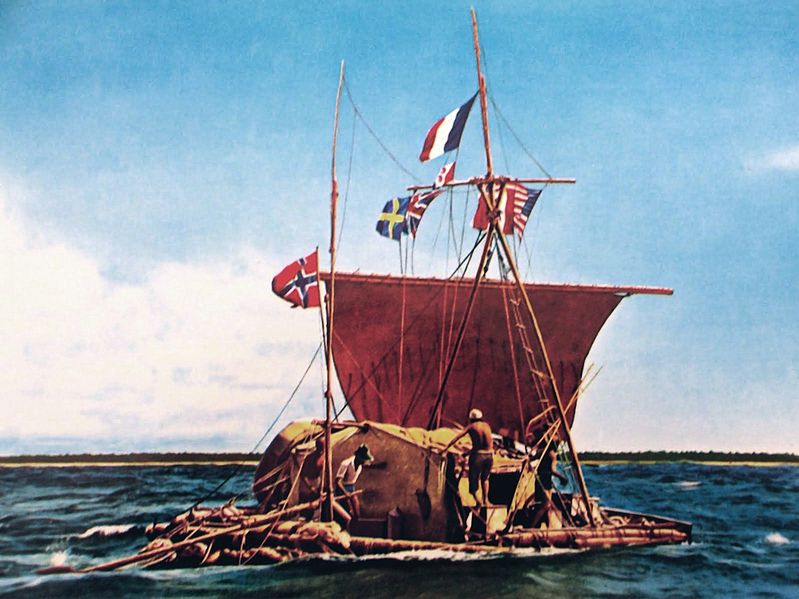
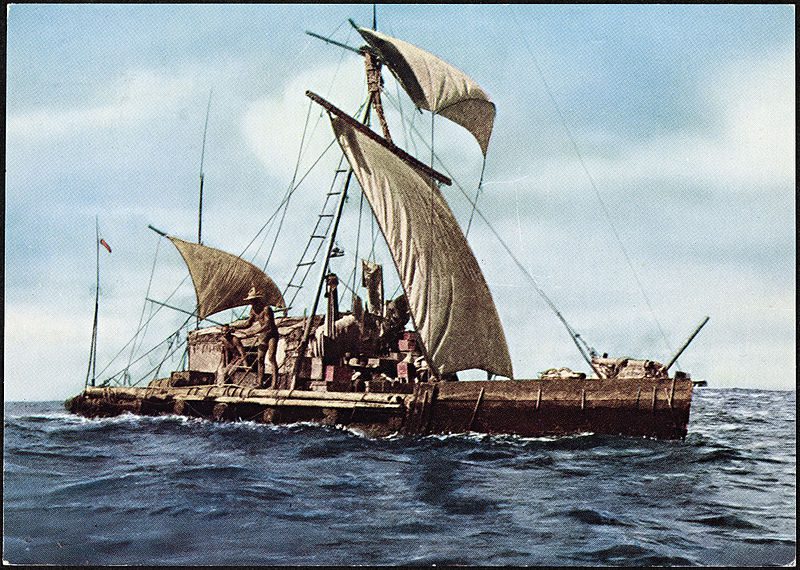
In 1947, the intrepid Norwegian anthropologist Thor Heyerdhal and five other men crossed the Pacific Ocean from Peru to Polynesia in a small, balsa-wood raft named “Kon Tiki” that Heyerdhal built with his own hands. The boat was a replica of a pre-Inca raft, and the purpose of this dangerous exhibition was to prove Heyerdhal’s theory that it was the South Americans who first discovered and populated Polynesia thousands of years ago using similar vessels.

799px-Kon-Tiki

Kon-Tiki raft, circa 1947 (Image courtesy of Wikimedia Commons

800px-Expedition_Kon-Tiki_1947._Across_the_Pacific._(8765728430)

A Kon-Tiki expedition across the Pacific, 1947 (Image courtesy of Wikimedia Commons)

Although the Kon Tiki’s voyage doesn’t exactly prove Heyerdhal’s origins theory, (which for most scholars doesn’t hold water), the fact that six men completed a 101-day long, 4300-mile voyage on a 40 square-foot raft was at the time, and continues to be, a pretty exciting feat. The raft didn’t have oars and couldn’t really be steered in any direction. Although the Kon Tiki was equipped with US army supplied food, the crew reported a rich supply of fish (and sharks!) in the warm-water currents that carried them to Polynesia. If you are interested in Heyerdhal’s adventure, the story of the Kon Tiki is told in Joachim Rønning and Espen Sandberg’s 2012 film, which is currently available on Netflix.

After reading this piece, you might agree that Alvarenga deserves an apology from the news outlets around the world who rushed to accuse the fisherman of fabricating his story. We historians of the Pacific world know that the history of this largest ocean is punctuated by amazing stories of survival that should be celebrated.

Further Reading:

Digitized version of William Bligh’s log book


Getz/Gilberto Fifty Years Later: A Retrospective

by Edward Shore

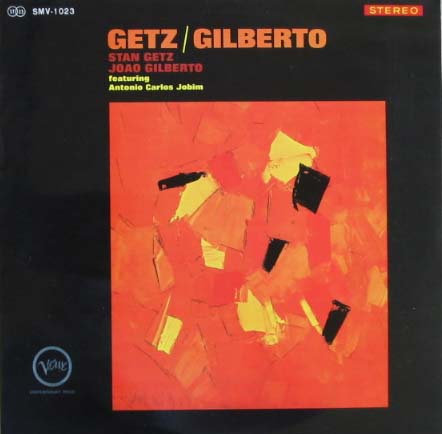
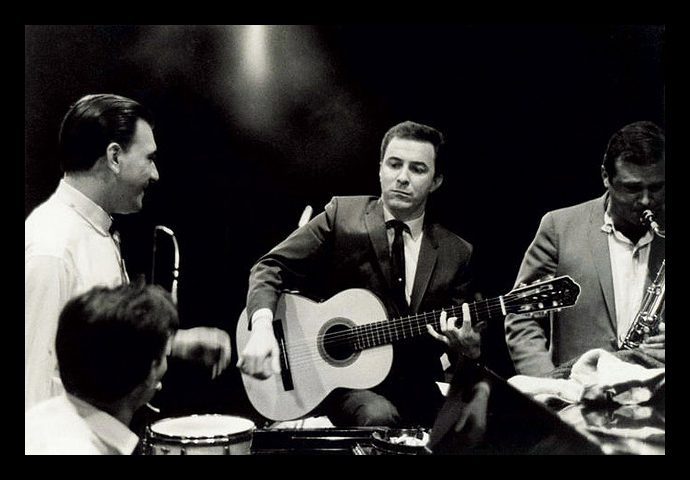
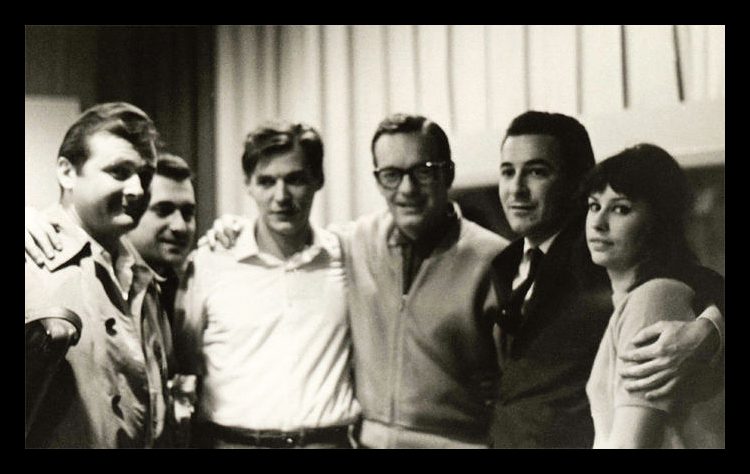
“I’m not a sociologist but it was a time when people in the States wanted to turn to something other than their troubles,” Brazilian singer Astrud Gilberto mused in 1996. “There was a feeling of dissatisfaction, possibly the hint of war to come, and people needed some romance, something dreamy for distraction.” This year marks the fiftieth anniversary of 1964’s Getz/Gilberto, the triumphant collaboration between North American jazz saxophonist Stanley Getz (1927-1991), Brazilian singer and guitarist João Gilberto (b. 1931), his then-wife, Astrud Gilberto (b. 1940), and their friend and compatriot, the composer Antonio Carlos “Tom” Jobim (1927-1994).

getz-gilberto_0Getz/Gilberto was not North America’s first encounter with bossa nova, the lyrical fusion of samba and cool jazz emanating from the smoky nightclubs, recording studios, and performance halls of Rio de Janeiro in the mid-1950s. Yet the eight-track LP was by far the most successful. Propelled by the genre-defining single, “The Girl From Ipanema,” Getz/Gilberto spent ninety-six weeks on the charts and won four Grammy awards, including Best Album of the Year in 1965. Other tracks, including “Para Machucar Meu Coração,” “Desafinado,” and “Corcovado/Quiet Nights of Quiet Stars,” also became jazz standards. “Americans are generally not very curious about the styles of other countries,” Astrud Gilberto insisted. “But our music was Brazilian music in a modern form. It was very pretty and it was exceptional for managing to infiltrate America’s musical culture.”

What explains Americans’ love affair with bossa nova in the winter of 1964? Part of the answer lies in the power of popular music to relieve a broken heart. Critics associated Getz/Gilberto’s cool, sophisticated sound with the Kennedy White House, where music, high fashion, and glamorous parties had been hallmarks of “Camelot” on Pennsylvania Avenue during the early 1960s. Perhaps audiences sought to recapture a bit of the mystique that had vanished when President Kennedy was slain in Dallas, Texas, only five months before the record’s release.

getz_gilberto_01For jazz critic Howard Mandel, Getz/Gilberto was like “another tonic for the assassination’s disruption, akin for adults to the salve upbeat the Beatles had provided for teenagers’ after their appearance on the Ed Sullivan Show in February 1964.” Gilberto’s hushed vocals and understated guitar, Jobim’s gentle piano, and Getz’s lush saxophone transported weary listeners to a sun soaked, tropical paradise light years removed from the turmoil confronting the United States in the winter of 1964.

Yet the Brazil of North American fantasy–languid, exotic, and serene–contrasted sharply with reality. By late 1963, the United States had declared Brazil a “trouble spot” in its hemispheric crusade against communism. Traditional elites and U.S. Cold Warriors opposed Brazilian President João “Jango” Goulart and his center-left agenda, which extended voting rights to illiterates, taxed foreign corporations, and introduced land reform. Meanwhile, peasant agitation in the Brazilian Northeast, the fulcrum of the global sugar trade, deepened the anxieties of U.S. policymakers who feared that Latin America’s largest economy might soon follow in Cuba’s footsteps. In March 1964, the Lyndon Johnson administration and the Brazilian military secretly began plotting Goulart’s overthrow.

002marchaWhile “The Girl from Ipanema” climbed to the top of the Billboard charts, U.S. warships penetrated Brazilian waters to support a military coup d’état on April 1, 1964, terminating the country’s brief flirtation with social reform. The United States had once again intervened in Latin America to preserve an illusion of tropical tranquility that existed only in the imaginations of ruling elites, intelligence agencies, and North American consumers. The military dictators who succeeded Jango and controlled Brazil for the next two decades understood the uses of music just as well and embraced bossa nova for its commercial appeal, apolitical subject matter, and potential to smooth over the nation’s deep-seated socio-political divisions.

Yet the marriage between bossa nova and the dictatorship was not to last. A younger generation of Brazilian artists, including Caetano Veloso, Gal Costa, Gilberto Gil, Rita Lee, and Tom Zé, fused elements of bossa nova with rock n’roll, psychedelia, experimental theatre, and Brazilian folk music into the colorful, exuberant countercultural movement known as Tropicália. Gone was the “tall, tan, young, and lovely” morena of Ipanema Beach. By 1968, the regime’s censors raced to cleanse Brazilian popular music of anti-establishment themes, even forcing Caetano Veloso and Gilberto Gil, two of the country’s most visible stars, into exile in the United Kingdom. The coup government ultimately turned its back on bossa nova, too. In 1969, the regime sacked Vinícius de Moraes from his post in the Foreign Ministry after the legendary composer, playwright, and original author of “The Girl from Ipanema” criticized the dictatorship’s restraints on artistic freedom.

getz_gilberto_02Popular interest in bossa nova continued to wane over the course of the 1970s. Outraged by U.S. sponsorship of the military regime, Brazilian musicians distanced themselves from a style that enjoyed intimate ties to the “giant from the North.” A blend of rock, samba, and jazz known as MPB, or “música popular brasileira,”eclipsed bossa nova as Brazil’s national sound. MPB artists like Chico Buarque, Jorge Ben, and Novos Baianos camouflaged criticisms of government repression, social injustice, and imperialism with irresistible melodies, appealing to a growing audience of middle-class youth. Meanwhile, in the slums and favelas of Rio de Janeiro, São Paulo, and Salvador, a young generation of Afro-Brazilians challenged the nation’s vaunted reputation as a “racial democracy,” while embracing cultural symbols of Black Power and the African Diaspora, including soul, funk, and reggae. Amid this rising tide of popular protest against the regime, bossa nova, with its dreamy, cool detachment, appeared painfully at odds with the struggles of ordinary Brazilians.

Still, the genre remains a major force in Brazilian pop culture and “world” music. The millions of tourists who visit Rio de Janeiro every year arrive at an airport named after Tom Jobim. Inevitably, more than a few vacationers board their flights home in “Girl from Ipanema” t-shirts purchased at the airport gift shop. Bossa nova also experienced a brief resurgence in the mid-1990s. Red Hot+Rio, a compilation album produced by the AIDS-awareness organization Red Hot in 1996, paid tribute to the musical career of Tom Jobim and featured covers by artists including Sting, Astrud Gilberto, and David Byrne. Today, pop stars like Marisa Monte, Celso Fonseca, and Uruguay’s Jorge Drexler refashion bossa nova sounds for contemporary audiences. And what about the song that made bossa nova an international sensation? “The Girl From Ipanema” currently ranks as the second-most-recorded pop song of all time, after the Beatles’ “Yesterday.” Amid the pageantry surrounding the upcoming FIFA World Cup and the 2016 Rio Olympic Games, look for “The Girl From Ipanema” to sway gently back into the spotlight.

Stan Getz and Astrud Gilberto perform “The Girl From Ipanema” in 1964:


bugburnt


Hear more Bossa Nova:


João Gilberto and Antonio Carlos Jobim in a 1992 live concert

Elis Regina and Tom Jobim performing “Aguas de Março” in 1974


Astrud Gilberto’s comments can be found in “Interview with Astrud Gilberto,” by Howard Mandel, Verve Records, Re-issue of Getz/Gilberto, 1996, liner notes.

Howard Mandel’s comments come from correspondence with the author, January 2014. A special thanks to him from the author.

Photo Credits:

1964 LP cover of Getz/Gilberto (Image courtesy of Verve Records)

Creed Taylor, Antonio Carlos “Tom” Jobim, João Gilberto and Stan Getz recording together (Image courtesy of last.fm)

Brazilians marching against the country’s military dictatorship, 1964 (Image courtesy of Mount Holyoke College)

Musical team on Getz/Gilberto: (from left) Stan Getz, Milton Banana, Tom Creed Taylor, João Gilberto and Astrud Gilberto (Image courtesy of last.fm)

Images used under Fair Use Guidelines


The Cross-Cultural Exchange of Atlantic Slavery

by Samantha Rubino

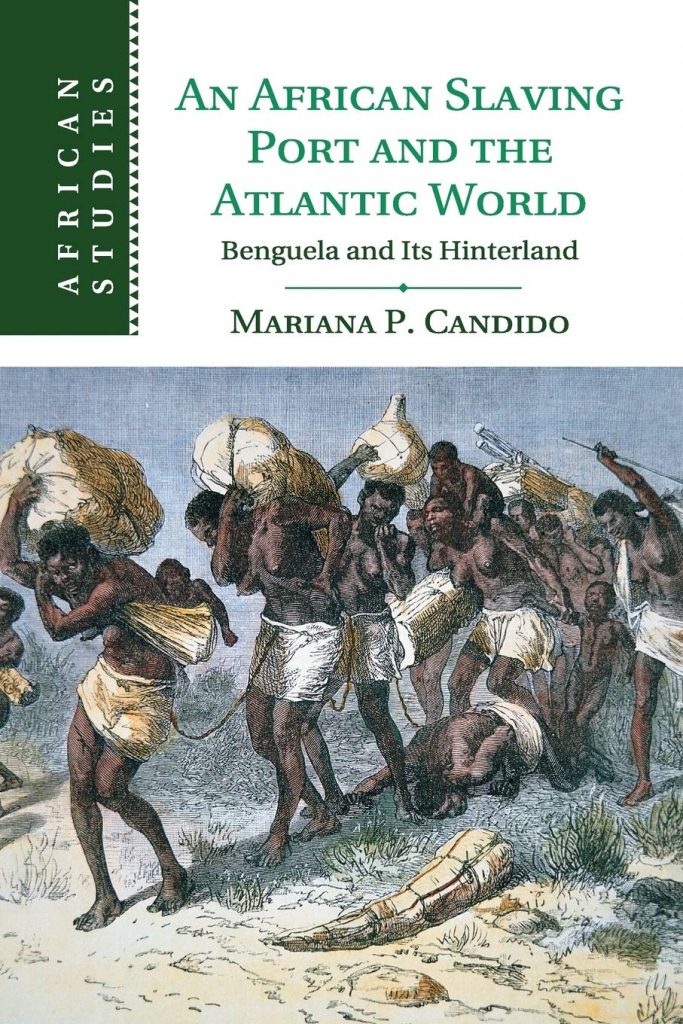
An African Slaving Port and the Atlantic World by Mariana Candido (2013)

Cross-Cultural Exchange in the Atlantic World: Angola and Brazil during the Era of the Slave Trade by Roquinaldo Ferriera (2012)

The Atlantic slave trade between Africa and the Americas connected merchants, Portuguese colonists, convicts, and slaves in cultural and economic relationships, reconfiguring the space of the southern Atlantic. The work of Mariana Candido and Roquinaldo Ferriera shows how creolization and the economic prosperity created by the slave trade was a two-way street.

In An African Slaving Port and the Atlantic World, Mariana Candido traces development of Benguela (in today’s Angola) from the first Portuguese expedition in 15th century until the mid-nineteenth century. She studies colonial documents, reports, official letters, censuses, export data, parish records, official chronicles, and oral traditions collected by missionaries and anthropologists. Candido stresses the role of the local population in the Atlantic slave trade. As the demand for slaves increased in Brazil, local interactions with Portuguese officials led to a constant reconfiguration of identity and community in the port city, based on political alliances and economic preservation. Political and social instability of the hinterlands in part led to the exponential growth of the slave trade, displaying the reverberating aspects of the slave trade within the Atlantic realm. Additionally, women played a major role in the development of the slave society within Africa. Mixed marriages became the rule, and African women seized on the chance to apprehend cultural practices and a space of power. These donas controlled a large number of dependents, widows or singles, and became involved in local business, investing in the slave trade after the deaths of foreign husbands. In this regard, Candido shows slavery as a process of negotiation, adaptation, invention, and transformation rather than complete annihilation of African communities.

Kongo_audience

Candido also argues that creolization was a social-cultural transformation rather merely than an incorporation and assimilation of Western values. Luso-Africans and colonial officials spread Portuguese customs and Catholicism beyond the littoral, accelerating creolization away from coast. Colonial outposts, such as Caconda, attracted people with cultural exchange and the elaboration of new codes transforming cultural diets and colonial institutions. African religion and cosmology remained strong in the hinterland and on the coast in Benguela because they offered explanations and solutions to everyday problems that Catholicism could not address. Additionally, local languages were extremely important to the construct of a slave society. Despite colonial laws against its use, the army, commerce transactions, and the church in the hinterlands used these languages.

Rugendas_-_Nègres_a_fond_de_cale

Similarly, Roquinaldo Ferriera focuses on the bilateral connections between the Portuguese colonies of Brazil and Angola in Cross Cultural Exchange in the Atlantic World. Through the lens of micro histories, Ferriera pushes back from the macro structural approach to the slave trade to examine the personal trials endured by Africans and their descendants. Throughout the text he suggests an argument similar to Candido’s, in which African institutions were transformed rather than unilaterally corrupted by the slave trade. For example, the use of the traditional African court systems (tribunal de mucano) displays the transformation of the court system and the fluid boundaries between freedom and enslavement in Angola. Additionally, the relationship between belief in the power of the supernatural and accusations of witchcraft as a form of entering into enslavement was employed by Luso-Africans and Portuguese officials alike. If an accused “witch” died, a number of the witch’s relatives were enslaved and sold. As Ferriera points out, the actual number of people enslaved through these accusations would be difficult to precisely enumerate, however, the connection between these accusations and commercial disputes was unmistakable. Moreover, such accusations provide insight into the commonalities between African and colonial officials’ worldviews. Thus, through the lens of micro history, Ferriera claims that Atlantic history is a pluralistic entity in which individuals created their own spaces without strict adherence to the Portuguese institutions.

800px-Slaves_resting_by_Rugendas_01

These two historians transform the way we view the impact of the slave trade. By emphasizing the role of the African populace as well as the Portuguese in the flourishing slave trade, Mariana Candido and Roquinaldo Ferriera redistribute the economic and cultural burden of the Atlantic. Candido and Ferriera demonstrate the cultural exchange between the Portuguese and African, altering the way historians conceptualizes creolization and the formation of slave societies.

Walsh-cross-section-of-slave-ship-1830

You may also like:

The story of Brazil’s most infamous slave rebellion

An environmental and labor history of Brazil’s sugar industry


Photo Credits:

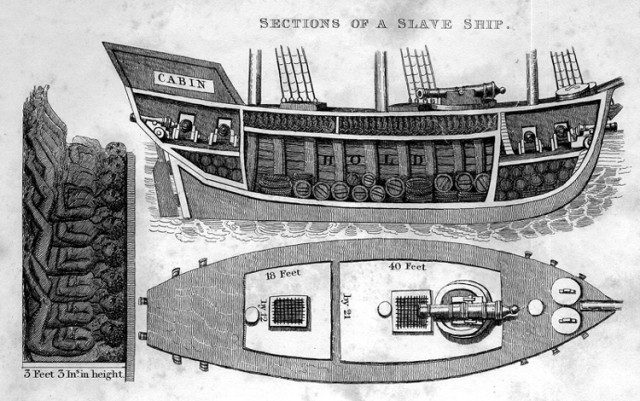
Cross-section of a Brazilian slave ship, taken from “Notices of Brazil in 1828 and 1829” (1830) by Robert Walsh (Image courtesy of Wikimedia Commons)

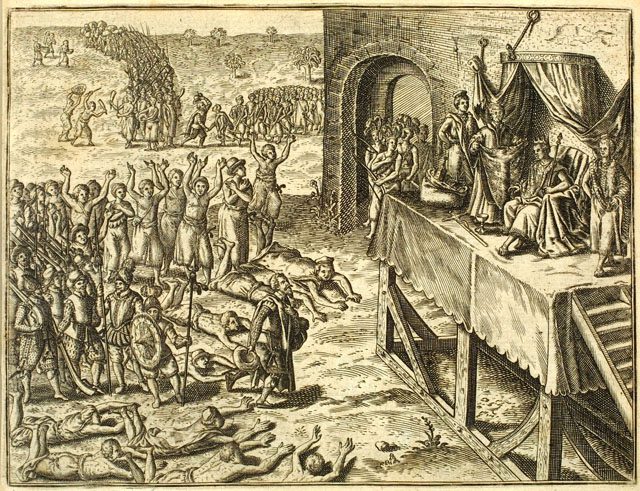
Portuguese officials meet with the Manikongo, who ruled the African Kongo Kingdom (Image courtesy of Wikimedia Commons)

A slave ship heading to Brazil, 1835 (Image courtesy of New York Public Library Digital Gallery)

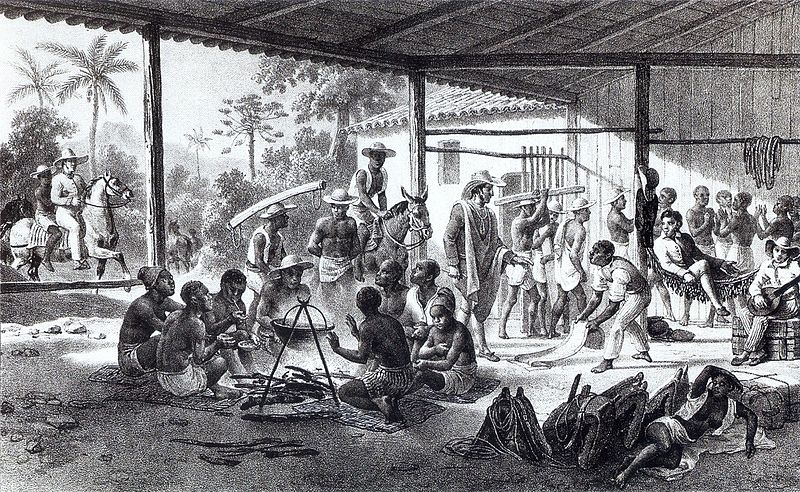
Recently arrived slaves in Brazil on their way to the farms of the landowners who bought them, 1830 (Image courtesy of Wikimedia Commons)


Laws of Chance: Brazil’s Clandestine Lottery and the Making of Urban Public Life by Amy Chazkel (2011)

by Darcy Rendon

Amy Chazkel’s Laws of Chance explores the rise of a cultural phenomenon that has engrossed the Brazilian imaginary since the turn of the twentieth century: the lottery game jogo do bicho. Its multifaceted analysis ties the “animal game” to the rise of urbanization, consumer capitalism, positivist criminology, and the cash economy in the First Republic (1889-1930). Chazkel focuses on the “gray area” between law criminalizing the popular practice and what actually happened to gambling Cariocas in the streets and in the courtroom. The close-to-the-ground view that she offers reveals that ineffectual criminalization—9 out of 10 cases ended in acquittal—forged a symbiotic relationship between state actors and city dwellers. She intervenes in the study of urban public life by showing that, like sumptuary laws, anti-vice laws were not premodern projects, as scholars have argued, but features central to the governing of cities and the growth of informal economies in Latin America.

image

Chazkel effectively weaves archival records, photographs, and charts to tell a larger story about bureaucratic efforts to control public spaces and retail economies in modernizing republican Brazil. The game began as a state-sanctioned daily drawing in 1892 to increase the revenue of Baron de Drummond’s zoo. By 1895, the game had “escaped the zoo” as bicheros and banqueiros operated unlicensed lotteries throughout the city that relied on the zoo’s winning animal and corresponding numbers. State officials responded by banning all games of chance in 1896 and inadvertently giving the game its paradoxical status as a criminal offense and widespread cultural phenomenon. The author principally shows that gambling was not only subject to regulation because of its perceived moral degeneracy, but because its revenue fell outside of the state’s purview. These ill-gotten gains flouted the system of concessions the state crafted to control the consumer economy while maintaining a laissez-faire façade.

Chazkel also examines the ways formal legislative codes were redefined in popular legal customs to show how the criminal justice system used the law to repress the growing network of clandestine games in Rio de Janeiro. The fact that the courts acquitted the majority of defendants reveals that judges had great discretionary powers when it came to interpreting the law.

image

João Batista, the zoo keeper who created jogo do bicho (Image courtesy of Coisas de Florani)

Furthermore, courtroom testimonies expose the law as a pliant tool in the hands of police officers, who used it to line their own pockets and empower themselves through illegal policing methods such as intimidation, blackmail, and the fabrication of evidence. In practice, the legal code meant to suppress games of chance informally taxed them as court fees and fines filled the state’s coffers. The eclectic code also ensured that the game would survive as an extralegal and entrepreneurial aspect of the police profession. Those who suffered in both cases were the ones who, according to Chazkel, could have benefited the most from games of chance: the working poor.

image

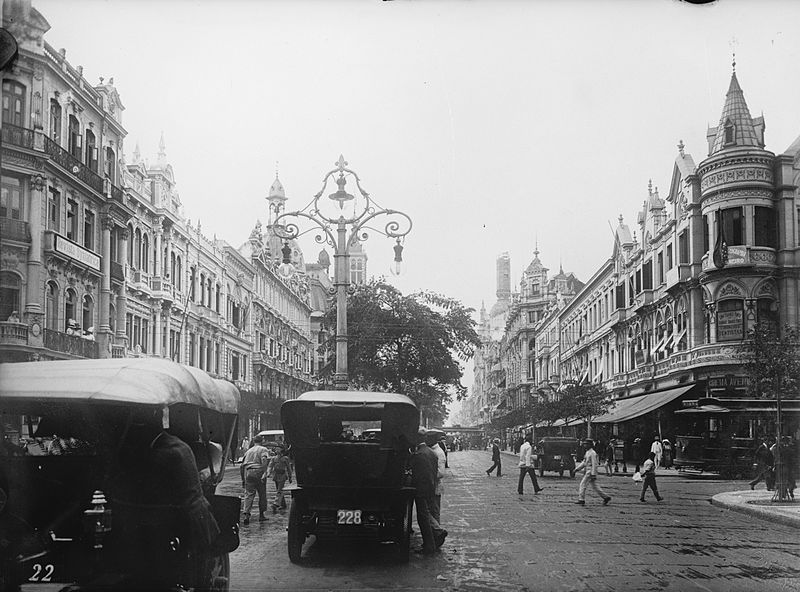
The streets of Rio de Janeiro, ca 1909-1919 (Image courtesy of Library of Congress)

But the informal lottery became a salient feature of urban street commerce. The monetization of Rio’s financial markets trickled down to the laboring classes, as they developed the need to handle currency, and fueled the expansion of petty gambling. Those who bought and sold jogo do bicho tickets understood that the anonymity the milreis granted them made it harder for authorities to trace their monetary transactions. These exchanges also took cover within the established infrastructure of petty commerce. The open-air markets and small shops Cariocas frequented for everyday necessities provided “the perfect medium in which the jogo do bicho would become institutionalized as a normal yet illegal part of Carioca society.” Chazkel convincingly argues that the state regulated petty gambling because the practice threatened their process of enclosure, which sought to control the use of public spaces and privatize leisure activities, and not because it led to moral decay, as reformists maintained.

image

A jogo do bicho ticket (Image courtesy of Coisas de Florani)

Laws of Chance is an engaging and well-written legal and social history that offers a glimpse into the cultural and economic processes that shaped Brazil’s emergence as a modern nation state. One of its greatest achievements is that it forces us to question “the artificial division between jogo and negócio, between play and business, that underlies both historical and contemporary conceptions of social history of the turn of the twentieth century.” Chazkel shows how little playing “the animal game” differed from engaging in legitimate commercial transactions. Rather, the consolidating state created this false dichotomy in its zeal to control all dimensions of consumer commerce. Her historical and theoretical insights will undoubtedly appeal to readers interested in urban studies, informal economies, citizenship, and extralegality in Brazil and Latin America.

You may also like:

Eddie Shore’s review of The Cuban Connection, a history of gambling, smuggling and drug trafficking in pre-revolution Cuba

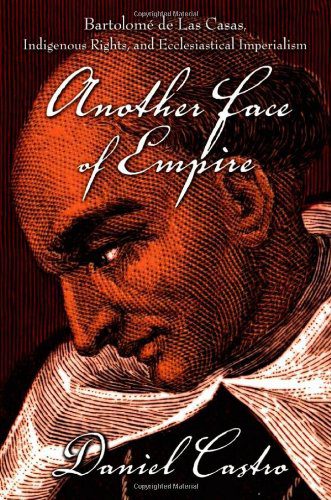
Co-Winner of April Essay Contest: Another Face of Empire: Bartolomé de Las Casas, Indigenous Rights, and Ecclesiastical Imperialism by Daniel Castro (2007)

Bartolomé de Las Casas has been long renowned as a religious reformer, champion of indigenous rights and an advocate of the freedoms of the Indians in the Americas.  He has been lauded as the “Father of America” and “noble protector of the Indians.” Conversely, he has also been much disparaged and criticized by historians. In Another Face of Empire, Daniel Castro examines the life and work of Las Casas and addresses the reasons why the controversial Dominican reformer has been both adored and vilified throughout history.

image

In this in-depth study of sixteenth-century ecclesiastical imperialism, Castro illustrates the goals, accomplishments, and failures of the religious orders in the Americas, and examines the lives of the indigenous people themselves, including the myriad of ways they were perceived, treated and subjugated by the Spanish during the conquest of Mexico.  Although the religious conversion advocated by Las Casas and other reformers of his ilk was thought to provide a “humanitarian element,” Castro stresses that it was nevertheless a “benevolent form of imperialism” forced upon the natives by the Spanish, who considered themselves inherently superior. His discussion of Las Casas” reform efforts in the New World effectively reveals how the priority of Spain during the conquest was not religious conversion, but the “possession of the land and its resources.”

Castro argues convincingly that while Las Casas may have thought his goal to be spiritual conversion, his actions nevertheless contributed to the priorities of the Crown, and that he directly assisted in Spain’s economic imperialism through his tacit acceptance of Spain’s “dominion and jurisdiction over America and its” inhabitants.” His ongoing written communication with the Crown in an attempt to denounce the “atrocities committed in the Indies” by the Spanish colonists was in actuality a conduit for valuable information, and as such, became a “useful tool in the imperialist designs of the monarchy.” Ergo, despite an earnest desire to secure humanitarian treatment for the natives, Las Casas was complicit in the “extraction of wealth from America,” and while he may have sincerely believed in the righteousness of religious conversion, his actions nevertheless became “a viable justification for the Spaniards to conquer.”

image

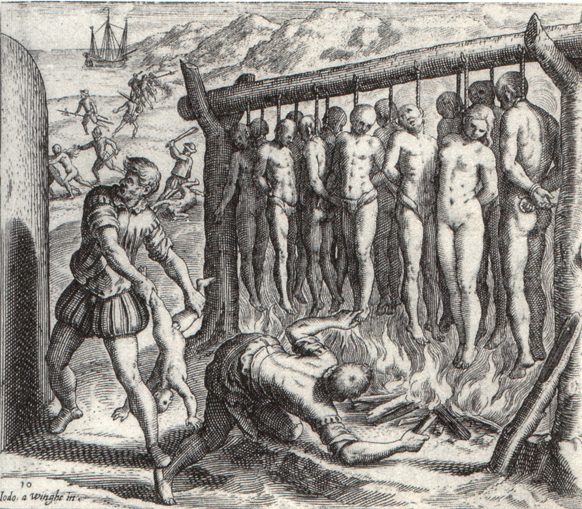
An illustration of Spanish atrocities against native Cubans published in Las Casas’s “Brevisima relación de la destrucción de las Indias” (Image courtesy of Wikimedia Commons)

Castro does not hesitate to reveal the less altruistic face of the “Father of America,” and unabashedly portrays Las Casas as a vociferous defender of indigenous rights, who nevertheless seemed unconcerned with the destruction of their established cultural, social and political way of life at the hands of the Spanish.  Nor does Castro shy away from the dichotomy of Las Casas, who, while proclaiming that the natives should be treated as “equal subjects of the Crown, and not as slaves,” simultaneously advocated the importation of slaves from Africa to work for the colonizers.

Although Las Casas defended the rights of the indigenous people of Mexico, he inevitably served to perpetuate the imperialism and subjugation imposed upon those he was sworn to defend.  A reformer he may have been, and his intentions were undoubtedly good, but he was nevertheless a servant of the Spanish Crown and its” imperialist aims.  Another Face of Empire is a compelling read which affords a fascinating glimpse into the life of a controversial religious reformer who, according to Castro, was the “incarnation of a more benevolent, paternalistic form of ecclesiastical, political, cultural, and economic imperialism.”

And be sure to check out the other co-winning submission from Daniel Rusnak

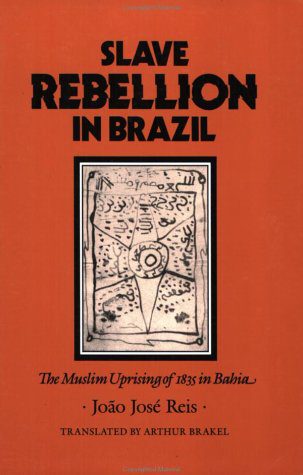
Slave Rebellion in Brazil: The Muslim Uprising of 1835 in Bahia by João José Reis (1993)

by Michael Hatch

Shortly after 1:00am on January 25, 1835, a contingent of African-born slaves and former slaves emerged from a house at number 2 Ladeira da Praça and overpowered the justice of the peace and a police lieutenant. Throughout the night approximately six hundred rebels ran through the streets fighting and vandalizing a number of municipal buildings. Because the leaders of the revolt were African-born Muslims, some historians have characterized the revolt as a jihad. Others downplay the religious elements engrained in the rebellion, emphasizing instead ethnic differences among Africans. Joao Jose Reis effectively establishes a middle ground between these two arguments by describing networks existing across African ethnic and religious lines. Africans from a myriad of ethnic groups and religious affiliations counted themselves among the ranks of the revolt. For Reis, classifying the rebellion as either a religious or an ethnic phenomenon misrepresents the various forces of social solidarity in the Bahian slave society.

image

Reis begins his investigation by carefully crafting the social and economic setting of early-nineteenth-century Bahia. That society was fraught with social inequity and an atmosphere often fractured by revolts. Both free and enslaved peoples throughout the opening decades of the 19th century took to the streets as a means to voice displeasure with some aspect of society. He goes on to show the roles played by the African Muslim population in that setting. and the daily lives of the accused rebels. He ends with an examination of the depth and breadth of the Brazilian response to the revolt and subsequent repressive measures meted out against the free and enslaved Afro-descended community.

Reis utilizes documentary evidence including eyewitness accounts from Brazilian, French, and English sources in order to craft as complete an account of the events of that night as possible. The author then moves from the revolt itself to the various affiliations (religious, ethnic, social) that tied together and drove apart Afro-descended peoples in and around Salvador. Despite the majority of the primary conspirators being Muslims, religious difference did not prove an insurmountable obstacle to coordination or affiliation with the revolt.

image

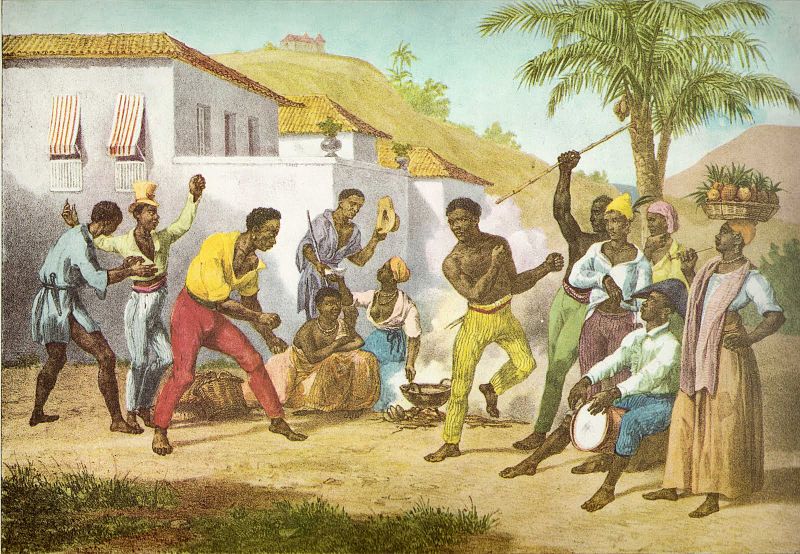
Afro-Brazilian slaves performing “Capoeira,” a Brazilian martial art, 1825 (Image courtesy of Wikimedia Commons)

The Muslim rebels (Malês) “never posed a threat” to ethnic and religious plurality in Bahia, and Reis emphasizes that there is no evidence to support the claim that religious conquest was the rebels’ goal as state officials at the time and some scholars would argue. However, Reis the documentary evidence of the revolt does show that “ethnic identity continued to be an organizing and sociopolitical cornerstone of African life in Bahia.” According to one document translated from Arabic by a Hausa slave, “They were to have come… taking the land and killing everyone in the white man’s land.” Other documents from African-born slaves describe a desire to kill all whites, mulattoes, and native-born blacks, while testimony from the trials indicate a desire to enslave mulattoes.

image

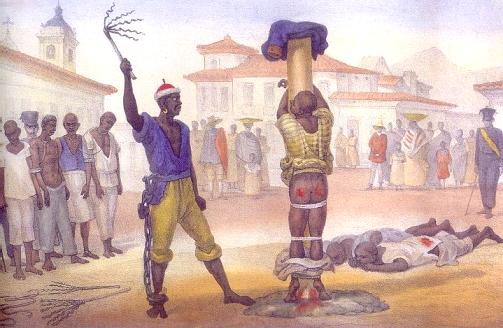
Public flagellation of a slave, Rio de Janeiro, 1834-1839 (Image courtesy of Wikimedia Commons)

Reis also uncovers the tensions within the Afro-descended communities of Bahia, most notably, the friction between African-born and Brazilian-born people of color. Brazilian-born (crioulo) free people of color made up a large fraction of the city police, regular army, and slave hunters. In a way, Reis characterizes the face of oppression as Afro-Brazilian because many crioulos were viewed by African-born slaves as the most apparent beneficiaries of the slave society and economy. The author takes pains to emphasize the role that ethnicity played in the revolt, while tempering it with religious undertones. The relationship between religion and ethnic plurality played a key role in the revolt, and although “Islam is not an ethnic religion… it may have been ethnic in the 1835 scenario.” Although the religious motivations for the revolt were secondary to ethnic ones, religion was an important element in the development of a specific ethnic and cultural affiliation, which manifested itself, in this case, as confrontation. Reis utilizes the trial documentation as a window through which to view everyday life under the auspices of urban slavery. The revolt then becomes the vehicle to understanding a wider social and cultural history; a reversal of the introductory chapters which supply a portrait of the society which nurtured a rebellious tradition.

image

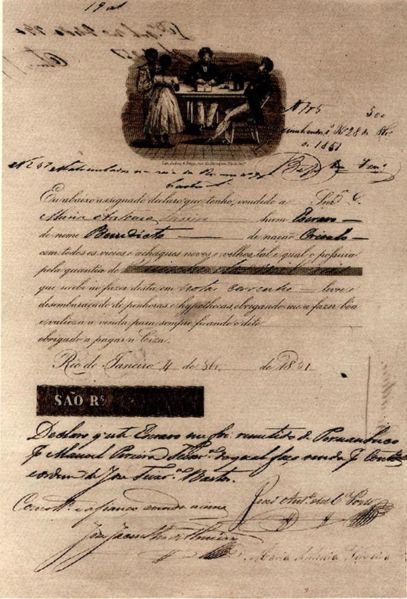
Receipt of a Rio de Janeiro slave sale, 1851 (Image courtesy of Wikimedia Commons)

The concluding chapters of Slave Rebellion in Brazil describe the response from governmental and political authorities and repression of the Afro-descended population of Bahia. In the immediate aftermath floggings, deportations, and death sentences characterized a swift and violent response to the revolt. After appeal and deliberation, however, the courts commuted many executions. Tomás, a Nagô slave and one of the leaders of the rebellion initially sentenced to death on March 10, had his execution commuted to 800 lashes on June 20. Reis argues that 1835 was a watershed moment because the response to the rebellion represented a systematic and far-reaching effort “exorcize [sic] anything African” from Bahian society. Additionally, the author hints that the post-1835 repression symbolized an effort on the part of Brazilian officials to develop slavery as a firm foundation for the newly independent nation. Of all assertions in this work, this is the least substantiated by evidence, and appears more a conjecture regarding official efforts to “whiten” society.

Slave Rebellion in Brazil is a magnificent example of interpretative historical analysis based on rigorous archival research. Slave Rebellion represents a dramatic shift in the historiography of Latin American and Brazilian slavery, emphasizing both slave agency and the importance of a plurality of African ethnic identities in the development of Afro-Latino cultures rooted in the Atlantic slave trade.

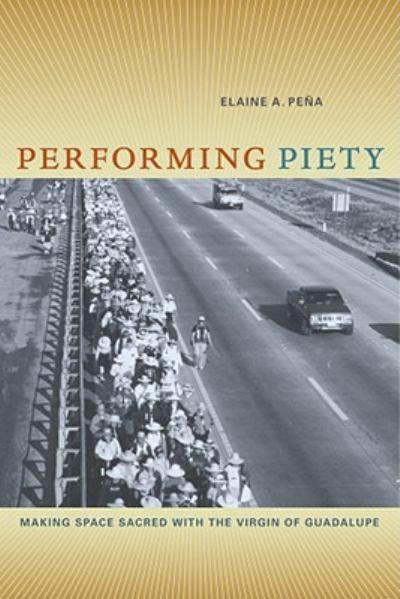
Performing Piety: Making Space Sacred with the Virgin of Guadalupe by Elaine A. Peña (2011)

by Cristina Metz

A Google image search for “Our Lady of Guadalupe” returns millions of images. This Catholic icon appears on paintings, coffee mugs, tattoos, and more. Her image is an international symbol for Catholics and non-religious alike. For Mexicans in particular, la Virgen (as she is known to them) is more than a religious symbol; she is a national symbol. In Performing Piety: Making Space Sacred with the Virgin of Guadalupe, anthropologist Elaine A. Peña explores the intersection of religious practice and national identity through the embodied practices of Marian devotees at three shrines: Tepeyac, Mexico City, Mexico; Des Plaines, Illinois; and Rogers Park, Chicago, Illinois.

performing-piety-making-space-sacred-with-the-virgin-of-guadalupeThe story of la Virgen begins in December 1531, when she appeared to Juan Diego, an indigenous peasant, as he walked along a hill in Mexico City called Tepeyac. This apparition story culminates in the Virgin imprinting her image onto Juan Diego’s tilma, a cloth garment. The site of her apparition became an important shrine in the newly-colonized city. Holy places like this one served an instrumental purpose for the Spanish spiritual conquest. Colonial officials reinforced the legitimacy of the shrine by incorporating it into the actual infrastructure of the city so that by 1748, the path leading to the shrine had become a major entryway into the city. The site’s importance as a holy place has grown tremendously since the colonial period. Together with the Basilica of Our Lady of Guadalupe, which houses Juan Diego’s tilma, Tepeyac is today one element of a much larger holy space known as La Villa. This Marian shrine attracts millions of visitors from around the world each year.

One important group of annual visitors are women pilgrims, peregrinas. There are four official, all-women’s pilgrimages to la Villa that set out from Mexican states, such as Michoacán and Morelia, usually in the days leading up to December 12, the holy feast day of la Virgen. The peregrinas walk from their hometown for days, braving heavy traffic, weather, muscle cramps, fatigue, sleep deprivation, and other hardships. Women perform this “devotional labor” for a variety of reasons. Some walk out of a sense of tradition, others are holding up their part of a bargain they made with la Virgen, and still others do so as a reprieve from family and other day-to-day obligations.imageOnce they arrive at the Basilica at Tepeyac, the women attend an early-morning mass then take a ride on a conveyor belt that will transport them to the sixteenth-century image of the Virgin. Peña describes the moment of passing in front of Juan Diego’s tilma as a profound one for which words do not suffice. Peña joined two of these groups on their ritual of devotion to la Virgen. Her active participation, which Peña calls “co-performative witnessing,” helped her realize that while the Virgin of Guadalupe brought people together to a specific location, it was their embodied practices—prayer, song, dance, shrine maintenance—that imbued these sites with holiness.
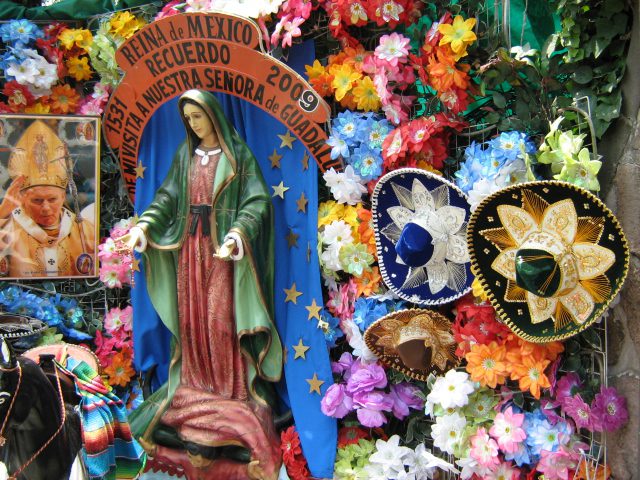
Devotees of the Virgin who migrated to the United States have created new sacred spaces. In 1987, Joaquín Martínez, a Mexican national living in Des Plaines, Illinois, received a statue of the Virgin from his family in San Luis Potosí. He began soliciting the help of architects and collecting donations to build a shrine for the statue. After nearly two decades, Martínez and the Guadalupan community in Des Plaines inaugurated what came to be known as the Second Tepeyac, a replica of the Tepeyac outdoor sanctuary in Mexico City. High-ranking clergy from Mexico City’s Basilica also assisted the 2001 inauguration. Though it imitates the original, Second Tepeyac has become a multipurpose site. It is a devotional destination for the local area and community organizers hold citizenship workshops there for an increasingly diverse congregation. As Peña sees it, this site is “a sacred space and an inclusive international political haven.”

While Second Tepeyac has achieved a degree of local and transnational legitimacy, a Guadalupan shrine in Rogers Park, a neighborhood in Chicago’s far north side, has not. The area’s early settlers were European immigrants. Today, the population of Rogers Park is divided equally among white, Black, and Latino residents. Demographic changes have caused tensions, especially among longtime white residents and their new Mexican neighbors. These came to a head in 2003 over a contested Guadalupan shrine.

In July 2001, the Virgin appeared to a woman, originally from Guanajuato, while she waited at a bus stop. The woman and area residents built a shrine around the tree where the Virgin’s image appeared and they venerated her by singing traditional songs, such as “Las apariciones Guadalupanas,” which narrates the Virgin’s apparition at Tepeyac. This and other songs are also the ones that female pilgrims in Mexico sing on their pilgrimages. The neighborhood Catholic church kept its distance from the shrine and its keepers because it has strict guidelines in determining whether or not to sanction an apparition. This one did not meet those requirements.image

The Rogers Park shrine also encountered resistance from other area residents, city officials, and law enforcement. Devotional practices like prayer meetings and special celebrations at and around the shrine raised the ire of neighborhoods who associated the shrine with immigrants, especially from Mexico, and saw it as an encroachment on what used to be their exclusive space. Police officials also responded negatively. When devotees sought out police protection for their holy site after vandals had destroyed it, they received an offer they could not take. Police officials claimed that the shrine attracted gang activity. They also viewed shrine devotees as potential informants. Through her own participation in meetings with the police and in conversations with community members, Peña observed how police reaction to the shrine only helped to accentuate immigrant fears and distrust of city and law enforcement officials. By November 2003, the Rogers Park shrine had been dismantled. Candles, pictures, letters and other relics that people had left for the Virgin were haphazardly stuffed into city garbage cans.

This study of performing devotion and creating sacred spaces is valuable for many reasons. It offers an insider view of modern-day women’s pilgrimages that exposes the contradictions between a centuries-old practice and modernity. Peña’s study also details the ways beliefs and practices travel, how they stay the same, and how they change. Finally, it also helps us understand the many ways that newly-arrived migrants begin building community in their new home and how they become politically empowered through community-based self-help projects.

Photo Credits:

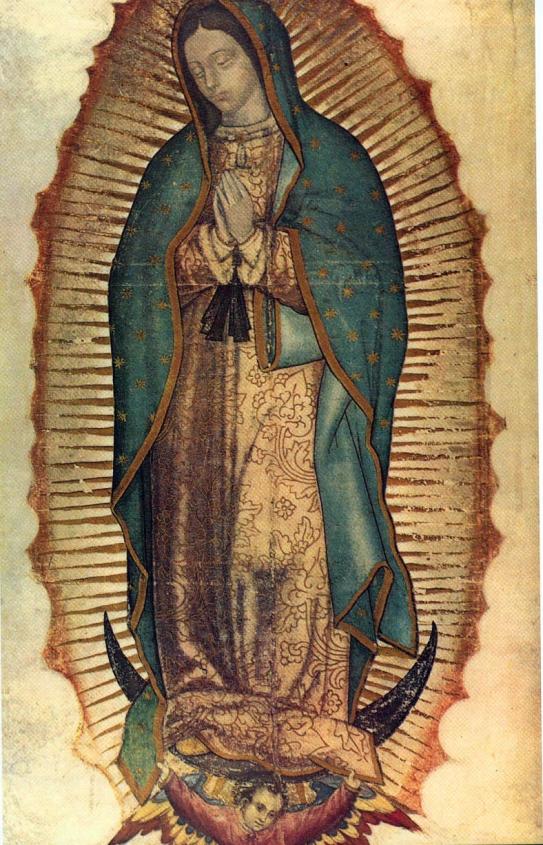
A 16th century rendering of the Virgin of Guadalupe (Image courtesy of Wikimedia Commons)

A devotional doll of the Virgin at the Basilica of Our Lady of Guadalupe in Mexico City (Image courtesy of Wikimedia Commons)

You may also like:

Janine Jones’ review of Devoted to Death: Santa Meurte, the Skeleton Saint

Kristie Flannery’s review of 2012 and the End of the World: The Western Roots of the Maya Apocalypse

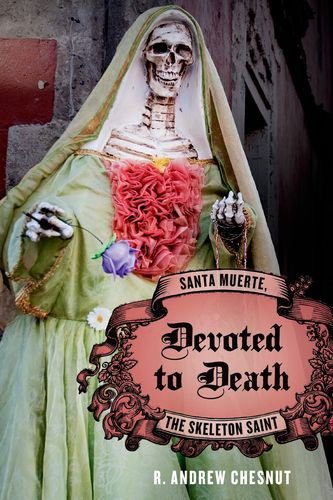
Devoted to Death: Santa Muerte, the Skeleton Saint by R. Andrew Chesnut (2011)

by Janine Jones

During a recent drug bust in Houston, Texas, officers discovered a shrine to a skeleton statuette, robed in green and holding a scythe wrapped in dollar bills in her right hand, imagetobacco lying as an offering at her feet. Votive candles of various colors surrounded the statuette, as well as regularly replenished glasses filled with water and Mexican tequila. The officers had found Santa Muerte.
In Devoted to Death, R. Andrew Chesnut tells the tale of the recent rise in popular reverence for the Mexican folk “saint of death.” A non-canonized, non-sanctioned saint nicknamed “La Huesuda” (Bony Lady) and “La Flaquita” (Skinny Lady), Santa Muerte rivals Mexico’s beloved Virgin of Guadalupe in popular appeal, yet the majority of her devotees are drug kingpins, gangs, the poor and the dispossessed. Angel of death, protector of the impoverished, and provider of love, prosperity, and healing, Santa Muerte combines the powers of what is commonly considered magic, witchcraft, the occult, and religious tradition. Yet, rather than a lurid exposé of the cult surrounding this patroness of criminals, in his book Chesnut offers an insightful ethnographic exploration of the limits of “true” religion and of the practices outside its borders.

In seven chapters, each named for a color of candle lit to the Bony Lady, Chesnut recounts the rainbow of qualities ascribed to Saint Death, and the gifts she bestows on believers. Prayer requests to her must be accompanied by correctly colored candles, believers explain: red brings love and passion; purple, healing; gold, prosperity and abundance; green protection from – or through – the law. As is common in folk religions, Chesnut explains, the relationship between believers and Santa Muerte is “contractual” and based on reciprocity; devotees expect to be rewarded for their devotion. As “godmother and sister” Santa Muerte mends relationships and nurtures the weak, and as angel of death she metes out justice and vengeance. She is “a supernatural action figure who heals, provides, and punishes,” making her “the hardest-working and most productive folk saint on either side of the border,” in many ways “supplant[ing] God himself with her ability to perform miracles.” Perhaps most surprising, particularly for those who associate religiosity with peaceful, morally-focused living, is that though her devotees come from all walks of life, Santa Muerte has a significant following among Mexico’s notorious narcos. Criminal cartels light black candles to her for protection – both from rivals and from the reach of the law – and for death and vengeance to their enemies. Though she is decidedly not an orthodox Catholic saint, devotees model their ritual observance of her upon traditional Mexican Catholic practices, creating shrines with robed skeleton statuettes, leaving devotional offerings – often of tobacco or marijuana – and, of course, lighting votive candles.

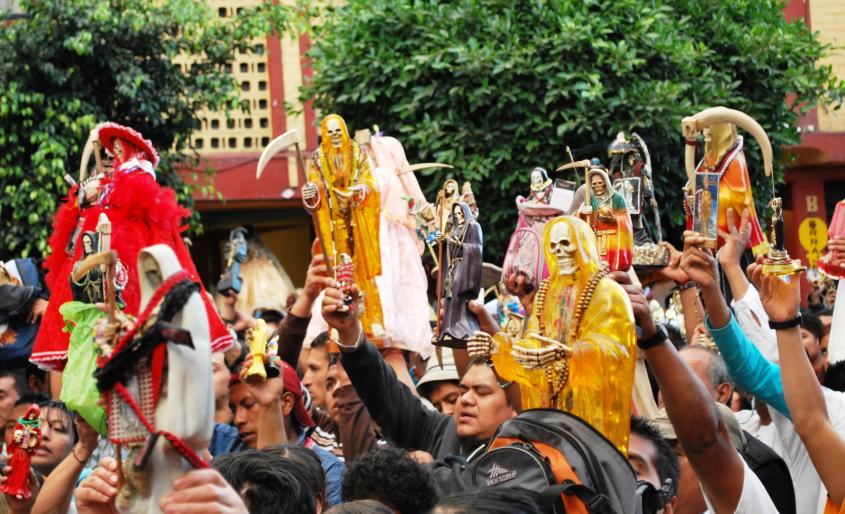
image

Worshipers of Santa Muerte raise devotional dolls to the deity in Mexico City (Image courtesy of Wikimedia Commons)

An ethnographic work based largely on personal interviews and media research, Devoted to Death is written for popular readers. The lack of historical context, along with scant citations, minimal background research or discussion of devotional practices generally, will frustrate scholars. Still, though it is more of a jumping off point than a definitive work, Devoted to Death opens a new window on the nature of religion. Its unusual subject matter makes it a fascinating read.


Further Reading:

More images of the Santa Meurte from Time


And two Houston Press articles about the Santa Meurte:

“Know your Narco Saints: Iconography of the Drug Trade”

“Santa Muerte: Patron Saint of the Drug War”

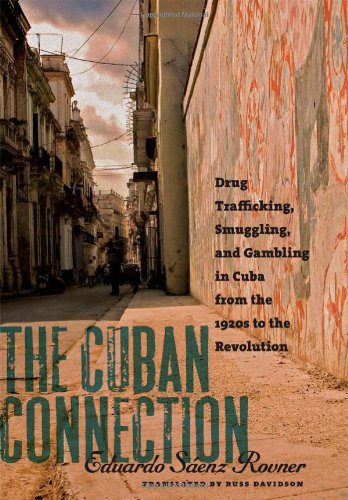
The Cuban Connection by Eduardo Saénz Rovner (2008)

by Edward Shore

In The Cuban Connection, Eduardo Saénz Rovner rethinks Cuba’s position as a hotbed of drug trafficking, smuggling, and gambling and he considers how these illicit activities shaped Cuban national identity from the early twentieth century through the rise of Fidel Castro. Prior scholarship has largely attributed the growth of narco-trafficking in Cuba to widespread poverty and close proximity to the United States. But Saénz Rovner shows that Cuba’s well-established integration into international migration, commerce, and transportation networks, combined with political instability, judicial impunity, and official corruption, facilitated the consolidation of drug trafficking on the island. He rejects earlier portraits of Cuba as a “victim” of international drug trafficking, arguing instead that native Cubans, as well as immigrants living on the island, played active roles in the development of drug trafficking networks. Finally, he suggests that the “drug problem” fueled the Revolution’s anti-yanquí propaganda machine while simultaneously framing Washington’s efforts to topple the Castro government.

CubanConnection_0Saénz Rovner examines the influx of Spanish immigration to Cuba and subsequent U.S. capital investment in the island’s sugar industry as catalysts of  the social fluidity and economic growth that greatly expanded Cuba’s underground economy in the early twentieth century. Havana, with its cosmopolitan character, dynamic economy, and privileged geographic position, attracted both native and foreign-born drug traffickers who built sophisticated networks that linked Cuba to international chains of supply and demand. The 1940s and 1950s saw the expansion of cocaine and heroin trafficking within a triangle connecting the Andean region, Cuba, and the United States. These illegal drug networks operated in a manner that paralleled Cuba’s trade in legal goods and flourished under the umbrella of an economy tied closely to international commerce and to the infusion of people from abroad. Meanwhile, drugs were not only exported from Cuba, but were also consumed locally. Members of the elite favored cocaine, but their privileged place in society generally afforded them protection from authorities. On the other hand, black and mulatto marijuana smokers and Chinese opium addicts were frequently arrested and prosecuted to the full extent of Cuban law.

image

During the Prohibition era in the United States, Cuba became both a source of contraband alcohol for its northern neighbor and a popular tourist destination for North American tourists who flocked to its mafia-run hotels, casinos, and nightclubs. But mobsters did not introduce gambling, drinking, or even drug consumption to Cuba. Rather, casino construction coincided with Cuban government policies to stimulate tourism and compensate for the fluctuations in sugar prices on the international market. Moreover, Saénz Rovner argues that the expansion of narco-trafficking in Cuba was not the result of mafia entrepreneurship, but was instead a consequence of political instability, a climate of permissiveness, and judicial impunity that hampered the efforts of the Cuban government to suppress the drug trade.

Saénz Rover also considers how drug trafficking advanced political ends during the Cold War. While Henry Anslinger and his Federal Bureau of Narcotics (FBN) falsely accused Fidel Castro of promoting the international drug trade, Cuban revolutionaries accused North Americans of having corrupted the island country by engaging in illicit activities in the pre-revolutionary era.

image

Eduardo Saénz Rovner challenges studies that tied drug trafficking in Cuba to local poverty and its physical proximity to the United States. Instead, he argues that Cuba’s relative prosperity and success in attracting people and goods from abroad made the island nation an ideal hub for a trans-national drug trafficking industry. He discredits recent works that allege Fulgencio Batista’s personal involvement in the drug trade, exploring how pressure from the United States in fact compelled Batista to pursue large-scale drug dealers. Saénz Rovner shows that drug traffickers took advantage of the worsening security situation in Cuba, slipping away as the Batista regime focused on quelling the civil war and suppressing political opposition.  Saénz Rover not only sheds light on drug trafficking in Cuba, but also highlights the multinational character of the “drug problem” by linking illicit industries in Cuba to those in North and South America, Europe, and beyond. But while Saénz Rovner provides a groundbreaking, transnational approach through which to explore narco-trafficking, his study of Cuba is hampered by several historical inaccuracies. In particular, he exaggerates the degree to which post-revolutionary trials and executions discouraged U.S. tourism to Cuba in the wake of the guerrillas’ victory, when in fact tourism had already been on the decline in the twilight of Batista’s rule. Finally, Saénz Rovner frequently mentions the activities of various drug traffickers and Mafioso’s, but does not provide a sufficient historical context so that the reader can understand the significance of these actors to the international drug trade.

Photo Credits: 

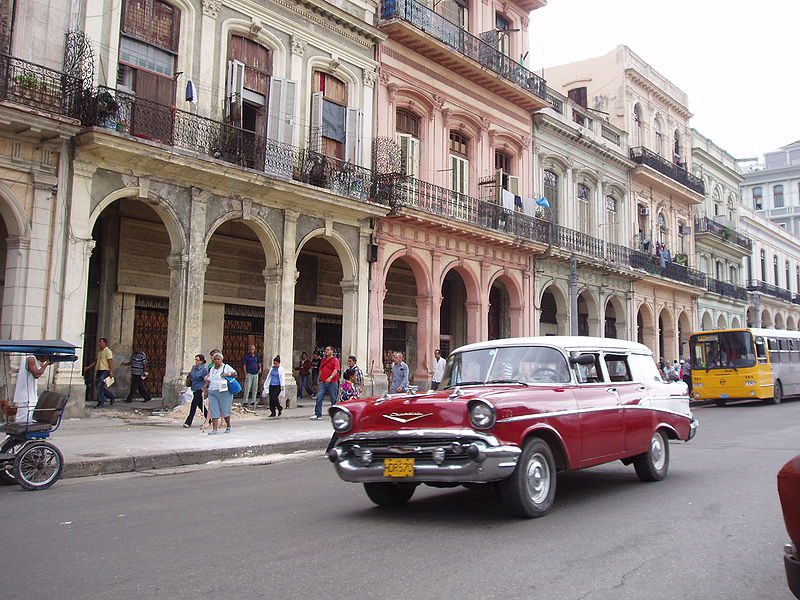
Old Havana, 2008 (Photo courtesy of Wikipedia Commons)

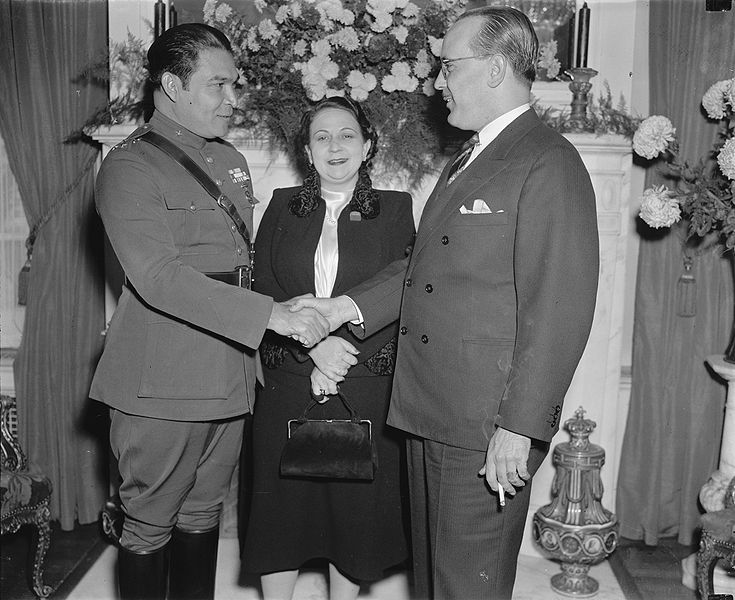
Cuban military dictator Fulgencio Batista and his wife meeting with a US official in Washington, 1938 (Photo courtesy of Wikipedia Commons)

You may also like:

Brian Stauffer’s review of Foundations of Despotism, which examines revolution and state formation in the Dominican Republic


« Previous Page
Next Page »

Recent Posts

  • The Battles of the Alamo and the Myth of Southern Exceptionalism
  • Primary Source: Magic, Metal, and Medicine in Leonhard Thurneysser’s Paracelsus
  • Faculty Spotlight: Dr. Kate Imy
  • La Historia del Tiempo Presente en México: un campo en construcción
  • The History of the Present Time in Mexico: A Field in Formation
NOT EVEN PAST is produced by

The Department of History

The University of Texas at Austin

We are supported by the College of Liberal Arts
And our Readers

Donate
Contact

All content © 2010-present NOT EVEN PAST and the authors, unless otherwise noted

Sign up to receive our MONTHLY NEWSLETTER

  • New
  • Features
  • Reviews
  • Texas
  • Teaching
  • Digital
  • Watch & Listen
  • Authors
  • About