• New
  • Features
  • Reviews
  • Texas
  • Teaching
  • Digital
  • Watch & Listen
  • Authors
  • About

The past is never dead. It's not even past

Not Even Past

Cuba on Not Even Past

When Fidel Castro died last week at age 90 he had survived 11 US Presidents. A dictator who stifled free speech, political opposition, and nonconformity, and a revolutionary who made education, health care, and independence high priorities, his legacy will be debated for many years to come.

We have reported on Cuba regularly over the years and link below to all the articles in our archive.

In our first year online in 2011, Prof Frank Guridy (now at Columbia University) offered an online book discussion group on Cuba, leading discussions of three books you might like to read:

Louis A. Perez, Jr., On Becoming Cuban: Identity, Nationality, and Culture
Jana Lipman, Guantánamo: A Working-Class History between Empire and Revolution

C. Peter Ripley, Conversations with Cuba

We featured Prof Guridy’s own book on the connections between Afro-Cubans and African Americans in February 2012: On the Transnational Black Diaspora. You can see our video interview with him on that page as well.

The Future of Cuba-Texas Relations
The Future of Cuba-Texas Relations
 Jonathan Brown teaches courses on the history of Latin American revolutions. He is now completing a manuscript on “How the Cuban Revolution Changed the World.” Professor Brown took the first of his four trips to Cuba in 2006.

Capitalism After Socialism in Cuba
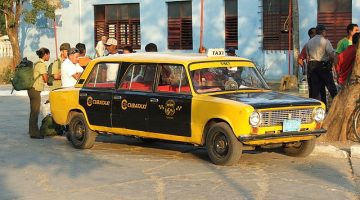
Capitalism After Socialism in CubaThe trip in Cuba from Trinidad to Havana was very hard, as our landlady misled us in order to make a commission off a local cab company.

The Cuban Missile Crisis

The Cuban Missile Crisis
by Priya Ramamoorthy, Kavya Ramamoorthy, Smrithi Mahadevan and Maanasa Nathan Westwood High School Senior Division Group Website Over thirteen tense days in October, 1962, nuclear conflict nearly broke out between the United States and the Soviet Union.

I am Cuba, for Sale (1964)
I am Cuba, for Sale (1964)
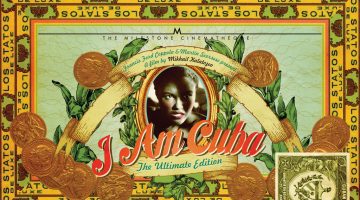
An extravagant party on the rooftop of a Havana hotel. It’s the late 1950s; hedonistic tourism is booming in the City. A band plays loud. Drinks. Laughter. Our line of vision moves from the hotel’s rooftop to a crowd of tourists below, where we see a woman and follow her into the pool. Underwater….Hailed today a classic for its inventive cinematography, “I am Cuba” was virtually forgotten for three decades.

The Cuban Connection by Eduardo Saénz Rovner (2008)
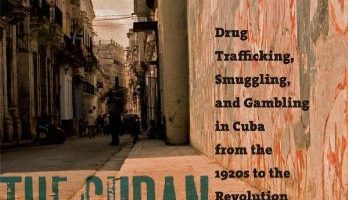
The Cuban Connection by Eduardo Saénz Rovner (2008)In The Cuban Connection, Eduardo Saénz Rovner rethinks Cuba’s position as a hotbed of drug trafficking, smuggling, and gambling and he considers how these illicit activities shaped Cuban national identity from the early twentieth century through the rise of Fidel Castro.

The Old Man and the New Man in Revolutionary Cuba
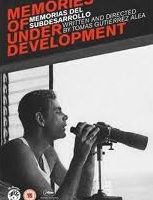
The Old Man and the New Man in Revolutionary Cuba
The forces that created the Cuban Revolution often get lost in polarizing debates about Castro’s Cuba. Two very different films highlight the changes that ripped through Cuban society in the 1950s and early 1960s and created the Cuban Revolution.

Sad and Luminous Days: Cuba’s Struggle with the Superpowers after the Missile Crisis by James G. Blight & Philip Brenner (2002)
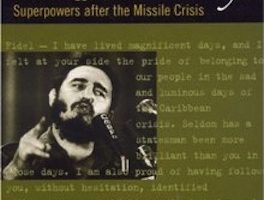
Sad and Luminous Days: Cuba’s Struggle with the Superpowers after the Missile Crisis by James G. Blight & Philip Brenner (2002)
Throughout the Cold War and the decade that followed it, historians assumed that Cuban and Soviet leaders cooperated closely in the events associated with the Cuban missile crisis. Havana and Moscow, so went the conventional wisdom, put their lots together in a challenge against U.S.


Che in Gaza: Searching for the Story Behind the Image
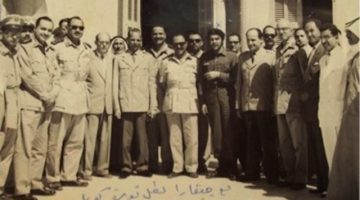
Che in Gaza: Searching for the Story Behind the Image
On June 18th 1959, dressed in full army fatigues and accompanied by several comrades exhibiting an equally imposing revolutionary appearance, Che Guevara landed in Gaza.


Operation Urgent Fury: A Revolution Aborted
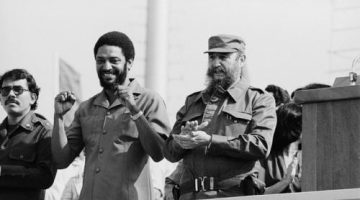
Operation Urgent Fury: A Revolution Aborted
On the evening of October 27, 1983, President Reagan addressed the American people on live television to discuss unsettling events taking place on the Caribbean island of Grenada.


.

Che: A Revolutionary Life by Jon Lee Anderson (2010)

Che: A Revolutionary Life by Jon Lee Anderson (2010)
In July 1997, a Cuban-Argentine forensic team unearthed the skeletal remains of Comandante Ernesto “Che” Guevara in Vallegrande, Bolivia. Thirty years earlier, on October 9, 1967, CIA-trained Bolivian Special Forces agents had captured and executed the thirty-nine-year-old revolutionary before dumping his body in a shallow pit near a dirt runway.

Making History: Takkara Brunson
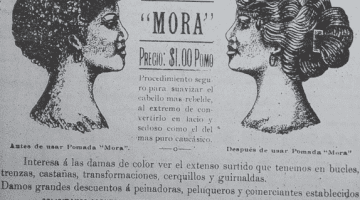
Making History: Takkara Brunson
In the sixth installation of our new series, “Making History,” Zach Doleshal speaks with Takkara Brunson about her research on Afro-Cuban women in pre-revolutionary Cuba. Brunson’s research experiences in Cuba, and stories of the fascinating women who form the core of her research offer a taste not only of life and work in a place few Americans get to visit, but also a window into the making of a social and cultural historian.


From Baseball to Politics
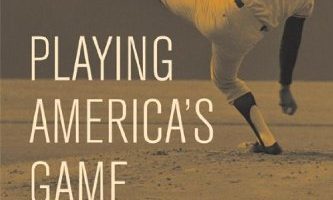
From Baseball to Politics

New works on Afro-Cubans and African-Americans


Che’s Afterlife: The Legacy of an Image by Michael Casey (2009)
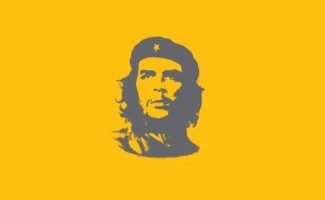
Che’s Afterlife: The Legacy of an Image by Michael Casey (2009)
How can we make sense of the coexistence of bumper stickers depicting Rambo and Che Guevara in a traffic jam in Bangkok, Thailand? Although this book never answer its opening question, such an insight might allow us to understand Casey’s attempt to explore the different uses of an image that remains remarkably vital decades after its capture.


Latin America’s Cold War by Hal Brands (2010)
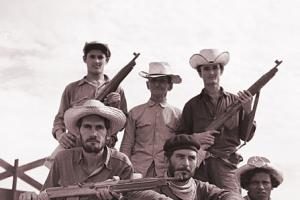
Latin America’s Cold War by Hal Brands (2010)
In this new book, covering the entire period of the Cold War in Latin America, Hal Brands restores agency and initiative to Latin American actors, in the process demolishing many of the platitudes that have governed much of the U.S.foreign policy literature.image Based on prodigious research in a dizzying array of U.S., Latin American, and even East German archives, Brands’s work advances a trenchant interpretation that cannot be ignored.

Conflicting Missions: Havana, Washington, and Africa, 1959-1976 by Piero Gleijeses (2002)
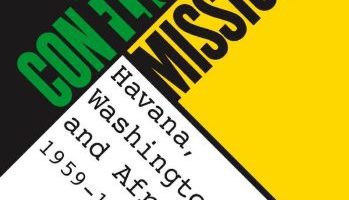
Conflicting Missions: Havana, Washington, and Africa, 1959-1976 by Piero Gleijeses (2002)
Conflicting Missions: Havana, Washington, and Africa, 1959-1976, takes readers beyond the familiar categories of the Soviet-American Cold War. In the wake of decolonization, as charismatic national leaders emerged across Africa – from Algeria to Zaire – statesmen in Washington and Moscow waited anxiously to see if the new governments would align with democracy or communism.
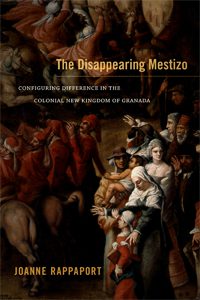


The Disappearing Mestizo, by Joanne Rappaport (2014)

By Adrian Masters

Disapearing Mestizo coverFrom Mexico to Chile, Latin American intellectuals, artists, and activists proudly proclaim that they, their nations, and their cultures were born from a mix of Spanish and Indian heritage. The adjective for this mix is “mestizo;” individuals of Spanish-Indian descent are “mestizos.” These terms, along with the general word for mixing (mestizaje), have become increasingly prominent in North American scholarship in recent years, especially since the 1960s Civil Rights Movement, when many U.S American activists with Latin American heritage sought to explore and embrace their Indian roots.

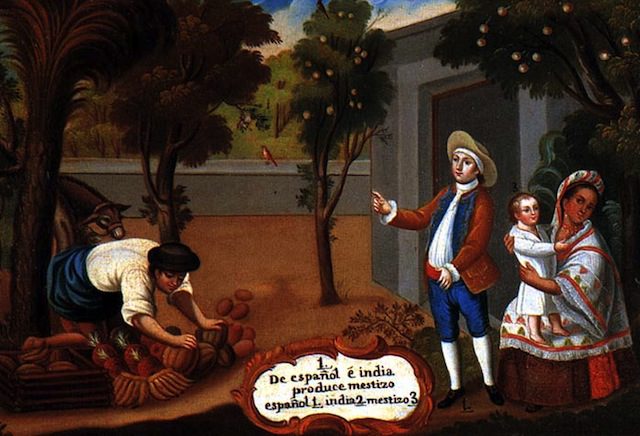
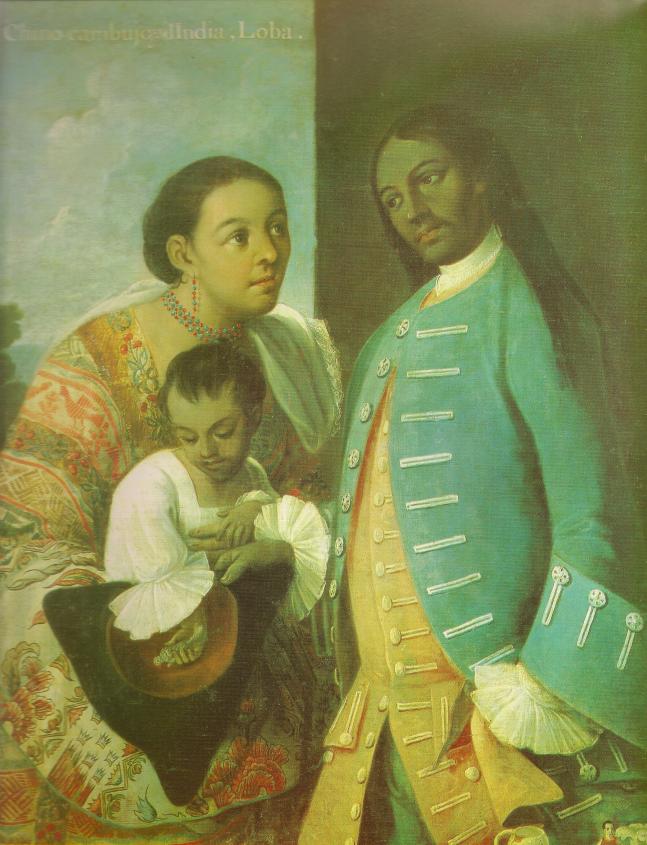
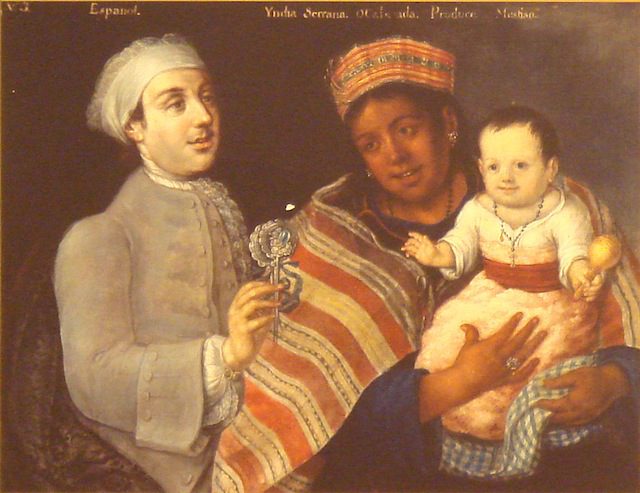
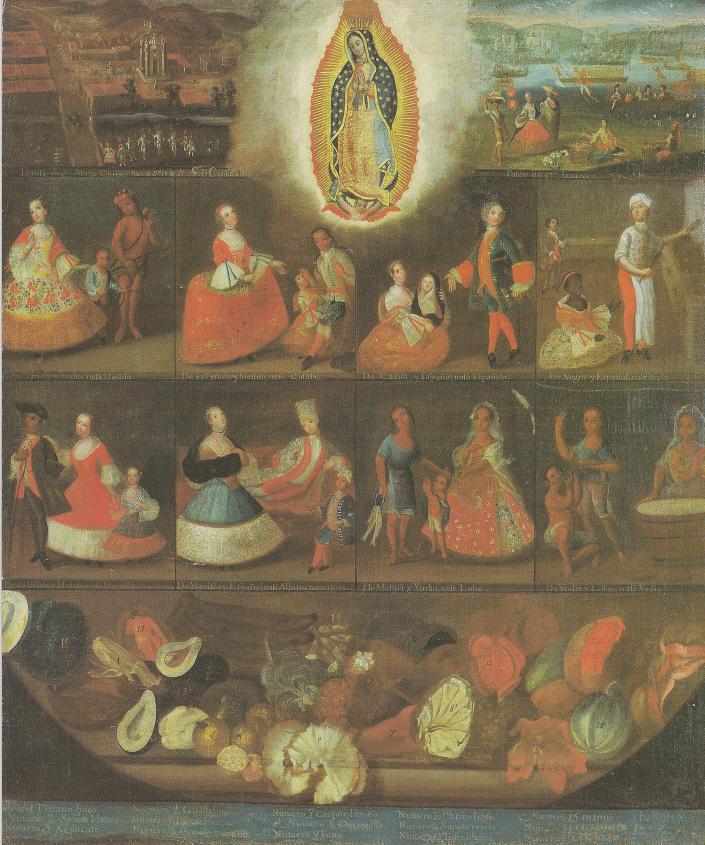
The category of mestizo first arose in the 16th century Spanish Empire. In The Disappearing Mestizo, Joanne Rappaport takes readers to 16th, 17th, and 18th-century Colombia, where she questions whether mestizos constituted a real social group. Many scholars have treated colonial mestizos as a sort of ethnicity or collective, a concept frequently influenced by the era’s spectacular paintings of genealogical mixes between Africans, Indians, and Spaniards. These colonial Mexican paintings create the appearance of a hierarchical society, a “caste system,” where a colonist would fall into one of dozens of categories and would live his or her life according to the privileges and limitations of that group. The idea of the caste system has recently come under the scrutiny of contemporary scholars, who argue that the rigid idealized world of caste paintings never materialized in day-to-day life.

Casta painting

Casta painting by Luis de Mena

Rappaport’s book builds on this growing suspicion towards the caste system and colonial-era terms like the mestizo. Whereas Africans, Indians, and Spaniards often had languages, histories, and legal statuses that brought them together, Rappaport argues that mestizos were adrift between colonial ethnicities. This meant that they appeared and disappeared from colonial documents with ease, “becoming” Indians or Spaniards at times and becoming mestizos at other times. If there were no mestizo sociological or ethnic group, Rappaport reasons, we must set out to determine not “Who is a mestizo?” or “What is a mestizo?” but “When and how is someone a mestizo?”

Casta Painting from the end of the 18th century or beginning of 19th century. Author unknown. The caption reads "From a Spanish man and an Amerindian woman, a Mestizo is produced"

Casta Painting from the end of the 18th century or beginning of 19th century. Author unknown. The caption reads “From a Spanish man and an Amerindian woman, a Mestizo is produced”

This book seeks to answer why colonists called others mestizos, through a handful of fine-grained “ethnographic” vignettes that appear in the archives of Spain and Colombia. The author begins by exploring the importance of markers of difference that go beyond 19th and 20th century markers of “race:” religion, appearance, dress, blood, honor, reputation, occupation, and even ideas regarding breast-milk (ideas that colonists summarized as calidad, or “quality”). Readers meet a moreno (dark-skinned man) who seduces a high-born Spanish woman with love letters but shames and threatens the reputation of her family when he reveals his physical appearance to her. A half-Spanish, half-Indian girl brings dishonor upon her father by dressing as an Indian. A distinguished conquistador’s enemies accuse him of being a Moorish slave from Oran, throwing his Christian genealogy and virtue into question. These cases force us to think beyond “race” as a simple category of genetic difference and to focus instead on the cultural reasons why colonists did or did not use so-called caste categories when describing themselves and others.

Casta painting by Miguel Cabrera

Casta painting by Miguel Cabrera

Rappaport then turns her attention directly toward mestizos (and occasionally mulattos), presenting various stories in which Crown officials struggled with caste terms. There is Juan de Medina, the self-proclaimed Indian whose enemy, an Indian, insults him as a mestizo after a bloody brawl involving a severed nose. When a tax collector confused Juana Galván for a tribute-paying indigenous woman, she complained that she had a Spanish father and was in reality a mestiza (colonial Iberians and their mestizo children did not normally pay taxes). Rappaport also notes the cases of mulattos Lázaro, who lived and paid taxes as an Indian, and Manuel Rodríguez, who lived among Spaniards and Indians, even as he terrorized them with robberies and rape. There was Ana de Mendoza, an elite mestiza who became “hispanized” by her marriage, and Juan Birvez, a man who witnesses outed as a mestizo as he lay in bed with the daughter of a powerful landowner. Birvez, in turn, revealed that the daughter was a mestiza herself. Rappaport concludes from these episodes that the matter of who was and was not a mestizo was highly contingent on the time, the place, and who was doing the naming. She argues that mestizos and mulatos did not live in a caste system; they moved in and out of their categories with ease.

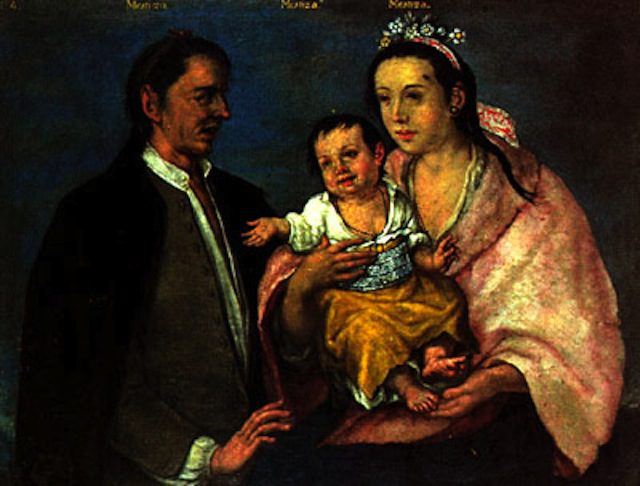
A painting of a Spanish man and a Peruvian indigenous woman with Mestizo child, 1770

A painting of a Spanish man and a Peruvian indigenous woman with Mestizo child, 1770

Some mestizos, however, experienced very tangible discrimination at the hands of Crown officials and clergymen. One was the famous Gonzalo García Zorro, who became a cathedral canon in spite of stiff resistance from members of the Church. His brother Diego was less fortunate. He had close ties to Indians and found that townspeople disdained him and his pretensions to public offices due to his mixed lineage. A similar case, well known among historians of colonial Colombia, was the struggle of two mestizo “caciques” – Indian chiefs – to win the recognition of the Crown for their position. Both Alonso de Silva and Diego de Torres were sons of conquistadors and Indian women, and both lost their rights to act as caciques when their enemies raised questions about their eligibility. Mestizos in colonial Colombia were often either too Spanish or not Spanish enough, depending on the position they sought to achieve.

Casta Painting from Peru, 1770.

Casta Painting from Peru, 1770.

Rappaport’s book does admirable work at dismantling the myth of the caste system, showing that colonists hardly ordered themselves into clean-cut categories. This observation brings up a mystery that the author does not answer, however. Why did Crown officials and clergymen frequently describe individuals as mestizos to begin with?

Rappaport all but ignores the problem of mestizo laws – the Crown decrees that insisted that mestizos not enter the priesthood, not live in Indian towns, not act as caciques, and so forth. This is a critical weakness in a work that pivots around the reasons colonists categorized one another.

Mestizo laws are difficult to understand at first glance. My research into the sixteenth-century creation of the term reveals more chaos than clarity. For every law forbidding mestizos’ entry into the priesthood, for example, there are two allowing it. The same follows for many similar decrees regarding mestizos’ rights to carry arms, inherit land, and so forth.

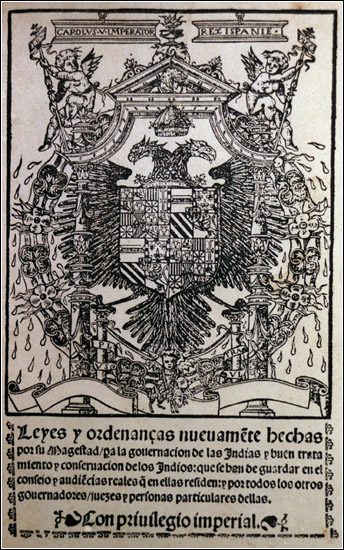
also known as the New Laws of the Indies for the Good Treatment and Preservation of the Indians, were issued on November 20, 1542, by King Charles I of Spain and regard the Spanish colonization of the Americas.

Front cover of the New Laws of the Indies for the Good Treatment and Preservation of the Indians. The New Laws were issued on November 20, 1542, by King Charles I of Spain and regard the Spanish colonization of the Americas.

The solution to this mystery lies in the nature of Spanish imperial law, and has important consequences for the practices of naming mestizos. The King desired close contact with his colonists – from the humblest Indian to the richest Spaniard. He also desired to resolve conflicts and avoid bloodshed. The Monarch and his Council thus oversaw all sorts of legal disputes, simultaneously providing colonists with mediation and collecting hordes of information on the New World all at once. It was in this flurry of colonial petitions to the Crown that the meaning of the term mestizo arose. Countless petitioners thus created different meanings for the term mestizo from below, in the process sowing legal chaos on a grand scale.

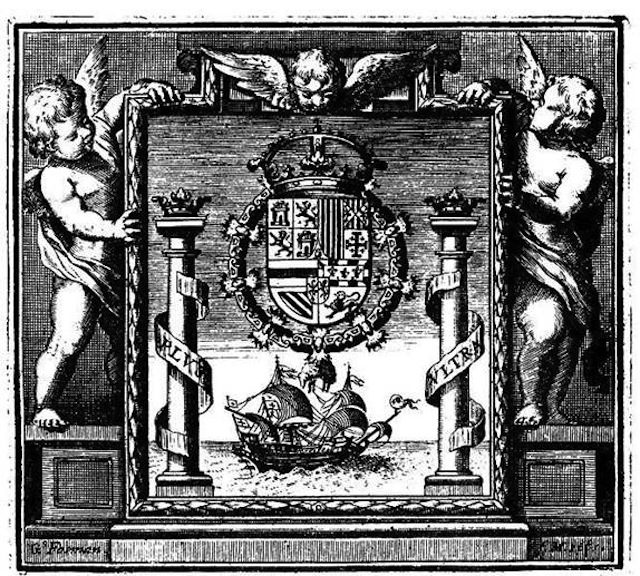
Emblem of the Council of the Indies from the frontispiece of the 'Recopilacion de leyes de los Reynos de Las Indias', Madrid, 1681.

Emblem of the Council of the Indies from the frontispiece of the ‘Recopilacion de leyes de los Reynos de Las Indias’, Madrid, 1681.

The archives reveal that the true question baffling colonists and officials alike was how to deal with the petitioner-driven, ever-evolving world of mestizo law. The true “disappearing” or ‘”floating” aspect of mestizos was their shifting and contradictory legal status. Thus to understand why mestizos seem to disappear, we must open a new inquiry into the nature of Spanish imperial law. We need a case-by-case account into each specific petition and counter-petition that shaped this category.

The Disappearing Mestizo suffers from this inattention to legislation on mestizos. For one, it often sinks into an “ethnographic present” – the illusion among many anthropological writings that cultures remain stable over time – because it does not recognize how decrees on mestizos could abruptly reshape ideas about mixture. A second problem is Rappaport’s overstatement of Crown officials’ difficulty in properly identifying mestizos. In reality, most Crown functionaries could determine a person’s part-Indian, part-Spanish genealogy simply by requesting an individual provide it. Mestizo laws had little to say about more extreme cases, where a colonist was an orphan, illiterate, or too marginal in Spanish society to merit official interest. This is not a reflection of difficulty so much as indifference on the part of bureaucrats and secretaries.

Many of the concepts about race that emerged during European colonialism remain with us (in different ways) in the 21st century. Virtually all Latin American countries point to the contributions of both Spanish and indigenous peoples in shaping what they call their “mestizo nations.” Some scholars today go so far as to argue that immigration and intermarriage are returning North America to colonial times, back to the era of the mestizo. Rappaport’s book will therefore be valuable not only to historians of colonial Colombia and scholars of race, but also to a reading public from Chile to Canada that is increasingly interested in the “mixing” of peoples who created their countries. As more and more authors assert that the future itself is mestizo, the next step for scholars – a step already taken by Rappaport – will be to think deeply about that category, its history, and its hidden baggage and complexities.

Joanne Rappaport, The Disappearing Mestizo: Configuring Difference in the Colonial New Kingdom of Granada (Duke University Press, 2014)

bugburnt

You may also like:

Ann Twinam discusses her work on Purchasing Whiteness in Colonial Latin America

Naming and Picturing New World Nature, by Maria Jose Afanador LLach

Kristie Flannery’s review of Imperial Subjects: Race and Identity in Colonial Latin America, edited by Andrew B. Fisher and Matthew D. O’Hara (2009)

Susan Deans-Smith on the Casta Paintings


For more on casta paintings:

Magali M. Carrera, Imagining identity in New Spain: Race, Lineage, and the Colonial Body in Portraiture and Casta Paintings (2003)

María Concepción García Saiz, Las castas mexicanas: un género pictórico americano (1989)

Ilona Katzew, Casta Painting: Images of Race in Eighteenth-Century Mexico (2004)


bugburnt


All images via Wikimedia Commons.


The Future of Cuba-Texas Relations

By Jonathan C. Brown

Jonathan Brown teaches courses on the history of Latin American revolutions. He is now completing a manuscript on “How the Cuban Revolution Changed the World.” Professor Brown took the first of his four trips to Cuba in 2006. On the very day that the government announced President Fidel Castro’s incapacitating illness (August 1), Brown was touring the prison cum-museum where Fidel and Raúl Castro spent two years as political prisoners. Brown heard the news of the leadership change from the museum guide herself at the moment she was showing him the prison beds these two revolutionaries occupied in 1954. What a memorable moment for an historian!Since then, Professor Brown has busied himself negotiating the exchange agreement between the University of Texas and the Universidad de La Habana, organizing two UT conferences on Cuba, bringing three Cuban scholars to campus as visiting professors, reading thousands of documents on U.S.-Cuba relations, and delivering dozens of talks and papers on his research. Here are his thoughts on the implications for Texas-Cuba connections.

Within a week of President Barack Obama’s announcement about the renewal of diplomatic relations with Cuba, the Austin American Statesman ran a cartoon entitled “America Prepares to Invade Cuba.” It depicted a line of passengers dressed in beach wear boarding a plane heading to Havana.

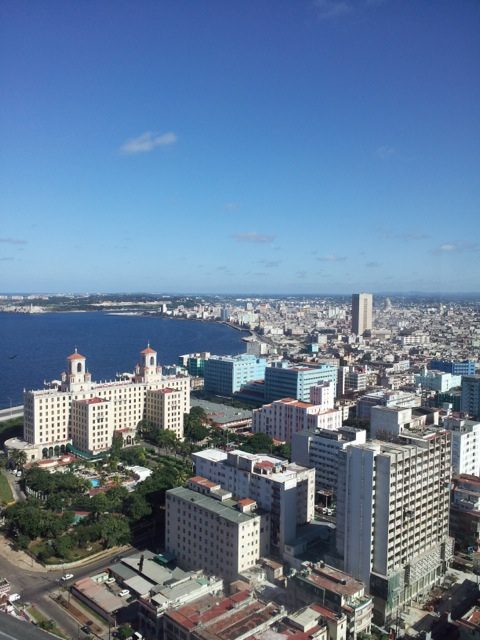
The skyline of Havana has scarcely changed since 1959. The building below left is the Hotel Nacional, built in the 1920s. Photo by Reggie Wallesen.
The skyline of Havana has scarcely changed since 1959. The building below left is the Hotel Nacional, built in the 1920s.

Perhaps the cartoonist exaggerated, for President Obama merely loosened existing restrictions. Cuban Americans may travel to the island several times per year and send more money to relatives there. Non-Cuban Americans may travel there more freely, although special licenses are still required. The U.S. government will allow Americans to use their credit and debit cards in Cuba. The president may have cut the Gordian Knot ending 54 years of mutual hostility and eliminating one of the last vestiges of the Cold War. But he did not sever it completely.

Likely presidential candidate Jeb Bush has already stated that, if elected, he would reinstate travel restrictions. With two conservative Cuban Americans also likely to run for the presidency, including Senator Ted Cruz of Texas, the Cuban Embargo will remain a lively issue of debate. By the way, Jeb Bush holds a BA in Latin American Studies from the University of Texas at Austin.

The Cold War between Washington and Havana will not end until Congress says it’s over. That may not happen any time soon. Many Senators and Congressmen from Texas oppose the repeal of three pieces of “Cuban boycott” legislation dating from 1963, 1992, and 1996. Together these laws restrict travel, trade, and investment.

What changes may we expect in Texas-Cuba relations in the near term? More Texans will visit Cuba, not technically as tourists but in “cultural” exchanges. Students too. Literature professor César Salgado already is planning to take UT students on a Maymester trip to Cuba at the end of the spring semester.

President Obama’s announcement has ended restrictions on the use of U.S. credit and debit cards in Cuba—a positive boon that will enable Texans to compete for hotel rooms and rental cars on a par with travelers from Mexico and Canada. United and American Airlines are contemplating direct flights to Cuba from Houston and Dallas. For now, we Texans have to go through special charter flights from Miami International Airport. Of course, there are illegal alternatives that I do not recommend.

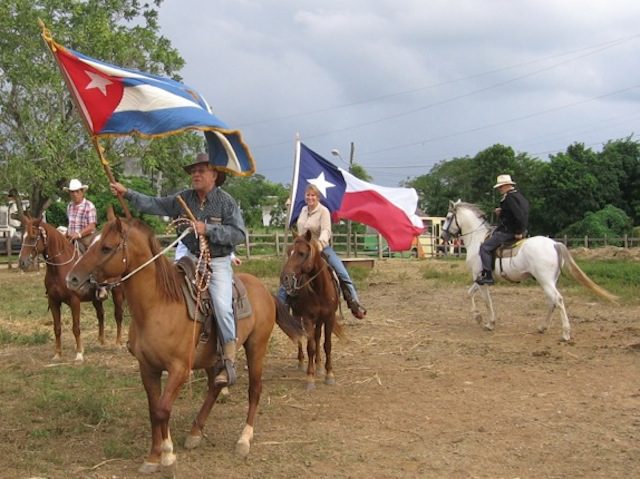
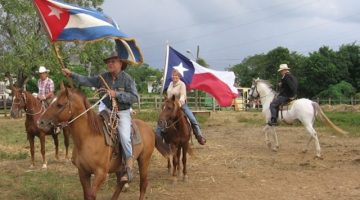
The Cuban and Texas flags flying together during a pleasure ride outside of Havana. This event (minus the Texas flag) made page 3 of the NY Times on November 12, 2007.

Will U.S. recognition encourage Cuban politics to become more democratic? Cuban leaders will say they have already established democracy. The Revolution assures equality for all and no citizen lacks for health care, education, and basic subsistance. Socialism, they say, has no room for the privileged and wealthy “one percent.” President Raúl Castro told the Cuban people that U.S. diplomatic recognition will not make the Communist Party give up power. He will hold power until 2018, when most of this year’s freshmen class will graduate from UT-Austin.

Where is Fidel Castro? He’s retired. Fidel never recovered fully from his 2006 operation for an intestinal blockage, and he has not appeared in public for many months. Raúl Castro is his brother.

Would Cuban political continuity be a good thing? Yes and no. Political stability will preserve the integrity of the Revolutionary Police and Armed Forces. Gang warfare, drug trafficking, and blatant corruption do not plague the Cubans as they do citizens of other Latin American countries. Even though many neighborhoods are blighted for the lack of building materials, Americans should feel safe wandering through Cuban cities. For example, personal safety in Havana compares favorably to Chicago, where the mayor’s son got mugged last month. Political continuity also has a downside. As in China, more engagement with the United States will not make the Cuban government any more tolerant of political protest. Dissidents will continue to face intimidation, prison terms, and deportation. At the very least, diplomatic engagement should remove Washington’s hostility as an excuse for suppressing domestic protesters.

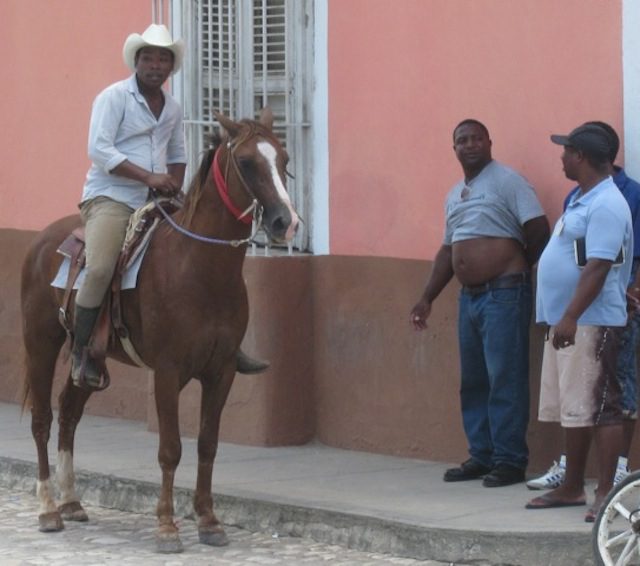
Street scene in Trinidad, Cuba.

Will Texas benefit economically from the loosening of restrictions? Very definitely, yes. Texans already sell agricultural products to Cuba through a “humanitarian” exclusionary clause in the embargo. American suppliers may send food and pharmaceuticals if the Cuban government pays for them before shipment. The arrangement is cumbersome.

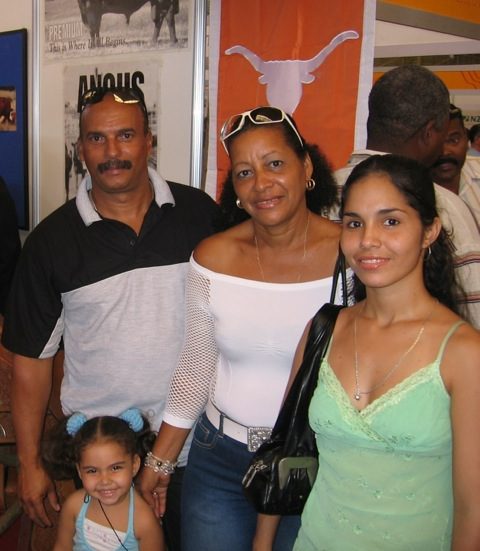
A family stops by a booth at the Havana trade fair in 2008.

For several years, the Texas-Cuba Trade Association, of which I am a volunteer consultant, has lobbied Washington to remove U.S. export limitations. President Obama accomplished as much as he could and Texas producers expect Cuban trade to expand. One Texas A & M economist predicts that our state’s exports to Cuba of chicken, pork, rice, beans, wheat, and corn could top $400 million within a couple of years.

Has the U.S. economic boycott really kept Cuba poor, as its leaders often claim? Only somewhat. Since 1990, when the Soviet subsidies ended, Cuba came to rely on trade and investment from every country of the world except the United States. Still, the Cubans are barely better off than when they lost Moscow’s largesse. Government over-regulation prevents entrepreneurial initiative.  I traveled through the countryside last summer and observed little growing in the fields other than invasive spiny bushes called marabú. Cubans have to buy two-thirds of their foodstuffs from abroad.

Rural transport in the Sierra Maestra mountains where Fidel Castro fought as a guerrilla leader.

Will Texas corporations receive repayment for the land and businesses confiscated by the Cuban Revolution in 1959 and 1960?   No, they will not. Texas cattlemen as well as Standard Oil (today ExxonMobil of Irving, Texas) had grazing lands and oil refineries seized by revolutionary militias. Today, the Cuban government cannot afford repayment. Yet it will be strong enough to resist any such demands.

Will Cuban-Americans living in Texas be able to reclaim their lost properties? They might try but they will not succeed. Political continuity will reject such claims, and citizens now living in those houses and working those lands will resist as well.

How will loosening restrictions in U.S.-Cuban relations affect revolutionary programs promoting socialist equality? It already has. Since the end of generous Soviet subsidies in 1990, the Castro government promoted more tourism. Needing foreign exchange, Fidel also encouraged relatives abroad to send cash remittances to family members in depressed Cuba. Those Cuban citizens who had relatives abroad suddenly got more money to buy essentials than those who still depended principally on state rationing.
Cuba still maintains a dual monetary system. The state pays its employees in pesos. The hotels, shops, and restaurants operate on convertible dollarized pesos, called the CUC. One CUC equals about 20 pesos. Workers in the tourist industry get tips in CUCs and automatically make more money than state workers, teachers, public health workers, and even physicians. Therefore, income differentials are already disrupting socialist equality.

Will Cuban race relations change with an upsurge of tourism? Some experts say that more than half of Cuba’s eleven million people have some degree of African heritage. Remember that sugar and slaves went together in the Caribbean like cotton and slavery did in Texas. Because sugar grew all over Cuba and cotton only in the Deep South, African influences are much stronger in Cuban society and culture than in the United States. The 1959 Revolution further boosted Afro-Cuban prominence because many middle-class whites chose to flee to Miami.

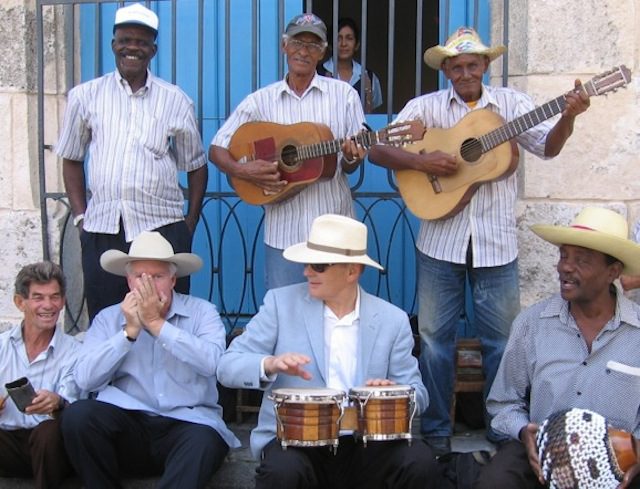
Two visiting yankis sit in with a Havana street band. The author plays the bongos and on my right, John Parke Wright, a Florida cattleman, riffs on the harmonica.
Two visiting yanquis sit in with a Havana street band. The author plays the bongos and on my right, John Parke Wright, a Florida cattleman, riffs on the harmonica.

Cuban race relations are refreshing and debilitating all at the same time. Today in the streets of Havana, visitors notice how easily persons of diverse racial backgrounds mingle. They work, play, socialize, marry, eat, and live together to a greater extent than in the United States. Fidel Castro boasted that the revolution ended discrimination in Cuba because it eliminated class distinctions. Yet racial prejudice did not end. White males continue to dominate the ruling party and military elites. Moreover, hotel employers apparently believe that European tourists prefer white hostesses and black maids, white waiters and black kitchen workers. More white Cubans live abroad and their remittances go predominately to white relatives in Cuba. The poorest and least healthy Cubans are mainly black.

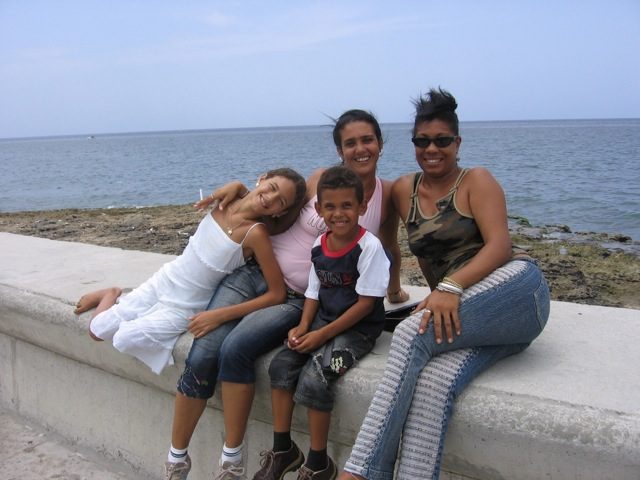
Cubans lounging on the wall along the famous Malecón, Havana’s seaside boulevard.

Is President Obama correct that United States recognition will benefit the Cuban people? It will not change the government, and economically some will benefit more than others. However, I am convinced that U.S. diplomatic recognition of Cuba will benefit Texans as much as the Cuban people. Those UT students who want to learn about the Cold War in Latin America and about the largest Caribbean island will take advantage of the executive order. So will Texans who cherish the freedom to experience the only capital (Havana) of Latin America that does not have a traffic jam, the only cities of Latin America that still look like they did 50 years ago, and new places to snorkel that are not in Mexico. Believe it or not, Cuba has more live music than Austin.

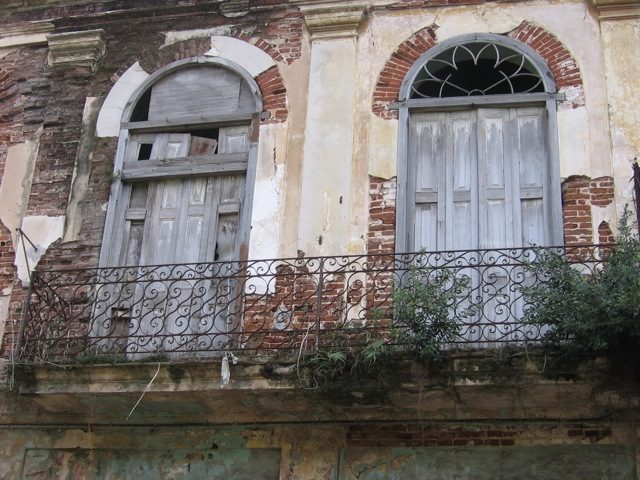
Cuba’s government is renovating run-down buildings such as this one in the historic Havana Vieja.

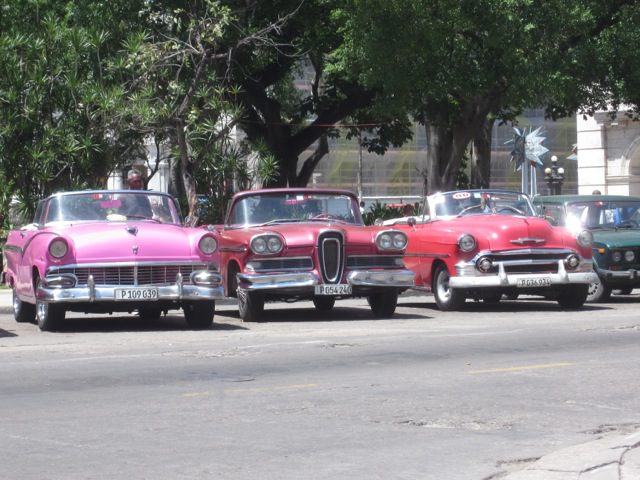
Finally, what about those vintage Fords and Chevys?   In the near term, they will remain the vehicles of choice in urban transportation. These 1940 and 1950 American models – DeSotos, Imperials, Buicks, Chryslers, Cadillacs, Nash Ramblers, and a Studebaker or two – share the roads with Soviet Ladas of the 1970s and modern Japanese automobiles. Detroit’s old cars have become part of the cultural identity of the country. But sooner or later, whenever commercial restrictions are lifted by Congress, Texas collectors may be able to repatriate many of these old-fashioned gems.

A taxi stand in Old Havana.

This author’s advice: Get yourself to Cuba before this aspect of the country’s charm disappears.

You may also like:

Jonathan Brown discusses Capitalism After Socialism in Cuba and President Lyndon Johnson’s phone call to Panamanian President Roberto F. Chiari

Blake Scott and Andres Lombana-Bermudez on the Panamanian tourism industry and Blake Scott on Cuban tourism


Photo credits:

First photo by Reggie Wallesen.

Remaining photos courtesy of Jonathan Brown.

Corrected to show that Jeb Bush earned a BA (not an MA as originally stated) in Latin American Studies at UT Austin (January 27, 2015).


The views and opinions expressed in this article or video are those of the individual author(s) or presenter(s) and do not necessarily reflect the policy or views of the editors at Not Even Past, the UT Department of History, the University of Texas at Austin, or the UT System Board of Regents. Not Even Past is an online public history magazine rather than a peer-reviewed academic journal. While we make efforts to ensure that factual information in articles was obtained from reliable sources, Not Even Past is not responsible for any errors or omissions.

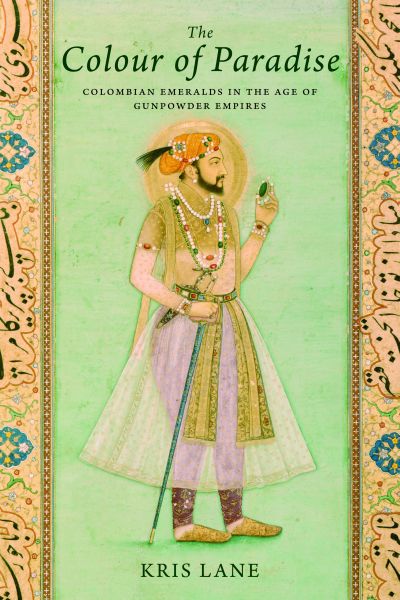
Colour of Paradise: The Emerald in the Age of Gunpowder Empires, by Kris Lane (2010)

By Maria José Afanador-Llach

Kris Lane Colour of ParadiseWhat do an enslaved African miner in colonial Colombia, a Portuguese Jewish merchant in Cartagena, a gem cutter in Amsterdam, and an Ottoman sultan have in common? Kris Lane’s Colour of Paradise ties together the histories of these diverse and geographically distant peoples by tracing the exploitation, trade, and consumption of emeralds between 1540 and the 1790s. In doing so, the author reconstructs the trans-oceanic commodity chains that connected Colombia to various gem markets in Europe. Once in the Old World, Lane demonstrates that emeralds flowed mostly to the Islamic gunpowder empires of Asia such as Mughal India and Safavid Persia. Lane also follows the shifting cultural meanings of emeralds. He emphasizes a concept of economy that includes “all human relationships mediated by material goods.”

Lane starts with the uses of emeralds among indigenous populations in pre-Hispanic Colombia. He relies on conquest writings and the work of anthropologists and archaeologists in order to grasp the ritual use and divine connotations of emeralds among the Muisca and other native populations. The Spanish conquest of the territories of the Muzo Indians started an era of uninterrupted mining activity. The original inhabitants of regions around Andean emerald deposits were miners and African slaves. Emeralds were soon incorporated into a small but significant gem market in Spain and its colonies. The stones were frequently found in elite women’s dowries and jewelled religious artifacts. As with other gemstones, emeralds were mostly traded secretly, and the profits were mainly reinvested in enslaved Africans.

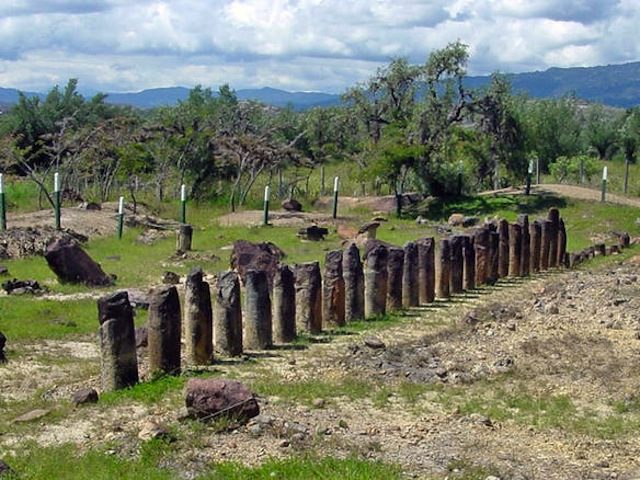
Ruins of an ancient Muisca temple at El Infiernito (the little hell) near Villa de Leyva.

Ruins of an ancient Muisca temple at El Infiernito (the little hell) near Villa de Leyva.

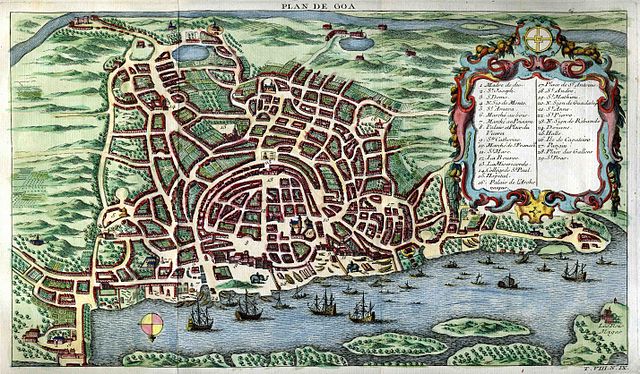
Records of the Spanish and Portuguese Inquisitions and secondary sources about Atlantic merchant communities prove that emeralds moved east across the Atlantic and Indian Oceans. The fragmentary evidence about the global trade in emeralds describes a “highly uncertain business” carried on along with bulkier commodities such as tobacco and textiles. Sephardic Jewish and New Christian family webs connected Cartagena and Curacao with the emerald trade to India via Seville and Lisbon. These merchants also traded the gems in Portuguese Goa during the Spanish Portuguese union (1599-1616). Many merchants’ last stop was Lisbon where there was a diverse community of diamond polishers, stonecutters, pearl-drillers, and goldsmiths. Some of them became “polyglot globetrotters of uncertain loyalty” who deeply infiltrated the kingdoms of south and southwestern Asia. This diaspora of gem traders active in Asia, Lane argues, became “key vectors in emerald’s steady eastern flow.”

Antoine François, 'Plan de Goa' 1746-1789

Antoine François, ‘Plan de Goa’ 1746-1789

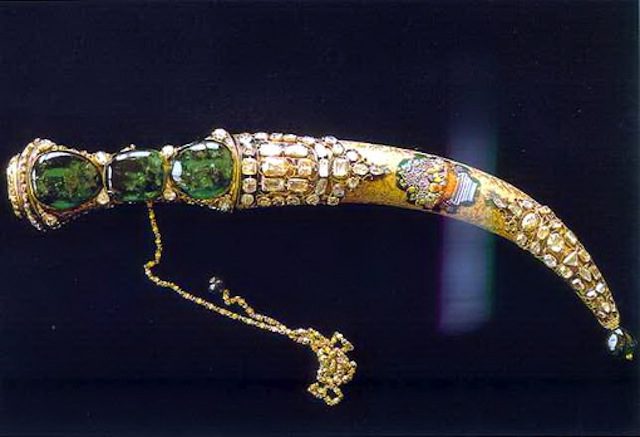
For a historian trained as a Latin Americanist, the task of reconstructing the emerald consumption in South Asia and the Middle East entails a great challenge. Lane used published sources translated from Persian into Spanish, French, Portuguese, and English, in addition to recent translations of documents on the inner workings of the Safavid, Mughal, and Ottoman courts. Emeralds became central to the gift economies of Asia. Muslim rulers appreciated the jewel’s opulence as symbol of power and consumed South American emeralds conspicuously. An emerald-handled dagger from the 1740s, molded on orders of Ottoman Sultan Mahmud I as a gift to Persia’s Nadir Sha, appears in Lane’s visual evidence to illustrate the use of the precious gem as “royal armour.”

Topkapi emerald dagger, held in the Museum Palace Nadir Shah.

Topkapi emerald dagger, held in the Museum Palace Nadir Shah.

Going back to the local context of Muzo, Lane identifies cycles of boom and bust in emerald extraction. By the second half of the seventeenth century, the emeralds of Colombia kept fueling contraband trade networks hidden in slave ships and specie cargo. Ships manifests’ and objects recovered from shipwrecks speak of a significant number of Colombian emeralds traveling to Curacao and Jamaica, and to Amsterdam and London. After a decline in production during the early eighteenth century, the Spanish Monarchy sponsored a series of mining missions with European experts to the colonies. The missions in Muzo attempted to increase emerald production but failed to deliver significant improvement. The eighteenth century also saw the extinction of the Safavid Dynasty in Persia and the fall of the Mughal Empire in India, which according to Lane, affected the global emerald trade to an unknown extent.

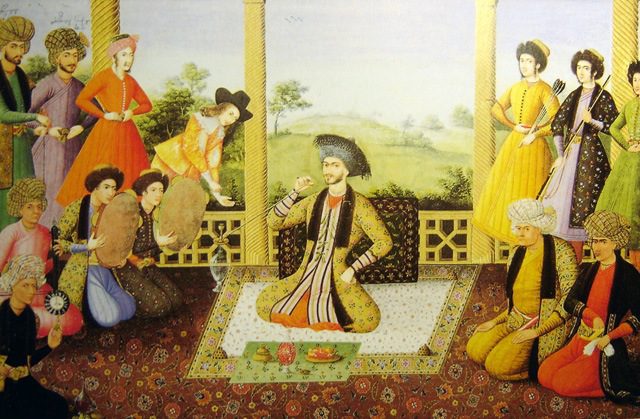
Shah Suleiman I and his courtiers, Isfahan, 1670. Painter is Aliquli Jabbadar.

Shah Suleiman I and his courtiers, Isfahan, 1670. Painter is Aliquli Jabbadar.

Unlike the scale and scope of early modern commodity chains of spices, textiles, and precious metals, Lane recognizes that emerald production was not “globally transformative.” Nonetheless, a very special type of commodity chain marked the shifting cultural and political meaning of the gem. An isolated peripheral mining region under Spanish colonialism produced a gem that merchants traded in very small quantities to satisfy the desires of Asian despots. In narrating how the emerald became a global gem, Lane not only sheds light on early modern globalization patterns. Moving from Colombia to Europe, and then to Asia, and back to Colombia, Colour of Paradise devotes careful attention to the communities of miners, merchants, stonecutters, diplomats, kings, and sultans. Lane successfully blends a history of early modern globalization with an unconventional yet refreshing approach to colonial Latin American history.

Muzo, Colombia. Via Wikimedia Commons.

Muzo, Colombia.

Colombian emerald mines have been active now for hundreds of years producing the finest gemstones of the world. The extraction of emeralds, however, has been marked by a bloody war among the families that operate the mines and illegal armed actors disputing the control of the so-called “green gold.” Despite this situation, the miners of Muzo dig every day at 590 ft. underground while guaqueros search for the precious stone amid the waste from the mines. On the corner of 7th Street and Jimenez Avenue in downtown Bogota, a number of men stand for hours trading emeralds. Buyers from Japan, Europe, and the United States arrive in the city looking for the gems, and Colombian emeralds continue to fuel global demand for the precious stones.

Kris E. Lane, Colour of Paradise: The Emerald in the Age of Gunpowder Empires (Yale University Press, 2010)

bugburnt


You may also like:

Ernesto Mercado Montero discusses Ordinary Lives in the Early Caribbean: Religion, Colonial Competition, and the Politics of Profit, by Kristen Block (2012)

Mark Sheaves reviews Francisco de Miranda: A Transatlantic Life in the Age of Revolution 1750-1816, by Karen Racine (2002)

Bradley Dixon, Facing North From Inca Country: Entanglement, Hybridity, and Rewriting Atlantic History

Ben Breen recommends Explorations in Connected History: from the Tagus to the Ganges (Oxford University Press, 2004), by Sanjay Subrahmanyam

Christopher Heaney reviews Poetics of Piracy: Emulating Spain in English Literature (University of Pennsylvania Press, 2013) by Barbara Fuchs

Jorge Esguerra-Cañizares discusses his book Puritan Conquistadors: Iberianizing the Atlantic, 1550-170 (Stanford University Press, 2006) on Not Even Past.

Renata Keller discusses Empires of the Atlantic World: Britain and Spain in the Americas, 1492-1830 (Yale University Press, 2007) by J.H. Elliott


bugburnt


All images via Wikimedia Commons.

UNESCO Designates Costa Rica’s Ancient Stone Balls a World Heritage Site

by Emily Jo Cureton

Costa Rica’s iconic stone spheres have been recognized for their value to World Heritage by the United Nations Educational, Scientific and Cultural Organization (UNESCO), bringing more international attention to the southern region’s mysterious past, as well as its contentious future.

No one knows who made a single one of the pre-Columbian stone spheres, let alone why more than 300 were sculpted to near geometric perfection more than 1,000 years ago. Like Stonehenge and Easter Island, the petrospheres have piqued archaeological inquiry and fantastical supposition since the first examples were unearthed by banana plantation workers in the mid-19th century.

Ranging in size from a child’s fist to a wrecking ball, some arrangements suggest that the spheres aligned with the stars or served as monumental compasses. Local lore has it that they were the playthings of a god hell-bent on controlling the weather, still other theories contend they make perfect instruments for ancient alien air traffic control. The truth is, no one really knows what the original sculptors had in mind or even exactly when they lived.

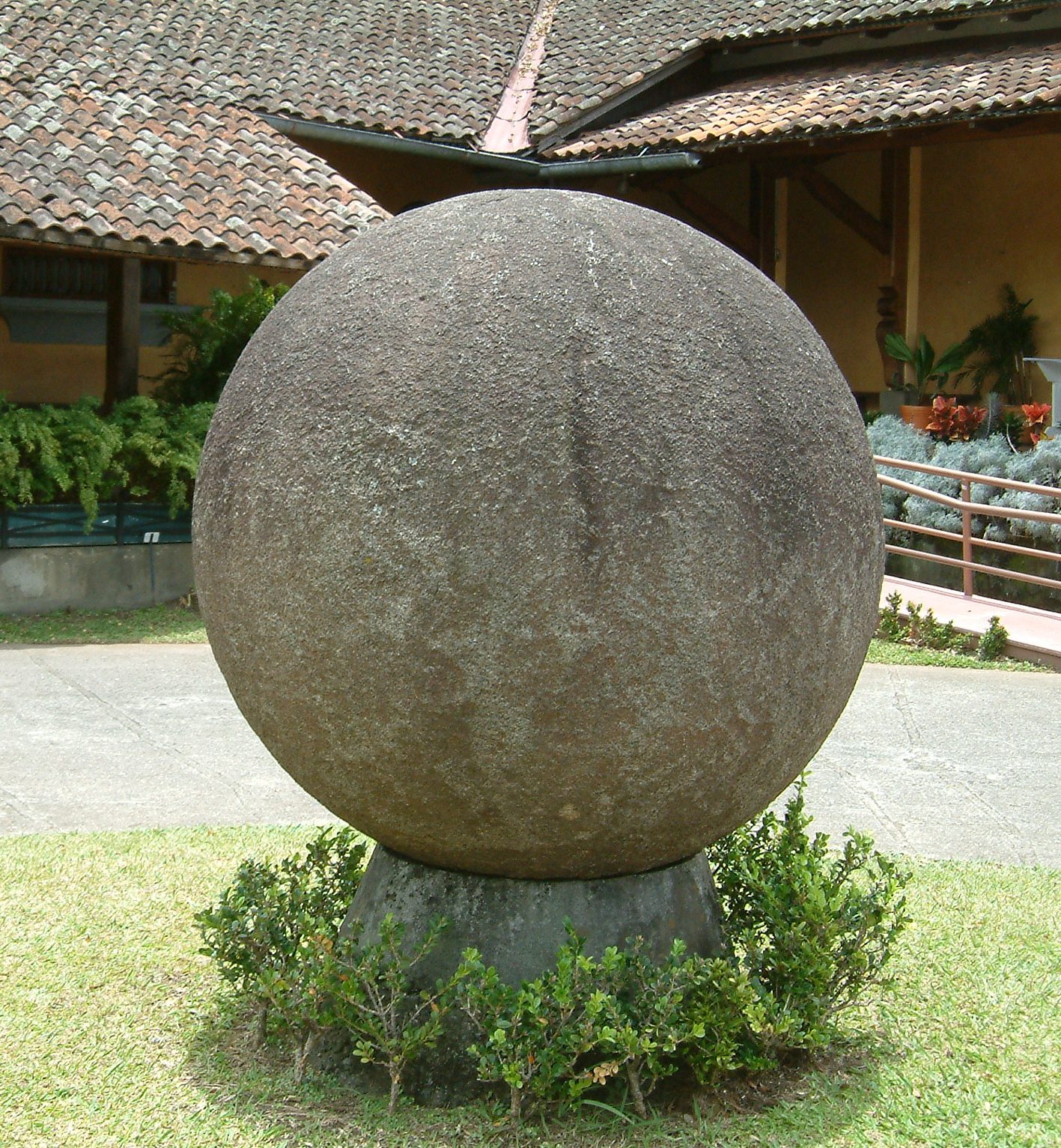
A Costa Rican stone sphere at the Museo Nacional in San José (Wikipedia/user: User:matanya)

A Costa Rican stone sphere at the Museo Nacional in San José (by Connor Lee via Wikipedia user: WAvegetarian) 

The endurance of mystery may be just another reason for Las Bolas to join UNESCO’s elite list of sites thought to exemplify human heritage, so often defined by desperately wanting to know, rather than actually knowing. Officially, the qualifying criteria for the sphere sites is that they “bear a unique or at least exceptional testimony to a cultural tradition or to a civilization which is living or has disappeared.”

(With La Sele’s historic upset advance to the quarter finals of the World Cup, I can bear witness to the fact that ball-centrist culture has anything but disappeared.)

The stone balls of yore were probably hand-carved by ancestors of the Boruca, Téribe and Guaymi peoples in Southern Costa Rica. Some believe ancients formed the rocks by dissolving them with a plant-based potion, though many scholars refute this. The exact timeline of production is also a point of debate. Unlike organic materials, rock cannot be carbon-dated. The ages are based on associated materials, usually sediments and pottery shards found at the installation site, which indicated that they could have been made during an 1,800 year period. (For some perspective: that’s considerably longer than the Spanish Monarchy has even existed).

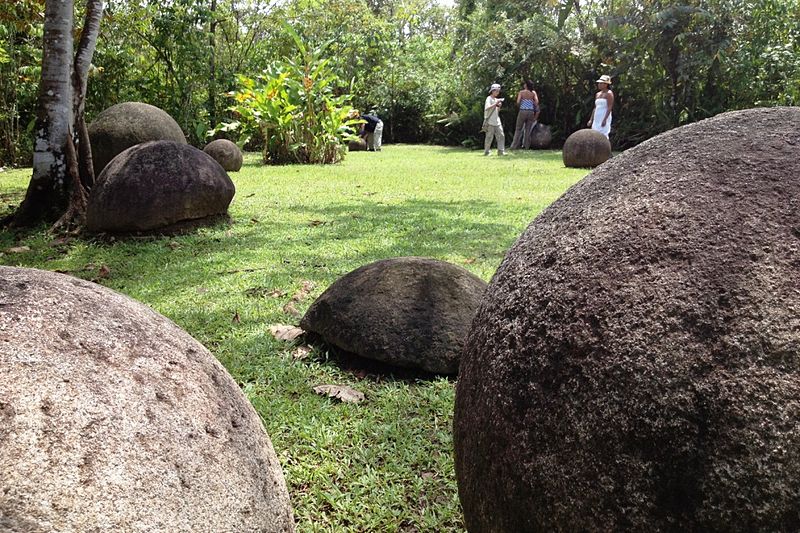
Stone spheres at the Museo Nacional in San José (Wikipedia/user: User: Axxis10)

Stone spheres at the Museo Nacional in San José (Wikipedia/user: User: Axxis10)

Some of the bolas are thought to weigh more than 15 tons. Others have been pocketed and used as mantle decorations. The UNESCO listing only applies to balls with a diameter of 70 cm or larger and its unclear how or if it will affect the many spheres that have been removed from Costa Rica. Of more than 300 recorded petrospheres found in the southern region about a dozen remain in their original context, according to an educated estimate by John W. Hoopes, an archaeologist whose research contributed to the UNESCO listing.

“The main that this listing does is draw worldwide global attention to this site and others. The conservation of the site is ultimately the responsibility of the country in which its found,” Hoopes said via Skype. 

Most if not all “in situ” spheres left are at the four locations recognized as international patrimony by UNESCO this week: Finca 6, Batamba, El Silencio and Grijalba 2. A new museum at Finca 6, a former banana plantation, gives the public a chance to the spheres as they were originally arranged.

Bigball-768x1024

An ancient stone sphere in a new context at Plaza Democracia in San José, Costa Rica. Of more than 300 known spheres, all but a dozen or so have been moved from their original locations in the southern zone (Photo by Emily Jo Cureton)

The rampant damage and dispersion of the spheres began after United Fruit Company workers uncovered the first examples while clearing banana fields in 1940. Since then many spheres have been rolled into gullies and ravines. Others were burned and cracked by fire when land was cleared for plantations and farms. Still others were dynamited, or sent to faraway lands and used as prized lawn ornaments. Paris has one, so does Harvard. Some were stolen, others sold to the highest bidder. The predominate human impulses upon encountering these testimonies to human heritage seem to be: a) dig it up, b) roll it away or c) blow it up and hope gold falls out. (It doesn’t).

The solid rock used to make most of the spheres came from the Talamanca Mountains and was probably naturally flooded to the lowlands down the Térraba River to the Diquís valley, where boulders would have been collected and transported upwards of 50 miles to some installation sites. Today the Diquís valley is the planned site for the largest hydro-electric project ever in Central America, a dam on the Superior General River between Buenos Aires, Osa, and Pérez Zeledón. In the works for more than 40years, construction began in 2009, but was stalled in 2011 by a lawsuit over indigenous rights and remains delayed by the construction of an associated pipeline. The El Diquís project would flood 6815 ha  (27 sq mi) to create 631 megawatts of power for 1 million consumers, according to the Institute for Costan Rican Electricity ICE. It would inundate protected indigenous territories, displacing at least 1,500 people and “irremediably affecting” 150 archaeological sites, according to an impact summary by the University of Costa Rica.

bugburnt

This essay was originally posted on the website of the Academia Tica Spanish Language School in Costa Rica.

For more about the World Heritage site designation, check out this article en español.

Emily Jo Cureton is an artist and writer who graduated from UT Austin with Honors in History and now lives in Costa Rica. You can see more of her work on her website.

Student Showcase – Colossus of the North

Eduardo Castañeda
Nimitz High School
Senior Division
Individual Exhibit

Read Eduardo’s Process Paper

In 1904, President Theodore Roosevelt announced a new “Corollary” to the Monroe Doctrine of 1823: that the United States would no longer simply protect Latin America from foreign powers, but actively intervene in their domestic affairs. Over the coming decades, the American government became highly involved in Latin American politics, commerce and military matters. The Roosevelt Corollary has since been a deeply polarizing moment in world history. To some, it inaugurated an era of muscular and confident American foreign policy. To others, especially in Latin America, Roosevelt’s policy represented an act of imperialism designed to protect American military and commercial interests.

Eduardo Castañeda of Nimitz High School considered the heated debate surrounding the Roosevelt Corollary with an exhibit at Texas History Day, “Colossus of the North.” He talked about the experience of researching this controversial topic in his process paper:

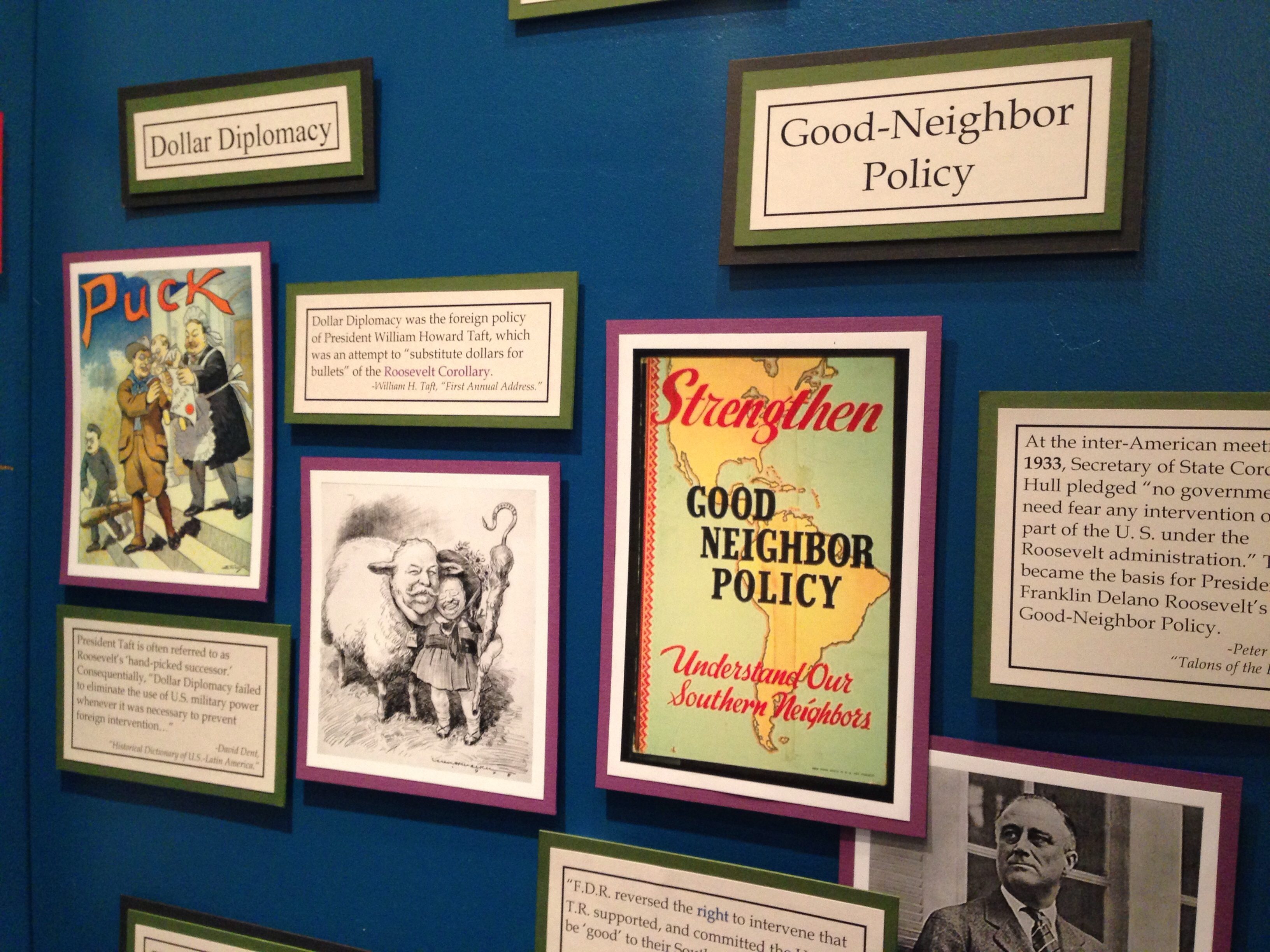
A selection of Eduardo's exhibit, "Colossus of the North"

A selection of Eduardo’s exhibit, “Colossus of the North”

Having been born in a Latin American country, I am interested in the foreign relations between the United States and Latin American countries. After researching several U.S.-Latin American topics, I discovered the “Roosevelt Corollary” to the Monroe Doctrine, which explained the interactions between the U.S., and Latín American countries. The “Roosevelt Corollary” justified the right for U.S. intervention in Latin American countries, and the responsibility to become a police force for the entire Western Hemisphere.

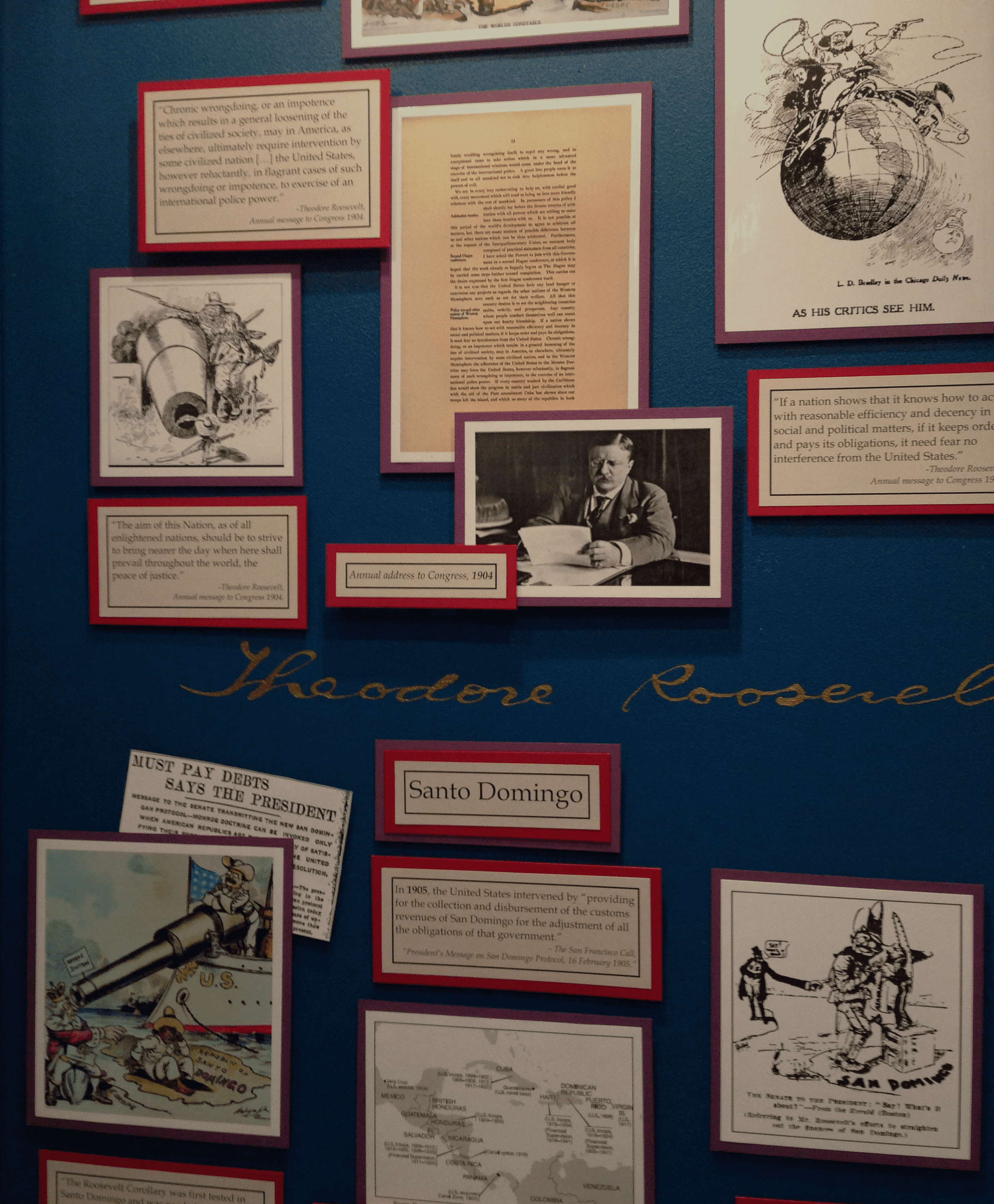
Another section of Eduardo’s exhibit

Another section of Eduardo’s exhibit

The “Roosevelt Corollary” to the Monroe Doctrine fits this year’s theme, “Rights and Responsibilities in History.” For decades, the “Corollary” impacted the political, economic and social structure of the Western Hemisphere. This interpretation transformed the US. foreign policy from a preventative one, according to the Monroe Doctrine, to one that justified and encouraged U.S. intervention in Latin America. The “Corollary” promoted Stabilization of economies, military intervention and protection of US. Commercial interests. ln 1905, the U.S. took control of Dominican customs houses, and managed the tax Collections. ln many cases, military forces were sent to various locations in Latin America to subdue rebellions, assist revolutions that favored the US. and protect projects that the U.S. had an economic stake in. Professor Noel Maurer explained, “The Panama Canal would not have been built Without a U.S. sponsored revolution against Colombia, or payment for the construction and future use of the Canal.” The “Roosevelt Corollary” influenced other countries at the time, but it was the face of American foreign policy and transformed it throughout the 20th century. Roosevelt’s extension of the previously passive Monroe Doctrine changed how the United States interacted with the rest of the world. The U.S. had inherited the right to monitor the activities inside the Western Hemisphere, and undertaken the responsibility to enforce its Will upon those countries.

bugburnt


Last week’s Texas History Day projects:

The World War II internment you may not have learned about in AP US history

The painful story behind the Indian Removal Act

And one community’s famous response to segregation


Student Showcase – Better Safe Than Sorry? Internment of Rights in World War II

Helen Hartman
Rockport Fulton Middle School
Junior Division
Historical Paper

Read Helen’s Paper Here

The internment of Japanese-Americans in the United States during World War II is a familiar story. But did you know that Japanese, German, and Italian families from around Latin America were also deported to the U.S. and held in INS camps? Like the internment of Japanese-Americans, these deportations were intended to secure the Western Hemisphere from potential enemy sympathizers and create leverage for prisoner swaps. Many of these camps were right here in Texas.

Helen Hartman of Rockport Fulton Middle School wrote a research paper for Texas History Day outlining this often forgotten history of extralegal deportment and detention. You can read the full paper by clicking the link above and see an excerpt below:

Rohwer, Arkansas Relocation Camp for Japanese-American detainees

Rohwer, Arkansas Relocation Camp for Japanese-American detainees

America’s founding fathers defined the rights guaranteed to American citizens in the Bill of Rights, and for over 200 years America has symbolized the “land of the free” both at home and abroad. However, during World War II, the U.S. government established internment camps that usurped the rights of both American citizens and non-citizens of Japanese, German, and Italian descent in the name of national security. Historians have largely documented the loss of Japanese Americans’ rights in War Relocation Authority Camps, which held people of Japanese ancestry who were removed from the West Coast.  However, lesser-known camps run by the Immigration and Naturalization Service (INS), like those in Texas, violated the rights of citizens from both America and Latin America. Groups like the Japanese, with resources and political support, have been able to hold the American government responsible for their loss of rights and have received apologies and compensation.  German American and German/Italian Latin American internees, however, have not yet received a formal acknowledgement of their internment or redress from the governments that rescinded their individual rights for the sake of national security.

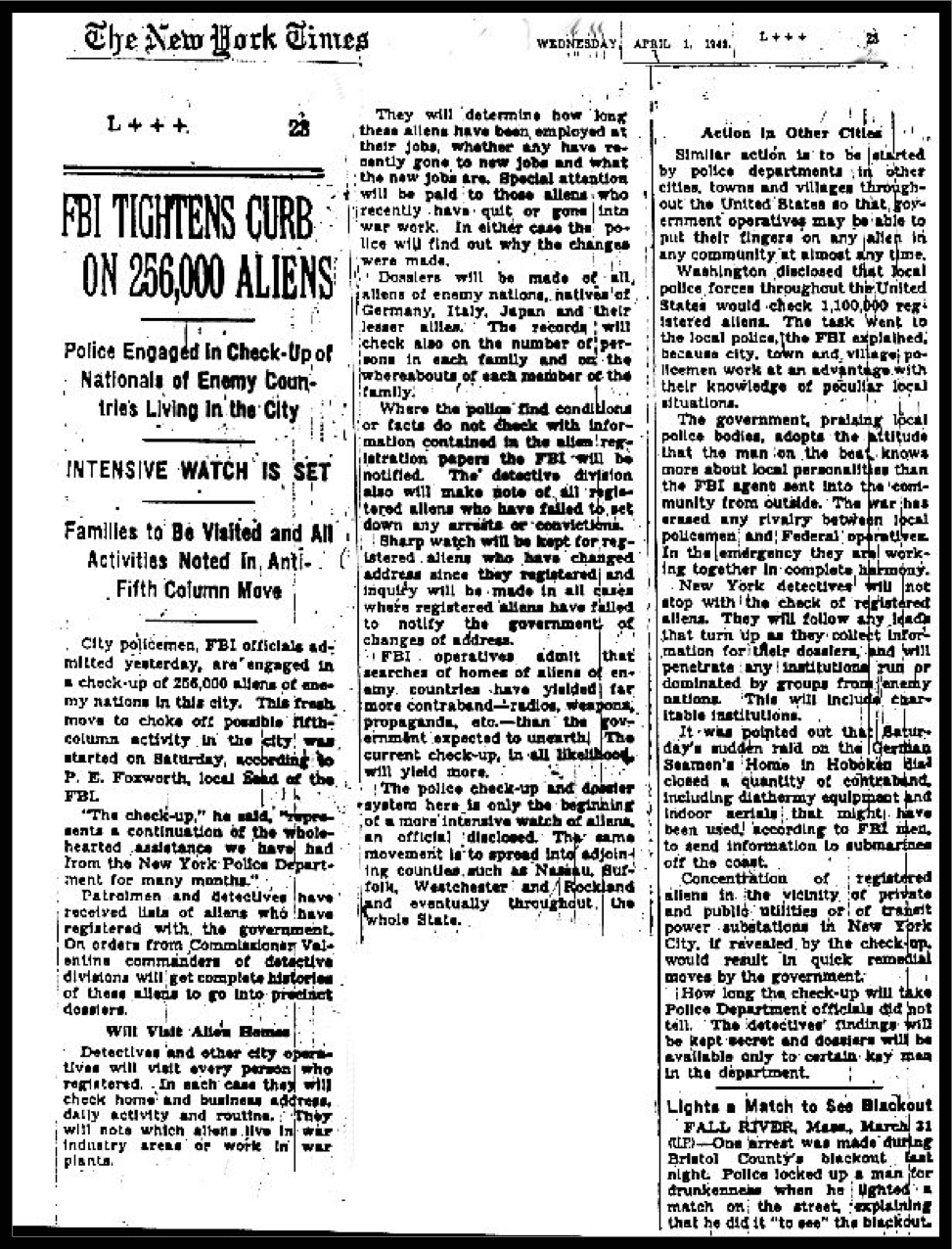
April 1, 1942 New York Times article describing the American government's search for enemy alien spies and sympathizers

April 1, 1942 New York Times article describing the American government’s search for enemy alien spies and sympathizers

Japan’s attack on Pearl Harbor plunged America into World War II and united Americans against their Axis enemies, both at home and abroad.  Amid the crisis, the United States government implemented a better safe than sorry policy, interning Japanese, Italian, and German Americans and Latin Americans in the name of wartime responsibility.  The American press and most American citizens condoned the process, preferring to intern anyone considered a potential threat to America to omit any possibility that they might assist the enemy.  However, this government policy not only violated the Constitutional rights guaranteed to American citizens but also violated international human rights by bringing Latin American citizens into America to barter them in prisoner exchanges.

bugburnt


More great Texas History Day projects:

The story behind a seminal moment in America’s Civil Rights movement

And a look back on one of the most turbulent periods in U.S. history


Omens of Adversity: Tragedy, Time, Memory, Justice, by David Scott (2014)

by Lauren Hammond

On October 19, 1983, members of Grenada’s People’s Revolutionary Army assassinated Prime Minister Maurice Bishop of Grenada and seven of his associates, triggering the sequence of events that led to the sudden end of the Grenada Revolution. With the prime minister dead, the hastily established ruling military council unsuccessfully attempted to restore order to stave off the military invasion being planned in Washington, D.C. But just days after Bishop’s death, President Ronald Reagan launched Operation 618jmfYqmYLUrgent Fury to save American lives and ostensibly restore democracy to the island of Grenada. Having established their authority, U.S. military officials rounded up the leadership of Grenada’s socialist party, the New Jewel Movement, and the army high command, whom the Grenadian people and the U.S. blamed for the murders. Later known as the Grenada 17, these men and women would be tried, convicted, and sentenced to hang for the deaths of Bishop and his compatriots, despite a lack of credible evidence linking them directly to the assassinations.

In Omens of Adversity, Caribbean anthropologist David Scott wrestles with the connection between time and tragedy, engendered by what the Grenadian people experienced as the catastrophic collapse of the popular movement as they lived on in the post-socialist moment. In the wake of the assassinations and the U.S. intervention, Grenadians who came of age during the revolution and watched its ruin found themselves “stranded” in the present, bereft of hope for the future, and grieved they had to be rescued by the United States, whose power the New Jewel Movement had set out to challenge. Adding insult to injury, the U.S. played a role in the disappearance of the bodies of Bishop and the others, robbing the families of the deceased and the entire revolutionary generation of a chance to mourn the prime minister and the future free of Western hegemony he had embodied. In assessing the socialist experiment in Grenada and its end, Scott argues that although the Grenada Revolution is often forgotten, it is nevertheless a key event in the world history of revolutions because it signaled an end to the possibility of post-colonial socialist revolution and the ascendancy of Western neo-liberalism.
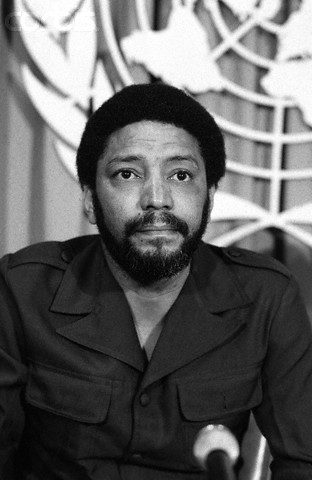
Prime Minister Maurice Bishop of Grenada (Encyclopedia of Puerto Rico)

Prime Minister Maurice Bishop of Grenada (Encyclopedia of Puerto Rico)

Traditionally, scholars of liberal political change see trials such as that of the Grenada 17 as markers that signify the transition from the illegitimate old regime to the new transparent liberal order. However, despite the apparent triumph of the Western tradition, the transition to liberal democracy has had its flaws. Using the trial of the Grenada 17 and its aftermath, Scott raises questions about truth, justice, and democratic transitions. The investigation and trial were full of irregularities, including the torture of the defendants. Scott emphasizes that instead of an earnest attempt to secure information and justice, the goal of the 1986 prosecution of the Grenada 17 was to criminalize the NJM leadership and their political ideology. He describes the proceedings as a late Cold War “show trial” crafted to demonstrate what happened to those in America’s “backyard” who sought revolutionary socialist or communist self-determination. Instead of indicting the 17, Scott reframes them as “leftovers from a former future stranded in the present.”

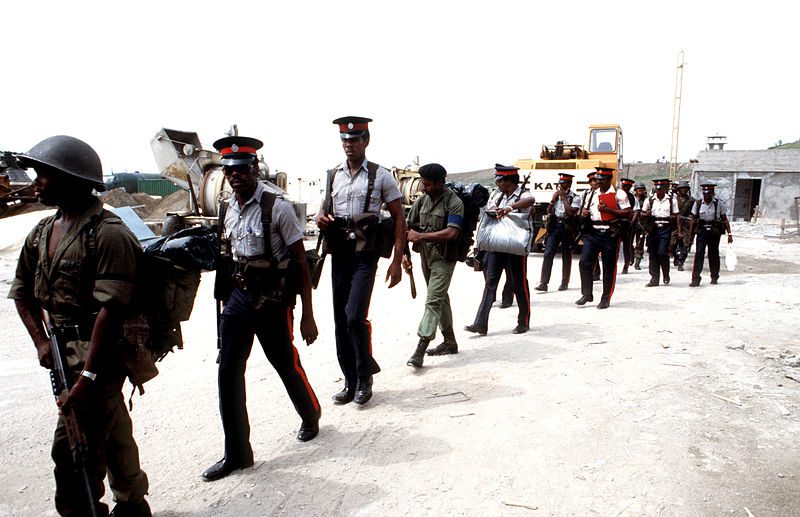
 Members of the Eastern Caribbean Defense Force participate in Operation Urgent Fury (Wikimedia Commons)

Members of the Eastern Caribbean Defense Force participate in Operation Urgent Fury (Wikimedia Commons)

Although the jury found the Grenada 17 guilty, the anomalies in the investigation and trial meant that the Grenadian people still had questions about what happened and why. Public interest was aroused when a group of high school boys began investigating the disappearance of the victims’ bodies. A truth and reconciliation commission was constituted and began to research the events of October 19 in late 2001. However, these efforts were tainted, too. The report recapitulated the standard narrative of the events, complete with anti-communist biases that demonized the NJM – unsurprising in light of the commissioners’ refusal to meet with the Grenada 17. However, Scott’s reading of the report’s appendices containing statements from NJM leadership shows that a different story could have been told. Unfortunately, it seems unlikely that the people of Grenada will ever know the full truth about what happened to Maurice Bishop and the others. After all, in the neoliberal era, the socialist past can only be a criminal one.

bugburnt


You may also like Lauren Hammond’s reviews of Tropical Zion: General Trujillo, FDR, and the Jews of Sosúa and The Dictator’s Seduction: Politics and the Popular Imagination in the Era of Trujillo

Visible Empire: Botanical Expeditions and Visual Culture in the Hispanic Enlightenment, by Daniela Bleichmar (2012)

by Christina Marie Villarreal

The European Enlightenment occurred as an ongoing dialogue of ideas—a discourse composed of voices from around the globe. As Daniela Bleichmar demonstrates, southern Europe, long ignored in scholarship on the Enlightenment, had a crucial voice in the conversation.

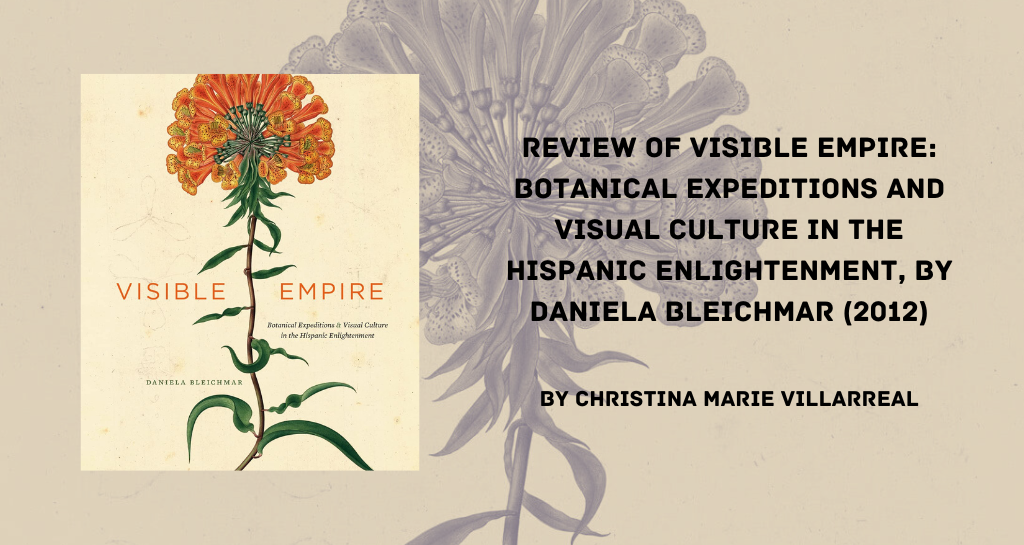
In Visible Empires, Bleichmar claims that Imperial Spain, more than any other contemporary empire, used  visual documents like paintings and maps to make the empire tangible and, in this way, “governable.” Images, she argues, made visible the hidden or secret. Bleichmar highlights the Hispanic World’s investment in knowledge production at the peripheries of empire. She emphasizes how scientific investigations, specifically botanist and natural history expeditions, fit into the Spanish Empire’s attempt to reestablish itself as a European political and economic power in the late eighteenth century. Her findings demonstrate how relationships between the center and periphery of empire were often a matter of perspective.

Bleichmar makes use of the long ignored and beautiful visual archive of botanical paintings produced by Spanish expeditions around the Atlantic. She reads these centuries-old detailed depictions of flora and fauna to stress the relevance of vision to governing of the empire. For Spain, these illustrations provided visual evidence of worlds across the sea and of our ability to understand nature. They buttressed Spain’s ownership of the unseen. The Spanish metropole also used this method to understand the racial compositions of distant populations. New Spain’s casta paintings and Peru’s taxonomical illustrations gave the metropole a window into their kingdoms abroad. Simultaneously, the project supplied the peripheries of empire with the agency to codify their populations. While knowledge of its far-off inhabitants gave the metropole a sense of discovery and ownership, the power to produce pictures of their world gave people on the periphery power of their own.

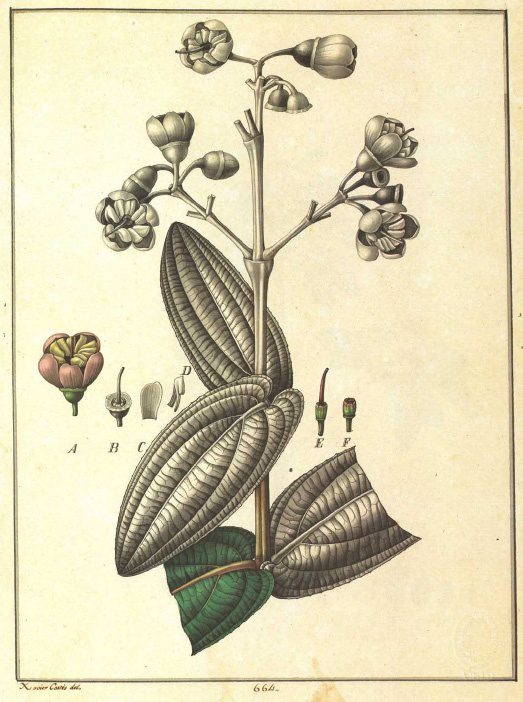
An image from "Flora Huayaquilensis," a visual collection of South America's plants as seen by Spanish botanist Juan José Tafalla during a 1785 expedition through Peru and Chile. ([Juan Tafalla], “Flora Huayaquilensis,” ourheritage.ac.nz | OUR Heritage - See more at: http://otago.ourheritage.ac.nz/items/show/7696#sthash.r8R9WHhx.dpuf)

An image from “Flora Huayaquilensis,” a visual collection of South America’s plants seen by Spanish botanist Juan José Tafalla during a 1785 expedition through Peru and Chile. ([Juan Tafalla], “Flora Huayaquilensis,” ourheritage.ac.nz | OUR Heritage)

During the Enlightenment, intellectuals and others contested and refined the themes of art, science, and knowledge using visual representations. The “correct” representation did not always come from the center or metropole but, as Bleichmar explains, it was often difficult to tell where in the empire botanical Enlightenment projects began. Indeed, knowledge moved in multiple directions. Bleichmar explores how some naturalists understood colonial agendas in ways that differed from the intentions of the Spanish metropole.  Consider Basco y Vargas’ pepper initiative in the Philippines. He prioritized his local economic goals over the philosophical inquiries coming from Spain. In this case, the periphery directed knowledge production as Basco y Vargas determined what botanical investigation to support.

Allegiances and relationships to a “center” thus differed depending on local context. However, by suggesting “the goal of this intensive natural history investigation… was nothing less than to rediscover and reconquer the empire at a time of intense crisis,” Bleichmar seems to suggest that Spain held more control over the direction of knowledge production. In addition, the author admits that the only a limited audience saw or studied the visual illustrations produced by enlightenment botanist. These minor inconsistencies leave the reader with a lingering question: to what extent did “visual” knowledge shape the empire at large?

0090be2f8557c33490632f38b8903c34

Botanical drawing from “Flora Huayaquilensis” (Pinterest/Carlos Adanero)

Aside from images, Bleichmar also examines the tremendous written archive that preserves the voices of botanist and economists. While historians typically use images in their work without fully exploring the significance they held for their creators, the author’s examination of written sources provides the reader with a fuller understanding of the botanical illustrations. Paired with Bleichmar’s engaging prose, Visible Empires constitutes a thorough interpretation of southern European Enlightenment and provides a fine example of a historical investigation achieved with beautiful visual sources.

More books on Early Modern science:

Jorge Cañizares Esguerra’s review of Shores of Knowledge: New World Discoveries and the Scientific Imagination

Laurie Wood’s review of The Discovery of Jeanne Baret: A Story of Science, the High Seas, and the First Woman to Circumnavigate the Globe


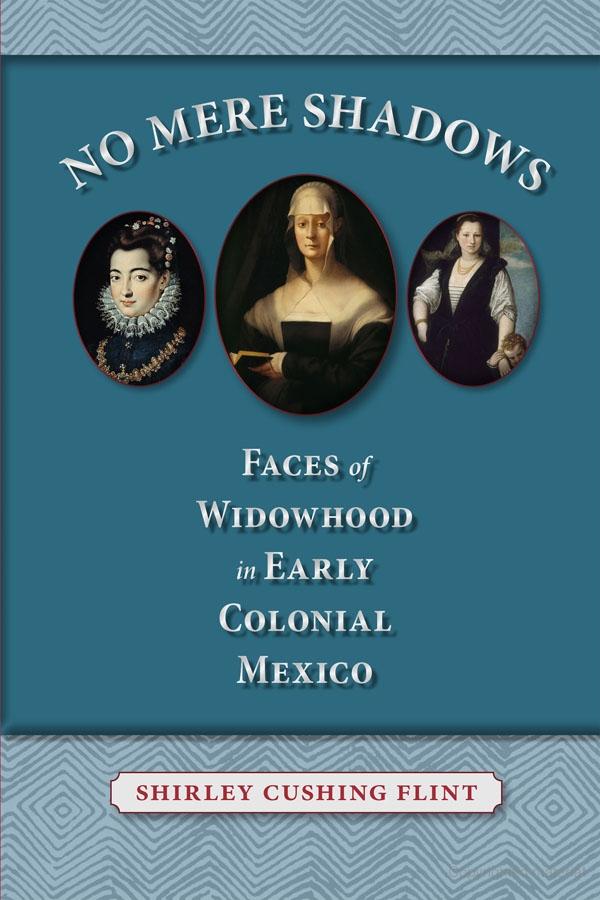
No Mere Shadows: Faces of Widowhood in Early Colonial Mexico, by Shirley Cushing Flint (2013)

What would Mexico City—or Tenochtitan as it was known to its indigenous population—have looked like to ten year old Doña Luisa Estrada, when she arrived with her parents in 1524, three years after it fell to Spain?  What is clear is that her life soon intermingled in the early conquest society.  At thirteen she married 26 year old conquistador Jorge de Alvarado.  He also experienced the New World as young child: he had been participating in expeditions since he was nine.  After his death, Doña Luisa administered his grant of tribute Indians (encomiendas) and accumulated estates that stretched from Mexico City to Guatemala.  While unfortunately neither left what certainly would have been fascinating memoirs, tantalizing glimpses of their lives appear in Shirley Cushing Flint’s No Mere Shadows: Faces of Widowhood in Early Colonial Mexico. 

Flint was initially fascinated by the history of one of Doña Luisa’s sisters, Doña Beatriz de Estrada.  Doña Beatriz leveraged her fortune to finance the famous expedition of her husband, Francisco Vásquez de Coronado, to the American southwest.   As the author delved into the collective biographies of Estrada wives, husbands, and children she discovered how three generations accumulated and diversified forms of economic wealth and social status, acquired assets in the core and then the periphery, and constantly engaged in lawsuits to maintain them.

Spanish colonial map of Culhuacán, now in present-day Mexico City, 1588 (Benson Latin American Collection at the University of Texas at Austin)

Separate chapters explore the ups and downs of the Estrada family’s marriages, widowhood, children, and finances.  These include the matriarch, Doña Marina  (Gutiérrez Flores de la Caballería), who arrived as the wife of the newly appointed royal treasurer Alonso de Estrada and who, on his death, managed the extensive properties of urban and rural real estate including a profitable mill. She arranged favorable marriages for her daughters, not only for young Doña Luisa and Doña Beatriz to conquistadors Alvarado and Coronado, but for her daughter Doña Francisca, whose husband possessed the most valuable grant of Indians for tribute after Hernán Cortés.  The fortunes of the next generation waned with the marriage of granddaughter Doña María to Alonso Ávila, as he was beheaded in 1566 over charges that he participated in a conspiracy to challenge royal hegemony.  She spent her later years in Spain attempting to recover the family fortunes.
Tracing these compelling personal vignettes of the lives of the Estradas provides rare insights into the challenges and opportunities of life for Spanish women in post-conquest Mexico.

« Previous Page
Next Page »

Recent Posts

  • The Battles of the Alamo and the Myth of Southern Exceptionalism
  • Primary Source: Magic, Metal, and Medicine in Leonhard Thurneysser’s Paracelsus
  • Faculty Spotlight: Dr. Kate Imy
  • La Historia del Tiempo Presente en México: un campo en construcción
  • The History of the Present Time in Mexico: A Field in Formation
NOT EVEN PAST is produced by

The Department of History

The University of Texas at Austin

We are supported by the College of Liberal Arts
And our Readers

Donate
Contact

All content © 2010-present NOT EVEN PAST and the authors, unless otherwise noted

Sign up to receive our MONTHLY NEWSLETTER

  • New
  • Features
  • Reviews
  • Texas
  • Teaching
  • Digital
  • Watch & Listen
  • Authors
  • About