• New
  • Features
  • Reviews
  • Texas
  • Teaching
  • Digital
  • Watch & Listen
  • Authors
  • About

The past is never dead. It's not even past

Not Even Past

Casta Paintings

by Susan Deans-Smith

In 1746 Dr. Andrés Arce y Miranda, a creole attorney from Puebla, Mexico, criticized a series of paintings known as the cuadros de castas or casta paintings. Offended by their depictions of racial mixtures of the inhabitants of Spain’s American colonies, Arce y Miranda feared the paintings would send back to Spain the damaging message that creoles, the Mexican-born children of Spanish parents, were of mixed blood. For Arce y Miranda, the paintings would only confirm European assumptions of creole inferiority.

Casta paintings first appeared during the reign of the first Bourbon monarch of Spain, Phillip V (1700-46), and grew in popularity throughout the eighteenth century. They remained in demand until the majority of Spain’s American colonies became independent in 1821. To date over one hundred full or partial series of casta paintings have been documented and more continue to surface at art auctions. Their popularity in the eighteenth century suggests that many of Arce y Miranda’s contemporaries did not share his negative opinions of the paintings.
Casta_1_Cabrera

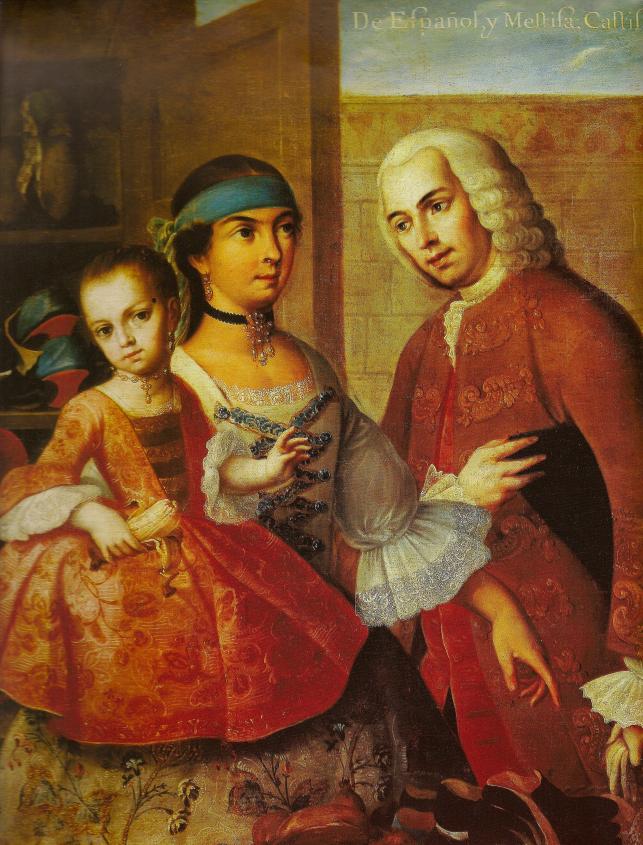
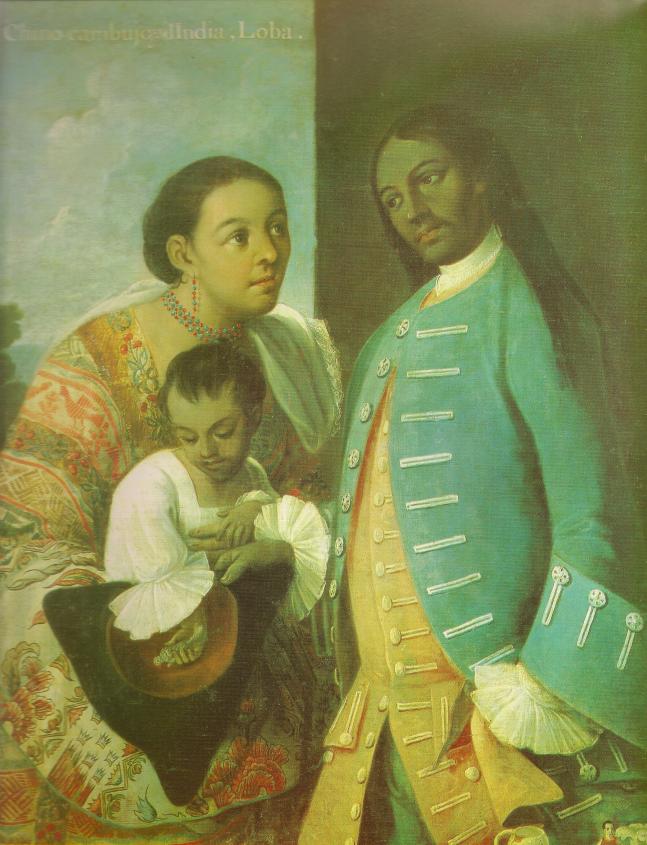
The casta series represent different racial mixtures that derived from the offspring of unions between Spaniards and Indians–mestizos, Spaniards and Blacks–mulattos, and Blacks and Indians–zambos. Subsequent intermixtures produced a mesmerizing racial taxonomy that included labels such as “no te entiendo,” (“I don’t understand who you are”), an offspring of so many racial mixtures that made ancestry difficult to determine, or “salta atrás” (“a jump backward”) which could denote African ancestry. The overwhelming majority of extant casta series were produced and painted in Mexico. While most of the artists remain anonymous, those who have been identified include some of the most prominent painters in eighteenth-century Mexico including Miguel Cabrera, Juan Rodríguez Juárez, José de Ibarra, José Joaquín Magón, and Francisco Vallejo.

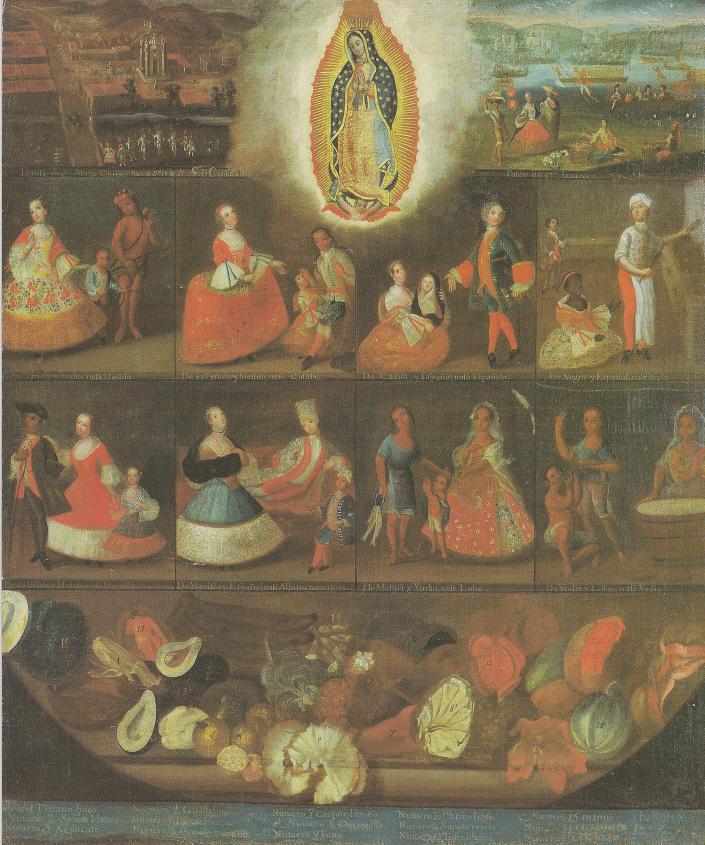
Casta paintings were presented most commonly in a series of sixteen individual canvases or a single canvas divided into sixteen compartments. The series usually depict a man, woman, and child, arranged according to a hierarchies of race and status, the latter increasingly represented by occupation as well as dress by the mid-eighteenth century. The paintings are usually numbered and the racial mixtures identified in inscriptions.  Spanish men are often portrayed as men of leisure or professionals, blacks and mulattos as coachmen, Indians as food vendors, and mestizos as tailors, shoemakers, and tobacconists. Mulattas and mestizas are often represented as cooks, spinners, and seamstresses. Despite clear duplications, significant variations occur in casta sets produced throughout the eighteenth and early nineteenth centuries. Whereas some series restrict themselves to representation and specification of racial mixtures, dress styles, and material culture, others are more detailed in their representation of flora and fauna peculiar to the New World (avocadoes, prickly pear, parrots, armadillos, and different types of indigenous peoples). While the majority appear to be in urban settings, several series depict rural landscapes.
Casta_2_Cabrera

What do these exquisitely beguiling images tell us about colonial society and Spanish imperial rule? As with textual evidence, we cannot take them as unmediated and transparent sources. Spanish elites’ anxiety about the breakdown of a clear socio-racial hierarchy in colonial society–the sistema de castas or caste system–that privileged a white, Spanish elite partially accounts for the development of this genre. Countering those anxieties, casta paintings depict colonial social life and mixed-race people in idealized terms. Instead of the beggars, vagrants, and drunks that populated travelers’ accounts and Spanish bureaucratic reports about its colonial populations, viewers gaze upon scenes of prosperity and domesticity, of subjects engaged in productive labor, consumption, and commerce. Familiar tropes of the idle and drunken castas are only occasionally depicted in scenes of domestic conflict. In addition, European desires for exotica and the growing popularity of natural history contributed to the demand for casta paintings. The only extant casta series from Peru was commissioned as a gift specifically for the natural history collection of the Prince of Asturias (the future Charles IV of Spain). And despite Dr. Arce y Miranda’s fears, many contemporaries believed the casta series offered positive images of Mexico and America as well as of Spanish imperial rule. In this regard, the casta paintings tell us as much about Mexico’s and Spain’s aspirations and resources as they do about racial mixing.  Many owners of casta paintings were high-ranking colonial bureaucrats, military officials, and clergy, who took their casta paintings back to Spain with them when they completed their service in America. But there is also evidence of patrons from the middling ranks of the colonial bureaucracy. Very fragmentary data on the price of casta paintings suggests that their purchase would not have been restricted to only the very wealthy.

The casta paintings were displayed in official public spaces, such as museums, universities, high ranking officials’ residences and palaces, as well as in unofficial spaces when some private collections would be opened up to limited public viewing. The main public space where casta paintings could have been viewed by a wide audience was the Natural History Museum in Madrid.
Casta_1_Luis_de_Mena

Regardless of what patrons and artists may have intended casta paintings to convey, viewers responded to them according to their own points of reference and contexts. While much remains to be learned about who saw sets of casta paintings and where they saw them, fragmentary evidence suggests varied audience responses. The English traveler Richard Phillips, visiting the Natural History Museum in Madrid in 1803, enthusiastically encouraged his readers to go and see the casta paintings as exemplary exotica along with Japanese drums and Canopus pots from Egypt. Another English traveler, Richard Twiss, expressed skepticism about the inscriptions that described the racial mixtures depicted in a casta series he viewed in a private house in Malaga. And, to return to Arce y Miranda in Mexico, the casta paintings for him signified a slur on the reputation of creoles in Mexico.

Although we have a good general understanding of the development of this provocative genre much remains to be understood about the circulation, patronage, and reception of the casta paintings. We know, for example, that some casta series found their way to England. One tantalizing piece of evidence comes from the British landscape painter Thomas Jones (1742-1803) who made a diary entry in 1774 about a set of casta paintings he viewed at a friend’s house in Chesham. How these paintings were acquired by their English owners, as purchases, gifts, or through more nefarious means, remains an open question. We also need to know much more about patrons of the casta paintings and the painters in order to deepen our understanding about innovations and new interpretations that appear in this genre.

This is an electronic version of an article published in the Colonial Latin American Review © 2005 Copyright Taylor & Francis; Colonial Latin American Review is available online at www.tandfonline.com http://www.tandfonline.com/doi/abs/10.1080/10609160500314980

For more on casta paintings:

Magali M. Carrera, Imagining identity in New Spain: Race, Lineage, and the Colonial Body in Portraiture and Casta Paintings (2003)

María Concepción García Saiz, Las castas mexicanas: un género pictórico americano (1989)

Ilona Katzew, Casta Painting: Images of Race in Eighteenth-Century Mexico (2004)

You may also like: Naming and Picturing New World Nature, by Maria Jose Afanador LLach (here on NEP)

Credits:
1. De Español y Mestizo, Castizo de Miguel Cabrera. Nº. Inv. 00006
2. De Chino Cambujo y India, Loba de Miguel Cabrera. Nº. Inv. 00011
3. Castas de Luis de Mena. Nª.Inv. 00026
Posted by permission of El Museo de América, Madrid
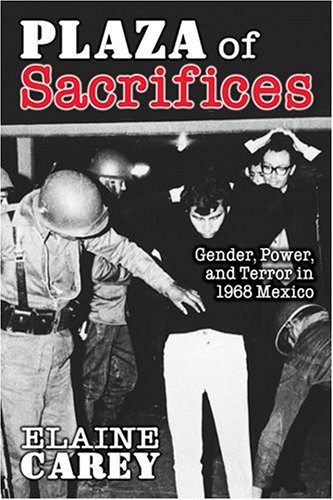
Plaza of Sacrifices: Gender, Power, and Terror in 1968 Mexico by Elaine Carey (2005)

by Andrew Weiss

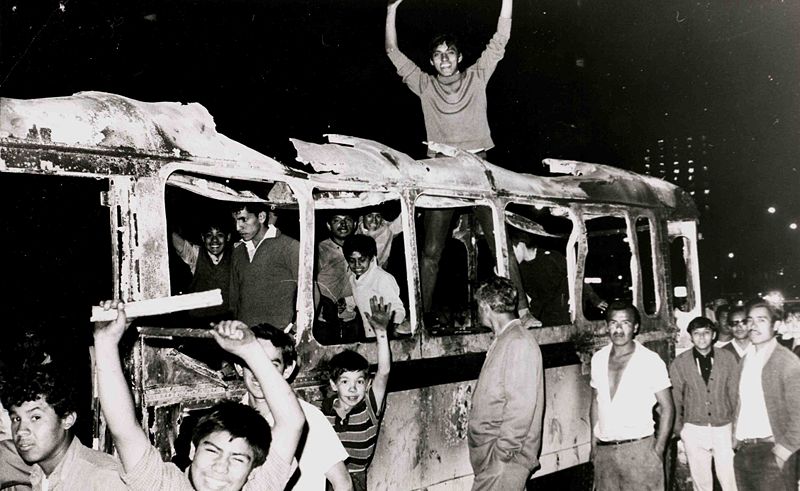
On October 2, 1968, the Mexican government sanctioned the killings of an estimated three hundred student protesters in the Plaza de las Tres Culturas, the main square in Mexico City’s Tlatelolco neighborhood. Hundreds more were arrested, many subjected to torture. Plaza of Sacrifices is the first English-language monograph of the events leading up to and following this massacre. Carey, Associate Professor of History at St. John’s University, offers a gendered analysis of the Mexican student movement of 1968. While Carey focuses on Mexican issues and events, she places the movement into the larger context of international student protests. Because student demands went beyond academic concerns to include calls for democracy and civil liberties, the 1968 movement was unprecedented. The protests revealed a public crisis of confidence in the Mexican government. Mexicans had come to see the divergence of the state’s policies from its revolutionary rhetoric of social justice. Young people protested for change.

51HSRPGW4SLCarey reveals how the student movement challenged gender norms and placed women into the public sphere as never before. Young, educated, middle-class women subverted traditional femininity as they engaged in public political discourse. Organizing protests and debating issues in public spaces traditionally reserved for men, female protesters constructed new identities and possibilities within the movement and in public and private life at large. Participant interviews demonstrate the significance of renegotiating gender roles among student protesters. After challenging the established gender order, many female protesters were forever changed; these women never again considered public life to be the exclusive realm of men. Carey contends that the mobilization of women in 1968 set the stage for a second wave of Mexican feminism in the 1970s.

Carey provides insight into the relationship between the individual and the state under the rule of the Institutional Revolutionary Party (PRI), which held power in Mexico from the late 1920s to 2000. She analyses the paternalistic language used by the PRI, which had cast itself as the protector of the Revolution and student protesters as unruly children needing to be brought back into the fold of the revolutionary family, thus revealing how the party conceived its sociopolitical role. This dynamic was both challenged and reified by the events surrounding the movement of 1968. The student movement represented a direct challenge to government paternalism, but was eventually suppressed, ultimately confirming the state’s position as head of the revolutionary family. Nevertheless, Mexican society was reshaped. The events of 1968 threatened the legitimacy of PRI rule as well as traditional notions of femininity. The impact of 1968 was still being felt in 2000, when a non-PRI candidate became president for the first time in over seventy years.

student_rallyStudent protesters in the Plaza de las Tres Culturas

Carey’s approach sheds light on many important aspects of the student movement and its aftermath. Her sources include participant interviews, both conducted by the author and others, student and government propaganda, newspapers and other periodicals, novels, plays, poetry, music, films, and photos. Her detailed interpretations of visual media, including editorial cartoons and student propaganda, are particularly useful in understanding the nuances of government and student rhetoric. And, by tapping formerly unreleased U.S. and Mexican state records, Carey provides a valuable look past the government and student propaganda.

While a welcome addition to the historiography of modern Mexican history, Plaza of Sacrifices has some shortcomings. Carey’s emphasis on government control of the public response to the movement takes away popular agency, so the book misses a large aspect of the sociopolitical discourse related to the formation of this response. While government propaganda surely influenced the public, students and other ordinary people did find their own voice, as the large scale demonstrations show. Carey’s overwhelming support of the student movement comes across in her writing. For Carey, public opinion is either pro-student or influenced by government propaganda and pro-government. She could have explored more fully how public opinion was formed, giving more agency to the public.

Plaza of Sacrifices provides a valuable narrative of events surrounding the Mexican student movement of 1968. Accessible to both lay and academic readers, this book should be read by anyone interested in this important chapter of Mexican history.

Group photograph: Anonymous Mexican students on a burned bus, July 28, 1968.

Credit: Marcel·lí Perelló via Wikimedia Commons

You may also like:

John McKiernan-Gonzalez’s article Onda Latina The Mexican American Experience.

Shadows at Dawn: A Borderlands Massacre and the Violence of History by Karl Jacoby (2008)

by Nathan E. McCormack

In Shadows at Dawn, Karl Jacoby examines the way that perspective influences historical memory and the role that political power plays in selecting which memories become codified in the historical narrative. imageJacoby does this through a study of the Camp Grant Massacre—the death of approximately 140 Apache at the hands of a group of white and Hispanic settlers and Tohono O’odham natives in April 1871 in the Aravaipa Valley in Arizona.
Jacoby examines the settlement of the Arizona-Mexico border region from four perspectives, those of the Apache and O’odham natives, the settlers from Mexico, and settlers from the United States. He relates each group’s story individually, highlighting events forgotten, dismissed, or emphasized, and demonstrating the way each group created a unique narrative about a shared event. In doing so, he calls attention to the influence of numerous factors, that influence the creation of history and group memory, including a culture’s worldview and its political position within the larger social context.

Divided into two overall sections—before and after the Aravaipa massacre—Jacoby begins each group’s narrative with its arrival in the area northeast of the Gulf of California, in present-day southern Arizona (in the case of the O’odham, whose arrival in the area is uncertain, a discussion of its lifestyle before the other groups’ arrivals). Jacoby discusses each group’s interaction with the others from its own perspective, which he gleans by studying historical and biographical narratives, or artifacts with analogous function among the indigenous groups. By addressing the way each group interpreted common events common, for example the cause each group attributed to the Aravaipa attack, Jacoby theorizes about the way that each group envisioned its role in the conflict, and more broadly, the way that it interpreted life in the rugged Arizona territory.

Jacoby’s study presents a fairly straightforward analysis of the events leading up to the Araviapa Canyon attack and does not attempt to present a theoretical explanation for the violence of the frontier or colonialism. The major contribution of Shadows at Dawn, however, is Jacoby’s portrait of each group’s distinctive perspective on the same time period—and, in some cases, the same events. This is particularly useful in postcolonial or subaltern studies, for recovering the voices that are lost when, as is frequently the case, only the history of the dominant or victorious community has been preserved. Jacoby’s approach, however, also highlights the difficulty of subaltern histories—preserving the perspective of conquered peoples, which tends to be lost or destroyed. What fragments remain—in his account the calendar sticks of the Apache serve as an example of these historical remnants—generally paint an unclear or incomplete picture, at best, and the historian must engage in some degree of speculation to construct a narrative based upon them. This is particularly true when dealing with semi-literate groups like indigenous North Americans.

Despite this difficulty, Jacoby utilizes the extant material effectively and acknowledges the challenges that it presents. The result is unique both in its approach and analysis and makes for a readable and accessible study, which avoids the all-too-common trap of theoretical overreaching.

Further reading:

Official website for Shadows at Dawn.


Naming and Picturing New World Nature

by Maria Jose Afanador

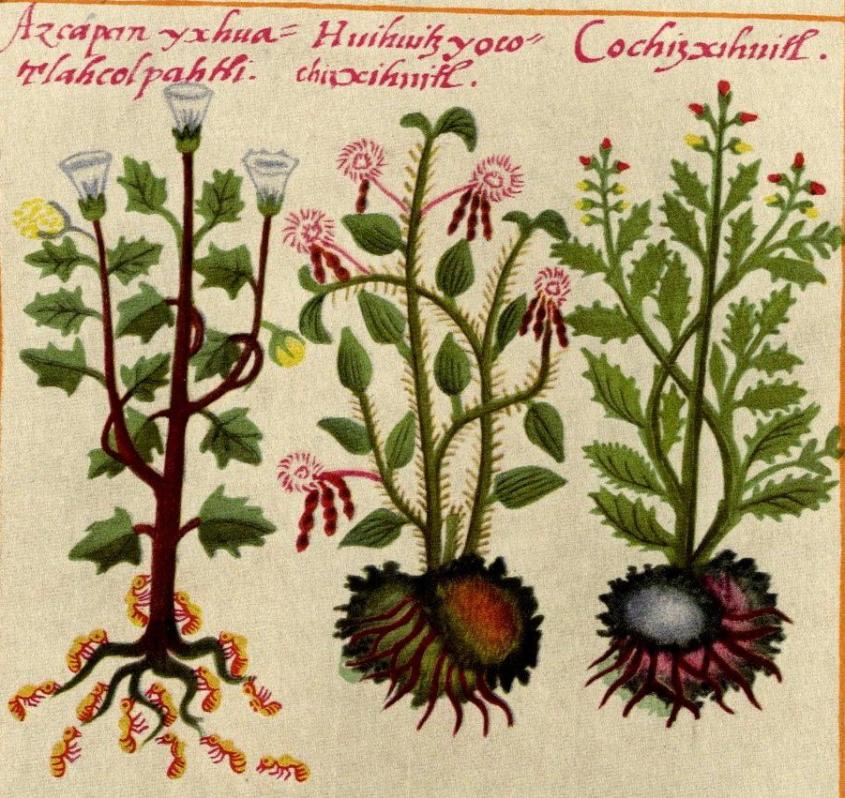
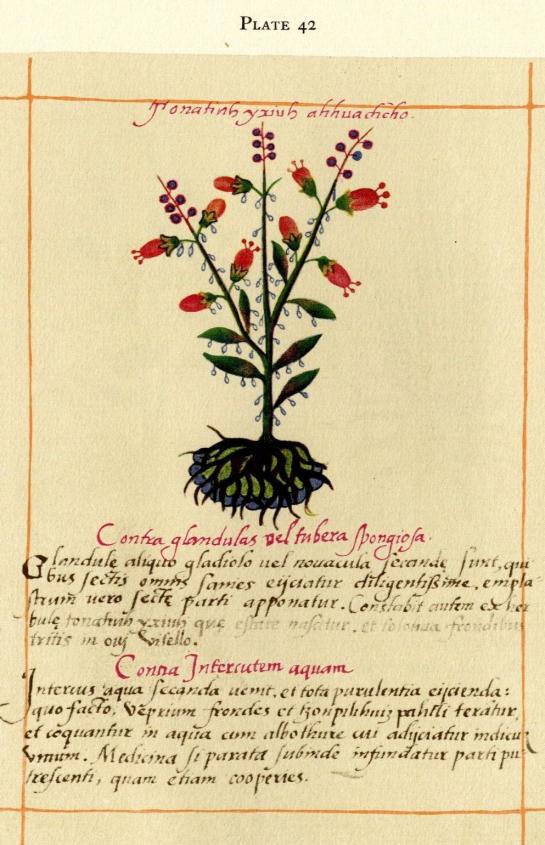
When Cassiano dal Pozzo, the Pope’s personal assistant, returned to the Vatican from Spain in 1626, he brought with him a Mexican manuscript on natural history, the Libellus de medicinalibus Indorum herbis.  The “herbal” was a marvelous Mexican manuscript containing illustrations of more than 180 plants.  Commonly known as Codice de la Cruz-Badiano, it is considered the first illustrated survey of Mexican nature produced in the New World.

In 1552, the son of the Viceroy, Francisco de Mendoza, sent the Latin manuscript to Spain, where it probably remained until the early seventeeth century, when it came into the possession of Diego de Cortavila y Sanabria. It next appeared in the library of the Italian Cardinal Francesco Barberini, where it remained until 1902, when the Barberini library became part of the Vatican Library. The manuscript was rediscovered in 1929 by Charles Upson Clark and finally, in 1991, Pope John Paul II returned the Libellus to Mexico, where it is now in the library of the National Institute of Anthropology and History in Mexico City.

Fig_3The herbal is organized in chapters associated with parts of the body, starting with afflictions of the head, eyes, ears, nose, teeth, and cheeks; it then goes to the chest and stomach, and continues with the knees and feet; it ends with “falling sickness or comitial sickness” and remedies for “fear or faint-heartedness, mental stupor, for one afflicted by a whirlwind or a bad wind, … and for a traveler crossing a river or lake.” The diseases treated in the herbals are named in Latin in accordance with the tradition of medieval and early modern European herbals. However, the names of the plants are all written in Náhuatl, the indigenous Aztec language.

The manuscript, produced by a Nahua physician, Martín de la Cruz, and translated into Latin by Juan Badiano, was a gift for the king that sought to demonstrate the worthiness of educating the Nahua nobility in the Colegio de Santa Cruz de Tlatelolco. At first glance, this marvelous codex resembles a typical medieval herbal. A closer look, however, reveals a fascinating blend of European and Aztec cultures. The codice can be viewed as a form of expression of the Nahua in a context of increased European influence and as a manner of dealing with a changing reality.

Fig_1 Visual culture is a powerful means by which different societies depict reality and convey meanings. The images contained in this sixteenth-century manuscript pose great challenges to scholars willing to consider visual evidence as core material of historical analysis. What was the purpose of the pictographic material as utilized by the authors of the codice? Can we determine which patterns and conventions are purely Aztec or European? Is there such thing as a pure visual tradition? Does it make sense to study colonial sources under the assumption of cultural contamination? Aside from questions of cultural purity or contamination, perhaps a more interesting question to be asked is whether the purpose of these illustrations is primarily informational or aesthetic.

As a gift to the king, aesthetics certainly played an important role in the purpose of the illustrations. The beauty of the pictures is undeniable, and the extensive use of colors to depict nature surpasses other depictions of nature of the time. Although scholars have regarded the manuscript as a European source due to its resemblance to late medieval and early modern herbals, the codice contains pictographic elements of the Nahua tradition such as the glyphs, which convey both descriptive elements and  the ecology of the plants. Take for example the Nahua glyph for stone –tetl– which works as a ideogram to point to the rocky soil in which the plant grows in the illustration above. The ants visible among the roots in the illustration below also indicate the environment in which this plant grows. The ants, however, are not associated with any Náhuatl glyph but it was common in European herbals to include associated parasites in such illustrations.

imageThe Codice de la Cruz-Badiano is an example of the encounter of between writing systems, and thus of systems of knowledge, with multiple swings from the pictographic-glyphic tradition to the alphabetical. The illustrations are by no means subordinated to the writing. Visual evidence and linguistic analysis of Náhuatl offer ways of approaching the complexities of cultural forms and to provide information about natural history that was not present in the Latin texts.
This article is excerpted from the forthcoming publication:

Maria José Afanador Llach. “Nombrar y representar. Escritura y naturaleza en el Códice De la Cruz-Badiano, 1552.” In Fronteras de la Historia, vol. 16-1, Instituto Colombiano de Antropología e Historia, Bogotá, June 2011. 

The codice is available in facsimile: De la Cruz, Martín, The Badianus manuscript (Codex Barberini, Latin 241) Vatican Library; an Aztec herbal of 1552. Ed. Emily Walcott Emmart. Baltimore: The Johns Hopkins Press, 1940.

For more on the codice see:

Debra Hassig, “Transplanted Medicine: Colonial Mexican Herbals of the Sixteenth Century.” Anthropology and Aesthetics 17-18, Spring/‌Autumn (1989).

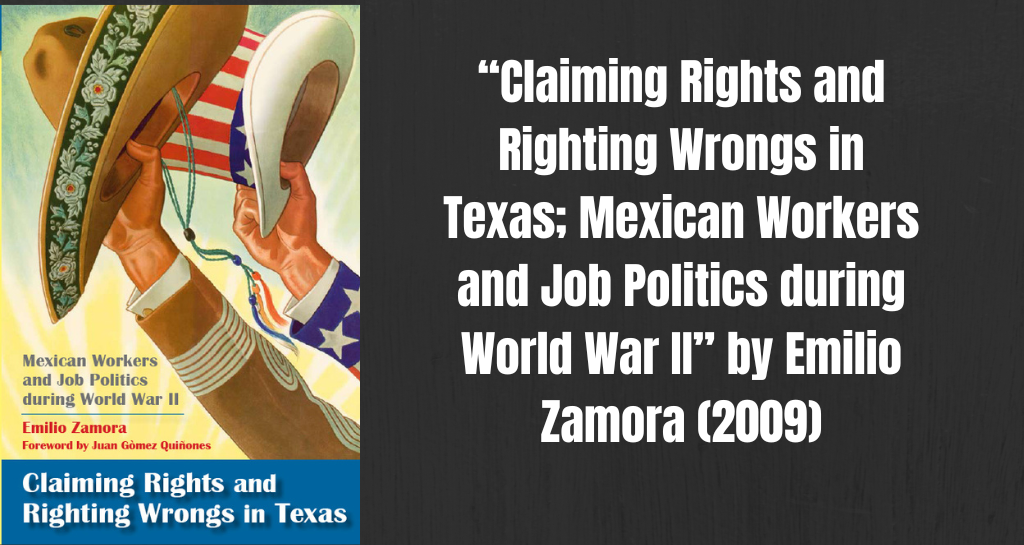
“Claiming Rights and Righting Wrongs in Texas; Mexican Workers and Job Politics during World War II” by Emilio Zamora (2009)

Relations between Mexico and the United States appear so disappointing these days that we may find it difficult to remember them differently. Mexico-U.S. relations, however, have seen better times and recalling them could serve as a model for what is possible. Claiming Rights and Righting Wrong in Texas does this by summoning the memory of World War II, when Mexico and the United States fashioned the closest and most cooperative set of relations that we have ever seen.

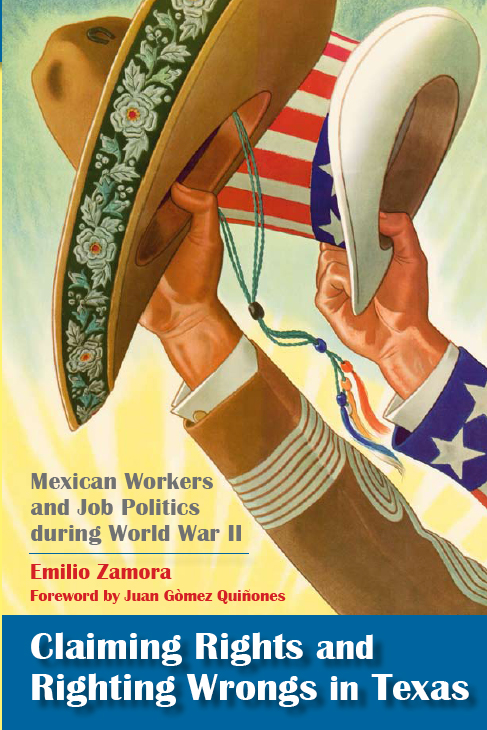
The exuberant WWII poster that appears on the book’s front cover captures the celebrated unity between wartime neighbors, when Mexico intervened on behalf of Mexicans in the United States and the State Department initiated a campaign to improve relations between Mexicans. Mexico’s insistence on elevating racial discrimination to a higher level of importance and the U.S.’s decision to expand its Good Neighbor Policy into the domestic arena, by investigating and settling cases of discrimination during the war, demonstrates how Mexican Americans entered center stage in the political arena of minority and labor politics by way of an international, or more precisely hemispheric, body politic.

Mexico’s decision to deny their contract workers to Texas farmers who were especially known for their lack of hospitality towards Mexicans and the State Department’s insistence on good neighborliness in Governor Coke Stevenson’s administration made the Lone Star state a key site of continued negotiations over racial discrimination and the government’s role in combating it.

Book cover of Claiming Rights and Righting Wrongs in Texas: Mexican Workers and Job Politics during World War II by Emilio Zamora

Claiming Rights and Righting Wrongs in Texas also shows that state and federal agencies promoting good neighborliness contributed to improvements in the social standing of Mexicans, but only to a minor extent. The expanded wartime economy with its unprecedented employment opportunities must be credited with much of their recovery from the hard times of the Depression. Recovery, however, was uneven for both U.S. and Mexico-born as they typically exited the farms and entered the urban-based and higher-paying manufacturing jobs at a slower rate. Inequality for Mexicans, as well as for African-Americans, remained relatively unchecked.

The increased diplomatic cooperation that promoted good will and improved understanding in diplomatic and ethnic relations also allowed for the League of United Latin American Citizens (LULAC) to emerge as the one of the leading proponents of equal rights in the United States. Culturally adept at working the English and Spanish speaking worlds, LULAC representatives acted as intermediaries between Mexican communities in Texas and government officials from Washington, D.C., Austin, and Mexico City. As a result, they built a reputation for LULAC as one of the most effective Mexican organizations coming out of the period of the Second World War.

Despite nagging problems like the persistence of racial discrimination and inequality, the unprecedented attention that Washington, D.C. directed at Mexico and the Mexicans in the United States raised postwar expectations for better relations and encouraged further official activism and Mexican agitation for equal rights in the postwar period.

The good relations that Mexico and the United States established during the war years and the policy focus that they placed on discrimination and inequality among Mexicans in Texas may have been primarily intended as a wartime imperative. But then as now, necessary policies that better relations can provide for expanded visions of improved understanding and good will between governments and peoples.


The views and opinions expressed in this article or video are those of the individual author(s) or presenter(s) and do not necessarily reflect the policy or views of the editors at Not Even Past, the UT Department of History, the University of Texas at Austin, or the UT System Board of Regents. Not Even Past is an online public history magazine rather than a peer-reviewed academic journal. While we make efforts to ensure that factual information in articles was obtained from reliable sources, Not Even Past is not responsible for any errors or omissions.

« Previous Page

Recent Posts

  • The Battles of the Alamo and the Myth of Southern Exceptionalism
  • Primary Source: Magic, Metal, and Medicine in Leonhard Thurneysser’s Paracelsus
  • Faculty Spotlight: Dr. Kate Imy
  • La Historia del Tiempo Presente en México: un campo en construcción
  • The History of the Present Time in Mexico: A Field in Formation
NOT EVEN PAST is produced by

The Department of History

The University of Texas at Austin

We are supported by the College of Liberal Arts
And our Readers

Donate
Contact

All content © 2010-present NOT EVEN PAST and the authors, unless otherwise noted

Sign up to receive our MONTHLY NEWSLETTER

  • New
  • Features
  • Reviews
  • Texas
  • Teaching
  • Digital
  • Watch & Listen
  • Authors
  • About