This essay is part of The Radical Spanish Empire Roundtable, a series of review essays examining the book from different disciplinary perspectives. Read the introduction and explore the other contributions in the series below.
- “The Radical Spanish Empire Roundtable – Introduction“
- “All Eyes on the Petition: Reflections on The Radical Spanish Empire“ by Daniel Carpenter
- “Iberian Subaltern Political Philosophies and The Radical Spanish Empire” by Pedro Cardim
- “Lawfare and the Legal Construction of Race in The Radical Spanish Empire“ by Michelle McKinley
As befits a work of such uncommon scope and ambition, The Radical Spanish Empire has already been the focus of a flurry of book reviews and colloquia evaluating the authors’ success in substantiating their main arguments, contributions, and provocations, with which the authors clearly hope to explode many scholarly and popular certainties about the history of colonial Latin America, as well as the region’s broader importance in world history. This review will focus more narrowly on an aspect that has not yet received much notice, namely, the ways in which The Radical Spanish Empire illuminates the workings of fabrication, reinvention, and forgery in the early modern period, and how the authors tie these to broader claims about the history of doubt and skepticism.
Cañizares-Esguerra and Masters posit that the demographic, political, and social chaos created by the Spanish conquest, along with preexisting paperwork practices, by which supplicants would exact privileges from the Crown by petitioning, litigating, or lobbying, helped give rise in the Indies to an explosive, vigorous, and widespread culture of “lawfare.” Paperwork – in the form of petitions, proposals for reform, litigation, inspections, and audits – provided the means through which distant Spanish, Indigenous, and other types of vassals could effect change. As familiarity with the logic and practice of petitioning the monarch for privileges (gracia) spread, so, too, did its practice, and thus, “[e]very vassal, it seemed, now claimed to be a great conquistador or an Indigenous lord. In an era of radical social upheaval, every commoner claimed to be a king, and whole communities were tearing themselves apart, alleging their ancient independence. The past had grown wild” (184), as “[v]assals saw it as the moment to confirm, tweak, or perhaps outright invent their privileges,” which led to a veritable “flood of petitions, lawsuits, genealogies, treatises and extended investigations” (185).
Indeed, as paperwork proliferated, so too did inventions and fabrications, from outright forgery to mild manipulations of truth. This was especially true in the first decades of the sixteenth century (c. 1500-c.1570), which the authors call (perhaps hyperbolically) “one of the longest profoundly radical periods in recorded history anywhere,” when “lesser elites and commoners challenged old aristocracies, often producing proof of their own bloodlines – sometimes entirely out of thin air.” In order to substantiate their claims, “explorers, conquistadors,” “indigenous and part-indigenous families and communities,” “friars, officials, indigenous commoners,” all participated in generating “a vast manuscript canon describing everything from marriage practices to cosmovisions to the politics of Native sovereigns,” through scores of “maps, histories, and genealogies” (165). In these ways, petitioners sought to “dominate the archive,” that is, to invent truth more persuasively or successfully than one’s foes, and convince the Crown to grant or confirm one’s privileges.
Yet the resulting body of work did not form a coherent canon; since such documents were produced out of “fierce factional struggles,” their truths were “mutually contradictory and agonistic” (165). And as time passed, the earlier, radical period would be forgotten or effaced, as the resulting documents would in fact become canonical, forming the basis of royal, municipal, family, ecclesiastical archives, and would be mobilized in later generations to assert or claim privilege, or to vindicate tarnished reputations (11). In the meantime, the difficulty of confirming the authenticity of any of these claims – based on the cultural and physical distance of the petitioners from Madrid, but also the shifting nature of truth in wake of so much upheaval – gave rise both to a fundamental, pervasive skepticism about the very possibility of arriving at truth at all, particularly on the part of the Crown and the royal ministers charged with adjudicating the resulting petitions and litigation.
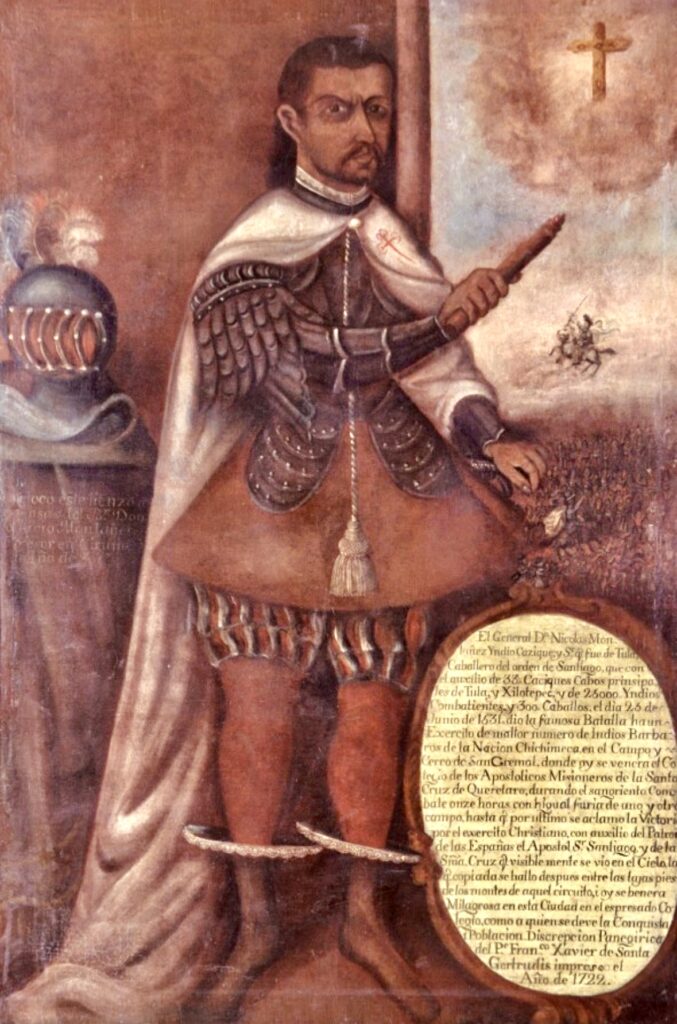
The authors have assembled a truly remarkable assortment of examples from their own exhaustive and punctilious archival research and existing scholarship, which range from the centers of former Mesoamerican and Andean empires, where petitioners fought to establish their purported descent from the Aztec and Incan nobility, respectively, to peripheral regions, such as the mining zones of northwest Mexico and high Andean site of Potosí, where “deracinated commoners” such as one sixteenth-century Otomi man named Nicolás de San Luis, were transformed by their descendants into model Christian conquistadors and upright administrators through forged documents. These forgeries were then used to write new, idealized histories that buttressed local claimants’ privileges and power, based of course on counterfeit sources which continue to circulate and “fool scholars to this day” (154). In these efforts, petitioners were attentive to the strategic and evidentiary value of non-European scripts and cultural sources, which, they hoped, would be seen as inherently ancient and authentic. Native lords, including descendants of Moctezuma and the various contenders to the title of Inca, drew on oral traditions and the testimony of quipus, respectively, to buttress their claims. Mesoamerican cacique-claimants registered purportedly ancient traditions in pictographic codices in truly remarkable and complex documents, which were indeed “among the most creative of the era” – if not quite among the most creative in all “of human history” – in which their authors “strategically use[d] as many non-Spanish conventions as possible to persuade officials that claims faithfully reflect[ed] customs derived from the ancient past” (188).
In the seventeenth century, the accumulation of documents qua documents – which the authors conceptualize as “the archive” – became more important than oral testimony and other, older sources of historical or ancestral memory. In this context, “forgery flourished,” and a wave of would-be Inca descendants descended on the Andes in the seventeenth century. These included several who, based on their spurious claims of royal or aristocratic descent, which they supported with forged privileges and genealogies, convinced Spanish authorities to empower them to convert and/or conquer indigenous populations in the untamed peripheries of Southern Cone. It is in this context that the authors reevaluate the efforts of Felipe Guaman Poma, the Andean author of the massive illustrated chronicle known as El primer nueva corónica y buen gobierno, which they describe as the work of a rather incompetent forger and failed self-fashioner, a text produced in part to vindicate Guaman Poma’s own fraudulent claims of noble ancestry. Through this extended history-cum-petition, the author fabricated an image of himself as the lone surviving legitimate heir to the Inca (338) and the ideal royal servant: a master auditor and memorialista, the sole reliable source of the truth about the Andes. “Like so many petitioners before him,” the authors note, “he also stressed his distinguished pedigree and his parents’ service against the tyrant Pizarros.” As such, “[t]his canonical work is incomprehensible outside the wider context of struggles over privilege” (203). “Guaman Poma presented the new social order as a bottom-up regime in which every group continued to manipulate the truth…wreaking havoc” (339), and giving rise to the manifold abuses, disorder, and injustices he denounces in the Andes. The irony, of course, is that Guaman Poma was one of those upstarts, and, if Cañizares-Esguerra and Masters are correct, a forger to boot, and not even a particularly good one (340).
Of particular interest and import is the authors’ claim that the culture of invention and forgery tacitly encouraged by the culture of invention, petitioning, and uncertainty generated “vernacular-administrative skepticism” – that is, a widespread conviction that Indies petitioners were not telling the whole truth, and that perhaps the very distance of the Indies, as well as its alterity, made the nature of the place and its people inherently incomprehensible. This is a skepticism that did not remain in the colonies, but extended to the metropole, where “contradictions and incomplete truths fostered a rich culture of skepticism at the royal court” (267). Since forgery and fabrication were inherent to the logic of the lawfare system – when there was a perceived vacuum, paperwork appeared to fill it – this inevitably led to doubts about the possibility of arriving at truth. This was true both among petitioners, who often despaired about the king’s ability to apprehend it, as well as of the king and his councilors, who agreed with one assessment that the act of reading petitions and memoriales was like reading chivalric novels (257-8), the fanciful and wildly popular texts that had driven Don Quijote to lose his grip with reality. Cañizares-Esguerra and Masters are keen to demonstrate that this pervasive sense that truth was elusive, and maybe impossible to grasp, decidedly altered imperial governance: “Doubt was therefore a fundamental force in shaping the empire,” as the earlier more freewheeling period gave rise to a more hierarchical and fixed regimen in the late sixteenth and seventeenth centuries, in which “kings, viceroys, bishops, and inquisitors” took “increasingly assertive roles in ascertaining and determining the truth” (278), even if readers may not be convinced by the claim that these effects represented veritable “intellectual earthquakes,” as the authors claim in a bit of characteristic overstatement (273).
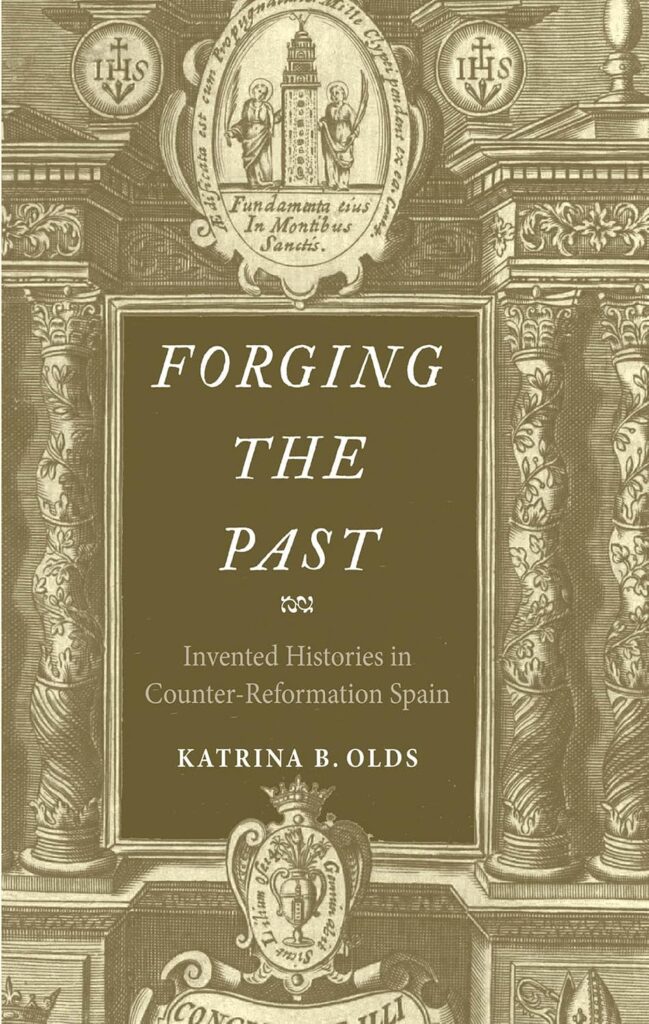
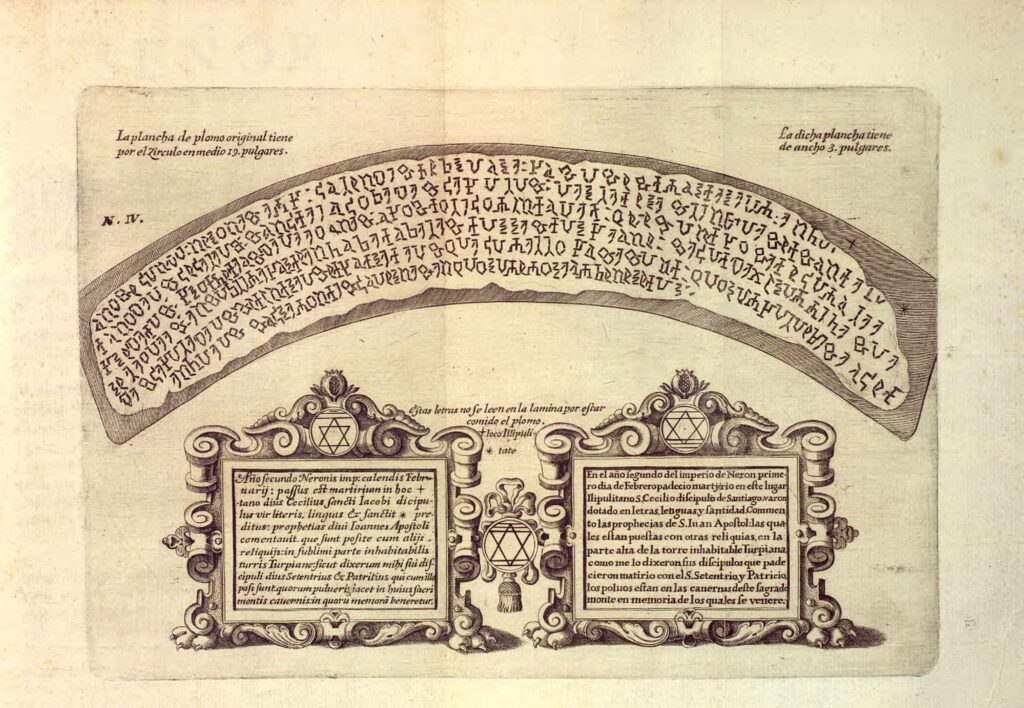
The Radical Spanish Empire provides a convincing case for continuing to tease out the distinctive ways that doubt and skepticism worked in early modern Iberian worlds, and often raises more questions than it can answer. It would be worth asking, for example, whether the fact that “vassals … reflected on the truth constantly, regarding it as another weapon in the great bureaucratic battlefield” (278) actually reflected pervasive skepticism, or if such uncertainty might be more accurately described as pragmatic and self-interested cynicism. Either way, it is worth remembering that forgeries and inventions in the Indies had important parallels in Spain, most infamously in a spate of historical forgeries that also generated skepticism about the integrity of archives as repositories of truth. These were historical forgeries, produced and promoted by antiquaries and learned clerics all over Spain, in which they codified oral traditions, unearthed or forged material artifacts, and knit together new narratives that portrayed their specific locality as the home of the most ancient, most pious, and most continuously Christian populace. In the process, of course, these local partisans of the sacred were forced to efface, convert, or otherwise reshape inconvenient truths about the existence of pagan, Jewish, and Muslim periods. In several instances, this led these authors to fabricate their own archives of purportedly ancient texts, as in the infamous case of the ‘lead books’ of Granada, outright forgeries promoted by Archbishop Pedro de Castro (who appears in The Radical Spanish Empire as friend and mentor to Inca Garcilaso de la Vega, another self-fashioner, p. 321). In another, a Jesuit priest named Jerónimo Román de la Higuera confected an entire canon of historical texts, which, he hoped, would effectively retrofit and solidify a pious narrative of Spanish sacred history from the time of Christ through the Christian “Reconquest” of Islamic Spain, and which generated both skepticism and enthusiasm. The latter attitude persevered in spite of the former, as evidenced by the more than 164 works of ecclesiastical and local history which drew on Higuera’s canon between c.1600-c.1800.[i]
In short, The Radical Spanish Empire’s provocative contributions suggest that there is still more to the rich and complex histories of invention and fabrication on both sides of the Atlantic than scholars have yet managed to grasp. As Cañizares-Esguerra and Masters note, scholars have traced a history of Iberian doubt and skepticism to centuries of Iberian religious plurality which gave rise to a conviction, one that seems to have risen to the level of a commonplace, that all faiths were basically the same – that “all could be saved,” whether Muslim, Christian, or Jew.[ii] These sentiments reflected a rough and ready tolerance that, notwithstanding its persecution by ecclesiastical officials, remained a strong and vigorous current in late medieval and early modern Iberia and its territories, and which often extended to general skepticism about the validity of several Christian moral dictates, such as the popular conviction that simple fornication was not a sin.[iii] Rather than necessarily attempting to yoke these developments to historiography on the development of the public sphere and philosophical skepticism in the Anglo-American ambit, as Cañizares-Esguerra and Masters are keen to do, it might be more productive – and true to the sources – to further pick out the connections, both explicit and tacit, between the wave of forgeries and fabrications in Spain and those produced in the Indies, and among the various cultural registers in which Iberians at home and the Americas litigated and imagined ‘truth’. For example, historians of the book and of reading might deepen our understanding of how literary texts like chivalric novels and Don Quijote were used as metaphors for doubt, skepticism, and illusion, not just among elite readers like the king, but also by everyday intellectuals.[iv] In order to further elucidate shifting definitions of ‘truth,’ we would also be well served by further examination of how knowledge of the genre and conventions of petitions for privileges was communicated to “radical commoners” in the Indies in the first place, as well as how these norms may have evolved or varied across the empire and over time.[v] Ultimately, while The Radical Spanish Empire’s more expansive and provocative claims would sometimes benefit from greater nuance and context, they do prove timely and productive, particularly in helping to imagine how we might rewrite the social and intellectual history of early modern truth, doubt, and skepticism.
Katrina Olds is Professor of History at the University of San Francisco. Her book, Forging the Past: Invented Histories in Counter-Reformation Spain (Yale, 2015) was recognized by the American Catholic Historical Association with its John Gilmary Shea Prize. Her articles on neo-Latin forgeries; the unruly process of authenticating saints’ relics in the Counter Reformation; the eclectic methods of Spanish antiquaries; and relics, saints, and memory in Spain and the Americas have appeared in Renaissance Quarterly, Catholic Historical Review, and various edited volumes. Most recently, she is the co-editor, with Emily Michelson and Jan Machielsen, of The Cambridge Companion to Counter-Reformation Sanctity (Cambridge University Press), 2026.
[i] Katrina B. Olds, Forging the Past: Invented Histories in Counter-Reformation Spain (New Haven: Yale University Press, 2015)., 259. For a recent analysis of Higuera’s lesser-known manuscripts, Miguel Betti, La otra cara del falsario: Jerónimo Román de la Higuera y la ilusión del origen, Biblioteca Áurea Hispánica (Iberoamericana Vervuert, 2026).
[ii] Stuart B. Schwartz, All Can Be Saved: Religious Tolerance and Salvation in the Iberian Atlantic World (New Haven: Yale University Press, 2008).
[iii] Barbara Fuchs and Mercedes García-Arenal, eds., The Quest for Certainty in Early Modern Europe: From Inquisition to Inquiry, 1550-1700 (Toronto: University of Toronto, 2020); Mercedes García-Arenal, ed. After Conversion: Iberia and the Emergence of Modernity (Leiden: Brill, 2016); Stefania Pastore, “Doubt and Unbelief in the Early Modern Era: Diego Hurtado de Mendoza and the Spanish Tradition,” in Formations of Belief: Historical Approaches to Religion and the Secular, ed. Philip G. Nord (Princeton: Princeton University Press, 2019).
[iv] I analyze one such example in a forthcoming journal article.
[v] The not insignificant role of notaries in the paperwork and lawfare culture is relegated to a footnote (fn 146, p. 413).
Works Cited:
Betti, Miguel. La otra cara del falsario: Jerónimo Román de la Higuera y la ilusión del origen. Biblioteca Áurea Hispánica. Iberoamericana Vervuert, 2026.
Fuchs, Barbara, and Mercedes García-Arenal, eds. The Quest for Certainty in Early Modern Europe: From Inquisition to Inquiry, 1550-1700. Toronto: University of Toronto, 2020.
García-Arenal, Mercedes, ed. After Conversion: Iberia and the Emergence of Modernity. Leiden: Brill, 2016.
Olds, Katrina B. Forging the Past: Invented Histories in Counter-Reformation Spain. New Haven: Yale University Press, 2015.
Pastore, Stefania. “Doubt and Unbelief in the Early Modern Era: Diego Hurtado de Mendoza and the Spanish Tradition.” In Formations of Belief: Historical Approaches to Religion and the Secular, edited by Philip G. Nord, 67–84. Princeton: Princeton University Press, 2019.
Schwartz, Stuart B. All Can Be Saved: Religious Tolerance and Salvation in the Iberian Atlantic World. New Haven: Yale University Press, 2008.
The views and opinions expressed in this article or video are those of the individual author(s) or presenter(s) and do not necessarily reflect the policy or views of the editors at Not Even Past, the UT Department of History, the University of Texas at Austin, or the UT System Board of Regents. Not Even Past is an online public history magazine rather than a peer-reviewed academic journal. While we make efforts to ensure that factual information in articles was obtained from reliable sources, Not Even Past is not responsible for any errors or omissions.