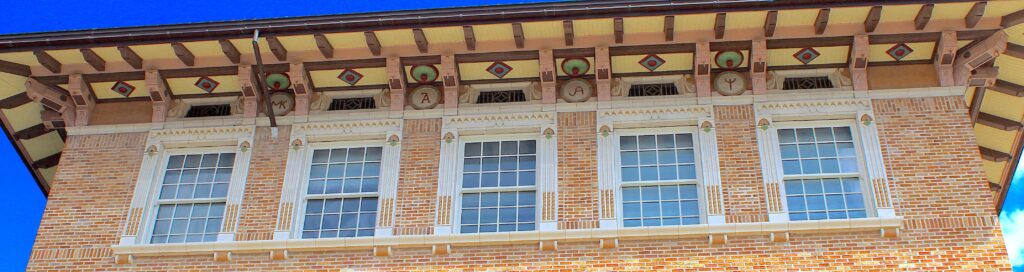
As the Roaring Twenties hummed on, a brand-new building was erected on the grassy slopes of central campus at The University of Texas at Austin. A crew of around 50 to 60 people, working with eight car loads of stone, six stone cutters, and ten lathers, pieced together what would become Garrison Hall at breakneck speed.[1] On December 9, 1925, the building’s ceremonial cornerstone, still visible today, was laid, at a time when faith in science and its capacity to uncover objective facts was in full bloom. It was to be, according to renowned economist and then-president Dr. Walter Splawn, a place “free and unhampered in the search of truth” for the social sciences. The building was named after George Pierce Garrison, the first chair of the History Department and one of the founders of the Texas State Historical Association. The faculty building committee, led by philosopher William J. Battle from 1920 to 1949, chose to feature thirty-two cattle brands on the frieze beneath the building’s cornices and upper-floor window frames. No one on the committee could claim sole credit for an idea that seemed to have emerged from the broader cultural atmosphere of the period.[2]
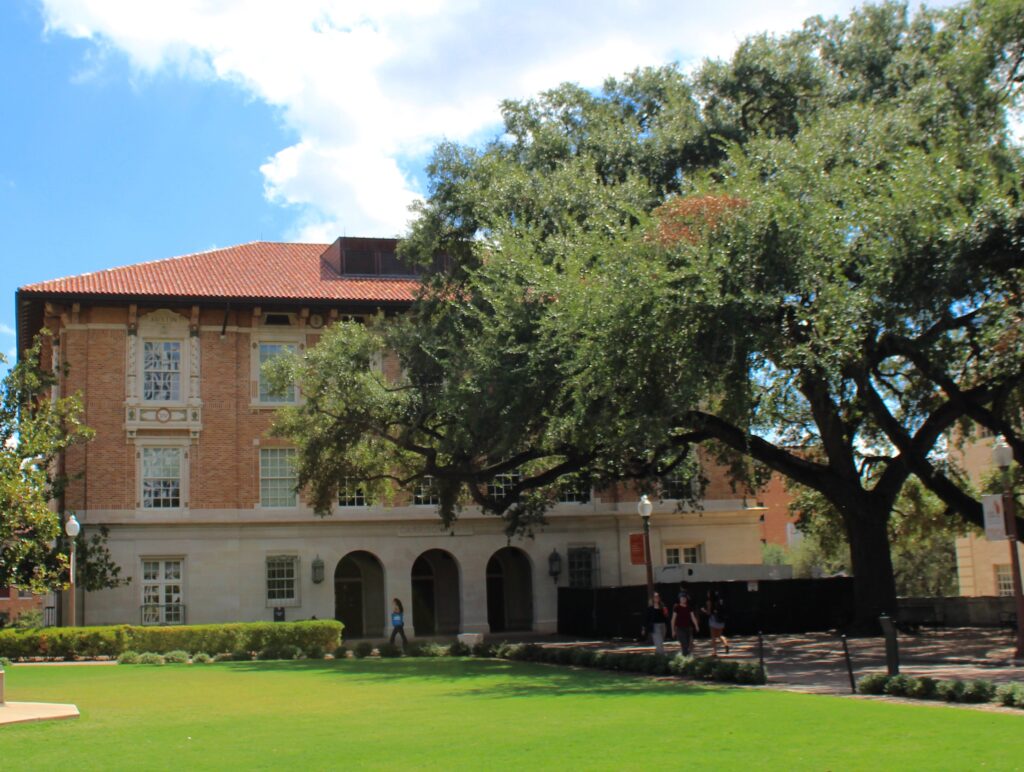
Garrison Hall as it looks today, one hundred years after its construction. Photograph by the author.
Those cattle-brand medallions are more than architectural flourishes of what became the History Department building. The building was to be a “permanent monument to immortalize the history of the Southwest” through one of the region’s defining economic activities and cultural symbols: cattle ranching.[3] They were meant to symbolize what had been the beating heart of Texas, just as that era gave way to barbed wire, industrial livestock, and iron horses. By the 1920s, industrial modernization, agricultural crisis, and the rise of the oil industry were reshaping Texas. Agricultural and animal product prices collapsed after Europe’s recovery following World War I, while oil extraction emerged as one of Texas’s defining economic forces. It was under these circumstances that, in 1922, the University of Texas, then just a handful of brick buildings with temporary wooden shacks, began planning an expansion. Those plans received an unexpected boost the following year, when an oil reserve was discovered on university lands in the Permian Basin of West Texas. Santa Rita Well No. 1, now memorialized on the southern edge of campus, began producing oil, generating revenue that helped propel the University’s ongoing expansion. The most significant example was the construction of Memorial Stadium in 1924, named in honor of World War I veterans.[4] That same year, renowned New York architect Cass Gilbert was ousted amid pressure from local firms to hire a Texas architect, and a new architectural team was brought in to redesign the 1922 expansion plan. Garrison Hall therefore began its construction under two Texas architects, Herbert M. Greene of Dallas and Robert Leon White of Austin, and the Illinoisan James White.[5]
The pressure to oust Gilbert was part of a broader, emerging regionalism and a growing confidence that Texas itself could and should shape the University’s development. The American Southwest, long viewed as a backward periphery of the United States, was beginning to assert itself. With growing pride in its identity, history, and culture, Texas began to recast itself less through its Southern and Civil War associations and more as a western frontier society defined by ranches, cowboys, longhorns, and open ranges.[6] While UT professors Garrison, Eugene Barker, and Walter Prescott Webb were laying the bricks of the now traditional, and rather Anglo-centric, history of the Lone Star State, western dime novels were pouring into the market. Zane Grey, a writer of western adventure novels, by far outsold the more prestigious modernist authors of the time, including James Joyce, William Faulkner, and Scott Fitzgerald.[7] “Westerns, westerns and more westerns,” read a Burlington Hawk Eye of Iowa in 1926, as “a western a day makes good movie paid” became the motto of the burgeoning Hollywood film industry.[8] These western stories helped make longhorns, ranching, and cattle brands recognizable and popular icons of Texas identity.
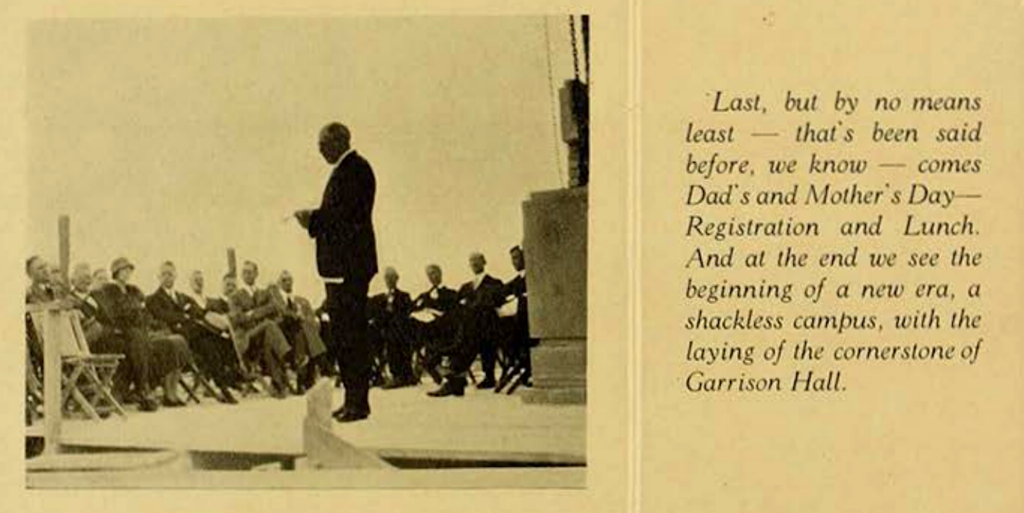
The laying of the cornerstone of Garrison Hall, 1925. Source: The Cactus, University of Texas at Austin, 1926.
For these symbols to appear in westerns and popular fiction, however, they first had to exist in oral memory and the folklore movement. J. Frank Dobie led the Texas Folklore Society alongside his friend John Lomax. Together, they provided the raw material for the construction of an increasingly nostalgic vision of the Southwest. Dobie spent his childhood on a ranch near the Nueces River and grew up to become a Master of Literature at Columbia University. But he fell short of a Ph.D., since he never adapted to a New York culture he saw as snobbish for disdaining his cattle-ranching background. He came back to UT as an English instructor from 1914 to 1916, only to find himself marginalized again. After serving in World War I without seeing active combat, he returned to Texas and pursued folklorism, the study of local legends, stories, and oral traditions, which had long been his passion. By 1923, Texas folklorism had gained wider public recognition, with Dobie emerging as one of its leading figures. He was subsequently hired without a doctoral diploma as a full professor at the Oklahoma A&M College (now Oklahoma State University) and appointed chair of its English Department. In 1925, however, UT Austin successfully recruited him back.[9] He went on to build his career writing about the fading world of Texas ranching, producing works such as Vaquero of the Brush Country, Coronado’s Chickens, The Longhorns, and The Mustangs.
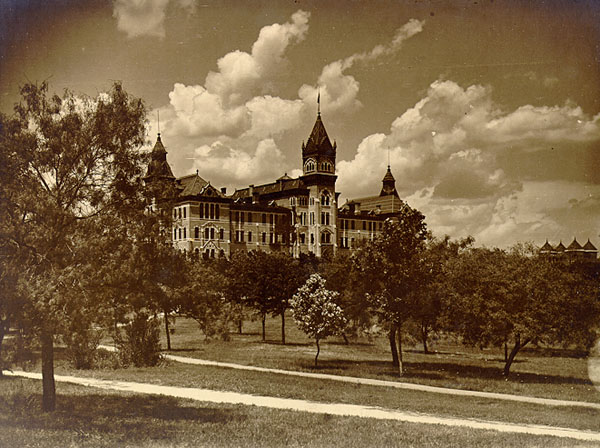
The Old Main Building at The University of Texas at Austin in 1903. Source: Wikimedia Commons
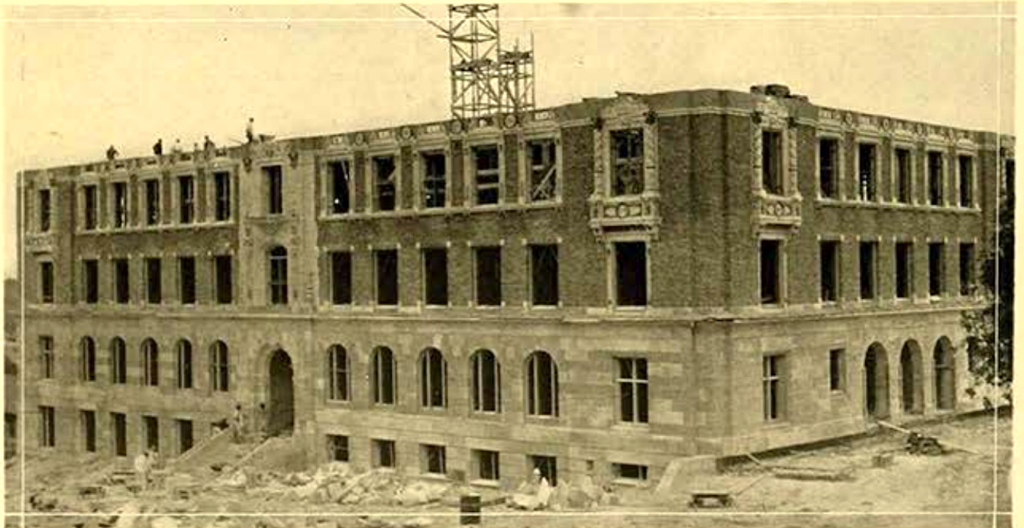
Garrison Hall under construction, pictured in the 1926 Cactus yearbook. Source: The Cactus, University of Texas at Austin, 1926.
As modernization advanced, nostalgia for the world left behind kept growing. This enabled figures like Dobie to become spokespeople for a bygone era, revaluing regional history and tradition as worthy of academic study. In a lecture to a large crowd in the summer of 1926, when the facade of Garrison Hall was just completed, he argued that folklore is the fabric through which literature and culture are made. He then pointed to the cattle brands at Garrison Hall as an example of folklore and tradition naturally growing into art and culture.[10] Viewed through Dobie’s career, we can see that Garrison Hall’s cattle brands were more than a casual decorative choice. They were part of a larger cultural moment when Texans made ranching folklore a central symbol of their identity, just as the old frontier that had produced that world faded into the past. It was only fitting that the university’s new history building would try to preserve that past by turning it into stone.
The building committee assigned UT’s librarian and Texas historian Ernest William Winkler, student of Garrison, Eugene Barker, and Frederick Jackson Turner, to survey and select the brands for Garrison Hall.[11] After an exhaustive six months of reviewing twenty thousand brands, he selected thirty-two. He balanced four criteria: historical periods, regional representation, visual appeal, and donors and benefactors. Readers can identify each one using the brand locator at the end of the article.
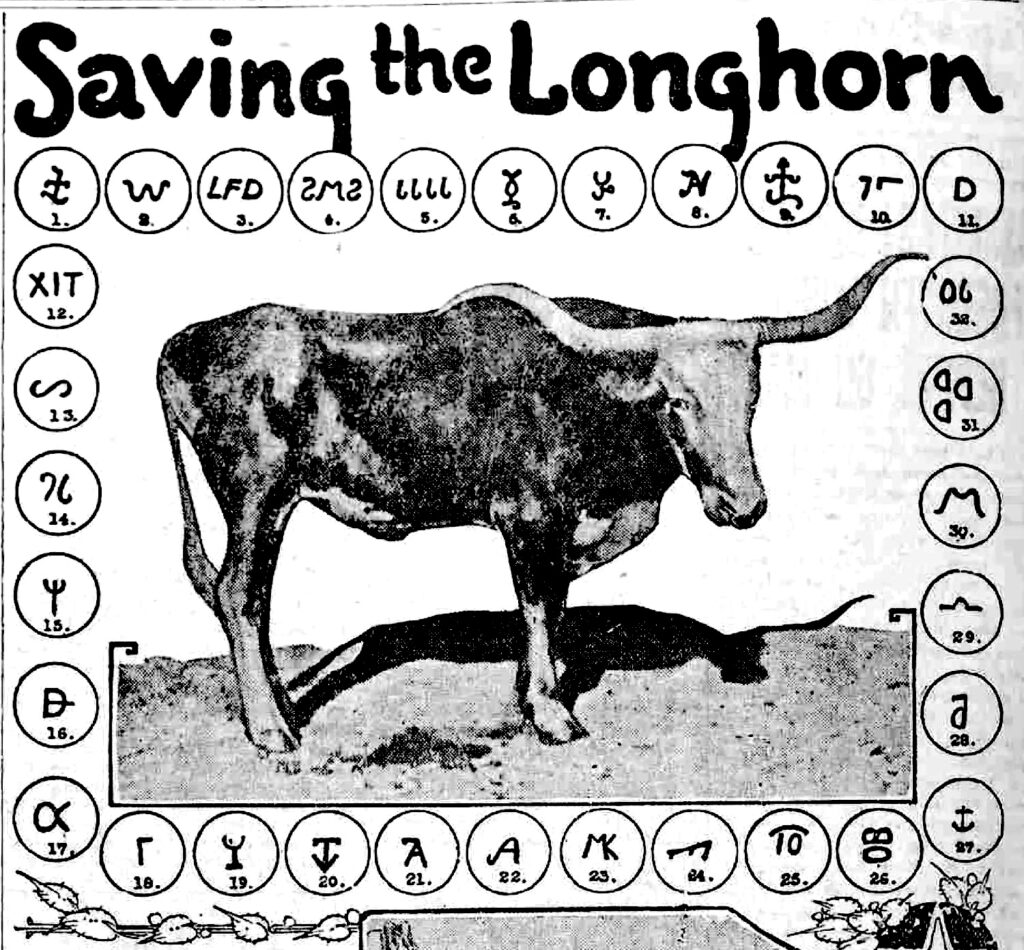
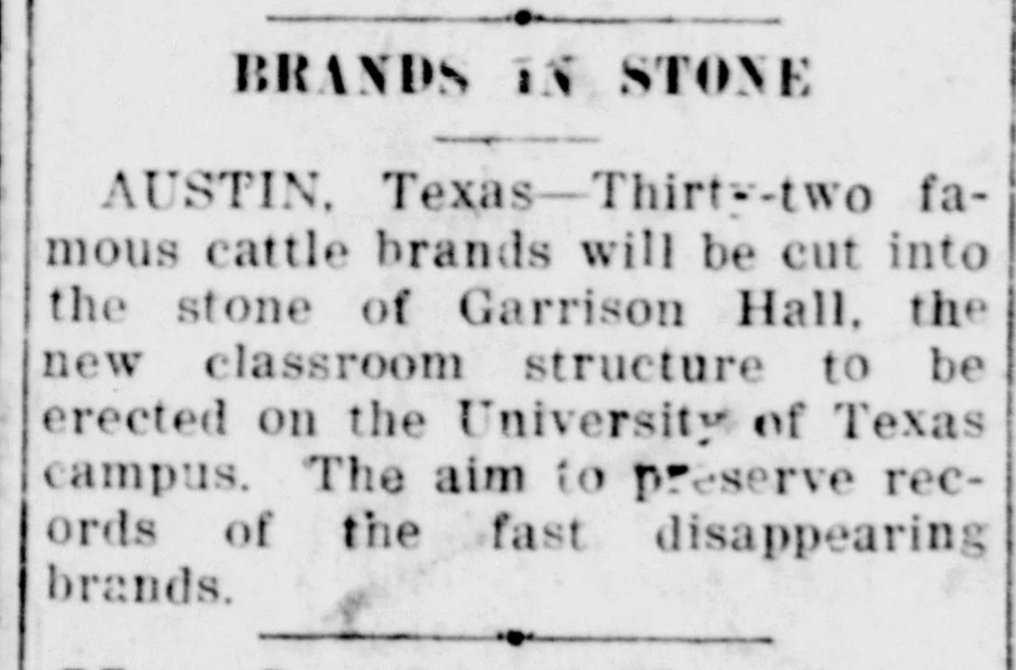
Newspaper coverage of Garrison Hall’s cattle brands in 1926: “Brands in Stone,” Brownwood Bulletin, May 13, 1926 (left), and “Saving the Longhorn,” Mt. Pleasant Pyramid, October 15, 1926 (right). Source: NewspaperArchive.
The first period was defined as the Spanish and Tejano “pioneers” who introduced ranching to Texas, such as the Pedro Ibarbo and Mariano Sanchez brands. Notable among this group is the oldest of the thirty-two brands, that of José Antonio de la Garza, known as el flaco (the skinny one), who lived through the tumult of Mexico’s independence wars of the 1810s. The rebellion against the Spanish Crown reached Texas in 1813, followed by the brutal pacification by royalist commander Joaquín de Arredondo. As a result, ranches were ravaged, and large numbers of cattle were dispersed. Many of the ranches that survived the mayhem also changed hands. But de la Garza did more than preserve his estate. He became one of the leaders who organized roundups to recover and redistribute cattle that had been scattered and intermingled for years, many of them completely unbranded.[12] His brand is the first one, from right to left, on the upper northern side of the Hall.
The second period was meant to represent the first American ranching brands, most notably Stephen Austin’s, which was placed on the west-side main entrance, below the right upper-floor window. His brand was also known as the “Spanish Austin Brand” since its shape follows the traditional Hispanic style, very similar to de la Garza’s. Stephen Austin inherited his father Moses’s contract from the Spanish Crown, and later from Mexico, to settle families in Texas in the 1820s. When Santa Anna’s army invaded Texas in 1836, the main body of the Mexican army reached the Brazos River and survived by eating scattered cattle it found along the way, some of which probably bore Austin’s brand. Many colonists fled toward Louisiana or Galveston Island in what became known as the Runaway Scrape. Austin, meanwhile, was in the United States advocating for Texas independence after his imprisonment in Mexico. He returned to Texas later in 1836 and died that December. Many cattle dispersed into the wild again, adding to the already substantial feral herds that would later become associated with Texas Longhorns.
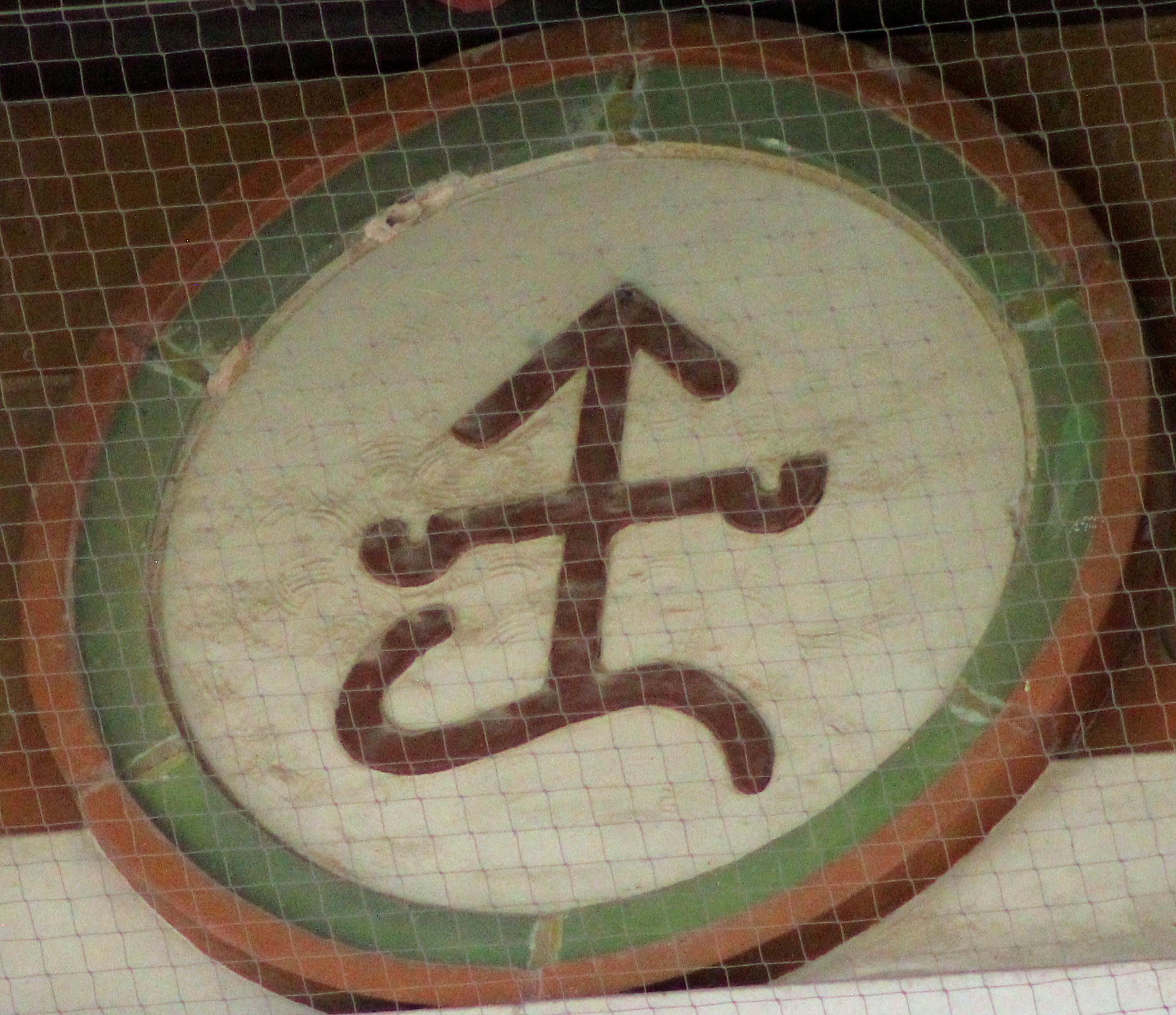
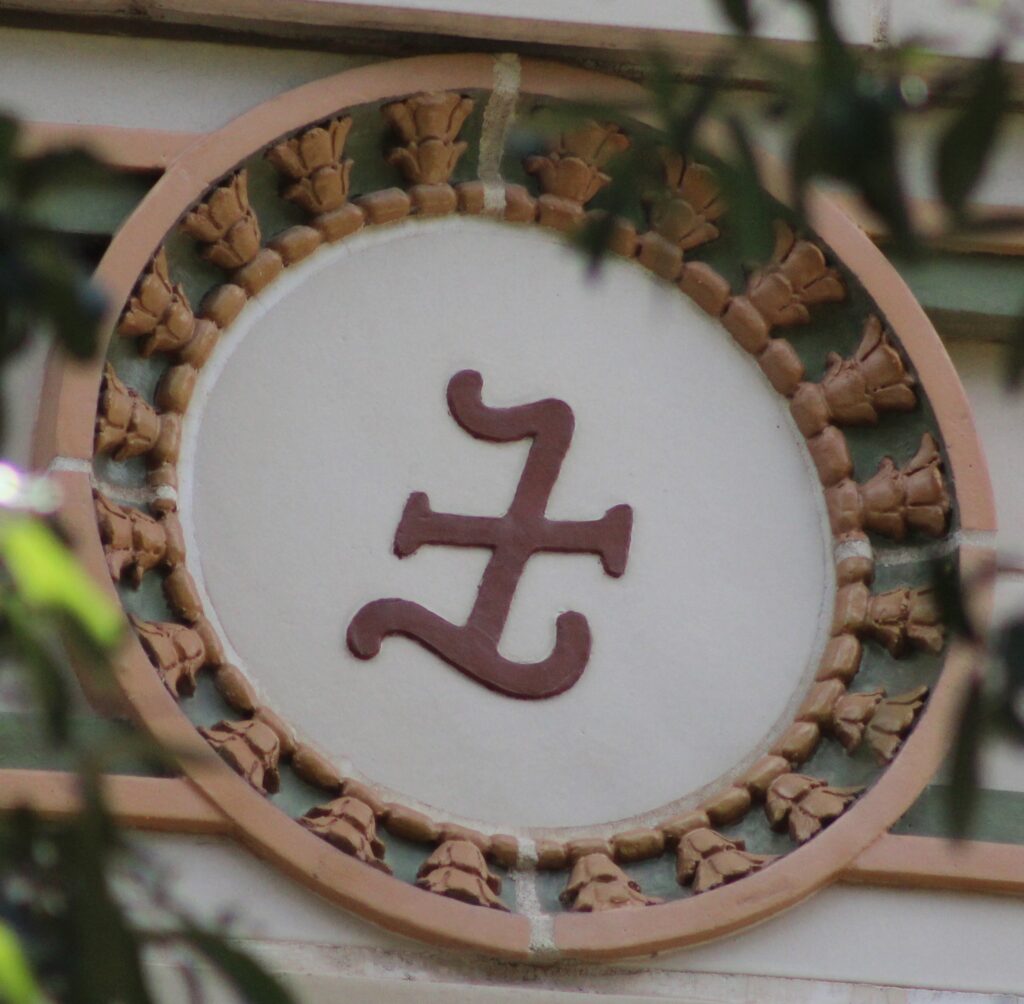
Cattle brands of José Antonio de la Garza (left) and Stephen F. Austin (right) on Garrison Hall. Photographs by the author.
The third period highlighted the trail-driving era, which flourished after the Civil War, when cowboys drove herds hundreds of miles to northern markets. These trails became legendary because they required immense skill to control large Longhorn herds, many of which had been rounded up from a semi-feral state. Cowboys also had to contend with all kinds of rustlers and raiders along the routes. Ike T. Pryor, who helped Winkler in his search, belonged to this group. He began driving Longhorns to Kansas as a young man and later built his career around the 77 brand, located on the north side of Garrison Hall.
Preston R. Rose, whose 7-A brand was placed on the south-side frieze, introduced methods such as fencing and breeding that became the norm by the time Garrison Hall was built. By 1926, with the arrival of barbed wire and the introduction of “improved” breeds, such as Angus, the once-abundant feral and semi-feral herds of Longhorns were on the edge of extinction. That same year, the Texas Folklore Society pushed for the preservation of “pure blood Longhorns”, which led to the first protected herd on the Wichita National Forest Wildlife Refuge.[13] Garrison Hall followed the same impulse to preserve that mythologized vanishing ranching world, as the widely reprinted press release about its construction put it: “The aim is to preserve records of the fast disappearing brands.”
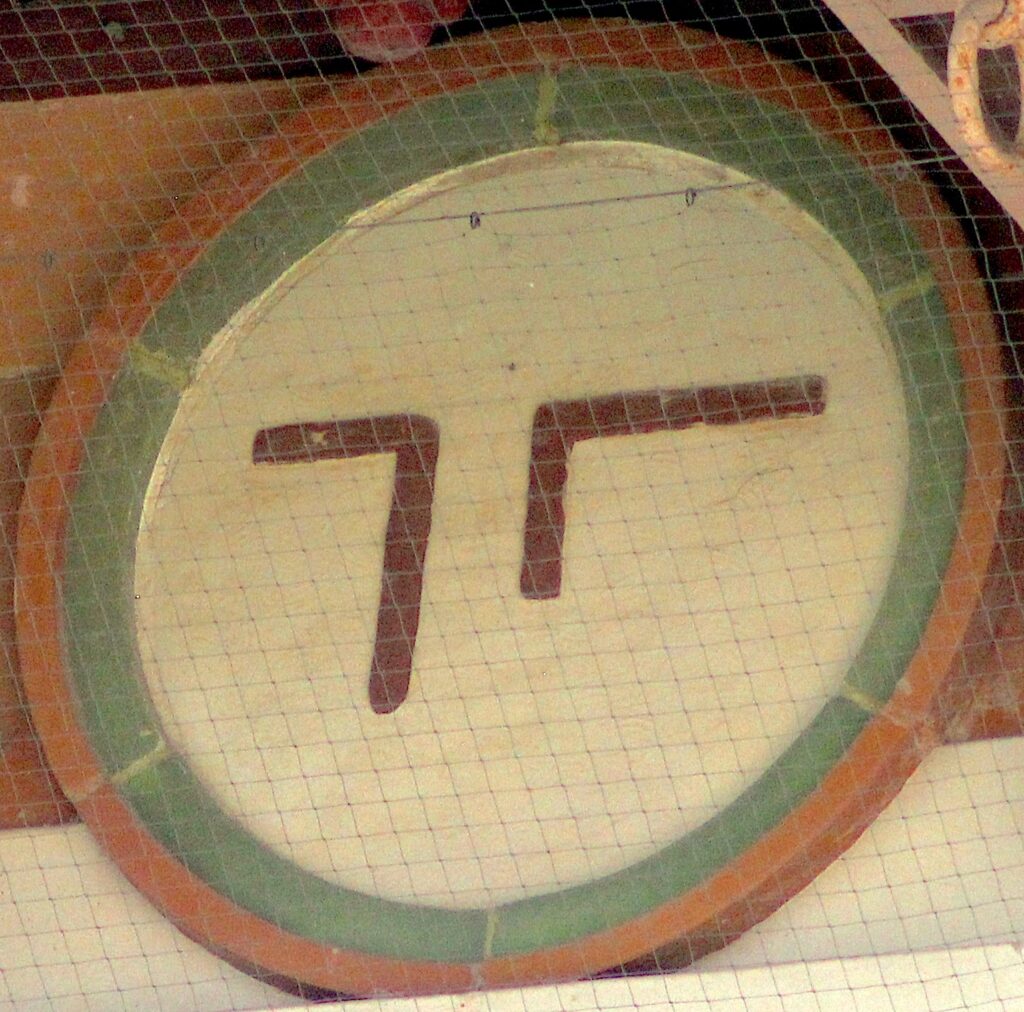
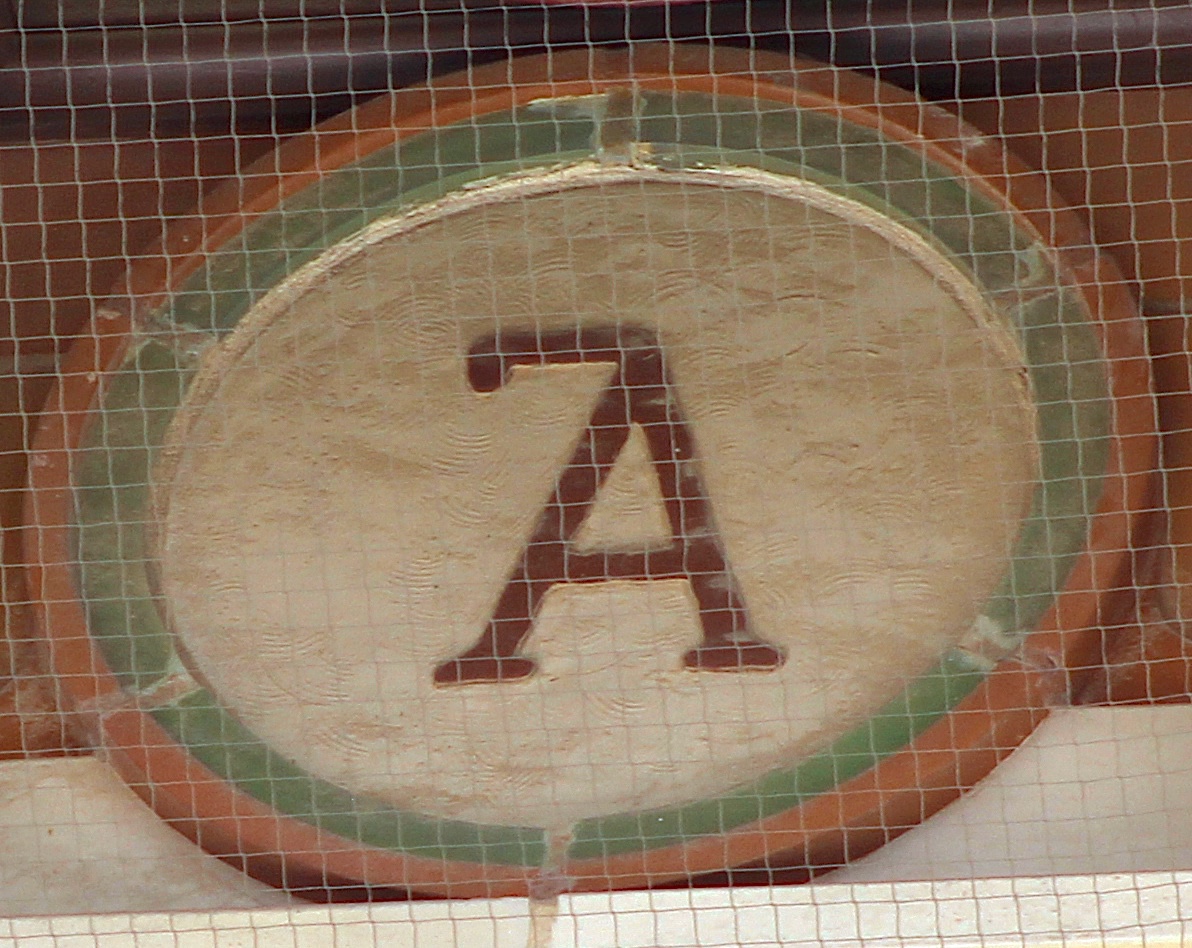
Cattle brands of Ike T. Pryor (left) and Preston R. Rose (right) on Garrison Hall. Photographs by the author.
According to Dobie, one “can look at the buildings on the campus and trace the development of culture in Texas”.[14] But how representative were these brands really? Most of the thirty-two are trail-driving brands or belong to the century after 1836. The sample overrepresents late-nineteenth-century Anglo-American Texas ranching, even though Franciscan friars introduced ranching in the first half of the eighteenth century. Garrison Hall was built when Texas history was still heavily skewed towards the post-1836 period. Hispanic roots were acknowledged but marginalized. Dobie himself wrote about the Spanish period mostly as the background context for what later became Texas. In 1936, Carlos Castañeda began publishing his multivolume Our Catholic Heritage in Texas, which gave greater historical weight to the Hispanic legacy, along with the classic Borderlands scholarship of Herbert Bolton, leading the way for later historians like Jack Jackson, Jesús “Frank” de la Teja, and Andrés Tijerina.
Nevertheless, despite the curatorial bias, those Hispanic roots still made it into the Hall through style and shape. Hispanic brands used circular shapes and more intricate designs than the Anglo style of straight lines, sharp angles, and numbers. Some brands even blend both styles, reflecting the deep entanglements among peoples that characterize Texas history.
Yet, notable groups are absent, including Indigenous peoples such as the Caddo, Karankawa, Jumano, Lipan Apache, and Comanche, as well as enslaved and free Black communities. But they too should be invoked and remembered when looking at Garrison Hall and its cattle brands, because they were also knotted to Texas’s larger social fabric through cattle and horses. While the selection was based on a biased idea of Texas history, it still represents a way of life in which many peoples were involved: cowboys, owners, workers, raiders, traders, captives, fugitives, and neighbors. Ranching, as it developed in Texas, was not only an economic system but also a cultural and social web connecting the many peoples of the region.
Brand locator. On each side of Garrison Hall, the brands are listed from right to left as you face the building. All photographs by the author.
West side
Below the roofline: José Antonio de la Garza, José Antonio Navarro, Pedro Ibarbo, Mariano Sánchez.
Upper-floor windows: Stephen Austin, Richard King.
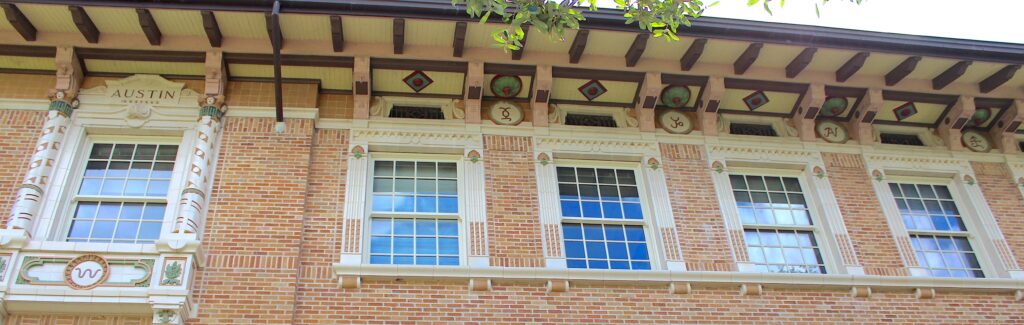
North side
Below the roofline: Herbert L. Kokernot, William T. Waggoner, Anna Martin and Sons, Al E. McFadden, George W. Saunders, Ike T. Pryor, Christopher C. Slaughter, John R. Blocker.
Upper-floor windows: George Littlefield, Swante M. Swenson.
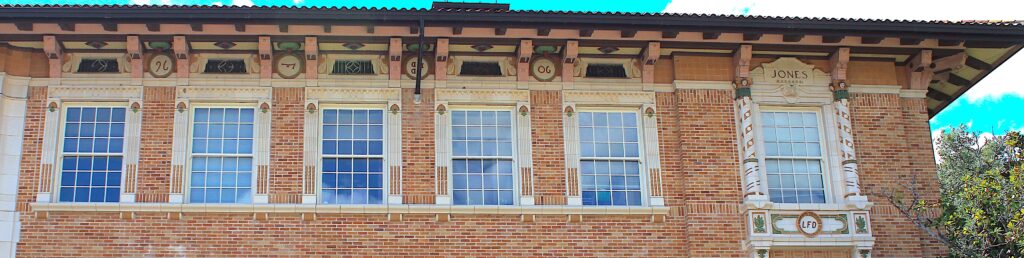
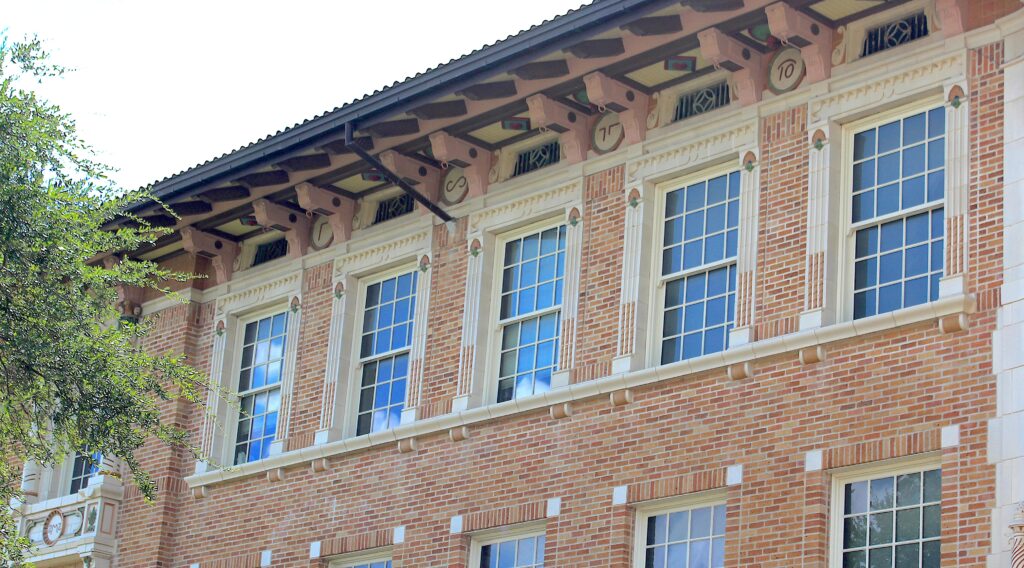
East side
Below the roofline: Capitol Land Syndicate, Joe Hunter.
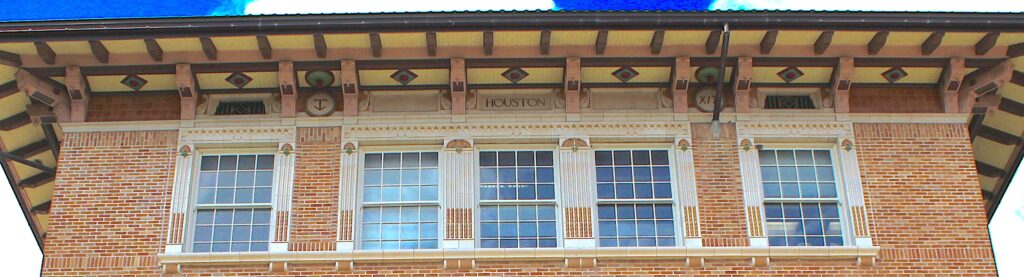
South side
Below the roofline: Dudley H. Snyder, E. B. Millett, Mark Withers, Dillard R. Fant, John T. Lytle, Martha Rabb (Cattle Queen of Texas), Ellison and Dewees, J. J. Myers, A. H. (Shanghai) Pierce, Oliver Loving and Sons, Charles Goodnight, Preston Rose, Samuel A. Maverick.
Upper-floor window: Samuel B. Burnett.
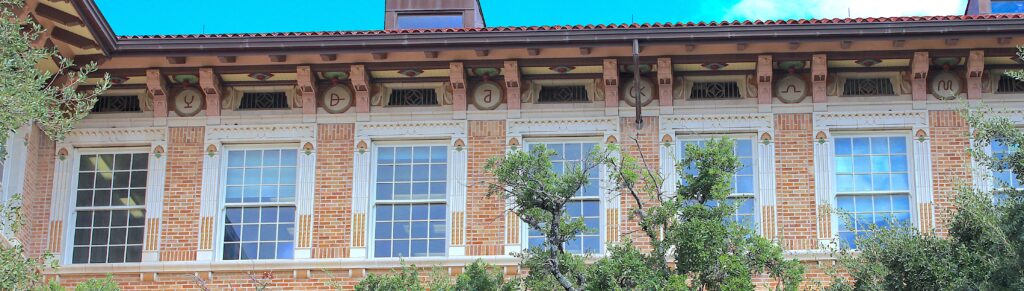
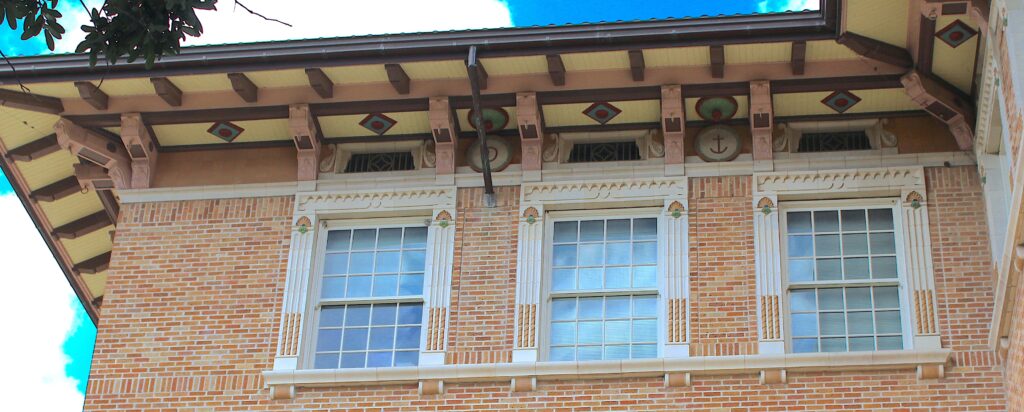
[1] Austin Daily Texan, October 28, 1925, p. 3, Austin, Texas, US https://newspaperarchive.com/austin-daily-texan-oct-28-1925-p-3/
[2] Austin Daily Texan, December 09, 1925, p. 5, Austin, Texas, US https://newspaperarchive.com/austin-daily-texan-dec-09-1925-p-5/
[3] Austin Daily Texan, March 14, 1926, Pg. 7, Austin, Texas, US https://access.newspaperarchive.com/austin-daily-texan/1926-03-14/page-7/
[4] Jim Nicar, “The Big Enormous Building,” The UT History Corner, February 10, 2017, accessed August 14, 2026, https://jimnicar.com/2017/02/10/the-big-enormous-building/
[5] Henry Wiencek, “An Architectural History of Garrison Hall,” Not Even Past, October 12, 2012, https://notevenpast.org/architectural-history-garrison-hall/
[6] Cummins, Light Townsend. “History, Memory, and Rebranding Texas as Western for the 1936 Centennial.” This Corner of Canaan: Essays on Texas in Honor of Randolph B. Campbell, vol. 9781574415179, 2013, pp. 37–57.
[7] Steven L. Davis, J. Frank Dobie, A Liberated Mind, Austin, UT Austin Press, 2009, pp. 75-78.
[8] Burlington Hawk Eye, May 09, 1926, Pg. 26, Burlington, Iowa, US
https://access.newspaperarchive.com/burlington-hawk-eye/1926-05-09/page-26
[9] Steven L. Davis, J. Frank Dobie, A Liberated Mind, Austin, UT Austin Press, 2009, pp. 63-81.
[10] Austin Daily Texan, June 20, 1926, Pg. 1, Austin, Texas, US https://newspaperarchive.com/austin-daily-texan-jun-20-1926-p-1/
[11] Llerena Friend, “Winkler, Ernest William,” Handbook of Texas Online, accessed August 14, 2026, https://www.tshaonline.org/handbook/entries/winkler-ernest-william.
[12] Jack Jackson, Los Mesteños, College Station, Texas A&M Press, 2006, pp. 540-542 and 562-565.
[13] Mt Pleasant Pyramid, October 15, 1926, Pg. 5, Mount Pleasant, Utah, US https://newspaperarchive.com/mt-pleasant-pyramid-oct-15-1926-p-5/
[14] Austin Daily Texan, June 20, 1926 Pg. 2, Austin, Texas, US https://newspaperarchive.com/austin-daily-texan-jun-20-1926-p-2/
José Roberto Campos Cordero is a Ph.D. student in History at The University of Texas at Austin. He holds an M.A. in Modern and Contemporary History from the Instituto de Investigaciones Dr. José María Luis Mora and a B.A. in International Relations from El Colegio de México. His research focuses on the U.S.-Mexico borderlands and Texas, drawing on environmental, global, and cultural approaches. He is currently writing an environmental history of Texas centered on cattle and horses.
The views and opinions expressed in this article or video are those of the individual author(s) or presenter(s) and do not necessarily reflect the policy or views of the editors at Not Even Past, the UT Department of History, the University of Texas at Austin, or the UT System Board of Regents. Not Even Past is an online public history magazine rather than a peer-reviewed academic journal. While we make efforts to ensure that factual information in articles was obtained from reliable sources, Not Even Past is not responsible for any errors or omissions.