• New
  • Features
  • Reviews
  • Texas
  • Teaching
  • Digital
  • Watch & Listen
  • Authors
  • About

The past is never dead. It's not even past

Not Even Past

Austin’s First Electric Streetcar Era

March 17, 2013

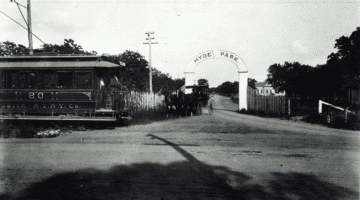
Gated entrance to Hyde Park in Austin, Texas in the 1890s featuring a trolley car to the left of the entrance

As Austin considers building a new electric light rail system—streetcars, really—it is worth looking back to the city’s first streetcar era. For fifty years, from 1891 until 1940, Austin had an extensive network of electric streetcar lines, running from Hyde Park in the north to Travis Heights in the south, and from Lake Austin in the west to the heart of East Austin.


Slave Rebellion in Brazil: The Muslim Uprising of 1835 in Bahia by João José Reis (1993)

March 13, 2013

Shortly after 1:00am on January 25, 1835, a contingent of African-born slaves and former slaves emerged from a house at number 2 Ladeira da Praça and overpowered the justice of the peace and a police lieutenant. Throughout the night approximately six hundred rebels ran through the streets fighting and vandalizing a number of municipal buildings.

The Lives of Erich Fromm: Love’s Prophet by Lawrence J. Friedman (2013)

March 10, 2013

Book cover of The Lives of Erich Fromm: Love's Prophet by Lawrence J. Friedman

Perhaps one day some whimsical people with money will get together and honor books for their subtitles. Lawrence Friedman’s new biography of Erich Fromm, subtitled “Love’s Prophet,” wins for getting the total picture; for, in just two words, capturing a imagewhole life. But it couldn’t have been a difficult choice.

The Republic of Nature by Mark Fiege (2012)

February 27, 2013

Flip through the pages of almost any American history textbook. Within the first few sections, you will find paragraphs dedicated to the American Revolution and the ideological groundwork that supported it; the pull-yourself-up-by-your-bootstraps mythology that surrounds Abraham Lincoln; the rise of a cotton-based economy in the South and the enslaved manpower that sustained it; the westward expansion of the American population and the lines of communication and transportation that they created in the wake of their migration.

Honorable Mention of 2013 Essay Contest: Covered with Glory: The 26th North Carolina Infantry at Gettysburg by Rod Gragg (2000)

February 25, 2013

Harry Burgwyn was twenty-one years old when he led more than eight hundred soldiers of the 26th North Carolina Infantry into battle at Gettysburg on July 1, 1863. Two and a half days later, after two bloody assaults, fewer than one hundred remained fit for duty.

State of Virginity: Gender, Religion, and Politics in an Early Modern Catholic State by Ulrike Strasser (2004)

February 15, 2013

Munich’s central square, Marienplatz, is best known today for its magnificent Rathaus-Glockenspiel that delights tourists and townspeople alike with its melodies. But until the nineteenth century, the square’s main attraction was a golden pillar adorned with the Virgin Mary known as the Mariensäule.

The Founders and Finance by Thomas K. McGraw (2012)

February 10, 2013

Thomas McGraw argues that there was something in the background of immigrants to the United States that distinguished them from native born Americans and contributed to their suitability to become Secretaries ofof the Treasury. Including those born in Africa, less than 8% of the population was not native born and yet four of the first 6 Treasury Secretaries were immigrants.

The Sapphires (2012)

February 6, 2013

Wayne Blair’s The Sapphires is the best new historical film that you most likely have not seen, yet.  It is based on Tony Briggs’ 2004 play with the same name and premiered at the Cannes Film Festival in 2012.

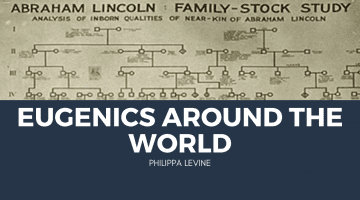
Philippa Levine on Eugenics Around the World

January 31, 2013

Early in the twentieth century governments all over the world thought they had found a rational, efficient, and scientific solution to the related problems of poverty, crime, and hereditary illness. Scientists hoped they might be able to help societies control the social problems that arose from these phenomena. From Mexico to Maine, from Switzerland and Scandinavia to South Carolina, from India to Indiana, the science-turned-social-policy known as eugenics became a base-line around which social services and welfare legislation were organized.

Women Shaping Texas in the Twentieth Century

January 23, 2013

Black and white portrait of Texas Governor Ann Richards

A new exhibit at the Texas State History Museum, Women Shaping Texas in the Twentieth Century, tells the history of Texas women who revolutionized key areas, such as healthcare, education, civil rights, the workforce, business, and the arts.

« Previous Page
Next Page »

Recent Posts

  • Curating History: Dr Pepper, Preservation, and Public Trust
  • The Brands of Garrison Hall at its Centennial
  • The Battles of the Alamo and the Myth of Southern Exceptionalism
  • Primary Source: Magic, Metal, and Medicine in Leonhard Thurneysser’s Paracelsus
  • Faculty Spotlight: Dr. Kate Imy
NOT EVEN PAST is produced by

The Department of History

The University of Texas at Austin

We are supported by the College of Liberal Arts
And our Readers

Donate
Contact

All content © 2010-present NOT EVEN PAST and the authors, unless otherwise noted

Sign up to receive our MONTHLY NEWSLETTER

  • New
  • Features
  • Reviews
  • Texas
  • Teaching
  • Digital
  • Watch & Listen
  • Authors
  • About