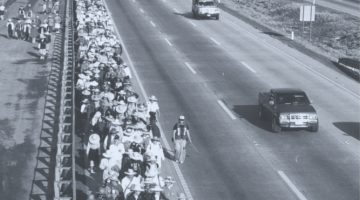
A Google image search for “Our Lady of Guadalupe” returns millions of images. This Catholic icon appears on paintings, coffee mugs, tattoos, and more. Her image is an international symbol for Catholics and non-religious alike.
The past is never dead. It's not even past
A Google image search for “Our Lady of Guadalupe” returns millions of images. This Catholic icon appears on paintings, coffee mugs, tattoos, and more. Her image is an international symbol for Catholics and non-religious alike.

During a recent drug bust in Houston, Texas, officers discovered a shrine to a skeleton statuette, robed in green and holding a scythe wrapped in dollar bills in her right hand, tobacco lying as an offering at her feet. Votive candles of various colors surrounded the statuette, as well as regularly replenished glasses filled with water and Mexican tequila. The officers had found Santa Muerte.
We knowed freedom was on us, but we didn’t know what was to come with it. We thought we was going to get rich like the white folks. We thought we was going to be richer than the white folks, ‘cause
A compilation of works referred to by this month's featured authors on Slavery, Emancipation, Abolition and their legacy in US History.
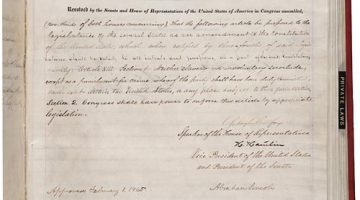
The text of the Emancipation Proclamation
We all know that films on historical subjects distort events for the sake of entertainment. The goal of this review is to examine this latest rendition of slavery in popular culture from a historian's point of view to see how those distortions are used and what affect they may have on popular ideas about slavery.
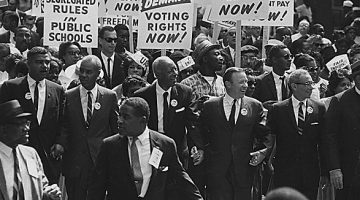
While 2013 marks the sesquicentennial of Lincoln’s 1863 Emancipation Proclamation, this year also marks the 50th anniversary of the 1963 March on Washington, the most famous event of the Civil Rights Movement, made so by the continual remembrance of Dr. Martin Luther King Jr.’s “I Have a Dream” speech. In the five decades since the March, many people have forgotten or fail to realize the tremendous meaning that the 100th anniversary of the Emancipation Proclamation bore for the Civil Rights Movement in the 1960s.
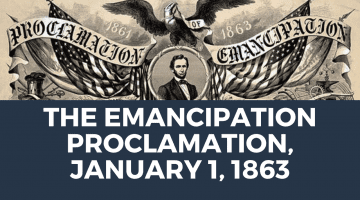
On the afternoon of January 1, 1863, President Abraham Lincoln signed The Emancipation Proclamation, freeing approximately three million people held in bondage in the rebel states of the Confederacy.
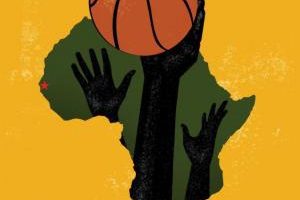
Anne Buford's documentary Elevate focuses on several Senegalese youths and their attempts to make it out of Senegal through basketball.
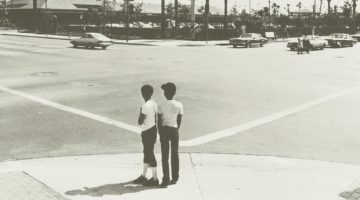
For African Americans in the twentieth century, Los Angeles was a dream destination; black migrants were drawn to it (much as they were drawn to Chicago and Detroit) in search of freedom from the Jim Crow South. However, Los Angeles African Americans quickly confronted their limitations as a minority group.
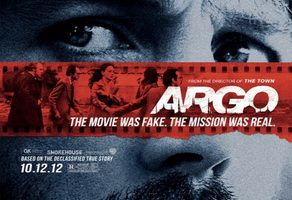
Argo is the story of the Americans’ ordeal and their relatively miraculous escape—and in this it delivers. It is unfortunate, however, that the film presents these dramatic events against a simplified backdrop that diminishes the complexity of the Iranian political scene at the time.