
I had already conducted the first five oral history interviews with Lady Bird Johnson when she telephoned my LBJ Library office one day in the spring of 1978. Her first words were “Hello, Mike.
The past is never dead. It's not even past
I had already conducted the first five oral history interviews with Lady Bird Johnson when she telephoned my LBJ Library office one day in the spring of 1978. Her first words were “Hello, Mike.
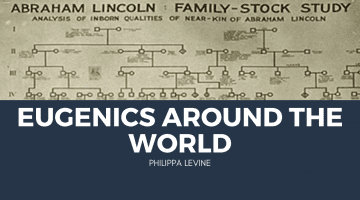
Early in the twentieth century governments all over the world thought they had found a rational, efficient, and scientific solution to the related problems of poverty, crime, and hereditary illness. Scientists hoped they might be able to help societies control the social problems that arose from these phenomena. From Mexico to Maine, from Switzerland and Scandinavia to South Carolina, from India to Indiana, the science-turned-social-policy known as eugenics became a base-line around which social services and welfare legislation were organized.

In The Ottoman Age of Exploration, Giancarlo Casale contests the prevailing narrative that characterizes the Ottoman Empire as a passive bystander in the sixteenth-century struggle for dominance of global trade.
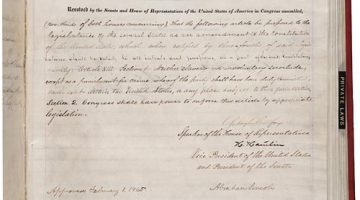
A compilation of works referred to by this month's featured authors on Slavery, Emancipation, Abolition and their legacy in US History.
The text of the Emancipation Proclamation
We all know that films on historical subjects distort events for the sake of entertainment. The goal of this review is to examine this latest rendition of slavery in popular culture from a historian's point of view to see how those distortions are used and what affect they may have on popular ideas about slavery.
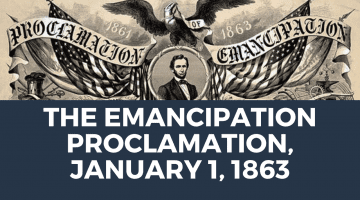
On the afternoon of January 1, 1863, President Abraham Lincoln signed The Emancipation Proclamation, freeing approximately three million people held in bondage in the rebel states of the Confederacy.
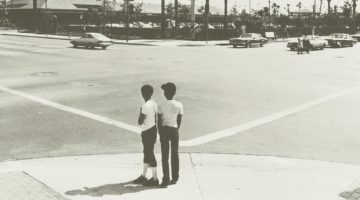
For African Americans in the twentieth century, Los Angeles was a dream destination; black migrants were drawn to it (much as they were drawn to Chicago and Detroit) in search of freedom from the Jim Crow South. However, Los Angeles African Americans quickly confronted their limitations as a minority group.

For at least a century, food markets have been disappearing from our urban landscapes. Beginning in the early 19th century, cities began to uproot food markets and place them in the suburbs or even further away. It has only been within the last two decades that fresh food is reappearing in the form of farmers markets. Why was food removed from the cities in the first place?

Hong Kong is a strange place in which to research the past. This dizzyingly dense city of seven million people moves faster than either New York or London.
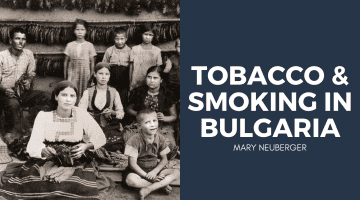
The global history of tobacco—the weed that captured the hearts, minds, and imaginations of so many in the twentieth century—has been told in splendid and enlightening detail. Historians have delved into the stark economic, political, and social implications of the production, consumption, and exchange of this commodity in various national contexts, most notably the United States.