• New
  • Features
  • Reviews
  • Texas
  • Teaching
  • Digital
  • Watch & Listen
  • Authors
  • About

The past is never dead. It's not even past

Not Even Past

The Republic of Nature by Mark Fiege (2012)

February 27, 2013

Flip through the pages of almost any American history textbook. Within the first few sections, you will find paragraphs dedicated to the American Revolution and the ideological groundwork that supported it; the pull-yourself-up-by-your-bootstraps mythology that surrounds Abraham Lincoln; the rise of a cotton-based economy in the South and the enslaved manpower that sustained it; the westward expansion of the American population and the lines of communication and transportation that they created in the wake of their migration.

Responses from Authors of the NAS Report on Teaching US History at UT

January 28, 2013

Below you will find two responses we received to my blog about the report of the National Association of Scholars on the teaching of US History at UT and TAMU.

From the Editor: On the Report by The National Association of Scholars about US History at UT

January 13, 2013

This week the National Association of Scholars released a report critical of the ways US History is taught at the University of Texas at Austin and at Texas A & M.

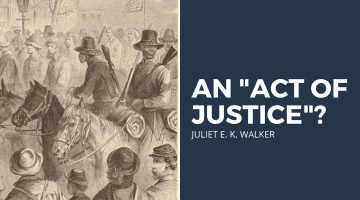
An “Act of Justice”?

January 5, 2013

We knowed freedom was on us, but we didn’t know what was to come with it. We thought we was going to get rich like the white folks.  We thought we was going to be richer than the white folks, ‘cause

The Emancipation Proclamation and its Aftermath

January 1, 2013

A compilation of works referred to by this month's featured authors on Slavery, Emancipation, Abolition and their legacy in US History.

The text of the Emancipation Proclamation 

Quentin Tarantino’s Django Unchained (2012)

January 1, 2013

We all know that films on historical subjects distort events for the sake of entertainment. The goal of this review is to examine this latest rendition of slavery in popular culture from a historian's point of view to see how those distortions are used and what affect they may have on popular ideas about slavery.

Work Left Undone: Emancipation was not Abolition

January 1, 2013

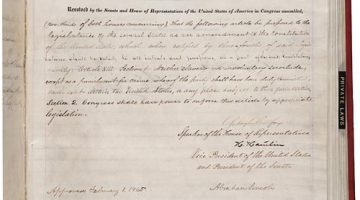
There are two great legal milestones in the destruction of slavery in the United States—the Emancipation Proclamation, issued by President Lincoln on January 1, 1863, and the Thirteenth Amendment to the Constitution, passed by Congress and ratified by the states in 1865.

The Emancipation Proclamation reaches Savannah

January 1, 2013

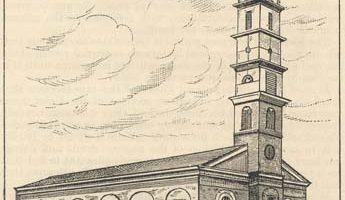
December 31, 1862 fell on a Wednesda, and that night members of Savannah’s First African Baptist Church held their traditional New Year’s Eve “watch meeting.” Each year members of the congregation gathered on this night to welcome the new year and to ask for God’s blessing on the city’s African-American community. Such "watch meetings" or "watch night" services were held all over the country, linking African Americans in Savannah with communities in Richmond, New York, Boston and elsewhere. After a year and a half of a bloody civil war, the community in Savannah consisted of about 10,000 enslaved men and women, 1,000 free people of color, and several hundred enslaved workers brought from all over the state of Georgia to dig trenches and otherwise toil at the direction of Confederate military authorities.

1863 in 1963

January 1, 2013

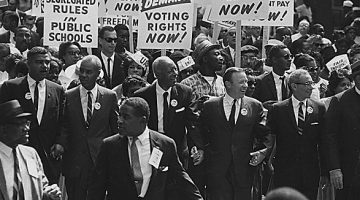
While 2013 marks the sesquicentennial of Lincoln’s 1863 Emancipation Proclamation, this year also marks the 50th anniversary of the 1963 March on Washington, the most famous event of the Civil Rights Movement, made so by the continual remembrance of Dr. Martin Luther King Jr.’s “I Have a Dream” speech. In the five decades since the March, many people have forgotten or fail to realize the tremendous meaning that the 100th anniversary of the Emancipation Proclamation bore for the Civil Rights Movement in the 1960s.

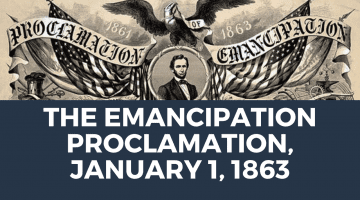
The Emancipation Proclamation, January 1, 1863

January 1, 2013

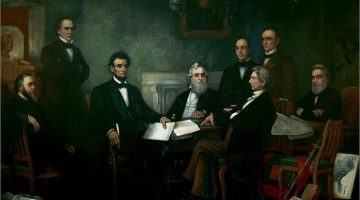
On the afternoon of January 1, 1863, President Abraham Lincoln signed The Emancipation Proclamation, freeing approximately three million people held in bondage in the rebel states of the Confederacy.

« Previous Page
Next Page »

Recent Posts

  • The Battles of the Alamo and the Myth of Southern Exceptionalism
  • Primary Source: Magic, Metal, and Medicine in Leonhard Thurneysser’s Paracelsus
  • Faculty Spotlight: Dr. Kate Imy
  • La Historia del Tiempo Presente en México: un campo en construcción
  • The History of the Present Time in Mexico: A Field in Formation
NOT EVEN PAST is produced by

The Department of History

The University of Texas at Austin

We are supported by the College of Liberal Arts
And our Readers

Donate
Contact

All content © 2010-present NOT EVEN PAST and the authors, unless otherwise noted

Sign up to receive our MONTHLY NEWSLETTER

  • New
  • Features
  • Reviews
  • Texas
  • Teaching
  • Digital
  • Watch & Listen
  • Authors
  • About