• New
  • Features
  • Reviews
  • Texas
  • Teaching
  • Digital
  • Watch & Listen
  • Authors
  • About

The past is never dead. It's not even past

Not Even Past

A Historian Views Spielberg’s Lincoln (2012)

November 25, 2012

Steven Spielberg’s latest historical drama chronicles the 16th President’s final months and the struggle for passage of the 13th Amendment by the House of Representatives. Despite the excellent performances turned in by the star-studded cast, "Lincoln" has a number of shortcomings from the historian’s point of view.
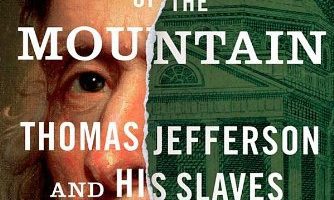

Henry Wiencek Sr on Thomas Jefferson, Slave owner

November 5, 2012

Book cover of Master of the Mountain: Thomas Jefferson and His Slaves by Henry Wiencek

“No founding father wrote more eloquently on behalf of liberty and human rights than Thomas Jefferson, and none has a more troubling record when it comes to the “peculiar institution” of slavery. At present, the popular understanding of Jefferson’s shilly-shallying on this issue doesn’t extend much deeper than knowing smirks about Sally Hemings and the (unacknowledged) children Jefferson fathered with her. We tend to assume that the dirtiest secrets of the past have to do with sex. But, as Henry Wiencek explains in his new book, “Master of the Mountain: Thomas Jefferson and His Slaves,” the real filth is in the ledger books.”

History is Messy Work. And That’s OK.

October 31, 2012

“The Cause of Her Grief” is an article by Wendy Anne Warren that was published in the March 2007 issue of The Journal of American History. There are many reasons to like this article but more than anything else Warren’s honesty in trying to tell this story is poignant and powerful. Much of the article consists of questions. Warren is open about the gaps in our knowledge when it comes to topics like this. At the end she says, “At some point every historian decides how to frame her argument: I deliberately chose a method that makes visible gaps in my evidence.”

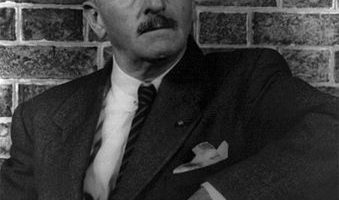
William Faulkner: Not Even Past

September 25, 2012

William Faulkner was born on this day, September 25, in 1897. Faulkner was a great novelist, whose books include Light in August, As I Lay Dying, Absolom, Absolom! and The Sound and the Fury. He won 2 Pulitzer Prizes and in 1949 was awarded the Nobel Prize for Literature.

Texans at Antietam: 150 Years Ago Today

September 17, 2012

Black and white image of covered wagons crossing the stone bridge at Antietam

By the early autumn of 1862, Americans were reconciled to the fact that the military struggle to determine the fate of the Union was going to be a long and bloody one.

“Captive Fates: Displaced American Indians in the Southwest Borderlands, Mexico, and Cuba, 1500-1800.”

May 30, 2012

Between 1500 and 1800, Spaniards and their Native allies captured hundreds of Apache Indians and members of neighboring groups from the Rio Grande River Basin and subjected them to a variety of fates. They bought and sold some captives as slaves, exiled others as prisoners of war to central Mexico and Cuba, and forcibly moved others to mines, towns, and haciendas as paid or unpaid laborers.

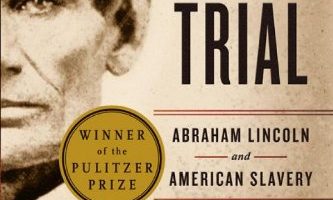
The Fiery Trial by Eric Foner (2011)

May 3, 2012

Eric Foner’s The Fiery Trial examines Abraham Lincoln’s views on American slavery, southern secession and the convergence of events that produced the

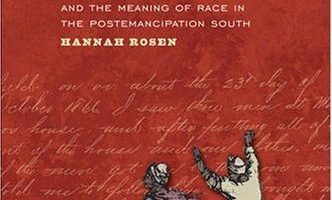
Terror in the Heart of Freedom: Citizenship, Sexual Violence, and the Meaning of Race in the Postemancipation South by Hannah Rosen (2008)

March 26, 2012

To say that the US Civil War (1861-65) was tragic and destabilizing is a glaring understatement. Hundreds of thousands died or were wounded in combat, entire cities were destroyed, and afterwards, the large segment of the nation that had seceded had to be reincorporated into the national body, and a new citizen-subject remained to be embraced by post-bellum societies

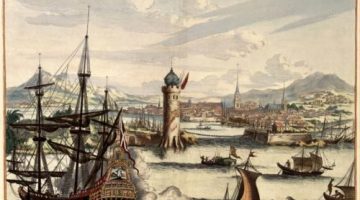
Yarico’s Story

March 11, 2012

Ligon’s work was the only comprehensive text published about the English Caribbean throughout the entire seventeenth century. His text was widely read and often quoted. There is no indication from Ligon's text if his account of Yarico is based on actual people or simply an allegory for how the English treated the native Carib people on Barbados.

Making History: Robert Matthew Gildner

March 6, 2012

For the fifth installment of our "Making History" series, Zach Doleshal talks to Robert Matthew Gildner, a senior doctoral student in history at the University of Texas at Austin. In the interview, Robert explains why 1952 represented a unique moment for indigenous Bolivians, why previous historians have overlooked this history, and how a trip to Holland inspired him to work on Latin American history.

« Previous Page
Next Page »

Recent Posts

  • The Battles of the Alamo and the Myth of Southern Exceptionalism
  • Primary Source: Magic, Metal, and Medicine in Leonhard Thurneysser’s Paracelsus
  • Faculty Spotlight: Dr. Kate Imy
  • La Historia del Tiempo Presente en México: un campo en construcción
  • The History of the Present Time in Mexico: A Field in Formation
NOT EVEN PAST is produced by

The Department of History

The University of Texas at Austin

We are supported by the College of Liberal Arts
And our Readers

Donate
Contact

All content © 2010-present NOT EVEN PAST and the authors, unless otherwise noted

Sign up to receive our MONTHLY NEWSLETTER

  • New
  • Features
  • Reviews
  • Texas
  • Teaching
  • Digital
  • Watch & Listen
  • Authors
  • About