• New
  • Features
  • Reviews
  • Texas
  • Teaching
  • Digital
  • Watch & Listen
  • Authors
  • About

The past is never dead. It's not even past

Not Even Past

Soviet Baby Boomers: An Oral History of Russia’s Cold War Generation by Donald Raleigh (2013)

by Andrew Straw

Recalling his formative years as an American baby boomer and the influence the Cold War and the Soviet Union had on his worldview, Donald Raleigh asks what life was like for people his age in the Soviet Union? What were their concerns about the future?  How did they spend their time and what did Cold War ideological battles mean for their daily lives?  As historians exhaust the biographies and psychological studies of leaders to gain insight into authoritarian societies, scholars such as Raleigh are increasingly turning to evidence from everyday life to complete our understanding of non-democratic states.  These new efforts are important because there is no denying imagethat authoritarian governments were common in the twentieth century, lasted for several generations, and some, like the authoritarian government of North Korea, continue to affect global affairs in the new millennium. It is also increasingly evident that popular participation, and not just dictators’ decrees, helped build and dismantle authoritarian regimes.
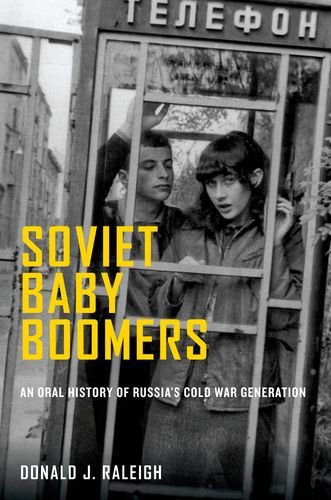
In Soviet Baby Boomers, Raleigh borrows the US term referring to children born after World War II to examine the Soviet Union.  This Soviet cohort was born leading up to Stalin’s death in 1953 and during the transfer of power to a more reform-minded leader, Nikita Khrushchev.  Unlike their parents and grandparents who experienced the horrors of revolution, two world wars, Stalin’s terror and disastrous modernization policies, this new Soviet generation grew up in the “normalized” Soviet Union.  The secret police, one-party dictatorship, and communism remained, but surviving the Soviet system now meant finishing university dissertations, pursuing various personal goals, and using the black market economy to improve personal fortunes.  In fact, Raleigh makes the important argument that “the Soviet System’s very success at effecting social change” caused the post-Stalin generation to become cynical about the system. The Soviet welfare state provided the foundation for an educated and urbanized professional class who supported reforms in the 1980s.  By that time, the enthusiasm for a normal Soviet life had withered away as Soviet citizens were increasingly able to compare their standard of living to more robust Western economies, thus highlighting the absurdities of Soviet communism.  And yet, most people were not active in the dissident movement throughout the 1960s and 1970s despite widespread sympathy for it.  It was not until Mikhail Gorbachev initiated the policies of “glasnost” (openness) and perestroika (economic liberalization) that the baby boomers expressed their revolutionary ideas in public, elected officials that took reforms farther than Gorbachev imagined, and prepared as best they good for the positive and negative consequences of the market economy and democracy.

Raleigh’s research centers on students who graduated in 1967 from two magnet secondary schools that specialized in English in Moscow and Saratov.  Through interviews, the author examines how these students experienced events in post-Stalin Russia such as Khrushchev’s liberalization after 1956, the Cold War, the Brezhnev “stagnation,” the Soviet-Afghan War, and Gorbachev’s reforms.  Many of Raleigh’s discoveries might surprise American readers.  For example the interviews reveal an almost total lack of “true communist believers.”  Many respondents simply claimed that by the 1970’s any sensible person could see the economic absurdities in the communist system. Simultaneously, Western popular culture, from the Beatles to consumer goods, strongly influenced Soviet knowledge of the outside world and conflicted with negative portrayals of the West.  Yes, students still had classes on Marxism, but the attempt to “brainwash” Soviet baby boomers failed.  Official decrees and the aging Politburo were the target of popular humor that exposed Soviet absurdities; Westerners were not the only ones to poke fun at Brezhnev.  The Communist Party continued to play a role, but several interviewees claimed that they joined the Party only because of career opportunities and the residual fear of the state police and prison camps.  At the same time, many admitted that they probably could have had successful careers if the hadn’t joined the Party.
image

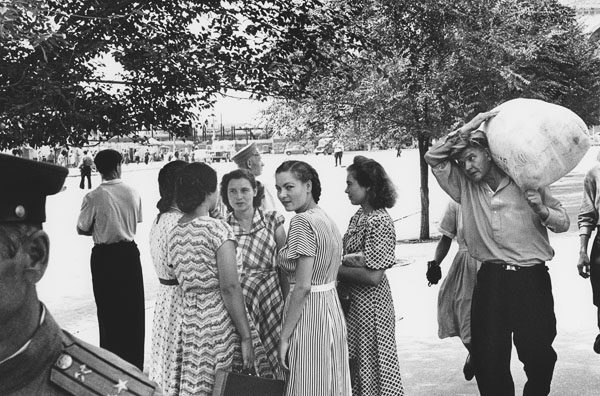
Street life in the Soviet Union, 1955 (Image courtesy of flickr/Malmo Museer)

Many of the interviewees are nostalgic about the past.  A majority fondly remembers the good aspects of the Soviet welfare state (free education, medicine, housing, summer camps), especially when compared with the economic and social disasters of the 1990’s.  Raleigh does an excellent job displaying how nostalgia is tied to the reasonable expectations of any modern welfare state and does not indicate that baby boomers would like to return to the Soviet-style governing.  However, when asked about Vladimir Putin’s presidency, most interviewees spoke positively about the ex-KGB officer’s stabilizing effect on Russia since 2000.  Raleigh also examines some of the darker memories of this period, such as the prevalence of Soviet anti-Semitism in society.  For example, Soviet Jews were often overrepresented in the top primary schools when compared to other ethnic groups, but then experienced discrimination when applying for university or searching for a job.

The limit of Raleigh’s study is clear from the beginning: the group of students he selected to interview comes from the well-educated Soviet elite in two central cities.  This limits Raleigh’s ability to draw larger conclusions about Soviet society and the reader is left wondering how commonplace such experiences and sentiments were for other Soviet citizens. The late 1940s, 50s and 60s were years of massive migration to the urban centers, but the book focuses on well-established urban families and does not offer any contrasting experiences of first generation urbanites.  At other points, Raleigh highlights interesting facts, such as the underrepresentation of Tatars in Saratov schools, but then provides no explanation.
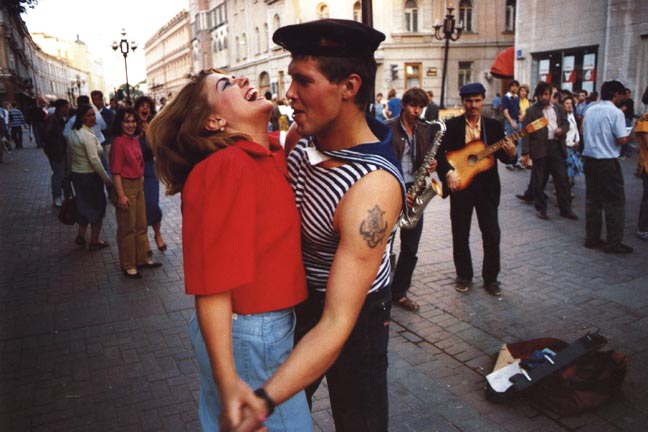
image

Muscovites street dancing in 1991 (Image courtesy of Abbeville Press)

In his defense, Raleigh readily admits the limitations of his sample of interviewees, and does an excellent job showing the differences between life in Moscow (the Soviet capital) and Saratov (a large, provincial city that was purposely closed to the outside world).  Furthermore, the author argues that this elite cohort of students had a privileged place in Soviet society that made their actions key to giving Gorbachev’s reforms momentum. Another issue that oral histories inevitably invoke is the fact that interviewees’ memories of events change over time and people often lie.  Raleigh responds to this point by asserting that he is not only interested in the facts of Soviet life, but in what the Soviet Union represents in the baby boomers’ memories today.  He carefully interrogates suspicious responses to draw out misrepresentations of certain events or topics.

In sum, for Soviet historians the author provides a vital starting point for further research and comparison on Soviet life after Stalin.  For the casual reader, Raleigh demonstrates how people lived their lives under an authoritarian state by maneuvering within the bureaucracy, sustaining their families, enjoying the comforts not available to earlier Soviet generations, and placing themselves in the position to help dismantle their authoritarian state.
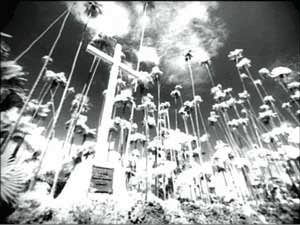
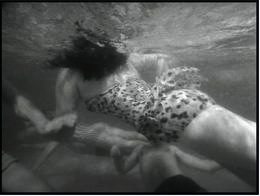
I am Cuba, for Sale (1964)

By Blake Scott

Our eyes travel from the sea’s surface to a palm-tree shore. A female voice can be heard. “I am Cuba,” she tells us. “Once Christopher Columbus landed here. He wrote in his diary: ‘This is the most beautiful land ever seen by human eyes.’ Thank you, Señor Columbus.”

image

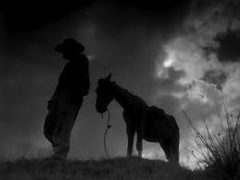
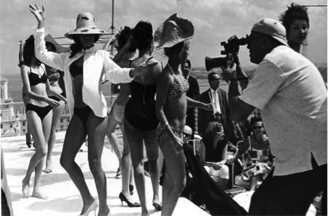
An extravagant party on the rooftop of a Havana hotel. It’s the late 1950s; hedonistic tourism is booming in the City. A band plays loud. Drinks. Laughter. Our line of vision moves from the hotel’s rooftop to a crowd of tourists below, where we see a woman and follow her into the pool. Underwater.

image

Three male tourists from the U.S. sit at a table in one of Havana’s decadent clubs. They order drinks:
“Another daiquiri.”
“Give me a scotch, make it a double.”
“Vodka dragon.”
The waiter asks, “something on the side maybe?”
One of the men lowers his dark sunglasses. “I’ll take that tasty morsel.” And his friend, “And I’ll take that dish.” The men embrace as two beautiful yet sad-faced women walk over from the bar to their table. “Nothing is indecent in Cuba if you’ve got enough dough,” he tells his friend.

image

These deeply metaphorical scenes open the first of four episodes that make up the 1964 film, Soy Cuba (I am Cuba). Hailed today a classic for its inventive cinematography, I am Cuba was virtually forgotten for three decades. After a week in theaters in Cuba and the Soviet Union, the film went into the archives: one copy in Moscow and another in Havana. This essay reviews I am Cuba’s production and revival.

The Art of Cold War

The exchange of weapons, sugar, and communist dogma has traditionally dominated U.S. understandings of the Soviet-Cuban alliance. I am Cuba represents another aspect to this relationship. During the Cold War, Cuba was much more than a strategic island 90 miles from the U.S. border. For idealists in the Soviet Union, the Cuban Revolution offered hope for progressive socialism. The young bearded revolutionaries in the Sierra Maestra Mountains reenergized intellectuals who were tired of the old guard politics in their own country. Soviet poet and co-writer of I am Cuba, Yevgeny Yevtushenko, says he was “childishly happy” when the Cuban Revolution triumphed. He remembers, fondly, Russian parents naming their sons “Fidel.”

During this early moment of optimism, the Soviet Union sent a film commission to meet representatives from the newly formed Cuban Institute of Cinematographic Art and Industry (ICAIC). The rebels founded ICAIC just three months after entering Havana. Film and art were to become key components in Cuba’s effort to create a new revolutionary culture. The Institute’s first director, Alfredo Guevara, explains that during the Soviet commission’s visit, “They proposed to make a movie… about its solidarity and friendship with Cuba, expressing how they sympathized with the Cuban Revolution.” ICAIC and the Soviet Union’s Mosfilm Studios agreed to collaborate on a film about the island’s dramatic transition from corrupt republic to revolutionary state.

The Soviet commission recommended Mikhail Kalatozov to direct the project. At the time, Kalatozov was one of the most famous filmmakers in the Soviet Union. His film, The Cranes are Flying, won the Palme d’Or at the 1958 Cannes Film Festival. He was one of the few Soviet directors whose work had been widely viewed by audiences in the West. For the Cuban project, Kalatozov invited Sergey Urusevsky, his cinematographer from The Cranes are Flying and also The Letter Never Sent (1959), to be Director of Photography. Young Soviet poet Yevgeny Yevtushenko and Cuban author Enrique Pineda Barnet were selected to write the script. I am Cuba was the first film produced by this Soviet-Cuban partnership. During production on the island the film crew received the full support of the Cuban revolutionary government. When Kalatozov needed 5,000 extras for a battle scene – to offer just one example – 5,000 Cuban soldiers were mobilized to play the part.

The Cuban Revolution had sparked hope, but also tension with the U.S. In 1961, the CIA sponsored an invasion at the Bay of Pigs. The following year, President Kennedy ordered a naval blockade after U-2 surveillance planes discovered nuclear missile sites. It was the closest the U.S. and the Soviet Union ever came to nuclear war. Cuba was right in the middle of it and so was the film crew of I am Cuba. The production team had become part of the Cold War. Kalatozov announced to the press: “I’ll make a movie in Cuba that will be my answer, and that of the whole Soviet people, against the naval blockade, this cruel aggression of American imperialism!”

The resulting film is an epic poem; a surreal critique of realities suffered before and confronted during the revolution. Kalatozov and his team sought to capture events as they unfolded, from social injustice to glorious revolt. Produced over a fourteen-month period, from 1962 to 1964, the film embodies the creativity, the militant optimism, and also the naiveté of the era. It is both Cold War history and revolutionary art.

Storyline and Reception

After the opening vignette of Havana’s immoral tourist scene, the film transitions to the story of a poor farmer. He works his entire life in the fields. He is old and tired, but the rich Cuban soil provides. He is happy enough, until a greedy landowner arrives with two armed guards and informs him that the land has been sold to United Fruit. “Now you’ll be able to rest,” the owner tells him. The landowner is a vendepatria elite (someone who sells out his country to foreign interests). The farmer is dispossessed and heartbroken. At the end of the episode, the female narrator asks, “Who will answer for this blood?”

image

The third and fourth parts of I am Cuba move away from the forms of capitalist exploitation (hedonist tourist parties and land-grabbing) to revolutionary mobilization.
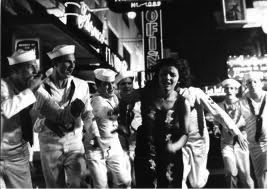
Students and young people organize against the dictatorship and U.S. imperialism. When U.S. sailors chase a frightened woman, Gloria, a young student stands up against their belligerence. Other acts of defiance follow. The once passive student becomes a martyr, and more students take to the streets.

image

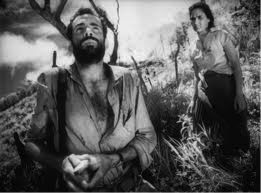
In the final part of the film, the nonviolent hands of a peasant turn to revolutionary action. He is left with no choice but to join Fidel and the revolutionaries in the Sierra Maestra. They charge heroically into battle. “To die for your motherland is to live.”

image

Kalatozov and Urusevsky thought they had made a classic, but the audience didn’t agree. The film premiered simultaneously in Moscow and Santiago de Cuba, and then disappeared. Brazilian filmmaker Vicente Ferraz offers some possible answers for this short theatrical run in his 2005 documentary I am Cuba, the Siberian Mammoth. Ferraz interviewed crewmembers about their experiences making the film. They explained, in short, that the Cuban audience “felt insulted.” The characters seemed to react mechanically to structural circumstances, like pawns in a revolutionary chess game.

Sergio Corrieri, who played a student-revolutionary in the film, recalled people saying, “This really isn’t our reality. This character doesn’t exist, it isn’t Cuban . . . it was the Cuban reality seen through a Slavic prism.”

The film’s poetic tone and surreal mood, conveyed by highly mobile camera movement, connected poorly with Cubans who faced dangerous realities. In the middle of food shortages, and with U.S. military planes flying overhead, the Russians presented them with an unrealistic film. Enrique Pineda Barnet, Cuban co-writer, remembered the premiere with regret. “It was terrible. The first thing that bothered me was that voice, that text: ‘I am Cuba.’” The true story of the revolution, in the minds of many Cubans, had been subordinated to the cinematographic ambitions of the Soviet filmmakers.

The film was also unfavorably received in the Soviet Union, but for different reasons. The U.S. presence in Cuba was considered too glamorous for Soviet sensibilities. Pre-revolutionary Cuba looked like too much fun. Meanwhile, in the U.S., the film was never allowed to reach an audience because of its communist ties. I am Cuba was boxed-in by the polemics of the Cold War.

image

Revival

Only with the fall of the Berlin Wall and the end of the Cold War, some thirty years later, did I am Cuba reemerge. It was U.S. filmmakers, ironically, who first came to love and promote the Soviet-Cuban production, which so bitingly critiqued U.S. culture. The film’s path from obscurity to classic is not entirely clear. But, in brief, social status and money pushed the film into public light. Directors Martin Scorsese and Francis Ford Coppola saw I am Cuba and became the film’s biggest supporters. Distribution rights were acquired from Mosfilm Studios, and in 1995 the film was formally released in the U.S.

Scorsese and Coppola, along with other filmmakers, admired I am Cuba for the very reason it was initially discarded: the radical form and cinematic style, which seemed to overshadow its revolutionary content. Contemporary film critics have praised I am Cuba as a masterpiece in cinematography. In several key scenes, the camera travels vertically from ground level, or from a rooftop, to another space of events (below or above), and then moves horizontally through windows and interior rooms, all in a single take.  “There is a shot near the beginning of I Am Cuba,” explains Roger Ebert, “that is one of the most astonishing I have ever seen.” Every image is like a piece of art inside a larger work.

image

With this post-Cold War revival, the film’s original “flaws” are still acknowledged, but the value system is inverted. The script is still considered weak – “propaganda” – but that is now seen as acceptable because the cinematography is so beautiful. But is the quality of I am Cuba’s story really so secondary to its style? Does the film not capture aspects of truth despite, or even because of, its surreal presentation? Sometimes the “imaginary,” as writer André Breton once put it, can be the most “real.” While it’s true that the film offers subjective and often exoticized representations of reality, there is still something real in them. I am Cuba’s content cannot be dismissed as mere propaganda. The film is a window, among other things, into Cuba’s revolt, Cold War militancy, and also Soviet views of the American tropics.

For those of us interested in the relationship between history and cinema, I am Cuba’s plot and its story of production merit further analysis. How might the film change, for example, our understandings of the tenuous relationship between Cuba, the Soviet Union and the U.S.? Why was the film rejected so abruptly in the mid-1960s, and beloved so quickly in the 1990s? Narrow visions of acceptable revolutionary art? Capitalist society’s infatuation with the cultural ruins of communism? I am Cuba has as much to say about history as it does about film technique.

In the current moment of state-promoted luxury tourism, I am Cuba may also help us understand the complicated relationship between the Cuban Revolution’s past and present. Most Cubans living on the island have never seen I am Cuba. The film’s depiction of pre-revolutionary tourism, however, looks a lot like the bar and club scene of Havana today.

 To learn more about the film I am Cuba, and the historical context in which it was produced:

• I am Cuba, The Siberian Mammoth. A documentary by Vicente Ferraz about the making of I am Cuba. Ferraz returns to Havana after the film’s revival to interview cast and crew about their experiences on set. The interviews are fascinating. A must see. Here’s the trailer.

• Week-end in Havana. An exotic, carefree view of pre-revolutionary Cuba by U.S. filmmaker Walter Lang. To watch this film alongside I am Cuba is to see Havana from two dramatically different viewpoints. Here’s the trailer.

• History Will Absolve Me. Fidel Castro’s powerful speech against the Batista dictatorship in 1953. The speech outlines the justifications for the July 26th Movement. It marks the beginning of a long drawn-out rebellion.

• On Becoming Cuban: Identity, Nationality, and Culture. Professor Louis A. Pérez Jr.’s book highlights the historical relationship between Cuba and United States. He meticulously explains the cross-cultural context that directly led up to the Cuban Revolution.

• The Cuban Revolution: Origins, Course, and Legacy. Professor Marifeli Pérez-Stable’s book provides an in depth analysis of the socio-economic causes and effects of the Cuban Revolution.

More films about life in Cuba’s revolution:

• Memories of Underdevelopment. The story of Sergio, a bourgeois writer who decides to stay in revolutionary Havana, even though his wife and friends flee to Miami.

• Lucía. The film traces the lives of three Cuban women, each named Lucía from three different historical periods: the Cuban war of independence (with Spain), the 1930’s, and the 1960’s.

• Strawberry and Chocolate. The story of a complicated friendship between a young communist student and a gay artist in 1979 Havana. The film offers a powerful critique of authoritarianism and homophobia in the revolution.

• Suite Havana. In this documentary, we follow the lives of ten Cubans as they go about their daily routine. The film has no dialogue, using only sound and image.

Photo Credits:

Scenes from the film I am Cuba

Images used under Fair Use Guidelines

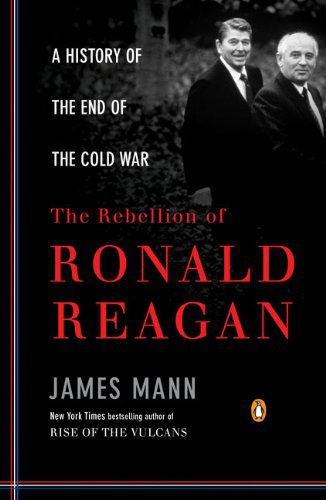
The Rebellion of Ronald Reagan: A History of the End of the Cold War, by James Mann (2010)

by Joseph Parrott

Ronald Reagan’s presidential policies have irrevocably shaped the political debate over the last two decades. He effectively reversed the momentum of the New Deal expansion of the federal government while leading the largest growth in peacetime military spending in national history, making him a polarizing figure for commentators and historians alike. Contrasting visions of Reagan have been especially stark in the realm of foreign affairs. Advocates often argue that he launched a new arms race that undermined the Soviet Union. Critics remember a detached leader presiding over the shameful Iran-Contra scandal. Both depictions are problematic, as they accentuate different aspects of a complex, often inscrutable man. Therefore, James Mann’s examination of the president’s personal diplomacy with the Soviet Union is especially welcome. The journalist has written critically of conservative foreign policies in the past, but he finds much to admire in Reagan. No, the president did not single-handedly end the Cold War, nor was he the primary factor influencing its peaceful resolution. According to Mann, he was, however, parrott mannoptimistic and adaptable, relying on a set of Cold War values that emphasized the human character that existed under the communist system he so vehemently despised. These values ran counter to entrenched ideologies on both right and left, but they allowed him to see the promise of working with honestly reform-minded Mikhail Gorbachev.

Mann finds the key to Reagan’s rebellion in his particular moralistic perspective on the Cold War conflict. The president believed that the United States was a country of right, where democracy and capitalism best served the needs of the people. In contrast, Reagan viewed communism as a devious ideology imposed on an unwilling nation by disingenuous leaders. This Manichean approach to the political systems often made him aggressive and overbearing, inspiring his rhetoric of the “evil empire” and his unbending attachment to the “Star Wars” missile defense system. However, Mann argues that this separation of the people from the system also allowed for a certain flexibility. Reagan saw a real possibility for systemic reform if only a Soviet leader would abandon dictatorial control of the people. Mann contrasts this ideological worldview with the seemingly more moderate one held by the realist architects of détente, Richard Nixon and Henry Kissinger. The duo embraced a rigid model of geopolitical competition where the existence of two superpowers with contrasting ideologies made some conflict inevitable. Power relationships, and not specific leaders, fueled the feud. Managing the conflict through persistent pressure offered the only solution. Due to his faith in a laudable human side to the Soviet state, Reagan broke with his own party’s thinking. He embraced Gorbachev when he came to trust the man, moderating his suspicion of the Soviet actions in a way critics like Nixon could not understand.

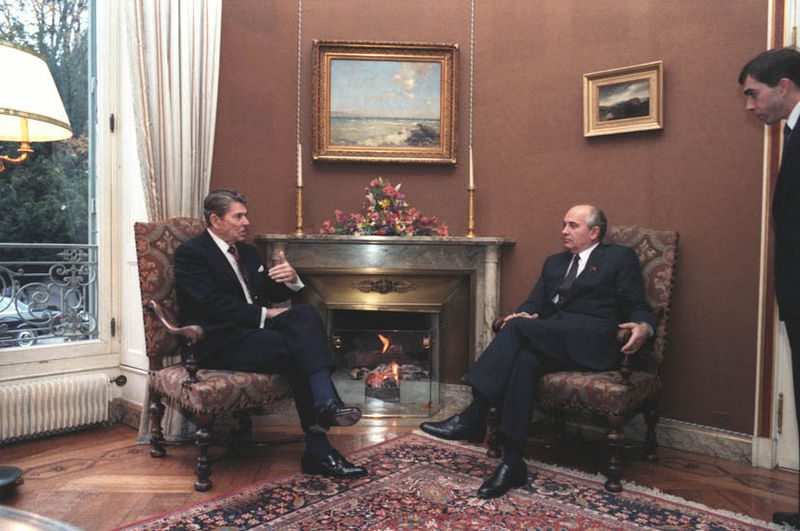
This interpersonal relationship is Reagan’s lasting contribution to decreasing tensions. Mann makes this argument by examining a series of key moments in Reagan’s presidency. When Gorbachev first came to power, Reagan remained hawkish and distrustful of the new leader. The arch-Cold Warrior eventually warmed to the Soviet premier thanks partly to the intervention of popular author and Russophile Suzanne Massie and to the face-to-face meetings at Reykjavik and Geneva. Certainly, Reagan never fully abandoned his confrontational tone, perhaps best exemplified in his direct challenge to Gorbachev to tear down the Berlin Wall. Still, Mann considers even this a positive quality, as Reagan continued to push Gorbachev to make good on his opening of the Russian political system and the liberalization of its foreign policy.

President Reagan meeting with Soviet General Secretary Gorbachev for the first time during the Geneva Summit in Switzerland, 1985 (Image courtesy of Wikimedia Commons)

There is room for debate in some of these conclusions, but Mann shows clearly the key role of Reagan in keeping dialogue going after the initial summit meetings. Nixon, Kissinger, and even advisers like Frank Carlucci rightly believed that Soviet reforms were meant primarily to strengthen the country, yet in their support for more confrontational policies they missed the real potential of cooperation. The president was almost alone in his belief in the sincerity of Gorbachev’s calls for reduced tensions and the decisive role collaboration could play in positively shaping global politics. The president could not have predicted the rapid dissolution of the communist bloc or the Soviet Union, but he “grasped the possibility that the Cold War could end” and he sold this hope to a wary country over the objections of his own political party.

image

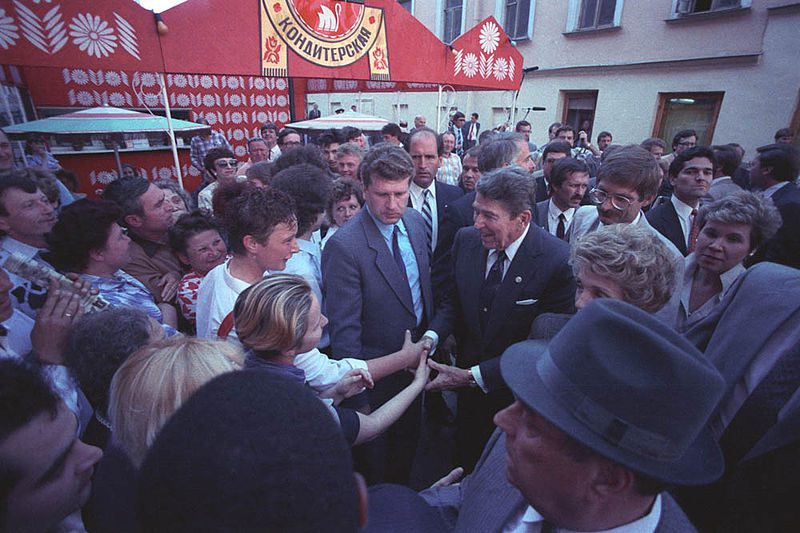
Ronald and Nancy Reagan greeting Moscow citizens during the Moscow Summit (Image courtesy of Wikimedia Commons)

Mann’s eminently readable book demythologizes Reagan, but it also celebrates his lasting if perhaps unpredictable contribution to ending the world’s most dangerous international conflict. Mann agrees with recent authors like historian Melvyn Leffler that Gorbachev’s actions lead to the peaceful resolution of the Cold War, though the Soviet premier does not take center stage. Reagan’s role was as the willing dance partner. Reagan was a hawk, but he was far less hidebound in his beliefs than many of his contemporaries. The president pursued the opportunity to reduce tensions when it presented itself.  In a time when politicians from across the political spectrum are retreating into bunkers of partisanship, Mann is right to celebrate Ronald Reagan’s decision to ignore the party line.

You may also like:

Michelle Reeves’s review of Divided Together: The United States and the Soviet Union in the United Nations, 1945-1965

Jonathan Hunt’s review of The Dead Hand: The Untold Story of the Cold War Arms Race and Its Dangerous Legacy

Dolph Briscoe’s review of Sean Wilentz’s The Age of Reagan: A History

And high school student Kacey Manlove’s Texas History Day project, “Fire and Ice: How a Handshake in Space Turned Cold War Agendas from Competition to Cooperation”


Fire and Ice: How a Handshake in Space Turned Cold War Agendas from Competition to Cooperation

By Kacey Manlove

Read the full paper here
See more images here
Annotated bibliography, including author interviews with former NASA officials

What role did space exploration assume in the history of Soviet-American relations? For her Texas History Day research paper, Kacey Manlove argues that it represented the “fire” of mutual distrust and fear, but also the “ice” of cooperation and détente:

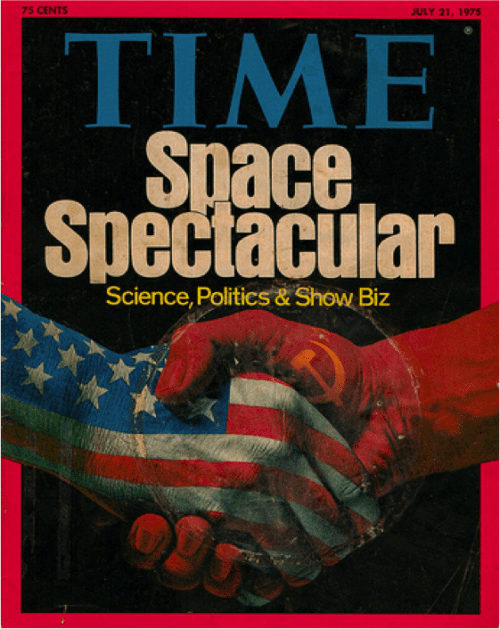
Time Magazine Cover "Space Spectacular: Science, Politics, & Show Biz" over two hands shaking, each is painted to represent a different flag (the U.S. and U.S.S.R)

“Between 1945 and 1991, Robert Frost’s ‘Fire and Ice’ presented sobering possibilities as Cold War confrontations dominated world politics.  Both America and the Soviet Union postured for superiority in nuclear strength, building armories with potential to annihilate the world in fiery holocaust.  October 4, 1957, marked the first major turning point when Sputnik’s launch catapulted the possibility of destruction into space.  Their tense competition for nuclear dominance on earth and control of activities in space appeared unsolvable until 1975, when their Cold War space agencies initiated the next major turning point, symbolically transforming American-Soviet relations from conflict to détente as the commanders of their joint Apollo-Soyuz mission reached across space to shake hands.  That handshake planted the seed for other cooperative events, first Shuttle-Mir and later the International Space Station, today’s symbol of international cooperation.”

You can follow the links above to read all of Kacey’s fascinating paper, see more images and read her first person interviews with former NASA officials.

Kacey Manlove
Rockport-Fulton High School
Senior Division
Individual Paper

Photo Credits:

1975 issue of Time examining American-Soviet cooperation in space (Image courtesy of “Fire and Ice: How a Handshake in Space Turned Cold War Agendas from Competition to Cooperation”)

CIA Study: “Consequences to the US of Communist Domination of Mainland Southeast Asia,” October 13, 1950

by Mark Atwood Lawrence

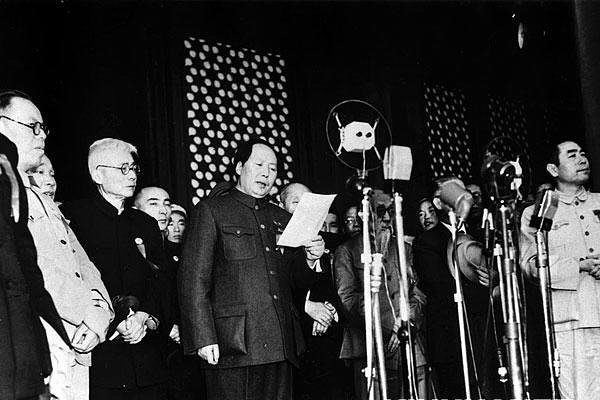
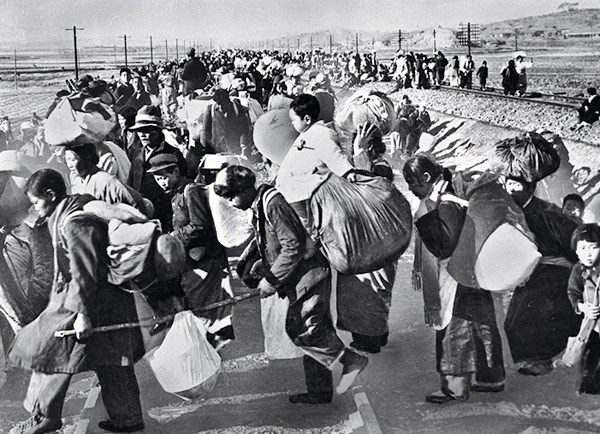
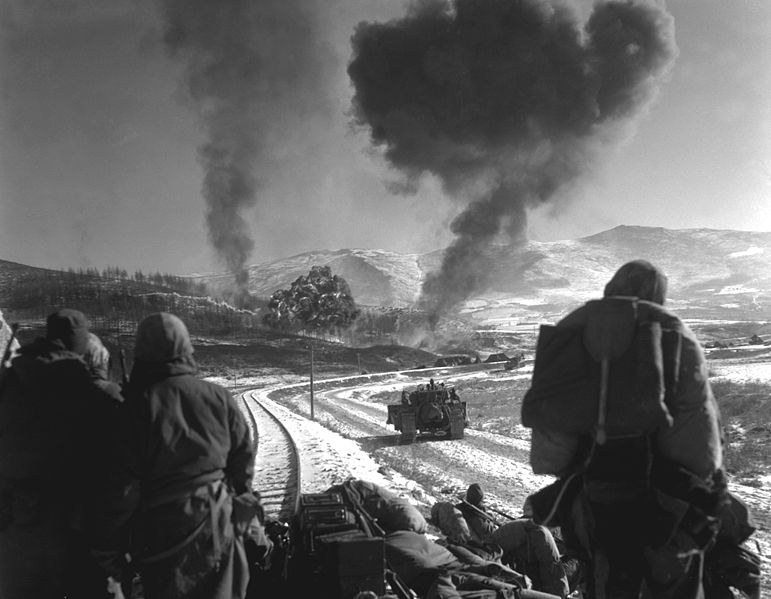
Before 1948, the Cold War was largely confined to Europe and the Middle East, areas that both U.S. and Soviet leaders considered vital to their nations’ core foreign policy objectives after the Second World War.  By 1950, however, the Cold War had spread to Asia.  First, Mao Zedong’s communist armies prevailed in the long-running Chinese civil war in October 1949, making the world’s most populous country part of the communist bloc.  Then, on July 25, 1950, communist North Korea invaded Western-oriented South Korea, igniting a bloody war and intensifying the mood of global crisis.  U.S. officials assumed that Stalin and Mao were behind the North Korean attack and feared that the assault marked the start of a broader offensive in other parts of the continent.  Even as they sent troops to defend South Korea, U.S. leaders pumped money and weapons into the region to help bolster friendly forces.  Underlying such behavior was a strong sense, illustrated in the following analysis by the Central Intelligence Agency, that losing the region to the communist bloc would have an array of devastating strategic, economic, military, and psychological repercussions extending far beyond Southeast Asia.

Communist domination of mainland Southeast Asia would not be critical to US security interests but would have serious immediate and direct consequences.  The gravest of such consequences would be a spreading of doubt and fear among other threatened non-Communist countries as to the ability of the US to back up its proclaimed intention to halt Communist expansion everywhere.  Unless offset by positive additions to the security of non-Communist countries in other sensitive areas of the world, the psychological effect of the loss of mainland Southeast Asia would not only strengthen Communist propaganda that the advance of Communism is inexorable but would encourage countries vulnerable to Soviet pressure to adopt “neutral” attitudes in the cold war, or possibly even lead them to an accommodation with Communism.

Domination of the Southeast Asian mainland would increase the threat to such Western outposts in the Pacific as the island chain extending from Japan to Australia and New Zealand.  The extension of Communist control, via Burma, to the borders of India and Pakistan would augment the slowly developing Communist threat to the Indian subcontinent.  The fall of the Southeast Asian mainland would increase the feeling of insecurity already present in Japan as a result of Communist successes in China and would further underline the apparent economic advantages to the Japanese of association with a communist-dominated Asian sphere.

PRCFoundingThe countries of mainland Southeast Asia produce such materials on the US strategic list as rubber, tin, shellac, kapok, and teak in substantial volume. Although access to these countries is not considered to be “absolutely essential in an emergency” by the National Security Resources Board, US access to this area is considered “desirable.”  Unlimited Soviet access to the strategic materials of Southeast Asia would probably be “desirable” for the USSR but would not be “absolutely essential in an emergency” and therefore denial of the resources of the area to the Soviet Union would not be essential to the US strategic position. Communist control over the rice surpluses of the Southeast Asian mainland would, however, provide the USSR with considerable bargaining power in its relations with other countries of the Far East.

Loss of the area would indirectly affect US security interests through its important economic consequences for countries aligned with the US. Loss of Malaya would deprive the UK of its greatest net dollar earner. An immediate consequence of the loss of Indochina might be a strengthening of the defense of Western Europe since French expenditures for men and materiel in Indochina would be available to fulfill other commitments. Exclusion of Japan from trade with Southeast Asia would seriously frustrate Japanese prospects for economic recovery.

South_Korean_refugees_mid-1950

Communist domination of mainland Southeast Asia would place unfriendly forces astride the most direct and best-developed sea and air routes between the Western Pacific and India and the Near East.  The denial to the US of intermediate routes in mainland Southeast Asia would be significant because communications between the US and India and the Near East would be essential in a global war.  In the event of such a war, the development of Soviet submarine and air bases in mainland Southeast Asia probably would compel the detour of US and allied shipping and air transportation in the Southeast Asia region via considerably longer alternate routes to the south.  This extension of friendly lines of communication would hamper US strategic movements in this region and tend to isolate the major non-Communist bases In the Far East – the offshore island chain and Australia – from existing bases in East Africa and the Near and Middle East, as well as from potential bases on the Indian sub-continent.

Besides disrupting established lines of communication in the area, the denial of actual military facilities in mainland Southeast Asia – in particular, the loss of the major naval operating bases at Singapore – would compel the utilization of less desirable peripheral bases. Soviet exploitation of the naval and air bases in mainland Southeast Asia probably would be limited by the difficulties of logistic support but would, nevertheless, increase the threat to existing lines of communication.imageThe loss of any portion of mainland Southeast Asia would increase possibilities for the extension of Communist control over the remainder.  The fall of Indochina would provide the Communists with a staging area in addition to China for military operations against the rest of mainland Southeast Asia, and this threat might well inspire accommodation in both Thailand and Burma.  Assuming Thailand’s loss, the already considerable difficulty faced by the British in maintaining security in Malaya would be greatly aggravated.  Assuming Burma’s internal collapse, unfavorable trends in India would be accelerated.  If Burma were overcome by external aggression, however, a stiffening of the attitude of the Government of India toward International Communism could be anticipated.

Source:  http://www.foia.cia.gov/docs/DOC_0000258837/DOC_0000258837.pdf

Photo Credits: 

Mao Zedong proclaiming the founding of the People’s Republic of China in Beijing’s Tiananmen Square, October 1, 1949 (Image courtesy of the People’s Republic of China)

South Korean refugees flee south to escape the North Korean army, 1950 (Image courtesy of the United States Government)

U.S. air and ground Marines fighting Chinese forces in Korea, 1950 (Image courtesy of the United States Federal Government)

Cold War Smoke: Cigarettes Across Borders

by Mary C. Neuburger

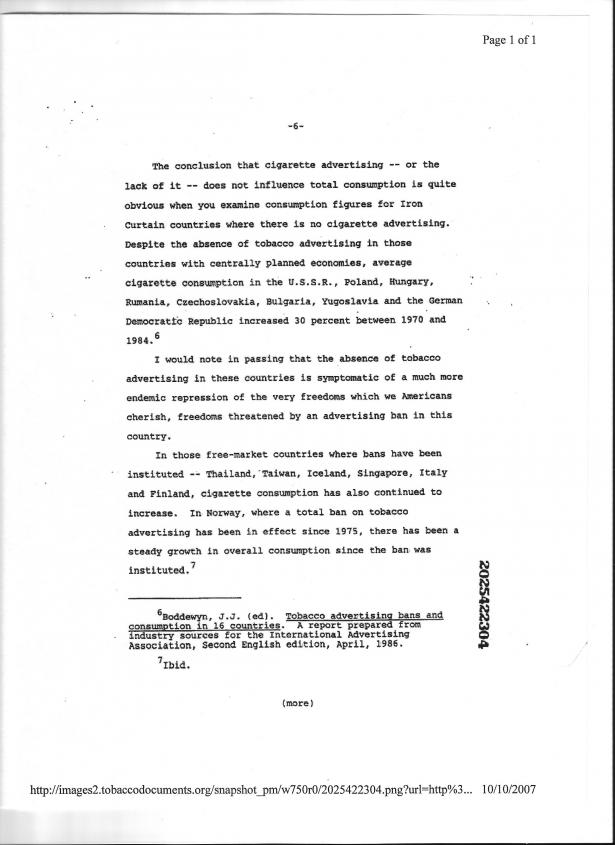
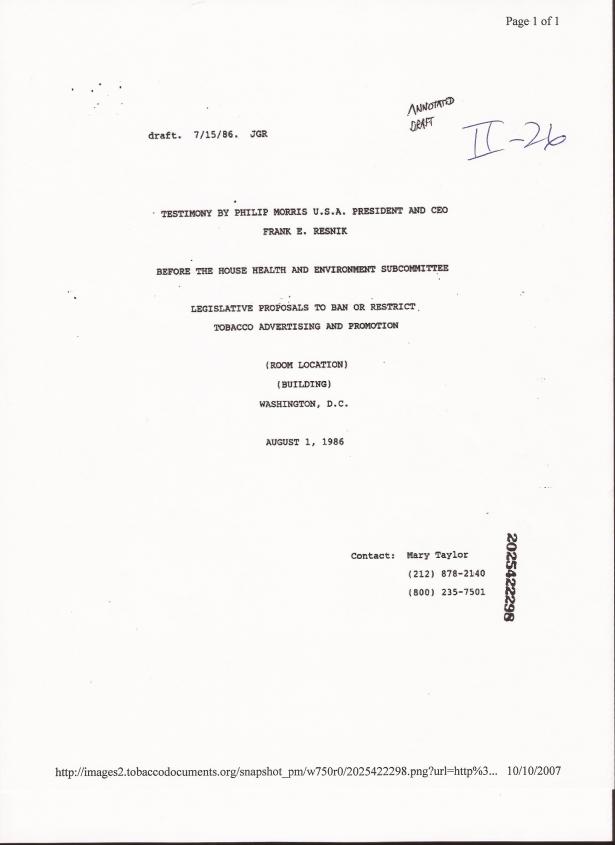
In 1998, as the a result of a court case waged by a number of US states, cities, and counties, the tobacco industry paid 42 billion dollars in damages, had to cease most forms of advertising, and had to release some 36 million pages of documents. The excerpt of a document presented here is one of those millions of private tobacco industry documents, now available online. This document comes from a case concerning cigarette advertising. In 1986 Frank Resnik, the President and CEO of Phillip Morris, testified before a US House of Representative subcommittee on “Health and Environment,” where he constructed a case for the continued “right” to advertise tobacco products. His argument was based on a rationale that called upon the still ubiquitous logic of the Cold War.

Resnik’s central argument was simply and clearly that advertising does not increase the total number of smokers in any given society; that advertising influenced smokers’ choice in terms of brand and variety, but did not increase the number of smokers overall. His primary evidence for such an argument was that behind the Iron Curtain, where there was no cigarette advertising whatsoever, cigarette consumption had increased by 30% between 1970-1984. With Cold Warriors in his audience in mind, Reznik characterizes the lack of cigarette ads in the Bloc as symptomatic of an “endemic repression of the very freedoms which we Americans cherish.”

image
Collinsville, Illinois (photo by Lyle Kruger)

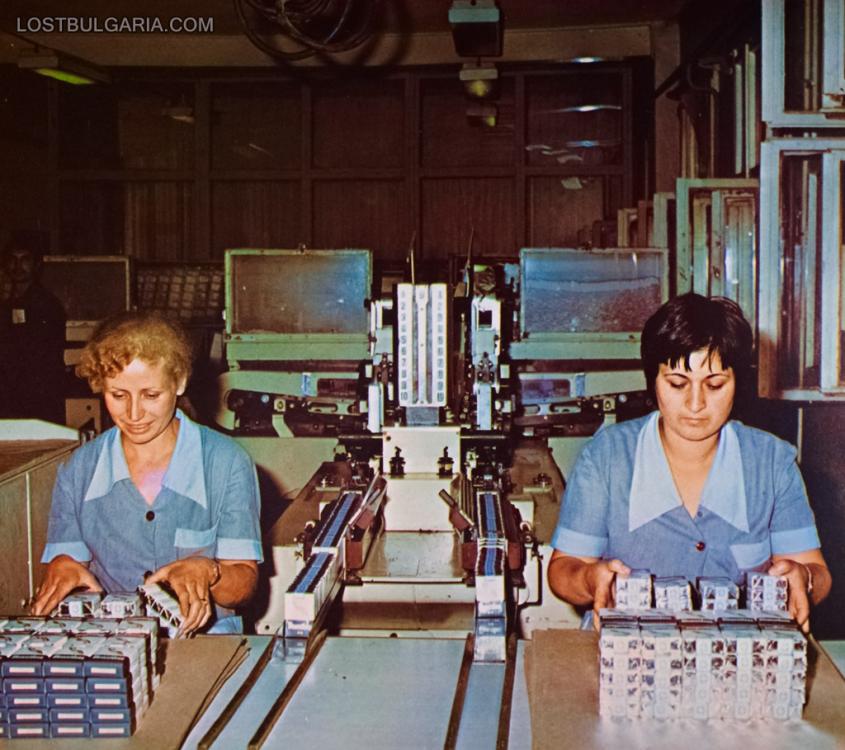
Such apparent distaste for the communist enemy, however, did not preclude American tobacco companies from engaging in lively trade in tobacco and tobacco technologies with the Eastern Bloc beginning slowly in the early 1960s with an East-West détente. By the 1970s company documents reveal an intensified interest in penetrating Bloc markets in a period when smoking rates in the United States were -2%, and communist Europe had some of the highest rates of increase, along with the “developing world.” While Russia was by far the biggest market in the Bloc, little peripheral and Soviet-loyal Bulgaria was by far the biggest producer of tobacco and cigarettes. In fact, between1966 and 1989, Bulgaria was either the largest exporter of cigarettes in the world, or second only to the US.

imageCigarette Factory Workers, Pleven, Bulgaria (photo by www.lostbulgaria.com)

Bulgaria became one of the most important points of entry for Phillip Morris, RJ Reynolds, and other US tobacco companies to penetrate the Iron Curtain into a growing and untapped market. While the direct imports of cigarettes into the Bloc remained limited, Bloc states signed licensing agreements with US companies in the mid-1970s that resulted in the production of Marlboro (Phillip Morris) and Winston (RJ Reynolds) in local factories. These “American cigarettes” were highly seductive to local consumers, as other Western products that were largely available in hard currency stores or carried across the border in suitcases by the lucky few who could travel to the West. If Bulgarians and other Bloc citizens could not go to America, they could at least hold its glossy packaging in their hands, and inhale its particular blend of taste and nicotine that was quite distinct from the Bulgarian “Oriental” variety.  In the late communist period, American cigarette brands perforated the Iron Curtain in a sustained and successful way, paving the way for a post-communist flooding of local markets.

image

But Resnik, of course did not mention such facts at the 1986 session of the House Health and Environment committee. He did not mention that with the leveling off of US markets the communist world had become an explicit target of tobacco trade and that the industry had been among the first to push US entry into these markets. Instead he called upon the House committee members as freedom-loving Americans to reject all legislative proposals to ban or restrict tobacco advertising. By 1986, however, the industry was rapidly losing ground to an organized and effective grass-roots anti-smoking movement. As of August 1986, tobacco ads were no longer allowed to appear on TV. Yet in the Eastern Bloc, where ads had never been on TV, smoking rates continued to rise among men, women, and youth. Perhaps Reznik was right in saying that advertising had no role in increased smoking rates, rather smoking was a by-product of communist modernization projects, with their accompanying new modes of leisure and consumption.

page6

The rapid rise in smoking in the Bloc eventually raised concerns about tobacco and health, and Bloc states have waged fairly serious anti-smoking campaigns since the 1970s. Such campaigns, however, were largely ignored by local populations. Anti-smoking came from the wrong messenger, and what little “freedoms” people had – like an afternoon smoke break—were held onto tightly.  Hence unlike the United States, communist citizens were largely resistant to the anti-smoking campaigns that stopped smoking as a mass consumer phenomenon in the West in its tracks. To this day, the former communist states (and still-communist China) have among the highest smoking rates in the world. While the Western cigarette easily seduced (and still seduces) these populations, the Western propensity to kick the habit is more contested. As Frank Reznik might have once interpreted it, the “right” to smoke is still valued by people from large swaths of the globe, particularly the lands once (or still) ruled by communists.

Watch for our November feature on Mary Neuburger’s new book, Balkan Smoke: Tobacco and the Making of Modern Bulgaria

Year Zero: How Communism and the Cold War Deformed Cambodia

by Kacey Manlove

Read the Full Research Paper
Primary and secondary sources
Images, primary and secondary sources

image
image

The flag of the People’s Republic of Kampuchea (left). Notice the close resemblance to the USSR flag (right).

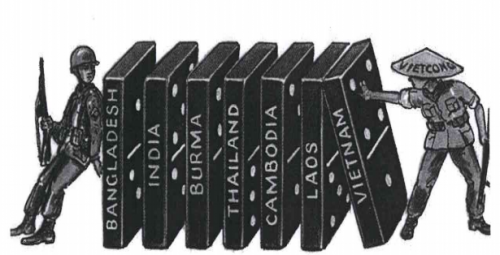
Political cartoon shows a US Soldier leaning against a domino that says "Bangladesh" on the other side a Vietcong soldier pushes over a domino that says "Vietnam"

The Domino Theory in South East Asia. (Photo courtesy of Kacey Manlove)

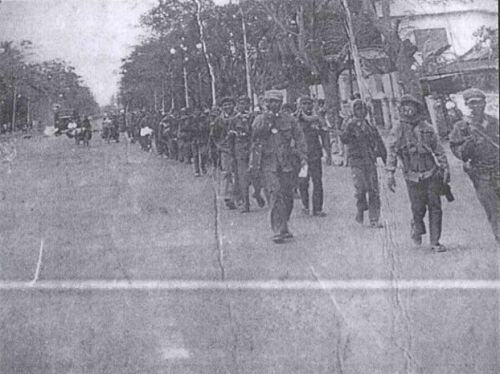
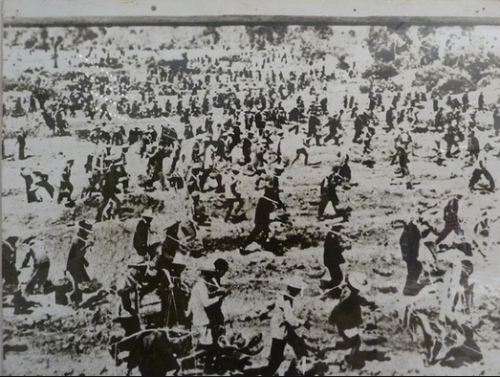
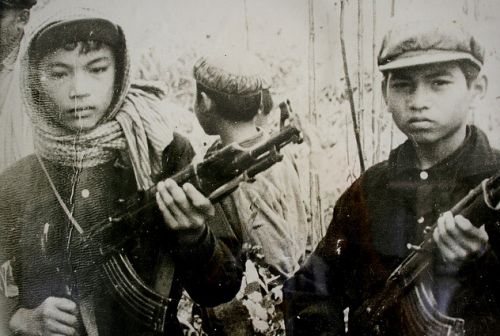
Marxist experiments were conducted in countless countries during the course of the twentieth century, and Cambodia was no exception. Kacey Manlove chronicles Cambodia’s transformation from a neutral country during the Vietnam War to a totalitarian state led by Pol Pot’s brutal Khmer Rouge communist party in the years after American defeat in South Vietnam. She shows how the Khmer Rouge in the late 1970s looked to Mao’s China and Stalin’s Russia in search of social, political, and economic models to implement on Cambodian soil, and how the United States played an active role in defending and protecting Pol Pot’s regime despite its visibily brutal nature.

Khmer Rouge forces marching into  Phnom Pen on April 17, 1975

Khmer Rouge forces marching into  Phnom Pen on April 17, 1975 under Pol Pot’s leadership. (Image courtesy of Kacey Manlove)

A Cambodian labor camp

A Cambodian labor camp. (Image courtesy of Flickr Creative Commons)

Child soldiers in Pol Pot's army

Child soldiers in Pol Pot’s army. (Image courtesy of Flickr Creative Commons)

Contemporary image of a Khmer Rouge shooting field.

Contemporary image of a Khmer Rouge shooting field. (Image courtesy of Wikimedia Commons)

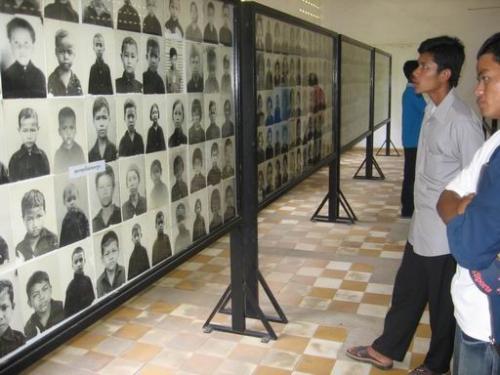
Two men look on at museum photos of Khmer Rouge victims

Museum visitors view photos of Khmer Rouge victims. (Image courtesy of Wikimedia Commons)

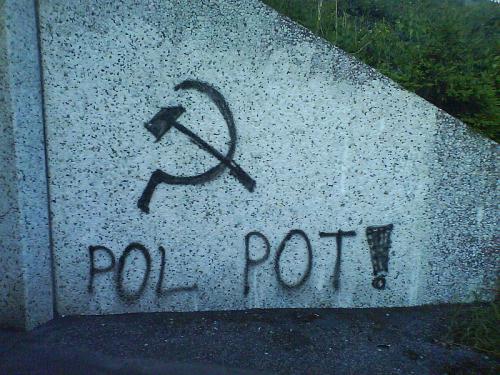
Street art of sickle and hammer, text reads POL POT!

(Image courtesy of Wikimedia Commons)

Individual Historical Paper (Junior Division)

Teachers: Suzanne Ransleben & Jessica Janota

Debating Bolshevism

by Andrew Straw

Communism acquired many different faces during the twentieth century. In the Soviet Union, it became known as Bolshevism.  Named after the political party, led by Vladimir I. Lenin, that defeated the rival Menshevik Party in the October Revolution in 1917, Bolshevism would become the official political dogma of the Soviet Union for decades to come. The domestic response to Lenin’s revolutionary doctrine has inspired nearly a century’s worth of historical literature. Yet one question remains: how did other countries worldwide understand and react to what seemed like a particularly Soviet brand of communism?

image

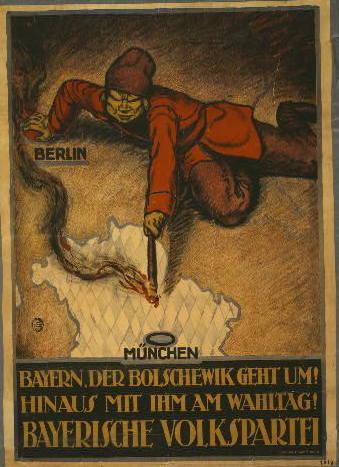
Poster shows a Bolshevik leaning on a map of Europe and setting fire to Bavaria. The text below says: “The Bolshevik is coming! Throw him out on Election Day! Bavarian People’s Party.” (Courtesy of The Library of Congress)

Andrew Straw, a doctoral student at the University of Texas at Austin, created “Debating Bolshevism” to answer this very question. While even Stalin questioned the relevance of the term in as late as 1952, one glance at primary and secondary literature from across the globe during the twentieth century demonstrate that while the term may seem obsolete now, understanding what Bolshevism meant, how it was used, and why people had such strong reactions to it is crucial to understanding twentieth century history.  The fact that the Soviet Union was the only official Bolshevik state in no way confined the idea of Bolshevism to the USSR.  After all, Bolshevism’s own origins came from a transnational dissident group in European exile, one in which Lenin himself claimed membership. After the Bolshevik Revolution, Bolshevism entered into an ideological debate taking place on a world stage. Supporters presented it as an alternative to Western goals and principles of the West. Debating Bolshevism demonstrates that the international community from all points of the political spectrum took it seriously: its detractors maligned its violent excesses, and its supporters exalted its unhinging of imperial powers and rapid change.

image

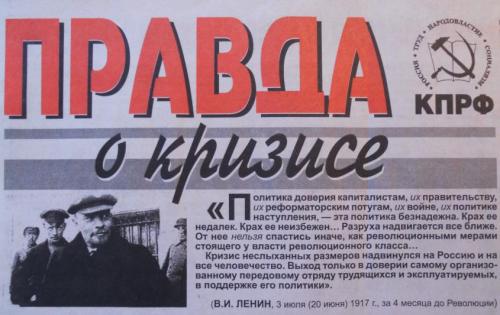
Lenin leads the October Revolution wearing a proletarian workers’ cap on the front page of a 22 January 2009 issue of Pravda. The front-page article is etitled “On the Crisis,” referring to the recent spread of “Occupy Wall Street” protests in cities around the world.  The accompanying text states that unemployed workers in Putin’s Russian (unemployment had reach nearly 20% in some areas) are ripe for communist revolution and calls on all concerned to attend a communist rally that was held on January 31 in Moscow.

image

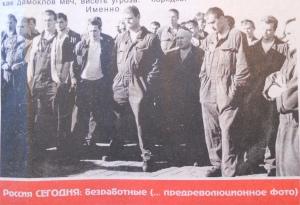
Further down the page, a picture of pre-revolutionary Russian workers stands side by side with an image of currently unemployed Muscovites to underline the point.  In addition, the newspaper includes a flyer for the demonstration that prominently displays the clenched fists of workers.

image

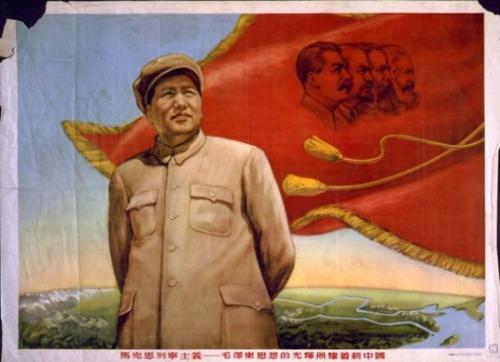
Mao Zedong was one of the prominent leaders of the 20th century, and the road leading to his successful consolidation of power in the People’s Republic of China was heavily informed by the Bolshevik idea of a radically revolutionary break and guerilla warfare tactics.  Mao was a firm believer that a potential revolutionary situation exists in any country where the government consistently fails in its obligation to ensure at least a minimally decent standard of living. While guerilla warfare certainly existed before Bolshevism, Mao was inspired by Bolshevik anti-imperialism, revolutionary self-determination of colonized populations, and civilian participation.  Mao’s literature on military strategy drew heavily from Lenin’s On Guerilla Warfare, citing both Lenin’s political ideas and military tactics and sharing the belief that a “people’s” revolution was inevitable.  Furthermore, even Western military men viewed Lenin as key to the Marxist revolutionary trends because they thought, “only when Lenin came on the scene did guerilla warfare receive the potent political injection that was to alter its character radically.

But despite the influence, Mao did not adhere to Moscow demands calling for a proletarian revolution, but instead he believed China’s revolutionary potential was housed entirely in the peasantry.  Mao “knew and trusted the peasants, and had correctly gauged their revolutionary potential.” At least at this seemed to by the case to Samuel B. Griffith wrote the 1961 introduction to his translation of Mao’s on Guerilla warfare. While Mao’s Cultural Revolution and collectivization would later bring cause take a huge toll on the countryside, his initial use of peasants contrasted with the distrust and disdain Lenin and especially Stalin had for the Russian peasantry.  Mao’s view was a such source of dissension between him and the Kremlin that Moscow even sanctioned the attempt by Zhou Enlai and a group known as the “28 Bolsheviks” who tried to replace Mao in 1934.  These tensions would remain and only grow into the Sino-Soviet split during the Cold War.

Visit Andrew Straw’s graduate student homepage.

University of Texas at Austin – History Department

(Professor: Jeremi Suri)

Photo credits:

Zhou Zhenbiao, “Marx’s – The Glory of Mao’s Ideologies Brightens Up the New China,” Peking, 1952

People Fine Arts via The Library of Congress

The Lavender Scare: The Cold War Persecution of Gays and Lesbians in the Federal Government by David K. Johnson (2006)

by Joseph Parrott

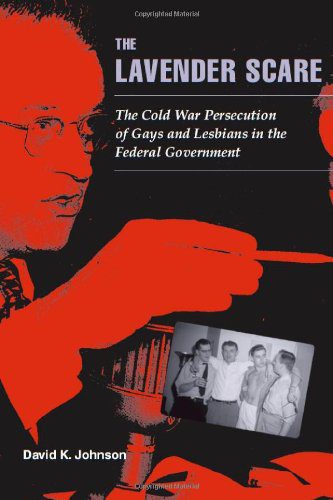
In 1958 Frank Kameny was out of a job. A Harvard trained astronomer and veteran of World War II, he had been working for the Army Map Service.image In the wake of the Russian launch of Sputnik in October of 1957, the American government was rushing to catch up, and the young scientist seemed poised to play a role in the new emphasis on space exploration. Yet within just a few months, Kameny’s career was over because he was a homosexual. His story was not unique. He was one of many victims of the Lavender Scare – a manifestation of Cold War paranoia and social bigotry that led to the dismissal of hundreds and possibly thousands of gays and lesbians from government jobs.
Historian David K. Johnson sheds light on this forgotten episode in American history. The Lavender Scare grew from the McCarthy persecutions of the 1950s, but Johnson argues that its policies lasted far longer and became more institutionalized than the anti-communist hysteria. The government dismissed homosexuals on the grounds that emotional weakness and the likelihood of blackmail made them security risks. No evidence supported these accusations and medical experts challenged the idea that homosexuals were in any way different from the majority of employees, but to little avail. Executive departments hurried to dismiss employees suspected of homosexuality, lest ambitious congressmen – already suspicious of the expansion of bureaucratic policymaking – target them for public scrutiny. In the midst of the Cold War, fear, politics, and prejudice combined “to conflate homosexuals and communists.”

The Lavender Scare offers an arresting political narrative, but Johnson also makes sure to present the very human face of this drama. Johnson utilizes extensive interviews to demonstrate the way the purges changed the lives of victims and the social milieu of Washington D.C. itself. The rapid growth of the federal government during the Depression and its relatively egalitarian hiring practices attracted large numbers of young people seeking employment, including many homosexuals hoping to escape the limitations of small town life. By 1945, Washington was, in the words of one resident, “a very gay city,” where vibrant communities thrived and authorities tolerated homosexual activity.  In an effortless combination of social and political history, the author shows how the rise of the national security state transformed gay Washington, forcing many to leave and others to endure years of joblessness.

image

Persecution also inspired a nascent movement in defense of gay lifestyles. Activists like Frank Kameny recast the discrimination against homosexuals as an issue of civil rights. The Mattachine Society of Washington organized picketing and supported challenges to government dismissals, consciously combining “political activism with service to and affirmation of the gay subculture.” Johnson explores how these vocal demands led the government to reevaluate its policies and the connection between the private and public lives of its employees. These early manifestations of homosexual activism not only helped end decades of vocational persecution, but they also informed the networks and tactics that would come to define a movement.

image

In light of Frank Kameny’s death last October at the age of 86, it is appropriate to look back at the origins of the LGBT activism. The recent repeal of the military’s “Don’t Ask, Don’t Tell” policy demonstrates that cause of homosexual equality has made great strides, specifically in regard to government service. But at the same time, the continuing debate over the necessity of this policy and calls to reinstate it remind the country that Kameny’s ultimate goals have not yet been achieved. David Johnson’s smart, well-written, and truly engaging book clearly lays out the history of anti-gay sentiment in the modern federal government. It also, perhaps, hints at ways activists can continue to challenge discrimination in the future.

Photo credits:

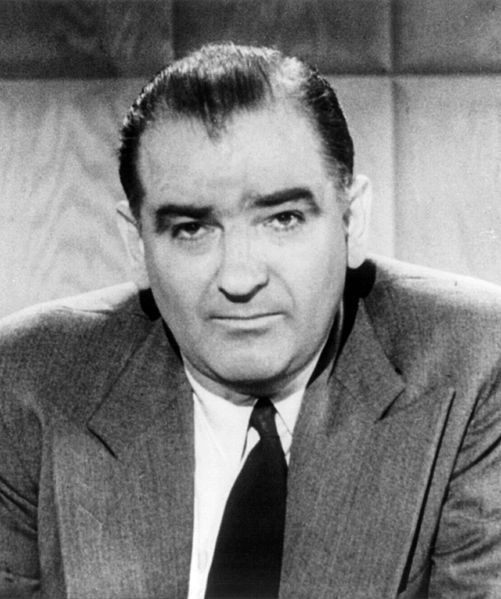
United Press, Joseph Raymond McCarthy, 1954

Library of Commons via Wikimedia Commons

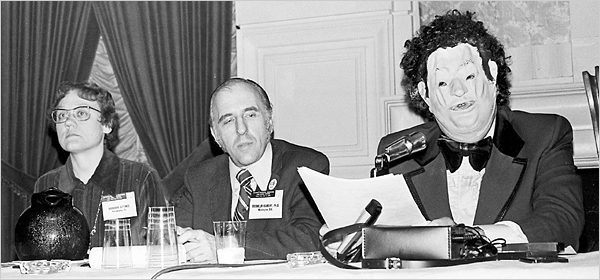
Kay Tobin Lahusen, “Barbara Gittings, Frank Kameny, and John Fryer in disguise as “Dr. H. Anonymous,”” 1972

New York Public Library Manuscripts and Archives Division via Wikimedia Commons

You may also like:

Dolph Briscoe’s review of Clint Eastwood’s latest film J. Edgar, about the first director of the F.B.I.


Undergraduate Essay Contest Honorable Mention: The Global Cold War by Odd Arne Westad (2007)

by Carson Stones

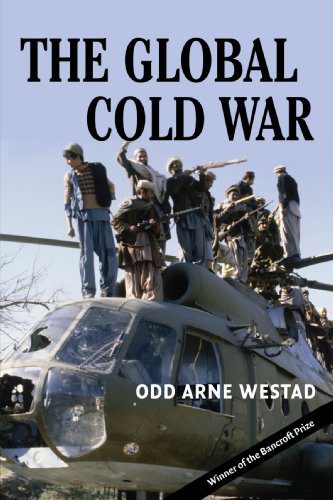
The Global Cold War by Odd Arne Westad is a fascinating account of superpower interventions in the Third World during the latter half of the twentieth century.imageCovering a wide sweep of history, Westad argues that the United States and the Soviet Union were driven to intervene in the Third World by the ideologies inherent in their politics.
Westad opens his book with an examination of the ideologies of the United States, the Soviet Union, and the post-colonial leaders before the Second World War. Emerging victorious from the war, Westad argues that the two countries believed it was their destiny to combat the competing ideas of modernity in the post-war era of decolonization. With the world divided between NATO and the Warsaw Pact, any country declaring independence outside the blocs was a potential battleground for the competing ideologies. In a conflict that lasted over forty years and affected billions of people worldwide, Westad highlights the events chronologically from the Korean Peninsula to Latin America, Southeast Asia, Africa, and finally the Middle East and Afghanistan.

Seamlessly tying together seemingly unrelated incidents, The Global Cold War manages to take a bird’s eye view of history while still providing incredible details of the specific events, which turned the tide of the Cold War. Westad explains that each pivotal turn represented a new ideological shift for Moscow and Washington in the continuing struggle to win the hearts and minds of newly emerging countries.  A few notable incidents from the book include the CIA operations in Guatemala, containment in Vietnam, and détente in Ethiopia. As this book proves, these superpower interventions only exacerbated the conflicts of diverse nationalities who were struggling to emerge from under the heels of Imperialism. The unfortunate result of these interventions was incredible bloodshed, environmental devastation, and millions displaced as refugees.  The turning point of the book is the 1979 Iranian Revolution, preaching a new ideology, Islamism, which rejected both liberal capitalism and Marxist-Leninist socialism. The best chapters in the book follow the emergence of Islamism and the repercussions of its rapid spread in a two-bloc world.

image

This book provided a refreshing perspective on the Cold War as it related to the political and social developments in the Third World. Echoing Clausewitz, Westad calls the Cold War “a continuation of colonialism through slightly different means.” Anyone who reads this book will appreciate Westad’s tragically ironic statement that while both Moscow and Washington were formally opposed to colonialism, the “methods they used in imposing their vision of modernity on Third World countries were very similar to those of the European Empires who had gone before them.” This book will force readers to question the motives of American foreign policies which authorized assassinations, toppled democratically elected regimes, and supported dictatorships all in the name of protecting freedom and democracy from the evils of socialism around the globe.The conclusion of The Global Cold War is especially poignant when considering the ongoing conflict in the Middle East and the return of American troops this Christmas. Twenty years have passed since the collapse of the Soviet Union but the specter of the Cold War still haunts American foreign policy today. With the breakdown of the bipolar world, this book should encourage citizens around the world to question the motives of any country, which imposes an ideology upon their neighbors as humankind progresses into the twenty-first century.

Photo credits

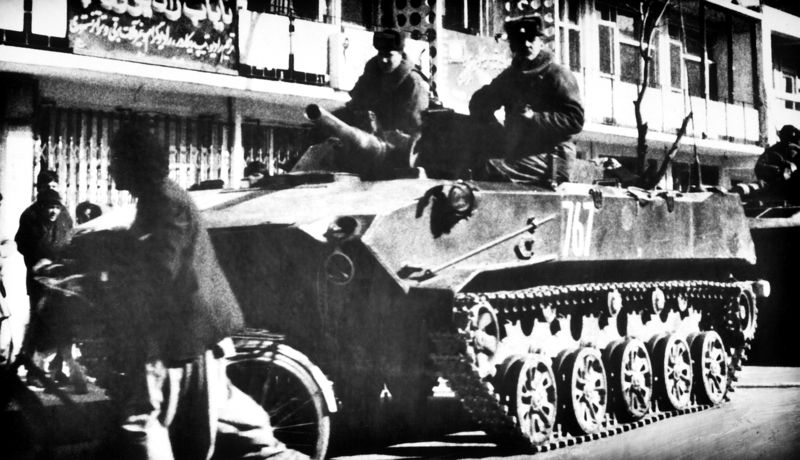
Unknown photographer, Soldiers ride aboard a Soviet BMD airborne combat vehicle, Kabul, 25 March, 1986

DOD Media via Wikipedia

Check out the other winning and honorable mentions submissions for our First Annual Undergraduate Writing Contest:

William Wilson’s review of George Orwell’s Homage to Catalonia

Lynn Romero’s review of Open Veins of Latin America

Katherine Maddox’s review of Beirut City Center Recovery


« Previous Page
Next Page »

Recent Posts

  • The Radical Spanish Empire Roundtable – Introduction
  • All Eyes on the Petition: Reflections on The Radical Spanish Empire
  • Forgery, Invention, and the History of Skepticism in The Radical Spanish Empire
  • Iberian Subaltern Political Philosophies and The Radical Spanish Empire
  • Lawfare and the Legal Construction of Race in The Radical Spanish Empire
NOT EVEN PAST is produced by

The Department of History

The University of Texas at Austin

We are supported by the College of Liberal Arts
And our Readers

Donate
Contact

All content © 2010-present NOT EVEN PAST and the authors, unless otherwise noted

Sign up to receive our MONTHLY NEWSLETTER

  • New
  • Features
  • Reviews
  • Texas
  • Teaching
  • Digital
  • Watch & Listen
  • Authors
  • About