• New
  • Features
  • Reviews
  • Texas
  • Teaching
  • Digital
  • Watch & Listen
  • Authors
  • About

The past is never dead. It's not even past

Not Even Past

The Strangest Dream – Reykjavik 1986

by Jonathan Hunt

College freshmen have no personal knowledge of the Cold War. Born after the Berlin Wall’s fall and the Soviet Union’s collapse, the threat of nuclear Armageddon seems far removed from their experiences, a relic of a bygone age. Yet, today, more countries than ever hold weapons whose scale of destruction can dwarf that of every bomb used in World War II. As the Cold War nuclear arms race recedes from collective memory, it is important to remember why the world remains beneath the shadow of the mushroom cloud.
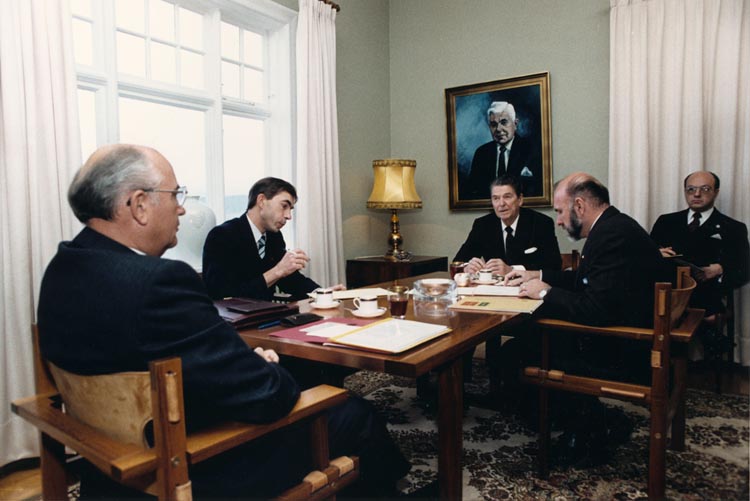
Gorbachev_and_Reagan_1986-3This October 11th and 12th, the world observed the 25th anniversary of the summit between U.S. President Ronald Reagan and Soviet General Secretary Mikhail Gorbachev at Reykjavik, Iceland in 1986, where the leaders of the world’s superpowers contemplated the abolition of nuclear weapons. The talks remain the closest humanity has come to stopping the accumulation and proliferation of nuclear arms. Twenty-five years later, historians still debate the summit’s legacy. Even if the nuclear colossi had adopted Gorbachev’s plan to disarm in three stages by 2000, only their fine example would have persuaded Great Britain, France, China, India, and Israel to join them. Reading the minutes of the four meetings at Reykjavik, it is also unclear if gravity bombs like the ones that destroyed Hiroshima and Nagasaki would have been eliminated. Nevertheless, during those two autumn days, Reagan and Gorbachev neared the brink of a nuclear-free world, only to turn back in defeat.

It seems, ironically, that Reagan’s abhorrence of nuclear weapons scuttled the talks. As president, Reagan made research and development of the Strategic Defense Initiative (SDI), an anti-missile shield derisively known as “Star Wars,” a centerpiece of his strategic policy. Nuclear abolitionists condemned the project as a multi-billion dollar boondoggle and a slippery slope toward normalizing the military use of nuclear weapons. Strategists weaned on the Cold War doctrine of mutual assured destruction warned that its construction could prompt the Soviet Union to launch a preemptive first strike. For Reagan, SDI represented a means by which to make nuclear weapons obsolete and an insurance policy if a “madman” ever got his hands on them. Gorbachev disagreed, and saw limits on SDI as indispensible if the USSR was to trust its rival to disarm.

At Reykjavik, Soviet and American negotiators smoothed over rough spot after rough spot, agreeing to limits and sub-limits on an array of nuclear delivery systems—bombs, cruise missiles, sub-launched, medium-range, and intercontinental ballistic missiles. More progress was made in 36 hours than the previous 15 years combined. Paul Nitze, the president’s special adviser on arms control and a fixture in U.S. foreign policymaking throughout the Cold War, remarked Soviet concessions were “the best we have received in 25 years.” When Reagan and Gorbachev began their fourth and final meeting, they knew the stakes: an historic agreement for deep arms cuts and eventual disarmament. They also knew the final and toughest challenge; how to finesse Reagan’s steely support for SDI and Gorbachev’s stand that the U.S. confine R&D to the labs.

Initial expectations for Reykjavik had been modest. Recurrent crises had beset U.S.-Soviet relations since Reagan took office. The White House’s more confrontational tone, the shooting down of a wayward Korean airliner over Soviet territory, the deployment of quick-strike missiles in Europe, and an alarming NATO nuclear exercise codenamed Able Archer, compounded an already fraught relationship. However, conditions eventually improved. Reagan assumed a more conciliatory line so as to facilitate arms control initiatives and lessen the chances of an accidental nuclear exchange. It was Gorbachev’s rise to power in 1985, however, that transformed the tenor of the Cold War by infusing new life into a listless Soviet system. Following a series of three elderly statesmen whose best days were behind them, he was confronted by an economic system with chronic shortages and, in April 1986, a catastrophic meltdown of the nuclear reactor at Chernobyl, Ukraine. Gorbachev insisted that “new thinking” be applied to the USSR’s manifold problems, and espoused the policies of perestroika, restructuring the Soviet economy, and glasnost, making the government more open and responsive. A major element of perestroika was redirecting the river of resources flowing into the state’s military-industrial complex, especially the secret agencies managing the USSR’s nuclear, biological and chemical weapons programs, to more productive ends. Unable and unwilling to keep pace with U.S. military spending, Gorbachev instead offered a three-step plan to liquidate the superpowers’ nuclear weapons.
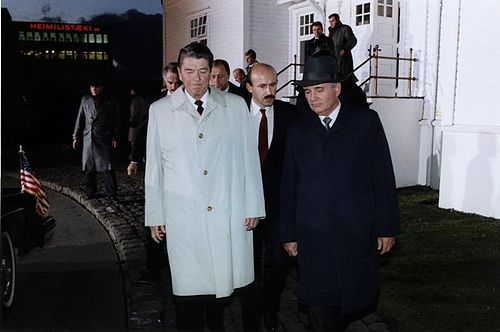
500px-Gorbachev_and_Reagan_1986-6It was a bold initiative, but Gorbachev’s labors were close to bearing fruit when he and Reagan sat down for their last tête-à-tête. Reagan promised to share advances in missile defense with the Soviets. Gorbachev fired back that the U.S. had thus far been unwilling to share even industrial and agricultural technology with his country. Just when the statesmen seemed to have exhausted their cases, Gorbachev’s foreign minister, Eduard Shevardnadze, urged them to cross the finish line, declaring they had “come very close to accomplishing this historic task … [a]nd when future generations read the record … they will not forgive us if we let this opportunity slip by.” Despite Shevardnadze’s appeal, however, Reagan and Gorbachev failed to agree on the wording of the final text. The two negotiating parties left Reykjavik without an agreement.

Sadly, subsequent generations have more often forgotten than condemned the talks. The calamity of climate change is more familiar to our undergraduates than the firestorm of nuclear war and the long night of the ensuing nuclear winter. In the 1980s, scientists theorized that only 200 thermonuclear explosions would kick up a planetary shroud of radioactive dust, lowering temperatures enough to recreate the climactic conditions in which the dinosaurs died off. Five countries—the U.S., Russia, Great Britain, France, and China—have more than 200 warheads. The U.S. and Russia are currently reducing their arsenals to 1,550 deliverable warheads. A conflict between India and Pakistan, who fought four wars since 1947, where nuclear weapons were used would jeopardize the continuation of life, as we know it.

Current global affairs hardly resemble the global situation in 1986 when two nuclear-armed superpowers testily eyed one another. Yet some themes have reoccurred. Just as the Soviet Union fiscal emergency forced Gorbachev to offer a plan to nuclear disarmament, today’s financial crisis could pave the way for deep multilateral arms cuts. The nuclear disaster at Fukushima, Japan augurs lessons similar to those of Chernobyl regarding the uncontrollable nature of nuclear power. It remains for the leaders of today to take advantage of their window of opportunity.

For two days on a remote archipelago in the North Atlantic, Reagan and Gorbachev discussed the entwined destinies of the Cold War and nuclear arms. As educators, we must remind our students of such moments, when history conspires to grant individuals the occasion to re-route its course. Reykjavik’s great tragedy is not its failure; after all, the negotiations paved the way for two momentous treaties—the 1987 Intermediate-Range Ballistic Missile Treaty and the 1991 Strategic Arms Reduction Treaty. Its tragedy resides in its potential disappearance from our collective memory. For our students’ generation will have to address this dangerous legacy of the Cold War—even if they don’t remember it.

You may also like:

Reuters, Mikhail Gorbachev, “A Farewell to Nuclear Arms,” October 11, 2011

“The Reykjavik File: Previously Secret Documents from U.S. and Soviet Archives on the 1986 Reagan-Gorbachev Summit, from the collections of The National Security Archive, George Washington University, Washington DC.

Jonathan Hunt and Paul Walker, “The Legacy of Reykjavik and the Future of Nuclear Disarmament,” Bulletin of Atomic Scientists, Nov/Dec 2011.

Photo Credits:
Federal Government via Wikimedia Commons
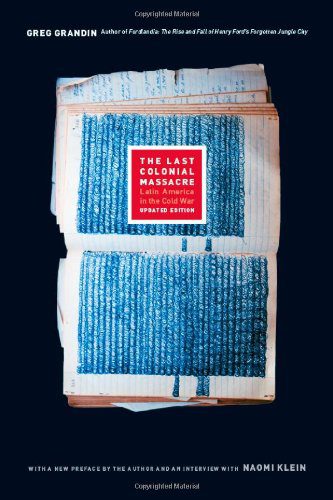
The Last Colonial Massacre: Latin America in the Cold War by Greg Grandin (2004)

by Cristina Metz

The Last Colonial Massacre: Latin America in the Cold War combines incisive analysis of Cold War repression in Guatemala with a history of the country’s century-long mobilization leading up to the 1978 Panzós massacre that resulted in the deaths of Q’eqchi’ Maya men, women, and children. The Panzós massacre launched an intense and brutal escalation of violence, the effects of which continue to reverberate in contemporary Guatemalan society. Grandin’s purpose is manifold. First, he attempts to draw connections between individual identity and political activism. Second, he refutes the North American scholarship that views the Maya as impressionable bystanders caught in the crossfire between the military and the guerrilla. Finally,  he historicizes the Cold War, nullifying attempts to naturalize the violence and repression it engendered throughout Latin America.

51fTSbNd8MLAlta Verapaz, an important coffee-growing region in northeast Guatemala, has historically been at the center of land disputes between majority Q’eqchi’ Maya and ladino and European settlers. Through the lives of four important figures—José Angel Icó, Alfredo Cucul, Efraín Reyes Maaz, and Adelina Caal—Grandin traces the struggle for land reform there, the end to forced labor, and greater social democratization. Icó, for instance, led a “seditious life” because he rebelled against the authority of the landowning elite by not following traditional paths to male power, though acquiring it nonetheless. He held considerable rural power, stemming from much the same sources as those of the state. Icó wielded his power to weaken a system that reinforced the social and political supremacy of Ladino and foreign elites. Each of these individuals gained new insights concerning their individual roles in the world around them, due in part to their participation in mass politics. Their political development (which was not unique given that many Guatemalans, indigenous and ladino, rural and urban, increasingly mobilized around social causes from at least the 1950s on) dispels analyses that rob Maya of their agency.

Panzós, a municipality of Alta Verapaz, is the location of what Grandin dubs, “the last colonial massacre.” In 1865, a group of Maya peasants appealed to the local government of Carchá, a few miles away from Panzós, for protection against the landed elite. Their demands were met with violent repression. In 1978, a large group of Q’eqchi’s suffered a similar end when they attempted to present their demands to local administrators. Both of these events seem to be by-the-book peasant revolts, but there is something unique about what happened in 1978. This twentieth-century massacre marked the beginning of a new type of counterinsurgent violence that soon spread to other Latin American nations. In tracing the intentionality and premeditation behind Cold War counterinsurgency tactics that transformed the protective power of the state into one that suppressed an internal enemy, Grandin convincingly exposes the “Cold War’s most important legacy”: the destruction of democracy.

Perhaps the greatest contribution of this book is its presentation of a history of individuals neither privileged in life nor in the historical record who have had a lasting effect on other politically active Guatemalans. We know from the outset that Grandin seeks to understand how Q’eqchi’ Maya reformers developed a political consciousness, an identity. This is, among many things, an exploration of how people mold ideology to fit their particular world, their struggle, and what they believe to be their role as engaged citizens.

The wealth of primary and secondary source material used is truly impressive and is another significant contribution of this work to the historiography of repression and state violence in Latin America. Notably, Grandin employs truth commission reports as proper historical sources, which  does much to counter critiques of the truth commissions and their reports, Critics contend that these fell short of their lofty goals, to recover the history of state violence and to ensure that history never repeats itself. Maybe it is more precise to say that, in the Guatemalan case at least, the purpose of the truth commissions and their reports was not to ensure that “it” would never happen again; rather, that the point was to preclude a post-civil war, post-Cold War “democracy” from forgetting. The Last Colonial Massacre is a testament to many things, not least of which, is the long life and far-reaching impact of this aspect of the Guatemalan peace process.

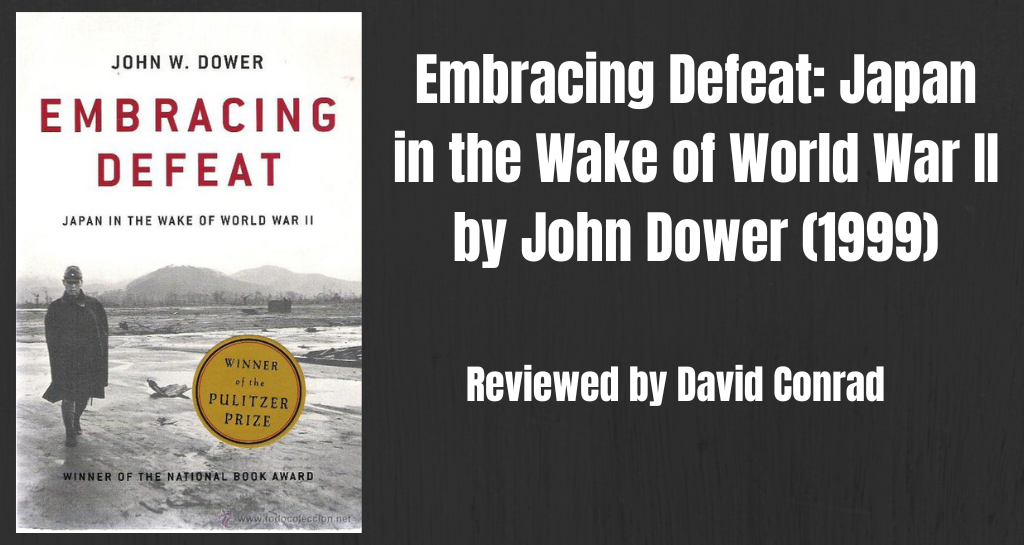
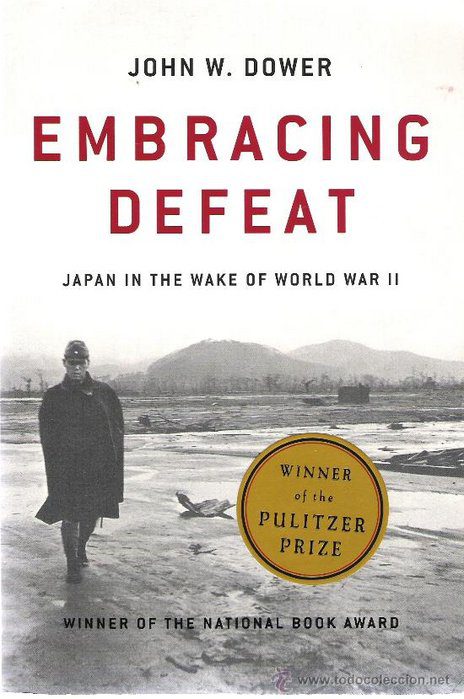
Embracing Defeat: Japan in the Wake of World War II by John Dower (1999)

Before John Dower’s Embracing Defeat, many English-language accounts of the United States’ occupation of Japan contextualized the event in terms of American foreign policy and the emerging Cold War.  Scholars writing from this Western-centric perspective produced much fine scholarship, and no doubt will continue to do so.  But Embracing Defeat shifted the discussion from a debate over American motives to an analysis of the Japanese experience, and in doing so won critical acclaim and popular success.  This Pulitzer Prize-winning tome reveals to Western audiences what many in Japan have long understood: that the American occupation was, in many ways, the most transformative event in modern Japanese history.

embracing_defeat

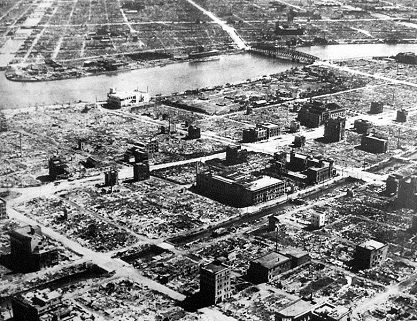
Dower sets out to convey “some sense of the Japanese experience of defeat by focusing on social and cultural developments. . . at all levels of society.”  Initially, the bitter reality that their exhausting war had ended in defeat proved profoundly demoralizing for many Japanese citizens. Dower’s portrayal of the shantytowns of bombed-out Tokyo provides poignant evidence of the impoverished condition in which many Japanese found themselves at war’s end.  But as Japan embarked on its long occupation interlude, its citizens seized opportunities to start over, rebuild, and redefine their nation.  Defeat became a creative process rather than a destructive one and the people of Japan embraced it with eagerness.  In the atmosphere of reform that characterized the occupation, an efflorescence of what Dower calls “cultures of defeat” emerged.  For example, kasutori culture explored the sleazy underside of urban life.  Radical political movements tested the limits—and sincerity—of American reformism.  Changes in artistic images, popular entertainment, songs, jokes, and even the Japanese language itself reflect the vitality and diversity of Japanese culture during the American occupation.

Tokyo_Fire_Bomb_1945

An aerial view of a destroyed residential area of Tokyo after the fire raids.

Dower’s Japan-centered perspective informs his judgment of the occupiers, whom he views as agents of imperialism as well as facilitators of positive change. If the occupation was a prologue to a new period of Japanese history, it was also the epilogue to an era of Western exploitation that began when Commodore Matthew Perry forced Japan to “open” to Western trade in the middle of the nineteenth century.  Dower calls the occupation “the last immodest exercise in the colonial conceit known as ‘the white man’s burden.’”  The occupiers, under the leadership of the notoriously vain Douglas MacArthur, lived in enclaves of lavish comfort and issued imperious edicts.  Nevertheless, Dower concedes that American reforms were “impressively liberal,” and he is critical of those in Japan and Washington who resisted reform.  This group includes Japanese conservative politicians as well as the “old Japan hands” in the U.S. Department of State.  To Dower, these were old-fashioned elitists who sought to restrict the influence of average citizens in the new Japan.  Dower’s interpretation of the American occupation as a neocolonial as well as a progressive exercise rings true, but it is a delicate balancing act.

Embracing Defeat has received high praise in the academic and popular presses, and justly so.  Nevertheless, the book has certain limitations.  Dower concentrates almost exclusively on the experiences of urban-dwelling Japanese.  The half of the population that lived in rural areas suffered more than their share of hardship during the war, and their story of change and recovery during the occupation is as fascinating as it is neglected.  Still, Dower’s exploration of urban cultures in the occupation period is a monumental task, and he executes it marvelously.  Embracing Defeat‘s engrossing account of social change during the American occupation of Japan has earned it a permanent place in the literature of that epochal event.

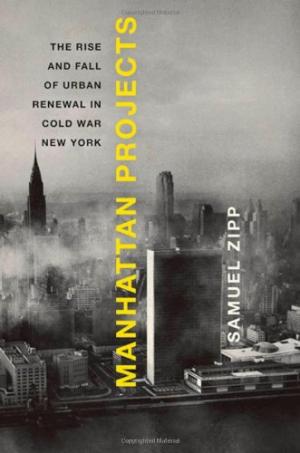
Manhattan Projects: The Rise and Fall of Urban Renewal in Cold War New York by Samuel Zipp (2010)

by Kyle Shelton

In the 1970s the United Nations complex and the public housing projects of East Harlem projected two disparate images of New York City. imageIf the UN displayed the city’s position as a global capital of culture, politics, and economics, the deteriorating housing projects showed the city’s struggles with overcrowding, high crime rates, and poverty. According to historian Samuel Zipp, the roots of this contradictory double-identity reach back to the rise and fall of the city’s post-World War II urban renewal efforts.
The usual story of urban renewal in America is one of powerful officials, such as New York’s Robert Moses, wielding great power to remake entire cities as they saw fit. Zipp’s Manhattan Projects departs from this narrative by arguing that urban renewal represented a more complicated, contentious process carried out by New Yorkers from all races, classes, and city neighborhoods. For Zipp, renewal politics highlighted questions about what the city should look like, whose interests it should serve, and who would control its remaking. Starting with the celebrated construction of the United Nations complex in 1948 and moving up through the battles over public housing projects in East Harlem in the late 1960s, Manhattan Projects shows how competing visions of renewal and the contests that revolved around its implementation could create symbols of both cultural significance and urban decline.

In the early years of the Cold War, many New Yorkers viewed urban renewal as a “benevolent intervention” that would turn run-down and crowded streets into modern showcases for American democracy and strength. Early renewal efforts stemmed from an “ethic of city rebuilding” that focused on creating an ordered and open city. Zipp argues that the United Nations represented America’s attempts to help remake the world through internationalism and remake the city through modern architecture and superblock construction. In both cases, the goal was to order chaos, whether it was caused by war or overcrowding. Few complained about the UN’s destruction of an old meatpacking district. Instead, the city celebrated renewal’s ability to bring a site of international significance to life from a collection of abandoned abattoirs.

Celebration of redevelopment ebbed, however, when renewal officials sited several projects in the heart of old residential neighborhoods. Rather than accepting the destruction of their homes and communities, many New Yorkers pushed back against renewal. Zipp argues that the rise of resident activism had a contradictory impact on the shape of the city. On the one hand, activism helped preserve historic neighborhoods and prevented displacement of many New Yorkers. On the other, these protests led to the decline of urban renewal as a viable public project. That decline led to the deterioration of public housing and, when combined with segregation that limited the occupational and residential opportunities of many people of color, helped precipitate the urban crises of 1960s and 1970s. Using the building of Lincoln Center and the development of public housing projects throughout the city as examples, Zipp demonstrates the irony of this anti-renewal activism. It protected the close-knit, older neighborhoods of the activists, even as it pushed officials to abandon the residents of public housing projects to a fate of faltering services and non-existent civic support.

By delving deeply into the local politics surrounding the construction of several of New York City’s most iconic landmarks, Manhattan Projects demonstrates that urban renewal’s legacy stretched well beyond the concrete foundations of its projects and the large personalities of its leaders. Renewal fostered competing imaginings of the city’s future, jumpstarted important debates over the meanings and pursuit of progress, and resulted in the formation social issues that continue to shape the city—and its growth—to this day.

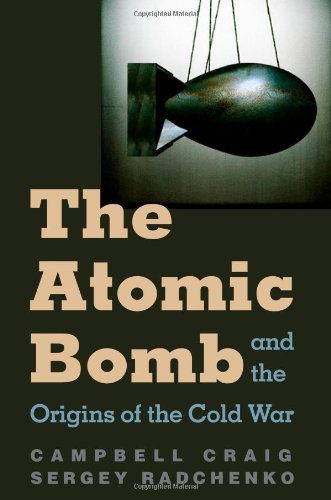
The Atomic Bomb and the Origins of the Cold War by Campbell Craig and Sergey Radchenko (2008)

by Yana Skorobogatov

Any work of history that attributes the start of the Cold War to a single factor will surely invite criticism, but Campbell Craig and Sergey Radchenko’s The Atomic Bomb and the Origins of the Cold War makes a compelling case for running that risk.

41EbBgSjeLCraig and Radchenko arguethat the specter of the atomic bomb shaped the ways in which the U.S. and U.S.S.R. designed their own and reacted to each other’s foreign policy agendas during the early years of the Cold War. The authors trace the first signs of an impending Anglo-American split with the Soviet Union to August 1943, when FDR and Winston Churchill decided to keep information about the building of an atomic bomb in Los Alamos a secret from the world, or from the Soviet Union in particular. Failure to establish a system of international control over atomic weaponry before FDR’s death further polarized American and Soviet relations during the Truman presidency, a period of haphazard atomic policy that coincided with the bombings of Hiroshima and Nagasaki. Secrecy and mistrust plagued Soviet-American relations from then on, sentiments that grew manifest in clandestine Soviet bomb construction projects and atomic espionage. News of Soviet espionage made cooperation with Stalin a matter of political suicide for Truman and left dismal chances for creating an international body to neutralize the threat of nuclear war.

Craig and Radchenko offer valuable insight into the practical concerns that plagued American and Soviet deliberations over atomic weapon development, use, and policy. Indeed, at certain points the book more closely resembles a work of diplomatic policy than diplomatic history. For instance, they outline in great detail precisely why the advent of atomic technology prevented Soviet-American cooperation from fomenting during the immediate postwar years. For cooperation to occur, both countries would have had to submit to a larger international body that would seize their atomic bombs, monitor their operations, and have the power to intervene in their internal affairs when necessary. Essentially, the U.S. and U.S.S.R. would have had to relinquish claims to their own national sovereignty and positions of power and answer to an international body in semblance of an all-powerful state. The likelihood of this happening, as Craig and Radchenko state with hints of humor, was slim to none.

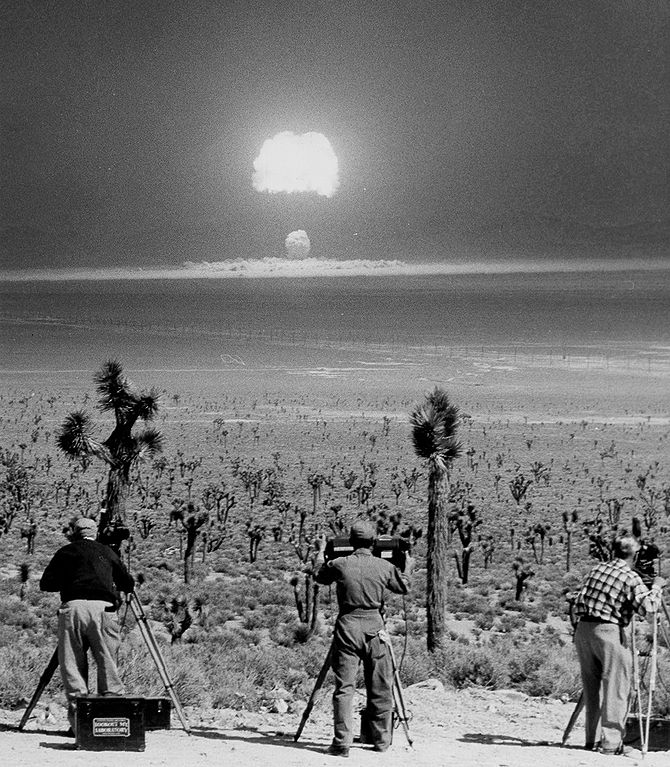
image

A nuclear test carried out at the Nevada Test Site on March 29, 1955 as part of Operation Teapot. Image via Wikimedia Commons.

One point where Craig and Radchenko’s analysis runs astray from the historical record is during their discussion of American scientists and their impact on early atomic diplomacy. The authors boldly assert that “when one is interested in assessing American policy about the bomb after 1944…one must recognize that the scientists’ actual effect on it had become inconsequential.”  Surely this is a contentious point. As the historian Matthew Evangelista notes in his survey on the role of scientists in affecting Cold War nuclear policy, U.S. and Soviet scientists met at the Conference on the Peaceful Uses of Atomic Energy in Geneva in as early as 1955. Craig’s claim, however, is made less egregious by his astute discussion of Igor Kurchatov and other Soviet scientists lobbying the Politburo for the resources to build a Soviet atomic bomb before the Americans built their own. The battle between the U.S. and U.S.S.R. for scientific prestige and innovation in the modern age resonates throughout this book, and infuses the authors’ historical intervention with a contemporary flavor that speaks to the present-day relevance of the subject.

Further reading:

Atom Days: the History of the Nuclear Age

Matthew Evangelista’s Unarmed Forces: The Transnational Movement to End the Cold War

The Atomic Bomb and the End of World War II: A Collection of Primary Sources courtesy of the National Security Archive

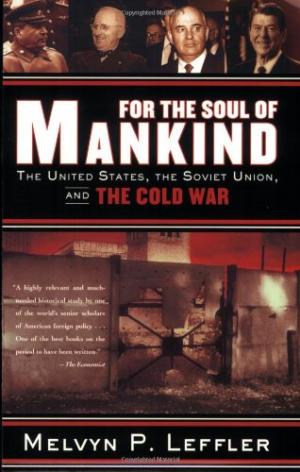
For the Soul of Mankind: The United States, the Soviet Union, and the Cold War by Melvyn P. Leffler (2008)

by Michelle Reeves

In this accessible and remarkably balanced synthesis, Melvyn Leffler, one of the most distinguished and prominent historians of American foreign relations, offers a refreshing interpretation of Cold War policymaking from the vantage points of both Washington and Moscow. imageRejecting the oft-repeated assertion that U.S. foreign policymakers were ignorant or inattentive to the realities of power in the Soviet Union and the complexities of Third World nationalism, Leffler argues that cold warriors on both sides of the iron curtain were in fact keenly aware of the liabilities inherent in the zero-sum approach to international politics.  Benefiting from access to multiple archives and a clear command of the secondary historical literature, Leffler has crafted a persuasive and thoroughly documented analysis that recasts the Cold War as not simply a political, economic, or military confrontation, but a battle “for the soul of mankind.”  In doing so, he has transcended the scholarly debate over whether economic, structural, or ideological factors were more influential in determining the course of Cold War history.
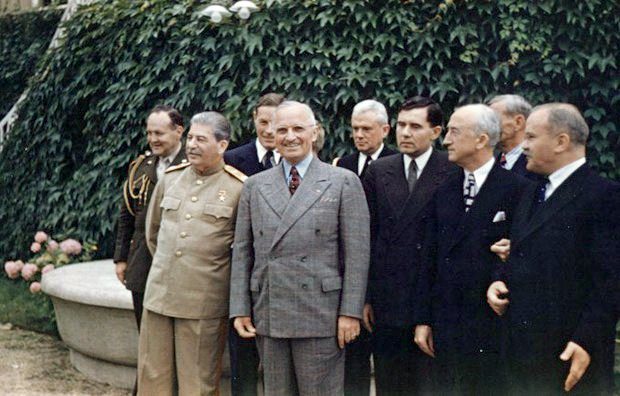
Rather than adopting a standard narrative approach, Leffler focuses on both American and Soviet political leadership during five distinct intervals of potential détente—Truman and Stalin and the origins of the Cold War; Eisenhower and Malenkov during the power struggle within the Kremlin in the wake of Stalin’s death; Khrushchev, Kennedy, and LBJ in the aftermath of the Cuban missile crisis; Carter and Brezhnev and the erosion of détente; and finally, Gorbachev, Reagan, and Bush, and the end of the Cold War.  Leffler argues that, while the decisions of policymakers were clearly shaped by perceptions of both threat and opportunity, the constraints of the international system within which they operated also severely circumscribed their freedom of action.

image

U.S. President Harry Truman and Soviet Premier Joseph Stalin alongside their advisors at the Potsdam Conference, July 18, 1945. Image via Wikimedia Commons.

This raises a conceptual problem with Leffler’s analysis, however.  Although emphasizing contingency as a major factor in the arc of history, Leffler argues that Cold War leaders were trapped within ideological prisons of their own making, suggesting perhaps that the trajectory of the Cold War was more predetermined than he allows for.  And viewing the time periods he has chosen for analysis here as moments of missed opportunity, he proceeds to prove that American and Soviet policymakers were so limited in their options that they had little choice other than to behave as they did.  If that is in fact the case, the reader is left wondering whether there truly were opportunities for peace during these critical junctures.

These criticisms should not, however, obscure the fact that Leffler has written one of the most eloquent, balanced, and extensively researched books on the Cold War.  “For the Soul of Mankind” certainly raises the bar for scholars of the Cold War, and in its nuanced complexity, elevates the scholarly debate over which factors were more salient in the development of Cold War policymaking.  Although not definitive (and what monograph on such a huge topic possibly could be?), “For the Soul of Mankind” will likely grace both undergraduate and graduate level required reading lists for years to come.


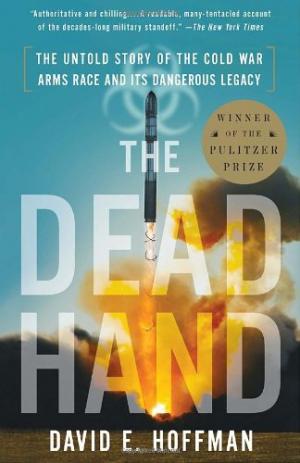
The Dead Hand: The Untold Story of the Cold War Arms Race and Its Dangerous Legacy by David E. Hoffman (2009)

by Jonathan Hunt

On September 26, 1983, satellites notified a Soviet watch station south of Moscow of inbound U.S. missiles. Stanislav Petrov, the officer on duty, had ten minutes to determine whether to launch a counterattack. Mercifully, he chose to report the incident as a false alarm. His conscious disregard for standing protocol likely saved tens of millions of lives.

The Dead Hand Cover

The Dead Hand, David Hoffman’s gripping history of the Cold War’s final years, teems with such hair-raising details. He uses eyewitness interviews and newly declassified papers to recapture the context in which Soviet Premier Mikhail Gorbachev and U.S. President Ronald Reagan tried to halt the runaway U.S.-Soviet arms race. His exposure of the dark underbelly of the Soviet military-industrial complex is especially disturbing. The book’s title comes from a computer network, “a real-world doomsday machine,” built in the 1980s to retaliate in the event the Soviet leadership was killed by a U.S. preemptive strike. Meanwhile, secret facilities in the vast Soviet hinterlands churned out vats of such lethal bacteria and viruses as anthrax, Ebola, West Nile virus, smallpox, and plague. Soviet geneticists even tried to formulate a strain of super-plague fully resistant to antibiotics.

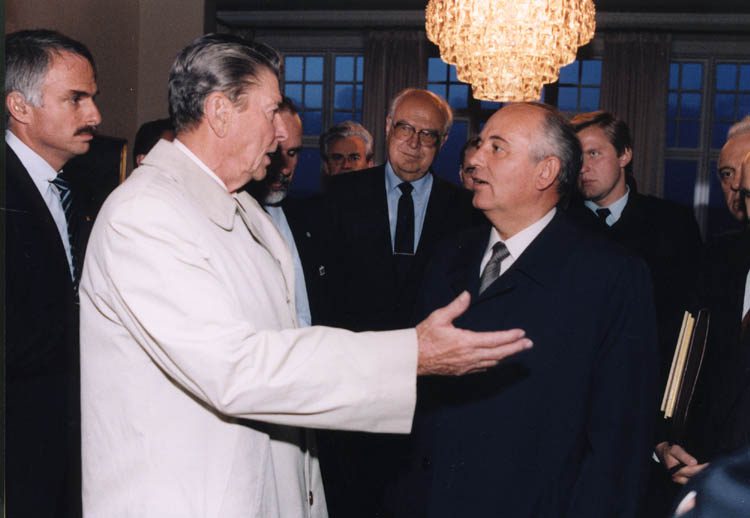
The focus of the book, however, is the evolving relationship between Gorbachev and Reagan. Despite their differences, these men shared an abhorrence of nuclear weapons. At the momentous 1986 summit in Reykjavik, Iceland, they conducted impromptu face-to-face negotiations to hammer out an agreement abolishing all nuclear weapons by 2000. Only Reagan’s commitment to building an anti-ballistic missile system blocked the agreement. Critics dismissively dubbed the Strategic Defense Initiative (SDI) “Star Wars” because it resembled science fiction more than scientific fact. They warned that even if feasible, SDI threatened to amplify the arms race. Ironically, though, Reagan’s dedication to SDI and his administration’s negotiation of a treaty eliminating all intermediate-range ballistic missiles stemmed from the same root—Reagan’s dream of ridding the world of nuclear weapons.

Ronald Reagan speaks to Mikhail Gorbachev
U.S. President Ronald Reagan and Soviet General Secretary Mikhail Gorbachev bid one another farewell at the close of the 1986 Reykjavik summit. (Source: Ronald Reagan Presidential Library)

Ultimately, Reagan and Gorbachev’s efforts to transcend the Cold War were overtaken by events in Eastern Europe. Hoffman presents the nuclear meltdown at Chernobyl as the turning point. After the environmental disaster, Gorbachev made glasnost, a push for government transparency, a cornerstone of his domestic agenda along with perestroika, the restructuring of the Soviet economic and political system. The states of Eastern Europe and the Soviet Union were too moribund, however, to cope with the rising expectations set off by Gorbachev’s reforms. By 1991, communist Europe had disintegrated. The U.S. had the foresight to help post-Soviet societies eliminate their nuclear inheritance. More than twenty years after the Berlin Wall’s fall, however, the foul inventions of Soviet germ warriors are still hidden and the U.S. and Russia still account for 95 percent of the world’s nuclear weapons. Without continued efforts at disarmament and disclosure, Hoffman suggests these genocidal weapons will remain the Cold War’s deadly legacy.

Further reading:

The Reykjavik File: Previously Secret Documents from U.S. and Soviet Archives on the 1986 Reagan-Gorbachev Summit (via the National Security Archive of George Washington University).

The Cold War International History Project

The Cold War Museum: 1980s

Great Books on Women in US History

By Megan Seaholm

As one of the students in my U.S. women’s history class put it, “Women are just like men; except that they are different.” For all that men and women have had in common these many millenia, women’s experience has often been different. Women’s History Month gives us the opportunity to talk about two new and one not so new “good reads” on the subject.

The University of Texas Press has just published the latest from the impressive authorial team, Judith McArthur and Harold Smith, faculty at the University of Houston-Victoria.  Texas Through Women’s Eyes: The Twentieth Century Experience (2010) begins with “Social Reform and Suffrage in the Progressive Era, 1900-1920,” discussing the civic reforms pursued by white and black clubwomen, labor activism, settlement houses and prostitution districts, and the state woman suffrage campaign.

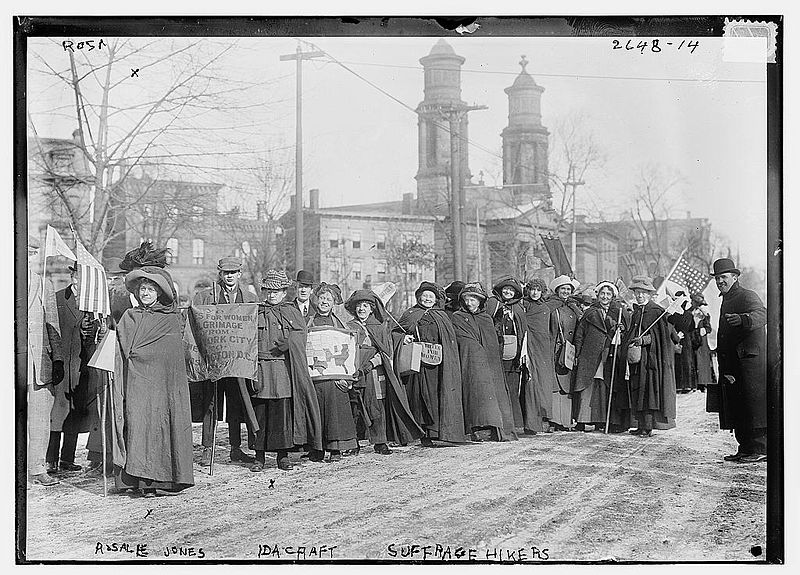
Black and white photograph by Richard Arthur Norton called Suffrage Hikers showing a line of women and men holding protest signs and flags

Texas suffragists were among the few southern suffrage associations to win partial voting rights for women before the federal amendment was passed.  These Texas women pulled a “fast one,” and you will want to read about it.

McArthur and Smith continue through the Great Depression, World War II, the Civil Rights Movement, the Women’s Rights Movement, and the backlash to same in the last decades of the twentieth century.  They make the history they reveal personal with selected documents like “Hallie Crawford Stillwell Gets a Sink and Builds a Bathroom,” “Jessie Daniel Ames Urges Women to Vote against the Ku Klux Klan,”  “Army Nurse Lucy Wilson Serves in the Pacific Theater,” “Ceil Cleveland Becomes a Teenage Bride in the Fifties,” and “Ann Richards Moves from Campaign Volunteer to County Commissioner.”

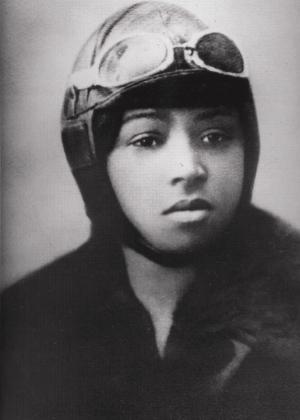
Black and white headshot of Bessie Colman, First African-American Pilot from the National Air and Space Museum

McArthur and Smith are also the coauthors of Minnie Fisher Cunningham:  A Suffragists’ Life in Politics (2005) which won the Liz Carpenter Award for Research in the History of Women from the Texas State Historical Association and the T.R. Fehrenbach Book Award from the Texas Historical Commission.

Christine Stansell, a well-regarded historian at the University of Chicago, provides a national perspective in her latest publication,The Feminist Promise: 1792 to the Present (2010).  Don’t be daunted by the title.  This is not a polemic, nor is it a weighty treatise on social theory. Rather, it is an exceptionally readable narrative of the efforts of American women to improve their social, political and legal situation.  Stansell notes the efforts of women of color and of working class women alongside the more well-known white middle-class activists.  She provides the general reader, as well as the scholar new to women’s history, with a splendid survey of women’s rights activism beginning with the days of the early republic.  Her discussion of the woman suffrage movement is particularly strong because she explains the divisions in the movement and its culminating diversity, which  led to the ratification of the Nineteenth Amendment in 1920.  From the racism of the movement’s “southern strategy” to the dramatic protests of the National Woman’s Party in front of the White House even during World War I, Stansell’s unflinching history is good reading.  Stansell barely pauses once women have won the vote.  Her story continues through the interwar years to the “second wave” of feminism in the 1960s and 1970s.

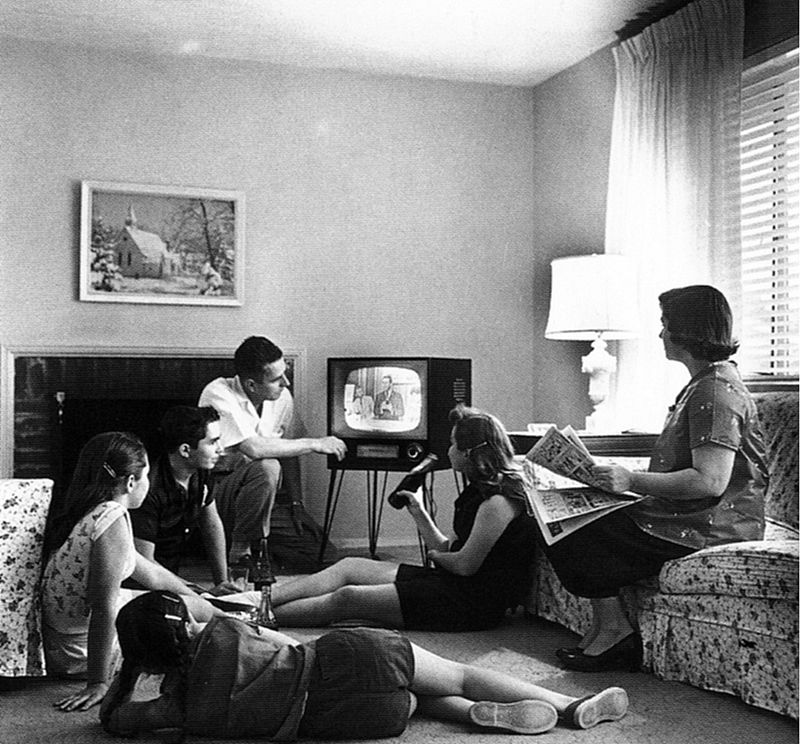
Black and white photograph by Evert F. Baumgardner from 1958 entitled by Family Watching Television

Again, she explains that the “movement” was far from monolithic in goals or tactics, but she acknowledges the accomplishments as well as the internal politics.Stansell’s subject is organized women’s activism, which like activism of all sorts, was viewed with suspicion in the early years of the Cold War, aka “the McCarthy Era.”  Fortunately, Elaine Tyler May moved into the breach with Homeward Bound:  American Families in the Cold War Era (1988).  Who knew that Cold War foreign policy and its home front counterpart had such important implications for family life?  May’s first chapter “Containment at Home: Cold War, Warm Hearth,” shows the ways that the Cold War foreign policy of “containing Communism” was reflected in family life.

The Fifties have been canonized as the nostalgia decade of domestic tranquility before the tumultuous Sixties.  Professor May confounds, or, at least complicates, this happy myth.  The frenzied public celebration of family life introduced new stresses into families and to couples, as social norms regarding dating, birth control, marital sexuality, consumerism, and divorce were in flux.  A history of family life, a history of women’s experience, Elaine Tyler May’s Homeward Bound is a young classic.


Photo credits

Suffrage Hikers, By Richard Arthur Norton, via Wikimedia Commons
Bessie Colman, First African-American Pilot, National Air and Space Museum, via Wikimedia Commons
Family Watching Television, 1958, by Evert F. Baumgardner, via Wikimedia Commons 


The views and opinions expressed in this article or video are those of the individual author(s) or presenter(s) and do not necessarily reflect the policy or views of the editors at Not Even Past, the UT Department of History, the University of Texas at Austin, or the UT System Board of Regents. Not Even Past is an online public history magazine rather than a peer-reviewed academic journal. While we make efforts to ensure that factual information in articles was obtained from reliable sources, Not Even Past is not responsible for any errors or omissions.

Rebel With a Cause: Johnny Tremain (1957)

By Robert Olwell

Johnny Tremain Cover (via Wikipedia)

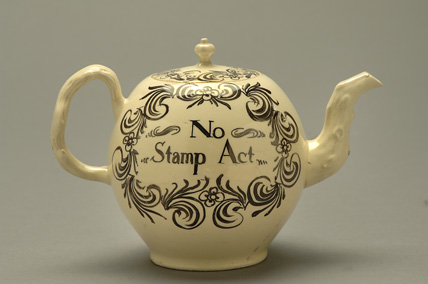
As a historian of early America, my subject predates the invention of film or video, voice or music recording, or even photography.  When I watch my modernist colleagues deliver multi-media lectures  – including film clips, snatches of popular music or speeches, and photos –  I feel a twinge of envy. The closest 18th-century Americans ever got to a multi-media presentation was to paint the words: “No Stamp Act!” on the side of a porcelain teapot.image A few years ago, after discussing the origins and consequences of the Boston tea party, including reading contemporary newspaper accounts, letters, and cartoons, I treated my students (and I will admit, myself) to the Boston tea party scene from Disney’s 1957 film Johnny Tremain, based on the 1943 novel by Esther Forbes.   The depiction of the “tea party” as an oddly orderly act of vandalism is probably accurate, but one cannot escape the impression of watching 1950s Americans playing at being 18th-century revolutionaries, and not even bothering to wash the Brylcreem out of their hair.  Of course, as I told my students (in self-defense) before showing them the clip, any historical film is a document of the age that produced it rather than of the age it depicts. So what can Johnny Tremain tell us about America in the 1950s?

At the start of the film, Johnny Tremain, a young orphan and silversmith’s apprentice, is portrayed as petulant, conceited, and disdainful of authority.  In one scene that anyone who has ever seen the movie will remember, Johnny breaks the rules by working on the Sabbath and gets his come-uppance when he accidentally puts his hand into a puddle of molten silver.  Audiences in the 1950s would likely have recognized Johnny as a colonial version of an emerging cultural phenomenon: the “teenager.” Newspapers, radio, and the new medium of television were full of stories of teenage “rebellion,” which, sociologists warned, was creating a new social problem called “juvenile delinquency.” In the spring of 1954, a Congressional sub-committee held televised hearings on the causes of juvenile delinquency that competed for viewers’ attention with the simultaneous, and subsequently far more famous, Army-McCarthy hearings.  The troubled and violent teen became a common character in popular films. Perhaps the best known were Marlon Brando in “The Wild One” (1953), and James Dean in “Rebel without a Cause” (1955).

Theatrical Release Poster, 1955 (via Wikipedia)

Hal Stalmaster, who plays Johnny Tremain, is no Brando or Dean in terms of acting skills. Similarly, Johnny’s angst is depicted far more crudely; with a crippled hand he literally cannot find a place for himself in society.

Fortunately, the American Revolution arrives to give Johnny a healthy outlet for his destructive (and patricidal) impulses.  At the tea party, Johnny gleefully smashes tea chests alongside approving and participating adults (Paul Revere, Sam Adams, and Joseph Warren).  Even an on-looking British admiral admires the tea partiers’ politeness and principles. The only disapproving authority figure is, significantly, also Johnny’s only blood relation, his uncle, played with panache by Sebastian Cabot as an effete popinjay who is eventually revealed to be an anti-revolutionary loyalist and thus, in a phrase that was loaded with meaning in the 1950s, “un-American.”  The film’s depiction of the American Revolution as an Oedipal conflict resembles (in a far less disturbing and simplified fashion) the version provided by Nathaniel Hawthorne in his 1831 short story: “My Kinsman, Major Molineaux.”

After the tea party, Johnny joins the “Sons of Liberty” and becomes active in the revolutionary underground.  Eventually, he finds himself on Lexington green when the first shots in the war are fired, and takes part in the running battle to drive the redcoats back to Boston.  The film ends that night with Johnny in the camp of the patriot army gathering outside of Boston, a warrior in the cause of American (and his own) freedom.  But unlike Forbes’s novel, in which the outbreak of the war (and the death of a friend) forces Johnny to grow up and accept the responsibilities of adulthood, the film’s Johnny makes no such psychological breakthrough. He is the same callow, smart-alecky teen at the film’s end as at the beginning.  War (and revolution) do not change him.  In the film’s depiction of combat, it is disconcerting to watch Johnny cackle with laughter as he ambushes and kills the king’s soldiers (as if fulfilling a long repressed desire).  The film also shies away from espousing any overt political ideology.   James Otis, the only character in the film who tries to articulate a larger meaning to the struggle, is described and portrayed as mentally unbalanced.

The film’s reluctance to ground the revolution on either abstract ideals or nitty-gritty class struggle closely reflects the views of American historians writing in the 1950s, who argued that, by crossing the ocean, the colonists had left the ideological conflicts of the old world behind them and instead shared in a broad liberal consensus.   In 1955, Louis Hartz argued, in The Liberal Tradition in America, that colonial American society was an egalitarian world of small property holders.  Lacking either an aristocracy or a peasantry, concepts such as class (and class struggle) were meaningless.  Not that they thought about politics much. Lockean, possessive individualists by nature rather than persuasion, early Americans were blessed with a “charming innocence of mind.” For obvious reasons, these historians tended to focus their attention on the northern colonies, where slavery was of relatively small consequence.

In retrospect, one can readily see how the hopes and fears of larger 1950s society shaped this so-called “consensus school” of early American history, both in terms of  its celebration of middle class values and bourgeois conformity, and its dread of radicalism.  Forbes’s novel, written in 1943, reflected the concerns of the depression era and was far more focused on issues of class and poverty than was the film. After a brief theater run – it premiered on July 4, of course – Johnny Tremain was broadcast on Disney’s weekly television program in 1958 and was rerun many times thereafter.  Like me, the vast majority of Americans probably first saw Johnny burn his hand in the comfort of their living rooms. For this reason, Johnny Tremain perhaps should be compared not to contemporary movies, but to 1950s television. More than Brando or Dean, the fictional teen who Stalmaster’s Johnny Tremain most closely resembles is Eddie Haskell, played by Ken Osmond in the T.V. series Leave it to Beaver, who made his first appearance in 1957.  Although a wiseass and troublemaker when adults are absent, Eddie’s sycophancy in their presence indicated his desire to conform.  Likewise, with the singular exception of his loyalist uncle, Johnny is deferential to all the adults in the film.  Even when he takes up arms against the establishment, it is a reflexive, almost thoughtless, act rather than the result of a deliberate decision to turn the world upside down or from a radical hope to build a new heaven and a new earth. Johnny Tremain’s version of the revolution is an orderly one, in which rebellious teens fall in line behind their patriotic elders, Brylcreem tubes in hand.

For more on history writing in the 1950s, see
Peter Novick, That Noble Dream: The “Objectivity Question” and the American Historical Profession
On the invention of juvenile delinquency:
James Gilbert, A Cycle of Outrage: America’s Reaction to the Juvenile Delinquent in the 1950s
On the Boston Tea Party, take a look at:
Alfred Young, The Shoemaker and the Tea Party: Memory and the American Revolution

Latin America’s Cold War by Hal Brands (2010)

by Michelle Reeves

In this new book, covering the entire period of the Cold War in Latin America, Hal Brands restores agency and initiative to Latin American actors, in the process demolishing many of the platitudes that have governed much of the U.S. foreign policy literature.image  Based on prodigious research in a dizzying array of U.S., Latin American, and even East German archives, Brands’s work advances a trenchant interpretation that cannot be ignored. He argues that the origins of the chaos and instability that ravaged Latin America during the Cold War owed less to U.S. interventionism than to the prevailing confluence of local, regional, and global dynamics.

Though the burgeoning Cold War atmosphere did little to discourage the power grabs of authoritarian leaders, their actions were determined less by U.S. prodding and more by elite backlash against the extension of middle- and working-class power that had occurred earlier in the 1940s. The democratic opening of the World War II period gave way to the consolidation of dictatorship during the late 1940s and early 1950s. The Cuban Revolution dramatically altered the landscape of Latin American politics, and here as well, Brands challenges the conventional wisdom concerning the Cuban-Soviet alliance. Castro’s turn toward the Soviets was driven by ideological and political considerations and occurred well before the disintegration in U.S.-Cuban relations. The real story of the 1960s is not, as most historians would have it, the extent of outside interference in Latin America, but rather the insurmountable difficulties that foreign interventionist powers confronted in attempting to expand their influence throughout the region. Brands locates the source of the intense conflicts of the 1970s in the widening ideological gulf between proponents of National Security Doctrine, who sought to eliminate all shadings of leftism, and advocates of liberation theology, which in its most extreme form embraced Marxism as a tool of social justice. The right-wing extremism of the 1970s was a backlash against the guerrilla violence and leftist radicalism of the 1960s.

The revolution in Nicaragua, far from being exemplary of hemispheric trends, in fact owed its success to four distinct though interrelated factors that combined to render the situation in that country unique. Not only was the Nicaraguan system deteriorating from the late 1960s, but the guerrillas had learned enough from the travails of their predecessors to earn substantial support from among the agrarian population. Moreover, the insurgents enjoyed significant foreign backing, not only from Moscow and Havana, but from other Latin American nations as well. Finally, the Carter administration, by means of a confused and incoherent foreign policy, effectively weakened or destroyed the traditional levers of U.S. influence in Nicaragua. The period of revolutionary ferment in 1980s Central America, when viewed through the lens of foreign intervention, reveals the meddling of several players; external intervention, writes Brands, “was not a one-sided affair.”

The wave of democratization that swept the region in the 1980s was rooted in many causes but had much to do with the relationship between dictators and the radical left. In Central America, the strength of the guerrilla insurgencies forced a measure of liberalization, while in South America the destruction of the extreme left deprived the military regimes of their legitimacy. The debt crises of the 1980s, however, were the most determinate factor in democratization, as they provided the pretext for prying open the economies of Latin America to neoliberal reforms. In the final analysis, the course of the Cold War in Latin America was shaped not only by the zero-sum struggle between Washington and Moscow for ideological and strategic dominance in the global south, but by conflicts over internal political dynamics and power structures, the extent – and more importantly, the limits – of U.S. influence, and the emergence of the Third World as both a political bloc and a rhetorical device. Brands has made an impressive and valuable contribution to our understanding of the Cold War in Latin America, and while his interpretation may spark controversy in certain academic circles, this reviewer fervently hopes that he will succeed in driving the debate forward, rather than prompting a rehash of hackneyed claims about the primary responsibility of the United States for Latin America’s problems.

« Previous Page
Next Page »

Recent Posts

  • The Radical Spanish Empire Roundtable – Introduction
  • All Eyes on the Petition: Reflections on The Radical Spanish Empire
  • Forgery, Invention, and the History of Skepticism in The Radical Spanish Empire
  • Iberian Subaltern Political Philosophies and The Radical Spanish Empire
  • Lawfare and the Legal Construction of Race in The Radical Spanish Empire
NOT EVEN PAST is produced by

The Department of History

The University of Texas at Austin

We are supported by the College of Liberal Arts
And our Readers

Donate
Contact

All content © 2010-present NOT EVEN PAST and the authors, unless otherwise noted

Sign up to receive our MONTHLY NEWSLETTER

  • New
  • Features
  • Reviews
  • Texas
  • Teaching
  • Digital
  • Watch & Listen
  • Authors
  • About