• New
  • Features
  • Reviews
  • Texas
  • Teaching
  • Digital
  • Watch & Listen
  • Authors
  • About

The past is never dead. It's not even past

Not Even Past

Vietnam between the United States and Yugoslavia

By Deirdre Smith

A specter is haunting Europe (also the United States and, really, much of the globe)—the specter of a new Cold War. In recent years columnists have been invoking the memory of the global ideological conflict that governed much of the violence and geopolitics of the twentieth-century.[i] The reason for the comparisons is the eerie familiarity of the escalating conflict between Putin’s Russia and the United States and European Union. Tensions surrounding the annexation of Crimea, protests and military conflict in Ukraine, increases in sanctions against Russia, and divided support in the Syrian Civil War and refugee crisis have many people claiming redux.

On the cultural front, movies like Bridge of Spies and The Man From U.N.C.L.E. reflect a related desire to look back to the past for lessons about the present. As a student of the history of art in former Yugoslavia, I went to the archives held at the LBJ Presidential Library on the University of Texas at Austin campus following a similar impulse. I was looking for clues about the relationship between the United States and Yugoslavia during the critical years of the Lyndon Baines Johnson administration and how they reflected the larger divides between nations that are so frequently conjured today in the news.
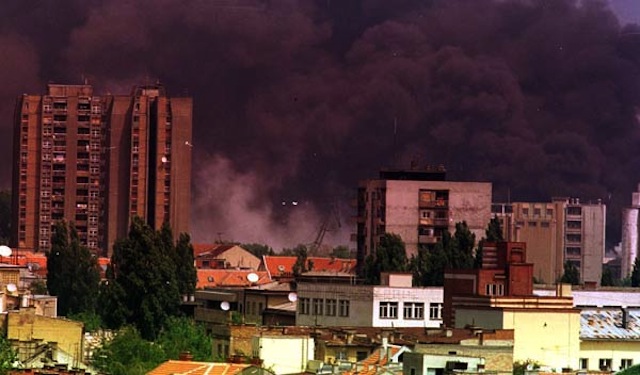
Smoke in Novi Sad, Serbia after NATO bombardment in 1999, via Wikipedia.

Smoke in Novi Sad, Serbia after NATO bombardment in 1999, via Wikipedia.

When many Americans think about the history of United States relations with Yugoslavia, the Yugoslav Wars and the bombings in Belgrade in the 1990s likely come to mind. However, the two countries had long been ambivalent allies. As Yugoslavia’s President, Josip Broz Tito, had cut ties with the Soviet Union in 1948, he and his country were identified as useful in U.S. strategies to create divisions between communist nations.[ii] The United States provided military aid to Tito throughout the administrations of Truman and Eisenhower, hoping to keep the Yugoslav leader oriented toward positive relations with the West.
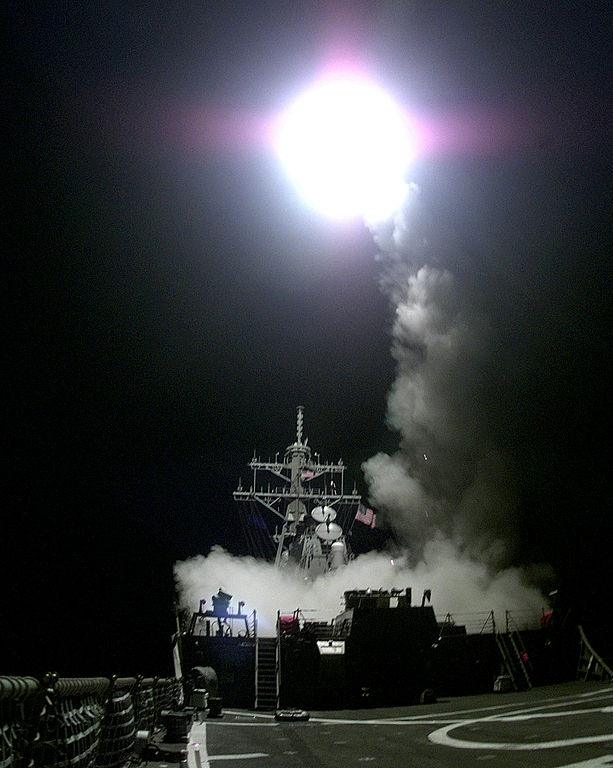
A Tomahawk cruise missile launches from the aft missile deck of the USS Gonzalez (DDG 66) headed for a target in the Federal Republic of Yugoslavia on March 31, 1999. Via Wikipedia.

A Tomahawk cruise missile launches from the aft missile deck of the USS Gonzalez (DDG 66) headed for a target in the Federal Republic of Yugoslavia on March 31, 1999. Via Wikipedia.

The LBJ archives at UT hold numerous documents that give a first-hand impression of the nature and texture of relations between the United States and Yugoslavia as it proceeded through the 1960s. Ambassadors Eric Kocher and C. Burke Elbrick were stationed in Belgrade and both sent frequent telegrams to the Department of State that have been declassified only within the past fifteen years.
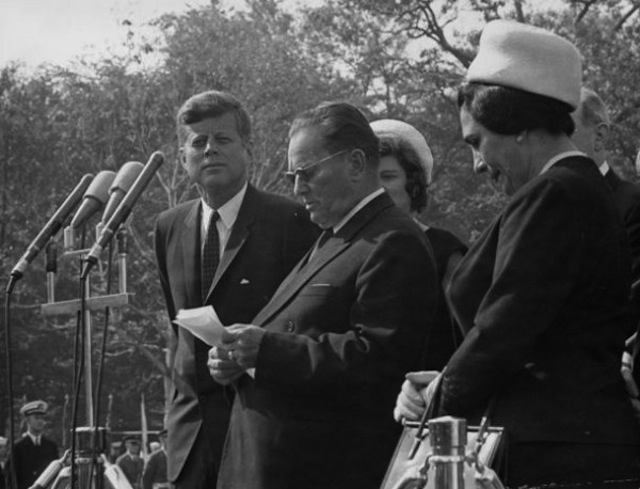
John F. Kennedy and Josip Broz Tito at the White House in 1963. Via the Boston Globe.

John F. Kennedy and Josip Broz Tito at the White House in 1963. Via the Boston Globe.

One of the most fascinating things I found in reading through these materials were traces of the growing divide between the United States and Yugoslavia following the assassination of John F. Kennedy, often in the smallest details. A cable from December 1963 summarizes a meeting held with President Tito in which Eric Kocher assured the Yugoslav leader that friendship would continue between the two countries after Kennedy’s death. Tito, who had met personally with Kennedy not long prior, apparently voiced some foreboding skepticism on the subject of Johnson. He also pressured the U.S. to be more attentive to the needs of South Americans, and inquired about the motivations and identity of the Kennedy assassin.[iii] The document suggests the intimacy between Tito and the United States at that point in time. Tito felt moved to express condolences and show interest in the case of Kennedy. He also took the same opportunity to discuss things that he wanted from the United States. Kocher mentions that all of these heady topics were covered in a span of only forty-five minutes.
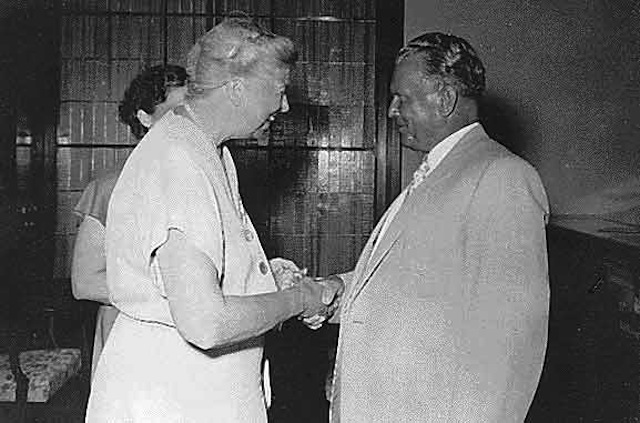
Josip Broz Tito greeting former American first lady Eleanor Roosevelt during her July 1953 visit to the Brijuni islands, PR Croatia, FPR Yugoslavia. Via Wikipedia.

Josip Broz Tito greeting former American first lady Eleanor Roosevelt during her July 1953 visit to the Brijuni islands, PR Croatia, FPR Yugoslavia. Via Wikipedia.

In May 1964, President Johnson announced intentions to improve relations with Eastern European countries in terms of trade, travel and aid. Interest and activity around the United States embassies in Eastern European countries increased at this time. The Johnson administration attempted a détente with Moscow by becoming friendlier with Eastern Bloc countries at the same time that it amped up its commitments in Vietnam, creating a conflict that undermined the success of the former operation.[iv] Documents in the LBJ archives clearly convey a mounting tension in relations with Yugoslavia, which often manifested in events of daily life and personal interaction. Johnson’s more sweeping efforts at détente meant a diminished status for Yugoslavia as a key communist ally. In turn, Yugoslavia grew more open in its critiques of U.S. foreign policy.

On May 31, 1965, a telegrammed report from Eric Kocher alerted the State Department to signs of dissatisfaction with the United States appearing in the Yugoslav press, “Within the last year we have been under constant attack for our ‘misdeeds’ in the Congo, the UN, and especially in Vietnam and the Dominican Republic.”[v] Kocher’s scare quotes around the word misdeeds speak volumes about United States diplomatic attitudes. When reading in archives, being attentive to something as minute as a choice in punctuation and tone can offer tremendous insight. In this case, the special marking of misdeeds seems to reflect the same imperialistic attitude that the United States was being accused of by Yugoslav journalists. In June 1965, another cable summarized a meeting with Tito in which he made his loathing for the war in Vietnam clear. Tito told former ambassador George Kennan that U.S.-Yugoslavian relations would continue to suffer over their disagreements about the war. The document reads, “Tito said if U.S. took more relaxed posture toward world events things would work out to benefit of U.S. in long run.”[vi] If only it could be so simple.
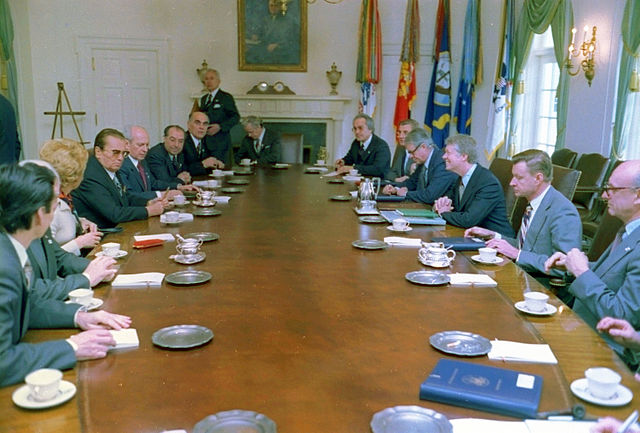
US-Yugoslav summit, 1978. Via Wikipedia.

US-Yugoslav summit, 1978. Via Wikipedia.

These and other telegrams offer insight into the increasingly turbulent relationship between the United States and Yugoslavia in the 1960s under Johnson. Although files related to Yugoslavia make up a relatively small portion of what can be read at the LBJ Library, they reveal the constant and delicate activity of balancing contradictory initiatives and maintaining diplomatic relationships on the ground.

bugburnt

You may also like our monthly feature article on the War in Vietnam Revisited.

bugburnt

[i] See Dmitri Trenin, “Welcome to Cold War II: This is what it will look like,” Foreign Policy 3 March 2014.

[ii] For more on the relationship between the U.S. and Yugoslavia during these administrations see Lorraine M. Lees, Keeping Tito Afloat: The United States, Yugoslavia, and the Cold War (University Park, PA: Pennsylvania State University Press, 1997).

[iii] NATIONAL SECURITY FILE: Cable, Belgrade 3996, 12/6/63, Box 2, Country File, Yugoslavia, National Security File, LBJ Library.

[iv] See Jonathan Colman, The Foreign Policy of Lyndon B. Johnson: The United States and the World, 1963-1969 (Edinburgh: University of Edinburgh Press, 2010), 116-118.

[v] NATIONAL SECURITY FILE: Cable, Belgrade, 5/31/65 #12, Box 1, Country File, Yugoslavia, National Security File, LBJ Library.

[vi] NATIONAL SECURITY FILE: Cable, Belgrade, 6/3/65 #11, Box 1, Country File, Yugoslavia, National Security File, LBJ Library.
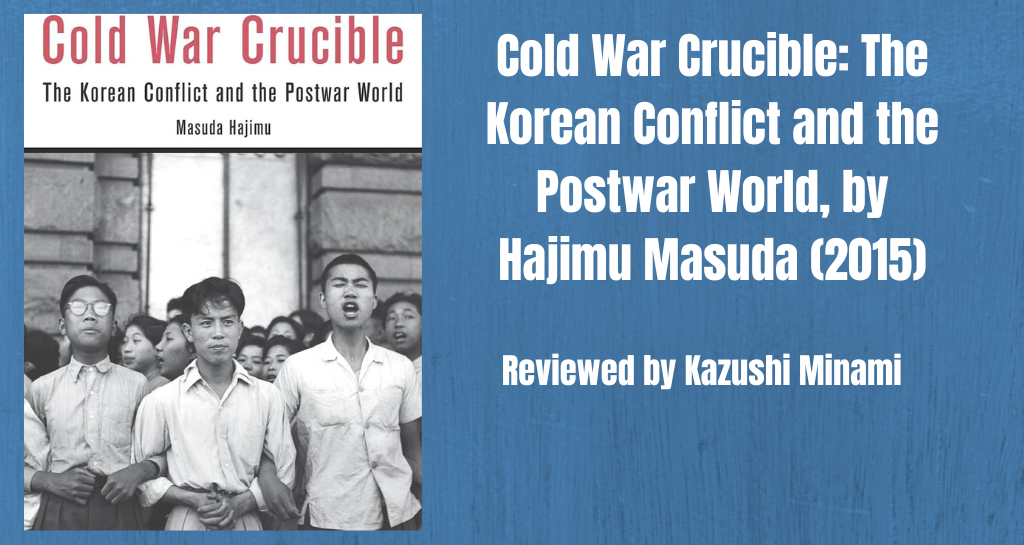
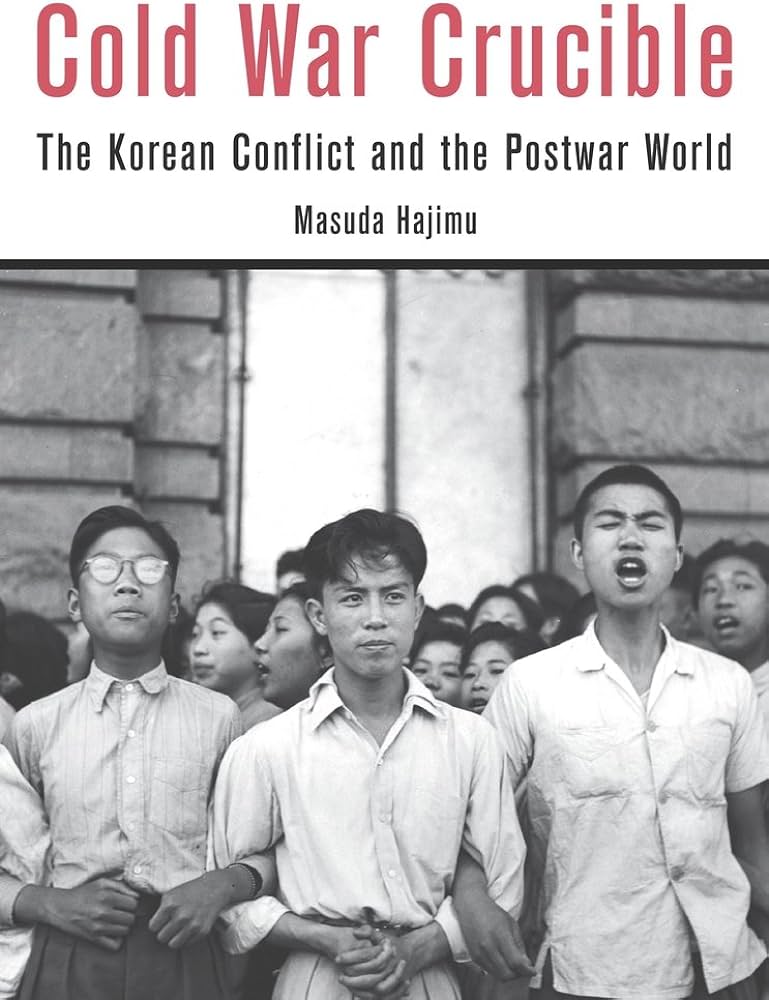
Cold War Crucible: The Korean Conflict and the Postwar World, by Hajimu Masuda (2015)

Few topics in history have produced a larger literature than the origins of the Cold War. Since its onset, historians, rightists or leftists, have hotly debated whether the United States or the Soviet Union initiated the mutual antagonism, culminating in the Korean War. After decades of controversy, the scholarly tensions have now died down, though the issue is far from settled, as most Cold War historians moved on to a myriad of other issues. One may, therefore, well ask: Do we need yet another book about the making of the Cold War? Hajimu Masuda says yes. Contrary to the dominant notion of the Cold War as geopolitical and ideological struggle between the capitalist and communist states, Cold War Crucible depicts it as a social construct that local peoples consciously or unconsciously created from the bottom up. For Masuda, the Cold War was a popular fantasy, not an objective reality.

Masuda begins by explaining how Cold War perceptions took shape in the United States, China, and Japan before the Korean War. After WWII, American labor unions, women, and Black people openly called for more rights; Chinese students with vivid memories of WWII opposed U.S. reconstruction of Japan; Japanese workers and students demanded liberal reforms. These social movements, though not caused by communist conspiracies, met a growing backlash from conservatives in each country, who adopted Cold War language, such as “un-American,” “Commies,” and “Reds,” to denounce liberals.

Cover of Red Channels, a pamphlet-style book issued by the journal Counterattack in 1950. Via Wikipedia.

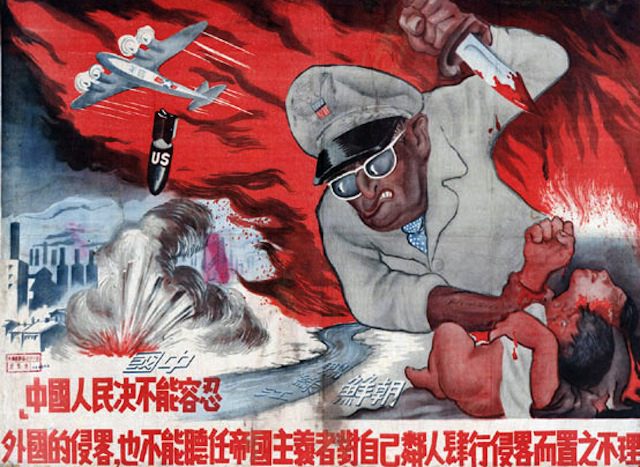
He goes on to analyze how popular discourse distinguishing “us” from “them” during the Korean War consolidated the Cold War realities in the United States and China. Despite deep uncertainty within Harry Truman’s administration about crossing the 38th parallel on the Korean Peninsula, public enthusiasm and Republican pressure for victory against communists emboldened American policymakers. Likewise, despite ambivalence within the Communist Party toward the Korean War, Chairman Mao Zedong decided to send the People’s Volunteer Army because of popular outcry that connected the war against U.S. imperialists to the domestic struggle against landlords and bourgeoisies. Public support for the war, fueled by widespread fear of WWIII, translated local particularities into a monolithic reality of the Cold War.

Chinese Propaganda poster during the Korean War

Worldwide purges of liberals transformed such fears into political realities. In the United States, conservative offensives against African Americans, homosexuals, labor leaders, and immigrants, as well as gender struggle against working women, gave birth to McCarthyism. Similarly, Britain’s crackdown on labor unions, Japan’s Red Purge, Taiwan’s White Terror, and the Philippine’s suppression of “un-Filipino” activists, though all reflecting social divides at the local level, reinforced the Cold War illusion. Masuda concludes that, “the reality of the Cold War materialized in the crucible of the postwar era… leading to the rise of a particular mode of Cold War fantasy that ‘fit’ well with social needs of populations around the world.”

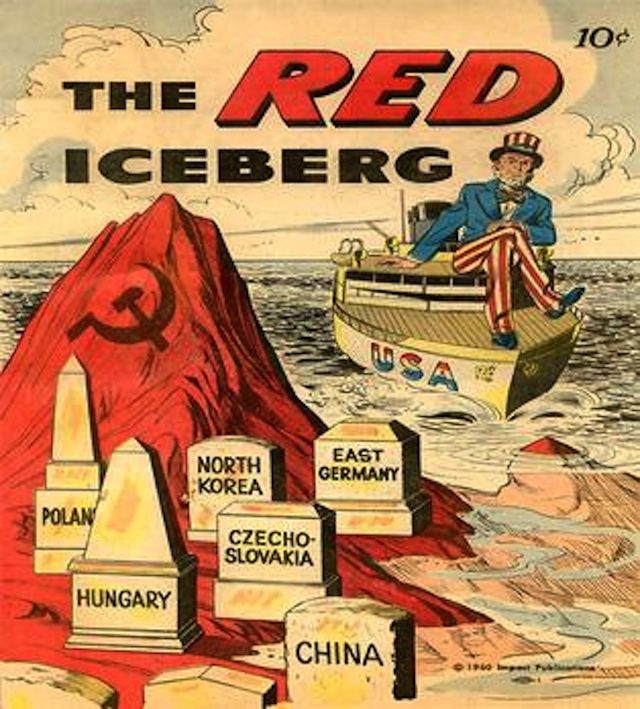
McCarthy_Red_Scare

So, was the Cold War simply a fantasy? Of course not. Masuda does not intend to ignore the actual geopolitical and military conflicts in Europe, Asia, and elsewhere. Instead, he argues that the Cold War was a product of complex interactions between international and local leaders and the populace. Although the Korean War was no doubt a military reality for U.S. and Chinese policymakers, ordinary peoples interpreted it through local lenses, which turned the foreign war into a factor in domestic social conflicts. Readers, however, may wonder if Masuda slightly overemphasizes the local agency, as he often cites emotional letters by ordinary citizens, while paying relatively little attention to strategic concerns of top-level policymakers.

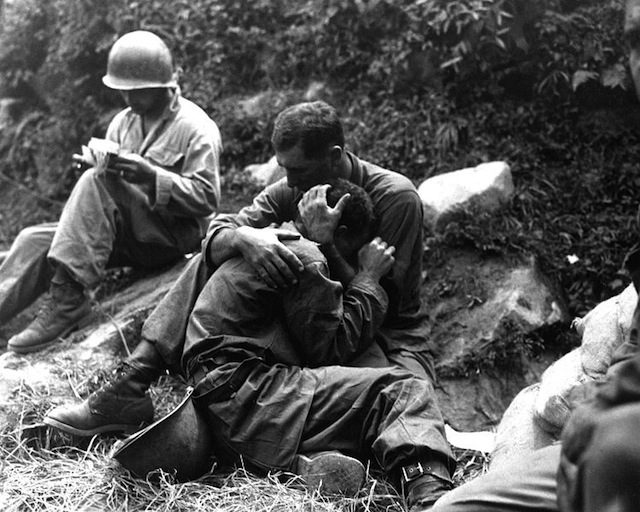
Reality of Korean War: A G.I. comforts a grieving infantryman. Via Wikipedia

Such a caveat aside, Cold War Crucible is a welcome addition to the rich historiography on the origins of the Cold War, as well as the burgeoning literature on the role of popular perception in international relations. Using primary sources from sixty-four archives in ten countries and regions, Masuda offers a truly international history. Although it is clearly too much to ask for more language sources, his research begs further study on Europe and the Soviet Union to examine whether the same reality-making mechanism was in place in the European front of the Cold War, where geopolitical and ideological confrontation was more intense than in Asia.
Hajimu Masuda, Cold War Crucible: The Korean Conflict and the Postwar World (Harvard University Press. 2015)

After WWII: A Soviet View of U.S. Intentions

By Mark Atwood Lawrence

In February 1946, George F. Kennan, a senior U.S. diplomat based in Moscow, sent the State Department his famous “long telegram,” an attempt to explain Soviet behavior at a time of quickly worsening relations between the superpowers, as their wartime alliance unraveled. Among the first readers of Kennan’s missive were Soviet leaders, who obtained the top-secret document through intelligence channels. On orders from the Moscow, the Soviet ambassador in Washington, Nikolai Vasilovich Novikov, quickly set to work writing a comparable cable analyzing U.S. motives and behavior. It remains unclear whether the telegram, dispatched on September 27, 1946, reflects Novikov’s sense of what his superiors wished to read or his true understanding of U.S. policy. In any case, the document is a striking expression of mounting Soviet suspicions of Moscow’s erstwhile ally. Excerpts of Kennan’s statement were posted last week on NEP. Excerpt’s of Novikov’s message are posted below. Both come from our featured book this month, America in the World: A History in Documents from the War with Spain to the War on Terror.
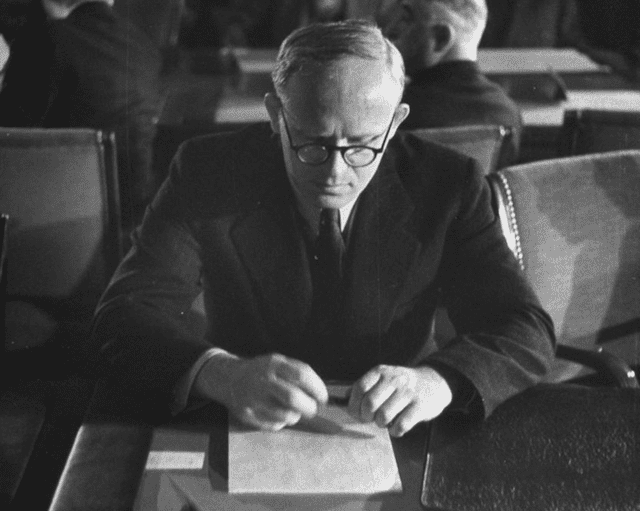
Nikolai Novikov, 1946. Via Wikimedia Commons

Nikolai Novikov, 1946. Via Wikimedia Commons

Reflecting the imperialistic tendency of American monopoly capital, U.S. foreign policy has been characterized in the postwar period by a desire for world domination. This is the real meaning of repeated statements by President Truman and other representatives of American ruling circles that the US has a right to world leadership. All the forces of American diplomacy, the Army, Navy, and Air Force, industry, and science have been placed at the service of this policy. With this objective in mind broad plans for expansion have been developed, to be realized both diplomatically and through the creation of a system of naval and air bases far from the US, an arms race, and the creation of newer and newer weapons….

This situation does not completely match the expectations of those reactionary circles who hoped during the Second World War that they would be able to remain apart from the main battles in Europe and Asia for a long time. Their expectation was that the United States of America, if it was not able to completely avoid participation in the war, would enter it only at the last moment when it might be able to influence its outcome without great effort, completely securing its own interests. It was intended thereby that the main rivals of the US would be crushed in this war or weakened to a great degree and that due to this circumstance the US would be the most powerful factor in deciding the main issues of the postwar world. These expectations also were based on the assumption quite widespread in the US during the first period of the war that the Soviet Union, which had been attacked by German fascism in June 1941, would be weakened as a result of the war or even completely destroyed.

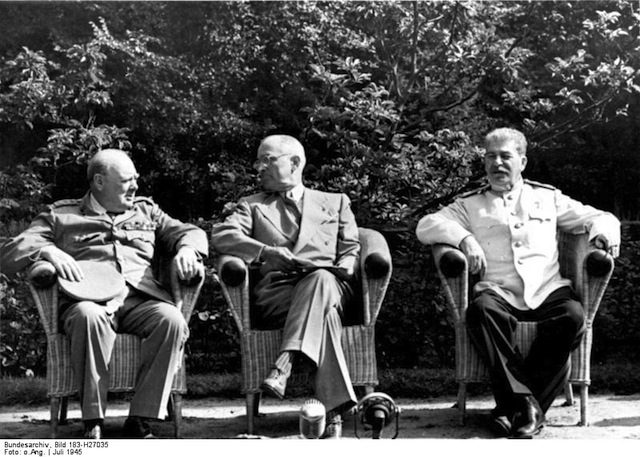
Churchill, Truman, and Stalin at the Potsdam Conference, 1945. Via Wikimedia Commons.

Churchill, Truman, and Stalin at the Potsdam Conference, 1945. Via Wikimedia Commons.

Reality has not borne out all the expectations of the American imperialists….

Europe came out of the war with a thoroughly shattered economy, and the economic devastation which resulted during the war cannot soon be repaired. All the countries of Europe and Asia are feeling an enormous need for consumer goods, industrial and transportation equipment, etc. Such a situation opens up a vista for American monopoly capital of enormous deliveries of goods and the importation of capital to these countries, which would allow it [American monopoly capital] to be introduced into their economies.

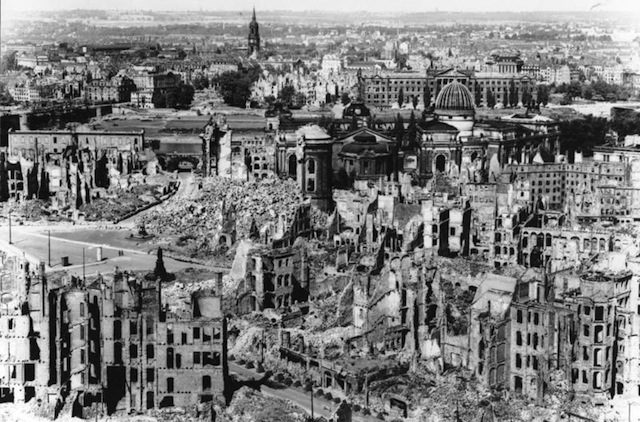
Destruction of Dresden, 1945. Via Wikimedia Commons

Destruction of Dresden, 1945. Via Wikimedia Commons

The realization of this opportunity would mean a serious strengthening of the economic position of the US throughout the entire world and would be one of the stages in the path toward establishing American world supremacy….

On the other hand, the expectations of those American circles have not been justified which were based on the Soviet Union being destroyed during the war or coming out of it so weakened that it was forced to bow to the US for economic aid. In this event it could have dictated such conditions which would provide the US with an opportunity to carry out its expansion in Europe and Asia without hindrance from the USSR.

In reality, in spite of all the economic difficulties of the postwar period associated with the enormous damage caused by the war and the German fascist occupation the Soviet Union continues to remain economically independent from the outside world and is restoring its economy by its own means….

The increase in peacetime military potential and the organization of a large number of naval and air bases both in the US and beyond its borders are clear indicators of the US desire to establish world domination.

For the first time in the country’s history in the summer of 1946 Congress adopted a law to form a peacetime army not of volunteers but on the basis of universal military conscription…. The colossal growth of expenditures for the Army and Navy, comprising $13 billion in the 1946-1947 budget (about 40% of the entire budget of $36 billion) and is more than 10 times the corresponding expenditures in the 1938 budget, when it did not even reach $1 billion.

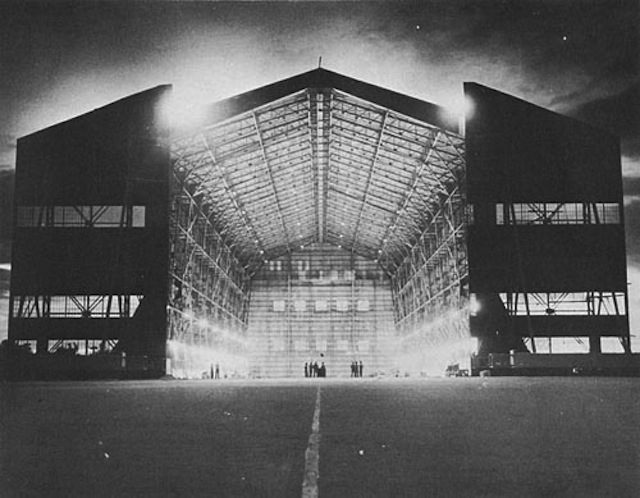
LTA Steel Hangar, Built by the 80th Seabees, at Carlson Field, Trinidad. Via WIkimedia Commons.

LTA Steel Hangar, Built by the 80th Seabees in 1914, at Carlson Field, Trinidad. Via WIkimedia Commons.

These enormous budget sums are being spent along with the maintenance of a large Army, Navy, and Air Force and also the creation of a vast system of naval and air bases in the Atlantic and Pacific Oceans. According to available official plans, in the coming years 228 bases, support bases, and radio stations are to be built in the Atlantic Ocean and 258 in the Pacific Ocean. The majority of these bases and support bases are located outside the United States….

The current policy of the American government with respect to the USSR is also directed at limiting or displacing Soviet influence from neighboring countries. While implementing it the US is trying to take steps at various international conferences or directly in these very same countries which, on the one hand, manifest themselves in the support of reactionary forces in former enemy or allied countries bordering the USSR with the object of creating obstacles to the processes of democratizing these countries but, on the other, in providing positions for the penetration of American capital into their economies….

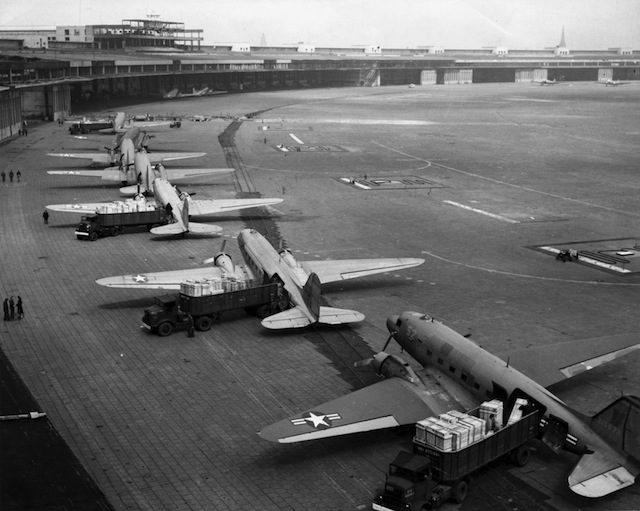
U.S. Navy Douglas R4D and U.S. Air Force C-47 aircraft unload at Tempelhof Airport during the Berlin Airlift. 1948-49

U.S. Navy Douglas R4D and U.S. Air Force C-47 aircraft unload at Tempelhof Airport during the Berlin Airlift. 1948-49

The numerous statements by American government, political, and military leaders about the Soviet Union and its foreign policy in an exceptionally hostile spirit are quite typical of the current attitude of American ruling circles toward the USSR…. The primary goal of this anti-Soviet campaign of American “public opinion” consists of exerting political pressure on the Soviet Union and forcing it to make concessions. Another, no less important goal of the campaign is a desire to create an atmosphere of a fear of war among the broad masses who are tired of war, which would make it easier for the government to take steps to maintain the great military potential in the US.

bugburnt


You may also like:

Mark A. Lawrence, The Global United States

Introduction to Mark A. Lawrence’s America in the World

Mark A. Lawrence introduces George Kennan’s “Long Telegram”

Mark A. Lawrence on Not Even Past: “The Lessons of History,” “The Prisoner of Events in Vietnam,” “CIA Study [on the consequences of war in Vietnam]”

Jonathan C. Brown, “A Rare Phone Call from one President to Another”


bugburnt

After WWII: George Kennan’s “Long Telegram”

by Mark A. Lawrence

During the Second World War, the United States and the Soviet Union formed a powerful partnership to defeat Nazi Germany. Their alliance did not, however, extend to a shared vision of the postwar world order. While U.S. leaders envisioned an open global economic system that would assure American access to markets and resources around the world, leaders in Moscow wanted to clamp down on parts of Europe and Asia in order to prevent the reemergence of hostile nations along the Soviet Union’s borders. In the closing phases of the war and especially in the first tumultuous months following the end of the fighting, U.S. and Soviet leaders increasingly clashed over a range of issues, especially the status of eastern Germany, Poland, and other parts of eastern Europe. The prospect of a new and dangerous geopolitical rivalry so soon after ending the fascist threat caused anger and anxiety among American leaders, who struggled to understand Soviet motives.

The Soviet Union after WWII (via Wikimedia Commons)

The Soviet Union after WWII (via Wikimedia Commons)


In February 1946, officials in Washington asked the U.S. embassy in Moscow why the Soviet government was failing to cooperate with American plans for the postwar international order. On the receiving end was George Kennan, a career foreign service officer who had risen to be the second-ranking American official in Moscow. Kennan replied with an extraordinary 5,300-word cable later dubbed the “long telegram.” Kennan drew on his long experience in the Soviet Union and Eastern Europe to lay out a distinctive view of Russian history and culture. You can read excerpts of his message below:

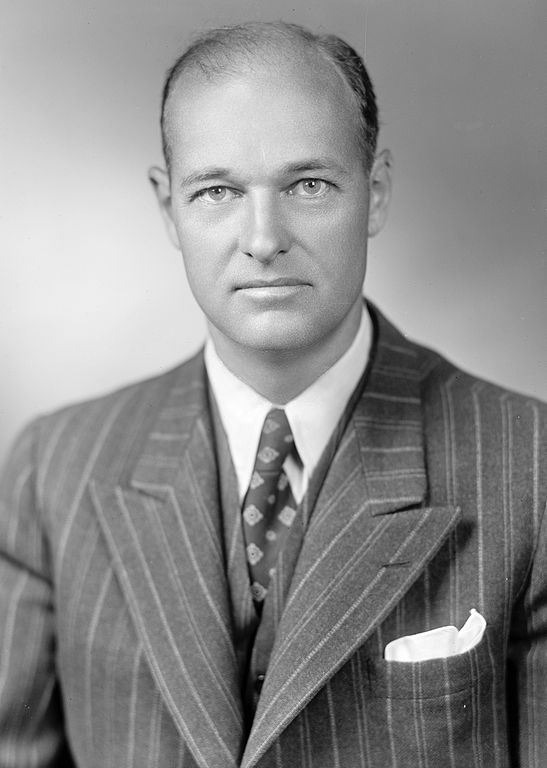
George F. Kennan, 1947

George F. Kennan, 1947

At bottom of Kremlin’s neurotic view of world affairs is traditional and instinctive Russian sense of insecurity. Originally, this was insecurity of a peaceful agricultural people trying to live on vast exposed plain in neighborhood of fierce nomadic peoples. To this was added, as Russia came into contact with economically advanced West, fear of more competent, more powerful, more highly organized societies in that area. But this latter type of insecurity was one which afflicted rather Russian rulers than Russian people; for Russian rulers have invariably sensed that their rule was relatively archaic in form, fragile and artificial in its psychological foundation, unable to stand comparison or contact with political systems of Western countries. For this reason they have always feared foreign penetration, feared direct contact between Western world and their own, feared what would happen if Russians learned truth about world without or if foreigners learned truth about world within. And they have learned to seek security only in patient but deadly struggle for total destruction of rival power, never in compacts and compromises with it.

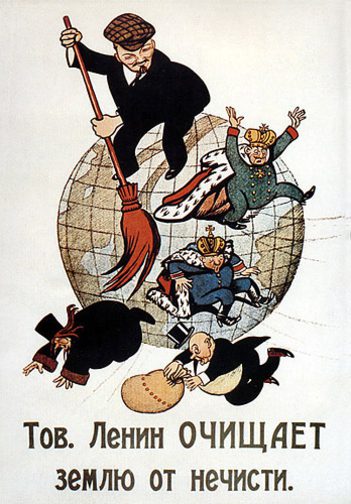
Soviet poster "Comrade Lenin cleans the Earth from scum", November 1920

Soviet poster “Comrade Lenin cleans the Earth from scum”, November 1920 (Image via Wikimedia Commons)

It was no coincidence that Marxism, which had smoldered ineffectively for half a century in Western Europe, caught hold and blazed for first time in Russia. Only in this land which had never known a friendly neighbor or indeed any tolerant equilibrium of separate powers, either internal or international, could a doctrine thrive which viewed economic conflicts of society as insoluble by peaceful means. After establishment of Bolshevist regime, Marxist dogma, rendered even more truculent and intolerant by Lenin’s interpretation, became a perfect vehicle for sense of insecurity with which Bolsheviks, even more than previous Russian rulers, were afflicted. In this dogma, with its basic altruism of purpose, they found justification for their instinctive fear of outside world, for the dictatorship without which they did not know how to rule, for cruelties they did not dare not to inflict, for sacrifice they felt bound to demand. In the name of Marxism they sacrificed every single ethical value in their methods and tactics. Today they cannot dispense with it. It is fig leaf of their moral and intellectual respectability….

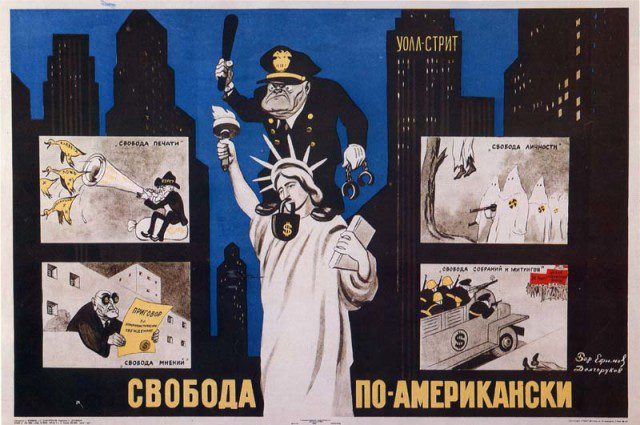
Soviet poster titled "American freedom", 1950

Soviet poster titled “American freedom”, 1950 (Via Wikimedia Commons)

In summary, we have here a political force committed fanatically to the belief that with US there can be no permanent modus vivendi, that it is desirable and necessary that the internal harmony of our society be disrupted, our traditional way of life be destroyed, the international authority of our state be broken, if Soviet power is to be secure. This political force has complete power of disposition over energies of one of world’s greatest peoples and resources of world’s richest national territory, and is borne along by deep and powerful currents of Russian nationalism. In addition, it has an elaborate and far flung apparatus for exertion of its influence in other countries, an apparatus of amazing flexibility and versatility, managed by people whose experience and skill in underground methods are presumably without parallel in history. Finally, it is seemingly inaccessible to considerations of reality in its basic reactions. For it, the vast fund of objective fact about human society is not, as with us, the measure against which outlook is constantly being tested and re-formed, but a grab bag from which individual items are selected arbitrarily and tendenciously to bolster an outlook already preconceived. This is admittedly not a pleasant picture. Problem of how to cope with this force [is] undoubtedly greatest task our diplomacy has ever faced and probably greatest it will ever have to face…. I cannot attempt to suggest all answers here. But I would like to record my conviction that problem is within our power to solve – and that without recourse to any general military conflict. And in support of this conviction there are certain observations of a more encouraging nature I should like to make:

(1) Soviet power, unlike that of Hitlerite Germany, is neither schematic nor adventurist. It does not work by fixed plans. It does not take unnecessary risks. Impervious to logic of reason, and it is highly sensitive to logic of force. For this reason it can easily withdraw – and usually does when strong resistance is encountered at any point. Thus, if the adversary has sufficient force and makes clear his readiness to use it, he rarely has to do so. If situations are properly handled there need be no prestige-engaging showdowns.

(2) Gauged against western world as a whole, Soviets are still by far the weaker force. Thus, their success will really depend on degree of cohesion, firmness and vigor which western world can muster. And this is factor which it is within our power to influence.

(3) Success of Soviet system, as form of internal power, is not yet finally proven. It has yet to be demonstrated that it can survive supreme test of successive transfer of power from one individual or group to another…. We here are convinced that never since termination of civil war have mass of Russian people been emotionally farther removed from doctrines of Communist Party than they are today. In Russia, party has now become a great and – for the moment – highly successful apparatus of dictatorial administration, but it has ceased to be a source of emotional inspiration. Thus, internal soundness and permanence of movement need not yet be regarded as assured.

(4) All Soviet propaganda beyond Soviet security sphere is basically negative and destructive. It should therefore be relatively easy to combat it by any intelligent and really constructive program.

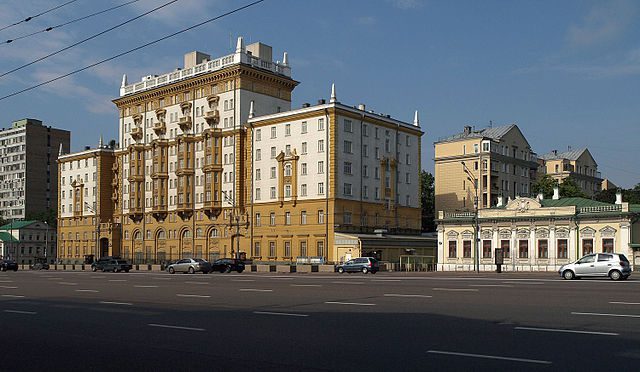
Image of US Embassy in Moscow (Via Wikimedia Commons)

Image of US Embassy in Moscow (Via Wikimedia Commons)


bugburnt

You may also like:

Mark A. Lawrence, The Global United States

Introduction to Mark A. Lawrence’s America in the World

Mark A. Lawrence on Not Even Past: “The Lessons of History,” “The Prisoner of Events in Vietnam,” “CIA Study [on the consequences of war in Vietnam]”

Jonathan C. Brown, “A Rare Phone Call from one President to Another”


bugburnt

The Cuban Missile Crisis

by Priya Ramamoorthy, Kavya Ramamoorthy, Smrithi Mahadevan and Maanasa Nathan
Westwood High School
Senior Division
Group Website

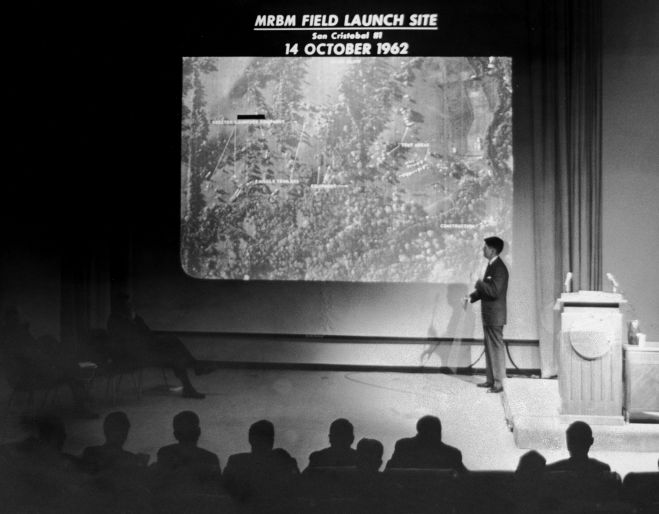
Over thirteen tense days in October, 1962, nuclear conflict nearly broke out between the United States and the Soviet Union. These global superpowers were engaged in a bitter standoff over the appearance of Soviet nuclear missiles on the newly communist island of Cuba, just 90 miles south of Florida. Fortunately, after days of diplomacy and negotiation, tensions cooled and neither side deployed their nuclear arsenal. According to Stacey Bredhoff, Curator of the Kennedy Library, those terrifying two weeks, later dubbed The Cuban Missile Crisis, “was certainly the most dangerous episode in human history.”

A map of the Cuban missile positions (Getty 50th Anniversary Gallery)

A map of the Cuban missile positions (Getty 50th Anniversary Gallery)

Westwood High School students Priya Ramamoorthy, Kavya Ramamoorthy, Smrithi Mahadevan and Maanasa Nathan won first place in the Senior Group Website category at Texas History Day with their digital report on this infamous moment in world history. The site explores the political context of the crisis, the individuals involved, key events and its aftermath. You can explore their award winning site, “The Cuban Missile Crisis” here.

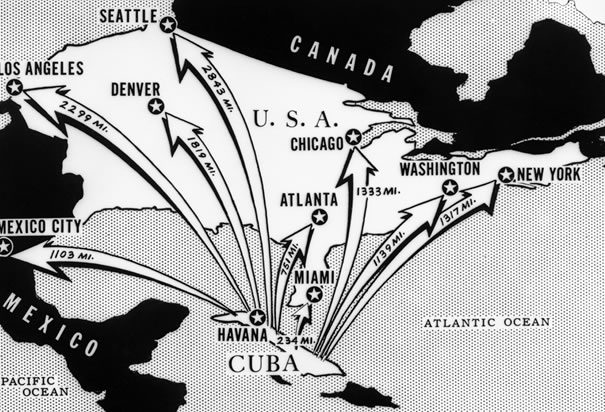
"Danger off our shores: This newspaper map shows the distances from Cuba to various cities on the North American continent." - (Bettmann/CORBIS, TIME Magazine)

“Danger off our shores: This newspaper map shows the distances from Cuba to various cities on the North American continent.” – (Bettmann/CORBIS, TIME Magazine)

The group concludes that it was a seminal moment in not only American history but global history:

The crucible of the Cuban Missile Crisis captured the attention of President Kennedy and Premier Khrushchev and forced them to prioritize world stability over national rights. This culminated in an increased understanding of each political adversary’s perspective. The crisis proved that Mutually Assured Destruction (MAD) is an unreliable deterrent. Although fifty years have passed, its lessons remain relevant. As more nations develop nuclear weapons with each passing year, the risk of a devastating exchange increases. To prevent nuclear war diplomacy must be prioritized at all times. While exercising their sovereign rights, countries must consider the bigger picture of global stability.

Omens of Adversity: Tragedy, Time, Memory, Justice, by David Scott (2014)

by Lauren Hammond

On October 19, 1983, members of Grenada’s People’s Revolutionary Army assassinated Prime Minister Maurice Bishop of Grenada and seven of his associates, triggering the sequence of events that led to the sudden end of the Grenada Revolution. With the prime minister dead, the hastily established ruling military council unsuccessfully attempted to restore order to stave off the military invasion being planned in Washington, D.C. But just days after Bishop’s death, President Ronald Reagan launched Operation 618jmfYqmYLUrgent Fury to save American lives and ostensibly restore democracy to the island of Grenada. Having established their authority, U.S. military officials rounded up the leadership of Grenada’s socialist party, the New Jewel Movement, and the army high command, whom the Grenadian people and the U.S. blamed for the murders. Later known as the Grenada 17, these men and women would be tried, convicted, and sentenced to hang for the deaths of Bishop and his compatriots, despite a lack of credible evidence linking them directly to the assassinations.

In Omens of Adversity, Caribbean anthropologist David Scott wrestles with the connection between time and tragedy, engendered by what the Grenadian people experienced as the catastrophic collapse of the popular movement as they lived on in the post-socialist moment. In the wake of the assassinations and the U.S. intervention, Grenadians who came of age during the revolution and watched its ruin found themselves “stranded” in the present, bereft of hope for the future, and grieved they had to be rescued by the United States, whose power the New Jewel Movement had set out to challenge. Adding insult to injury, the U.S. played a role in the disappearance of the bodies of Bishop and the others, robbing the families of the deceased and the entire revolutionary generation of a chance to mourn the prime minister and the future free of Western hegemony he had embodied. In assessing the socialist experiment in Grenada and its end, Scott argues that although the Grenada Revolution is often forgotten, it is nevertheless a key event in the world history of revolutions because it signaled an end to the possibility of post-colonial socialist revolution and the ascendancy of Western neo-liberalism.

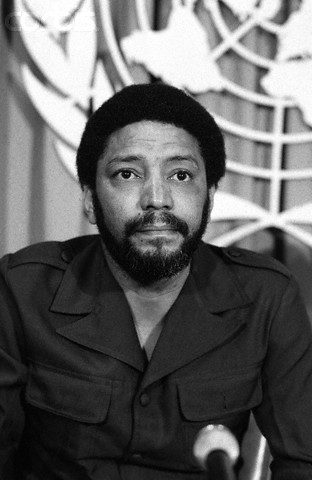
Prime Minister Maurice Bishop of Grenada (Encyclopedia of Puerto Rico)

Prime Minister Maurice Bishop of Grenada (Encyclopedia of Puerto Rico)

Traditionally, scholars of liberal political change see trials such as that of the Grenada 17 as markers that signify the transition from the illegitimate old regime to the new transparent liberal order. However, despite the apparent triumph of the Western tradition, the transition to liberal democracy has had its flaws. Using the trial of the Grenada 17 and its aftermath, Scott raises questions about truth, justice, and democratic transitions. The investigation and trial were full of irregularities, including the torture of the defendants. Scott emphasizes that instead of an earnest attempt to secure information and justice, the goal of the 1986 prosecution of the Grenada 17 was to criminalize the NJM leadership and their political ideology. He describes the proceedings as a late Cold War “show trial” crafted to demonstrate what happened to those in America’s “backyard” who sought revolutionary socialist or communist self-determination. Instead of indicting the 17, Scott reframes them as “leftovers from a former future stranded in the present.”

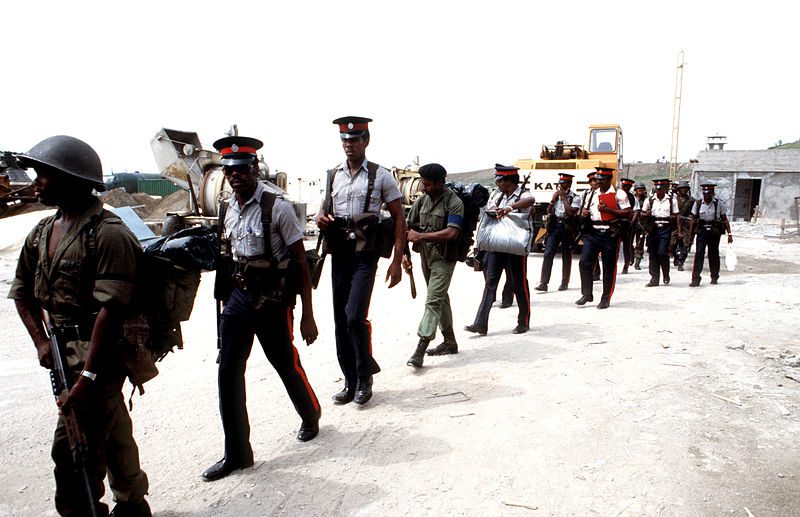
 Members of the Eastern Caribbean Defense Force participate in Operation Urgent Fury (Wikimedia Commons)

Members of the Eastern Caribbean Defense Force participate in Operation Urgent Fury (Wikimedia Commons)

Although the jury found the Grenada 17 guilty, the anomalies in the investigation and trial meant that the Grenadian people still had questions about what happened and why. Public interest was aroused when a group of high school boys began investigating the disappearance of the victims’ bodies. A truth and reconciliation commission was constituted and began to research the events of October 19 in late 2001. However, these efforts were tainted, too. The report recapitulated the standard narrative of the events, complete with anti-communist biases that demonized the NJM – unsurprising in light of the commissioners’ refusal to meet with the Grenada 17. However, Scott’s reading of the report’s appendices containing statements from NJM leadership shows that a different story could have been told. Unfortunately, it seems unlikely that the people of Grenada will ever know the full truth about what happened to Maurice Bishop and the others. After all, in the neoliberal era, the socialist past can only be a criminal one.

bugburnt


You may also like Lauren Hammond’s reviews of Tropical Zion: General Trujillo, FDR, and the Jews of Sosúa and The Dictator’s Seduction: Politics and the Popular Imagination in the Era of Trujillo

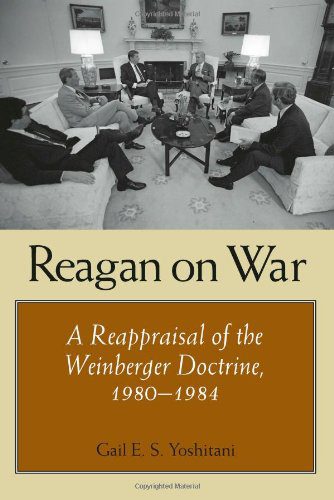
Reagan on War: A Reappraisal of the Weinberger Doctrine, 1980-1984, by Gail E. S. Yoshitani (2012)

by Simon Miles

Few presidents have left as complicated and politically charged a legacy as Ronald Reagan. Hailed as a pioneer of conservatism by some and reviled as an enemy of the middle class and a supporter of dictators by others, Reagan’s legacy has largely been shaped by debate between partisan pundits. Gradually, however, a limited body of more moderate of “Reagan revisionism” has begun to emerge. Historians and political scientists, writing with the benefit of temporal distance from events and increased access to sources have begun to produce more nuanced accounts of the 51uDzi5S1DLReagan administration – especially in the realm of foreign policy – that acknowledge the administration’s shortcomings and its successes.

Gail Yoshitani’s Reagan on War is one such book. Yoshitani, a professor of history at the US Military Academy at West Point, offers an in-depth look at the Reagan administration’s development of a strategic doctrine for the use of force based on extensive archival research. She demonstrates how a doctrine for the use of force emerged, but also how the Reagan administration, and the president in particular, chose to either adhere to or eschew these doctrines depending on Reagan’s goals Throughout Reagan on War, Yoshitani asks two important questions. First, what role did Reagan personally play in shaping his administration’s foreign policy? Second, to what extent did Reagan’s advisors, neoconservative and otherwise, influence the administration’s foreign policy?

Yoshitani’s account of US foreign policy during the early 1980s places Reagan at the center of events. As president, Yoshitani argues, Reagan set the course for US Cold War strategy. His perception of American resources as infinite and his determination to rebuild not only US military and economic strength, but also the country’s morale, guided policy during the 1980s. Reagan firmly believed that the solution to America’s “Vietnam syndrome” was strong presidential leadership (which he felt had been particularly lacking during the preceding Carter administration) and “peace through strength.” Yoshitani is clear, however, that Reagan’s advisors were responsible for developing policies to achieve these goals.

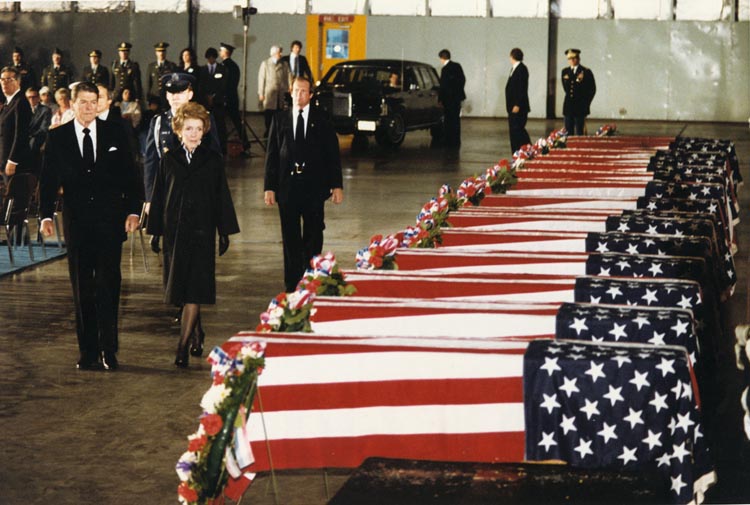
President Ronald Reagan and First Lady Nancy Reagan view the caskets of the 17 US victims of the 1983 attack against the US Embassy in Beirut (The Reagan Library)

President Ronald Reagan and First Lady Nancy Reagan view the caskets of the 17 US victims of the 1983 attack against the US Embassy in Beirut (The Reagan Library)

The key question faced by the Reagan administration in Yoshitani’s analysis was not only how to deal with the Soviet Union, but also when the United States should use military force overseas in the aftermath of Vietnam. Reagan’s advisors had differing policy prescriptions for this dilemma and Yoshitani examines the various doctrines proposed by Director of Central Intelligence William Casey, the Pentagon (in particular Chairman of the Joint Chiefs of Staff General John Vessey), Secretary of State George Shultz, and finally Secretary of Defense Caspar Weinberger. Casey’s approach to the use of force centered on proxy forces, usually the militaries of right-wing governments in Latin America, to repel communism. Proxy forces would bear the brunt of combat and create a permissive context for any future American military involvement, if desired, by cultivating a local perceived ally that the United States could support. Vessey and his Pentagon colleagues favored direct and decisive US engagement with limited, realistic goals, such as the removal of Palestinian Liberation Organization fighters from Lebanon. Shultz saw the military as a tool to be deployed in support of diplomacy. Deploying troops was a clear sign of resolve, he argued, but should be done sparingly to ensure that the Soviet Union would not feel compelled to become involved to counterbalance American involvement around the world. Weinberger, synthesizing these approaches, outlined six litmus tests for US policy-makers to govern the use of force: necessity to US or allied national interest; wholehearted commitment; defined political and military objectives; correlation between objectives and forces committed; public support; and the absence of a non-military alternative. Though Reagan did not always adhere to the Weinberger Doctrine, Yoshitani argues, it formed the heuristic framework in which the administration considered the use of force.

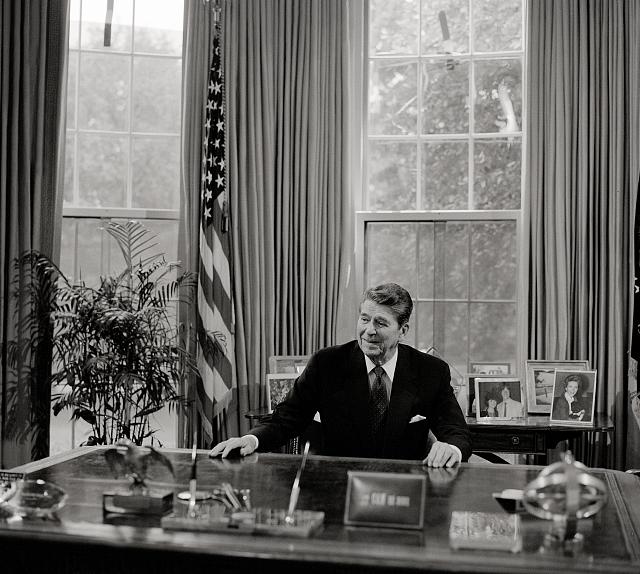
President Ronald Reagan at his desk in the Oval Office (Library of Congress)

President Ronald Reagan at his desk in the Oval Office (Library of Congress)

Yoshitani makes a valuable contribution to the historiography of Reagan’s foreign policy by exploring Reagan as an individual, his advisors, and their approach to policy-making and the Cold War. The 1980s are already fertile ground for historians, with ample material accessible at the Ronald Reagan Presidential Library, the National Archives and Records Administration, and in smaller repositories such as the Hoover Institution Archives. This valuable and insightful book will be of considerable interest to students of the Cold War.

More on the presidency of Ronald Reagan:

Joseph Parrott’s review of The Rebellion of Ronald Reagan: A History of the End of the Cold War

Dolph Briscoe’s review of The Age of Reagan: A History

Jonathan Hunt looks back on the 1986 Reykjavík Summit between Reagan and Mikhail Gorbachev


Persuasion, Propaganda, and Radio Free Europe: The New Archive (No. 9)

By Charley S. Binkow

How does a nation fight a war of ideas?  When the battlefield is popular opinion, how does a state arm itself?  In 1949, the United States found its answer.  Their weapon: the airwaves.  The CIA launched Radio Free Europe in 1949 with the hopes of encouraging Eastern Europeans to defect from the Soviet bloc and weaken their countries from the inside.  The Digital Radio Free Europe and Radio Liberty archive gives us a declassified, thorough, and incredibly interesting view of the radio’s peak years between 1949 and 1972.

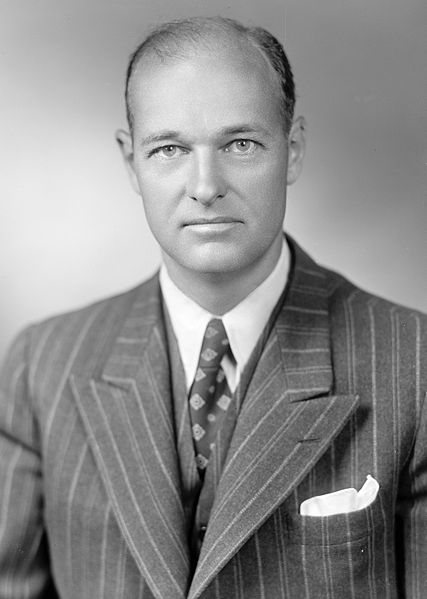
Kennan

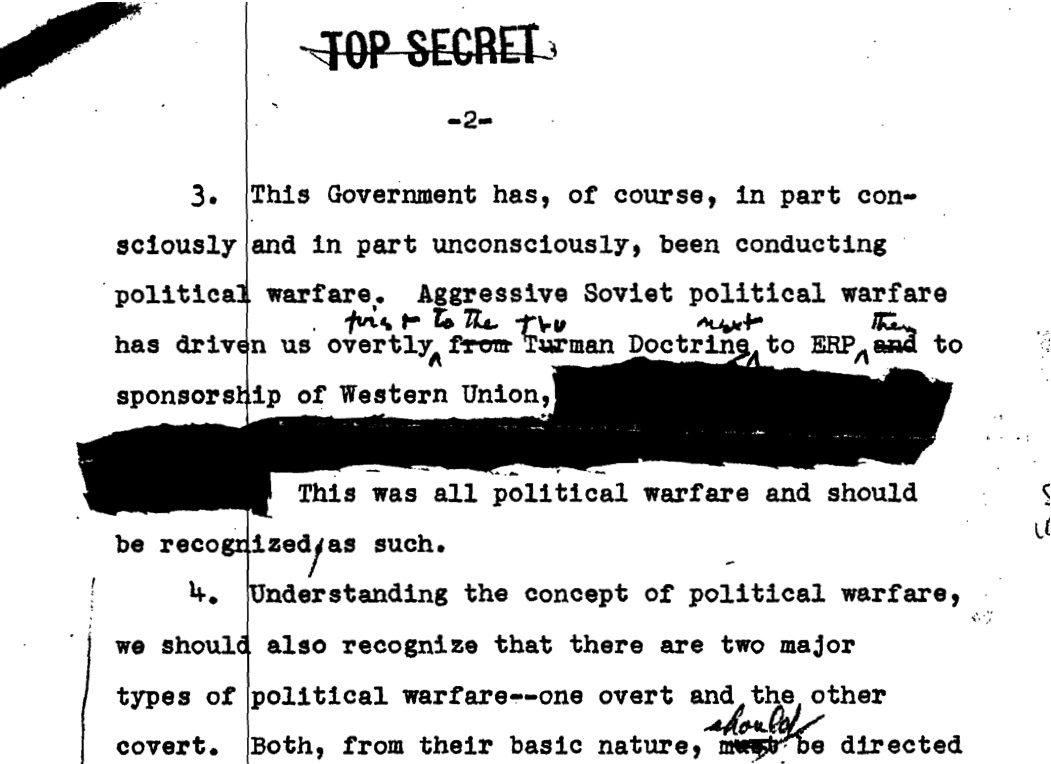
“George F. Kennan on Organizing Political Warfare,” April 30, 1948 (Wilson Center Digital Archive)

The RFE/RL collection of documents is among the many fascinating collections posted by the Wilson Center on its website: “Digital Archive: International History Declassified.”  It is a treasure trove of information. Memorandums, reports, and letters, all declassified by the Central Intelligence Agency, giving us an unseen history of the station.  You can see the beginnings of the program, when George Kennan (one of the architects of containment policy) stressed the need to inspire “continuing popular resistance within the countries of the Soviet World,” to its founding mission statement to “engage in efforts by radio, press and other means to keep alive among their fellow citizens in Europe the ideals of individual and national freedom.” The documents give us insight into uncertainties about the program as well.  Several statesmen had doubts, like Richard Arens, who claimed RFE was harboring Marxists and broadcasting socialist propaganda.  West Germany, where RFE was based, also felt a lack of control over the station and a sense of being used by the U.S.

George F. Kennan, 1947 (Wikimedia Commons)

George F. Kennan, 1947 (Wikimedia Commons)

My favorite part of the collection is its extensive collection of papers concerning the Hungarian Revolution of 1956.  RFE played an important role in the uprising, at least from the Hungarians’ point of view.  However, after the uprising failed, and public outcry blamed the United States and RFE for its inaction, the CIA tried its best to back peddle and “down play” the situation as much as possible.  Especially fascinating are the policy reviews after the Hungarian revolution (notably its concerns with Poland and Czechoslovakia).

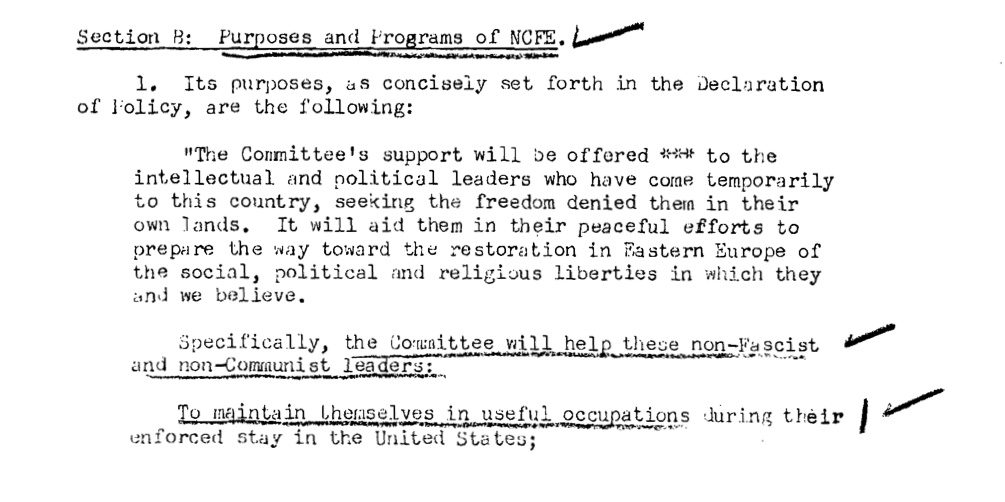
Mission

“Understanding Between Office of Policy Coordination and National Committee
for Free Europe,” October 04, 1949, a document outlining the mission of the Free Europe Committee (Wilson Center Digital Archive)

This archive is easily navigable and well worth searching.  The Wilson Center also has a plethora of other digital archives, including documents on China, North Korea, Cuba, Brazil, and South Africa, as well as other archives on the Cold War in Europe and around the globe. But its collection on Radio Free Europe is an excellent place to start.

If you’re further interested in the Hungarian Revolution, you should also check out the Open Society Archives’ collection, which we featured here last week.

Getz/Gilberto Fifty Years Later: A Retrospective

by Edward Shore

“I’m not a sociologist but it was a time when people in the States wanted to turn to something other than their troubles,” Brazilian singer Astrud Gilberto mused in 1996. “There was a feeling of dissatisfaction, possibly the hint of war to come, and people needed some romance, something dreamy for distraction.” This year marks the fiftieth anniversary of 1964’s Getz/Gilberto, the triumphant collaboration between North American jazz saxophonist Stanley Getz (1927-1991), Brazilian singer and guitarist João Gilberto (b. 1931), his then-wife, Astrud Gilberto (b. 1940), and their friend and compatriot, the composer Antonio Carlos “Tom” Jobim (1927-1994).

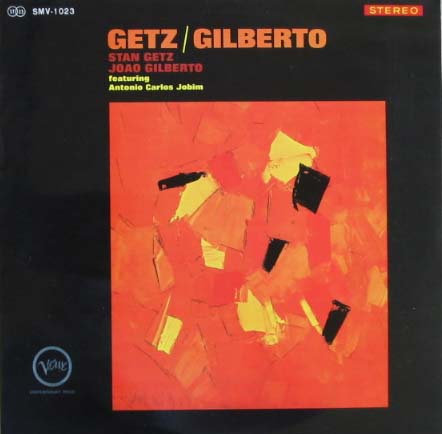
getz-gilberto_0Getz/Gilberto was not North America’s first encounter with bossa nova, the lyrical fusion of samba and cool jazz emanating from the smoky nightclubs, recording studios, and performance halls of Rio de Janeiro in the mid-1950s. Yet the eight-track LP was by far the most successful. Propelled by the genre-defining single, “The Girl From Ipanema,” Getz/Gilberto spent ninety-six weeks on the charts and won four Grammy awards, including Best Album of the Year in 1965. Other tracks, including “Para Machucar Meu Coração,” “Desafinado,” and “Corcovado/Quiet Nights of Quiet Stars,” also became jazz standards. “Americans are generally not very curious about the styles of other countries,” Astrud Gilberto insisted. “But our music was Brazilian music in a modern form. It was very pretty and it was exceptional for managing to infiltrate America’s musical culture.”

What explains Americans’ love affair with bossa nova in the winter of 1964? Part of the answer lies in the power of popular music to relieve a broken heart. Critics associated Getz/Gilberto’s cool, sophisticated sound with the Kennedy White House, where music, high fashion, and glamorous parties had been hallmarks of “Camelot” on Pennsylvania Avenue during the early 1960s. Perhaps audiences sought to recapture a bit of the mystique that had vanished when President Kennedy was slain in Dallas, Texas, only five months before the record’s release.

getz_gilberto_01For jazz critic Howard Mandel, Getz/Gilberto was like “another tonic for the assassination’s disruption, akin for adults to the salve upbeat the Beatles had provided for teenagers’ after their appearance on the Ed Sullivan Show in February 1964.” Gilberto’s hushed vocals and understated guitar, Jobim’s gentle piano, and Getz’s lush saxophone transported weary listeners to a sun soaked, tropical paradise light years removed from the turmoil confronting the United States in the winter of 1964.

Yet the Brazil of North American fantasy–languid, exotic, and serene–contrasted sharply with reality. By late 1963, the United States had declared Brazil a “trouble spot” in its hemispheric crusade against communism. Traditional elites and U.S. Cold Warriors opposed Brazilian President João “Jango” Goulart and his center-left agenda, which extended voting rights to illiterates, taxed foreign corporations, and introduced land reform. Meanwhile, peasant agitation in the Brazilian Northeast, the fulcrum of the global sugar trade, deepened the anxieties of U.S. policymakers who feared that Latin America’s largest economy might soon follow in Cuba’s footsteps. In March 1964, the Lyndon Johnson administration and the Brazilian military secretly began plotting Goulart’s overthrow.

002marchaWhile “The Girl from Ipanema” climbed to the top of the Billboard charts, U.S. warships penetrated Brazilian waters to support a military coup d’état on April 1, 1964, terminating the country’s brief flirtation with social reform. The United States had once again intervened in Latin America to preserve an illusion of tropical tranquility that existed only in the imaginations of ruling elites, intelligence agencies, and North American consumers. The military dictators who succeeded Jango and controlled Brazil for the next two decades understood the uses of music just as well and embraced bossa nova for its commercial appeal, apolitical subject matter, and potential to smooth over the nation’s deep-seated socio-political divisions.

Yet the marriage between bossa nova and the dictatorship was not to last. A younger generation of Brazilian artists, including Caetano Veloso, Gal Costa, Gilberto Gil, Rita Lee, and Tom Zé, fused elements of bossa nova with rock n’roll, psychedelia, experimental theatre, and Brazilian folk music into the colorful, exuberant countercultural movement known as Tropicália. Gone was the “tall, tan, young, and lovely” morena of Ipanema Beach. By 1968, the regime’s censors raced to cleanse Brazilian popular music of anti-establishment themes, even forcing Caetano Veloso and Gilberto Gil, two of the country’s most visible stars, into exile in the United Kingdom. The coup government ultimately turned its back on bossa nova, too. In 1969, the regime sacked Vinícius de Moraes from his post in the Foreign Ministry after the legendary composer, playwright, and original author of “The Girl from Ipanema” criticized the dictatorship’s restraints on artistic freedom.

getz_gilberto_02Popular interest in bossa nova continued to wane over the course of the 1970s. Outraged by U.S. sponsorship of the military regime, Brazilian musicians distanced themselves from a style that enjoyed intimate ties to the “giant from the North.” A blend of rock, samba, and jazz known as MPB, or “música popular brasileira,”eclipsed bossa nova as Brazil’s national sound. MPB artists like Chico Buarque, Jorge Ben, and Novos Baianos camouflaged criticisms of government repression, social injustice, and imperialism with irresistible melodies, appealing to a growing audience of middle-class youth. Meanwhile, in the slums and favelas of Rio de Janeiro, São Paulo, and Salvador, a young generation of Afro-Brazilians challenged the nation’s vaunted reputation as a “racial democracy,” while embracing cultural symbols of Black Power and the African Diaspora, including soul, funk, and reggae. Amid this rising tide of popular protest against the regime, bossa nova, with its dreamy, cool detachment, appeared painfully at odds with the struggles of ordinary Brazilians.

Still, the genre remains a major force in Brazilian pop culture and “world” music. The millions of tourists who visit Rio de Janeiro every year arrive at an airport named after Tom Jobim. Inevitably, more than a few vacationers board their flights home in “Girl from Ipanema” t-shirts purchased at the airport gift shop. Bossa nova also experienced a brief resurgence in the mid-1990s. Red Hot+Rio, a compilation album produced by the AIDS-awareness organization Red Hot in 1996, paid tribute to the musical career of Tom Jobim and featured covers by artists including Sting, Astrud Gilberto, and David Byrne. Today, pop stars like Marisa Monte, Celso Fonseca, and Uruguay’s Jorge Drexler refashion bossa nova sounds for contemporary audiences. And what about the song that made bossa nova an international sensation? “The Girl From Ipanema” currently ranks as the second-most-recorded pop song of all time, after the Beatles’ “Yesterday.” Amid the pageantry surrounding the upcoming FIFA World Cup and the 2016 Rio Olympic Games, look for “The Girl From Ipanema” to sway gently back into the spotlight.

Stan Getz and Astrud Gilberto perform “The Girl From Ipanema” in 1964:


bugburnt


Hear more Bossa Nova:


João Gilberto and Antonio Carlos Jobim in a 1992 live concert

Elis Regina and Tom Jobim performing “Aguas de Março” in 1974


Astrud Gilberto’s comments can be found in “Interview with Astrud Gilberto,” by Howard Mandel, Verve Records, Re-issue of Getz/Gilberto, 1996, liner notes.

Howard Mandel’s comments come from correspondence with the author, January 2014. A special thanks to him from the author.

Photo Credits:

1964 LP cover of Getz/Gilberto (Image courtesy of Verve Records)

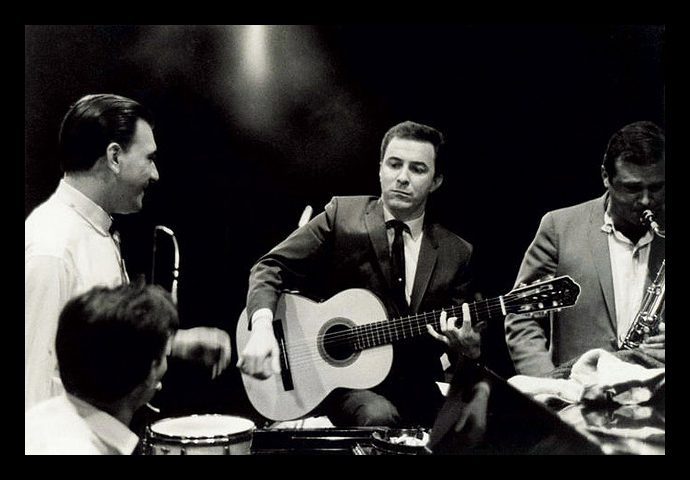
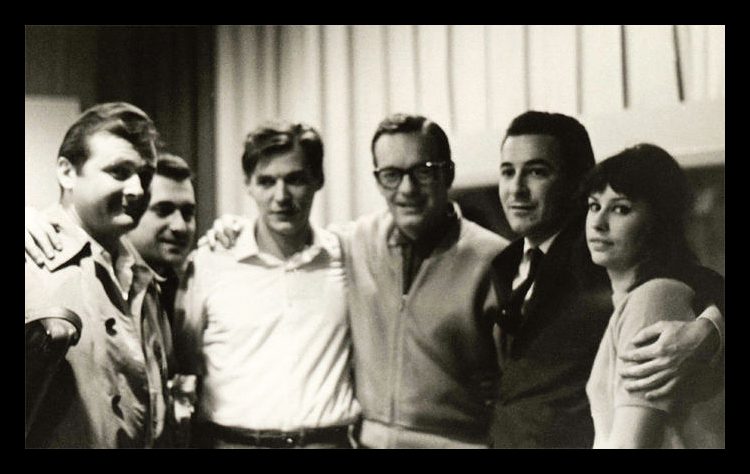
Creed Taylor, Antonio Carlos “Tom” Jobim, João Gilberto and Stan Getz recording together (Image courtesy of last.fm)

Brazilians marching against the country’s military dictatorship, 1964 (Image courtesy of Mount Holyoke College)

Musical team on Getz/Gilberto: (from left) Stan Getz, Milton Banana, Tom Creed Taylor, João Gilberto and Astrud Gilberto (Image courtesy of last.fm)

Images used under Fair Use Guidelines


The 1980 Moscow Olympics and my Family

by Andrew Straw

My mother, Rae Straw, and her friend Pam had an odd assignment in 1979 for two travel agents from Houston: selling the Soviet Union to American tourists.  For travel agents, such familiarization or “FAM” trips were a regular occurrence, but going to the Soviet Union during the preparations for the 1980 Moscow Olympics was a unique experience.  While Red Square, the red stars on Stalinist buildings, the Moscow Metro, and the Hermitage dazzled my mother, her biggest impression was the shear excitement of Soviet citizens at hosting the world.  In fact, despite Cold War tensions, since Khrushchev’s “Thaw” Soviets had enjoyed hosting foreigners at a number of international festivals.  American citizens and culture were literally transported to Moscow during the World Youth Festival in 1957, and the 1959 “American Exhibition” in Moscow attracted several million Soviet citizens who came to gaze at American consumerism.

Similar to the ongoing Sochi Winter Olympics, impressive preparations for the 1980 Moscow games were surrounded by domestic repressions, corruption, and strained international relations with the West.  Despite these similarities, there are obvious differences, particularly the Soviet invasion of Afghanistan and the subsequent American-led boycott of the Olympics.  However, most reporting (aside from The Daily Show’s Jason Jones) has missed another big difference between the atmosphere surrounding both events: the fact that American consumer goods no longer have the potential to transform the way Russians view their state in comparison to the rest of the world.

rae_kremlinThe irony of the 1980 boycott was that it nixed an influx of American products, people, and ideas into Moscow just at the time a younger and more liberal generation of Soviet politicians and “Baby Boomers” were rising through the ranks of the Soviet system and the growing middle class desired an increase in opportunities, freedoms, leisure activities, and consumer goods.  Even if most did not actively challenge the Soviet system, many wanted to experience Western culture and comforts. In this Cold War context, promoting American consumerism, music, high wages and a “life without queues” was the most attractive part of U.S. modernity. While there is no consensus on how crucial “soft power” was in deciding the outcome of the Cold War, many Americans understood the Soviet affinity for U.S. consumerism and pop-culture. Both U.S. government and businesses sponsored the post-Stalin “American invasion” that included Jazz radio programming, political propaganda, tours of musicians, student exchanges, and exhibits of American goods.

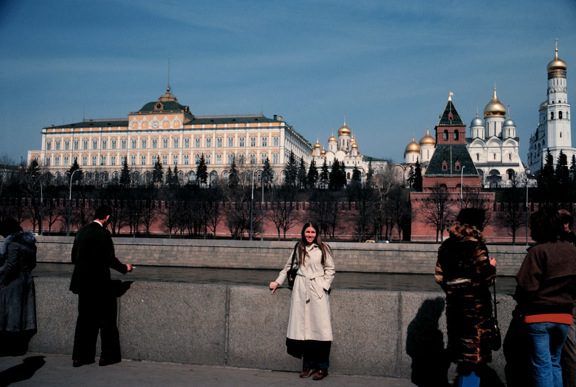
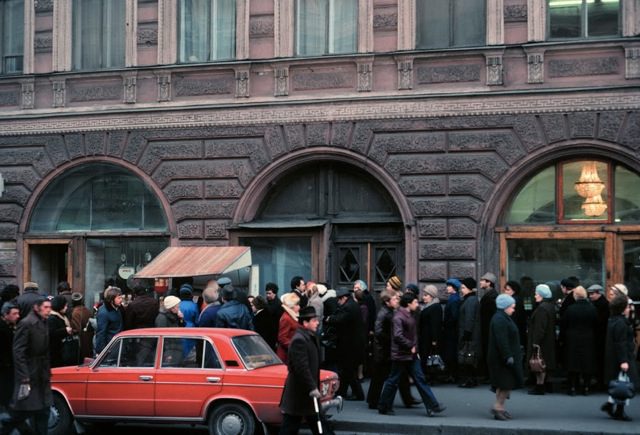
st_petersburg_streetEven though travelers such as my mother had little intention of converting communists to capitalists, they loaded suitcases with cigarettes, chewing gum, pens, and blue jeans.  Once in Moscow, my mother and her companions sold and bartered their Western-made goods a few blocks from the Rossiya Hotel in central Moscow.  But after my mother returned to the U.S., the boycott was announced and her work of selling the Olympic host to Americans and the chance for going back to the USSR ended.

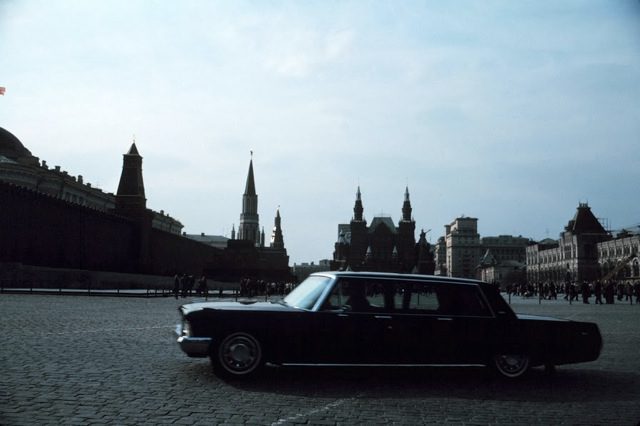
kremlin_limoMeanwhile, my future father-in-law, Nail Aminevich Izmaylov, was a driver with the Academy of Sciences Institute in Moscow, and through connections he got a job as a stand-by driver for foreign tourists at the Olympics.  While the American-led boycott was a huge disappointment for sports fans, he described the most depressing part as knowing that “business opportunities” for buying Western goods and then profiting on the black market would be limited.  Still, the games went on, and drivers prepared by keeping a “driver’s komplekt” of terrible Soviet cigarettes, damp matches, and a broken pen.  The idea was, once the chauffeured visitors tried one of these Soviet items, they would immediately offer their own or treat the driver to a shopping spree of Western goods in one of the stores where only foreigners were allowed to shop.

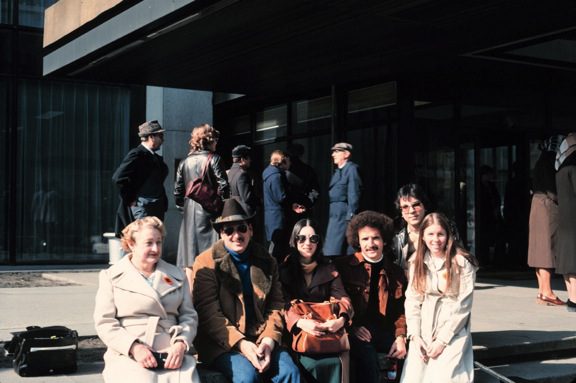
group_moscowThis dynamic of the event as an influx of superior consumer goods is absent in Sochi.  Instead, Bosco, the Russian designer brand with ties to the Kremlin, designed the high-quality team uniforms, which are available in shopping centers throughout the country.  In general, U.S. fashion and music have largely lost the subversive appeal as Putin’s “Sushi Years” have led to a continued consumerist bonanza that the majority of Russians have enjoyed to varying degrees.  In short, Putin has replaced the one-party communist state with a one-party consumerist state.

As my mother and father-in-law watched the Sochi opening ceremony, they reflected on the boycott and 1980 Moscow Olympics with both nostalgia and disappointment.  On the one hand, it was a period when adventurous visitors provided a profitable opportunity to savvy Soviets by transporting everyday Western goods into the Soviet Union.  On the other hand, the boycott and disappointment of not being able to show Americans around Moscow remains for both my mother and father-in-law.   While not shying away from acknowledging the current issues from Ukrainian protests to corruption to anti-LGBT laws, both were pleased that athletes and fans from across the world were participating in the games.

More reading on the Cold War and the Soviet Union:


Donald J. Raleigh, Soviet Baby Boomers: An Oral History of Russia’s Cold War Generation


Walter Hixon, Parting the Curtain: Propaganda, Culture, and the Cold War 1945-1961


Stephen Kotkin, Armageddon Averted: The Soviet Collapse, 1970-2000


Photo Credits:


Rae Straw standing alongside the Moscow River


A queue of Russians in St. Petersburg


A limo parked in Moscow’s Red Square


Rae Straw (far right) pictured with her tour group in Moscow


All images courtesy of Andrew Straw


« Previous Page
Next Page »

Recent Posts

  • The Radical Spanish Empire Roundtable – Introduction
  • All Eyes on the Petition: Reflections on The Radical Spanish Empire
  • Forgery, Invention, and the History of Skepticism in The Radical Spanish Empire
  • Iberian Subaltern Political Philosophies and The Radical Spanish Empire
  • Lawfare and the Legal Construction of Race in The Radical Spanish Empire
NOT EVEN PAST is produced by

The Department of History

The University of Texas at Austin

We are supported by the College of Liberal Arts
And our Readers

Donate
Contact

All content © 2010-present NOT EVEN PAST and the authors, unless otherwise noted

Sign up to receive our MONTHLY NEWSLETTER

  • New
  • Features
  • Reviews
  • Texas
  • Teaching
  • Digital
  • Watch & Listen
  • Authors
  • About