Lesson Plans: The Vietnam War and American Society

The past is never dead. It's not even past


What does a Catholic Cardinal sequestered in the US embassy in Budapest and the dead body of an American found in Prague’s Vltava River in the 1960s have in common? Characters in a true crime podcast? No, at least not yet. Instead, these are examples of lives (and lives lost) whose stories are buried in the voluminous files of the Lyndon B. Johnson Library on the University of Texas campus. In addition to a fantastic museum, the Library contains an extensive archive of over 45 million pages of documents from the LBJ administration, providing a unique insight into America’s global reach during the momentous 1960s. For those who don’t have time to visit the wonderfully Cold War modern building and its peaceful reading room, there is also a considerable digital collection. Substantial as it may be, at last count, the percentage of digitized material was still well under 1%, a figure that is understandable given the scope of the collection and the resources required to scan and process materials for public online access. I experienced firsthand these challenges when I initiated and managed Cold War Chronicles, a decade-long (and ongoing) digitization project of the LBJ materials related to the Soviet Union and Eastern Europe.
The Cold War is best studied and researched as a deeply transnational phenomenon, in which both sides were constantly observing and directly or indirectly engaging the other side. If we study Eastern Europe only from its own sources, we miss half of the conversation. With that in mind, I began to explore the vast collections housed in the LBJ library over 15 years ago, mining it for documents related to my own research on Cold War-era Eastern Europe. I recall, for example, researching US-Eastern Bloc competition and engagement at Cold War trade fairs as part of my broader interest in consumption practices and patterns under socialism. I found a fascinating memo written by Anthony Solomon, LBJ’s influential financial policy advisor, who pushed for increased trade with the Bloc at a time when many Americans opposed it: “It is clear to me that it is in our best interest to take actions which help bring about a diversion of their resources from military and space programs to consumer goods…Who among us wouldn’t rather have Soviet workers making passenger cars instead of missiles?”[1] Solomon seemed delighted by the idea of the Soviet citizens having to deal with traffic, parking issues, and their kids asking for the keys to the car. Indeed, new exchanges that exposed Eastern Bloc citizens to American consumer culture mushroomed under the LBJ administration, which led the Eastern Bloc to try (and fail) to “keep up.” I integrated this and other discoveries into my research as well as teaching on Cold War Eastern Europe, which foregrounds the permeability of the Iron Curtain, but also the East-West mutual preoccupations.
My research discoveries coincided with my assuming a new role as Director of the Center for Russian, East European and Eurasian Studies (CREEES) in 2010. As director of CREEES, I had the pleasure of hosting and interacting with visiting scholars from Russia and Eastern Europe, many of whom were fascinated with the LBJ materials related to the former Eastern Bloc (and ex-Yugoslavia). These materials were cataloged in a rough guide created in 2009, which I still regularly consult. In 2014, I faced the daunting task of applying for a US Department of Education grant that would give CREEES the status of a National Resource Center (NRC). In preparing our proposal, we needed to think creatively about projects that would utilize the resources of UT relevant to the Eastern Bloc and ideally make them accessible to a much broader audience. We consulted with LBJ library archivists, who informed us that the repository’s documents are in the public domain, allowing us to digitize and post them on our site as desired. An LBJ documents digitization project was featured in our successful grant proposal, which gave CREEES the status of a National Resource Center (NRC) from 2014-2018, and again in 2018-22, and 2022-2026. The Cold War Chronicles project slowly but surely came to fruition.
Okay, but where to begin? The files related to the former Eastern Bloc were significant, and most of them were scattered among disparate collections, including those of Foreign Policy advisors like McGeorge Bundy and Walt Rostow, as well as collections on agriculture, trade, space, etc. There were also communications from heads of state, White House central files, and the list goes on. In the very beginning of the guide, however, there was an easy answer – the Country Files of the National Security collection. Given the concentrated nature of this set of documents, it made sense for us to digitize whole folders and boxes on each country of interest, as opposed to cherry-picking documents of interest. Thus, the online collection would be complete, allowing users to have a similar experience to being in the archive. Federal funds supplemented UT resources, which supported a (revolving) team of UT students and staff at CREEES and the UT libraries to scan, crop, tag, process, and post in Texas Scholar Works. By far the largest of these country collections was the USSR, with 15 boxes full of some 10,000 documents! Due to its sheer size, we decided to complete that collection last. As of fall 2025, it is still not available for public use, but it will be soon!
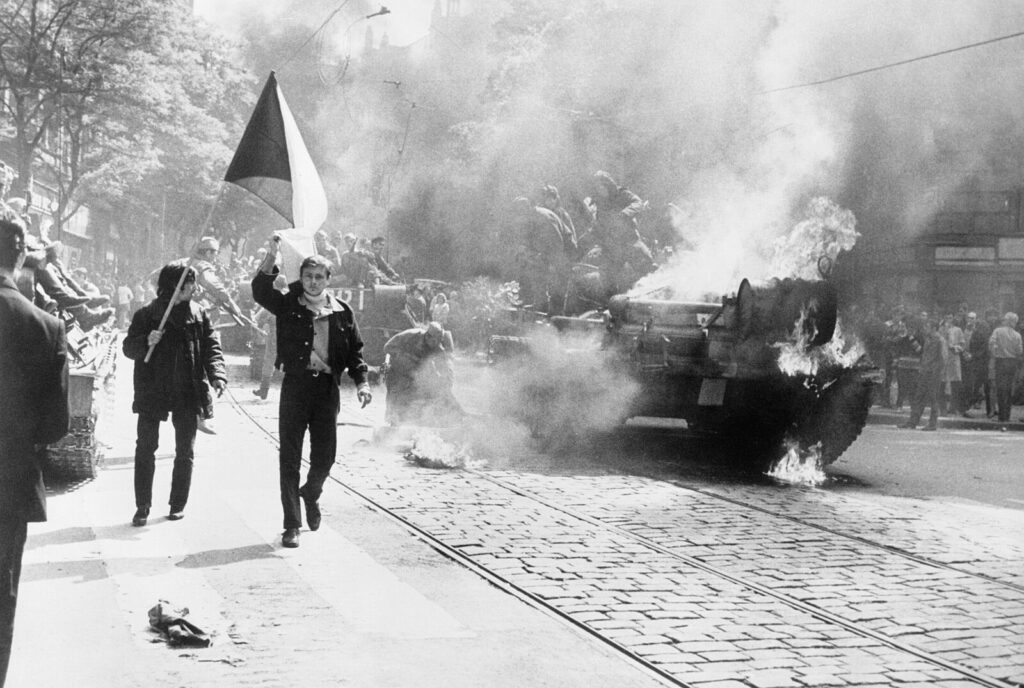
Instead, we started with Czechoslovakia, the largest and most significant of the Eastern Europe collections, because of the notable 1968 event, the so-called “Prague Spring” in which state reform snowballed into a popular movement for change to “socialism with a human face.” The result was a Soviet-led Warsaw Pact invasion of the country to crush the liberalized regime and its enthusiastic population. Indeed, our first iteration of a public website was on the Scalar platform, entitled “The Prague Spring Archive,” put together by Ian Goodale, who is currently the European Studies Librarian for the University of Texas Libraries. The LBJ documents shed light on day-by-day developments on the ground, the decision-making process around the US response, and the global reaction to this consequential set of events as the “Czechoslovak crisis.”

The Soviet Invasion of Czechoslovakia in August 1968. Source: Wikimedia Commons
After Czechoslovakia, we went country by country across the region–Yugoslavia, Romania, Poland, Bulgaria, Hungary, and finally the USSR and East Germany. As of fall 2025, most country files have been digitized, and only the Soviet and East German files remain to be fully processed and posted online. The cache of digitized documents is permanently housed in the Texas Scholar Works (TSW) repository, a massive open-access collection of materials that UT faculty and students have authored, digitized, or collected. In addition to its ample storage capacity, the repository provides convenient features for its collection, such as author and date searchability. However, its interface is not particularly flexible or user-friendly, and it does not allow for any curation of our collection. For that reason, I spearheaded the new Cold War Chronicles website, which we launched this fall in collaboration with a team of CREEES staff and students.
Cold War Chronicles offers a user-friendly portal and guide to our entire TSW collection, designed for researchers, teachers, or enthusiasts of Cold War history. For researchers, we provide a detailed guide with clear instructions on the scope of the collection and how to navigate, access, and cite the documents. The site also includes country-specific landing pages with general overviews of the sub-collection contents and links to folder-by-folder descriptions. I have also included a link to other English-language online archives for Cold War research, with direct links to search pages and short notes on navigation in cases where usability is not intuitive.
These other archives are also linked to through the “teaching resource” page, which includes a series of assignments that I created while teaching my “Cold War Eastern Europe” course at UT in spring 2025 (note: the Soviet Union was not a focus of the course, and the materials reflect that). In these assignments, students are asked to work in “country” groups on in-class activities that require them to dig into various online archives to find answers to prompts on discrete phases in the Cold War. The teaching resources also include a link to a list of English-language memoirs related to communist Eastern Europe and a sample assignment for using them in a course. These teaching materials are flexible and appropriate for higher education, as well as high school curricula.
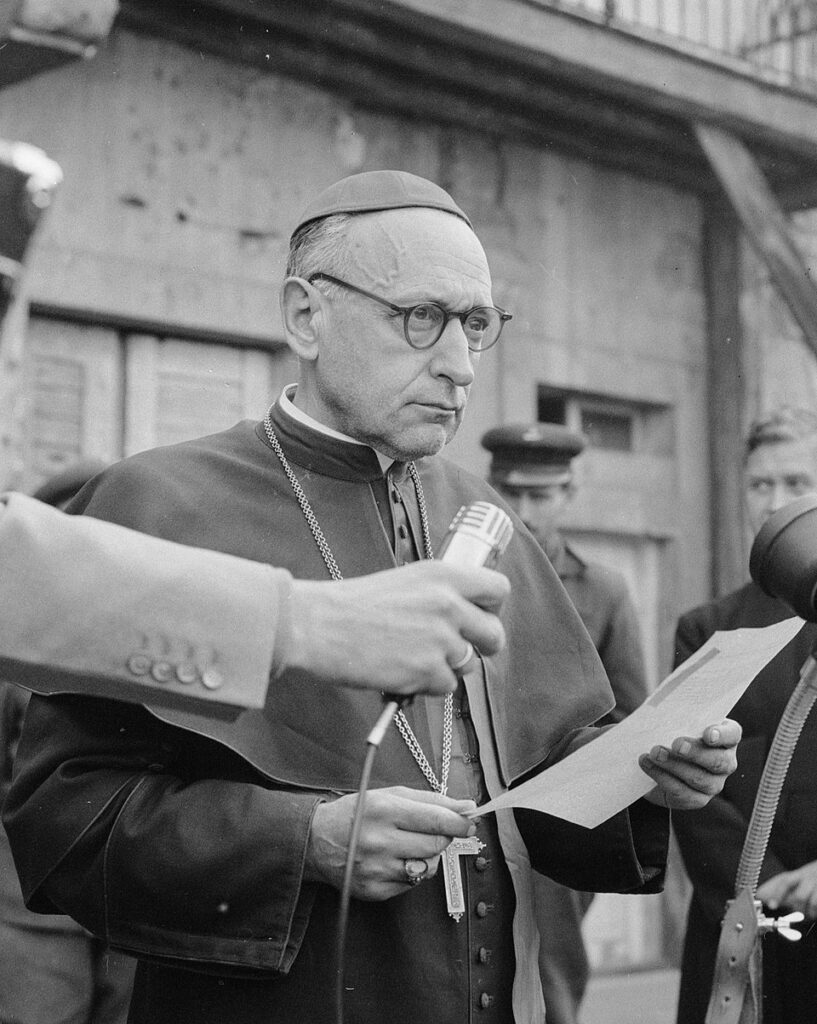
Returning to the Catholic Cardinal stuck in the Budapest embassy, one of the most interesting collections of country files in our archive is Hungary. The Hungarian Cardinal Josef Mindszenty, designated “venerable” by Pope Francis in 2019, is a famous and revered figure in Hungary today. He spoke truth to power against Fascism and Communism, and as a result was imprisoned by both wartime and postwar regimes in Hungary. Released from prison during the famous Hungarian Revolution of 1956 against Soviet domination, he took refuge in the US embassy when the Soviet tanks rolled into Budapest and remained there until 1971! During the LBJ years, he wrote frequent letters, such as the one to LBJ, who responded through the local chargé d’affaires. The complete set of letters offers a rich Cold War chronicle of this episode in history, in which the US was harboring an enemy of the state in Hungary while trying to broker detente with the Eastern Bloc.

Cardinal József Mindszenty, 1956. Source: Wikimedia Commons
As far as the body in the Vltava River, it was Charles E. Jordan, executive vice president for the American Jewish Joint Distribution Committee (JDC), who was found on August 20, 1967. Jordan was reported missing five days prior while vacationing in Prague, a side trip from his JDC work in neighboring Romania. Although it was reported as a suicide by Czech authorities at the time, there has long been speculation as to the cause of death, and it is considered an unsolved murder by the JDC.
Stories such as Mindszenty’s and Jordan’s are just a select few that were once buried among the millions of documents in the carefully kept boxes under lock and key in the LBJ Library. Now, at least some of these chronicles are online for all to access, although there is so much more to discover for those who can make it to the nearly windless white tower perched on a hill on the east end of our campus. Cold War Chronicles will continue to evolve over the coming years. This has truly been a labor of love for me and the CREEES team, and we sincerely hope teachers and researchers make use of this unique collection!
[1] Personal Papers of Anthony M. Solomon, East–West Trade, Box 1, file 1, p. 36. Lyndon Baines Johnson Library.
Mary Neuberger is the Mildred Hajek Vacek and John Roman Vacek Distinguished University Chair in Russian and Slavic Languages; Director of CREEES; and Chair of the Slavic & Eurasian Studies Department at UT Austin. Her research interests include urban culture, consumption, commodity exchange, and the history of truth at the intersection of science and religion in modern Eastern Europe, with a specialization in southeastern Europe.
The views and opinions expressed in this article or video are those of the individual author(s) or presenter(s) and do not necessarily reflect the policy or views of the editors at Not Even Past, the UT Department of History, the University of Texas at Austin, or the UT System Board of Regents. Not Even Past is an online public history magazine rather than a peer-reviewed academic journal. While we make efforts to ensure that factual information in articles was obtained from reliable sources, Not Even Past is not responsible for any errors or omissions.
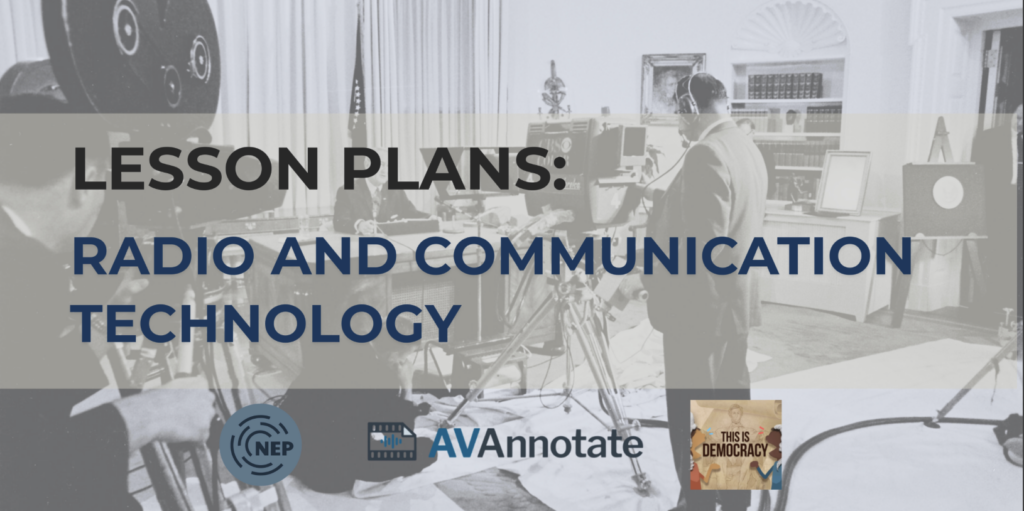
Jeremi and Zachary have a conversation with Dr. Mark Pomar on the historical impact of Voice of America, Radio Free Europe, and Radio Liberty’s critical role of radio communications during the Cold War, and the challenges they face today including the recent threats to their operation.
Zachary sets the scene with his poem, “Radio Liberty”.
Mark Pomar is a Senior Fellow at the Clements Center for National Security at the University of Texas. From 1975 to 1982, Dr. Pomar taught Russian studies at the University of Vermont. From 1982 to 1993, he worked as Assistant Director of the Russian Service at Radio Free Europe/Radio Liberty (Munich), Director of the USSR Division at the Voice of America, and the Executive Director of the Board for International Broadcasting, a federal agency that oversaw Radio Free Europe/Radio Liberty. From 1994 to 2008, Dr. Pomar was a senior executive and President of IREX, a large US international nonprofit organization. From 2008 to 2017, he was the founding CEO and President of the US – Russia Foundation (USRF), a private US foundation that supported educational programs and exchanges. Dr. Pomar is the author of two books, most recently: Cold War Radio: The Russian Broadcasts of the Voice of America and Radio Free Europe/Radio Liberty.

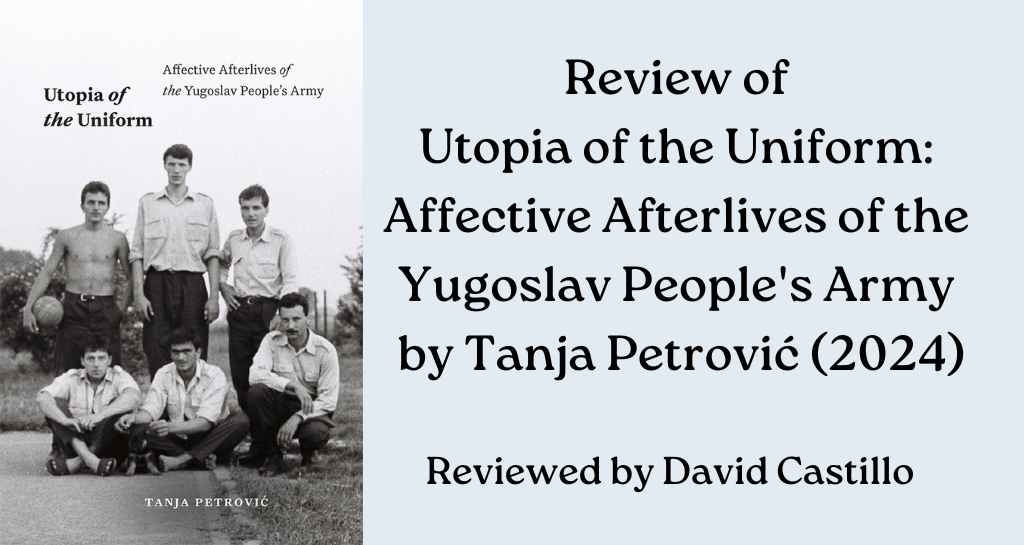
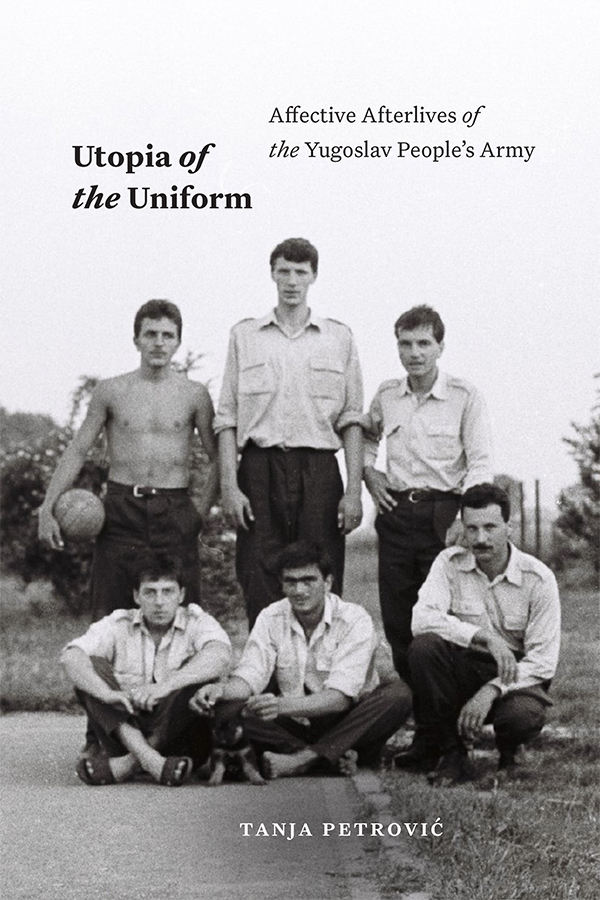
Utopia of the Uniform is a powerful book that challenges historians to broaden their approach to the archive and their sources. It asks how affect and feeling can add nuance to our study of the past, significant historical shifts, and the future. When we met for the first time, Tanja Petrović signed my copy with the note, “To David, for all the stories and feelings he will bring to us from the Yugoslav men”. It stuck with me for some time as I wondered what that word, feeling, meant in that context. It confused me as a historian because I had not really been trained to analyze feelings rather than historical fact. However, after reading Utopia of the Uniform I am left with a sense of wonder in seeing how the author showcased the affective afterlives of the Yugoslav People’s Army and how she skillfully wove a web that connected periods of time that have traditionally been shattered in post-conflict discourse.
To what degree is nostalgia useful for a society torn asunder by catastrophe? Perhaps a nostalgia that gazes fondly to a period prior to catastrophe might serve as a metaphorical balm, one that eases the lingering pain for the survivors of violence. Or perhaps it could serve as a temporary escape from a grim reality in which contemporary life is contrasted against life in the past, against the ‘better times’. But where does this nostalgic path lead if not to simple daydreaming? Is it capable of inspiring positive change? Tanja Petrović strives to change how scholarly discourse interacts with nostalgia in her 2024 book, Utopia of the Uniform: Affective Afterlives of the Yugoslav People’s Army.

Petrović views nostalgia as an ineffectual tool of historical analysis and seeks to craft a new frame of reference for temporal progression. As such, she encourages a more nuanced investigation of historical processes and actors in both post-socialist and post-conflict societies. Utopia of the Uniform guides the reader through a nontraditional archive of felt and affective history to showcase how shared memories, photographs, and friendships continue to influence and affect the lived experience of individuals and collectives in the lands that now make up the former Yugoslavia.
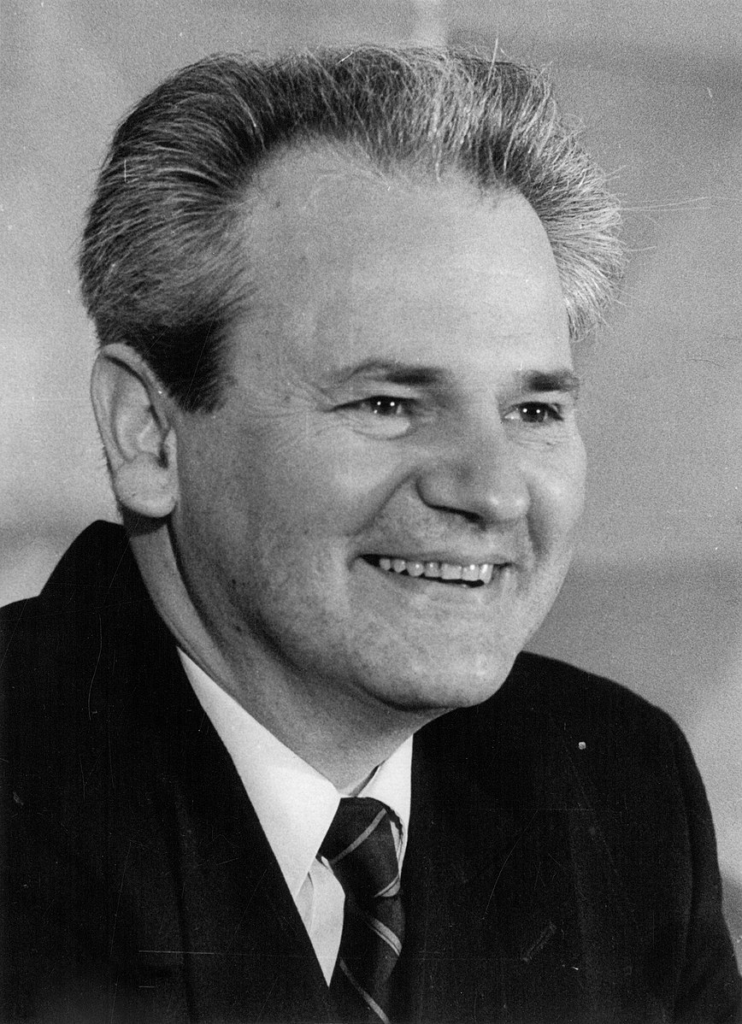
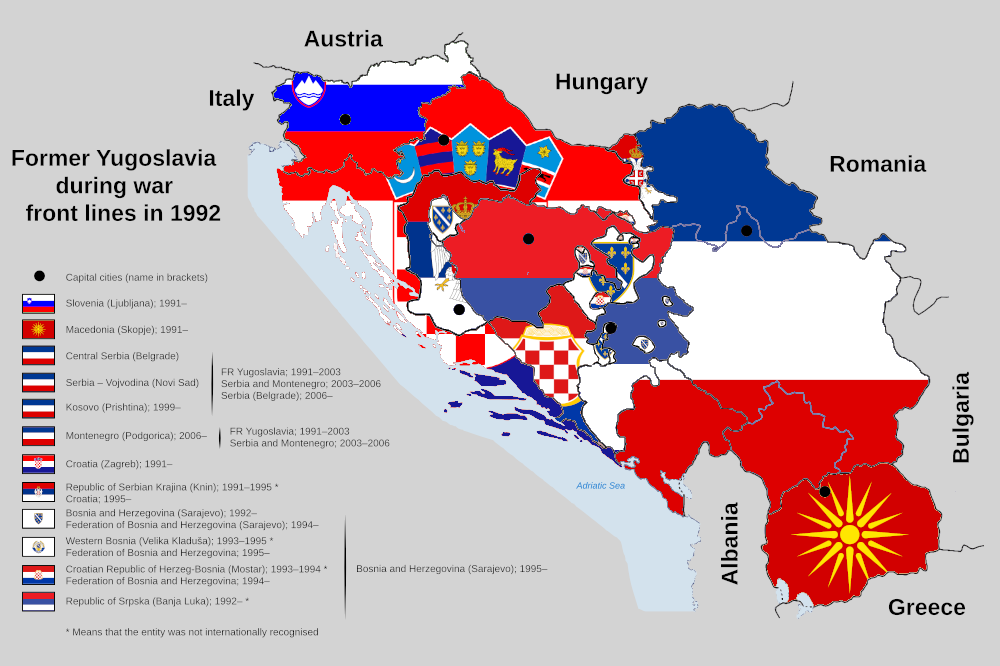
To accomplish this, the author foregrounds her study in the past and present lives of male Yugoslav conscripted soldiers. By analyzing a rich archive of personal narratives, interviews, soldiers’ photography, as well as other forms of artistic and documentary expression, she claims that this archive of felt and affective history inherently possesses its own agency; an agency that Petrović argues is capable of dismantling the limitations of hegemonic ethnic binaries that politicians exploit to keep a grip on power. It is these limitations that have kept the region of the former Yugoslavia and its history wrapped “in an ethnic straightjacket” (p. 178) by binding it to the traumatic destruction of the 1990s. A time period when the fall of state socialism coincided with the rise of nationalist politicians into power (such as Serbia’s Slobodan Milošević and Croatia’s Franjo Tuđman). This shift saw warmongering nationalism call for a dramatic reorientation of society that violently bifurcated Yugoslavia’s rich ethnic and religious diversity practically at every level. By the end of the decade the wars in Slovenia, Croatia, Bosnia-Herzegovina and Kosovo would kill hundreds of thousands, displace millions, and destroy the social and physical infrastructure of the country. Petrović tells us that this profound pain created limiting ethnic binaries that keep this region chained to a destructive past.

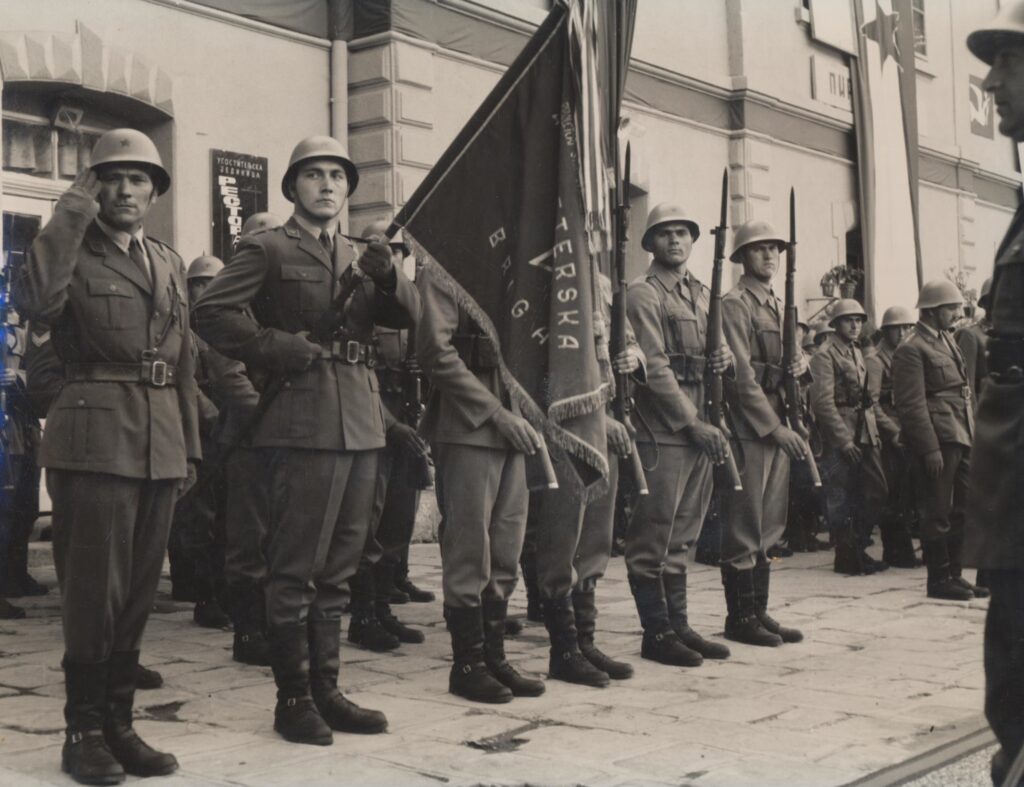
That past, however, did not begin at the end of the 20th century. Petrović argues that the ideological motivations found within Yugoslav socialism and the way its distinctive federal system was structured allowed for the potential of a utopian perspective. The Yugoslav socialist project after World War II could be seen as unique because of the Yugoslav Partisans’ National Liberation Struggle and their self-led victory over fascist occupation. A new understanding of Yugoslavism that “acknowledged and approved enduring separate nationhoods and sought federal and other devices for a multinational state of related peoples with shared interests and aspirations” (p. 23) emerged after the war. As a result of the mass intercommunal and ethnicized violence of World War II, the new Yugoslav movement made Brotherhood and Unity (Bratstvo i jedinstvo) one of its defining pillars of legitimacy. Thus, a system that sought peace and cooperation among Croats, Serbs, Bosnian Muslims, Kosovar Albanians, Slovenians, Macedonians, and others. The JNA and the accompanying mandatory universal male conscription was a key piece of the unifying project to create Yugoslavs.
The story that Tanja Petrović tells across the book’s nine chapters (including one interlude and an epilogue) is situated along temporal lines that are not limited to narrow linear boundaries. Her narrative examines how forces of the past interacted with each other along a trajectory that moved toward an ideal future, a future that historical actors dreamt would come to fruition. However, as a result of the catastrophic violence and destruction seen in the 1990s during the Yugoslav Wars of Succession, those hopes or utopian ideals and the temporal continuum upon which they progressed was shattered. Therefore, ideal futures that were not only possible but imminent were lost forever, while this rupture forced the former soldiers and their loved ones in Petrović’s study to be left adrift (during the period she coins as the ‘event-aftermath’) in a hostile world where arbitrary ethnic or religious affiliation determines life or death, belonging or ostracization, or prosperity or neglect.


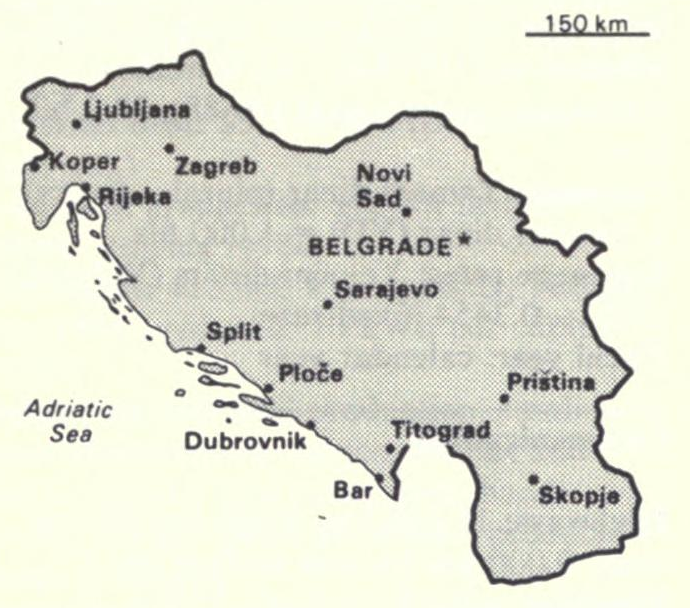
Even three decades after the wars’ end this rupture still dictates how life in what was once Yugoslavia is lived and perceived. Petrović argues that the citizens of the states that emerged out of the the corpse of the Socialist Federal Republic (SFR) of Yugoslavia (the republics include Slovenia, Serbia, Croatia, Bosnia-Herzegovina, Montenegro, North Macedonia and Kosovo) live in neo-fascistic and highly ethnicized societies. Within this post-war world people face a grim present, one in which continuous governmental neglect for peoples’ livelihoods, a general disregard for their safety, and rampant corruption offers no hope for a better future. The author centers an unlikely hero in her story to serve as a utopia of hopeful thought forged in the past and lived in the present: the institution of the Yugoslav Peoples’ Army (JNA) and universal conscription of Yugoslav males for one year of military service. Utopia of the Uniform brings forth a potent contribution in that it is paradoxically within the enclosed barbed-wired bases of one of the most strict, disciplined, and conservative institutions resistant to change in SFR Yugoslavia where utopia could be found.
The bases where these soldiers served became key locations for a utopia, not necessarily because life there was perfect; in fact, Petrović discusses throughout her work that many young men felt that the army was robbing them of a year of their youth when the world was at their feet. The idea of going to someplace far away from your home, a base that was isolated from urban centers, to be molded into a good soldier with domineering discipline constantly watching your every move understandably was a source of frustration for many young Yugoslav conscripts. However, the early foundational leadership of the JNA in the postwar era intentionally designed this feature of the military in order to take Yugoslavs from all different ethnic, religious, social, and educational backgrounds and send them to serve somewhere far away from the region in which they were raised. This had the significant effect of intermingling the whole male population with people who might have been different, thus institutionally reinforcing the idea of Brotherhood and Unity in the country’s fighting force. It was in these bases where JNA soldiers forged bonds, memories, and deep friendships with their comrades in arms that would last a lifetime, especially forging strong ties with people of different ethnicities.

Petrović utilizes the affective feeling of these soldiers to shatter the restrictive ethnic binary that has held the Ex-Yugoslav region in a chokehold since the 1990s. Through her gripping narrative that bridges Yugoslav times, the rupture of violence, and the eventual event-aftermath, the author colors significant nuance and elaboration into the picture of the (post)socialist and post-conflict society. Utopia of the Uniform demonstrates that the friendships and positive remembrance of former JNA soldiers’ time in military service take on what the author defines as an ‘affective afterlife,’ that is a phenomenon that lives on inspiring happiness, hope, or a fondness in the present despite unimaginable trauma. Additionally, Petrović significantly diversifies and debunks the dominating ethnic narratives that local politicians have hijacked to dictate that ethnic homogenization is the only viable path forward for the successor states.
Utopia of the Uniform demonstrates that the desires of good will and the strong friendship between soldiers of one background to their army buddies of another ethnic background refute the divisive propaganda that stubbornly lives on from the 1990s. The book articulates how the unique context of Yugoslav socialism and the philosophy of Workers’ Self-Management created an “infrastructure for feelings,” or a new social organization that “makes possible responsible decision-making under conditions of interdependency, mutual social responsibility, and solidarity, and that leads to the liberation of individuals.” (p. 189) Petrović argues that this system, despite its flaws, provided space for people to create their own dreams of utopia of the future. This utopia, found in the past within JNA bases across what used to be Yugoslavia, possesses an affective afterlife for the people who survived the 1990s and still offers them happiness, fond remembrance, and even a glimpse of hope for the future.
David Castillo is a doctoral student at the University of Texas at Austin, focusing on the former communist Yugoslavia and its successor states. His research explores the links between inter-communal violence, toxic masculinity, gender dynamics, propaganda, and mass manipulation. With academic foundations from the University of Texas at El Paso and Indiana University, David combines cultural history with international politics. Drawing from his experience in the region, he aims to compare post-Yugoslav masculinity shaped by the 1990s wars with Chicano/a/e ‘Machismo’ in Mexican-American borderlands, investigating how violence becomes integral to both identities.
The views and opinions expressed in this article or video are those of the individual author(s) or presenter(s) and do not necessarily reflect the policy or views of the editors at Not Even Past, the UT Department of History, the University of Texas at Austin, or the UT System Board of Regents. Not Even Past is an online public history magazine rather than a peer-reviewed academic journal. While we make efforts to ensure that factual information in articles was obtained from reliable sources, Not Even Past is not responsible for any errors or omissions.
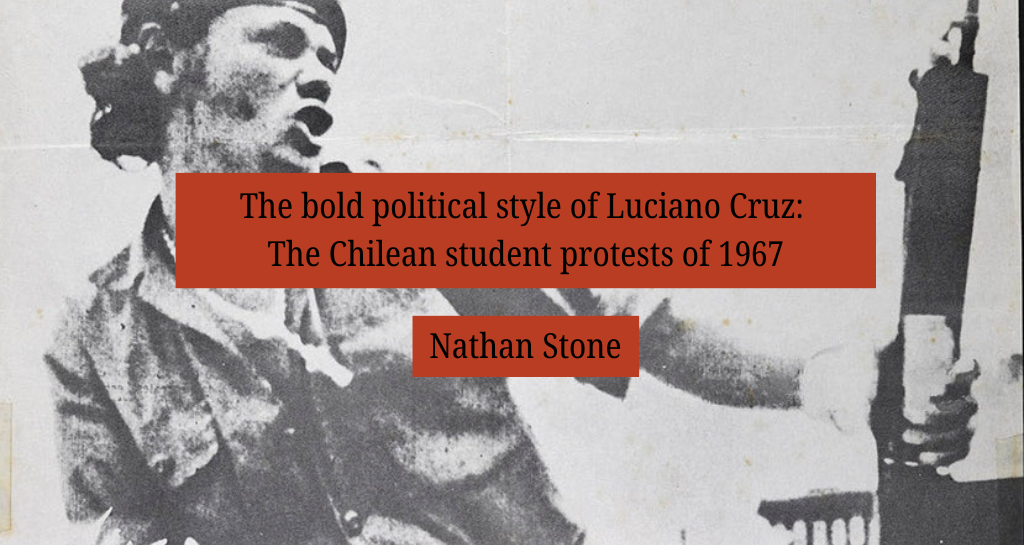
The following narrative is adapted from my recent dissertation on revolutions in Latin America. When I shared it with upper division history students for a class discussion, the story surprised them. Most of them had only ever experienced student government as something to put on your resumé for grad school applications. They had never imagined that student activism could be so decisive for crucial issues of public policy. The Chilean experience seemed to awaken their interest in a rich local legacy of passionate student activism and of unconditional commitment to causes that transcend personal gain. Here I share the story of the bold political style of Luciano Cruz.
As Chile’s first Christian Democratic government attempted to bring social justice through reform during the mid-1960s, medical students in the nation’s second city proposed a more radical change. In a political system designed to concede real power only to the already powerful, they argued, a mere change of government leadership would never suffice. Along with a few disaffected union organizers, the students at the University of Concepción, located in Chile’s second city, formed the Movement of the Revolutionary Left, (MIR), proposing a new constitutional order that, they hoped, would uplift Chile’s perennially poor and underprivileged.
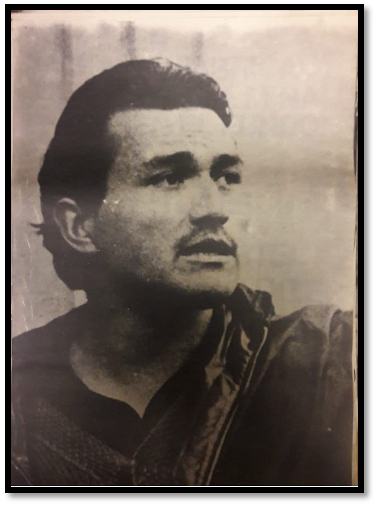
The undisputed leader among the students was the fiery and brilliant Miguel Enríquez, who in 1961, had written on his medical school application essay, “everything has been given to me…, the time has come to give back.” Like Che Guevara before him, the call to heal the sick blended seamlessly with the call to make revolution for the poor. His classmate and best friend, Luciano Cruz, brought a uniquely impulsive energy and irresistible charm to that struggle. The political style of Luciano Cruz allowed him to knew how to rouse, entertain, and impassion any crowd at a moment’s notice.
Whereas Enríquez made measured, brilliant speeches—many of which have survived as written documents—his energetic deputy could improvise behind a microphone, holding the multitude spellbound for hours. Historian Marian Schlotterbeck points to Cruz’s debut as a student leader during a 1965 protest of the recent fare increase in public transportation. Chile’s largest labor federation, CUT, (Central Única de Trabajadores), had called for the protest, and they had invited Cruz as one who “embodied the contentious, combative style of the Concepción student movement.” Schlotterbeck points out that there was more at stake than just bus money. “Amidst wild applause,” she writes, “Cruz proclaimed that the demonstrations were no longer about fare hikes but ‘a demonstration by Chile’s poor against the rich.’”[1]
By 1967, Luciano Cruz had set his sights on the presidency of the student federation. The university had reached a crossroads. The Christian Democratic government of Eduardo Frei was promoting university reform on a national scale. Frei’s men had lifted up the University of Concepción as a model. They wanted to restructure higher learning as a driving force for modernization. But members of the newly configured MIR, known as Miristas, understood the plan as an attempt to co-opt and “Americanize” their university. Cruz would become MIR’s candidate to spearhead the resistance.
While technically private, the University of Concepción depended on funding from UNESCO and the Ford Foundation, making it vulnerable to foreign interference in crucial policy decisions.[2] With MIR’s support, the student federation (FEC) demanded the democratization of the power structure so that students and junior professors could have a voice in the decision-making process. But MIR had to win the presidency of the student federation to legitimize its proposal. Focusing his campaign on ideology, class interests, and the social role of the university, Miguel Enríquez had failed in his bid for that office two years earlier. This time, Miguel recognized his classmate’s dynamic advantage. Luciano’s landslide victory in Concepción marked MIR’s arrival as a national political force.
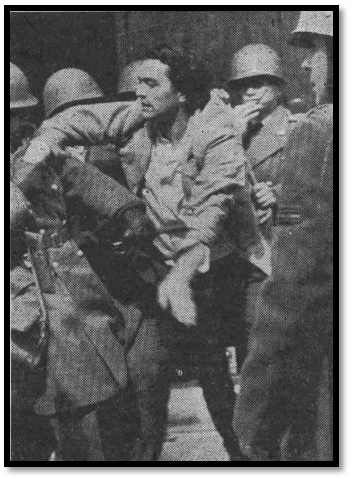
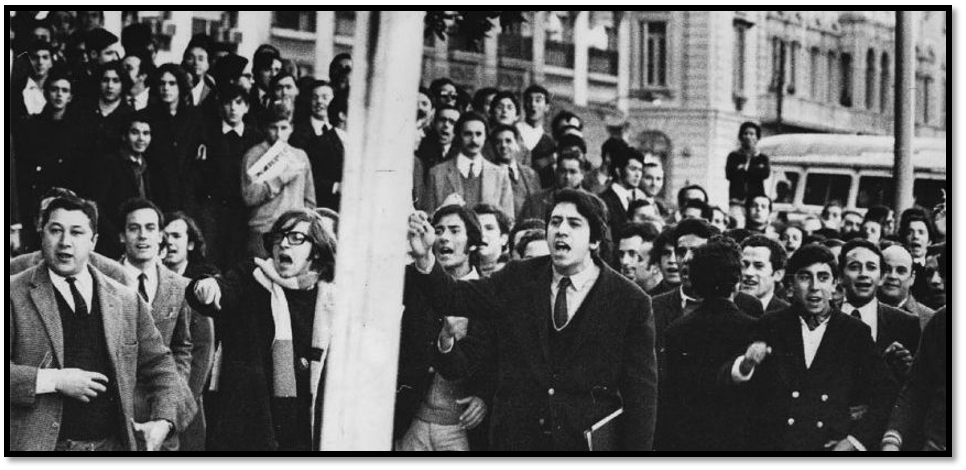
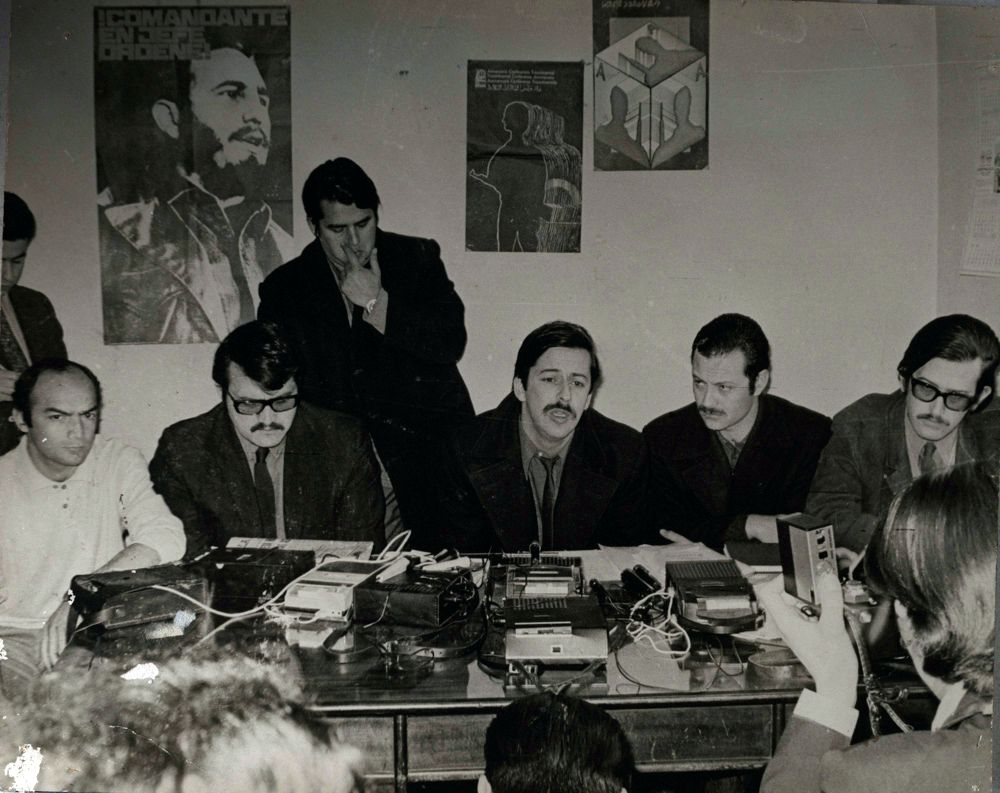
Schlotterbeck highlights a “new brand of audacious student activism” that would predominate in the student federation, transforming university students into political actors on a national scale.[3] Undergrads—and some even younger protestors—made headlines with strikes, street protests, and the occupation of campus buildings. Riot police confronted them with tear gas, truncheons, and water cannons. Jailed students went on hunger strikes, and their objectives began to escalate. Miguel Enríquez called for more than just a university reform. The time had come for a true university revolution. His statement to that effect appeared in the preeminent national magazine of the non-aligned intellectual left, Punto Final, with a photo of Luciano Cruz in a scuffle with five police officers that would become iconic.


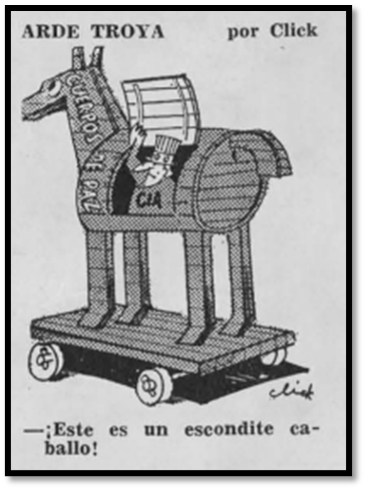
Miguel directed MIR’s leadership to confront the “legal dictatorship” of the current system with relentless combat. They should denounce every detail, he said, so that the forces of repression were compelled not only to cease and desist, but to give ground.[4] On that note, MIR demanded the immediate expulsion of four Peace Corps volunteers from the University of Concepción. Perceived as the youth branch of the dubiously regarded Alliance for Progress, the Peace Corps presence symbolized the imperialist assumptions behind Frei’s model of reform.[5] Students argued that Peace Corps volunteers took up much needed space at the university residence. They also voiced their suspicions (likely credible) that Peace Corps volunteers had provided a stream of inside information to U.S. intelligence services.[6]
While Enríquez focused on the national politics of the reform, Cruz emerged as MIR’s chief tactician and spokesperson. Under his command, at one of their daily demonstrations, students in Concepción abducted a police officer. After holding him hostage in the university for several days, they offered his release in exchange for the same for all the students who had been arrested during recent protests.[7] The symbolic value of that gesture weighed heavily. With it, students reconfigured their recent detentions by Carabineros as similarly random and arbitrary abductions.
Carabineros fought back. They arrested Cruz, and the movement seemed to fall apart until Cruz dramatically escaped from jail and waltzed back into the meeting where student leaders discussed their next move.[8] Although the details of Cruz’ escape remain unclear, his stealth and proficiency in the martial arts seem to have played a part. His return to the front line provided a huge boost for morale, dramatically enhancing his personal mystique and his reputation for dauntless courage and invincibility. It also established MIR’s place in the leadership of the student federation at the Universidad de Concepción (FEC) for the foreseeable future.

But MIR’s ambitions did not stop with the student federation in Concepción. Members of the movement’s inner circle did not want Chileans to think of them as merely the radical fringe of the nation’s restless youth. Aligning themselves with the youthful and dynamic Cuban revolution, Miristas defied the perennial lethargy of Chile’s traditional left to project a hugely inflated image of the new movement’s political significance. Their claim had no real basis in the number of militants, access to material resources, or concrete influence in social organizations, but Mirista leadership bet on the oppressed masses’ perception of their growing visibility as a foreshadowing of an imminent and viable armed revolt. In his incisive analysis of the MIR phenomenon, literary scholar Hernán Vidal observes that MIR’s Comité Central manipulated the obvious contrast between an appearance of mythical power and a reality of tactical impotence, calling it a strategy of “establishing presence.”[9] They didn’t have to really be everywhere; they only had to seem to be everywhere. Luciano Cruz figured as the master of MIR’s expanding illusion of ubiquity.
Until 1969, MIR had mostly operated out in the open. Their practical jokes and disruptions only remained covert until they had succeeded. Then, they generated positive PR. But a pivotal student prank in Concepción would initiate a period of tension between the gregarious publicity that had shaped MIR’s style and method, and a new strategy of strict secrecy. As fate would have it, Luciano Cruz’ impulsive abduction of a local journalist in June of that year provoked the ire of the Frei government, driving the entire movement underground for the first time. Miristas had to learn to hide their militant activities and to use code names. The demands of clandestine living made MIR a more dangerous commitment for new recruits, but it also provided an undeniable aura of romance.
Kidnappings, though frequent, lucrative, and lethal among revolutionary movements in Brazil, Uruguay, and Argentina, did not figure in MIR’s habitual playbook. Leaders observed that, in terms of promoting public sympathy for the cause, they usually backfired. But acting independently, Luciano’s regional task force in Concepción crossed the line with a targeted prank in the austral winter of 1969. The Christian Democratic journalist, Hernán Osses Santa María, had lost his job at the University of Concepción because of the reform. He got his revenge by disparaging young Miristas in his editorials. He never criticized their politics. He derided their personal lives, and he made fun of their girlfriends. That seemed to violate an unspoken code of honor. The clever Luciano Cruz decided to teach him a lesson in respect.

Luciano’s team of tricksters abducted Osses Santa María with the archaic idea of tarring and feathering him. Finding no tar, they released him naked in the courtyard of the university during an annual event. There was no real harm done, except to Christian Democratic pride. The Frei government took advantage of the public outcry to invoke a national security statute declaring MIR illegal, and to order the arrest of the Secretary General, along with his wily second in command.[10] That meant that most of MIR’s operatives had to go underground, something Miguel Enríquez had in mind anyway. Cruz had not cleared his plan with the more prudent Enríquez, but his audacity triggered MIR’s rather sudden transition from the gentler politics of campus protests and community organizing to a more decisive program of direct action; most of it, illicit; and some of it, armed. Cleverly-staged bank robberies, framed as Robin Hood style gestures of taking from the rich to benefit the poor, became the order of the day. Ever sensitive to the importance of good publicity, however, the students took precautions to make sure that no one ever got hurt.
After the election of Chile’s first Socialist President, Dr. Salvador Allende, in September of 1970, MIR continued to agitate for faster and more radical reform, but without the emphasis on spectacular disruptions of daily routines. Luciano Cruz took a flat in Santiago, where he conducted a covert program of surveillance, keeping watch over potential coup-plotting generals and their supporters. To this end, he recruited a sizeable contingent of young militants who learned to quietly follow and watch. In that role, Cruz’ team pieced together all the elements of the right-wing attempt to prevent Salvador Allende’s inauguration to the presidency, one that culminated in the assassination of General René Schneider, a trusted army commander.[11] Chilean police investigators, more attuned to internal bureaucracy and protocol than really solving crimes, had failed to break the case, but Cruz’ investigation uncovered embarrassing complicity that reached to the highest levels. Though published in Punto Final, the justice system failed to follow up on his findings.

Luciano Cruz died of accidental gas inhalation in his one-room basement flat in downtown Santiago on August 14, 1971. After he missed an arranged meeting, Miguel Enríquez discovered his friend’s lifeless body. He frantically attempted to revive him, but it was too late. A CIA report surmised that Enríquez might have had Cruz murdered to resolve an internal power struggle.[12] But gas heaters in those days had no safety valves, and Luciano had been complaining of morning headaches for a week. All the witnesses mentioned the smell of gas in the flat. So it was likely careless rather than malicious.
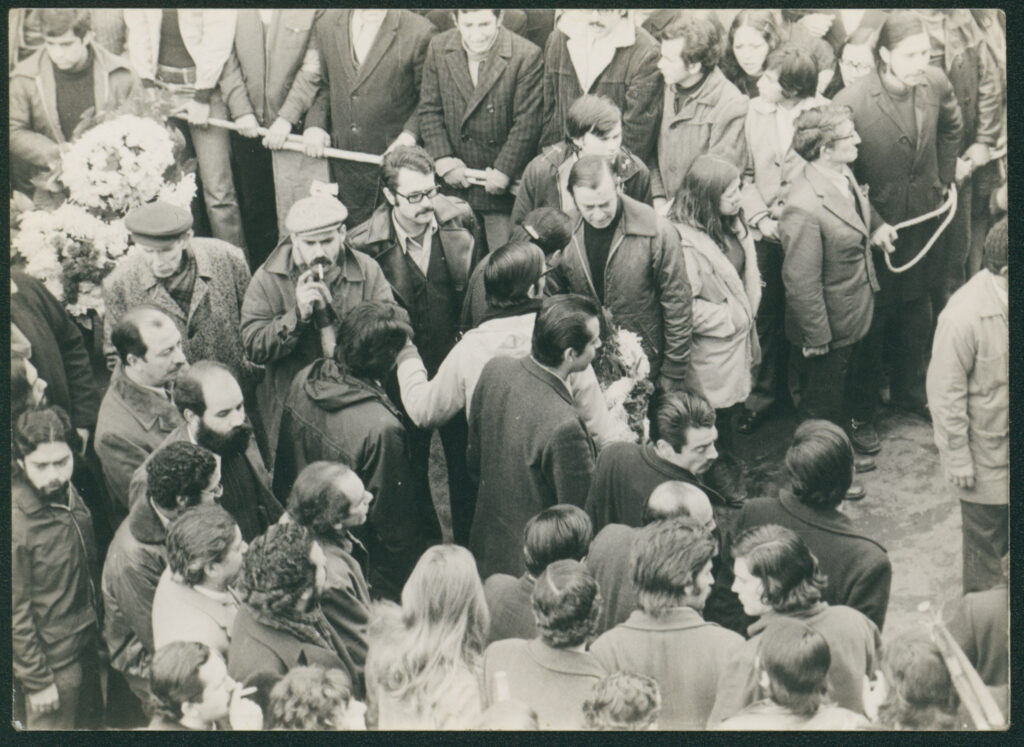
Tens of thousands followed the funeral procession in support of the charismatic Luciano Cruz and the incisive student protest movement he represented.[13] MIR would never be the same without him. But, to this day, Chilean students put their whole heart and soul into their protests.
Nathan Stone, Professor of Instruction at the University of Texas and a recent Ph.D. recipient from the Department of History (2023) of the same institution. His specialization is Modern Latin American revolutionary movements. Previously, he lived and taught in Chile for thirty years, Uruguay for two, and IN Brazil for five. H is fluent in Spanish and Portuguese, and he has published his writing, both academic and non-fiction, in both languages.
The views and opinions expressed in this article or video are those of the individual author(s) or presenter(s) and do not necessarily reflect the policy or views of the editors at Not Even Past, the UT Department of History, the University of Texas at Austin, or the UT System Board of Regents. Not Even Past is an online public history magazine rather than a peer-reviewed academic journal. While we make efforts to ensure that factual information in articles was obtained from reliable sources, Not Even Past is not responsible for any errors or omissions.
Banner image source: http://archivodigital.londres38.cl/index.php/afiche-del-comite-de-solidaridad-luciano-cruz
[1] Marian E. Schlotterbeck, Beyond the Vanguard: Everyday Revolutionaries in Allende’s Chile (Oakland, University of California Press, 2018), 23.
[2] Schlotterbeck, Beyond the Vanguard, (2018), 26; Punto Final, 12, (septiembre 1966), 16-18.
[3] Schlotterbeck, Beyond the Vanguard, (2018), 26.
[4] Punto Final, 40, (oct 1967), 37.
[5] Punto Final, 12, (sept 1966), 18; Punto Final, 37, (sept 1967), 39, and Punto Final, 40, (oct 1967), 36.
[6] Odd Arne Westad, The Global Cold War: Third World Interventions and the Making of Our Times. (UK: Cambridge University Press, 2007), 35; and Punto Final, 32, (julio 1967), suplemento, 1-10.
[7] Schlotterbeck, Beyond the Vanguard, (2018), 26.
[8] “La rebelión de la juventud,” in Punto Final, 38, septiembre 1967, 28-30.
[9] Hernán Vidal, Presencia del MIR: 14 Claves Existenciales (Chile, Mosquito Comunicaciones, 1999), 28.
[10] Punto Final, 138, 31 agosto 1971, suplemento, 5.
[11] “El MIR denuncia a los verdaderos culpables del asesinato del General Schneider,” in Punto Final, 117, 10 noviembre 1970, suplemento, 1-10.
[12] CIA, Directorate of Intelligence, 1141-1.37, Confidential, 1 October 1971, declassified September (1999), https://www.cia.gov/readingroom/docs/DOC_0000365918.pdf.
[13] Jorge Müller Silva, “Funerales de Luciano Cruz Aguayo, 16 de agosto de 1971.” First released 1972; remastered by Chilefilms, Santiago, (2014).

On this episode of This Is Democracy, Jeremi and Zachary are joined by Sheena Chestnut Greitens to discuss the changing political landscape in China and how that affects their relationship to the United States and other world leaders.
Zachary sets the scene with his poem entitled, “Far Away.”
Sheena Chestnut Greitens is an Associate Professor at the LBJ School of Public Affairs at the University of Texas at Austin, where she directs UT’s Asia Policy Program. She is also a Nonresident Scholar with the Asia Program at the Carnegie Endowment for International Peace. Dr. Chestnut Greitens’ first book, Dictators and Their Secret Police (Cambridge, 2016), examines variations in internal security and repression in Taiwan, South Korea, and the Philippines during the Cold War. Her second book, Politics of the North Korean Diaspora (Cambridge, 2023), focuses on authoritarianism, security, and diaspora politics. She is currently finishing her third book manuscript, which addresses how internal security concerns shape Chinese grand strategy.
All content © 2010-present NOT EVEN PAST and the authors, unless otherwise noted
Sign up to receive our MONTHLY NEWSLETTER