• New
  • Features
  • Reviews
  • Texas
  • Teaching
  • Digital
  • Watch & Listen
  • Authors
  • About

The past is never dead. It's not even past

Not Even Past

The Power and the Glory by Graham Greene (2003)

by Mathew J. Butler

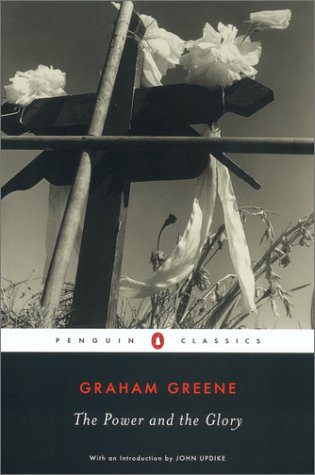
Graham Greene’s The Power and the Glory (1940), the story of a fugitive “whisky priest” in 1930s Mexico, is a short, pathos-laden novel about religious persecution after the Mexican Revolution. imageThe Catholic Church at that time was under attack for its considerable wealth and social control. The unnamed priest at the center of the novel is a complicated man, by no means a conventional hero, but his refusal to abandon the priesthood eventually endows him with a magnetic aura of spirituality, despite his many vices.
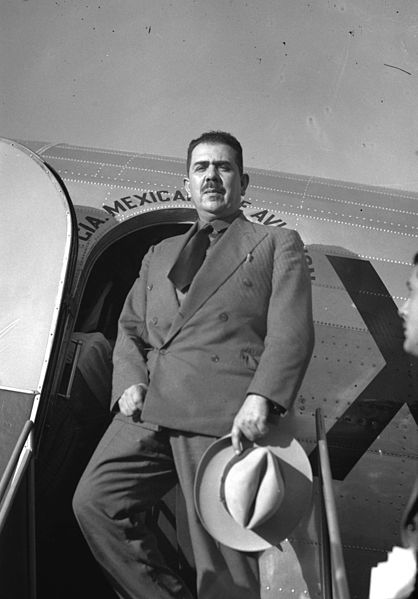
Not all professional historians admire the novel, however. Some find it overly polemical, others even anachronistic, given that the story of a persecuted priest, written after Greene’s visit in March-April 1938, coincided with President Cárdenas’s decision to end the long revolutionary campaign against the Church. It is also rather curious that the most celebrated novel about Mexican Catholicism during the Revolution was written by an English neophyte who was new to Mexico. Greene’s English prejudices give rise to the novel’s flaws. Greene’s mestizo “Judas,” the man who betrays the priest while the Indian faithful shelter him––reprises a colonial view of racial miscegenation as constitutionally debilitating. The frequent interventions of British and German characters, as out of place in their plantation houses and dilapidated dental surgeries as Greene must have felt in tropical Tabasco, are also irritating, if not occidentalizing.

For all that, the novel has strong redeeming features and in some respects is insightful and true to life. Greene’s tone of moral uncertainty and self-doubt, for example, muddles profoundly the simplistic dualism of most portraits of Mexico’s religious conflict––supposedly a clash between two triumphalist world views and institutions, those of Church and Revolution. Greene is critical of sheer ideology. He is as dismissive of a mawkish contemporary Catholicism as he is of anticlerical bile: “I don’t believe a word of it … Nobody could be such a fool,” a Mexican boy, reared on endless stories of preternatural piety, yells at his mother after hearing for the umpteenth time stories of impeccable Catholic martyrdom at the hands of revolutionary Neros. At the same time,Greene captures perfectly the introspective origins of so much revolutionary irreligion in the lieutenant who pursues the whisky priest with fanatical zeal. The same ambiguity lurks inside the schismatical, fornicating Padre José, whose hands still trembled with emotion at every consecration. Inside-out religion masquerading as state atheism, a Catholicism as anticlerical as it is pervasive: these are the more human paradoxes that fascinate Greene as he sends the whisky priest scurrying across the countryside and into the towns of prohibitionist Tabasco, there to buy alcohol for his personal and ritual libations from corrupt revolutionary politicos.
image

 The Power and the Glory does more than nuance Mexicans’ religious and secular thinking in a political context in which the state was trying to disentangle categories of citizenship and faith. In the end, the whisky priest ends up in the jails of tropical socialist Tomás Garrido Canabal, the revolutionary boss of Mexico’s southeast, first on latrine duty and then, at the book’s close, to face the inevitable firing squad. As such humiliation attests, however, it is the reduction and redemption of man and office rather than the mere mention of worldly vices––the whisky priest’s boozing, for example, that constitute the book’s claim to be radical, for its time, in a religious sense. Greene may have imagined that he was writing a universal Christian parable set in Mexico. Yet he also understood (or imagined) how the Mexican Church had resisted revolutionary persecution by itself undergoing something of a revolution in spirit. By clinging to spiritual basics, the whisky priest rediscovers God and is liberated, such that “everything but the simplest outline of the mystery” was stripped away. The Church’s conversion into a more integrated body of faithful is dramatized by the whisky priest’s abandonment of his breviary and altar stone and by his walking barefoot in worn-out shoe uppers to celebrate Mass in a villager’s shack. That it is María, an Indian villager, who gives the whisky priest brandy to consecrate, and that “for a matter of seconds” the priest could sermonize about suffering without hypocrisy, is perhaps Greene’s ultimate point. What makes The Power and the Glory so suggestive for historians is that these fictional experiences are so often borne out in the recorded lives of ordinary people. Rather than just a Mexico-based allegory for a new Church, The Power and the Glory can read for glimpses of the real religious meanings that Mexican people themselves actually created during the upheavals of the Revolution.

Picture credits:

Unknown photographer, General Lázaro Cárdenas del Río, 1937

Archivo General de la Nación via Wikimedia Commons
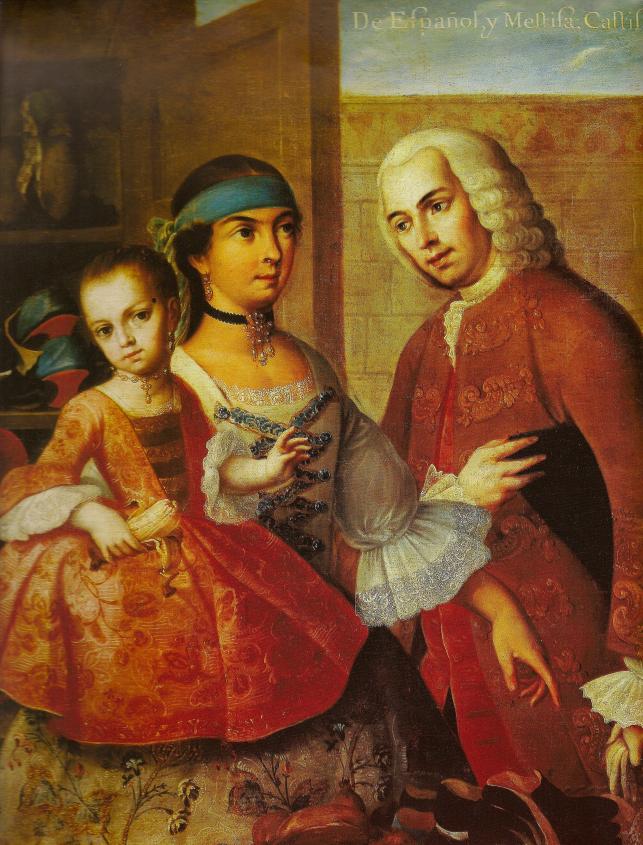
 

Casta Paintings

by Susan Deans-Smith

In 1746 Dr. Andrés Arce y Miranda, a creole attorney from Puebla, Mexico, criticized a series of paintings known as the cuadros de castas or casta paintings. Offended by their depictions of racial mixtures of the inhabitants of Spain’s American colonies, Arce y Miranda feared the paintings would send back to Spain the damaging message that creoles, the Mexican-born children of Spanish parents, were of mixed blood. For Arce y Miranda, the paintings would only confirm European assumptions of creole inferiority.

Casta paintings first appeared during the reign of the first Bourbon monarch of Spain, Phillip V (1700-46), and grew in popularity throughout the eighteenth century. They remained in demand until the majority of Spain’s American colonies became independent in 1821. To date over one hundred full or partial series of casta paintings have been documented and more continue to surface at art auctions. Their popularity in the eighteenth century suggests that many of Arce y Miranda’s contemporaries did not share his negative opinions of the paintings.

Casta_1_Cabrera

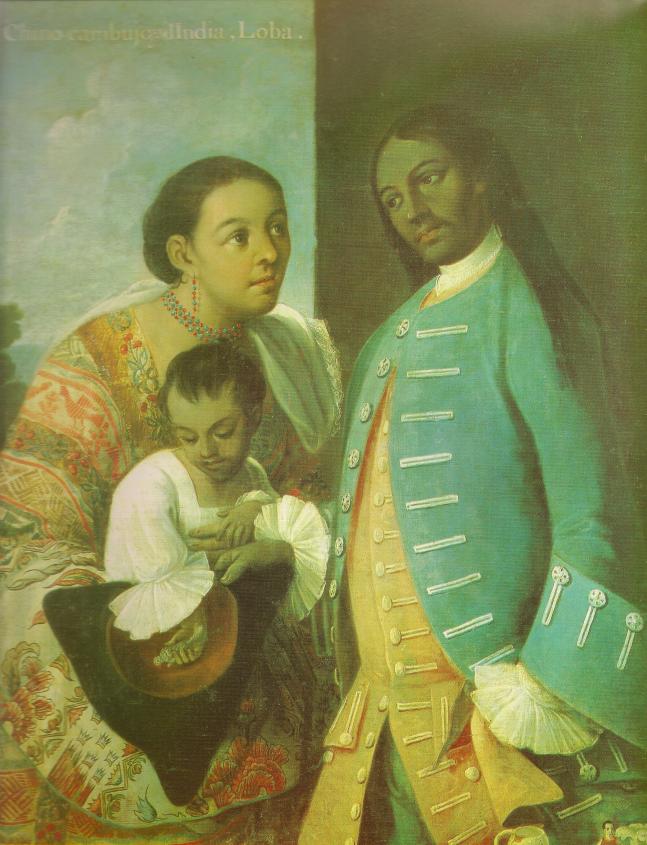
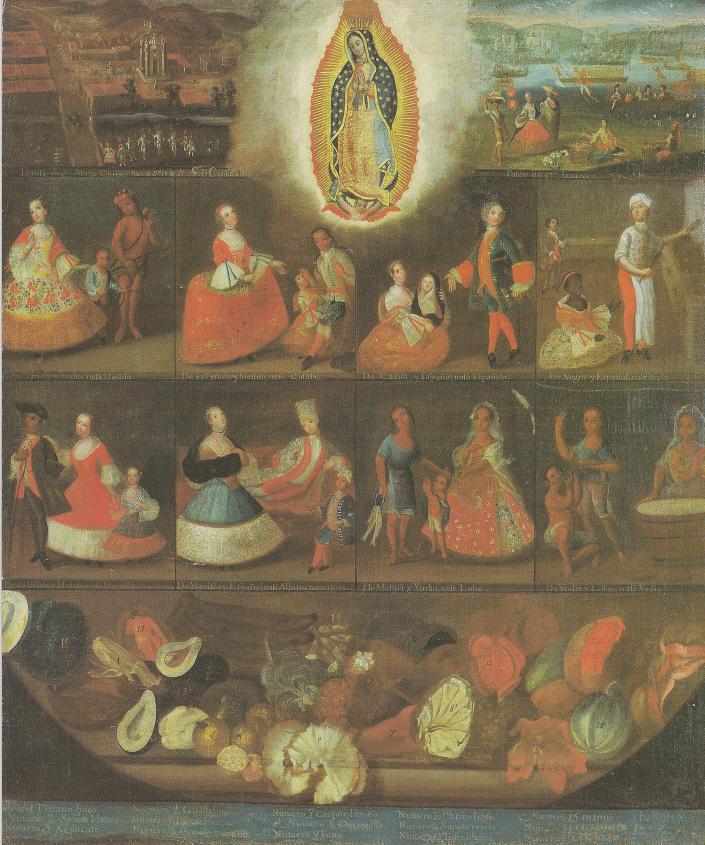
The casta series represent different racial mixtures that derived from the offspring of unions between Spaniards and Indians–mestizos, Spaniards and Blacks–mulattos, and Blacks and Indians–zambos. Subsequent intermixtures produced a mesmerizing racial taxonomy that included labels such as “no te entiendo,” (“I don’t understand who you are”), an offspring of so many racial mixtures that made ancestry difficult to determine, or “salta atrás” (“a jump backward”) which could denote African ancestry. The overwhelming majority of extant casta series were produced and painted in Mexico. While most of the artists remain anonymous, those who have been identified include some of the most prominent painters in eighteenth-century Mexico including Miguel Cabrera, Juan Rodríguez Juárez, José de Ibarra, José Joaquín Magón, and Francisco Vallejo.

Casta paintings were presented most commonly in a series of sixteen individual canvases or a single canvas divided into sixteen compartments. The series usually depict a man, woman, and child, arranged according to a hierarchies of race and status, the latter increasingly represented by occupation as well as dress by the mid-eighteenth century. The paintings are usually numbered and the racial mixtures identified in inscriptions.  Spanish men are often portrayed as men of leisure or professionals, blacks and mulattos as coachmen, Indians as food vendors, and mestizos as tailors, shoemakers, and tobacconists. Mulattas and mestizas are often represented as cooks, spinners, and seamstresses. Despite clear duplications, significant variations occur in casta sets produced throughout the eighteenth and early nineteenth centuries. Whereas some series restrict themselves to representation and specification of racial mixtures, dress styles, and material culture, others are more detailed in their representation of flora and fauna peculiar to the New World (avocadoes, prickly pear, parrots, armadillos, and different types of indigenous peoples). While the majority appear to be in urban settings, several series depict rural landscapes.

Casta_2_Cabrera

What do these exquisitely beguiling images tell us about colonial society and Spanish imperial rule? As with textual evidence, we cannot take them as unmediated and transparent sources. Spanish elites’ anxiety about the breakdown of a clear socio-racial hierarchy in colonial society–the sistema de castas or caste system–that privileged a white, Spanish elite partially accounts for the development of this genre. Countering those anxieties, casta paintings depict colonial social life and mixed-race people in idealized terms. Instead of the beggars, vagrants, and drunks that populated travelers’ accounts and Spanish bureaucratic reports about its colonial populations, viewers gaze upon scenes of prosperity and domesticity, of subjects engaged in productive labor, consumption, and commerce. Familiar tropes of the idle and drunken castas are only occasionally depicted in scenes of domestic conflict. In addition, European desires for exotica and the growing popularity of natural history contributed to the demand for casta paintings. The only extant casta series from Peru was commissioned as a gift specifically for the natural history collection of the Prince of Asturias (the future Charles IV of Spain). And despite Dr. Arce y Miranda’s fears, many contemporaries believed the casta series offered positive images of Mexico and America as well as of Spanish imperial rule. In this regard, the casta paintings tell us as much about Mexico’s and Spain’s aspirations and resources as they do about racial mixing.  Many owners of casta paintings were high-ranking colonial bureaucrats, military officials, and clergy, who took their casta paintings back to Spain with them when they completed their service in America. But there is also evidence of patrons from the middling ranks of the colonial bureaucracy. Very fragmentary data on the price of casta paintings suggests that their purchase would not have been restricted to only the very wealthy.

The casta paintings were displayed in official public spaces, such as museums, universities, high ranking officials’ residences and palaces, as well as in unofficial spaces when some private collections would be opened up to limited public viewing. The main public space where casta paintings could have been viewed by a wide audience was the Natural History Museum in Madrid.

Casta_1_Luis_de_Mena

Regardless of what patrons and artists may have intended casta paintings to convey, viewers responded to them according to their own points of reference and contexts. While much remains to be learned about who saw sets of casta paintings and where they saw them, fragmentary evidence suggests varied audience responses. The English traveler Richard Phillips, visiting the Natural History Museum in Madrid in 1803, enthusiastically encouraged his readers to go and see the casta paintings as exemplary exotica along with Japanese drums and Canopus pots from Egypt. Another English traveler, Richard Twiss, expressed skepticism about the inscriptions that described the racial mixtures depicted in a casta series he viewed in a private house in Malaga. And, to return to Arce y Miranda in Mexico, the casta paintings for him signified a slur on the reputation of creoles in Mexico.

Although we have a good general understanding of the development of this provocative genre much remains to be understood about the circulation, patronage, and reception of the casta paintings. We know, for example, that some casta series found their way to England. One tantalizing piece of evidence comes from the British landscape painter Thomas Jones (1742-1803) who made a diary entry in 1774 about a set of casta paintings he viewed at a friend’s house in Chesham. How these paintings were acquired by their English owners, as purchases, gifts, or through more nefarious means, remains an open question. We also need to know much more about patrons of the casta paintings and the painters in order to deepen our understanding about innovations and new interpretations that appear in this genre.

This is an electronic version of an article published in the Colonial Latin American Review © 2005 Copyright Taylor & Francis; Colonial Latin American Review is available online at www.tandfonline.com http://www.tandfonline.com/doi/abs/10.1080/10609160500314980

For more on casta paintings:

Magali M. Carrera, Imagining identity in New Spain: Race, Lineage, and the Colonial Body in Portraiture and Casta Paintings (2003)

María Concepción García Saiz, Las castas mexicanas: un género pictórico americano (1989)

Ilona Katzew, Casta Painting: Images of Race in Eighteenth-Century Mexico (2004)

You may also like: Naming and Picturing New World Nature, by Maria Jose Afanador LLach (here on NEP)

Credits:
1. De Español y Mestizo, Castizo de Miguel Cabrera. Nº. Inv. 00006
2. De Chino Cambujo y India, Loba de Miguel Cabrera. Nº. Inv. 00011
3. Castas de Luis de Mena. Nª.Inv. 00026
Posted by permission of El Museo de América, Madrid

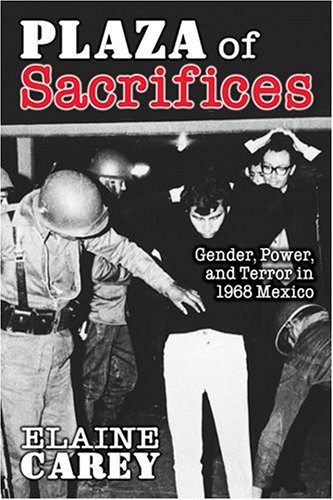
Plaza of Sacrifices: Gender, Power, and Terror in 1968 Mexico by Elaine Carey (2005)

by Andrew Weiss

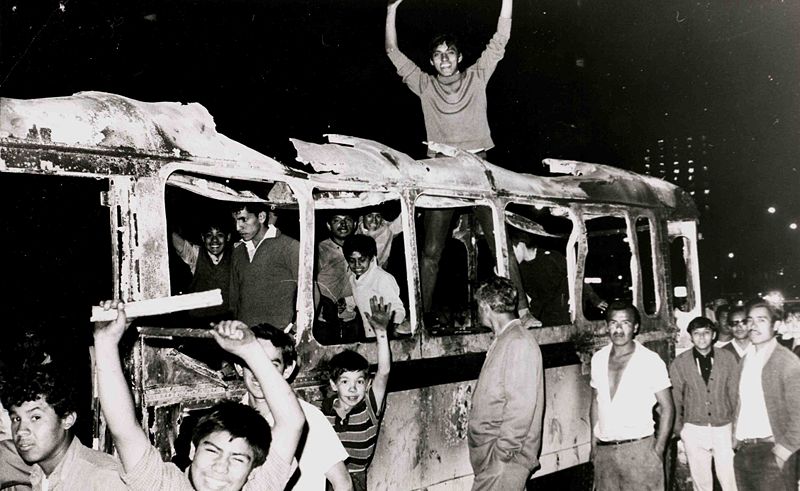
On October 2, 1968, the Mexican government sanctioned the killings of an estimated three hundred student protesters in the Plaza de las Tres Culturas, the main square in Mexico City’s Tlatelolco neighborhood. Hundreds more were arrested, many subjected to torture. Plaza of Sacrifices is the first English-language monograph of the events leading up to and following this massacre. Carey, Associate Professor of History at St. John’s University, offers a gendered analysis of the Mexican student movement of 1968. While Carey focuses on Mexican issues and events, she places the movement into the larger context of international student protests. Because student demands went beyond academic concerns to include calls for democracy and civil liberties, the 1968 movement was unprecedented. The protests revealed a public crisis of confidence in the Mexican government. Mexicans had come to see the divergence of the state’s policies from its revolutionary rhetoric of social justice. Young people protested for change.

51HSRPGW4SLCarey reveals how the student movement challenged gender norms and placed women into the public sphere as never before. Young, educated, middle-class women subverted traditional femininity as they engaged in public political discourse. Organizing protests and debating issues in public spaces traditionally reserved for men, female protesters constructed new identities and possibilities within the movement and in public and private life at large. Participant interviews demonstrate the significance of renegotiating gender roles among student protesters. After challenging the established gender order, many female protesters were forever changed; these women never again considered public life to be the exclusive realm of men. Carey contends that the mobilization of women in 1968 set the stage for a second wave of Mexican feminism in the 1970s.

Carey provides insight into the relationship between the individual and the state under the rule of the Institutional Revolutionary Party (PRI), which held power in Mexico from the late 1920s to 2000. She analyses the paternalistic language used by the PRI, which had cast itself as the protector of the Revolution and student protesters as unruly children needing to be brought back into the fold of the revolutionary family, thus revealing how the party conceived its sociopolitical role. This dynamic was both challenged and reified by the events surrounding the movement of 1968. The student movement represented a direct challenge to government paternalism, but was eventually suppressed, ultimately confirming the state’s position as head of the revolutionary family. Nevertheless, Mexican society was reshaped. The events of 1968 threatened the legitimacy of PRI rule as well as traditional notions of femininity. The impact of 1968 was still being felt in 2000, when a non-PRI candidate became president for the first time in over seventy years.

student_rallyStudent protesters in the Plaza de las Tres Culturas

Carey’s approach sheds light on many important aspects of the student movement and its aftermath. Her sources include participant interviews, both conducted by the author and others, student and government propaganda, newspapers and other periodicals, novels, plays, poetry, music, films, and photos. Her detailed interpretations of visual media, including editorial cartoons and student propaganda, are particularly useful in understanding the nuances of government and student rhetoric. And, by tapping formerly unreleased U.S. and Mexican state records, Carey provides a valuable look past the government and student propaganda.

While a welcome addition to the historiography of modern Mexican history, Plaza of Sacrifices has some shortcomings. Carey’s emphasis on government control of the public response to the movement takes away popular agency, so the book misses a large aspect of the sociopolitical discourse related to the formation of this response. While government propaganda surely influenced the public, students and other ordinary people did find their own voice, as the large scale demonstrations show. Carey’s overwhelming support of the student movement comes across in her writing. For Carey, public opinion is either pro-student or influenced by government propaganda and pro-government. She could have explored more fully how public opinion was formed, giving more agency to the public.

Plaza of Sacrifices provides a valuable narrative of events surrounding the Mexican student movement of 1968. Accessible to both lay and academic readers, this book should be read by anyone interested in this important chapter of Mexican history.

Group photograph: Anonymous Mexican students on a burned bus, July 28, 1968.

Credit: Marcel·lí Perelló via Wikimedia Commons

You may also like:

John McKiernan-Gonzalez’s article Onda Latina The Mexican American Experience.

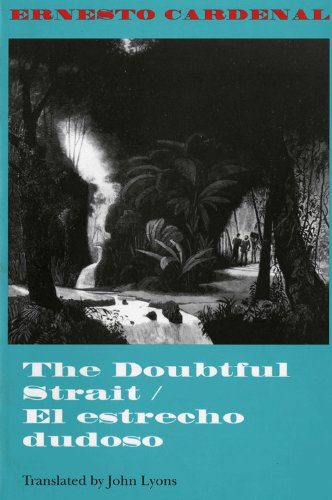
The Doubtful Strait/El Estrecho Dudoso by Ernesto Cardenal (1995)

by Adrian Masters

“Historical sense and poetic sense should not, in the end, be contradictory,” wrote Robert Penn Warren in a preface to a poem on Thomas Jefferson in 1953. “For if poetry is the little myth we make, history is the big myth we live, and in our living, constantly remake.”

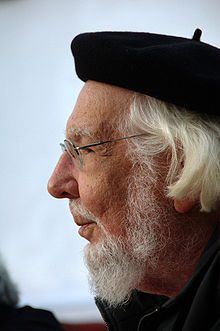
cardenalWarren’s poem, Brothers to Dragons, was an objection to Jefferson’s complicity in the slave trade as well as an appeal for the conciliation of poetry and history. Nicaraguan priest, poet, and revolutionary Ernesto Cardenal has enlisted in this select brigade of historian-poets with a remarkable work of art and history. The Doubtful Strait is entirely composed of dozens of historical documents rearranged, but not rewritten, to form an epic poem made up of 25 cantos. Originally published in Spanish in 1966, Cardenal uses the chronicles of Nicaragua’s discovery, conquest and sordid colonial misrule in the sixteenth century to condemn its present under the Somoza regime.

If Warren’s Brothers to Dragons is a condemnation of a revered but long-dead American head of state, Cardenal’s  poem is an indictment of a considerably bolder nature, targeting the infamous contemporary Somoza dynasty that ruled Nicaragua from 1937 until the 1979 Sandinista revolution. The method employed by The Doubtful Strait is similarly bold. In the early 1960s, Cardenal combed the Nicaraguan archives, the Colección Somoza, retooling the archive’s documents into a poetic arsenal. From the Colección was born a collage comprised of otherwise unaltered historical documents arranged into a seamless body of poetry. The woes of 1960s Nicaragua are in this way masked in the historical documents of the 1500s and early 1600s, and dictators Luis (1922-1967) and Anastasio Somoza (1925-1980) are transfigured into reviled colonial governors Dávila (1440-1531) and de Contreras (1502-1558). The struggles of those trodden upon by the Spanish colonists and governors reflected in colonial petitions and chronicles implicitly mirror oppression in 1960s Nicaragua. The idioms of divine Judgment and liberation theology are brought to the fore with the masterful subtlety of a seasoned priest.  A hypnotic rhythm of archaic legalese, often masking brutal acts of violence committed by Dávilas and de Contreras against Indians and colonists, regiments the poem’s flow. By enticing the reader to engage with rather restricted historical documents with the interpretive eye of the poet, The Doubtful Strait achieves a rare and lasting power as a condemnation of the Somoza monocracy.

Cardenal’s vulnerable position under the watchful eye of the Somoza dictatorship ultimately drives The Doubtful Strait to its most curious aspect – an outward absence of authorial fingerprints. Obscured behind historical documents from the Colección Somoza, the poet fades into his sources. Present only as an unseen Creator in a constellation of testimonies by oppressors, champions, and victims of Nicaragua’s past, Cardenal creates his diatribe without once authoring a line of prose. The result is a subversive work of poetry reminiscent of Ezra Pound and favorably likened to Pablo Neruda’s masterpiece, the Canto general, and yet created without a single stroke of the quill.

Ernesto_CardenalErnesto Cardenal Martinez

Written in prose constructed exclusively from centuries-old documents, The Doubtful Strait may appear of limited interest to the casual reader. But the questions its format raises are intriguing and have broad appeal: should such works be shelved under history, or poetry, or both? Are poetry and history altogether unlike? What responsibilities do poets and historians each come to shoulder in shaping our societies?

“The chronicler must not fail to do his duty.” Cardenal borrows verbatim these words aimed by historian Antonio de Herrera (1549-1626) in condemnation of brutal Governor Dávila. Surely enough, as insurgent Nicaraguans began to unravel the Somoza regime in 1977, Cardenal’s socialist community on the island of Solentiname would be bombarded and the poet sent into exile for subversive beliefs. After fighting for the Sandinista cause and serving as the Minister of Culture for the victorious insurrection, today Cardenal claims political persecution under a new “family dictatorship” – that of Sandinista strongman Daniel Ortega.

Following in the footsteps of Antonio de Herrera and Robert Penn Warren, this historian-poet uses memory to devastating effect. And like many historians and poets, Cardenal fulfills the chronicler’s duty – to remind us that, however different the façade, the past is often not even past.

You may also like:

Cristina Metz’s review of Greg Grandin’s The Last Colonial Massacre: Latin America in the Cold War.

Bad Blood: Newly Discovered Documents on US Funded Syphilis Experiments

by Philippa Levine

On September 13, 2011, the Presidential Commission for the Study of Bioethical Issues released its report on the syphilis experiments that were funded and conducted by the US government in Guatemala in the 1940s.  Over 1300 prisoners, prostitutes, psychiatric patients, and soldiers in Guatemala were infected with sexually transmissible diseases (through supervised sexual relations among other methods), in an attempt to better understand treatments for diseases such as syphilis. The researchers also drew blood from thousands of Guatemalan children to further another aspect of the study.

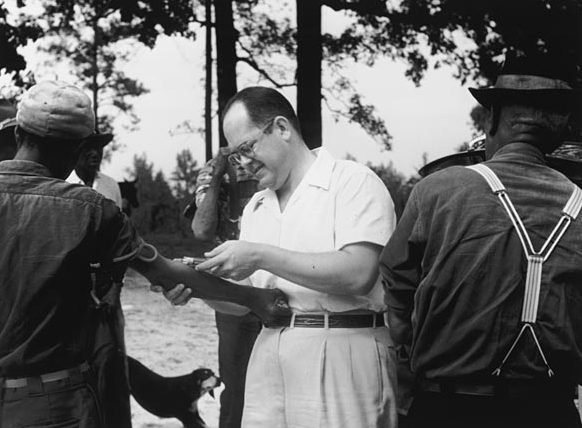
The Guatemala case has close links to the notorious Tuskegee syphilis study, which withheld treatment for syphilis from some four hundred black men in Macon County, Alabama, between the 1930s and the 1970s for similar reasons. Though the Tuskegee experiment had its roots in a treatment program begun in the optimistic 1920s, the depression transformed it into a study that would end only after negative publicity in the early 1970s. In Alabama, there was no deliberate attempt to infect the subjects of the study.  In Guatemala treatment was the norm, but subjects were deliberately infected.  In neither case were the risks, or indeed the aim, of the studies fully explained to those who participated.  Indeed, the Commission’s report explicitly notes the “deliberate efforts to deceive experimental subjects and the wider community that might have objected to the work.” In Alabama the men in the study were led to believe they were being treated for what the doctors routinely called ‘bad blood.’

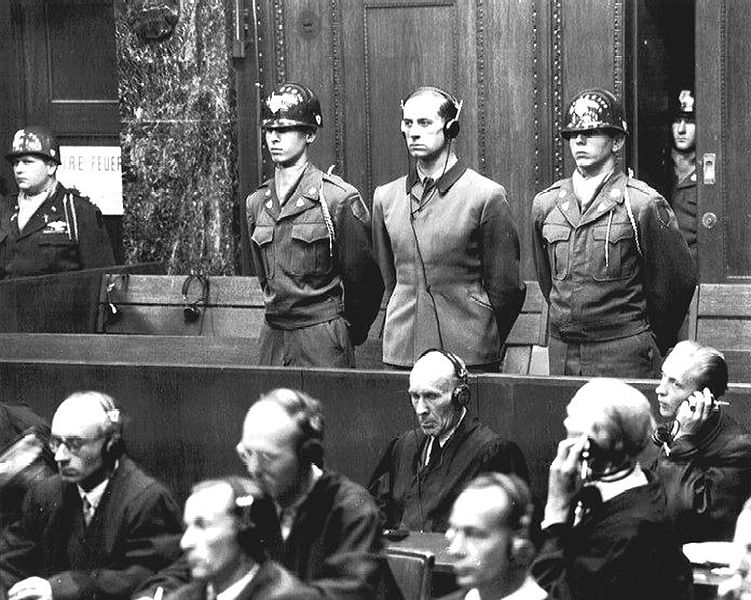
Tuskeegee_study_0Both experiments were underway before the widespread adoption of the ethics code hammered out after the Nüremberg trials, the so-called ‘doctors’ trial’ of Nazi war criminals, but the code did not put an end to the Tuskegee study. There is a long history, and not just in the US, of using people without power – those considered ‘inferior,’ those in disciplinary regimes such as prisons or the military, and those regarded as less likely to protest or even to comprehend – as human subjects in medical and scientific experiments.  Indeed, experiments very similar to the Guatemalan one (without the supervised sex) were carried out in the federal prison at Terre Haute, Indiana in the early 1940s and again at Sing Sing in New York in the 1950s.

In Guatemala and in Alabama, the idea of racial difference played a significant role in determining the shape of the studies.  Scientists debated whether there were racial differences in sexually transmissible diseases. Prejudices that saw some populations as more sexual than others fuelled such ideas.  The theory that syphilis may have originated in Central America made some scientists wonder if the indigenous population had thus acquired immunity.  Ideas such as these made already under-privileged populations targets for invasive research.

Karl-Brandt_0President Obama issued an apology to Guatemala in 2010 for the actions of government officials. President Clinton issued an apology to the subjects of the Tuskegee study in 1997.

Do studies like this go on today here or elsewhere?  In theory, the answer is “no,” since there are rules in place that require scientists and doctors to explain their work to subjects and because some techniques simply aren’t allowed any longer.  In practice, the situation is more complex.  The Guatemala research came to light only when a researcher stumbled across evidence in the papers of the lead scientist.   Tuskegee was never a secret; throughout the years of the study, leading science journals openly published its results.  For the historian, all this is familiar territory: the accidental unearthing of evidence, the evidence hidden in plain sight.  Students often ask me: how could this have happened?  How could this have been allowed?  There are good lessons to learn here, and ones in which historians can play a crucial role.  While it’s too late for the Guatemalan prisoners of the 1940s and the men of Tuskegee, it has nonetheless often been the work of historians that has either uncovered or kept in the public eye actions that might otherwise go unnoticed and unremarked.  Better late than never.

bug20x20

In Spring Semester 2012, Prof. Levine will debut a course entitled “Science, Ethics and Society.”

Government documents and Media Coverage on the experiments:
http://bioethics.gov/cms/node/306
http://www.examiningtuskegee.com/
http://www.cdc.gov/tuskegee/timeline.htm
http://www.hsl.virginia.edu/historical/medical_history/bad_blood/report.cfm
http://www.thehastingscenter.org/Bioethicsforum/Post.aspx?id=5544&blogid=140

Books on the Tuskegee Experiments:
James H. Jones, Bad Blood: The Tuskegee Syphilis Study
Susan M. Reverby, Examining Tuskegee: The Infamous Syphilis Study and Its Legacy
Allan M Brandt, No Magic Bullet: A Social History of Venereal Disease in the United States since 1880

Photo Credits:

Doctor injecting subject, Tuskegee Syphilis Study, US National Archives and Records Administration, via Wikimedia Commons

Nuremberg Trials, Karl Brandt, Reich Commissar for Health and Sanitation, was indicted with 22 other Nazi doctors and SS officers on war crimes charges, including horrific medical experiments on concentration camp prisoners. US Army. Photo No. OMT-I-D-144. Telford Taylor Papers, Arthur W. Diamond Law Library, Columbia University Law School

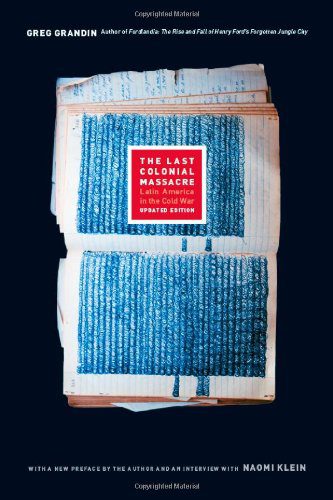
The Last Colonial Massacre: Latin America in the Cold War by Greg Grandin (2004)

by Cristina Metz

The Last Colonial Massacre: Latin America in the Cold War combines incisive analysis of Cold War repression in Guatemala with a history of the country’s century-long mobilization leading up to the 1978 Panzós massacre that resulted in the deaths of Q’eqchi’ Maya men, women, and children. The Panzós massacre launched an intense and brutal escalation of violence, the effects of which continue to reverberate in contemporary Guatemalan society. Grandin’s purpose is manifold. First, he attempts to draw connections between individual identity and political activism. Second, he refutes the North American scholarship that views the Maya as impressionable bystanders caught in the crossfire between the military and the guerrilla. Finally,  he historicizes the Cold War, nullifying attempts to naturalize the violence and repression it engendered throughout Latin America.

51fTSbNd8MLAlta Verapaz, an important coffee-growing region in northeast Guatemala, has historically been at the center of land disputes between majority Q’eqchi’ Maya and ladino and European settlers. Through the lives of four important figures—José Angel Icó, Alfredo Cucul, Efraín Reyes Maaz, and Adelina Caal—Grandin traces the struggle for land reform there, the end to forced labor, and greater social democratization. Icó, for instance, led a “seditious life” because he rebelled against the authority of the landowning elite by not following traditional paths to male power, though acquiring it nonetheless. He held considerable rural power, stemming from much the same sources as those of the state. Icó wielded his power to weaken a system that reinforced the social and political supremacy of Ladino and foreign elites. Each of these individuals gained new insights concerning their individual roles in the world around them, due in part to their participation in mass politics. Their political development (which was not unique given that many Guatemalans, indigenous and ladino, rural and urban, increasingly mobilized around social causes from at least the 1950s on) dispels analyses that rob Maya of their agency.

Panzós, a municipality of Alta Verapaz, is the location of what Grandin dubs, “the last colonial massacre.” In 1865, a group of Maya peasants appealed to the local government of Carchá, a few miles away from Panzós, for protection against the landed elite. Their demands were met with violent repression. In 1978, a large group of Q’eqchi’s suffered a similar end when they attempted to present their demands to local administrators. Both of these events seem to be by-the-book peasant revolts, but there is something unique about what happened in 1978. This twentieth-century massacre marked the beginning of a new type of counterinsurgent violence that soon spread to other Latin American nations. In tracing the intentionality and premeditation behind Cold War counterinsurgency tactics that transformed the protective power of the state into one that suppressed an internal enemy, Grandin convincingly exposes the “Cold War’s most important legacy”: the destruction of democracy.

Perhaps the greatest contribution of this book is its presentation of a history of individuals neither privileged in life nor in the historical record who have had a lasting effect on other politically active Guatemalans. We know from the outset that Grandin seeks to understand how Q’eqchi’ Maya reformers developed a political consciousness, an identity. This is, among many things, an exploration of how people mold ideology to fit their particular world, their struggle, and what they believe to be their role as engaged citizens.

The wealth of primary and secondary source material used is truly impressive and is another significant contribution of this work to the historiography of repression and state violence in Latin America. Notably, Grandin employs truth commission reports as proper historical sources, which  does much to counter critiques of the truth commissions and their reports, Critics contend that these fell short of their lofty goals, to recover the history of state violence and to ensure that history never repeats itself. Maybe it is more precise to say that, in the Guatemalan case at least, the purpose of the truth commissions and their reports was not to ensure that “it” would never happen again; rather, that the point was to preclude a post-civil war, post-Cold War “democracy” from forgetting. The Last Colonial Massacre is a testament to many things, not least of which, is the long life and far-reaching impact of this aspect of the Guatemalan peace process.

Che’s Afterlife: The Legacy of an Image by Michael Casey (2009)

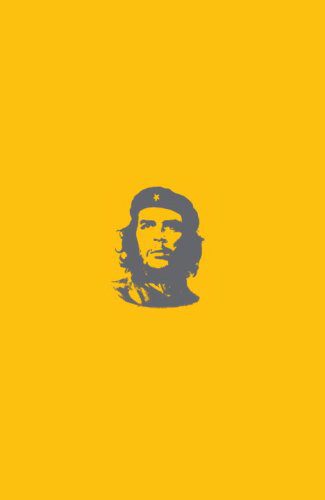
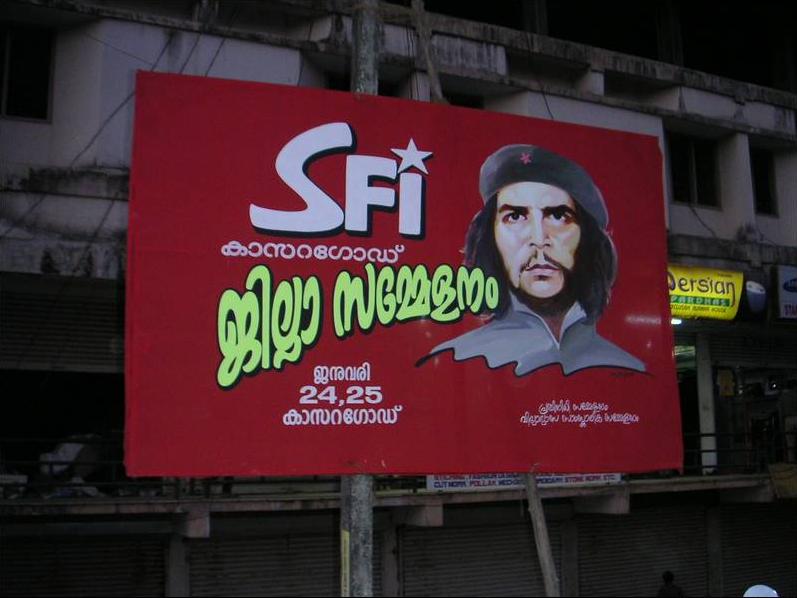
How can we make sense of the coexistence of bumper stickers depicting Rambo and Che Guevara in a traffic jam in Bangkok, Thailand? Although this book never answer its opening question, such an insight might allow us to understand Casey’s attempt to explore the different uses of an image that remains remarkably vital decades after its capture. In this sense, Casey insists, the book is less about Guevara himself and more about what we, as society, have created as “Che.” The icon is a repository for a collective set of dreams, fears, beliefs, doubts, and desires. The elusive character of such an object, both extremely present and full of competing meanings, took Casey to an impressive array of places and actors. He offers a thorough description of how the original image was taken at the Havana studio of Alberto Díaz Martinez “Korda”; the active role of the Cuban state in promoting the icon before its international appearance in 1967, seven years after the original shoot; the centrality of the European leftist network in disseminating of the image; and the divergent Latin American appropriations of Che’s guerrillero heroico in diverse places like Argentina, Bolivia, Venezuela, and Miami.

image

In this creative book, journalist Michael Casey follows the trajectory of this commodified image. He traces the connections between peoples, places, and meanings but without establishing direct causalities The apparent paradox of a worldwide-established commodity that does not benefit just one producer elucidates how commodity chains are webs and exchanges that are not always clearly guided. Casey identifies one tension as central to understanding Che’s afterlife: “the commoditization of an anticapitalist rebel who opposed all that his hypercommercialized image now represents.” The author inserts Che’s powerful icon into a larger chain of meaning in which the Cuban revolution has become a successful brand, a logo, an ideal abstraction. In short, what Casey explores in his book is not Ernesto Guevara’s biography but, to borrow Arjun Appadurai’s words, the “cultural biography” of one thing, and he finds a symbol that links diverse persons, places, and ideas. In his attempt to understand this object he draws on the entangled stories of the person related to that abstraction, the actors who contributed to creating and distributing it, and some of those who constantly give meaning to a now-immortal picture.

While Che’s Afterlife offers an extraordinary amount of evidence and revealingly inter-connected stories, the author’s conception of Latin America is ahistorical — a timeless world of magical realism. In addition, Casey insists throughout the book upon a paradoxical and ambivalent representation of Che as an anticapitalist symbol subsumed by the capitalist vortex and he revives the old western/non-western tension once prevalent in Latin American studies, without showing any interest in explaining why we “still” consider Latin America to not be part of the West. Nonetheless, the very stories he highlights complicate the simple image he wants to maintain. In the context of a growing literature on Guevara’s life and the continued iconic power of Che’s visual image, this book offers a satisfying account of the intertwined stories of the icon, the historic persona, and the specific agents and spaces that shaped the popularity of this symbol.

image

 An image of Che in Kasaragod India, 2004. Via WIkimedia Commons.

Further reading:

Guerrillero Heroico – the original photograph. 

BBC: “The Icon and the Ad”

Image gallery from Che’s Afterlife


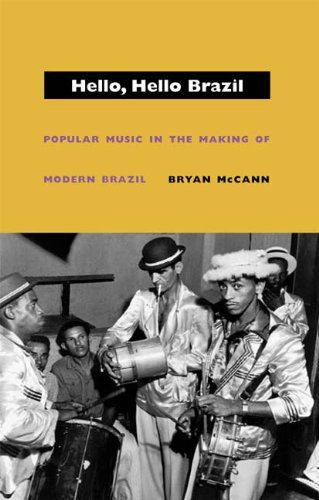
Hello, Hello Brazil: Popular Music in the Making of Modern Brazil by Bryan McCann (2004)

National identity has been both a dream and a nightmare for historians. When they attempt to historicize the concept, it becomes a thick web of actors, motives, and unintended consequences. Exploring the “invention of tradition” underlying modern national identities proves an appealing but extremely difficult task. In Hello, Hello Brazil, Bryan McCann offers a suggestive method to master this process. By tracing the emergence of Brazilian popular music, he successfully shows how the “traditional” samba was composed in an unequal exchange between regional musicians and composers, state officers, recording managers, radio producers, and radio broadcasters. The history of modern Brazilian music must be understood, then, within the broader debate on “Brazilianness.”

image

Between the late 1920s and 1950s, three processes converged to foster the emergence of the new popular music: industrialization, urbanization, and bureaucratic centralization. At the same time, the cultural context saw an intensification of exchanges between high culture and popular innovators, a rapid growth of the broadcasting industry, and an activist government under the Vargas regime that aimed to manage cultural production. McCann inserts the history of the samba into the broader struggles around the definition of tradition, authenticity, and national music. He shows that samba was at the center of a broad political and cultural transformation, that allowed converting a “small collection of popular musical forms into both a thriving industry and a consistently vital mediation on the nature and contradictions of Brazilianness.” For example, the quest for authenticity connected with the rise of the samba included purist understandings of tradition that saw the American presence as a threat to Brazilian folklore. While the composer Heitor Villa-Lobos was an active defender of “authentic” Brazilian music and an enemy of international influences, another of Brazil’s famous musical nationalists, Ari Barroso, pointed out that “international influence was inescapable.”

Although the opinions were divided, McCann insists that Brazilians were not immune to American influence, having instead an ambivalent relationship with its seductive and repellent qualities. McCann argues that far from erasing Brazilian traditional music, as Villa-Lobos feared, the international presence fostered the quest for authenticity. An appealing desire for the “exotic” led U.S. record labels like Columbia to make recordings of the “most legitimate Brazilian music.” Furthermore, for MacCann, American record executives did not attempt to “Americanize” Brazilian music. Instead, they sought to make the Brazilian popular cultural market similar to that of the United States.

In brief, McCann offers a textured history of the actors, arenas, and trends that played a role in the making of a national music. Hello, Hello shows how these actors intersected to create the discourse that produced new Brazilian popular music. The Vargas era has been widely explored, the process of Americanization of Brazil during his regime also has received scholarly attention, and more recent scholarship has explored the “unevenness” of these exchanges. Nonetheless, MacCann’s book offers a subtle exploration of the entangled processes that led to the emergence of Brazil’s popular music, drawing in the significance of folkloric realms, quests for authenticity, an ambiguous appropriations in its development. It is the “texture” of this process that McCann offers to the reader.

Naming and Picturing New World Nature

by Maria Jose Afanador

When Cassiano dal Pozzo, the Pope’s personal assistant, returned to the Vatican from Spain in 1626, he brought with him a Mexican manuscript on natural history, the Libellus de medicinalibus Indorum herbis.  The “herbal” was a marvelous Mexican manuscript containing illustrations of more than 180 plants.  Commonly known as Codice de la Cruz-Badiano, it is considered the first illustrated survey of Mexican nature produced in the New World.

In 1552, the son of the Viceroy, Francisco de Mendoza, sent the Latin manuscript to Spain, where it probably remained until the early seventeeth century, when it came into the possession of Diego de Cortavila y Sanabria. It next appeared in the library of the Italian Cardinal Francesco Barberini, where it remained until 1902, when the Barberini library became part of the Vatican Library. The manuscript was rediscovered in 1929 by Charles Upson Clark and finally, in 1991, Pope John Paul II returned the Libellus to Mexico, where it is now in the library of the National Institute of Anthropology and History in Mexico City.

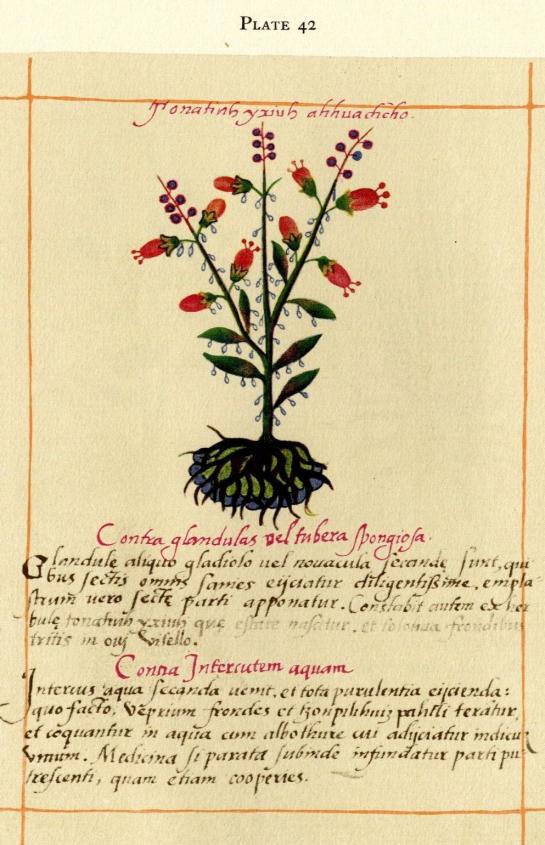
Fig_3The herbal is organized in chapters associated with parts of the body, starting with afflictions of the head, eyes, ears, nose, teeth, and cheeks; it then goes to the chest and stomach, and continues with the knees and feet; it ends with “falling sickness or comitial sickness” and remedies for “fear or faint-heartedness, mental stupor, for one afflicted by a whirlwind or a bad wind, … and for a traveler crossing a river or lake.” The diseases treated in the herbals are named in Latin in accordance with the tradition of medieval and early modern European herbals. However, the names of the plants are all written in Náhuatl, the indigenous Aztec language.

The manuscript, produced by a Nahua physician, Martín de la Cruz, and translated into Latin by Juan Badiano, was a gift for the king that sought to demonstrate the worthiness of educating the Nahua nobility in the Colegio de Santa Cruz de Tlatelolco. At first glance, this marvelous codex resembles a typical medieval herbal. A closer look, however, reveals a fascinating blend of European and Aztec cultures. The codice can be viewed as a form of expression of the Nahua in a context of increased European influence and as a manner of dealing with a changing reality.

Fig_1 Visual culture is a powerful means by which different societies depict reality and convey meanings. The images contained in this sixteenth-century manuscript pose great challenges to scholars willing to consider visual evidence as core material of historical analysis. What was the purpose of the pictographic material as utilized by the authors of the codice? Can we determine which patterns and conventions are purely Aztec or European? Is there such thing as a pure visual tradition? Does it make sense to study colonial sources under the assumption of cultural contamination? Aside from questions of cultural purity or contamination, perhaps a more interesting question to be asked is whether the purpose of these illustrations is primarily informational or aesthetic.

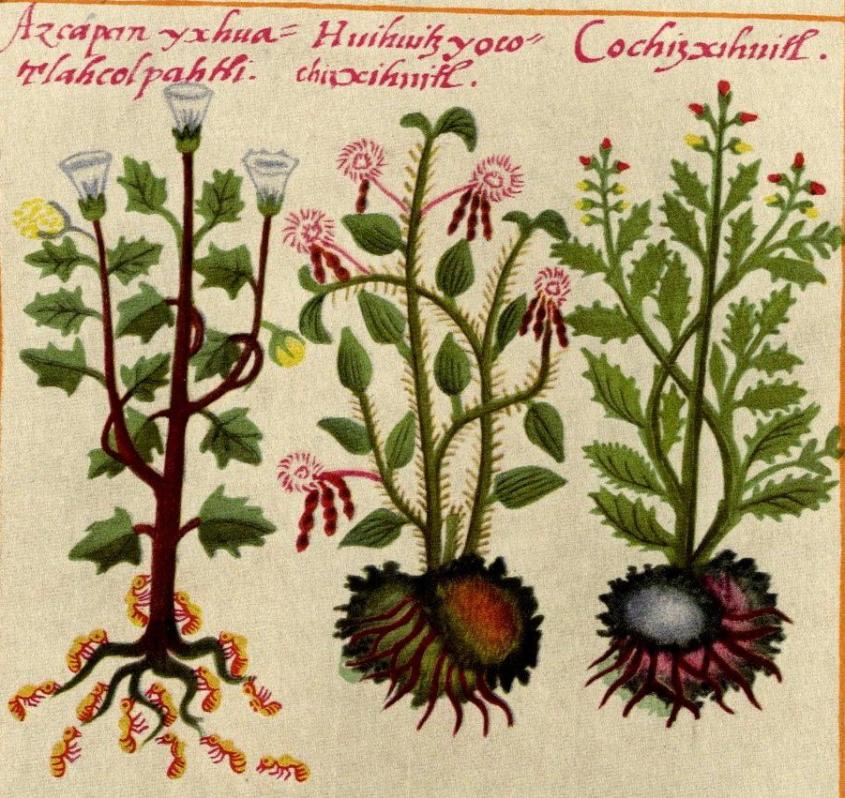
As a gift to the king, aesthetics certainly played an important role in the purpose of the illustrations. The beauty of the pictures is undeniable, and the extensive use of colors to depict nature surpasses other depictions of nature of the time. Although scholars have regarded the manuscript as a European source due to its resemblance to late medieval and early modern herbals, the codice contains pictographic elements of the Nahua tradition such as the glyphs, which convey both descriptive elements and  the ecology of the plants. Take for example the Nahua glyph for stone –tetl– which works as a ideogram to point to the rocky soil in which the plant grows in the illustration above. The ants visible among the roots in the illustration below also indicate the environment in which this plant grows. The ants, however, are not associated with any Náhuatl glyph but it was common in European herbals to include associated parasites in such illustrations.

imageThe Codice de la Cruz-Badiano is an example of the encounter of between writing systems, and thus of systems of knowledge, with multiple swings from the pictographic-glyphic tradition to the alphabetical. The illustrations are by no means subordinated to the writing. Visual evidence and linguistic analysis of Náhuatl offer ways of approaching the complexities of cultural forms and to provide information about natural history that was not present in the Latin texts.
This article is excerpted from the forthcoming publication:

Maria José Afanador Llach. “Nombrar y representar. Escritura y naturaleza en el Códice De la Cruz-Badiano, 1552.” In Fronteras de la Historia, vol. 16-1, Instituto Colombiano de Antropología e Historia, Bogotá, June 2011. 

The codice is available in facsimile: De la Cruz, Martín, The Badianus manuscript (Codex Barberini, Latin 241) Vatican Library; an Aztec herbal of 1552. Ed. Emily Walcott Emmart. Baltimore: The Johns Hopkins Press, 1940.

For more on the codice see:

Debra Hassig, “Transplanted Medicine: Colonial Mexican Herbals of the Sixteenth Century.” Anthropology and Aesthetics 17-18, Spring/‌Autumn (1989).

Remembering Pinochet’s Chile: On the Eve of London 1998 by Steven Stern (2006)

by Monica Jimenez

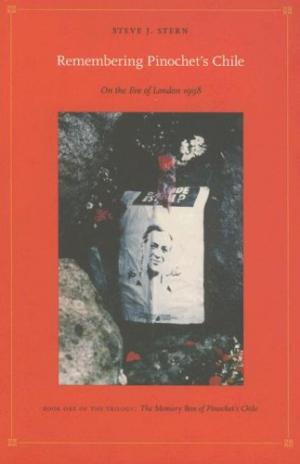
Remembering Pinochet’s Chile: On the Eve of London 1998 is the first book in Steve J. Stern’s trilogy entitled The Memory Box of Pinochet’s Chile.  Stern’s trilogy studies the ways that Chileans have struggled to understand the collective trauma of the 1973 military coup and the repressive regime that resulted from it.  In his introduction to the trilogy Stern explains that he imagines this process as a ‘memory box’ that contains the community’s conflicting memories and lore, of various kinds, seeking to make sense of this crucial experience  The memory box is not hidden away but is vividly present and foundational to the community; people are drawn to it and to engaging with it. This is a beautiful work that explores the difficult themes of collective versus individual memory of events that were both traumatic and terrifying.

image

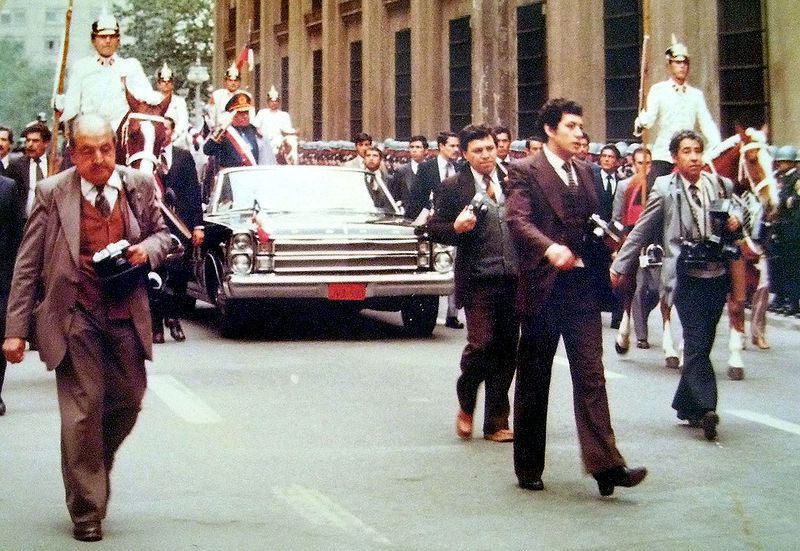
Stern relates individual memory narratives and attempts to theorize memory in order to understand the specificity of Chilean struggles to understand their past.  In this volume, Stern investigates Chile’s collective memory on the eve of Pinochet’s arrest in London for crimes against humanity. He establishes four types of emblematic memories that have competed in the peoples’ minds: memory as salvation, memory as rupture, memory as persecution and awakening, and memory as a closed box. He argues that on the eve of Pinochet’s arrest, the memory question overflowed ordinary boundaries, connecting the political, the moral, and the existential. It challenged political loyalties and alliances; it entangled the personal and the public.  The various emblematic memories had come together in the memory box to form what Stern calls a “memory impasse,” in which no particular memory reigned supreme.  Remembering Pinochet’s Chile: On the Eve of London 1998 provides a unique retelling of the critical events that lead to the 1973 coup and the military period that followed it while also raising deeply important questions about collective memory and trauma.

image

General Pinochet on parade in Buenos Aires, September 11, 1982. Image via Wikimedia Commons.


« Previous Page
Next Page »

Recent Posts

  • The Battles of the Alamo and the Myth of Southern Exceptionalism
  • Primary Source: Magic, Metal, and Medicine in Leonhard Thurneysser’s Paracelsus
  • Faculty Spotlight: Dr. Kate Imy
  • La Historia del Tiempo Presente en México: un campo en construcción
  • The History of the Present Time in Mexico: A Field in Formation
NOT EVEN PAST is produced by

The Department of History

The University of Texas at Austin

We are supported by the College of Liberal Arts
And our Readers

Donate
Contact

All content © 2010-present NOT EVEN PAST and the authors, unless otherwise noted

Sign up to receive our MONTHLY NEWSLETTER

  • New
  • Features
  • Reviews
  • Texas
  • Teaching
  • Digital
  • Watch & Listen
  • Authors
  • About