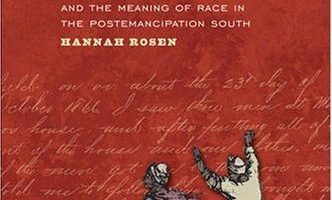
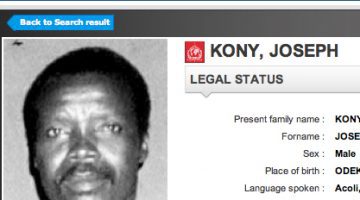
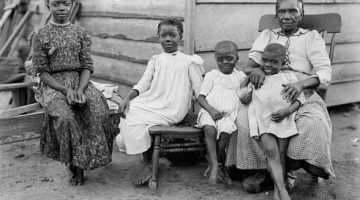
Eric Foner’s The Fiery Trial examines Abraham Lincoln’s views on American slavery, southern secession and the convergence of events that produced the Four hundred and fifty miles west of the University of Texas at Austin, thirty-seven miles (as the car drives) north of the town of Marfa, Texas, and almost 6,800 feet above sea level sit the white and silver domes of the McDonald Observatory. Since its inception, Not Even Past has dedicated itself to the idea that historians and history students aren’t the only ones capable of writing and enjoying history. The University of Texas at Austin’s Physics Department has proven us right with the release of its new website “University of Texas at Austin: Physics Department History.” The website offers a remarkable survey of the department’s history that stretches all the way back to 1883. To say that the US Civil War (1861-65) was tragic and destabilizing is a glaring understatement. Hundreds of thousands died or were wounded in combat, entire cities were destroyed, and afterwards, the large segment of the nation that had seceded had to be reincorporated into the national body, and a new citizen-subject remained to be embraced by post-bellum societies by Brian McNeil Joseph Kony has been making waves across the Internet the past few days thanks to a slick, emotional video produced by Invisible Children, a nongovernmental organization based in San Diego, California. Who is Joseph Kony? The University of Texas History Department is pleased to announce that Professor Victoria E. Bynum will deliver the annual 2012 Littlefield Lectures. The passion for recording our lives, fostered today by the availability of simple digital cameras and posting sites like Flickr, has a long history. African American leaders very early on understood the uses of photography for both self-expression and political struggle. Leigh Raiford notes, in her book Imprisoned in a Luminous Glare: Photography and the African American Freedom Struggle, that Sojourner Truth supported her cause by selling photos of herself at lectures and Frederick Douglass wanted to use photography to portray black life more accurately.
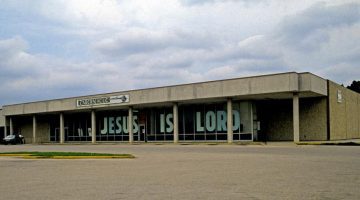
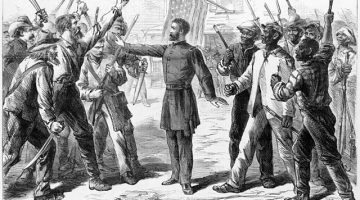
If Digital History is “using new technologies to enhance research and teaching,” as the excellent website from the University of Houston puts it, then African American history is being well-served digitally. In honor of African American History month, I survey here one enormous and useful website that gives us all access to a very wide variety of materials. In March 1865, the U. S. Congress created the Freedmen’s Bureau for Refugees, Freedmen, and Abandoned Lands to ease the transition between slavery and freedom for 3.5 million newly liberated slaves. The bureau had three main functions—to distribute rations to Southerners who had been loyal to the Union during the Civil War, to establish public schools for black children and adults, and to oversee labor contracts between landowners and black workers. One ongoing project of mine has been to photograph signs of spiritual life visible on the roads and highways of America.
From Marfa to Mauritania in Forty Years

University of Texas at Austin: History of the Physics Department

Terror in the Heart of Freedom: Citizenship, Sexual Violence, and the Meaning of Race in the Postemancipation South by Hannah Rosen (2008)
Humanitarian Intervention Before YouTube
Victoria Bynum – Littlefield lecturer
Black Amateur Photography
African American History Online

The Freedmen’s Bureau: Work After Emancipation
Signs of Faith